Visiting Leicester: Ultimate Planning Resource & Travel Guide 2026
Leicester stands among England’s most underestimated cities, combining two thousand years of layered history with a vibrant multicultural present that few destinations in the country can match. From the medieval drama of Richard III’s court to the futuristic galleries of the National Space Centre, the city rewards curious visitors with world-class attractions, extraordinary food, and an affordability that makes it a genuinely refreshing alternative to London or Bath. This guide covers everything you need to plan a successful Leicester visit in 2026, from arrival logistics and daily budgets to top attractions, dining, and outstanding nearby day trips.
Key Takeaways
- Leicester’s city centre is compact and largely walkable, with most heritage sites within 20 minutes on foot of each other, making it an ideal destination for a two- to four-day short break.
- Budget travelers can manage comfortably on £45–80 per person daily (two sharing a budget hotel); mid-range visitors spend £110–170 per person daily; luxury stays reach £190–290 per person daily.
- The headline paid attractions are the King Richard III Visitor Centre (around £9 per adult), the Jewry Wall Museum (around £13 per adult, reopened 2025 after a major revamp), and the National Space Centre (around £20 per adult); Leicester Cathedral, Leicester Museum & Art Gallery, and the Guildhall are all free.
- East Midlands Railway runs direct trains from London St Pancras, with advance fares from around £16 one-way and a journey time of roughly 70 minutes — making Leicester an easy and affordable addition to any UK trip.
- Belgrave Road’s Golden Mile is one of England’s finest Indian restaurant streets, offering outstanding South Asian food that represents genuine value for money and is a cultural highlight in its own right.
- A three-night mid-range trip from London — including return train travel, three nights of accommodation, meals, transport, and attractions — costs approximately £350–575 per person.
People Also Ask About Visiting Leicester 2026
How much does it cost to visit Leicester in 2026?
Leicester is one of England’s most affordable city-break destinations. Budget travelers who share a budget hotel room and take advantage of free museums can manage on £45–80 per person daily, with Golden Mile curry houses and takeaways keeping meal costs well under £15. Mid-range visitors spending on paid attractions, sit-down restaurants, and a comfortable hotel typically spend £110–170 per person daily (two sharing). Luxury travelers with boutique hotels, fine dining, and private transfers should budget £190–290 per person daily. A complete three-night break from London, including return train, accommodation, food, local transport, and entry to three or four paid attractions, costs approximately £350–575 per person for mid-range comfort. Check official attraction websites for current admission prices, which are subject to annual review.
What are the best things to do in Leicester in 2026?
Leicester’s must-see list spans Roman ruins, royal tombs, and rocket science. The King Richard III Visitor Centre — built over the very car park where the king’s remains were discovered in 2012 — is the city’s signature attraction, telling one of the most extraordinary archaeological stories of modern times. The nearby Leicester Cathedral, where Richard III was reinterred in 2015, is free and quietly moving. The Jewry Wall Museum, newly revamped and reopened in July 2025, showcases the finest Roman mosaics in the Midlands alongside an immersive multimedia exhibition set inside the ruins of a second-century bath house. The National Space Centre — the UK’s largest space attraction — offers a full day out for all ages. Free options include the Leicester Museum & Art Gallery, the medieval Guildhall, Abbey Park, and the city’s vibrant street markets.
When is the best time to visit Leicester in 2026?
Late spring and early autumn offer the best all-round balance for visiting Leicester in 2026. May and June deliver mild temperatures, lighter crowds, and longer daylight hours, making sightseeing and exploring the market comfortable without summer heat. September is similarly pleasant and slightly quieter. Summer (July–August) brings school holidays, higher hotel rates, and the spectacular Diwali preparations on Belgrave Road. The annual Diwali celebrations in late October or early November — widely regarded as the largest Diwali event outside India — are worth building a trip around, with thousands of lights, street food, live entertainment, and fireworks. Winter visits offer noticeably lower hotel prices and uncrowded museums, though some outdoor attractions have reduced hours from November to March.
How do I get to Leicester from London in 2026?
The train is the clear best option. East Midlands Railway operates frequent direct services from London St Pancras International to Leicester, with journey times from around 63 minutes on the fastest services and an average of roughly 70 minutes. Advance fares start from around £16 one-way when booked well in advance; walk-up Anytime fares are considerably more, averaging around £68. Off-Peak fares, available on services departing after 09:30 on weekdays and all day at weekends, offer a good middle ground. National Express coaches are slower (around two and a half hours) but cheaper, with fares from around £5–10 if booked early. By road, Leicester is directly accessible via the M1 motorway: the journey from London takes around 90–100 minutes outside peak traffic. East Midlands Airport is roughly 15 miles from the city centre, served by regular taxis and a shuttle bus.
Extended multi-day tours – 5+ days
Featured Coventry Multi-Day Tour Packages
2 days
Essential England (7 destinations)
- ✓ Comprehensive Coventry tour
- ✓ Expert local guides included
- ✓ All accommodation arranged
- ✓ Transportation provided
2 days
Essential England (7 destinations)
- ✓ Comprehensive Coventry tour
- ✓ Expert local guides included
- ✓ All accommodation arranged
- ✓ Transportation provided
7 days
Touring Southern England with London (14 destinations)
- ✓ Comprehensive Coventry tour
- ✓ Expert local guides included
- ✓ All accommodation arranged
- ✓ Transportation provided

4 days
Touring Southern England (14 destinations)
- ✓ Comprehensive Coventry tour
- ✓ Expert local guides included
- ✓ All accommodation arranged
- ✓ Transportation provided
Multi-day tour packages powered by TourRadar. Prices and availability subject to change.
Introduction: Why Visit Leicester in 2026
Leicester rarely appears on the shortlists that circulate among travellers planning a UK city break. That relative invisibility is its great advantage. The city carries more genuine history per square mile than most of its English counterparts — a Roman forum beneath the modern streets, a medieval castle and cathedral, the site where the Wars of the Roses reached their bloody conclusion — and yet it costs a fraction of the admission prices, hotel bills, and restaurant tabs that visitors accept in London, Bath, or York.
The city’s demographic story is as compelling as its built heritage. Leicester became one of England’s most diverse cities during the 1960s and 1970s, when large communities from East Africa, India, and the Caribbean settled here, and Belgrave Road’s Golden Mile — an unbroken run of South Asian restaurants, sari shops, sweet emporiums, and gold jewellers — is one of the most culturally distinct streets in the country. The annual Diwali on the Square celebration, held in the city centre, draws hundreds of thousands of visitors and is one of the biggest outdoor Diwali events in the world outside India.
The year 2026 brings particular energy to the city’s cultural calendar. The newly revamped Jewry Wall Museum, which opened in July 2025 after a multimillion-pound transformation of the Grade II listed building beside the Roman bath house ruins, has established itself as a genuinely world-class Roman archaeology attraction — rivalling anything in the country for its combination of authentic artefacts and twenty-first-century storytelling technology. The wider heritage circuit, anchored by the King Richard III Visitor Centre, Leicester Cathedral, and the Guildhall, forms one of the most coherent and walkable medieval history trails in England.
Beyond the heritage, Leicester is a university city with a correspondingly lively restaurant scene, a strong programme of theatre and live music, and excellent road and rail connections to the broader East Midlands — making it a natural base for day trips to Bosworth Battlefield, Bradgate Park, Rutland Water, and the market towns of Melton Mowbray and Market Harborough. This guide organises everything you need to make the most of the city in 2026, with verified costs, practical logistics, and recommendations calibrated for different budgets and travel styles.
Top Attractions in Leicester 2026
King Richard III Visitor Centre
No visit to Leicester in 2026 is complete without the King Richard III Visitor Centre, built around and above the car park where archaeologists discovered the monarch’s remains in 2012. The centre tells the full story of England’s last Plantagenet king — his life, his controversial rule, the Battle of Bosworth in 1485, the 527 years his grave lay forgotten, the DNA analysis that confirmed his identity, and the 2015 reinterment in Leicester Cathedral — through beautifully designed interactive displays, period objects, and film presentations. The glass floor over the original excavation trench, allowing visitors to look down at the precise location where the skeleton lay, is one of the most quietly dramatic moments any British museum offers.
Admission costs around £9 per adult, £5 for children aged 5–15, and £23 for a family of two adults and two children (check the official website at kriii.com for current rates as prices may vary). Full-price tickets are valid as an annual pass for twelve months. A joint annual ticket combining Jewry Wall Museum access costs £23 per adult. Opening hours are daily except Christmas Eve, Christmas Day, Boxing Day, and New Year’s Eve and Day. Located on St Nicholas Walk, it is a ten-minute walk from Leicester train station.
Leicester Cathedral
Just across Cathedral Gardens from the Visitor Centre, Leicester Cathedral — officially the Cathedral Church of Saint Martin — is where Richard III was reinterred on 26 March 2015 in the presence of members of the royal family and dignitaries from across Europe. The tomb, a simple but dignified slab of Swaledale fossil limestone set into the raised sanctuary floor, is marked by a carved gilded letter R and carries an inscription summarising the king’s life and the discovery of his remains. The surrounding cathedral, which dates substantially from the thirteenth and fourteenth centuries with significant Victorian restoration, is worth exploring in its own right for its carved misericords, the Vaughan Porch, and a series of striking modern windows. Entry is free, though donations are welcomed. The Café in the Nave operates during cathedral opening hours and offers a pleasant stop for coffee and light lunches.
Jewry Wall Museum
The Jewry Wall Museum, which reopened in July 2025 after a comprehensive £7 million transformation, is among the most significant Roman archaeology attractions in England and one of Leicester’s most important new cultural openings in a generation. The site centres on the Jewry Wall itself — one of the largest surviving sections of Roman masonry in the country, standing over seven metres high and forming part of the entrance hall of a second-century public bath house. The new museum building, designed with floor-to-ceiling glazing that connects the ancient stonework with the contemporary gallery spaces, houses more than 100 Roman artefacts from Leicester and Leicestershire, including the Peacock Mosaic and the Blackfriars Mosaic — among the finest Roman mosaic floors ever found in Britain.
An immersive ten-minute film introduction opens every visit, recreating the streets of Roman Leicester (then known as Ratae Corieltauvorum) with sufficient detail to give genuine context to the artefacts that follow. Interactive displays, games, and digital projections allow visitors to explore the bath house, shop in a Roman market, and meet characterisations of the people who lived here around 150–160 AD. Admission costs around £13 per adult, £6 per child aged 5–15, £11 for concessions, and £32 for a family ticket (verify current prices at jewrywall.com). Advance booking is strongly recommended — entry is timed in 15-minute slots and popular slots sell out. Opening hours are Monday to Friday and Sunday 10am–4pm; Saturday and bank holidays 10am–5pm. Located on St Nicholas Circle, a five-minute walk from Leicester Cathedral.
National Space Centre
The National Space Centre, located about one and a half miles north of the city centre, is the UK’s largest visitor attraction dedicated to space science and astronomy, and a full-day destination for visitors of all ages. The distinctive Rocket Tower, visible across northern Leicester, houses actual rockets and spacecraft, while the main galleries trace the history of human space exploration through authentic artefacts, interactive experiments, and state-of-the-art multimedia exhibits. The Sir Patrick Moore Planetarium — the UK’s largest domed planetarium — presents an ever-changing programme of full-dome shows under its 360-degree screen, all included in the standard admission price. In 2026 the centre’s Tetrastar Spaceport immersive experience is also included in the standard ticket.
Admission is around £20 per adult, £18 per child aged 5–16 (check spacecentre.co.uk for current rates as prices may vary). All admission tickets come with a free annual pass upgrade, allowing unlimited return visits for twelve months. The centre is open Monday to Friday 10am–4pm and Saturday to Sunday 10am–5pm. Getting there from the city centre takes roughly 25 minutes on bus service number 54 from Haymarket bus station.
Leicester Museum & Art Gallery
The city’s main public museum — formerly known as New Walk Museum and Art Gallery — sits on the pedestrianised New Walk promenade, about a ten-minute walk south of the train station, and admission is free. Its permanent collection ranges from Ancient Egypt to British dinosaurs, with highlights including the internationally recognised collection of German Expressionist art, the Attenborough Collection of Picasso ceramics, the Arts and Crafts furniture gallery, and the Wild Space natural history gallery. The museum is undergoing a phased major redevelopment to expand its art and design galleries; some sections may still be in progress during 2026, so check leicestermuseums.org for the latest visitor notices before arriving. Opening hours are Monday to Saturday 10am–5pm and Sunday 11am–5pm.
Leicester Guildhall and Leicester Castle
The Leicester Guildhall, just behind the cathedral, is one of the best-preserved medieval guildhalls in England and admission is free. Its fourteenth-century great hall, Victorian police cells, and associated library contain exhibits on the city’s civic history and serve as one of the more characterful free attractions in the East Midlands. Directly adjacent, Leicester Castle — substantial parts of which date from the Norman period — includes the Great Hall, which is among the oldest surviving great halls in England and still displays medieval timber roof structure. The grounds are freely accessible; access to certain interior areas may require enquiry with the visitor team. Both sites sit within a five-minute walk of the cathedral and can be comfortably combined in half a day.
Abbey Park and Abbey Ruins
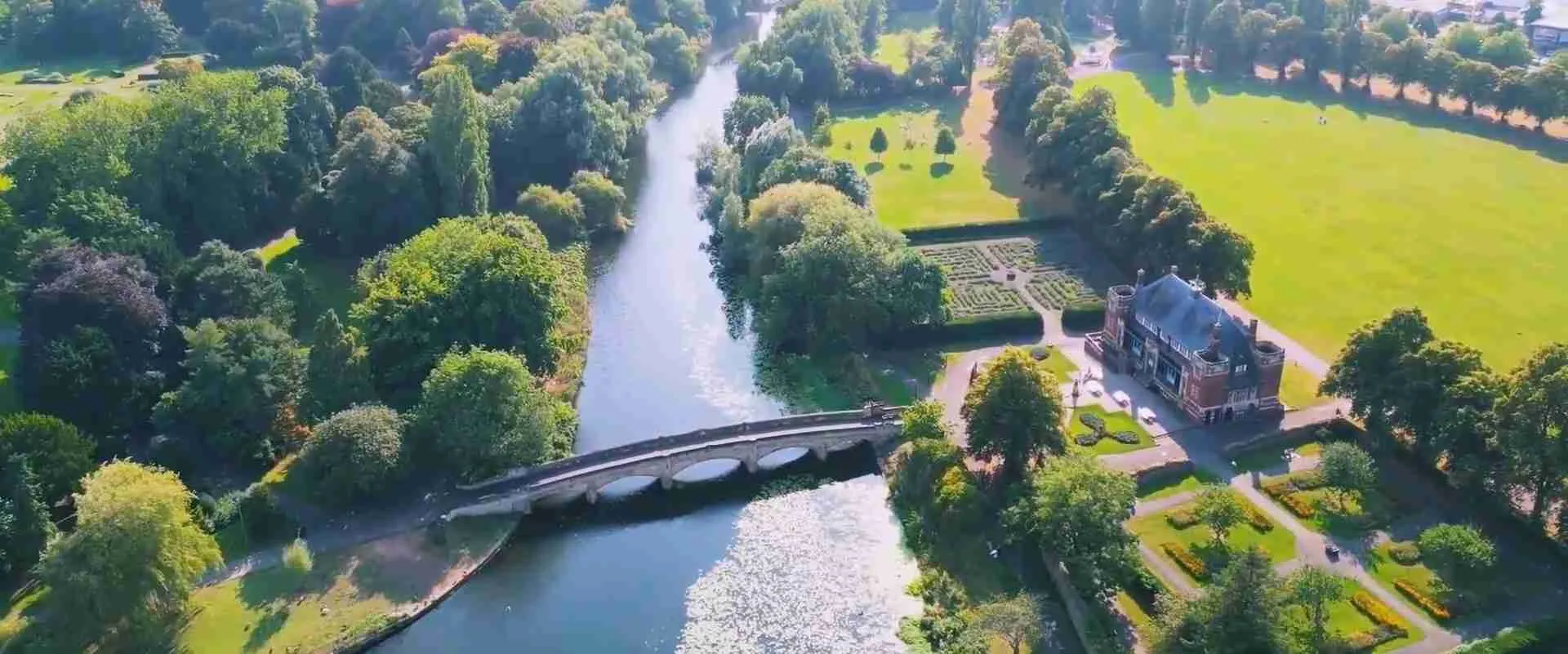
Abbey Park, a short walk north of the city centre along the River Soar, is Leicester’s main public park and the location of the ruins of Leicester Abbey — the Augustinian abbey founded in 1143 that once rivalled Fountains in Yorkshire for size and wealth. Cardinal Thomas Wolsey, Henry VIII’s disgraced Lord Chancellor, died within the abbey precincts in 1530 while travelling south to face charges of treason. The ruins are free to explore and include substantial sections of the foundation walls. The park itself — with formal gardens, a boating lake, café, and broad riverside paths — makes a pleasant contrast to the dense heritage of the city centre and is ideal for a morning or afternoon’s relaxed walking.
The Lanes and Leicester Market
The Lanes, Leicester’s independent shopping district just west of the Highcross centre, is a maze of Victorian and Edwardian streets lined with independent boutiques, vintage sellers, record shops, art galleries, cafés, and specialist retailers. It is one of the more characterful retail areas in the East Midlands and worth at least a couple of hours of browsing. Leicester Market, directly adjacent, is widely cited as one of the largest outdoor markets in Europe. The covered market, open six days a week, mixes fresh produce, clothing, household goods, and a wide range of food stalls, while the outdoor market expands further across a large paved area. Both are free to explore and form a natural complement to the heritage circuit in the Old Town.
Getting to Leicester 2026
By Train from London
East Midlands Railway operates direct trains from London St Pancras International to Leicester throughout the day, with the fastest journeys taking around 63 minutes and an average time of approximately 70 minutes. Services run frequently, typically every 30 minutes or better during the day. The train is by far the most practical option for most visitors and deposits you at Leicester train station, which is an easy ten-minute walk from the Jewry Wall Museum, the King Richard III Visitor Centre, and the cathedral.
Advance tickets booked weeks ahead start from around £16 one-way and represent the best value. Off-Peak tickets — valid on services after 09:30 on weekdays and all day at weekends — cost more but offer flexibility, typically in the £25–45 range. Walk-up Anytime fares can reach around £68 one-way. Railcard holders (16–25, Senior, Two Together, Network) can reduce these fares by a third. Book through East Midlands Railway’s own website (eastmidlandsrailway.co.uk) or Trainline for the broadest range of advance fares.
By Train from Birmingham and the Midlands
Leicester is well connected to Birmingham New Street by regular CrossCountry services, with a journey time of around 55–65 minutes and frequent departures throughout the day. From Nottingham, East Midlands Railway runs a roughly 30-minute service. From Sheffield or Derby, journey times are typically 70–90 minutes. For visitors arriving from the north of England, CrossCountry trains from Leeds, Sheffield, or Newcastle serve Leicester directly without requiring a change at London.
By Coach
National Express coaches connect Leicester to London Victoria and to other major UK cities. The London–Leicester coach journey takes approximately two and a half hours under normal traffic conditions and is the cheapest option when booked early, with one-way fares sometimes available from around £5–10. Coaches arrive at St Margaret’s bus station, about a ten-minute walk north of the train station. The trade-off against the train is primarily time and comfort rather than cost savings at any but the very lowest advance prices.
By Car
Leicester sits directly on the M1 motorway (junctions 21, 21a, and 22), making it straightforward to reach by road from London (around 90 minutes outside peak hours, 100 miles north), Birmingham (around 40 minutes, 45 miles east via the M69), or Nottingham (around 30 minutes, 27 miles south on the A46). City centre parking is available at several multi-storey car parks — including Highcross, Haymarket, and Shires Lane — with daily rates typically in the £5–12 range depending on duration and location. Be aware that the Leicester city centre has a ZTL (restricted vehicle zone) for certain streets in the Old Town area; check signage carefully. For visitors planning day trips to Bosworth Battlefield or Bradgate Park, bringing a car gives considerably more flexibility than public transport.
By Air
East Midlands Airport (EMA), roughly 15 miles south-west of the city centre near Castle Donington, is the nearest airport, serving a range of European and seasonal long-haul routes. Transfers into Leicester take around 25–40 minutes by taxi (approximately £30–40) or around 40 minutes by bus (Skylink service via Loughborough). Birmingham Airport is around 28 miles south-west and connects via National Express coach to Leicester in roughly 90 minutes, or by train via Birmingham New Street in around 80–90 minutes. London Heathrow and Gatwick connect to Leicester most efficiently via the East Midlands Railway train to St Pancras, then a direct train north.
Getting Around Leicester 2026
The great advantage of Leicester for visitors is that most of the city’s key attractions cluster within a compact central area. From Leicester train station, it is a ten-minute walk to the King Richard III Visitor Centre, five more minutes to the Jewry Wall Museum, and another five to the Guildhall and the castle. The Leicester Museum & Art Gallery is around a 15-minute walk south along New Walk. Abbey Park is approximately 20 minutes north on foot from the cathedral. The majority of a Leicester city break can be navigated entirely without any public transport if you are comfortable walking.
City Buses
For journeys beyond the walkable centre — particularly to the National Space Centre, Belgrave Road, and residential neighbourhoods — the bus network operated jointly by First Bus, Arriva Midlands, and several other operators covers the city comprehensively. From January 2025, single fares are distance-based at £1.80, £2.50, or £3 depending on the journey length. A daily cap of £6.30 applies when paying by contactless bank card or device using the Tap On, Tap Off system — meaning you pay per journey but never more than the daily cap, regardless of how many trips you make. A weekly cap of £24 applies across seven consecutive days. Flexi tickets, available via the First Bus, Arriva, and Centrebus apps, are valid across all participating operators in the Leicester network. The Tap On, Tap Off system is the most convenient and cost-effective method for visitors making multiple bus journeys in a day.
Cycling
Leicester has invested in cycling infrastructure in recent years, and the flatter parts of the city centre and surrounding neighbourhoods are reasonably cycle-friendly. The city has bike-hire provision; check visitleicester.info for the current scheme operator and docking station locations, as provision evolves. The towpath along the Grand Union Canal and the River Soar offers traffic-free routes extending into the surrounding countryside and provides a pleasant way to reach Abbey Park and beyond.
Taxis and Ride-Hailing
Taxis are readily available from Leicester train station and throughout the city centre. Uber operates in Leicester, and local firms offer competitive rates. A taxi from the train station to the National Space Centre costs approximately £8–12 and takes around ten minutes outside rush hour. For evenings in the Cultural Quarter around Curve Theatre and De Montfort Hall, taxis offer the most convenient late-night return. Ride-hailing apps work reliably throughout the city.
Where to Stay in Leicester 2026
Leicester offers a practical range of accommodation — from reliable budget chains to comfortable four-star city hotels — at prices that remain noticeably lower than comparable English cities. The city centre location is almost universally recommended for first-time visitors: it keeps walking times to attractions short and means there is no need for taxis or buses to and from the main heritage circuit.
Budget Accommodation
The budget tier in Leicester’s city centre is anchored by familiar chain hotels. Premier Inn Leicester City Centre, steps from the train station on Granby Street, is consistently well-reviewed for cleanliness, comfort, and location, with rooms regularly available from around £45–65 per room per night when booked in advance. ibis Leicester City, also centrally located, offers similar value and has good transport links. Ramada Encore by Wyndham Leicester City Centre, adjacent to the train station, is another reliable budget option with a bar and restaurant on-site, with rooms typically in the £45–70 range. Hostels and serviced apartments offer further options for solo travelers and longer stays; search through Booking.com or Hostelworld for current availability and prices, which can vary significantly by season and day of the week.
Mid-Range Accommodation
The mid-range tier offers noticeably more space and character. The Belmont Hotel, a four-star independent hotel on De Montfort Street, is one of the most consistently praised city-centre options, combining comfortable rooms with one of the better hotel breakfasts in the city and a genuine commitment to service; rooms typically range from around £100–140 per room per night. Holiday Inn Leicester and the Novotel Leicester provide the branded four-star reliability that works well for business and leisure visitors alike, with similar pricing. voco Leicester by IHG in the Cultural Quarter — close to Curve Theatre and the New Walk — combines good-value pricing with a contemporary feel and is particularly convenient for cultural evenings. All these hotels are within comfortable walking distance of the main attractions.
Luxury and Boutique
Leicester’s upper tier is more limited in range than its mid-range, though quality options exist. Hotel Brooklyn Leicester, south of the city centre near De Montfort University, is a contemporary design-led hotel — part of the award-winning Robertson’s Hotel group — offering distinctive rooms and a strong food-and-drinks offering, with prices typically from around £150–200 per room per night. The Leicester Marriott Hotel, located about two miles west near the M1 junction, suits visitors arriving by car and planning day trips, with its pool, spa, and leisure facilities adding value for longer stays at prices typically from around £150–220. For the most boutique options, a number of serviced apartment and guesthouse operators in the Victorian New Walk area and the Cultural Quarter offer individually furnished rooms at competitive prices; check directly with operators or specialist booking platforms for the best rates.
Practical Accommodation Advice for 2026
Hotels in Leicester are most expensive during major sporting events (Leicester City FC home matches, Leicester Tigers rugby fixtures, and England cricket at Grace Road), Diwali weekend (late October–early November), and the annual Comedy Festival (typically April). Book at least four to six weeks ahead for these periods. January and February offer the lowest rates across all tiers — typically 25–35% below summer peaks — and museums are quieter, making them well suited to cultural visits. Budget travelers should also note that several Leicester hotels include breakfast in the room rate, which can meaningfully offset daily meal costs and is worth comparing when booking.
Dining and Food Culture in Leicester 2026
Leicester’s food scene is one of the most underrated in England. The city’s long-established South Asian communities mean that the range and quality of Indian and Sri Lankan cooking here — from street food and sweet shops to upscale restaurant dining — is genuinely exceptional, and Belgrave Road is an essential food experience for any visitor.
The Golden Mile: Belgrave Road
Belgrave Road, running north from the city centre through the Belgrave neighbourhood, is known as the Golden Mile for its concentration of South Asian shops, restaurants, jewellers, and sweet emporiums. For food, the street and its immediate surrounds offer everything from canteen-style curry houses serving enormous thalis under £10 to smarter contemporary Indian restaurants with inventive menus. Key highlights include Bobby’s, a long-established vegetarian restaurant celebrated for its Gujarati and chaat dishes — a full meal with drinks costs around £10–15 per person. Kayal, a few minutes from Belgrave Road, specialises in Kerala seafood cooking and represents exceptional value for the quality, with main courses around £12–18. Herb, on Granby Street, is a popular option for contemporary Indian street food in a relaxed café setting, with most dishes under £10. For sweets and snacks, the sweet shops along Belgrave Road — selling fresh barfi, jalebis, and samosas — are destinations in their own right.
City Centre Dining
Beyond the Golden Mile, Leicester’s city centre and Cultural Quarter offer a growing range of restaurants, bars, and cafés. The Case Restaurant & Champagne Bar on Hotel Street is one of the city’s long-established fine dining venues, with a seasonal British menu and a serious wine list. The Cultural Quarter around Rutland Street and Cank Street has become the focus for independent café culture in the city, with coffee shops, brunch restaurants, and evening wine bars serving the theatre and arts crowd around Curve and De Montfort Hall. For reliable pub lunches and traditional British food, the Leicester Guildhall area and the Highcross quarter are well served by established gastropubs and chain restaurants. The Leicester Market is a strong option for affordable lunches, with fresh produce, bakeries, and prepared food stalls typically priced well below city-centre restaurant rates.
Practical Dining Costs in Leicester 2026
A typical lunch in a Golden Mile café or market food stall costs around £6–12 per person. A full sit-down evening meal with soft drinks in a mid-range Indian restaurant on or near Belgrave Road runs approximately £15–25 per person. City-centre gastropubs charge £14–22 for mains. Fine dining at The Case or the better hotel restaurants costs around £35–55 per person for two courses without wine. Coffee and a cake in a café runs around £5–7. These figures support the daily meal cost estimates used in the budget breakdowns below.
Day Trips from Leicester 2026
Leicester’s central East Midlands location makes it an excellent base for day trips. The following are the most accessible and rewarding options for visitors in 2026.
Bosworth Battlefield Heritage Centre
The site of the Battle of Bosworth — fought on 22 August 1485 between the forces of Richard III and Henry Tudor — lies about 15 miles west of Leicester near the village of Sutton Cheney. The Bosworth Battlefield Heritage Centre combines a nine-room interactive exhibition on the Wars of the Roses with two kilometres of outdoor battlefield trails across the surrounding country park. The exhibition admission costs £10 per adult, £9 for concessions, and £6.95 for children aged 3–15; a family ticket (two adults, two children) costs £29, and tickets are valid for unlimited re-entry for twelve months. Battlefield trails are free. Car parking costs £2–5 depending on duration (pay-and-display on site). A joint ticket with the King Richard III Visitor Centre in Leicester is available directly from the Heritage Centre. Opening hours are April to October 10am–5pm; November to March 10am–4pm. Getting there without a car requires a bus to Hinckley followed by a taxi or lengthy walk, so a car or a tour is strongly recommended.
Bradgate Park and Charnwood Forest
Bradgate Park, about seven miles north-west of Leicester, is the largest public open space in the East Midlands — over 830 acres of grazed parkland, ancient oak trees, and Precambrian rock outcrops. It is also the site of Bradgate House, the ruined birthplace of Lady Jane Grey, the “Nine Days’ Queen” who was executed in 1554. Entry to the park is free; parking costs apply (check bradgatepark.org for current rates). From Bradgate, the broader Charnwood Forest upland landscape extends into a network of footpaths and nature reserves. The market town of Charnwood’s Loughborough is twelve miles north, connected by frequent bus services, and includes the Great Central Railway — England’s only double-track main-line heritage railway, operating scheduled steam and diesel services year-round.
Rutland Water
England’s largest reservoir by surface area, Rutland Water, lies roughly 20 miles east of Leicester near the market town of Oakham. The reservoir is encircled by a 25-mile cycle trail and is a nationally important site for birdwatching, including one of England’s most successful osprey reintroduction projects. Rutland Watersports offers sailing, windsurfing, and kayaking rentals. The surrounding villages — particularly Uppingham and Oakham — are attractive stone-built settlements with independent cafés and shops. Oakham Castle, one of England’s oldest Norman great halls, is free to enter. Rutland Water is best reached by car (30 minutes from Leicester); there are limited bus connections via Oakham.
Melton Mowbray
The market town of Melton Mowbray, about 15 miles north-east of Leicester, is the home of the Melton Mowbray pork pie and Stilton cheese — two products with Protected Geographical Indication status in the UK. The town market, held every Tuesday and Saturday, is one of the most authentic traditional markets remaining in the East Midlands, and the street food and specialist food shops around the market square are the main draw for most visitors. The Melton Carnegie Museum provides free entry to an exhibition on local history. Trains run from Leicester to Melton Mowbray in around 30 minutes with East Midlands Railway.
Leicester Budget Guide 2026
This section provides verified daily cost breakdowns for three budget tiers, all expressed per person per day assuming two people sharing hotel accommodation. Hotel rates are divided by two before inclusion in any total. All calculations were performed before writing this section; figures used throughout the article are drawn from these verified totals.
Budget Travel: Approximately £45–80 Per Person Daily
Budget-conscious visitors staying at Premier Inn, ibis, or Ramada Encore properties can keep accommodation costs to around £22–35 per person per night (two sharing a £45–70 room). Eating almost entirely from the Golden Mile — thali lunches under £10, takeaway street food in the evening for £8–12 — keeps meal costs to around £18–30 per day. Travelling by bus with the daily cap system costs no more than £6.30 if using contactless, and much of the central heritage circuit can be done entirely on foot, reducing transport costs to £5–7 on days that include the National Space Centre. The city’s portfolio of free attractions — Leicester Cathedral, the Guildhall, Abbey Park, Leicester Museum & Art Gallery, and the castle grounds — means attraction costs can be kept to zero or limited to a single paid entry of around £9 on days that include the King Richard III Visitor Centre. Hotel £22–35, meals £18–30, transport £5–7, attractions £0–10: total approximately £45–80 per person daily.
Mid-Range Travel: Approximately £110–170 Per Person Daily
Mid-range visitors staying at the Belmont, Holiday Inn, or voco Leicester spend around £50–70 per person per night (two sharing a £100–140 room). Café lunches and sit-down Indian or modern British dinners with soft drinks cost approximately £38–60 per day. Adding occasional taxis alongside the bus network for comfort and convenience brings daily transport to around £8–18. Building in two or three paid attractions per day — say the Jewry Wall Museum (£13) and a National Space Centre visit (£20) — generates attraction costs of approximately £12–22 per day when spread across a multi-day stay. Hotel £50–70, meals £38–60, transport £8–18, attractions £12–22: total approximately £110–170 per person daily.
Luxury Travel: Approximately £190–290 Per Person Daily
Luxury visitors at Hotel Brooklyn, the Leicester Marriott, or top boutique properties spend around £80–120 per person per night (two sharing a £160–240 room). Dinner at The Case or equivalent fine-dining venues, combined with hotel restaurant breakfasts and smart café lunches, brings daily meal costs to approximately £70–110. Private taxis and Ubers for all journeys account for around £18–30 per day. Full-price admission to all attractions with no particular economy runs approximately £20–30 per day. Hotel £80–120, meals £70–110, transport £18–30, attractions £20–30: total approximately £190–290 per person daily.
Three-Night Trip from London: Approximately £350–575 Per Person (Mid-Range)
A complete mid-range short break of three nights from London involves the following costs per person. Return train fare London–Leicester: £32–80 (advance or off-peak, standard class). Three nights’ accommodation (two sharing, per person): £150–210. Meals over three days: £114–180. Local transport over three days: £24–54. Attraction entry over the trip (King Richard III Visitor Centre, Jewry Wall Museum, National Space Centre): approximately £30–50. Train fare £32–80, accommodation £150–210, meals £114–180, local transport £24–54, attractions £30–50: total approximately £350–575 per person for a three-night mid-range Leicester break from London.
Money-Saving Tips for Leicester in 2026
The most significant saving available to Leicester visitors is the concentration of excellent free attractions: Leicester Cathedral, Leicester Museum & Art Gallery, the Guildhall, abbey ruins in Abbey Park, the Jewry Wall Roman remains visible from the street, and the Newarke Houses Museum are all free. Budget two full free-attraction days around one or two paid attraction days and the daily costs drop considerably. Annual pass upgrades at the King Richard III Visitor Centre and the Jewry Wall Museum mean a return visit within twelve months costs nothing, making them a good choice for anyone who visits regularly or who is based in the region. Advance train booking — particularly for midweek travel booked four to six weeks ahead — can reduce the London return fare from £80 to under £35. Eating along Belgrave Road at lunch rather than dinner saves further money, as lunchtime menus are typically cheaper. The daily bus cap of £6.30 via contactless means even a heavy day of bus travel costs no more than a single short taxi ride.
Best Time to Visit Leicester in 2026
Spring: March to May
Spring is an excellent time to visit Leicester. Hotel rates are at their lowest or beginning to rise from the winter trough, crowds are thin at all major attractions, and the improving weather makes walking between sites comfortable. The city’s parks — Abbey Park in particular, with its daffodils along the river — are at their most photogenic in March and April. May brings longer days and outdoor dining on the Golden Mile becomes increasingly pleasant. Museum queues, which can build at the King Richard III Visitor Centre and the Jewry Wall Museum in summer, are manageable in spring with reasonable notice booking. The Leicester Comedy Festival, typically held in February and March and billing itself as Europe’s largest comedy festival, extends into April in some years, adding a lively cultural programme to late-spring visits.
Summer: June to August
Summer is Leicester’s busiest visitor season. School holidays in July and August bring families to the National Space Centre in particular — weekend queues can be significant, and booking the timed-entry Jewry Wall slots several weeks ahead is strongly advised. Hotel rates rise by around 20–40% above the winter baseline, particularly at weekends. The city’s parks are at their most crowded on sunny days but also most energetic, with outdoor events including the Riverside Festival (live music along the River Soar, typically in July) drawing large local crowds. The Golden Mile is at its liveliest throughout summer, with outdoor seating and extended hours. Summer temperatures in Leicester are generally mild by central European standards — July averages around 18–20°C — and overcast or drizzly days are common, so packing a layer is advisable even at the height of the season.
Autumn: September to November
Autumn is arguably the best single season for a Leicester visit. September brings the end of the school-holiday crowds while retaining reasonable weather; hotel prices return to mid-range levels, and the museums are comfortably less busy than in August. October is anchored by the Diwali on the Square celebration — held across Victoria Park and the city centre in late October or early November — which brings hundreds of thousands of visitors to one of the largest outdoor Diwali events in the world outside India. Belgrave Road fills with stalls, fireworks light the sky, and the atmosphere is genuinely spectacular. If Diwali coincides with your travel dates, book accommodation as early as possible: hotel availability is tight and prices spike sharply for that weekend. November itself is quiet and economical, suited to focused museum-going without the need to pre-book attraction slots.
Winter: December to February
Winter offers Leicester’s lowest hotel rates — Budget properties can sometimes be found for under £40 per room midweek — and the museums are at their quietest, making unhurried visits to the Jewry Wall Museum and the King Richard III Visitor Centre particularly easy. Leicester’s Victorian Market Hall hosts a popular Christmas market in November and December, and the covered market provides warmth and atmosphere on cold days. The National Space Centre’s evening programme of planetarium shows and Space Lates events — aimed at adults — offers a distinctive winter outing. The cathedral holds a full programme of Advent and Christmas services that are free and open to visitors. Outdoor attractions such as Bradgate Park are best done on dry days when paths are not too muddy, but the park retains its stark Precambrian beauty in winter light.
Practical Tips for Visiting Leicester 2026
Booking Attractions in Advance
The Jewry Wall Museum operates timed entry in 15-minute slots and popular times sell out, particularly at weekends and during school holidays. Booking online at jewrywall.com as soon as you have confirmed travel dates is strongly recommended. The King Richard III Visitor Centre also benefits from advance online booking, though it generally has more walk-in capacity than the Jewry Wall. The National Space Centre does not require advance booking but weekend afternoons in summer can be busy; arriving by 10:30am is advised on peak days. Leicester Museum & Art Gallery and the Guildhall are free and open-access — no booking required.
Accessibility
The Jewry Wall Museum is described as fully accessible for the first time in the site’s history following the 2025 redesign, including a pedestrian bridge from St Nicholas Circle and step-free access throughout the gallery spaces. The King Richard III Visitor Centre is wheelchair friendly with accessible toilets and baby changing facilities. The National Space Centre is also wheelchair accessible throughout its main galleries. The New Walk pedestrian street leading to the Leicester Museum & Art Gallery is fully paved and accessible. Most city-centre attractions are clustered within an area that is navigable by wheelchair and pushchair, though some older cobbled streets in the Guildhall and castle area require care. Bus operators in the Leicester network operate accessible low-floor vehicles on the majority of routes.
Language and Currency
English is the universal language of commerce and tourism throughout Leicester. Most city-centre businesses, restaurants, and transport services accept contactless card payments, Apple Pay, and Google Pay without difficulty. Cash is still useful for Leicester Market food stalls and some smaller Golden Mile shops, where card minimums may apply; an ATM is available at Leicester train station and at several major banks on Granby Street and Gallowtree Gate. The currency is pounds sterling (£).
Getting the Most from the Golden Mile
Belgrave Road is most atmospherically visited on weekend afternoons and evenings, when many sweet shops, jewellers, and restaurants are at their busiest and the street has an energy unlike anything in the rest of the city centre. Vegetarians and vegans are particularly well served — many Golden Mile restaurants are entirely vegetarian, reflecting the dietary practices of large sections of Leicester’s Gujarati community. Diwali weekend transforms the whole road into a festival of lights: if visiting at this time, arrive early in the evening for the best experience of the illuminations before the crowds thicken around the fireworks display.
Communication and Connectivity
Free public Wi-Fi is available at Leicester train station, the Leicester Museum & Art Gallery, and the King Richard III Visitor Centre, and at the majority of city-centre cafés. Mobile coverage from all major UK networks (EE, Vodafone, O2, Three) is strong throughout the city centre and most tourist areas. The Visit Leicester official app and website (visitleicester.info) provide current event listings, transport maps, and up-to-date information on opening hours and temporary closures.
Frequently Asked Questions About Visiting Leicester 2026
Is Leicester safe for tourists in 2026?
Leicester is a safe destination for tourists in 2026. The city centre, the Old Town heritage area around the cathedral and Jewry Wall, New Walk, and Belgrave Road are all well-frequented and present no specific safety concerns during the day or on evenings with people around. Standard urban common sense applies: keep valuables secure, be aware of your surroundings in quieter areas after dark, and avoid poorly lit side streets late at night. The Cultural Quarter around Curve Theatre and De Montfort Hall is busy until late on event nights and safe to walk. Police presence is visible in the city centre on weekends and at major events.
How many days do I need in Leicester in 2026?
Two full days covers the key city-centre attractions comfortably for most visitors. A first day might take in the King Richard III Visitor Centre, Leicester Cathedral, the Guildhall, and a walk through the market and the Lanes, with dinner on the Golden Mile. A second day works well for a morning at the Jewry Wall Museum and an afternoon at the Leicester Museum & Art Gallery or a trip to the National Space Centre. Three to four days allows for day trips to Bosworth Battlefield or Bradgate Park, a more relaxed pace at the city museums, and time to explore the city’s restaurant and cultural scene more thoroughly. The city’s compactness means it rarely feels rushed even on a two-day visit.
Can I visit Leicester on a day trip from London in 2026?
Yes, Leicester is one of the most practical day trips from London in the East Midlands, with a direct train from St Pancras in around 70 minutes making the round trip very manageable. On a long day (departing around 08:30 and returning around 20:00), you can realistically visit two or three paid attractions — say the King Richard III Visitor Centre, the Jewry Wall Museum, and a walk through the cathedral — plus a lunch on the Golden Mile, and still catch an evening train back. Book the Jewry Wall entry slot in advance for your specific arrival time. Advance train fares for a day-trip return from London to Leicester typically cost £30–50 when booked a week or more ahead.
Is Leicester a good base for the East Midlands in 2026?
Leicester works very well as a base for exploring the broader East Midlands, particularly if you have a car. Bosworth Battlefield is 15 miles west, Bradgate Park is 7 miles north-west, Rutland Water is 20 miles east, and Melton Mowbray is 15 miles north-east — all manageable as half-day or full-day trips from a Leicester hotel. Nottingham and Derby are each under 30 miles away on fast roads, and Belvoir Castle, one of the finest inhabited stately homes in England, is about 25 miles north-east near Grantham. The city itself offers a far wider range of accommodation at lower prices than the surrounding market towns, making it a practical hub from which to explore the region’s heritage, countryside, and food culture.
What is the Diwali celebration in Leicester in 2026?
Leicester’s Diwali on the Square celebration is widely regarded as the largest outdoor Diwali festival in the world outside India. Held in late October or early November (the precise date follows the Hindu lunar calendar, typically falling in October or early November), the event centres on Victoria Park and the Golden Mile and draws well over 100,000 visitors over the celebration weekend. Belgrave Road is illuminated with thousands of lights for several weeks around Diwali; on the main celebration evening, fireworks are launched from Victoria Park, and the street food, music, and community atmosphere are extraordinary. Hotel accommodation for the Diwali weekend sells out many weeks in advance — if this is your target visit time, book as early as possible.
Are there good family attractions in Leicester in 2026?
Leicester has strong family attractions, with the National Space Centre and the Jewry Wall Museum both specifically designed to engage younger visitors. The Space Centre’s interactive galleries, planetarium shows, and rocket displays are highly effective with children of most ages; the Discovery Zone at the Jewry Wall Museum offers hands-on activities for under-fives. The Leicester Museum & Art Gallery’s dinosaur and Ancient Egypt galleries are popular with school-age children. Abbey Park’s open spaces, boating lake, and café provide a relaxed outdoor option on fine days, and Bradgate Park — free to enter — is ideal for families who want wide open space with historical interest. The Leicester Comedy Festival, typically in February and March, includes some family-friendly programming. Advance booking for the Jewry Wall timed entry is particularly important for family groups, as slots fill quickly.
What are the best free attractions in Leicester in 2026?
Leicester offers a genuinely strong portfolio of free attractions. Leicester Cathedral — where Richard III is buried — is open daily and free, making it an unmissable and moving experience at no cost. The Leicester Guildhall, with its medieval great hall, Victorian police cells, and civic history exhibits, is free and typically quiet, offering an unhurried look at one of the best-preserved buildings of its type in England. Leicester Museum & Art Gallery on New Walk is free and houses internationally significant collections including German Expressionism and the Attenborough Picasso ceramics. The castle grounds and the abbey ruins in Abbey Park are freely accessible. The Newarke Houses Museum, which tells Leicester’s social history through the eighteenth and nineteenth centuries, is also free. Even the Jewry Wall itself is viewable from the public footpath on St Nicholas Walk at no charge, though the full museum experience requires admission.
How do I get from Leicester to Bosworth Battlefield in 2026?
The most practical way is by car: Bosworth Battlefield Heritage Centre is about 15 miles west of Leicester on the A447, a journey of roughly 25–30 minutes outside peak traffic, with car parking on site at £2–5 depending on duration. By public transport the journey is significantly more complex: there is no direct bus service to the battlefield from Leicester. Options include the Hinckley bus (service X58 from Haymarket) followed by a taxi for the final few miles — allow at least 90 minutes for the one-way journey and check current timetables. A combined visit to Bosworth and the King Richard III Visitor Centre in Leicester on the same day is extremely popular; the two sites offer a joint annual ticket (available in person at the Heritage Centre only) and together they present a comprehensive account of the battle and its aftermath.
What is the best neighbourhood to stay in Leicester in 2026?
The city centre — specifically the area between the train station and the cathedral — is the best location for the majority of visitors. Granby Street, the Cultural Quarter, and the streets around the Highcross shopping centre place you within ten minutes’ walk of every major heritage attraction in the city. New Walk is a quiet residential alternative that puts you particularly close to the Leicester Museum & Art Gallery and the university campus, with a pleasant pedestrianised promenade connecting back to the centre. Belgrave, north of the city centre, is the neighbourhood for Golden Mile proximity and Diwali-season atmosphere, though hotels are fewer and the connection to the Old Town heritage sites requires a bus or a 25-minute walk. Visitors arriving by car who are prioritising day trips may prefer to stay near the ring road or at the Marriott near the M1, accepting a taxi or bus journey into the centre.
When does the Jewry Wall Museum close and do I need to book in advance in 2026?
The Jewry Wall Museum opens Monday to Friday and Sunday 10am–4pm, and on Saturdays and bank holidays 10am–5pm. The museum is closed on certain public holidays; check jewrywall.com for any closure notices before travelling. Entry is timed in 15-minute slots from 10am, with the last admission 90 minutes before closing. Advance booking is strongly recommended and is described by the museum as essential to guarantee entry at your chosen time — slots, especially on Saturday mornings and during school holiday periods, can sell out days or weeks ahead. Book through the official Jewry Wall website. English Heritage members receive a discounted rate of £6.25 per admission; proof of membership is required on arrival. A joint ticket with the King Richard III Visitor Centre, valid as an annual pass at both sites, costs £23 per adult.