
Visiting La Spezia: Ultimate Planning Resource & Travel Guide 2026
Anchored at the head of the Gulf of Poets and fifteen minutes by train from the first Cinque Terre village, La Spezia is Liguria’s most strategically placed and most consistently undervalued coastal city. An affordable base for UNESCO-listed Cinque Terre and Portovenere, it also rewards those who slow down with a free naval museum, a walkable historic center, and some of the region’s most reliable seafood trattorias. This 2026 guide covers everything from transport links and accommodation tiers to Cinque Terre card pricing, daily budgets, and the practical details that turn a quick transit stop into a properly planned stay.
Key Takeaways
- Mid-range travelers should budget €130–195 per person per day in shoulder season (April–June, September–October), assuming two people sharing a three-star hotel; budget travelers can manage €65–100 per person per day at hostels or B&Bs with trattoria dining; peak summer (July–August) adds approximately 30–40% to accommodation costs, pushing mid-range daily totals to €170–230 per person.
- La Spezia Centrale station is served by the Cinque Terre Express, placing Riomaggiore approximately 15 minutes away and Monterosso al Mare around 30 minutes away — making La Spezia the most economical base for exploring all five villages and UNESCO-listed Portovenere.
- The Cinque Terre Train Card (trail access plus unlimited trains between La Spezia and Levanto) starts from approximately €19.50 per adult on low-demand dates and rises considerably on peak summer weekends; the Trekking Card (trail access only, no trains) starts from approximately €7.50 per adult. Check the official park site at card.parconazionale5terre.it for exact pricing on your chosen date.
- La Spezia’s own attractions are largely low-cost: the Naval Technical Museum beside the arsenal is free but requires advance online booking with a valid ID; San Giorgio Castle charges approximately €5.50 per adult for its archaeological museum and panoramic terraces.
- Hotel rates range from €60–80 per room per night at budget properties to €200–350 per room at four-star options in shoulder season — substantially lower than equivalent accommodation within the Cinque Terre villages themselves, where supply is limited and rates spike sharply in peak months.
- Book Cinque Terre time-slot visits (especially Via dell’Amore), accommodation, and rail tickets at least four to six weeks ahead for July–August travel, and at least one to two weeks ahead for shoulder-season visits.
People Also Ask About Visiting La Spezia 2026
How much does it cost to visit La Spezia in 2026?
Mid-range travelers should plan for €130–195 per person per day in shoulder season (two sharing a three-star hotel). This covers accommodation at €55–75 per person, meals at €51–73, local transport at €15–25, and attractions at €10–20. Budget travelers staying at hostels or B&Bs and eating at local trattorias and market stalls can manage €65–100 per person per day. Luxury travelers typically spend €255–430 per person per day at four-star properties with full restaurant dining. Note that days visiting Cinque Terre add the cost of the Train Card (from approximately €19.50 in low season, higher on peak weekends), which should be factored into your daily budget on those specific days. A one-week mid-range trip runs approximately €910–1,365 per person all-in for the stay itself, not including transport to La Spezia.
Is La Spezia a good base for Cinque Terre in 2026?
Yes — La Spezia is consistently recommended as the most practical and economical base for Cinque Terre. The Cinque Terre Express departs from La Spezia Centrale, placing Riomaggiore about 15 minutes away and Monterosso al Mare around 30 minutes away; all five villages are reachable within a single morning. Hotel rates in La Spezia run substantially lower than accommodation inside the villages, where limited stock and high demand push prices well above mainland levels. The Cinque Terre Train Card covers unlimited trains between La Spezia and Levanto, meaning visitors based in the city incur no extra train cost relative to sleeping in a village. Levanto, on the opposite (northern) end of the park, is an alternative base with similar advantages. La Spezia’s own museums, waterfront, and dining scene also make it worthwhile staying an extra day in the city rather than treating it purely as a logistics hub.
How do I get to La Spezia by train in 2026?
La Spezia Centrale is well-served from major Italian cities. From Florence, trains run in approximately 1 hour 30 minutes to 2 hours 30 minutes depending on service type, with advance tickets from around €15–25 via Trenitalia. From Genoa, the fastest services take about 54 minutes and standard journeys around 1 hour 30 minutes, with tickets from approximately €10–15. From Pisa, the journey takes roughly 1 hour on the Ligurian coastal regional line. From Milan, allow 2 hours 30 minutes to 3 hours 30 minutes, typically connecting via Genoa or via the Florence route. From Rome, the journey takes approximately 4–5 hours with a connection at Florence or Genoa. Book in advance at trenitalia.com — fares increase considerably when purchased on the day. The Frecciarossa and Frecciargento high-speed services offer the fastest journey times; Regionale trains are slower but cheaper.
What is the best time to visit La Spezia in 2026?
Shoulder season — April through mid-June and September through October — delivers the best balance of weather, crowd levels, and cost. Temperatures range from roughly 18°C to 25°C, hotel rates run 20–40% below peak, and the Cinque Terre coastal trails are open without July–August saturation. May and early June are particularly appealing: wildflowers line the hillside paths, the sea is calm enough for ferry travel, and the villages retain a semblance of normal life. July and August bring the warmest weather and most vibrant atmosphere but also the highest accommodation prices, maximum trail congestion, and intense heat on the cliff paths. November through March is the quietest and most affordable window; Cinque Terre trails are free during this period (no card required), though some village restaurants and accommodations operate on reduced schedules, and occasional winter weather closures affect the Blue Trail.
Extended multi-day tours – 5+ days
Featured Liguria Multi-Day Tour Packages
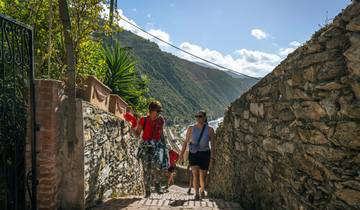
8 days
Cinque Terre: Hike, Bike & Kayak
- ✓ Comprehensive Liguria tour
- ✓ Expert local guides included
- ✓ All accommodation arranged
- ✓ Transportation provided
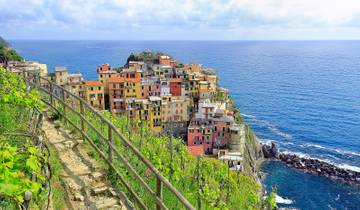
7 days
Cinque Terre : Hiking Self Guided Tour – 7 days from Sestri Levante
- ✓ Comprehensive Liguria tour
- ✓ Expert local guides included
- ✓ All accommodation arranged
- ✓ Transportation provided
3 days
3-Days Florence & Cinque Terre Adventure: Discover the Best of Tuscany and the Italian Riviera
- ✓ Booking needs min. 2 travelers
7 days
Walking in the Cinque Terre and Portofino
- ✓ Comprehensive Liguria tour
- ✓ Expert local guides included
- ✓ All accommodation arranged
- ✓ Transportation provided
Multi-day tour packages powered by TourRadar. Prices and availability subject to change.
La Spezia: Gateway to the Gulf of Poets
La Spezia is a city that most visitors pass through on the way to somewhere else. That hurry misses something real. While it is true that Cinque Terre and Portovenere are the magnetic draws of the surrounding coastline, and while La Spezia functions unambiguously as the principal logistical gateway to both, the city has substantial character of its own — rooted in nearly two centuries as Italy’s most strategically significant naval base, in a compact historic center built for walking, and in a culinary tradition that draws from both the sea and the Ligurian hills.
The city’s relationship with the sea is foundational. When Count Camillo di Cavour, the architect of Italian unification, ordered the establishment of a major naval arsenal here in the 1860s, La Spezia was transformed from a modest Ligurian fishing settlement into one of the new Italian state’s most critical military and industrial centers. The arsenal complex that resulted still operates today, and its associated naval museum — the Naval Technical Museum — stands as one of the oldest maritime collections in the world. That museum admits visitors free of charge. This is not a civic afterthought but the genuine heart of the city’s identity, and first-time visitors who skip it in favour of an early train to Riomaggiore consistently report that they wish they had stayed.
Geography gives La Spezia a particular atmosphere. The city wraps around the inner arc of the Gulf of Poets — a name traditionally associated with the English Romantic poets Percy Bysshe Shelley and Lord Byron, both of whom were drawn to this stretch of the Ligurian coast in the early nineteenth century. Shelley spent his last months near La Spezia in 1822, and the broad, sheltered bay with its terraced hillsides offered the isolation and maritime drama that suited the Romantic sensibility. The attribution of the poetic name to their presence is a matter of local tradition rather than documented record, but the setting that inspired it is real enough: on a clear day, the panorama from the Costantino Morin Promenade takes in the full arc of the gulf, the Cinque Terre headlands to the northwest, and the rocky promontory of Portovenere closing the southern arm.
The modern city center is compact and pedestrian-friendly. Prione Street (Via del Prione), the main commercial artery, runs a few blocks inland from the waterfront through the historic center, lined with independent shops, alimentari selling Ligurian specialties, and bars where locals stand for a morning espresso at €1.50. The covered market a few blocks further along is a working food market — not a tourist market — where Ligurian herbs, salt-cured anchovies, fresh vegetables from the terraced farms above the coast, and wheels of aged cheese are sold to a predominantly local clientele.
Everything visitors need — La Spezia Centrale station, the three major museums, the ferry pier, Garibaldi Square, and the best restaurants — is reachable on foot within fifteen minutes from any point in the center. This walkability is one of the city’s practical virtues, particularly for travellers who arrive by train and plan to use the Cinque Terre Express as their daily transport. The city functions equally well as a two-night base for a Cinque Terre itinerary and as a day-trip destination from elsewhere in Liguria or Tuscany.
La Spezia is also, by Ligurian standards, meaningfully affordable. Hotel rates run substantially lower than equivalent accommodation in the Cinque Terre villages, where a limited supply of small properties drives prices sharply upward in peak season. Restaurants in the city’s less touristic lanes serve the same trofie al pesto, grilled oily fish, and anchovy starters as those in Vernazza or Monterosso — frequently at lower prices and with a local clientele that provides a reliable quality signal. The trattoria culture here is genuine, and the catch quality is high, with direct supply from the fishing fleet that operates from the adjacent port.
Getting to La Spezia in 2026
Train is the overwhelmingly preferred mode of arrival, and for good practical reasons: La Spezia Centrale station sits at the heart of the city, a fifteen-minute walk from the waterfront, and it is the departure point for the Cinque Terre Express. Arriving by train means no parking complications, no ZTL (Limited Traffic Zone) restrictions to navigate, and immediate access to the regional rail network that connects the city to the entire Ligurian and Tuscan coast.
By Train from Major Italian Cities
From Florence, trains run directly to La Spezia Centrale in approximately 1 hour 30 minutes to 2 hours 30 minutes. The fastest services are the Frecciargento and Frecciarossa high-speed trains, which complete the journey in under 2 hours; the slower direct Regionale trains take closer to 2 hours 30 minutes. Tickets on fast services start from around €15–25 when booked in advance via trenitalia.com; day-of prices are higher. Alternatively, a regional train from Florence to Pisa (about 1 hour) and then a faster onward service to La Spezia (about 1 hour) can offer good value if timed well. Book the Florence–La Spezia leg at least a week ahead in peak season to secure both the best fare and a preferred departure time.
From Genoa, the fastest trains take approximately 54 minutes; standard regional services run in 1 hour 15 minutes to 1 hour 30 minutes. Frequency is high — roughly 25–30 trains per day — making Genoa a natural day-trip pairing with La Spezia. Tickets start from around €10–15 in advance. High-speed Frecciabianca and Intercity services make the run comfortably; regional trains are slower but cover the same scenic coastal route.
From Pisa, the Ligurian coastal regional line runs to La Spezia in approximately 1 hour, connecting the two cities via a string of small coastal towns. This is a useful link for travellers arriving at Pisa Galileo Galilei Airport, which is the nearest major airport to La Spezia. From the airport, a short bus or train ride to Pisa Centrale connects to the La Spezia service.
From Milan, allow 2 hours 30 minutes to 3 hours 30 minutes with a connection at Genoa, or slightly longer via the Florence route. There are also some direct services from Milan to La Spezia that avoid a connection entirely. From Rome, the journey takes approximately 4–5 hours with a change at Florence or Genoa — La Spezia is a realistic first or last stop on a longer Italy itinerary but not a practical day trip from the capital.
By Car
Driving is a viable option for travellers arriving from the interior of Liguria, Tuscany, or Emilia-Romagna, though the city center itself is subject to a ZTL (Limited Traffic Zone) that restricts private vehicle access during most of the day. Visitors staying in the center should confirm their accommodation’s policy on vehicle access and parking before arriving. The A12 motorway from the south (from Pisa and Livorno) and the A15 motorway from the northeast (from Parma via the Cisa Pass) both feed into the La Spezia junction. The main public car park at Piazza d’Armi charges approximately €12 per day and is convenient for day-trippers who prefer to leave the car and travel the Cinque Terre by train.
Note that driving between Cinque Terre villages is strongly discouraged regardless of how you arrive: village centers are car-free, roads in the park are single-lane with sheer drops, and parking is almost nonexistent. Anyone considering driving to the villages should leave their vehicle in La Spezia or Levanto and use the train.
By Air
Pisa Galileo Galilei Airport is the most convenient arrival point, approximately 80 km south of La Spezia. A bus or shuttle connects the airport to Pisa Centrale station (about 10 minutes), and then the regional train runs directly to La Spezia in approximately 1 hour. Genoa Cristoforo Colombo Airport, approximately 110 km north, is connected to Genoa Principe station by bus (about 30 minutes), from which trains run to La Spezia in under 1 hour 30 minutes. Milan’s airports (Malpensa and Linate) are practical only for travellers planning an extended Ligurian stay; the transfer adds 2 hours 30 minutes or more to the journey.
By Cruise or Ferry
La Spezia has a major cruise terminal, and a significant proportion of visitors arrive as cruise passengers using the city as a departure point for Cinque Terre shore excursions. For non-cruise travellers, there is no direct passenger ferry service from other major Italian cities to La Spezia, though the seasonal ferry services to Cinque Terre and Portovenere depart from the city’s Rivel Pier once you have arrived.
Where to Stay in La Spezia 2026
Accommodation in La Spezia spans a wide range, from hostel dorm beds at around €30–50 per person per night to four-star waterfront hotels at €200–350 per room per night in shoulder season. The city is not a luxury destination in the resort sense, but it offers solid mid-range and boutique options, and the difference in price relative to sleeping inside the Cinque Terre villages is substantial — particularly in July and August, when village prices spike and availability tightens to near zero without advance booking.
Budget Accommodation
Hostels in La Spezia offer dorm beds from approximately €30–50 per person per night. Private rooms in B&Bs and guesthouses start from around €60–80 per room per night in shoulder season. Properties near La Spezia Centrale station are the most practical choice for early Cinque Terre departures; the area is walkable to the waterfront and well-connected to the main restaurants on and around Prione Street. Budget B&Bs typically include little beyond a private room and bathroom — don’t expect a breakfast buffet at this tier — but the city’s café culture makes a stand-up espresso-and-cornetto breakfast at around €2.50 a completely adequate substitute.
Mid-Range Accommodation
Three-star hotels in the city center and near the waterfront run from approximately €110–150 per room per night in shoulder season (April–June, September–October), rising to €160–200 per room per night in peak summer. Properties at this tier typically include breakfast, air conditioning, and luggage storage, and several are within a five-minute walk of the station. Among the consistently well-reviewed properties, Hotel Firenze e Continentale is a long-established three-star near the station with a buffet breakfast, spacious rooms, and a straightforward check-in process; NH La Spezia, a four-star on the waterfront a few minutes from the ferry pier and roughly 20 minutes’ walk from the station, attracts business and leisure travelers with sea views from all 110 rooms. Boutique guesthouses and apartment rentals offer good mid-range alternatives, particularly for longer stays.
Luxury Accommodation
La Spezia’s four-star options are limited in number but reliable in quality. Rates run from approximately €200–350 per room per night in shoulder season, with peak summer prices reaching €350–450 or higher for in-demand waterfront properties. NH La Spezia is the main four-star waterfront option; the Poet Hotel in the city center has a boutique character and strong guest ratings. For a more rural luxury experience, some hilltop properties above the city and in the nearby Lerici or Ameglia area offer villas and agriturismo accommodations at similar price points with a significantly different atmosphere.
Booking Tips
For July and August, book accommodation at least four to six weeks in advance, and preferably two to three months ahead for the best properties. Shoulder-season visitors can typically find good availability with one to two weeks’ notice, though the most popular hotels fill on spring holiday weekends (Easter, Italian public holidays in April and May). Check whether your accommodation holds a CETS certification (Carta Europea per il Turismo Sostenibile — European Sustainable Tourism Certificate): CETS-certified properties in La Spezia offer discounted rates on Cinque Terre Cards, which can offset part of the accommodation premium. Also factor in the tassa di soggiorno (tourist accommodation tax), collected per person per night by all accommodations; confirm the current rate when booking, as it varies by property category and is typically €1–3 per person per night.
Getting Around La Spezia and Cinque Terre 2026
The city center of La Spezia is compact and largely flat along the waterfront and main streets, making walking the default mode of movement for most visitors. The historic center, Prione Street, the waterfront promenade, and the ferry pier are all within fifteen minutes’ walk of La Spezia Centrale station. The city’s ATC local bus network extends to the hillside neighborhoods and the Naval Technical Museum area; a single bus ticket costs €1.50.
The Cinque Terre Express Train
The Cinque Terre Express regional train is the backbone of any multi-day itinerary based in La Spezia. It runs from La Spezia Centrale northwest along the coast, stopping at all five villages before continuing to Levanto. Journey times from La Spezia Centrale are approximately:
- Riomaggiore: approximately 15 minutes
- Manarola: approximately 18 minutes
- Corniglia: approximately 22 minutes
- Vernazza: approximately 25 minutes
- Monterosso al Mare: approximately 30 minutes
Trains run frequently throughout the day, increasing in frequency from mid-March through early November when the Cinque Terre Express timetable is in full operation. Check current schedules via the Trenitalia app or trenitalia.com, as exact timetables vary by season. A single journey without any pass costs approximately €4.40 per trip on the standard regional fare; if you plan three or more journeys in a day, the Train Card is significantly more economical.
The Cinque Terre Card: Which Version to Buy
The Cinque Terre Card is issued by the Cinque Terre National Park and is mandatory for access to the paid sections of the Blue Trail (Sentiero Azzurro) — specifically the Vernazza–Monterosso and Corniglia–Vernazza segments. It is also required to use the park’s local shuttle buses in the villages, the public toilets at the train stations, and the park’s Wi-Fi hotspots. Card holders also receive discounted entry to La Spezia’s civic museums. The card is valid from 14 March to 2 November 2026; outside these dates, all trails are free and no card is required.
There are two main options in 2026:
- Trekking Card (trail access, local buses, toilets — no train travel): adult prices start from approximately €7.50 per day on low-demand dates (Zone A, weekdays in spring and autumn) and increase to approximately €15 per day on peak summer weekends (Zone C). This card is suited to visitors staying within the park who do not need to commute from La Spezia by train.
- Train Card (everything in the Trekking Card plus unlimited second-class train travel between La Spezia and Levanto): adult prices start from approximately €19.50 per day in low season and rise substantially on peak summer weekends (Zone C). This is the recommended card for visitors based in La Spezia, since the unlimited train travel covers all commuting to and from the park.
Prices vary depending on the date you choose to visit, following a Zone A (green/low), Zone B (yellow/medium), Zone C (red/high) calendar published annually by the park. Always check the exact price for your specific travel date at card.parconazionale5terre.it before purchasing. Cards are sold online, at La Spezia Centrale station’s tourist desk, and at the information offices in all five village stations. During July and August, queues at station offices are long — buy online.
Via dell’Amore, the restored 1-km cliff path between Riomaggiore and Manarola, is now included within the Cinque Terre Card as of 2026 — you do not pay a separate supplement. However, it requires a pre-booked time slot from the official park site at card.parconazionale5terre.it. Book your time slot as soon as your travel dates are confirmed; slots for peak weekends fill quickly.
Ferry Services
The seasonal ferry operated by Consorzio Marittimo Turistico 5 Terre runs from La Spezia’s Rivel Pier (near the harbor) to Riomaggiore, Manarola, Vernazza, and Monterosso al Mare from approximately April through October. Note that Corniglia has no dock and is not served by ferry. A full-day ferry pass covering the full La Spezia–Monterosso route costs approximately €20 per adult in 2026; a single hop (for example, Vernazza to Monterosso) costs approximately €7 per adult. Confirm exact 2026 schedules and prices at the pier or via the operator’s site, as seasonal and weather conditions affect the timetable. The ferry from La Spezia to Portovenere (see the Beyond La Spezia section) is a separate service, operated from the same pier area.
Taxis
Taxis in La Spezia start at approximately €4.20, with a per-kilometre rate of around €0.98–1.10. They are practical for reaching hilltop restaurants, the airport, or the Naval Technical Museum if you prefer not to walk the waterfront route. Taxis do not serve the Cinque Terre villages, which are car-free.
Top Attractions and Things to Do in La Spezia in 2026
La Spezia is not an attraction-heavy city in the way that Florence or Rome demands a multi-day museum circuit. What it offers is a concentrated, walkable set of cultural anchors — a world-class naval collection, a genuinely impressive fine-arts museum, a hilltop castle with Roman archaeology and sweeping views — combined with an atmospheric waterfront and a historic center suited to unhurried exploration. A full day devoted to the city is comfortable; two days allow for slower pacing and time at the covered market, the waterfront cafés, and the surrounding coast.
Naval Technical Museum (Free Admission)
This is La Spezia’s singular cultural asset. Located beside the active Italian Navy arsenal on the waterfront, the museum is considered one of the oldest naval collections in the world, with origins in the eighteenth century when artifacts gathered by the Royal House of Savoy were transferred to La Spezia following the establishment of the arsenal complex here in 1870. The collection spans Roman-era reconstructions through to Second World War naval technology, with standout exhibits including over 150 detailed ship and boat models, a collection of elaborately carved figureheads from sailing-era warships, historic weaponry and submarine components, and a dedicated section on the development of early naval wireless communications featuring equipment from the era of Guglielmo Marconi, the Italian inventor whose work on wireless telegraphy had significant naval applications.
Admission is free, but access requires mandatory advance registration online and presentation of a valid passport or identity document at the arsenal security checkpoint. This is a non-negotiable entry requirement — the museum sits within a functioning military zone. Open Tuesday through Sunday, 8:30 AM to 7:30 PM (closed 1 January, 15 August, and 25 December). Confirm current booking procedures at marina.difesa.it before visiting, as security protocols at active military facilities are subject to change. Allow two to three hours for a thorough visit; naval enthusiasts regularly spend four or more.
San Giorgio Castle and Archaeological Museum (€5.50 adult)
Perched on the hill above the city, the Castle of San Giorgio is a layered medieval fortification with origins in the thirteenth century, expanded and rebuilt through the fourteenth and fifteenth centuries as a military stronghold controlling the port and its access routes. Today it houses La Spezia’s Archaeological Museum, which takes visitors through regional prehistory — Neolithic, Bronze Age, and Iron Age tools, pottery, and burial objects — before reaching an extensive Roman section focused on materials from Luni, the significant Roman colony established on the coast of what is now Lunigiana. The Roman collection includes marble sculpture, coins, mosaic fragments, and household objects that give a vivid picture of daily life in a prosperous first-century coastal city. The castle ramparts offer panoramic views across the Gulf of Poets that alone justify the entry fee. Access via public lifts from Via Indipendenza or by the uphill pedestrian approach along XXVII Marzo Street. Open Wednesday through Monday (confirm seasonal hours at the municipal site); adult admission approximately €5.50 (check official rates before visiting, as civic museum pricing is subject to annual review).
Amedeo Lia Civic Museum (approximately €6–8 adult)
For many visitors, this is the surprise of La Spezia. Housed in a restored seventeenth-century Franciscan convent on Prione Street, the museum displays the private collection donated to the city by local entrepreneur and collector Amedeo Lia in 1995 — a bequest of exceptional quality for a city of La Spezia’s size. The collection spans the thirteenth through eighteenth centuries and includes works attributed to Tintoretto, Titian, Bartolomeo Montagna, and Pietro Lorenzetti, alongside Roman bronzes, Limoges-enamel crucifixes, and a notable group of illuminated manuscripts. The building itself — its arched corridors, vaulted ceiling rooms, and courtyard garden — is worth experiencing as architecture as much as container. Open Tuesday through Sunday, 10:00 AM to 6:00 PM; admission approximately €6–8 per adult (confirm current rates at comune.laspezia.it before visiting, as the municipal museums periodically revise their pricing).
CAMeC Contemporary Art Center
La Spezia’s contemporary art center occupies the lower floors of the Palazzina delle Arti building and hosts a permanent collection of twentieth-century Italian art alongside rotating temporary exhibitions. Cinque Terre Card holders receive reduced or free entry; check the current exhibition program and admission costs at comune.laspezia.it.
Prione Street and the Covered Market
Prione Street (Via del Prione) is La Spezia’s main pedestrian artery, running from the Mercato Centrale covered market through the historic center to the theater district. The market — a permanent fixture, not a tourist market — sells fresh Ligurian produce, local cheeses, salt-cured anchovies, olives, and regional pantry staples at everyday prices. This is the best place in the city to assemble a self-catered lunch or stock up on edible souvenirs. The surrounding streets contain a concentration of independent alimentari, wine shops, and casual bars; a stand-up coffee at any of these costs €1.50 and offers as reliable a window onto daily Ligurian life as any organized tour.
The Waterfront: Costantino Morin Promenade and Thaon di Revel Bridge
The Costantino Morin Promenade runs along the waterfront facing the harbor, lined with palm trees and benches and providing views across to the Cinque Terre hills on clear days. The cable-stayed pedestrian Thaon di Revel Bridge, opened in 2013, connects the historic center to the modern port district and is a contemporary architectural landmark in a city otherwise defined by nineteenth-century and medieval structures. Walking south along the promenade leads to the Rivel Pier, departure point for Portovenere and Cinque Terre ferries. Mirabello Marina, to the north, is a modern marina with café terraces and a pleasant evening atmosphere. Both the bridge and the promenade are free and accessible at all hours.
Daniel Buren’s Arches
A permanent public art installation of multicolored vertical-stripe arches by French artist Daniel Buren, positioned along the seafront between the ferry pier and the marina. Buren’s signature stripe motif, here executed in monumental steel, has become one of La Spezia’s more photographed public spaces. Free to visit.
Cathedral of Christ the King
La Spezia’s main cathedral occupies a hilltop site above the city with a design that departs sharply from the Ligurian Gothic and Baroque norm: a mid-twentieth century modernist building with a circular plan and a central stained-glass cupola that disperses colored light across a spare white interior. The architectural contrast with the city’s older fabric is striking, and the hilltop position offers additional views over the gulf. Free entry.
Cinque Terre Day Trips from La Spezia 2026
La Spezia is the official southern gateway to the Cinque Terre National Park, and the Cinque Terre Express — departing from La Spezia Centrale — is the primary connection between the city and the five villages. The villages themselves are threaded along 11 kilometres of UNESCO-listed cliff coast, each one distinct in character and each separated from the next by trail sections, train journeys of three to eight minutes, or (in season) ferry hops.
The Five Villages
Riomaggiore is the closest village to La Spezia (approximately 15 minutes by train) and the largest of the five. Its harbor — a narrow inlet stacked with painted boats — and the steep colored houses rising above it constitute the visual archetype of the Cinque Terre for many visitors. It is the starting point for Via dell’Amore, and its position at the park’s southern end makes it the easiest to reach from La Spezia for a brief afternoon visit.
Manarola, the next village north (approximately 18 minutes from La Spezia), is widely regarded as the most photogenic: a cluster of pastel-colored buildings perched on a black volcanic rock promontory above a small dock, with terraced vineyard slopes behind. It is the heart of the Sciacchetrà wine tradition, a sweet passito made from local grapes that are dried on the hillside terraces. Sunset from the coastal path toward Corniglia is exceptional here.
Corniglia (approximately 22 minutes from La Spezia) is the only village without direct sea access — it sits on a hilltop promontory reached from its station by a long staircase (365 steps) or a shuttle bus included in the Cinque Terre Card. Its elevation makes it the least visited village by casual day-trippers, which is precisely its appeal: quieter streets, a genuinely local atmosphere, and views in both directions along the coast from the cliff terraces above.
Vernazza (approximately 25 minutes from La Spezia) has a natural harbor with a small piazza at its heart, framed by medieval tower houses and the octagonal apse of the church. A Doria Castle overlooks the port from the headland; a short climb to the tower top offers one of the definitive Cinque Terre panoramas. Many experienced travelers nominate Vernazza as their favourite village, and visitor numbers reflect this — it is heavily crowded on summer weekends.
Monterosso al Mare (approximately 30 minutes from La Spezia) is the largest and most resort-like of the five, with the only substantial sandy beach in the Cinque Terre. It is split into two sections — the old village (Vecchio Monterosso) and the newer tourist strip (Fegina) — and offers more accommodation, cafés, and beach infrastructure than the other four. If swimming is a priority, Monterosso is the practical choice.
Hiking the Blue Trail in 2026
The Blue Trail (Sentiero Azzurro) is the coastal path that links all five villages, and it is the walk most closely associated with Cinque Terre in travelers’ minds. In 2026, access to its paid sections requires the Cinque Terre Card (either the Trekking or the Train variant). The paid sections are:
- Corniglia to Vernazza: moderate difficulty, approximately 1 hour 30 minutes, significant ascent and descent through terraced vineyards and forest
- Vernazza to Monterosso al Mare: the most demanding paid section, approximately 1 hour 30 minutes to 2 hours, with steep climbs and outstanding cliff-edge views
Via dell’Amore (Riomaggiore to Manarola), the iconic 1-km paved cliff path, is included in the Cinque Terre Card in 2026 but requires a pre-booked time slot from card.parconazionale5terre.it. Allow 20–25 minutes for the path itself; the views across the cliff face and down to the sea are exceptional.
A significant network of alternative inland trails — including the Alta Via delle Cinque Terre, a ridge path running above all five villages — is entirely free and largely uncrowded even in peak season. The Alta Via requires solid fitness and good footwear, but it offers a perspective on the terraced landscape and the Cinque Terre hinterland that the coastal path cannot match. Trailhead access to the ridge above Riomaggiore is via the ATC bus, which is included with the Cinque Terre Card.
Practical Advice for Cinque Terre 2026
Peak season (July–August) brings intense overcrowding to the Blue Trail and to the villages of Riomaggiore, Manarola, and Vernazza. Arriving before 9:00 AM or after 4:30 PM mitigates the worst congestion; weekdays are substantially less crowded than weekends throughout the season. Corniglia is consistently overlooked by day-trippers following a standard itinerary — visitors who prioritize a quieter experience will do better there than in any of the other four. Carry a reusable water bottle; water is available at fountains in each village, and the cliff paths have minimal shade between 11:00 AM and 3:00 PM in summer. Closed-toe shoes with grip are appropriate for any trail section; sandals are unsuitable for anything beyond the village streets. On cruise-ship arrival days — easily identified in advance via cruise port schedules — Riomaggiore and Manarola become briefly overwhelmed by organized groups; timing a Cinque Terre visit to avoid these days is possible with a little advance research.
Dining and Food Costs in La Spezia 2026
La Spezia’s culinary identity is rooted in the Ligurian coast and the Lunigiana hinterland, combining the sea-facing traditions of the Riviera with the mountain-influenced dishes of the inland valleys. The city has a working-port food culture — practical, unpretentious, and anchored in genuinely good ingredients — that rewards visitors who step away from the waterfront tourist strip and into the back streets near the market.
What to Eat
Mesciua is La Spezia’s defining local dish: a dense, warming soup of chickpeas, wheat berries, and borlotti beans cooked slowly with olive oil. The dish is thought to have originated in the port, made from the mixed grains that spilled from cargo ships unloading at the quay — a sailor’s pragmatic invention. It is now firmly established as the city’s gastronomic emblem and appears on menus across the city’s traditional osterie and trattorias, typically as a starter for €7–10.
Trofie al pesto is the canonical Ligurian pasta dish: short, twisted pasta dressed with classic basil pesto made with local Ligurian basil, pine nuts, garlic, Parmigiano, Pecorino, and a good olive oil. It is often served with green beans and potato boiled into the pasta in the Genoese style. Budget €12–16 per plate at a mid-range trattoria.
Stuffed anchovies (acciughe ripiene) are an everyday staple in La Spezia’s seafood tradition: fresh anchovies opened and filled with herbs, breadcrumbs, and sometimes capers, then fried or baked. The Ligurian coast’s salted anchovies (acciughe sotto sale) are one of the region’s most important preserved products and appear on antipasto plates across the city.
Farinata — a thin, crispy chickpea-flour flatbread baked in a wood-fired oven — is the quintessential Ligurian street snack, available at panifici and market stalls for €2–4 per portion. It is best eaten hot from the oven, which means the best time to buy it is around midday when the ovens are freshest. Focaccia, the Ligurian version thicker and more olive-oil-rich than other regional styles, is available everywhere for €1.50–3 per slice.
Testaroli, a flat pasta traditional to the Lunigiana territory inland from La Spezia, is cooked in a terracotta pan and then dressed with pesto or walnut sauce; it appears on menus at restaurants drawing from the full regional repertoire. The local wine designations — Cinque Terre DOC (white, primarily from Bosco, Albarola, and Vermentino grapes grown on the cliff terraces) and Colli di Luni DOC (both white Vermentino and red Sangiovese from the flatlands east of the city) — complement the seafood well and are widely available by the carafe.
Dining Cost Tiers
A bar breakfast (espresso and cornetto pastry) standing at the counter costs €1.50–2.50 across the city. Sitting at a table adds €0.50–1.00 per item; the most tourist-facing waterfront bars charge notably more. Street food and market eating — farinata, focaccia, a panino — runs €2–6 per item and is an excellent value lunch strategy, particularly from the covered market and the surrounding alimentari.
An inexpensive trattoria lunch (a pasta plate and a glass of house wine or water) costs approximately €12–18 per person. A mid-range dinner at a sit-down restaurant — two courses, coperto (the standard Italian table cover charge of €2–4 per person), and a carafe or bottle of house wine — runs approximately €25–40 per person. For two people at a proper evening out, budget €80–120 for the meal. Fine dining at the city’s better restaurants, including Michelin-recognized options, starts from approximately €50 per person and upward.
The coperto (cover charge for bread and table setting) is standard at virtually all sit-down restaurants in La Spezia: expect €2–4 per person, which will appear on the bill regardless of whether you eat bread. It is not a tip and is separate from any service charge. Tip, where given, is typically €2–5 per table at the end of a pleasant meal — there is no cultural expectation of 10–15% gratuities as in Anglophone countries.
For the best value in the city, look for restaurants where the lunch clientele is predominantly local workers eating the menù del giorno (fixed-price daily menu: primo, secondo, and often a glass of house wine) for €10–18. This is the best-value meal in Italy at any price point. Move inland from Prione Street onto the side streets and the area around the market for the most authentic and competitive pricing; restaurants with outdoor tables directly facing the waterfront tourist strip charge 20–40% more for the same quality.
La Spezia Budget Breakdown 2026
The following breakdowns are per person per day, assuming two people sharing a room, with all hotel costs divided by two before summation. All figures in euros. Components are stated as ranges; totals represent the sum of the low ends and the sum of the high ends separately, then rounded to the nearest €5.
Budget Travelers (Shoulder Season)
Budget travelers staying at hostels or two-star B&Bs can explore La Spezia and Cinque Terre comfortably without significant compromise. Hotel costs at this tier (€60–80 per room) translate to €30–40 per person. Daily meals — a bar breakfast, a market or street food lunch, and a simple trattoria dinner — run approximately €30–43. Local transport (buses and Cinque Terre train costs averaged across days when the Train Card is used and days it is not) add €5–12. The free Naval Technical Museum, occasional castle admission, and the cost-free waterfront and promenade keep daily attraction spending to approximately €1–5.
Budget tier: approximately €65–100 per person per day (two sharing a budget hotel or B&B, shoulder season). A seven-day stay on this budget comes to roughly €455–700 per person, not including transport to La Spezia.
Mid-Range Travelers (Shoulder Season)
Three-star hotels at €110–150 per room contribute €55–75 per person. Eating at sit-down trattorias for lunch and dinner and at a café for breakfast brings daily food costs to approximately €51–73. Transport — including the Cinque Terre Train Card on days visiting the park, local buses, and an occasional ferry — runs €15–25. Entry to the castle, Amedeo Lia Museum, Cinque Terre Card, and an occasional day ferry add up to roughly €10–20.
Mid-range: approximately €130–195 per person per day (two sharing a three-star hotel, shoulder season). In peak summer (July–August), hotel costs at this tier rise to roughly €80–100 per person (from rooms at €160–200), pushing daily totals to approximately €170–230 per person per day. A seven-day shoulder-season stay runs approximately €910–1,365 per person.
Luxury Travelers
Four-star waterfront hotels at €200–350 per room contribute €100–175 per person. Upscale dining — buffet or restaurant breakfast, a good-quality lunch, and an evening restaurant dinner — runs approximately €100–145 per person. Private transfers, taxis, and guided tours add €30–60. Museums, premium experiences, and a private boat trip to Portovenere contribute €25–50.
Luxury: approximately €255–430 per person per day (two sharing a four-star hotel). A seven-day luxury stay runs approximately €1,785–3,010 per person.
Key Cost Points for Budgeting
The Cinque Terre Train Card is a significant variable: at approximately €19.50 per adult on low-demand days, it adds nearly half a day’s budget-tier daily spend on each Cinque Terre visit day. Visitors planning multiple Cinque Terre days should calculate the per-day card cost as a fixed line item alongside accommodation. A three-day mid-range stay with two Cinque Terre Train Card days costs approximately €130–195 (accommodation and daily expenses) plus €39–75 for two Train Cards (at €19.50–37.50 depending on season), totalling around €169–270 per person per day on Cinque Terre days.
Best Time to Visit La Spezia 2026
La Spezia and its surrounding coast have a Ligurian Mediterranean climate: mild, wet winters; dry, warm summers; and two extended shoulder seasons that offer the best combination of weather, cost, and crowd management for most visitors.
April–June (Peak Shoulder Season)
This is the most recommended window for visiting La Spezia in 2026. April and May bring mild temperatures (16–22°C), genuine spring wildflowers on the hillside trails, relatively uncrowded villages, and hotel rates 20–35% below July–August peaks. The Cinque Terre trails are fully open following the winter off-season, and the ferry service is in operation from April onward. Late May through early June is particularly pleasant: the weather is reliably warm and sunny, the sea is calm enough for swimming (if cool), and the Italian public holiday calendar creates a lively atmosphere in the village piazze without the crush of peak summer. Booking accommodation 4–6 weeks in advance is recommended for Easter weekend and the April 25 and May 1 public holidays, which attract Italian domestic tourists in significant numbers.
July–August (Peak Season)
The warmest and busiest period. Temperatures average 25–30°C and regularly exceed 35°C on still days. Hotel rates are at their highest — 30–50% above shoulder-season prices — and advance booking months ahead is standard practice for desirable properties. The Cinque Terre villages, particularly Riomaggiore, Manarola, and Vernazza, become extremely crowded on weekends: arriving before 9:00 AM is the primary strategy for managing the experience. Via dell’Amore time-slot bookings fill weeks in advance. The beaches at Monterosso are lively and well-attended. La Spezia itself benefits from being a working city: it retains local character and functional services even at peak tourist volumes. For those prioritizing beach swimming and maximum daylight hours, this is the natural season; for those prioritizing trail walking and village atmosphere without crowds, it is not.
September–October (Second Shoulder Season)
September is arguably the single best month to visit. The sea is at its warmest temperature, summer crowds have thinned, the vendemmia (grape harvest) on the terraced Cinque Terre vineyards is under way, and hotel rates have dropped from their August peaks. October brings cooler temperatures (16–22°C), the risk of increased rainfall (Liguria’s heaviest precipitation months are October and November), and further price reductions. The Cinque Terre Card season runs through early November; off-season visitors in late October can sometimes access the trails free if the season has formally ended.
November–March (Off-Season)
This is the quietest and most affordable period. Hotel rates at some properties drop by 40–60% compared to peak. The Cinque Terre trails are free (no card required outside the 14 March–2 November card season), and the villages take on a more authentically local character, with seasonal restaurants closing but year-round establishments serving their regular clientele. The risk of trail closures due to rain-triggered landslides is highest in November and December; always check the park’s official trail status before hiking in this period. La Spezia itself is fully operational year-round: museums, restaurants, and the ferry services to Portovenere (weather permitting) continue without interruption.
Money-Saving Strategies for La Spezia 2026
Base yourself in La Spezia, not the villages. This is the most impactful single decision. Hotel rates in La Spezia are substantially lower than in Riomaggiore, Manarola, or Vernazza, and the Train Card covers the commute, so there is no additional transport cost for staying in the city. The 15–30-minute train ride is part of the experience, not an inconvenience.
Calculate whether the Cinque Terre Card is cost-effective before buying. On days when you plan three or more train journeys and at least one hike on a paid trail section, the Train Card pays for itself quickly. On days when you plan to stay in a single village and not hike the paid segments, individual train tickets at approximately €4.40 each may be more economical. A visitor who makes exactly four journeys in a day — for example, La Spezia to Vernazza and back, then Vernazza to Monterosso and back — at €4.40 each spends €17.60 on individual tickets, compared to €19.50 (minimum) for the Train Card including trail access. The arithmetic favors the card when hiking paid sections; it is roughly neutral on days of pure village-hopping.
Book trains in advance. Florence–La Spezia tickets start from around €15 bought weeks ahead; the same ticket day-of costs significantly more. Booking the return journey at the same time as the outbound prevents the most expensive last-minute purchases.
Eat at the covered market and avoid the waterfront tourist strip. The Mercato Centrale on Prione Street offers the best-value food in the city: fresh produce, local cheeses, olives, and prepared foods at everyday prices. Walking five minutes off the main tourist streets reduces restaurant prices by 15–30% for equivalent quality.
Check for CETS accommodation discounts on the Cinque Terre Card. Visitors staying at CETS-certified accommodation in La Spezia receive a discount on Cinque Terre Card purchases. Confirm CETS status when booking your accommodation, as the discount offsets part of the hotel premium for eco-certified properties.
Use the Naval Technical Museum. It is free. It is excellent. Devoting two to three hours here eliminates an entire line item from the daily attractions budget while providing a cultural experience of genuine depth.
Visit shoulder season. The math is straightforward: accommodation in April–May and September–October runs 20–40% below peak rates. A mid-range hotel room at €110 in May costs €160 in August for the same property. Over a seven-night stay, that difference is €350 per room — or €175 per person — more than enough to fund several Cinque Terre Card days.
Travel on weekdays. Weekday Cinque Terre Card pricing (Zone A and B) is substantially lower than weekend and public holiday pricing (Zone C). Shifting a Cinque Terre visit from a Saturday to a Tuesday can save €8–10 per person on the card alone.
Beyond La Spezia: Day Trips and Excursions 2026
La Spezia’s position at the center of the Ligurian coast makes it an excellent base for a range of day excursions that extend well beyond Cinque Terre. The following destinations are all reachable without a car and represent the most rewarding additions to a La Spezia-based itinerary.
Portovenere (Half-Day to Full Day)
Portovenere, the medieval village on the promontory that closes the southern arm of the Gulf of Poets, forms part of the same UNESCO World Heritage Site as Cinque Terre — inscribed in 1997 as “Portovenere, Cinque Terre, and the Islands (Palmaria, Tino and Tinetto).” It is reachable from La Spezia by ferry from Rivel Pier (approximately 25–30 minutes, seasonal service April–October; check current schedules and fares at the pier) or by local bus (approximately 30 minutes, year-round). The village is defined by its extraordinary setting: a row of tall, narrow tower houses — painted in the Ligurian multi-color palette — lines the harbor quay, rising directly from the sea, with the fortified promontory of Doria Castle above and the Gothic Church of San Pietro at the very tip of the headland, built on the site of a Roman temple. The cave below the church — the Arpaia Grotto, known locally as the Grotto of Byron — is where the poet is traditionally said to have swum across the gulf toward a visit to Shelley. This attribution is local tradition rather than documented fact, but the cave’s dramatic setting, open to the sea at its base, is striking regardless of its literary associations. Access to the castle and church is low-cost to free; confirm current admission at the village.
Lerici (Half-Day)
Lerici, on the eastern shore of the Gulf of Poets, is a small, elegant seaside town anchored by a medieval castle on a promontory above its harbor. It has a particularly strong literary connection: Shelley lived in the village at Casa Magni in the spring of 1822, the months before his death at sea. The town’s waterfront is lively in summer, with outdoor restaurants and a pleasant beach. Reachable by local bus from La Spezia in approximately 25–30 minutes, or by ferry in season.
Palmaria Island (Half-Day)
Palmaria is the largest of the three islands in the UNESCO site (alongside Tino and Tinetto), directly opposite Portovenere across a narrow strait. Accessible by a short ferry crossing from Portovenere, it has walking trails, a few beaches accessible only on foot, and a restaurant. It is quieter than the Cinque Terre villages on any comparable day. Boats from Portovenere cross the strait in minutes; confirm schedules locally.
Pisa (Full Day)
Pisa is approximately 1 hour south by regional train from La Spezia (check current timetables on trenitalia.com). The UNESCO-listed Piazza dei Miracoli — the Cathedral Square — with its cathedral, baptistery, and the Leaning Tower of Pisa (which requires advance ticket booking) is one of Italy’s most visited heritage sites and makes a natural day trip from La Spezia, particularly for visitors whose itinerary does not otherwise include Tuscany. The Galileo Galilei Airport connection also makes Pisa a practical first or last leg of a Ligurian trip.
Genoa (Full Day)
Genoa is approximately 1 hour north by train from La Spezia (fastest services 54 minutes). Italy’s largest medieval port city, its historic center has been a UNESCO World Heritage Site since 2006 (inscribed as part of the Strade Nuove and the Palazzi dei Rolli system). The Caruggi, Genoa’s dense medieval alleyway network, is one of the most atmospheric urban environments in northern Italy; the Palazzo Reale and several of the Rolli palaces are open to visitors. Genoa is also an excellent option for a seafood lunch in a city where tourist prices are lower than in Cinque Terre and the local restaurant culture is robust. The coastal train journey north from La Spezia passes through a series of small Ligurian towns and offers good sea views.
Montemarcello and the Magra Estuary (Half-Day)
Montemarcello is a preserved hilltop village above the Magra River estuary, about 20 km southeast of La Spezia and accessible by local bus or car. The adjacent Montemarcello-Magra-Vara Natural Park encompasses river wetlands, coastal Mediterranean scrub, and cliff paths above the Ligurian Sea. It is largely unknown to international visitors and offers a quieter counterpoint to the Cinque Terre crowds, with a handful of traditional trattorie in the village serving Lunigiana cuisine.
Practical Tips for Visiting La Spezia 2026
ZTL Zones and Driving Restrictions
The historic center of La Spezia is a ZTL (Zona a Traffico Limitato — Limited Traffic Zone), restricting private vehicle access during most of the day and all days of the week in central areas. If you arrive by car, confirm with your accommodation exactly how to reach the property and where to park without triggering an automatic ZTL camera fine. Most central hotels can provide instructions or a temporary entry permit. The main public car park at Piazza d’Armi is outside the ZTL and is the safest option for day-trippers arriving by car.
Opening Hours and Closures
Italian museums typically close one day per week — usually Monday for civic museums. San Giorgio Castle follows Wednesday-to-Monday opening (closed Tuesday) in its standard schedule; Amedeo Lia Museum closes on Monday. The Naval Technical Museum closes on Monday and some public holidays. Always verify current opening hours on official websites before planning a museum-focused day, as renovation work, special events, or seasonal adjustments can alter standard schedules without advance public notice.
Tourist Accommodation Tax
La Spezia applies a tassa di soggiorno (tourist tax) collected per person per night by your accommodation. The rate varies by property category (star rating) and is typically in the range of €1.50–3 per person per night for standard properties. It is charged separately from the room rate and is collected at check-out. Factor this into your daily budget — for a couple staying five nights, it adds €15–30 to the total stay cost.
Booking the Via dell’Amore Time Slot
Via dell’Amore requires advance booking at card.parconazionale5terre.it; the time slot is included within the Cinque Terre Card but must be reserved separately. Slots for peak-season weekends fill within days of becoming available. If this walk is a priority, book your slot at the same time as your accommodation and train tickets — do not leave it to the day before. Time slots are non-transferable.
Water and Weather
Tap water throughout La Spezia and the Cinque Terre is safe to drink. Refillable water bottles are strongly recommended for trail walking — the coastal path has minimal shade between late morning and mid-afternoon in summer, and dehydration on the steeper segments is a genuine risk. The Ligurian climate can produce brief, intense rainstorms in spring and autumn; a light rain layer is advisable for trail walking outside July and August. Check the park’s official trail condition updates before setting out, as rain and landslide risk can cause sudden temporary trail closures.
Language and Communication
Italian is the working language of La Spezia; English is spoken at hotels, the tourist information office at the station, and at most restaurants in the tourist orbit, but less commonly at local bars, the market, and smaller businesses. A few basic Italian phrases — buongiorno (good morning), per favore (please), grazie (thank you), il conto (the bill), dov’è la stazione? (where is the station?) — go a long way in establishing goodwill and are genuinely appreciated. Restaurant menus in the city center typically include English translations.
Payment and Currency
Italy uses the euro. Card payment is widely accepted at hotels, restaurants, supermarkets, and most shops; cash is sometimes required at small markets, some local bars, and informal food stalls. The Naval Technical Museum accepts card payment only. Carry a small amount of cash (€20–40) for incidental purchases and market shopping. ATMs (Bancomat) are plentiful throughout the city center.
Emergency Numbers
Italy’s general emergency number is 112 (police, ambulance, fire). The national non-emergency police number is 113. Coastguard emergencies: 1530. La Spezia’s main hospital (Ospedale della Spezia) provides emergency services.
Frequently Asked Questions
Do I need the Cinque Terre Card if I am staying in La Spezia in 2026?
You need the Cinque Terre Card only if you plan to hike the paid sections of the Blue Trail (the Vernazza–Monterosso and Corniglia–Vernazza trail segments) or to access Via dell’Amore. For train travel between La Spezia and the villages alone, you can buy individual Cinque Terre Express tickets at approximately €4.40 per journey. The Train Card is cost-effective if you plan three or more train journeys in a day and wish to hike a paid trail section — the card covers both unlimited trains and trail access from approximately €19.50 in low season. The Cinque Terre Card season runs 14 March to 2 November 2026; outside these dates, all trails are free and no card is required.
Is there a tourist tax in La Spezia in 2026?
Yes, La Spezia charges a tassa di soggiorno (tourist accommodation tax) per person per night, collected at check-out by your accommodation. The rate varies by property category and is typically €1.50–3 per person per night. Confirm the current rate when booking, as municipal tourist-tax rates are adjusted periodically by Italian local councils. Budget approximately €10–20 per person for a five-to-seven-night stay at a standard property.
Can I visit Portovenere as a day trip from La Spezia in 2026?
Yes, and it is one of the most rewarding short excursions from La Spezia. Portovenere forms part of the same UNESCO World Heritage Site as Cinque Terre (inscribed in 1997) and is reachable by seasonal ferry from Rivel Pier in approximately 25–30 minutes, or by local bus in about 30 minutes year-round. The village’s medieval harbor frontage, the cliff-perched Church of San Pietro, and Doria Castle above the promontory together make a compelling half-day or full-day destination. Confirm current ferry schedules and fares at the Rivel Pier or via the Consorzio Marittimo Turistico 5 Terre’s website; the ferry service is seasonal and weather-dependent.
Are the Cinque Terre villages overcrowded in summer 2026?
July and August, particularly at weekends, bring very heavy visitor volumes to Riomaggiore, Manarola, Vernazza, and Monterosso. The most effective strategies for managing this: visit on weekdays rather than weekends; arrive at the first train from La Spezia (typically around 6:00–7:00 AM) to reach the village before the main wave; consider Corniglia, which is systematically bypassed by day-trippers; book Via dell’Amore time slots well in advance; and use the Alta Via inland ridge trail as an alternative to the packed coastal path. Shoulder season (April–June, September–October) is substantially less crowded and nearly always preferable for visitors with any flexibility in their dates.
What is the best neighbourhood in La Spezia to stay for Cinque Terre access in 2026?
The area immediately around La Spezia Centrale station is the most practical choice for visitors using La Spezia as a base for Cinque Terre day trips. The station is the Cinque Terre Express departure point, and the surrounding streets contain the majority of mid-range hotels within an easy walk of the platform. The historic center, five to ten minutes’ walk from the station toward the waterfront, offers a more atmospheric stay in and around Prione Street. The waterfront area near the harbor is quieter and suited to those prioritizing the sea view over early-morning convenience. Avoid properties at the suburban periphery of the city unless you have a car — they offer no walkable advantage and extend the route to the station.
Is La Spezia safe for solo travelers in 2026?
La Spezia is a working Italian city with relatively low crime rates by European standards. The city center, the station area, and the waterfront are safe to walk at any reasonable hour. Standard urban precautions apply: keep valuables out of sight, particularly on crowded trains and platforms. Solo travelers — including women traveling alone — generally find the city comfortable and straightforward to navigate. The Cinque Terre villages and coastal trails are safe during daylight hours; the Alta Via ridge trail should be walked with appropriate preparation (map, water, footwear) rather than casually, as it passes through remote terrain.
How long does it take to see La Spezia itself in 2026?
One full day is sufficient for the three main museums (Naval Technical Museum, San Giorgio Castle, Amedeo Lia Museum), Prione Street, the waterfront, and the covered market — assuming efficient movement and moderate time at each site. Two days allows a more comfortable pace, an evening spent properly at a trattoria, and the option of a half-day at Portovenere. Most visitors use La Spezia as a multi-day base and devote one dedicated day to the city, with remaining days structured around Cinque Terre and other excursions.
What hidden costs should I budget for in La Spezia in 2026?
The coperto (table cover charge) at sit-down restaurants is €2–4 per person and applies at virtually all La Spezia restaurants regardless of whether you eat the bread provided — it will appear on the bill. The tourist accommodation tax is collected separately from the room rate at check-out. Parking at the Piazza d’Armi garage costs approximately €12 per day. Via dell’Amore time-slot bookings must be made in advance; missing your slot means losing access to the path for that day without refund. On days when cruise ships are docked at La Spezia’s terminal, Cinque Terre villages become significantly more crowded — checking cruise port schedules in advance allows you to route around the worst congestion days.
Can I do a day trip to La Spezia and Cinque Terre from Florence in 2026?
A day trip is feasible but time-pressured. The fastest Florence–La Spezia train takes approximately 1 hour 30 minutes; a departure from Florence around 7:00–7:30 AM arrives in La Spezia before 9:00 AM, allowing roughly four to five hours in Cinque Terre before the return journey. Plan to visit two or three villages rather than attempting all five. The day leaves no time to explore La Spezia itself. Book the outbound train in advance (from approximately €15) and plan the return before departure rather than leaving it to chance in peak season. Overnight in La Spezia for a far more satisfying itinerary if your schedule allows.
Does La Spezia have its own beaches in 2026?
La Spezia’s harbor frontage is industrial and not suitable for swimming. The nearest convenient beaches to the city are in Lerici (approximately 30 minutes by bus or ferry), on Palmaria Island (accessible by ferry from Portovenere), and at Monterosso al Mare in the Cinque Terre (approximately 30 minutes by train). The beaches at Lerici are sandy, well-organized, and easily reachable; a half-day combining Lerici’s beach and its medieval castle is a natural complement to a La Spezia-based itinerary. For swimmers using the city as a base, building in one day at Lerici or Monterosso alongside the Cinque Terre days is the standard approach.