Visiting Interlaken: Ultimate Planning Resource & Travel Guide 2026
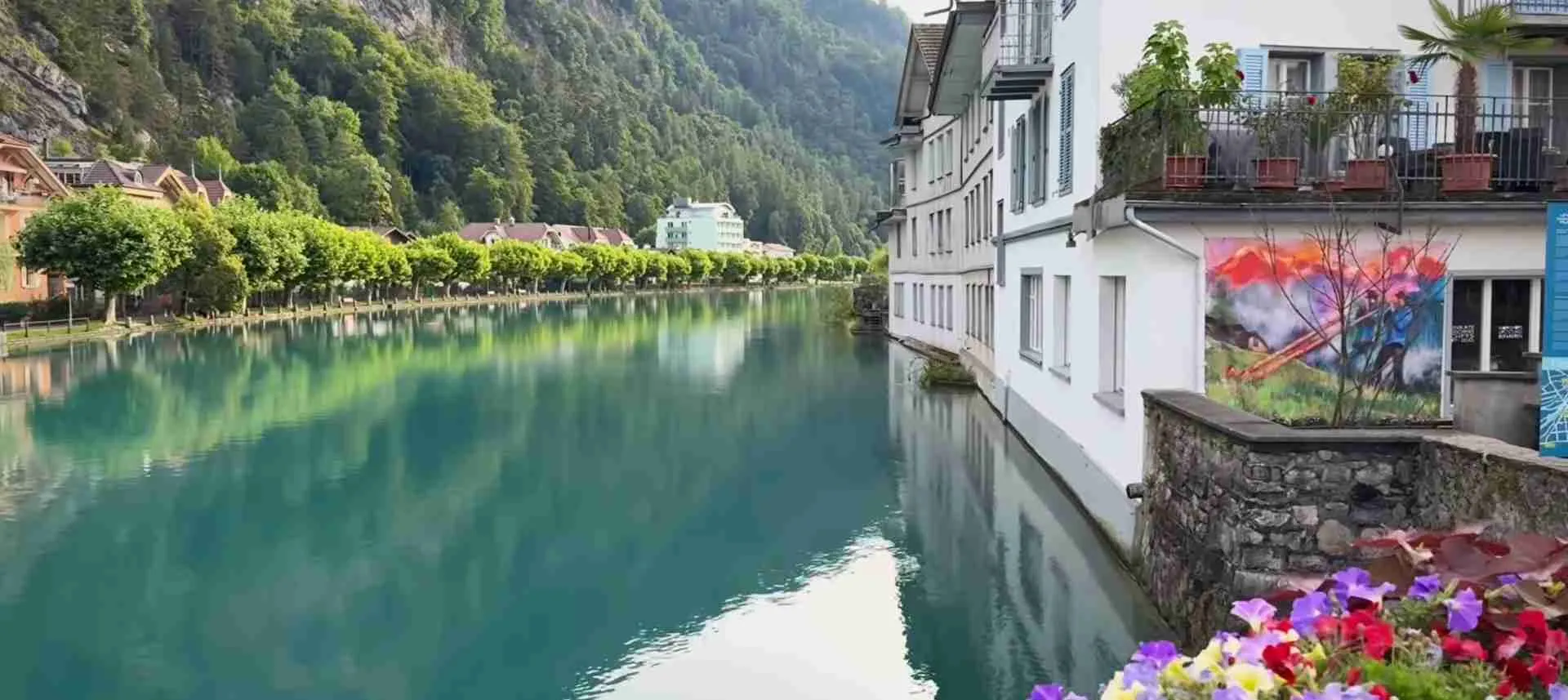
Interlaken, positioned between the sapphire waters of Lake Thun and Lake Brienz beneath the towering peaks of the Eiger, Mönch, and Jungfrau, ranks among Switzerland’s most spectacular alpine destinations. This comprehensive planning resource provides verified costs, transportation strategies, accommodation recommendations, and insider tips to help you navigate one of Europe’s premier mountain gateways in 2026.
Key Takeaways: Visiting Interlaken 2026
- Daily Budget Planning 2026: Budget travelers need CHF 115-200 ($120-210) per person daily sharing accommodation, mid-range visitors spend CHF 215-370 ($225-380), while luxury travelers invest CHF 680-1,130 ($705-1,170). Weekly costs range from CHF 805-1,400 ($835-1,450) budget to CHF 4,760-7,910 ($4,930-8,190) luxury.
- Peak Mountain Excursion Costs 2026: Jungfraujoch tickets cost CHF 261 ($270) return from Interlaken during peak season May through October, dropping to CHF 224 ($232) November through April. Swiss Travel Pass holders pay CHF 177 ($183) peak season and CHF 149 ($154) off-peak, with mandatory CHF 10 ($10) seat reservations May through October.
- Free Local Transportation Benefit: Every overnight guest receives the complimentary Interlaken Guest Card providing free travel on all local buses within zones 60-64 plus discounts on mountain railways including 15% off Harder Kulm and 20% off Schynige Platte. This benefit alone saves CHF 50-100 ($50-100) weekly on local transport.
- Optimal Visit Timing 2026: June through September delivers ideal hiking weather with temperatures 15-25°C (59-77°F), while December through March offers excellent skiing conditions. April through May and September through October provide shoulder season value with hotel rates 20-30% lower than peak summer and fewer crowds at major attractions.
- Strategic Base Location: Position yourself between Interlaken Ost and Interlaken West stations for maximum convenience. Interlaken Ost connects directly to mountain railways toward Jungfraujoch, Grindelwald, and Lauterbrunnen, while Interlaken West provides easier access to Lake Thun boat services and the town center shopping district.
- Multi-Day Pass Economics 2026: The Jungfrau Travel Pass (3-8 days from CHF 165/$171) includes unlimited regional trains, free Harder Kulm access, and reduces Jungfraujoch supplements to CHF 63-79 ($65-82). For visitors planning three or more mountain excursions, the pass typically saves CHF 150-300 ($155-310) compared to individual tickets.
People Also Ask About Visiting Interlaken 2026
How much does Interlaken cost per day in 2026?
Daily costs in Interlaken range from CHF 115-200 ($120-210) per person for budget travelers sharing accommodation to CHF 215-370 ($225-380) for mid-range comfort and CHF 680-1,130 ($705-1,170) for luxury experiences. Budget costs include hostel beds CHF 64-100 ($66-104) per person, meals CHF 48-72 ($50-75), and basic attractions. Mid-range encompasses hotel accommodation CHF 110-175 ($114-181) per person in shared double rooms, restaurant dining CHF 67-108 ($69-112), and moderate excursions. Luxury visitors staying in five-star properties spend CHF 390-600 ($405-620) per person on accommodation alone, with upscale dining adding CHF 150-250 ($155-260) daily. All ranges assume two people sharing hotel rooms with costs divided equally. The complimentary Interlaken Guest Card provided by accommodations significantly reduces transport expenses by offering free local bus travel throughout your stay.
Is Jungfraujoch worth the high ticket price in 2026?
Jungfraujoch justifies its CHF 261 ($270) peak season cost for most visitors through the combination of Europe’s highest railway station at 3,454 meters, year-round snow and ice experiences including the Ice Palace, panoramic viewing platforms overlooking the Aletsch Glacier, and the engineering marvel of the cogwheel railway itself constructed between 1896 and 1912. The excursion requires a full day with early morning departure recommended for optimal weather conditions and crowd management. Cost-conscious travelers should purchase tickets during off-peak months November through April when prices drop to CHF 224 ($232), or invest in the Swiss Travel Pass reducing costs to CHF 149-177 ($154-183) depending on season while also covering other transportation throughout Switzerland. The Good Morning Ticket available May through November offers 20% savings for travelers willing to depart on the first or second train and descend by early afternoon. Visitors primarily interested in alpine views without the premium Jungfraujoch cost should consider alternative destinations like Harder Kulm at CHF 44-51 ($44-53) or Schilthorn offering comparable panoramas at lower expense.
What’s the best base location for first-time visitors to Interlaken in 2026?
First-time visitors should base themselves in central Interlaken between the Ost and West railway stations, specifically within the Höhematte Park vicinity along Höheweg boulevard. This central corridor positions you within 10-15 minutes walking distance of both major train stations, provides immediate access to the free Guest Card bus network, places restaurants and supermarkets steps from your accommodation, and offers direct mountain views from many properties. Interlaken Ost serves as the departure point for all mountain excursions toward Jungfraujoch, Grindelwald, Harder Kulm, and Lauterbrunnen, making proximity to this station valuable for travelers prioritizing alpine activities. Interlaken West provides better access to Lake Thun boat services, the main shopping district, and evening dining options. Hotels in the Unterseen neighborhood just across the Aare River from Interlaken West deliver quieter residential ambiance while maintaining easy bus or walking access to both stations. Budget travelers staying in the Matten district southeast of Interlaken Ost sacrifice some central convenience but gain proximity to the Harder Kulm funicular base station and quieter surroundings. Avoid accommodations in distant villages like Wilderswil, Bönigen, or Iseltwald for first visits as these require additional transport planning despite Guest Card coverage.
How many days do I need to experience Interlaken properly in 2026?
Interlaken requires a minimum of 3-4 days to experience its signature alpine attractions without constant rushing, with 5-7 days allowing comprehensive exploration of the Jungfrau region. A focused 3-day itinerary typically includes one full day for Jungfraujoch (departing 7-8 AM, returning 4-5 PM), one day exploring Lauterbrunnen Valley with stops at Trümmelbach Falls and Mürren or Wengen, and one day combining Harder Kulm morning ascent with Interlaken town exploration and lake activities. Adding 2-3 additional days enables Schilthorn excursion, Grindelwald First activities including the cliff walk, a Lake Thun or Lake Brienz boat cruise to Brienz or Thun towns, and relaxed hiking on lower altitude trails without exhausting daily schedules. Seven days allows inclusion of Schynige Platte vintage cogwheel railway, Giessbach Falls and historic hotel, multiple valley hikes, paragliding or adventure sports, and day trips to nearby destinations like Bern or Lucerne. Weather contingency planning matters significantly as low clouds or precipitation diminish mountain viewpoint experiences, so building 1-2 flexible days into longer itineraries provides insurance against adverse conditions. Many visitors underestimate travel time to high-altitude destinations, with the Jungfraujoch journey consuming 5-6 hours round-trip before accounting for summit time, making rushed 1-2 day visits leave major attractions unexplored.
Extended multi-day tours – 5+ days
Featured Interlaken Multi-Day Tour Packages
6 days
6 Days Trip to Switzerland
- ✓ Comprehensive Interlaken tour
- ✓ Expert local guides included
- ✓ All accommodation arranged
- ✓ Transportation provided
6 days
Switzerland in a Nutshell Small Group Tour 2026
- ✓ Comprehensive Interlaken tour
- ✓ Expert local guides included
- ✓ All accommodation arranged
- ✓ Transportation provided

5 days
Grand Tour of Switzerland – 5 Days
- ✓ Comprehensive Interlaken tour
- ✓ Expert local guides included
- ✓ All accommodation arranged
- ✓ Transportation provided
4 days
Switzerland 4-Day Tour: Alpine Classics (Jungfraujoch, Thermal Spa & Steep Funicular)
- ✓ Booking needs min. 2 travelers
Multi-day tour packages powered by TourRadar. Prices and availability subject to change.
Introduction: Planning Your Interlaken Adventure 2026
Interlaken occupies a geographically privileged position in the Bernese Oberland, where the turquoise waters of Lake Thun and Lake Brienz converge beneath the permanent snow fields of Switzerland’s most iconic mountain trilogy. The town functions primarily as a gateway rather than a destination unto itself, serving as the transportation hub connecting lowland Switzerland to the high alpine realm of the Jungfrau region. This dual-lake, dual-station configuration creates both opportunity and complexity for visitors navigating the area’s extensive network of mountain railways, lake steamers, and alpine villages. Understanding Interlaken’s role as basecamp rather than endpoint proves essential to successful trip planning, as the region’s premier attractions lie beyond the town boundaries in surrounding valleys and summit stations.
The 2026 travel season brings continued post-pandemic normalization of visitor patterns while maintaining enhanced digital infrastructure including the Interlaken Pass digital guest card system, improved online ticketing platforms for mountain railways, and streamlined seat reservation processes for peak season Jungfraujoch travel. Accommodation availability has stabilized following several years of fluctuating demand, with competitive pricing particularly evident in the mid-range three and four-star hotel categories where international visitor mix returns to pre-2020 diversity. Mountain railway operators have implemented dynamic pricing strategies rewarding advance bookings and off-peak travel, creating opportunities for budget-conscious travelers willing to plan ahead and accept schedule flexibility. The mandatory seat reservation requirement for Jungfraujoch travel between May and October, initially introduced as a crowd management measure, now represents standard procedure requiring advance planning rather than spontaneous day-of decisions.
Interlaken’s climate occupies the transitional zone between temperate Swiss lowlands and harsh alpine environments, creating distinct seasonal personalities. Summer months June through August deliver optimal weather for mountain viewpoints and hiking trails, with average temperatures 18-24°C (64-75°F) in town and reliably accessible cable car destinations under clear skies. This peak season generates premium pricing across accommodations and concentrated crowds at major attractions, particularly Jungfraujoch where daily visitor volumes can exceed 5,000 during July and August. Spring shoulder season April through May and autumn September through October offer compelling value propositions with hotel rates dropping 20-30% below summer peaks, thinner crowds at mountain destinations, and generally stable weather despite occasional unseasonal snow at high elevations. Winter December through March transforms Interlaken into a ski resort base, with the town itself remaining snow-free or lightly covered while surrounding mountains including Grindelwald-First, Mürren-Schilthorn, and Jungfraujoch maintain reliable winter sports conditions. November stands out as the low season, with many mountain facilities closed for maintenance and weather conditions variable.
Transportation infrastructure radiates from Interlaken’s two railway stations with clockwork Swiss efficiency. Interlaken Ost serves as the primary departure point for mountain-bound trains toward Lauterbrunnen, Grindelwald, and ultimately Jungfraujoch, while also hosting the base station for Harder Kulm funicular immediately across the Aare River. Interlaken West functions as the western gateway with direct rail connections to Bern, Lucerne, and Zurich, plus proximity to boat piers serving Lake Thun destinations including Thun town and Spiez. Local bus services connect both stations with accommodation areas, though the compact central zone between stations remains comfortably walkable for most visitors. The complimentary Guest Card provided by all registered accommodations eliminates local transport costs within designated zones, representing a significant value add worth CHF 50-100 ($50-100) over a typical week-long stay. This guest card system functions automatically through hotel check-in rather than requiring separate application, though travelers must carry the personalized card on all bus journeys as inspectors board randomly and fine uncarded passengers despite their overnight guest status.
Cost structure in Interlaken reflects Switzerland’s position as one of Europe’s most expensive countries, with prices substantially higher than Mediterranean or Eastern European alternatives. A fundamental understanding of the Swiss pricing model prevents budget shock: restaurant meals typically cost 2-3 times equivalent service in neighboring Germany or Austria, hotel accommodation commands premium rates even in budget categories, and mountain railway tickets represent major expenditure items frequently exceeding daily accommodation costs. The CHF 261 ($270) Jungfraujoch ticket, while shocking at first glance, aligns with Switzerland’s high-wage, high-price economy where infrastructure maintenance costs in extreme alpine environments justify premium pricing. Budget travelers can successfully navigate Interlaken through strategic decisions including hostel dormitory accommodation, self-catering from supermarkets rather than restaurant dining, prioritizing free or low-cost activities like valley hikes over expensive cable car rides, and timing visits during shoulder seasons when hotel rates drop significantly. Mid-range travelers benefit from the three-star hotel category’s strong value proposition, where CHF 220-350 ($228-362) nightly rates deliver clean, comfortable, centrally-located accommodation with included breakfast reducing daily meal costs.
The Jungfrau region’s appeal extends beyond singular attractions to encompass an interconnected network of mountain villages, scenic railways, hiking trails, and viewpoints collectively creating experiences unavailable elsewhere in the Alps. Understanding this systemic approach rather than checkbox tourism mentality enriches visits substantially. The same mountain views visible from Jungfraujoch appear from alternate perspectives at Schilthorn, Männlichen, and Schynige Platte, each offering unique vantage points and experiences justifying multiple ascents for visitors with sufficient time. Valley villages including Lauterbrunnen, Mürren, Wengen, and Grindelwald function as both destinations and gateways, where spending time exploring village streets and local restaurants proves as valuable as reaching summit viewpoints. The region’s extensive hiking trail network connects villages, viewpoints, and valleys through routes ranging from easy lakeside strolls to challenging mountain passes, with trail difficulty and required fitness levels varying dramatically. First-time visitors frequently underestimate distances and elevation changes, finding that trail segments appearing trivial on maps demand substantial effort in reality.
Understanding Interlaken’s Geography and Seasonal Weather Patterns 2026
Interlaken’s distinctive geography as a river plain town sandwiched between two major alpine lakes at 570 meters elevation creates a microclimate distinct from both higher mountain elevations and Swiss lowland regions. The Aare River flows through town connecting Lake Brienz’s glacial turquoise waters in the east to Lake Thun’s deeper blue expanse in the west, while the Eiger, Mönch, and Jungfrau massif rises dramatically to the south creating a dramatic backdrop visible from most locations. This positioning places Interlaken in a rain shadow effect during certain weather patterns while exposing it to föhn winds that can bring sudden temperature changes and clear skies. The town itself sits approximately 3,000 meters below Jungfraujoch’s summit elevation, illustrating the extreme vertical relief characterizing this region and explaining dramatic temperature differentials between town and mountain destinations.
Summer weather June through August delivers Interlaken’s most reliable conditions with average high temperatures 22-25°C (72-77°F) in town, dropping to near-freezing even during summer months at Jungfraujoch’s 3,454-meter elevation. Morning weather typically starts clear with afternoon cloud build-up common, making early morning departures for mountain excursions strategically valuable for optimal visibility. Precipitation remains possible throughout summer months, with brief thunderstorms arriving mid to late afternoon approximately 10-15 days per month. Visitors should pack layered clothing regardless of valley weather forecasts, as mountain top temperatures consistently run 15-20°C (27-36°F) cooler than town readings. Summer’s long daylight hours extend from approximately 5:30 AM sunrise to 9:30 PM sunset, providing extended activity windows and making evening boat cruises on both lakes particularly appealing.
Spring shoulder season April through May brings variable conditions with winter weather patterns gradually transitioning toward summer stability. April still experiences occasional snow at higher elevations including the Schilthorn and Jungfraujoch, though valleys and town remain mostly clear or experiencing rain rather than snow. Average temperatures range 8-18°C (46-64°F) in town during May, making valley activities comfortable while mountain tops retain full winter conditions. This period offers exceptional value for budget-conscious travelers as hotel rates remain in off-season territory while increasing numbers of trails and mountain facilities open for the season. The disadvantage involves weather unpredictability, with multi-day forecasts remaining unreliable and conditions potentially deteriorating rapidly. Alpine wildflower season peaks in June at middle elevations around 1,500-2,000 meters, making late May and early June optimal timing for travelers prioritizing botanical displays over guaranteed summit visibility.
Autumn months September through October replicate spring’s value proposition with more stable weather patterns and spectacular fall foliage displays in valley forests. September typically delivers summer-like conditions with average highs 18-22°C (64-72°F) and generally clear mountain visibility, while October introduces increasing cloudiness and overnight temperatures approaching freezing. Early October maintains most summer trail accessibility before late October snow begins closing higher elevation routes and reducing cable car operations toward winter schedules. This period attracts experienced travelers aware that shoulder season weather variability trades guaranteed perfection for substantial cost savings, with hotel rates in October running 25-35% below August peaks. The shorter daylight window compared to summer months affects activity scheduling, with sunrise moving past 7:00 AM and sunset occurring before 7:00 PM by late October.
Winter season December through March transforms Interlaken into a ski resort gateway rather than a hiking and viewpoint destination. The town itself receives minimal snow accumulation in most winters, typically seeing only 3-5 significant snowfall events producing temporary ground cover that melts within days. Surrounding mountains maintain reliable snow coverage from December onward with ski season extending into early April at higher elevations. Average winter temperatures in town range 0-5°C (32-41°F) during daytime with frequent overnight freezing. The Jungfraujoch experiences extreme cold with temperatures often reaching -20 to -30°C (-4 to -22°F) requiring specialized winter clothing beyond typical ski wear. Winter’s appeal focuses on snow activities including skiing at Grindelwald-First, Mürren, and Wengen, winter hiking on groomed trails, sledding, and experiencing snow-covered mountain landscapes. Budget travelers find excellent value during January’s post-holiday lull when hotel rates drop 30-40% below Christmas and New Year peaks while mountain facilities remain fully operational.
November stands apart as the region’s distinct low season when many mountain facilities close for annual maintenance, weather patterns shift erratically between autumn and winter regimes, and visitor volumes drop dramatically. Hotel rates reach annual lows during November but this savings comes at the cost of reduced attraction availability and weather uncertainty. Many restaurants and shops in smaller mountain villages close entirely during November. This month suits only the most flexible travelers willing to adjust plans daily based on weather conditions and facility availability. March and early April experience opposite low season dynamics with winter facilities still operational but spring weather beginning to arrive, creating unpredictable conditions where morning snow can transition to afternoon rain.
Weather forecasting for Interlaken requires understanding the difference between valley forecasts and mountain conditions. The Swiss MeteoSwiss service provides elevation-specific forecasts essential for planning mountain excursions, as Interlaken’s valley weather bears little relation to conditions 2,000-3,000 meters higher. Webcams installed at most major mountain destinations including Jungfraujoch, Schilthorn, Harder Kulm, and Grindelwald-First provide real-time visibility conditions viewable online, allowing visitors to confirm clear summit conditions before committing to expensive tickets. The föhn wind phenomenon brings sudden weather improvements with crystal-clear visibility often following periods of cloudy conditions, while föhn’s opposite Bise wind from the northeast typically indicates deteriorating weather. Local weather patterns can shift rapidly with morning clarity giving way to afternoon cloud cover, reinforcing the strategy of scheduling mountain excursions for early morning departures when visibility remains most reliable.
Accommodation Costs and Neighborhood Selection Strategies 2026
Interlaken’s accommodation market spans from backpacker dormitories charging CHF 50-80 ($52-83) per bed to grand dame palace hotels exceeding CHF 1,500 ($1,550) per room, with the majority of inventory concentrated in the budget hostel and three to four-star hotel categories. The town’s dual-station geography creates three primary accommodation zones: central Interlaken between stations offering maximum convenience, Interlaken Ost surroundings providing proximity to mountain railways and Harder Kulm, and Interlaken West vicinity delivering easier lake access and evening restaurant options. Properties describe themselves as “near Interlaken Ost” or “near Höheweg” as location indicators, with walking distances between stations and most accommodations remaining under 15 minutes making specific location less critical than in larger cities. The proliferation of apartment-style accommodations in recent years provides self-catering options valuable for families and budget-conscious travelers willing to prepare meals from supermarket ingredients rather than depending entirely on restaurant dining.
Budget accommodation CHF 50-100 ($52-104) per person includes hostel dormitories, guesthouses, and basic hotels concentrated around both railway stations. Balmers Hostel near Interlaken Ost ranks among Switzerland’s most established backpacker properties, offering dormitory beds CHF 50-80 ($52-83) per night with included breakfast, communal kitchen facilities, and active social atmosphere attracting international traveler community. Backpackers Villa Sonnenhof provides alternative hostel environment with family rooms available alongside dormitories, positioned near Höhematte Park with mountain views from common areas. The Happy Inn Lodge and similar properties occupy the budget hotel category with private rooms CHF 100-150 ($104-155) per night providing basic amenities including ensuite bathrooms and breakfast but limited additional services. Budget properties generally lack air conditioning, rely on shared kitchen facilities rather than on-site restaurants, and occupy older buildings with steep stairs and no elevator access. The Guest Card benefit provides particular value for budget travelers by eliminating local transport costs that might otherwise represent significant expense.
Mid-range three-star hotels CHF 220-280 ($228-290) per room deliver modern comfort with private bathrooms, included breakfast buffets, and central locations within walking distance of both stations. Hotels in this category including Hotel Roessli, Hotel Interlaken, and similar properties provide reliable Swiss hotel standards with comfortable beds, clean facilities, and professional service without luxury amenities. Rooms typically measure 18-25 square meters accommodating two guests comfortably with limited luggage space, featuring functional rather than design-forward furnishings. Breakfast buffets include typical Swiss spreads with bread selections, cold cuts, cheese, yogurt, and cereal providing substantial morning meals reducing daily food costs. Most three-star properties offer free WiFi, though air conditioning remains inconsistent with many relying on windows for ventilation during summer months. The Hotel Beausite, Hotel Krebs, and Carlton-Europe represent upper three-star options approaching four-star territory with superior locations along Höheweg and enhanced room amenities including mini-refrigerators and coffee makers.
Four-star hotels CHF 280-450 ($290-466) per room elevate comfort levels through larger rooms averaging 25-35 square meters, superior bedding and linens, enhanced bathroom facilities often including separate shower and bathtub, and premium locations with direct mountain or lake views. Properties in this segment including Hotel du Lac, Boutique Hotel Bellevue, and Royal St. Georges provide destination hotel experiences where the property itself constitutes part of the visit rather than merely functional accommodation. Many four-star hotels feature on-site restaurants serving dinner, spa facilities with saunas and treatment rooms, concierge services assisting with excursion bookings and restaurant reservations, and business facilities for corporate travelers. The Metropole and similar properties occupy historic buildings renovated to contemporary standards, combining architectural character with modern comforts. Four-star breakfast buffets expand beyond three-star offerings to include hot items, made-to-order eggs, premium coffee selections, and champagne service at upscale properties. Superior rooms and suites in this category provide sitting areas, balconies with furniture, and space for extended stays.
Luxury five-star hotels CHF 600-1,200 ($620-1,240) per room concentrate in the grand hotel category with Victoria-Jungfrau Grand Hotel & Spa representing the market pinnacle. This legendary property occupies prime Höheweg real estate with direct Jungfrau views, offering palatial rooms with period furnishings, multiple on-site restaurants including Michelin-quality dining, extensive spa facilities spanning 5,500 square meters, and service standards matching international luxury expectations. The five-star category typically includes butler service, turndown service, premium toiletries, plush robes and slippers, and personalized guest attention. Room sizes frequently exceed 40 square meters with junior suites starting at 50-60 square meters providing separate living areas. Luxury properties position breakfast as refined experiences with à la carte ordering complementing extensive buffet selections, often served in settings overlooking mountain or lake vistas. The Lindner Grand Hotel Beau Rivage and similar properties provide contemporary luxury alternatives to classic grand hotels, featuring modern design aesthetics and technology integration including mobile room controls and streaming entertainment systems.
Apartment rentals through platforms including Booking.com, AirBnB, and local agencies provide alternatives to traditional hotels, particularly valuable for families or groups traveling together. One-bedroom apartments CHF 150-250 ($155-260) per night and two-bedroom units CHF 250-400 ($260-414) per night offer full kitchens enabling grocery shopping and meal preparation, living room spaces, and often washing machines reducing packing requirements. Apartments work particularly well for stays exceeding four nights when grocery shopping routines develop and kitchen facilities see regular use. The Swiss Inn Apartments, Hapimag Resort Interlaken apartments, and numerous private listings provide apartment inventory across various neighborhoods. Apartment bookings require careful attention to exact locations as some listings describe themselves as “Interlaken” while actually situated in outlying villages requiring bus connections, potentially eliminating the convenience advantage.
Seasonal pricing patterns affect accommodation costs dramatically with peak summer season July through August commanding maximum rates, Christmas through New Year period generating winter premium pricing, and shoulder seasons April through May plus September through October delivering best value. A three-star hotel charging CHF 280 ($290) per room in August might drop to CHF 180-220 ($186-228) during October shoulder season and CHF 150-180 ($155-186) during November low season. Weekend rates typically exceed weekday pricing by 10-20% during peak season though this differential narrows during off-peak months. Advance booking three to six months ahead secures availability during peak periods when popular properties sell out, with flexible rate options offering cancellation privileges for CHF 20-40 ($21-41) premium over non-refundable advance purchase rates. Last-minute booking within two weeks of arrival occasionally produces deals during low season but risks limited availability during peak periods. Package deals combining accommodation with mountain railway tickets or Jungfrau Travel Pass sometimes offer value, though independent booking often proves more cost-effective when compared carefully.
Guest Card inclusion represents universal benefit regardless of accommodation category, with all registered properties from hostels to five-star hotels providing cards automatically at check-in. The card’s value includes free local bus travel within zones 60-64 encompassing Interlaken town, Wilderswil, Bönigen, Iseltwald, and nearby villages, plus discounts typically 10-20% at various attractions and mountain railways. Budget travelers derive greatest proportional benefit from Guest Card transport savings as free bus travel might otherwise cost CHF 7-10 ($7-10) daily with standard ticket purchasing. The card requires personal information completion and serves as proof of tourist tax payment, remaining valid throughout your registered stay dates. Some accommodations issue physical plastic cards while others provide digital Interlaken Pass smartphone versions, with both formats accepted on buses and at discount partner locations.
Food and Dining Budget Breakdown 2026
Interlaken’s dining costs reflect Switzerland’s position among Europe’s most expensive countries for restaurant meals, with even basic casual dining averaging CHF 25-35 ($26-36) per person before beverages and budget-conscious travelers needing strategic approaches to manage food expenses. The town offers full spectrum from Michelin-starred fine dining to supermarket self-catering, with substantial savings available for visitors willing to embrace grocery shopping and accommodation kitchen facilities. Understanding Swiss dining culture including table water charges CHF 5-8 ($5-8) per bottle, 15% typical gratuity expectations already included in menu prices, and substantial portion sizes affecting meal planning proves essential to budget management. Breakfast inclusion in most hotel rates provides significant value by eliminating one daily meal cost and supplying substantial continental spreads enabling light lunch planning.
Budget dining CHF 15-30 ($16-31) per meal requires utilizing supermarkets, casual takeaway establishments, and self-service restaurant options bypassing traditional table service. Coop supermarket located across from Interlaken Ost station operates the Restaurant Coop self-service cafeteria offering hot daily specials CHF 18-24 ($19-25) including main course, side dishes, and salad bar access. The Migros supermarket chain provides similar cafeteria facilities with pre-made sandwiches CHF 8-12 ($8-12), salads CHF 10-15 ($10-16), and hot meal boxes CHF 12-18 ($12-19) serving as economical lunch options. Bakeries including Bäckerei Heimberg and Bäckerei Fuchs sell fresh bread, sandwiches, and pastries enabling picnic meal assembly from CHF 10-15 ($10-16) per person, particularly attractive for valley or lakeside dining with purchased provisions. Kebab shops, pizza takeaway establishments, and Asian fast food outlets scattered through both station areas charge CHF 15-22 ($16-23) for substantial portions suitable as main meals. Budget travelers utilizing accommodation kitchen facilities can shop at Coop or Migros reducing breakfast costs to CHF 5-8 ($5-8) per person and dinner preparation from grocery ingredients to CHF 12-18 ($12-19) per person.
Mid-range restaurant dining CHF 30-60 ($31-62) per person without beverages encompasses traditional Swiss restaurants, international cuisine establishments, and hotel dining rooms serving breakfast and dinner. Traditional Swiss cheese fondue costs CHF 32-42 ($33-44) per person at restaurants including Bären, Goldener Anker, and other local establishments, providing substantial portions with bread and potato accompaniments. Rösti dishes featuring Switzerland’s signature fried potato preparation with various toppings run CHF 24-35 ($25-36) per serving. Schnitzel, whether pork or veal, typically costs CHF 35-45 ($36-47) with side dishes. Italian restaurants offering pizza CHF 18-28 ($19-29) and pasta CHF 22-35 ($23-36) provide alternatives to Swiss cuisine at competitive pricing. Asian restaurants including Thai and Indian establishments charge CHF 25-38 ($26-39) for main courses providing flavorful departures from Central European fare. Restaurant table water charges CHF 5-8 ($5-8) per bottle add to meal costs, though tap water requests receive varied reception from servers. Half-liter beer costs CHF 7-11 ($7-11) and wine by the glass CHF 8-14 ($8-14) representing typical beverage pricing. Three-course dinners at mid-range establishments total CHF 55-80 ($57-83) per person including appetizer, main course, dessert, and beverages.
Upscale dining CHF 80-150 ($83-155) per person features at hotel restaurants in four and five-star properties plus standalone fine dining establishments emphasizing regional ingredients and elevated preparations. Restaurant 1826 at Hotel Victoria-Jungfrau provides Michelin-quality modern European cuisine with tasting menus from CHF 120 ($124) per person before wine pairings. The Beau-Rivage at Lindner Grand Hotel and similar establishments serve seasonal menus CHF 80-130 ($83-135) per person emphasizing Swiss terroir ingredients. Fine dining experiences typically span 2-3 hours with multiple courses, sommelier-selected wine pairings adding CHF 60-100 ($62-104), and refined service standards justifying premium pricing. Restaurants at mountain summit stations including Jungfraujoch and Schilthorn charge premium rates reflecting challenging supply logistics, with simple meals CHF 35-55 ($36-57) at these elevated locations. The Panorama Restaurant at Harder Kulm serves traditional Swiss fare CHF 32-48 ($33-50) per main course in spectacular mountain view settings.
Breakfast strategies significantly impact daily food budgets with hotel-included buffets providing free substantial meals worth CHF 18-30 ($19-31) retail value. Typical Swiss hotel breakfast buffets include bread selections with butter, jam, and honey, cold cuts including ham and salami, Swiss cheese varieties, yogurt, cereal, fruit, coffee, tea, and juice. Many properties add hot items including scrambled eggs, bacon, and sausage particularly in three-star and higher categories. The breakfast buffet model enables hearty eating supporting active mountain hiking or sightseering without mid-morning snack requirements. Budget accommodations offering breakfast optional for CHF 12-18 ($12-19) additional charge compare favorably against restaurant breakfast costs CHF 18-28 ($19-29) though supermarket provision of continental breakfast items reduces costs to CHF 5-8 ($5-8) for self-caterers. Bakery breakfast pastries and coffee total CHF 8-12 ($8-12) representing mobile breakfast option for early mountain railway departures.
Lunch planning affects daily schedules and costs with picnic provisions from supermarkets enabling flexible timing without restaurant searching in valleys or at trailheads. A packed lunch assembled from supermarket purchases including sandwiches, fruit, snacks, and beverages totals CHF 10-15 ($10-16) per person providing freedom to eat anywhere mountain scenery dictates. Mountain restaurants along hiking trails serve traditional Swiss fare including soup, sausage with rösti, and cheese plates at premium pricing CHF 25-40 ($26-41) reflecting remote locations and limited competition. Many hikers adopt combination strategy packing substantial provisions while budgeting for one mountain restaurant experience providing rest break and bathroom facilities. Cable car stations typically include cafeteria-style restaurants offering hot meals, sandwiches, and beverages at pricing intermediate between valley supermarkets and isolated mountain huts.
Beverage costs merit specific attention with table water charges at Swiss restaurants surprising visitors accustomed to complimentary water service common in other countries. Sparkling mineral water costs CHF 5-8 ($5-8) per half-liter bottle with still water pricing similar. Tap water requests receive inconsistent accommodation with some restaurants providing free tap water while others decline or charge reduced fees. Ordering bottled beverages adds CHF 5-12 ($5-12) per person to meal costs making beverage expenses substantial over multi-day stays. Coffee drinks including cappuccino and latte cost CHF 4-6 ($4-6) at cafés with espresso CHF 3-4 ($3-4). Beer pricing runs CHF 6-8 ($6-8) for half-liter servings at casual establishments and CHF 8-12 ($8-12) at restaurants. Wine by the glass starts CHF 8 ($8) for house selections and CHF 12-18 ($12-19) for premium labels. Budget travelers avoiding beverage orders or bringing their own water bottles reduce meal costs significantly.
Grocery shopping for self-catering provides maximum budget control with Coop and Migros supermarkets offering full selections of staples, fresh produce, dairy products, and prepared foods. A day’s groceries for two people including breakfast items, sandwich ingredients, snacks, and dinner components totals CHF 35-50 ($36-52) depending on product choices and meal complexity. Swiss grocery prices exceed neighboring countries by approximately 40-60% making even supermarket shopping feel expensive to international visitors, though quality standards remain uniformly high. Discount chains including Aldi and Lidl operate in the region offering lower prices on many items, with Aldi particularly valuable for budget-conscious travelers willing to shop generic brands. Purchasing wine, beer, and beverages at supermarkets rather than restaurants saves dramatically with beer costing CHF 2-3 ($2-3) per bottle and wine CHF 8-15 ($8-16) per bottle enabling in-room or picnic consumption at fraction of restaurant pricing. Fresh bread from bakeries costs CHF 4-7 ($4-7) per loaf with artisan varieties reaching CHF 8-12 ($8-12).
Transportation Costs and Getting Around Interlaken 2026
Interlaken’s transportation network combines Swiss Federal Railways intercity connections, regional trains penetrating mountain valleys, local bus services, lake steamers, mountain cable cars, and funicular railways creating a comprehensive system enabling car-free tourism throughout the region. The complimentary Interlaken Guest Card provided by all accommodations eliminates costs for local bus travel within designated zones, while mountain railway tickets and regional train fares represent major budget line items requiring strategic planning. Understanding the various rail pass options including Swiss Travel Pass, Swiss Half Fare Card, and Jungfrau Travel Pass proves essential to cost optimization, as these passes dramatically reduce per-journey costs for visitors planning multiple excursions. The Swiss commitment to public transport excellence manifests in punctual schedules, integrated ticketing, and comprehensive route networks making personal vehicle rental unnecessary for typical tourist itineraries focused on Interlaken and surrounding attractions.
The Interlaken Guest Card serves as the foundation benefit for all overnight visitors, providing free unlimited travel on local PostBus and STI bus routes within zones 60-64 encompassing Interlaken town, Wilderswil, Bönigen, Iseltwald, Ringgenberg, and immediately adjacent areas. The card covers transportation to key departure points including both railway stations, the Harder Kulm funicular base, Lake Brienz boat pier at Bönigen, and local attraction access points. Bus routes operate approximately every 20-30 minutes during daytime hours with reduced evening and Sunday service, following Swiss precision with delays virtually unknown. The Guest Card requires no activation beyond registration at your accommodation, with the personalized card serving as proof of eligibility when inspectors board buses for random ticket checks. Visitors should note that Guest Card coverage ends at Interlaken boundaries, meaning train journeys to Lauterbrunnen, Grindelwald, or other mountain destinations require separate ticketing despite these locations appearing geographically close. The card additionally provides 10-20% discounts at numerous attractions including 15% off Harder Kulm funicular and 20% off Schynige Platte cogwheel railway, accumulating savings potentially reaching CHF 50-100 ($52-104) over week-long stays.
Regional train travel to mountain destinations requires individual tickets or rail pass coverage, with standard fares reflecting Switzerland’s distance-based pricing model. A one-way ticket Interlaken Ost to Lauterbrunnen costs CHF 13 ($13) in second class, to Grindelwald CHF 12 ($12), and to Wengen CHF 20 ($21) with return fares doubling these amounts. The Berner Oberland Pass offers unlimited regional travel for 3-10 consecutive days including trains between Interlaken, Lauterbrunnen, Grindelwald, Mürren, and Wengen plus local buses and boat services, priced from CHF 255 ($264) for three days. This pass provides 25% discount on Jungfraujoch tickets from Grindelwald or Wengen and 50% reduction on various mountain cable cars including Harder Kulm. Pass economics favor visitors planning four or more regional journeys beyond Guest Card zones, as three Interlaken-Lauterbrunnen-Mürren round trips alone total CHF 130 ($135) individually purchased. The Berner Oberland Pass includes Lake Thun and Lake Brienz boat services unlimited during validity period, adding significant value for visitors incorporating cruise experiences into itineraries.
The Swiss Travel Pass represents the comprehensive nationwide option providing unlimited travel on Swiss Federal Railways, boats, and PostBus services throughout Switzerland plus free entry to 500+ museums and significant discounts on mountain railways. Consecutive-day passes cost CHF 272 ($282) for three days, CHF 332 ($344) for four days, CHF 404 ($418) for eight days, and CHF 453 ($469) for fifteen days in second class, with first class passes running approximately 60% higher. For Interlaken-based visitors, the Swiss Travel Pass covers trains between Interlaken and Lauterbrunnen or Grindelwald without additional charges, provides 50% discount on most mountain cable cars, and reduces Jungfraujoch tickets to CHF 177 ($183) peak season from standard CHF 261 ($270). Pass economics require careful calculation based on planned activities, as visitors limiting excursions to two or three mountain trips during short stays may find individual ticket purchasing more economical despite higher per-journey costs. The Swiss Travel Pass particularly benefits travelers arriving from Zurich, Geneva, or other Swiss cities by including intercity rail transportation worth CHF 80-120 ($83-124) per round trip alongside Interlaken region benefits. Youth travelers ages 16-25 access Youth Pass versions offering identical coverage at 25% discount, and accompanying children under 16 travel free with parent-purchased passes.
The Swiss Half Fare Card provides 50% discount on virtually all Swiss public transport for one calendar month, priced at CHF 120 ($124) for visitors. This card works particularly well for longer stays exceeding one week or visitors making day trips outside the Jungfrau region to destinations including Bern, Lucerne, or Zermatt where full Swiss Travel Pass coverage might not be utilized comprehensively. The Half Fare Card reduces Jungfraujoch tickets to approximately CHF 131 ($136) peak season compared to CHF 261 ($270) full fare, and mountain cable cars to half price. For Interlaken-focused visitors planning multiple mountain excursions plus arrival transport from major cities, the Half Fare Card economics often prove superior to individual ticket purchasing though inferior to Jungfrau Travel Pass for intensive regional exploration.
The Jungfrau Travel Pass focuses specifically on the Jungfrau region with unlimited travel within defined boundaries including all trains between Interlaken, Lauterbrunnen, Grindelwald, Mürren, Wengen, and mountain railways excluding the premium Jungfraujoch segment. Pass durations include 3, 4, 5, 6, 7, or 8 consecutive days priced from CHF 165 ($171) for three days to CHF 320 ($331) for eight days. The Jungfraujoch supplement costs CHF 63 ($65) low season and CHF 79 ($82) high season May through October for pass holders, dramatically lower than the CHF 177-261 ($183-270) standard ticket prices. Jungfrau Travel Pass holders enjoy unlimited rides on Harder Kulm funicular, Schynige Platte cogwheel railway, and Grindelwald-First cable car included in pass price, creating exceptional value for visitors dedicating full attention to the Jungfrau region during their stay. The pass economics become compelling at three to four mountain excursions, as independent tickets for Jungfraujoch, Harder Kulm, Schynige Platte, and Grindelwald-First total CHF 420+ ($435+) while the 5-day pass plus Jungfraujoch supplement costs approximately CHF 250 ($259). This pass represents the optimal choice for travelers basing 4-7 days in Interlaken with intensive daily mountain activities planned.
Lake Thun and Lake Brienz boat services provide scenic transportation alternatives connecting Interlaken to lakeside towns while delivering cruising experiences through mountainous landscapes. BLS operates regular scheduled services between Interlaken West and Thun via Spiez on Lake Thun, and between Interlaken Ost and Brienz on Lake Brienz. A single boat journey Interlaken-Thun costs CHF 38 ($39) with journey time approximately 2.5 hours making this expensive relative to faster train alternatives CHF 13 ($13) covering the distance in 25 minutes. Boat travel justifies premium pricing as sightseeing experience rather than pure transportation, with outdoor deck seating, onboard restaurants, and panoramic lake and mountain views creating leisurely scenic journeys. Day passes for Lake Thun and Lake Brienz boats cost CHF 60 ($62) enabling unlimited cruising, recommended for visitors dedicating full days to lake exploration without specific destination goals. The Interlaken Guest Card provides 20% discount on boat day passes. Swiss Travel Pass and Berner Oberland Pass holders enjoy free boat travel on both lakes included in pass coverage, making boat cruises cost-free additions to itineraries for pass holders.
Mountain railway and cable car costs constitute major transportation expenditure items with individual rides ranging CHF 30-260 ($31-270) depending on destination altitude and return distance. Jungfraujoch represents the premium pricing endpoint at CHF 261 ($270) return peak season reflecting extreme elevation, specialized cogwheel railway requirements, and tourist demand, while Harder Kulm costs CHF 44-51 ($46-53) return positioning it as accessible local mountain. Schilthorn cable car from Mürren costs CHF 73 ($76) return and Grindelwald-First cable car CHF 62 ($64) return, with various combination tickets and route options creating pricing complexity. Advance online booking sometimes offers modest discounts CHF 5-10 ($5-10) below walk-up window prices, though savings remain relatively minor. Good Morning tickets on certain routes including Jungfraujoch provide approximately 20% discount for travelers departing on first or second morning services and descending by early afternoon, requiring schedule flexibility but delivering meaningful savings. Many mountain destinations offer one-way tickets enabling hikers to ride up and walk down, with one-way fares typically 50-60% of return ticket costs.
Taxi services in Interlaken charge premium Swiss rates with base fares CHF 8-10 ($8-10) plus distance and time charges accumulating rapidly. A short ride between Interlaken stations costs approximately CHF 15-18 ($16-19), while trips to nearby villages like Wilderswil run CHF 20-30 ($21-31). Taxis remain rarely necessary given comprehensive bus and train coverage plus Guest Card free transport, though late evening returns or heavy luggage scenarios might justify occasional use. Uber operates in Interlaken with pricing comparable to traditional taxis, offering app-based booking convenience and payment convenience. Most visitors utilizing taxis do so only for airport transfers or accommodation arrival when bus connections prove cumbersome with luggage.
Bicycle rental provides alternative transportation mode with various shops offering standard bikes CHF 25-35 ($26-36) per day and e-bikes CHF 50-75 ($52-78) per day. Interlaken’s generally flat terrain between lakes makes cycling pleasant for valley exploration though mountain approaches beyond immediate town involve significant gradients challenging casual cyclists. Dedicated cycling paths follow lake shores and connect Interlaken to Unterseen, Bönigen, and other nearby areas providing car-free riding. E-bike popularity has grown substantially as motor assistance enables comfortable riding on longer distances and moderate inclines without fitness demands of standard bicycles. Multi-day rentals typically offer discounted daily rates, with weekly rentals reducing costs to CHF 18-25 ($19-26) daily for standard bikes.
Jungfraujoch Excursion Planning and Cost Management 2026
The Jungfraujoch excursion to Europe’s highest railway station at 3,454 meters represents Interlaken’s signature attraction and simultaneously its most expensive single-day expenditure, requiring careful planning to maximize experience value while managing the CHF 261 ($270) peak season ticket cost. The journey combines Swiss engineering achievement spanning 1896-1912 construction with permanent snow and ice landscapes, panoramic viewing platforms overlooking the 23-kilometer Aletsch Glacier, and year-round alpine experiences impossible at lower elevations. Understanding route options, timing strategies, pass discounts, and on-site activities enables visitors to optimize this premium experience while avoiding common pitfalls including weather disappointment, schedule misjudgment, and altitude discomfort affecting unprepared travelers.
The standard Jungfraujoch ticket from Interlaken Ost costs CHF 261 ($270) for adult return travel May through October peak season, reducing to CHF 224 ($232) during November through April low season. This substantial price reflects several factors including specialized cogwheel railway technology enabling steep mountain ascent, extreme infrastructure maintenance costs in harsh alpine environment, and tourist demand supporting premium positioning. Tickets include unlimited travel on the route network with flexibility to vary ascent and descent paths between the classic Kleine Scheidegg route via Wengen and the modern Eiger Express cable car via Grindelwald. The final segment from Eiger Glacier station to Jungfraujoch summit requires seat reservations during May through October costing CHF 10 ($10) per person round trip, mandatory rather than optional during this period. Advance online booking through jungfrau.ch or swissrailways.com provides electronic tickets delivered by email eliminating physical ticket collection requirements.
Rail pass discounts substantially reduce Jungfraujoch costs for eligible travelers. Swiss Travel Pass holders pay CHF 177 ($183) peak season and CHF 149 ($154) off-peak representing 25% discount from Grindelwald or Wengen starting points with the Interlaken-Grindelwald or Interlaken-Wengen segments covered free under pass terms. Swiss Half Fare Card holders receive 50% discount throughout resulting in CHF 131 ($136) peak season and CHF 112 ($116) off-peak for the full Interlaken-Jungfraujoch journey. Jungfrau Travel Pass holders enjoy the lowest supplement cost at CHF 79 ($82) peak season and CHF 63 ($65) off-peak, as the pass covers all regional trains free and applies maximum discount to the Jungfraujoch premium segment. Berner Oberland Pass provides 25% discount from Grindelwald or Wengen similar to Swiss Travel Pass. These pass economics make Jungfraujoch significantly more accessible for visitors holding any major Swiss rail pass, potentially saving CHF 80-200 ($83-207) per person compared to full fare.
The Good Morning Ticket program operates May through November offering approximately 20% discount for travelers departing on the first or second morning train services and agreeing to descend by early afternoon. Specific departure times vary by season but typically require leaving Interlaken by 6:30-7:30 AM and departing Jungfraujoch by 1:00-2:00 PM. This restricted schedule suits early risers and photographers targeting optimal morning light conditions while deterring travelers preferring leisurely late starts. The Good Morning Ticket from Grindelwald or Wengen costs approximately CHF 180-190 ($186-197) compared to standard CHF 239 ($248) peak season pricing, though exact rates vary seasonally. The program reinforces strategic value of early morning mountain excursions when weather typically provides clearest visibility before afternoon cloud build-up.
Route selection between the classic Kleine Scheidegg approach and modern Eiger Express option affects journey character more than cost, as ticket prices remain identical regardless of chosen path. The traditional route from Interlaken Ost travels via Lauterbrunnen and Wengen to Kleine Scheidegg station, then boards the historic Jungfrau Railway cogwheel train ascending through tunnels inside the Eiger North Face to Jungfraujoch. This journey spans approximately 2.5 hours one direction with spectacular valley and mountain views throughout, passing through the engineering marvel of the century-old railway including the Eiger Wall observation station carved from solid rock. The modern alternative takes the Eiger Express cable car from Grindelwald Terminal to Eiger Glacier station in 15 minutes, continuing on Jungfrau Railway to the summit. This route reduces travel time to approximately 1.5 hours one direction while sacrificing some traditional railway experience for dramatic cable car journey with enormous vertical relief visible below gondola cabins. Most visitors combine both routes, ascending via one path and descending via the other to experience full variety while avoiding backtracking.
On-site attractions at Jungfraujoch include the Sphinx observation deck reached by elevator from the railway station, Ice Palace featuring sculpted ice chambers and tunnels carved inside the glacier, Alpine Sensation exhibition documenting railway construction history, and outdoor snow plateau enabling walks on permanent snowfield with marked paths and photo opportunities. All attractions except restaurants fall within the ticket price without additional charges. The viewing platform provides 360-degree panoramas encompassing the Aletsch Glacier stretching 23 kilometers southward, surrounding four-thousand-meter peaks including Mönch and Jungfrau, and on exceptionally clear days visibility extending to the Black Forest in Germany. Winter temperatures at the summit consistently reach -10 to -25°C (14 to -13°F) even during summer valley warmth, requiring substantial cold-weather gear including insulated jacket, gloves, hat, and sturdy footwear with grip for icy surfaces. Visitors underestimating conditions frequently retreat indoors after brief summit exposure, diminishing experience value.
Altitude effects impact some visitors at Jungfraujoch’s 3,454-meter elevation, with thin air potentially causing headache, dizziness, and shortness of breath particularly for travelers arriving from lowland regions without acclimatization. The ascent from 570-meter Interlaken valley to summit spans less than three hours providing limited adaptation time. Most visitors experience no serious issues beyond slight breathlessness with exertion, but individuals with heart conditions, respiratory problems, or severe altitude sensitivity should consult physicians before planning this excursion. Staying well-hydrated, ascending gradually without rushing, and limiting physical exertion at the summit reduces altitude discomfort. The pressurized train tunnels and enclosed station areas provide refuge if altitude symptoms develop. Pregnant women, very young children, and elderly visitors should exercise particular caution regarding altitude exposure.
Weather dependency critically affects Jungfraujoch experience value, as low cloud cover obscuring mountain views transforms the expensive journey into disappointment seeing nothing but white fog. Checking real-time weather conditions and webcam feeds before committing to the trip proves essential, with the Jungfraujoch webcam on jungfrau.ch displaying current summit visibility. Ideal conditions feature clear blue skies with unlimited visibility, while partial clouds still enable acceptable viewing experiences. Dense fog or heavy precipitation warrant rescheduling if schedule flexibility permits. The föhn wind phenomenon bringing sudden weather clearing often follows cloudy periods, creating opportunities for last-minute bookings when forecasts improve. Summer afternoons tend toward cloud build-up reinforcing early morning departure strategy, while winter months provide generally more stable atmospheric conditions though colder temperatures.
Dining at Jungfraujoch costs premium rates reflecting supply logistics challenges delivering food and supplies to isolated mountain location. The self-service restaurant offers hot meals CHF 25-35 ($26-36), sandwiches CHF 12-18 ($12-19), and beverages CHF 5-8 ($5-8) with limited seating during peak periods requiring patience or outdoor eating. Á la carte restaurant Crystal provides upscale Swiss cuisine CHF 45-65 ($47-67) per main course in refined atmosphere reservations recommended. Budget travelers should consider packing substantial snacks or sandwiches purchased at Interlaken valley supermarkets, as mountain prices discourage multiple food purchases. Coffee CHF 5-6 ($5-6) and hot chocolate CHF 6-8 ($6-8) warm cold visitors but add to daily costs. The shops sell Swiss souvenirs, chocolate, and branded merchandise at tourist pricing CHF 15-60 ($16-62) for typical items.
Time allocation requires minimum 5-6 hours round trip including 2.5-3 hours travel each direction and 1.5-2 hours summit time sufficient for viewing platform visits, Ice Palace tour, and photos. Dedicated photographers or visitors enjoying leisurely summit experiences might allocate 3-4 hours at the top extending total excursion to 7-9 hours. Early morning departures 6:30-8:00 AM returning mid-afternoon 2:00-4:00 PM represent standard timing enabling same-day additional activities in Interlaken valley or afternoon relaxation. Full-day dedication to Jungfraujoch proves appropriate given the experience significance and ticket cost, with attempting to combine this excursion with other major mountain destinations creating exhausting rushed schedules reducing enjoyment.
Alternative Mountain Excursions and Valley Activities 2026
Harder Kulm represents Interlaken’s most accessible mountain viewpoint, rising to 1,322 meters directly above town with panoramic perspectives over both Lake Thun and Lake Brienz plus frontal Eiger, Mönch, and Jungfrau views rivaling more expensive destinations. The Harderbahn funicular operates April through November climbing 755 meters in 10 minutes from its base station reached via 7-minute walk from Interlaken Ost across the Aare River. Round-trip tickets cost CHF 44-51 ($46-53) with significant discounts available: 50% reduction for Swiss Travel Pass, Swiss Half Fare Card, and Berner Oberland Pass holders bringing costs to CHF 22-26 ($23-27), and free inclusion for Jungfrau Travel Pass holders. The 15% Interlaken Guest Card discount lowers standard fares to approximately CHF 37-43 ($38-45). This combination of modest cost, easy access, and spectacular views makes Harder Kulm essential for virtually all Interlaken visitors, typically requiring 2-3 hours total including funicular rides and summit exploration.
Summit facilities include the Two Lakes Bridge viewing platform featuring glass floor panels suspended over the void, the Panorama Restaurant serving traditional Swiss fare CHF 32-48 ($33-50) per main course with outdoor terrace seating in favorable weather, and short hiking trails extending from the station area. The west-facing platform provides classic heart-shaped photo opportunity framing Interlaken town and Lake Thun with mountain backdrop, while the east platform emphasizes Lake Brienz perspectives. Sunset visits during summer evening operations create particularly dramatic lighting conditions, though securing return funicular capacity becomes competitive during peak periods. The hike from Interlaken to Harder Kulm summit spans approximately 8 kilometers with 750 meters elevation gain requiring 2-2.5 hours for fit hikers, offering economical alternative to funicular ride while providing forest trail experience. Most visitors ride up and hike down enabling downhill walk without purchasing descent ticket.
The Schilthorn cable car system rising to 2,970 meters near the summit of the Schilthorn peak provides dramatic alternative to Jungfraujoch at lower cost with James Bond 007 film location appeal. The rotating Piz Gloria restaurant at the summit gained fame as location for “On Her Majesty’s Secret Service” with exhibit materials and interactive displays celebrating this connection. The journey from Mürren village requires cable car transfers at Birg mid-station and continues to Schilthorn summit. Round-trip tickets from Interlaken starting via Lauterbrunnen-Mürren route cost approximately CHF 120-140 ($124-145) with rail pass discounts available. The summit provides 360-degree panoramic viewing platform with more than 200 identified peaks visible on clear days spanning from Jungfrau to Mont Blanc. Bond World exhibit occupies interior spaces with interactive displays, film clips, and photo opportunities. The Birg mid-station features the Thrill Walk suspended walkway and additional viewing platforms creating intermediate stop opportunities during descent.
Grindelwald-First cable car rising to 2,166 meters delivers family-friendly mountain experience with adventure activities including the First Cliff Walk suspended pathway, First Flyer zipline, Mountain Cart alpine coaster, and Trotty-Bike scooter descent available seasonally. The return cable car ticket from Grindelwald village costs CHF 62 ($64) with combination tickets including cliff walk access bundled at modest premium CHF 3-5 ($3-5). Swiss Travel Pass holders receive 50% discount and Jungfrau Travel Pass holders enjoy free access making this attractive addition to multi-day Jungfrau region itineraries. The summit provides viewing platform perspectives toward Eiger North Face and surrounding peaks, multiple hiking trail options descending toward Grindelwald or connecting to other destinations, and the Bergrestaurant serving lunch CHF 25-40 ($26-41). Adventure activities each carry additional charges CHF 20-35 ($21-36) per person on top of cable car access, appealing to active families and thrill-seekers while less compelling for visitors prioritizing pure mountain scenery.
Schynige Platte cogwheel railway represents nostalgia transportation reaching 1,967 meters via vintage rack railway built 1893, operating May through October exclusively. The journey from Wilderswil station near Interlaken spans 7.5 kilometers ascending 1,400 meters over approximately 50 minutes through alpine meadows dotted with wildflowers during June and July peak bloom. Round-trip tickets cost CHF 68 ($70) with 20% Guest Card discount available and 50% rail pass reductions. The summit station complex includes the Alpine Garden Botanical Museum displaying 600+ regional mountain plant species, Panorama Restaurant, and network of ridge trails toward Faulhorn providing day-hike options. The railway’s vintage character including historic coaches and cogwheel technology appeals particularly to railway enthusiasts and families seeking gentler mountain experience compared to extreme altitude destinations. Views encompass Eiger, Mönch, and Jungfrau from different perspective emphasizing the Lauterbrunnen and Grindelwald valleys below.
Lake cruises on Lake Thun and Lake Brienz provide leisurely scenic experiences contrasting with vertical mountain excursions. BLS operates regular boat services connecting lakeside towns with commentary, onboard dining, and covered plus outdoor seating areas. A Lake Brienz cruise from Interlaken Ost to Brienz village spans 90 minutes passing beneath limestone cliffs and through turquoise glacial waters, costing CHF 32 ($33) one-way or CHF 60 ($62) for unlimited day pass. Lake Thun services from Interlaken West reach Thun town via Spiez over 2.5 hours showcasing castles, villages, and mountain backdrops. The day passes enable hop-on hop-off approach exploring lakeside villages including Iseltwald gaining fame from Korean drama filming, the gardens and waterfalls at Giessbach reached via historic funicular, and Thun’s medieval old town and castle. Swiss Travel Pass and Berner Oberland Pass holders enjoy free unlimited boat travel on both lakes transforming cruises from costly extras to included experiences. Early morning and late afternoon boat departures provide optimal light conditions and thinner crowds compared to midday peak periods.
Lauterbrunnen Valley exploration requires minimal costs beyond regional train travel as numerous attractions including Staubbach Falls plunging 297 meters, Trümmelbach Falls channeling glacier meltwater through rock formations charging CHF 14 ($14) admission, and multiple hiking trails spanning valley length remain free or low-cost. The valley’s 72 waterfalls create dramatic scenery particularly during spring meltwater peak May through June. Village exploration in Mürren, Wengen, and Gimmelwald provides insight into traditional Swiss mountain community life, with each village accessible via cable car, cogwheel railway, or on foot. Mürren’s car-free status and cliff-edge positioning create particularly scenic village environment appealing to photographers and travelers seeking authentic mountain ambiance beyond tourist hotspots. Multi-hour valley hikes connecting villages and viewpoints cost nothing beyond initial transport to trailheads, with routes ranging from easy valley floor paths to challenging mountain passes requiring fitness and proper equipment.
Adventure sports including paragliding, canyoning, and rafting attract active visitors willing to invest CHF 150-280 ($155-290) per person for guided experiences. Paragliding tandem flights departing from Harder Kulm or surrounding mountains provide 15-20 minute aerial perspectives over Interlaken and lakes, costing CHF 180-220 ($186-228) including transport, equipment, and instructor. Canyoning trips descending alpine gorges through combination of rappelling, swimming, and jumping span half-day excursions CHF 150-200 ($155-207) requiring good fitness and comfort with water activities. Rafting on the Lütschine and Aare rivers ranges from gentle family floats CHF 80-120 ($83-124) to challenging whitewater sections CHF 130-180 ($135-186). These activities operate May through September weather-dependent with advance booking essential during peak summer season. Many operators provide photo and video packages for additional CHF 20-40 ($21-41) capturing action footage unavailable to participants.
Complete Budget Tier Breakdowns 2026
Budget travelers visiting Interlaken need CHF 115-200 ($120-210) per person daily sharing accommodation, totaling CHF 805-1,400 ($835-1,450) per week. This tier requires strategic cost management including hostel dormitory accommodation, supermarket meal preparation, Guest Card transportation utilization, and selective attraction prioritization emphasizing free activities over expensive mountain railways. Budget travelers typically skip Jungfraujoch or allocate single splurge day while focusing remainder of visit on valley hikes, lake walks, village exploration, and lower-cost viewpoints like Harder Kulm. Accommodation in established hostels including Balmers Hostel or Backpackers Villa Sonnenhof costs CHF 64-100 ($66-104) per person nightly in dormitory beds with shared bathrooms and communal kitchen access. Meals total CHF 48-72 ($50-75) daily combining continental breakfast from supermarket provisions CHF 8-12 ($8-12), packed lunch assembled from Coop or Migros ingredients CHF 10-15 ($10-16), and simple dinner prepared in hostel kitchen CHF 25-35 ($26-36) or occasional budget restaurant meal. Transportation remains minimal with free Guest Card local bus coverage, while attractions and activities run CHF 0-20 ($0-21) daily focusing on free hiking, public beaches, village walking, and occasional low-cost museum or viewpoint entry.
A sample budget week might include arrival day orientation and town exploration, one Harder Kulm ascent CHF 44 ($46) with Guest Card discount, two days hiking in Lauterbrunnen Valley with Trümmelbach Falls visit CHF 14 ($14), Lake Brienz boat cruise to Iseltwald and Giessbach Falls CHF 32 ($33), and optional single expensive excursion either Jungfraujoch with advance Good Morning Ticket CHF 180 ($186) or Schilthorn CHF 120 ($124) absorbing largest single expenditure. Regional train travel Interlaken-Lauterbrunnen round trips total approximately CHF 26 ($27) per journey adding CHF 50-75 ($52-78) weekly for valley access. Budget travelers avoiding expensive mountain railways can substitute free valley hikes, reduce weekly costs by CHF 100-180 ($104-186), and extend trip duration with saved funds. Evening entertainment focuses on hostel socializing, sunset lake walks, and picnic dinners from supermarket provisions rather than restaurant dining and bar visits.
Mid-range travelers spending CHF 215-370 ($225-380) per person daily, totaling CHF 1,505-2,590 ($1,560-2,680) weekly, balance comfort and value through three-star hotel accommodation, restaurant dining for dinners, convenient transportation including occasional taxis, and comprehensive attraction access including premium mountain excursions. This tier enables comfortable Swiss alpine holiday without extreme luxury while avoiding constant budget calculation. Accommodation in quality three-star hotels costs CHF 110-175 ($114-181) per person sharing double rooms with private bathrooms and included breakfast buffets. Meals total CHF 67-108 ($69-112) daily combining hotel breakfast included in room rate, lunch at mid-range restaurants or packed provisions CHF 20-35 ($21-36), and dinner at traditional Swiss restaurants CHF 30-60 ($31-62) several nights weekly with occasional supermarket self-catering reducing costs. Transportation adds CHF 10-25 ($10-26) daily beyond Guest Card coverage for regional trains to valleys, occasional taxi convenience, and boat cruise day passes. Attractions and activities consume CHF 30-60 ($31-62) daily averaged across week including modest mountain excursions, museum entries, and guided experiences.
A representative mid-range week features Jungfraujoch full-day excursion CHF 177 ($183) with Swiss Travel Pass discount, Harder Kulm visit CHF 22 ($23) half-price with pass, Schilthorn cable car CHF 70 ($73) or Grindelwald-First CHF 31 ($32) with pass discount, Lake Thun boat cruise included with Swiss Travel Pass, valley hiking days mixing free trails with paid attraction entries like Trümmelbach Falls CHF 14 ($14), and one adventure activity paragliding or canyoning CHF 150-200 ($155-207). The Swiss Travel Pass 4-day cost CHF 332 ($344) provides substantial value given Jungfraujoch alone costs CHF 261 ($270) full fare, while enabling unlimited regional train travel and boat cruises. Mid-range travelers typically allocate 1-2 expensive mountain excursions plus 2-3 moderate activities weekly, balancing memorable experiences with relaxed non-scheduled days avoiding constant activity pressure. Restaurant dining occurs 4-5 dinners weekly at CHF 35-50 ($36-52) per person with remaining meals self-catered or lighter options reducing costs.
Luxury travelers investing CHF 680-1,130 ($705-1,170) per person daily, totaling CHF 4,760-7,910 ($4,930-8,190) weekly, prioritize five-star accommodation, fine dining, private guides, and comprehensive first-class experiences eliminating cost-driven compromises. This tier enables worry-free Swiss alpine immersion with concierge services handling logistics and premium positioning across all services. Accommodation at Victoria-Jungfrau Grand Hotel & Spa or similar five-star properties costs CHF 390-600 ($405-620) per person sharing junior suites or superior rooms with mountain views, turndown service, spa access, and refined amenities. Dining totals CHF 150-250 ($155-260) daily combining lavish hotel breakfast buffets, upscale restaurant lunches with wine CHF 60-100 ($62-104), and fine dining multi-course dinners CHF 80-150 ($83-155) at hotel restaurants or independent establishments. Transportation runs CHF 40-80 ($41-83) daily including private transfers, first-class rail tickets, and convenient taxi usage eliminating schedule constraints. Attractions and activities consume CHF 100-200 ($104-207) daily featuring premium mountain excursions without pass limitations, private guided experiences, and adventure activities like helicopter flights over Alps.
Luxury weekly itineraries typically include Jungfraujoch first-class journey with reserved seating and summit restaurant lunch, helicopter scenic flight CHF 300-500 ($310-518) per person, private guided valley hiking with expert naturalist CHF 400-600 ($414-621) full day, multiple mountain cable car destinations including Schilthorn and Grindelwald-First, spa treatments at five-star hotel CHF 150-300 ($155-310) per session, and curated dining experiences at Michelin-quality restaurants. Private car with driver enables flexible day trips to nearby destinations including Bern, Lucerne, or Lausanne at CHF 500-800 ($518-828) daily eliminating public transport constraints. Luxury travelers benefit from hotel concierge services handling complex logistics including mountain railway reservations, restaurant bookings at difficult-to-access establishments, and customized itinerary development based on weather conditions and personal preferences. This tier eliminates typical Swiss tourism compromises including shared accommodation, budget meal planning, pass discount optimization, and schedule inflexibility, delivering seamless sophisticated experiences throughout the visit.
Seasonal Pricing Variations and Money-Saving Strategies 2026
Accommodation pricing fluctuates dramatically across Interlaken’s distinct seasons with peak summer July through August commanding maximum rates, Christmas through New Year holiday period generating second premium spike, and shoulder months April through May plus September through October delivering optimal value. A three-star hotel charging CHF 280 ($290) per room during August peak might cost CHF 190-230 ($197-238) during shoulder season October and CHF 150-190 ($155-197) during November low season, representing potential savings of CHF 90-130 ($93-135) nightly simply through timing flexibility. Four-star properties demonstrate even more pronounced variation with CHF 400 ($414) August rooms dropping to CHF 260-320 ($269-331) in October and CHF 220-280 ($228-290) in November. These seasonal differentials enable budget-conscious travelers to access superior accommodation categories during off-peak months at prices equivalent to or below peak season budget options, elevating overall trip quality without cost increase.
Mountain railway operations and pricing similarly follow seasonal patterns though with less pronounced variation than hotels. Jungfraujoch tickets maintain year-round availability with May through October peak season pricing CHF 261 ($270) dropping to CHF 224 ($232) November through April representing 14% savings. Some mountain facilities including Schynige Platte operate seasonally May through October only, limiting winter access entirely. The mandatory CHF 10 ($10) seat reservation requirement for Jungfraujoch applies exclusively during May through October peak season, providing small additional savings during winter months beyond ticket discount. Mountain weather creates natural seasonal differentiation with winter months delivering more consistent clear days ideal for summit viewpoints despite colder temperatures, while summer reliability depends more on specific weather patterns with afternoon cloud build-up common.
Strategic timing within seasons affects availability and crowds beyond pure pricing. Early September immediately following summer vacation conclusion sees visitor volumes decline 30-40% while weather conditions remain largely summer-like, creating optimal balance of pleasant conditions and reduced congestion. Late June before school vacations commence similarly offers summer weather with moderate crowds. Weekend rates typically exceed weekday pricing by 10-20% during peak season with this differential narrowing during shoulder periods when occupancy rates fall overall. Monday through Thursday bookings during shoulder seasons frequently generate lowest rates as hotels compete for midweek business.
Advance booking strategies balance guaranteed availability against rate flexibility, with most properties offering multiple rate structures. Non-refundable advance purchase rates provide 10-15% discount compared to flexible rates with free cancellation, appropriate for committed travelers confident in dates but risky for those requiring schedule adaptability. Booking three to six months ahead during peak season secures availability at popular properties that might otherwise sell out while enabling comparison shopping across multiple hotels. Last-minute booking within two weeks occasionally produces deals during low season as properties discount unsold inventory, though peak season last-minute typically means limited availability at premium rates. Package deals combining accommodation with rail passes or mountain railway tickets sometimes offer bundled savings though careful comparison against independent booking often reveals superior value through separate purchases.
The Jungfrau Travel Pass represents the most significant single opportunity for attraction cost reduction, transforming unlimited regional train travel plus multiple mountain destinations from expensive individual purchases totaling CHF 400-500 ($414-518) into CHF 165-320 ($171-331) pass cost depending on duration. This pass economics become compelling at three to four mountain excursions, as visitors planning intensive regional exploration realize immediate savings exceeding CHF 150-250 ($155-260) compared to individual ticket purchasing. The pass works particularly well for travelers dedicating 4-7 days entirely to Jungfrau region activities rather than mixing Interlaken with other Swiss destinations. Conversely, travelers visiting Interlaken as brief stopover during broader Switzerland touring might find Swiss Travel Pass more economical despite higher absolute cost, as nationwide coverage includes intercity transport worth CHF 100-200 ($104-207) in addition to Jungfrau region benefits.
Food cost management through supermarket shopping and self-catering reduces daily expenses dramatically with potential savings of CHF 50-80 ($52-83) per person daily versus full restaurant dining. A couple eating all meals at restaurants spends approximately CHF 130-170 ($135-176) per person daily, while supermarket-focused provision costs CHF 35-50 ($36-52) daily per person representing savings of CHF 95-120 ($98-124) per person. Accommodation with kitchen facilities including apartments, hostel kitchen access, or hotel rooms with kitchenettes enables this strategy, though travelers should ensure adequate cooking equipment and refrigeration. The effort required for meal planning, shopping, and preparation represents time tradeoff against savings, with many travelers adopting hybrid approach of supermarket breakfasts and packed lunches while enjoying restaurant dinners as vacation experience.
Free and low-cost activities provide substantial value in the expensive Swiss context, with hiking trails, lake swimming beaches, village exploration, and public parks accessible without charges. A day hiking in Lauterbrunnen Valley requires only CHF 26 ($27) regional train round trip plus optional Trümmelbach Falls admission CHF 14 ($14), totaling under CHF 40 ($41) per person for full-day mountain experience. Lake Brienz shoreline walks, Höhematte Park relaxation with mountain views, and riverside paths along the Aare cost nothing while delivering authentic Swiss alpine ambiance. Photography enthusiasts can occupy entire days capturing landscapes, waterfalls, and village scenes without expenditure beyond transport costs. Budget travelers structuring itineraries around these free activities interspersed with selective paid attractions maximize experience while minimizing costs.
The Interlaken Guest Card’s often-overlooked discount benefits beyond free transport extend to various attractions and services including 15% off Harder Kulm, 20% off Schynige Platte, 10% off some shops and restaurants, and additional partner offerings. Systematically utilizing these discounts accumulates savings of CHF 30-80 ($31-83) over week-long stays through consistent card presentation at every relevant transaction. Many visitors forget Guest Card discount eligibility at partnered locations, leaving potential savings unrealized. The card’s shop and restaurant discounts prove less valuable than transport and attraction benefits given relatively few participating establishments, though any discount in Switzerland’s high-cost environment merits attention.
Group travel creates limited economies beyond shared accommodation costs, as Swiss attraction pricing typically maintains per-person fees without group discounts. Apartment rental for four people might reduce per-person accommodation costs by 20-30% compared to two hotel rooms, though meal preparation responsibilities increase. Cable car and mountain railway tickets generally charge full per-person rates regardless of group size, with occasional family packages providing modest children’s discounts. Private guided activities including hiking tours, photography workshops, and adventure sports sometimes offer minor per-person reductions for groups of four or more, though savings rarely exceed 10-15% per person.
Sample Itineraries and Daily Schedules 2026
A focused 3-day first-time visitor itinerary balances Interlaken’s signature attractions with realistic schedule pacing avoiding exhaustion. Day 1 focuses on orientation with arrival, accommodation check-in, Interlaken Guest Card acquisition, and valley exploration including Höheweg shopping street walk, Höhematte Park mountain views, and sunset stroll along Lake Brienz or Lake Thun shores. Evening restaurant dinner introduces Swiss cuisine including fondue or raclette, with early sleep enabling next morning’s demanding schedule. Total costs: accommodation CHF 110-175 ($114-181) per person mid-range hotel, dinner CHF 35-50 ($36-52), incidentals CHF 10-20 ($10-21).
Day 2 dedicates entirely to Jungfraujoch excursion departing Interlaken Ost 6:30-7:30 AM via Grindelwald and Eiger Express, arriving Jungfraujoch summit 9:00-9:30 AM enabling 2.5-3 hours exploration before 12:30-1:30 PM descent via traditional Wengen-Lauterbrunnen route returning Interlaken 3:30-4:30 PM. Pack substantial breakfast and lunch provisions purchased previous evening from supermarket reducing on-mountain dining costs, though budget CHF 20-30 ($21-31) for coffee or snacks at summit. Evening relaxation in town includes light dinner at casual restaurant or self-catered meal following exhausting mountain day. Total costs: Jungfraujoch ticket CHF 261 ($270) full fare or CHF 149-177 ($154-183) with Swiss Travel Pass, accommodation, light meals CHF 25-40 ($26-41).
Day 3 combines morning Harder Kulm ascent departing Interlaken Ost 9:00-10:00 AM for funicular ride and 1.5-2 hour summit visit, returning valley 12:00-1:00 PM, followed by afternoon Lauterbrunnen Valley exploration via regional train. Visit Staubbach Falls in Lauterbrunnen village, consider Trümmelbach Falls CHF 14 ($14) optional visit, explore village shops and cafés before evening return Interlaken. Departure preparation and packing occupies evening. Total costs: Harder Kulm CHF 44 ($46) full fare or CHF 22 ($23) with pass discount, regional train to Lauterbrunnen CHF 26 ($27) round trip covered by passes, Trümmelbach optional CHF 14 ($14), meals CHF 30-50 ($31-52).
This efficient 3-day program experiences Interlaken’s premier attractions while maintaining manageable daily schedules, totaling approximately CHF 580-750 ($600-777) per person mid-range excluding accommodation or CHF 380-480 ($394-497) with Swiss Travel Pass coverage significantly reducing transport and attraction costs. Budget travelers substituting hostel accommodation CHF 64-100 ($66-104) nightly and emphasizing self-catering reduce total trip costs to CHF 490-640 ($508-663) per person. Luxury travelers in five-star accommodation with fine dining and first-class experiences might invest CHF 2,000-3,400 ($2,072-3,522) per person over three days.
An extended 5-day itinerary adds Schilthorn excursion and Lake Brienz cruise while reducing daily intensity. Day 1 mirrors previous arrival and orientation. Day 2 remains Jungfraujoch full-day excursion. Day 3 combines Harder Kulm morning visit with afternoon leisure including lake swimming at Bönigen or Iseltwald public beaches during summer months or gentle valley walks during cooler seasons. Day 4 dedicates to Schilthorn via Lauterbrunnen-Mürren route departing morning, exploring Mürren village before cable car ascent, spending 2-3 hours at summit including Piz Gloria restaurant lunch, descending late afternoon with Birg Thrill Walk visit during descent. Day 5 features Lake Brienz boat cruise morning departure Interlaken Ost to Brienz town, exploring village including woodcarving workshops and falls above town, return boat or train afternoon, final evening dinner and departure preparation.
This 5-day program includes four major excursions while maintaining relaxed pacing with afternoon breaks and flexible timing reducing schedule pressure. Total costs approximate CHF 960-1,250 ($995-1,295) per person mid-range excluding accommodation, or CHF 580-750 ($600-777) with comprehensive pass coverage significantly reducing variable costs. The additional two days enable deeper Jungfrau region appreciation while justifying multi-day pass investment through increased utilization.
A week-long 7-day comprehensive itinerary incorporates full Jungfrau region diversity including mountain excursions, valley hiking, lake activities, and village exploration. Day 1 arrival and orientation, Day 2 Jungfraujoch, Day 3 Harder Kulm and Lauterbrunnen Valley, Day 4 Schilthorn and Mürren, Day 5 Grindelwald-First cable car with cliff walk and adventure activities plus village exploration, Day 6 Schynige Platte vintage railway and ridge hiking or Lake Thun/Brienz cruise depending on weather and preference, Day 7 flexible day for weather contingency, additional hiking, village revisits, or rest day before departure. This schedule assumes 6 active days plus 1 flexible day accommodating weather impacts or fatigue management.
The 7-day itinerary justifies Jungfrau Travel Pass investment through comprehensive regional coverage, with pass costs CHF 280-320 ($290-331) for 7-8 days substantially lower than independent ticket totals exceeding CHF 600 ($621). Total week costs approximate CHF 1,400-1,900 ($1,450-1,970) per person mid-range budget including accommodation, comprehensive pass, and moderate dining, or CHF 900-1,200 ($932-1,244) budget tier with hostel accommodation and self-catering emphasis. Luxury travelers spending CHF 4,760-7,910 ($4,930-8,190) weekly access enhanced experiences including private guides, helicopter flights, spa treatments, and premium dining throughout.
Essential Practical Tips and Travel Logistics 2026
Currency and payment methods in Switzerland primarily utilize Swiss Francs (CHF) with widespread credit card acceptance though cash remains preferred at small establishments, markets, and some mountain huts. Major credit cards including Visa and Mastercard function universally at hotels, restaurants, train stations, and cable car ticket offices, while American Express sees more limited acceptance. Contactless payment technology works seamlessly throughout Swiss transport networks and retail environments. ATMs throughout Interlaken dispense Swiss Francs with typical international withdrawal fees CHF 5-8 ($5-8) per transaction plus home bank foreign transaction fees, making larger withdrawals more economical than frequent small amounts. Exchange rates at currency exchange offices typically include 3-5% markup compared to ATM card rates, though airport and train station exchanges charge premium spreads 5-8% making them least economical options. Many establishments accept Euros at approximately 1:1 exchange rate despite official rates favoring Swiss Francs, essentially charging 10-15% premium for Euro payments, so travelers should prefer Franc transactions when possible.
Language dynamics in Interlaken reflect Switzerland’s multilingual nature with German (specifically Swiss German dialect) serving as primary local language while English enjoys near-universal comprehension in tourist-facing businesses. Hotels, restaurants, attractions, and transportation staff typically speak fluent English making communication straightforward for international visitors. Restaurant menus commonly appear in German, English, and sometimes French, while train station announcements broadcast in multiple languages. Learning basic German phrases including greetings “Grüezi” (hello), “Danke” (thank you), and “Bitte” (please/you’re welcome) demonstrates courtesy though not strictly necessary for functional communication. Price displays, train schedules, and official signage use German primarily with English translations often available, particularly at major tourist locations. Small mountain villages and family-operated businesses might have limited English proficiency making smartphone translation apps valuable backup communication tools.
Electrical systems in Switzerland operate on 230V 50Hz with Type J three-pin plugs distinctive to Switzerland, requiring travelers from most countries to bring plug adapters. Type C European two-pin plugs fit Swiss outlets’ dual-pin configuration though the earth pin hole remains unused, meaning most European electrical devices function without dedicated Swiss adapters while devices requiring grounded connections need Swiss-specific Type J adapters. North American, UK, Australian, and Asian travelers require voltage converters for devices not supporting 230V operation, though modern electronics including phone chargers, laptops, and camera equipment typically accept 110-240V making converters unnecessary for these items. Hotels generally provide limited adapter loans at front desks though bringing personal adapters proves more reliable. USB charging outlets appear increasingly common in modern hotel rooms and newer train carriages accommodating direct phone and tablet charging without adapters.
Health and safety considerations for Interlaken visits remain minimal given Switzerland’s excellent medical infrastructure, low crime rates, and well-maintained facilities. The primary health concern involves altitude sickness potential at destinations like Jungfraujoch for travelers with predisposing conditions or ascending rapidly from sea level without acclimatization. European Health Insurance Card (EHIC) holders from EU countries receive medical care under Swiss reciprocal agreements though travelers should verify coverage specifics and consider supplemental travel insurance. Non-EU visitors require comprehensive travel insurance covering Swiss medical costs running significantly higher than most countries with emergency room visits potentially exceeding CHF 500-1,000 ($518-1,036) and serious medical issues generating five-figure bills. Pharmacies (Apotheke) throughout Interlaken provide over-the-counter medications, first aid supplies, and professional pharmaceutical advice for minor ailments. Emergency services dial 144 for ambulance, 117 for police, and 118 for fire throughout Switzerland.
Personal safety risks remain minimal in Interlaken with violent crime extremely rare and property crime focused on tourist areas during peak season. Pickpocketing and bag theft occur occasionally at crowded train stations, popular viewpoints, and busy restaurants particularly during July-August peak when international visitor volumes concentrate. Standard precautions including hotel safe use for passports and excess cash, bag awareness in crowds, and avoiding luggage unattended in public spaces suffice for security. Mountain safety requires appropriate preparation including suitable footwear for hiking, weather-appropriate clothing, trail map access, and realistic fitness assessment before attempting challenging routes. Switzerland’s well-marked trail network includes difficulty ratings (blue easy, red moderate, black challenging) enabling informed route selection, though underestimating alpine conditions leads to accidents among underprepared tourists annually. Weather can change rapidly at altitude requiring layered clothing and rain protection even during summer months.
Drinking water throughout Switzerland maintains exceptionally high quality with tap water safe and pleasant-tasting throughout Interlaken and mountain destinations. Public fountains marked “Kein Trinkwasser” (no drinking water) indicate non-potable water typically from mountain streams, while unmarked fountains generally provide potable water suitable for bottle refilling. Many tourists waste money purchasing bottled water unnecessarily when restaurants and hotels provide excellent tap water free or at minimal charge. Mountain huts and cable car stations maintain reliable water supplies though confirming availability before long hikes proves prudent. The excellent public water enables travelers to carry refillable bottles reducing costs and plastic waste while maintaining hydration during mountain activities.
Internet connectivity throughout Interlaken includes reliable hotel WiFi generally provided free at mid-range and upscale properties while budget hostels sometimes charge modest daily fees CHF 3-5 ($3-5). Cafés and restaurants typically offer free WiFi to customers with varying reliability and speed. Mobile data coverage extends throughout Interlaken town and major valleys with 4G/5G service from Swiss carriers Swisscom, Salt, and Sunrise. Mountain destinations including Jungfraujoch, Schilthorn, and Harder Kulm maintain cellular connectivity enabling communication and internet access at elevations, though remote hiking trails sometimes lose signal. International visitors should verify roaming charges with home carriers as Swiss mobile data costs substantial fees outside European Union roaming agreements. Temporary SIM cards from Swiss carriers or European roaming-enabled SIMs provide more economical data access for extended stays with prepaid options available at mobile shops and some supermarkets.
Tipping practices in Switzerland differ from American customs as service charges include automatically in restaurant prices, eliminating mandatory tipping obligations. The customary practice rounds bills up to convenient amounts or adds 5-10% for exceptional service, though servers don’t depend on tips for income making this genuinely optional. Hotel porters might receive CHF 2-5 ($2-5) per bag for assistance, housekeeping tips remain uncommon, and taxi drivers appreciate rounding up fares but don’t expect specific percentages. Tour guides for adventure activities or private excursions might receive CHF 10-20 ($10-21) gratuity for excellent service. The inclusive service charge culture means travelers shouldn’t feel pressured to tip as in the United States, though showing appreciation for exceptional service through modest gratuities remains welcomed.
Shopping opportunities in Interlaken focus on Swiss specialties including chocolate, cheese, watches, and outdoor gear rather than fashion or luxury goods. Höheweg boulevard hosts numerous souvenir shops, watch retailers, and chocolate stores selling Lindt, Toblerone, and artisan chocolatier products. The Coop and Migros supermarkets provide economical Swiss chocolate purchasing at CHF 3-8 ($3-8) per bar compared to tourist shop prices CHF 8-15 ($8-16). Swiss Army knives from Victorinox including specialized models cost CHF 30-120 ($31-124) depending on features, available at souvenir shops and sporting goods stores. Quality outdoor gear from Swiss and international brands appears at specialty shops including Outdoor Interlaken and similar retailers, though prices generally exceed online or home country purchasing making these suitable for replacement needs rather than planned acquisitions. Sunday shopping proves limited as most stores close, while Saturday hours typically run abbreviated compared to weekday schedules.
Tourist information services operate from Interlaken Tourismus offices at both West and Ost stations providing maps, brochures, attraction information, and booking assistance for activities and accommodations. Staff speak English fluently and offer valuable local knowledge including weather updates, trail conditions, and event schedules. The offices sell various passes including Berner Oberland Pass and can arrange bookings for adventure sports, guided tours, and restaurant reservations. Free wifi access enables trip planning, with public computers available for brief internet use. Opening hours typically span 8:00 AM-6:00 PM Monday through Saturday with reduced Sunday hours, though summer peak season extends hours to accommodate visitor demand.
Frequently Asked Questions About Visiting Interlaken 2026
Do I need a car in Interlaken?
No, personal vehicle rental proves unnecessary and potentially disadvantageous for typical Interlaken tourism focusing on mountain excursions and valley exploration. Switzerland’s comprehensive public transport network including trains, buses, cable cars, and boats reaches all major attractions more conveniently than private vehicles while eliminating parking hassles and costs. The complimentary Interlaken Guest Card provides free local bus travel throughout your stay, while mountain destinations like Jungfraujoch and Schilthorn require railway and cable car access rather than road vehicles. Parking in Interlaken town costs CHF 2-4 ($2-4) per hour with limited availability near hotels and attractions, while many mountain villages including Mürren and Wengen prohibit private cars entirely as car-free communities. Vehicle rental costs CHF 80-150 ($83-155) per day plus fuel and parking expenses deliver no value when public transport covers all necessary connections. The rare exceptions involve travelers planning extensive day trips beyond the Jungfrau region to multiple destinations poorly served by public transport, though even these itineraries typically function effectively using Swiss rail networks.
Is Interlaken worth visiting if I can only afford budget travel?
Yes, budget travelers can successfully experience Interlaken’s core alpine appeal through strategic activity selection emphasizing free hiking, low-cost viewpoints, and valley exploration over premium mountain railways. A budget-focused week costs CHF 805-1,400 ($835-1,450) per person combining hostel dormitory accommodation, supermarket meal preparation, Guest Card free transport utilization, and selective attraction prioritization. Free activities including valley hiking in Lauterbrunnen, Lake Brienz shoreline walks, Höhematte Park relaxation with Jungfrau views, riverside trails, village exploration in Wengen and Mürren, and public beach swimming during summer provide authentic Swiss alpine experiences without expenditure beyond regional train access CHF 26 ($27) round trips to valleys. Harder Kulm at CHF 44 ($46) or CHF 22 ($23) with pass discount delivers spectacular mountain viewpoint experience at fraction of Jungfraujoch costs. Budget travelers might allocate one expensive splurge day for Jungfraujoch CHF 224 ($232) off-peak season while structuring remaining days around free and low-cost options maintaining CHF 120-150 ($124-155) daily budgets. The Jungfrau Travel Pass transforms budget feasibility by converting expensive individual tickets into unlimited regional access enabling comprehensive exploration within CHF 165-280 ($171-290) pass investment. Switzerland’s high costs affect all visitors, but strategic planning enables budget travelers to access core experiences distinguishing Interlaken from competing destinations.
How far in advance should I book Interlaken accommodation and attractions?
Book accommodation three to six months ahead for peak summer season July through August and Christmas through New Year period when popular hotels sell out and remaining inventory commands premium pricing. Shoulder season April through May and September through October requires less advance planning with two to three months ahead securing good availability and rates, while low season November through March often accommodates last-minute booking within two weeks though limited hotel inventory operates during these months. Mountain railway tickets including Jungfraujoch require online purchase one to two weeks ahead during May through October peak season when mandatory seat reservations sell out for popular departure times, particularly morning services delivering optimal weather visibility. The official jungfrau.ch and swissrailways.com websites enable advance booking receiving electronic tickets by email eliminating physical collection requirements. Off-peak November through April permits same-day or previous-day Jungfraujoch ticket purchasing as seat reservations become optional and demand rarely fills trains. Harder Kulm and other smaller mountain destinations never require advance booking accepting walk-up window purchases, though checking operating hours proves valuable as some facilities close seasonally or for maintenance. Adventure activities including paragliding, canyoning, and guided tours benefit from 3-7 days advance booking during peak season ensuring availability and preferred time slots. The general strategy involves early booking for accommodation and Jungfraujoch during peak periods while maintaining flexibility for secondary attractions and weather-dependent activities decided closer to visit dates.
What happens if weather ruins my expensive Jungfraujoch plans?
Poor weather including low clouds obscuring mountain views substantially diminishes Jungfraujoch experience value, with visitors seeing only white fog from expensive viewpoints justifying disappointment after CHF 261 ($270) ticket investment. The official policy prohibits refunds or exchanges for weather-related disappointment as tickets remain valid regardless of visibility conditions. Strategic approaches minimize weather risk including checking real-time webcams on jungfrau.ch before departure enabling same-day cancellation if fog blankets summit, maintaining schedule flexibility allowing trip postponement to subsequent days showing clearer forecasts, and purchasing tickets shortly before departure rather than days in advance when weather predictions prove more reliable. Many visitors monitor weather patterns several days adjusting plans dynamically based on developing conditions, prioritizing Jungfraujoch during optimal weather windows while substituting valley activities during questionable periods. Travel insurance covering weather-related cancellations rarely applies to attraction tickets as weather represents normal occurrence rather than insured emergency. The moral dimension involves accepting mountain weather unpredictability as inherent aspect of alpine tourism, where successful summit experiences depend partly on luck beyond traveler control. Budget travelers particularly sensitive to wasting expensive tickets should consider skipping Jungfraujoch entirely, substituting lower-cost alternatives including Harder Kulm, Schilthorn, or valley hiking delivering strong experiences at reduced financial exposure. The Jungfrau Travel Pass mitigates individual ticket loss anxiety by spreading costs across multiple destinations, though CHF 79 ($82) Jungfraujoch supplement still represents meaningful expense during poor visibility.
Can I visit Interlaken as a day trip from Zurich or Lucerne?
Yes, though day trips from Zurich or Lucerne severely limit Interlaken experience by consuming 4-5 hours in train travel leaving only 5-6 hours for actual activities, insufficient for signature mountain excursions like Jungfraujoch requiring full-day commitment. The train journey Zurich-Interlaken spans 2-2.5 hours each direction depending on connections, while Lucerne-Interlaken requires 1.5-2 hours, establishing transport time constraints eliminating major mountain railway experiences feasible only with overnight accommodation enabling early morning departures. Realistic day trip itineraries might include train arrival Interlaken mid-morning, Harder Kulm ascent and lunch, brief town exploration, afternoon Lauterbrunnen visit, and evening return to origin city. This limited program misses Interlaken’s defining appeal as gateway to Jungfrau region high mountain destinations including Jungfraujoch, Schilthorn, and Grindelwald-First requiring full days from valley base. Day trippers essentially experience Interlaken town plus one modest attraction rather than the comprehensive alpine immersion justifying the destination’s reputation. Travelers limited to single-day visits should reconsider whether Interlaken suits their constraints or whether alternatives like Lucerne, Bern, or Zurich day activities provide better value within available timeframe. The minimum recommended stay for meaningful Interlaken experience spans three nights enabling two full days for mountain excursions plus one day valley and town activities.
Is Switzerland safe for solo female travelers?
Yes, Switzerland consistently ranks among Europe’s safest countries with extremely low crime rates, well-lit public spaces, reliable public transport operating late into evening, and cultural norms respecting personal space and boundaries. Interlaken specifically attracts substantial international tourist populations creating diverse crowded environments during peak season where solo travelers blend seamlessly. Hostels including Balmers and Backpackers Villa Sonnenhof host active international communities enabling easy social connections and group activity formation for solo travelers seeking company. Standard safety precautions including hotel safe use for valuables, awareness in crowded tourist areas, and avoiding isolated locations late at night suffice for security. Public transport including trains and buses operates safely throughout day and evening with well-maintained stations and vehicles. Mountain hiking presents greater consideration with solo walkers recommended to inform accommodation of planned routes and expected return times while carrying charged mobile phones enabling emergency contact. The Swiss emergency services dial 144 for ambulance and 117 for police respond rapidly throughout the country. Solo female travelers report consistently positive experiences in Switzerland though individual comfort levels with independence vary, making hostel social environment valuable for travelers preferring group activities and shared experiences over complete solitude.
How much time should I allocate for Jungfraujoch visit?
Allocate minimum 5-6 hours round trip for Jungfraujoch excursion including 2.5 hours travel to summit, 1.5-2 hours exploring attractions at the top, and 2.5 hours return journey. Photography enthusiasts or visitors seeking extended summit time might dedicate 7-8 hours total enabling leisurely 3-4 hours at 3,454-meter elevation. The journey from Interlaken Ost to Jungfraujoch summit via Grindelwald and Eiger Express requires approximately 1.5 hours one direction, while the traditional Wengen-Kleine Scheidegg route spans 2-2.5 hours enabling scenic variety by ascending one route and descending another. Summit activities including Sphinx observation deck elevator ride, Ice Palace tunnel walking, Alpine Sensation exhibition tour, and outdoor snow plateau exploration comfortably fill 1.5-2 hours though rushed visitors complete basic viewing circuit in 45-60 minutes. Additional time allows relaxed photography without crowds, restaurant lunch with mountain views, and multiple viewing platform visits under changing light conditions. Departing Interlaken 6:30-8:00 AM reaching summit 9:00-10:30 AM provides optimal morning light and visibility before afternoon cloud build-up, returning valley 2:00-4:00 PM enabling same-day evening activities in Interlaken or surrounding valleys. Full-day dedication to Jungfraujoch proves appropriate given the experience significance and substantial ticket cost, with attempting to combine this excursion with other major attractions creating exhausting overscheduled days reducing enjoyment.
Do restaurants include service charges or should I tip?
Swiss restaurant prices include service charges automatically eliminating mandatory tipping obligations, though rounding bills up to convenient amounts or adding 5-10% for exceptional service remains customary appreciation practice. Menu prices represent final amounts including all taxes and service, making displayed CHF 32 ($33) fondue actually costing CHF 32 total rather than requiring added gratuity percentage. The Swiss service-included model differs substantially from American tipping culture where servers depend on tips for income, with Swiss restaurant staff receiving full wages independent of customer gratuities. Rounding up bills proves common courtesy, meaning CHF 47 ($49) meal might become CHF 50 ($52) payment or CHF 68 ($70) dinner rounds to CHF 70 ($73) or CHF 75 ($78) depending on satisfaction. Truly exceptional service might warrant 10% gratuity though this exceeds normal practice. Table service charges for tap water CHF 5-8 ($5-8) apply even with service included in overall pricing representing Swiss restaurant convention rather than gratuity. Hotel porters typically receive CHF 2-5 ($2-5) per bag, housekeeping rarely receives tips, and taxi drivers appreciate bill rounding but don’t expect specific percentages. Understanding the service-included system prevents overtipping from misunderstanding while modest gratuities for excellent experiences show appreciated recognition without financial pressure.
What’s the earliest age children can handle altitude destinations like Jungfraujoch?
Children ages 3-4 and older generally tolerate Jungfraujoch’s 3,454-meter elevation without serious altitude issues, though individual health variations and rapid ascent from 570-meter valley creates risks for vulnerable children requiring parental judgment. The Swiss medical recommendation suggests children under 3 avoid extreme altitude exposures above 3,000 meters as developing respiratory systems face greater stress from thin air, though many families successfully visit with toddlers experiencing no problems. Signs of altitude discomfort in children include unusual fussiness, lethargy, headache complaints, loss of appetite, and sleep disruption, necessitating immediate descent if symptoms develop significantly. Keeping children well-hydrated, ascending gradually without rushing, and limiting physical exertion at summit reduces altitude stress. The Jungfraujoch’s enclosed station facilities, heated interior spaces, and short outdoor exposure requirements make this more suitable for young children than exposed alpine destinations requiring extended outdoor time. Parents should pack substantial warm clothing including insulated jackets, hats, gloves, and sturdy footwear as summit temperatures reach -10 to -25°C (14 to -13°F) year-round, with children losing body heat faster than adults in extreme cold. Family tickets provide modest cost relief with children under 6 traveling free and ages 6-15 paying CHF 20 ($21) with Swiss Family Card, though mandatory seat reservations CHF 10 ($10) apply to all travelers May through October. Alternative lower-altitude destinations including Harder Kulm at 1,322 meters and Grindelwald-First at 2,166 meters present virtually no altitude concerns while offering family-friendly environments and facilities.
Is Interlaken busy year-round or are there quiet periods?
Interlaken experiences dramatic visitor volume fluctuations across seasons with July through August peak generating maximum crowds at attractions, hotels, and restaurants, while November and March through April represent distinct low seasons with substantially thinner tourist populations. Peak summer season July-August sees hotels approaching full occupancy, Jungfraujoch daily visitor volumes exceeding 5,000, and popular restaurants requiring reservations for dinner seating. The Christmas through New Year period creates second peak concentration particularly around winter sports though not matching summer intensity. Shoulder seasons April through May and September through October deliver optimal balance of pleasant weather and moderate crowds, with September proving especially attractive as summer vacation conclusion sees visitor numbers decline 30-40% while weather remains largely summer-like. November stands out as the quietest month with many mountain facilities closed for maintenance, hotel occupancy dropping to annual lows, and some restaurants and shops shuttering temporarily. Early spring March through April experiences similar quiet periods with winter sports season winding down but summer hiking not yet initiated. Weekend visitors from Zurich, Bern, and other Swiss cities create consistent Saturday-Sunday crowding at popular attractions like Jungfraujoch even outside peak seasons, with weekday visits particularly Tuesday through Thursday offering least crowded experiences. Early morning activities starting before 9:00 AM avoid worst crowds throughout seasons as most tourists begin days later, making sunrise viewpoint visits particularly peaceful even during busy months.