Visiting Dortmund: Ultimate Planning Resource & Travel Guide 2026
Dortmund sits at the heart of Germany’s Ruhr metropolitan region, a city reinvented from its coal and steel roots into one of Europe’s most compelling travel destinations — anchored by Germany’s largest stadium, an extraordinary industrial heritage, and a museum landscape unlike anything else in the country. Whether you’re arriving for a Bundesliga fixture at Signal Iduna Park, tracing the Ruhr Valley’s industrial past across world-class museums, or discovering a confident and affordable German city well off the standard tourist trail, this guide covers every practical detail you need for 2026.
Key Takeaways
- Affordable by German Standards: Dortmund runs significantly cheaper than Munich, Hamburg, or Frankfurt. Budget travelers spend €55-95 per person daily (two sharing budget accommodation); mid-range travelers spend €125-190 per person daily; luxury visitors invest €250-375 per person daily. A mid-range week costs €875-1,330 per person total.
- Football Capital of the Bundesliga: Signal Iduna Park — Germany’s largest stadium and home of Borussia Dortmund — is the city’s defining attraction. Stadium self-guided tours run €14 for adults in 2026; Bundesliga match tickets start from €15 for standing zones when purchased directly through BVB’s official site.
- Outstanding Rail Connectivity: Dortmund Hauptbahnhof sits on the main ICE network — 40-50 minutes from Cologne, approximately 2 hours from Frankfurt, and around 3 hours from Berlin. The city functions as the ideal base for Ruhr Valley exploration.
- Industrial Heritage at its Finest: The Ruhr Valley’s coal and steel history survives in spectacular form. The UNESCO-listed Zollverein colliery complex in Essen is 30 minutes by regional train. Dortmund’s own Zeche Zollern — an Art Nouveau industrial monument — and the Hansa Coking Plant remain among the most visually stunning heritage sites in Germany.
- Unmissable Seasonal Highlights: Late April to May brings Westfalenpark’s National Rose Garden into full bloom. Summer delivers the Juicy Beats festival and outdoor events at Phoenix See. December’s Christmas market — anchored by one of the world’s tallest Christmas trees — draws visitors from across Northwest Europe.
- Daily Budget in Practice: A representative mid-range day — hotel share €50-80, three meals €50-70, German Football Museum €17, local transport €10-15, and one further attraction €15-25 — totals €125-190 per person. Budget travelers focusing on free attractions and basic meals keep costs to €55-95 per person daily.
People Also Ask About Visiting Dortmund 2026
How much does a day in Dortmund cost in 2026?
Daily costs in Dortmund for 2026 divide cleanly into three traveller profiles. Budget travelers sharing a hostel or budget hotel pay €55-95 per person daily — this covers accommodation share, bakery breakfasts, imbiss lunches, simple restaurant dinners, local transport, and one or two low-cost attractions. Mid-range travelers in proper hotels with restaurant meals spend €125-190 per person daily (two sharing a mid-range hotel). Luxury visitors at 4-5 star properties with fine dining invest €250-375 per person daily. All figures divide hotel costs by two before summing. A mid-range week in Dortmund costs approximately €875-1,330 per person in total, including accommodation, food, transport, and sightseeing.
What are the top things to do in Dortmund in 2026?
Signal Iduna Park stadium tours lead every itinerary — this 81,365-capacity venue is the spiritual home of Borussia Dortmund and one of European football’s most atmospheric stadiums. Self-guided tours cost €14 for adults in 2026. The German Football Museum opposite Dortmund Hauptbahnhof houses Germany’s four World Cup trophies, the Champions League trophy, and an immersive 3D cinema — adult admission is €17 at the box office, €15 online. The DASA Working World Exhibition (€6 adults) covers 13,000 square metres of interactive industrial and occupational history and ranks among Germany’s finest museum experiences. Westfalenpark’s 70-hectare grounds contain Germany’s National Rose Garden and the Florianturm observation tower. Phoenix See, built on a former steelworks site, offers free waterfront walks and lakeside dining. Day trips to Essen’s UNESCO-listed Zollverein complex take 30 minutes by train.
How do I get to Dortmund in 2026?
Rail is the most practical approach from within Germany or the neighbouring Netherlands and Belgium. Dortmund Hauptbahnhof sits on the main ICE network — direct services from Cologne take 40-50 minutes, Frankfurt approximately 2 hours, Berlin around 3 hours. Dortmund Airport (DTM), 13 kilometres east, handles budget European routes operated by Ryanair and Wizz Air connecting to UK, Irish, Spanish, and Eastern European cities. Düsseldorf International Airport (DUS), 70 kilometres west, offers far wider intercontinental and European coverage — an S-Bahn connection links DUS airport to Dortmund Hauptbahnhof in approximately 75-90 minutes. By car, Dortmund occupies the intersection of the A1, A2, and A40 motorways with direct access from Cologne, Düsseldorf, Münster, and Paderborn.
Is Dortmund worth visiting for non-football fans in 2026?
Absolutely. The DASA Working World Exhibition is genuinely one of Germany’s best interactive museums regardless of interest in football or industry — the curation is exceptional, the interactive elements sustain engagement across 3-5 hours, and the English-language audio guide is outstanding. Museum Ostwall in the iconic Dortmunder U building holds a serious modern and contemporary art collection. Westfalenpark’s 3,000-variety National Rose Garden at peak bloom in May is spectacular. The Zeche Zollern Art Nouveau industrial monument provides one of Europe’s most photogenic heritage experiences. A day trip to Essen’s Zollverein UNESCO World Heritage Site — 30 minutes by train — expands the cultural offering into world-class territory. December’s Christmas market, with its record-scale Christmas tree and atmospheric mulled wine stalls, rivals any in Germany.
Extended multi-day tours – 5+ days
Featured Rhine Valley Multi-Day Tour Packages
37 days
European Adventurer (Start London)
- ✓ Comprehensive Rhine Valley tour
- ✓ Expert local guides included
- ✓ All accommodation arranged
- ✓ Transportation provided
8 days
Southern Rhine City Experience 2026
- ✓ Comprehensive Rhine Valley tour
- ✓ Expert local guides included
- ✓ All accommodation arranged
- ✓ Transportation provided
6 days
Rhine Legends 2027
- ✓ Comprehensive Rhine Valley tour
- ✓ Expert local guides included
- ✓ All accommodation arranged
- ✓ Transportation provided

5 days
The Rhine Gone Wild : A lively cruise filled with legends, flavors, and good cheer (port-to-port cruise)
- ✓ Comprehensive Rhine Valley tour
- ✓ Expert local guides included
- ✓ All accommodation arranged
- ✓ Transportation provided
Multi-day tour packages powered by TourRadar. Prices and availability subject to change.
Introduction: Why Dortmund Belongs on Your 2026 Itinerary
For most international travellers, Dortmund means one thing: football. The Yellow Wall. Eighty thousand voices. But the city has become far more than the sum of its Bundesliga heritage. Dortmund is the Ruhr Valley’s largest city — Germany’s eighth most populous — and it has undergone one of post-industrial Europe’s most convincing urban transformations. Where coal mines and steel furnaces once dominated, lakes, parks, world-class museums, and a genuine contemporary culture have taken firm root.
The city’s geography gives it unusual depth as a destination. Dortmund anchors the Rhine-Ruhr metropolitan area, a concentration of around 11 million people that places extraordinary day-trip options within arm’s reach — Cologne, Düsseldorf, Essen, Münster, and the Sauerland all within one hour by train or car. The Zollverein colliery complex in Essen, the most architecturally significant industrial monument in the world and a UNESCO World Heritage Site, takes under 30 minutes by regional train.
What sets Dortmund apart in 2026 is value. The city lacks the tourist infrastructure premium of Berlin, Munich, or Hamburg. Hotels, restaurants, and attraction prices run substantially below Germany’s best-known destinations while delivering comparable quality. A mid-range hotel room runs €100-160 per night. A sit-down dinner with beer runs €25-35 per person. The German Football Museum — one of Europe’s finest sporting museums — charges just €17. By the standards of any comparable European city with comparable attractions, Dortmund is excellent value.
The city layout rewards visitors directly. Dortmund Hauptbahnhof puts you within walking distance of the German Football Museum and the old town. A tight U-Bahn network reaches Signal Iduna Park, Westfalenpark, Phoenix See, and the outer districts quickly and cheaply. A single VRR ticket within Dortmund city costs €4. The 24-hour pass costs €8, making it practical to structure a full day of sightseeing without tracking individual fares.
This guide covers every practical element of a 2026 Dortmund trip: arrival logistics from every direction, the full accommodation spectrum with neighbourhood analysis, every significant attraction with current 2026 pricing, complete daily budget breakdowns for three spending levels, seasonal guidance, sample itineraries with verified costs, day trip options across the Ruhr and Rhine regions, and practical tips for getting the most from a city that rewards those who take the time to explore it properly.
Getting to Dortmund 2026: Flights, Trains, and Arrival Options
Flying to Dortmund in 2026
Dortmund Airport (IATA: DTM), located 13 kilometres east of the city centre, handles primarily budget European traffic in 2026. Ryanair and Wizz Air operate the majority of routes, connecting Dortmund to cities across the UK (London Stansted, East Midlands, Edinburgh, Bristol), Ireland (Dublin), Spain (Malaga, Palma de Mallorca, Barcelona, Alicante), Portugal, Italy, Poland, and various Eastern European destinations. For travellers from these origin markets, DTM fares run substantially cheaper than Frankfurt or Düsseldorf routing for these covered budget airline destinations.
From DTM to the city centre, the Airport Express bus (Line 460) runs directly to Dortmund Hauptbahnhof in approximately 30-35 minutes. A standard VRR single ticket (Preisstufe B) covers this journey and costs €8. Taxis from the airport to the city centre run €20-30 depending on traffic. Dortmund Airport’s arrival hall is compact — connections are straightforward with no complicated transit requirements.
Paderborn-Lippstadt Airport (PAD), 80 kilometres east, handles Ryanair connections to London Stansted among other routes and may suit travellers from the Sauerland or eastern Ruhr Valley. The connection to Dortmund is by car or regional rail through Paderborn (approximately 90 minutes total).
Arriving by Train in 2026
Dortmund Hauptbahnhof is the most convenient arrival point for the majority of European visitors. The station occupies the city centre, walking distance from the German Football Museum and the main shopping streets, and connects immediately to the U-Bahn network for onward travel across the city.
Deutsche Bahn ICE services provide frequent direct connections from major German and European cities. Journey times in 2026: Cologne 40-50 minutes (departures approximately every 30 minutes), Düsseldorf 45-60 minutes, Frankfurt approximately 2 hours, Hamburg approximately 2 hours 15 minutes, Berlin 3-3.5 hours. International connections include Amsterdam (approximately 2.5-3 hours by IC/ICE) and Brussels (under 3 hours via Cologne). Advance booking on db.de delivers substantial savings over walk-up fares — an advance ICE return from Cologne to Dortmund can be under €30, versus €80+ last-minute. The DB Navigator app provides real-time booking and ticket storage.
Arriving by Car in 2026
Dortmund occupies a major motorway node in western Germany. The A1 (Bremen–Cologne), A2 (Hannover–Ruhr), A40 (Ruhr–Rhine), and A44 (Ruhr–Kassel) all converge in or near the city. Parking in the city centre is metered at €2-4 per hour in surface lots and multi-storey car parks. Many mid-range and luxury hotels offer overnight parking at €10-20 per night — confirm when booking, as on-site parking availability varies. Match-day parking around Signal Iduna Park is extremely limited and quickly occupied; plan for U-Bahn access to the stadium on Bundesliga Saturdays.
Driving distances to Dortmund: Cologne approximately 90 kilometres (50-70 minutes in normal traffic via A1), Düsseldorf approximately 80 kilometres (60-80 minutes via A40/A1), Frankfurt approximately 240 kilometres (2.5-3 hours via A45 and A5). The Ruhr Valley urban density means traffic around Dortmund slows significantly during morning and evening rush hours — plan arrivals outside peak times where possible.
Getting Around Dortmund in 2026: Transport, Costs, and Strategies
Public Transport in Dortmund 2026: The VRR Network
Dortmund’s public transport system, operated by DSW21 within the broader VRR (Verkehrsverbund Rhein-Ruhr) network, is efficient, clean, and well-signed in German with reasonable English signage at major stations. Nine U-Bahn and tram lines (U41 through U49) cover all primary tourist destinations alongside an extensive bus network.
Key routes for visitors in 2026:
- U45 — Dortmund Hauptbahnhof to Signal Iduna Park (Westfalenstadion stop). Journey time approximately 12 minutes.
- U41, U45, U47, U49 — from the city centre to Westfalenpark. Alight at Westfalenpark stop. Journey time 10-15 minutes.
- U42 — towards Phoenix See (change at Hauptbahnhof for Hörde Bahnhof area).
- U47, U49 — towards Dortmund-Dorstfeld, closest U-Bahn approach to DASA (5-minute walk from Dortmund-Dorstfeld Süd railway station, also served by S-Bahn).
VRR ticket prices for travel within Dortmund city (Preisstufe A), valid from June 2026 per official VRR pricing: single ticket (Einzelticket) €4, 24-hour pass (24-StundenTicket) €8. Check official rates at vrr.de or the bus-und-bahn.de website before travel, as prices adjust periodically. For day visitors making three or more single journeys, the 24-hour pass pays for itself immediately. The DeutschlandTicket at €63 per month delivers outstanding value for visitors staying a full month or making extensive regional travel across the Ruhr and beyond — it covers unlimited travel on all local and regional public transport nationwide.
Tickets are purchased from machines at every U-Bahn station and bus stop, via the VRR app, or through the eezy.nrw digital fare (check-in/check-out, paying per air-line kilometre). Validate paper tickets at the stamping machines before boarding — spot checks operate throughout the network, and unvalidated tickets carry a minimum €60 fine. The DSW21 FahrInfo app provides real-time journey planning, live departure boards, and digital ticket purchase.
Taxis and Ride-Sharing in Dortmund 2026
Licensed taxis in Dortmund operate on the regulated VRR tariff. The base fare is approximately €4.30, with approximately €1.90 per kilometre thereafter. Typical taxi costs for common journeys: city centre to Signal Iduna Park €12-16; city centre to Westfalenpark €10-14; city centre to DASA €12-16. Uber and Free Now operate in Dortmund and frequently run slightly below metered taxi prices for shorter journeys. Taxis are available from ranks at Dortmund Hauptbahnhof and major hotels, or via app booking.
Cycling in Dortmund 2026
Dortmund has an expanding cycling infrastructure, and the predominantly flat Ruhr Valley terrain makes cycling between city sites practical in spring and summer. The Ruhr Cycle Route (Radroute Ruhr), one of Germany’s longest signed cycle paths, passes through the city connecting it to Essen, Bochum, and Duisburg. City bike hire is available through commercial providers at central locations for €15-25 per day. For visitors wanting to cycle to Phoenix See or along the Emscher River trail, cycling is genuinely the optimal transport mode and provides access to industrial heritage sites not well-served by public transport.
Where to Stay in Dortmund 2026: Accommodation Zones, Hotels, and Costs
Best Neighbourhoods for Accommodation in Dortmund 2026
Three neighbourhoods dominate practical accommodation choices for first-time visitors in 2026. The city centre (Innenstadt) provides walking access to the German Football Museum, Alter Markt, the Dortmunder U, and the main shopping streets. It is the most convenient base for visitors without strong transport planning preferences. Mid-range and budget properties are well-represented, and the U-Bahn connections radiate outward to every other attraction efficiently.
The Kreuzviertel, immediately south of the city centre, is Dortmund’s bohemian neighbourhood — independent cafés, wine bars, vintage shops, independent restaurants, and a genuinely lively evening scene. It suits visitors prioritising food culture, nightlife, and a less business-hotel atmosphere. Walking time to Dortmund Hauptbahnhof runs 15-20 minutes, easily bikeable in 5 minutes. Several boutique guesthouses and mid-range options are clustered here.
The Westfalenhallen area and the streets between the city centre and Signal Iduna Park place visitors close to the stadium — a 15-minute walk or two U-Bahn stops — and Westfalenpark. International chain hotels (NH, Dorint, Radisson Blu) cluster here, making it the practical default for football visitors, exhibition attendees, and travellers prioritising proximity to Dortmund’s most famous site.
Budget Accommodation in Dortmund 2026
Budget options in Dortmund cover hostels and lower-tier hotels. Hostel dormitory beds at properties such as Basecamp Hotel Dortmund run €25-40 per bed per night — these rates are already per person with no further division required. Private rooms in budget hotels and B&Bs run €55-80 per room on standard nights (non-match, non-exhibition weekends). For two sharing, the per-person accommodation cost within the budget tier sits at €22-40 per night per person — the figure used throughout this guide’s daily cost calculations.
B&B Hotel Dortmund-City and ibis Budget Dortmund West represent the reliable international budget format: clean, functional, and well-connected to public transport. Basecamp Hotel Dortmund offers hostel-style social spaces with private and dormitory room options in a central location. Rates across these properties rise sharply — reaching €120-180 per room — on Bundesliga home match weekends and during major trade fairs at Westfalenhallen. Check current availability on booking platforms and book 3-4 weeks ahead for match-adjacent dates.
Mid-Range Hotels in Dortmund 2026
Mid-range hotels occupy the €100-160 per room per night range for most standard dates in 2026, covering 3-star and lower 4-star properties with private bathrooms, breakfast options, and standard hotel amenities. For two sharing, this translates to €50-80 per person per night — the figure used in this guide’s mid-range daily cost calculations.
The NH Dortmund, adjacent to the main station, delivers solid 4-star standards at competitive rates — €100-140 per room on standard nights. The Residence Inn by Marriott Dortmund City provides apartment-style accommodation with kitchenettes, useful for stays exceeding three nights. Leonardo Hotel Dortmund, positioned near the Museum of Art and Cultural History, offers consistent mid-range standards with good public transport connections. Hotel Drei Kronen in the city centre is a well-regarded independent mid-range option with a strong local reputation.
A critical 2026 caveat: Bundesliga home match weekends push mid-range rates to €180-250 per room or higher, and proximity to Signal Iduna Park commands the sharpest premiums. Verify the BVB home fixture schedule at bvb.de when planning your dates, and book accommodation 4-6 weeks ahead for match weekends to avoid premium pricing.
Luxury Hotels in Dortmund 2026
Dortmund’s luxury hotel tier runs €160-280 per room per night — notably lower than equivalent product in Berlin or Munich. For two sharing, this produces a per-person accommodation cost of €80-140, the figure used in this guide’s luxury daily calculations.
The Steigenberger Hotel Dortmund, the city’s flagship luxury business hotel, occupies a central position with classic luxury standards. The Radisson Blu Hotel Dortmund provides contemporary 5-star service with strong fitness facilities and a central location. The Dorint An Den Westfalenhallen Dortmund is the premium choice for visitors attending events at Westfalenhallen or planning regular stadium access — walk time to Signal Iduna Park is under 15 minutes. Breakfast at luxury properties costs €25-35 per person and is offered as an optional add-on — confirm inclusion when booking.
For 2026 bookings, direct hotel websites and loyalty programmes consistently provide better cancellation terms and competitive rates compared to third-party booking platforms for the luxury tier. Book direct and verify breakfast inclusion when comparing prices across channels.
Top Attractions and Things to Do in Dortmund 2026
Signal Iduna Park: Stadium Tours and BVB Match Tickets in 2026
Signal Iduna Park stands as Germany’s largest stadium and one of European football’s most electrically atmospheric venues. With a Bundesliga capacity of 81,365 — including the 24,454-capacity Südtribüne (Yellow Wall), Europe’s largest standing terrace — a live BVB home fixture ranks among Germany’s greatest sporting experiences.
Stadium tours run year-round on non-match days. The self-guided stadium walk costs €14 for adults in 2026 (check bvb.de for current pricing and seasonal operating hours). The tour covers the players’ tunnel, dressing rooms, coaching zone, press conference room, and the Yellow Wall itself. Allow approximately 1.5-2 hours. The Borusseum, BVB’s club museum attached to the stadium, requires separate entry from €10 and traces club history from the 1909 founding to the present. A combined stadium-and-museum package offers better value for football enthusiasts and is available via the official BVB ticket site.
Live Bundesliga match tickets purchased through the BVB official website (bvb.de) during the 2025/26 season run from €15 for standing zones (Stehplätze) to €75 for premium seated areas — check the official site for current 2026 rates as pricing may vary by fixture. Adult tickets in the family block cost €55. BVB holds one of European football’s longest season-ticket waiting lists, meaning most fixtures sell out before general public sale. Monitor bvb.de closely for general sale announcements from late summer onwards, or investigate officially licensed hospitality packages that guarantee entry at a higher price point.
German Football Museum: Trophies, History, and Interactive Exhibits
Located immediately opposite Dortmund Hauptbahnhof at Platz der Deutschen Einheit 1, the Deutsches Fußballmuseum is one of Europe’s premier sporting museums — a genuinely outstanding cultural institution regardless of football allegiance.
The collection spans more than 1,600 exhibits across two floors, including Germany’s four FIFA World Cup trophies, the original UEFA Champions League trophy, the DFB-Pokal, the Bundesliga Meisterschale, and the Women’s World Cup trophy. The museum’s technical showpiece is a full 3D cinema screening iconic German football moments with holographic technology. Interactive zones include a Bundesliga carousel, mini soccer pitch, dribble course, and a Hall of Fame covering 140 years of German football history. The curation consistently receives high marks from non-football visitors for its storytelling quality and multimedia execution.
Adult admission at the box office costs €17 in 2026; online tickets purchased via fussballmuseum.de cost €15 (check the official site for current pricing). Children under 6 enter free. The museum opens Tuesday to Sunday, 10:00 to 18:00, with last admission at approximately 17:00. Closed Mondays. A typical visit runs 2-3 hours; allow a full morning to explore at a comfortable pace. The museum café provides meals and beverages at standard German café prices and is open on all operating days from 10:00 to 18:00.
Westfalenpark: Germany’s National Rose Garden and Florianturm Tower
Westfalenpark spans 70 hectares southwest of the city centre, encompassing Germany’s official National Rose Garden — the Deutsches Rosarium — with 3,000 rose varieties and the country’s most comprehensive collection of roses in organised cultivation. The park was created for the 1959 Federal Garden Exhibition and has operated as a civic park since, accumulating specimen trees, themed gardens, sports facilities, and event infrastructure over six decades.
The park’s defining landmark is the Florianturm, a 220-metre television tower with an observation platform at height, providing panoramic views across Dortmund and the Ruhr Valley on clear days. The platform and the tower’s restaurant — reopened in 2025 after a decade of closure — are accessible for a separate fee on top of park entry. Summer day ticket (valid March to October) costs approximately €4.50-5 for adults in 2026; check dortmund.de/westfalenpark for current official pricing before your visit, as these fees have been subject to annual increases. Tower ascent carries an additional charge beyond park entry.
The park contains a miniature railway (Parkbahn) that circuits the perimeter, a chairlift (Seilbahn), themed Japanese and Chinese gardens, a children’s adventure playground, and more than ten food and drink outlets ranging from the revolving rooftop restaurant to simple imbiss stands. Annual events include the Juicy Beats electronic music festival in July-August, the Lichterfest (Festival of Lights) in October, and the Winterleuchten illumination event in December. Westfalenpark station is served by U41, U45, U47, and U49 — a 10-15 minute journey from the city centre.
DASA Working World Exhibition: Germany’s Largest Interactive Museum
The DASA Arbeitswelt Ausstellung (Working World Exhibition) at Friedrich-Henkel-Weg 1-25 in the Dorstfeld district covers 13,000 square metres across multiple exhibition halls, making it one of Germany’s largest museum spaces and an attraction that consistently surprises visitors who arrive with low expectations.
Twelve permanent exhibitions trace the history and future of human work, from coal mining and steelmaking to digital technology, artificial intelligence, and future workplace concepts. Standout experiences include a virtual walk through the International Space Station using 3D glasses and a joystick, a simulated coal mine shaft, a full-scale construction site, textile and steel industry demonstrations, and an office-of-the-future section. Interactive elements appear throughout every exhibition zone, and the free audio guide — available in English, German, and several other languages — transforms the visit by delivering commentary automatically as you move between zones.
Adult admission costs €6, with reduced admission at €3 for students, young people aged 6-18, and people with disabilities. Children under 5 enter free. Group tickets (minimum 10 persons) cost €3 per person. Opening hours: Monday to Friday 09:00-17:00, Saturday and Sunday 10:00-18:00. Plan 3-5 hours for a comprehensive visit. The on-site self-service bistro serves hot meals and drinks at reasonable prices. DASA is included in the RuhrTopCard regional pass. It is best reached from Dortmund-Dorstfeld Süd railway station (5-minute walk) or the U47/U49 lines.
The Dortmunder U: Contemporary Art and Iconic Architecture
The Dortmunder U — a converted Union brewery building crowned by a massive illuminated golden letter “U” visible across the city — is one of the Ruhr Valley’s most recognisable cultural landmarks and a genuine centrepiece of post-industrial regeneration. The building houses Museum Ostwall, collecting modern and contemporary art from the 20th and 21st centuries, alongside the Museum for Art and Cultural History, the Hartware MedienKunstVerein (HMKV) media art organisation, and various creative industry tenants.
Admission to Museum Ostwall varies by exhibition — permanent collection galleries admit visitors free on specific days or at modest fees of €5-10. Check dortmund.de for current exhibition schedules and pricing during your visit. The rooftop bar and terrace, open seasonally, offers outstanding views over the city and surrounding Ruhr landscape at no entry charge. The Dortmunder U is 10 minutes on foot from Dortmund Hauptbahnhof and 5 minutes from the Stadthaus U-Bahn stop.
Phoenix See: Waterfront Walks and Industrial Regeneration
Phoenix See is Dortmund’s most successful urban regeneration project. Where the Hoesch Phoenix steelworks operated for over a century in the Hörde district, a 24-hectare artificial lake now provides waterfront promenades, sailing zones, lakeside restaurants, and new residential development. Admission is free.
The lake perimeter path runs approximately 3 kilometres and takes 45-60 minutes at a relaxed pace. Several lakeside restaurants and cafés serve the waterfront — budget €15-30 per person for a lakeside lunch at mid-range waterfront venues. Phoenix See is best visited in spring and summer when the waterfront is at its most active, and in the evenings when the restaurants are full. Reach it via U-Bahn line U42 to Hörde Bahnhof, then a 15-minute walk, or by taking the S-Bahn to Hörde and walking directly along the lake path.
Industrial Heritage: Zeche Zollern and Hansa Coking Plant
Dortmund’s industrial past survives in two outstanding heritage monuments open to visitors in 2026.
The LWL-Museum Zeche Zollern, operated by the LWL Westphalian State Museum Foundation, is the finest example of Art Nouveau (Jugendstil) industrial architecture in the Ruhr Valley. The mine’s engine house, completed in 1904, features stained glass windows, ornate ironwork, and a grand entrance portal that reads more as Gothic cathedral than coal mine. The museum interprets the history of Ruhr coal mining and the lives of workers through permanent and rotating exhibitions. Adult admission is approximately €5-7 (check museum-zeche-zollern.lwl.org for current 2026 prices). The site lies west of the city centre, accessible by bus from Dortmund; allow approximately 2-3 hours.
The Kokerei Hansa (Hansa Coking Plant) in the Huckarde district is a preserved industrial monument on a vast scale — Europe’s most intact surviving coke production complex. Guided tours of the plant are available but require advance booking; check hansa-kokerei.de for 2026 tour schedules and admission pricing. The site hosts Dortmund’s contribution to the Extraschicht industrial culture festival in summer, when the illuminated plant opens late into the night for one of the Ruhr Valley’s most atmospheric annual events.
Dortmund Zoo and Rombergpark Botanical Garden
Dortmund Zoo in the southern Brünninghausen district houses approximately 1,500 animals across 220 species in predominantly naturalistic enclosures, with particular strength in South American fauna. Adult day tickets cost €11.50 in 2026; child tickets (ages 4 and above) cost €7. Children under 4 enter free. The zoo opens daily from 09:00; check dortmunder-zoo.de for seasonal closing times. Adjacent to the zoo and connected by walking paths, the zoo also borders the Phoenix area with easy cycling links.
Rombergpark Botanical Garden, immediately adjacent to the zoo in the southwest of the city, encompasses 65 hectares of arboretum, themed gardens, and greenhouse complex — one of the largest botanical gardens in Northwest Germany. Entry to the open-air park is free. The tropical and subtropical greenhouses (Pflanzenschauhäuser) carry a small admission charge. Spring (April-May) is the optimal season for Rombergpark, when the extensive tree peony collection, cherry blossom plantings, and spring bulb beds are at their peak. Reach both the zoo and Rombergpark via bus from Dortmund city centre — journey time approximately 25-30 minutes.
Food and Dining in Dortmund 2026: Costs, Highlights, and Where to Eat
Budget Dining and Local Food Culture in 2026
Dortmund’s food culture sits firmly in Westphalian German tradition: substantial, unpretentious, and beer-driven. The city’s working-class industrial heritage shaped a food scene built around neighbourhood pubs (Kneipen), hearty German staples, and diverse international options reflecting the Ruhr Valley’s migrant history.
Budget dining is genuinely straightforward. Bakeries (Bäckereien) throughout the city serve filled rolls (Brötchen) for €1.50-2.50 and coffee from €2.50 — a complete budget breakfast costs under €5. Imbiss stands and market stalls serve Bratwurst with bread for €3-5. Turkish döner kebab shops are numerous in every district and offer filling meals for €6-9. At inexpensive neighbourhood restaurants, a main course runs €10-15, a half-litre of local beer (Pils or Dortmunder Export) costs €3.50-5. Supermarkets (REWE, ALDI, Lidl) in the city centre provide excellent self-catering options for picnic lunches in Westfalenpark or Phoenix See.
Dortmund has its own brewing heritage: the Dortmunder Export style, a pale lager slightly stronger and more malt-forward than standard Pilsner, was once Germany’s most exported beer style. Dortmunder Actien Brauerei (DAB) and Dortmunder Ritter remain active, and traditional Kneipen still pour the distinctive local style alongside modern craft offerings. Ordering a Dortmunder Export in a local pub demonstrates genuine engagement with local culture.
Westphalian regional specialities worth seeking out include Pumpernickel bread (dense, moist, and unmistakably Westphalian), Westfälischer Schinken (cured ham with a characteristic smoky character), and Pfefferpotthast — a medieval beef and pepper stew that has been served in Dortmund for over 700 years and appears on the menu of traditional German restaurants in the city centre.
Mid-Range Dining in Dortmund 2026
The Kreuzviertel neighbourhood concentrates Dortmund’s most rewarding mid-range restaurant scene — independent bistros, wine bars, Italian trattorias, and international cuisine within a 15-20 minute walk of the city centre. A two-course lunch with drinks at a Kreuzviertel restaurant runs €25-35 per person; dinner with a glass of wine runs €35-55 per person at neighbourhood restaurants.
L’Osteria Dortmund delivers the popular Italian chain format — oversized pizzas and reliable pasta dishes with main courses from €10-20 — well-suited for families and groups. Mongo’s Restaurant offers an Asian stir-fry concept where guests select ingredients for preparation at the live kitchen. The Alter Markt area concentrates traditional German restaurants serving straightforward Westphalian and German cuisine for €15-30 per main course. In the stadium area, the Nordmarkt and surrounding streets offer a concentration of international restaurants at mid-range prices.
Upscale Dining and Special Occasions in Dortmund 2026
Dortmund’s high-end dining choices are fewer than in Germany’s largest cities but deliver excellent value by national standards. The Florianturm rotating restaurant, reopened in 2025 after a decade of closure, provides a genuinely unique dining experience at approximately 140 metres with a full rotating view of the city — main courses run approximately €30-50, with multi-course menus around €100 per person. Book well in advance as this is the most sought-after table in the city for special occasions. The Palmgarden restaurant within the Spielbank Dortmund casino complex offers creative European cuisine in a formal setting, with full multi-course dinners running €70-120 per person. The museum restaurant at Zeche Zollern provides quality food in the atmospheric setting of the colliery grounds.
Dortmund Budget Guide 2026: Complete Daily and Trip Cost Breakdowns
The following cost breakdowns cover realistic spending for three traveller profiles in 2026. All figures are per person per day, assuming two people sharing accommodation. Hotel room rates have been divided by two before inclusion in any total. Totals are rounded to the nearest €5.
Budget Traveler Daily Costs in Dortmund 2026
Budget travel in Dortmund in 2026 is genuinely comfortable. The city’s combination of free and low-cost attractions, inexpensive food options, and affordable accommodation makes tight-budget travel practical without sacrificing the core Dortmund experience.
- Accommodation per person (hostel bed or two sharing a budget hotel room): €22-40
- Breakfast (bakery roll and coffee): €5-8
- Lunch (imbiss, döner, or market): €8-12
- Dinner (neighbourhood restaurant or supermarket self-catering): €12-18
- Local transport (24-hour pass €8 or two single tickets €8): €8-10
- Attractions (DASA €6, Westfalenpark €4.50-5, many options free): €0-6
Total: approximately €55-95 per person daily (two sharing budget accommodation). A full week at the budget level costs approximately €385-665 per person, covering accommodation, food, transport, and sightseeing across seven days.
Mid-Range Traveler Daily Costs in Dortmund 2026
Mid-range travel in Dortmund unlocks sit-down restaurant meals for every meal of the day, a proper private hotel room, daily paid attractions, and occasional taxis without excessive budget management.
- Accommodation per person (two sharing a mid-range hotel at €100-160/room): €50-80
- Breakfast (hotel breakfast or café): €10-15
- Lunch (casual restaurant or market hall): €15-20
- Dinner (mid-range restaurant with drinks): €25-35
- Local transport (24-hour pass plus occasional taxi): €10-15
- Attractions (German Football Museum €17, stadium tour €14, or similar daily): €15-25
Total: approximately €125-190 per person daily (two sharing mid-range hotel). A five-day mid-range trip costs approximately €625-950 per person; a full week runs approximately €875-1,330 per person including accommodation, food, transport, and attraction admissions.
Luxury Traveler Daily Costs in Dortmund 2026
Luxury travel in Dortmund delivers quality substantially below the cost of equivalent spending in Germany’s major destination cities. Four and five-star hotels here trade at a clear discount versus Munich or Frankfurt equivalents.
- Accommodation per person (two sharing a luxury hotel at €180-280/room): €90-140
- Breakfast (hotel restaurant): €20-30
- Lunch (upscale restaurant): €30-45
- Dinner (fine dining with wine): €60-80
- Transport (taxis and ride-share): €20-30
- Attractions (premium stadium tours, VIP experiences): €30-50
Total: approximately €250-375 per person daily (two sharing luxury hotel). A week at luxury level costs approximately €1,750-2,625 per person — a significant saving against equivalent-quality travel in Munich, Hamburg, or Zurich.
Hidden Costs to Build Into Your 2026 Dortmund Budget
Several costs catch first-time Germany visitors unprepared. Public toilets at Dortmund Hauptbahnhof and major transport hubs charge €0.50-1 per use. Museum cloakrooms at attractions including DASA require bag deposit in lockers — DASA asks visitors to deposit bags at entrance lockers, which are free of charge. Restaurant service charges are absent from German bills — the tip amount is chosen by the diner and paid in cash or added verbally. A 5-10% tip for good service is standard; rounding up the bill (e.g., paying €18 on a €16.50 bill) is also acceptable. Parking in the city centre runs €2-4 per hour. Airport Express bus from DTM requires a paid VRR ticket even for this short journey. Souvenir BVB merchandise at the stadium’s FanWelt shop runs €20-80 per item — factor this in if football memorabilia is a priority purchase.
Sample 3-Day Budget Itinerary for Dortmund 2026
This itinerary maximises value across three full days in Dortmund, covering the city’s most significant attractions at minimal cost. It assumes two people sharing a budget hotel room.
Day 1 — City Centre Foundations: Walk from Hauptbahnhof to Alter Markt, Reinoldikirche, and the Dortmunder U (free); morning coffee at a bakery €4. Afternoon: German Football Museum with online tickets €15. Evening: Kreuzviertel neighbourhood walk; neighbourhood restaurant dinner €15 per person.
Day 2 — Parks and Industrial Heritage: U-Bahn to Westfalenpark (24-hour pass €8); summer day ticket €4.50-5; 2-3 hours in the National Rose Garden and around the Florianturm. Afternoon: picnic in the park with supermarket provisions €8-10. Evening: Phoenix See waterfront walk (free); casual dinner near Hörde €15 per person.
Day 3 — Football and Working World: Morning: DASA exhibition €6; allow 3 hours. Afternoon: Signal Iduna Park self-guided tour €14. Evening: imbiss Bratwurst near the stadium €5; final city-centre walk before departure.
Approximate 3-day total per person: accommodation €44-80 (2 nights budget hotel, two sharing), meals €75-120, transport €24-30, attractions €35-40. Grand total: approximately €180-270 per person for 3 days.
Sample 5-Day Mid-Range Itinerary for Dortmund 2026
Day 1 — Arrival and City Orientation: Check in; walk Alter Markt and Dortmunder U; dinner in Kreuzviertel €35 per person including drinks.
Day 2 — Football Culture Day: German Football Museum (€17); Signal Iduna Park stadium tour (€14) and Borusseum (€10). Evening at traditional German restaurant near the stadium €30 per person.
Day 3 — Industrial and Natural Dortmund: Westfalenpark and Florianturm (€4.50-5 entry); DASA (€6). Evening: Phoenix See lakeside dinner €35 per person.
Day 4 — Zollverein Day Trip: Regional train to Essen (VRR Preisstufe B, €8 single); Zollverein UNESCO World Heritage Site and Ruhr Museum (approximately €8 admission). Return to Dortmund. Evening: Kreuzviertel wine bar €20-25 per person.
Day 5 — Botanical Gardens and Zoo: Dortmund Zoo (€11.50); Rombergpark (free). Farewell lunch at traditional German restaurant €25 per person.
Approximate 5-day total per person: accommodation €200-320 (4 nights mid-range hotel, two sharing), meals €250-350, transport €50-65, attractions €75-95. Grand total: approximately €575-830 per person for 5 days.
Seasonal Guide: Best Time to Visit Dortmund in 2026
Spring in Dortmund 2026 (March–May)
Spring is Dortmund’s most underrated season and the period recommended for first-time visitors combining cultural sightseeing with outdoor enjoyment. Westfalenpark’s National Rose Garden begins flowering from late April through May, alongside beds of tulips, hyacinths, and ornamental cherries. The full rose bloom peaks in late May and June — the most visually spectacular window for the park. Temperatures rise from 8-12°C in March to 15-20°C in May, and rainfall is moderate rather than persistent.
Crowds are manageable in spring compared to summer and autumn Bundesliga weekends. Accommodation prices hold at standard rates outside match dates. The Bundesliga season runs through to mid-May, bringing some of the campaign’s most decisive fixtures — check the BVB fixture schedule for April and May when planning. The Westfalenpark spring bloom calendar and the Bundesliga run-in create an exceptional combination for visitors in the last two weeks of April.
Summer in Dortmund 2026 (June–August)
Summer activates Dortmund’s outdoor event calendar. The Juicy Beats festival in late July or early August — one of Germany’s most respected electronic and alternative music outdoor events — takes over Westfalenpark for two days, drawing crowds of 20,000+ and generating citywide accommodation demand. Phoenix See becomes a full waterfront hub, with outdoor dining and evening walks extending late into the night under long summer daylight hours.
Temperatures average 20-24°C from June through August, occasionally reaching 30°C+ during heat spikes. This is peak season for all outdoor attractions; Westfalenpark, Phoenix See, and Rombergpark are at their most animated. Stadium tours run at their highest frequency. Hotel prices run 20-35% above autumn and spring levels on non-event weeks, and significantly higher during the Juicy Beats festival weekend. Book accommodation for the Juicy Beats weekend 8-10 weeks in advance.
Autumn in Dortmund 2026 (September–October)
Autumn represents the sweet spot for visitors combining football atmosphere with fair accommodation pricing. September and October bring the Bundesliga season into full stride, with Signal Iduna Park generating its most electric atmospheres as title and relegation battles clarify. Temperatures run 12-18°C, with increasing rainfall from October onwards — a waterproof layer is essential from late September.
The Lichterfest (Festival of Lights) at Westfalenpark in October transforms the park into an illuminated event space for one or two weekends — one of Dortmund’s most atmospheric annual experiences, combining illuminated garden walks with hot wine and outdoor entertainment. Rombergpark’s autumn foliage peaks in late October. Accommodation prices in autumn autumn sit close to spring levels outside Bundesliga home match weekends.
Winter and Dortmund’s Christmas Market 2026 (November–December)
Dortmund’s Weihnachtsmarkt is internationally renowned and stands among Germany’s largest and most visually striking Christmas markets. The market spreads across three central squares — Hansaplatz, Alter Markt, and Kleppingstrasse — with the focal centrepiece being the city’s legendary Christmas tree: constructed annually from approximately 1,750 interlaced spruce trees to reach around 45 metres, it is consistently one of the world’s tallest decorated Christmas trees. The market runs from mid-November through December 23, with stalls numbering over 300 covering crafts, food, and seasonal items. Glühwein (mulled wine) costs approximately €4-6 per mug; Stollen, Printen, and Lebkuchen are widely available at market price.
December weekends at the Christmas market are Dortmund’s most attended tourist period. Accommodation for Friday-Saturday-Sunday nights during the market sells out 6-8 weeks in advance — book early or accept limited and expensive options. The Westfalenpark Winterleuchten illumination event in December runs alongside the market, creating complementary evening programming. Winter temperatures in Dortmund drop to 2-8°C in December; waterproof footwear and warm layers are essential. The Christmas market is free to enter and walk through, with costs incurred only at individual stalls.
Practical Tips for Visiting Dortmund in 2026
Language and Communication
English is spoken competently in all tourist-facing businesses — hotels, major museums (German Football Museum, DASA, Zeche Zollern all provide materials and audio guides in English), the stadium, and most restaurants in the centre and Kreuzviertel. Dortmund is a working city rather than a tourist destination, and English confidence varies in neighbourhood restaurants, market stalls, and local shops. Basic German phrases for greetings, ordering, and asking directions are genuinely appreciated and met with warmth. German menu translation is effortless via Google Translate’s camera lens function on any smartphone — point and translate without needing to type anything.
Currency and Payments in Dortmund 2026
Germany is more cash-dependent than many Western European countries. Major attractions, chain hotels, larger restaurants, and chain shops accept card payments without issue. Many neighbourhood restaurants, market stalls, bakeries, independent shops, and smaller cafés operate cash-only or have card minimum purchase requirements. Carrying €50-100 in cash at all times avoids awkward situations. ATMs (Geldautomaten) are distributed throughout the city centre, near Dortmund Hauptbahnhof, and at major transport nodes. Eurozone currency applies throughout — no currency conversion required for visitors from other Eurozone countries. UK visitors need euros; current exchange options are available from airport bureaux de change and city-centre banks at better rates than airport counters.
Safety in Dortmund 2026
Dortmund is a safe city for visitors. The city centre, tourist areas, stadium vicinity, and major residential neighbourhoods present no significant safety concerns during daylight or evening hours. Standard urban precautions apply around Dortmund Hauptbahnhof late at night — the station’s outer concourse attracts the petty theft and opportunistic crime common to all major German rail hubs. Keep bags in front and avoid displaying expensive electronics unnecessarily at the station after midnight. Emergency numbers: 110 (police), 112 (fire and ambulance). English-speaking operators are available on both lines.
The RuhrTopCard: Is It Worth It in 2026?
The RuhrTopCard provides one free admission to over 90 Ruhr Valley attractions — including DASA in Dortmund (€6 value), Zollverein’s Ruhr Museum in Essen (€8 value), Gasometer Oberhausen, LWL Museum Zeche Zollern (€5-7 value), and many others — plus 50% discounts at additional sites and one full day of free VRR public transport across the entire Ruhr network. It is an annual rather than day pass. For visitors spending five or more days exploring multiple Ruhr cities and planning to visit 3-4 attractions covered by the card, the RuhrTopCard delivers clear value. For shorter stays focused on Dortmund alone, the individual attraction economics depend on which sites you prioritise. Check ruhrtopcard.de for current 2026 pricing and the complete attraction list before deciding.
Day Trips from Dortmund 2026: Ruhr, Rhine, and Beyond
Essen and Zollverein: UNESCO World Heritage in 30 Minutes
Zollverein Colliery in Essen is the most architecturally significant industrial monument in Europe — a masterpiece of Bauhaus-influenced industrial design built in the 1920s and 1930s and inscribed on the UNESCO World Heritage List in 2001. The Ruhr Museum, housed in the former coal washing plant and designed by the Office for Metropolitan Architecture (OMA), delivers an extraordinary cultural history of the Rhine-Ruhr region across 25 exhibition rooms. The Red Dot Design Museum, also on site, occupies the former boiler house. The entire Zollverein complex functions as a cultural quarter with cafés, design shops, and seasonal events in the industrial spaces.
Train from Dortmund Hauptbahnhof to Essen: approximately 30 minutes by RE (regional express), VRR Preisstufe B single ticket €8 each way. From Essen Hauptbahnhof, tram line 107 reaches Zollverein in 15 minutes. Ruhr Museum admission approximately €8 for adults; current pricing at ruhrmuseum.de. Allow a full day — Zollverein’s outdoor grounds alone take 1-2 hours at a leisurely pace.
Cologne: Cathedral, Culture, and the Rhine Waterfront
Cologne, 45 minutes southwest by ICE from Dortmund Hauptbahnhof, is the day-trip option for visitors wanting contrast with Dortmund’s industrial character. Cologne Cathedral (Kölner Dom), a UNESCO World Heritage Site and one of Europe’s supreme Gothic monuments, is free to enter — the south tower climb costs €6. The Chocolate Museum on the Rhine waterfront charges €13 for adults. The Hohenzollern Bridge pedestrian walkway and the Altstadt (old town) beer halls serving Kölsch beer in traditional 200ml glasses are free to experience. A Cologne day trip costs €30-50 per person in return rail tickets (book advance ICE fares) plus €25-40 for museum entries and lunch.
Düsseldorf: Art, Design, and the Japanese Quarter
Düsseldorf lies 60 kilometres west of Dortmund and takes 45-60 minutes by direct train. The city’s Altstadt concentrates Germany’s highest density of bars per square metre — the claim is disputed but the Altbier-pouring establishment density is real. The Kunstpalast (Art Palace) holds one of Germany’s broadest fine art collections from the medieval period to the present; admission approximately €8-12 depending on current exhibitions. The K20 and K21 Kunstsammlungen galleries represent the most significant modern and contemporary art collection in the Ruhr-Rhine region.
Düsseldorf’s Japanese quarter (Immermannstrasse and surroundings) delivers exceptional ramen, sushi, Japanese grocery, and bakery options — a genuine taste detour unique to the Ruhr region. Return train costs approximately €16-20 with advance booking; day-tripper pricing via the VRR 24-hour NRW pass can reduce costs for those also making use of Cologne or other stops en route.
Münster: Medieval Heritage and Europe’s Cycling Culture
Münster, 70 kilometres north, takes approximately 45 minutes by hourly IC trains from Dortmund Hauptbahnhof. One of Germany’s most elegant mid-sized cities, Münster escaped wartime destruction more lightly than many Ruhr Valley cities and retains a cohesive historical centre. The Prinzipalmarkt arcade houses, Lamberti Church, and the reconstructed St Paul’s Cathedral — with its 16th-century astronomical clock and the cages hung above its tower where Anabaptist leaders were displayed — are worth the journey alone. The Westphalian State Museum of Art and Cultural History (LWL-Museum für Kunst und Kultur) holds strong medieval and contemporary art collections. Münster’s bicycle culture is extraordinary even by German standards — the city has more registered bicycles than residents and the cycling infrastructure reflects this priority comprehensively.
The Industrial Culture Route: Self-Guided Ruhr Heritage
The Route der Industriekultur is a self-guided heritage circuit connecting 25 anchor sites and 11 panoramic viewpoints across the entire Ruhr Valley. Many sites are accessible from Dortmund by public transport or a short drive. Beyond the Dortmund sites covered in this guide, the route includes Gasometer Oberhausen (a converted gas storage tank of enormous scale with major temporary exhibitions and observation access), the Duisburg Landschaftspark (a vast decommissioned steelworks converted into an urban nature reserve with illumination events and climbing walls), and the LWL-Industriemuseum Henrichshütte in Hattingen (a preserved iron foundry with live casting demonstrations). A multi-day Ruhr road trip using this route produces one of Europe’s most distinctive industrial heritage itineraries.
Dortmund for Different Traveler Types in 2026
Family Travel to Dortmund in 2026
Dortmund suits families well across the primary school and teenage age ranges. DASA is outstanding for children aged 8 and above — the hands-on interactive exhibits (mining shaft simulator, space station virtual walk, truck cab, printing press) hold attention across 3-4 hours without parental prompting. The German Football Museum’s play zone and mini soccer pitch engage younger football fans directly. Westfalenpark provides the Parkbahn miniature railway, the Seilbahn chairlift, themed playgrounds, and open lawns for picnics — a full family day out at modest cost. Dortmund Zoo’s naturalistic enclosures and South American species emphasis deliver genuine engagement for wildlife-interested children.
Family logistics are practical: mid-range hotels in Dortmund offer family room supplements at below-capital-city premiums. The U-Bahn network accommodates prams and buggies on standard carriages without difficulty. Family ticket options are available at the German Football Museum and DASA — verify current family pricing at each attraction’s official website before booking.
Solo Travel to Dortmund in 2026
Solo travelers navigate Dortmund easily, and the city’s hostel scene provides genuine social infrastructure for independent travellers. One important budget adjustment applies: solo travelers occupying a private hotel room pay the full room rate, not half. Budget hotel rooms run €55-90 per night for solo occupancy; mid-range €90-160; luxury €160-280. Solo travelers using hostels maintain the budget daily range by paying the per-bed hostel rate of €25-40.
For solo visitors wanting social experiences beyond the solo museum circuit, BVB’s official stadium guided tours operate on scheduled group departure times with other visitors — a natural point of conversation for football fans. The German Football Museum’s interactive zones create natural socialisation points. Dortmund’s Christmas market and Juicy Beats festival attract large mixed crowds where solo attendance is entirely standard. The Kreuzviertel neighbourhood’s bar and café scene is friendly and approachable for independent evening visits.
Cultural and Heritage Travelers in Dortmund 2026
Dortmund delivers richly for visitors focused on heritage, industrial history, and art. The combination of DASA, Zeche Zollern, the Dortmunder U, Museum Ostwall, Phoenix See’s regeneration story, and direct day-trip access to the Zollverein UNESCO complex in Essen produces one of the most concentrated industrial heritage itineraries in Europe. The Route der Industriekultur connecting these sites across the broader Ruhr Valley is unequalled globally for post-industrial cultural tourism at this density and quality.
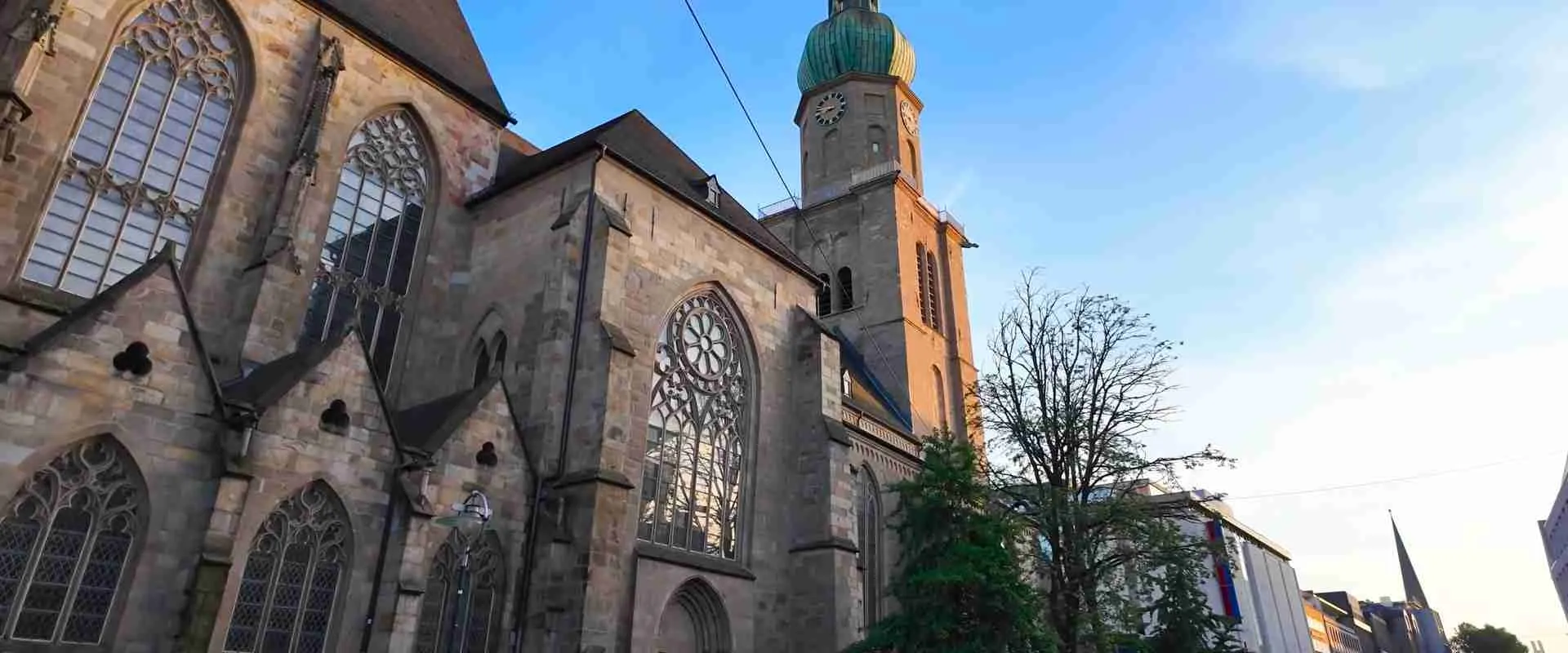
Architectural interest extends beyond the purely industrial: Reinoldikirche (14th-century Gothic, city centre) and Marienkirche (Romanesque foundations) survive as pre-industrial landmarks. The Jugendstil engine house at Zeche Zollern is one of Germany’s finest Art Nouveau industrial buildings. Contemporary architecture at Phoenix See’s waterfront development and the Dortmunder U conversion demonstrate the city’s ongoing commitment to architectural quality in regeneration projects. For media and contemporary art specifically, the Hartware MedienKunstVerein (HMKV) in the Dortmunder U maintains a serious international exhibition programme year-round.
Frequently Asked Questions About Visiting Dortmund 2026
How much does a day in Dortmund cost per person in 2026?
Daily costs per person in Dortmund for 2026 run approximately €55-95 for budget travelers (two sharing budget accommodation), €125-190 for mid-range travelers (two sharing mid-range hotel), and €250-375 for luxury visitors (two sharing luxury hotel). All figures include accommodation share, meals, local transport, and one to two attraction admissions. A seven-day mid-range trip runs approximately €875-1,330 per person in total.
How do I buy Borussia Dortmund match tickets for 2026?
Purchase match tickets exclusively through the official BVB website at bvb.de. Official 2025/26 season prices range from €15 for standing zones (Stehplätze) to €75 for premium seating categories; family block adult tickets cost €55. BVB sells out most fixtures to season-ticket holders and BVB members before any general public sale. Monitor the official website from August 2026 onwards for general sale announcements. For guaranteed access without membership, investigate official hospitality packages via bvb.de, which include seating with catering at premium prices. Never purchase from unofficial resellers — counterfeit and invalid tickets are a known issue for high-demand BVB fixtures.
Is Dortmund Airport well connected for international visitors in 2026?
Dortmund Airport (DTM) serves primarily budget European routes via Ryanair and Wizz Air, connecting to the UK, Ireland, Spain, Portugal, Italy, Poland, and Eastern Europe. For these origins, DTM is convenient and cheaper to reach from the city than the Airport Express service to Düsseldorf. For intercontinental travellers or those from markets not served by DTM, Düsseldorf International Airport (DUS) offers far wider connectivity and connects to Dortmund Hauptbahnhof via S-Bahn in approximately 75-90 minutes. Cologne/Bonn Airport (CGN), 90 kilometres southwest, serves additional European routes and is an option for visitors also planning a Cologne visit.
What does the German Football Museum charge for admission in 2026?
Adult admission at the German Football Museum box office costs €17 in 2026. Online tickets purchased in advance through fussballmuseum.de cost €15. Reduced rates apply for students and young people up to age 26. Children under 6 enter free. Family packages are available via the official website — check fussballmuseum.de for current family ticket pricing. The museum opens Tuesday to Sunday from 10:00 to 18:00 and is closed Mondays. The museum is directly opposite Dortmund Hauptbahnhof with no transport required from the main train station.
When is the best time to visit Dortmund in 2026?
Late April through May is the recommended window: Westfalenpark’s National Rose Garden peaks, temperatures run a pleasant 15-20°C, crowds are manageable outside Bundesliga fixture dates, and accommodation prices hold at standard rates. Summer (June-August) delivers outdoor events and the Juicy Beats festival but carries peak-season pricing. Autumn (September-October) offers excellent Bundesliga atmosphere, the Lichterfest at Westfalenpark, and fair accommodation prices. December delivers the legendary Christmas market — unmissable, but requires booking accommodation 6-8 weeks ahead for weekend nights.
How do I travel from Dortmund to Zollverein UNESCO site in Essen?
Take a regional express (RE) or S-Bahn from Dortmund Hauptbahnhof to Essen Hauptbahnhof — journey time approximately 30 minutes, operating multiple times per hour. This journey falls under VRR Preisstufe B, costing €8 per single ticket in 2026. From Essen Hauptbahnhof, tram line 107 (direction Katernberg) reaches the Zollverein XII stop in approximately 15 minutes. The Ruhr Museum within the Zollverein complex charges approximately €8 admission for adults; current pricing at ruhrmuseum.de. Allow a minimum of 4-5 hours for Zollverein including the exterior grounds, the Ruhr Museum, and a café stop.
Are there free attractions in Dortmund worth visiting?
Several of Dortmund’s most rewarding experiences are entirely free. Phoenix See waterfront promenade (3-kilometre loop around the lake). Rombergpark botanical garden’s open-air sections. Alter Markt and the historic city centre streets. Reinoldikirche church interior and architecture. The Dortmunder U rooftop terrace is free on many occasions — check dortmunder-u.de for the current schedule. Museum Ostwall’s permanent collection galleries offer partial free access on specific days. Exterior viewing of Zeche Zollern’s Art Nouveau engine house from the perimeter. Cycling or walking along the Emscher River trail. The Westfalenpark interiors require a day ticket, but the park’s perimeter and some exterior areas are accessible freely.
What is Dortmund like for vegetarian and vegan visitors in 2026?
Dortmund’s food scene has expanded substantially in vegetarian and vegan options over the past decade. The Kreuzviertel neighbourhood concentrates the greatest density of plant-friendly restaurants, with dedicated vegan cafés and restaurants operating alongside the traditional German pubs. Major restaurant chains and international options (Italian, Asian, Middle Eastern) throughout the city provide strong vegetarian coverage. Traditional Westphalian German restaurants present more limited vegetarian options — Flammkuchen (Alsatian-style flatbread), Käsespätzle (cheese noodles), and vegetable soups cover the main options at traditional venues. Supermarkets (REWE, Edeka, ALDI) carry excellent vegan product ranges for self-catering.
How does Dortmund compare to Cologne or Düsseldorf for a city break?
Cologne offers more conventional tourist landmarks — Gothic cathedral, Roman heritage, Altstadt, and a broader international restaurant scene. Düsseldorf delivers higher-end art and fashion culture. Dortmund wins on football tourism (Signal Iduna Park is incomparable), industrial heritage depth, value for money, and the DASA museum experience. Cologne wins on historic architecture and flight connectivity. Düsseldorf wins on design culture and Japanese food. Many visitors productively combine all three in a single Ruhr-Rhine trip, using Dortmund as the affordable home base with Cologne and Düsseldorf as 45-60 minute day trips. This structure maximises the value of Dortmund accommodation prices while giving access to Cologne and Düsseldorf’s distinct strengths.
What is Dortmund’s Christmas market like in December 2026?
The Dortmunder Weihnachtsmarkt runs from mid-November through December 23. Three interconnected market zones — Hansaplatz, Alter Markt, and Kleppingstrasse — host over 300 stalls selling crafts, food, and seasonal items. The market’s centrepiece is a Christmas tree assembled annually from approximately 1,750 interlaced spruce trees reaching around 45 metres in height — consistently cited as one of the world’s tallest decorated Christmas trees and a genuine spectacle. Glühwein costs €4-6 per mug with the mug deposit (returned or kept as a souvenir). Entry to all market areas is free. The adjacent Westfalenpark Winterleuchten illumination event, also running in December, provides a complementary illuminated park walk for evening visitors. December weekends sell out for accommodation across the city — book 6-8 weeks ahead for any Friday-Saturday-Sunday stay during the market period.