Visiting Brindisi: Ultimate Planning Resource & Travel Guide 2026
Brindisi sits at Italy’s eastern heel, where the Appian Way reached the sea and Roman fleets set sail for Greece. Today it remains Puglia’s most connected transport hub and the main ferry gateway to the Greek islands — yet few visitors realize the city rewards those who stay, with ancient columns, medieval fortress-churches, and a genuine working-port atmosphere that mass tourism has never polished away. This guide covers every practical detail you need to plan a confident 2026 visit.
Key Takeaways
- Brindisi’s historic center is compact and walkable; its most iconic landmark, the surviving Roman column that marked the ancient end of the Appian Way, is free to visit at the harbor at any hour.
- Budget travelers need approximately €55–90 per person daily (two sharing), mid-range visitors €115–185, and luxury travelers €220–355 — making Brindisi one of the most affordable city bases in Puglia.
- Brindisi Airport (IATA: BDS, also called Salento Airport) connects directly to European cities year-round; the STP AP bus reaches the city center in 15–20 minutes for €1–1.50.
- Grimaldi Lines operates daily ferries to Igoumenitsa on the Greek mainland (approximately 9 hours) and to Corfu (approximately 6 hours), the fastest Italian sea crossing to Greece currently available.
- Lecce (20 minutes by train from around €4) and Ostuni (20 minutes, from around €4) are the easiest rewarding day trips; UNESCO-listed Alberobello and its trulli take approximately 2 hours each way.
- Spring (April–May) and early autumn (September–October) deliver the best combination of warm temperatures, manageable crowds, and prices 25–35% below the July–August peak.
People Also Ask About Visiting Brindisi 2026
How much does a trip to Brindisi cost per day in 2026?
Brindisi is one of the more affordable cities in Puglia, and daily costs vary meaningfully by travel style. Budget travelers staying in basic B&Bs or guesthouses (€40–70 per room) and eating at local trattorias and bars typically spend €55–90 per person daily when two people share a room. Mid-range visitors in 3-star hotels (€80–130 per room) dining at sit-down restaurants should budget €115–185 per person daily. Luxury travelers in boutique or 4-star properties with fine dining typically spend €220–355 per person daily. These figures assume two people sharing accommodation; solo travelers must budget the full room rate without division. The city’s most famous landmark, the Roman column at the harbor, is free to visit. The Ribezzo Provincial Archaeological Museum may currently charge only a nominal or no admission fee — verify current rates before your visit, as policies at regionally managed museums can change. Most of the daily budget goes to accommodation, not sightseeing.
What are the best things to do in Brindisi in 2026?
The essential Brindisi experience begins at the Roman columns at the harbor — the ancient terminus of the Appian Way — and extends along the Regina Margherita Promenade past the Tancredi Fountain to Cathedral Square. On Cathedral Square, the Ribezzo Provincial Archaeological Museum houses remarkable Roman bronzes recovered from underwater excavations and merits at least two hours. The circular Church of San Giovanni al Sepolcro, dating from the 11th or early 12th century, is the most architecturally striking religious building in the city, with faded medieval frescoes visible inside. For views over the harbor and the Adriatic, the Sailors’ Monument (accessible by harbor waterbus) rises 53 meters with panoramic access (admission fee; closed Wednesdays). Day trips by train to Lecce (20 minutes), Ostuni (20 minutes), and Alberobello (roughly 2 hours) are all achievable from a Brindisi base and represent some of the best value day excursions in southern Italy.
How do you get to Brindisi from elsewhere in Italy in 2026?
Brindisi is well connected by multiple modes of transport. Brindisi Airport (BDS) receives direct flights from across Europe, including many routes operated by Ryanair and other low-cost carriers. From Rome Termini, Frecciarossa and Frecciargento high-speed services reach Brindisi in approximately 4–5 hours, with some services requiring a connection at Bari; always verify the current schedule on Trenitalia or Italo before booking. From Bari, regional and Intercity trains cover the approximately 110 kilometers in about 1 hour with frequent daily departures. From Naples, Intercity services via Taranto take roughly 3.5–4 hours. The STP airport bus (AP line) connects Brindisi Airport to the city center, the rail station, and the ferry terminal for €1–1.50. Arriving by car from the north, the A14 Adriatic motorway feeds into local roads approaching the city.
Is Brindisi worth visiting in 2026?
Yes, particularly for travelers who prefer authentic southern Italian urban life over heavily curated tourist experiences. Brindisi does not have the Baroque showpiece streetscapes of Lecce or the trulli of Alberobello, but it has two millennia of continuous port history, one of the most evocative ancient monuments in the South (the surviving Roman column), a rich archaeological museum with genuine bronze masterpieces from the seabed, and a harbor promenade where locals and visitors mix on equal terms. As a strategic base, it is logistically superior to many Pugliese cities: Lecce, Ostuni, Alberobello, and the Torre Guaceto coastal reserve are all reachable by train or bus without a car. For travelers also crossing to Greece, Brindisi deserves at least a half-day visit rather than a transit stop — and most who stop end up wishing they had stayed longer.
Extended multi-day tours – 5+ days
Featured Brindisi Multi-Day Tour Packages

5 days
Beautiful Puglia
- ✓ Comprehensive Brindisi tour
- ✓ Expert local guides included
- ✓ All accommodation arranged
- ✓ Transportation provided

6 days
Beautiful Puglia and Campania
- ✓ Comprehensive Brindisi tour
- ✓ Expert local guides included
- ✓ All accommodation arranged
- ✓ Transportation provided

7 days
Authentic Puglia
- ✓ Comprehensive Brindisi tour
- ✓ Expert local guides included
- ✓ All accommodation arranged
- ✓ Transportation provided

7 days
Private Essence of Puglia – 7 days
- ✓ Comprehensive Brindisi tour
- ✓ Expert local guides included
- ✓ All accommodation arranged
- ✓ Transportation provided
Multi-day tour packages powered by TourRadar. Prices and availability subject to change.
Why Brindisi Belongs on Your 2026 Puglia Itinerary
Most visitors to Puglia name-check Brindisi on the way somewhere else: a flight in, a ferry out, a taxi to the station. That is a genuine loss. The city the ancient Romans knew as Brundisium was for centuries one of the Mediterranean’s most important ports, and its layered history remains more legible here — in stone, in streetscapes, in the harbor itself — than in many more heavily promoted Italian destinations.
The Romans made Brindisi the terminus of the Appian Way, the consular road running 540 kilometers south from Rome, and the city’s harbor became the principal gateway to Greece and the Eastern Mediterranean for trade, military campaigns, and imperial ambition. Julius Caesar pursued Pompey here in 49 BC before the civil war escalated beyond Italian soil. The Treaty of Brundisium, concluded in 40 BC, temporarily divided the Roman world between Octavian and Mark Antony, with Brindisi as the chosen neutral ground. The poet Virgil, returning from Greece in declining health, died in the city in 19 BC — a fact the Romans considered significant enough to record in multiple sources. These events are not decorative additions to a travel itinerary; they are the biography of a city that functioned for a thousand years as the hinge between Italy and the East.
Through the medieval centuries, Brindisi became a primary port of embarkation for the Crusades. Its harbor and fortress-churches reflect the successive powers — Norman, Swabian, Angevin, Aragonese — that competed to control the crossing point between Italy and Byzantium. The circular Church of San Giovanni al Sepolcro, in all probability built in the 11th or early 12th century in deliberate reference to the Church of the Holy Sepulchre in Jerusalem, is one of the most quietly powerful Romanesque spaces in southern Italy. The Alfonsino Castle, raised at the harbor entrance in the late 15th century under Aragonese rule, still closes the gap between the inner and outer basins with the practicality of a structure built for a single military purpose.
For 2026 visitors, Brindisi offers a combination difficult to find elsewhere in the region: genuine historical depth, an absence of mass-tourist infrastructure, authentic Pugliese seafood and food culture, low prices by Italian standards, and one of the best logistical positions in the heel of Italy for independent day trips. The city is also a gateway in the literal sense: no Italian port puts you within a 6-hour sea crossing of Corfu and a 9-hour crossing of the Greek mainland at comparable convenience and cost.
Getting to Brindisi in 2026
Flying into Brindisi Airport in 2026
Brindisi Airport — officially the Salento Airport, IATA code BDS, located at Papola Casale approximately 5 kilometers north of the city center — handles traffic for the entire Salento peninsula and is the most convenient air entry point for southern Puglia. In 2026, the airport receives low-cost and seasonal charter flights from across Europe; Ryanair operates multiple routes from the United Kingdom, Germany, Poland, and other countries, and other carriers cover additional destinations. Check the airport’s official website or carrier schedules directly, as routes change between summer and winter seasons and new connections are announced periodically.
The most economical connection between the airport and the city center is the STP AP bus, which runs every 30 minutes approximately between 5:30 am and midnight, stopping at the city rail station, key central points, and the ferry terminal at Costa Morena. Tickets cost €1 when purchased from the newsagent inside the arrivals hall (open approximately 5:30 am to 9:30 pm) or €1.50 directly from the driver; have coins ready as card readers on the bus can be unreliable. The ride to the city center takes 15–20 minutes depending on traffic. A taxi from the airport to the city center costs approximately €15–20 for the 5-kilometer journey and takes 10–15 minutes. Pre-booked private transfers are available from around €20 and are worth considering for groups or late-night arrivals. There is no direct train service from the airport itself; the Brindisi Air & Port Link service, a collaboration between Trenitalia and STP Brindisi, integrates the airport bus with rail connections to Lecce, Bari, and Taranto — tickets are sold on the Trenitalia website and app for combined journeys.
Arriving by Train in 2026
Brindisi Centrale station sits in the heart of the city, within easy walking distance of the main accommodation area and a short bus or taxi ride from the ferry terminal. It is one of the best-connected stations in southern Puglia. From Bari, regional and Intercity trains cover the approximately 110-kilometer route in roughly 1 hour with frequent daily departures. From Rome Termini, Frecciarossa and Frecciargento high-speed services reach Brindisi in approximately 4–5 hours; some routes require a connection at Bari or Foggia — verify the current schedule on Trenitalia or Italo before booking, as connections and journey times vary by service. From Naples, Intercity trains via Taranto run in roughly 3.5–4 hours. Within the Salento region, trains to Lecce depart approximately every 30 minutes with a journey time of 20–27 minutes (from around €4); trains to Ostuni run with similar frequency in 19–23 minutes (from around €4). Book regional tickets through Trenitalia; for high-speed intercity services, advance booking secures better fares and guaranteed seats.
Arriving by Car in 2026
From northern Italy and Rome, the A14 Adriatic motorway (Bologna–Taranto) provides the main driving route, connecting to local roads and the SS16 approaching Brindisi from the north. From Naples, the A3 towards Reggio Calabria or the SS7 via Taranto are the main options. Journey times from Rome typically run 5.5–7 hours depending on route and traffic. From Bari, driving to Brindisi takes about 1 hour on the SS16 coastal road or the faster SS379.
Drivers arriving in Brindisi should be aware before entering the city that the historic center operates as a ZTL (Zona a Traffico Limitato, or Limited Traffic Zone), with access restricted by cameras and, in some points, retractable bollards. Entering the ZTL without authorization during active hours triggers automatic fines of €87–174 or more, which rental car companies typically pass on to renters with additional administrative charges. The practical approach is to identify your hotel’s location relative to the ZTL boundary before arrival, contact the hotel about parking and permit arrangements, and use designated paid parking near the ferry terminal or on streets outside the ZTL boundary for the duration of your stay. Renting a car for day trips while basing yourself in the city by foot and bus is the most efficient strategy.
Arriving by Ferry from Greece in 2026
For travelers arriving from Greece by sea, Brindisi is one of the most convenient Italian entry points in the Adriatic. Grimaldi Lines operates the principal routes: Brindisi to Corfu takes approximately 6 hours and is frequently described as the fastest Italy–Greece ferry crossing currently operating; Brindisi to Igoumenitsa on the Greek mainland takes approximately 9 hours. Services run daily in peak season and several times weekly in the off-season, typically with afternoon or evening departures arriving overnight or in the early morning. Passenger fares on the Brindisi–Igoumenitsa route run from approximately €45–93 per person depending on season, accommodation type, and advance booking lead time. Check current rates on the Grimaldi Lines website, or compare operators on aggregator sites such as Direct Ferries or Ferryscanner. European Seaways also operates from Brindisi on routes including Kefalonia, Zakynthos, and Patras.
Grimaldi Lines offers a 20% discount on return tickets — worth calculating if your itinerary loops back through Brindisi. Children aged 3–12 typically travel at a 50% discount; infants under 3 not occupying a cabin bed generally travel free. The ferry terminal (Costa Morena) connects to the city center, train station, and airport on the STP AP bus circular route. For summer sailings (July–August), book ferry tickets and any cabin accommodation at least 4–6 weeks ahead, as popular departures sell out. Arrive at the terminal at least 1.5–2 hours before departure; check-in closes well in advance of sailing time. Confirm current schedules and prices directly with the operator before your visit, as timetables are adjusted seasonally.
Getting Around Brindisi in 2026
Exploring on Foot in 2026
Walking is unequivocally the best way to experience Brindisi’s historic center. The Roman columns, Cathedral Square (with the Ribezzo Provincial Archaeological Museum), the Church of San Giovanni al Sepolcro, the Knights Templar Portico, the Tancredi Fountain, and the Regina Margherita Promenade are all within a 10–15 minute walk of each other. After one orientation pass along the harbor and through the old town, most visitors move between sights without consulting a map. The harbor waterfront is level and pleasant to walk; many of the old town lanes are paved with irregular stone, so sturdy footwear is more comfortable than smooth-soled sandals. The Sailors’ Monument and Alfonsino Castle are accessible by the harbor waterbus rather than on foot.
Local Buses in Brindisi 2026
STP Brindisi operates the city’s public bus network. Single-ride tickets cost €1.10–1.50 depending on where they are purchased; the STP WhatsApp service (+39 366 788 0781) provides information on arrivals and route updates. The AP line circular route — which connects the airport, rail station, city center, and ferry terminal — is the most useful single route for visitors. For reaching the Church of Santa Maria del Casale (which lies outside the immediate historic center toward the port area) or beaches north of the city, local bus routes extend coverage, though services are less frequent than in the center. The small harbor waterbus (motonave) runs passengers across the inner harbor channel to the island where the Sailors’ Monument and Alfonsino Castle are located; the crossing costs approximately €1.20 one way. Keep small coins available, as card machines on these small vessels are not always operational.
Taxis and Private Transfers in Brindisi 2026
Taxis are available at the train station, airport, and along the main waterfront. The starting meter rate is approximately €4.20, with a per-kilometer rate of around €1.20. A taxi from the train station to the ferry terminal typically costs €8–12. Uber, Bolt, and similar ride-hailing services do not operate in Brindisi; only traditional metered taxis are available. Taxi drivers in Brindisi may have limited English; having your destination written in Italian helps. Pre-booking a private transfer for airport or ferry arrivals is worth considering for groups or when traveling with large luggage; fixed-rate transfers for the airport-to-center journey typically start around €20–25. Pay taxi fares in cash — not all drivers accept cards.
ZTL Zones and Driving Rules in Brindisi 2026
The ZTL (Zona a Traffico Limitato) covers much of the historic center between the train station and the harbor. Electronic signs at entry points indicate whether the zone is currently active. Cameras record every vehicle license plate passing the boundary during active hours; violations are processed automatically and result in fines typically ranging from €87 to €174 (with potential increases for multiple violations on the same day). Rental car companies pass these fines on to renters, usually with an additional administrative fee of €20–35. The ZTL does not affect pedestrians, cyclists, or bus passengers. If staying in the historic center, call your hotel before arrival to discuss access and parking: some hotels have authorization to guide guests through the ZTL for drop-off, or can reserve spaces in adjacent authorized parking. For visitors without in-city accommodation, use the paid parking areas near the ferry terminal or the streets outside the ZTL boundary and walk in.
Where to Stay in Brindisi 2026
Brindisi’s accommodation market spans simple guesthouses, standard 3-star chain hotels, and a small but growing boutique sector in restored historic buildings. Prices across all categories are notably lower than comparable cities in central Italy and significantly below Pugliese coastal resort towns in summer. The city center — within easy walking distance of the Roman columns, the port, and the rail station — provides the best base for sightseeing visitors.
Budget Accommodation in Brindisi 2026
Budget rooms in Brindisi run from approximately €40–70 per room per night, which translates to €20–35 per person when two people share. This tier covers basic B&Bs, guesthouses, and the city’s youth hostel (Ostello della Gioventù Brindisi), which offers both dormitory beds and simple private rooms. Quality is uneven at this price point; reading recent reviews on booking platforms before committing is particularly important. Many budget options include Wi-Fi and occupy central locations that minimize transport costs. Breakfast is often excluded but a few B&Bs offer a simple self-serve continental option. In the low season — November through March — budget room rates can fall 35–45% below summer prices, making Brindisi exceptionally good value for cultural travelers unconcerned with beach access.
Mid-Range Hotels in Brindisi 2026
The mid-range bracket (€80–130 per room per night, or €40–65 per person sharing) covers Brindisi’s 3-star hotels and better-appointed B&Bs, including properties near the historic center and waterfront. Hotel Bastione has attracted consistently positive reviews for central location and staff attentiveness. Palazzo Virgilio and Hotel Orientale offer established three- and four-star services with harbor or city-center positioning. At this price point, rooms are air-conditioned, en-suite, and typically include or offer breakfast. Brindisi’s hotel supply is limited relative to comparable Italian cities; popular mid-range properties in the center fill quickly for July and August travel. Booking 4–6 weeks ahead for peak summer months is advisable, and 2–3 weeks ahead for shoulder season. Check both the property’s direct website and booking aggregators, as rates sometimes differ.
Boutique and Luxury Options in Brindisi 2026
The boutique and upper-tier bracket (€130–250 per room per night, or €65–125 per person sharing) is smaller in Brindisi than in Lecce or Bari but includes some genuinely appealing properties. The Grande Albergo Internazionale is Brindisi’s historic seafront landmark — a Belle Époque property overlooking the harbor with classic Italian elegance that has received recent renovation. Hotel Executive Inn provides well-fitted 4-star rooms in a central location. Several boutique residences and apartment suites have opened in restored historic palazzi in recent years, offering a more intimate alternative to standard hotels. Travelers who require consistently high-end accommodation throughout their trip may find Lecce’s boutique hotel market wider and more polished; however, for genuine harbor character and the sound of working boats rather than tourist nightlife, Brindisi’s best properties offer something Lecce cannot replicate.
Best Areas to Stay in Brindisi 2026
The historic center — roughly bounded by the train station to the west, Cathedral Square to the north-east, and the harbor to the east — is the best location for most visitors. Everything sightseeing-related is walkable, the evening passeggiata is on the doorstep, and restaurants and cafés are within a short walk in any direction. The waterfront strip along the Regina Margherita Promenade puts you immediately adjacent to the harbor atmosphere, the waterbus boarding points, and the best sea views in the city; hotels here typically command a modest premium. The Santa Teresa neighborhood, slightly inland from the center, is quieter and more residential with good street-parking availability outside the ZTL, making it useful for drivers who are renting a car for day trips. The area around the ferry terminal (Costa Morena) is convenient only for very early ferry departures; the surroundings are industrial, and a taxi or early bus into the city is required for anything beyond the port itself. Visitors without a ferry to catch are better placed in the historic center.
Top Attractions and Things to Do in Brindisi 2026
The Roman Columns and Appian Way Terminus in 2026
The Roman columns at Brindisi’s harbor are the city’s defining monument and one of the most emotionally direct connections to ancient history in the entire south of Italy. The visit is free at any hour. Two columns originally stood at the top of a broad ceremonial staircase descending to the waterfront, marking the terminus of the Via Appia — the great Roman road that ran 540 kilometers south from Rome, making Brundisium the literal end of the road and the gateway to the East. Today one column survives intact with its elaborately carved capital, rising approximately 19 meters from the harbor’s edge; the second column collapsed — sources variously date the fall to the 16th century — and its capital was transported to Lecce, where it still stands in Piazza Sant’Oronzo as partial reparation for an earlier quarrying loss. The stump and base of the fallen column remain visible near the standing one. The surviving column is substantially taller and more impressive at close range than photographs suggest; most first-time visitors are surprised by the scale of the capital’s figurative decoration. The staircase and harbor views at sunset or early morning make this one of the most rewarding free photography locations in southern Italy.
Swabian Castle in 2026
The Swabian Castle, a massive 13th-century fortress that dominates the inner harbor skyline, is one of Brindisi’s most visible landmarks. Built during the era of Swabian (Hohenstaufen) influence in southern Italy and substantially modified over subsequent centuries under Angevin and later administrations, the castle played successive roles as a coastal defence, prison, and institutional seat. During the Second World War, following the Italian armistice of September 1943, Brindisi briefly served as the seat of the Italian government in exile — a period documented in the city’s historical record. The castle today functions as an active Italian Navy facility. Public access is extremely limited and cannot be relied upon for standard tourist visits; the “military zone” signage at the entrance means the interior is off-limits on most days. The exterior and harbor views from the surrounding area are imposing, and the castle is visually prominent from the waterbus and the promenade. Check the Brindisi municipal tourism website for any announced open days or special access events during your visit.
Alfonsino Castle and the Harbor Islands in 2026
At the point where Brindisi’s sheltered inner harbor meets the open Adriatic, the Alfonsino Castle occupies a small island controlling the channel between the two basins. Constructed in the late 15th century under Aragonese rule, the red-stone fortress embodies the practical military architecture of the period: massive walls, low profile, and an unobstructed view of the harbor entrance in both directions. Reaching the island requires the harbor waterbus (motonave) from the main waterfront, a brief and scenic crossing of approximately €1.20 each way that provides excellent views of the fortress from the water and of the city from the island. Like the Swabian Castle, parts of the complex remain under military administration; visitor access to the interior varies and is not guaranteed. Even if the interior is restricted on your visit day, the crossing itself and the view of the castle against the harbor and old town are worthwhile and constitute one of the more distinctive short experiences Brindisi offers.
Ribezzo Provincial Archaeological Museum in 2026
The Ribezzo Provincial Archaeological Museum, on Cathedral Square in the historic center, is the single most rewarding indoor cultural site in Brindisi and deserves a place on every visit of more than a few hours. Named after Francesco Ribezzo (1875–1952), a distinguished scholar of the Messapic language and history of Puglia, the museum opened in its current form in 1958 and covers the region’s history through six thematic sections: epigraphic (inscriptions in Latin, Greek, and Hebrew), statuary (Roman figures found in the historic center), antiquarium (Apulian and Attic vases, trozzelle vessels, coins, terracottas, and antefixes from the Civica-De Leo and Marzano-Gorga collections), prehistoric (excavation material from the province), numismatic (coins from the classical through modern periods), and the outstanding section dedicated to the Punta del Serrone Bronzes — a collection of bronze statues and fragments recovered from underwater excavations off the Brindisi coast in 1992. The bronzes include restored life-size figures identified as a Roman consul (thought to represent Lucius Aemilius Paullus, though this attribution remains a matter of scholarly discussion) and a togatus figure, alongside portrait heads, female figures, and smaller finds. These underwater bronzes are extraordinary survivals of the ancient port’s traffic and represent the museum’s most internationally significant holding. Allow 1.5–2 hours. The museum’s Facebook page indicates free admission may currently apply; verify current entry conditions at the official Polo Biblio-Museale di Brindisi website or the provincial museum page before visiting, as access policies at regionally managed institutions can change.
Brindisi Cathedral and Cathedral Square in 2026
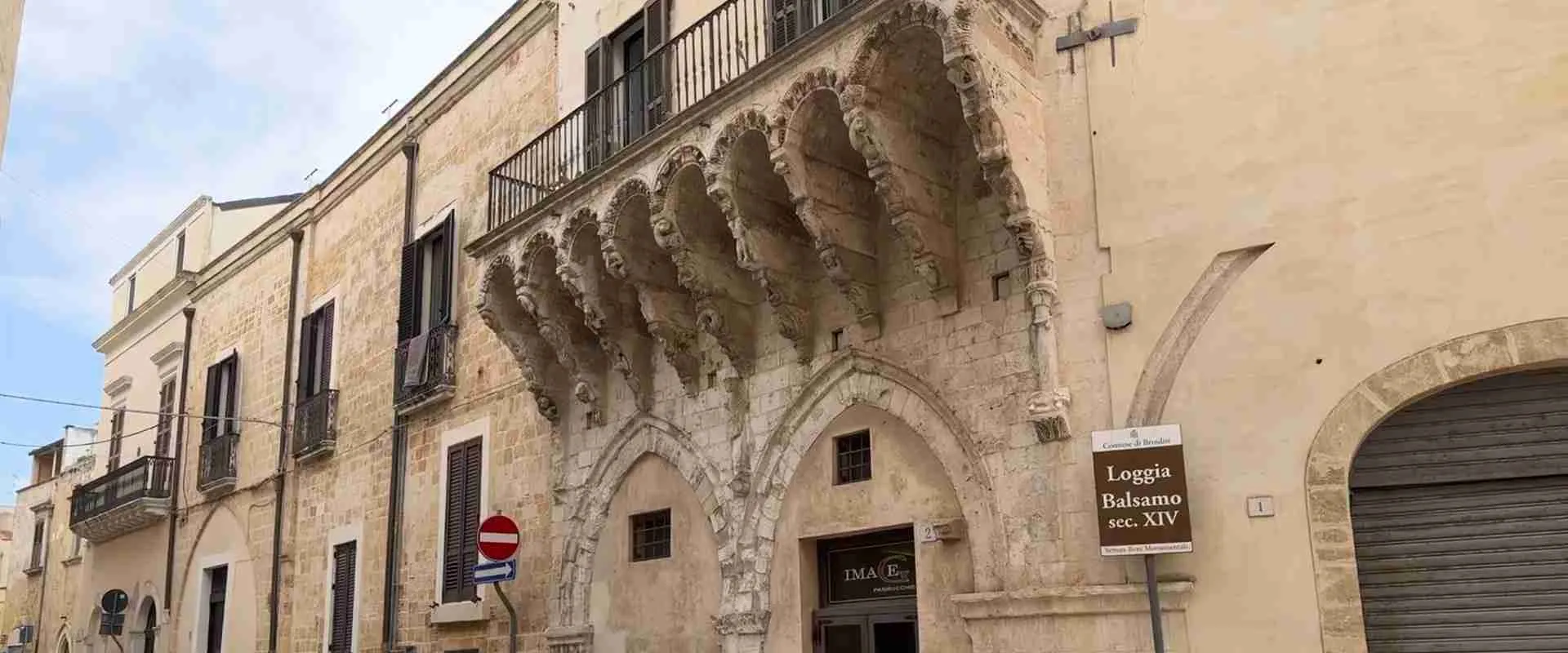
Cathedral Square (Piazza Duomo) is the historic heart of Brindisi’s old town: a relatively intimate piazza flanked by the cathedral facade, the Ribezzo Provincial Archaeological Museum, and the 13th-century Knights Templar Portico — two stone arches separated by a marble column that stand at the entrance to the museum and are associated by local tradition with the Knights Templar, though some architectural scholars consider them more likely to have been part of a medieval nobleman’s palace. The portico is viewable without charge from the square. Brindisi Cathedral, founded in the early medieval period and significantly rebuilt following a 1743 earthquake, presents a blend of Romanesque foundations and later Baroque modifications. Fragments of the original medieval mosaic floor survive inside and are among the church’s most atmospheric details. The cathedral is historically documented as the location of Emperor Frederick II’s second marriage in 1225, when Brindisi functioned as an important imperial city. A chapel within the cathedral holds the relics of Saint Theodore of Amasea, the city’s patron saint. Entry is free; visitors are expected to dress modestly (covered shoulders and knees). Note that individuals sometimes solicit “donations” at the cathedral steps — the church itself does not charge admission. The outdoor café seating around Cathedral Square makes this an excellent rest point between sights.
Church of San Giovanni al Sepolcro in 2026
The Church of San Giovanni al Sepolcro is Brindisi’s most architecturally extraordinary religious site: a small, circular Romanesque church in all probability dating from the 11th or early 12th century, designed in conscious reference to the Church of the Holy Sepulchre in Jerusalem. This was not a purely symbolic gesture. Brindisi was the principal Italian port of embarkation for the Crusades, and pilgrims and crusading armies passing through the city would have recognized the circular plan immediately as an echo of the holiest church in Christendom. The entrance is framed by columns resting on carved stone lions, with detailed doorposts bearing figural and symbolic decoration. Inside, the atmosphere is dim and genuinely medieval: light filters through arched openings between interior columns, and faded frescoes cover the walls, some layers revealing earlier paintings beneath; the surviving fresco layers are placed by scholars generally in the 13th and 14th centuries. A modest admission fee applies at the door — verify the current amount on arrival. The church is compact but deeply atmospheric and rewards a slow visit. Allow 30–45 minutes.
Sailors’ Monument and the Harbor Waterfront in 2026
The Sailors’ Monument (Monumento al Marinaio d’Italia) is Brindisi’s most architecturally unconventional structure: a 53-meter limestone memorial completed in 1933, its form modeled on a ship’s rudder. Built to commemorate Italian sailors killed in the First World War, the monument rises from the island accessible by the harbor waterbus (approximately €1.20 each way). Reinforced concrete is sheathed in golden-toned carparo stone, and a spiral staircase inside leads to a viewing platform at the summit. From the top, on clear days, the panorama extends over the inner harbor, the Alfonsino Castle, the Roman columns and old town skyline, and the open Adriatic. The crypt at the base incorporates a relief map of the Mediterranean and a model of the battleship Benedetto Brin. The monument charges an admission fee and is closed on Wednesdays; check seasonal opening hours locally or via the Brindisi tourism portal, as access times vary by season. The harbor waterbus crossing itself, lasting just a few minutes, provides excellent views of the castle, the port activity, and the city — it is one of the most pleasant short journeys in the city.
Back on the main waterfront, the Regina Margherita Promenade runs south from the Roman columns along the harbor edge, lined with palm trees, café tables, and, in summer, the temporary carnival rides and small funfair attractions the city sets up each season. The evening passeggiata begins here: from around 7 pm, residents stroll, stop for gelato, and gather at outdoor tables in a genuinely Italian ritual that no tourist attraction quite matches for conveying the texture of local life.
Santa Maria del Casale Church in 2026
A short distance from the historic center toward the port area stands the Church of Santa Maria del Casale, one of the most distinguished examples of Gothic-Romanesque architecture in Puglia. The facade is its most immediately striking feature: alternating bands of pink and white limestone create a polychrome decorative effect that is unusual in the region and immediately distinctive. The church dates generally to the late 13th or early 14th century, constructed during the Angevin period of rule in the Kingdom of Naples and Puglia. Inside, the walls carry an extensive cycle of medieval frescoes including a large Last Judgment composition on the counter-facade — a dramatic representation of the afterlife’s divisions rendered in the expressive style of late medieval Pugliese painting — alongside saints, narrative cycles, and devotional images at various scales. The attribution of the fresco campaigns to specific workshops or painters remains a subject of ongoing art-historical study; the painting is generally placed within the 14th century. The church is not a mainstream tourist destination and is rarely crowded, which makes it one of the more intimate encounters with medieval religious art available in the area. Check current opening times locally before visiting, as the church’s schedule can vary.
Day Trips from Brindisi 2026
Brindisi’s train connections make it a logistically superior base for exploring the Salento and Itria Valley. The main rail station handles frequent services on multiple lines, and journey times to the region’s most compelling destinations are genuinely short — in several cases shorter than cross-city travel in Rome or Milan.
Lecce from Brindisi in 2026
Lecce, 36 kilometers south, is the cultural capital of the Salento and one of Italy’s finest Baroque cities — and it is reachable from Brindisi in 20–27 minutes by one of the approximately 39 daily Trenitalia services, with fares starting from around €4. Lecce’s train station is a 10-minute walk from the historic center. The city’s particular Baroque idiom — exuberant facade decoration in warm golden pietra leccese limestone — is immediately visible on the Basilica di Santa Croce and in the cascade of carved ornament on churches, palaces, and street facades throughout the old town. The central Piazza Sant’Oronzo incorporates a Roman amphitheatre still visible below street level and the central column topped with the capital of Brindisi’s fallen Roman column — a direct visual connection between the two cities. A full day in Lecce fills easily: Roman ruins, multiple Baroque churches, the labyrinthine old town, the morning market, and the local food specialties (rustico leccese pastry, pasticciotto cream-filled pastry, local olive oil). Lecce works perfectly as a focused day trip, though some visitors who plan extended time on the Salento coast choose it as a co-base alongside Brindisi.
Ostuni from Brindisi in 2026
Ostuni — the “White City” — is 33 kilometers northwest and one of Puglia’s most photographed townscapes: a hilltop settlement of whitewashed houses and terracotta rooftops rising from the coastal plain with views extending to the Adriatic. Approximately 26–28 trains per day connect Brindisi and Ostuni in 19–23 minutes, with fares starting from around €4. Ostuni’s train station sits at the foot of the hill; the historic center is a 20–30 minute walk uphill or a short taxi ride. Ostuni rewards a half-day at minimum: the medieval streetscape spiraling up to the cathedral, the panoramic views from the hilltop, and the small-scale human scale of the lanes are all satisfying. The Adriatic beaches near Ostuni — including the long sandy stretches toward Torre Guaceto and the beach clubs at Rosa Marina — are some of the finest in the northern Salento and accessible by car or local taxi from the station. The combination of the white hilltop city and an afternoon at the coast makes Ostuni one of the most complete day trips from a Brindisi base.
Alberobello and the Trulli in 2026
Alberobello, approximately 60 kilometers northwest of Brindisi, is a UNESCO World Heritage Site (inscribed 1996) famous for its trulli: ancient dry-stone dwellings with conical limestone roofs constructed without mortar in a building technique documented in the area for centuries. Walking into the Rione Monti quarter — hundreds of trulli lining narrow lanes on a hillside — produces a genuinely uncanny experience with no equivalent elsewhere in Europe. Reaching Alberobello from Brindisi by public transport involves at least one connection; train services via the Ferrovie del Sud Est (FSE) network take approximately 2–2.5 hours each way with fares starting from around €8–12, while direct bus services operate in approximately 1.5–2 hours for similar fares. Check FSE and Pugliairbus current schedules before planning, as service frequency varies by day of week and season — Sunday services in particular can be limited. Allow at least 3–4 hours in Alberobello to walk the Rione Monti, visit the Trullo Sovrano (the only two-story trullo, open daily approximately 10 am to 6 pm), and have lunch. Starting from Brindisi as early as possible is essential for a comfortable day trip.
Torre Guaceto Nature Reserve in 2026
Torre Guaceto, approximately 15 kilometers north of Brindisi, is a protected coastal reserve jointly administered as a marine area and a WWF Oasis. It contains some of the cleanest and least developed Adriatic coastline in Puglia: crystalline water over sandy and rocky seabed, white sand beaches, coastal dunes, wetlands with migratory bird populations, and a sea turtle sanctuary. The marine zone is divided by protection level; the most strictly protected section is accessible only on foot or by bicycle, which preserves the natural character of the coast from the vehicle and sunbed density that afflicts many Pugliese beaches in July and August. A dedicated cycling path links the reserve to the nearby town of Carovigno. Getting there independently from Brindisi without a car typically requires a taxi (approximately €20–25 each way) or an organized tour; several Brindisi-based operators run half-day or full-day coastal excursions that include transport and a guide to the reserve. In summer, the reserve fills quickly; arriving early in the morning before 10 am provides the best experience of the protected beach areas before crowds build.
Taranto from Brindisi in 2026
Taranto, approximately 75 kilometers west of Brindisi, is a city of striking contrasts: a historic old town on an island between the sheltered Mare Grande and the brackish Mare Piccolo, surrounded by one of Italy’s largest industrial zones. The principal draw for day visitors is the National Archaeological Museum of Taranto (MArTA), which holds one of the richest collections of ancient Greek art in the world. The collection reflects Taranto’s origins as the Spartan colony of Taras, the most powerful Greek city in Magna Graecia, and includes jewelry, goldwork, terracottas, and monumental sculpture of extraordinary quality. Trenitalia services connect Brindisi and Taranto in approximately 1 hour; check current schedules and fares before planning. The museum is a 15–20 minute walk or short taxi ride from Taranto Centrale station. A Taranto day trip works best as a focused cultural excursion centered on the museum rather than a general wandering visit; the old town island is atmospheric but compact, and the modern city center has limited appeal for short-stay visitors.
Eating and Drinking in Brindisi 2026
Brindisi’s food culture is shaped decisively by its identity as a working port. Fresh fish and seafood take priority in local restaurants in a way that distinguishes the city from the more pastoral cuisine of inland Puglia. The daily catch from the Adriatic — sea bream, sea bass, cuttlefish, clams, mussels, anchovies, and octopus — reaches restaurant tables the same day, and the early-morning fish market near the harbor is one of the most vivid encounters with the city’s working rhythm available to visitors.
Pugliese Food to Try in Brindisi 2026
The dishes and products most worth seeking out in Brindisi and the surrounding Salento include: orecchiette alle cime di rapa (ear-shaped fresh pasta with blanched turnip tops, garlic, olive oil, and sometimes anchovies — the most emblematic Pugliese pasta dish); burrata (fresh mozzarella with a liquid cream center, made locally and generally of higher quality here than in most of the cities where it now appears internationally); ciceri e tria (pasta with chickpeas, half fried and half boiled for contrasting textures and an ancient technique); tiella di riso, patate e cozze (a baked casserole of rice, potato, and mussels with onion, tomato, and olive oil); frittura di pesce mista (mixed fried fish, a Brindisi classic ordered at the harbor-area restaurants); the local version of Adriatic fish stew (lighter and simpler than the Tuscan cacciucco); and taralli (ring-shaped bread snacks baked with olive oil, sold by weight in every food shop as an aperitivo accompaniment). Local wines to order with seafood include Primitivo (a full-bodied, high-alcohol red grape variety cultivated around Manduria) and Negroamaro (the dominant red grape of the Salento, producing wines with dark fruit and a characteristic slightly bitter finish — its name translates literally as “black bitter”). For dessert, pasticciotto (a shortcrust pastry case filled with custard cream, most closely associated with Lecce but available throughout the Salento) is the regional sweet most worth trying.
Budget Eating in Brindisi 2026
Budget travelers in Brindisi can eat extremely well without spending much. The city’s traditional rosticcerie (rotisserie-and-hot-food shops) and simple trattorie serve two-course lunches with bread and water for €10–15 per person, often including a quarter-liter carafe of house wine. Bar food — espresso plus cornetto (croissant) for breakfast, focaccia or panino for a midday snack — runs €3–6 for the morning and €5–8 for a light lunch. The evening meal at a straightforward trattoria in the backstreets of the old town, with antipasto, a pasta dish, a glass of wine, and water, costs approximately €18–26 per person. Moving one block back from the harbor promenade consistently produces lower prices and more local clientele. The fish market in the harbor area occasionally has vendors selling fried or marinated fish to take away for a few euros — one of the most authentically local and affordable food experiences the city offers, available only in the early morning hours when the market is active.
Mid-Range and Seafood Restaurants in Brindisi 2026
Mid-range seafood dining in Brindisi typically runs €30–50 per person including wine, and the quality for this price is high by Italian southern standards. The Regina Margherita Promenade and the immediate harbor-front area are lined with fish restaurants catering to a mixed local and visitor clientele; these are reliable for fresh seafood but charge a premium for the sea views. The better strategy for a mid-range seafood dinner is to choose restaurants one to two streets back from the promenade, where the fish arrives from the same boats but the atmosphere is quieter and prices are 15–20% lower. Before ordering, confirm with the waiter that fish is fresh (fresco) on the day rather than frozen (congelato) — reputable restaurants indicate this on the menu. Many smaller restaurants observe the Italian afternoon closure (roughly 2:30–7:30 pm) and the dinner service typically starts between 7:30 and 8 pm, later than northern visitors may expect. A full seafood dinner — antipasto di mare, pasta with clam or mussel sauce, grilled fish, dessert, and a half-liter of local wine — costs approximately €35–50 per person at a reliable mid-range restaurant.
Aperitivo and Nightlife in Brindisi 2026
The evening passeggiata — the traditional Italian promenade — is fully observed in Brindisi, particularly in the warm months from May through October. From around 7 pm, residents and visitors fill the harbor promenade for a slow, sociable walk punctuated by gelato stops and aperitivo at the waterfront bars. The aperitivo hour offers good value for budget travelers: a spritz or glass of local wine at most bars comes with complimentary snacks (olives, taralli, small bruschette) that partially substitute for a pre-dinner meal. Brindisi’s nightlife is unpretentious rather than a destination draw; the city has no major club district. The concentration of bars and casual evening spaces in the historic center provides a genuine local social atmosphere rather than a tourist-facing entertainment strip. In summer, occasional outdoor concerts and events use the harbor area and historic squares; the Brindisi municipality website posts cultural event listings. A craft beer culture has developed alongside the traditional wine bars in recent years, with a handful of dedicated beer bars in the center stocking Pugliese and national craft options.
Brindisi Budget Guide 2026
All figures below are per person per day, assuming two people sharing accommodation. These are working estimates for 2026 planning based on verified price data from 2024–2025 sources; use them to calibrate your budget rather than as fixed guarantees, and verify current accommodation and transport rates before traveling.
Budget Traveler Daily Costs in Brindisi 2026
Budget travelers staying in basic guesthouses or B&Bs (€40–70 per room) pay €20–35 per person for accommodation when two share. Three daily meals at bars and simple trattorias — bar breakfast €3–6, trattoria lunch €10–15, trattoria dinner €15–22 — total €28–43. Local bus travel and harbor crossings add €2–5 per day; walking to most sights costs nothing. Attraction spending runs €3–8 per day, as the majority of historic sites are free or carry very modest fees. With all components: hotel €20–35, meals €28–43, transport €2–5, attractions €3–8, the daily total comes to approximately €55–90 per person for budget travelers (two sharing). A full week at this budget totals approximately €385–630 per person in-destination, excluding flights or ferry tickets to reach Brindisi.
Mid-Range Daily Costs in Brindisi 2026
Mid-range travelers in 3-star hotels (€80–130 per room per night) pay €40–65 per person for accommodation when two share. Daily meals at sit-down restaurants with wine — breakfast €8–14, lunch €18–28, dinner €30–45 — total €56–87. Transport combining buses, occasional taxis, and day-trip train tickets runs €8–15 per day. Museum admissions and guided experiences add €10–20 per day. With all components: hotel €40–65, meals €56–87, transport €8–15, attractions €10–20, the daily total comes to approximately €115–185 per person for mid-range visitors (two sharing). A week at this level totals approximately €805–1,295 per person in-destination.
Luxury Daily Costs in Brindisi 2026
Luxury travelers in 4-star or boutique hotels (€150–250 per room per night) pay €75–125 per person for accommodation when two share. Fine dining with multiple courses and wine adds €90–140 per day. Private transfers, taxis, and car hire for day trips contribute €25–40. Private guided tours, premium experiences, and entrance fees add €30–50 per day. With all components: hotel €75–125, meals €90–140, transport €25–40, attractions €30–50, the daily total comes to approximately €220–355 per person for luxury travelers (two sharing). A week at this level totals approximately €1,540–2,485 per person. Note that Brindisi’s luxury accommodation market is smaller than Lecce’s; travelers requiring consistently five-star facilities may prefer to base some nights in Lecce.
Sample Budget for a 4-Day Brindisi Trip in 2026
A four-day mid-range trip centered on Brindisi with day trips to Lecce and Ostuni illustrates how daily costs accumulate into a trip total. Accommodation for four nights at €80–130 per room totals €320–520 in room charges, or €160–260 per person when two share. Four days of meals at €56–87 per person daily total €224–348 per person. Transport including train day trips and local buses at €8–15 per day over four days totals €32–60 per person. Attractions and admissions at €10–20 per day total €40–80 per person. Adding all items — accommodation €160–260, meals €224–348, transport €32–60, attractions €40–80 — the four-day total comes to approximately €455–750 per person in-destination, not including the cost of reaching Brindisi. Travelers arriving by low-cost carrier from northern Europe during mid-season typically find return flights in the range of €80–160, bringing the total package for a four-day Brindisi trip to approximately €535–910 per person — excellent value for a southern Italian city break with day-trip access to three or four distinct destinations.
Best Time to Visit Brindisi in 2026
Brindisi’s Adriatic coastal climate produces hot, dry summers and mild, moderately wet winters. The most suitable season depends on whether your priority is beach access, cultural exploration in comfortable temperatures, low prices, or the most active social atmosphere.
Spring in Brindisi 2026 (March–May)
Spring is one of the strongest windows for visiting Brindisi in 2026. Temperatures climb from around 13–16°C in March to 20–24°C by May, with lengthening days and low crowd pressure at every attraction. Accommodation prices in April and May run 25–35% below August peaks for comparable properties. The Pugliese countryside in full bloom — almond blossom in late February and early March, wildflowers through April and May — makes day trips to Ostuni, Alberobello, and the countryside particularly scenic. The Adriatic is still cool for swimming (water temperature approaching 18–20°C by late May), but walking, sightseeing, and outdoor dining conditions are excellent. April and May are the primary recommendation of this guide for first-time visitors who want a combination of sightseeing depth and comfortable conditions.
Summer in Brindisi 2026 (June–August)
Summer transforms Brindisi into its most animated version but requires some planning and heat tolerance. June is an outstanding month: reliably warm (25–30°C), long Mediterranean evenings, and not yet at peak crowd or price levels. July and August bring consistent heat above 32–35°C, the highest accommodation prices of the year, and the busiest conditions at Torre Guaceto and other coastal beaches. Ferry capacity to Greece fills rapidly in peak summer; booking both ferry tickets and Brindisi accommodation 4–8 weeks ahead for July–August travel is not optional — it is necessary. The reward for summer travel is the city at its fullest: the waterfront alive until midnight, outdoor dining and aperitivo culture at maximum, and the passeggiata at its most theatrical. Visiting in July and August is genuinely enjoyable if you accept higher costs, plan proactively, and schedule sightseeing for the cooler morning and early evening hours.
Autumn in Brindisi 2026 (September–November)
September and October are arguably the finest months of the year for visiting Brindisi. September remains warm (24–28°C) with the Adriatic at its peak swimming temperature (24–26°C), crowds thinning noticeably after mid-August, and accommodation rates beginning to fall from summer peaks. The food calendar shifts to the olive harvest, grape pressing, and the arrival of autumn produce in local markets — local restaurants reflect the season with dishes that are not available in summer. October is cooler (18–22°C) but still very comfortable for walking, and accommodation prices drop a further notch. November brings the city back to a quiet, genuinely local rhythm; some smaller tourist-facing businesses reduce hours or close, but the museums, cathedral, and main restaurants remain open, and hotel prices in November can be 40–50% below August levels. Autumn is particularly recommended for travelers whose priority is food, culture, and authentic atmosphere rather than beach access.
Winter in Brindisi 2026 (December–February)
Winter in Brindisi is mild relative to northern European standards (average January temperatures around 10–14°C) and is the season of genuine local life unfiltered by tourist presence. The Roman columns, Cathedral Square, and the old town streets are entirely at your own pace. Some smaller restaurants reduce service hours in January and February, and the ferry services to Greece operate at reduced frequency. Christmas and Epiphany (January 6) bring local celebrations, street illuminations, and a seasonal food market atmosphere. The attraction of a winter visit is principally the absence of competition: you move through the best sights without crowds, accommodation is at its cheapest, and the pace of the city is authentically southern Italian rather than tourist-shaped. Travelers for whom cultural depth and affordability outweigh beaches and summer social life will find Brindisi in January or February a rewarding and genuinely different experience.
Money-Saving Tips for Brindisi in 2026
Brindisi is already one of the more affordable city destinations in southern Italy, but targeted strategies save meaningful amounts at every budget level.
- Walk the historic center: Every major sight in Brindisi is within a 15-minute walk of the others. Avoiding taxis for inter-attraction movement within the old town saves €8–15 per person per day compared with taking cabs between sights.
- Buy airport bus tickets inside the terminal: The STP AP bus ticket costs €1 from the newsagent in the arrivals hall versus €1.50 from the driver. A small per-person saving that adds up quickly for families.
- Book Grimaldi Lines ferries at least 6 weeks ahead for summer: Ferry fares to Greece rise sharply in the 2–3 weeks before departure in July and August. The 20% return-ticket discount applies automatically when booking a round trip and is worth calculating before buying a one-way ticket.
- Eat one or two streets back from the promenade: Restaurants with harbor views in any Italian port city charge a premium for the vista. Moving one block inland in Brindisi produces equivalent seafood quality at 15–25% lower menu prices.
- Use regional trains for day trips: Brindisi to Lecce costs approximately €4 by regional Trenitalia service — around 20 minutes of travel for the price of a coffee in Rome. High-speed trains are unnecessary on Salento regional routes where the regional services are fast and frequent.
- Visit in April–May or September–October: Accommodation rates in these shoulder periods typically run 25–35% below August peaks, often for exactly the same properties. Temperatures remain excellent for walking and sightseeing.
- The best sights in Brindisi are free: The Roman columns, the Cathedral, the Knights Templar Portico exterior, the Regina Margherita Promenade, the Tancredi Fountain, and the harbor views cost nothing. An absorbing and culturally rich half-day in Brindisi can be built entirely on free visits.
- Combine the Ribezzo Provincial Archaeological Museum and the Cathedral in one walk: Both are on Cathedral Square, the museum entrance is adjacent to the cathedral facade, and the visit to both takes under three hours at a relaxed pace — eliminating any need to taxi or bus between them.
- Use the harbor waterbus rather than a tour boat: The STP harbor waterbus crosses to the Sailors’ Monument island for approximately €1.20 each way — a fraction of the price of organized harbor tour boats and covering the same water route with the same views.
Practical Tips and Essential Information for Brindisi 2026
Language: Italian is the everyday language of Brindisi without exception. English is spoken by hotel reception staff, airport and ferry terminal personnel, and staff at most tourist-oriented restaurants and shops; it is less reliably available in local food shops, the fish market, bus stations, and smaller bars and cafés. Having Google Translate installed with Italian downloaded for offline use is practical insurance. A handful of Italian phrases — buongiorno (good morning), grazie (thank you), un tavolo per due (a table for two), il conto per favore (the bill, please), dov’è (where is) — are genuinely appreciated and smooth most interactions.
Cash and payments: Card payment is accepted at hotels, most restaurants, and larger shops. Cash (euro) remains necessary at some smaller market stalls, for STP bus tickets purchased from the driver, at certain church entrance desks, and at smaller cafés and trattorias that do not operate card readers. Withdraw cash at ATMs (Bancomat) located at Italian bank branches — the major bank networks (Intesa Sanpaolo, UniCredit, BancoPosta) charge lower fees than standalone ATMs in tourist areas or at currency exchange desks. Visa and Mastercard are broadly accepted; American Express is less so at smaller establishments.
Safety: Brindisi is generally safe for visitors who apply standard urban precautions. The historic center, Cathedral Square, and the harbor waterfront are active and well-lit throughout the evening. Petty theft — phone snatching, bag dipping in crowded areas — occurs in any busy Italian port environment; keep phones in front pockets or zipped bags, do not leave valuables visible in parked cars, and apply the same awareness you would in any comparable Mediterranean city. The area around the main train station at night calls for the standard alertness appropriate to a mid-size southern Italian station. The emergency number in Italy is 112 for all services (police, ambulance, fire).
Health: Italy has high-quality public healthcare. EU citizens traveling with the European Health Insurance Card (EHIC) access the Italian National Health Service (SSN) at the same terms as Italian residents. Non-EU visitors should carry comprehensive travel insurance with medical coverage. The main hospital with a full emergency department (Pronto Soccorso) is the Ospedale Perrino on the southern outskirts of Brindisi, reachable by taxi. Pharmacies (green cross sign) are plentiful in the city center and are the correct first stop for minor ailments, as Italian pharmacists can advise on and supply a range of treatments without a prescription.
Climate and clothing: Summer sun in Brindisi is intense from June through September. Sunscreen (SPF 30+ minimum), sunglasses, a wide-brimmed hat, and regular hydration are practical necessities, not optional extras. Most churches and several museums require covered shoulders and knees for entry; a light scarf or compact jacket carried in a day bag allows you to enter religious sites without returning to your hotel. In winter and spring, a mid-weight jacket or fleece suffices for most Brindisi days; rain gear is useful from November through February.
Ferry terminal practicalities: If departing on a Grimaldi Lines or European Seaways service, plan to arrive at the Costa Morena ferry terminal at least 1.5–2 hours before the scheduled sailing time; check-in closes well in advance of departure, and boarding for vehicle passengers closes earlier than for foot passengers. Have your booking confirmation, passport, and (if relevant) vehicle registration documents accessible at the check-in desk. The STP AP bus connects the city center and train station to the ferry terminal. The terminal has a café and waiting area but limited shopping facilities; carry snacks and water for the crossing if you are not using a cabin with onboard catering.
Connectivity: Wi-Fi is standard equipment at hotels in every category. If you need reliable mobile data throughout your stay, Italian SIM cards are available from TIM, Vodafone, WindTre, and Iliad at the airport, at operator shops in the city center, and at some tobacconists. EU residents using EU-issued SIM cards typically travel within Italy without roaming surcharges under current EU regulations; confirm with your provider before departure.
Italian dining customs: The coperto (cover charge, typically €1.50–2.50 per person) is a normal and legal restaurant charge in Italy — it appears as a separate line item on the bill and is not a tip. Tipping is discretionary rather than expected; rounding up the bill by €1–2 per person is a common and well-received practice at sit-down restaurants. Coffee in Italian culture is traditionally consumed standing at the bar; sitting down to drink it at a table at cafés that offer seating typically adds a surcharge. Dinner service in Brindisi rarely begins before 7:30–8 pm; arriving at 6:30 pm for dinner may produce a politely delayed welcome at smaller restaurants.
Frequently Asked Questions About Visiting Brindisi 2026
How many days should I spend in Brindisi in 2026?
One to two full days is sufficient to cover Brindisi’s main attractions: the Roman columns, Cathedral Square, the Ribezzo Provincial Archaeological Museum, the Church of San Giovanni al Sepolcro, the harbor waterfront, the Sailors’ Monument, and a visit to Santa Maria del Casale Church. Two nights provides a comfortable base: the first day for the city itself, the second for a day trip to Lecce or Ostuni, with an evening passeggiata on the waterfront before departure. Three nights works well if you want to include both a cultural day trip (Lecce) and a beach or nature excursion (Torre Guaceto). Travelers using Brindisi as a gateway for a longer Puglia exploration, or as the start or end point for a ferry crossing to Greece, benefit from at least one full day in the city rather than treating it as a transit junction.
Is Brindisi suitable for families with children in 2026?
Brindisi works well for families. The historic center is compact and flat along the harbor, making it manageable with younger children. The harbor waterbus crossing to the Sailors’ Monument island is a highlight for children — a brief sea journey with views of the castle and port activity. The beaches at Torre Guaceto, with calm shallow water and a clean sandy bottom, are excellent for families with young children. The city’s evening passeggiata culture is entirely inclusive of children; seeing local families with children of all ages occupying the waterfront and piazzas from 7 pm onward normalizes the experience and makes solo-parent or multi-family travel comfortable. Day trips to Alberobello and its fairy-tale trulli architecture are reliably popular with children across age groups. The main practical adjustment for families is the late Italian dinner schedule (restaurants typically do not open until 7:30–8 pm), which can be challenging for young children on an early-eating routine; packing snacks or visiting a rosticceria for an early informal meal bridges the gap.
What is the best way to get from Brindisi Airport to the city center in 2026?
The most economical option is the STP AP bus, which departs from directly in front of the arrivals hall exit every 30 minutes from approximately 5:30 am to around midnight, stopping at the train station, several central points, and the ferry terminal. Tickets cost €1 from the newsagent inside the arrivals hall or €1.50 from the driver. The journey to the city center takes 15–20 minutes. A standard taxi from the airport to the city center costs approximately €15–20 for the 5-kilometer journey, taking 10–15 minutes; taxis typically require cash payment. Pre-booked private transfers start from around €20 and offer a named driver waiting in arrivals. No direct train runs from the airport; the Trenitalia-STP Brindisi Air & Port Link integration allows combined bus-plus-train tickets for onward journeys to Lecce, Bari, or Taranto, purchasable on the Trenitalia website and app.
Can I take a ferry from Brindisi to Greece in 2026?
Yes. Brindisi is Italy’s closest mainland ferry port to Greece and one of the Adriatic’s main crossing points. Grimaldi Lines operates year-round daily or near-daily sailings to Igoumenitsa on the Greek mainland (approximately 9 hours) and to Corfu (approximately 6 hours, the fastest Italy–Greece ferry connection currently available). European Seaways also operates from Brindisi to Kefalonia, Zakynthos, and Patras. Passenger fares on the Brindisi–Igoumenitsa route start from approximately €45–93 per person depending on season and cabin or seat category; vehicle transport is available on all main services. For summer travel (July–August), book tickets at least 4–6 weeks ahead. The 20% return-ticket discount available through Grimaldi Lines is applied automatically when booking a round trip and is worth factoring into budget calculations against two separate one-way tickets. The ferry terminal (Costa Morena) connects to the city center and airport on the STP AP bus.
Are there beaches near Brindisi in 2026?
Brindisi city does not have a beach within the historic center or immediate waterfront area, but good beaches are accessible within 15–35 kilometers. Torre Guaceto, approximately 15 kilometers north, is the standout option: a WWF-managed marine and coastal nature reserve with some of the cleanest Adriatic water in Puglia, fine sand, low dunes, and strict protection that keeps the beach from being overrun with the beach-club infrastructure that crowds many southern Italian coasts in summer. Torre Pozzelle and the coves between Brindisi and Fasano to the north offer cleaner water than closer city beaches and some beach-club facilities. Reaching most options without a car requires organizing a taxi (approximately €20–25 each way to Torre Guaceto) or joining an organized excursion; some Brindisi accommodation providers can arrange transport or recommend operators. In summer, starting a beach day early — arriving at Torre Guaceto before 10 am — makes a significant difference to the experience.
What food is Brindisi known for in 2026?
Brindisi’s culinary identity is centered on fresh Adriatic fish and seafood, available daily from the local fleet and distinguishing the city’s restaurants from the more meat-and-pasta-focused inland towns of Puglia. The daily catch typically includes sea bream, sea bass, red mullet, octopus, cuttlefish, anchovies, clams, and mussels, and the best local restaurants prepare these with the simplicity that characterizes excellent southern Italian seafood cooking — grilled, fried, or dressed with olive oil, garlic, and local herbs. Beyond seafood, the Pugliese repertoire of orecchiette pasta, burrata, taralli bread rings, frisella flatbread, and legume-based dishes is fully present. The morning fish market near the harbor is one of the most vivid encounters with the working port available to visitors, active from around 6 am and largely concluded by mid-morning. Local wines to pair with seafood include the white Verdeca and the lighter expressions of Negroamaro and Primitivo rosato (rosé). For sweet endings, the pasticciotto custard pastry is the Salento standard.
Is Brindisi safe for solo travelers in 2026?
Brindisi is generally safe for solo travelers of all backgrounds, applying the same precautions appropriate to any mid-size southern Italian city. The historic center and harbor waterfront are active, visible, and well-populated well into the evening, which provides a natural degree of safety through social presence. Petty theft — phone snatching, pickpocketing in crowded spots — is the primary risk; a crossbody or zipped bag and keeping your phone in a pocket rather than in your hand while walking are the main practical countermeasures. The train station area requires standard awareness at night but is not dangerous in any particular sense. Solo women traveling in Brindisi generally report the same experience as elsewhere in southern Italy: occasional unwanted attention from strangers, particularly in the evenings, but no particular danger. The passeggiata culture means the promenade is lively and populated until late, which is a genuine comfort for solo travelers who want company around them while eating or walking.
How do I get from Brindisi to Lecce in 2026?
Lecce is the easiest and most rewarding day trip from Brindisi, and the train connection is among the best-value inter-city links in southern Italy. Trenitalia operates approximately 39 regional services per day between Brindisi Centrale and Lecce, with journey times of 20–27 minutes and fares starting from approximately €4 per person. Services run from early morning to late at night; the connection is so frequent that planning around specific departure times is unnecessary — simply arrive at Brindisi Centrale and take the next available service. The train station in Lecce is a manageable 10-minute walk from the Baroque historic center. For a day trip, taking the first convenient morning service (departures begin early) allows a full day in Lecce with a comfortable return in the evening for dinner in Brindisi. The round-trip train fare is approximately €8 — among the best-value cultural day trips in the Italian south.
What are the main things to know about the ZTL in Brindisi in 2026?
The ZTL (Zona a Traffico Limitato) restricts vehicle access to the historic center during designated hours — typically displayed on electronic signboards at the zone boundary. Camera systems record all license plates entering the boundary; unauthorized entry triggers automatic fines of €87–174, which are issued by post weeks after the violation and passed on by rental car companies with administrative surcharges. The ZTL does not affect pedestrians, cyclists, or public transport users and does not impede normal sightseeing in the historic center. For drivers: identify your hotel’s location relative to the ZTL before arrival; call the hotel in advance to ask about parking and whether they can arrange authorized access for drop-off; use paid parking lots at the ferry terminal area or on streets outside the boundary; and treat any retractable bollard or ZTL entry camera as a firm boundary unless your hotel has specifically confirmed authorization. Hotels within the ZTL are typically very familiar with the issue and have practical solutions for guests arriving by car — asking the question before arrival rather than upon it avoids the most common problem.
What are the main cultural customs to be aware of in Brindisi in 2026?
Italian social customs in Brindisi follow southern norms without particular local variations to navigate. Religious sites (the cathedral, the Church of San Giovanni al Sepolcro, Santa Maria del Casale) require covered shoulders and knees for entry; dress accordingly or carry a light layer. The coperto (cover charge) on restaurant bills is not a tip and is non-negotiable; tipping is discretionary but appreciated. Afternoon closures (roughly 1:30–4:30 or 2:30–5 pm) are observed by many shops and some smaller restaurants and museums; planning around these hours avoids the frustration of arriving at a closed door. Greeting shopkeepers and restaurant staff with buongiorno (morning) or buona sera (evening) before making a request is considered basic courtesy and significantly improves service interactions. Espresso in Italy is a fast drink consumed standing at the bar counter; sitting at a café table to drink coffee is a more expensive and more leisurely option — both are perfectly normal, but they carry different price tags.