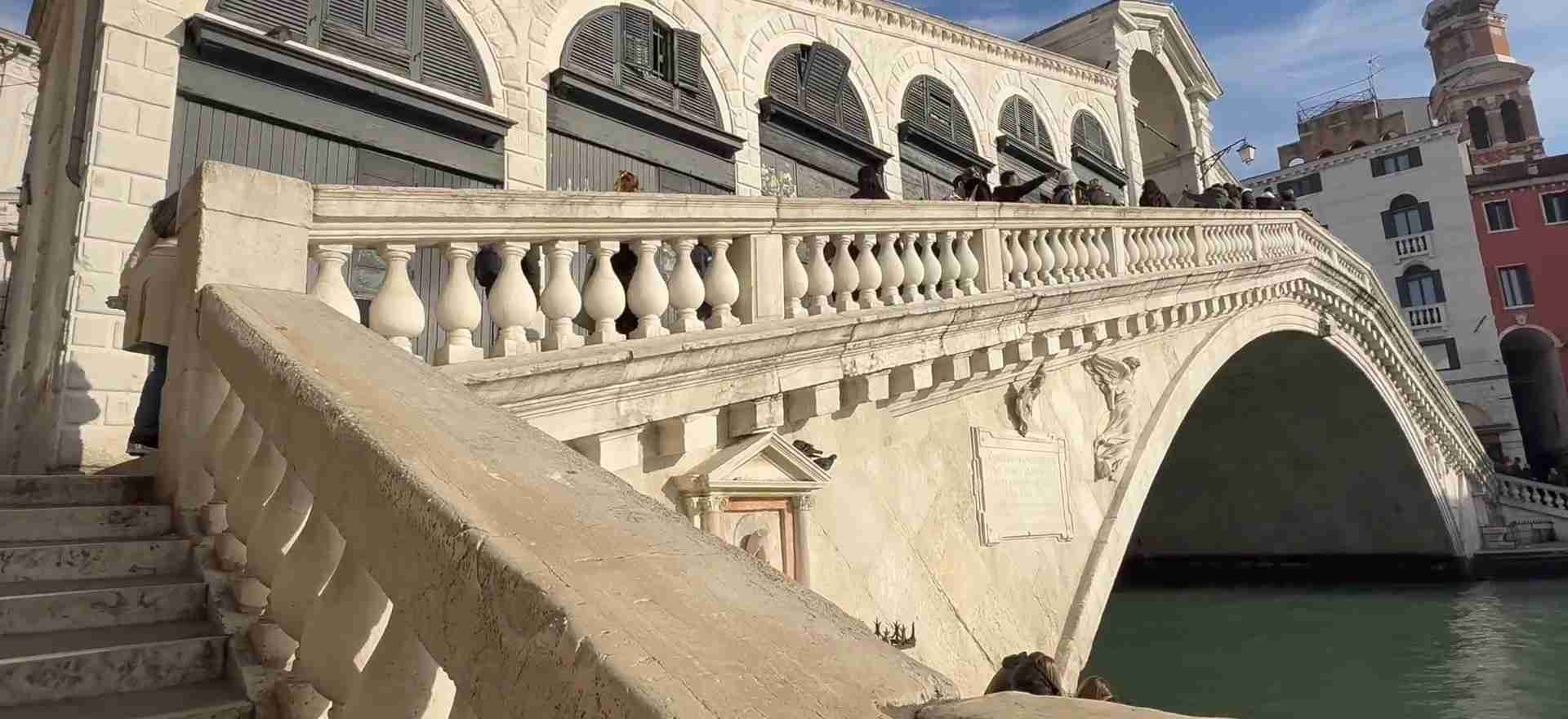
Rialto Bridge & Market Guide: Venetian Architecture & Commerce
The Rialto Bridge stands as Venice’s oldest and most iconic crossing of the Grand Canal, while the surrounding Rialto Market represents nine centuries of continuous mercantile tradition. This architectural masterpiece and vibrant marketplace together form the commercial heart of Venice, where Renaissance engineering meets living Venetian culture in one of Europe’s most photographed and historically significant locations.
Key Takeaways
- Architectural Masterpiece: The current stone bridge, completed in 1591 by Antonio da Ponte, features a single 28-meter arch span that revolutionized Renaissance engineering and replaced multiple wooden predecessors that collapsed or burned.
- Economic Heart: The Rialto area served as Venice’s primary financial and commercial district for over 1,000 years, establishing Europe’s first state bank and pioneering international trade practices still used today.
- Market Continuity: The Rialto Market operates continuously since the 11th century, making it one of Europe’s oldest functioning markets where Venetians still purchase fresh fish, produce, and specialty items daily.
- Strategic Location: Positioned at the narrowest point of the Grand Canal, the Rialto district facilitated the exchange of goods between East and West, transforming Venice into the medieval world’s dominant maritime republic.
- Cultural Landmark: Featured prominently in Shakespeare’s “The Merchant of Venice” and countless Renaissance paintings, the Rialto represents Venice’s identity as a bridge between cultures, commerce, and architectural innovation.
- Photography Icon: The bridge’s elegant arch, three parallel walkways, and surrounding palazzi create Venice’s most photographed composition, requiring specific timing and positioning to capture its architectural genius and market vitality.
People Also Ask About Rialto Bridge & Market Venice
Why is the Rialto Bridge so famous in Venice?
The Rialto Bridge achieved fame through its groundbreaking single-arch design spanning 28 meters across the Grand Canal, completed in 1591 after Renaissance Venice rejected proposals by Michelangelo and Palladio. The bridge revolutionized engineering by supporting commercial shops on its deck while carrying thousands of pedestrians daily, demonstrating unprecedented structural ambition. Its architectural significance combines with its role as Venice’s economic epicenter for over four centuries, where merchants, bankers, and traders conducted business that shaped European commerce. The bridge appears in Shakespeare’s works, Renaissance paintings by Canaletto and Carpaccio, and countless literary references that cemented its status as Venice’s most recognizable landmark after St. Mark’s Basilica.
What makes the Rialto Market special compared to other Italian markets?
The Rialto Market distinguishes itself through nine centuries of continuous operation in the same location, serving as Venice’s principal wholesale and retail food market since approximately 1097. Unlike tourist-oriented markets, the Rialto functions as a working market where Venetian families shop daily for lagoon fish, Adriatic seafood, and regional produce that arrives each morning by boat. The market’s architectural setting within Gothic porticos and neo-Gothic fish pavilions creates a unique atmosphere, while its vendors maintain traditional practices including the dramatic daily fish auction and specialized cutting techniques for lagoon species. The market directly connects to Venice’s maritime heritage, as fishing boats still deliver catches from the same waters Venetian sailors navigated for centuries.
How did the Rialto area become Venice’s commercial center?
The Rialto developed as Venice’s commercial nucleus due to its position at the Grand Canal’s narrowest and shallowest crossing point, where the earliest Venetian settlers established one of the lagoon’s first inhabited islands called Rivo Alto (high bank). This natural advantage made the area ideal for loading and unloading goods, leading to the concentration of warehouses, banks, and merchant offices by the 11th century. Venice’s government strategically designated the Rialto as the city’s official market district, where international merchants traded spices, silks, and goods from Constantinople, Alexandria, and beyond. The establishment of the Banco della Piazza di Rialto in 1587, Europe’s first public bank, formalized the area’s financial supremacy and attracted currency exchange operations that made the Rialto synonymous with Venetian economic power.
What architectural features make the Rialto Bridge unique?
The Rialto Bridge employs several unprecedented architectural innovations including its single stone arch construction spanning 28 meters without intermediate supports, a feat considered impossible by many contemporary engineers. Antonio da Ponte designed the bridge with a remarkably shallow arch profile, rising only 7.5 meters above water level to accommodate gondolas while maintaining sufficient structural strength through precisely calculated Istrian limestone placement. The bridge incorporates three parallel pedestrian passages divided by two rows of commercial shops, creating a functional marketplace suspended above the Grand Canal that generates income while serving as a crossing. Its foundation rests on 12,000 wooden piles driven into the lagoon floor, distributing the immense weight of stone and constant pedestrian traffic through innovative Renaissance engineering that has withstood four centuries of tides, floods, and heavy use without major structural repairs.
Extended multi-day tours – 5+ days
Featured Venice Multi-Day Tour Packages

3 days
Venice 3-Day Discovery Tour
- ✓ Comprehensive Venice experience
- ✓ Expert local guides included
- ✓ All accommodation included
- ✓ Transportation provided

5 days
Venice 5-Day Highlights Experience
- ✓ Comprehensive Venice experience
- ✓ Expert local guides included
- ✓ All accommodation included
- ✓ Transportation provided
7 days
Venice 7-Day Cultural Journey
- ✓ Comprehensive Venice experience
- ✓ Expert local guides included
- ✓ All accommodation included
- ✓ Transportation provided
10 days
Venice 10-Day Complete Adventure
- ✓ Comprehensive Venice experience
- ✓ Expert local guides included
- ✓ All accommodation included
- ✓ Transportation provided
Multi-day tour packages powered by TourRadar. Prices and availability subject to change.
Introduction
The Rialto Bridge and its surrounding market district represent the architectural and commercial soul of Venice, where nine centuries of maritime trade, banking innovation, and daily Venetian life converge at the Grand Canal’s historic crossing. This single-arch Renaissance masterpiece and the vibrant market stalls beneath its shadow tell the story of Venice’s transformation from lagoon refuge to Mediterranean superpower, a journey powered by shrewd merchants, visionary architects, and the republic’s strategic position linking Europe with the Byzantine and Islamic worlds.
Understanding the Rialto requires appreciating its dual nature as both architectural monument and living commercial space. The bridge itself stands as Antonio da Ponte’s triumph over engineering skeptics who doubted a single stone arch could span the Grand Canal’s 28-meter width while supporting shops and thousands of daily crossings. The market below maintains traditions established when Venetian galleys returned from Constantinople laden with spices, silks, and Eastern luxuries that would be sorted, priced, and distributed throughout Europe from these exact porticos and warehouses.
The Rialto district’s significance extends beyond tourism into the fabric of contemporary Venetian identity. While millions photograph the bridge’s elegant arch and browse market stalls, local residents navigate the same paths their ancestors walked, purchasing lagoon fish from vendors whose families have operated these stalls for generations. The area preserves Venice’s essence as a trading republic where commerce, architecture, and daily life blend seamlessly, creating a cultural landscape that has inspired artists, writers, and travelers for centuries while continuing to serve its original mercantile purpose.
This guide explores the Rialto’s architectural evolution from simple wooden crossing to Renaissance engineering marvel, examines the market’s role in Venetian economic dominance, and reveals how this district shaped European banking, international trade law, and maritime commerce. Whether approached as architectural pilgrimage, cultural immersion, or photographic subject, the Rialto rewards deep engagement with its layers of history, innovation, and enduring commercial vitality.
History of the Rialto Bridge
The Rialto Bridge’s history spans eight centuries of Venetian ambition, engineering challenges, and architectural evolution, beginning with the first wooden crossing constructed around 1180 to connect the Rialto market district with San Marco. This original pontoon bridge served Venice’s expanding trade economy by facilitating the movement of goods and merchants between the city’s political center and its commercial heart, establishing the crossing pattern that would define Venetian urban life for centuries.
Subsequent wooden bridges replaced the initial structure throughout the 13th and 14th centuries, each iteration responding to fire damage, structural collapse, or the increasing demands of Venice’s maritime commerce. The most notable medieval bridge, completed in 1264, introduced a drawbridge mechanism allowing tall-masted ships to pass beneath, demonstrating Venice’s engineering sophistication while creating the iconic image preserved in Carpaccio’s painting “Miracle of the Relic of the Cross” showing the bridge crowded with spectators during a religious procession.
The catastrophic collapse of 1444, when the wooden bridge gave way under crowds gathered to watch a bridal procession, convinced Venetian authorities that a permanent stone solution had become necessary. However, the technical challenges of spanning the Grand Canal’s width while maintaining navigation clearance delayed construction for over a century. During this period, Venice invited proposals from the greatest Renaissance architects including Michelangelo, Palladio, Sansovino, and Vignola, all of whom submitted designs that the conservative Venetian Senate ultimately rejected as too ambitious, too expensive, or too radical for the city’s traditional aesthetic.
Antonio da Ponte won the commission in 1588 with a design that balanced innovation with Venetian architectural sensibilities, proposing a single elegant arch rather than the multiple spans favored by many competitors. Construction proceeded from 1588 to 1591, employing specialized workers who drove 12,000 wooden piles into the lagoon floor to create foundations capable of supporting the bridge’s estimated 8,000-ton weight. The project required precise engineering calculations that accounted for tidal forces, the Grand Canal’s irregular bottom, and the need to maintain sufficient clearance for gondolas and smaller boats while creating a stable platform for commercial shops and heavy pedestrian traffic.
The completed bridge immediately became Venice’s architectural sensation and commercial success, generating substantial revenue from shop rentals while providing the reliable crossing that the Rialto market district required for continued expansion. Da Ponte’s design proved so structurally sound that it has required minimal reinforcement over four centuries despite sustaining the weight of millions of annual visitors, constant commercial activity, and the gradual settling that affects all Venetian structures. The bridge’s enduring stability validated Renaissance engineering principles and established the single-arch design as the model for subsequent Grand Canal crossings, though none would achieve the Rialto’s iconic status or commercial integration.
Architecture and Engineering of the Bridge
The Rialto Bridge represents Renaissance engineering at its most audacious, employing a single elliptical arch spanning 28 meters across the Grand Canal with a rise of only 7.5 meters from water level to bridge deck. This shallow arch profile required precise mathematical calculations to distribute the bridge’s massive weight while maintaining the gentle slope necessary for pedestrian and commercial use, solving structural challenges that contemporary engineers considered nearly impossible with 16th-century construction techniques.
Antonio da Ponte’s design employs Istrian limestone for the bridge’s primary structure, a material chosen for its resistance to saltwater erosion and its availability from Venetian-controlled quarries across the Adriatic. The arch consists of carefully fitted stone blocks arranged in a precise curve that channels compressive forces toward the massive abutments embedded in the Grand Canal’s banks, where 12,000 wooden piles driven 15-20 feet into the lagoon floor distribute the weight across a broader foundation area. This pile foundation system, derived from centuries of Venetian building experience in unstable lagoon conditions, prevents the settling and shifting that would compromise the arch’s structural integrity.
The bridge’s cross-section reveals sophisticated spatial organization across three parallel passages divided by two rows of shops, creating a 22-meter-wide deck that accommodates commercial activity while maintaining clear pedestrian flow. The central passage rises highest and provides the widest clearance, flanked by slightly lower side passages that create the bridge’s characteristic profile when viewed from the Grand Canal. Each shop occupies a precisely measured space with foundations integrated into the bridge’s structural system, ensuring that commercial weight contributes to rather than compromises overall stability.
Architectural detailing includes elaborate stone balustrades featuring Renaissance geometric patterns, carved lion heads that serve as water spouts, and inscriptions commemorating the bridge’s construction and subsequent renovations. The approaches at both ends incorporate wide stone staircases that distribute pedestrian loads gradually, reducing stress concentrations while creating the ceremonial ascent that emphasizes the bridge’s monumental character. Small architectural refinements including the slight arch asymmetry that accounts for different foundation conditions on each bank demonstrate da Ponte’s mastery of practical engineering disguised within classical architectural forms.
The bridge’s structural longevity stems from continuous maintenance programs initiated during the Venetian Republic and continued by modern preservation authorities who monitor foundation settlements, stone weathering, and the cumulative effects of vibrations from boat traffic and pedestrian use. Recent studies using ground-penetrating radar and structural analysis have confirmed that the original pile foundation remains largely intact, while periodic stone replacement addresses surface deterioration without compromising the bridge’s essential structural elements. This maintenance philosophy balances preservation of original Renaissance engineering with necessary interventions that ensure the bridge can continue serving its original function indefinitely.
The Rialto Market Through the Centuries
The Rialto Market’s origins trace to approximately 1097 when Venetian authorities designated the area as the city’s principal market, transforming the natural high bank (Rivo Alto) into the republic’s commercial epicenter. Early market operations focused on produce, fish, and basic commodities arriving from the mainland and lagoon islands, establishing trading patterns that would expand dramatically as Venice’s maritime empire extended across the Mediterranean and into the Black Sea.
By the 13th century, the Rialto Market had evolved into Europe’s primary entrepôt for Eastern goods, where Venetian galleys returning from Constantinople, Alexandria, and Acre unloaded spices, silks, dyes, and luxury items that would be warehoused in specialized buildings called fondaci before distribution throughout Europe. The market district expanded to include separate zones for different commodities including the Erberia for vegetables, the Pescheria for fish, and specialized areas for grain, oil, cheese, and wine. This organizational sophistication reflected Venice’s role as intermediary between East and West, where pricing, quality standards, and trading regulations developed at the Rialto would influence commercial practices across the continent.
The establishment of banking operations at the Rialto during the 14th and 15th centuries transformed the market from simple commodity exchange into Europe’s financial capital. Merchants conducting business at the market required currency exchange, letters of credit, and banking services that led to the concentration of money changers and private banks around the bridge area. The creation of the Banco della Piazza di Rialto in 1587, Europe’s first state-operated bank, formalized these financial services and established the Rialto’s reputation as the place where international trade, banking innovation, and commercial law intersected.
Architectural development accompanied commercial expansion as the Venetian government invested in permanent market structures replacing temporary wooden stalls. The construction of the Gothic porticos along the Grand Canal provided covered trading areas protected from weather while creating the architectural framework that still defines the market district. The neo-Gothic fish market pavilion, completed in 1907, represents a later architectural interpretation of medieval market design, featuring elaborate stone decoration, functional layouts for fish sorting and display, and the architectural presence befitting Venice’s primary seafood market.
The market maintained its commercial vitality through Venice’s political decline, continuing operations during Austrian occupation, Italian unification, and the 20th-century tourism transformation that altered much of Venice’s traditional economy. While wholesale trading has diminished and some specialized commodity markets have closed, the fruit, vegetable, and especially the fish market continue serving Venetian households, restaurants, and specialized food shops. This continuity represents remarkable economic resilience, as the Rialto adapts to contemporary retail patterns while preserving the essential market functions established nine centuries ago.
Market Culture and Daily Operations Today
The Rialto Market operates Tuesday through Saturday mornings, maintaining traditional wholesale and retail patterns established over centuries of Venetian commercial practice. Market activity begins before dawn when fishing boats arrive from the lagoon and Adriatic, delivering catches directly to the Pescheria where vendors arrange displays of lagoon species including moleche (soft-shell crabs), schie (gray shrimp), go (goby fish), and various specimens that most mainland Italian markets never see. This early morning delivery system preserves the direct producer-to-consumer relationship that characterizes traditional Italian markets while showcasing Venice’s unique maritime cuisine.
The fish market section reveals Venetian culinary culture through species selection and vendor expertise. Fishmongers demonstrate specialized cutting techniques for different fish types, explain cooking methods for unfamiliar lagoon species, and maintain quality standards that reflect generations of professional knowledge. Regular customers develop relationships with specific vendors who reserve particular items, provide recipe advice, and adjust cutting specifications to customer preferences. This personalized service contrasts sharply with supermarket anonymity, preserving social interactions that historically connected Venetian neighborhoods through market transactions.
The produce section (Erberia) occupies the arcaded buildings adjacent to the fish market, displaying seasonal vegetables, fruits, and specialty items from the Veneto region and broader Italian agricultural zones. Vendors arrange produce according to aesthetic principles that emphasize color, freshness, and variety, creating visual compositions that attract customers while communicating quality and seasonality. Spring brings Bassano white asparagus and Sant’Erasmo artichokes, summer offers lagoon island tomatoes and Chioggia radicchio, autumn features pumpkins and wild mushrooms, while winter highlights the famous Treviso radicchio and root vegetables that characterize regional cuisine.
Market navigation requires understanding vendor specialization and quality differences that distinguish the Rialto from casual tourist markets. Experienced shoppers recognize which vendors offer superior produce, understand fair pricing for seasonal items, and negotiate purchases in Italian or Venetian dialect that signals local status. Vendors reciprocate by offering better selection, competitive pricing, and the culinary advice that helps maintain Venice’s distinctive food culture despite tourism pressures that have transformed many neighborhood markets into souvenir operations.
The market’s social function extends beyond commercial transactions into community maintenance and cultural preservation. Morning market visits create daily routines that structure Venetian life, provide opportunities for neighborhood news exchange, and maintain the pedestrian street culture that defines the city’s character. Elderly Venetians who have shopped at the Rialto for decades preserve linguistic traditions, culinary knowledge, and social networks that resist the isolation and anonymity that mass tourism imposes on residential areas. This community function represents the market’s most valuable but least visible contribution to Venice’s survival as a living city rather than an open-air museum.
Cultural and Economic Significance in Venetian History
The Rialto district functioned as Venice’s primary economic engine for over six centuries, generating the wealth that financed the republic’s military expansion, architectural magnificence, and political independence. Merchants operating from Rialto warehouses and offices controlled trade routes extending from England to the Black Sea, establishing Venice as the indispensable intermediary between European markets and Eastern suppliers of spices, silks, and luxury goods. This commercial dominance created extraordinary wealth concentration that funded the palazzi lining the Grand Canal, the artistic patronage that attracted Renaissance masters, and the naval power that secured Venetian interests across the Mediterranean.
Banking innovations developed at the Rialto transformed European finance and commercial law. The concentration of international merchants requiring currency exchange, credit instruments, and risk management created demand for sophisticated banking services that Venetian financiers pioneered. Practices including double-entry bookkeeping, marine insurance, bills of exchange, and joint-stock commercial ventures emerged from Rialto banking operations, establishing financial mechanisms that modern global commerce still employs. The state bank’s creation in 1587 represented the culmination of Venetian financial innovation, providing stable currency, secure deposits, and government-backed credit that stabilized the republic’s economy during periods of military expense and commercial competition.
The Rialto’s cultural significance extended through Venice’s role as information crossroads where news, ideas, and cultural influences converged alongside commercial goods. Merchants returning from Constantinople brought not only spices and silks but also Greek manuscripts, Islamic scientific texts, and artistic influences that stimulated Venetian intellectual life. The market district’s coffeehouses, print shops, and gathering spaces facilitated information exchange that made Venice an early modern communication hub, where political intelligence, commercial data, and cultural innovation circulated freely among an international merchant community.
Literary and artistic representations cemented the Rialto’s symbolic importance far beyond its commercial functions. Shakespeare’s “The Merchant of Venice” immortalized the bridge area as the setting for Shylock’s bond negotiation, associating the Rialto with both commercial opportunity and moral complexity. Renaissance painters from Carpaccio to Canaletto depicted the bridge and market scenes, creating visual records that document architectural evolution while establishing the Rialto as Venice’s most recognizable landmark after San Marco. These cultural representations transformed a functional commercial district into a universal symbol of Venetian identity, ensuring that the Rialto’s fame would outlast its economic supremacy.
The district’s economic decline began with changing trade routes following the Ottoman conquest of Constantinople and the opening of Atlantic shipping lanes that bypassed Venice. However, the Rialto adapted by shifting from international wholesale trade toward regional commerce and specialized markets serving Venice’s continued role as administrative center, tourist destination, and regional capital. This economic transformation preserved the market’s essential functions while reducing its European significance, creating the contemporary Rialto where local food provisioning coexists with tourism in a balance that remains precarious but functional.
Photography Guide: Capturing the Rialto Bridge and Market
Photographing the Rialto Bridge requires understanding how light, perspective, and timing transform Venice’s most iconic structure from tourist cliché into compelling architectural documentation. The bridge’s single arch, commercial integration, and Grand Canal setting create compositional opportunities that vary dramatically with seasonal light, water traffic, and atmospheric conditions ranging from brilliant sunshine to atmospheric fog that renders the bridge ethereal and mysterious.
The classic view from the Grand Canal waterfront captures the bridge’s full arch profile from approximately 50-80 meters distance, positioning the camera to show the arch’s curve, the three-passage deck, and the palazzi framing both approaches. Early morning light from 7:00-9:00 AM illuminates the bridge’s eastern façade while creating reflections in the Grand Canal’s surface, producing the warm golden tones favored in architectural photography. This position works best with focal lengths between 24mm and 50mm that include environmental context while maintaining the bridge as dominant compositional element.
Alternative perspectives from water level aboard a gondola or vaporetto reveal the bridge’s relationship to the Grand Canal’s traffic patterns and surrounding architecture. Shooting from a moving boat requires fast shutter speeds (1/500 second or faster) to counter motion blur while composing shots that include the bridge as background to foreground gondolas, water taxis, or delivery boats. These dynamic compositions communicate the bridge’s continued functional role rather than presenting it as isolated monument, adding narrative context that static views cannot achieve.
Close-range architectural details reward photographers who climb the bridge itself to document the stone carving, shop facades, and structural elements that distant views compress. Wide-angle lenses (16mm-24mm) emphasize the arch’s curve when positioned at the bridge’s crown, creating dramatic perspective effects that exaggerate spatial relationships while revealing the engineering sophistication supporting daily commercial activity. Detail shots of individual architectural elements including carved lion heads, Renaissance inscriptions, and weathered Istrian limestone textures provide portfolio diversity while documenting restoration challenges and material degradation.
Market photography demands different approaches balancing documentary integrity with respect for vendors and customers conducting real commercial transactions. Early morning sessions capture vendors arranging fish displays, produce deliveries arriving by boat, and the market awakening before tourist crowds arrive. Available light from the porticos’ open sides creates dramatic shadows and highlights that emphasize texture and form in fish scales, vegetable surfaces, and vendor gestures. Longer focal lengths (85mm-135mm) allow discreet photography that doesn’t intrude on transactions while achieving selective focus isolating specific details against softened backgrounds.
Seasonal and atmospheric variations create dramatically different photographic opportunities. Winter fog transforms the bridge into a ghostly silhouette emerging from gray mist, requiring exposure compensation to preserve detail in highlights while maintaining atmospheric mystery. Acqua alta (high water) floods create mirror reflections in the piazza pools while dramatically altering the bridge’s relationship to its surroundings. Summer evening light at 7:00-8:30 PM produces warm tones on the western bridge facade while the lowering sun creates long shadows that emphasize architectural relief and three-dimensional form.
Night photography presents technical challenges including mixed lighting from street lamps, shop windows, and reflected ambient light from surrounding buildings. Long exposures (2-8 seconds) blur pedestrian movement into ghostly traces while keeping the bridge’s structure sharp, creating ethereal effects that emphasize the monument’s enduring presence against the transient human activity it hosts. Blue hour timing immediately after sunset provides sufficient ambient light to separate the bridge from black sky while artificial lighting creates warm accents that highlight architectural features.
Architectural Conservation and Modern Challenges
Conservation of the Rialto Bridge confronts challenges unique to Venetian structures including foundation settlement in unstable lagoon soils, stone weathering from saltwater exposure, and the cumulative stress of millions of annual pedestrian crossings. The original wooden pile foundation, driven into the lagoon floor in 1588-1591, continues supporting the bridge’s 8,000-ton weight despite gradual deterioration from marine organisms, changing water chemistry, and the compaction of underlying sediments. Periodic monitoring using ground-penetrating radar, settlement markers, and structural analysis tracks foundation movement and identifies areas requiring intervention before visible damage appears.
Stone deterioration represents the most visible conservation challenge as Istrian limestone surfaces experience erosion from airborne pollutants, biological growth, and the mechanical stress of constant use. Weathering patterns vary across the bridge with areas exposed to prevailing winds and rain showing accelerated surface loss, while protected zones accumulate biological films and salt crystallization that gradually destabilizes stone surfaces. Conservation interventions employ minimally invasive techniques including controlled cleaning with low-pressure water and soft brushes, consolidation of weakened stone with compatible materials, and selective replacement of severely damaged elements using historically accurate cutting and fitting methods.
The bridge’s commercial function complicates conservation by requiring continuous public access during restoration work that would ideally occur without pedestrian traffic and vibration. Phased restoration programs divide the bridge into sections that can be addressed sequentially while maintaining at least partial accessibility, though this approach extends project timelines and increases costs. Recent interventions have focused on foundation stabilization, stone surface conservation, and upgrading of modern utilities including electrical service and security systems that must be integrated without compromising historical fabric.
Tourism pressure creates conservation challenges through sheer visitor volume that accelerates wear on stone surfaces, generates vibrations affecting structural stability, and complicates maintenance scheduling. The bridge accommodates an estimated 30,000-40,000 daily crossings during peak season, creating traffic densities that exceed original design assumptions and concentrate wear on specific pathways. Authorities balance access preservation with conservation necessity by implementing periodic access restrictions during acute deterioration events, though permanent capacity limits remain politically controversial given tourism’s economic importance.
Climate change introduces emerging conservation threats including increased flooding frequency from rising sea levels, more intense storms that stress structural elements, and changing temperature patterns that accelerate stone weathering and biological growth. Long-term preservation strategies must account for these evolving conditions through enhanced monitoring, preemptive interventions, and potentially controversial modifications including raised foundations or protective barriers that would alter the bridge’s appearance and relationship to the Grand Canal. These decisions balance preservation of original Renaissance engineering against adaptation necessary for continued functionality in dramatically changing environmental conditions.
The Rialto in Literature, Art, and Popular Culture
The Rialto Bridge achieved literary immortality through Shakespeare’s “The Merchant of Venice,” where the bridge and surrounding commercial district provide the setting for Antonio’s bond negotiations and Shylock’s demand for his pound of flesh. Shakespeare’s portrayal, though geographically imprecise and based on secondhand descriptions rather than personal observation, established the Rialto as synonymous with Venetian commerce, risk-taking, and the moral complexities of mercantile capitalism. The play’s enduring popularity ensures that millions encounter the Rialto name through English literature before visiting Venice, creating expectations and associations that shape contemporary visitor experiences.
Renaissance painting documented the Rialto’s architectural evolution and social significance through works spanning the 15th through 18th centuries. Vittore Carpaccio’s “Miracle of the Relic of the Cross” (1494) shows the earlier wooden drawbridge crowded with spectators during a religious procession, providing invaluable documentation of medieval Venice’s appearance and social customs. Canaletto’s numerous 18th-century views established the visual vocabulary for Rialto representation, emphasizing the bridge’s elegant arch against Grand Canal vistas that became the standard composition for subsequent artists and, eventually, photographers.
Literary travelers from Byron to Ruskin contributed to the Rialto’s cultural mythology through descriptions that emphasized its romantic decay, commercial vitality, or architectural significance depending on each writer’s preoccupations. Byron referenced the bridge in letters and poetry as emblem of Venice’s faded glory, while Ruskin’s architectural analyses in “The Stones of Venice” praised the bridge’s engineering while criticizing what he perceived as its ornamental excess compared to earlier Gothic work. These literary interpretations shaped Victorian attitudes toward Venice and established critical frameworks that influenced subsequent architectural appreciation and conservation philosophy.
Modern popular culture perpetuates Rialto imagery through film, television, and digital media that employ the bridge as visual shorthand for Venice itself. Countless movies use Rialto establishing shots to signal Venetian settings, while the bridge appears in video games, virtual reality experiences, and digital reconstructions that make its form familiar even to those who never visit Venice. This mass media saturation creates both opportunities and challenges for contemporary interpretation, as visitors arrive with preconceptions formed by cultural representations that may obscure the bridge’s actual historical complexity and continued functional importance.
Comparing the Rialto to Other Venetian Bridges
The Rialto Bridge maintained its status as the Grand Canal’s sole crossing for nearly three centuries until the construction of the Accademia Bridge in 1854, establishing patterns of pedestrian movement and commercial organization that still structure Venetian urban life. This monopoly position concentrated foot traffic and commercial activity around the Rialto district, creating the density and vitality that distinguished it from other market areas and ensuring its continued economic importance even after additional bridges reduced its transportation significance.
The Accademia Bridge, originally constructed in iron in 1854 and replaced with the current wooden structure in 1933, serves primarily as functional crossing without the commercial integration that characterizes the Rialto. The Accademia’s plain utility contrasts with the Rialto’s architectural monumentality and commercial purpose, reflecting different priorities as Venice adapted to modern transportation needs while preserving select historical monuments. The Accademia’s location near the art galleries and university district creates different pedestrian patterns serving cultural institutions rather than commercial markets, demonstrating how bridge placement shapes neighborhood character and economic functions.
The Scalzi Bridge (1934) and Constitution Bridge (2008) represent progressive modernization of Grand Canal crossings, employing contemporary materials and engineering while navigating preservation concerns about visual impact in Venice’s historic center. The Constitution Bridge by Santiago Calatrava sparked particular controversy through its bold modern design and accessibility features including wheelchair ramps that previous bridges lacked, raising fundamental questions about architectural innovation versus historical continuity in UNESCO World Heritage sites. These debates illuminate tensions between Venice’s dual identity as living city requiring modern infrastructure and protected monument resisting change.
Private palace bridges connecting buildings across smaller canals throughout Venice demonstrate aristocratic architecture distinct from public crossings like the Rialto. The Bridge of Sighs linking the Doge’s Palace to the prisons represents the most famous example, with its enclosed baroque design serving specific judicial functions rather than general circulation. These specialized bridges reveal Venice’s sophisticated infrastructure responding to varied needs through architectural solutions ranging from utilitarian to monumental depending on purpose, budget, and symbolic importance.
Commercial Life Around the Bridge: Shops and Businesses
The shops integrated into the Rialto Bridge’s structure continue the commercial tradition established in the original 1591 design, though contemporary merchandise reflects tourism’s dominance over the international commodity trade that once defined the area. Current tenants include jewelers specializing in Murano glass, leather goods retailers, and souvenir vendors whose rent provides revenue for bridge maintenance while preserving the active commercial character that distinguishes the Rialto from purely monumental structures.
Retail evolution reflects broader economic transformations as Venice shifted from trading entrepôt to tourist destination. Historical shops selling spices, textiles, and luxury goods have been replaced by businesses catering to visitor demand for Venetian glass, masks, leather accessories, and regional food products. This commercial adaptation ensures continued economic vitality while raising authenticity questions about the replacement of traditional commerce with tourism-oriented retail that serves different economic purposes and customer bases.
Quality variation among bridge shops challenges visitors seeking authentic Venetian products versus mass-produced imports. Certain vendors maintain artisanal standards offering genuine Murano glass or locally produced leather goods with appropriate pricing and provenance documentation, while others stock industrial imports sold at inflated prices to uninformed tourists. Navigating these differences requires research, price comparison, and willingness to question merchandise origins, skills that separate informed shoppers from casual tourists who accept sellers’ authenticity claims without verification.
The business district surrounding the bridge extends beyond the structure itself into adjacent streets and squares where specialized retailers, restaurants, and service businesses cluster. This commercial ecosystem includes historic establishments that have operated for generations alongside newer ventures targeting tourist traffic, creating economic diversity that supports both resident and visitor needs. The survival of traditional businesses including fabric shops, kitchen supply stores, and specialized food vendors indicates resilience of Venice’s commercial culture despite tourism pressure that has displaced similar enterprises from other central districts.
Rent pressures driven by tourism demand create economic tensions between preservation of traditional commerce and maximization of property returns through tourist-oriented businesses. Property owners naturally prefer tenants who can pay premium rents that souvenir shops and tourist restaurants generate, displacing traditional retailers serving local populations. This economic dynamic threatens the functional diversity that historically characterized the Rialto area, potentially converting it into homogeneous tourist zone indistinguishable from similar districts worldwide except for architectural setting.
The Rialto’s Role in Contemporary Venice
The Rialto Bridge functions today as both historical monument and critical transportation infrastructure connecting San Marco district with San Polo, serving an estimated 30,000-40,000 daily crossings that include both tourists photographing the view and Venetians commuting between neighborhoods. This dual purpose creates management challenges balancing preservation requirements against accessibility needs while the bridge continues serving its original function four centuries after construction.
The market district maintains economic importance through food provisioning for Venice’s residential population, restaurant industry, and specialty food shops requiring high-quality ingredients. This functional continuity preserves the Rialto’s character as working commercial district rather than museum recreation, though the balance remains precarious as tourism development converts residential areas into hotel zones that reduce local customer base while increasing pressure to adapt market operations toward tourist expectations rather than neighborhood needs.
Navigation of the Rialto area reveals Venice’s contemporary social stratification as tourists, commuting residents, and market shoppers share public space while pursuing divergent purposes. Morning hours see Venetian shoppers navigating the market before tourist crowds arrive, creating brief windows when the area functions primarily for residents. Midday and afternoon transform the district into tourist zone where visitors photograph the bridge, browse souvenir shops, and dine at restaurants catering to non-Italian preferences. This temporal rhythm structures daily life while creating friction between competing claims on limited public space.
Transportation planning for Venice must account for the Rialto Bridge’s continued importance despite the addition of three other Grand Canal crossings. Pedestrian flow studies document bottlenecks during peak tourism seasons when crowds exceed the bridge’s capacity, creating safety concerns and accelerating structural wear. Proposed solutions including pedestrian traffic management, timed access restrictions, or construction of additional crossings face political opposition from various stakeholders who prioritize different values including unrestricted access, preservation, or economic development.
The Rialto’s symbolic importance to Venetian identity ensures it remains central to debates about tourism management, preservation priorities, and the city’s future as living community versus themed entertainment zone. The bridge and market together represent what Venice could remain: a functional city where commerce, daily life, and historical continuity coexist rather than a preserved relic where tourism completely displaces resident population and traditional economic activities. This symbolic significance makes the Rialto area a testing ground for sustainable tourism models that might preserve Venice’s essential character while accommodating visitor interest that generates necessary revenue.
Frequently Asked Questions
How long did it take to build the current Rialto Bridge?
Construction of Antonio da Ponte’s stone bridge required three years from 1588 to 1591, a remarkably brief timeline given the project’s engineering complexity and the need to maintain Grand Canal navigation during construction. The foundation work consumed much of this period as workers drove 12,000 wooden piles into the lagoon floor to create stable support for the bridge’s massive stone arch. The actual stone arch construction proceeded relatively quickly once foundations were complete, using techniques refined through centuries of Venetian building experience in unstable lagoon conditions. Da Ponte’s efficient project management and the Venetian Republic’s commitment to rapid completion ensured that the bridge opened for commercial use within three years of groundbreaking, immediately generating revenue from shop rentals that helped offset construction costs.
What happened to the earlier wooden Rialto bridges?
Venice maintained a succession of wooden bridges at the Rialto location from approximately 1180 until the stone bridge’s completion in 1591, with each wooden structure succumbing to fire, structural collapse, or deliberate replacement. The first pontoon bridge served primarily military and ceremonial functions before commercial pressure necessitated a more substantial structure in the 13th century. The 1264 wooden bridge introduced a drawbridge mechanism allowing tall ships to pass, remaining Venice’s primary Grand Canal crossing for nearly two centuries until partial collapse in 1444 when crowds gathering to watch a ducal procession exceeded the structure’s weight capacity. Subsequent wooden bridges served interim functions while Venetian authorities debated stone bridge proposals, with the final wooden crossing removed upon completion of da Ponte’s design. Historical paintings and drawings preserve visual records of these earlier bridges, providing valuable documentation of Venice’s architectural and engineering evolution.
Can you walk across the Rialto Bridge at night?
The Rialto Bridge remains open for pedestrian crossing 24 hours daily without gates or access restrictions, serving as essential transportation link for residents and late-night visitors navigating between districts. Night crossing offers dramatically different experiences from daytime visits as the absence of crowds reveals the bridge’s architectural character while surrounding palazzi and canal reflections create atmospheric lighting effects. Security lighting illuminates the bridge deck and staircases sufficiently for safe passage, though the shops close in the evening leaving only the central and side passages open for transit. Late-night crossing provides opportunities for photography capturing the bridge’s nocturnal character, though visitors should exercise normal urban safety precautions and awareness of surroundings when navigating Venice after dark.
What types of fish are sold at the Rialto fish market?
The Pescheria fish market specializes in lagoon and Adriatic species rarely available at inland Italian markets, including moleche (soft-shell crabs during spring and autumn molting seasons), schie (small gray shrimp from the lagoon), go (goby fish traditional in Venetian risotto), and various seasonal catches that reflect the lagoon’s unique marine ecology. Vendors also offer more familiar Mediterranean species including branzino (sea bass), orata (gilt-head bream), calamari, octopus, and seasonal fish that change with migration patterns and commercial fishing cycles. The market’s specialty items attract professional chefs seeking authentic Venetian ingredients and home cooks maintaining traditional recipes requiring specific lagoon species. Vendors provide expert advice on preparation methods for unfamiliar fish, ensuring that customers can successfully cook specialty items that require knowledge of traditional Venetian techniques developed over centuries of lagoon-based cuisine.
Are there restaurants with views of the Rialto Bridge?
Numerous restaurants and cafes occupy waterfront positions offering direct Rialto Bridge views from Grand Canal-facing terraces, though quality and pricing vary dramatically from tourist traps to respected establishments serving authentic Venetian cuisine. Osterias and trattorias along Riva del Vin on the San Marco side provide classic bridge views across the Grand Canal, commanding premium prices for terrace seating that justifies costs for special occasions but may disappoint diners seeking value over atmosphere. Rooftop terraces at certain hotels and higher-end restaurants offer elevated perspectives encompassing the bridge within broader Grand Canal vistas, creating different compositional relationships that may appeal to photographers and romantics willing to pay for position. Budget-conscious visitors can achieve excellent bridge views from waterfront positions that don’t require restaurant patronage, while establishments away from the immediate bridge area often provide superior food quality at lower prices for diners prioritizing cuisine over view.
What is the architectural style of the Rialto Bridge?
The Rialto Bridge exemplifies late Renaissance architecture employing classical proportions, symmetrical design, and decorative restraint characteristic of Venetian building traditions in the 16th century. Antonio da Ponte’s design incorporates Renaissance engineering innovations including the single-arch span and mathematical arch profile calculations while maintaining aesthetic continuity with Venice’s established architectural vocabulary through Istrian limestone construction, balanced proportions, and functional integration of commercial shops within monumental structure. The bridge avoids excessive ornamentation favored by Baroque successors, instead achieving monumentality through pure geometric forms, structural clarity, and the elegant simplicity that distinguishes Renaissance design from both medieval Gothic predecessors and later Baroque elaboration. This architectural approach reflected Venetian conservatism in public monuments combined with engineering ambition that pushed technical boundaries while respecting traditional aesthetic values, creating a structure that reads simultaneously as innovative engineering achievement and natural evolution of Venetian building culture.
How has the Rialto Market changed over the centuries?
The Rialto Market has transformed from Europe’s primary entrepôt for Eastern luxury goods into a regional food market serving Venice’s residential population and restaurant industry, reflecting Venice’s broader economic evolution from maritime trading empire to regional center and tourist destination. Medieval and Renaissance markets handled international commodity trade including spices from Asia, textiles from Constantinople, and luxury items distributed throughout Europe from Rialto warehouses, establishing commercial practices and banking services that made Venice wealthy. The shift toward regional food markets occurred gradually as changing trade routes diminished Venice’s role as East-West intermediary, while the market adapted by emphasizing fresh fish, produce, and specialty items serving local consumption rather than export trade. Contemporary operations preserve traditional structures including the morning wholesale delivery system, vendor specialization in particular products, and the social functions that connect neighborhood residents through daily market shopping, though tourism influence grows as restaurants catering to visitors become increasingly important customers displacing traditional household shoppers.
Why did Antonio da Ponte win the bridge design competition?
Antonio da Ponte secured the commission through a design that balanced engineering innovation with fiscal responsibility and aesthetic conservatism, satisfying Venetian authorities who had rejected more radical proposals from famous architects including Michelangelo, Palladio, and Sansovino. Da Ponte’s single-arch solution addressed the engineering challenge of spanning the Grand Canal while requiring fewer piers that would obstruct navigation compared to multi-span alternatives, reducing construction costs and future maintenance demands. His design preserved the commercial character established by earlier wooden bridges by incorporating shop spaces that would generate rental income helping offset construction expenses, demonstrating the practical business sensibility that appealed to Venice’s merchant oligarchy. The proposal’s aesthetic conservatism reassured authorities concerned that overly innovative designs might clash with Venice’s established architectural character, while da Ponte’s reputation as reliable professional engineer with successful completion of other Venetian projects provided confidence that he could actually execute the ambitious design within budget and schedule constraints that had derailed previous attempts.
What role did the Rialto play in Venice’s banking history?
The Rialto district served as Europe’s financial capital during the medieval and Renaissance periods, concentrating banking operations, currency exchange, and commercial credit services that financed international trade while pioneering financial innovations subsequently adopted throughout Europe. Private banks clustered around the bridge area provided merchant banking services including currency conversion, letters of credit, and trade financing essential for Venice’s role as intermediary between European and Eastern markets. The establishment of the Banco della Piazza di Rialto in 1587 marked Europe’s first state-operated public bank, offering stable currency, secure deposits, and government backing that stabilized Venice’s economy during military conflicts and commercial competition. Rialto banking operations developed sophisticated financial instruments including bills of exchange that allowed merchants to conduct transactions across vast distances without transporting physical currency, marine insurance protecting against shipping losses, and partnership structures distributing commercial risks among multiple investors. These innovations established financial mechanisms that modern banking still employs, cementing the Rialto’s historical importance extending far beyond its architectural significance into the foundations of contemporary global finance.
How does the Rialto Bridge handle the weight of constant pedestrian traffic?
The bridge’s structural system distributes pedestrian loads through the single stone arch into massive abutments embedded in both Grand Canal banks, where 12,000 wooden piles driven deep into the lagoon floor spread the weight across sufficient foundation area to prevent excessive settlement in Venice’s unstable soil conditions. The arch geometry employs precise mathematical curves calculated to channel compressive forces efficiently, while the Istrian limestone construction provides material strength sufficient for the estimated 8,000-ton total weight plus variable loads from pedestrians and commercial activities. Continuous monitoring programs track foundation settlement, stone weathering, and structural integrity using modern sensors and periodic surveys that identify problems before they compromise safety or require emergency interventions. The bridge’s remarkable 430-year service life despite constant heavy use validates Renaissance engineering calculations and construction quality, though contemporary traffic volumes exceeding original design assumptions require ongoing assessment of cumulative fatigue effects and development of conservation strategies ensuring indefinite continued function while preserving historical fabric.