
Uxmal vs Chichen Itza 2026: Which Maya Ruins to Visit?
Complete planning guide to choose the best Maya ruins for your Yucatan adventure, find costs, crowds, architecture, accessibility.
Key Takeaways:
- Chichen Itza draws 2.5-3 million visitors annually with peak crowds reaching 8,000-10,000 daily, while Uxmal receives 300,000-400,000 visitors offering a more intimate experience
- Entry costs for 2026 are $533 MXN ($27 USD) at Chichen Itza and $461 MXN ($24 USD) at Uxmal, both sites accessible as comfortable day trips from Merida
- Chichen Itza features the iconic pyramid El Castillo and benefits from excellent infrastructure, while Uxmal showcases superior Puuc architecture with the ornate Governor’s Palace
- Photography enthusiasts gain better access at Uxmal with fewer restrictions and smaller crowds, while Chichen Itza offers dramatic wide-angle compositions despite rope barriers
- Combining both sites requires 2-3 days with overnight stays in Merida or small towns, total costs ranging $180-280 per person including accommodation and transportation
- The optimal 2026 strategy visits Chichen Itza for its historical significance and iconic status, then Uxmal for architectural appreciation and peaceful exploration
Planning Your Maya Ruins Comparison in 2026
The Yucatan Peninsula preserves two of Mexico’s most magnificent Maya archaeological sites, each offering distinct experiences that appeal to different traveler priorities. Chichen Itza stands as Mexico’s most visited archaeological site and one of the New Seven Wonders of the World, drawing millions of visitors to witness El Castillo’s architectural precision and astronomical alignments. Uxmal represents the pinnacle of Puuc architectural style with elaborate stone mosaics and refined proportions, welcoming far fewer visitors despite its UNESCO World Heritage designation and exceptional preservation.
Your choice between these sites depends on multiple factors including your tolerance for crowds, interest in specific architectural styles, available time, budget considerations, and whether you prioritize iconic recognition or intimate archaeological exploration. Both sites rank among Mexico’s most important pre-Columbian monuments, but they deliver fundamentally different experiences shaped by their architectural characteristics, visitor management, accessibility, and surrounding infrastructure.
Planning for 2026 requires understanding current costs, transportation logistics, crowd patterns, and strategic timing to maximize your experience at either or both sites. This comprehensive comparison provides the detailed information needed to make an informed decision aligned with your travel style, interests, and Yucatan itinerary constraints.
People Also Ask About Uxmal vs Chichen Itza 2026
Which is better, Uxmal or Chichen Itza in 2026?
Neither site is objectively “better”—the optimal choice depends on your specific priorities. Chichen Itza offers iconic status as one of the New Seven Wonders of the World, making it essential for first-time Mexico visitors seeking recognizable landmarks and comprehensive visitor infrastructure. The site delivers dramatic photography opportunities despite crowds, excellent English-language signage, abundant tour options, and the cultural cachet of visiting one of the world’s most famous archaeological sites. Its historical significance spans multiple Maya periods with influences from central Mexico, creating a complex archaeological narrative.
Uxmal provides superior conditions for archaeological appreciation with smaller crowds allowing intimate engagement with structures, exceptional Puuc architecture showcasing Maya artistry at its peak, better access for close examination of stone carvings and mosaics, and a more contemplative atmosphere conducive to understanding Maya civilization. Architecture enthusiasts, photographers seeking optimal conditions, and travelers who value peaceful exploration over famous landmarks consistently rate Uxmal more satisfying despite its lower international recognition.
The ideal 2026 strategy visits both sites if your Yucatan itinerary permits 2-3 days, experiencing Chichen Itza’s grandeur and historical importance while enjoying Uxmal’s architectural refinement and manageable crowds. Travelers with limited time should visit Chichen Itza if seeking iconic Mexican experiences, or Uxmal if prioritizing archaeological quality over tourist infrastructure.
How much does it cost to visit Uxmal vs Chichen Itza in 2026?
Chichen Itza entry costs $533 MXN ($27 USD) per person combining the federal archaeological zone fee ($90 MXN) and Yucatan state tax ($443 MXN) in 2026. Check the official INAH website for current rates as pricing may vary. This fee grants access to the main archaeological area including El Castillo pyramid, Temple of Warriors, Great Ball Court, Sacred Cenote overlook, and numerous lesser structures. Additional costs include parking $80-100 MXN, guided tours $700-1,200 MXN for private guides or $400-600 MXN for group tours, and second-class buses from Merida $186 MXN round-trip or luxury ADO buses $400-500 MXN.
Uxmal entry costs $461 MXN ($24 USD) per person with the same dual-fee structure ($90 MXN federal plus $371 MXN state tax). Additional expenses include parking $50-70 MXN, guided tours $600-1,000 MXN private or $350-500 MXN group, buses from Merida $150-170 MXN second-class or $350-450 MXN luxury, and the evening light and sound show $103 MXN additional. The lower overall costs at Uxmal reflect less developed tourist infrastructure and fewer commercial services, though the archaeological experience delivers equal or superior value for serious cultural travelers.
Total day costs for independent visitors range $800-1,200 MXN ($40-60 USD) at Chichen Itza versus $700-1,000 MXN ($35-50 USD) at Uxmal when including entry, transportation, guided tour, meals, and incidentals. Organized day tours from Merida or Cancun cost $900-1,800 MXN ($45-90 USD) for Chichen Itza and $750-1,400 MXN ($38-70 USD) for Uxmal, with the price differential reflecting demand and distance factors.
Can you visit both Uxmal and Chichen Itza in 2026?
Visiting both sites requires 2-3 days minimum given the 280-kilometer distance between them and the need for adequate exploration time at each location. Attempting both in a single day creates an exhausting 12-14 hour marathon with minimal time for meaningful engagement, though some tour operators offer this option for travelers with severe time constraints. The recommended 2026 approach dedicates separate full days to each site with overnight accommodation in Merida or strategic small towns.
The optimal itinerary bases in Merida for 2-3 nights, visiting Chichen Itza on Day 1 via early morning departure (7:00-7:30 AM) to arrive for 8:00 AM opening and explore 3-4 hours before peak crowds, returning to Merida by early afternoon. Day 2 visits Uxmal with mid-morning departure arriving 10:00-10:30 AM for 3-4 hours of exploration, potentially staying for the evening light and sound show before returning to Merida. This schedule provides adequate time at each site while maintaining reasonable daily schedules.
Alternative strategies include overnight stays in Valladolid (42 kilometers from Chichen Itza) and Santa Elena (15 kilometers from Uxmal), creating a 3-day circuit from Merida to Chichen Itza/Valladolid to Uxmal/Santa Elena and back to Merida. This approach adds colonial town exploration and reduces early morning departure pressure, though it requires more complex logistics and additional accommodation bookings.
Which has better architecture, Uxmal or Chichen Itza?
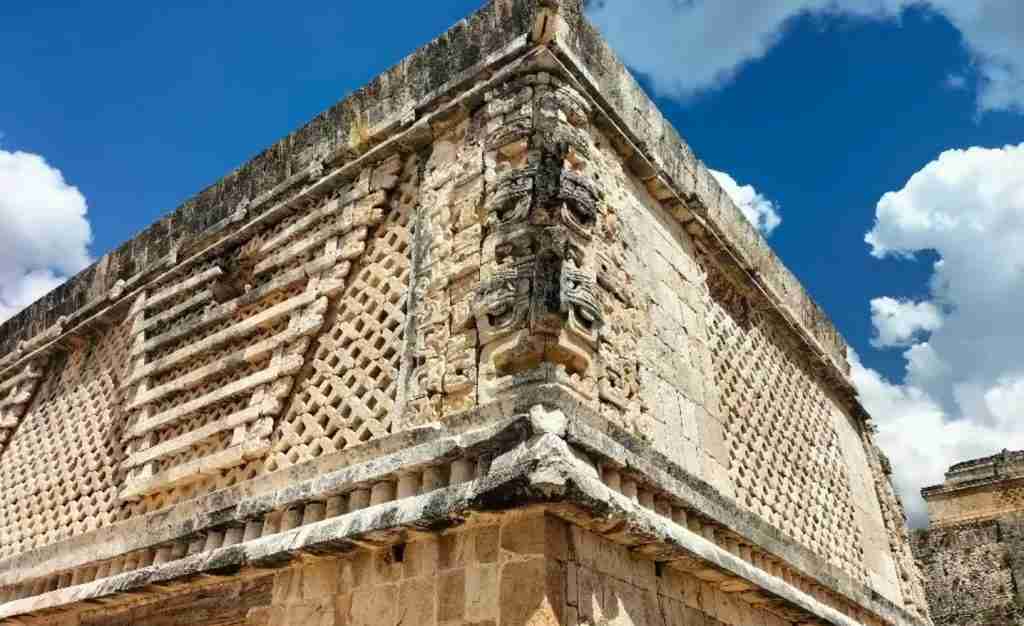
Architectural superiority depends on evaluation criteria and aesthetic preferences. Uxmal represents the pinnacle of Puuc architectural style characterized by elaborate stone mosaics, precise geometric patterns, refined proportions, and exceptional craftsmanship in decorative elements. The Governor’s Palace exemplifies Maya architecture at its most sophisticated with intricate facade mosaics containing over 20,000 individually carved stones arranged in complex geometric and zoomorphic patterns. The Pyramid of the Magician displays innovative elliptical base and multiple construction phases, while the Nunnery Quadrangle demonstrates mastery of spatial planning and decorative integration.
Chichen Itza showcases greater architectural diversity spanning multiple periods and cultural influences, from early Puuc-style structures to later Toltec-influenced monuments. El Castillo demonstrates astronomical sophistication with precise solar alignments creating the famous equinox shadow serpent, while the Temple of Warriors and Group of a Thousand Columns reveal central Mexican architectural influences. The Great Ball Court represents the largest in Mesoamerica with acoustical properties allowing whispers to carry across the 168-meter playing field.
Architecture purists and scholars generally regard Uxmal’s refined Puuc style as artistically superior, while Chichen Itza’s importance lies in cultural synthesis and astronomical achievements. First-time visitors respond more dramatically to Chichen Itza’s iconic pyramid and dramatic scale, while architecture students and photography enthusiasts appreciate Uxmal’s decorative sophistication and preserved details.
Extended multi-day tours – 5+ days
Featured Uxmal Multi-Day Tour Packages

3 days
Uxmal 3-Day Discovery Tour
- ✓ Comprehensive Uxmal experience
- ✓ Expert local guides included
- ✓ All accommodation included
- ✓ Transportation provided

5 days
Uxmal 5-Day Highlights Experience
- ✓ Comprehensive Uxmal experience
- ✓ Expert local guides included
- ✓ All accommodation included
- ✓ Transportation provided
7 days
Uxmal 7-Day Cultural Journey
- ✓ Comprehensive Uxmal experience
- ✓ Expert local guides included
- ✓ All accommodation included
- ✓ Transportation provided

10 days
Uxmal 10-Day Complete Adventure
- ✓ Comprehensive Uxmal experience
- ✓ Expert local guides included
- ✓ All accommodation included
- ✓ Transportation provided
Multi-day tour packages powered by TourRadar. Prices and availability subject to change.
Essential Planning Information 2026
Site Statistics and Visitor Patterns
Chichen Itza receives 2.5-3 million visitors annually making it Mexico’s most visited archaeological site and one of Latin America’s top tourist destinations. Daily visitor numbers range from 8,000-10,000 during peak season (December-March) and 4,000-6,000 in shoulder seasons (April-May, October-November). Tour groups arrive in waves from 10:00 AM through 2:00 PM, creating congested conditions around major structures with waiting times of 15-30 minutes for optimal photography positions. Independent visitors who arrive at 8:00 AM opening experience dramatically different conditions with near-empty sites for 90-120 minutes before tour buses arrive.
Uxmal welcomes 300,000-400,000 visitors annually, roughly 10-12% of Chichen Itza’s volume, creating a fundamentally different experience. Daily counts rarely exceed 800-1,200 even during peak season, with most days seeing 300-600 visitors spread across the extensive site. This visitor density permits unobstructed photography, quiet contemplation of architectural details, and freedom to explore at personal pace without navigating crowds. The site operates with minimal commercial infrastructure—two small restaurants, basic souvenir stands, and limited tour group presence—preserving an archaeological atmosphere rather than theme park ambiance.
Opening Hours and Seasonal Considerations
Both sites open daily 8:00 AM to 5:00 PM (last entry 4:00 PM) throughout the year with consistent schedules. Chichen Itza’s spring equinox (March 20-21) draws 40,000-50,000 visitors creating extreme crowding and requiring special ticketing, making it the one period to avoid unless specifically interested in the shadow serpent phenomenon. Summer months (June-August) bring intense heat with temperatures reaching 35-40°C (95-104°F) and high humidity, along with afternoon rain showers in the rainy season (May-October).
Optimal visiting windows for 2026 run November through February for both sites, offering comfortable temperatures 22-28°C (72-82°F), minimal rain probability, and best lighting conditions for photography. Chichen Itza experiences peak crowding during this period requiring early arrival, while Uxmal remains manageable even during high season. March through May brings extreme heat but lower crowds at both sites except during Semana Santa (Holy Week) when domestic tourism peaks.
Chichen Itza Overview 2026
Historical Significance and Site Characteristics
Chichen Itza dominated northern Yucatan from approximately 600-1200 CE, reaching its apex during the Terminal Classic and Early Postclassic periods (800-1200 CE) when it controlled trade routes and influenced Maya politics across the peninsula. The site demonstrates exceptional cultural synthesis blending Maya, Toltec, and central Mexican traditions into distinctive architectural and artistic expressions. Its designation as one of the New Seven Wonders of the World in 2007 elevated international recognition and visitor numbers, transforming it from significant archaeological site to global tourist icon.
The archaeological zone spans 6.5 square kilometers with the core tourist area covering approximately 2 square kilometers accessible via paved paths and maintained lawns. Major structures include El Castillo (Kukulkan Pyramid) standing 30 meters tall with precise astronomical alignments, the Great Ball Court measuring 168 x 70 meters as Mesoamerica’s largest, Temple of Warriors with extensive colonnade and Chac Mool sculpture, Sacred Cenote (62 meters diameter) used for ceremonial offerings, El Caracol astronomical observatory, and numerous lesser temples, platforms, and residential complexes.
Visitor Infrastructure and Services
Chichen Itza operates as a highly developed tourist destination with comprehensive infrastructure including a large visitor center with museum displays and air-conditioned facilities, multiple restaurants and food courts, extensive souvenir markets with hundreds of vendors, clean bathroom facilities throughout the site, shaded rest areas, and professional tour guide services in multiple languages. The site maintains paved pathways between all major structures with wheelchair access to most areas, though El Castillo climbing closed in 2006 after a tourist death.
Commercial development surrounds the archaeological zone with hotels ranging from basic ($50-80 per night) to luxury ($200-400 per night) within 1-3 kilometers, along with numerous restaurants, tour agencies, and tourist services. This infrastructure supports various travel styles from budget backpackers to luxury travelers, though it creates a theme park atmosphere that some visitors find detracts from archaeological authenticity. English-language signage appears throughout the site with detailed explanatory panels at major structures.
Photography and Access Restrictions
Photography faces moderate restrictions designed to manage crowds and preserve structures. Rope barriers prevent close approach to most buildings maintaining 2-5 meter distances that limit detail photography and compositional options. The most dramatic shots require wide-angle lenses (16-35mm) to capture El Castillo and other structures within rope barrier constraints, while telephoto lenses (70-200mm) compress perspective and eliminate crowd elements from compositions.
Professional photography equipment (tripods, large camera bags, professional video rigs) requires special permits obtained in advance through INAH, though enforcement varies by day and official. The rope barrier system around El Castillo creates congestion at popular photography positions during peak hours (10:00 AM – 2:00 PM) with waits of 15-30 minutes for unobstructed shots. Early morning arrival (8:00-9:00 AM) provides brief windows for crowd-free photography before tour groups arrive.
Uxmal Overview 2026
Architectural Excellence and Site Layout
Uxmal flourished during the Late Classic period (600-900 CE) as one of the most important Puuc region cities, controlling trade and exerting political influence across northern Yucatan. The site exemplifies Puuc architectural style characterized by lower plain walls topped by elaborate mosaic friezes, precise stone cutting and fitting, innovative vault construction, and integration of natural topography into building placement. Its UNESCO World Heritage designation (1996) recognizes exceptional artistic achievement and architectural innovation within Maya civilization.
The archaeological zone covers approximately 1 square kilometer with major structures including the Pyramid of the Magician (35 meters tall with unique elliptical base), Governor’s Palace (100 meters long with intricate mosaic facade containing 20,000+ carved stones), Nunnery Quadrangle (complex of four buildings surrounding central plaza with exceptional decorative programs), Great Pyramid (32 meters with macaw motifs), and House of Turtles (elegant small temple). Additional structures extend into unexcavated areas with recent LiDAR surveys revealing extensive buried architecture.
Visitor Experience and Atmosphere
Uxmal operates with minimal commercial infrastructure preserving an archaeological site atmosphere rather than tourist attraction. The small visitor center contains basic museum displays and ticket office, two simple restaurants serve regional Yucatecan cuisine, limited souvenir vendors operate from small stands, and clean bathrooms locate near the entrance. The site lacks the extensive facilities and commercial development surrounding Chichen Itza, creating a more authentic archaeological experience but requiring visitors to bring water, snacks, and sun protection.
The smaller visitor numbers permit intimate engagement with structures including close approach for examining carved details, quiet spaces for architectural photography, unhurried exploration without crowd pressure, and contemplative appreciation of Maya artistry. Visitors regularly report spending 3-4 hours at the site versus 2-3 hours at Chichen Itza despite Uxmal’s smaller area, attributing extended time to detailed examination of decorative elements and peaceful atmosphere encouraging thorough exploration.
Photography Advantages and Access
Uxmal provides superior photography conditions through fewer access restrictions, smaller crowds, and exceptional architectural details. Photographers approach most structures closely (1-2 meters) permitting detail shots of stone mosaics, geometric patterns, and sculptural elements impossible at Chichen Itza’s rope barriers. The Governor’s Palace facade offers exceptional subjects with intricate mosaic work photographed from ground level using normal to wide-angle lenses (24-70mm), while the Pyramid of the Magician’s unique elliptical form creates compelling compositions from multiple angles.
The site’s smaller visitor numbers eliminate waiting for photography positions and allow extended setup time for optimal compositions. Professional equipment operates without permits for standard cameras and tripods, though commercial photography requires INAH authorization. The evening light and sound show (separate ticket $103 MXN) provides dramatic after-dark photography opportunities with structures illuminated in changing colors, though this requires specific permission for professional camera equipment.
Cost Comparison 2026
Entry Fees and On-Site Expenses
Chichen Itza costs $533 MXN ($27 USD) per person for basic entry in 2026, combining federal INAH fee ($90 MXN) and Yucatan state tax ($443 MXN). Check official INAH website for current rates as pricing may vary. On-site expenses include parking $80-100 MXN for private vehicles, guided tours ranging $400-600 MXN for group tours (2-2.5 hours, 15-25 people) to $700-1,200 MXN for private guides (2-3 hours, custom content), meals $150-250 MXN at on-site restaurants, bottled water $25-35 MXN, and souvenirs $100-500 MXN depending on quality and bargaining skills.
Uxmal charges $461 MXN ($24 USD) for entry with identical fee structure ($90 MXN federal plus $371 MXN state tax). Additional costs include parking $50-70 MXN, guided tours $350-500 MXN group or $600-1,000 MXN private, simple meals $120-180 MXN at basic on-site restaurants, water $20-30 MXN, and evening light and sound show $103 MXN additional ticket. The overall cost advantage at Uxmal reaches $100-200 MXN ($5-10 USD) per person when comparing equivalent services and experiences.
Transportation Costs from Major Bases
From Merida (120 kilometers to Chichen Itza), second-class buses operate hourly 6:00 AM to 4:00 PM costing $93 MXN each way ($186 MXN round-trip), taking 2-2.5 hours with intermediate stops in small towns. Luxury ADO buses run 3-4 daily departures costing $220-250 MXN each way with air conditioning and fewer stops. Colectivo shared vans cost $150-180 MXN per person round-trip departing when full (8-10 passengers), offering flexibility in departure times. Rental cars cost $500-800 MXN per day plus gasoline ($400-500 MXN round-trip) providing maximum independence.
From Merida to Uxmal (80 kilometers), second-class buses depart hourly costing $75-85 MXN each way ($150-170 MXN round-trip) taking 1.5-2 hours. Premium SUR buses charge $175-225 MXN each way with air conditioning and assigned seating. Colectivos cost $120-150 MXN per person round-trip with similar flexibility to Chichen Itza service. Rental car gasoline costs $250-350 MXN round-trip given shorter distance. The transportation cost advantage for Uxmal reaches $40-80 MXN ($2-4 USD) per person using equivalent service levels.
From Cancun and Playa del Carmen (200 kilometers to Chichen Itza), organized day tours dominate with prices $900-1,800 MXN ($45-90 USD) including entry, transportation, guide, buffet lunch, and sometimes cenote swim. Independent travel via ADO bus costs $380-450 MXN each way requiring early departure (6:00-7:00 AM) and late return (6:00-7:00 PM). Uxmal receives fewer Cancun-based tours given greater distance (310 kilometers) with prices $1,100-2,000 MXN ($55-100 USD) when available, making Chichen Itza the practical choice for Caribbean coast-based travelers.
Guided Tour Options and Pricing
Chichen Itza supports extensive guide infrastructure with certified guides offering services in English, Spanish, French, German, Italian, and Japanese. Group tours (2-2.5 hours, maximum 25 people) cost $400-600 MXN split among participants, creating per-person costs of $20-30 MXN in full groups. Private guides charge $700-1,200 MXN for 2-3 hour tours providing customized content, flexible pacing, and personalized attention. Guides congregate near the entrance with official INAH certification badges, though advance booking during peak season ensures preferred guide selection.
Uxmal offers fewer guides reflecting smaller visitor numbers, with most providing excellent architectural and historical knowledge given the specialized audience attracted to Puuc sites. Group tours cost $350-500 MXN (smaller groups, 10-15 people) while private guides charge $600-1,000 MXN for 2-3 hour tours. The lower prices reflect less developed tourist infrastructure and reduced demand, though guide quality equals or exceeds Chichen Itza given the site’s architectural sophistication and scholarly interest. Many guides speak English and Spanish with some offering French or German.
Accessibility & Transportation 2026
Getting to Chichen Itza
Chichen Itza enjoys excellent accessibility from multiple bases across Yucatan. From Merida (120 kilometers west), morning ADO buses depart 8:15 AM arriving 10:45 AM, returning 2:30 PM and 4:30 PM, suitable for day trips though arrival time misses early morning calm. Second-class Oriente buses leave hourly from 6:00 AM enabling 8:00 AM arrival when coordinated with early departure. From Valladolid (42 kilometers east), frequent colectivos and buses depart throughout the day with 40-50 minute travel times, making it the ideal overnight base for optimal morning access.
From Cancun and Riviera Maya (200 kilometers northeast), organized tours provide convenient service departing hotels 6:30-7:30 AM and returning 5:00-6:00 PM, though this creates compressed on-site time of 2.5-3 hours during peak crowd periods. Independent travelers catch ADO buses from Cancun terminal departing 6:00 AM and 8:30 AM ($380-450 MXN each way, 3.5-4 hours including stops), though this requires very early hotel departure and creates long travel days. Rental cars from Cancun follow Highway 180 toll road (cuota) in 2.5-3 hours with tolls totaling $450-550 MXN plus gasoline $600-750 MXN.
Getting to Uxmal
Uxmal access relies primarily on Merida-based connections with less developed public transportation than Chichen Itza. From Merida (80 kilometers north), second-class buses depart Terminal TAME hourly from 6:00 AM to 6:00 PM ($75-85 MXN each way) taking 1.5-2 hours with stops in Santa Elena and other small towns. Premium SUR buses offer 3-4 daily departures with air conditioning and assigned seating ($175-225 MXN each way). Return buses operate until 7:00-7:30 PM enabling full-day visits or evening light show attendance.
Rental cars provide optimal flexibility for Uxmal exploration and combination with nearby Puuc Route sites (Kabah, Sayil, Labna, Xlapak). The paved highway 261 from Merida reaches Uxmal in 70-90 minutes through scenic Yucatan countryside passing henequen haciendas and traditional Maya villages. Gasoline costs $250-350 MXN round-trip from Merida with no tolls, making car rental economical for groups of 2-3 sharing costs. Small towns like Santa Elena (15 kilometers north) and Ticul (28 kilometers northeast) offer budget accommodation for multi-day Puuc region exploration.
On-Site Mobility and Physical Requirements
Chichen Itza features paved pathways connecting all major structures with relatively flat terrain, making it accessible for visitors with moderate mobility. Wheelchairs navigate most areas though some ancient pathways present challenges, and wheelchair rentals operate at the visitor center. The site’s 2-square-kilometer core requires 4-6 kilometers of walking for comprehensive coverage, with distances between major structures ranging 100-300 meters. Climbing El Castillo closed permanently in 2006 though many other structures permit access including Temple of Warriors platforms and various smaller buildings.
Uxmal presents more challenging terrain with uneven stone pathways, stairs without handrails on pyramid structures, and less developed accessibility infrastructure. The site permits climbing the Pyramid of the Magician (118 steep steps, 35 meters height) and Great Pyramid (80 steps, 32 meters) creating dramatic elevated photography opportunities but requiring good physical condition. Walking distances reach 5-7 kilometers for thorough site exploration including peripheral structures, though the core Nunnery-Governor’s Palace-Pyramid area covers 1-2 kilometers on moderate terrain.
Crowd Experience 2026
Managing Chichen Itza’s Tourism Impact
Chichen Itza’s massive visitor numbers fundamentally shape the experience, creating conditions more similar to major theme parks than contemplative archaeological sites. Peak hours (10:00 AM – 2:00 PM) see 4,000-6,000 visitors on-site simultaneously during high season, with crowds concentrating around El Castillo creating congestion and waiting times for photography. Tour groups arrive in waves coordinated with cruise ship schedules and Cancun hotel pickups, generating crowd surges that move through the site in 2-2.5 hour cycles.
Effective crowd avoidance requires strategic timing with 8:00-9:30 AM providing the only calm period before tour bus arrivals. Visitors who enter at opening (8:00 AM) photograph El Castillo with minimal people, explore Temple of Warriors in solitude, and complete core site coverage before crowds arrive. Post-3:00 PM offers secondary calm as tour groups depart, though afternoon heat (especially March-September) and harsh lighting reduce photography quality. Weekdays see slightly smaller crowds than weekends, while avoiding Mexican holidays and spring equinox prevents extreme congestion.
Uxmal’s Peaceful Atmosphere
Uxmal’s 300,000-400,000 annual visitors (compared to Chichen Itza’s 2.5-3 million) create fundamentally different conditions with daily counts rarely exceeding 800-1,200 even during peak season. The site’s larger area and dispersed attractions distribute visitors across multiple zones preventing concentrated crowds. Most days see 50-150 people at major structures simultaneously, permitting unobstructed photography, quiet reflection, and freedom to explore without crowd management concerns.
The absence of cruise ship tourists and limited tour group presence creates a self-selecting visitor demographic of cultural travelers, architecture enthusiasts, and serious archaeology students. This specialized audience generates respectful site behavior, minimal noise pollution, and genuine interest in Maya civilization rather than checkbox tourism. Photography proceeds without waiting for positions, conversations occur naturally with fellow visitors, and guards maintain relaxed supervision rather than constant crowd control.
Architecture & Highlights Comparison
Chichen Itza’s Iconic Structures
El Castillo (Temple of Kukulkan) stands as Chichen Itza’s defining monument—a 30-meter stepped pyramid with nine platforms and four stairways of 91 steps each (364 total plus platform equals 365, representing the solar year). Its astronomical precision demonstrates advanced Maya mathematical and calendrical knowledge with equinox shadows creating serpent imagery descending the stairs, though climbing closed since 2006. The structure’s perfect symmetry and dramatic profile generate instant recognition worldwide.
The Great Ball Court measures 168 x 70 meters as Mesoamerica’s largest, featuring parallel walls 8 meters high carved with elaborate reliefs depicting ritual ball game scenes and human sacrifice. Acoustic properties allow normal speech at one end to carry clearly to the opposite end 168 meters away, demonstrating sophisticated understanding of sound reflection. The Temple of Warriors showcases Toltec influence with colonnaded halls, Chac Mool sculpture, and extensive carved serpent columns, while the Sacred Cenote (62 meters diameter, 27 meters to water surface) yielded thousands of artifacts during dredging operations revealing its ceremonial importance.
Uxmal’s Architectural Masterpieces
The Governor’s Palace represents Maya architecture’s pinnacle achievement—a 100-meter-long structure elevated on three platforms with intricate mosaic facade containing over 20,000 individually carved limestone pieces. The decorative program includes geometric step-fret patterns, lattice designs, serpent masks, and ruler representations arranged in complex compositions demonstrating exceptional craftsmanship. Architectural historians consider it one of ancient America’s finest buildings for proportional refinement, decorative integration, and structural sophistication.
The Pyramid of the Magician rises 35 meters on an innovative elliptical base (unique in Maya architecture) with five construction phases creating its complex profile. Legend claims it was built overnight by a dwarf magician, though archaeological evidence reveals gradual development across 400 years. Visitors climb 118 steep steps for panoramic site views, though the ascent requires good physical condition. The Nunnery Quadrangle consists of four buildings surrounding a central plaza, each facade decorated with distinct mosaic programs including serpents, geometric patterns, thatched-roof house representations, and ruler imagery demonstrating Puuc style diversity within unified architectural conception.
Comparative Architectural Analysis
Chichen Itza demonstrates greater architectural diversity spanning multiple periods and cultural influences, from early Puuc-style structures in the south (Las Monjas complex) to later Toltec-influenced northern monuments (El Castillo, Temple of Warriors). This cultural synthesis creates eclectic architecture reflecting Chichen Itza’s role as trade crossroads and political capital. The site’s importance lies more in astronomical achievements, engineering scale, and cultural fusion than pure architectural refinement.
Uxmal represents homogeneous Puuc style at its apex with unified architectural vocabulary across all major buildings. The emphasis on elaborate surface decoration, precise stone cutting, innovative structural solutions (corbel vaults, elliptical bases), and integration with topography demonstrates architectural principles applied consistently. Scholars regard Uxmal as artistically superior for decorative sophistication and proportional refinement, while Chichen Itza impresses through diversity, scale, and cultural significance. First-time visitors respond more dramatically to Chichen Itza’s iconic pyramid, while architecture students and repeated visitors appreciate Uxmal’s subtle excellence.
Best Time to Visit Each Site in 2026
Optimal Months for Chichen Itza
November through February offers ideal Chichen Itza conditions with comfortable temperatures 22-28°C (72-82°F), minimal rainfall, and best photography lighting. Early morning arrivals (8:00 AM) during these months provide 60-90 minutes of near-empty site before tour groups arrive around 9:30-10:00 AM. The winter dry season creates clear skies enhancing architectural photography and reducing weather-related schedule disruptions, though this period sees peak visitor numbers requiring extra diligence in crowd avoidance strategies.
March through May brings extreme heat with temperatures reaching 35-40°C (95-104°F) and intense sun creating harsh lighting and physical stress. Visitor numbers decline in April-May except during Semana Santa (Holy Week, March 29-April 5 in 2026) when domestic tourism peaks. The spring equinox (March 20-21) attracts 40,000-50,000 visitors for the shadow serpent phenomenon, creating extreme crowding that makes meaningful site exploration impossible—avoid these dates unless specifically interested in the event.
June through October constitutes rainy season with daily afternoon thunderstorms June-August and periodic hurricanes September-October. Morning visits (8:00 AM – 12:00 PM) often proceed in sunny conditions before clouds develop, though unpredictable rain creates scheduling uncertainty. Visitor numbers drop significantly in September-October despite lower accommodation prices and uncrowded sites, making it attractive for travelers tolerant of weather variables and willing to risk rain interruptions.
Optimal Months for Uxmal
Uxmal follows similar seasonal patterns though its smaller crowds make timing less critical than Chichen Itza. November-February provides comfortable exploration conditions without crowd pressure even during peak season, allowing flexible arrival times between 9:00 AM and 2:00 PM. The evening light and sound show operates year-round with best weather conditions December-March, though performances proceed rain-or-shine creating occasional uncomfortable viewing during wet season.
March-May heat affects Uxmal similarly to Chichen Itza with temperatures exceeding 35°C (95°F) creating physical stress, though the site’s smaller crowds and shaded rest areas make it more manageable than Chichen Itza’s exposed areas. The less developed commercial infrastructure means fewer restaurants and limited water sales, requiring visitors to bring adequate supplies. Early morning (8:00-10:00 AM) or late afternoon (3:00-5:00 PM) visits during hot months optimize comfort while maintaining good photography lighting.
Rainy season creates atmospheric photography opportunities at Uxmal with dramatic cloud formations and occasional rainbows, though the evening show may be compromised by weather. The site’s excellent drainage and stone pathways handle rain better than dirt-path sites, though limestone becomes slippery when wet requiring careful footing. September-October sees lowest visitor numbers creating exceptional conditions for uninterrupted exploration despite weather uncertainty.
Combining Both Sites: 2026 Multi-Day Planning
Three-Day Itinerary Strategy
The optimal combination strategy dedicates three days using Merida as base: Day 1 visits Chichen Itza with 6:30-7:00 AM departure arriving for 8:00 AM opening, exploring 3-4 hours before returning to Merida for afternoon rest. Day 2 covers Uxmal with 9:00 AM departure for 10:30 AM arrival, exploring until 3:00-4:00 PM with optional evening return for light show. Day 3 explores Puuc Route sites (Kabah, Sayil, Labna) combined with colonial town visits (Ticul, Oxkutzcab) creating comprehensive Maya archaeological and Yucatan cultural experience.
This schedule requires no overnight moves while providing adequate rest between intensive site days, though it demands early morning discipline for Chichen Itza’s 6:30 AM departure. Merida offers excellent accommodation options across all price ranges ($50-300 per night), outstanding Yucatecan cuisine, and cultural attractions for evening activities. The disadvantage includes long travel days with 2-2.5 hours each way to Chichen Itza, though this trade-off eliminates packing/unpacking and maintains single accommodation base.
Alternative Circuit with Overnight Stops
Travelers preferring shorter daily travel distances overnight in Valladolid (42 kilometers from Chichen Itza) and Santa Elena (15 kilometers from Uxmal), creating a 3-4 day circuit: Day 1 travels Merida to Valladolid (160 kilometers, 2 hours) with afternoon colonial town exploration and cenote swimming. Day 2 visits Chichen Itza with 7:30 AM departure for 8:00 AM arrival, returning to Valladolid for afternoon rest. Day 3 drives Valladolid to Santa Elena (155 kilometers, 2-2.5 hours) via scenic routes with afternoon Uxmal exploration and evening light show. Day 4 returns Santa Elena to Merida (80 kilometers, 1-1.5 hours) via Puuc Route sites.
This approach reduces early morning pressure (Valladolid allows 7:30 AM instead of 6:30 AM departure) and adds colonial town experiences, though it requires multiple accommodation bookings and daily packing. Valladolid offers mid-range hotels ($80-150 per night) and excellent local restaurants, while Santa Elena provides basic budget accommodation ($40-70 per night) with limited services. The additional flexibility and reduced travel stress appeals to travelers uncomfortable with 6:30 AM departures and 12-hour travel days.
Budget Breakdown for Combined Visits
Three-day Merida-based itinerary costs $180-280 per person including accommodation (2 nights Merida mid-range $100-180 total), entry fees (Chichen Itza $27 + Uxmal $24 = $51), transportation (rental car $40-60 per person split, or buses $30-40), meals ($40-60 for 2 days dining), guided tours optional ($35-50 if group tours), and incidentals ($15-25). Budget option using buses, basic accommodation, and no guides reaches $180-200, while mid-range with rental car and private guides approaches $250-280.
Four-day circuit with overnights in Valladolid and Santa Elena costs $220-340 per person including accommodation (3 nights budget to mid-range $120-210 total), same entry fees ($51), transportation (rental car preferred, $50-75 per person split), meals (3 days $60-90), Uxmal light show ($5), and incidentals ($20-35). This option costs $40-60 more than Merida-based approach but provides relaxed pacing and additional experiences (cenotes, colonial towns, Puuc Route), justifying premium for less rushed travelers.
Sample 2026 Itineraries
Chichen Itza Day Trip from Merida
6:30 AM departure from Merida hotel via second-class bus ($93 MXN), arriving Chichen Itza 8:50 AM. Enter site at 9:00 AM (8:00 AM opening already passed but still ahead of tour groups), explore El Castillo, Temple of Warriors, Great Ball Court, and Sacred Cenote for 3 hours until noon. Join group guide tour ($25-30 MXN per person) or explore independently with site map and audio guide. Lunch at on-site restaurant 12:00-12:45 PM ($10-12 per person). Afternoon bus returns to Merida 2:30 PM arrival. Chichen Itza entry $27, bus $9.50, lunch $11, snacks $3-5. Total day cost $50-53 per person (excluding Merida accommodation).
Uxmal Day Trip with Evening Show
9:00 AM departure from Merida via SUR bus ($11-12), arriving Uxmal 10:30 AM. Explore site 10:45 AM – 2:30 PM covering Pyramid of the Magician, Governor’s Palace, Nunnery Quadrangle, and House of Turtles. Lunch at on-site restaurant 2:30-3:15 PM ($8-10 per person). Rest in shaded area or return to Merida 4:00 PM ($11-12 bus). Return to Uxmal 6:30 PM for light and sound show ($5 additional entry). Show runs 8:00-9:00 PM followed by 9:30 PM bus return to Merida. Uxmal entry $24, show $5, transportation $22-24, meals $10-12, water $3. Total day cost $64-68 per person (excluding Merida accommodation).
Combined Three-Day Circuit
Day 1 – Chichen Itza: Merida accommodation $50-90 per night (mid-range), 6:30 AM departure, 8:50 AM arrival, explore 9:00 AM – 12:30 PM, private guide $35-45 per person (split), on-site lunch $10-12, return Merida 4:00 PM. Evening Merida dining and cultural activities $15-25. Accommodation $50-90, Chichen Itza entry $27, bus $9.50, guide $40, meals $25-37, incidentals $5-8. Day 1 total $156.50-211.50 per person.
Day 2 – Uxmal with Show: Sleep late after early Day 1, 9:00 AM departure, arrive Uxmal 10:30 AM, explore 10:45 AM – 3:00 PM, group guide tour $18-25 per person, lunch $8-10, return Merida 4:00 PM, rest at hotel, return to Uxmal 6:30 PM for 8:00 PM light show, back to Merida 10:00 PM. Accommodation $50-90 (second night), Uxmal entry $24, show $5, bus $22-24, guide $20-25, meals $12-15, incidentals $5-8. Day 2 total $138-191 per person.
Day 3 – Puuc Route: Rental car ($25-35 per person split for day), visit Kabah, Sayil, and Labna ruins (entries $15-20 total), lunch in Ticul $8-12, return Merida afternoon, departure evening or overnight depending on schedule. No accommodation needed if departing Merida. Rental car $30, entries $18, meals $10-15, gasoline $8-12. Day 3 total $66-75 per person.
Three-day total: $360.50-477.50 per person including accommodation (2 nights mid-range Merida), all entries, transportation, guided tours, meals, and incidentals.
Making Your Choice for 2026
Chichen Itza Advantages
Choose Chichen Itza if you prioritize iconic landmarks and world-famous attractions, seek comprehensive tourist infrastructure with multiple service options, value excellent accessibility from Caribbean coast resorts, prefer sites with English-language materials and international guides, want to visit a New Seven Wonders location, or have limited archaeology interest beyond major highlights. The site delivers Mexico’s most recognized Maya monument with excellent photography opportunities (despite crowds), reliable tour operations, and infrastructure supporting various travel styles from budget to luxury. First-time Mexico visitors typically include Chichen Itza for its cultural significance and worldwide recognition.
Uxmal Advantages
Choose Uxmal if you prioritize architectural sophistication over iconic status, prefer peaceful exploration without crowd pressure, want close access to structures for detailed examination, value authentic archaeological atmosphere over tourist amenities, appreciate refined Puuc architectural style, or plan photography requiring optimal conditions. The site rewards serious cultural travelers and architecture enthusiasts with exceptional decorative programs, manageable visitor numbers, and contemplative environment. Combined with nearby Puuc Route sites (Kabah, Sayil, Labna), it creates comprehensive understanding of northern Yucatan Maya civilization at its artistic peak.
The Ideal Strategy for 2026
Travelers with 2-3 days available should visit both sites experiencing complementary aspects of Maya civilization: Chichen Itza for historical importance, cultural synthesis, and iconic status; Uxmal for architectural refinement, artistic achievement, and peaceful exploration. This combination provides balanced perspective on Maya urbanism, architecture, and cultural development while accommodating different visitor management philosophies and infrastructure approaches. The sequential experience typically transforms initial Chichen Itza excitement into deeper appreciation after Uxmal’s architectural sophistication and manageable crowds.
Visitors limited to one site should choose based on personal priorities: Chichen Itza for bucket-list travel, first Mexico visits, or connection with globally recognized monuments; Uxmal for architectural interest, photography focus, or preference for authentic archaeological environments over tourist infrastructure. Neither choice disappoints, though they deliver fundamentally different experiences shaped by their visitor numbers, architectural characteristics, and development approaches. The question ultimately centers on whether you prioritize famous landmarks or exceptional archaeology, crowd-managed efficiency or peaceful contemplation, and comprehensive services or authentic atmosphere.
Frequently Asked Questions About Uxmal vs Chichen Itza 2026
How much time do I need at each site?
Chichen Itza requires 3-4 hours for comprehensive coverage of major structures including El Castillo, Temple of Warriors, Great Ball Court, Sacred Cenote, Group of a Thousand Columns, and various lesser buildings. Independent visitors moving at personal pace complete thorough exploration in 3 hours, while guided tours extend to 3.5-4 hours including detailed explanations. Early arrivals (8:00 AM) photograph major structures before crowds and complete visits by 11:00 AM-noon, while later arrivals contend with congestion adding 30-60 minutes for crowd management and photography waits.
Uxmal rewards 3-5 hours despite smaller area, with extended time spent examining decorative details, climbing pyramids for panoramic views, and appreciating architectural sophistication. The peaceful atmosphere encourages thorough exploration without crowd pressure, while the intricate stone mosaics and carvings merit close inspection impossible to rush. Many visitors report spending 4-5 hours at Uxmal versus 2.5-3 hours at Chichen Itza despite the latter’s larger size, attributing extended time to detailed engagement rather than crowd avoidance.
Can I climb the pyramids at either site?
Chichen Itza permanently closed El Castillo climbing in 2006 after a tourist fell to their death, with no indication authorities will reverse this decision. Rope barriers now prevent access to the pyramid maintaining 2-3 meter distances. Various other structures permit climbing including platforms at Temple of Warriors and several lesser buildings, though the main pyramid remains off-limits. This restriction frustrates some visitors expecting climbing access, though it protects the monument from erosion and prevents accidents.
Uxmal permits climbing both the Pyramid of the Magician (118 steep steps, 35 meters height) and the Great Pyramid (80 steps, 32 meters), creating dramatic elevated photography opportunities and rewarding visitors with panoramic site views. The climbs require good physical condition given steep angles and lack of handrails, with descent often more challenging than ascent. This access provides intimate engagement with structures impossible at Chichen Itza, though it carries inherent risks requiring personal responsibility and physical capability.
Which site has better facilities for families with children?
Chichen Itza offers superior family infrastructure with paved pathways suitable for strollers (though uneven in places), multiple bathrooms with changing facilities, on-site restaurants serving familiar foods, shaded rest areas, and shorter walking distances between major structures. The site’s theme park atmosphere feels less intimidating for children, while numerous vendors sell snacks, drinks, and toys maintaining child interest. Educational programs in the visitor center museum engage older children learning about Maya civilization.
Uxmal presents more challenges for young families with uneven terrain, longer walking distances, fewer facilities, and pyramid climbing requiring supervision and physical capability inappropriate for small children. The site rewards older children (10+ years) interested in archaeology and capable of sustained walking and stair climbing, while toddlers and young children may find it exhausting. The peaceful atmosphere permits educational discussions without crowd noise, though the limited food options and basic facilities create logistical challenges for families requiring frequent breaks and amenities.
Is photography better at Uxmal or Chichen Itza?
Uxmal provides superior photography conditions through closer structure access, smaller crowds, exceptional architectural details, and fewer restrictions. Photographers approach most buildings within 1-2 meters capturing intricate mosaic work, geometric patterns, and sculptural elements impossible at Chichen Itza’s rope barriers. The manageable visitor numbers eliminate waiting for positions and allow extended setup time for optimal compositions. The Governor’s Palace facade and Pyramid of the Magician’s unique elliptical form offer compelling subjects with architectural sophistication exceeding Chichen Itza’s more famous but simpler pyramid.
Chichen Itza’s photography challenges include rope barriers maintaining 2-5 meter distances from structures, massive crowds requiring patience for unobstructed shots, and popular positions with 15-30 minute waits during peak hours. The iconic El Castillo creates instantly recognizable images valuable for travel portfolios, while its perfect symmetry and dramatic profile generate striking wide-angle compositions. Early morning arrival (8:00 AM) provides brief windows for crowd-free photography worth the early wake-up for serious photographers. Overall, Uxmal delivers better working conditions while Chichen Itza offers more famous subjects.
Do I need a guide at either site?
Guides significantly enhance understanding at both sites through historical context, architectural explanations, astronomical alignments, and cultural significance impossible to glean from signage alone. Chichen Itza’s complex cultural synthesis spanning Maya, Toltec, and central Mexican traditions benefits from expert interpretation, while Uxmal’s sophisticated Puuc architecture reveals its refinement through guided analysis of decorative programs and structural innovations. Good guides transform visual experience into educational engagement, justifying their costs ($35-50 per person for group tours, $70-120 for private).
Independent exploration works well for visitors with strong archaeological backgrounds or those preferring self-paced discovery using guidebooks and site materials. Chichen Itza provides comprehensive English signage and detailed explanatory panels enabling informed independent visits, while Uxmal offers less extensive materials requiring more background knowledge. The decision ultimately depends on learning style preferences, budget considerations, and archaeological interest level—guides prove nearly essential for first-time visitors seeking deep understanding, while experienced travelers may prefer independent exploration’s freedom and pacing control.
What should I bring to each site?
Both sites require sun protection including wide-brimmed hat, high SPF sunscreen, and sunglasses given intense Yucatan sun and limited shade. Bring adequate water (2-3 liters per person) as dehydration occurs rapidly in tropical heat, though both sites sell bottled water at inflated prices ($1.50-2 versus $0.50-0.75 in town). Comfortable walking shoes with good traction handle stone pathways and uneven terrain, while lightweight breathable clothing in light colors reduces heat absorption. Small backpack carries supplies, purchased souvenirs, and wet weather gear during rainy season.
Cameras and photography equipment operate freely with standard tourist cameras and smartphones, though professional equipment (tripods, large camera bags) may require permits at Chichen Itza. Bring Mexican pesos for entrance fees, guide tips, souvenir purchases, and food as many vendors don’t accept credit cards. Insect repellent protects against mosquitoes in morning and late afternoon, while basic first aid supplies (pain relievers, bandages, antacids) address minor issues. Site maps download in advance or purchase at entrances for $2-3, providing orientation and structure identification.
Can I visit on my own without a tour from Cancun?
Independent travel to Chichen Itza from Cancun operates via ADO buses departing 6:00 AM and 8:30 AM from Cancun terminal ($380-450 MXN round-trip, 3.5-4 hours each way including stops). The 6:00 AM departure arrives approximately 9:30-10:00 AM allowing 3-4 hours exploration before return buses at 2:30 PM or 4:30 PM. This requires very early hotel departure (5:00-5:30 AM) and creates 12-14 hour day with significant travel time, though it costs less than organized tours ($900-1,800 MXN) and provides schedule flexibility.
Uxmal from Cancun presents greater challenges given 310-kilometer distance and limited direct bus service. Most independent travelers base in Merida reaching Uxmal via frequent daily buses, or rent cars driving Cancun-Uxmal in 3.5-4.5 hours ($1,200-1,600 MXN total including gasoline). The distance and travel time make Uxmal impractical as Cancun day trip unless willing to very long travel days, explaining why most Cancun-based visitors choose Chichen Itza or join multi-day tours visiting both sites with Merida overnight.
Which site better represents Maya civilization?
This question lacks simple answer as both sites represent different aspects of Maya achievement. Chichen Itza demonstrates Maya civilization’s cultural adaptability and political complexity through synthesis of Maya, Toltec, and central Mexican traditions. Its astronomical achievements (El Castillo’s equinox shadows, El Caracol observatory) reveal advanced mathematical and calendrical knowledge, while its scale and cultural influence establish it as one of Maya civilization’s most important political centers. The site represents Maya civilization’s cosmopolitan period of trade, cultural exchange, and regional dominance.
Uxmal exemplifies Maya artistic achievement and architectural sophistication at its apex through refined Puuc style and exceptional decorative programs. The Governor’s Palace and Nunnery Quadrangle demonstrate Maya civilization’s capacity for aesthetic innovation, mathematical precision, and artistic expression independent of outside influences. Uxmal represents purely Maya cultural development without the cultural synthesis visible at Chichen Itza, showcasing indigenous architectural evolution and artistic traditions. Serious students of Maya civilization visit both sites understanding they illuminate complementary aspects of this complex culture.
How do the sites compare to other Maya ruins in Mexico?
Chichen Itza and Uxmal rank among Mexico’s most important and impressive Maya sites, though multiple others merit consideration. Palenque in Chiapas offers superior jungle atmosphere with structures emerging from rainforest, exceptional carved reliefs and hieroglyphic texts, and intimate scale despite significant importance. Calakmul provides adventurous experience deep in Biosphere Reserve with massive pyramids permitting climbing and spider monkey sightings. Tulum combines Caribbean beach setting with clifftop ruins, creating unique coastal Maya experience though architecturally less sophisticated than Chichen Itza or Uxmal.
Ek Balam near Valladolid features exceptional stucco facades and pyramid climbing with less commercial development, while Coba offers jungle setting and tallest pyramid in Yucatan permitting climbing. The Puuc Route sites (Kabah, Sayil, Labna) complement Uxmal with similar architectural style and minimal crowds. Each site offers distinct characteristics, though Chichen Itza remains most famous and Uxmal most architecturally refined among northern Yucatan sites. Travelers with extended time should explore multiple sites appreciating Mexico’s extraordinary Maya archaeological wealth.
What’s the best strategy for visiting both sites from Merida?
The optimal Merida-based strategy dedicates separate full days to each site maximizing exploration time while maintaining reasonable schedules. Day 1 visits Chichen Itza with 6:30-7:00 AM departure via second-class bus or rental car, arriving 8:00-8:30 AM for opening and exploring 3-4 hours before returning to Merida for afternoon rest. Day 2 covers Uxmal with more relaxed 9:00-9:30 AM departure arriving 10:30-11:00 AM, exploring until mid-afternoon with optional evening return for light show at 8:00 PM.
This schedule permits adequate sleep between days, avoids rushing through sites, and provides afternoon rest periods in air-conditioned Merida hotels. The staggered timing (very early Chichen Itza, moderate Uxmal) prevents exhaustion from consecutive early mornings while optimizing site experiences—Chichen Itza requires early arrival for crowd avoidance, while Uxmal’s smaller crowds permit flexible timing. Adding a third day for Puuc Route sites (Kabah, Sayil, Labna) via rental car creates comprehensive northern Yucatan Maya archaeological experience.