Uppsala Day Trip from Stockholm 2026: Cathedral, Vikings & University
Uppsala offers one of Sweden’s most rewarding day trips from Stockholm, combining Scandinavia’s tallest cathedral, Viking burial mounds, and northern Europe’s oldest university. Located just 70 kilometers north of Stockholm with frequent train connections, this historic city delivers medieval architecture, ancient Norse heritage, and scholarly traditions all within a comfortable day’s exploration.
Key Takeaways
- Easy Access 2026: Direct trains from Stockholm depart every 15-30 minutes, reaching Uppsala in 38-46 minutes for $6-8 one-way
- Main Attractions: Uppsala Cathedral (free entry), Gamla Uppsala Museum ($15), and royal Viking burial mounds (free outdoor access)
- Perfect Timing: Full day trip requires 6-8 hours including 5-6 hours in Uppsala for cathedral, museum, and historic sites
- Budget-Friendly: Total day cost $30-50 per person excluding meals – train $12-16 roundtrip, cathedral free, museum $15
- Compact Layout: Cathedral and university within walking distance from station; Gamla Uppsala 5km north via local bus
- Year-Round Appeal: Cathedral and museums open daily throughout 2026; summer offers extended hours and guided tours
People Also Ask About Uppsala Day Trip 2026
How long does it take to get to Uppsala from Stockholm in 2026?
Direct trains from Stockholm Central Station to Uppsala take 38-46 minutes. Trains operated by SJ and Mälartåg depart every 15-30 minutes throughout the day, with up to 87 daily departures. The fastest SJ trains complete the journey in 38 minutes, while regional services take approximately 46 minutes. First trains depart around 5:00 AM and last services run past midnight, providing flexibility for day trips.
What is the cost of a day trip to Uppsala in 2026?
A day trip to Uppsala costs $30-50 per person excluding meals. Train tickets cost $6-8 each way ($12-16 roundtrip), Uppsala Cathedral offers free entry, Gamla Uppsala Museum charges $15 for adults (free for under 19), and the cathedral treasury costs $5. Local bus to Gamla Uppsala adds $3-5 roundtrip. Budget $20-30 for lunch and $15-25 for dinner if dining in Uppsala.
Can you visit Uppsala Cathedral and Gamla Uppsala in one day from Stockholm?
Yes, both attractions fit comfortably in a single day from Stockholm. Allocate 1.5-2 hours for Uppsala Cathedral including the treasury, 1.5-2 hours for Gamla Uppsala Museum and burial mounds, plus travel time between locations. A typical itinerary: depart Stockholm 9:00 AM, arrive Uppsala 9:45 AM, cathedral 10:00 AM-12:00 PM, lunch 12:00-1:00 PM, bus to Gamla Uppsala 1:30 PM, explore museum and mounds 2:00-4:30 PM, return to Stockholm 5:30-6:15 PM.
Is Uppsala worth visiting in 2026 for history enthusiasts?
Uppsala ranks among Sweden’s most historically significant cities, offering layers of history from Viking Age through medieval and Renaissance periods. The city houses Scandinavia’s tallest cathedral (118.7 meters), Sweden’s oldest university (founded 1477), legendary Viking burial mounds dating to the 6th century, and royal tombs including Gustav Vasa. The concentration of authentic historical sites, architectural masterpieces, and Viking heritage within a compact, walkable area makes Uppsala exceptionally worthwhile for history enthusiasts.
Extended multi-day tours – 5+ days
Featured Stockholm Multi-Day Tour Packages

6 days
Scandinavian Secrets
- ✓ Comprehensive Stockholm tour
- ✓ Expert local guides included
- ✓ All accommodation arranged
- ✓ Transportation provided

4 days
Stockholm: From Pop Icons to Royal Palaces
- ✓ Booking needs min. 2 travelers

4 days
Hello Stockholm | 4 Days
- ✓ Comprehensive Stockholm tour
- ✓ Expert local guides included
- ✓ All accommodation arranged
- ✓ Transportation provided
3 days
Stockholm City Stay – 3 days
- ✓ Comprehensive Stockholm tour
- ✓ Expert local guides included
- ✓ All accommodation arranged
- ✓ Transportation provided
Multi-day tour packages powered by TourRadar. Prices and availability subject to change.
Introduction to Uppsala Day Trip 2026
Uppsala stands as one of Sweden’s most historically layered cities, weaving together 1,500 years of Nordic heritage from pagan Viking Age temples through medieval Christian power to Enlightenment scholarship. Located 70 kilometers north of Stockholm in the fertile plains of Uppland, this compact city delivers an extraordinary concentration of cultural treasures: Scandinavia’s tallest cathedral housing royal tombs, northern Europe’s oldest university nurturing centuries of scientific discovery, and monumental Viking burial mounds marking ancient kings.
The appeal of Uppsala as a day trip from Stockholm lies in its accessibility, authenticity, and diversity of historical periods. Unlike many European heritage sites that require full-day commitments or overnight stays, Uppsala’s treasures cluster within walking distance of the central train station, connected by frequent 38-minute trains that depart Stockholm every 15-30 minutes. The city’s manageable scale allows visitors to experience Gothic architecture, Viking archaeology, Renaissance university buildings, and Linnaeus’s botanical gardens all within 6-8 hours.
Uppsala’s significance extends beyond tourism – it remains Sweden’s ecclesiastical capital as seat of the Archbishop, a leading university city with 45,000 students, and the fourth-largest urban center in the country. This living heritage means visitors encounter functioning institutions rather than museum pieces: active cathedral services, university lectures in centuries-old buildings, ongoing archaeological research at Gamla Uppsala. The city’s dual identity as both historical monument and vibrant academic community creates an authentic experience where past and present intermingle naturally.
The 2026 travel season brings enhanced access to Uppsala’s treasures. Uppsala Cathedral maintains daily hours 8:00 AM to 6:00 PM throughout the year, with free entry to the main cathedral and modest fees for specialized areas like the treasury. Gamla Uppsala Museum operates seasonally with extended summer hours (11:00 AM-5:00 PM May-September), offering interactive exhibits on Viking history, royal burials, and pagan temple traditions. The university’s historic Gustavianum museum showcases the famous 17th-century anatomical theater and medieval manuscripts including the Silver Bible.
Getting to Uppsala from Stockholm 2026
Train Service Details 2026
Direct trains connect Stockholm Central Station to Uppsala Central Station every 15-30 minutes throughout the day, operated primarily by SJ (Swedish Railways) and Mälartåg. The journey takes 38-46 minutes depending on the service type, with the fastest SJ trains completing the route in 38 minutes and regional Mälartåg services averaging 46 minutes. Up to 87 daily departures provide exceptional flexibility for day trip planning.
First departures leave Stockholm around 5:00 AM, while last services run past midnight, accommodating various schedules. Peak frequency occurs during weekday commuting hours (7:00-9:00 AM and 4:00-7:00 PM) when trains may depart every 15 minutes. Weekend service maintains hourly departures with additional trains during popular travel times.
Train tickets cost $6-8 per person one-way when booked in advance (check SJ.se or Omio for current rates). Same-day tickets purchased at stations may cost slightly more. Roundtrip fares total $12-16 per person. SJ offers various ticket types including standard economy, first class, and discounted rates for youth (under 26), seniors (65+), and groups. Booking 7-14 days ahead typically secures the lowest fares.
Trains feature comfortable seating, power outlets, free WiFi on SJ services, and luggage storage. Food and beverage service varies by train type – X2000 high-speed trains include café cars, while regional services may have vending machines. All carriages are wheelchair accessible.
Station Locations and Connections 2026
Stockholm Central Station (Stockholm Centralstation) sits in the heart of Stockholm’s city center, accessible via T-Centralen metro hub, multiple bus lines, and taxi stands. The station connects directly to Stockholm’s tunnel metro system (T-bana), Arlanda Express airport trains, and regional services. Allow 15-20 minutes for transfers if arriving from other parts of Stockholm.
Uppsala Central Station (Uppsala Centralstation) is located 10-minute walk from Uppsala Cathedral and the city center. The station features taxi stands, local bus connections, bike rentals, and walking paths to major attractions. Luggage storage lockers are available if you need to store bags during your visit.
From Uppsala Central Station to main attractions: Uppsala Cathedral (10-minute walk northeast), University Main Building (12-minute walk), Gustavianum Museum (15-minute walk), Linnaeus Garden (20-minute walk). For Gamla Uppsala, take local bus line 2, 20, 110, or 115 from the station – buses depart every 30-60 minutes with journey time 15-20 minutes.
Alternative Transportation Options
Car rental from Stockholm allows flexibility to explore surrounding Uppland region, though unnecessary for visiting Uppsala’s compact city center. Driving takes 50-60 minutes via E4 highway, with parking available at Uppsala city center garages ($15-25 per day). Traffic congestion during weekday rush hours (7:00-9:00 AM, 4:00-6:00 PM) can extend travel time.
FlixBus operates direct Stockholm-Uppsala service 3-4 times daily for $5-11 per person, taking 1 hour 15 minutes. Buses are slower than trains but slightly cheaper, best for budget travelers who book well in advance. Departure points include Stockholm Cityterminalen.
Uppsala Cathedral 2026: Scandinavia’s Tallest Church
Visiting Information 2026
Uppsala Cathedral (Uppsala Domkyrka) opens daily 8:00 AM to 6:00 PM throughout 2026, with special hours on April 30 and June 19 (8:00 AM to 12:00 PM). General admission to the cathedral is free, reflecting the Church of Sweden’s commitment to public access. The cathedral remains an active place of worship, so visitors should respect ongoing services and ceremonies.
The cathedral treasury (Skattkammaren) in the north tower charges 50 SEK ($5) for adults, with reduced rates for students and seniors. The treasury houses an exceptional collection of medieval textiles, religious artifacts, and historical treasures. Opening hours typically run 10:00 AM to 4:00 PM weekdays and Saturdays, with shorter hours on Sundays.
Free guided tours in English are offered on Sundays year-round, providing expert insights into the cathedral’s 750-year history, Gothic architecture, and notable burials. Summer months (June-August) feature additional English tours at 10:30 AM and 2:00 PM daily. Tours last approximately 90 minutes and require no advance booking – meet at the main entrance.
Audio guides in multiple languages are available for self-guided exploration. The cathedral shop near the entrance sells guidebooks, postcards, cathedral-branded items, local crafts, and religious gifts. The Cathedral Café, located in an 18th-century building adjacent to the main entrance, serves coffee, homemade pastries, and light lunches with outdoor seating during summer.
Architectural and Historical Highlights
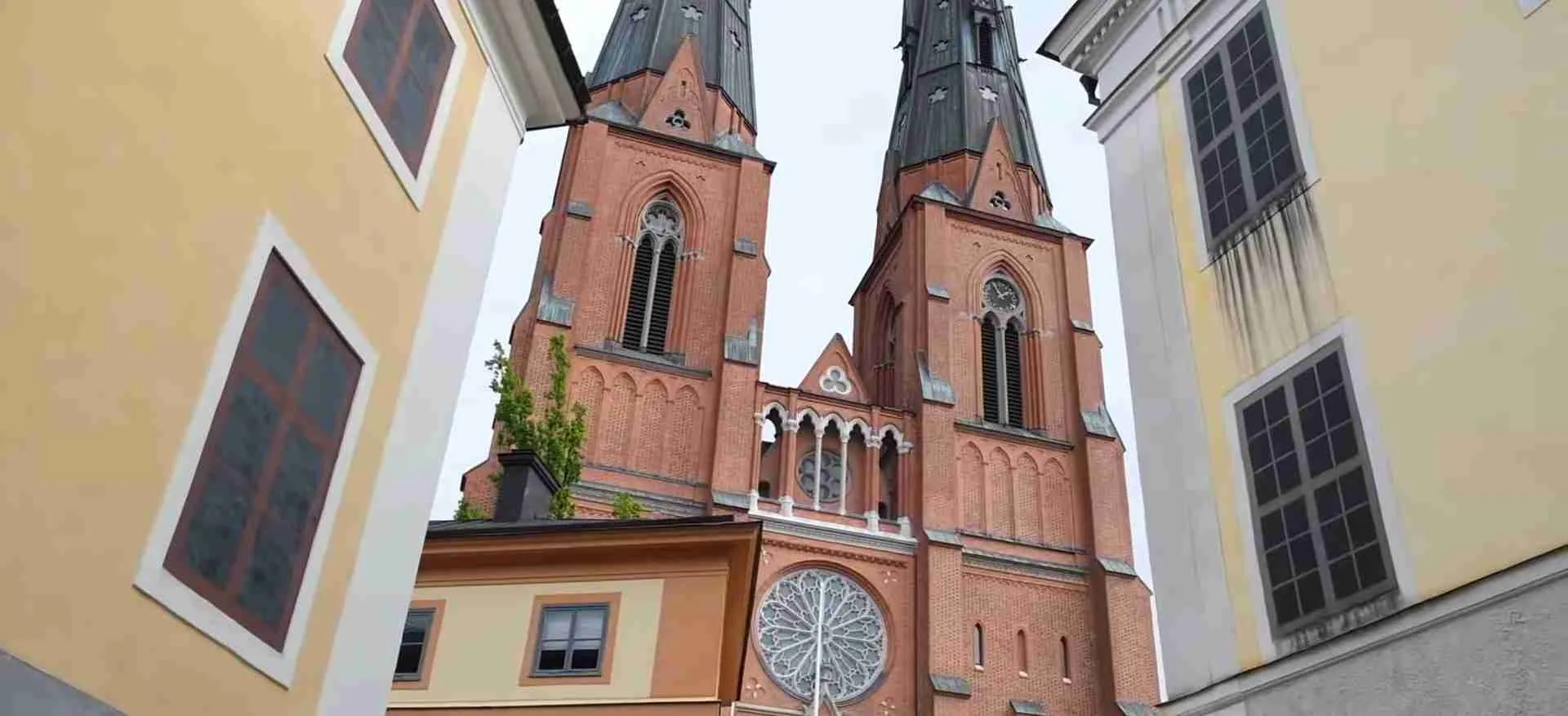
Uppsala Cathedral stands 118.7 meters tall at its highest point, making it the tallest church building in Scandinavia. Construction began around 1270 under French architects, with consecration occurring in 1435 after 165 years of building. The cathedral exemplifies French Gothic architecture adapted to Swedish conditions, featuring pointed arches, ribbed vaulting, flying buttresses, and towering twin spires added during the late 19th century.
The cathedral’s most historically significant features include the relics of Saint Erik, patron saint of Sweden, housed in a golden shrine in a chapel off the nave. Erik IX (c. 1120-1160) was murdered in 1160 and became Sweden’s most venerated medieval saint. His shrine has been a pilgrimage destination for centuries.
Royal tombs mark Uppsala Cathedral as Sweden’s Westminster Abbey. King Gustav Vasa (1496-1560), founder of modern Sweden and leader of the Protestant Reformation, rests in the cathedral’s largest chapel alongside his three wives. King Johan III (1537-1592) is also interred here. The cathedral served as the coronation site for Swedish monarchs until 1719, cementing its role as the nation’s ecclesiastical heart.
The cathedral houses the tombs of several notable non-royal figures: botanist Carl Linnaeus (1707-1778) who developed modern biological taxonomy, scientist and mystic Emanuel Swedenborg (1688-1772), and Nobel Peace Prize laureate Archbishop Nathan Söderblom (1866-1931). These burials reflect Uppsala’s role as a center of learning and religious authority.
The cathedral contains Sweden’s largest stained-glass window, roughly the size of a two-room apartment, depicting biblical scenes with rich colors. Medieval frescoes uncovered during 1970s renovations adorn various chapels, having been whitewashed over after the Reformation. The elaborate baroque pulpit, gothic altarpiece, and numerous side chapels dedicated to different saints create an interior of exceptional artistic richness.
Practical Visiting Tips
Allocate 1.5-2 hours for a thorough cathedral visit including the treasury and any guided tour. Plan your visit around daily services (typically 11:00 AM on Sundays and holidays, with weekday mass schedules varying) if you wish to observe or participate in worship. Services are conducted in Swedish but welcome all visitors.
Photography is permitted for personal use without flash, but be respectful during services and avoid disrupting other visitors. The cathedral’s Gothic architecture photographs beautifully in morning light streaming through the east-facing windows.
Dress respectfully when visiting this active place of worship – shoulders and knees should be covered. Summer visitors should note that the cathedral’s thick stone walls maintain cool interior temperatures even during warm weather, so bring a light jacket.
The cathedral is wheelchair accessible via the main entrance, with ramps and accessible restrooms available. The treasury in the north tower requires climbing stairs and may not be accessible to all visitors.
Gamla Uppsala 2026: Viking Heritage and Royal Mounds
Historical Significance
Gamla Uppsala (Old Uppsala) represents one of Scandinavia’s most important archaeological and cultural sites, serving as the political and religious center of the Svea people during the Iron Age and Viking era. Located 5 kilometers north of modern Uppsala, this ancient settlement predates the current city and marks the transition from Norse paganism to Christianity in Sweden.
Three monumental burial mounds dominate the Gamla Uppsala landscape, known as Kungshögarna (Royal Mounds) and dating from the 6th century. These massive earthworks measure 9-10 meters high and 50-60 meters in diameter, requiring immense labor and resources. Archaeological excavations revealed cremated remains, weapons, jewelry, and luxury goods suggesting royal or high-status burials.
According to medieval sources, these mounds may contain members of the legendary Ynglinga dynasty, Sweden’s earliest documented royal family. The eastern mound (Östhögen or Odin’s Mound) excavated in 1846-1847 contained evidence of elaborate funeral rituals including burned bones, gold foil figures, and imported glass vessels indicating far-reaching trade connections.
Historical accounts describe a magnificent pagan temple at Gamla Uppsala dedicated to Norse gods Thor, Odin, and Freyr. The 11th-century chronicler Adam of Bremen wrote detailed descriptions of midwinter sacrifices (blót) conducted here, where Swedish kings led rituals involving animal and possibly human offerings. While no temple remains have been conclusively identified, the concentration of votive deposits and the site’s religious significance support these written records.
After Sweden’s conversion to Christianity in the 11th-12th centuries, Gamla Uppsala became the seat of the Archbishop. The current Gamla Uppsala Church, built in the 12th century, stands on or near the former pagan temple site, symbolizing Christianity’s triumph over Norse paganism. This church served as Sweden’s cathedral until the archbishopric moved to the new Uppsala around 1270.
Gamla Uppsala Museum 2026
Gamla Uppsala Museum (Gamla Uppsala museet), housed in a distinctive building designed by architect Carl Nyrén and opened in 2000, interprets the site’s Viking Age and medieval significance through artifacts, interactive displays, and multimedia presentations. The museum is operated by the Swedish National Heritage Board (Riksantikvarieämbetet).
Admission costs 150 SEK ($15) for adults, 120 SEK ($12) for students and seniors 65+, with free entry for children and youth under 19. An annual pass covering both Gamla Uppsala Museum and Upplands Museum costs 280 SEK ($28). Tickets include access to guided tours and temporary exhibitions.
Opening hours vary seasonally. May-September: daily 11:00 AM to 5:00 PM. October-April: Wednesday-Sunday 12:00-4:00 PM. The museum is open daily during Uppsala school breaks. Closed on Midsummer Eve (June 22), Christmas Eve, Christmas Day, New Year’s Eve, and New Year’s Day. Always check the official website before visiting as hours can change.
Guided tours in Swedish and English are offered on weekends year-round and daily during summer (June 17-August 18). Tours last approximately 90 minutes and are included in the admission price. Private tours can be booked throughout the year for groups.
Exhibitions cover the Vendel period (550-800 AD), Viking Age (800-1050 AD), and medieval Christianity. Artifacts include weapons, tools, jewelry, and everyday objects recovered from excavations at Gamla Uppsala and surrounding areas. Interactive displays allow visitors to handle replica objects, try on Viking-era clothing, and create their own rune stones.
The museum features 3D models reconstructing how Gamla Uppsala appeared during different historical periods, helping visitors visualize the vanished temple, settlement structures, and ceremonial spaces. Temporary exhibitions on the upper floor explore specific themes like runestones, burial customs, or new archaeological discoveries.
The Royal Mounds and Outdoor Sites
The three royal burial mounds are freely accessible throughout the year with no admission charge, allowing budget-conscious travelers to experience the site’s most iconic features. Well-maintained paths allow visitors to walk around and climb the mounds for panoramic views of the surrounding Uppland countryside.
Climbing to the summit of the mounds takes 5-10 minutes and rewards visitors with views extending across the agricultural plains, offering perspective on how the site dominated the landscape. Interpretive signs in Swedish and English explain the mounds’ history, excavation findings, and theories about their occupants.
Beyond the three main mounds, hundreds of smaller burial mounds and stone settings dot the area, evidence of a much larger cemetery spanning several centuries. Recent archaeological surveys using ground-penetrating radar and other non-invasive techniques continue uncovering new information about settlement patterns, suggesting a population center much larger than previously thought.
Gamla Uppsala Church (Gamla Uppsala kyrka), built in the 12th century, occupies a historically significant location possibly overlapping the former pagan temple site. The church is smaller than Uppsala Cathedral but features Romanesque and Gothic elements. The church is open for visits and hosts regular services. Free admission allows exploration of the medieval interior and viewing of historical artifacts.
Restaurant Odinsborg, located adjacent to the museum in a historic wooden building, serves traditional Swedish cuisine with Viking-inspired menu items. The restaurant offers indoor and outdoor seating with views of the royal mounds. Menu prices range $15-30 for main courses. The restaurant also hosts Viking-themed events and medieval banquets by reservation.
Getting to Gamla Uppsala from Central Uppsala
Local buses connect Uppsala Central Station and city center with Gamla Uppsala. Bus lines 2, 20, 110, and 115 stop near the museum and church. Buses depart every 30-60 minutes depending on time of day, with more frequent service during weekday commuting hours. Journey time is 15-20 minutes.
Single bus tickets cost approximately 30-40 SEK ($3-4), purchased via the UL app, ticket machines at major stops, or from the driver (cash not accepted on most buses). Day passes covering unlimited Uppsala-area travel cost around 80-100 SEK ($8-10) and make sense if making multiple trips.
Cycling from Uppsala city center to Gamla Uppsala takes 20-30 minutes via dedicated bike paths through scenic countryside. Bike rental is available at Uppsala Central Station and various city center locations for $10-20 per day. The relatively flat terrain makes cycling accessible for most fitness levels.
Taxis from central Uppsala to Gamla Uppsala cost $20-30 depending on traffic and exact pickup/drop-off points. Ride-sharing services may offer slightly lower rates.
Uppsala University Area 2026
University Main Building and Carolina Rediviva
Uppsala University, founded in 1477, ranks as northern Europe’s oldest university and Sweden’s first institution of higher learning. The university’s historic buildings cluster in the city center within walking distance of the cathedral, creating a scholarly atmosphere that has defined Uppsala for over 500 years.
The University Main Building (Universitetshuset), constructed in the 1880s, dominates University Square with its distinctive twin spires echoing the cathedral’s silhouette. The building’s neo-Renaissance architecture houses administrative offices, ceremonial halls, and the impressive Auditorium Maximum where dissertations and academic ceremonies occur. The building is open to visitors during business hours, with guided tours available by arrangement.
Carolina Rediviva, the university’s main library building completed in 1841, contains an extraordinary collection of manuscripts, rare books, and historical documents. The library houses over 5 million volumes and Sweden’s largest collection of medieval manuscripts.
The library’s greatest treasure is the Codex Argenteus (Silver Bible), a 6th-century manuscript of the Gothic Bible written in silver and gold ink on purple parchment. This unique document represents one of the oldest surviving books in a Germanic language. The Codex is displayed in the library’s exhibition hall, which is free to visit. Opening hours: Monday-Friday 9:00 AM-8:00 PM, Saturday 10:00 AM-5:00 PM, closed Sundays.
Gustavianum Museum
Gustavianum, Uppsala University’s oldest building completed in 1625, now serves as the university museum. The building’s most famous feature is the Anatomical Theater, a remarkable wooden amphitheater built in 1663 for public medical dissections and anatomical instruction. This steep, six-tiered theater represents one of the world’s best-preserved 17th-century anatomical theaters.
The museum’s collections span archaeology, art, coins, and the history of science. Exhibits include Egyptian antiquities, Mediterranean archaeology, Viking Age artifacts, scientific instruments used by famous Uppsala professors, and displays on the university’s 550-year history.
Admission costs approximately 50 SEK ($5) for adults with free entry for children under 18. Opening hours vary seasonally – check the official website before visiting. Guided tours in English are available during summer months.
Linnaeus Garden and Museum
The Linnaeus Garden (Linnéträdgården), reconstructed according to 18th-century plans, showcases botanical collections arranged according to Carl Linnaeus’s classification system. Linnaeus (1707-1778), Uppsala’s most famous professor, developed modern biological taxonomy – the system of naming and classifying organisms still used today.
The garden features approximately 1,300 plant species organized into beds representing different plant families, medicinal plants, culinary herbs, and species from various global regions. The baroque-style garden layout with geometric beds, orangery, and tropical greenhouses recreates how the garden appeared when Linnaeus taught here in the mid-1700s.
The adjacent Linnaeus Museum occupies the house where Linnaeus lived while serving as professor of medicine and botany. The museum recreates his living quarters, study, and work spaces with period furnishings and scientific equipment. Exhibits explain his classification system, expeditions, and scientific contributions.
Admission to both garden and museum costs 70 SEK ($7) for adults with discounts for students and seniors. Opening hours are seasonal: May-September daily 11:00 AM-5:00 PM, shorter hours rest of year. The garden is most impressive during spring and summer when plants are in bloom.
Sample Uppsala Day Trip Itineraries 2026
Classic History Route (6-7 hours)
9:00 AM: Depart Stockholm Central Station via SJ train
9:40 AM: Arrive Uppsala Central Station
9:50 AM-12:00 PM: Uppsala Cathedral including treasury and possible guided tour
12:00-1:00 PM: Lunch at Cathedral Café or nearby restaurant in city center
1:15 PM: Depart for Gamla Uppsala via bus line 2 or 20
1:35 PM-4:00 PM: Gamla Uppsala Museum, royal mounds exploration, church visit
4:15 PM: Return bus to Uppsala Central Station
4:45 PM: Brief walk through University area if time permits
5:15 PM: Depart Uppsala via SJ train
6:00 PM: Arrive Stockholm Central Station
This itinerary prioritizes Uppsala’s two UNESCO-adjacent highlights – the cathedral and Viking heritage site – while maintaining a comfortable pace. The timing allows for thorough exploration without rushing, with built-in flexibility for extended museum visits or photo opportunities.
University and Science Focus (6-7 hours)
8:30 AM: Depart Stockholm Central Station
9:15 AM: Arrive Uppsala, walk to Carolina Rediviva Library
9:30 AM-10:30 AM: Codex Argenteus viewing, library exploration
10:45 AM-12:15 PM: Gustavianum Museum including Anatomical Theater
12:15-1:15 PM: Lunch near university area
1:30 PM-3:30 PM: Linnaeus Garden and Museum
3:45 PM-4:45 PM: Uppsala Cathedral highlights visit
5:00 PM: Depart Uppsala
5:45 PM: Arrive Stockholm
This route emphasizes Uppsala’s scholarly heritage and scientific contributions, ideal for visitors interested in academic history, natural sciences, and intellectual traditions. The itinerary works best Tuesday-Friday when university facilities maintain full hours.
Compact Half-Day Trip (4-5 hours)
10:00 AM: Depart Stockholm
10:45 AM: Arrive Uppsala Central Station
11:00 AM-12:30 PM: Uppsala Cathedral including treasury
12:30-1:30 PM: Quick lunch at Cathedral Café
1:45 PM-2:45 PM: Brief university area walk, Carolina Rediviva exterior, Codex Argenteus viewing
3:00 PM: Depart Uppsala
3:45 PM: Return to Stockholm
This condensed itinerary covers Uppsala’s absolute highlights for travelers with limited time. While sacrificing Gamla Uppsala, it captures the cathedral’s grandeur and university atmosphere in a half-day commitment suitable for combining with other Stockholm-area activities.
Uppsala Budget Breakdown 2026
Transportation Costs
Stockholm-Uppsala train roundtrip: $12-16 per person (check SJ.se or Omio for current rates)
Uppsala local bus to Gamla Uppsala roundtrip: $6-8
Optional taxi Uppsala-Gamla Uppsala one-way: $20-30
Attraction Admission
Uppsala Cathedral: Free
Cathedral Treasury: $5
Gamla Uppsala Museum: $15 adults, free under 19
Gamla Uppsala royal mounds: Free
Gustavianum Museum: $5
Carolina Rediviva Library Codex viewing: Free
Linnaeus Garden and Museum: $7
Meal Costs
Budget lunch (café, fast casual): $10-15
Mid-range restaurant lunch: $15-25
Cathedral Café pastry and coffee: $8-12
Restaurant Odinsborg at Gamla Uppsala: $15-30 for main course
Dinner if staying late: $20-35
Sample Day Budgets
Economy Day Trip: Train $16, Cathedral free, Gamla Uppsala Museum $15, lunch $12, coffee $5. Total: $48 per person.
Standard Day Trip: Train $16, Cathedral free, Treasury $5, Gamla Uppsala Museum $15, Gustavianum $5, lunch $18, coffee $8. Total: $67 per person.
Comprehensive Day Trip: Train $16, all museums $32, lunch $25, dinner $30, coffee/snacks $12. Total: $115 per person.
These budgets exclude Stockholm local transportation to/from Stockholm Central Station. Adding Stockholm metro or bus adds $5-8 per day.
Best Time to Visit Uppsala 2026
Seasonal Considerations
Summer (June-August) offers the warmest weather, longest daylight hours, and fullest access to all attractions. Uppsala Cathedral maintains year-round hours, but summer brings extended opening times for museums and gardens. Gamla Uppsala Museum operates daily with maximum hours 11:00 AM-5:00 PM. Linnaeus Garden displays peak botanical diversity. Summer also features outdoor concerts in church ruins, university events, and vibrant café culture. Downsides include higher hotel prices if staying overnight and larger crowds at major attractions.
Spring (April-May) provides pleasant weather as Sweden emerges from winter, with blooming gardens and moderate temperatures. Tourist numbers remain lower than summer, creating more intimate experiences at attractions. Museums begin transitioning to extended hours. The Linnaeus Garden becomes particularly beautiful in late spring. Occasional rain requires bringing weatherproof clothing.
Fall (September-October) delivers autumn colors in Uppsala’s parks and surrounding countryside, with comfortable temperatures for walking. Student life returns to the university creating energetic atmosphere. Museums maintain good hours through September before reducing schedules in October. Tourist crowds diminish significantly. Days shorten noticeably by October.
Winter (November-March) offers the most budget-friendly visit with lowest hotel rates and smallest crowds. Uppsala Cathedral and major museums remain open, though some university buildings and gardens close or reduce hours. Gamla Uppsala Museum operates limited hours (Wednesday-Sunday 12:00-4:00 PM). Short daylight hours (7-8 hours in December-January) restrict sightseeing time. The cathedral looks particularly atmospheric during winter with snow-covered grounds.
Special Events 2026
Valborg (April 30) marks Sweden’s spring celebration with students gathering at Uppsala Castle for traditional festivities including champagne breakfast, student choir performances, and bonfire lighting. This represents Uppsala’s most significant annual celebration, drawing tens of thousands. Expect crowded trains from Stockholm and book accommodations far in advance if planning overnight.
Uppsala University ceremonies throughout the year include doctoral conferment ceremonies (Promovering) typically held in May, attracting academic visitors. These formal occasions showcase university traditions dating back centuries.
Gamla Uppsala hosts seasonal events including Viking-themed activities during summer months, medieval markets, and historical reenactments. Check Destination Uppsala’s event calendar for specific dates.
Practical Tips for Uppsala Day Trip 2026
What to Bring
Comfortable walking shoes are essential – expect 5-8 kilometers of walking visiting cathedral, university area, and Gamla Uppsala. Uppsala’s cobblestone streets and uneven surfaces around historical sites require sturdy footwear.
Weather-appropriate clothing with layers. Swedish weather changes quickly, and cathedral interiors remain cool year-round. Summer visitors should bring sun protection and light rain jacket. Winter requires warm coat, gloves, hat.
Water bottle and snacks, though restaurants and cafés are available throughout Uppsala. Train snacks for the journey if traveling during meal times.
Camera or smartphone for photography. Uppsala Cathedral, burial mounds, and university buildings offer exceptional photo opportunities.
Swedish krona cash for small purchases, though most establishments accept credit cards. The UL bus app requires payment via card or mobile payment.
Accessibility Information
Uppsala Central Station is wheelchair accessible with elevators and assistance available. Trains feature wheelchair spaces and accessible restrooms.
Uppsala Cathedral’s main entrance includes ramp access, with wheelchair-friendly interior spaces. The treasury in the north tower requires climbing stairs and may not be accessible.
Gamla Uppsala Museum is accessible with ramp access and elevator. The outdoor burial mounds involve uneven terrain and steep climbs, challenging for mobility-limited visitors. The mound bases are accessible, offering views without climbing.
Public buses in Uppsala feature low-floor designs for wheelchair access. The UL app and bus drivers can assist with accessibility questions.
Language and Communication
English is widely spoken in Uppsala, particularly at tourist attractions, museums, and restaurants. Cathedral guides, museum staff, and university personnel communicate effectively in English. Train station announcements and information are bilingual Swedish-English.
Museum exhibits and interpretive signs at Gamla Uppsala provide English translations. Audio guides and printed materials are available in multiple languages.
Dining Recommendations
Cathedral Café offers convenient lunch option with Swedish pastries, sandwiches, and light meals in historic 18th-century building. Summer outdoor terrace provides views of cathedral. Prices $8-18.
Restaurant Odinsborg at Gamla Uppsala serves traditional Swedish cuisine with Viking-inspired dishes. The historic setting and views of burial mounds enhance the experience. Reservations recommended for weekend lunches. Prices $15-30 for main courses.
Uppsala city center features numerous restaurants, cafés, and bakeries within 5-10 minute walk of cathedral. Options range from budget fast food to upscale dining. Student-oriented establishments around the university offer good value.
Combining Uppsala with Other Destinations
Sigtuna, Sweden’s oldest town, lies 45 kilometers south of Uppsala (30 minutes by car or bus). This Viking Age settlement features runestones, medieval churches, and preserved wooden houses. The compact town center allows 2-3 hour visits.
Skokloster Castle, a 17th-century baroque palace, sits 40 kilometers southwest of Uppsala on the shores of Lake Mälaren. The castle houses Sweden’s largest private collection of historical weapons and offers guided tours.
Stockholm Archipelago can be combined with Uppsala in a multi-day itinerary, though attempting both in a single day from Stockholm creates an exhausting schedule. Better to dedicate separate days to each destination.
Frequently Asked Questions About Uppsala Day Trip 2026
Do I need to book Uppsala Cathedral tickets in advance?
No advance booking is required for Uppsala Cathedral as general admission is free. The cathedral welcomes visitors during opening hours 8:00 AM-6:00 PM without reservations. For the treasury (50 SEK / $5), tickets are purchased on-site at the cathedral shop. Free guided tours on Sundays require no booking – simply meet at the main entrance at tour time. During major religious holidays or special services, some areas may have restricted access, but general visitation continues.
Can I use Stockholm public transport cards in Uppsala?
No, Stockholm’s SL access cards and travel passes do not work in Uppsala. Uppsala uses the UL (Upplands Lokaltrafik) system for local buses. You’ll need a separate ticket for Uppsala buses, purchased via the UL app, ticket machines, or from drivers (card payment only, no cash). The SJ or Mälartåg train tickets from Stockholm to Uppsala are separate from both systems and must be purchased independently through SJ.se, Omio, or at train stations.
Is Gamla Uppsala Museum suitable for children?
Yes, Gamla Uppsala Museum is excellent for children and families. Interactive exhibits allow kids to handle replica Viking objects, try on period clothing, and create runic inscriptions. The museum’s 3D models and multimedia displays engage young visitors. Children under 19 enter free. The outdoor burial mounds provide space for kids to climb and explore safely. Most young visitors enjoy the combination of hands-on activities indoors and outdoor adventure at the mounds. The museum typically requires 1.5-2 hours including outdoor exploration, a manageable duration for most children.
Are there luggage storage facilities in Uppsala?
Yes, Uppsala Central Station provides luggage lockers for day visitors who want to explore without carrying bags. Lockers cost approximately 30-60 SEK ($3-6) depending on size. If lockers are full, ask at the station’s service center about alternative storage options. Most hotels in Uppsala offer luggage storage for guests before check-in or after check-out, though this doesn’t help day trippers. The cathedral and museums do not provide luggage storage facilities.
How much time should I allocate for Uppsala Cathedral?
Allocate 1.5-2 hours for a thorough cathedral visit. A basic self-guided tour viewing the main nave, chapels, royal tombs, and Saint Erik’s shrine takes 45-60 minutes. Adding the treasury museum in the north tower adds 30-45 minutes. Participating in a free guided tour extends the visit to 2-2.5 hours. Photography, attending a service, or visiting the cathedral café may add additional time. If you’re primarily interested in seeing the exterior and main highlights, 45 minutes suffices.
Can I visit Uppsala Cathedral during services?
Yes, visitors are welcome during services, though respectful behavior is expected. Main services occur Sundays and holidays at 11:00 AM, with weekday services varying by schedule (check the cathedral website for current times). During services, certain areas may be restricted and photography is discouraged. If you wish to observe Swedish Lutheran worship, attending a service provides cultural insight. Casual touring continues in non-service areas even when ceremonies are in progress.
What is the best order to visit Uppsala attractions?
The optimal sequence depends on opening hours and transportation. Most visitors start with Uppsala Cathedral (opens 8:00 AM, closest to train station), followed by university area sights (Gustavianum, Carolina Rediviva), then take midday bus to Gamla Uppsala for afternoon museum visit and mound exploration. This sequence allows morning cathedral visits in beautiful light, lunch in city center before heading north, and afternoon at Gamla Uppsala when it’s often less crowded. Alternatively, visit Gamla Uppsala first (opens 11:00 AM or 12:00 PM depending on season) when fresh, then return to cathedral and university area in afternoon.
Are guided tours available in Uppsala?
Yes, multiple guided tour options exist. Uppsala Cathedral offers free guided tours in English on Sundays year-round, plus daily tours during summer (June-August) at 10:30 AM and 2:00 PM. Gamla Uppsala Museum includes guided tours in Swedish and English on weekends year-round and daily during summer, included in admission price. Destination Uppsala organizes city walking tours covering cathedral, university, and historic center (check their website for schedules and booking). Private guided tours can be arranged through tourism operators for customized itineraries.
Is Uppsala safe for solo travelers?
Yes, Uppsala is very safe for solo travelers including women traveling alone. Sweden maintains low crime rates, and Uppsala as a university town has a particularly safe, welcoming atmosphere. Normal precautions apply – be aware of surroundings, secure valuables, avoid poorly lit areas late at night. The compact city center, frequent trains to Stockholm, and well-maintained public transportation create a secure environment. Solo travelers can comfortably explore all major attractions during daylight hours without safety concerns.
What COVID-19 or health precautions should I know for 2026?
As of 2026, Sweden has lifted most COVID-19 restrictions, and normal travel to Uppsala proceeds without special health requirements. However, it’s wise to check current Swedish health authority recommendations before traveling, as policies can change. Uppsala Cathedral and museums follow standard hygiene practices. If you feel unwell, postpone your visit as a courtesy to others. Travel insurance covering health emergencies is always recommended when visiting Sweden.