Uluwatu Temple Guide: Cliff Temple & Kecak Dance
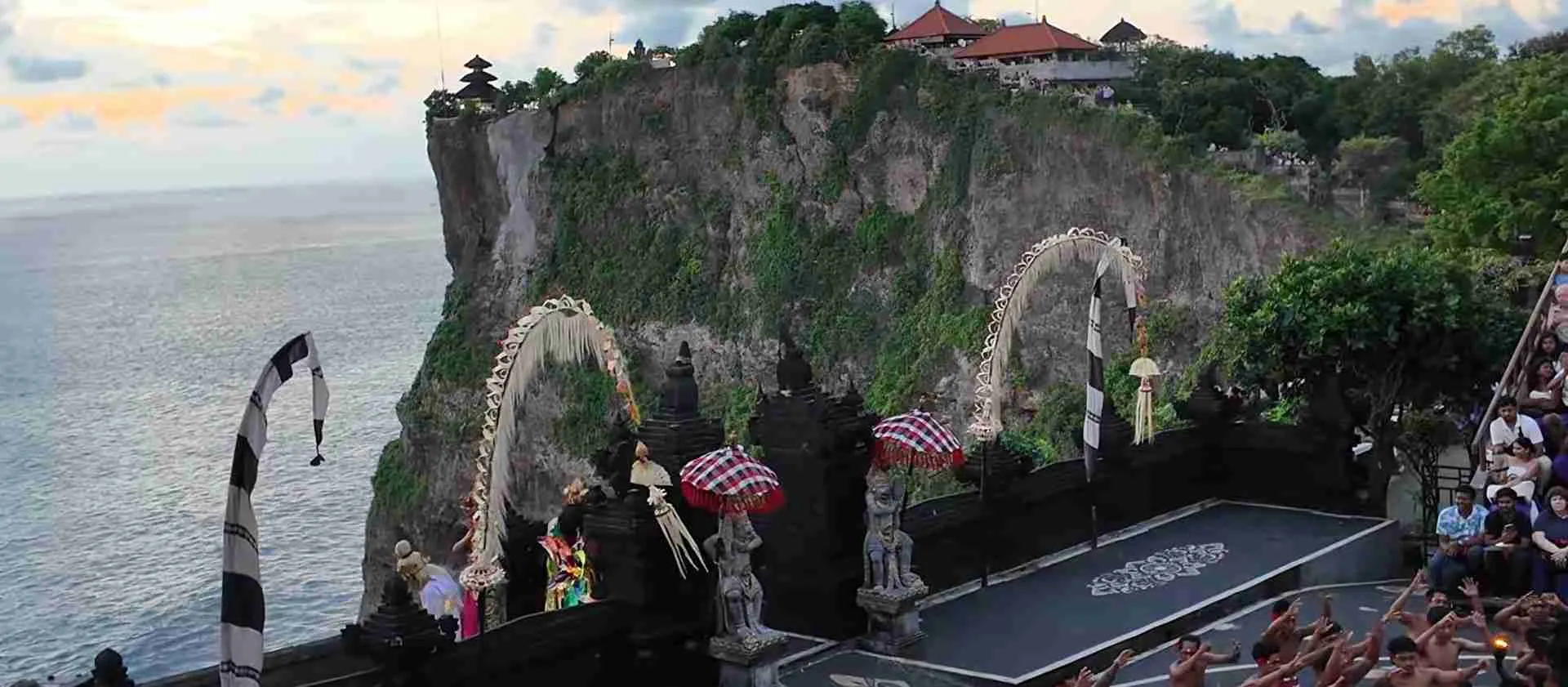
Perched dramatically on a 70-meter limestone cliff above the crashing waves of the Indian Ocean, Uluwatu Temple represents one of Bali’s most spectacular fusion of natural grandeur and spiritual devotion. This ancient sea temple combines breathtaking clifftop architecture with daily sunset performances of the mesmerizing Kecak fire dance, creating an experience that resonates equally with cultural explorers and spiritual seekers.
Key Takeaways
- Uluwatu Temple ranks among Bali’s Sad Kahyangan, the six most sacred directional temples protecting the island from negative spiritual forces through its position guarding the southwestern coastline
- The temple’s construction spans multiple centuries, with 9th-century origins expanded by the Javanese sage Mpu Kuturan in the 11th century and significantly enhanced by the revered priest Danghyang Nirartha in 1489 AD, who attained moksha (spiritual liberation) at this sacred site
- The Kecak fire dance performed daily at sunset features 50-70 bare-chested men creating hypnotic rhythmic chanting without musical instruments, narrating scenes from the Ramayana epic against the dramatic backdrop of the setting sun over the ocean
- The temple’s dramatic 70-meter clifftop location offers panoramic ocean views and serves profound spiritual symbolism as a guardian temple, with the name “Uluwatu” translating to “land’s end rock” from the Balinese words “ulu” (edge) and “watu” (stone)
- Long-tailed macaques inhabit the temple grounds as sacred guardians, requiring visitors to secure belongings and maintain respectful distance while experiencing these protected residents integral to the temple’s spiritual ecosystem
- Traditional temple etiquette mandates wearing sarongs and sashes (provided free at entrance), covering shoulders and knees, removing footwear before entering sacred areas, and maintaining quiet respectful behavior during prayers and ceremonies
People Also Ask About Uluwatu Temple
What makes Uluwatu Temple architecturally unique among Balinese temples?
Uluwatu Temple’s architecture distinguishes itself through its dramatic clifftop construction on a 70-meter limestone promontory, making it the only Balinese sea temple among the nine directional temples. The temple features ancient candi kurung (split gateway) structures bearing chronograms dating to 886 AD, intricate stone carvings displaying classical Balinese craftsmanship, and padmasana shrines introduced by Danghyang Nirartha in the 16th century. The architectural layout follows traditional Balinese tri mandala spatial organization with three zones of increasing sacredness, culminating in the innermost sanctuary (jeroan) restricted to Hindu worshippers, while the temple’s position on the cliff edge symbolizes its spiritual role as guardian against oceanic spiritual forces.
Who was Danghyang Nirartha and why is he important to Uluwatu Temple?
Danghyang Nirartha, also known as Dang Hyang Dwijendra, was a legendary Javanese Hindu priest who arrived in Bali in 1489 AD during the reign of King Dalem Waturenggong and became one of the most influential spiritual figures in Balinese Hinduism. He established multiple temples across Bali during his spiritual journey (dharmayatra) and chose Uluwatu Temple as his final meditation site, where according to tradition he attained moksha—spiritual liberation in which his physical body vanished, leaving only his shawl which legend says transformed into the rocky foundation of the temple. This event, called ngeluhur (“to go up”) in Balinese, gave the temple its epithet “Luhur” (meaning divine origin), and Nirartha’s spiritual presence continues to permeate the site through daily prayers and the temple’s annual Piodalan celebration every 210 days according to the Pawukon calendar.
How did the Kecak dance originate and what story does it tell?
The Kecak dance emerged in the 1930s through collaboration between Balinese dancer Wayan Limbak and German artist Walter Spies, who adapted the sacred Sanghyang trance ritual into theatrical storytelling format based on the Ramayana epic. Unlike traditional Balinese performances accompanied by gamelan orchestras, Kecak relies entirely on synchronized chanting of 50-70 male performers creating rhythmic “cak-cak-cak” sounds that replace musical instrumentation. The performance narrates the kidnapping of Princess Sita by the demon king Rahwana, her husband Prince Rama’s quest to rescue her aided by the white monkey warrior Hanoman and his Vanara army, culminating in Hanoman’s fire dance where he burns down Rahwana’s palace symbolizing the triumph of good over evil—all performed against Uluwatu’s dramatic sunset backdrop creating one of Bali’s most visually stunning cultural experiences.
Why are there monkeys at Uluwatu Temple and how should visitors interact with them?
Long-tailed macaques (Macaca fascicularis) inhabit Uluwatu Temple as sacred guardians believed to protect the temple from negative spiritual energy, their presence rooted in Balinese Hindu tradition that views these animals as spiritually significant creatures maintaining the temple’s protective barrier. The monkeys are wild, not domesticated, and have developed bold behaviors around tourists, frequently snatching loose items including sunglasses, phones, cameras, hats, and jewelry that catch their attention. Visitors should secure all belongings in closed bags before entering the temple grounds, avoid wearing dangling accessories, never feed the monkeys (which disrupts natural behavior and creates dependency), maintain respectful distance, and seek temple staff assistance if a monkey takes an item rather than attempting retrieval themselves—staff members understand monkey behavior and can often negotiate returns using food offerings.
Extended multi-day tours – 5+ days
Featured Bali Multi-Day Tour Packages
3 days
Bali 3-Day Discovery Tour
- ✓ Comprehensive Bali experience
- ✓ Expert local guides included
- ✓ All accommodation included
- ✓ Transportation provided
5 days
Bali 5-Day Highlights Experience
- ✓ Comprehensive Bali experience
- ✓ Expert local guides included
- ✓ All accommodation included
- ✓ Transportation provided

7 days
Bali 7-Day Cultural Journey
- ✓ Comprehensive Bali experience
- ✓ Expert local guides included
- ✓ All accommodation included
- ✓ Transportation provided

10 days
Bali 10-Day Complete Adventure
- ✓ Comprehensive Bali experience
- ✓ Expert local guides included
- ✓ All accommodation included
- ✓ Transportation provided
Multi-day tour packages powered by TourRadar. Prices and availability subject to change.
Introduction: Bali’s Most Dramatic Sacred Site
Among Bali’s countless temples scattered across the island’s volcanic mountains, rice terraces, and coastal plains, Uluwatu Temple occupies a category entirely its own. This is not merely another Hindu sanctuary adorned with traditional carvings and ceremonial gates, but rather a masterwork where human spiritual aspiration meets the raw power of nature in spectacular confrontation. The temple complex clings to a sheer limestone cliff 70 meters above the Indian Ocean, where waves crash against ancient rock formations with primal force and seabirds wheel through salt-laden air currents rising from below.
The visual impact strikes visitors immediately upon arrival. Where most temples nestle protectively within villages or crown mountain peaks, Uluwatu thrusts boldly toward the ocean’s edge, its sacred pavilions and shrines positioned at what feels like the very precipice of the known world. The Balinese name encapsulates this dramatic geography perfectly: “ulu” meaning edge or tip, “watu” meaning rock or stone—literally “land’s end rock.” This positioning carries profound spiritual significance beyond mere aesthetics, for Uluwatu serves as one of the Sad Kahyangan, the six directional temples forming a sacred protective grid around Bali, with Uluwatu specifically guarding the southwestern direction against negative forces approaching from the vast ocean expanse.
The temple’s spiritual importance has attracted pilgrims and priests for over a millennium. Historical evidence including ancient stone chronograms suggests temple structures existed here as early as 886 AD, making Uluwatu among Bali’s oldest continuously active sacred sites. The 11th-century Javanese sage Mpu Kuturan significantly expanded the complex as part of his mission to unify Balinese Hindu practices, establishing architectural elements that remain visible today. But the figure most intimately associated with Uluwatu’s spiritual legacy is Danghyang Nirartha, the revered 16th-century priest who chose these cliffs as his final earthly destination, attaining moksha (spiritual liberation) here in 1489 AD in an event that elevated the temple’s sacred status throughout Bali.
Beyond its religious significance, Uluwatu has become synonymous with one of Southeast Asia’s most captivating cultural performances. Each evening as the sun descends toward the western horizon, an open-air amphitheater carved into the clifftop hosts the Kecak fire dance—a hypnotic spectacle of rhythmic chanting, dramatic storytelling from the Ramayana epic, and flickering flames that seems to channel ancient spiritual forces through contemporary artistic expression. The combination of sacred architecture, dramatic natural setting, and living cultural tradition creates an experience that transcends conventional tourism, offering instead a profound encounter with Bali’s spiritual and aesthetic essence.
This guide explores every dimension of Uluwatu Temple, from its historical origins through centuries of religious development to practical visitor information for experiencing both the temple grounds and the renowned Kecak performance. Whether approaching as a cultural explorer, spiritual seeker, architecture enthusiast, or simply someone drawn to places where human creativity and natural grandeur converge, Uluwatu offers layers of meaning and beauty that reward careful attention and respectful engagement.
Historical Origins and Development Through Centuries
Uluwatu Temple’s historical timeline spans more than eleven centuries of continuous religious development, with each era contributing layers of spiritual significance and architectural enhancement that transformed a simple clifftop shrine into one of Bali’s most revered sacred complexes.
9th Century Foundations and Ancient Evidence
The earliest documented evidence of religious structures at Uluwatu dates to 886 AD, recorded through a candrasengkala (chronogram) carved into an ancient candi kurung (split gateway) that remains preserved within the temple complex. This chronogram, written as “808 Isaka” in the Balinese calendar system, provides concrete archaeological proof that sacred architecture occupied this clifftop location over 1,100 years ago. The 9th-century temple likely consisted of relatively modest structures compared to the elaborate complex visible today, serving local communities as a site for ocean-related spiritual practices and protective rituals against forces believed to approach from the vast sea expanse.
Historical manuscripts including texts written by Kusuma Dewa in 1005 AD reference the temple’s existence and spiritual importance, indicating that by the 11th century Uluwatu had already achieved recognition beyond its immediate geographic region. These early references describe the temple’s function as a sea temple (pura segara) dedicated to maintaining spiritual balance between land and ocean forces—a role that would become central to its later designation among the Sad Kahyangan directional temples.
Mpu Kuturan’s 11th-Century Expansion and Systematization
The temple’s transformation from local shrine to major spiritual center began in earnest during the 11th century under the guidance of Mpu Kuturan, a highly influential Javanese Hindu sage who arrived in Bali during the reign of King Sri Msula-Masuli. Mpu Kuturan’s mission extended far beyond single-temple construction—he worked systematically across Bali to unify diverse religious practices into coherent frameworks that would define Balinese Hinduism for centuries to come.
At Uluwatu specifically, Mpu Kuturan significantly expanded the architectural footprint and introduced the concept of Tri Kahyangan, which classified Balinese temples into three spiritual categories: village temples serving local communities, mountain temples connecting to volcanic spiritual forces, and sea temples protecting against oceanic energies. Uluwatu’s designation as a premier sea temple established its role as spiritual guardian of Bali’s southwestern coastline, responsible for maintaining protective barriers against negative forces approaching from the Indian Ocean.
The architectural elements introduced during Mpu Kuturan’s era included expanded pavilions for ceremonial activities, enhanced gateway structures, and refined spatial organization following Balinese Hindu principles of sacred geometry. These 11th-century foundations provided the structural framework upon which subsequent centuries would build, establishing architectural patterns that remain evident in the temple’s current layout.
Danghyang Nirartha’s Moksha and 16th-Century Spiritual Elevation
The event that definitively elevated Uluwatu to supreme spiritual status occurred in 1489 AD when Danghyang Nirartha, one of Bali’s most revered religious figures, chose the temple as his final earthly destination. Nirartha, also known as Dang Hyang Dwijendra or Ida Pedanda Sakti Wawu Rauh, arrived in Bali from Java during the reign of King Dalem Waturenggong, fleeing the collapse of the Majapahit kingdom as Islam expanded across Java. His spiritual journey (dharmayatra) across Bali resulted in the founding or enhancement of multiple major temples, but Uluwatu held special significance as the site where he would complete his earthly existence.
According to Balinese tradition and historical accounts, Nirartha spent his final days in deep meditation on the cliffs at Uluwatu, achieving moksha—spiritual liberation in which the soul transcends the cycle of birth and death. The Balinese term for this event, ngeluhur (meaning “to go up”), gave the temple its epithet “Luhur,” signifying divine origin and supreme spiritual status. Legend holds that when Nirartha attained moksha, his physical body vanished completely, leaving only his ceremonial shawl which transformed into the solid stone foundation beneath the temple—a miraculous occurrence that imbued the very rock with sacred power.
Nirartha’s architectural contributions included introducing padmasana shrines (multi-tiered stone seats representing the cosmic mountain) and refining the temple’s spatial organization to enhance its spiritual potency. These 16th-century enhancements transformed Uluwatu from an important regional temple into a site of island-wide pilgrimage, a status it maintains through contemporary times when thousands of Balinese Hindus visit during major ceremonies and the temple’s Piodalan anniversary celebrated every 210 days according to the Pawukon calendar.
Modern Era Preservation and Protection Regulations
The 20th and 21st centuries have brought both tourism development and legal protections ensuring the temple’s preservation amid increasing visitor numbers. Legal disputes regarding development in the temple’s surrounding areas led to landmark Provincial Government Regulation Number 8 issued in 2015, which established three protection zones around Uluwatu and other sacred sites: a core zone extending one kilometer from the temple center where development is strictly prohibited, a buffer zone from one to 2.5 kilometers with limited controlled development, and a utilization zone from 2.5 to five kilometers where development must align with cultural preservation principles.
These protections ensure that the dramatic clifftop setting and spiritual atmosphere that have defined Uluwatu for over eleven centuries remain intact for future generations, balancing the temple’s role as both active religious site and cultural heritage destination visited by people from around the world.
The Dramatic Cliffside Setting and Natural Environment
Uluwatu Temple’s physical setting represents one of nature’s most spectacular stages for human spiritual expression. The temple occupies the southwestern tip of Bali’s Bukit Peninsula, positioned on a narrow promontory of ancient limestone extending into the Indian Ocean like a ship’s prow cutting through endless blue water.
Geological Formation and Cliff Structure
The limestone cliff supporting Uluwatu Temple rises 70 meters vertically from the ocean surface, formed through millions of years of marine sediment compression, tectonic uplift, and subsequent erosion by wind and waves. The cliff face displays visible geological layering where different periods of sediment deposition created distinct horizontal bands now exposed through erosion, creating natural terracing that both stabilizes the structure and provides dramatic visual texture.
The clifftop itself extends as a relatively narrow ridge, in some sections barely 20-30 meters wide between temple structures and the cliff edge, creating an atmosphere of dramatic exposure where visitors feel suspended between sky and sea. Walking paths follow the cliff edge along both sides of the main temple complex, offering panoramic views that extend for kilometers in every direction—northward along Bali’s western coastline, westward across open ocean toward Java visible on clear days, and southward along the Bukit Peninsula’s rugged southern shore.
The constant interaction between limestone and ocean has created numerous small caves, overhangs, and rock formations at the cliff base, many of which hold spiritual significance in local tradition and provide nesting sites for seabirds whose cries create a constant atmospheric soundtrack. During high tides and large ocean swells, waves crash against the cliff base with tremendous force, sending spray 10-15 meters into the air and creating both visual spectacle and audible power that reminds visitors of nature’s overwhelming scale.
Ocean Environment and Atmospheric Conditions
The Indian Ocean surrounding Uluwatu’s clifftop location exhibits distinctly different characteristics depending on season, time of day, and weather patterns. During the dry season from April through October, the ocean typically appears deep blue-green with relatively moderate wave action, creating ideal conditions for the spectacular sunset views that have become synonymous with Uluwatu visits. The wet season from November through March brings larger ocean swells, more dramatic wave action against the cliffs, and more variable atmospheric conditions including spectacular cloud formations during late afternoon hours.
The clifftop’s exposed position generates constant wind movement, ranging from gentle breezes during calm morning hours to strong sustained winds during afternoon periods when thermal currents create powerful updrafts along the cliff face. These winds carry salt spray and ocean humidity that creates the distinctive atmospheric quality visible in photographs of Uluwatu—a slight haze that softens distant views and creates ethereal lighting effects particularly during golden hour before sunset.
The temple’s westward orientation positions it perfectly for sunset observations, with the sun descending directly toward the ocean horizon from the clifftop vantage point. During equinox periods (late March and late September), the sun sets almost precisely aligned with the temple’s central axis, creating particularly dramatic silhouette effects that draw photographers and spiritual practitioners seeking auspicious timing for ceremonies and meditation.
Flora and Fauna of the Temple Grounds
Despite the exposed clifftop environment and shallow limestone soils, the temple grounds support diverse vegetation adapted to coastal conditions. Native Balinese flora including frangipani (plumeria) trees with their fragrant white and yellow flowers used in daily temple offerings, hardy coastal shrubs resistant to salt spray, and carefully maintained garden areas around ceremonial pavilions create lush contrast against the stark limestone and ocean backdrop.
The grounds are inhabited by numerous bird species including sea eagles and brahminy kites that ride thermal updrafts along the cliff face, various smaller songbirds sheltering in temple gardens, and seabirds including terns and frigatebirds that nest in cliff crevices and hunt in ocean waters below. The constant bird activity creates dynamic visual movement and natural soundtrack that enhances the temple’s wild natural setting.
The most prominent fauna, however, are the long-tailed macaques (Macaca fascicularis) that inhabit the temple complex as sacred guardians—a population discussed in detail in the dedicated section below. These primates have adapted perfectly to the clifftop environment, demonstrating remarkable agility navigating stone structures and cliff edges while maintaining their role as both spiritual guardians and practical challenge requiring visitor awareness and precautions.
Spiritual Significance in Balinese Hinduism
Uluwatu Temple’s religious importance extends far beyond its dramatic physical beauty, functioning as a critical node in the complex spiritual geography that Balinese Hinduism has established across the island over many centuries.
Sad Kahyangan Status and Directional Temple System
Uluwatu ranks among the Sad Kahyangan, the six most sacred temples in Bali’s spiritual hierarchy, each positioned to guard specific cardinal and intercardinal directions creating a protective grid of divine energy around the island. This directional temple system reflects ancient Hindu-Balinese cosmological understanding that spiritual forces radiate from and can be focused through specific geographic locations, with Uluwatu specifically protecting Bali’s southwestern quadrant against negative energies approaching from the vast ocean expanse.
The other five Sad Kahyangan temples—Besakih (east), Lempuyang (northeast), Goa Lawah (southeast), Batukaru (northwest), and Pusering Jagat (center)—work in spiritual coordination with Uluwatu, their combined energies maintaining what Balinese Hindus understand as essential cosmic balance (rwa bhineda) between opposing but complementary forces. This systematic spiritual geography distinguishes Balinese Hinduism from other Hindu traditions, reflecting sophisticated integration of Hindu cosmology with indigenous Balinese animist understanding of landscape as inherently spiritually active.
Uluwatu’s unique status extends further through its dual classification as both directional temple (Pura Kahyangan Jagat) and sea temple (pura segara)—the only temple in Bali holding both designations. This dual role emphasizes its function mediating between land-based and ocean-based spiritual forces, positioned literally and symbolically at the interface where terrestrial Bali meets infinite oceanic realm.
Dedication to Shiva Rudra and Divine Manifestations
The temple’s primary dedication addresses Sang Hyang Widhi Wasa (the supreme divine reality in Balinese Hinduism) in his manifestation as Shiva Rudra, the aspect of divine consciousness associated with transformation, dissolution, and the wild destructive-creative forces of nature. This specific dedication reflects profound appropriateness to the temple’s clifftop setting where ocean waves demonstrate continuous creation and destruction, where limestone slowly dissolves under wave action while new rock formations emerge, and where the boundary between solid earth and fluid ocean remains in constant dynamic tension.
Shiva Rudra worship at Uluwatu emphasizes meditation on impermanence, the dissolution of ego-boundaries, and ultimate spiritual liberation—themes embodied in Danghyang Nirartha’s attainment of moksha at this location. The temple’s orientation toward the setting sun further reinforces these themes, as devotees contemplate daily solar dissolution into ocean darkness as metaphor for consciousness returning to its undifferentiated source.
Additional shrines within the temple complex honor various manifestations of divine energy including protective deities associated with ocean forces, guardian spirits of the temple itself, and ancestor spirits of important priests and spiritual figures connected to Uluwatu’s history. This multiplicity reflects Balinese Hindu practice of recognizing divine reality expressed through countless specific forms while maintaining underlying unity—a theological sophistication that allows simultaneous worship of particular deities while understanding them as aspects of singular divine essence.
Piodalan Temple Anniversary and Ceremonial Calendar
The temple’s spiritual life pulses most intensely during Piodalan, the anniversary celebration occurring every 210 days according to the Pawukon calendar (Balinese ceremonial calendar based on 210-day cycles rather than solar year). Piodalan represents the temple’s spiritual birthday, commemorating its consecration and renewing sacred energies through elaborate ceremonies involving gamelan orchestras, traditional dances, processions of ceremonially dressed worshippers carrying offerings, and extended prayer sessions conducted by high priests.
During Piodalan, the temple transforms from tourist destination into fully activated sacred space, with inner courtyards filled with worshippers in traditional white and gold ceremonial dress, air heavy with incense smoke from countless offering fires, and continuous prayer chants resonating from multiple shrines simultaneously. The ceremonies typically extend across multiple days, with peak activities occurring during full moon and new moon periods when lunar energies enhance spiritual potency.
Beyond Piodalan, the temple hosts ceremonies aligned with other sacred days in the Balinese ceremonial calendar including Galungan and Kuningan (celebrating ancestral spirits’ return to earth), Nyepi (silent day of self-reflection), and monthly full moon and new moon observations. Individual Balinese Hindus also visit Uluwatu for personal prayers, blessings for important life events, purification rituals, and meditation practice, maintaining the temple’s function as living spiritual resource rather than historical monument.
Architectural Features and Temple Layout
Uluwatu Temple’s architecture demonstrates classical Balinese Hindu design principles adapted to the unique constraints and opportunities of its clifftop location, creating sacred spaces that harmonize with rather than dominate the dramatic natural setting.
Tri Mandala Spatial Organization
The temple complex follows traditional tri mandala spatial organization dividing the site into three concentric zones of increasing sanctity. The outer zone (jaba sisi or nistaning mandala) includes parking areas, entrance facilities, walking paths along the cliff edge, and the Kecak dance amphitheater—spaces where visitors of all backgrounds can access and appreciate the temple’s natural and cultural offerings without entering sacred precincts.
The middle zone (jaba tengah or madyaning mandala) contains ceremonial pavilions where religious activities involving temple community members occur, including preparation of offerings, gamelan performances during ceremonies, and gathering spaces for worshippers before entering the innermost sanctuary. Architecturally this zone features open-sided pavilions (bale) with traditional thatched roofs, ornately carved pillars, and raised stone platforms defining different functional areas.
The innermost zone (jeroan or utamaning mandala) comprises the holiest shrines and altars accessible only to Hindu worshippers engaged in prayer and ceremony. This most sacred precinct remains off-limits to tourists and casual visitors, separated by imposing gateway structures and maintained in atmospheric seclusion that preserves spiritual intensity even during busy tourist periods in outer zones. The restriction protects the temple’s religious function and reminds all visitors that Uluwatu remains first and foremost an active place of worship rather than museum or performance venue.
Candi Kurung Gateway and Ancient Architectural Elements
The temple’s most historically significant architectural feature is the ancient candi kurung (split gateway) bearing the 886 AD chronogram that provides Uluwatu’s oldest documented evidence. This gateway structure demonstrates the candi bentar architectural style characteristic of important Balinese temples—two symmetrical halves separated by central passage, their ornately carved surfaces creating vertical thrust that draws the eye upward while their separation symbolizes duality that must be transcended to reach inner unity.
The gateway’s stone surfaces display intricate carvings including kala heads (protective demon faces) positioned above the passage to ward off negative energies, ornamental floral motifs drawn from Hindu iconography, and geometric patterns reflecting sacred numerical relationships understood to enhance spiritual power. The craftsmanship visible in these ancient stones demonstrates sophisticated sculptural skills developed centuries ago, with details remaining remarkably preserved despite centuries of exposure to salt air and tropical weather.
Additional ancient elements include stone walls constructed without mortar using precisely fitted limestone blocks, drainage systems carved into bedrock to channel monsoon rains away from sacred structures, and foundation stones positioned according to cosmological principles aligning with cardinal directions and celestial bodies.
Padmasana Shrines and Nirartha’s Architectural Contributions
The padmasana shrines introduced by Danghyang Nirartha in the 16th century represent another architecturally distinctive element visible at Uluwatu. These multi-tiered stone seats (literally “lotus seats” in Sanskrit) represent Mount Meru, the cosmic mountain at the center of Hindu cosmology, providing symbolic throne for the supreme divine reality during ceremonies. The padmasana structures rise in diminishing tiers creating pyramidal forms, each level adorned with carved decorative elements and crowned with empty seat representing divine presence that cannot be captured in representational form.
The positioning of padmasana shrines follows precise directional orientation, typically facing toward Bali’s sacred mountains (particularly Mount Agung to the northeast) and away from the sea, creating spatial hierarchy that guides prayer orientation and processional movement during ceremonies. At Uluwatu, the padmasana placement required creative adaptation to clifftop constraints, demonstrating how spiritual principles flexibly engage specific geographic realities rather than imposing rigid templates.
Contemporary Structures and Performance Spaces
More recent architectural additions include the open-air amphitheater constructed for daily Kecak dance performances, positioned on a clifftop outcrop with tiered stone seating arranged in concentric semicircles facing a circular performance area. The amphitheater accommodates approximately 1,400 spectators, with the most sought-after seats offering direct views of both the performance and sunset ocean backdrop simultaneously.
Modern visitor facilities including ticket booths, restroom facilities, and small food vendors occupy discreet positions designed to minimize visual impact on the temple’s historical character and natural setting. Walking paths with safety railings trace the cliff edge, allowing visitors to experience dramatic views while maintaining appropriate separation from the most fragile cliff-edge areas and sacred temple precincts.
The Sacred Long-Tailed Macaques and Visitor Interaction
The population of long-tailed macaques (Macaca fascicularis) inhabiting Uluwatu Temple constitutes an integral element of the site’s character and spiritual significance, though their presence also creates practical challenges requiring visitor awareness and appropriate behavior.
Spiritual and Cultural Significance of Temple Monkeys
In Balinese Hindu tradition, the macaques at Uluwatu serve as spiritual guardians protecting the temple from negative energies and malevolent forces. This protective function connects to broader Hindu associations between monkeys and divine intervention, particularly through the Ramayana epic where Hanoman the white monkey general leads vast armies (Vanara) to aid Prince Rama in rescuing his wife Sita from the demon king Rahwana—the same narrative enacted nightly in the Kecak dance performance.
The monkeys’ permanent residence within temple grounds reflects belief that they maintain spiritual connection to protective divine forces, their presence indicating the temple’s sanctity and spiritual vitality. Temple authorities protect the macaque population as sacred inhabitants rather than pests, with feeding and care integrated into temple management practices. This sacred status means visitors must treat the monkeys with respect as honored residents rather than entertainment or photo opportunities to be manipulated for personal purposes.
Macaque Behavior Patterns and Social Structure
Long-tailed macaques are highly intelligent social primates living in complex hierarchical groups with established territories, social relationships, and communication systems. The Uluwatu population exhibits typical macaque behavior including grooming rituals that maintain social bonds, hierarchical feeding patterns where dominant individuals eat first, vocal communications ranging from alarm calls warning of threats to contentment sounds during relaxed periods, and territorial behaviors defending preferred areas against other groups.
What makes Uluwatu’s macaques particularly notable is their adaptation to human presence and development of sophisticated strategies for obtaining food and interesting objects from visitors. Generations of interaction with tourists have created learned behaviors passed from adult monkeys to juveniles, including recognition that shiny objects (glasses, jewelry) and electronic devices (phones, cameras) attract human attention and can be traded for food items. This learned behavior operates with remarkable consistency, with monkeys demonstrating understanding of which items generate strongest human responses and trading accordingly.
Safety Protocols and Interaction Guidelines
Successful interaction with Uluwatu’s macaque population requires understanding their behavior and following established safety protocols that protect both visitors and monkeys. The most critical precaution involves securing all loose belongings before entering temple grounds. Eyeglasses should be secured with straps or removed entirely; dangling earrings, necklaces, and bracelets should be removed or concealed under clothing; phones and cameras must remain in closed bags when not actively in use; hats and sunglasses create particular attraction and should be secured or avoided.
Feeding the monkeys should be strictly avoided despite temptation. While temple staff occasionally use food items to manage monkey behavior or retrieve stolen objects, visitor feeding creates dependence on human food sources, disrupts natural foraging behavior, can lead to nutritional problems from inappropriate foods, and reinforces aggressive begging behavior that increases conflict incidents. The monkeys maintain perfectly adequate nutrition from natural food sources including fruits, leaves, insects, and food provided through temple management.
If a monkey does take an object, resist all temptation to retrieve it personally. Monkeys defending claimed items can bite and scratch, and what appears as single monkey may quickly summon group support if conflict escalates. Instead, immediately seek assistance from temple staff members who understand macaque behavior and can often negotiate object return using food trade techniques. Monkey bites and scratches pose potential health risks including rabies exposure requiring immediate medical attention, making prevention through proper precautions vastly preferable to dealing with injury aftermath.
Maintain respectful distance from all monkeys, particularly mothers with infants, dominant males, and monkeys displaying aggressive body language (direct staring, open-mouth threat displays, rapid approach). Never touch, attempt to pet, or corner monkeys even if they appear calm and friendly. Avoid direct prolonged eye contact which monkeys interpret as threat or challenge. Move calmly and deliberately rather than with sudden movements that might startle or trigger defensive responses.
The Kecak Dance Performance Experience
The nightly Kecak fire dance at Uluwatu Temple represents one of Southeast Asia’s most visually and acoustically arresting cultural performances, combining ancient Hindu epic storytelling with dramatic sunset setting and unique vocal percussion created by dozens of chanting performers.
Historical Origins and Development of Kecak Dance
The Kecak dance emerged during the 1930s through creative collaboration between Wayan Limbak, a Balinese dancer and choreographer, and Walter Spies, a German painter and musician who had settled in Bali and became deeply engaged with Balinese arts. They drew inspiration from the sacred Sanghyang trance ritual, a traditional ceremony where dancers enter trance states believed to channel divine or ancestor spirits for protection and healing purposes, performed to rhythmic male chorus chanting rather than gamelan orchestration.
Limbak and Spies adapted the Sanghyang’s hypnotic chanting chorus as foundation for new theatrical dance-drama narrating episodes from the Ramayana, one of Hinduism’s great epic poems. This creative synthesis retained the original ritual’s powerful vocal percussion while transforming it into accessible storytelling format that could communicate Hindu mythology to both Balinese and international audiences. The result represented genuine artistic innovation rather than simple preservation of existing tradition, creating new cultural form that has become iconic representation of Balinese performing arts worldwide.
The name “Kecak” derives from the rhythmic “cak-cak-cak” sounds produced by the male chorus, onomatopoeia capturing the sharp percussive quality of synchronized chanting that provides the dance’s distinctive acoustic character. The addition of fire elements came later, enhancing dramatic visual impact particularly during evening performances where flames create striking contrast against darkening sky.
Performance Structure and Ramayana Narrative
Each Kecak performance follows established narrative structure presenting key episodes from the Ramayana’s central storyline. The drama opens with Prince Rama and his wife Sita living in forest exile, establishing the protagonists and their circumstances. The demon king Rahwana, struck by Sita’s beauty, devises scheme to separate the couple and abduct her to his kingdom of Alengka, succeeding through magical deception that lures Rama away from their forest dwelling.
The narrative’s emotional and dramatic core follows Rama’s desperate efforts to rescue his beloved wife, aided by Hanoman the white monkey general who leads vast Vanara army of monkey warriors in battle against Rahwana’s demon forces. Hanoman demonstrates extraordinary devotion and supernatural abilities including shape-shifting, tremendous strength, and ability to leap vast distances—powers he employs infiltrating Rahwana’s palace, locating imprisoned Sita, and ultimately burning the demon capital to the ground.
The climactic fire dance sequence represents Hanoman setting ablaze Rahwana’s palace, performed with actual flames creating spectacular visual effects as darkness deepens and fire becomes increasingly vivid against night sky. The narrative concludes with good’s triumph over evil, Sita’s rescue and reunion with Rama, and restoration of righteous order—themes resonating with Hindu cosmological understanding of eternal struggle between dharma (righteousness) and adharma (unrighteousness).
Vocal Chorus and Musical Techniques
The performance’s most distinctive element is the choir of 50-70 bare-chested men arranged in concentric circles around the central performance area, their bodies creating living percussion instrument through coordinated chanting, hand gestures, and body movements. Unlike traditional Balinese dance accompanied by gamelan orchestras, Kecak employs no musical instruments whatsoever—the human voice provides all rhythmic, melodic, and atmospheric sound.
The chorus produces multiple interlocking rhythmic patterns simultaneously, creating complex polyrhythmic texture where different vocal groups chant complementary rhythms that combine into unified whole. The basic “cak-cak-cak” pattern provides driving pulse, while other vocalists add higher and lower pitched elements, occasional melodic phrases, and dynamic accents that shift emphasis and create musical drama paralleling the narrative action. The effect resembles mechanized percussion or electronic sound synthesis, yet emerges entirely from trained human voices coordinated through subtle conductor gestures barely visible to audience.
The chorus members enter semi-trance state during performance, swaying hypnotically, raising arms in synchronized gestures, and demonstrating collective consciousness that transcends individual performers—echoing the sacred Sanghyang ritual from which Kecak evolved. This trance quality adds spiritual dimension to theatrical entertainment, creating atmosphere where boundaries between performance and ritual, art and religious expression, become beautifully ambiguous.
Performance Schedule and Viewing Experience
Kecak dance performances occur daily at two scheduled times: 6:00 PM and 7:00 PM, with each show lasting approximately 60 minutes. The earlier 6:00 PM performance offers advantage of beginning during golden hour when sunset creates spectacular lighting effects, with the sun descending toward ocean horizon as the performance progresses and darkness gradually deepening during the climactic fire scenes. The later 7:00 PM show begins after sunset has completed, with fire elements achieving maximum visual impact against fully dark sky, and typically experiencing somewhat smaller crowds though both performances generally fill to near capacity during peak tourism seasons.
The clifftop amphitheater provides dramatic natural stage, with performers occupying circular area surrounded by tiered stone seating arranged in semicircular rows ascending the slope. The best viewing positions combine direct views of the performance with sunset ocean backdrop visible beyond the dancers—these prime seats fill quickly, making early arrival essential for optimal viewing experience. Temple gates for the performance area typically open around 4:00 PM, allowing early arrivals to secure preferred seating, explore temple grounds, and appreciate sunset atmosphere before the performance begins.
The amphitheater’s open-air design means performances proceed regardless of weather conditions, with waterproof ponchos distributed free to audience members if rain occurs. The experience of watching Kecak during tropical rain adds unexpected atmospheric dimension, with rain sounds blending with vocal chanting and fire hissing against raindrops to create completely unique sensory experience.
Entrance Fees and Practical Information
Temple entrance fees are IDR 50,000 for international adult visitors and IDR 30,000 for children ages 4-12, with children under 4 entering free. These fees provide access to temple grounds, clifftop walking paths, and sunset viewing areas, with complimentary sarong and sash included for those needing traditional temple attire.
The Kecak dance performance requires separate ticket purchased independently from temple entry. Kecak tickets cost IDR 150,000 per person for both adults and children, with no separate pricing tiers. Tickets can be purchased online through various tour operators and booking platforms or at the official ticket counter located at the temple entrance, though online advance purchase is strongly recommended during peak tourism periods (June through September, December through January) when performances frequently sell out.
Temple opening hours extend from 7:00 AM to 7:00 PM daily, with last entry recommended before 6:00 PM to allow adequate time for temple exploration before closing. Arriving during morning hours (7:00 AM – 10:00 AM) provides opportunity to experience the temple in relative tranquility before tour groups arrive, with fewer crowds allowing more contemplative appreciation of the sacred spaces and dramatic coastal setting. Late afternoon arrival (4:00 PM – 5:00 PM) offers optimal timing for combining temple visit with sunset observation and Kecak performance, though this also coincides with peak visitor density.
Payment at temple ticket counters accepts Indonesian Rupiah cash, with some facilities also accepting QRIS mobile payment though cash remains most reliable payment method. Small denomination bills expedite transactions, as ticket counters may have limited change availability for large bills during busy periods. ATMs are available in nearby Jimbaran and Uluwatu village areas, though not at the temple itself, making cash withdrawal advisable before arrival.
Temple Etiquette and Dress Code Requirements
Respectful behavior at Uluwatu Temple begins with appropriate attire meeting traditional Balinese Hindu standards for sacred space entry. All visitors regardless of religious background must wear sarong (traditional wraparound cloth) and sash (ceremonial belt) when entering temple grounds. These items are provided free at the entrance for those arriving without them, with temple staff demonstrating proper wrapping technique ensuring both modesty and correct ceremonial presentation.
Clothing must cover shoulders and knees, with sleeveless tops, short shorts, and mini-skirts requiring additional coverage provided by sarong. Tank tops should be supplemented with shawl or light jacket, while swimwear remains completely inappropriate regardless of sarong coverage. The dress requirements reflect not arbitrary rules but genuine respect for the temple’s continued function as active place of worship where Balinese Hindus engage in profound spiritual practices deserving reverence from all visitors.
Behavioral etiquette extends beyond clothing to encompass movement and conduct within temple precincts. Visitors should speak quietly, particularly near shrines and ceremonial areas where worshippers may be engaged in prayer or meditation. Photography is permitted in most temple areas, but avoid photographing people engaged in prayer without explicit permission, never use flash during ceremonies (which disrupts spiritual atmosphere and disturbs participants), and respect any areas marked as photography-prohibited typically including innermost sanctuary and certain sacred shrines.
Footwear must be removed before entering elevated temple structures and sacred pavilions, with designated shoe storage areas provided at appropriate locations. When walking near worshippers, avoid passing directly in front of people engaged in prayer, instead walking behind them or waiting for them to complete their devotions before proceeding. Never point feet toward shrines, sacred objects, or people engaged in prayer, as feet are considered spiritually lowest part of body in Balinese culture and directing them toward sacred elements constitutes serious disrespect.
Women who are menstruating are requested not to enter the innermost temple sanctuary according to traditional Balinese Hindu beliefs regarding spiritual purity during menstruation, though outer temple areas and cliff walks remain accessible. This restriction reflects religious practice rather than discrimination, rooted in complex Hindu understandings of spiritual energy states during different physiological conditions.
Best Times to Visit for Different Experiences
Uluwatu Temple offers distinctly different experiences depending on time of day, season, and day of week, allowing visitors to optimize timing based on personal priorities and interests.
Early Morning Visits for Contemplative Experience
Arriving at or shortly after the 7:00 AM opening provides opportunity to experience Uluwatu in atmospheric tranquility before tourist crowds arrive. Morning light illuminates the temple structures from eastern angles unavailable during afternoon visits, creating entirely different photographic possibilities and revealing architectural details obscured by harsh midday sun. The ocean typically appears calmer during morning hours, with wave patterns more visible and water colors ranging from deep blue to turquoise depending on sunlight angle and water depth.
Morning visits also offer cooler temperatures and fresher air before tropical heat intensifies, making extended walking along cliff paths more comfortable. The macaque population exhibits different behavioral patterns during morning hours, often engaged in grooming activities and social interactions rather than intense food-seeking behavior directed toward tourists, potentially allowing more natural wildlife observation for those interested in primate behavior.
Sunset and Evening for Maximum Drama
Late afternoon arrival between 4:00 PM and 5:00 PM positions visitors for the temple’s most spectacular atmospheric conditions as golden hour light transforms the limestone cliffs to warm amber tones and the setting sun creates silhouette effects against temple structures. The sunset occurs between approximately 6:00 PM and 6:30 PM throughout the year due to Bali’s equatorial location, with minimal seasonal variation in sunset timing compared to higher latitude locations.
Combining sunset observation with the 6:00 PM Kecak performance creates comprehensive cultural and natural experience, though this timing also attracts maximum visitor density with crowded conditions throughout temple grounds and amphitheater. The later 7:00 PM Kecak show offers similar theatrical experience with slightly reduced crowds and enhanced fire dance visual impact against fully dark sky, while sacrificing sunset backdrop that makes the earlier performance visually distinctive.
Seasonal Considerations and Weather Patterns
Bali’s dry season extending from April through October provides most reliable weather for Uluwatu visits, with minimal rainfall, consistent sunshine, and clear atmospheric conditions ideal for sunset viewing and cliff-edge photography. July and August represent peak tourism months with highest visitor numbers and most crowded conditions but also most predictable weather. The shoulder months of April, May, September, and October offer favorable weather with somewhat reduced crowds.
The wet season from November through March brings more variable conditions including afternoon thunderstorms, increased cloud cover, and more dramatic ocean wave action as monsoon swells arrive from the Indian Ocean. While rain can interrupt visits, wet season also creates spectacular cloud formations during sunset periods and fewer tourists creating more intimate temple experience. Kecak performances proceed even during rain with complementary ponchos provided, creating atmospheric performances where tropical downpour becomes part of the dramatic experience.
Ceremony Days and Piodalan Anniversary
Visiting during the temple’s Piodalan anniversary celebration or other major ceremonial days offers extraordinary opportunity to witness Uluwatu functioning as active religious site rather than tourist venue, with elaborate processions, gamelan orchestras, traditional dances, and hundreds of Balinese worshippers in ceremonial dress creating vibrant spiritual atmosphere. However, ceremony days also mean restricted access to inner temple areas reserved for religious activities, larger crowds, and priority given to worshippers over tourists.
The Piodalan anniversary occurs every 210 days according to the Pawukon calendar, making exact dates difficult to predict using standard Gregorian calendar. Checking with temple authorities or local guides about upcoming ceremony schedules allows interested visitors to align their visits with these special occasions, understanding that the experience will emphasize religious observation over casual sightseeing.
Photography at Uluwatu Temple
Uluwatu Temple’s dramatic clifftop setting and spectacular sunset backdrop create extraordinary photographic opportunities, though capturing them successfully requires technical understanding, appropriate equipment, and respect for both religious sensitivities and safety considerations.
Optimal Lighting Conditions and Technical Approaches
The golden hour period beginning approximately 90 minutes before sunset through sunset completion provides ideal lighting for temple photography, with warm directional light creating rich textures on limestone surfaces, dramatic long shadows emphasizing architectural details, and constantly changing atmospheric conditions as the sun descends. During this period, exposure settings require frequent adjustment as light intensity diminishes and color temperature shifts from neutral to increasingly warm orange and red tones.
The temple’s westward orientation toward sunset creates natural backlighting situations requiring careful exposure management to avoid silhouetted subjects. Using exposure compensation of +1 to +1.5 stops helps retain detail in temple structures while accepting some highlight clipping in bright sky areas, or alternatively shooting in RAW format allows extensive post-processing latitude for recovering shadow detail and managing extreme dynamic range between bright sunset sky and darker temple elements.
Wide-angle lenses in the 16-35mm range (full-frame equivalent) prove most useful for capturing both temple architecture and dramatic coastal setting in single compositions, while 24-70mm or similar standard zoom lenses provide versatility for both environmental contexts and tighter architectural details. Telephoto lenses above 100mm have limited utility given the temple’s compact layout and restricted access to inner areas, though they can capture distant ocean views, wildlife including seabirds riding cliff updrafts, and candid macaque portraits from safe distances.
Composition Strategies and Perspective Choices
The clifftop setting offers multiple vertical perspectives for compositional variety. Standard eye-level shooting provides conventional documentation but may feel static given the location’s dramatic character. Lower shooting angles looking upward toward temple structures with sky as backdrop create more dynamic compositions emphasizing vertical scale and architectural presence, particularly effective when clouds provide dramatic background rather than blank blue sky.
Incorporating foreground elements including carved stone railings, temple gates, or vegetation frames distant temple structures and adds compositional depth. The cliff-edge walking paths provide natural leading lines drawing viewer attention from foreground through middleground architecture to background ocean and sky, creating strong compositional flow and sense of spatial depth.
The macaque population offers compelling wildlife photography subjects, though ethical wildlife photography requires maintaining respectful distance using telephoto lenses rather than approaching closely with wide-angle lenses, never feeding or baiting monkeys for photographic purposes, and avoiding flash which disturbs animals and disrupts natural behavior. Capturing natural behaviors including grooming, social interactions, and family groups produces more authentic and compelling imagery than posed trophy shots with human interaction.
Drone Photography Regulations and Restrictions
Drone photography at Uluwatu Temple requires explicit advance permission from temple authorities and payment of special fees, with regulations strictly enforced to prevent disruption of religious activities and safety hazards over crowded temple grounds. Unauthorized drone operation results in confiscation and potential legal consequences under Indonesian aviation regulations.
Even with permission, drone flights must avoid flying directly over sacred temple structures particularly during ceremonies, maintain minimum altitude to prevent disturbing worshippers and wildlife, and limit flight duration to prevent noise pollution impacting visitor experience. The temple’s exposed clifftop location creates challenging wind conditions for drone stability, requiring experienced operators and appropriate equipment for safe operation.
Given these restrictions and challenges, ground-based photography typically proves more practical and often yields superior results by allowing intimate engagement with architectural details and human-scale perspectives unavailable from aerial viewpoints. Those specifically seeking aerial perspectives might consider viewing existing professional drone footage rather than attempting personal drone operations given regulatory complexity and operational challenges.
Nearby Attractions and Beaches for Extended Visits
Uluwatu Temple’s location on the Bukit Peninsula positions it within easy reach of multiple additional cultural sites and spectacular beaches, allowing visitors to create comprehensive day itineraries combining spiritual, cultural, and beach experiences.
Padang Padang Beach and Surf Culture
Located just three kilometers north of Uluwatu Temple, Padang Padang Beach (also called Labuan Sait Beach) represents one of Bali’s most beautiful coastal destinations, featuring powder-white sand, crystal-clear turquoise water, and dramatic rock formations creating intimate cove atmosphere. The beach gained international recognition as filming location for the movie “Eat Pray Love,” though its reputation among surfers preceded Hollywood attention by decades.
Access to the beach requires descending steep stairway through narrow rock crevice creating dramatic entrance experience, with the confined access naturally limiting visitor numbers compared to more easily accessible beaches. During low tide, the beach extends into sandy expanse suitable for swimming and sunbathing, while high tide reduces beach area considerably and creates stronger currents requiring more caution for swimmers.
The beach is renowned among surfers for powerful reef break producing hollow tubes particularly during large southwest swells from May through September. Advanced surfers paddle out to the break located offshore, while those seeking swimming or beach relaxation can enjoy protected areas closer to shore depending on tide and wave conditions.
Suluban Beach (Blue Point) and Cave Access
Suluban Beach, commonly known as Blue Point Beach, lies immediately adjacent to Uluwatu Temple accessible via steep pathway descending the cliff face through limestone caves creating dramatic access route where ocean waves surge through rock passages during high tide. The beach consists of relatively small sandy area surrounded by dramatic rock formations, with cave overhangs providing natural shelter from sun and creating unique lighting effects as sunlight filters through cave openings.
The surfing break at Blue Point attracts experienced surfers tackling powerful left-hand wave breaking over shallow reef, creating long rides visible from cliff-top viewpoints where spectators can watch surfing action while enjoying refreshments at clifftop cafes. The beach area becomes completely submerged during high tide, making access possible only during lower tide periods when cave passages remain above water level.
Bingin Beach and Cliffside Accommodations
Bingin Beach, located approximately four kilometers north of Uluwatu, offers more secluded beach experience accessed via steep clifftop stairs descending through collection of small guesthouses, cafes, and yoga spaces built into the cliff face creating unique architectural landscape. The beach itself features beautiful white sand, calm swimming conditions during smaller swell periods, and excellent surf break during larger swells attracting international surfing community.
The clifftop guesthouses and cafes create distinctive atmosphere where accommodations literally cling to cliff face, with terraces offering spectacular ocean views and intimate connection to beach life below. This has made Bingin popular destination for longer-term visitors seeking alternative to Bali’s more developed beach areas, with community atmosphere and emphasis on surfing, yoga, and healthy eating creating relaxed bohemian character.
Garuda Wisnu Kencana Cultural Park
Located approximately eight kilometers northeast of Uluwatu Temple, Garuda Wisnu Kencana (GWK) Cultural Park centers on massive statue depicting Hindu god Vishnu riding the mythical bird Garuda, standing 121 meters tall and representing one of the world’s largest statues. The park combines colossal monument with cultural performances, art exhibitions, and facilities for traditional ceremonies creating comprehensive Hindu cultural center.
The main statue’s scale creates striking visual impact visible from kilometers away, with viewing platforms allowing visitors to appreciate both the statue’s details and panoramic views across southern Bali. Daily cultural performances including traditional dances provide additional cultural enrichment complementing Uluwatu’s Kecak performance, allowing visitors to experience multiple aspects of Balinese performing arts during single day itinerary.
Frequently Asked Questions
How long should I plan to spend at Uluwatu Temple?
A comprehensive visit exploring temple grounds, walking cliff-edge paths, and attending the Kecak dance performance typically requires 2.5 to 3 hours. Visitors focusing only on temple architecture and sunset views without attending the performance can experience the site in 60-90 minutes, while those arriving early for optimal Kecak seating and exploring the surrounding area thoroughly may spend 3-4 hours. The extended clifftop walking paths can occupy additional time for those interested in photography or contemplative ocean observation, with some visitors spending entire afternoon exploring at leisurely pace.
Is Uluwatu Temple suitable for visitors with mobility limitations?
The temple’s clifftop location and traditional architecture create accessibility challenges for visitors with significant mobility limitations. The site involves stairs, uneven stone pathways, and steep sections along cliff-edge walks that may prove difficult or impossible for wheelchair users or those requiring walking assistance. The Kecak amphitheater features stone tiered seating without back support, accessed via steps that may challenge visitors with limited mobility. That said, the outer temple areas and some viewpoints remain accessible to visitors who can manage moderate walking on uneven surfaces, and temple staff can provide assistance and guidance regarding most accessible routes. Visitors with specific mobility concerns should contact temple authorities in advance to discuss accommodation possibilities and realistic expectations for site accessibility.
Can I visit the innermost temple sanctuary?
The innermost sanctuary (jeroan) remains restricted to Hindu worshippers engaged in prayer and ceremonial activities, with non-Hindu visitors unable to enter these most sacred areas regardless of respectful intentions or cultural interest. This restriction protects the temple’s primary function as active religious site and maintains spiritual atmosphere required for worship and meditation. However, the temple’s architectural layout allows excellent views into inner courtyards from permitted viewing areas, and the spectacular clifftop setting, outer temple structures, and cultural performances provide rich experience without inner sanctuary access. Visitors interested in maximum understanding of the temple’s spiritual significance can hire knowledgeable guides who explain religious practices, architectural symbolism, and ceremonial functions while respecting access restrictions.
What happens if it rains during my visit?
The temple and Kecak performance remain open during rain, with waterproof ponchos distributed free to audience members attending the dance. Rain actually creates atmospheric enhancement to the Kecak experience, with tropical downpour adding dramatic natural element to the performance and fire elements creating striking visual contrast against wet conditions. Temple exploration during rain requires some practical adjustments including protecting camera equipment, wearing appropriate footwear with good traction on wet stone surfaces, and accepting that some cliff-edge paths may close during heavy rain for safety reasons. The limestone surfaces become slippery when wet, requiring extra caution when walking. Many visitors find rainy season visits create unique photographic opportunities with dramatic cloud formations and fewer tourists creating more intimate temple experience.
Are there restaurants or food facilities at the temple?
Small food vendors and simple cafes operate near the parking area and along approach paths to the temple, offering snacks, bottled water, soft drinks, and basic Indonesian dishes at tourist-oriented prices. However, dining facilities within the immediate temple complex remain limited. The nearby clifftop area includes several restaurants and cafes with spectacular ocean views, particularly around Suluban Beach (Blue Point) and along the Uluwatu clifftop road, offering everything from casual warungs serving Indonesian food to upscale restaurants with international cuisine. Many visitors combine temple visit with dinner at nearby restaurants after the Kecak performance, though this requires private transportation or pre-arranged taxi service as public transport options remain limited during evening hours.
How can I get to Uluwatu Temple from major tourist areas?
From Kuta, Seminyak, or Canggu areas in southern Bali, the journey to Uluwatu Temple takes 45-75 minutes depending on traffic conditions, with significant congestion possible during peak hours (7:00-9:00 AM and 4:00-7:00 PM). From Ubud in central Bali, allow 90-120 minutes for the journey. Transportation options include renting a scooter (most economical and flexible, though requiring confidence navigating Balinese traffic), hiring a private driver for the day (offering door-to-door convenience and guide services), using ride-hailing apps including Grab or Gojek (economical for one-way trips though return availability during evening hours can be limited), or booking organized tours that combine Uluwatu Temple with other southern Bali attractions.
What should I do if a monkey takes my belongings?
If a monkey takes your belongings, immediately seek assistance from temple staff members rather than attempting personal retrieval which can result in bites or scratches. Staff members understand macaque behavior and maintain supplies of food items used to negotiate with monkeys for object return. The negotiation process typically involves staff showing food to the monkey and placing it on the ground in exchange for the stolen item, which monkeys often release once preferred food becomes available. Remain calm and patient during this process, as agitated behavior can escalate the situation. Never attempt to chase, corner, or physically confront a monkey holding your possessions, as this triggers defensive aggression potentially involving multiple monkeys coming to the individual’s aid. Prevention through securing all items before entering temple grounds remains far preferable to dealing with theft aftermath.
Is the temple open during Balinese holidays and ceremonies?
The temple remains open to visitors during most Balinese holidays and ceremonies, though access patterns may change significantly during major ceremonial days. During Piodalan (the temple’s anniversary celebration every 210 days) and other significant ceremonies, the inner temple areas may be completely restricted to religious participants, with tourist access limited to outer zones and cliff paths. Ceremony days create opportunity to witness authentic religious practices and cultural expressions unavailable during normal tourist periods, though this comes with larger crowds, more restricted access, and expectation that visitors maintain particularly respectful behavior appropriate to sacred occasions. The major Balinese holiday Nyepi (silent day, typically falling in March) represents exception when essentially all activities across Bali cease including temple visits, with visitors required to remain in accommodations for the 24-hour observance period.
Can I see both sunrise and sunset from Uluwatu Temple?
The temple’s westward-facing cliff orientation provides spectacular sunset views as the sun descends directly toward the ocean horizon, but sunrise views are limited as the sun rises behind the temple from the east. Morning visits offer beautiful early light illuminating temple structures and ocean from different angles than afternoon sun, but the dramatic solar disc touching ocean horizon effect that makes Uluwatu famous occurs exclusively during sunset. Visitors seeking both sunrise and sunset ocean experiences should consider visiting east-facing beaches or temples for sunrise (Sanur Beach or Pura Lempuyang provide excellent eastern sunrise views) and returning to Uluwatu for its signature sunset spectacle.
What makes Uluwatu’s Kecak performance different from those at other venues?
While Kecak dance performances occur at multiple venues across Bali, Uluwatu’s clifftop amphitheater setting creates uniquely dramatic backdrop unavailable elsewhere. The combination of open ocean extending to the horizon, 70-meter cliff drop immediately adjacent to the performance area, sunset occurring directly behind the circular stage, and sound of waves crashing against cliffs below creates immersive sensory experience that elevates the performance beyond theatrical presentation into something approaching spiritual encounter. The amphitheater’s large capacity allows professional-level production with experienced performers drawn from multiple generations of Balinese dance practitioners, while the nightly schedule and tourist popularity ensure consistent high-quality performances rather than occasional offerings. These factors combine making Uluwatu’s Kecak the most renowned and frequently recommended among multiple Balinese venues offering this traditional dance form.