
The Ultimate Guide to Visiting Beijing’s Forbidden City: UNESCO World Heritage Masterpiece
Standing before the vermillion walls and golden rooftops of Beijing’s Forbidden City, you’re gazing upon more than just China’s most magnificent palace complex. This UNESCO World Heritage Site represents six centuries of imperial power, architectural mastery, and cultural traditions that shaped an entire civilization. As the world’s largest preserved wooden palace complex, the Forbidden City offers modern travelers an unparalleled journey through Chinese imperial history.
🏛️ Key Takeaways for Your Forbidden City Visit
- UNESCO Recognition: World Heritage Site since 1987, featuring the world’s largest collection of preserved ancient wooden structures
- Optimal Visit Duration: Minimum 4 hours for highlights, full day for comprehensive exploration of 9,999 rooms
- Best Times: Early morning (8:30 AM) or late afternoon (after 2 PM), avoid Mondays and Chinese holidays
- Ticket Strategy: Advanced online booking essential – daily limit of 80,000 visitors, often sells out
- Hidden Gems: Explore east/west wings and Qianlong Garden for crowd-free photography opportunities
- Cultural Significance: Home to 24 emperors for 505 years, containing 1.86 million priceless artifacts
For over 500 years, from 1420 to 1924, this extraordinary complex served as the political and ceremonial heart of the Chinese Empire. Today, as the Palace Museum, it houses an astounding collection of 1.86 million artifacts while welcoming over 19 million visitors annually who come to witness its architectural splendor and cultural treasures.
Why the Forbidden City Earned UNESCO World Heritage Status
In 1987, UNESCO designated the Forbidden City as a World Heritage Site under the official name “Imperial Palaces of the Ming and Qing Dynasties in Beijing.” This recognition wasn’t merely ceremonial—it acknowledged the site’s exceptional universal value as the supreme model of ancient Chinese palace development and its irreplaceable testimony to Chinese civilization.
The UNESCO designation specifically highlights several outstanding universal values that make the Forbidden City irreplaceable on the world stage. As the world’s largest collection of preserved ancient wooden structures, the complex showcases architectural techniques and artistic achievements that influenced palace design across East Asia for centuries. The intricate feng shui principles governing its layout, the symbolic use of colors and numbers, and the hierarchical spatial organization all reflect sophisticated Chinese philosophical and religious concepts.
Beyond its architectural significance, the Forbidden City provides invaluable insight into Chinese court culture, social development, and the ritual traditions that governed imperial life. The complex genuinely preserves the outstanding embodiment of Chinese hierarchical culture in its layout, design, and decoration, offering visitors a window into a vanished world of absolute imperial power.
Essential Planning for Your Visit
Ticket Booking Strategy
Success begins with securing your entry to this heavily regulated UNESCO site. The Palace Museum limits daily visitors to 80,000, and tickets frequently sell out, especially during peak seasons from April to October. Advanced online booking through the official Palace Museum website is not just recommended—it’s essential for guaranteeing your visit.
Foreign visitors can now book tickets using only their passport number and email address through the optimized English-language booking system. Tickets can be reserved up to seven days in advance at 8 PM Beijing time, and same-day tickets are not available on-site. For the smoothest experience, book your tickets immediately after the seven-day window opens.
Current ticket prices reflect the site’s premium status: 60 CNY during high season (April-October) and 40 CNY during low season (November-March). Optional experiences like the Treasure Gallery and Clock Gallery cost an additional 10 CNY each and are highly recommended for visitors interested in imperial artifacts and European timepieces that once amazed Chinese emperors.
Optimal Timing for Your Visit
Timing can make the difference between a crowded, rushed experience and a magical journey through imperial history. The golden hours for visiting are immediately after opening at 8:30 AM or during the late afternoon after 2 PM, when tour groups have departed and the light becomes ideal for photography.
Avoid Mondays (when the complex is closed), weekends, and Chinese national holidays, particularly the Golden Week periods in May and October when visitor numbers can be overwhelming. The shoulder seasons of late April to early June and late September to early November offer the perfect combination of pleasant weather, fewer crowds, and beautiful natural settings with blooming flowers or autumn foliage.
Winter visits from December to February provide a unique experience with potential snow creating a fairytale atmosphere against the red walls and golden rooftops. While temperatures can be challenging, the dramatic beauty and minimal crowds make winter an excellent choice for photography enthusiasts and those seeking a more contemplative experience.
Extended multi-day tours – 5+ days
Featured China Multi-Day Tour Packages
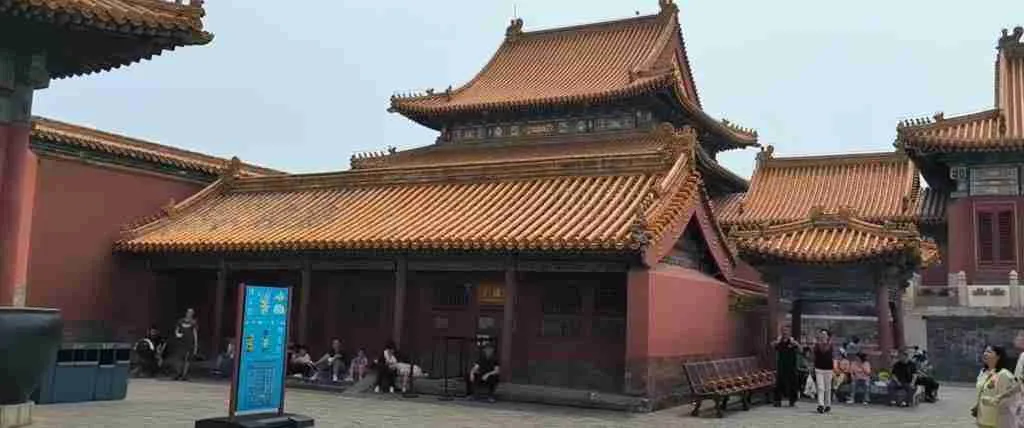
3 days
China 3-Day Discovery Tour
- ✓ Comprehensive China experience
- ✓ Expert local guides included
- ✓ All accommodation included
- ✓ Transportation provided
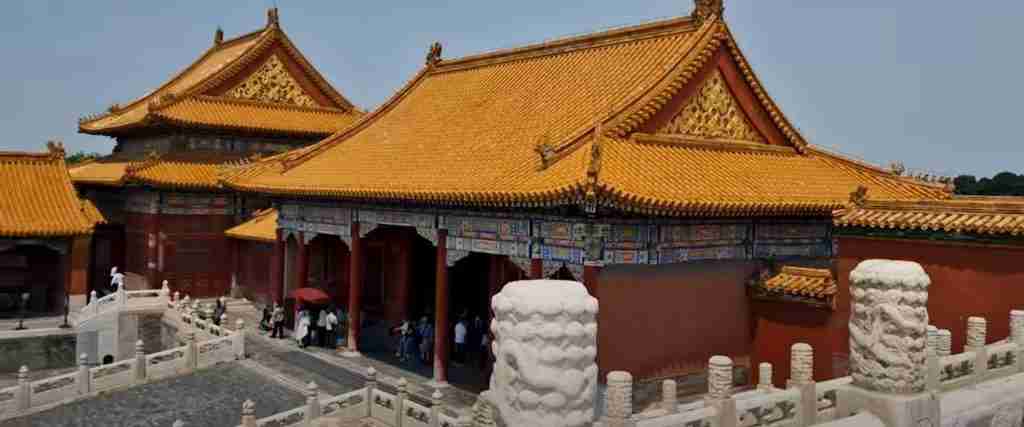
5 days
China 5-Day Highlights Experience
- ✓ Comprehensive China experience
- ✓ Expert local guides included
- ✓ All accommodation included
- ✓ Transportation provided
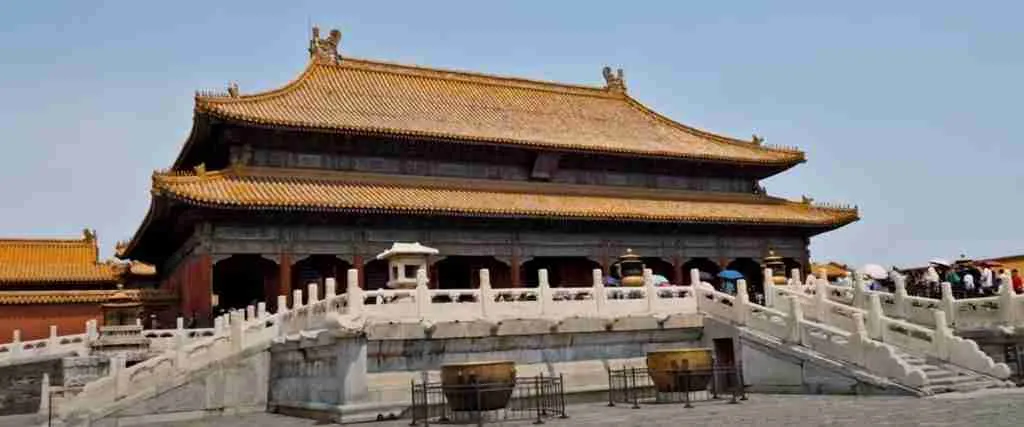
7 days
China 7-Day Cultural Journey
- ✓ Comprehensive China experience
- ✓ Expert local guides included
- ✓ All accommodation included
- ✓ Transportation provided
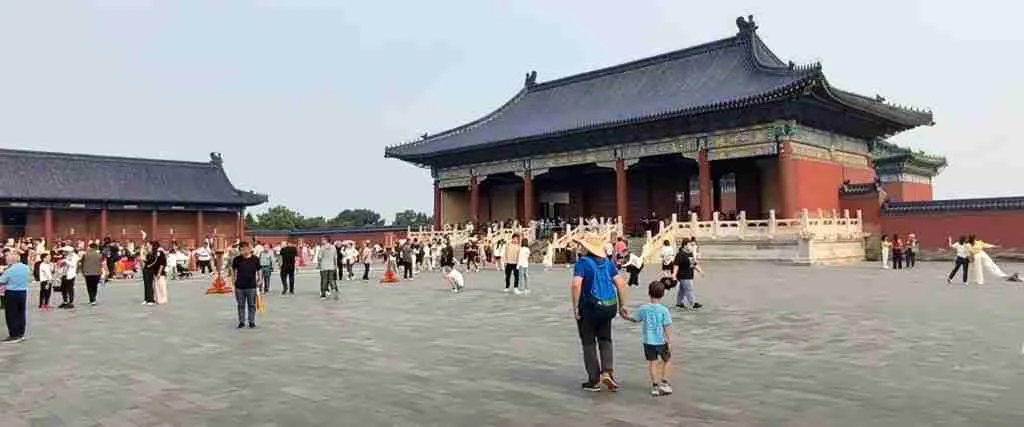
10 days
China 10-Day Complete Adventure
- ✓ Comprehensive China experience
- ✓ Expert local guides included
- ✓ All accommodation included
- ✓ Transportation provided
Multi-day tour packages powered by TourRadar. Prices and availability subject to change.
Navigating the Forbidden City Complex
Understanding the Layout
The Forbidden City’s rectangular layout spans 72 hectares (178 acres) and follows strict feng shui principles aligned with Beijing’s central axis. The complex divides into two main sections: the Outer Court for ceremonies and administration, and the Inner Court for imperial family residence. This hierarchical organization reflects the cosmic order that Chinese emperors believed they embodied on earth.
Entry is exclusively through the Meridian Gate (Wumen) on the south side, while exit is through either the Gate of Divine Prowess (Shenwumen) on the north or the East Prosperity Gate (Donghuamen). The unidirectional flow helps manage crowds while ensuring visitors experience the complex in its intended sequence, from public ceremonial spaces to increasingly private imperial quarters.
The central axis route showcases the most iconic structures: the Hall of Supreme Harmony, Hall of Central Harmony, Hall of Preserving Harmony, Palace of Heavenly Purity, Hall of Union, Palace of Earthly Tranquility, and the Imperial Garden. This traditional route covers the essential highlights in 2-3 hours, perfect for first-time visitors with limited time.
Hidden Areas Worth Exploring
While most visitors follow the crowded central axis, the true magic of the Forbidden City lies in its quieter wings and hidden courtyards. The eastern and western wings contain equally magnificent palaces with a fraction of the crowds, offering intimate encounters with imperial architecture and gardens.
The Qianlong Garden in the northeast corner represents one of the complex’s best-kept secrets. This private garden retreat, commissioned by the Qianlong Emperor for his retirement, features exquisite rockeries, pavilions, and covered corridors that create perfect photography opportunities without the masses of tourists found in the main courtyards.
Don’t miss the Corner Towers at each corner of the defensive walls—architectural marvels that combine military function with aesthetic beauty. The northeast and northwest towers are particularly photogenic, offering unique perspectives of the complex and serving as iconic symbols of the Forbidden City’s defensive design.
Architectural Wonders and Imperial Symbolism
The Hall of Supreme Harmony: Pinnacle of Imperial Power
At the heart of the Forbidden City stands the Hall of Supreme Harmony (Taihedian), the largest wooden structure in the complex and the throne room where emperors held the most important state ceremonies. This architectural masterpiece served as the symbolic center of the Chinese universe, where the Son of Heaven connected earthly and celestial realms.
The hall’s dimensions—210 by 122 feet—were carefully calculated according to imperial regulations, while its 125-foot height made it one of the tallest buildings in historical Beijing. The throne itself sits precisely on the north-south axis, surrounded by symbols of imperial power including dragons, phoenixes, and clouds rendered in gold and bright colors.
Every architectural detail carries meaning: the double-eaved hip roof represents the highest level of Chinese imperial architecture, while the golden roof tiles were reserved exclusively for imperial use. The marble terraces, bronze ceremonial vessels, and intricate wooden brackets all combine to create an overwhelming sense of imperial majesty that continues to impress visitors six centuries after its construction.
Decoding Imperial Colors and Numbers
The Forbidden City’s color scheme follows strict imperial symbolism that reinforces the emperor’s divine mandate. The dominant red symbolizes good fortune and joy, while the golden yellow roof tiles were reserved exclusively for imperial buildings, representing the emperor’s connection to the earth and center of the universe.
Numbers throughout the complex carry deep significance: the complex claims 9,999 rooms, one short of the 10,000 rooms attributed to the palace of the Jade Emperor in heaven, demonstrating appropriate humility before divine authority. The number nine, being the highest single digit, appears repeatedly in architecture and decoration as the ultimate yang number associated with imperial power.
Even the bronze vessels flanking major buildings serve both practical and symbolic purposes. These massive water containers, positioned to fight fires that posed constant threats to wooden structures, also represent the emperor’s power over the elements and his responsibility for maintaining cosmic harmony.
Cultural Treasures and Museum Collections
The Palace Museum’s Magnificent Holdings
Beyond its architectural grandeur, the Forbidden City houses one of the world’s most important collections of Chinese art and cultural artifacts. The Palace Museum’s collection of 1.86 million pieces represents the accumulated treasures of Chinese imperial culture, spanning paintings, calligraphy, ceramics, bronzes, timepieces, and imperial household objects.
The Treasure Gallery in the Palace of Tranquil Longevity showcases some of the most precious imperial artifacts, including jade carvings, gold and silver vessels, and ceremonial objects that illuminate daily life in the imperial court. These pieces offer intimate glimpses into the personal world of emperors and their families, from exquisite hair ornaments worn by empresses to delicate snuff bottles that became symbols of refined taste.
The Clock and Watch Gallery presents a fascinating collection of European timepieces that arrived in China through diplomatic exchanges and trade. These mechanical marvels, many featuring elaborate automatons and musical movements, represent the collision of Eastern and Western cultures and the Chinese imperial court’s fascination with European technological innovations.
Special Exhibitions and Rotating Displays
The Palace Museum regularly presents special exhibitions that highlight different aspects of its vast collection, often displaying pieces that spend most of their time in climate-controlled storage. These rotating exhibitions provide return visitors with new discoveries and offer deeper explorations of specific themes like imperial portraiture, ceremonial objects, or artistic traditions.
Recent exhibitions have explored topics ranging from Qing dynasty court life to the technical achievements of imperial craftsmen, each offering fresh perspectives on familiar spaces. Checking the museum’s exhibition schedule before your visit can enhance your experience with access to rare artifacts and scholarly insights that illuminate the complex’s cultural significance.
Photography and Documentation Tips
Capturing the Perfect Shot
The Forbidden City presents countless photographic opportunities, from sweeping architectural vistas to intimate details of imperial craftsmanship. Understanding the lighting conditions and crowd patterns can help you capture images that convey the site’s majesty without the distraction of tourist masses.
Golden hour lighting, occurring shortly after sunrise or before sunset, provides the ideal conditions for highlighting the complex’s warm colors and architectural details. The red walls and golden rooftops glow magnificently in this soft light, while shadows add depth and drama to your compositions.
For crowd-free photography, focus on the eastern and western wings where fewer visitors venture. These areas offer excellent vantage points for capturing the central axis buildings from unique angles, while providing access to equally magnificent architecture without the distractions of large tour groups.
Remember that tripods and professional photography equipment require special permits, while flash photography is prohibited in sensitive areas containing ancient paintings and artifacts. Plan your shots to work within these constraints, using available light and steady hands to capture the complex’s beauty.
Best Viewpoints and Compositions
For panoramic views of the entire complex, climb Jingshan Hill immediately north of the Forbidden City. This artificial hill, created from earth excavated during the palace’s construction, provides elevated perspectives that showcase the complex’s scale and its integration with Beijing’s central axis.
Within the complex itself, the marble terraces supporting the main halls offer excellent elevated viewpoints for capturing the courtyards and ceremonial spaces. The bridges crossing the Golden Water River provide classic composition opportunities, framing the architecture within traditional Chinese landscape principles.
Don’t overlook the details: dragon carvings on marble balustrades, painted ceiling decorations, bronze door fittings, and roof guardian figures all offer intimate glimpses into imperial craftsmanship that complement wider architectural shots.
Practical Visitor Information
Getting There and Around
The Forbidden City’s central Beijing location makes it easily accessible by multiple transportation options. The Tiananmen East subway station (Line 1) provides the most convenient access, with a short walk through Tiananmen Square to reach the Meridian Gate entrance. Allow extra time for security checks at both Tiananmen Square and the Forbidden City entrance, particularly during peak visiting periods.
Taxi access is convenient but can be affected by Beijing traffic and restricted zones around the complex. Bus routes 1, 52, and J1 serve the area, though subway transportation typically offers more reliable timing for visitors working with advance ticket reservations.
For visitors staying in central Beijing hotels, walking to the Forbidden City provides an excellent way to experience the city’s urban fabric and approach the complex as imperial visitors would have centuries ago. The walk from Wangfujing shopping district takes approximately 15 minutes and passes through historic neighborhoods that provide context for your imperial palace visit.
Services and Amenities
The Palace Museum provides essential visitor services including free luggage storage at the Meridian Gate, audio guides in over 30 languages (40 CNY for most languages, 20 CNY for Chinese languages), and barrier-free access routes for wheelchair users and visitors with mobility challenges.
Food options within the complex are limited and expensive, so consider dining before or after your visit. The Ice Cellar Restaurant offers a unique historical setting built into an actual Qing dynasty ice storage facility, while the Corner Tower Cafe provides modern amenities with views of the iconic defensive towers.
Restroom facilities are strategically located throughout the complex, though lines can be long during peak periods. Gift shops offer everything from postcards to sophisticated reproductions of imperial artifacts, with the main Palace Museum shop providing the most comprehensive selection of cultural products and scholarly publications.
Beyond the Visit: Extending Your Experience
Complementary Attractions
Your Forbidden City visit integrates perfectly with Beijing’s other imperial sites, creating a comprehensive exploration of Chinese imperial culture. The Temple of Heaven, Summer Palace, and Beihai Park all represent different aspects of imperial Beijing and can be combined into multi-day cultural itineraries.
Jingshan Park, immediately adjacent to the Forbidden City, provides not only the best panoramic views but also historical context as the site where the last Ming emperor allegedly committed suicide as rebel forces conquered Beijing. The park’s combination of natural beauty and historical significance makes it an essential complement to your palace visit.
The nearby Hutong neighborhoods offer glimpses into traditional Beijing life that existed alongside imperial grandeur. These narrow alleys and courtyard houses represent the authentic Beijing that surrounded the Forbidden City, providing cultural context for understanding the relationship between imperial power and common life.
Cultural Immersion Opportunities
Consider enhancing your visit with cultural experiences that bring imperial history to life. Traditional Chinese costume rentals allow you to dress as imperial court members for photographs within the complex, creating memorable images while gaining appreciation for the clothing and customs of imperial China.
Audio tours and guided experiences provide deeper insights into the complex’s history, architecture, and cultural significance. Professional guides can navigate efficient routes that avoid crowds while highlighting details that independent visitors might miss, particularly valuable for first-time visitors or those with limited time.
Evening cultural performances in Beijing often feature traditional music, dance, and opera that originated in imperial court entertainment. These performances provide artistic context for understanding the cultural life that once flourished within the Forbidden City’s walls.
When to Visit Throughout the Year
Seasonal Considerations
Each season offers distinct advantages for Forbidden City visitors, from the fresh greens of spring to the dramatic snow scenes of winter. Spring visits from April to June coincide with comfortable temperatures and blooming flowers that add color to the red walls and golden rooftops, creating particularly photogenic conditions.
Summer brings peak tourist seasons with higher temperatures and humidity, but also the longest daylight hours for extended exploration. The numerous courtyards provide some shade, though the scale of the complex means significant sun exposure during summer visits.
Autumn from September to November offers arguably the best combination of weather, lighting, and visitor volume. The clear skies typical of Beijing autumns provide excellent photography conditions, while comfortable temperatures make walking the extensive grounds more enjoyable.
Winter visits require warm clothing but reward visitors with potential snow scenes that transform the complex into a fairytale landscape. The dramatic contrast between white snow and red architecture creates stunning visual opportunities, while minimal crowds allow for more contemplative experiences.
Special Events and Celebrations
The Palace Museum occasionally hosts special events and cultural celebrations that provide unique access to imperial traditions. Chinese New Year celebrations, Mid-Autumn Festival events, and special exhibitions marking significant anniversaries offer enhanced experiences beyond regular visiting hours.
These special events often include traditional performances, illuminated displays, and expert presentations that illuminate aspects of imperial culture not visible during standard visits. Check the Palace Museum’s official website for announcements of special programming that might coincide with your Beijing visit.
Making the Most of Your UNESCO Experience
Visiting the Forbidden City represents more than sightseeing—it’s an encounter with one of humanity’s greatest architectural and cultural achievements. This UNESCO World Heritage Site embodies six centuries of Chinese imperial tradition and offers insights into a civilization that shaped much of East Asian culture.
Approach your visit with appropriate respect for both the site’s historical significance and its current role as a museum preserving irreplaceable cultural heritage. The complex’s designation as a UNESCO World Heritage Site reflects its outstanding universal value, requiring careful preservation for future generations while remaining accessible to contemporary visitors.
Take time to appreciate not just the grandest halls and most famous artifacts, but also the craftsmanship evident in everyday details: the precision of wooden joinery, the symbolism embedded in decorative elements, and the sophisticated understanding of space and proportion that created this architectural masterpiece.
Whether you spend a quick morning exploring the highlights or dedicate multiple days to comprehensive exploration, the Forbidden City offers layers of discovery that reward both casual visitors and serious students of Chinese culture. Your visit connects you to centuries of human achievement and provides perspectives on imperial power, artistic excellence, and cultural continuity that few sites worldwide can match.
As you exit through the Gate of Divine Prowess and look back at the vermillion walls that once enclosed the most powerful rulers on earth, you carry with you not just photographs and memories, but a deeper understanding of Chinese civilization and its enduring contributions to human heritage. The Forbidden City’s UNESCO designation ensures that this extraordinary legacy will inspire and educate visitors for generations to come.
❓ Frequently Asked Questions About the Forbidden City
How long do I need to visit the Forbidden City?
Minimum 4 hours for highlights, full day for comprehensive exploration. The central axis route takes 2-3 hours, but exploring the wings, gardens, and special galleries requires 6-8 hours. Most visitors find half a day (4-5 hours) provides a satisfying experience without exhaustion.
Can I buy tickets at the entrance?
No, advance online booking is required. The Palace Museum no longer sells tickets on-site. Foreign visitors must book through the official website using passport numbers. Book 7 days in advance when reservations open at 8 PM Beijing time.
What’s the best time to avoid crowds?
Early morning (8:30 AM opening) or late afternoon (after 2 PM). Avoid weekends, Mondays (closed), and Chinese holidays. Peak crowds occur between 10 AM-1 PM when tour groups dominate the central areas.
Are there restrictions on photography?
Photography allowed but with restrictions. No flash in halls with ancient paintings, no tripods without permits, no commercial photography without permission. Selfie sticks and professional equipment require special approval.
How do I get to the Forbidden City from Beijing Airport?
Take Airport Express to Dongzhimen, transfer to Line 2, then Line 1 to Tiananmen East. Total journey 60-90 minutes. Taxi takes 45-75 minutes depending on traffic but costs significantly more.
What should I wear for my visit?
Comfortable walking shoes are essential. The complex involves extensive walking on uneven surfaces. Dress modestly and weather-appropriately. Avoid heel-less sandals which are considered disrespectful at imperial sites.
Can I eat inside the Forbidden City?
Limited expensive options available. The Ice Cellar Restaurant and Corner Tower Cafe provide dining, but options are limited and pricey. Most visitors eat before or after their visit in nearby Wangfujing district.
Is the Forbidden City wheelchair accessible?
Yes, barrier-free routes are available. The Palace Museum provides wheelchair access via specially designed paths, though some areas remain inaccessible due to historic architecture. Wheelchairs available at entrance.
Why is it called the “Forbidden City”?
Because entry was forbidden to commoners for 500 years. Only the emperor, imperial family, and authorized officials could enter. Unauthorized entry was punishable by death, hence the name “Forbidden City” (紫禁城 Zijincheng).
When was it designated a UNESCO World Heritage Site?
1987, as “Imperial Palaces of the Ming and Qing Dynasties.” UNESCO recognized its outstanding universal value as the world’s largest collection of preserved ancient wooden structures and supreme example of Chinese imperial architecture.