Tulum Ruins 2026: Ancient Maya Port & Archaeological Guide
Key Takeaways
- Strategic 2026 Timing: Arrive at 8 AM opening to experience the ruins with minimal crowds before tour groups arrive around 10 AM, especially critical during high season December-April when daily visitor numbers reach 8,000-10,000
- Current Pricing Structure: General admission costs 95 MXN ($5.50 USD) for the federal zone plus 58 MXN ($3.50 USD) for the state zone, totaling 153 MXN ($9 USD) in 2026, with additional costs for parking (50 MXN) and guided tours (800-1,200 MXN for private groups)
- Archaeological Significance: Tulum represents the only major Maya city built directly on the Caribbean coast, serving as a crucial trading port between 1200-1520 AD with maritime connections to Central American networks
- Practical Accessibility: The ruins sit just 2.5 km from Tulum town center with frequent colectivos (35-50 MXN), rental bicycles (150-250 MXN daily), or taxis (100-150 MXN), making independent visits straightforward for 2026 travelers
- Combined Experience Planning: Budget 3-4 hours for the archaeological site plus swimming at the beach below the ruins, with total costs ranging 400-600 MXN ($23-35 USD) per person including admission, transport, refreshments, and optional guide services
- Conservation Awareness: 2026 regulations prohibit climbing structures and touching ancient stonework, with designated pathways protecting the site while still providing comprehensive access to all major temples and buildings
Planning Your Tulum Ruins Visit in 2026
The ancient Maya city of Tulum stands as one of Mexico’s most photographed archaeological sites, where limestone temples overlook turquoise Caribbean waters from dramatic 12-meter cliffs. As the only major Maya settlement constructed directly on the coast, Tulum served as a vital maritime trading hub during the Post-Classic period, maintaining its importance until Spanish contact in the early 16th century. For 2026 visitors, this UNESCO World Heritage candidate site offers an exceptional combination of archaeological exploration, cultural education, and beach access within a compact, easily navigable complex.
Planning your 2026 visit requires understanding both the site’s historical significance and current practical logistics. The Tulum archaeological zone covers approximately 7.5 hectares of coastal clifftop, with well-maintained pathways connecting over 60 structures including the iconic El Castillo pyramid, the Temple of the Frescoes with original Maya murals, and the Temple of the Descending God. The site receives 2.5-3 million annual visitors, making strategic timing essential for optimal experiences during your 2026 trip.
Modern infrastructure supports independent exploration while protecting the ancient structures. The entrance complex includes ticket offices, restrooms, gift shops, and refreshment stands, with a shuttle service (optional 30 MXN) covering the 500-meter walk from parking to the archaeological zone entrance. Inside the ruins, shaded areas provide relief from tropical heat, while the beach access stairway offers swimming opportunities directly below the temples. For 2026 travelers, advance online booking through the official INAH website eliminates ticket line waiting times, particularly valuable during peak season December-April.
The archaeological significance extends beyond the structures themselves. Tulum functioned as a walled city (the Maya name “Zama” means “place of the dawning sun”), with massive limestone walls protecting the elite residential and ceremonial core from potential threats. The city’s strategic location enabled control of both land and sea trade routes, with archaeological evidence showing connections to networks extending from central Mexico to Honduras. Understanding this broader context transforms a simple site visit into meaningful engagement with one of Mesoamerica’s most important coastal civilizations.
People Also Ask About Tulum Ruins 2026
How much does it cost to visit Tulum Ruins in 2026?
Visiting Tulum Ruins in 2026 costs 153 MXN ($9 USD) for combined federal and state zone admission, with additional expenses for parking (50 MXN if driving), optional shuttle service (30 MXN), and guided tours (800-1,200 MXN for private 2-hour tours). Check the official INAH website for current rates as pricing may vary. Budget travelers can minimize costs by arriving via colectivo (35-50 MXN from town), walking from the parking area instead of using the shuttle, and using free informational signage rather than hiring guides. Mid-range visitors typically spend 400-600 MXN total including admission, transportation, refreshments, and possibly a shared group tour. The site accepts both cash (Mexican pesos preferred) and credit cards at ticket offices, though cash provides better exchange rates than on-site card transactions.
What is the best time to visit Tulum Ruins in 2026?
The optimal time to visit Tulum Ruins in 2026 is during the 8-10 AM window immediately after opening, before tour bus groups arrive and temperatures peak above 32°C (90°F). Early morning visits offer the best lighting for photography, with the rising sun illuminating El Castillo from the east, and crowd levels remain minimal until mid-morning. For seasonal planning, November-February provides the most comfortable weather with temperatures averaging 24-28°C and minimal rainfall, though this peak season brings higher visitor numbers. May-October offers lower crowds and occasional afternoon rain showers that clear quickly, with slightly higher temperatures offset by fewer tourists and better accommodation rates. Avoid visiting on cruise ship days (check Cozumel port schedules) when daily visitor numbers can spike by an additional 2,000-3,000 people between 10 AM-2 PM.
Do you need a guide for Tulum Ruins in 2026?
Hiring a guide at Tulum Ruins in 2026 significantly enhances the archaeological and cultural understanding of the site, though the compact layout and informational signage make self-guided visits perfectly viable for independent travelers. Official guides certified by INAH offer 1.5-2 hour tours for 800-1,200 MXN for private groups up to 8 people, or 150-200 MXN per person for shared groups departing regularly from the entrance. Guides provide detailed explanations of Maya cosmology, architectural techniques, trading networks, and the symbolic significance of structures like the Temple of the Frescoes and Temple of the Descending God—information not available from signage alone. For budget-conscious visitors, excellent audio guides rent for 80-100 MXN, offering professional narration while maintaining flexibility in pacing and focus areas. The site’s relatively small size and clear pathways mean you won’t get lost without a guide, but professional interpretation reveals layers of meaning invisible to casual observation.
Can you swim at the beach below Tulum Ruins in 2026?
Swimming at the beach directly below Tulum Ruins remains permitted in 2026, accessed via a wooden stairway descending the cliff from the archaeological zone to the pristine Caribbean coastline. The beach offers calm, protected waters ideal for swimming and snorkeling, with natural reef formations visible just offshore creating excellent marine life viewing opportunities. Access is included with your ruins admission ticket, making this one of the few archaeological sites globally where you can combine cultural exploration with beach time. The beach features no facilities (no restrooms, changing areas, or food vendors), so plan accordingly by bringing towels, reef-safe sunscreen, and dry clothing in waterproof bags. Swimming conditions are best during morning hours before winds pick up, and the combination of beach access with ruins exploration makes budgeting 3-4 hours total for your visit ideal. Peak season crowds on the beach typically match ruins visitor patterns, with early arrivals securing better swimming space and clearer water visibility for snorkeling.
Extended multi-day tours – 5+ days
Featured Yucatan Multi-Day Tour Packages

14 days
Viva Mexico
- ✓ Comprehensive Yucatan tour
- ✓ Expert local guides included
- ✓ All accommodation arranged
- ✓ Transportation provided
5 days
Mini Wonders of the Maya with the Maya Train
- ✓ Comprehensive Yucatan tour
- ✓ Expert local guides included
- ✓ All accommodation arranged
- ✓ Transportation provided

8 days
Premium Mexico Yucatan Highlights (from Cancun to Tulum)
- ✓ Comprehensive Yucatan tour
- ✓ Expert local guides included
- ✓ All accommodation arranged
- ✓ Transportation provided
9 days
Mexico City & Merida City (Delight Mexican Cuisine)
- ✓ Comprehensive Yucatan tour
- ✓ Expert local guides included
- ✓ All accommodation arranged
- ✓ Transportation provided
Multi-day tour packages powered by TourRadar. Prices and availability subject to change.
Essential Planning Information for Tulum Ruins 2026
Current Costs and Pricing Breakdown 2026
Understanding the complete cost structure for visiting Tulum Ruins in 2026 enables accurate budget planning and eliminates surprise expenses. The admission system divides into two components: federal zone access managed by INAH (National Institute of Anthropology and History) at 95 MXN ($5.50 USD), and state zone access managed by Quintana Roo government at 58 MXN ($3.50 USD). These combine for a total admission of 153 MXN ($9 USD) per person in 2026. Check the official INAH website for current rates as pricing may vary.
Additional site-related expenses include parking (50 MXN for cars, 30 MXN for motorcycles), optional electric shuttle service from parking to entrance (30 MXN round-trip, 20 MXN one-way), and professional photography equipment permits (250 MXN for tripods and professional cameras). The 500-meter walk from parking to entrance takes 8-10 minutes on a paved pathway with minimal shade, making the shuttle service popular during midday heat despite being unnecessary for most visitors arriving during cooler morning hours.
Guide services represent the largest variable expense. Official INAH-certified guides charge 800-1,200 MXN for private 1.5-2 hour tours accommodating up to 8 people, making group tours cost-effective for families or friend groups at 100-150 MXN per person. Shared group tours departing regularly from the entrance cost 150-200 MXN per person for English or Spanish narration. Audio guide rentals offer a budget alternative at 80-100 MXN, providing professional content with flexible pacing. Unofficial guides soliciting near the entrance charge less but lack certification and may provide inaccurate historical information.
On-site amenities add to total costs: bottled water (20-30 MXN), cold beverages (25-40 MXN), snacks (30-60 MXN), and meals at the entrance restaurant (120-200 MXN for basic plates). Souvenir shops sell handicrafts, books, and replicas at prices 20-30% higher than town shops. Lockers for valuables rent for 50-80 MXN. Budget-conscious visitors minimize these expenses by bringing water bottles, snacks, and keeping valuables in vehicles or hotel safes rather than using lockers.
Total visit costs for 2026 travelers typically range: Budget approach 250-350 MXN ($15-20 USD) including admission, colectivo transport, self-guided exploration, and brought refreshments; Mid-range experience 500-700 MXN ($29-41 USD) including admission, taxi or rental car, audio guide or shared tour, on-site refreshments; Premium experience 1,200-1,800 MXN ($70-105 USD) including admission, private guide, parking, shuttle, meals, and comprehensive photography time.
Operating Hours and Seasonal Schedule 2026
Tulum Ruins operates daily 8 AM – 5 PM throughout 2026, with last entry at 4:30 PM providing adequate time for site exploration before closing. The site closes only on December 25th, maintaining consistent access every other day including Mexican national holidays. These fixed hours apply year-round regardless of season, eliminating confusion about extended summer hours or reduced winter schedules common at other archaeological sites.
Strategic visit timing within these hours dramatically impacts your experience. The 8-9 AM period offers the best conditions: minimal crowds (200-400 visitors compared to 1,500-2,000 by 11 AM during peak season), moderate temperatures averaging 24-26°C before midday heat, optimal photography lighting with sun angles highlighting El Castillo’s eastern facade, and complete beach access before swimmers arrive. Tour buses begin arriving 9:30-10 AM, with peak congestion 10 AM – 2 PM when cruise ship excursions overlap with organized tours.
Afternoon visits (2-4:30 PM) provide a secondary optimal window as tour groups depart, though higher temperatures (32-34°C) and harsh overhead lighting create less comfortable conditions. Late afternoon visits work well for visitors prioritizing swimming over extensive archaeological exploration, as departing crowds free up beach space while ruins pathways thin considerably. Sunset at Tulum occurs 5:30-7 PM depending on season, but the site closes before sunset year-round, making sunset photography impossible from inside the archaeological zone.
Holiday and special event periods see significantly elevated visitor numbers. December 20-January 6 represents absolute peak season with 8,000-10,000 daily visitors, followed by Semana Santa (Easter week) and July-August summer holidays. These periods require 8 AM arrival to secure reasonable crowd levels. Conversely, September-October low season sees just 2,000-3,000 daily visitors, offering nearly private exploration experiences despite higher rainfall probability.
Archaeological Features and Historical Significance 2026
El Castillo: The Great Pyramid
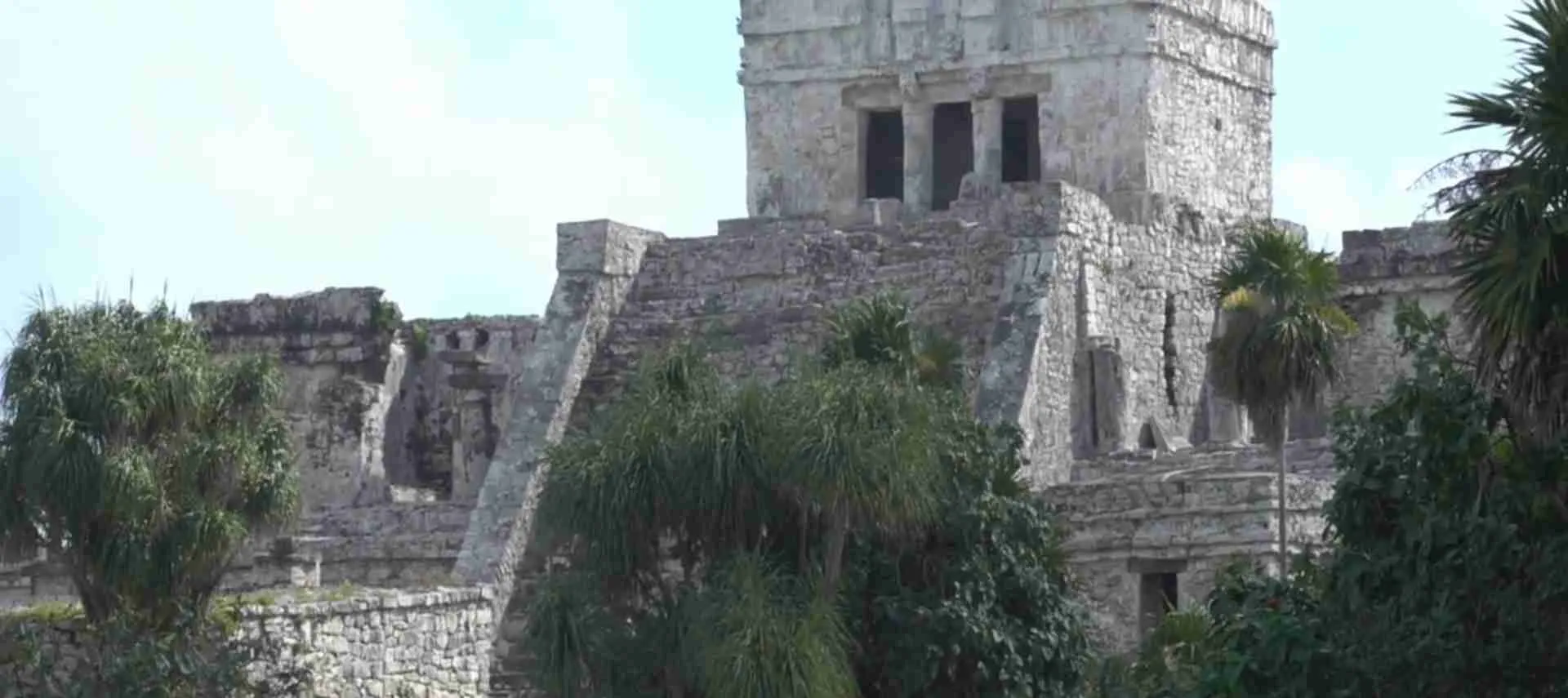
El Castillo dominates Tulum’s skyline as the site’s largest and most iconic structure, standing 7.5 meters tall atop the Caribbean cliffside with commanding views across turquoise waters. This pyramid served multiple functions: astronomical observatory, lighthouse for maritime navigation, and temple dedicated to the Descending God deity central to Tulum’s religious practices. The structure’s strategic cliff-edge position enabled its use as a navigational beacon, with fires lit atop the pyramid visible to Maya trading canoes approaching from sea routes.
Archaeological analysis reveals sophisticated construction techniques employing locally quarried limestone blocks fitted without mortar, relying on precise cutting and gravity for structural stability. The pyramid features a two-room temple at its summit originally decorated with murals and stucco reliefs, though weathering has eroded most surface details. The western facade displays a niche containing a sculpture of the Descending God, depicted as an upside-down figure interpreted as representing the setting sun, Venus as evening star, or the bee god associated with honey production—a major Tulum trade commodity.
Modern conservation rules prohibit climbing El Castillo, protecting both the ancient structure and visitor safety. 2026 visitors view the pyramid from designated pathways and viewing platforms providing excellent photography angles without risking damage to the 700-year-old stonework. The structure’s preservation state remains good compared to many Maya sites, with clearly visible architectural details including the temple entrance columns, interior chambers, and sculptural elements still in situ.
Temple of the Frescoes: Original Maya Murals
The Temple of the Frescoes represents Tulum’s most archaeologically significant structure, preserving original Maya murals dating to the 14th-15th centuries—among the finest surviving examples of Post-Classic Maya painting. This two-story building functioned as an observatory for tracking the sun’s movements, with windows aligned to specific solar events marking agricultural and ceremonial calendars. The lower level contains interior chambers decorated with frescoes depicting Maya deities, creation myths, and cosmological scenes in vivid blue, red, and yellow pigments derived from mineral and plant sources.
The mural content reveals extensive information about Maya religious beliefs and daily life. Scenes include Ixchel (goddess of weaving, medicine, and childbirth), Chaac (rain god), and various agricultural deities surrounded by representations of maize, cacao, and marine life. The artistic style shows influences from central Mexican cultures, indicating Tulum’s integration into wider Mesoamerican trading and cultural networks during the Post-Classic period. Colors remain remarkably preserved in protected interior spaces, though 2026 visitors view the frescoes from restricted distances to prevent further deterioration from human presence and breath moisture.
The building’s exterior facade features elaborate stucco masks at the corners representing the creator god Itzamna, with serpentine motifs and geometric patterns framing doorways and windows. The upper level likely served as an elite residence or specialized ceremonial space, with architectural features suggesting restricted access during the city’s occupation. For 2026 visitors, the Temple of the Frescoes exemplifies why professional guides add value—the complexity of symbolism and artistic details requires expert interpretation to fully appreciate.
Temple of the Descending God and City Walls
The Temple of the Descending God takes its name from the distinctive upside-down deity sculpture positioned above the main entrance, one of Tulum’s most photographed architectural features. This relatively small but ornately decorated structure showcases the characteristic Tulum architectural style: sloped walls, narrow doorways, and elaborate stucco decoration. The Descending God motif appears throughout the site, representing either the setting sun, Venus, the bee god, or rain deity depending on interpretive framework—scholarly debate continues about definitive identification.
The city’s defensive walls constitute another major feature distinguishing Tulum from most Maya settlements. Three walls (landward sides) constructed from massive limestone blocks average 3-5 meters high and 6-8 meters thick, with five narrow gateways providing controlled access to the elite ceremonial core. The Caribbean cliff edge serves as the fourth natural barrier. These fortifications suggest either defensive concerns during Tulum’s occupation period (1200-1520 AD) or symbolic demarcation of sacred space, separating the religious and administrative center from outlying residential areas.
Archaeological excavations within the walled precinct reveal evidence of elite residences, administrative buildings, ceremonial platforms, and the homes of priests and nobles. Outside the walls, common residents lived in perishable wood and thatch structures long since disappeared, leaving minimal archaeological trace. The wall system enabled the privileged class to control trade activities and religious ceremonies while maintaining social hierarchy—a pattern common in late Maya civilization.
Maritime Trading Port Functions
Tulum’s unique coastal position enabled its primary economic function as a maritime trading hub connecting the Maya lowlands with Caribbean coastal networks and Central American civilizations. The protected beach below the ruins served as a canoe landing site, with natural reef formations creating a breakwater for safe vessel approach. Archaeological evidence including exotic goods (jade, obsidian, copper bells, turquoise) demonstrates trade connections extending from central Mexico to Honduras and possibly as far as Panama.
The city controlled movement of critical commodities: honey, wax, salt, obsidian, jade, cacao, feathers, and textiles. Tulum merchants redistributed goods arriving by sea throughout the inland Maya regions via land routes, while collecting interior products for export through maritime channels. This economic specialization sustained the city’s prosperity during the Post-Classic period when many interior Maya cities had declined or been abandoned following the Classic Maya collapse centuries earlier.
Murals and artifacts suggest Tulum maintained this trading function until Spanish contact in the early 1500s. Spanish explorers’ accounts describe a thriving coastal settlement with numerous buildings and active maritime traffic, contrasting with abandoned inland sites encountered during the same period. The city’s eventual abandonment occurred gradually following Spanish colonization and epidemic diseases, with the last residents departing by the early 18th century. For 2026 visitors, understanding Tulum’s economic importance contextualizes why such a relatively small site achieved such prominence in Maya civilization.
Best Time to Visit Tulum Ruins in 2026
Seasonal Weather Patterns and Crowd Analysis 2026
Tulum’s tropical climate creates distinct seasonal variations affecting both visitor comfort and site experience. The dry season (November-April) delivers optimal weather conditions: daytime temperatures averaging 26-30°C, minimal rainfall (3-5 days per month), gentle Caribbean breezes, and consistent sunshine enabling reliable visit planning. These favorable conditions attract peak visitor numbers, with December-January seeing 7,000-9,000 daily arrivals during holiday periods, 5,000-6,000 visitors on typical high season days, and notable congestion 10 AM – 2 PM when pathways feel crowded and beach space fills quickly.
The wet season (May-October) offers dramatically different conditions and opportunities. Temperatures rise slightly to 28-32°C, with higher humidity levels (75-85%) creating more challenging midday conditions. Rainfall occurs primarily as afternoon thunderstorms (2-4 PM) lasting 30-60 minutes before clearing, rather than all-day precipitation. Morning visits 8-11 AM typically encounter dry conditions even during wet season. The tradeoff for weather uncertainty brings substantial benefits: visitor numbers drop to 3,000-4,000 daily in summer, 2,000-3,000 in September-October shoulder season, enabling nearly private exploration experiences at major structures, easier photography without tourist interruption, and peaceful beach swimming with minimal crowds.
Hurricane season (June-November) requires consideration but rarely impacts actual visits. Tropical storms form primarily August-October, with advance forecasting providing 5-7 days notice for potential impacts. The ruins close only during active hurricane threats or immediate aftermath. Historical data shows Tulum experiences direct hurricane impacts 2-3 times per decade, making the risk present but statistically low for any individual trip. Travel insurance covering weather-related cancellations mitigates financial risk during these months.
Monthly Breakdown for 2026 Visit Planning
January-February 2026 represents peak season with ideal weather: 24-28°C temperatures, minimal rain, comfortable humidity, perfect beach conditions, and excellent photography light. However, visitor numbers reach annual highs with 6,000-8,000 daily arrivals, accommodation rates peak 40-60% above low season, and advance booking becomes essential for both ruins entry and area lodging. These months suit visitors prioritizing weather certainty over solitude and budget considerations.
March-April 2026 continues favorable dry season weather (26-30°C, minimal rain) but brings spring break crowds elevating visitor numbers 10-20% above winter months during specific weeks. Semana Santa (Easter week, April 13-20, 2026) sees Mexican domestic tourism spike dramatically, with some days exceeding 10,000 visitors. Outside Easter week, March-April offers excellent conditions with slightly lower crowds than winter peak. Temperatures begin rising toward summer levels, making morning visits increasingly important.
May-June 2026 marks shoulder season transition with mixed characteristics: temperatures rising to 28-31°C, afternoon rain probability increasing to 40-50%, but crowds dropping by half compared to winter months. These months offer budget opportunities with mid-season accommodation rates, fewer visitors enabling relaxed exploration, and morning hours typically remaining dry. The higher heat and humidity require adequate hydration and sun protection, but favorable crowd levels compensate for weather challenges.
July-August 2026 brings summer vacation season: highest temperatures (30-33°C), highest humidity (80-85%), daily afternoon rain probability (60-70%), but moderate visitor numbers from international summer travelers. Mexican summer holiday weeks see temporary crowd spikes, but overall levels remain well below winter peak. These months suit visitors comfortable with tropical heat, those planning morning-only visits to avoid afternoon storms, and anyone prioritizing budget savings (accommodation rates 30-40% below peak season).
September-October 2026 offers the best conditions for visitors prioritizing solitude and budget: visitor numbers at annual lows (2,000-3,000 daily), accommodation rates 40-50% below peak, near-private site experiences, and genuine opportunity to appreciate the ruins without crowds. Weather presents higher challenges with peak hurricane season, 70-80% afternoon rain probability, and hot, humid conditions. Morning visits 8-11 AM largely avoid rain while capturing low-crowd benefits. These months suit flexible travelers who can monitor weather forecasts and don’t mind occasional afternoon storms.
November-December 2026 sees the transition back to peak season: November offers excellent value with improving weather, moderate crowds, and shoulder season rates, while December represents full high season return with holiday premiums, maximum crowds, and winter weather certainty. Thanksgiving week and December 20-January 6 require advance planning and morning arrivals to manage crowds. For 2026 visitors, November provides arguably the best overall balance of weather, crowds, and value.
Transportation Guide: Getting to Tulum Ruins 2026
From Tulum Town Center
Tulum archaeological site sits 2.5 kilometers northeast of Tulum town center along Highway 307, making access straightforward via multiple transportation options. Colectivos (shared vans) provide the most economical choice at 35-50 MXN per person, departing every 10-15 minutes from the town center colectivo station on Avenida Tulum. These vans drop passengers directly at the ruins parking area entrance, with return colectivos departing from the same location throughout the day. Total travel time averages 8-12 minutes depending on stops to collect additional passengers.
Taxis offer direct, private transport for 100-150 MXN from town center hotels to the ruins entrance. Agree on fares before departing, as meters are rarely used. Taxis accommodate up to 4 passengers, making shared rides cost-effective for groups at 25-40 MXN per person. Return taxis wait at the ruins exit or can be summoned by asking site staff to call. Travel time averages 6-8 minutes via direct route.
Rental bicycles provide an active, economical option popular with budget travelers and cycling enthusiasts. Bicycle rental shops in Tulum town charge 150-250 MXN for full-day rentals, with the ride to the ruins taking 15-25 minutes via the paved shoulder along Highway 307. The route features minimal elevation change but requires awareness of vehicle traffic. Secure bicycle parking (20-30 MXN) operates at the ruins entrance, with locked storage protecting bikes during site visits.
Rental cars enable independent scheduling and easy combination of the ruins with other attractions. Parking at the archaeological site costs 50 MXN, with the lot located 500 meters from the actual entrance gates. The optional shuttle service (30 MXN round-trip) covers this distance, though most visitors walk the paved pathway. Rental cars provide particular value when visiting multiple area attractions (cenotes, beaches, other ruins) within a single day, eliminating dependence on taxi scheduling or colectivo routes.
From Playa del Carmen and Cancun
Playa del Carmen sits 65 kilometers north of Tulum Ruins, connected by excellent public transportation infrastructure. ADO buses depart Playa del Carmen’s main terminal every 30-60 minutes throughout the day, taking 60-75 minutes for the journey and costing 84-124 MXN depending on service class (standard vs. deluxe). Buses stop at the ruins junction on Highway 307, requiring a 5-minute walk or taxi ride (20-30 MXN) to the entrance. Return buses depart hourly, with schedules available at ado.com.mx for advance planning.
Colectivos from Playa del Carmen offer faster, more frequent service at 70-90 MXN per person. These vans depart when full (typically every 15-30 minutes during daylight hours) from the colectivo station on Calle 2 Norte between Avenidas 15 and 20. Travel time averages 45-60 minutes, with drop-off directly at the ruins parking area. Return colectivos operate from the same location throughout the day until approximately 7 PM.
From Cancun (130 kilometers north), ADO buses provide the primary public transit option, departing Cancun’s main terminal every 1-2 hours with travel time of 2-2.5 hours and fares of 196-284 MXN depending on service class and departure time. Advance online booking through ADO’s website secures seats during peak season and enables schedule planning. For Cancun-based visitors, combining Tulum Ruins with Playa del Carmen as a multi-destination day trip maximizes transportation efficiency.
Organized tours from both Cancun and Playa del Carmen typically cost 800-1,400 MXN per person including transportation, entry fees, and guided site tour. These work well for first-time visitors wanting structured experiences and English-speaking guides, though the set schedules reduce flexibility in site exploration time. Independent travel via public transportation costs 60-75% less while providing greater freedom in pacing and focus areas.
Airport Transfers and Long-Distance Options
Cancun International Airport (CUN) lies 118 kilometers from Tulum Ruins, with multiple ground transportation options available. Shared shuttle services cost 350-500 MXN per person (booking required via websites like cancun-airport.com), while private shuttle services charge 1,800-2,600 MXN for vehicles accommodating up to 8 passengers. These services drop passengers at Tulum area accommodations, from which local transportation reaches the ruins as detailed above.
ADO buses connect Cancun Airport to Tulum town with departures every 1-2 hours costing 384-426 MXN, though direct service to the ruins doesn’t operate. Rental cars from airport agencies provide maximum flexibility for visitors planning multiple days exploring the Riviera Maya, with rates starting around 400-600 MXN daily for economy vehicles. The drive from Cancun Airport to Tulum Ruins takes approximately 1.5-2 hours via Highway 307.
For visitors combining Tulum with other Yucatan destinations, consider these connections: Merida (250 kilometers, 4-hour ADO bus journey, 384-526 MXN), Chichen Itza (150 kilometers, 2.5-hour journey via Valladolid, 254-326 MXN), and Bacalar (220 kilometers, 3.5-hour journey, 284-364 MXN). Advance ADO booking secures preferred departure times and guarantees seats during high season travel periods.
Sample 2026 Itineraries: Tulum Ruins Day Planning
Half-Day Tulum Ruins Experience (Budget Approach)
This streamlined itinerary maximizes archaeological exploration and beach time while minimizing costs, ideal for independent travelers and those combining the ruins with other area attractions. Begin with 7:30 AM departure from Tulum town accommodations via colectivo (35-50 MXN), arriving at the ruins parking area around 7:45 AM. Use the 15-minute pre-opening wait to apply sunscreen, organize belongings, and purchase tickets at the office opening 8 AM sharp.
Enter the site at 8 AM for optimal crowd conditions and lighting. Walk the 500-meter entrance pathway rather than using the shuttle service (saves 30 MXN), entering the archaeological zone around 8:15 AM. Spend the first 90 minutes (8:15-9:45 AM) exploring major structures: El Castillo pyramid with morning sun illuminating the eastern facade, Temple of the Frescoes with detailed mural viewing, Temple of the Descending God for iconic photos, and the coastal pathway providing stunning clifftop Caribbean views. Use free informational signage throughout the site rather than hiring guides or renting audio equipment.
Descend to the beach via the cliff stairway around 9:45 AM for 60-90 minutes of swimming and snorkeling before midday heat peaks. The beach provides excellent snorkeling near reef formations visible from shore, with tropical fish abundant in shallow waters. Return to the archaeological zone around 11:15 AM for any revisits to favorite structures and final photography. Exit the site by 11:45 AM before tour group crowds peak.
Return to Tulum town via colectivo (35-50 MXN), arriving around noon for lunch at local restaurants (80-150 MXN for comida corrida set menus or taquerías). Total half-day costs: colectivo transport 70-100 MXN, admission 153 MXN, brought snacks and water 30-50 MXN, lunch 80-150 MXN. Total day cost: 333-453 MXN per person ($19-26 USD, excluding accommodation).
Full-Day Tulum Archaeological and Beach Experience (Mid-Range)
This comprehensive itinerary combines detailed ruins exploration, guided interpretation, extended beach time, and area cenote visits for a complete Tulum experience. Begin with 7:45 AM departure from accommodation via taxi (100-150 MXN) or rental car (parking 50 MXN), arriving at the site before 8 AM opening. Purchase tickets in advance online to bypass morning lines, or arrive early for in-person purchase.
Enter at 8 AM and join a shared group tour (150-200 MXN) departing around 8:30 AM. The 1.5-hour guided experience provides expert archaeological and historical interpretation of all major structures, Maya cosmology explanations, and detailed analysis of the Temple of the Frescoes murals. Tours conclude around 10 AM, leaving the remainder of morning for independent re-exploration and photography at preferred structures.
Descend to the beach around 10:30 AM for extended swimming and snorkeling. Bring reef-safe sunscreen, towels, and waterproof bags for electronics. Spend 2-3 hours enjoying the pristine Caribbean waters before lunch. Return to the site entrance area around 1:30 PM for lunch at the on-site restaurant (150-250 MXN for plates, drinks, and snacks), or exit to nearby beachfront restaurants for similar pricing with better views.
After lunch, visit Gran Cenote (2 kilometers from the ruins, easily reached by taxi for 60-80 MXN or colectivo for 30-40 MXN). Gran Cenote admission costs 500 MXN with excellent snorkeling in crystal-clear freshwater, limestone formations, and resident turtles. Spend 2-3 hours swimming, snorkeling, and relaxing. Return to Tulum town via taxi or colectivo by 5-6 PM.
Total full-day costs: transportation 260-380 MXN, ruins admission 153 MXN, guided tour 150-200 MXN, cenote admission 500 MXN, meals and snacks 250-400 MXN, miscellaneous 50-100 MXN. Total day cost: 1,363-1,733 MXN per person ($80-101 USD, excluding accommodation).
Premium Tulum Archaeological Experience with Private Guide
This luxury approach prioritizes expert interpretation, comfort, and comprehensive documentation. Arrange private transportation pickup from accommodation at 7:30 AM (round-trip private van 800-1,200 MXN for up to 6 passengers, or taxi 250-350 MXN round-trip per vehicle). Arrive before 8 AM with pre-purchased online tickets.
Meet pre-booked private INAH-certified guide at entrance for personalized 2-hour archaeological tour (1,000-1,200 MXN for groups up to 8 people). Private guides customize pacing and content to visitor interests, provide extensive photography time at preferred locations, and offer detailed responses to specific questions about Maya civilization, architecture, and Tulum’s trading networks. Tours begin at 8 AM to maximize optimal lighting and minimal crowds.
Following the guided portion, spend additional time photographing favorite structures and exploring areas of personal interest. Use the optional shuttle service (30 MXN) for convenient parking-to-entrance transportation. Descend to the beach around 10:30-11 AM for swimming with premium amenities: professional underwater camera rental (available at nearby shops, 300-500 MXN daily), quality snorkel gear rental if not provided by guide service, and brought gourmet picnic or exit for upscale beachfront dining (300-500 MXN per person).
Extend the premium experience by visiting multiple area cenotes via private driver: Gran Cenote (500 MXN admission), Cenote Calavera (350 MXN), and Dos Ojos (500 MXN), with driver waiting at each location (full-day private driver service 1,800-2,400 MXN). Alternatively, book afternoon spa services at luxury Tulum beach hotels for post-ruins relaxation.
Total premium day costs: private transportation 800-1,200 MXN, ruins admission 153 MXN, private guide 1,000-1,200 MXN, shuttle service 30 MXN, premium meals 500-800 MXN, cenote visits 1,350 MXN, photography equipment rental 300-500 MXN, miscellaneous 200-300 MXN. Total day cost: 4,333-5,733 MXN per person ($253-335 USD, excluding accommodation). For groups, divide private guide and transportation costs among participants for significant per-person savings.
Booking Strategies and Advance Planning for 2026
Online Ticket Reservations and Benefits
The INAH official website (www.inah.gob.mx) offers advance online ticket purchase for Tulum Ruins, providing specific benefits during high season periods. Online booking eliminates ticket office line waiting times that can extend 30-45 minutes during peak morning hours December-April. Digital tickets arrive via email as PDF files printable or displayable on mobile devices, with QR codes scanned at entrance gates for quick access.
Book online tickets 1-7 days in advance during high season, though same-day booking works fine during low season May-October. The website occasionally experiences technical issues, so maintain backup plans for in-person ticket purchase if online systems fail. Credit cards from most countries process successfully, though international transaction fees (1-3%) may apply depending on your bank.
Advance booking becomes particularly valuable during specific peak periods: December 20-January 6 (holiday season), Semana Santa/Easter week, spring break weeks February-March, and long Mexican holiday weekends. During these times, visitor numbers can exceed 8,000 daily, making early arrival combined with pre-purchased tickets essential for reasonable entry times. Outside peak periods, advance booking provides convenience rather than necessity.
Tour Operator Selection and Booking
For travelers preferring organized tour experiences, numerous operators serve Tulum Ruins from Cancun, Playa del Carmen, and Tulum town. Reputable companies include Amigo Tours, Cancun Adventures, and local Tulum-based operators advertising through hotel concierges and travel agencies. Tour prices range 800-1,400 MXN per person depending on departure location, group size, and included services.
Standard tour packages include: round-trip transportation from hotels, entrance fees to archaeological site, English or Spanish-speaking certified guides, 1.5-2 hours on-site time, and sometimes lunch or beverage service. Premium packages add cenote visits, upgraded transportation in smaller groups, extended site time, or combination visits with other area attractions. Compare offerings carefully—some “discount” tours provide minimal actual site time after long transportation periods.
Book tours 3-7 days in advance during peak season to secure preferred dates and departure times. Last-minute bookings often remain available but may not guarantee specific language guides or group sizes. Read recent reviews on platforms like TripAdvisor or Google to identify quality operators with knowledgeable guides and reliable service. Beware operators making exaggerated claims about “exclusive access” or “secret areas”—the archaeological zone is standard for all visitors regardless of tour company.
Accommodation Booking Near Tulum Ruins
Lodging options near Tulum Ruins span budget hostels to luxury resorts. Tulum town center (2.5 kilometers from ruins) offers the most economical options with hostels (400-700 MXN per night for dorms, 900-1,400 MXN for private rooms) and mid-range hotels (1,500-2,800 MXN for double rooms). These properties provide easy colectivo access to the ruins and abundant restaurant choices within walking distance.
Tulum Beach zone hotels (running parallel to the coast 4-7 kilometers from ruins) command premium rates: mid-range beach hotels 2,500-4,500 MXN, boutique properties 4,000-8,000 MXN, and luxury eco-resorts 8,000-20,000 MXN per night. Beach properties trade higher costs and less convenient ruins access for oceanfront locations, often eco-conscious designs, and resort amenities. Many lack road access, requiring walking or bicycle transport along beach roads.
Book accommodations 4-8 weeks in advance for high season December-April, when popular properties sell out and rates peak. Shoulder season May-June and September-November offers booking flexibility with rates 30-50% below peak, making last-minute reservations viable. Compare prices across Booking.com, Hotels.com, and Airbnb for best value. Properties in Tulum town provide better value for ruins-focused visits, while beach properties suit travelers prioritizing resort experiences over archaeological exploration.
Photography and Equipment Permits
Casual photography using smartphones and standard cameras requires no special permits or fees at Tulum Ruins. Restrictions apply to professional equipment: tripods, monopods, professional DSLR cameras with telephoto lenses, and commercial filming equipment require special permits costing 250 MXN. Site staff at entrance gates inspect equipment and assess whether permits are needed based on gear type and apparent usage intent.
The permit system aims to manage professional photography and commercial filming rather than restrict casual visitor photos. Bloggers, influencers, and serious photography enthusiasts using tripods for long exposures or professional-grade equipment should budget for the permit cost. The fee supports site maintenance and conservation efforts. No advance booking is required—permits purchase directly at entrance ticket offices upon arrival.
Photography within the site works best during early morning hours (8-10 AM) when lighting angles highlight El Castillo and other structures, crowds remain minimal for unobstructed shots, and atmospheric conditions provide clearest views. Midday harsh overhead lighting creates unflattering shadows and washed-out colors. Late afternoon offers secondary optimal lighting but comes with higher temperatures and residual crowd presence. Professional photographers should budget 3-4 hours on-site for comprehensive documentation of all major structures and angles.
Practical Visitor Information for 2026
What to Bring and Essential Preparations
Proper preparation enhances comfort and enjoyment during Tulum Ruins visits. Essential items include: reef-safe sunscreen (required for beach swimming and enforced at cenotes), wide-brimmed hat or cap for sun protection on exposed pathways, comfortable walking shoes (archaeological zone features uneven limestone surfaces), minimum 1-2 liters water per person (on-site water costs 20-30 MXN per bottle, bringing your own saves money), and lightweight, breathable clothing in light colors reflecting heat rather than absorbing it.
For beach access, bring: swimsuit worn under clothing for easy changing (no changing facilities at beach), towel, waterproof bag for electronics and valuables (no lockers available at beach level), snorkel gear if you own it (saves 100-150 MXN rental fees at nearby shops), and extra dry clothing for after swimming. The beach features no facilities, so plan self-sufficiently for the entire beach portion of your visit.
Photography equipment should include: fully charged camera batteries (no recharging options on-site), memory cards with ample storage capacity for 200-300 photos, lens cleaning cloth for removing salt spray and humidity condensation, and weatherproof camera protection for sudden rain showers during wet season visits. Smartphone photographers should bring portable chargers—extensive photo-taking drains batteries faster than expected in hot conditions.
Items to leave at accommodation: unnecessary valuables, excess cash (bring only day budget plus small emergency reserve), bulky backpacks (lockers cost 50-80 MXN, better to travel light), and expensive jewelry. Tulum Ruins features generally good security, but eliminating theft temptation through smart packing proves wiser than managing valuables on-site.
Health, Safety, and Accessibility Considerations
Tulum’s tropical climate creates specific health considerations. Heat exhaustion and dehydration present the primary risks, particularly during midday hours April-October when temperatures exceed 32°C with 80%+ humidity. Prevent these by drinking water consistently (not waiting until thirsty), taking breaks in shaded areas every 30-45 minutes, and avoiding alcohol consumption before or during site visits. Symptoms of heat problems include dizziness, nausea, excessive fatigue, and headaches—seek shade immediately and hydrate if these develop.
Sun exposure risks require serious attention. Apply SPF 50+ reef-safe sunscreen 30 minutes before entering site, reapply every 90-120 minutes, and cover exposed skin with lightweight long-sleeve clothing if burning easily. The combination of tropical sun intensity, reflective limestone surfaces, and ocean breezes (making temperature feel cooler than actual UV exposure) creates higher burn risk than many visitors expect. Sunburn ruins not only your ruins visit but also subsequent beach days.
The archaeological zone features uneven surfaces, stairs, and sloped pathways challenging for visitors with mobility limitations. While the site lacks comprehensive wheelchair accessibility, the main pathways connecting major structures accommodate walkers and wheelchairs, though assistance is often needed for rough sections. The beach stairway requires good mobility and balance—avoid if stability concerns exist. Contact INAH in advance for specific accessibility information if you have mobility concerns or requirements.
Medical facilities in Tulum town include several clinics and pharmacies for minor health issues. Serious medical emergencies require transport to Playa del Carmen (65 kilometers) or Cancun (130 kilometers) hospitals. Travel insurance covering medical evacuation provides valuable protection for international visitors. Insect repellent helps during wet season when mosquitoes become more prevalent, particularly in shaded forest sections and near the beach.
Rules, Regulations, and Conservation Practices
Current regulations protecting Tulum’s archaeological integrity include: no climbing on pyramids or structures (strictly enforced with potential removal from site for violations), no touching ancient stonework or murals, stay on designated pathways without cutting across archaeological features, no professional photography without permits (250 MXN for tripods and professional equipment), and no commercial filming without advance authorization from INAH.
Beach access rules require reef-safe sunscreen only (chemical sunscreens damage marine ecosystems and face increasing regulatory restrictions throughout Mexico’s Caribbean coast). No alcohol consumption allowed within the archaeological zone. No pets permitted except certified service animals. Drones require special permission from INAH—unauthorized drone operation results in equipment confiscation and potential legal action.
Respect for the site includes: not removing any stones, artifacts, or natural materials (Mexican federal law protects all archaeological materials with severe penalties for removal), disposing of trash in provided receptacles (help maintain site cleanliness), using restrooms at entrance complex before entering archaeological zone (limited facilities inside), and speaking at respectful volumes near structures where others are contemplating or photographing.
Conservation awareness enriches visits: recognize that Tulum represents irreplaceable cultural heritage requiring protection for future generations, understand that individual visitor actions collectively impact site preservation, support legitimate conservation through entrance fee payment and respect for regulations, and consider donating to organizations supporting Maya archaeological preservation. The site’s survival for another 700 years depends on every visitor’s commitment to responsible tourism practices.
Combining Tulum Ruins with Other Area Attractions
Nearby Cenotes and Natural Attractions
Tulum’s location provides easy access to numerous cenotes—limestone sinkholes filled with crystal-clear freshwater, sacred to the ancient Maya and popular with modern swimmers and snorkelers. Gran Cenote, just 2 kilometers from the ruins, offers the closest option with excellent swimming and snorkeling conditions, admission 500 MXN, and good facilities including changing rooms and equipment rentals. The cenote features both open-air and cavern sections, with resident turtles and tropical fish creating memorable snorkeling experiences.
Cenote Calavera (3 kilometers from ruins) provides more adventurous access requiring ladder descent into a stunning circular sinkhole. Admission costs 350 MXN with less developed facilities but more intimate atmosphere and often fewer crowds than Gran Cenote. Cenote Dos Ojos, 15 kilometers north, ranks among the region’s most impressive with vast underwater cave systems, admission 500 MXN, and professional diving operations for certified cave divers alongside snorkeling for casual visitors.
These cenotes combine easily with ruins visits: visit ruins during optimal morning hours 8-11 AM, spend midday/afternoon at cenotes avoiding peak ruins heat, or reverse the order with morning cenote swims followed by late afternoon ruins visits (though lighting and heat are less favorable). Transportation between ruins and cenotes via taxi costs 60-120 MXN depending on distance, or rent bicycles for active exploration of multiple sites. Budget a full day for quality time at both ruins and 1-2 cenotes without rushing.
Other Archaeological Sites and Cultural Attractions
Coba archaeological site lies 47 kilometers northwest of Tulum, featuring the Yucatan’s tallest pyramid (Nohoch Mul at 42 meters) still open for climbing. Visiting both sites in one day proves challenging but possible: early Tulum visit 8-11 AM, drive to Coba (50-60 minute journey) for afternoon exploration. Coba requires 2-3 hours minimum for the extensive site spread across 6.5 square kilometers. Admission costs 95 MXN, with bicycle rentals (50 MXN) recommended for covering distances between structure groups. The combination offers contrasting experiences: compact coastal Tulum vs. expansive jungle Coba.
Muyil archaeological site, 25 kilometers south of Tulum, provides a less-visited alternative with jungle setting, admission just 55 MXN, and optional boat tours through Sian Ka’an Biosphere wetlands. This smaller site requires just 1-1.5 hours for exploration, making it easy to combine with Tulum ruins in a morning (Tulum) and afternoon (Muyil) pairing. The site connects to ancient Maya trading routes through the Sian Ka’an lagoon system.
Tulum town itself features the Casa Cenote (5 kilometers from ruins), a unique lagoon-style cenote mixing fresh and salt water, admission 200 MXN, and excellent for relaxed swimming and mangrove exploration. The town also hosts numerous art galleries, craft markets, and cultural events, particularly during winter season when artist communities are most active. Wednesday and Saturday local markets offer authentic food experiences and crafts shopping at better prices than tourist-focused beach zone boutiques.
Beach and Coastal Experiences
Tulum’s Caribbean coastline extends for 10 kilometers with public beach access points, private beach clubs, and resort zones. The public beach adjacent to the ruins archaeological zone provides free access (included with ruins admission), decent swimming conditions, and stunning clifftop views of El Castillo. However, facilities are minimal with no restrooms, showers, or food services at beach level.
Playa Paraiso, 2 kilometers south of the ruins, ranks among Tulum’s most beautiful public beaches with powdery white sand, calm turquoise waters, and beach clubs offering day access (300-600 MXN including lounge chairs, umbrellas, and facility use). Beach clubs serve food and beverages with consumption minimums typically around 500-800 MXN per person. This combination provides more comfortable beach experiences than the ruins beach while remaining accessible from the archaeological site.
Sian Ka’an Biosphere Reserve, starting just south of Tulum, protects 1.3 million acres of coastal wetlands, mangroves, and barrier reef. Tour operators offer day trips (1,200-1,800 MXN) including boat transportation through lagoons and channels, snorkeling at remote reef sites, bird watching, and potential dolphin/manatee sightings. These tours provide extraordinary natural experiences complementing the cultural focus of ruins visits, though they require full days making combination with ruins visits challenging except for multi-day Tulum stays.
For 2026 visitors spending 3-4 days in the Tulum area, an ideal itinerary includes: Day 1 – Tulum Ruins morning plus Gran Cenote afternoon; Day 2 – Coba archaeological site plus cenote visits; Day 3 – Sian Ka’an biosphere tour; Day 4 – Beach relaxation and Tulum town exploration. This pacing balances cultural sites, natural attractions, and relaxation without exhausting rushing between locations.
Frequently Asked Questions About Tulum Ruins 2026
Can you swim at Tulum Ruins?
Yes, swimming at the beach directly below Tulum Ruins is permitted and included with your archaeological zone admission ticket. A wooden stairway descends the cliff from the site to the pristine Caribbean coastline, providing access to calm, protected waters ideal for swimming and snorkeling. The beach features no facilities (no restrooms, changing areas, food vendors, or equipment rentals), so plan accordingly by bringing towels, reef-safe sunscreen, waterproof bags for belongings, and changing into swimwear before descending the stairs. Swimming conditions are best during morning hours before afternoon winds increase, with natural reef formations visible just offshore creating excellent snorkeling opportunities. Budget 3-4 hours total for your visit to allow adequate time for both archaeological exploration and beach swimming without rushing either experience.
How long does it take to tour Tulum Ruins?
A thorough self-guided visit to Tulum Ruins takes 2-3 hours covering all major structures, pathways, and viewpoints at a comfortable pace with ample photography time. Guided tours typically last 1.5-2 hours for the archaeological interpretation portion, with additional time available afterward for independent re-exploration and beach access. Budget-conscious visitors focusing only on major highlights can complete visits in 90 minutes, though this rushed approach sacrifices comprehensive site appreciation. Adding beach swimming extends total visit time to 3-4 hours. For photography enthusiasts or history buffs wanting extended time at the Temple of the Frescoes or other specific structures, plan for 3-4 hours on-site. The compact site layout means you won’t get lost or spend excessive time walking between areas—concentrated quality time provides better experiences than lengthy but superficial visits.
Is Tulum better than Chichen Itza?
Tulum and Chichen Itza offer distinctly different experiences rather than better/worse comparisons. Chichen Itza features more impressive monumental architecture (the Kukulkan pyramid ranks among Mesoamerica’s most significant structures), larger scale (5 square kilometers vs. Tulum’s 0.075 square kilometers), UNESCO World Heritage designation, and designation as a New Seven Wonders of the World. However, Chichen Itza also sees massive crowds (3-4 million annual visitors), lies 150 kilometers from coastal areas, and prohibits pyramid climbing. Tulum provides more intimate experiences despite 2.5 million annual visitors, combines archaeological exploration with beach swimming, offers coastal views unique among major Maya sites, and features better-preserved murals in the Temple of the Frescoes. For first-time Yucatan visitors with limited time, Chichen Itza represents a must-see archaeological priority. For travelers seeking coastal settings and relaxed exploration, Tulum provides superior atmosphere despite smaller architectural scale. Ideally, visit both to appreciate the full range of Maya civilization achievements.
What should I wear to Tulum Ruins?
Wear comfortable, breathable clothing in light colors that reflect tropical heat: lightweight cotton or moisture-wicking synthetic fabrics, comfortable walking shoes with good traction for uneven limestone surfaces (avoid sandals or flip-flops for archaeological exploration), wide-brimmed hat or cap for sun protection on exposed pathways, and bring a lightweight long-sleeve shirt for additional sun protection if you burn easily. If planning beach swimming, wear your swimsuit under clothing for easy changing (no changing facilities at beach level). Avoid: all-black clothing that absorbs heat, restrictive clothing limiting mobility on stairs and rocky surfaces, expensive jewelry or accessories creating theft targets, and inadequate sun protection (the combination of tropical UV intensity and reflective surfaces creates higher burn risk than many visitors expect). The archaeological zone maintains moderate dress standards—avoid overly revealing clothing out of respect for the cultural site. Bring towel, reef-safe sunscreen, and waterproof bag if combining ruins with beach time.
Can you visit Tulum Ruins without a tour?
Yes, visiting Tulum Ruins independently without organized tours is straightforward and preferred by many travelers seeking flexibility and cost savings. The compact site features clear pathways, informational signage at major structures (in Spanish and English), and logical layout making navigation simple without guides. Colectivos from Tulum town cost just 35-50 MXN compared to 800-1,400 MXN for organized tours from Cancun or Playa del Carmen, while enabling you to control arrival timing (essential for avoiding crowds), pace your exploration according to interests, and combine the ruins with other attractions like cenotes on your own schedule. Admission tickets purchase directly at entrance offices or via the INAH website. However, professional guides add significant value through detailed archaeological and historical context, Maya cosmology explanations, and identification of architectural features invisible to casual observers—consider joining a shared group tour (150-200 MXN) at entrance for quality interpretation without full tour package costs. Audio guide rentals (80-100 MXN) provide a middle option offering professional content with independent pacing flexibility.
Are there restrooms at Tulum Ruins?
Yes, restroom facilities are available at the entrance complex before entering the archaeological zone, offering the only convenient facilities during your visit. These restrooms include flush toilets, sinks, and basic amenities, though you should bring personal toilet paper as supplies sometimes run out during busy periods. No public restrooms exist within the archaeological zone itself or at the beach below the ruins—plan accordingly by using facilities before entering the site. For visits extending 3-4 hours including beach time, consider exiting and re-entering through the entrance gates if restroom needs arise (confirm re-entry policy with staff when entering). Some visitors find the facility cleanliness variable depending on time of day and recent cleaning schedules—morning visits generally encounter better maintained facilities than late afternoon. The on-site restaurant near the entrance complex provides additional restroom access for customers, offering backup options if entrance facilities are crowded.
What is the best month to visit Tulum?
November offers arguably the best overall balance for visiting Tulum Ruins in 2026, providing improving weather as dry season begins (temperatures 26-29°C, decreasing rainfall, moderate humidity), dramatically lower visitor numbers compared to December-April peak season (4,000-5,000 daily vs. 6,000-8,000 during winter), shoulder season accommodation rates 20-30% below peak pricing, and still-excellent conditions for both archaeological exploration and beach activities. December-February provides the most reliable weather (minimal rain, comfortable temperatures, perfect beach conditions) but comes with maximum crowds and highest accommodation costs—choose these months only if weather certainty outweighs budget and crowd concerns. September-October offers the ultimate low-crowd experience (2,000-3,000 daily visitors) and lowest accommodation rates but requires acceptance of afternoon rain probability (70-80%) and hot, humid conditions—ideal for flexible travelers comfortable with weather variability. Avoid visiting during Semana Santa/Easter week (April 13-20, 2026) when Mexican domestic tourism creates exceptional crowd levels exceeding 10,000 daily visitors at major sites.
How far is Tulum from Cancun Airport?
Tulum Ruins lies 118 kilometers (73 miles) south of Cancun International Airport via Highway 307, with journey time averaging 1.5-2 hours depending on traffic and stops. Transportation options include: ADO buses departing from airport terminals every 1-2 hours, costing 384-426 MXN and taking 2-2.5 hours to Tulum town (then local transport to ruins), private shuttle services charging 1,800-2,600 MXN for vehicles accommodating up to 8 passengers with direct delivery to Tulum area hotels, shared shuttle services at 350-500 MXN per person requiring advance booking through websites like cancun-airport.com, and rental cars providing maximum flexibility for 400-600 MXN daily plus fuel costs. For direct ruins visits from the airport, consider booking private transportation dropping you directly at the archaeological site, exploring for 2-3 hours, then continuing to Tulum area accommodations. Most visitors prefer settling into accommodations first, then visiting ruins via local transportation (colectivos 35-50 MXN, taxis 100-150 MXN from Tulum town). The distance makes day-tripping from Cancun possible but exhausting—budget 6-8 hours total including round-trip transportation and site visit, making overnight stays in Tulum area more relaxed alternatives.
Is Tulum worth visiting in 2026?
Absolutely yes—Tulum Ruins ranks among Mexico’s most compelling archaeological sites, offering unique combinations unavailable elsewhere: spectacular clifftop Caribbean setting with 12-meter limestone cliffs overlooking turquoise waters, well-preserved Maya structures including original murals in the Temple of the Frescoes, compact layout enabling thorough exploration in 2-3 hours without exhaustion, direct beach access for swimming below the temples, strategic location for combining with cenote visits and other Riviera Maya attractions, and manageable crowd levels compared to Chichen Itza despite Tulum’s popularity. The 153 MXN ($9 USD) admission represents exceptional value for the quality and diversity of experiences provided. While development pressures and tourism growth have transformed surrounding areas significantly, the archaeological zone itself maintains strong conservation standards protecting the ancient city’s integrity. For 2026 visitors, strategic timing (arrive at 8 AM opening, avoid cruise ship days, visit during shoulder season) ensures excellent experiences despite the site’s popularity. Anyone interested in Maya civilization, coastal beauty, or Mexican archaeological heritage should prioritize Tulum visits—the combination of cultural significance, natural setting, and accessibility creates memorable experiences justifying the site’s reputation as one of Mexico’s must-see destinations.
Can you take photos at Tulum Ruins?
Yes, photography is permitted and encouraged throughout Tulum Ruins for personal, non-commercial use with smartphones and standard cameras. No restrictions apply to casual visitor photography capturing memories and sharing on social media. However, professional equipment requires special permits: tripods, monopods, professional DSLR cameras with telephoto lenses, and any commercial filming equipment need permits costing 250 MXN purchased at entrance ticket offices. Site staff assess whether permits are needed based on equipment type and apparent usage intent—serious photography enthusiasts and content creators using professional gear should budget for this additional cost. The permit supports site maintenance and conservation efforts. Photography works best during early morning hours (8-10 AM) when optimal lighting illuminates El Castillo and other structures, minimal crowds enable unobstructed shots, and atmospheric conditions provide clearest views. Respect other visitors by not blocking pathways or viewpoints for extended periods, avoid using flash photography near ancient murals in the Temple of the Frescoes (can damage pigments), and never touch structures or climb on pyramids for photos despite tempting angles—conservation protection takes priority over perfect shots.