
Treviso Day Trips 2026: Best Excursions & Planning
Treviso punches well above its modest size as a day-trip base. Sitting at the geographical heart of the Veneto, the city connects by fast regional train to Venice in under 30 minutes, Padua in under an hour, and the UNESCO-listed Prosecco Hills in just 16 minutes — all without the tourist-tax penalties and hotel premiums of its famous neighbors. This guide covers every major excursion, verified 2026 transport costs, attraction ticket prices, booking requirements, and seasonal planning strategies so travelers can build an extraordinary week around one perfectly positioned medieval city.
Key Takeaways — Treviso Day Trips 2026
- Train connections: Treviso Centrale station connects directly to Venice (14–30 min, €3–5 regional), Padua (40–55 min, €6–7), Vicenza (~1 hour, €7–9), and Conegliano for the Prosecco Hills (16–20 min, €4–5), with 50–110 trains daily on most routes.
- Venice 2026 day-tripper fee: On 60 designated dates between April 3 and July 26, day visitors pay €5 if registered online 4+ days in advance, or €10 for late registration. The fee applies 8:30 AM–4:00 PM; overnight guests in Venice are fully exempt.
- Budget day trips covering return transport, one free or low-cost attraction, and a light lunch run €25–40 per person; mid-range days with one paid attraction and a restaurant lunch cost €45–80 per person.
- Venice full day with the Doge’s Palace (€35), vaporetto 24-hour pass (€25), and a restaurant lunch reaches €100–130 per person on standard dates; add the day-tripper fee on peak spring/summer dates.
- Scrovegni Chapel booking is mandatory — entry is capped at 25 people per timed slot. The €16 adult ticket includes the full Musei Civici complex (Palazzo Zuckermann + Eremitani Museum). Book at cappelladegliscrovegni.it.
- UNESCO day trips within reach: the Prosecco Hills of Conegliano and Valdobbiadene (inscribed 2019, Criterion v), Venice and its Lagoon (inscribed 1987), Padua’s Urbs Picta cycle including the Scrovegni Chapel (2021), and the Palladian Villas at Maser and Vicenza (inscribed 1994/1996) are all accessible from Treviso in a single day.
People Also Ask About Treviso Day Trips 2026
How much does a Venice day trip from Treviso cost in 2026?
A Venice day trip from Treviso costs €25–30 per person for a budget visit — return regional train (€8), street food lunch (€12), and coffee (€5) — with zero paid attraction entry on non-peak dates. For a mid-range day including the Doge’s Palace, vaporetto day pass, and a restaurant lunch, expect €100–130 per person. On the 60 peak dates (April–July), add €5 for the advance day-tripper registration fee. The train journey from Treviso Centrale to Venezia Santa Lucia takes 14–30 minutes with trains running every 15–30 minutes throughout the day.
Which day trip from Treviso is best for first-time visitors to the Veneto?
Venice is the automatic first choice, but Padua deserves equal billing for first-timers. The Scrovegni Chapel’s Giotto frescoes represent one of the most important single rooms in Western art history, and Padua’s combination of the Chapel, the Basilica di Sant’Antonio, and the Prato della Valle constitutes a complete cultural day. Travelers who have already visited Venice will find Bassano del Grappa — with its Palladian wooden bridge, grappa distilleries, and Dolomite backdrop — the most satisfying alternative. The Prosecco Hills (Conegliano) and Vicenza are ideal for days three and four.
Do I need to pay the Venice day-tripper fee in 2026?
Yes, if visiting Venice on any of the 60 designated peak dates between April 3 and July 26, 2026, and not staying overnight in a Venice hotel. Day visitors aged 14 and over must register at cda.veneziaunica.it and pay €5 per person when booking 4+ days in advance, or €10 when booking within 3 days. The fee applies between 8:30 AM and 4:00 PM on those specific dates. Visitors arriving after 4:00 PM, or on any date outside the 60-day calendar, enter freely. Children under 14, Venice residents, students enrolled in Venice institutions, and workers with documentation are fully exempt.
What is the best way to reach Bassano del Grappa from Treviso in 2026?
Regional train from Treviso Centrale is the best option, with around 44 services daily and a journey time of approximately 55 minutes. Tickets cost €6–8 per person one-way; most journeys require one change at Castelfranco Veneto or Montebelluna (the timetable shows through-ticketing). Check trenitalia.com for the direct or fastest connection on your travel date. Alternatively, a car allows a circular route combining Bassano del Grappa with Asolo and Villa Barbaro (Maser) — a particularly rewarding full-day triangle that is difficult to achieve by public transport alone.
Extended multi-day tours – 5+ days
Featured Veneto Multi-Day Tour Packages
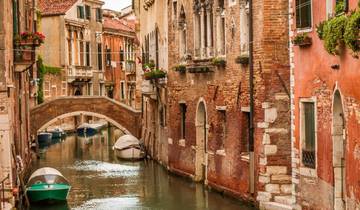
4 days
Discovering Venice
- ✓ Comprehensive Veneto tour
- ✓ Expert local guides included
- ✓ All accommodation arranged
- ✓ Transportation provided

10 days
Dolomites Alta Via 1 – Guided Trek (Most Inclusive, AV1)
- ✓ Comprehensive Veneto tour
- ✓ Expert local guides included
- ✓ All accommodation arranged
- ✓ Transportation provided
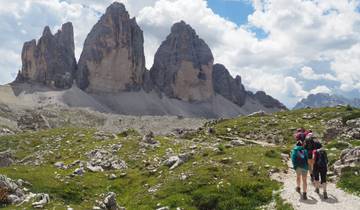
7 days
Dolomites of Cortina Explorer – Self-Guided Hike
- ✓ Comprehensive Veneto tour
- ✓ Expert local guides included
- ✓ All accommodation arranged
- ✓ Transportation provided
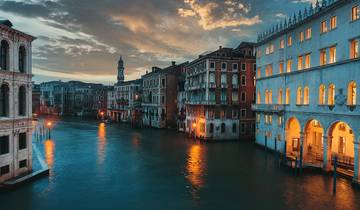
5 days
5-Day Venice the Heart of Italy
- ✓ Comprehensive Veneto tour
- ✓ Expert local guides included
- ✓ All accommodation arranged
- ✓ Transportation provided
Multi-day tour packages powered by TourRadar. Prices and availability subject to change.
Introduction: Treviso as the Veneto’s Best Day-Trip Base in 2026
The case for using Treviso as a base rather than Venice is not merely economic, though the economics are compelling. Hotels in Treviso’s centro storico cost 40–60% less than equivalent properties in Venice, the overnight tourist tax is negligible, and residents walk through a functioning medieval city — canals, arcaded streets, frescoed walls — rather than a theme park version of one. The deeper argument is geographic: Treviso station places travelers at the center of a cultural geography that no single larger city can match.
Within a 90-minute train radius lie two UNESCO World Heritage Sites (Venice and the Palladian Villas), the Prosecco Hills (UNESCO, 2019), Padua’s extraordinary Giotto frescoes (UNESCO, 2021), and Vicenza’s complete Palladian architectural canon. Beyond the headline sites, the Veneto interior holds Bassano del Grappa’s Alpine-edged medieval center, Asolo’s hilltop Renaissance quarter, Castelfranco Veneto’s intact medieval walls and Giorgione altarpiece, and Possagno’s extraordinary Canova Gypsotheca — one of Italy’s most undervisited world-class museums. The question from Treviso is never “where should I go?” but “how many days do I have?”
This guide covers eight primary day-trip destinations with full 2026 transport costs, verified attraction prices, booking requirements, and timing advice. A transport reference table and seasonal planning section follow the individual destination guides. All costs are per person based on verified 2026 prices; accommodation in Treviso is separate and not included in day-trip calculations.
Venice Day Trip from Treviso 2026
Venice from Treviso is an exercise in the extraordinary made routine. The 14–30 minute train journey deposits travelers at Venezia Santa Lucia, one of the most dramatically sited railway terminus buildings in Europe, with the Grand Canal directly outside the exit. For day trippers based in Treviso, Venice becomes what it should be for everyone: a manageable city explored in depth rather than a triage operation against crowds and cost.
Getting to Venice from Treviso 2026
Regional trains (Regionale and Regionale Veloce) depart Treviso Centrale for Venezia Santa Lucia continuously throughout the day, with up to 60+ services from early morning to late night. Journey times range from 14 minutes on faster services to 30 minutes on all-stops trains. One-way tickets cost €3–5 per person; tickets are purchased at station machines or via the Trenitalia app with no booking required on regional trains. The first service departs around 5:00 AM; the last return from Venice runs past 11:00 PM. Treviso Centrale station is a short walk from the city center.
Venice 2026 Day-Tripper Fee — Essential Planning
Venice’s access fee system applies on 60 designated peak dates between April 3 and July 26, 2026, covering most Fridays, Saturdays, Sundays, and some holiday-adjacent weekdays during spring and early summer. The fee is €5 per person if registered at cda.veneziaunica.it at least 4 days before the visit, or €10 for registrations within 3 days. The system operates between 8:30 AM and 4:00 PM; visitors who arrive after 4:00 PM on a fee day enter without charge. Children under 14 are fully exempt. The 60-day list covers April in full from the 3rd, all weekends through May, June, and July to the 26th. Check the official portal for the exact calendar before booking a Treviso-to-Venice day trip in spring or summer — a Tuesday or non-holiday Monday will always be free.
What to See in Venice on a Day Trip 2026
St. Mark’s Square remains the obligatory orientation point. The Basilica di San Marco charges €12 per adult for entry from 2026 (check the official website at basilicasanmarco.it for current rates), with an additional €24 for combined Museum and Pala d’Oro access. The Campanile alongside offers Venice’s finest aerial view for €18. For the Doge’s Palace, standard adult tickets cost €35 per person; advance online booking through the official MUVE portal (muve.it) reduces the price to approximately €25 when purchased 30+ days ahead. A combined Museum Pass covering the Doge’s Palace and five other civic museums costs €40. First-time visitors benefit most from the Doge’s Palace, which justifies its ticket price across four hours of rooms, the Bridge of Sighs corridor, and the extraordinary Sala del Maggior Consiglio. The Basilica’s interior — among the most opulent in Christendom — rewards an equal amount of time.
Beyond the main sights, Venice rewards aimless walking to a degree unmatched in any European city. The Castello and Cannaregio neighborhoods northeast of St. Mark’s carry far fewer crowds than the San Marco tourist corridor. The Rialto fish and produce market (open mornings, closed Sunday) provides a vivid counter-image to tourist Venice. Cicchetti — small bar snacks eaten standing at bacari wine bars — are the cheapest and most authentic food experience in the city, priced at €1.50–3.50 per piece with a glass of ombra (local wine) at €1–2.
Getting Around Venice
The vaporetto (water bus) network covers Venice comprehensively. A single ticket valid for 75 minutes costs €9.50. For visitors making three or more journeys in a day, the 24-hour pass (€25) offers better value; most day trippers from Treviso spending a full day in Venice will find the 24-hour pass worth purchasing on arrival. Tickets are sold at ACTV booths at the station and at self-service machines; validate the ticket or pass by tapping the reader at the dock entrance before boarding. Line 1 runs the full length of the Grand Canal and is the most scenic route; Line 2 covers the Grand Canal faster with fewer stops. For a day trip focusing on St. Mark’s, the Rialto, and the Dorsoduro, a single journey from Santa Lucia to San Marco and return accounts for most vaporetto needs.
Venice Day Trip Costs 2026 — Per Person
A budget day in Venice with return train travel from Treviso, cicchetti and a light lunch, and no paid attraction entry costs €25–30 per person (add the €5 day-tripper fee on peak dates). A mid-range day including the Doge’s Palace (advance booking), the 24-hour vaporetto pass, and a sit-down lunch at a trattoria costs €100–130 per person. A full experience day adding the Basilica entry, the Campanile, and a restaurant meal with wine reaches €140–170 per person. Return train from Treviso: €8–10. Day-tripper fee (peak dates only): €5 if booked 4+ days in advance. The biggest single cost variable is the Doge’s Palace — it can be skipped on a repeat visit, but first-timers should budget for it. Check the official site at palazzoducale.visitmuve.it for current admission rates.
Prosecco Hills Day Trip 2026 — Conegliano and Valdobbiadene
The Prosecco Hills of Conegliano and Valdobbiadene were inscribed as a UNESCO World Heritage Site on July 7, 2019, recognized under Criterion (v) as a viticultural cultural landscape shaped by human interaction with nature over several centuries. The site encompasses 20,334 hectares of hillside vineyards in the Province of Treviso, characterized by the distinctive ciglioni — narrow grassy terraces supporting individual vine plots — and the checkerboard pattern created by rows of vines running both parallel and vertical to the slopes. The UNESCO inscription covers the strip of hogback hills running from Valdobbiadene east to Vittorio Veneto, with Conegliano at its eastern gateway and Valdobbiadene at its western heart.
Getting to the Prosecco Hills from Treviso 2026
Conegliano is the easiest access point for day trippers by rail. Trains run from Treviso Centrale to Conegliano approximately 55 times daily with a journey time of 16–20 minutes; tickets cost €4–5 per person one-way. From Conegliano station, the medieval hill town center and the Consorzio di Tutela del Prosecco DOCG are a short walk. Valdobbiadene — the western anchor of the UNESCO zone — requires either a bus from Conegliano (Dolomiti Bus services the route, approximately 45 minutes) or a car. Travelers wanting to explore the full Prosecco Road between the two towns are best served by a hire car or guided wine tour, which several Treviso-based operators offer.
What to See and Taste in the Prosecco Hills 2026
Conegliano itself merits two to three hours of exploration. The medieval castle and its tower offer sweeping views across the UNESCO landscape; entry to the tower costs €5. The cathedral contains a striking altarpiece by Cima da Conegliano, a native son whose luminous Venetian landscapes were directly inspired by the surrounding hills. The Scuola dei Battuti houses a cycle of 16th-century frescoes rarely visited by tourists. The town’s arcaded streets follow the medieval street plan intact.
Wine is the primary purpose of the Prosecco Hills, and the cantina culture here matches anything in Tuscany for quality and hospitality while remaining comparatively undiscovered by mass tourism. Cantina Bisol in Valdobbiadene, Le Colture near Refrontolo, and the Prosecco DOC visitor center in Conegliano all offer structured tastings; expect to pay €10–20 per person for a guided flight of four to six Prosecco DOCG varieties. The distinction between Conegliano Valdobbiadene Prosecco Superiore DOCG (from within the UNESCO zone) and mass-market Prosecco DOC (made across a much wider area) is significant in quality terms and worth understanding before the first glass.
For those with a car, the Strada del Prosecco — Italy’s first officially designated wine road, established in 1966 — winds through the most photogenic sections of the UNESCO landscape. The hamlet of Rolle near Valdobbiadene offers the steepest and most dramatic ciglioni terracing; Cison di Valmarino to the northeast is a beautifully preserved hill village with a 13th-century castle.
Prosecco Hills Day Trip Costs 2026
A day trip combining the Conegliano train fare, a cantina visit with tasting, and lunch at a local agriturismo or osteria costs €35–75 per person. Return train from Treviso: €8–10. Wine tasting: €10–20. A casual lunch at an osteria or agriturismo in the hills: €20–35. Coffee: €5–8. For wine tourism participants booking a full guided Prosecco Road experience through a Treviso or Venice operator, half-day tours from Treviso run €55–85 per person including transport, guided tastings at two to three producers, and a light lunch. Check official cantina websites for individual tasting reservations, which are advisable in summer and on weekends.
Padua Day Trip from Treviso 2026
Padua is the day trip that humbles expectations. The city is vastly better than its billing as merely “Venice’s neighbor” suggests — it holds one of the most important rooms in Western art, one of the most visited Catholic shrines in Europe, the world’s oldest botanical garden (also UNESCO), and a medieval square culture centered on the Prato della Valle that rivals anything in northern Italy. The Scrovegni Chapel frescoes by Giotto, painted between 1303 and 1305, represent a threshold moment in the history of art: the point at which Western painting discovered spatial depth, emotional individualism, and narrative realism simultaneously. Any serious traveler in the Veneto region should devote a full day to Padua.
Getting to Padua from Treviso 2026
Regional and Regionale Veloce trains connect Treviso Centrale to Padova (Padua) in 40–55 minutes with approximately 80 services daily. Tickets cost €6–7 per person one-way. The journey is direct on most services; no change is required. The Padua station is a short walk from the Scrovegni Chapel, which is the logical first stop of the day.
Scrovegni Chapel Booking and Admission 2026
Booking in advance at cappelladegliscrovegni.it is mandatory for individual visitors — the chapel operates timed-entry sessions of 25 people maximum, with each visit limited to approximately 20 minutes inside the chapel itself (preceded by a 15-minute dehumidification antechamber period). The adult admission fee is €16, which includes entry to the Musei Civici degli Eremitani complex — the Eremitani Museum of archaeological and medieval collections and Palazzo Zuckermann (the latter closed on Mondays). On Mondays when Palazzo Zuckermann is closed, the ticket price reduces to €11. The Scrovegni Chapel opens daily from 9:00 AM to 7:00 PM (last entry 6:45 PM), with extended evening sessions from 7:00 PM to 10:00 PM between March 25 and November 1. The chapel is closed on May 1, December 25–26, and January 1. Last-minute tickets are occasionally available at the Musei Civici box office, but summer and holiday weekend slots sell out weeks in advance. Book as early as possible for peak season visits.
The chapel’s interior covers every wall and the ceiling with 37 narrative scenes from the Life of the Virgin and the Life of Christ, framed by figures of Vices and Virtues along the lower register and the monumental Last Judgment across the entrance wall. Giotto’s revolution here — giving every figure a specific body, a specific emotion, a specific spatial relationship to others — is immediately apparent even to viewers with no art history background. The UNESCO inscription in 2021 as part of the Padua Urbs Picta cycle confirmed what generations of scholars had argued: this is one of the defining cultural achievements of European civilization.
What Else to See in Padua 2026
The Basilica di Sant’Antonio (locally called “Il Santo”) draws millions of Catholic pilgrims annually to the tomb of St. Anthony of Padua, but its Gothic and Byzantine exterior and extraordinary interior treasures reward secular visitors equally. Entry to the main basilica is free, though donations are welcomed. The Donatello bronzes in the Cappella dell’Arca dell’Altare Maggiore — the relief panels depicting miracles of St. Anthony — are among the finest Renaissance bronzes in Italy. The Prato della Valle, five minutes from the basilica, is one of Europe’s largest squares: an elliptical park surrounded by a moated canal with 78 statues of notable figures linked to Padua. The Orto Botanico (botanical garden), founded in 1545 and the world’s oldest university botanical garden still in its original location, was inscribed as a UNESCO World Heritage Site in 1997; adult entry is €10.
Padua’s historic center also contains the extraordinary Palazzo della Ragione (the medieval law court building, entry €6), the adjacent Piazza dei Signori with its Gothic loggia, and the University of Padua — founded 1222, the world’s second oldest continuously operating university — whose anatomy theater (Palazzo Bo) offers tours at €9 per person. For visitors with energy for a long day, Padua can easily fill six to seven hours without repetition.
Padua Day Trip Costs 2026
A focused Padua day with the Scrovegni Chapel, the Basilica, and the Prato della Valle walk costs €50–65 per person. Return train: €12–14. Scrovegni entry: €16. Basilica Sant’Antonio: free. Lunch at a Paduan trattoria near the market: €18–25. Coffee: €5–8. Adding the Orto Botanico (€10) or Palazzo della Ragione (€6) brings the day to €65–80. The Scrovegni Chapel booking website also offers the Urbs Picta Card, a combined pass covering the Scrovegni Chapel and five additional Paduan UNESCO fresco sites; check cappelladegliscrovegni.it for current Urbs Picta pricing.
Bassano del Grappa Day Trip 2026
Bassano del Grappa sits at the confluence of the Alps and the Venetian plain, a city whose profile — the wooden covered bridge, the tight medieval quarter, the mountains framing everything to the north — has a kind of natural drama that no comparable Veneto town achieves. The Ponte Vecchio, also called the Ponte degli Alpini, was designed by Andrea Palladio in 1569 and rebuilt in its current form after World War II by the Alpine infantry regiment whose name it bears. Walking across it with the Brenta rushing below and the snow peaks visible beyond is a sensory experience that photographs cannot adequately capture. The city is also the undisputed capital of Italian grappa — the Nardini distillery has occupied its building at the bridge’s end since 1779, making it the oldest continuously operating grappa producer in Italy.
Getting to Bassano del Grappa from Treviso 2026
Regional trains run from Treviso Centrale to Bassano del Grappa approximately 44 times daily with a journey time of around 55 minutes. Most services require a change at Castelfranco Veneto; check the timetable on trenitalia.com for direct options. Tickets cost €6–8 per person one-way. By bus (La Marca company), the journey is slightly faster at around 46 minutes and costs €7 one-way; buses depart from Treviso bus station adjacent to the train station. A car makes Bassano accessible as part of a circular route combining Asolo and Villa Barbaro (Maser), which is the most rewarding option for this part of the Veneto.
What to See in Bassano del Grappa 2026
The Ponte Vecchio is free to cross and easily takes 30 minutes of exploration on both banks. The adjacent Taverna degli Alpini, occupying a medieval building at the Bassano end of the bridge, contains the Museo degli Alpini, a compact but atmospheric collection of World War I documents, equipment, and photographs relating to the Monte Grappa campaign and the Alpine infantry corps that rebuilt the bridge in 1948. Entry is free or by voluntary donation.
Directly opposite the bridge’s Bassano entrance stands the Nardini Grapperia — the original 1779 distillery still in operation, its copper-clad interior and dark wood botti unchanged in spirit from the 18th century. The Nardini bar serves grappa by the glass to anyone who walks in; this is the most authentic grappa experience available in Italy. Across the square, the Poli Museo della Grappa occupies five rooms of the Palazzo delle Teste with free admission and self-guided exhibits tracing the history of Italian grappa production from portable mountain alambicchi to industrial distillation. A tasting of five Poli products — one of Italy’s finest grappa producers — costs €3.50.
The Museo Civico, housed in a former Franciscan convent surrounding a Gothic cloister, contains Padua-school paintings and the most significant collection of works by Jacopo Bassano — born Jacopo Da Ponte in Bassano around 1515 — one of the great Venetian Renaissance painters. The museum also holds the Canova Salon with neoclassical plaster casts and the Hemingway room documenting the American author’s Red Cross service in Bassano during World War I. Adult entry costs €8; the museum opens Tuesday–Sunday 10:00–19:00. The adjacent Piazza Garibaldi and Via Roma preserve excellent medieval and Renaissance palazzi.
Bassano del Grappa Day Trip Costs 2026
A complete Bassano day — Ponte Vecchio walk, Nardini Grapperia, Poli Museo della Grappa with tasting, and a lunch of grilled meat and polenta at a local osteria — costs €35–65 per person. Return train: €12–16. Poli Museum tasting: €3.50. Museo Civico (optional): €8. Lunch at a Bassano osteria: €15–28. Coffee: €5–8.
Vicenza Day Trip from Treviso 2026
Vicenza is one of the most extraordinary single-architect cities in European history. Andrea Palladio (1508–1580) was born in Padua but spent his working life transforming Vicenza and its surrounding countryside, creating a body of work so influential that it reshaped the architecture of England, France, colonial America, and the entire Western classical tradition. The city was inscribed as part of the UNESCO World Heritage Site “City of Vicenza and the Palladian Villas of the Veneto” in 1994 (reference 712, Criteria i and ii). A day in Vicenza is a day inside the most concentrated expression of one architectural genius’s vision anywhere on earth.
Getting to Vicenza from Treviso 2026
Regional and Regionale Veloce trains connect Treviso Centrale to Vicenza in approximately 60–75 minutes with direct services available throughout the day. Tickets cost €7–9 per person one-way. Services run roughly every 30–60 minutes. The Vicenza station is a 10-minute walk from the Teatro Olimpico and the historic center along Viale Roma.
Teatro Olimpico and the Historic Center 2026
The Teatro Olimpico is Palladio’s final masterpiece and one of the most astonishing built spaces in the world. Commissioned in 1580 by the Accademia Olimpica (the civic learned society that still operates the theater today), the building creates the illusion of an outdoor Roman theater contained within an indoor wooden structure, with a permanent trompe-l’œil stage set depicting the streets of ancient Thebes receding into false perspective. Palladio died before completion; his student Vincenzo Scamozzi finished the stage and painted the perspective backdrops. The theater still operates as a performing venue. Adult individual tickets cost €12; the Vicenza Silver Card (4 museum sights) costs €17; the Vicenza Gold Card covering all 11 civic cultural sites costs €22. The theater opens Tuesday–Sunday, 9:00–17:00 (September–June) and 10:00–18:00 (July–August). Check teatrolimpicovicenza.it for current rates and to confirm scheduled performances and visiting hours.
The Piazza dei Signori centers Vicenza’s civic life around Palladio’s Basilica Palladiana — not a church but the medieval law court building that Palladio encased in two-story loggias between 1549 and 1614, creating the formula (large arch framed between pilasters supporting a smaller arch at each side) that became known as the Palladian motif. The copper-green roof and the regular arcade rhythm of white Vicenza stone are among the most photographed facades in Veneto architecture. The Palladio Museum, housed in the Palazzo Barbarano, provides the best contextual introduction to the architect’s life and methods; adult entry is €13.
Vicenza Day Trip Costs 2026
A focused Vicenza day combining the Teatro Olimpico, a Piazza dei Signori walk, and the Palladio Museum costs €45–80 per person. Return train: €14–18. Teatro Olimpico: €12 (or Silver Card €17 for Teatro + 3 more sites). Palladio Museum: €13. Lunch at a Vicenza trattoria — the city is known for its stockfish (baccalà alla vicentina): €18–30. Coffee: €5–8. The Vicenza Gold Card (€22) offers the best value for culturally ambitious visitors wanting to see multiple sites across the day, including the Palazzo Chiericati art gallery, the Diocesan Museum, and the Gallerie d’Italia collection.
Asolo and Villa Barbaro Day Trip 2026
Asolo is the most beautiful small town in the Veneto — a statement that invites challenge but bears sustained examination. The hilltop position above the Grappa foothills, the arc of Renaissance palazzi around the central piazza, the castle where Caterina Cornaro held her exiled Venetian court, the views north toward the Dolomites: Asolo assembles everything that the term “Italian hill town” promises and rarely delivers. The town’s cultural pedigree is extraordinary — Canova was born 12 kilometers north in Possagno; Robert Browning wrote here; Eleonora Duse died here; Freya Stark photographed here for decades. Combined with a visit to Villa Barbaro (Villa di Maser), the finest Palladian villa in the Veneto province of Treviso, a half-day in this corner of the Marca Trevigiana constitutes one of the best possible uses of a day in northern Italy.
Getting to Asolo and Maser from Treviso 2026
Asolo has no direct train connection and is best reached by a combination of regional train and bus, or by car. By public transport: take a regional train from Treviso Centrale to Castelfranco Veneto (25–30 minutes, approximately €3–5) then a La Marca bus to Asolo (approximately 30 minutes). Alternatively, the train to Montebelluna (30 minutes from Treviso, approximately €5) connects to buses for both Asolo and Maser. Villa Barbaro (Villa di Maser) is served by buses from Montebelluna station along the SP84 road; the stop “Bivio Maser” is approximately 1.5 km from the villa. By car, the circuit Treviso → Asolo → Maser → Treviso is approximately 80 km and takes one comfortable day. A rental car is the most practical option for combining Asolo and Maser.
Asolo — What to See and How Long to Allow
Asolo’s centro storico is compact and entirely walkable. The Rocca (castle) at the hilltop offers some of the finest panoramic views in the Veneto, taking in the Po Plain to the south, the Prosecco Hills to the east, and the Alpine Grappa massif to the north. The Museo Civico in the Palazzo della Ragione holds a collection of locally significant art including works associated with Giorgione and Caterina Cornaro; adult entry is €4. The Teatro Duse — named after Eleonora Duse who is buried in Asolo’s cemetery — is a perfectly preserved 18th-century theater that operates an annual summer season. A morning walk through Asolo, including the Rocca, the piazza, a coffee at one of the terrace cafés with Dolomite views, and the scenic lane walk to the lower gate requires two to three hours.
Villa Barbaro (Villa di Maser) 2026
Villa Barbaro is the meeting point of two geniuses: Palladio designed the architecture between approximately 1554 and 1560 for the brothers Daniele and Marcantonio Barbaro, Venetian patricians who wanted a working agricultural estate with a representation villa at its center. Paolo Veronese painted the interior — every wall and ceiling of the noble floor — between 1560 and 1562, producing what is widely considered the finest surviving fresco cycle of the entire Venetian Renaissance. The combination of Palladio’s rigorous classical planning with Veronese’s exuberant trompe-l’œil illusionism — rooms where painted servants peer around false doorways and painted figures occupy painted loggias — creates an interior unlike any other in Italy.
The villa is a UNESCO World Heritage Site as part of the Palladian Villas of the Veneto inscription (1994, extended 1996, Criteria i and ii). It remains a private family home and working agricultural estate, which adds an atmosphere of authentic inhabitation missing from state-owned museum villas. Adult tickets cost €12; the villa opens April–October, Tuesday–Sunday 10:00–18:00 (last entry 17:30); it is closed on Mondays and Easter Sunday. Check villadimaser.it for current pricing and seasonal variations. The adjacent Casa Diamante farmhouse offers guided wine tastings of the estate’s Asolo Prosecco Superiore DOCG and other wines — a natural conclusion to a Villa Barbaro visit.
Asolo + Villa Barbaro Day Trip Costs 2026
A full Asolo and Maser day combining bus/train transport, Asolo museum entry, Villa Barbaro admission, a wine tasting, and lunch in Asolo costs €45–70 per person. Transport (train + bus return from Treviso): €10–14. Asolo Museo Civico: €4. Villa Barbaro: €12. Wine tasting: €10–15. Lunch at a restaurant or agriturismo in Asolo: €18–30. Coffee: €5–8. By car, fuel costs are negligible for the 80 km circuit; parking in Asolo (signposted lots below the centro storico) costs approximately €2–4 per hour.
Castelfranco Veneto and Cittadella Day Trip 2026
Castelfranco Veneto is entirely enclosed within 14th-century brick battlements — moated, turreted, and almost absurdly well-preserved for a working Venetian market town. Inside the walls, the cathedral holds the Castelfranco Altarpiece by Giorgione (Giorgio da Castelfranco, born here in 1477–78), one of the most enigmatic and technically innovative paintings of the entire Renaissance. The adjoining Casa Giorgione museum provides the scholarly context; together they constitute a 90-minute art experience that rewards careful attention. A 30-minute bus ride north brings travelers to Cittadella, whose circular medieval walls — walkable in their entirety — represent one of the best-preserved medieval fortifications in northern Italy.
Getting to Castelfranco Veneto from Treviso 2026
Castelfranco Veneto has a train station approximately 10 minutes’ walk from the medieval walls. Regular trains run from Treviso Centrale in approximately 30–40 minutes; regional tickets cost €3–5 per person one-way. The station also sits on the Treviso–Bassano and Treviso–Padua lines, making Castelfranco Veneto an ideal combined stop when day-tripping to Bassano. For Cittadella: buses (La Marca company) connect Castelfranco to Cittadella in approximately 20–25 minutes.
What to See in Castelfranco Veneto 2026
The Cathedral of San Liberale (entry free) contains the Castelfranco Altarpiece on the wall of the Costanzo Chapel. The painting, dated to approximately 1504, depicts the Madonna enthroned between St. Francis and St. George in a landscape setting of extraordinary atmospheric depth — a technique Giorgione introduced to Venetian painting and that directly influenced his student Titian. The landscape background, painted with visible brushstrokes and shifting light, anticipates plein-air painting by three centuries. Booking is not required; the cathedral is open during standard visiting hours.
The Casa Giorgione museum, directly adjacent to the cathedral, occupies the house where the painter worked. Adult tickets cost €5, reduced €3, family €10; hours are Tuesday–Thursday 10:00–13:00, Friday–Sunday 10:00–18:00, closed Monday. Three floors of permanent exhibition cover Giorgione’s biography, the cultural world of 15th–16th century Treviso under Venice’s dominion, and a reproduction of the Castelfranco Altarpiece with technical analysis. The museum also displays the celebrated Fregio di Giorgione — a fragment of fresco painted in the house itself, one of the few surviving works attributable directly to the artist’s hand.
The medieval walls of Castelfranco can be walked or cycled along their perimeter in approximately 30 minutes; the moat garden beneath the walls is a pleasant picnic spot. Villa Emo, a Palladian masterpiece designed by Palladio around 1559 and located 4 km from Castelfranco Veneto at Fanzolo di Vedelago, is part of the UNESCO Palladian Villas inscription. Adult tickets cost €8; opening hours vary by season. Check villaemo.org for 2026 schedules.
Castelfranco Veneto Day Trip Costs 2026
A Castelfranco day combining the cathedral altarpiece, Casa Giorgione, and a pleasant lunch in the historic center costs €25–45 per person. Return train: €6–10. Casa Giorgione: €5. Cathedral: free. Lunch at a trattoria: €15–22. Coffee: €4–8. Adding Villa Emo (€8) and transport to Fanzolo brings the day to €35–55.
Hidden Gem Day Trips from Treviso 2026
Beyond the flagship destinations, the Treviso province itself contains several sites that combine exceptional quality with near-zero tourist crowds — a rare combination in northern Italy.
Possagno and the Canova Gypsotheca 2026
Antonio Canova (1757–1822), the supreme sculptor of European Neoclassicism, was born in Possagno, a village 35 km northwest of Treviso. He designed its neoclassical Tempio Canoviano — modeled on the Roman Pantheon — as his own mausoleum. More important is the Museo Gypsotheca, which holds every plaster model Canova produced in preparation for his marble sculptures. Standing among hundreds of these ghostly white forms — the Graces, the Napoleons, the Venuses, the funerary monuments — in the cavernous basilica-shaped hall (extended in 1957 by Carlo Scarpa in a masterpiece of modernist museum architecture) is one of the most overwhelming experiences in Italian art. Adult entry costs €13; reduced €6; the museum opens Tuesday–Friday 9:30–18:00, Saturday–Sunday 9:30–19:00 (check museocanova.it for seasonal variations). Possagno is reached by train to Bassano del Grappa followed by a bus to Possagno (approximately 30 minutes), or directly by car from Treviso (approximately 45 minutes). A combined Bassano del Grappa + Possagno day is entirely feasible by public transport and represents one of the finest cultural days available from Treviso.
Vittorio Veneto and the Monte Grappa Foothills 2026
Vittorio Veneto, created in 1866 by the merger of two medieval towns, gave its name to the decisive WWI battle (October–November 1918) that ended the Austro-Hungarian war effort. The Museo della Battaglia documents the campaign comprehensively; adult entry costs €5. The town itself has a pleasant Gothic-Renaissance historic center and serves as the gateway to the Ceneda Dolomites. Train from Treviso: approximately 40 minutes, €5–7 one-way. A day combining Vittorio Veneto and the nearby Cansiglio plateau (a beech forest plateau above 1,000 meters) works well for travelers combining cultural heritage with natural landscape. No entry fees for the Cansiglio forest; a car is required.
Oderzo — Roman Opitergium 2026
Oderzo preserves the complete rectangular street plan of the Roman city of Opitergium beneath its medieval surface, with sections of mosaic floor and Roman masonry visible in the archaeological museum and under glass in several street-level installations. The Museo Civico Eno Bellis holds an exceptional collection of Roman bronze age artifacts and local antiquities; entry is free. The arcaded central piazza with its 16th-century Loggia and Gothic cathedral makes Oderzo one of the most perfectly proportioned small piazze in the Veneto. Bus from Treviso: approximately 30–40 minutes, €3–4 one-way. A half-day from Treviso is sufficient; combine with the natural wine estates of the Piave DOC zone for a long day.
Multi-Stop Day Trip Routes from Treviso 2026
Several of the destinations above combine naturally into single-day circuits, particularly for travelers with a rental car.
The Palladian Triangle: Bassano + Asolo + Maser
By car (approximately 90 km round circuit): Depart Treviso by 9:00 AM, arrive Bassano del Grappa for the Ponte Vecchio and Nardini grappa at 9:45 AM (1.5 hours). Drive to Asolo (25 minutes) for the castle, piazza, and lunch at a hilltop restaurant (2 hours). Afternoon drive to Villa Barbaro (Maser, 10 minutes) for a 2-hour visit including Palladio’s architecture and Veronese’s frescoes. Return to Treviso by 6:00–7:00 PM. Per-person cost: approximately €50–80 (Bassano grappa tasting €3.50 + Villa Barbaro €12 + Asolo museum €4 + lunch €25–35 + coffee + car costs).
The Giorgione Route: Castelfranco + Fanzolo + Asolo
By bus/train or car: Castelfranco Veneto in the morning for the altarpiece and Casa Giorgione (2 hours); bus to Villa Emo at Fanzolo di Vedelago (30 minutes each way, €8 entry, 1.5 hours); return to Castelfranco for lunch; afternoon bus to Asolo for the hilltop castle and views (45 minutes each way). A car simplifies the connections considerably. Per-person cost: approximately €35–60.
The UNESCO Wine Day: Conegliano + Valdobbiadene Prosecco Hills
By train to Conegliano then car or guided tour through the hills: Morning in Conegliano town (castle, cathedral, 2 hours); mid-morning drive through the Prosecco Hills via Rolle to Valdobbiadene (45 minutes by car); cantina visits in Valdobbiadene with tasting (2 hours, €15–20 per tasting); lunch at an agriturismo in the hills (€25–35); afternoon return via a different route through the UNESCO landscape. Per-person cost: approximately €50–80 including lunch and tastings (car fuel negligible for the 60 km circuit).
Day Trip Transport from Treviso 2026 — Complete Reference Guide
All routes depart from Treviso Centrale station unless otherwise noted. Prices are per person, one-way, for regional Trenitalia trains; regional trains require no advance booking and tickets can be purchased at station machines or the Trenitalia app up to departure.
- Venice (Venezia Santa Lucia): €3–5 one-way, 14–30 minutes, 60+ trains daily, first service ~5:00 AM, last return from Venice ~11:30 PM
- Padua (Padova): €6–7 one-way, 40–55 minutes, 80+ trains daily including frequent Regionale Veloce services
- Vicenza: €7–9 one-way, 60–75 minutes, multiple direct services daily
- Bassano del Grappa: €6–8 one-way, approximately 55 minutes, 44 trains daily (most via change at Castelfranco Veneto)
- Conegliano (Prosecco Hills gateway): €4–5 one-way, 16–20 minutes, 55 trains daily
- Castelfranco Veneto: €3–5 one-way, 25–35 minutes, multiple daily services
- Montebelluna (Asolo/Maser gateway): approximately €5 one-way, 30 minutes, regular services
- Vittorio Veneto: approximately €5–7 one-way, 40 minutes, regular services
For regional trains, Trenitalia’s “Super Economy” advance-purchase fare is worth using for popular services on busy dates (weekend mornings toward Venice particularly). Regional passes such as the Eurail Italy Pass provide unlimited regional train travel and are cost-effective for visitors planning 5+ days of day trips from a single Veneto base. Validate your ticket or pass before boarding at any regional train platform validator — regional train conductors consistently check tickets.
Bus services from Treviso bus station (adjacent to the train station) cover Asolo, Possagno, parts of the Prosecco Hills, and several destinations not well-served by rail. La Marca is the primary regional bus company for the Treviso province; schedules are available at lamarcastravels.it. For Oderzo, buses from Treviso run frequently throughout the day.
Seasonal Timing and 2026 Crowd Strategy
The single most useful piece of advice for day trips from Treviso in 2026 is to schedule Venice visits on non-peak days. The 60-day fee calendar runs April 3 through July 26, covering most spring weekends. A Venice visit on a Tuesday or Wednesday in May — free of the access fee, with shorter queues at the Doge’s Palace, and with the Rialto market still active — is categorically better than a Saturday visit despite identical train access.
Spring (April–June 2026)
Spring is the best season overall for day trips from Treviso. Temperatures range from 15–25°C, light is excellent for photography, and the Prosecco Hills are in full vineyard bloom by late April. The Venice access fee operates throughout this period, so weekday scheduling is particularly valuable. The Scrovegni Chapel is heavily booked in April and May — book 3–4 weeks ahead for Easter period visits. Villa Barbaro and other garden-adjacent sites are at their most beautiful in May and early June.
Summer (July–August 2026)
Peak tourist season with maximum crowds at Venice, Padua, and Vicenza. July days at Venice and the Doge’s Palace require early starts — the 9:00 AM opening of the palace allows at least two hours before the midday crowd peaks. The Venice access fee applies through July 26; after that date the summer continues fee-free. August visitors benefit from the exodus of Italian tourists on Ferragosto (August 15) and the weeks surrounding it, when many Italian families are on holiday and day-trip crowds at non-Venetian destinations decrease. Bassano, Asolo, and the Prosecco Hills are all at their most summery and pleasant in August, with temperatures in the 25–32°C range.
Autumn (September–November 2026)
The finest season for the Prosecco Hills — harvest runs September through October, and the landscape’s vineyard colors peak in late October. Venice access fees end after July; September and October are excellent months for Venice with manageable crowds and ideal walking weather. The Scrovegni Chapel’s evening sessions continue through November 1. Villa Barbaro closes on Mondays throughout the year; its October weekday slots see the fewest visitors of the open season.
Winter (December–March 2026)
Low season means substantially reduced crowds at Venice, with significantly lower hotel rates in Treviso. The Scrovegni Chapel and the Doge’s Palace are fully open year-round. Villa Barbaro operates reduced winter hours (weekends only in November–December; specific January and February dates listed on villadimaser.it). The Prosecco Hills are dormant but atmospheric under winter fog, and Bassano’s hot chocolate — the local café tradition of cioccolata calda densa — is best experienced in February. Venice’s Carnevale falls in mid-to-late February 2026; the city sees its largest single-week crowds of the year during this period.
Money-Saving Strategies for 2026 Day Trips from Treviso
The most effective cost-control strategy for Veneto day trips is destination sequencing. The Castelfranco Veneto–Cittadella–Bassano circuit delivers exceptional value per euro of cultural experience, and the three towns together cost approximately €60–75 per person for the full day including transport, two museum entries, a picnic lunch, and coffee. Compare this to a Venice Doge’s Palace day (€100–130 per person) and the sequencing logic becomes clear: spend budget days on the high-value secondary destinations and reserve the expensive Venice days for when the full Doge’s Palace + vaporetto experience is planned.
Advance Booking Discounts 2026
The Doge’s Palace advance booking on the official MUVE website (muve.it) saves approximately €10 per person against walk-up pricing when booked 30+ days ahead. The Scrovegni Chapel has no significant advance discount but booking 2–3 weeks ahead is a practical necessity rather than a cost issue in peak season. Venice’s day-tripper fee is €5 in advance versus €10 last-minute — a 50% saving that rewards anyone who plans their itinerary before arrival.
City Cards and Combined Passes 2026
Vicenza’s Gold Card (€22) covering 11 cultural sites over 12 days represents exceptional value for visitors spending a full day in Vicenza. At €22 for 11 sites versus €12 for the Teatro Olimpico alone plus €13 for the Palladio Museum plus individual entries elsewhere, the Gold Card pays off with a third site visit. The Padua Urbs Picta Card (check cappelladegliscrovegni.it for 2026 pricing) covers the Scrovegni Chapel and five additional Paduan UNESCO fresco sites — useful for visitors spending multiple days in Padua.
Free Sights and Admission-Free Days 2026
Several of the best experiences from Treviso are completely free: the Ponte Vecchio in Bassano, the exterior and cloisters of the Basilica di Sant’Antonio in Padua, the Cathedral altarpiece in Castelfranco Veneto, the Prosecco Hills landscape itself, and the Asolo hilltop views. Venice’s first Sunday of every month offers free entry to many state-owned museums including those in the Gallerie dell’Accademia system — check the official Italian Ministry of Culture schedule, as this program’s continuation into 2026 should be confirmed at beniculturali.it. Italian state museums also offer free entry to EU citizens under 18 year-round.
Cicchetti vs. Restaurant Lunches
In Venice, replacing a sit-down restaurant lunch with cicchetti at a bacaro reduces the food cost from €30–40 to €12–18 per person. Outside Venice, the Veneto’s osteria culture — fixed-price working lunches (pranzo di lavoro) at €12–18 for two courses, bread, and water — operates in Bassano, Vicenza, and Padua from noon to 2:30 PM on weekdays. These lunch menus represent some of the best-value eating in Italian food culture and are entirely invisible to tourists who book through travel websites.
Frequently Asked Questions — Treviso Day Trips 2026
How many day trips can I realistically do from Treviso in a week?
Five or six day trips fit comfortably into a seven-night stay without fatigue, leaving one or two days for Treviso itself — a medieval city with excellent frescoed churches, a Saturday market, and a distinctive canal culture that deserves its own unhurried half-day. A typical week combines Venice (1 day), Padua (1 day), one hill-town circuit (Bassano or Asolo/Maser), one wine-landscape day (Prosecco Hills), and Vicenza. The sixth day works well as Castelfranco Veneto or Possagno depending on interests.
Is Venice worth visiting as a day trip, or should I stay overnight?
Venice from Treviso is one of the best day-trip configurations in Europe precisely because the 14–30 minute train journey allows an early start and late return. First-time visitors who want to see the Doge’s Palace, St. Mark’s Basilica, the Grand Canal, and the Rialto can accomplish all of this in 10–12 hours from Treviso. Overnight stays add the city’s quieter late-evening atmosphere after day-trippers leave — the period from 7:00 PM to midnight in Venice is categorically different from the daytime crush — but the costs (hotels start at €200–400 per night in summer) are difficult to justify for visitors already well-positioned in Treviso.
Do I need a car for day trips from Treviso?
A car is only required for specific circuits — the Bassano + Asolo + Maser triangle, deep exploration of the Prosecco Hills beyond Conegliano station, Possagno without the bus connection, and Villa Emo at Fanzolo. All major destinations (Venice, Padua, Vicenza, Bassano, Conegliano, Castelfranco, Vittorio Veneto) are accessible by regional train without a car. For travelers who want to combine multiple hill-town or villa destinations in a single day, a car hire for one or two days is a practical addition. Treviso has several car hire outlets in the station area; advance booking in summer is advisable.
What is the single best day trip from Treviso for an art lover?
Padua’s Scrovegni Chapel, for which advance booking at cappelladegliscrovegni.it is mandatory. The 20-minute experience inside the chapel — standing within Giotto’s complete fresco cycle, which covers every surface from floor level to the blue starfield ceiling — is the most concentrated encounter with great art available from Treviso. Follow the chapel visit with the Basilica di Sant’Antonio’s Donatello bronzes and an afternoon at the Palazzo Bo anatomy theater for a full art history day at €55–70 per person. The Canova Gypsotheca in Possagno runs a close second for sculpture enthusiasts.
How do I book the Scrovegni Chapel for 2026?
Book directly at cappelladegliscrovegni.it — it is the only booking channel. Entry is by timed slot with a maximum of 25 visitors per session; the online system shows real-time availability. Booking opens 6 months ahead of the visit date. For peak season visits (April–October, weekends, Italian holidays), book 3–4 weeks ahead minimum; Easter week and late May/June slots sell out in days. The €16 adult ticket covers the Musei Civici degli Eremitani complex for the same day, so combine the Chapel visit with the Eremitani galleries’ medieval painting collection.
What is the best day of the week for a Venice day trip from Treviso?
Tuesday through Thursday offer the strongest combination of advantages: no weekend premium crowds, no Venetian school excursion groups (concentrated on Fridays), and the Rialto fish market (closed Sunday) is fully operational. On the 60 access-fee dates (mostly Fridays, Saturdays, and Sundays between April and July), a midweek visit saves the €5–10 fee entirely. The Doge’s Palace queue is shortest between 9:00–10:00 AM and after 4:00 PM on any day of the week.
Is the Prosecco Hills UNESCO site worth a day trip without a car?
Yes, with the right expectations. Conegliano station deposits travelers within walking distance of the UNESCO landscape gateway, the medieval hill town, and several cantina tasting rooms. The town itself — castle, cathedral with Cima da Conegliano altarpiece, arcaded streets — provides a satisfying half-day. The deep hill landscape around Rolle and the Valdobbiadene vineyards requires a car or a Dolomiti Bus service to Valdobbiadene (approximately 45 minutes each way). For wine tourism specifically, guided Prosecco Road tours departing from Treviso include transport and cost €55–85 per person for a half-day.
Can I combine Bassano del Grappa and Asolo in one day by public transport?
It is possible but requires careful timing. Take an early train from Treviso to Bassano (approximately 6:00–7:00 AM departure), spend 2.5–3 hours in Bassano, then take a bus toward Asolo via Montebelluna (connections depend on La Marca timetables, approximately 45–60 minutes). Spend 2 hours in Asolo, then return by bus to Montebelluna and train to Treviso. The main risk is bus frequency — La Marca services between Bassano/Montebelluna and Asolo run approximately every 1–2 hours; check lamarcastravels.it for exact 2026 timetables before planning. By car, the same circuit takes 30 minutes in total driving time and allows Villa Barbaro (Maser) as a third stop.
What is the cheapest day trip possible from Treviso?
Castelfranco Veneto, where a complete and culturally satisfying day costs as little as €25–30 per person. Return train: €6. Cathedral altarpiece (free). Casa Giorgione: €5. Picnic lunch from the town’s market: €10–12. Coffee: €4. The medieval walls walk and moat gardens add another hour of free exploration. On an even tighter budget, Oderzo by bus (€6–8 return) with the free Museo Civico Eno Bellis and the Roman street plan walk costs under €20 for the full day including a picnic lunch.
Are there guided day trips from Treviso to the main destinations in 2026?
Several operators based in both Treviso and Venice offer guided day trips or small-group excursions covering the Prosecco Hills wine route, the Palladian villa circuit, and Venice itself. Prosecco Hills half-day tours from Treviso with transport and cantina visits run approximately €55–85 per person. Full-day Palladian villa tours (Asolo + Maser or Vicenza + Villas) range €80–120 per person including guide, transport, and museum entry. Venice guided walking tours, booked separately from transport, start at approximately €25–35 per person for a 2-hour introduction. Independent exploration by regional train is cheaper for all destinations except the Prosecco Hills deep interior and the multi-villa circuits requiring a car.