Peru is famous for its rich culture and stunning nature. It offers many sustainable tourism options. Eco-lodges and community-based tourism are key, helping to protect the environment and support locals.
Traveling responsibly in Peru means staying on trails, not touching ancient stones, and respecting local people. This makes it a top choice for eco-tourism and responsible travel.
We aim to offer detailed, expert travel experiences. These mix cultural learning with comfort, promoting sustainable tourism. By choosing these options, travelers help protect Peru’s beauty and support local economies.
Peru’s varied landscapes and lively culture make it perfect for unique, enriching trips. Sustainable tourism helps ensure this amazing country stays a treasure for future generations.
Our company leads in sustainable tourism, offering guided trips that blend cultural learning with comfort. These trips promote responsible travel. By choosing us, travelers help preserve Peru’s natural and cultural riches, supporting local economies.
Peru’s diverse landscapes and vibrant culture make it ideal for memorable journeys. Sustainable tourism ensures this incredible country remains a treasure for generations to come.
Key Takeaways
- Peru offers a wide range of sustainable tourism experiences, including eco-lodges and community-based tourism.
- Responsible travel practices are essential for preserving the country’s unique environment and supporting local communities.
- Sustainable tourism in Peru involves practices such as keeping on the trail, not touching the stones, and respecting local communities.
- By choosing sustainable tourism options, travelers can contribute to the preservation of Peru’s natural and cultural resources, while also supporting local economies.
- Embracing sustainable tourism is essential for ensuring that Peru remains a treasure for generations to come.
- Sustainable tourism experiences in Peru include the Belmond Andean Explorer, the KM104 hike to Machu Picchu, and the Amazon River cruise experience.
- Contact us for a comfortable and personalized itinerary (Free Service)
Understanding Sustainable Tourism in Peru
Peru is known for its rich culture and stunning nature. But, more tourists mean worries about the environment and local people. Sustainable tourism helps by making travel better for both.
In Peru, sustainable tourism means caring for nature and supporting local people. It’s about eco-tourism, community projects, and traveling responsibly. This way, tourists help protect Peru’s beauty and culture.
Here are some examples of sustainable tourism in Peru:
- Community-based tourism projects, where tourists live with local families and join in on traditions.
- Eco-lodges, which are green and help protect the environment.
- Responsible travel operators, who follow sustainable practices and help local communities.
Choosing sustainable tourism options helps the environment and local people. It also makes travel more meaningful. Our company mission is to offer travel experiences that are both cultural and comfortable, while being sustainable.


Traditional Andean Homestays: Living with Local Communities
Traveling is about immersing yourself in local culture. What’s better than staying with Andean communities in traditional homestays? This way, you get to see their daily life and traditions. Plus, it supports community-based tourism.
Homestays are cheaper than mid-range hotels, saving you about 30%. They also let you dive into Andean traditions and daily life. It’s a unique and enriching experience.
Some perks of community-based tourism include:
- Supporting local economies and promoting sustainable development
- Experiencing authentic local culture and traditions
- Building meaningful relationships with local communities
The World Tourism Organization says tourism boosts cultural exchange and understanding. By staying in homestays and joining community-based tourism, you help preserve local cultures. You also make unforgettable memories.
| Accommodation Type | Cost Reduction | Cultural Immersion |
|---|---|---|
| Homestays | 30% | High |
| Mid-range Hotels | 0% | Low |
Eco-Lodges in the Amazon Rainforest
Deep in the Amazon rainforest, eco-lodges offer a special chance for wildlife observation and community-led tours. These places are built to be green and let you dive into the Amazon’s beauty. They also help protect the environment. The Amazon is full of life, with over 50,000 plants and about 1,700 bird species.
The Inkaterra Reserva Amazonica is a great example. It’s near the Tambopata National Reserve in Peru. This lodge doesn’t use single-use plastics and works to reduce carbon emissions. A part of your stay helps fund research and conservation in Peru.
- Private thatched-roof cabanas and rooms in Casa Grande
- Canopy Walkway with hanging bridges suspended nearly 100 feet above ground
- Dining and sleeping options available more than 70 feet above the forest floor in the Canopy Treehouse
- Community-led tours and wildlife observation programs
| Eco-Lodge | Location | Features |
|---|---|---|
| Inkaterra Reserva Amazonica | Peruvian Amazon | Carbon neutral, community-led tours, wildlife observation |
Sacred Valley: Agricultural Tourism and Ancient Traditions
The Sacred Valley is a special place that mixes agricultural tourism and cultural immersion. It has rich soil and a great climate for farming. Visitors can help with planting and harvesting and learn about local farming ways.
This area is also rich in ancient traditions. Places like the Moray terraces show how people experimented with crops at different heights. The Maras salt evaporation ponds are another piece of history, used since Inca times. These spots give a peek into the past and the cleverness of the people.
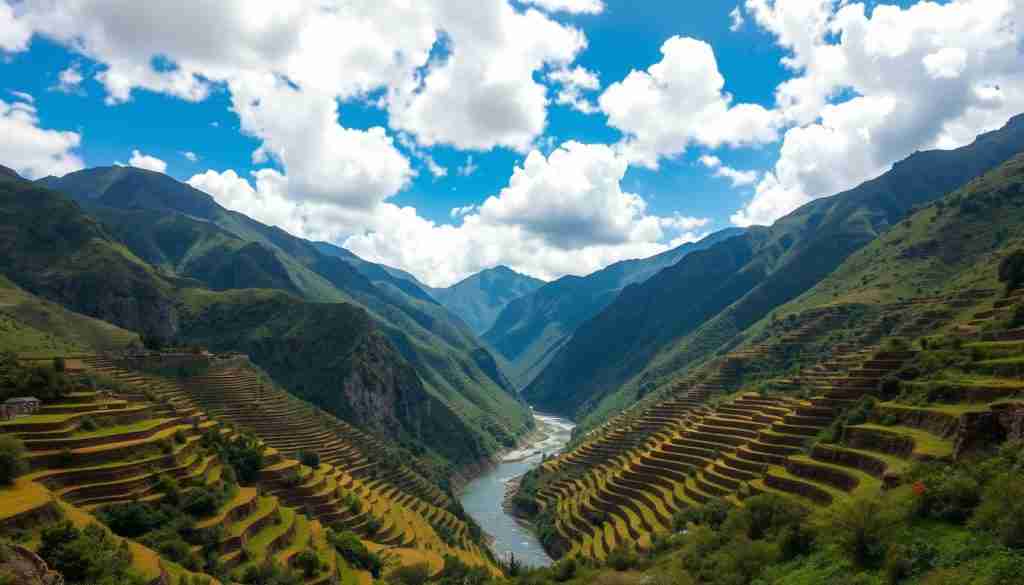
Visitors can dive into the local culture by doing agricultural tourism activities. They can take farming and cooking classes. They can also check out local markets and try foods like corn, potatoes, and quinoa. The Sacred Valley is a place where you can connect with nature, learn about local life, and see the rich cultural heritage.
Some fun activities in the Sacred Valley include:
- Farming and crop cultivation
- Cooking classes and traditional food tastings
- Visiting local markets and trying traditional products
- Learning about the region’s history and cultural heritage
In summary, the Sacred Valley is a unique spot for agricultural tourism, cultural immersion, and ancient traditions. Visitors can experience local life, learn about history and culture, and connect with nature in a deep way.
Would you like to book a custom Package Tour to Machu Picchu? Please fill-out our below trip planner and we will respond promptly with our best offer!Sustainable Trekking Adventures on the Inca Trail
For those looking to dive deep into Peru, the Inca Trail is a great choice. It offers stunning views of the Andes and ancient ruins to explore. It’s important to pick tour operators who care about the environment and treat workers fairly.
Here are some tips for trekking sustainably on the Inca Trail:
- Support local porters and communities with fair pay and respect.
- Reduce waste and protect nature by camping and hiking responsibly.
- Respect the ancient sites and follow local rules.
Choosing the right tour operators and hiking wisely helps preserve the Inca Trail. It makes the journey better and supports local people and culture.
The Inca Trail is a unique spot for trekking, with its rich history and beautiful scenery. By traveling responsibly, we protect this place for others to enjoy in the future.
| Trek Option | Duration | Distance |
|---|---|---|
| Classic Inca Trail | 4 days | 26 miles |
| 1-day Inca Trail hike | 1 day | 11.7 km (7.3 miles) |
Community-Based Tourism in Lake Titicaca
Community-based tourism in Lake Titicaca is a special way to cultural immersion and responsible travel. It lets travelers support local communities and see how people live in the Andean region. Lake Titicaca travel tips help plan a trip and enjoy it fully.
Homestays, community-led tours, and traditional cooking classes are examples of this tourism. They let travelers meet locals, learn about their ways, and help the local economy. Companies like Aracari offer luxury and community-based tourism experiences, making travel responsible and sustainable.
Travelers can join the Llama Pack Project, which uses llamas for trekking and helps small villages. They can also visit Andean Lodges, owned by Quechua communities, for luxury trekking with llamas.

Choosing community-based tourism helps the local community and environment. It also lets travelers experience Lake Titicaca’s culture and beauty. This way of traveling is responsible and rewarding, connecting travelers with locals and preserving cultural heritage.
| Initiative | Description |
|---|---|
| Llama Pack Project | Promotes the use of llamas in trekking programs and supports small villages in the Andes |
| Andean Lodges | Co-owned by the Quechua communities of Chilca and Osefina, offering high-end trekking packages that include llamas |
Culinary Experiences: Farm-to-Table Initiatives
Peru is a treasure trove of culinary experiences. Visitors can dive into the local culture through farm-to-table projects and local market tours. These activities let you explore Peru’s lively food scene.
Trying traditional cooking classes is a fantastic way to see Peruvian cuisine up close. You’ll get to handle local ingredients and learn cooking methods. You can also visit sustainable agriculture sites to see Peru’s green farming efforts.
Local Market Tours
Local market tours are a great way to see Peru’s sights, sounds, and tastes. You can try local foods, meats, and crafts. You’ll also learn about sustainable agriculture in Peru.
Traditional Cooking Classes
Traditional cooking classes are fun and educational. You’ll learn to make dishes like ceviche and lomo saltado. You’ll use fresh, local ingredients to do it.
These cities have lots of farm-to-table projects, local market tours, and traditional cooking classes. They show off Peru’s rich food heritage.
Artisanal Crafts and Fair Trade Shopping
Traveling to Peru offers a chance to support local communities through fair trade shopping. This helps keep cultural heritage alive and boosts the economy of indigenous textile communities. Shopping at fair trade markets or cooperatives ensures that artisans are respected and their traditions valued.
Buying fair trade items supports local economies and cultural exchange. Artisanal crafts are key to Peru’s identity. They help sustain artisans’ lives. Fair trade shopping also means making purchases ethically and responsibly.
Here are some tips for fair trade shopping in Peru:
- Research local markets and cooperatives to find authentic, fair trade products
- Look for certifications or labels that indicate fair trade practices
- Support local artisans by purchasing their products directly
By following these tips, travelers can positively impact local communities. They also get to take home unique and meaningful artisanal crafts as souvenirs.
Best Practices for Responsible Travel in Peru
Traveling to Peru means adopting responsible travel practices. These help local communities and reduce environmental harm. By picking sustainable tourism options, you help keep Peru’s culture and nature safe.
Reducing waste, respecting local customs, and supporting community tourism are key. For instance, around Titicaca Lake, the ASTURS network uses traveler donations for microcredit. This boosts community-based tourism.
Choosing eco-lodges and tour operators that follow sustainable tourism is also wise. In the Sacred Valley, the Llama Pack Project uses llamas for trekking. This is good for the environment.
By following these best practices, travelers can positively affect Peru’s environment and communities. They also get to enjoy a unique and enriching trip.
| Initiative | Location | Description |
|---|---|---|
| ASTURS | Titicaca Lake | Rural tourism network with microcredit program |
| Llama Pack Project | Sacred Valley | Reintroducing llamas for trekking |
Conclusion: Embracing Sustainable Tourism for Peru’s Future
As we wrap up our look at sustainable tourism in Peru, it’s clear that saving the country’s culture and nature is key. Travelers who act responsibly help local communities, protect the environment, and keep Peru’s tourism alive for the future.
By choosing sustainable tourism options, like staying in eco-lodges and supporting local crafts, travelers help Peru’s tourism grow in a good way. This helps keep Peru’s unique nature and traditions alive for future visitors.
When planning your Peru trip, remember the value of responsible travel. Look for ways to connect with locals, dive into Peru’s culture, and make a positive mark on your destinations. Together, we can create a better, more sustainable future for this amazing country.
