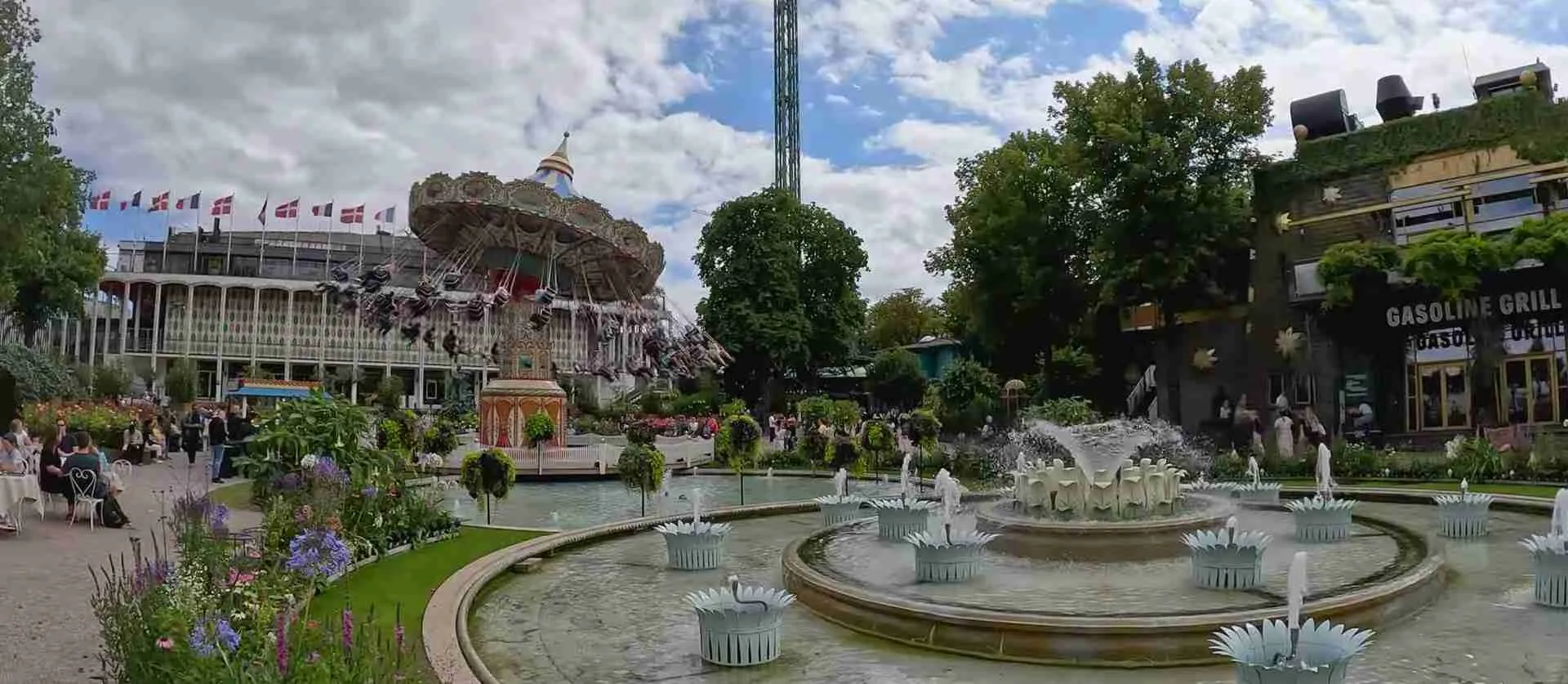
Tivoli Gardens Copenhagen: World’s Second-Oldest Amusement Park
Tivoli Gardens stands as a living testament to 19th-century pleasure garden tradition, opening its gates on August 15, 1843, and continuing to enchant millions of visitors annually. Located in the heart of Copenhagen, this iconic amusement park represents the second-oldest operating pleasure garden in the world, surpassed only by Dyrehavsbakken in nearby Klampenborg. What distinguishes Tivoli from mere historical curiosity is its continued vitality—blending Victorian-era charm with contemporary entertainment, maintaining original architectural treasures alongside modern attractions, and serving simultaneously as beloved local gathering place and international tourist destination that welcomes over four million visitors each year.
Key Takeaways
- Historical Significance: Opened August 15, 1843, by founder Georg Carstensen, Tivoli Gardens ranks as the world’s second-oldest operating amusement park, maintaining continuous operation for over 180 years
- Architectural Heritage: The park preserves extraordinary 19th-century buildings including the Pantomime Theatre designed by Vilhelm Dahlerup, the Moorish-inspired Nimb Palace, and exotic pavilions reflecting Chinese, Turkish, and Pompeian influences
- Living Traditions: Rutschebanen wooden roller coaster from 1914 remains one of only seven worldwide still employing a brakeman, while the Tivoli Youth Guard founded in 1844 continues performing as one of Denmark’s premier children’s music education programs
- Walt Disney Inspiration: Walt Disney visited Tivoli multiple times before and after opening Disneyland in 1955, seeking to understand and replicate the park’s enchanting atmosphere and seamless integration of gardens, entertainment, and dining
- Cultural Institution: Hans Christian Andersen found inspiration here for “The Nightingale,” the word “tivoli” became synonymous with amusement parks throughout Scandinavia, and generations of Danes consider the gardens integral to their cultural identity
- Contemporary Vitality: The park balances historical preservation with modern entertainment through seasonal programming including summer Friday Rock concerts featuring international artists, elaborate Halloween transformations, and renowned Christmas markets drawing visitors from across Europe
People Also Ask About Tivoli Gardens
Why is Tivoli Gardens so famous?
Tivoli Gardens achieved and maintains fame through a unique combination of historical significance, architectural beauty, cultural integration, and sustained innovation across nearly two centuries. As the world’s second-oldest operating amusement park, it represents living Victorian-era pleasure garden tradition rarely preserved elsewhere. The park’s central Copenhagen location—literally adjacent to Central Station and steps from City Hall Square—made it accessible to all social classes from its 1843 opening, establishing it as a democratic gathering place that transcended the era’s rigid social hierarchies. Georg Carstensen’s founding vision emphasized beauty and atmosphere over purely mechanical thrills, creating exotic architectural fantasies through Moorish palaces, Chinese-inspired theaters, and elaborate gardens that transported visitors from ordinary Copenhagen into imagined worlds. This emphasis on total environment rather than isolated attractions influenced subsequent amusement park design globally, most notably inspiring Walt Disney’s Disneyland concept. The park’s continued relevance stems from balancing preservation of historical elements—the 1914 wooden roller coaster, the 1874 Pantomime Theatre, original gas lamp designs—with contemporary entertainment including international concerts, Michelin-starred dining, and modern thrill rides. For Danes, Tivoli functions as cultural touchstone where childhood memories, family traditions, and national identity intersect, making it beloved local institution alongside international tourist destination. The park’s ability to maintain enchantment across changing entertainment preferences for 180+ years while remaining financially viable demonstrates extraordinary adaptive capacity rarely achieved in heritage sites.
What is the oldest ride at Tivoli Gardens?
Rutschebanen, also known as Bjergbanen (The Mountain Coaster), stands as Tivoli’s oldest operating ride, constructed in 1914 and representing one of the world’s seven remaining wooden roller coasters employing a brakeman who manually controls speed during descent. This ride succeeded Tivoli’s original roller coaster from 1843—a simple seven-second thrill that generated both excitement and moral outrage among Victorian Copenhagen society concerned about propriety and safety of such amusements. The current wooden structure, built over a century ago, winds through artificial mountain landscapes integrated with shops and pathways, demonstrating Tivoli’s creative use of limited urban space. What makes Rutschebanen exceptional beyond its age is its continued reliance on human skill rather than purely mechanical braking systems. The brakeman rides in one of the cars, applying friction brakes to prevent excessive speed on descents, requiring experience and judgment to balance thrills with safety. This operational method connects contemporary riders to century-old amusement traditions while providing employment requiring specialized skills passed between generations of Tivoli operators. The roller coaster has achieved ACE (American Coaster Enthusiasts) Coaster Classic designation, attracting enthusiasts from worldwide who make pilgrimages specifically to experience this historical ride. Its survival through two world wars, evolving safety regulations, and changing entertainment preferences testifies to both Danish preservation commitment and the ride’s enduring appeal across generations of visitors.
Did Walt Disney really visit Tivoli Gardens?
Walt Disney visited Tivoli Gardens multiple times during the early 1950s before opening Disneyland in 1955, and returned after Disneyland’s opening to study Tivoli’s atmosphere and operational methods. These visits were well-documented and openly acknowledged by Disney, who sought to understand how Tivoli created its distinctive enchanting environment. Disney particularly admired Tivoli’s integration of beautiful landscaping, diverse entertainment, quality dining, and mechanical amusements into cohesive experience rather than isolated attractions. He noted how Tivoli functioned as gathering place for all ages and social classes, how the gardens provided respite from urban intensity while remaining centrally located, and how attention to aesthetic detail in architecture, lighting, and landscape created magical atmosphere extending beyond individual rides. Disney’s concept of Disneyland as immersive themed environment rather than simple carnival or fairground drew significantly from Tivoli’s model of total atmosphere creation. However, as Tivoli representatives acknowledge, the park’s specific magic proved difficult to export or replicate—it emerged from Danish cultural traditions, Copenhagen’s urban context, and 110+ years of accumulated history and local emotional attachment by the time Disney visited. What Disney successfully adapted were principles of environmental design, quality standards, and the idea that amusement parks could be beautiful, clean, family-oriented destinations rather than tawdry carnivals. The relationship between Tivoli and Disneyland represents early example of international theme park influence, with the older Danish pleasure garden shaping American interpretation of themed entertainment that subsequently influenced global amusement park development.
How is Tivoli Gardens connected to Hans Christian Andersen?
Hans Christian Andersen became a devoted Tivoli Gardens visitor from its 1843 opening, finding in the park both personal pleasure and creative inspiration that influenced his fairy tale writing. Living in Copenhagen throughout Tivoli’s early decades, Andersen frequented the gardens regularly during summer seasons, drawn to its exotic architecture, theatrical performances, and transformed atmosphere. The park’s Chinese-inspired Pantomime Theatre, with its mechanical peacock curtain and commedia dell’arte performances, particularly captivated him. Andersen’s fairy tale “The Nightingale,” published in 1845 just two years after Tivoli’s opening, drew direct inspiration from the park’s Chinese aesthetic and its contrast between artificial entertainment and natural beauty—themes embodied in Tivoli’s combination of elaborate exotic architecture and cultivated gardens. The story’s emperor, living in a porcelain palace filled with mechanical wonders yet ultimately finding meaning in a simple nightingale’s natural song, reflects tensions Andersen observed between Tivoli’s manufactured fantasies and authentic experiences. Beyond this specific tale, Tivoli’s atmosphere of transformation and magic—ordinary Copenhagen streets giving way to exotic fantasies—resonated with Andersen’s broader fairy tale themes of metamorphosis and wonder discovered in unexpected places. The connection became mutually reinforcing: Andersen’s presence and subsequent fame added literary prestige to Tivoli, while the park provided the celebrated author with ongoing inspiration and social venue. Today, this historical association enhances Tivoli’s cultural significance, connecting Denmark’s most famous literary figure with its most famous amusement park in narratives of Danish cultural heritage.
Extended multi-day tours – 5+ days
Featured Copenhagen Multi-Day Tour Packages

3 days
Copenhagen 3-Day Discovery Tour
- ✓ Comprehensive Copenhagen experience
- ✓ Expert local guides included
- ✓ All accommodation included
- ✓ Transportation provided
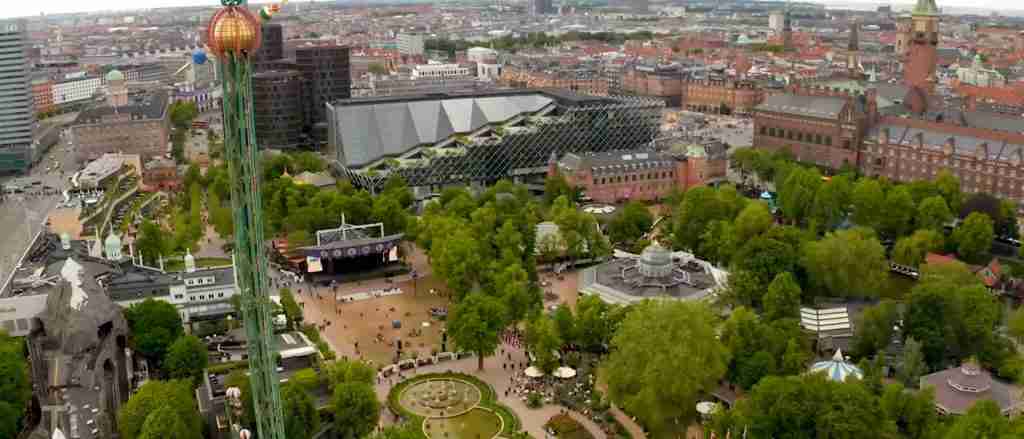
5 days
Copenhagen 5-Day Highlights Experience
- ✓ Comprehensive Copenhagen experience
- ✓ Expert local guides included
- ✓ All accommodation included
- ✓ Transportation provided
7 days
Copenhagen 7-Day Cultural Journey
- ✓ Comprehensive Copenhagen experience
- ✓ Expert local guides included
- ✓ All accommodation included
- ✓ Transportation provided
10 days
Copenhagen 10-Day Complete Adventure
- ✓ Comprehensive Copenhagen experience
- ✓ Expert local guides included
- ✓ All accommodation included
- ✓ Transportation provided
Multi-day tour packages powered by TourRadar. Prices and availability subject to change.
Introduction: A Victorian Dream That Refused to Fade
On August 15, 1843, when Georg Carstensen opened Tivoli Gardens on Copenhagen’s old military ramparts, he created more than an amusement park—he established a cultural institution that would shape Danish identity and influence global entertainment design for nearly two centuries. The opening day attracted over 3,000 curious Copenhageners who paid admission to enter a transformed world of Chinese pagodas, Turkish pavilions, gas-lit gardens, and mechanical amusements that seemed impossibly exotic in the otherwise familiar surroundings of their capital city. What Carstensen envisioned as commercial entertainment venue evolved into something far more significant: a democratic gathering place transcending social class, a preserved example of Victorian pleasure garden tradition, and an adaptable institution that maintained relevance through profound social and technological changes.
Tivoli’s survival and continued vitality distinguishes it from countless 19th-century pleasure gardens that succumbed to changing tastes, urban development, or financial failure. The park navigated Denmark’s occupation during World War II despite Nazi sympathizers partially destroying it in 1944, adapted to post-war modernization while preserving historical architecture, and balanced local traditions with international tourism as Copenhagen grew into a global city. Today, Tivoli welcomes over four million visitors annually while maintaining emotional significance for Danes who measure life milestones through visits—childhood wonder at the rides, teenage romance in the gardens, adult appreciation of concerts and dining, elderly nostalgia for unchanging landmarks.
The park occupies 8.3 hectares in central Copenhagen, positioned between the Central Station and City Hall Square. This urban location, once Tivoli’s practical advantage for attracting visitors, now represents extraordinary real estate value that could justify redevelopment. Yet the site’s protected status and cultural importance ensure Tivoli’s preservation. The compact footprint necessitates creative space utilization—rides integrated into building facades, restaurants occupying historical structures, gardens layered vertically, and pathways winding through densely packed attractions creating impression of larger scale through deliberate disorientation and discovery.
Understanding Tivoli requires recognizing its multiple simultaneous identities: historical monument preserving 19th-century entertainment traditions, active amusement park competing with modern attractions, beautiful garden offering urban respite, cultural venue hosting world-class performances, culinary destination featuring Michelin-starred restaurants, and local institution embedded in Danish life rhythms through seasonal openings marking summer arrival and Christmas approaching. These overlapping functions create complexity preventing simple categorization—Tivoli is neither pure museum nor typical theme park but something uniquely positioned between preservation and innovation.
Georg Carstensen and the Founding Vision
The Entrepreneur and His Inspiration
Georg Carstensen, born in 1812, developed his vision for Tivoli through extensive European travels during the 1830s and early 1840s. As a young man with entrepreneurial ambitions, he observed pleasure gardens flourishing in major European cities—the Jardin de Tivoli in Paris, Vauxhall Gardens in London, and similar establishments in Germany and Austria. These venues combined diverse attractions including gardens, concerts, theatrical performances, dining, and mechanical amusements, serving as social gathering places for emerging middle classes seeking respectable entertainment outside domestic spaces or traditional aristocratic venues.
Carstensen recognized that Copenhagen, despite its status as capital and cultural center, lacked comparable establishment. Danish society maintained rigid social hierarchies and limited public entertainment options considered acceptable across class boundaries. Traditional taverns catered to working classes, exclusive clubs to aristocracy, but few venues welcomed diverse audiences simultaneously. Carstensen envisioned a pleasure garden that would democratize entertainment through affordable admission allowing access to beautiful surroundings, quality performances, and novel amusements regardless of social status.
His timing proved fortuitous. The 1840s witnessed growing urbanization, expanding middle class with disposable income, and cultural movements emphasizing national romanticism and accessible culture. Carstensen skillfully presented his proposal to King Christian VIII, reportedly arguing “When the people are amusing themselves, they do not think about politics.” This pragmatic argument resonated with a monarchy concerned about revolutionary movements spreading across Europe. In 1843, King Christian VIII granted Carstensen a five-year charter to operate an amusement park on former military grounds outside Copenhagen’s ramparts.
Design and Construction
Carstensen had only months between receiving royal permission and his ambitious August 15, 1843 opening date. He mobilized workers to transform the sloping rampart terrain into terraced gardens, constructed exotic pavilions, installed mechanical rides, and created infrastructure for gas lighting—then a novel technology adding to Tivoli’s modern appeal. The original design emphasized exotic architecture drawing from sources Carstensen had encountered in travels or popular orientalist imagery of the era.
The park’s name reflected this cosmopolitan aspiration. “Tivoli” referenced the famous Jardin de Tivoli in Paris, which itself honored the Italian town of Tivoli near Rome known for Renaissance gardens. “Vauxhall,” initially part of the official name “Tivoli & Vauxhall,” acknowledged London’s celebrated Vauxhall Gardens. These references positioned Copenhagen’s new attraction within international pleasure garden tradition while signaling sophistication and continental style to potential Danish visitors.
The entrance featured an oriental gate complementing the Moorish-inspired facade of what would become the Nimb building. Gardens incorporated winding paths, terraced plantings utilizing the rampart’s topography, and strategic placement of exotic architecture creating discovery moments as visitors explored. Gas lamps, carefully positioned throughout pathways and gardens, provided illumination that seemed magical compared to limited street lighting in contemporary Copenhagen. Mechanical amusements included a simple roller coaster—revolutionary for causing the brief seven-second thrill—and various carnival-style attractions.
Early Success and Evolution
Opening day’s 3,000 visitors exceeded expectations, establishing Tivoli’s immediate popularity. The park attracted diverse audiences—working-class families on Sunday outings, middle-class couples seeking respectable entertainment, and even aristocrats curious about the novel establishment. This social mixing, unusual in rigidly hierarchical Danish society, became part of Tivoli’s distinctive character. Carstensen continuously added new attractions, understanding that novelty sustained visitor interest. In 1844, he founded the Tivoli Youth Guard, initially intended as colorful entertainment but evolving into serious music education institution that continues today.
Financial challenges emerged early. The five-year charter created uncertainty limiting long-term investment. Carstensen’s management prioritized spectacle over financial discipline, leading to conflicts with investors. In 1845, after only two seasons, financial pressures forced Carstensen to sell his shares, though he remained involved in operations. The park passed through various ownership structures, facing periodic financial crises but maintaining operations through commercial acumen of subsequent managers who balanced innovation with financial sustainability.
By the 1850s, Tivoli had established core identity that persists today: beautiful gardens providing urban escape, quality entertainment across performance genres, exotic architecture creating fantasy environments, and mechanical amusements offering novel thrills. This formula proved adaptable enough to survive changing entertainment preferences, technological advances, and social transformations across subsequent 170+ years.
Architectural Heritage and Iconic Buildings
The Pantomime Theatre
The Pantomime Theatre, designed by renowned architect Vilhelm Dahlerup and completed in 1874, represents Tivoli’s most architecturally significant structure. Dahlerup, who also designed the Royal Danish Theatre, created an open-air performance venue in elaborate Chinese-inspired style featuring a mechanical curtain that unfolds like a peacock’s tail—an engineering marvel requiring five operators and becoming the theater’s iconic symbol. The building’s toy-like scale and colorful decoration create whimsical atmosphere appropriate for pantomime performances while demonstrating sophisticated architectural design and craftsmanship.
The theater primarily presents pantomime in the Italian commedia dell’arte tradition, featuring stock characters including Harlequin, Columbine, and Pierrot in wordless performances combining dance, music, and stylized gesture. This art form, though obscure in many contemporary contexts, maintains living tradition at Tivoli through continuous performances since the 1870s. Former Queen Margrethe II of Denmark, an accomplished artist and theater enthusiast, choreographed pantomimes for the theater, adding royal cultural patronage to the venue’s prestige.
The Pantomime Theatre embodies Tivoli’s preservation philosophy—maintaining historical structures in active use rather than as static monuments. Regular performances, ongoing maintenance, and careful restoration work ensure the building remains functional theater rather than museum piece. The mechanical peacock curtain, though antique, operates for every performance, connecting contemporary audiences to Victorian-era theatrical traditions and mechanical ingenuity.
Nimb Building and Moorish Architecture
The Nimb building, with its distinctive Moorish-inspired facade featuring domes, arches, and elaborate decorative elements, stands as one of Tivoli’s most recognizable structures. Originally constructed in the 1840s with oriental design complementing the entrance gate, the building underwent modernization in the 1920s at Copenhagen Municipality’s request, simplifying some decorative elements while maintaining exotic character. The name “Nimb” derives from an 1909 bakery and restaurant that occupied the building, establishing culinary associations that continue through the current Nimb Hotel and restaurants.
The building’s Moorish style reflected 19th-century European orientalism—fascination with Islamic and Middle Eastern aesthetics transformed into decorative fantasies bearing limited resemblance to authentic architectural traditions. For 1840s Copenhagen, such exotic architecture provided escape from the city’s predominantly Danish baroque and neoclassical buildings, creating the sense of entering a different world that Carstensen sought. The style also signaled cosmopolitan sophistication and cultural breadth, positioning Tivoli as internationally aware rather than provincially Danish.
Today, Nimb houses a luxury boutique hotel, Michelin-starred restaurant, and several casual dining venues. The building demonstrates Tivoli’s strategy of adapting historical structures to contemporary luxury markets, generating revenue supporting park operations while preserving architectural heritage. The integration of high-end hospitality within an amusement park creates unusual juxtaposition—guests can sleep in five-star accommodations steps from roller coasters and carnival games, embodying Tivoli’s layered identity as both refined cultural venue and popular amusement park.
Concert Hall and Glass Hall Theatre
Tivoli has featured concert venues since its 1843 opening, recognizing that music performances attracted audiences and enhanced the park’s cultural prestige. The original concert hall operated until 1944 when Nazi sympathizers destroyed it through arson attacks targeting this symbol of Danish culture and resistance. Music performances temporarily relocated to the Glass Hall Theatre while a new concert hall was designed and constructed. The current Tivoli Concert Hall, completed in 1956, seats 1,660 guests and hosts classical concerts, popular music performances, and special events. A 1985 renovation added the Rotunda, expanding performance capabilities.
The Glass Hall Theatre, originally built in 1843, was also destroyed in the 1944 attacks and rebuilt in 1946 following the original design. This venue hosts theatrical performances, concerts, and special events requiring smaller-scale intimacy than the Concert Hall provides. Together, these performance venues position Tivoli as legitimate cultural institution rather than mere amusement park, hosting internationally renowned orchestras, soloists, and ensembles alongside popular entertainment.
The architectural diversity across Tivoli—Moorish Nimb, Chinese Pantomime Theatre, contemporary Concert Hall, Victorian garden pavilions—creates deliberate eclecticism serving Carstensen’s original vision of exotic fantasy worlds. Rather than unified architectural style, the park celebrates variety and surprise, with each building contributing to overall atmosphere of wonder and discovery. This approach influenced subsequent theme park design, demonstrating how architectural variety and thematic environments could create immersive experiences transcending individual attractions.
The Wooden Roller Coaster and Classic Rides
Rutschebanen: Engineering Heritage
Rutschebanen (The Slide) or Bjergbanen (The Mountain Coaster), constructed in 1914, represents extraordinary combination of engineering heritage, operational tradition, and sustained public affection. The ride winds through artificial mountain landscapes, its wooden track banking through turns and dropping down slopes within constrained urban space. What distinguishes Rutschebanen from countless other wooden roller coasters is its continued use of a brakeman who rides in one of the cars, manually controlling speed through friction braking to prevent excessive velocity on descents.
Only seven wooden roller coasters worldwide maintain this operational method, making Rutschebanen part of rare heritage demonstrating early 20th-century ride operations before automated braking systems became standard. The brakeman position requires experience and judgment—braking too heavily reduces thrills, braking insufficiently risks excessive speed and potential safety issues. Operators develop intuitive feel for the track’s characteristics, weather effects on wheel friction, and passenger distribution affecting car weight, adjusting braking accordingly. This human element creates slight variation in each ride experience, contrasting with the complete predictability of computer-controlled modern attractions.
The wooden structure requires constant maintenance. Wooden components deteriorate from weather exposure, mechanical stress, and age, necessitating regular inspection and replacement of worn elements. Tivoli’s maintenance staff includes specialists in wooden coaster preservation who replace damaged sections while maintaining the ride’s historical character and structural integrity. This ongoing conservation work represents significant operational expense but sustains the ride as living heritage rather than static museum piece.
The roller coaster achieved ACE (American Coaster Enthusiasts) Coaster Classic designation, recognizing its historical significance and operational heritage. This status attracts roller coaster enthusiasts from worldwide who travel specifically to experience rides they cannot find in their home countries. For Danes, Rutschebanen holds nostalgic significance—multiple generations have ridden the same track, creating family traditions and memories extending across a century. Parents who rode as children bring their own children, who will eventually bring grandchildren, maintaining living connection to early 20th-century entertainment while the ride continues functioning as intended over 110 years ago.
Modern Thrill Rides and Classic Attractions
While Rutschebanen represents Tivoli’s historical attractions, the park maintains appeal through contemporary rides offering modern thrills. Dæmonen (The Demon), added in 2004, features three inversions—an Immelmann loop, vertical loop, and zero-G roll—compressed into 1 minute 46 seconds of intense experience. This modern steel coaster demonstrates Tivoli’s strategy of balancing historical preservation with contemporary expectations for extreme thrills. In 2017, Tivoli added optional virtual reality experience to Dæmonen, simulating flight through ancient China with dragon and demon encounters, merging cutting-edge technology with the park’s orientalist aesthetic traditions.
The Golden Tower, a drop tower reaching 63 meters height, provides panoramic Copenhagen views during ascent before releasing riders in controlled free fall. This ride type, common in modern amusement parks, takes on special significance in compact urban Tivoli by offering perspective on how the park fits within central Copenhagen’s dense development. Riders can see the Central Station, City Hall, and surrounding cityscape, appreciating Tivoli’s remarkable preservation in prime real estate that could justify high-rise development.
Alongside modern thrills, Tivoli maintains classic attractions including carousels, bumper cars, and gentle rides appealing to young children and those preferring nostalgic entertainment over extreme sensations. This attraction mix—from gentle 19th-century style carousels to 21st-century virtual reality experiences—allows Tivoli to serve diverse audiences simultaneously. Families can find appropriate attractions for toddlers, teenagers, and grandparents visiting together, supporting the park’s identity as multi-generational gathering place rather than venue targeting specific age demographics.
Gardens and Seasonal Transformations
Horticultural Artistry
The “Gardens” in Tivoli Gardens represents more than nostalgic name—extensive horticultural work creates beautiful landscapes that distinguish this amusement park from typical theme parks prioritizing mechanical attractions over natural beauty. The gardening staff manages thousands of plants including spring bulbs, summer perennials, and seasonal decorations creating continuously changing displays. In spring, tulips and hyacinths bloom throughout the park. Summer brings exotic plants including bougainvillea. Autumn features chrysanthemums and decorative pumpkins. Winter displays include evergreens and creative ice sculptures during Christmas season.
The compact 8.3-hectare site necessitates intensive gardening maximizing visual impact in limited space. Flower beds employ color theory creating harmonious or deliberately contrasting combinations. Vertical gardening extends planting into three dimensions. Seasonal rotation ensures continuous bloom despite Denmark’s challenging growing season with cold winters limiting outdoor horticulture. The gardens serve multiple functions—providing beauty, creating cooling shade during summer heat, offering quiet spaces contrasting with mechanical attractions’ intensity, and maintaining Carstensen’s original vision of pleasure gardens emphasizing natural beauty alongside manufactured thrills.
The peacocks, released from winter housing each spring, wander the gardens adding living exotic elements complementing the exotic architecture. These birds, with their spectacular plumage, became Tivoli symbols appearing in marketing materials and visitor photography. Their presence continues Victorian-era tradition of featuring exotic animals as living curiosities in pleasure gardens and zoos.
Christmas at Tivoli
Tivoli’s Christmas market, operating from mid-November through December, represents one of Copenhagen’s most popular seasonal attractions. The park transforms through elaborate decorations including thousands of lights strung through trees and buildings, Christmas-themed displays, market stalls selling seasonal crafts and foods, and specially decorated attractions. This seasonal programming began relatively recently in Tivoli’s long history but has become integral to Copenhagen’s Christmas traditions, attracting both tourists seeking authentic Scandinavian Christmas atmosphere and locals incorporating Tivoli visits into holiday routines.
The Christmas market features traditional Danish holiday foods including æbleskiver (sphere-shaped pancakes), gløgg (mulled wine), roasted almonds, and Christmas cookies. Craft stalls sell decorations, knitwear, and handmade goods appealing to both gift shoppers and those seeking Danish design aesthetics. Entertainment includes Christmas concerts in the Concert Hall, special performances in the Pantomime Theatre, and appearances by costumed characters including Santas and elves interacting with children.
The lighting design during Christmas season creates magical atmosphere that draws visitors specifically for evening visits when darkness maximizes the visual impact of thousands of colored lights. The combination of historical architecture, winter gardens, warm food and drink, and elaborate lighting creates distinctive Christmas experience different from shopping mall holiday displays or purely commercial seasonal markets. For Danes, visiting Tivoli during Christmas has become tradition marking the holiday season as significantly as decorating trees or attending church services.
Halloween Transformation
Tivoli’s Halloween season, running through October, demonstrates the park’s ability to completely transform atmosphere through decoration while maintaining core identity. More than 20,000 pumpkins decorate the grounds alongside spiderwebs, scarecrows, ghosts, and gothic decorations creating spooky but family-friendly atmosphere. Villa Vendetta, Denmark’s largest haunted house attraction featuring twelve themed rooms, operates during this season with elaborate sets, theatrical effects, and costumed performers creating horror experiences ranging from mildly spooky for children to genuinely frightening for teenagers and adults.
The Halloween programming reflects contemporary commercial holiday adoption while adapting it to Danish cultural context and Tivoli’s specific character. Rather than pure horror entertainment, the decorations and attractions blend spooky aesthetics with whimsical elements appropriate for family audiences. The season extends Tivoli’s traditional summer operations, generating additional revenue during autumn months when the park historically closed, while providing Danes with new seasonal tradition incorporating American Halloween influences into Danish cultural calendar.
Cultural Programming and Live Entertainment
Friday Rock and Concert Tradition
Tivoli’s Friday Rock concert series, operating during summer season, has featured internationally renowned artists including Roxette, the Smashing Pumpkins, Sting, the Beach Boys, Pet Shop Boys, and Kanye West alongside popular Danish acts. These free outdoor concerts, included with park admission, take place on the open-air stage with audiences gathering in surrounding gardens. The programming strategy balances international headliners attracting tourists and younger audiences with Danish acts appealing to local visitors, creating musical diversity across the summer season.
The Friday Rock concept serves multiple purposes: it extends evening visiting hours as concerts begin around 10 PM, attracts audiences who might not otherwise visit an amusement park, and positions Tivoli as cultural venue rather than pure entertainment facility. The concerts create festival atmosphere during summer weekends, transforming the park from daytime family destination into evening entertainment venue for adults and teenagers. This programming flexibility demonstrates Tivoli’s multi-audience strategy serving different demographics at different times rather than trying to appeal to everyone simultaneously.
During the Copenhagen Jazz Festival, Tivoli serves as major venue hosting jazz performances in the Concert Hall, Glass Hall Theatre, and outdoor stages. This participation in the city’s premier music festival integrates Tivoli into Copenhagen’s broader cultural programming, reinforcing the park’s identity as legitimate cultural institution. The Concert Hall hosts classical music performances throughout the year, featuring internationally recognized orchestras and soloists in acoustically designed venue comparable to dedicated concert halls.
Pantomime and Traditional Performance
The Pantomime Theatre’s continued presentation of Italian commedia dell’arte style performances represents living preservation of theatrical tradition largely vanished elsewhere. The wordless performances, combining stylized movement, elaborate costumes, and musical accompaniment, follow traditional stories featuring stock characters whose relationships and conflicts remain recognizable despite cultural distance from 18th-century Italian origins. The performances appeal particularly to children who enjoy the visual spectacle and physical comedy without requiring language comprehension, but also attract adults appreciating the artform’s historical significance and skilled performance.
Queen Margrethe II’s choreography contributions elevated the Pantomime Theatre’s cultural prestige. Her involvement, spanning decades before her 2024 abdication, demonstrated how Tivoli intersects with Danish cultural elite while remaining accessible to general public. The royal patronage continued traditions of aristocratic and cultural leadership supporting popular arts, connecting Tivoli to broader patterns of Danish cultural life where high culture and popular entertainment are not rigidly separated.
Tivoli Youth Guard
The Tivoli Youth Guard, founded in 1844 as entertainment novelty, evolved into one of Denmark’s most respected children’s music education programs. Boys and girls aged 8-16 dress in uniforms resembling Royal Danish Guard uniforms complete with bearskins, performing concerts, marching parades, and standing ceremonial guard at the garden’s buildings during special occasions. The organization includes a Corps of drums, military-style marching band, and honor guard platoon, providing comprehensive music education alongside performance opportunities.
Participation in the Tivoli Youth Guard requires audition, regular rehearsals, and commitment to performance standards, making it serious music education rather than casual activity. Alumni often pursue professional music careers, testifying to the program’s educational quality. For participants, the experience combines music training, discipline, public performance, and pride in representing Tivoli institution—an unusual blend of commercial entertainment venue and civic cultural program. The Youth Guard’s continued operation for 180 years demonstrates how Tivoli functions as more than business enterprise, serving educational and cultural purposes typically associated with public institutions rather than private amusement parks.
Culinary Excellence and Dining Experiences
From Casual Dining to Michelin Stars
Tivoli’s culinary offerings span from carnival food—candy floss, churros, roasted almonds—to Michelin-starred fine dining, reflecting the park’s strategy of serving diverse audiences with different budgets and tastes. The Nimb building houses Restaurant Nimb, which has earned Michelin recognition for sophisticated Nordic cuisine served in elegant surroundings. Other upscale venues include Mielcke & Hurtigkarl in the Dæmonen roller coaster structure, demonstrating how Tivoli integrates high-quality dining into unexpected locations.
The Tivoli Food Hall, opened near the main entrance, features fifteen carefully selected food stalls offering diverse cuisines including traditional Danish open-faced sandwiches, Asian fusion, Italian, Mexican, and vegetarian options. This food hall concept, imported from international trends toward curated casual dining, provides middle ground between expensive restaurants and basic carnival food, appealing to families and younger visitors seeking quality casual dining within the park.
Traditional Danish restaurants including Grøften (established 1874) and Færgekroen maintain nostalgic dining experiences serving classic Danish dishes in historical settings. These venues attract older visitors seeking familiar experiences and tourists wanting authentic Danish cuisine rather than international options. The combination of traditional and contemporary dining reflects Tivoli’s broader preservation-innovation balance—maintaining heritage while adapting to contemporary expectations.
The dining strategy demonstrates how Tivoli generates revenue beyond ride tickets and admission. Upscale restaurants attract guests who might visit Tivoli specifically for dining, viewing the gardens and atmosphere as pleasant dining setting rather than primarily visiting for rides. This approach, pioneered when Carstensen emphasized quality dining in the original 1843 vision, influenced later theme park development recognizing that food service could be profit center and destination amenity rather than necessary inconvenience.
The Pagoda and Rotating Chefs
The Pagoda, a distinctive Japanese-inspired building, hosts rotating residencies by Michelin-starred chefs from around the world who take over the venue for limited periods, creating exclusive dining experiences. This concept brings international culinary talent to Copenhagen while generating publicity and attracting food enthusiasts who might not otherwise visit an amusement park. The rotating format maintains novelty, encouraging repeat visits from local food lovers wanting to experience different chefs’ interpretations.
This culinary programming positions Tivoli within global gastronomy conversations rather than purely local entertainment. The presence of internationally recognized chefs elevates Tivoli’s cultural prestige and generates media coverage in food publications and travel media, reaching audiences beyond traditional amusement park marketing. It also demonstrates how historical architecture—the Pagoda dates to Tivoli’s early decades—can be adapted to contemporary luxury hospitality without compromising architectural integrity.
Walt Disney and International Influence
Disney’s Tivoli Visits
Walt Disney’s multiple visits to Tivoli Gardens during the early 1950s and after Disneyland’s 1955 opening were well-documented and openly acknowledged by Disney himself. He sought to understand what created Tivoli’s magical atmosphere and whether those qualities could be replicated in American context. Disney particularly studied how Tivoli integrated beautiful landscaping with entertainment, how the park maintained cleanliness and aesthetic quality standards unusual in contemporary American amusement parks and carnivals, and how diverse offerings created appeal across age groups and social classes.
Disney’s Disneyland concept borrowed several principles from Tivoli while adapting them to American preferences and southern California’s climate and landscape. The emphasis on cleanliness, trained staff providing quality service, beautiful landscaping integrated with attractions, and themed environments creating immersive experiences all reflected Tivoli influence. However, significant differences distinguished Disneyland from its Danish inspiration. Disney created unified narrative themes—Fantasyland, Tomorrowland, Frontierland—where Tivoli celebrated eclectic variety. Disney emphasized original intellectual property characters and stories where Tivoli featured generic exotic architecture and traditional performances. Disney built in suburban Anaheim with vast acreage allowing expansion where Tivoli remained constrained within compact urban footprint.
The relationship between the two parks represents early example of international theme park influence before globalization homogenized entertainment design. Tivoli representatives acknowledge that their specific magic—rooted in Danish cultural traditions, Copenhagen’s urban context, and accumulated historical resonance—proved impossible to export wholesale. What transferred were principles of quality, atmosphere creation, and integrated design rather than specific aesthetic or cultural elements. This suggests that successful pleasure gardens and theme parks emerge from cultural specificity rather than universal formulas, even while they may share operational principles and design strategies.
Tivoli’s Broader Influence
Beyond Disney’s direct inspiration, Tivoli influenced amusement park development through demonstrating that such facilities could be permanent urban institutions rather than temporary carnivals, that beauty and cultural programming could coexist with mechanical thrills, and that parks could serve local populations as gathering places rather than purely tourist attractions. The word “tivoli” became generic term for amusement parks throughout Scandinavia, testifying to the park’s regional influence and name recognition.
Contemporary theme park designers studying historical precedents examine Tivoli as example of sustained success through adaptation, balancing heritage preservation with innovation, and serving multiple audiences simultaneously. The park demonstrates how compact urban sites can support diverse entertainment through creative design, how seasonal programming can extend operations beyond traditional summer seasons, and how cultural prestige through concerts, dining, and heritage preservation can differentiate amusement parks from competitors offering similar mechanical attractions.
Visiting Tivoli Gardens: Practical Information
Location and Access
Tivoli Gardens occupies a remarkably convenient location in central Copenhagen, positioned directly across from Copenhagen Central Station and adjacent to City Hall Square. This proximity to the city’s primary transportation hub makes Tivoli accessible via all forms of public transit serving the central station—trains, metro, buses—eliminating need for cars in congested urban center. International visitors arriving at Copenhagen Airport can reach Tivoli via direct train to Central Station in approximately 15 minutes, making the park accessible immediately upon arrival without complicated logistics.
The central location that made Tivoli accessible in 1843 continues serving that function today, though the city has grown vastly around the original site. Visitors staying anywhere in central Copenhagen can walk to Tivoli. The pedestrian street Strøget, one of Europe’s longest pedestrian shopping streets, terminates at City Hall Square adjacent to Tivoli, allowing visitors to combine shopping and park visits. This integration into Copenhagen’s urban fabric makes Tivoli fundamentally different from suburban theme parks requiring dedicated transportation—it functions as organic part of city exploration rather than isolated destination.
Seasonal Operations
Tivoli operates seasonally rather than year-round, with three distinct seasons offering different atmospheres and programming. Summer season typically runs mid-April through late September, featuring full ride operations, Friday Rock concerts, outdoor dining, and blooming gardens. Halloween season occupies October, emphasizing spooky decorations, Villa Vendetta haunted house, and autumn programming. Christmas season runs mid-November through December, focusing on holiday markets, festive decorations, and seasonal entertainment. The park closes between seasons for maintenance, decoration changes, and staff rest.
This seasonal operation reflects European tradition of pleasure gardens as warm-weather destinations, though modern climate control technology could enable year-round operation. The seasonal closures create anticipation for openings, allow dramatic transformation between themes, and provide operational efficiency through avoiding slow winter months outside Christmas season. For visitors, the seasonal structure means checking operational calendars before planning visits, but also ensures experiencing Tivoli when it presents specific seasonal character rather than generic year-round operation.
Ticketing and Costs
Tivoli employs two-tier pricing separating admission from ride access. Admission tickets grant access to gardens, buildings, free concerts and performances, and general park atmosphere. Ride tickets must be purchased separately either individually or through multi-ride passes. This structure acknowledges that many visitors, particularly older adults and those primarily interested in dining, concerts, or atmosphere, may not desire rides, allowing them to pay lower admission-only prices. For visitors wanting extensive ride access, unlimited ride passes offer better value than individual tickets but require commitment to ride-focused visits.
Costs vary seasonally with summer weekends commanding highest prices and weekday visits during less popular periods offering discounts. Various passes provide admission across multiple days or entire seasons, appealing to local residents who visit frequently. The Copenhagen Card, a tourist pass covering public transportation and museum admissions, includes one Tivoli entrance, though visitors must purchase ride tickets separately if desired.
Crowds and Timing
Tivoli experiences highest crowds on weekends, holidays, and Friday evenings during concert performances. Weekday visits, particularly mornings and early afternoons, offer smaller crowds and shorter ride wait times. For visitors primarily interested in atmosphere, gardens, and dining rather than maximum ride experiences, evening visits during summer provide magical lighting and concert entertainment alongside garden ambiance. Christmas season weekends attract particularly large crowds as locals and tourists converge for seasonal shopping and atmosphere.
The compact site means that even moderate crowds create congested conditions on pathways and around popular attractions. Strategic timing—visiting during less crowded periods or arriving early and departing before peak evening hours—significantly improves experience. The park’s density of attractions means visitors can accomplish comprehensive exploration in 3-4 hours if focused on specific interests, though those wanting to experience dining, concerts, and extensive ride access may prefer full-day or multiple visits.
Frequently Asked Questions
What is the best time of year to visit Tivoli Gardens?
The optimal visit timing depends on specific interests and crowd tolerance. Summer season (mid-April through September) offers the most comprehensive experience with all rides operational, extensive gardens in bloom, warm weather enabling comfortable outdoor exploration, and Friday Rock concerts featuring international artists. However, summer also brings largest crowds, highest prices, and most intense competition for popular attractions. For experiencing Tivoli’s essential character without overwhelming crowds, May and early June or September provide pleasant weather, operational attractions, and manageable visitor numbers. Christmas season (mid-November through December) creates entirely different but equally magical atmosphere through elaborate decorations, holiday markets, and seasonal programming, though focusing more on shopping, dining, and atmosphere than ride thrills. Halloween (October) appeals to those interested in spooky decorations and seasonal entertainment. Each season offers distinct character rather than one being objectively superior—summer maximizes ride options and concert programming, Christmas emphasizes festive atmosphere and markets, Halloween provides seasonal novelty. For first-time visitors wanting comprehensive Tivoli experience including rides, gardens, and evening lighting, summer weekday evenings combine manageable crowds with full operations and atmospheric evening illumination.
How much time should visitors allocate for Tivoli Gardens?
A satisfying Tivoli visit requires 3-6 hours depending on interests, with most visitors finding 4-5 hours adequate for experiencing gardens, major attractions, dining, and atmosphere without rushing. Visitors focused primarily on rides can accomplish significant coverage in 3 hours during low-crowd periods, though popular attractions may require longer during busy times. Those planning to include sit-down dining at one of the restaurants, attend a concert, and explore gardens thoroughly should allocate full afternoon and evening, particularly during summer when daylight extends late and evening lighting transforms atmosphere. Evening-only visits work well for those primarily interested in atmosphere, dining, and concerts rather than comprehensive ride experiences. Families with young children may prefer shorter visits of 2-3 hours to avoid fatigue, potentially returning for multiple shorter visits rather than attempting exhaustive single-day coverage. The compact site means the park is never overwhelming large, but the density of attractions and frequent discovery of new details rewards unhurried exploration. Visitors should consider whether they want to experience specific performances—Pantomime Theatre shows, Friday Rock concerts—which require timing visits around performance schedules and allocating time for these specific events. For truly comprehensive experience including upscale dining, concerts, and extensive ride access, some visitors choose to visit across multiple days or purchase season passes allowing frequent short visits accumulating to thorough familiarity.
Is Tivoli Gardens suitable for young children?
Tivoli offers extensive family-friendly programming making it highly suitable for young children while also providing enough variety to entertain accompanying adults and older siblings. A dedicated children’s area features rides, playgrounds, and attractions specifically designed for younger visitors with height requirements and intensity appropriate for pre-school and early elementary ages. Classic gentle rides including carousels, small Ferris wheels, and boat rides provide traditional amusement park experiences without overwhelming intensity. The gardens offer safe spaces for children to explore, with peacocks and decorative elements capturing attention. Seasonal programming includes family-oriented performances in the Pantomime Theatre using visual comedy and music appealing to children without requiring language comprehension. Numerous casual dining options accommodate families including kid-friendly menu items and quick service avoiding long formal dining commitments. However, Tivoli’s urban location and crowd density require parental supervision—the compact site with multiple pathways and attraction density means children can easily become separated if not carefully monitored. The two-tier pricing structure benefits families by allowing parents who may not want to ride attractions to pay admission-only prices while purchasing ride passes only for children and adults actually using attractions. The combination of gentle rides, beautiful gardens, exotic architecture, and seasonal decorations (particularly Christmas markets and Halloween displays) creates appealing family experience. For optimal family visits, weekday mornings or early afternoons provide smaller crowds making the compact site more manageable with children in tow.
Can visitors see Tivoli Gardens without riding attractions?
Absolutely—many Tivoli visitors, particularly local Danes who visit frequently, come primarily for atmosphere, gardens, dining, and cultural programming rather than rides. The admission-only ticket structure acknowledges this use pattern by separating garden access from ride charges, allowing visitors to pay lower prices if not interested in mechanical attractions. The gardens themselves merit exploration, featuring beautiful landscaping, seasonal flowers, exotic architecture, and carefully designed pathways creating pleasant walking environments. Multiple cafes and restaurants provide dining opportunities ranging from casual coffee to Michelin-starred fine dining, allowing visits centered around meals in attractive settings. Free concerts and performances included with admission provide entertainment without additional cost or commitment to rides. The Pantomime Theatre’s traditional performances, wandering peacocks, historical buildings, and changing seasonal decorations all offer visual and cultural interest beyond mechanical thrills. Evening visits during summer provide opportunity to experience Tivoli’s famous illumination—thousands of lights strung through trees and buildings creating magical atmosphere that has enchanted visitors for over a century. Many older Danes visit Tivoli regularly specifically for garden walks, meeting friends at cafes, attending concerts, or simply enjoying familiar atmosphere representing continuity in changing city. International visitors interested in Danish culture, architecture, landscape design, or historical pleasure gardens can find Tivoli rewarding purely as cultural heritage site and beautiful urban garden without needing to ride a single attraction. The park’s successful serving of both thrill-seeking ride enthusiasts and contemplative garden walkers demonstrates its multi-functional character transcending simple amusement park categorization.
What makes Tivoli different from other theme parks?
Tivoli distinguishes itself from typical theme parks through multiple factors emerging from its unique history and urban context. As the world’s second-oldest operating amusement park, it preserves Victorian-era pleasure garden traditions rarely maintained elsewhere, including the 1914 wooden roller coaster with brakeman, 1874 Pantomime Theatre with mechanical peacock curtain, and commedia dell’arte performances continuing 150-year-old theatrical traditions. The compact 8.3-hectare urban site necessitates creative design integrating attractions vertically and horizontally unlike sprawling suburban theme parks—shops occupy roller coaster mountain facades, restaurants exist in historic buildings, and pathways wind through dense layering of elements creating discovery moments. Tivoli prioritizes gardens and landscaping equally with mechanical attractions, maintaining extensive horticultural programs creating beautiful natural environments contrasting with typical theme parks’ minimal green space and focus on constructed elements. The park serves dual audiences—local Danes visiting regularly for gardens, dining, and concerts plus international tourists seeking quintessential Copenhagen experience—creating atmosphere blending everyday gathering place with special destination unlike parks depending primarily on tourist traffic. Integration into central Copenhagen rather than isolated suburban location allows visitors to combine Tivoli with broader city exploration, walking from hotels, arriving via public transit, and incorporating the park into multi-attraction itineraries. The absence of unified narrative theme distinguishing Disneyland-style parks—no cartoon characters, no coherent storyline—instead celebrating eclectic architectural variety and general exotic fantasy reflects earlier pleasure garden tradition. The combination of Michelin-starred dining, world-class concerts, historical architecture, and carnival rides within single compact site creates unusual juxtaposition rarely found in contemporary entertainment venues focusing on specific market segments. Finally, Tivoli’s cultural significance for Danes as national treasure and identity marker creates emotional resonance and protective cultural status preventing the commercial redevelopment that eliminated comparable historical amusement parks worldwide.
Are there English-language tours or information available?
Tivoli provides extensive English-language support recognizing its status as international tourist destination. The official website offers complete English version covering hours, prices, events, dining options, and attraction information. Printed maps and brochures available at entrances include English alongside Danish. Major attraction signage includes English translations. Self-guided audio tours available year-round provide English narration explaining historical buildings, attractions, and park history, allowing independent exploration with educational context. Guided tours in English operate during peak tourist seasons, though less frequently than Danish tours—visitors should check the website or inquire at information desks for current scheduling. Restaurant menus at most venues include English translations, with staff at major restaurants typically speaking English. Customer service staff at information desks and ticket counters speak English as standard. During international concerts and performances, announcements often occur in both Danish and English. The Tivoli app, downloadable before visits, includes English-language features providing interactive park maps, wait times for popular attractions, show schedules, and dining information. While Danish remains the primary operational language reflecting Tivoli’s identity as Danish cultural institution serving primarily local populations, the extensive international tourism makes practical English support essential and widely available. English-speaking visitors can navigate Tivoli comprehensively without language barriers affecting access to information, though they may miss some nuances of Danish cultural context and traditions embedded in the park’s operations and programming.
What seasonal events are most popular at Tivoli?
Three seasonal events dominate Tivoli’s annual calendar, each attracting different audiences and creating distinct atmospheres. The Christmas market and holiday programming (mid-November through December) stands as the most popular seasonal transformation, drawing locals who incorporate Tivoli Christmas visits into annual traditions alongside international tourists seeking authentic Scandinavian holiday atmosphere. The elaborate decorations including thousands of lights, market stalls selling crafts and seasonal foods, special Christmas performances, and festive dining create magical winter atmosphere. Many Danish families visit multiple times during Christmas season, establishing rituals around gløgg (mulled wine) drinking, æbleskiver consumption, and walking through illuminated gardens. Halloween programming throughout October has gained popularity more recently, particularly among families with children and teenagers, featuring over 20,000 pumpkins, spooky decorations, and Villa Vendetta haunted house with twelve themed rooms. This seasonal event reflects American Halloween tradition’s adoption into Danish culture while maintaining family-friendly emphasis alongside genuinely scary elements for older visitors. Friday Rock summer concerts (June through August) attract younger audiences and music enthusiasts, with free outdoor performances by international and Danish artists included with admission drawing crowds on Friday evenings. These concerts transform Tivoli from daytime family destination into evening entertainment venue for adults and teenagers, creating festival atmosphere. The opening of summer season in mid-April, marked by spring flowers and resumption of full operations after winter closure, holds significance for Danes as symbolic arrival of warmer weather and outdoor leisure season. Each seasonal event serves different demographic—Christmas appeals broadly across ages and attracts tourists, Halloween targets families with children, Friday Rock draws younger adults and music fans, summer opening resonates with locals marking seasonal transition. The seasonal programming demonstrates Tivoli’s strategy of creating multiple distinct identities throughout the year rather than maintaining single consistent character, maximizing appeal across diverse audiences and encouraging repeated visits to experience different seasonal atmospheres.
How does Tivoli balance preservation with modernization?
Tivoli navigates preservation-modernization tensions through pragmatic strategies recognizing that static preservation would eliminate the park’s viability while complete modernization would destroy its distinctive historical character. The approach involves maintaining and showcasing iconic historical elements—the 1914 wooden roller coaster, 1874 Pantomime Theatre, Nimb Palace, traditional gardens—while continuously adding contemporary attractions meeting current entertainment expectations. New rides like Dæmonen (2004) and The Golden Tower employ modern technology and design but are carefully integrated into overall aesthetic rather than jarring contrasts. Historical buildings find adaptive reuse housing contemporary functions—Nimb contains luxury hotel and Michelin-starred restaurants, the Pagoda hosts rotating international chefs, maintaining structures in active profitable use rather than as museum pieces. Cultural programming balances traditional pantomime performances with contemporary concerts, from classical music to international rock, allowing the park to serve audiences with diverse preferences. Seasonal programming adds variety without permanent changes—Christmas, Halloween, and summer themes transform the park temporarily then return to base configuration. The management philosophy recognizes Tivoli as living institution that must remain financially viable and culturally relevant rather than historical monument frozen in time. Regular maintenance and careful restoration preserve historical structures, with specialists in wooden coaster conservation and historic building preservation ensuring quality work. However, restoration sometimes involves interpretation—recreating what historical elements probably looked like rather than definitive preservation when original conditions are unknown. The strategy succeeds by identifying core elements defining Tivoli’s identity—beautiful gardens, exotic architecture, quality entertainment, magical atmosphere—and ensuring new additions support rather than contradict these principles. When elements must be removed, like the Slangen roller coaster demolished for Dæmonen, the decision considers whether removal serves overall preservation of Tivoli’s viability and character. This pragmatic preservation approach has enabled Tivoli’s survival where countless 19th-century pleasure gardens succumbed to either rigid preservation leaving them irrelevant or complete modernization eliminating historical identity. The success demonstrates that heritage sites can remain vital through careful evolution rather than requiring choice between preservation and contemporary relevance.
Is Tivoli Gardens worth visiting for international tourists?
For international tourists visiting Copenhagen, Tivoli Gardens offers unique experience justifying inclusion in itineraries, though its appeal varies based on individual interests. The park provides quintessentially Copenhagen experience combining historical significance, beautiful urban setting, and cultural authenticity rarely found in international theme parks that have become increasingly homogenized. Visitors interested in amusement park history, Victorian-era entertainment, Danish culture, landscape design, or architectural heritage find substantial value in Tivoli’s preservation of 19th-century pleasure garden traditions alongside contemporary operations. The central location makes Tivoli easily incorporated into broader Copenhagen sightseeing without dedicated transportation or full-day commitment—visitors can allocate 3-4 hours experiencing gardens, architecture, and selected attractions then continue to nearby museums, shopping, or dining. The seasonal programming, particularly the renowned Christmas markets, creates specific draw for tourists seeking authentic Scandinavian holiday atmosphere unavailable in their home countries. However, visitors whose primary interest is extreme thrill rides or massive scale theme park experiences might find Tivoli’s compact size and balanced emphasis on gardens alongside attractions less compelling than purpose-built contemporary theme parks. The value proposition depends partly on context—first-time Copenhagen visitors with limited time might prioritize museums, architecture, and neighborhoods over Tivoli, while those with several days or repeat visits can comfortably include the park. Families with children particularly benefit as Tivoli provides accessible entertainment requiring minimal planning compared to museum visits. Evening visits during summer, experiencing the famous illumination and possibly Friday Rock concerts, offer distinct character unavailable through daytime visits. Ultimately, Tivoli merits inclusion for tourists interested in experiencing authentic Copenhagen cultural institution rather than just viewing historical sites from outside, for those appreciating how Danes actually use their capital city rather than just tourist attractions, and for anyone valuing the intersection of history, beauty, and living tradition that Tivoli uniquely represents. The park functions less as must-see obligatory stop and more as enriching optional experience enhancing understanding of Copenhagen’s cultural life and Danish priorities regarding preservation, public space, and entertainment.
What is the Copenhagen Card and does it cover Tivoli?
The Copenhagen Card is a tourist pass providing free admission to numerous Copenhagen attractions including museums, palaces, and gardens, plus unlimited public transportation on metro, buses, trains, and harbor buses within designated zones. The card is available in 24-hour, 48-hour, 72-hour, 96-hour, and 120-hour durations with prices varying by length. For Tivoli specifically, the Copenhagen Card includes one admission to the gardens during the card’s validity period, providing access to the park, gardens, free performances, and atmosphere. However, the card does not include ride tickets—visitors wanting to experience attractions must purchase individual ride tickets or multi-ride passes separately. This arrangement allows card holders to visit Tivoli for gardens, dining, concerts, and atmosphere without ride costs, or to add ride access through additional payment. The card also permits re-entry on the same day with a re-entry stamp obtained at the main entrance, allowing visitors to leave for meals or other activities then return for evening illumination or concerts. For tourists planning to visit multiple Copenhagen attractions plus Tivoli, the Copenhagen Card often provides good value through bundling admission costs and public transportation. However, value depends on individual itineraries—visitors planning intensive sightseeing across many included attractions benefit more than those focusing on few destinations. Tivoli’s inclusion adds value particularly for tourists uncertain whether they want extensive park access, as the card provides low-risk opportunity to visit gardens and atmosphere without separately purchasing Tivoli admission, then deciding whether to add ride access based on initial impressions. The card is available for purchase online before travel or at tourist information centers, airports, and train stations in Copenhagen, with online purchase sometimes offering slight discounts. Digital versions accessible via smartphone app provide convenience over physical cards requiring carrying and presentation.