Tihany Peninsula: Lavender Fields & Lake Balaton Heritage Guide
The Tihany Peninsula extends into Lake Balaton’s northern shore, creating one of Hungary’s most distinctive landscapes where lavender fields meet historic abbeys and volcanic geology. This protected area combines natural beauty, cultural heritage, and centuries of Benedictine tradition, offering visitors a unique glimpse into Hungarian history and the therapeutic landscapes that have drawn people here for over a thousand years.
Key Takeaways
- Geographic Uniqueness: Tihany represents Hungary’s only peninsula, formed by volcanic activity millions of years ago, creating distinctive basalt formations and geysers
- Lavender Heritage: Commercial lavender cultivation began in the 1920s, transforming Tihany into Hungary’s premier lavender-growing region with fields blooming from late June through July
- Benedictine Legacy: The Tihany Abbey, founded in 1055, preserves Hungary’s oldest written document and represents nearly a millennium of continuous religious and cultural significance
- Ecological Protection: Designated as a protected landscape area since 1952, Tihany maintains unique flora including Mediterranean plant species rarely found this far north
- Cultural Landscape: Traditional thatched-roof houses, folk architecture, and living crafts traditions create an authentic Hungarian cultural experience
- Lake Balaton Integration: The peninsula divides Central Europe’s largest lake into distinct northern and southern basins, creating microclimates and unique ecological zones
People Also Ask About Tihany Peninsula
What makes Tihany Peninsula geologically unique in Hungary?
Tihany Peninsula stands as Hungary’s only peninsula, formed by volcanic activity during the Pannonian period approximately 7-8 million years ago. The volcanic origin created distinctive basalt formations, geysers, and thermal springs that continue to shape the landscape. Two extinct volcanic craters—the Inner Lake (Belső-tó) and the Outer Lake (Külső-tó)—occupy the peninsula’s center, filled with fresh water and surrounded by reed beds that support diverse bird populations.
The volcanic geology created unique soil conditions particularly favorable for lavender cultivation. The basalt-rich soil provides excellent drainage while retaining minerals that contribute to the aromatic quality of Tihany’s lavender. Geyser cones, formed by ancient thermal activity, dot the landscape as protected geological monuments, offering visible evidence of the peninsula’s volcanic past.
When did lavender cultivation begin on Tihany Peninsula?
Commercial lavender cultivation began on Tihany in the 1920s when local farmers recognized the peninsula’s volcanic soil and Mediterranean-influenced microclimate created ideal growing conditions. The practice expanded significantly during the 1950s when state agricultural programs promoted lavender as a valuable essential oil crop. Tihany’s lavender industry reached its peak during the 1960s-1970s, when the peninsula supplied lavender oil to pharmaceutical and cosmetic industries across Central Europe.
The tradition continues through family farms and cooperatives that maintain heritage lavender varieties alongside modern commercial operations. The annual Lavender Festival, held during peak blooming season in late June and early July, celebrates this agricultural heritage through harvesting demonstrations, distillation processes, and traditional craft markets. The purple fields stretching across volcanic hillsides have become Tihany’s most recognizable landscape feature, photographed by thousands of visitors each summer.
How did Tihany Abbey influence Hungarian history and culture?
King András I founded Tihany Abbey in 1055, establishing one of Hungary’s first Benedictine monasteries on this strategic peninsula overlooking Lake Balaton. The abbey’s founding charter, preserved in the Benedictine Archives in Pannonhalma, represents the oldest surviving document containing complete Hungarian sentences, making it invaluable for understanding medieval Hungarian language development. The charter describes the abbey’s endowments and boundaries, providing historians with detailed information about 11th-century Hungarian geography and settlement patterns.
The abbey served as a religious, cultural, and educational center for nearly a millennium. During the Ottoman occupation (1541-1699), the fortified abbey survived as one of few Hungarian religious institutions to maintain continuous operation. The current Baroque church, completed in 1754, replaced earlier Romanesque and Gothic structures destroyed during wars and fires. The church interior features remarkable carved wooden altarpieces by Austrian sculptor Sebestyén Stulhof, representing masterpieces of Central European Baroque craftsmanship. King András I’s crypt beneath the church remains an important pilgrimage site, connecting modern Hungary to its medieval roots.
What ecological features make Tihany Peninsula a protected landscape?
Tihany Peninsula earned protected landscape status in 1952, recognizing its exceptional biodiversity and geological significance. The area encompasses diverse habitats including volcanic hillsides, freshwater lakes, reed beds, basalt cliffs, and grasslands, each supporting specialized plant and animal communities. The peninsula hosts over 1,000 plant species, including Mediterranean species like Hungarian almond, which rarely survive this far north but thrive in Tihany’s protected microclimates.
The Inner Lake and Outer Lake provide crucial breeding habitats for waterfowl and wading birds. Protected species include the great egret, purple heron, and various duck species that nest in extensive reed beds. Basalt cliffs along the shoreline support rock-dwelling plants and provide nesting sites for cliff-nesting birds. The protected area extends underwater, preserving unique Lake Balaton ecosystems including algae meadows and endemic fish populations.
Conservation efforts maintain traditional land uses including sustainable lavender farming and sheep grazing, which prevent invasive species while preserving cultural landscapes. Strict building regulations protect the peninsula’s architectural heritage and prevent development that would compromise ecological values. Educational programs and marked nature trails help visitors understand and appreciate Tihany’s natural heritage while minimizing environmental impact.
Extended multi-day tours – 5+ days
Featured Hungary Multi-Day Tour Packages
3 days
Hungary 3-Day Discovery Tour
- ✓ Comprehensive Hungary experience
- ✓ Expert local guides included
- ✓ All accommodation included
- ✓ Transportation provided
5 days
Hungary 5-Day Highlights Experience
- ✓ Comprehensive Hungary experience
- ✓ Expert local guides included
- ✓ All accommodation included
- ✓ Transportation provided
7 days
Hungary 7-Day Cultural Journey
- ✓ Comprehensive Hungary experience
- ✓ Expert local guides included
- ✓ All accommodation included
- ✓ Transportation provided
10 days
Hungary 10-Day Complete Adventure
- ✓ Comprehensive Hungary experience
- ✓ Expert local guides included
- ✓ All accommodation included
- ✓ Transportation provided
Multi-day tour packages powered by TourRadar. Prices and availability subject to change.
Introduction to Tihany Peninsula
Tihany Peninsula projects into Lake Balaton like a natural monument, its volcanic origins visible in every basalt outcrop and geyser cone that punctuates the landscape. This narrow strip of land, barely two kilometers wide at its base, separates Lake Balaton into distinct northern and southern basins while creating one of Hungary’s most protected and treasured landscapes. The peninsula’s unique position and geology have shaped both its natural ecosystems and its thousand-year human history, from medieval monastery foundations to modern lavender cultivation.
The landscape reveals its volcanic past through distinctive features rarely found elsewhere in Hungary. Two crater lakes occupy the peninsula’s volcanic heart—the Inner Lake and Outer Lake—their still waters surrounded by reed beds that rustle with bird life throughout the year. Ancient geyser cones, formed when thermal waters surged through volcanic rock, rise from hillsides like natural sculptures, protected as geological monuments that document millions of years of earth history.
Lavender fields cascade down volcanic slopes in summer, their purple blooms creating the iconic Tihany landscape photographed by visitors from across Europe. These cultivated fields represent more than agricultural enterprise; they embody decades of tradition that transformed volcanic hillsides into productive farmland while creating landscapes of exceptional beauty. The lavender harvest, concentrated in late June and early July, brings the peninsula to life with workers cutting fragrant stems by hand, following methods refined over generations.
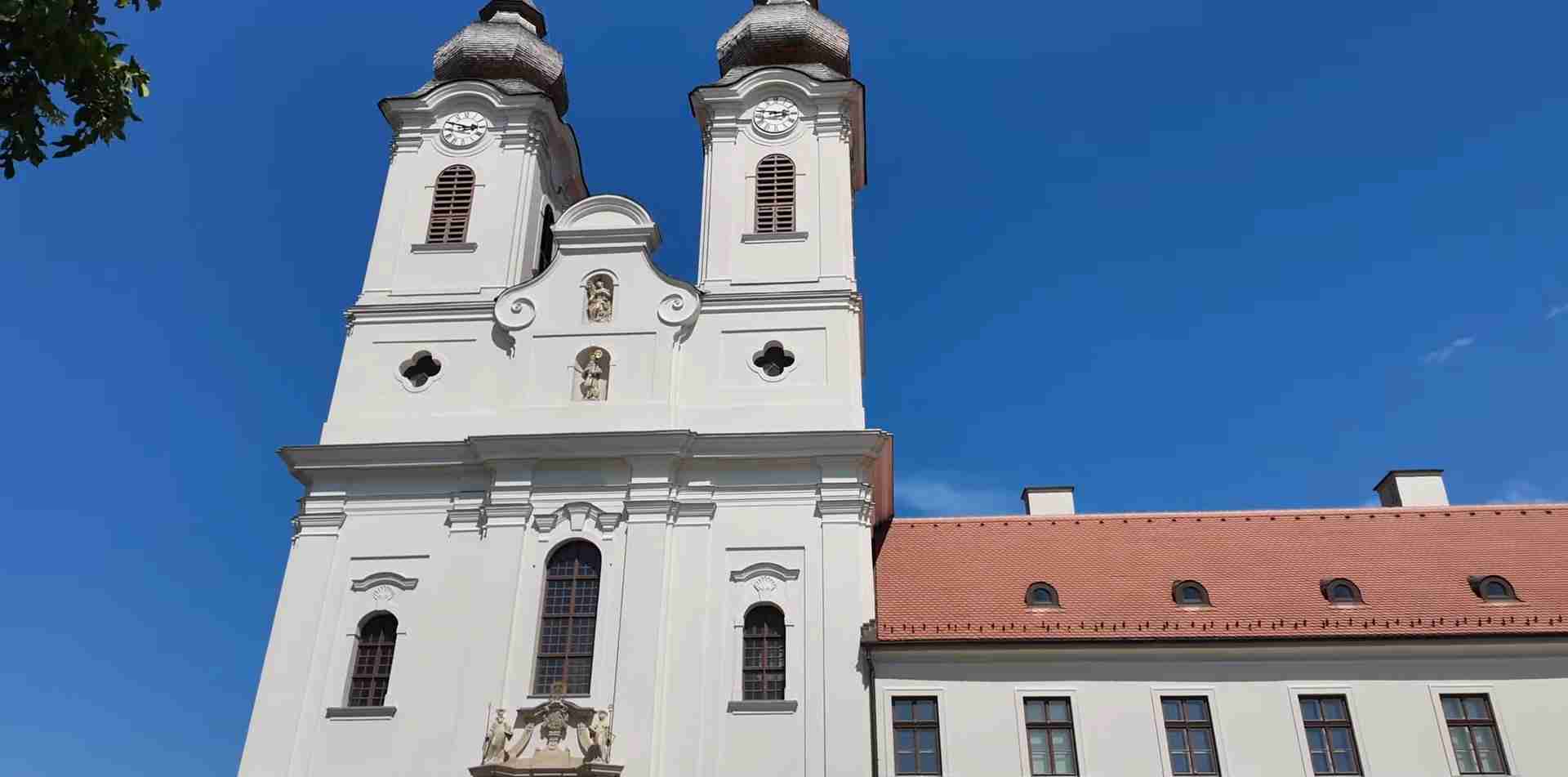
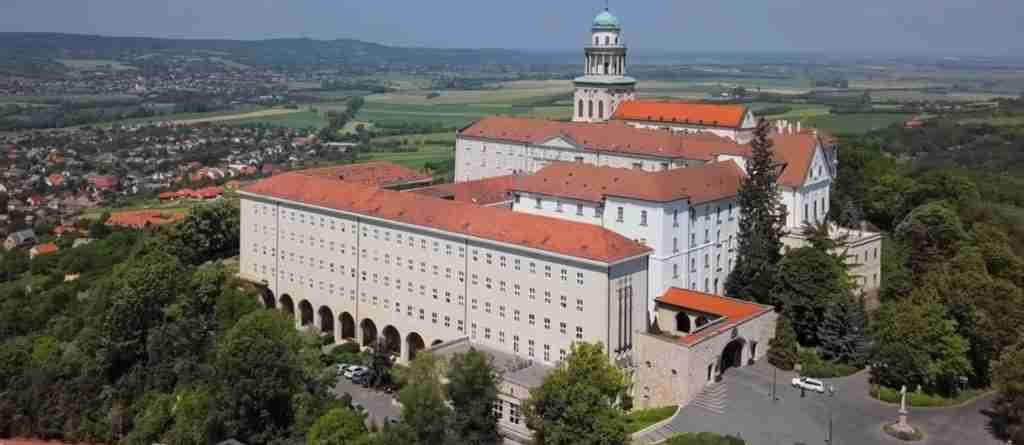
Tihany Abbey crowns the highest point of the peninsula, its twin-towered Baroque church visible from kilometers across Lake Balaton’s waters. Founded by King András I in 1055, the abbey represents one of Hungary’s oldest continuously operating religious institutions, surviving invasions, wars, and political upheavals that destroyed countless other medieval foundations. The abbey’s founding charter, written in Latin but containing crucial Hungarian place names and terms, provides scholars with the earliest substantial Hungarian language evidence, making Tihany significant far beyond its local religious importance.
The protected village of Tihany preserves traditional Hungarian folk architecture, with thatched-roof houses and volcanic stone walls demonstrating construction techniques adapted to local materials and conditions. Narrow lanes wind between whitewashed cottages, many still displaying traditional crafts like reed weaving, pottery, and lavender distillation. This living cultural heritage, maintained alongside modern tourism infrastructure, allows visitors to experience authentic Hungarian village life within a landscape shaped by both natural forces and human tradition.
Geological Formation and Volcanic Heritage
Tihany Peninsula originated during the Pannonian period, when volcanic activity transformed what was then a shallow inland sea into a landscape of explosive craters and lava flows. The eruptions occurred approximately 7-8 million years ago, creating distinctive basalt formations that continue to characterize the peninsula’s geology. Unlike explosive volcanoes, Tihany’s volcanic activity produced relatively gentle eruptions, building cones and craters rather than violent calderas.
The volcanic rocks underlying Tihany belong to the alkali basalt group, containing minerals and trace elements that distinguish them from other Hungarian volcanic regions. These basalts, rich in sodium and potassium, weather into fertile soils particularly suitable for specialized agriculture like lavender cultivation. The porous structure of volcanic rock creates excellent drainage while retaining enough moisture to support plants during dry summers, explaining why Mediterranean species thrive here despite Hungary’s continental climate.
Geyser cones represent Tihany’s most distinctive geological features, formed when thermal waters rich in dissolved minerals rose through volcanic rock, depositing silica and creating conical structures. The peninsula contains several well-preserved geyser cones, protected as natural monuments that demonstrate post-volcanic thermal activity. The largest, measuring several meters in diameter, show clear stratification of mineral deposits, allowing geologists to reconstruct thermal activity patterns from millions of years ago.
Two crater lakes—the Inner Lake (Belső-tó) and Outer Lake (Külső-tó)—occupy former volcanic vents filled with rainwater and groundwater over millennia. The Inner Lake, approximately 26 hectares in area with maximum depths reaching 25 meters, maintains relatively constant water levels despite seasonal variations. The Outer Lake, smaller and shallower, fluctuates more dramatically with rainfall and evaporation. Both lakes support unique aquatic ecosystems, with the Inner Lake designated as a strict nature reserve closed to most human activities.
Basalt cliffs along the peninsula’s shores expose volcanic rock layers, creating dramatic geological cross-sections visible from boats and shoreline trails. These cliffs demonstrate different eruption phases, with distinct basalt flows separated by weathered layers containing fossilized plant material from periods between eruptions. Geologists study these formations to understand volcanic activity patterns and environmental conditions during the Pannonian period.
The peninsula’s volcanic origin created microclimates that support plant species unusual for this latitude. South-facing basalt slopes absorb and retain solar heat, creating warm pockets where Mediterranean species survive harsh continental winters. North-facing slopes remain cooler and more moist, supporting different plant communities adapted to forest-edge conditions. This microclimate diversity, created by volcanic topography interacting with Lake Balaton’s moderating influence, produces the exceptional biodiversity that justified protected status.
Lavender Cultivation and Agricultural Heritage
Lavender cultivation on Tihany Peninsula began during the 1920s when local farmers experimented with specialty crops suited to volcanic soils and microclimate conditions. The peninsula’s well-drained basalt soils, warm southern exposures, and Lake Balaton’s climate-moderating effects created ideal conditions for lavender, which originated in Mediterranean regions but proved remarkably adaptable to Tihany’s environment. Early plantings demonstrated that Hungarian lavender could produce essential oils comparable in quality to French and Bulgarian production, encouraging expansion.
The industry expanded significantly during the 1950s-1960s under state agricultural programs that promoted lavender as a valuable export crop. Tihany became Hungary’s primary lavender-producing region, with hundreds of hectares planted to both true lavender (Lavandula angustifolia) and lavandin hybrids (Lavandula × intermedia) valued for higher essential oil yields. Collective farms established distillation facilities and processing plants, creating integrated production chains from field cultivation through essential oil extraction and product manufacturing.
Traditional harvesting occurs during peak blooming season in late June and early July, when essential oil content reaches maximum concentration. Workers cut lavender stems by hand using sickles, gathering bundles that will be distilled within hours to preserve aromatic qualities. While some farms have mechanized harvesting, many maintain hand-cutting traditions, particularly for premium lavender varieties destined for high-quality essential oil production. The harvest period creates intense activity across the peninsula, with workers moving systematically through purple-blooming fields under summer sun.
Steam distillation extracts essential oils from freshly cut lavender, a process that requires careful temperature and pressure control to preserve aromatic compounds. Traditional copper stills, some dating to the mid-20th century, continue operating alongside modern stainless steel equipment. Distillation takes several hours, with steam passing through lavender mass to release essential oils, which then condense and separate from water. The resulting lavender oil, containing hundreds of aromatic compounds, finds applications in perfumery, cosmetics, aromatherapy, and traditional medicine.
Lavender fields create Tihany’s most photographed landscapes, with purple blooms stretching across volcanic hillsides against backgrounds of Lake Balaton’s blue waters and the abbey’s twin towers. The visual impact attracts hundreds of thousands of visitors during blooming season, supporting a tourism industry built around lavender-related experiences. Farm shops sell dried lavender, essential oils, soaps, and lavender-infused products, maintaining economic viability for small-scale producers who might otherwise abandon cultivation.
The annual Lavender Festival, typically held during the last weekend of June or first weekend of July, celebrates cultivation traditions through demonstrations, workshops, and cultural programs. Visitors watch harvesting and distillation processes, participate in wreath-making workshops using fresh lavender, and purchase products directly from farmers. Traditional music, folk dancing, and local cuisine create festive atmosphere while educating visitors about agricultural heritage and sustainable cultivation practices.
Climate change presents challenges for Tihany’s lavender industry, with increasingly variable rainfall patterns and occasional extreme weather events affecting bloom timing and essential oil quality. Growers experiment with different varieties, irrigation systems, and cultivation techniques to maintain productivity while preserving landscape character and ecological values. Organic cultivation methods, avoiding synthetic pesticides and fertilizers, gain popularity among farms targeting premium markets and environmentally conscious consumers.
Tihany Abbey: Benedictine Heritage and Architectural Significance
King András I founded Tihany Abbey in 1055, establishing a Benedictine monastery on the peninsula’s highest point overlooking Lake Balaton. The founding charter, preserved in the Benedictine Archives in Pannonhalma, represents the oldest surviving Hungarian document containing substantial Hungarian language elements within its Latin text. The charter describes the abbey’s endowments, listing 60 villages and their boundaries, providing historians with invaluable information about 11th-century Hungarian settlement patterns, place names, and administrative organization.
The charter’s Hungarian words and phrases—primarily place names and geographical terms—offer the earliest substantial evidence of written Hungarian language, making the document crucial for understanding Hungarian linguistic development. Scholars have studied these fragments intensively, extracting information about pronunciation, grammar, and vocabulary that helps reconstruct medieval Hungarian language forms. The document’s preservation through centuries of wars, invasions, and political upheavals represents remarkable historical continuity, connecting modern Hungary directly to its medieval roots.
King András I chose Tihany for both strategic and spiritual reasons. The peninsula’s defensible position, surrounded by Lake Balaton on three sides, provided security during periods of frequent military conflicts. The elevated location offered commanding views across the lake and surrounding territories, allowing early warning of approaching threats. Spiritually, the isolated peninsula provided ideal conditions for contemplative monastic life, removing monks from worldly distractions while maintaining accessibility for pilgrims and royal visits.
The original Romanesque church, completed during András I’s lifetime, served until destroyed by fire in the 15th century. A Gothic replacement suffered damage during the Ottoman occupation (1541-1699), though the fortified abbey survived where many Hungarian religious institutions were destroyed. The current Baroque church, completed in 1754, replaced earlier structures with a magnificent building designed to demonstrate Catholic Church power and artistic sophistication during the Counter-Reformation period.
The Baroque church interior contains masterpieces of Central European religious art, particularly wooden altarpieces carved by Austrian sculptor Sebestyén Stulhof between 1754-1758. The main altar, depicting the Virgin Mary’s Assumption, demonstrates Stulhof’s mastery of dynamic composition, with swirling clouds, ascending angels, and dramatically gesturing figures creating intense movement within the architectural frame. Side altars dedicated to various saints display similarly accomplished carving, with figures showing realistic expressions and flowing drapery demonstrating Stulhof’s technical brilliance.
The church organ, installed in 1774, represents one of Hungary’s finest Baroque instruments, with 1200 pipes producing rich tonal qualities appreciated by organists and music historians. Regular concerts showcase the organ’s capabilities, with performances of Baroque masterworks and Hungarian compositions filling the church with sound that resonates within the acoustically refined space. The organ case itself, decorated with carved angels and musical instruments, demonstrates the period’s integration of visual and musical arts.
The abbey crypt contains the tomb of King András I, making Tihany an important pilgrimage site for Hungarians honoring their medieval heritage. The crypt’s simple stone chamber contrasts with the elaborate Baroque church above, maintaining a contemplative atmosphere appropriate for burial place of Hungary’s royal founder. Annual ceremonies commemorate András I’s death anniversary, with church services attended by religious leaders, historians, and citizens maintaining connection to Hungary’s medieval past.
Benedictine monks continue occupying the abbey complex, maintaining religious and cultural traditions established nearly a millennium ago. The monastic community participates in abbey management, preservation activities, and educational programs that interpret religious heritage for contemporary visitors. The monks’ presence maintains Tihany’s character as a living religious institution rather than merely a historical monument, preserving spiritual dimensions often lost when religious buildings become secularized museums.
Ecological Diversity and Protected Natural Heritage
Tihany Peninsula achieved protected landscape status in 1952, recognizing exceptional biodiversity created by unique geological conditions, microclimate variations, and centuries of low-intensity land use. The protected area encompasses approximately 1,200 hectares, including volcanic hillsides, crater lakes, reed beds, grasslands, and Lake Balaton shoreline habitats. This habitat diversity supports over 1,000 plant species and numerous animal species, creating ecological complexity unusual for such a small geographic area.
Mediterranean plant species surviving on south-facing basalt slopes represent Tihany’s most botanically significant feature. Hungarian almond (Prunus tenella), rock rose (Helianthemum species), and several orchid species adapted to warm, dry conditions rarely found this far north in Central Europe. These species survived ice ages by persisting in warm microclimates created by volcanic topography and Lake Balaton’s climate-moderating influence. Botanists study these populations to understand climate change effects and species adaptation to marginal habitats.
The Inner Lake (Belső-tó) functions as a strict nature reserve, with access restricted to scientific research and monitoring activities. The lake’s reed beds provide crucial breeding habitat for rare waterfowl including purple heron, great egret, and various duck species. The undisturbed aquatic ecosystem supports endemic invertebrate species and serves as spawning habitat for Lake Balaton fish populations. Water quality monitoring reveals the lake’s excellent ecological condition, serving as a reference for assessing environmental changes affecting Lake Balaton proper.
Basalt grasslands covering volcanic hillsides support specialized plant communities adapted to thin soils, drought conditions, and grazing pressure. Traditional sheep grazing maintains these grasslands by preventing woody plant invasion while creating habitat mosaics favored by butterflies, grasshoppers, and ground-nesting birds. Conservation managers carefully regulate grazing intensity to maintain biodiversity without causing overgrazing or soil erosion on steep volcanic slopes.
Lake Balaton shoreline habitats along the peninsula’s perimeter include sandy beaches, rocky shores, and shallow water zones each supporting distinct ecological communities. Shoreline vegetation includes willows, poplars, and reed beds that stabilize banks while providing wildlife habitat. Underwater, algae meadows and aquatic plant communities support fish populations and invertebrates that form the base of Lake Balaton’s food web. These transition zones between terrestrial and aquatic environments demonstrate high biodiversity and ecological productivity.
Bird populations make Tihany regionally significant for ornithology, with over 200 species recorded including residents, breeding species, and migrants using the peninsula as a stopover site. The peninsula’s position along major bird migration routes concentrates waterfowl, raptors, and passerines during spring and autumn migrations. Birdwatching from designated observation points allows visitors to observe species diversity without disturbing sensitive habitats, with peak migration periods attracting ornithologists from across Europe.
Conservation challenges include balancing visitor access with habitat protection, managing invasive species that threaten native communities, and adapting to climate change effects on water levels, temperature patterns, and species distributions. The protected area management plan addresses these challenges through habitat restoration projects, visitor management strategies, scientific monitoring programs, and educational initiatives that build public support for conservation objectives. International recognition through various environmental programs demonstrates Tihany’s significance for European nature conservation efforts.
Traditional Architecture and Folk Heritage
Tihany village preserves traditional Hungarian folk architecture adapted to volcanic landscapes and available building materials. Houses constructed from basalt stone, harvested from nearby outcrops, feature thick walls providing thermal mass that moderates interior temperatures during hot summers and cold winters. Traditional thatched roofs, once common across Hungary but now rare, survive on several preserved buildings, demonstrating construction techniques using local reed harvested from Lake Balaton’s shores.
The village’s narrow lanes and compact building patterns reflect medieval settlement organization designed for defensive purposes and efficient land use. Houses cluster along streets that wind around topographic features, creating intimate urban spaces that contrast with later geometric town planning. Courtyards hidden behind street facades provided private spaces for household activities, animal keeping, and gardens, maximizing productive use of limited village land while maintaining social privacy.
Architectural preservation regulations maintain the village’s historical character by requiring new construction and renovations to follow traditional forms, materials, and proportions. Modern buildings must use basalt stone or compatible materials, maintain traditional roof pitches and window proportions, and avoid visual elements incompatible with folk architecture aesthetics. These regulations preserve Tihany’s unique character while allowing necessary modernization of infrastructure and accommodation facilities.
Several buildings function as ethnographic museums and craft workshops, interpreting traditional Hungarian rural life and demonstrating folk crafts. Reed weaving workshops show visitors how craftspeople transform Lake Balaton reeds into mats, baskets, and decorative items using techniques passed through generations. Pottery workshops demonstrate traditional ceramic forms and decoration patterns specific to Lake Balaton region, with contemporary artisans maintaining ancient traditions while creating objects suited to modern use.
Traditional costumes, embroidery patterns, and textile arts specific to Tihany region receive preservation through museum collections and living craft traditions. Women’s costumes feature distinctive embroidery using specific color combinations and motifs that identify the wearer’s village origin and social status. These textile traditions, once everyday wear, now appear primarily during festivals and cultural events, maintained by enthusiasts dedicated to preserving Hungarian folk heritage.
The preservation of Tihany’s architectural and cultural heritage supports sustainable tourism that values authenticity over commercial development. Visitors seeking genuine cultural experiences appreciate the village’s maintained traditions, supporting businesses that prioritize heritage preservation. This approach demonstrates how cultural conservation can generate economic benefits while maintaining community identity and sense of place threatened by standardized tourism development.
Lake Balaton Integration and Peninsula Ecology
Tihany Peninsula divides Lake Balaton into northern and southern basins, creating distinct ecological zones with different characteristics, depths, and species communities. The peninsula’s projection into the lake narrows the water passage to approximately 1.5 kilometers at its narrowest point, restricting water circulation between basins and creating measurable differences in water temperature, chemistry, and biology. This division influences both natural ecosystems and human uses of Central Europe’s largest lake.
The northern basin, influenced by the peninsula’s presence, generally maintains cooler water temperatures and greater depths than the southern basin. Maximum depths exceeding 12 meters in the northern basin support different fish communities than the shallow southern areas, with species like pike and catfish preferring deeper, cooler waters. The peninsula’s basalt cliffs extending underwater create complex bottom topography that provides fish habitat, spawning areas, and feeding zones supporting Lake Balaton’s recreational and commercial fisheries.
Lake Balaton’s climate-moderating influence creates the peninsula’s distinctive microclimate, with the water body buffering temperature extremes and creating fog, clouds, and precipitation patterns different from surrounding inland areas. The lake moderates winter temperatures, preventing the most severe frosts and allowing Mediterranean plant species to survive on south-facing slopes. Summer temperatures benefit from cooling breezes off the water, making the peninsula more comfortable during heat waves that affect inland Hungary.
Water level fluctuations in Lake Balaton directly affect the peninsula’s shoreline ecology and human infrastructure. The lake’s shallow nature makes it highly responsive to precipitation patterns, with water levels varying by over a meter between wet and dry years. High water levels inundate shoreline vegetation and recreational areas, while low levels expose wide bands of lake bottom, affecting navigation, recreation, and ecological processes. Peninsula communities have adapted infrastructure to accommodate these fluctuations through flexible dock systems and protected natural buffers.
The peninsula’s position influences wind patterns across Lake Balaton, creating locally predictable conditions important for sailing and water sports. The narrowing between northern and southern basins accelerates wind speeds, creating challenging conditions for sailors while providing reliable wind for competitive sailing events. Understanding these local wind patterns requires experience, with knowledge passed between generations of Lake Balaton sailors and fishermen.
Historical connections between the peninsula and Lake Balaton include ferry services that once provided the primary transportation link before bridge construction elsewhere on the lake. Car ferries still operate between Tihany and Szántód on the southern shore, maintaining traditional crossing routes and providing visitors with lake perspectives impossible from land. The ferry crossing, approximately 15 minutes, offers views of the peninsula’s profile, abbey silhouette, and lake vistas that help visitors understand the integrated landscape of land and water.
Cultural Events and Living Traditions
The Lavender Festival, held annually during peak blooming season, attracts tens of thousands of visitors to Tihany Peninsula for celebrations combining agricultural heritage, folk traditions, and contemporary cultural programs. The festival typically occurs during late June or early July, timed to coincide with lavender harvest when fields display maximum color and fragrance. Multiple days of programming include harvesting demonstrations, distillation workshops, craft markets, musical performances, and culinary events featuring lavender-infused cuisine.
Traditional crafts demonstrations allow visitors to observe and participate in heritage skills including reed weaving, pottery, embroidery, and lavender wreath construction. Craftspeople maintain these traditions through daily practice, with the festival providing opportunities to share knowledge with wider audiences while generating income that supports continued craft practice. Workshop participants create items to take home, transforming passive observation into active engagement with Hungarian folk heritage.
Musical performances during festivals and throughout summer seasons feature both traditional Hungarian folk music and classical concerts in the abbey church. Folk ensembles perform traditional songs and dances specific to Lake Balaton region, with distinctive musical styles and choreography developed over centuries. Classical concerts in the abbey church take advantage of exceptional acoustics and magnificent Baroque interior, with organ recitals and chamber music performances creating cultural experiences connecting visitors to Hungary’s musical heritage.
Pilgrimage traditions continue at Tihany Abbey, with religious ceremonies honoring King András I and celebrating important feast days in the Catholic calendar. The abbey’s status as royal burial place maintains its significance for Hungarian Catholics seeking connection to medieval Christian heritage. Annual ceremonies attract both religious pilgrims and historical enthusiasts, demonstrating how sacred and cultural heritage intertwine in Hungarian national identity.
Gastronomy events celebrate Lake Balaton regional cuisine, particularly fish dishes using local catches including fogash (pike-perch), carp, and catfish. Traditional fish soup (halászlé), prepared in multiple regional styles, features prominently at festivals and restaurants, with recipes varying by village and family tradition. Lavender appears in contemporary cuisine through creative applications in desserts, beverages, and savory dishes, demonstrating how traditional agricultural products adapt to modern culinary innovation.
Wine festivals acknowledge Tihany’s position within the Balaton wine region, with local vineyards producing white wines from Olaszrizling (Welschriesling), Szürkebarát (Pinot Gris), and other varieties suited to volcanic soils and lakeside microclimates. Wine tastings, cellar tours, and winemaker presentations educate visitors about viticulture traditions while supporting the peninsula’s wine industry. Integration of wine, lavender, gastronomy, and cultural heritage creates comprehensive tourism experiences that maintain economic viability for traditional land uses.
Photography and Landscape Appreciation
Tihany Peninsula provides exceptional photography opportunities combining natural landscapes, architectural monuments, agricultural patterns, and Lake Balaton vistas. The peninsula’s compact geography allows photographers to capture diverse subjects within short distances, from intimate botanical studies to sweeping panoramic landscapes. Seasonal changes create dramatically different photographic conditions, with each season offering distinct light quality, color palettes, and atmospheric effects.
Lavender fields during peak bloom create Tihany’s most photographed landscapes, with purple blooms contrasting against volcanic hillsides, green lake waters, and blue summer skies. Photographers arrive at dawn to capture soft morning light illuminating lavender rows, with dew-covered blossoms adding sparkle and texture. Late afternoon light creates warm tones that enhance purple hues while long shadows emphasize field contours and volcanic topography. Compositional opportunities include macro studies of individual lavender stems, mid-range views showing field patterns, and wide landscapes integrating lavender fields with abbey and lake contexts.
The abbey’s twin-towered silhouette provides a recognizable architectural subject photographable from multiple perspectives around the peninsula and across Lake Balaton. The building’s elevated position makes it visible from kilometers away, allowing photographers to compose landscapes with the abbey as focal point or background element. Interior photography captures Baroque details including Stulhof’s carved altarpieces, organ pipes, and architectural elements, though respect for religious functions requires careful timing and discretion.
Lake Balaton vistas from peninsula elevations provide panoramic views extending across the lake to distant shorelines and settlements. Different times of day create varying atmospheric conditions, with morning mist, midday clarity, and evening light each producing distinct moods. Sunset photography from western-facing viewpoints captures the sun setting over the lake, with reflections on water and silhouetted landforms creating classic landscape compositions. Photographers willing to wake before dawn find sunrise opportunities equally rewarding, with eastern light illuminating the peninsula while the abbey remains in silhouette.
Seasonal changes create evolving photographic subjects throughout the year. Spring brings flowering fruit trees and wildflowers covering volcanic hillsides with color. Summer provides lavender fields, warm evening light, and vibrant green vegetation. Autumn offers golden trees, harvest activities, and dramatic sky conditions as weather patterns shift. Winter transforms the peninsula with frost patterns, possible snow cover, and stark contrasts between dark volcanic rock and white precipitation, creating minimalist landscapes rarely photographed but visually striking.
Detail photography opportunities include geological formations like geyser cones and basalt columns, traditional architectural elements such as thatched roofs and stone walls, and botanical subjects from lavender macro studies to rare Mediterranean plant species. These detailed studies provide photographic interest for visitors during any season, independent of dramatic landscape conditions or perfect weather. Patience and observation reveal photographic subjects often overlooked by casual visitors focusing only on iconic views.
Conservation Challenges and Sustainable Tourism
Managing visitor impacts represents the primary conservation challenge facing Tihany Peninsula, with hundreds of thousands of annual visitors creating pressures on fragile ecosystems, historic architecture, and community infrastructure. Peak season visitation, concentrated during lavender blooming season and summer months, strains parking facilities, walking trails, and village streets. Managing these impacts while maintaining visitor access requires careful planning, infrastructure investment, and education programs that promote responsible visitor behavior.
Trail erosion affects volcanic hillsides where informal paths created by visitors seeking photography locations or shortcuts damage soil structure and vegetation. Conservation managers work to consolidate visitor flows onto designated trails with erosion-resistant surfaces, while revegetating damaged areas with native plants. Signage and ranger presence educate visitors about staying on trails, though enforcement remains challenging during peak periods when visitor numbers overwhelm staff capacity.
Protected habitat areas require strict visitor management to prevent disturbance of breeding birds, rare plants, and sensitive ecosystems. The Inner Lake strict nature reserve excludes all public access, maintaining undisturbed conditions for scientific research and species conservation. Other sensitive areas allow limited access through designated viewpoints and guided tours that minimize ecological impact while providing educational opportunities. Balancing conservation priorities with visitor expectations requires clear communication about access restrictions and the reasons for protection.
Climate change affects the peninsula through changing precipitation patterns, increasing temperatures, and potential impacts on Lake Balaton water levels. Lavender cultivation faces challenges from unpredictable rainfall, with drought stress reducing essential oil quality and extreme weather events damaging crops. Natural ecosystems respond to temperature shifts through species composition changes, with some Mediterranean species potentially expanding while others face increased stress. Long-term monitoring programs track these changes to inform adaptive management strategies.
Sustainable tourism development seeks to maintain economic benefits from visitation while minimizing negative impacts on cultural heritage and natural resources. Initiatives include promoting shoulder-season visitation to reduce peak-period crowding, supporting local businesses that use traditional products and practices, and developing interpretation programs that increase visitor understanding and appreciation. Accommodation regulations limit development density and require architectural compatibility with traditional village character, preventing transformation into standardized tourist resort.
Community involvement in conservation planning ensures that protection measures consider local knowledge, economic needs, and social values. Residents who maintain lavender cultivation, operate traditional crafts workshops, or provide tourism services have direct stakes in landscape conservation and heritage preservation. Participatory planning processes include community input while maintaining science-based conservation standards, creating management approaches that balance protection with sustainable use.
International recognition through various conservation programs provides resources and visibility for Tihany’s protection efforts. Participation in European environmental networks facilitates knowledge exchange with similar protected areas facing comparable challenges. Awards and certifications for sustainable tourism practices help market Tihany as a responsible destination, attracting visitors who value authentic cultural experiences and environmental protection over mass tourism offerings.
Frequently Asked Questions
What is the best time to visit Tihany Peninsula for lavender blooms?
Late June through mid-July provides optimal timing for experiencing Tihany’s lavender fields at peak bloom. The exact timing varies slightly each year depending on spring weather patterns, with warm springs advancing bloom and cool springs delaying it. The annual Lavender Festival, scheduled to coincide with peak blooming, typically occurs during the last weekend of June or first weekend of July. Visiting during weekdays rather than weekends provides a more peaceful experience with fewer crowds, though festival-goers specifically seeking event atmosphere should plan for weekend dates. Even outside peak bloom, the peninsula offers worthwhile visits for abbey exploration, lake vistas, and cultural experiences.
How long does it take to explore Tihany Peninsula?
A thorough exploration of Tihany Peninsula requires a full day to experience the abbey, walk through lavender fields, visit the village, and enjoy lake viewpoints. Visitors with limited time can experience highlights in 3-4 hours, including abbey interior tour, brief village walk, and viewpoint photography. Multi-day visits allow deeper engagement through attending festivals, hiking nature trails, participating in craft workshops, and experiencing the peninsula’s different moods during different times of day. Visitors staying several days can base themselves in Tihany to explore other Lake Balaton destinations through day trips, using the peninsula as a central location for regional tourism.
Is Tihany Peninsula accessible for visitors with mobility limitations?
The peninsula’s volcanic topography creates challenges for mobility-impaired visitors, with steep slopes, uneven surfaces, and limited accessible infrastructure in historic areas. The abbey church interior is accessible via the main entrance, allowing visitors to experience Baroque architecture and carved altarpieces. Some viewpoints near parking areas provide lake vistas without requiring extensive walking on steep terrain. Village streets, constructed with traditional materials and following original topography, present difficulties for wheelchair users and those with walking limitations. Visitors with mobility concerns should contact accommodation providers and attraction managers in advance to discuss specific accessibility needs and available accommodations.
Can visitors access the Inner Lake nature reserve?
The Inner Lake (Belső-tó) functions as a strict nature reserve closed to general public access. This restriction protects sensitive breeding bird populations, rare aquatic ecosystems, and undisturbed conditions necessary for scientific research. Designated viewpoints around the lake’s periphery allow distant observation of the lake and its reed beds without entering restricted areas. Educational signs at viewpoints explain the reserve’s ecological significance and conservation importance. Professional researchers can apply for permits to conduct approved scientific studies within the reserve, following protocols that minimize disturbance to protected species and habitats.
What traditional crafts can visitors observe or purchase in Tihany?
Reed weaving represents Tihany’s most distinctive traditional craft, with artisans transforming Lake Balaton reeds into decorative items, baskets, and household objects. Visitors can observe weavers at work in village workshops and purchase finished products at craft shops and markets. Lavender products including dried flowers, essential oils, soaps, and sachets provide popular purchases that connect to the peninsula’s agricultural heritage. Traditional pottery using local clay and regional decoration patterns appears in several craft workshops. Embroidered textiles featuring patterns specific to Lake Balaton region offer authentic folk art objects. During festivals and peak season, craft demonstrations allow visitors to observe techniques while craftspeople explain traditional methods and cultural significance.
How does Tihany Abbey maintain religious functions while serving as tourist attraction?
Tihany Abbey balances its roles as active Benedictine monastery and major tourist destination through careful scheduling and space management. Regular religious services continue daily, with specific hours reserved for worship when tourist visits are restricted or limited to observational presence. The Benedictine community maintains private areas of the monastic complex separate from tourist routes, preserving contemplative space while allowing public access to the historic church and designated areas. Visitors are expected to maintain respectful behavior appropriate to a sacred space, including modest dress, quiet conversation, and refraining from photography during religious services. This dual function maintains the abbey’s spiritual character while allowing cultural and historical interpretation for diverse visitors.
What fish species can be caught in Lake Balaton waters around Tihany?
Lake Balaton supports diverse fish populations including fogash (pike-perch), carp, catfish, pike, and various smaller species. Fogash represents the lake’s most prized sport fish, with Lake Balaton fogash famous throughout Hungary for excellent flavor and fighting qualities. Fishing regulations protect spawning seasons and establish size limits to maintain sustainable populations. Anglers require fishing licenses obtained through local authorities, with specific regulations applying to different lake zones. Waters around the peninsula’s deeper northern basin provide good opportunities for species preferring cooler, deeper habitats. Local fishing guides offer excursions teaching Lake Balaton fishing techniques while ensuring regulatory compliance.
Does Tihany have accommodations for overnight stays?
Tihany village offers various accommodation options including hotels, guesthouses, private rooms, and vacation rentals. Accommodations range from basic rooms in traditional houses to modern hotels with lake views and contemporary amenities. Many properties occupy historic buildings renovated to provide comfort while maintaining architectural character. Peak season, particularly during lavender bloom and festival periods, requires advance reservations as accommodations fill quickly. Off-season visits typically find ample availability at lower rates. Nearby communities around Lake Balaton provide additional accommodation options within short driving distances for visitors who cannot find availability directly in Tihany.
What hiking trails are available on Tihany Peninsula?
Marked hiking trails traverse the peninsula, providing routes through lavender fields, along lake shores, past geyser cones, and to scenic viewpoints. The circular route around the Inner Lake offers approximately 7 kilometers of walking through diverse habitats including grasslands, reed beds, and basalt formations. Shorter trails connect the village to various viewpoints and the abbey, suitable for casual walkers seeking moderate exercise with cultural and natural interpretation. Trail markers use standardized Hungarian hiking symbols, with color-coded blazes indicating different routes. Maps available at visitor centers show trail networks, difficulty levels, and estimated walking times, helping visitors select appropriate routes for their interests and fitness levels.
How has Tihany Peninsula influenced Hungarian art and literature?
Tihany Peninsula has inspired Hungarian artists and writers for generations, serving as subject for paintings, poetry, and prose that celebrate its distinctive landscapes and cultural heritage. 19th-century landscape painters captured the peninsula’s romantic scenery during the national awakening period when Hungarian artists sought subjects expressing national identity. The abbey’s medieval foundations and royal connections provided material for historical novels and cultural studies exploring Hungarian heritage. Contemporary photographers continue finding inspiration in lavender fields, volcanic formations, and Lake Balaton vistas, creating images that define Tihany in popular imagination. This artistic attention reinforces the peninsula’s status as cultural landscape embodying Hungarian natural and historical heritage.