
Things to See in Pompeii: Uncovering History & Highlights
Just a short journey from Naples lies Pompeii, a UNESCO World Heritage site. This ancient Roman city was once a bustling home to over 20,000 people. Its story took a dramatic turn on a single day in A.D. 79.
The catastrophic eruption of Mount Vesuvius preserved the city under ash and pumice. This tragic event created an unparalleled archaeological treasure. Today, a visit offers a unique chance to walk through incredibly intact streets.
This comprehensive guide serves as your expert companion for exploring the vast ruins. It helps you make the most of your time by highlighting the most significant finds. You will encounter complete buildings and vivid frescoes that bring ancient life into sharp focus.
Our tour of this remarkable site prepares you for an emotional journey. You will walk the same paths as Romans did millennia ago. This experience provides a tangible connection to history unlike any other.
Key Takeaways
- Pompeii is an exceptionally well-preserved ancient Roman city located near Naples.
- The eruption of Mount Vesuvius in A.D. 79 paradoxically protected the city’s artifacts.
- Visitors can explore complete streets and buildings, offering a rare glimpse into the past.
- This guide is designed to help you navigate the extensive site efficiently.
- Understanding the historical context enriches the experience of seeing the ruins.
- Proper planning ensures you see the most important highlights during your visit.
Rediscovering Pompeii: A Gateway to Ancient Rome
Few places on Earth offer such an intimate connection to the past as Pompeii, where a single volcanic day preserved centuries of urban life. This remarkable site serves as an unparalleled window into the world of ancient Rome, capturing a moment in time with extraordinary detail.
Buried under volcanic ash for nearly 1,700 years, Pompeii’s rediscovery revealed a perfectly preserved Roman city. The catastrophic eruption created an archaeological time capsule unlike any other. Visitors today walk through streets frozen in time.
Before the eruption, this thriving port city was home to over 20,000 people from all social classes. What makes Pompeii exceptional is how it represents typical urban life during Rome’s peak. The tragedy paradoxically gave modern visitors profound insights into daily Roman existence.
The ruins reveal everything from architectural styles to social customs. Our exploration helps visitors appreciate how each building contributes to understanding this ancient civilization. Pompeii transforms history from abstract concept to tangible experience.
| Archaeological Site | Level of Preservation | Daily Life Insights | Time Period Captured |
|---|---|---|---|
| Pompeii | Exceptional | Comprehensive | Single day in 79 AD |
| Roman Forum (Rome) | Partial | Political/Ceremonial | Multiple centuries |
| Ostia Antica | Good | Commercial/Port life | Gradual development |
| Herculaneum | Excellent | Wealthy residences | Same eruption event |
Extended multi-day tours – 5+ days
Featured Pompeii Multi-Day Tour Packages
3 days
Discover Sorrento, Amalfi Coast & Pompeii in 3 Days
- ✓ Comprehensive Pompeii tour
- ✓ Expert local guides included
- ✓ All accommodation arranged
- ✓ Transportation provided

6 days
6 Days from Naples: Pompeii, Mount Vesuvius, Amalfi Coast, Sorrento, Positano & Capri Island
- ✓ Comprehensive Pompeii tour
- ✓ Expert local guides included
- ✓ All accommodation arranged
- ✓ Transportation provided
7 days
Sorrento Escape, Private Tour
- ✓ Comprehensive Pompeii tour
- ✓ Expert local guides included
- ✓ All accommodation arranged
- ✓ Transportation provided
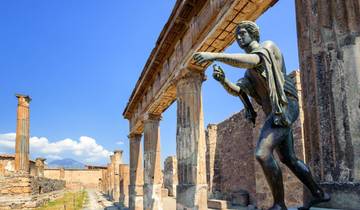
4 days
Discovering Amalfi Coast
- ✓ Comprehensive Pompeii tour
- ✓ Expert local guides included
- ✓ All accommodation arranged
- ✓ Transportation provided
Multi-day tour packages powered by TourRadar. Prices and availability subject to change.
Things to See in Pompeii: Uncovering the History and Highlights
As one of Italy’s most visited destinations, this archaeological site demands advance planning for an optimal experience. Visitors should book tickets online to avoid long queues at the entrance. There are separate lines for those with pre-purchased tickets and those buying on arrival.
Grabbing a map upon entry is crucial for navigating the extensive grounds. The archaeological site covers nearly 170 acres with streets, buildings, and residences waiting for discovery. New excavations continue to reveal fresh insights into Roman life.
Our guide helps visitors prioritize their limited time by categorizing attractions into manageable sections. This approach prevents fatigue and ensures you see pompeii‘s most significant highlights.
| Attraction Category | Key Examples | Time Recommended | Visitor Experience |
|---|---|---|---|
| Public Spaces | Forum, Basilica | 45-60 minutes | Civic and political life |
| Entertainment Venues | Theaters, Amphitheater | 60-75 minutes | Roman leisure activities |
| Residential Areas | Villas, Domus | 90-120 minutes | Domestic life and art |
| Commercial Districts | Shops, Markets | 30-45 minutes | Daily commerce |
Strategic planning transforms an overwhelming visit into a focused journey through history. This overview serves as your roadmap to see pompeii‘s interconnected stories. Each category reveals different aspects of ancient urban existence.
The Plaster Casts: Preserving Final Moments
One of the most emotionally powerful experiences at this archaeological site comes from encountering the plaster casts preserved in volcanic ash. These haunting artifacts transform abstract history into personal tragedy.
Historical Significance of the Casts
In the 1870s, archaeologists developed an innovative technique. They poured liquid plaster into cavities left by decomposed bodies in the hardened ash. When the plaster solidified, it revealed the exact forms of victims from that fateful day.
This process created three-dimensional records of people’s last moments. The casts capture final expressions and poses with remarkable detail. They serve as irreplaceable human dimension to the site’s story.
The Human Stories Frozen in Time
Scattered throughout the ruins, these casts reveal individual human stories. Visitors can see families huddled together in the Garden of the Fugitives. A chained dog struggles futilely in the Horrea granary.
Each cast tells a story of desperation and hope. They show how quickly the catastrophe unfolded. People died in protective poses, captured forever in volcanic ash.
These artifacts remind us of the fragility of life across centuries. They transform the site from ancient ruins to profound human encounter.
Roman Baths: Social and Hygienic Traditions
The Roman baths stand as remarkable institutions that reveal much about daily life in the ancient city. For the ancient romans, these complexes served as vital community centers where people from all classes gathered. They combined hygiene with social interaction in sophisticated architectural spaces.
Our exploration begins with the impressive Stabian Baths, the oldest and largest complex. This grand establishment featured separate facilities for men and women. Visitors can still see the extensive palaestra where gladiators once trained.
Stabian Baths: Grandeur and Relaxation
The bathing ritual followed a precise sequence through different temperature rooms. Ancient romans would begin in the warm tepidarium before progressing to the hot caldarium. The experience concluded with an invigorating cold plunge in the frigidarium.
Beneath the floors, an advanced hypocaust system circulated hot air. This engineering marvel maintained perfect temperatures throughout the bath complex. The scale of these baths demonstrates their importance to urban life.
Forum Baths: Community and Culture
The forum baths offered a more intimate bathing experience with exquisite decorations. Elaborate stucco reliefs and terracotta figures adorned the walls. These artistic elements transformed hygiene into an aesthetic pleasure.
Both complexes functioned as social equalizers where business deals were made and friendships formed. A visit to the baths could last hours, incorporating exercise, massage, and conversation. These institutions reflected Roman values of community, cleanliness, and sophisticated living.
Civic Center: The Forum and Its Sacred Temples
At the very core of Pompeii’s urban layout stood the Forum, a magnificent civic center that served as the city’s political, religious, and social hub. This expansive area represented the quintessential ancient Roman approach to urban design.
The space was meticulously planned with travertine paving and elegant colonnades. These architectural elements created a defined public space for community activities.
Temple Highlights: Jupiter, Apollo, and More
Surrounding the Forum stood temples dedicated to major Roman gods. The Temple of Jupiter commanded attention with its strategic positioning.
Visitors today can appreciate how Mount Vesuvius framed this sacred structure. The Temple of Apollo represents the oldest religious building in the city.
Corinthian columns supported its classical design. Citizens once celebrated festivals honoring this important god here.
The Forum as the Heart of Public Life
This central area functioned as Pompeii’s ultimate multipurpose space. Citizens conducted business, attended council meetings, and worshipped the gods.
The Basilica served as both courthouse and marketplace. People also visited the forum baths as part of their daily routine.
Our exploration reveals how religious and civic authority intertwined in this space. The Forum encapsulated Roman values during its peak time.
Dramatic Arenas: Pompeii’s Theatres
Within Pompeii’s entertainment district, two remarkable theaters stand as testament to the city’s vibrant cultural life. These structures reveal how performance arts were integral to Roman society. Visitors on a guided tour can explore this fascinating area where ancient citizens gathered for entertainment.

Teatro Grande: The Spectacle of the Stage
The Teatro Grande represents one of Rome’s earliest stone theaters, dating from the 2nd century BC. This massive venue could accommodate 5,000 people on its numbered marble seats. The semi-circular design ensured excellent acoustics for all spectators.
Performances ranged from Greek tragedies to Roman comedies, often during religious festivals. The theater’s main entrance still impresses visitors today. Its scale demonstrates the importance of public entertainment in ancient society.
Teatro Piccolo: Intimate Performances
Adjacent to the large theater stands the more intimate Teatro Piccolo. This covered venue from the 1st century BC hosted musical performances for elite audiences. With only 800 seats, it offered exceptional acoustics under its original domed roof.
The contrast between the two theaters shows how entertainment was stratified. While the larger venue hosted popular games and dramas, the smaller one catered to refined tastes. Both structures make this site a highlight for any tour.
Ancient Entertainment: The Amphitheatre Experience
Pompeii’s amphitheater stands as the oldest surviving Roman arena, predating Rome’s Colosseum by more than a century. Built in 70 BC by magistrates Caius Quinctius Valgus and Marcus Porcius, this monumental structure could accommodate 20,000 people—nearly half the city‘s population.
Gladiator Battles and Public Spectacles
The arena hosted violent yet celebrated games featuring gladiators who fought for their lives. These slave warriors faced exotic animals and public executions during feast days.
Despite their slave status, gladiators were worshipped for martial prowess. The amphitheater created rare moments when social hierarchies softened through shared excitement.
During a notorious riot in 59 AD, violence between spectators led to a ten-year closure. The arena reopened after just three years, only to be silenced by Vesuvius less than two decades later.
| Event Type | Frequency | Social Impact | Modern Equivalent |
|---|---|---|---|
| Gladiator Combat | Regular festivals | Class mingling | Professional sports |
| Animal Hunts | Special occasions | Power display | Circus performances |
| Public Executions | Judicial events | Legal reinforcement | Public ceremonies |
| Theatrical Spectacles | Religious holidays | Cultural unity | Music festivals |
These games served multiple functions beyond entertainment. They reinforced Roman values and political power during a pivotal time in history. The amphitheater’s legacy continues to fascinate visitors to this day.
Exploring Pompeii’s Bustling Streets and Markets
Walking through Pompeii’s ancient streets reveals a commercial landscape that feels remarkably contemporary. The city’s thoroughcomes were lined with shops and eateries serving busy urbanites. Our exploration focuses on establishments that shaped daily life in this vibrant community.
Thermopolia and Daily Roman Life
Pompeii hosted over 80 thermopolia, serving as ancient fast-food venues. These places featured street-facing counters with embedded jars holding prepared food and wine. Ancient Romans could grab quick meals during their busy day.
Menus were often painted directly on walls behind the counters. Shrines to Bacchus and Mercury brought prosperity to these businesses. The way these establishments operated mirrors modern takeout culture strikingly.
In 2019, archaeologists uncovered an exceptionally preserved thermopolium in Region V. Opened to the public in 2021, it features vibrant frescoes of animals and mythological scenes. This discovery provides unprecedented insight into Roman dining habits.
| Thermopolium Feature | Ancient Function | Modern Equivalent | Social Significance |
|---|---|---|---|
| Street Counter | Quick service point | Fast-food counter | Urban efficiency |
| Embedded Jars | Food/wine storage | Heated display case | Ready-to-serve meals |
| Painted Menus | Visual ordering aid | Digital menu boards | Consumer convenience |
| Takeaway Containers | Clay vessels | Paper packaging | Mobile dining culture |
These everyday places reveal more about Roman life than grand monuments. They show how people actually lived their day-to-day way of life. The thermopolia demonstrate that urban dining culture has changed surprisingly little over two millennia.
Luxurious Residences: The Heart of Pompeii
The true heart of Pompeian society beats within its magnificent private homes. Wealthy citizens transformed their residences into showcases of cultural sophistication. These domestic spaces reveal how elite Romans lived behind closed doors.

House of Menander: Artistry and Elegance
The House of Menander takes its name from a portrait of the Greek playwright discovered within. This sprawling residence features multiple rooms arranged around a central courtyard. The magnificent peristyle garden creates an elegant outdoor area.
Visitors admire frescoes depicting scenes from Homer’s Odyssey throughout the various rooms. The artistic decorations include intricate mosaics and detailed wall paintings. This home serves as a perfect example of Roman domestic luxury.
House of Vettii and Other Notable Domus
The recently reopened House of Vettii showcases remarkable preservation. Two former slaves built this grand home after succeeding in the wine trade. Its name reflects the brothers’ family lineage.
The main dining room features exquisite scenes of mythological figures. A beautiful peristyle courtyard provides natural light to surrounding rooms. These residences demonstrate how Romans organized living spaces around central courtyard areas.
Cultural Reflections: Art, Mosaics, and Frescoes
Beyond the architectural marvels, Pompeii’s true cultural legacy shines through its extensive collection of artistic masterpieces. The city’s walls and floors serve as vibrant canvases that reveal the aesthetic sophistication of ancient roman society.
Iconic Mosaics and Fresco Cycles
The House of the Faun contains one remarkable example of artistic achievement. Its famous Alexander Mosaic depicts a dramatic battle scene with incredible detail. This masterpiece demonstrates how mosaics captured historical moments for eternity.
Another fascinating example appears at the House of the Tragic Poet. The “Cave Canem” mosaic served as both warning and artistic statement. These intricate decorations transformed functional spaces into galleries.
Insights into Everyday Life and Mythology
The Villa of Mysteries presents breathtaking fresco scenes across its walls. These vivid depictions show initiation rituals into secret cults. The dynamic scenes reveal religious practices that shaped daily life.
These artistic works provide invaluable glimpses into Roman life and beliefs. They show us the way people expressed their worldview through art. The vibrant colors remain stunning even today, preserved through time by volcanic ash.
Each piece of art tells a story about ancient roman culture. The elaborate decorations in wealthy homes reflected social status and education. This artistic legacy continues to inspire visitors centuries later.
Guided Tours and Insider Tips for a Memorable Visit
A well-organized approach to exploring Pompeii allows visitors to efficiently discover the site’s most compelling highlights while avoiding common pitfalls. Strategic planning transforms what could be an overwhelming experience into a focused historical journey.
How to Navigate the Extensive Ruins
Pompeii spans 163 acres with winding ancient streets. Grabbing a detailed map at the entrance is essential for orientation. Plan your route to connect priority sites logically.
Consider starting early to avoid midday heat and crowds. Comfortable walking shoes are mandatory for uneven stone paths. Pace yourself across several hours of exploration.
Booking Tours and Skip-the-Line Advice
Pre-booking tickets online saves valuable time. Separate lines exist for pre-purchased tickets versus on-site sales. Skip-the-line options are recommended except during winter months.
Hiring an expert guide enhances the experience significantly. They navigate efficiently and provide scholarly context. Standard two-hour tours cover main highlights, while longer options offer deeper exploration.
| Tour Duration | Coverage Level | Best For | Experience Depth |
|---|---|---|---|
| 2 hours | Main highlights | Time-limited visitors | Essential overview |
| 3-4 hours | Comprehensive sites | Serious explorers | Detailed context |
| 6+ hours | Full immersion | History enthusiasts | Scholarly insights |
Private tours with archaeologists provide customized routes. They help you see pompeii‘s hidden gems beyond standard paths. This way ensures a memorable visit that maximizes your limited day.
Conclusion
The volcanic ash that destroyed this ancient city paradoxically created history’s most complete time capsule. Pompeii’s eruption preserved an entire urban landscape in remarkable detail.
This archaeological site offers more than ruined buildings. It provides intimate human connections across millennia. Visitors walk where people lived their final moments.
The site reveals diverse aspects of Roman life. From grand temples to humble homes, each area tells part of the story. Even today, new discoveries continue to emerge.
Pompeii remains both a memorial and a classroom. It honors those lost while teaching us about ancient civilization. This special place transforms history from abstract to tangible.
Your visit becomes a profound journey through time. The experience connects you directly with people from another era. Few places on earth offer such powerful immersion.
The city frozen by ash continues to captivate worldwide. This unique archaeological site stands as a testament to human resilience. The tragic eruption created an eternal window into the past.