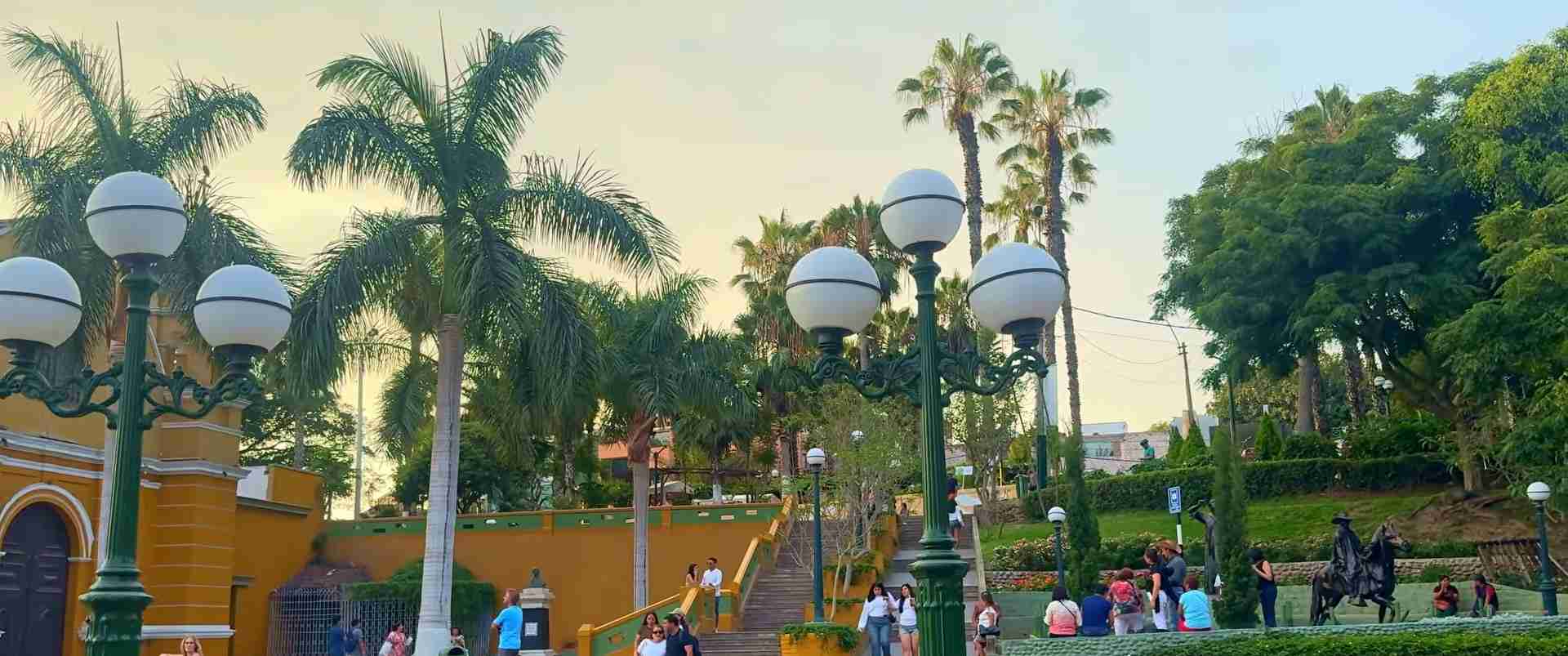
The Ultimate Guide to Barranco: Lima’s Most Vibrant and Artistic District
Barranco stands as Lima’s bohemian heart, where colonial-era elegance meets contemporary creativity in a seaside district that has captivated artists, musicians, and cultural seekers for generations. Once an exclusive aristocratic beach retreat destroyed and reborn through war, this neighborhood now pulses with street art, world-class museums, and an artistic energy that makes it essential to understanding Peru’s cultural identity.
Key Takeaways:
- Barranco evolved from an 18th-century fishing village to Lima’s most significant artistic and bohemian district, preserving colonial architecture while embracing contemporary creativity
- The district houses three world-class museums including MATE (Mario Testino’s photography museum), MAC Lima (Peru’s only museum dedicated exclusively to contemporary art), and the Pedro de Osma Museum showcasing colonial masterpieces
- The Puente de los Suspiros (Bridge of Sighs) anchors the district’s romantic heritage, connecting visitors to the Bajada de los Baños pathway that descends through street art and colonial mansions to Pacific beaches
- Republican-era mansions throughout Barranco have been transformed into galleries, boutique hotels, restaurants, and cultural spaces, creating a living museum of 19th-century architecture repurposed for modern creative industries
- The district’s microclimate—warmer and drier than surrounding Lima neighborhoods due to protective cliffs—made it historically attractive as a beach resort and continues to enhance its walkability
- Barranco’s street art scene features internationally recognized muralists like Jade Rivera alongside temporary installations and pop-up galleries, with new works appearing constantly throughout the district
- Contact us by filling out the trip planner form, and our partner’s expert travel advisors will work closely with you to create your tailor-made itinerary (Free Service)
People Also Ask About Barranco Lima
What Makes Barranco Different From Other Lima Districts
Barranco distinguishes itself through its preserved colonial architecture combined with Peru’s most concentrated artistic community. Unlike the polished commercial centers of Miraflores or San Isidro, Barranco retains the architectural character of Lima’s Republican era (late 19th to early 20th century) with grand mansions, decorative balconies, and narrow cobblestone streets that have been repurposed rather than demolished. The district’s transformation from aristocratic beach resort to bohemian cultural center created a unique environment where historic buildings house contemporary galleries, street artists work alongside established museums, and the pace remains deliberately slower and more social than Lima’s business districts.
The Monumental Zone designation protecting most of Barranco since 1972 ensures that new development respects the district’s architectural heritage. This legal protection has prevented the high-rise construction that transformed neighboring areas, maintaining Barranco’s village-like character despite being part of metropolitan Lima. The result is a walkable district where colonial-era structures and modern creativity coexist authentically.
Why Is the Bridge of Sighs Famous in Lima
The Puente de los Suspiros achieves its fame through a combination of romantic legend, musical immortalization, and architectural symbolism. Built in 1876 to connect devotees to the Hermitage of Barranco across a ravine, this wooden pedestrian bridge spans 44 meters and became known for couples meeting here to exchange sighs of love. Peruvian composer Chabuca Granda elevated the bridge to national icon status with her 1960 waltz “El Puente de los Suspiros,” which described it as poetry waiting “with its quiet wood, every afternoon.” Her song transformed a functional footbridge into a symbol of Lima’s romantic and artistic soul.
Local tradition holds that first-time visitors who cross the bridge while holding their breath will have their wish granted. The bridge’s destruction and rebuilding after the 1881 War of the Pacific adds historical weight to its romantic associations, representing Barranco’s resilience and rebirth. Today it serves as the district’s most photographed landmark and the symbolic gateway to the Bajada de los Baños pathway leading to the sea.
How Did Barranco Become Lima’s Artistic Center
Barranco’s artistic transformation occurred through decades of gradual economic decline followed by creative reclamation. After thriving as an aristocratic beach resort through the early 20th century, the district entered a period of deterioration starting in the 1960s when successive governments allowed infrastructure to decay. Grand mansions fell into disrepair, property values dropped, and crime increased. This decline paradoxically created opportunity: artists, writers, and musicians found affordable space in deteriorating colonial structures that would have been prohibitively expensive to maintain as residences.
By the 1970s and 1980s, Barranco had established itself as Lima’s bohemian quarter, with bars, studios, and informal galleries filling former aristocratic homes. The 1972 Monumental Zone designation provided legal protection for the district’s architecture while the presence of creative communities began attracting cultural institutions. The 1996 opening of the Pedro de Osma Museum, followed by MATE in 2012 and MAC Lima in 2013, formalized Barranco’s position as Peru’s premier arts district. Street artists claimed exterior walls, boutique hotels restored mansions with design sensibility, and restaurants opened in colonial courtyards, creating the contemporary artistic ecosystem that defines Barranco today.
What Museums Should You Visit in Barranco
Barranco contains three essential museums representing different aspects of Peru’s artistic heritage. MATE—Museo Mario Testino showcases the work of Peru’s most internationally renowned fashion photographer in a beautifully restored 19th-century Republican mansion. The permanent collection explores Testino’s fashion photography for Vogue and Vanity Fair alongside his “Alta Moda” series documenting traditional Peruvian costumes, plus his famous portraits of Princess Diana. The museum’s eight rooms divide his work thematically, and temporary exhibitions feature contemporary Peruvian and international artists. MATE operates as a non-profit dedicated to supporting Peru’s creative industries.
MAC Lima—the Museum of Contemporary Art—stands as Peru’s only institution devoted exclusively to contemporary artistic practices. Founded in 2013 by the Contemporary Art Institute (established in the 1950s), MAC Lima occupies a modern building within expansive park grounds. The museum’s three galleries (100, 200, and 1,000 square meters) present rotating exhibitions from its collection spanning 1950 to the present, plus temporary shows featuring emerging and established Latin American artists. The surrounding park provides green space rare in central Lima, with families using the grounds and a crêperie offering respite from urban density.
The Pedro de Osma Museum preserves colonial and viceroyal art in an impeccably maintained 19th-century manor. Opened to the public in 1996, the museum displays Pedro de Osma Gildemeister’s collection of Peruvian art from the 16th through 19th centuries, including gold and silver icons, colonial furniture, religious sculptures and paintings, and a recent wing dedicated to pre-Inca Tiahuanaco and Inca cultural objects. The museum’s architecture itself—a perfectly preserved Republican-era residence—demonstrates the aristocratic lifestyle that defined Barranco during its beach resort years.
Extended multi-day tours – 5+ days
Featured Lima Multi-Day Tour Packages

3 days
Lima 3-Day Discovery Tour
- ✓ Comprehensive Lima experience
- ✓ Expert local guides included
- ✓ All accommodation included
- ✓ Transportation provided
5 days
Lima 5-Day Highlights Experience
- ✓ Comprehensive Lima experience
- ✓ Expert local guides included
- ✓ All accommodation included
- ✓ Transportation provided
7 days
Lima 7-Day Cultural Journey
- ✓ Comprehensive Lima experience
- ✓ Expert local guides included
- ✓ All accommodation included
- ✓ Transportation provided

10 days
Lima 10-Day Complete Adventure
- ✓ Comprehensive Lima experience
- ✓ Expert local guides included
- ✓ All accommodation included
- ✓ Transportation provided
Multi-day tour packages powered by TourRadar. Prices and availability subject to change.
Introduction
Barranco occupies a unique position in Lima’s urban geography and cultural imagination. Located along the Pacific coast approximately 10 kilometers south of Lima’s historic center, this district of roughly 35,000 residents represents just three square kilometers of metropolitan Lima’s vast expanse. Yet its influence on Peru’s artistic and cultural identity vastly exceeds its geographic size. Barranco functions as Lima’s creative laboratory—the place where street artists experiment with murals that later appear in galleries, where musicians develop sounds that define Peruvian rock and electronic music, where chefs reimagine traditional recipes in restaurants that become destinations, and where writers and poets gather in bars that have hosted intellectual conversations for generations.
The district’s physical character immediately distinguishes it from Lima’s other neighborhoods. While Miraflores presents polished modernism and San Isidro displays corporate towers, Barranco retains the architectural texture of Peru’s Republican era. Grand mansions with ornate balconies, wide staircases designed for ocean air circulation, and courtyards built for social gathering line streets that follow the irregular topography rather than a rigid grid. Many of these structures show their age—paint peeling, facades weathered, decorative elements missing—yet this imperfection contributes to Barranco’s authentic character. The district chose preservation over perfection, repurposing colonial architecture rather than replacing it.
Barranco’s history reads as a series of dramatic transformations. Beginning as a humble fishing settlement in the 18th century, it evolved into an exclusive aristocratic retreat during the Republican era, suffered near-total destruction during the War of the Pacific in 1881, rebuilt itself as Lima’s premier beach resort, declined into urban deterioration during the mid-20th century, and emerged as Peru’s bohemian arts capital by the late 20th century. Each phase left physical and cultural traces that remain visible today. The fishermen’s descent to the sea (Bajada de los Baños) now connects art galleries and restaurants. The aristocratic mansions have become boutique hotels and museums. The decline that drove away wealthy families created the affordable spaces that attracted artists. The contemporary renaissance that began in the 1990s continues to evolve, with new galleries, restaurants, and cultural spaces opening regularly.
Understanding Barranco requires recognizing how geography shapes culture. The district’s microclimate—warmer and drier than much of Lima due to protective cliffs that block cold humid winds from the south—made it attractive as a beach destination in the 19th century and makes it pleasant for extended walks today. The ravines that cut through the district (one near Armendariz Avenue separating Barranco from Miraflores, another in the central area at Bajada de los Baños) create topographic variety rare in coastal Lima, with dramatic cliff-edge views of the Pacific. These natural features combined with colonial architecture produce a setting that feels distinctly different from Lima’s flatter, more regularized districts.
This guide explores Barranco comprehensively: its historical development from fishing village to artistic center, the architectural heritage that defines its visual character, the museums and cultural institutions that anchor its creative economy, the street art and galleries that make it Peru’s visual arts capital, the restaurants and bars that created Lima’s bohemian dining scene, the beaches and oceanfront spaces that connect it to the Pacific, the literary and musical traditions that found home here, and the practical information visitors need to experience the district authentically. Whether spending a single afternoon exploring its iconic landmarks or multiple days immersing in its creative communities, understanding Barranco requires appreciating how layers of history, preservation of architecture, and commitment to artistic expression created Lima’s most distinctive urban environment.
Historical Evolution of Barranco: From Fishing Village to Artistic Haven
The Fishing Village Origins and Colonial Foundations
Barranco’s documented history begins in the 18th century as a small fishing settlement perched on Lima’s southern coastal cliffs. The indigenous and mestizo families who established this community chose the location for its proximity to productive Pacific fishing grounds and the ravines that provided natural pathways to the sea. These early inhabitants built modest dwellings from cane, wood, and mud along what would become the Bajada de los Baños, living without formal urban services and drawing water from hillside streams. The settlement’s name derives from the Spanish word for ravine, describing the prominent geographic feature that defined the community’s character and challenged its development.
Legend intermingles with documentary history regarding the Hermitage of Barranco, the religious structure that became the settlement’s spiritual center. According to tradition, two Indian fishermen lost at sea during thick fog spotted a luminous cross on the clifftop that guided them safely to shore. Interpreting this as divine intervention, they spread word of the miracle, prompting religious authorities to authorize construction of a hermitage on the site where the saving light appeared. Built during the mid-18th century from adobe and quincha (a traditional material combining cane and mud), the hermitage attracted devotees who made pilgrimages to venerate the cross. This religious significance gave the small fishing community a purpose beyond subsistence, establishing Barranco as a destination for Lima’s Catholic population.
The hermitage’s location on the clifftop created a practical problem: devotees approaching from inland Lima encountered a ravine blocking direct access. Pilgrims were forced to walk the entire length of the gorge to reach the chapel, a journey consuming hours. This accessibility challenge would eventually lead to construction of the Bridge of Sighs, but during the colonial period, Barranco remained a peripheral settlement—religiously significant due to its hermitage, economically sustained by fishing, geographically isolated by its ravines, and architecturally humble in its construction.
The Aristocratic Beach Resort Era and Republican Transformation
Barranco’s transformation from fishing village to exclusive resort occurred during Peru’s Republican era (roughly 1890s to 1930s), driven by the combination of railroad access, changing leisure patterns among Lima’s elite, and the district’s favorable microclimate. The Lima-Chorrillos railroad, completed in the mid-19th century, passed through Barranco and provided transportation that previously difficult topography had denied. On October 26, 1874, authorities officially recognized the District of Barranco (initially named San José de Surco), acknowledging its growing importance as Lima’s population expanded southward along the coast.
Late 19th-century Peru experienced the same leisure revolution occurring across the industrializing world: urban elites sought seaside retreats where they could escape city heat, breathe ocean air, and socialize away from commercial centers. Barranco’s position offered multiple advantages. The cliffs of neighboring Chorrillos blocked cold humid winds from the south, creating a microclimate notably warmer and drier than central Lima, particularly during the foggy months from May through October. The district’s beaches provided direct Pacific access. Its elevated position offered ocean views. And crucially, it remained close enough to Lima for weekend visits while feeling sufficiently removed to function as a retreat.
Lima’s aristocracy responded by constructing elaborate summer residences throughout Barranco. These weren’t the modest structures of the fishing community but grand mansions in Republican architectural style: two-story buildings with ornate wooden balconies, high ceilings designed for air circulation, wide staircases, interior courtyards for social gathering, and decorative facades displaying the owners’ wealth and taste. The district developed social infrastructure to match its architectural pretensions: a grand boardwalk and pier were constructed along the waterfront, making Barranco the place for Lima’s high society to promenade on weekends. Fine restaurants, social clubs, and entertainment venues followed the wealthy families.
A funicular railway inaugurated on July 28, 1896, transported visitors (24 passengers per trip) from the clifftop district to Barranco’s beaches below, eliminating the need to navigate steep pathways on foot. The district’s streets filled with both rustic ranches maintaining the area’s fishing heritage and elegant mansions serving as summer homes. Barranco had successfully transformed from peripheral fishing settlement to Lima’s most fashionable beach destination within a generation, establishing the architectural character and social prestige that would define it for decades.
Destruction and Rebirth: The War of the Pacific and Reconstruction
Barranco’s ascent as aristocratic playground ended abruptly on January 13, 1881, during the War of the Pacific between Peru and Chile. Following the battered Peruvian army’s defeat at the Battle of San Juan, Chilean forces occupied Lima and its surrounding districts. Historical accounts describe the victorious soldiers celebrating their triumph by systematically looting and burning captured territories. Barranco suffered extensive destruction during this occupation. The Hermitage of Barranco, the religious structure that had anchored the community’s identity since the 18th century, was damaged by flames. The Bridge of Sighs, built just five years earlier in 1876, was destroyed. Colonial mansions and infrastructure throughout the district suffered damage or complete loss.
The destruction forced Barranco to rebuild from ruins. In 1882, immediately following the end of Chilean occupation, reconstruction began on the hermitage, this time in neo-Gothic style rather than reproducing the original colonial structure. Public collections and private donations funded the rebuilding, and the chapel was renamed “Templo de la Santísima Cruz” (Temple of the Holy Cross). The Bridge of Sighs was reconstructed in 1883, maintaining its original wooden design as a practical pedestrian crossing rather than attempting architectural grandeur. Throughout the district, property owners faced decisions about whether to rebuild, sell, or abandon their damaged estates.
Despite this setback, or perhaps because of it, Barranco emerged from reconstruction with renewed energy. The district’s official recognition as one of Peru’s “Heroic Cities” (alongside Chorrillos and Miraflores) on June 14, 1962, commemorated its sacrifice during the War of the Pacific. By the 1890s and into the early 20th century, Barranco had not only recovered but expanded its reputation as Lima’s premier beach resort. New mansions rose alongside reconstructed buildings. The district achieved town status in 1893 and city status in 1901, reflecting its growing population and urban development. This post-war period represents Barranco’s zenith as an exclusive aristocratic destination, with the architectural legacy from this era forming the Republican-style buildings that characterize the district today.
Mid-Century Decline and the Seeds of Bohemian Transformation
Barranco’s decline from aristocratic paradise began gradually in the mid-20th century, accelerated by changing urban patterns, economic shifts, and government neglect. As Lima’s population exploded and the metropolitan area expanded, Barranco’s position shifted from exclusive retreat to integrated urban neighborhood. Wealthy families who had maintained Barranco mansions as summer retreats increasingly chose to live year-round in newer districts like San Isidro or to abandon Lima’s coast entirely for suburban developments. The grand Republican-era homes required expensive maintenance, and as original owners aged or died, heirs often lacked interest in preserving structures built for a vanished social era.
Starting in the 1960s, successive Peruvian governments failed to invest in Barranco’s infrastructure while the district’s tax base eroded. Buildings fell into disrepair as maintenance became unaffordable. Property values declined. Crime rates increased. The district that had once represented Lima’s social pinnacle became associated with urban decay, graffiti, and deteriorating structures. Aristocratic mansions stood abandoned or divided into multiple apartments, their original grandeur visible beneath layers of neglect. By the 1970s and 1980s, Barranco had transformed from exclusive destination to cautionary example of urban decline.
Yet this deterioration created unexpected opportunity. Artists, writers, musicians, and other creative workers—historically operating with limited financial resources—discovered that Barranco’s decline made it affordable. The same mansions that wealthy families abandoned offered creative workers space impossible to afford in thriving districts. High ceilings provided natural light for studios. Courtyards became informal gallery spaces. Large rooms accommodated communal living or artistic collaboration. The district’s bohemian transformation began not through planning but through economic necessity, as artists occupied the affordable spaces that economic decline had created.
By the 1970s, Barranco’s character had fundamentally shifted. Bars and cafes catering to artistic communities opened in ground floors of colonial buildings. Writers and poets gathered at venues like Juanito de Barranco, a bar that became legendary as a meeting place for intellectual conversation. Musicians developed Peru’s rock and nueva canción movements in Barranco venues. Visual artists claimed studio space and began exhibiting in informal galleries. The street art that would later define Barranco’s visual identity started appearing on deteriorating walls, transforming blight into canvas. The district developed a reputation as Lima’s bohemian quarter, attracting creative workers from across Peru and international artists drawn to its affordable rents and emerging scene.
Preservation and Renaissance: Barranco’s Contemporary Cultural Emergence
Barranco’s renaissance began with legal protection rather than private investment. The 1972 designation of most of the district as the Monumental Zone of Barranco placed its architecture under special regime protecting historical heritage. This protected status prevented wholesale demolition and redevelopment, ensuring that Barranco’s Republican-era character would survive even if individual buildings continued deteriorating. The protection proved crucial: while neighboring districts replaced colonial structures with high-rises, Barranco retained its architectural identity through the difficult decades of the 1970s and 1980s.
The 1990s brought the first signs of systematic cultural investment. The Pedro de Osma Museum opened to the public in 1996, transforming a perfectly preserved 19th-century manor into a showcase for colonial and viceroyal art. This represented the first major cultural institution to commit to Barranco permanently, signaling that the district’s heritage held value beyond nostalgic preservation. Local and national governments began modest infrastructure improvements, recognizing that Barranco’s unique character represented cultural capital worth protecting. Property owners started viewing restoration as economically viable, particularly as Lima’s overall economy improved through the 1990s and early 2000s.
The 2010s witnessed Barranco’s full emergence as Lima’s premier arts district. MATE—Museo Mario Testino opened in 2012 in a restored Republican-era mansion, bringing international attention to Barranco through Mario Testino’s celebrity photographer status. The museum’s opening demonstrated that world-class cultural institutions could thrive in Barranco’s unique environment. MAC Lima followed in 2013, establishing Peru’s only museum dedicated exclusively to contemporary art on park grounds donated by the Municipality of Barranco. These institutions attracted visitors who then explored surrounding galleries, restaurants, and shops, creating an ecosystem where cultural tourism supported creative businesses.
Boutique hotels began restoring colonial mansions with design sensibility, marketing Barranco’s architectural heritage and artistic character rather than trying to hide or minimize them. Restaurants opened in colonial courtyards and along the Bajada de los Baños, transforming the historic fishermen’s pathway into Lima’s most scenic dining destination. Galleries proliferated throughout the district, showing everything from emerging local artists to internationally recognized names. Street art evolved from simple graffiti to sophisticated murals created by commissioned artists, with Jade Rivera and other Peruvian muralists developing international reputations through works initially created on Barranco’s walls. The district maintained its role as affordable workspace for emerging artists while simultaneously becoming a destination for established creative professionals and cultural tourists.
Today’s Barranco represents the culmination of this multi-century evolution. The fishing village origins remain visible in the Bajada de los Baños pathway to the sea and in the district’s continued connection to Pacific beaches. The aristocratic resort era lives on through Republican mansions that define the architectural character. The mid-century decline created the affordable spaces and bohemian character that made artistic transformation possible. The contemporary renaissance balances preservation with evolution, maintaining Barranco’s essential identity while adapting to new creative and commercial opportunities. The district functions simultaneously as living museum, working arts community, dining destination, architectural preservation zone, and bohemian neighborhood—a complexity that makes it Lima’s most culturally significant urban environment.
Architectural Heritage: Republican Elegance and Preserved Colonial Character
Understanding Republican Architecture in Barranco
Barranco’s architectural identity derives primarily from the Republican era (approximately 1890s-1930s), when Peru’s aristocracy constructed elaborate summer residences reflecting both European influences and local adaptations to climate and culture. Republican architecture represents Peru’s attempt to establish visual identity distinct from Spanish colonial precedents while drawing inspiration from French, Italian, and British architectural movements of the period. The style combines neoclassical proportions, Art Nouveau decorative elements, and practical features addressing Lima’s coastal climate.
The typical Republican mansion in Barranco follows recognizable patterns. Two-story construction maximizes limited urban lots while providing separation between public and private spaces. The ground floor traditionally housed formal reception rooms, dining areas, and service spaces opening onto an interior courtyard. Upper floors contained family bedrooms and sitting rooms. This vertical organization reflected social hierarchies while creating comfortable living spaces elevated above street level to capture ocean breezes.
Ornate wooden balconies projecting from upper floors represent Republican architecture’s most distinctive visual feature. These enclosed balconies (distinct from the simple railings found in Spanish colonial style) served multiple functions: providing shaded outdoor space, offering views without exposure to direct sun, creating visual interest through carved woodwork, and displaying owners’ wealth through elaborate construction. The finest examples feature turned balusters, decorative brackets, and intricate geometric patterns requiring skilled craftsmanship. Many balconies extend across entire facades, creating continuous viewing galleries that emphasize the horizontal while contrasting with buildings’ vertical massing.
Interior courtyards formed the social and functional heart of Republican homes. These open-air spaces brought natural light deep into building interiors, provided air circulation through Lima’s humid months, created protected outdoor areas for family gathering, and often featured elaborate tile work and plantings demonstrating owners’ taste. Service areas typically arranged around courtyard perimeters, keeping cooking and cleaning activities separated from formal spaces while maintaining easy access. The courtyard design also allowed houses to occupy irregular lots by wrapping rooms around central open space rather than requiring rectangular footprints.
High ceilings throughout these structures—often 4 to 5 meters in formal rooms—facilitated air circulation essential for comfort before modern climate control. The height created visual grandeur while serving practical thermal regulation, allowing hot air to rise away from living areas. Wide staircases connecting floors combined functionality with opportunity for architectural display through carved banisters, decorative newel posts, and dramatic proportions. Windows sized for both light and ventilation often featured colored glass in transom panels, decorative moldings, and shutters that could be adjusted throughout the day to control sun exposure.
Exterior facades communicated social status through decorative elaboration. Molded cornices crowned buildings, creating visual termination while concealing roof structures. Pilasters (decorative columns attached to walls) divided facades into vertical bays, adding classical proportions to otherwise simple rectangular volumes. Window and door surrounds featured carved stone or molded plaster ornament. Some facades incorporated Art Nouveau organic motifs—stylized flowers, vines, or abstract curves—particularly in panel decorations and ironwork. The finest examples achieved coherent compositions balancing symmetry with decorative variety, creating landmarks within Barranco’s streetscape.
Color played important role in Republican architecture. Unlike the typically white Spanish colonial buildings of Lima’s historic center, Republican-era Barranco embraced chromatic variation: ochre, salmon, pale green, light blue, and cream appeared on facades, often with contrasting trim colors highlighting architectural details. This colorful palette contributed to the district’s visual distinctiveness and continues characterizing Barranco today, though many buildings show faded or peeling paint that paradoxically enhances their aged character rather than diminishing it.
The Puente de los Suspiros: Architectural Icon and Romantic Symbol
The Puente de los Suspiros (Bridge of Sighs) occupies disproportionate significance relative to its modest architectural qualities. This wooden pedestrian bridge spanning 44 meters across a ravine represents simple functional design elevated to cultural icon through romantic association, musical immortalization, and symbolic importance to Barranco’s identity. Built in 1876, destroyed in 1881, and rebuilt in 1883, the bridge has maintained its original character through subsequent renovations: straightforward wooden construction with railings and support posts painted in colors that have varied over time but typically emphasize its structure rather than attempting decoration.
The bridge’s architectural importance derives from its urban design function rather than its construction quality. It connects Ayacucho Street with the Paseo Chabuca Granda (formerly Pasaje Zepita) and the Hermitage of Barranco, creating a direct pedestrian route that would otherwise require extensive detours around the ravine. Standing 8.5 meters above the Bajada de los Baños pathway below, it saves the height difference while maintaining a gentle enough slope for comfortable crossing. The span creates an elevated viewing platform offering perspectives on Barranco’s ravine topography, the pathway descending to the sea, surrounding colonial architecture, and distant Pacific views.
The bridge’s name—”of sighs”—and its romantic associations emerged gradually rather than from original design intention. Early use saw devotees crossing to reach the hermitage, establishing the bridge as sacred pathway rather than lovers’ meeting place. As Barranco developed into aristocratic resort, the bridge’s position and views attracted couples seeking romantic settings. The enclosed character of the ravine created semi-private space within the public district. Young aristocrats meeting here exchanged sighs of love (or longing, or parting), and the bridge acquired its sentimental associations organically through decades of such encounters.
Chabuca Granda’s 1960 waltz “El Puente de los Suspiros” transformed local romantic tradition into national cultural symbol. Her lyrics personified the bridge as “poet waiting for me / With its quiet wood, every afternoon / And it sighs, and I sigh; it welcomes me and I leave it / Alone, over its wound, its ravine.” The song achieved immense popularity throughout Peru and across Spanish-speaking Latin America, making the bridge internationally recognized as symbol of Lima’s romantic soul. The municipality subsequently renamed the adjacent pathway Paseo Chabuca Granda in her honor, and a monument to the composer stands in the park north of the bridge.
Contemporary visitor experience focuses on the bridge’s symbolic rather than architectural qualities. The tradition of crossing while holding your breath to have a wish granted attracts constant participation, particularly from couples and tourists. The bridge’s position makes it Barranco’s most photographed location, with angles from the pathways above and below creating Instagram-ready compositions. Evening illumination emphasizes the bridge’s structure while creating romantic atmosphere. The surrounding area has been carefully maintained and landscaped, enhancing the setting without modernizing the bridge itself. The wooden construction—simple, functional, and repeatedly restored rather than replaced—embodies Barranco’s larger preservation philosophy of maintaining historic character while accepting that structures must evolve through time.
La Ermita and Religious Architecture
The Hermitage of Barranco (La Ermita) represents the district’s oldest continuously occupied structure and its spiritual foundation. Built during the mid-18th century in response to the miraculous cross legend, the original structure employed adobe and quincha construction typical of colonial religious buildings. Its clifftop position commanded views across the ravine to the Pacific while creating the access challenge that eventually necessitated the Bridge of Sighs. The hermitage established Barranco as pilgrimage destination, giving religious purpose to what would otherwise have remained a simple fishing settlement.
The 1881 destruction by Chilean forces damaged the hermitage extensively, requiring complete reconstruction. The 1882 rebuilding transformed the chapel’s architectural character by adopting neo-Gothic style rather than reproducing colonial precedents. This reflected late 19th-century architectural fashion while creating structure visually distinct from Lima’s predominantly Spanish colonial religious architecture. The neo-Gothic elements—pointed arch openings, vertical emphasis, simplified buttresses, and tower proportions—adapt European Gothic to modest scale appropriate for a neighborhood chapel rather than attempting cathedral grandeur.
The 1940 earthquake that devastated Lima’s central coast seriously damaged the reconstructed hermitage, forcing its closure for safety. The deteriorating structure stood abandoned for a year before the municipality decided that rebuilding the historic chapel was impractical, opting instead to construct a new parish church—the Church of the Holy Cross of Barranco—in a different location facing the municipal park. This new church assumed the hermitage’s religious functions while the original clifftop structure remained closed and threatened with collapse.
Subsequent restoration efforts have preserved the hermitage as historic monument rather than active church. The structure’s simple neo-Gothic character, weathered condition, and isolated clifftop position create romantic ruin aesthetic that enhances rather than diminishes its appeal. Visitors can view the exterior and appreciate its symbolic importance to Barranco’s founding narrative while the actual religious services occur in the newer parish church. This separation between historic monument and active worship facility represents pragmatic solution to preservation challenges while maintaining connection to Barranco’s spiritual heritage.
Colonial Mansions: Preservation Through Adaptive Reuse
Barranco’s Republican-era mansions survived demolition pressure through three mechanisms: legal protection via the Monumental Zone designation, economic transformation of the district making preservation economically viable, and creative adaptive reuse allowing historic structures to generate income rather than existing as expensive preservation burdens. The contemporary district showcases dozens of successfully adapted mansions now functioning as hotels, restaurants, galleries, museums, shops, and private residences, demonstrating that historic preservation and economic vitality can coexist when creativity and flexibility guide restoration decisions.
Boutique hotels represent the most visible adaptive reuse success stories. Properties like Hotel B, Second Home Peru, and Villa Barranco transformed deteriorating mansions into luxury accommodations that celebrate original architecture while providing modern amenities. These conversions typically preserve facades, decorative elements, room proportions, and courtyards while inserting contemporary infrastructure (plumbing, climate control, electrical systems, accessibility features) within historic structures. The design approach emphasizes contrast rather than imitation: modern furniture sits in rooms with original moldings, contemporary art hangs on colonial walls, minimalist bathrooms fit within ornate architectural shells. This honest layering of time periods creates distinctive environments that appeal to culturally sophisticated travelers willing to pay premium rates for authentic historic character.
Restaurants have similarly colonized Republican mansions throughout Barranco, with properties like Isolina (occupying a two-story colonial home) and numerous establishments along the Bajada de los Baños demonstrating how dining venues can activate historic architecture. These conversions often preserve exterior facades completely while reconfiguring interiors to accommodate commercial kitchen equipment and dining room layouts. Courtyards become outdoor dining areas. Former parlors transform into intimate dining rooms. Upper-floor balconies provide elevated seating with views. The architectural preservation adds atmospheric value that enhances the dining experience while the commercial success funds ongoing maintenance that private homeowners often couldn’t afford.
Art galleries and cultural spaces have proven particularly compatible with Republican architecture. The large, high-ceilinged rooms originally designed for aristocratic entertaining provide excellent exhibition space. Natural light from tall windows and courtyards suits artwork display. The buildings’ historical character complements art viewing, particularly for galleries showing colonial or traditional Peruvian work. Properties throughout Barranco function as combination gallery-studio-residence, with artists living upstairs while showing work in ground-floor spaces. This mixed-use pattern echoes the buildings’ original residential design while adapting them for creative economy needs.
The preservation challenges these adaptive reuses address should not be minimized. Republican-era construction employed materials and techniques requiring specialized knowledge to restore: hand-carved woodwork, traditional tile, lime-based plasters, adobe structural elements, quincha infill, and decorative finishes developed for specific climatic conditions. Modern building codes create tension with historic construction methods. Accessibility requirements conflict with buildings designed with multiple levels and no elevator provision. Seismic safety concerns in earthquake-prone Lima demand structural reinforcement that must be achieved without destroying historic fabric. Property owners and restoration architects navigate these challenges through compromise and creativity rather than rigid adherence to either pure preservation or complete modernization.
The result is a district where preservation occurs through pragmatic adaptation rather than museum-like freezing of the past. Buildings show their age honestly—paint fades, wood weathers, plaster cracks—while remaining structurally sound and functionally useful. The mixed condition creates visual texture and authentic character that sterile restoration would eliminate. Visitors experience Barranco’s architecture as living heritage actively used by contemporary communities rather than as preserved relics behind protective barriers. This vital preservation approach makes Barranco’s architectural heritage accessible and economically sustainable while maintaining the historical character that defines the district’s identity.
Museums and Cultural Institutions: Barranco’s Artistic Anchors
MATE – Museo Mario Testino: Fashion Photography and Peruvian Identity
MATE—Museo Mario Testino occupies a beautifully restored Republican-era mansion on Pedro de Osma Avenue, transforming a deteriorating 19th-century residence into one of Latin America’s most significant fashion photography museums. Founded in 2012 by Mario Testino, Peru’s most internationally renowned photographer, MATE functions as non-profit cultural institution dedicated to promoting Peruvian art and supporting the country’s creative industries. The museum’s establishment represented watershed moment for Barranco, demonstrating that world-class cultural institutions could thrive in the district while the restoration of the mansion itself provided template for sensitive adaptive reuse of colonial architecture.
The permanent collection explores Testino’s multifaceted career through eight thematically organized rooms, each examining different aspects of his photographic practice and creative vision. The “Alta Moda” series—arguably the museum’s emotional and conceptual center—documents traditional Peruvian festival costumes through fashion photography lens. Testino photographed dancers from Cusco wearing elaborate traditional dress against plain backgrounds inspired by early 20th-century Peruvian photographer Martín Chambi. The resulting images simultaneously document endangered cultural practices, elevate indigenous traditions to high art status, and demonstrate how contemporary photography can engage with Peru’s complex cultural heritage. The series addresses questions of identity, preservation, and representation that resonate throughout Peruvian society.
The Princess Diana room contains Testino’s famous 1997 portraits of Diana, Princess of Wales—the last official photographs taken before her death. These images, originally published in Vanity Fair’s July 1997 issue, were created for a Christie’s auction of Diana’s formal dresses. The photographs capture Diana at a moment of personal transformation, presenting her as confident, glamorous, and independent rather than in traditional royal portraiture style. The room includes a replica of one of the auctioned Versace gowns donated to MATE by Donatella Versace, plus furniture made specially for the original Kensington Palace exhibition. For many visitors, this room represents entry point to Testino’s work, demonstrating how celebrity portraiture can reveal character and emotion beyond mere documentation of famous faces.
Additional permanent collection rooms showcase Testino’s fashion editorial work for Vogue, Vanity Fair, and other international publications, plus his “Muses” series featuring models like Kate Moss and Naomi Campbell who became his long-term collaborators. The group photography room examines Testino’s ability to choreograph complex compositions involving multiple subjects while maintaining individual character and narrative coherence. The portrait photography sections demonstrate his technique for capturing intimacy and personality during brief commercial photo sessions. The thematic organization allows visitors to understand Testino’s methods, recurring concerns, and evolution across decades of work rather than experiencing the photographs as isolated beautiful images.
MATE’s temporary exhibition spaces (Temporal I and MATE Lab) present rotating shows featuring both Peruvian and international contemporary artists working in photography, video, installation, and other media. These exhibitions create dialogue between Testino’s work and broader contemporary art conversations while supporting emerging artists through exhibition opportunities. The MATE Lab functions as flexible multipurpose space combining exhibitions, projections, experimental projects, workshops, and artist residencies. This programming transforms the museum from purely retrospective institution celebrating an established artist into active participant in Peru’s contemporary creative scene.
The museum building itself contributes substantially to the visitor experience. Built in 1898 by engineer Mateo Pagano, the single-story adobe mansion exemplifies Barranco’s Republican ranches: rectangular construction filled with decorative details demonstrating skilled craftsmanship. By 2011, when restoration diagnostic work began, the structure had deteriorated significantly while maintaining its original form. Peruvian architect Augusto de Cossio led the careful restoration starting October 2011, stabilizing the structure while preserving historic character. The central courtyard garden features native plantings, providing serene outdoor space where visitors can rest between galleries. A small on-site café serves coffee and light refreshments. Bodega MATE—the museum shop—functions as curated boutique showcasing work by 50+ designers and artists from Peru and across Latin America, generating revenue supporting the museum’s non-profit mission while promoting regional creative industries.
MATE represents more than individual artist’s vanity project. The museum contributes to Barranco’s cultural ecosystem by attracting international visitors who then explore surrounding galleries and restaurants. It validates Barranco as location capable of sustaining world-class cultural programming. It demonstrates how thoughtful restoration can preserve Republican architecture while creating contemporary cultural use. And it positions Peruvian creativity in global conversation by showing how an artist who achieved international success through fashion photography returned to engage with Peru’s cultural heritage and support emerging artists. The museum’s free admission policy on certain days makes the collection accessible to Peruvian audiences who might not otherwise experience this work, fulfilling the non-profit mission of cultural promotion beyond simply operating a museum for tourists.
MAC Lima: Peru’s Contemporary Art Center
The Museo de Arte Contemporáneo de Lima (MAC Lima) stands as Peru’s only museum devoted exclusively to contemporary artistic practices, occupying modern purpose-built galleries within expansive park grounds in central Barranco. Founded in 2013 by the Contemporary Art Institute (IAC)—a collective of collectors, researchers, and artists established in the 1950s—MAC Lima represents decades of effort to provide Peru with a dedicated contemporary art venue. The museum’s architecture, collection, and programming position it as essential counterpoint to Lima’s numerous museums focused on pre-Columbian, colonial, and historical art, creating space for Peru’s living artists and contemporary international work to receive institutional support and public engagement.
The museum occupies modern building designed by architects Juan Carlos Doblado and Hans Focke to encourage fluid interaction between art and viewers. Three gallery spaces (100, 200, and 1,000 square meters) provide flexible exhibition environments accommodating everything from intimate video installations to large-scale paintings and sculptures. The building’s contemporary aesthetic—clean lines, generous natural light, open circulation—contrasts deliberately with Barranco’s Republican architecture, signaling that MAC Lima engages with present and future rather than attempting to fit contemporary art into colonial architectural frameworks. The sleek modernism announces the museum’s mission clearly: this is space for work being created now, not preservation of historical masterpieces.
The permanent collection spans 1950 to present, documenting development of contemporary art in Peru and across Latin America through 70+ years of production. Holdings include major works by both Peruvian and international artists working in painting, sculpture, photography, video, installation, and emerging media. The collection emphasizes Latin American artists whose work addresses regional social, political, and cultural concerns while maintaining dialogue with global contemporary art conversations. Exhibition programming rotates works from the permanent collection, ensuring that regular visitors encounter different pieces across multiple visits while allowing the museum to mount thematic shows exploring particular movements, periods, or questions within contemporary practice.
Temporary exhibitions constitute significant portion of MAC Lima’s programming, featuring emerging and established artists in solo and group shows that change every few months. These exhibitions address contemporary issues including gender identity, feminism, discrimination, climate change, migration, indigenous rights, economic inequality, and technological transformation—subjects that make contemporary art relevant to ongoing social conversations. The museum’s willingness to show challenging work occasionally provokes controversy (including a 2017 protest against perceived blasphemy in modern art), demonstrating that MAC Lima functions as active participant in cultural debates rather than safe repository of decorative objects. This contentious engagement represents healthy relationship between contemporary art and public audiences, even when specific exhibitions generate disagreement.
Educational programming forms core mission alongside exhibitions. MAC Lima offers regular workshops, lectures, artist talks, guided tours, and educational activities designed for children, teenagers, adults, and families. These programs demystify contemporary art by providing context, encouraging critical thinking, and offering hands-on creative experiences. Workshops often focus on particular media or techniques, allowing participants to understand artistic processes through direct experience rather than passive viewing. Family programs introduce children to contemporary art through age-appropriate activities, building future audiences while making the museum accessible across generations. The education department recognizes that contemporary art—particularly conceptual and installation work—often benefits from interpretive support helping audiences understand artists’ intentions and methods.
The museum’s location within park grounds creates unique visitor experience for Lima. The landscaped grounds function as public green space independent of the museum, with families picnicking, children playing, and community members using the park for exercise and socializing. This integration into daily neighborhood life makes MAC Lima feel less like imposing cultural institution and more like community resource. A crêperie on the grounds (Besos Crêpes Français) provides food service, transforming museum visits into leisurely outings where art viewing combines with outdoor relaxation and refreshment. The park setting also allows for outdoor sculptures and installations, extending the museum’s collection beyond gallery walls into public space.
MAC Lima’s founding story reveals the challenges of establishing contemporary art museums in developing economies. The IAC spent decades building collection and organizing temporary exhibitions without permanent venue, activating borrowed spaces and creating traveling shows. Only in the late 2000s did the dream of dedicated museum building become feasible, requiring combination of private fundraising (including auctions where Peruvian and Latin American artists donated works), municipal support (the Municipality of Barranco donated the park land), and sustained organizational effort. The successful 2013 opening validated the vision that contemporary art deserved institutional support equal to that provided for Peru’s exceptional pre-Columbian and colonial heritage.
The museum’s position in Barranco proves essential to its identity and success. The district’s artistic community, gallery scene, and creative energy create ecosystem where contemporary art museum fits naturally. Artists live and work in Barranco, visiting MAC Lima to see exhibitions and participate in programs. International contemporary art tourists drawn to the museum then explore surrounding galleries and restaurants, supporting the broader creative economy. The museum contributes to Barranco’s identity as Lima’s arts district while benefiting from that identity’s attractiveness to audiences interested in contemporary culture. This symbiotic relationship between institution and neighborhood demonstrates how cultural infrastructure and creative communities reinforce each other when location decisions support organic connection rather than isolated institutional presence.
Pedro de Osma Museum: Colonial Art in Republican Splendor
The Museo Pedro de Osma presents one of Lima’s finest collections of colonial and viceroyal art within an impeccably preserved Republican-era manor, creating experience where both the artworks and the building housing them function as historical treasures worthy of sustained attention. Opened to public in 1996, the museum displays Pedro de Osma Gildemeister’s private collection of Peruvian art spanning 16th through 19th centuries, including religious paintings, silver and gold objects, colonial furniture, sculptures, and decorative arts. The museum’s significance extends beyond its holdings to encompass the building itself—a perfectly maintained example of Republican domestic architecture demonstrating how Lima’s aristocracy lived during Barranco’s beach resort heyday.
The colonial art collection emphasizes religious works reflecting Peru’s Catholic heritage and the artistic production that flourished under Spanish rule. Paintings from the Cusco School—the distinctive artistic tradition that developed in colonial Cusco combining European techniques with indigenous Andean aesthetics—represent the museum’s core holdings. These works demonstrate how local artists absorbed and transformed Spanish baroque painting, creating hybrid visual language incorporating native flora, fauna, and cultural references alongside European religious iconography. The vibrant colors, elaborate gilding, and attention to decorative detail characteristic of Cusco School painting appear throughout the collection, providing visitors with comprehensive introduction to this important artistic tradition.
The sculpture collection includes polychrome religious figures used in colonial churches and private chapels, demonstrating the craftsmanship of colonial woodcarvers and painters who created these devotional objects. Many pieces show the influence of Spanish baroque sculpture while incorporating local materials and aesthetic preferences. The collection’s silver and gold religious objects—chalices, monstrances, reliquaries, altar furnishings—reveal the wealth of colonial Peru’s churches and the exceptional metalworking skills developed in viceroyal workshops. These pieces combine Spanish forms with precious metals extracted from Peruvian mines, physically embodying the economic relationship between colony and empire.
Colonial furniture throughout the museum demonstrates how European styles adapted to Peruvian materials, climate, and social practices. Large carved wooden cabinets, ornate chairs, baroque tables, and decorative screens show influences from Spanish, Portuguese, and Dutch furniture-making traditions transformed by local craftsmen working with native hardwoods. The furniture functions both as display pieces and as period-appropriate settings for other artworks, helping visitors imagine how these objects would have appeared in colonial homes and churches. The museum’s presentation strategy of showing colonial art within a Republican-era domestic environment creates historical layering that enhances understanding of both periods.
A recent addition to the museum features pre-Inca Tiahuanaco and Inca cultural objects, expanding the collection’s chronological range beyond the colonial period. These pieces provide context for understanding how indigenous artistic traditions survived and influenced colonial production, demonstrating continuities alongside transformations. The inclusion of pre-Columbian material also acknowledges that Peru’s artistic heritage extends far deeper than the colonial period, even as the museum’s primary focus remains on the viceroyal era.
The mansion housing the collection deserves equal attention to the artworks. This perfectly preserved Republican residence demonstrates aristocratic living standards at Barranco’s social zenith. The building’s proportions, decorative details, room arrangements, and overall design exemplify the architectural ideals discussed in earlier sections of this guide. Visitors can observe original floor tiles, ornate ceiling moldings, carved woodwork, stained glass windows, and other architectural elements in their intended context rather than as isolated fragments in museum displays. The central courtyard, with its period landscaping and decorative tile work, shows how indoor-outdoor living functioned in Lima’s coastal climate.
The museum’s presentation philosophy emphasizes intimate viewing rather than didactic instruction. Labels provide essential information without overwhelming objects with academic analysis. Room arrangements encourage contemplative observation rather than rapid circulation through gallery spaces. The scale of the mansion—essentially a large house rather than institutional building—creates domestic rather than monumental atmosphere, making the experience feel like visiting a private collection rather than touring a formal museum. This approach suits both the artworks (many originally created for domestic devotional use) and the building (designed for residential occupation), creating authentic encounter with colonial artistic and social culture.
For visitors interested in Peru’s colonial period, the Pedro de Osma Museum provides essential complement to Lima’s other colonial institutions. While the Archbishop’s Palace Museum and San Francisco Monastery show colonial religious art in ecclesiastical settings, the Pedro de Osma demonstrates how similar works functioned in domestic contexts. The museum’s collection strength in Cusco School painting makes it important resource for understanding artistic development outside Lima itself. And the Republican mansion setting provides rare opportunity to experience aristocratic domestic architecture preserved at highest quality level, making the building visit-worthy independent of its art collection.
Additional Cultural Institutions and Gallery Ecosystem
Beyond the three major museums, Barranco supports extensive network of smaller galleries, artist-run spaces, municipal cultural venues, and specialized institutions that collectively create the district’s reputation as Lima’s arts center. This ecosystem includes commercial galleries showing established artists, non-profit spaces supporting emerging work, artist studios that open periodically to visitors, temporary pop-up exhibitions in unexpected locations, and outdoor murals functioning as permanent open-air galleries. Understanding this broader cultural infrastructure explains how Barranco sustains vibrant artistic community rather than merely housing a few landmark museums.
The Jade Rivera Museum focuses on one of Peru’s most internationally recognized contemporary muralists and visual artists. Rivera’s large-scale outdoor murals appear throughout Barranco, making his visual style integral to the district’s appearance. The dedicated museum space allows deeper engagement with his work through sketches, smaller pieces, documentation of mural projects, and exhibitions showing his artistic development. For visitors who encounter Rivera’s murals while walking Barranco’s streets, the museum provides context explaining his themes, techniques, and significance to contemporary Peruvian art.
Dedalo Arte y Artesanía functions as hybrid gallery-shop-café combining multiple aspects of Barranco’s creative economy. The space shows contemporary Peruvian art and high-quality artisanal crafts while serving as retail venue where visitors can purchase work directly from artists. This model supports creative workers economically while providing collectors access to emerging talents. The integrated café creates social environment where art viewing combines with conversation and refreshment, reflecting Barranco’s bohemian coffee-house culture. Dedalo represents the district’s ability to support creative businesses that blend art, commerce, and community gathering in single venues.
The Electricity Museum (Museo de la Electricidad) occupies unexpected position in Barranco’s cultural landscape, documenting the history and development of electrical power in Peru through exhibits about tools, equipment, power generation, and Lima’s historical electric companies. The museum’s collection includes archives documenting Lima’s once-thriving electric train system, with one of the last functional electric trains displayed outside the building. While not strictly an art museum, the Electricity Museum contributes to understanding Lima’s modernization and industrial heritage, providing technological context for the city’s 20th-century transformation.
Commercial galleries concentrated around Barranco’s main plaza and along Pedro de Osma Avenue show contemporary Peruvian and international artists in rotating exhibitions. Lucia de la Puente Gallery represents established contemporary artists, mounting professional exhibitions with international museum-quality presentation standards. Smaller galleries throughout the district show emerging artists, often focusing on particular media or aesthetic approaches. These commercial spaces form crucial infrastructure supporting working artists by providing exhibition opportunities, sales channels, and professional validation essential for sustaining artistic careers. The concentration of galleries in Barranco creates gallery district dynamic where visitors can see multiple exhibitions in single afternoon, encouraging art viewing as regular cultural practice rather than occasional museum visit.
Artist studios and ateliers scattered throughout Barranco’s residential streets often open periodically for public viewing during organized gallery nights or by appointment. These studio visits provide unmediated access to artistic production, allowing visitors to see works in progress, understand artists’ methods, and engage directly with creative workers in their actual working environments. The Casa Taller Victor Delfín exemplifies this model: Peru’s most famous artist (known for his metal sculptures of animals and his iconic “El Beso” sculpture in Lima’s Parque de Amor) maintains his working studio in Barranco, welcoming visitors by appointment to see his art-filled home and workshop while sharing insights about his creative practice.
Municipal cultural programming activates public spaces throughout Barranco with performances, temporary exhibitions, festivals, and community events. The Municipal Park of Barranco hosts free concerts, art fairs, and cultural celebrations regularly, particularly on weekends. Street festivals and markets bring together musicians, food vendors, craftspeople, and performing artists, creating festive atmosphere that reinforces Barranco’s identity as creative community. These free public events make culture accessible to all economic levels while animating public spaces and strengthening neighborhood social fabric.
Gallery Night (Noche de Galerías) represents Barranco’s most important recurring art event, occurring several times yearly when galleries throughout the district synchronize opening receptions for new exhibitions. During these evenings, hundreds of visitors circulate between venues, creating social event combining art viewing with bar-hopping and people-watching. Gallery Night demonstrates the density of Barranco’s art infrastructure: in single evening, visitors can see 10-15 different exhibitions within walking distance, experiencing the breadth of contemporary artistic production. The event functions as both serious art viewing opportunity and social gathering, embodying Barranco’s bohemian character that refuses separation between aesthetic appreciation and communal celebration.
This complex cultural ecosystem—major museums, commercial galleries, artist studios, municipal programming, specialized institutions, and outdoor murals—creates environment where art permeates daily life rather than existing in isolated institutional settings. Residents and visitors encounter art while walking streets, eating in restaurants, drinking coffee in cafés, and simply moving through the district. This saturation makes Barranco feel fundamentally different from neighborhoods where culture exists only in designated venues accessed through formal visits. The art becomes part of the urban fabric, shaping how people experience and understand the place itself.
Street Art and Murals: Outdoor Galleries and Urban Canvas
The Evolution of Barranco’s Street Art Scene
Barranco’s street art developed organically from the district’s mid-20th-century decline through contemporary recognition as one of South America’s premier outdoor mural destinations. The transformation from simple graffiti to sophisticated commissioned murals reflects Barranco’s larger evolution from deteriorating neighborhood to celebrated arts district, while demonstrating how street art can enhance rather than detract from urban environments when artists possess genuine talent and communities support their work. Understanding this evolution requires recognizing that Barranco’s murals function as both artistic achievements and historical documents recording the district’s cultural transformation.
During the 1970s and 1980s, as Barranco declined economically and wealthy residents abandoned deteriorating mansions, graffiti appeared naturally on neglected walls. This early work consisted primarily of tags, political slogans, and crude imagery—typical expressions of urban decay visible in struggling neighborhoods globally. Property owners lacked resources to maintain facades, and municipal authorities had more pressing concerns than aesthetic policing. The deteriorating walls became canvases by default rather than through any deliberate cultural policy. This graffiti contributed to Barranco’s reputation as dangerous neighborhood, reinforcing the negative spiral of disinvestment and decline.
The artistic community that began occupying affordable Barranco spaces during this period included visual artists who viewed these blank walls as opportunities rather than problems. By the 1990s, more sophisticated murals started appearing alongside crude graffiti, demonstrating actual artistic skill rather than mere territorial marking or political messaging. These early murals often reflected Peru’s political turbulence—the country was emerging from years of internal conflict and authoritarian government—incorporating social commentary alongside aesthetic experimentation. The murals began attracting attention from Peruvian and international artists who recognized that Barranco’s combination of deteriorating architecture, artistic community, and municipal tolerance created unique environment for outdoor artistic production.
The 2000s witnessed deliberate transformation of Barranco’s street art from tolerated vandalism to celebrated cultural asset. Property owners began commissioning murals rather than simply tolerating them, recognizing that high-quality street art enhanced rather than diminished property values in an arts district. The municipality shifted from viewing murals as blight requiring removal to promoting them as tourist attractions worthy of preservation and expansion. International street artists visiting Lima specifically sought permission to paint in Barranco, bringing global attention to the district’s murals while raising quality standards through professional execution and sophisticated concepts. Local artists like Jade Rivera developed international reputations through murals initially created on Barranco’s walls, demonstrating that street art could launch serious artistic careers rather than functioning solely as amateur expression.
Contemporary Barranco features hundreds of murals ranging from small decorative pieces to massive multi-story works covering entire building facades. The styles span realistic portraiture, abstract geometric compositions, surrealist imagery, political commentary, cultural celebration, pure decoration, and experimental combinations of these approaches. Some murals address specifically Peruvian themes—indigenous identity, colonial legacy, economic inequality, environmental destruction—while others engage with universal concerns or pursue purely aesthetic exploration. The quality varies significantly: masterful works demonstrating exceptional technical skill and conceptual sophistication exist alongside mediocre pieces that contribute little beyond color. This variation reflects the democratic, unregulated character of street art—anyone with spray paint and wall access can create murals, regardless of talent level.
The Bajada de los Baños has emerged as Barranco’s premier street art destination, with walls lining this descending pathway functioning as continuous outdoor gallery. The pathway’s high foot traffic, proximity to the Bridge of Sighs and major tourist sites, and historic character make it ideal location for street art viewing. Multiple large-scale murals cover walls along the descent, creating immersive visual environment where every turn reveals new artwork. The murals interact with the pathway’s colonial architecture and Pacific views, integrating art with physical environment rather than treating walls as neutral canvases. Visitors walking from the Bridge of Sighs to Barranco’s beaches experience the district’s street art most intensively along this single route.
Beyond the Bajada de los Baños, murals appear throughout Barranco’s residential streets, often on unexpected walls discovered while wandering the district. This dispersed distribution encourages exploration, rewarding visitors who venture beyond main tourist routes with discoveries of exceptional murals on side streets. The constantly changing nature of street art—murals fade, get painted over, or are replaced with new works—means that Barranco’s outdoor art landscape continually evolves. Works visible during one visit may have disappeared by the next, while entirely new pieces appear in previously blank spaces. This impermanence distinguishes street art from museum collections, creating dynamic visual environment that reflects ongoing artistic production rather than static preservation of completed works.
Jade Rivera and Barranco’s Muralist Community
Jade Rivera stands as Barranco’s most internationally recognized muralist, with his distinctive visual style appearing on walls throughout the district and his work featured in galleries and museums globally. Rivera’s importance to Barranco extends beyond individual murals to encompass his role in elevating Peruvian street art’s profile, demonstrating that mural work can achieve artistic legitimacy equal to traditional gallery art, and inspiring younger artists to pursue muralism seriously. Understanding Rivera’s work provides entry point to appreciating Barranco’s broader street art achievements while recognizing how individual artists can shape entire neighborhood’s visual identity.
Rivera’s murals typically feature bold colors, strong geometric compositions, and imagery drawing from Peruvian cultural traditions while incorporating contemporary design sensibilities. His work often depicts indigenous figures, traditional costumes, Andean landscapes, and cultural symbols presented through modernist visual language that makes them accessible to international audiences while remaining rooted in Peruvian identity. This balancing act—honoring cultural heritage while avoiding nostalgic reproduction—addresses central challenge facing contemporary Peruvian artists: how to engage with the country’s rich artistic traditions without becoming trapped in folkloristic clichés or producing work primarily for tourist consumption.
Multiple large-scale Rivera murals appear along the Bajada de los Baños and surrounding streets, making his work unavoidable for anyone spending time in central Barranco. These pieces function as visual landmarks helping visitors orient themselves within the district while contributing to Barranco’s reputation as serious arts destination. The murals’ visibility—often covering entire building sides—ensures wide public access to Rivera’s work independent of gallery admission costs or museum visiting requirements. This democratic accessibility represents street art’s fundamental advantage: it exists in public space available to anyone walking the streets rather than restricted to those who seek out formal cultural venues.
The Jade Rivera Museum in Barranco provides institutional validation for his mural work while offering deeper engagement with his artistic practice beyond what outdoor viewing permits. The museum houses sketches, smaller-scale works, documentation of mural projects showing development from concept to completion, and exhibitions exploring themes Rivera addresses across his body of work. For serious admirers of his murals, the museum visit adds context and understanding that enhances subsequent outdoor encounters with his pieces. The museum’s existence also sends message about street art’s cultural status: when muralists merit dedicated museum spaces, their work has achieved recognition equal to traditional fine artists.
Beyond Rivera, Barranco’s muralist community includes dozens of Peruvian and international artists working in varied styles and addressing diverse themes. Some focus on realistic portraiture, creating photorealistic depictions of historical figures, cultural icons, or ordinary Peruvians. Others pursue abstract or surrealist approaches, using walls as canvases for purely visual exploration unrelated to representational goals. Political muralists address Peru’s ongoing social challenges—inequality, environmental destruction, indigenous rights, corruption—through imagery designed to provoke thought rather than merely decorate. International artists visiting Lima often paint in Barranco, bringing global street art trends and techniques while contributing to the district’s cosmopolitan artistic character.
The relationship between property owners and muralists operates through negotiation and mutual benefit rather than formal regulation. Property owners seeking to commission murals contact artists directly or work through intermediary organizations that facilitate such commissions. Artists seeking walls to paint must obtain permission from property owners rather than simply claiming any available surface. This system produces better results than either completely unregulated graffiti (which often results in low-quality work on inappropriate surfaces) or heavily bureaucratized mural programs (which can stifle artistic spontaneity and favor politically connected artists over talented ones). The informal negotiation process allows property owners to reject proposals that don’t suit their preferences while giving artists substantial creative freedom once permission is granted.
The murals’ permanence varies considerably. Some pieces receive protective sealants extending their lifespan, while others weather naturally over years. Property owners occasionally commission new murals to replace older works that have deteriorated or fallen out of favor. This turnover means Barranco’s outdoor art collection constantly refreshes itself, maintaining the district’s contemporary relevance rather than becoming frozen display of historical works. The impermanence also creates urgency around documentation and appreciation—viewers aware that murals may not survive indefinitely engage with more present-moment attention than if assuming works will exist permanently. This temporal quality distinguishes outdoor murals from museum art, adding ephemeral dimension to the viewing experience.
Annual Urban Art Festival and Temporary Exhibitions
Barranco hosts annual Urban Art Festival that concentrates mural creation and street art activities into multi-day events attracting local and international participants. During the festival, multiple murals are created simultaneously throughout the district, with artists working publicly while spectators observe the creative process. The festival format accomplishes several goals: commissioning multiple new murals efficiently, showcasing street art creation as performance rather than presenting only finished products, providing networking opportunities for muralist community, and generating excitement around Barranco’s street art scene that attracts media attention and tourist interest.
The festival typically includes workshops teaching street art techniques, exhibitions showing street artists’ studio work in gallery settings, panel discussions about urban art’s role in cultural development, and musical performances creating festive atmosphere. This programming transforms mural creation from solitary activity into community celebration, reinforcing the connection between street art and Barranco’s bohemian social character. The festival also provides opportunity to commission murals in locations that might otherwise remain blank—temporary scaffolding and professional paint supplies make large-scale projects feasible that individual artists couldn’t undertake independently.
Beyond the formal festival, temporary street art interventions and pop-up exhibitions appear throughout the year in Barranco’s public spaces. Artists install temporary sculptures, create chalk murals that wash away with rain, project images onto building facades at night, or mount guerrilla exhibitions in unexpected locations. These ephemeral works embrace street art’s temporary nature, creating art that exists only briefly before disappearing. The temporary interventions encourage regular exploration of Barranco’s streets—visitors never know what new work might appear between visits, making each walk through the district potentially revelatory.
Photography plays crucial role in documenting and disseminating Barranco’s street art beyond the district itself. Professional photographers systematically document major murals, creating high-quality images that circulate through social media, art websites, and tourism materials. Amateur visitors photograph murals extensively, sharing images through Instagram and other platforms that spread Barranco’s visual identity globally. This photographic reproduction extends the murals’ audience far beyond people who physically visit Barranco, building the district’s international reputation as street art destination. The most instagrammable murals become social media landmarks, with visitors posing for photos that then attract additional visitors seeking the same experience—a virtuous cycle that reinforces certain works’ status while potentially overshadowing equally worthy but less photogenic pieces.
Dining, Nightlife, and Bohemian Social Culture
Barranco’s Culinary Scene: From Traditional Cevicherías to Contemporary Dining
Barranco’s restaurant scene combines Peru’s exceptional culinary traditions with the district’s bohemian character and colonial architectural settings, creating dining experiences that satisfy both gastronomic and atmospheric desires. The concentration of quality restaurants within walkable area makes Barranco one of Lima’s premier dining destinations, while the variety of cuisines, price points, and styles ensures options for every preference and budget. Understanding Barranco’s dining landscape requires recognizing how restaurants activate colonial architecture, contribute to neighborhood social life, and participate in Lima’s reputation as South America’s gastronomic capital.
Traditional cevicherías anchoring Barranco’s culinary identity serve Peru’s signature dish—fresh raw fish cured in citrus juices—in casual environments emphasizing quality ingredients over elaborate presentation. Canta Rana (“Frog Song”) represents the archetype: a local favorite serving generous portions of ceviche, arroz con mariscos (rice with seafood morsels), and chicharrón de pescado (fried fish nuggets) accompanied by ice-cold beer. The restaurant’s appeal lies in its unpretentious approach, treating ceviche as everyday food rather than refined cuisine while maintaining rigorous standards for fish freshness and preparation technique. Eating at Canta Rana or similar cevicherías connects diners to Lima’s coastal fishing traditions and the working-class culture that predates Barranco’s gentrification.
Isolina Taberna Peruana occupies the opposite end of Barranco’s culinary spectrum: a restaurant located in converted two-story colonial mansion serving large portions of Peruvian comfort food with sophisticated presentation and upscale atmosphere. Isolina’s menu emphasizes traditional Creole dishes—lomo saltado (stir-fried beef with tomatoes and peppers), seco de carne (beef stew in cilantro-based sauce), and other flavorful preparations featuring beef or pork. The restaurant’s inclusion in Latin America’s 50 Best Restaurants list validates its approach of elevating traditional Peruvian home cooking to fine dining status while maintaining authentic flavors and generous portions meant for sharing around the table. Isolina demonstrates how Barranco restaurants successfully balance respect for culinary traditions with contemporary dining expectations.
Contemporary fusion restaurants throughout Barranco experiment with combinations of Peruvian ingredients and international techniques, creating innovative dishes that reflect Lima’s cosmopolitan character. These establishments often occupy restored colonial buildings where historic architecture contrasts with modern interior design and progressive cuisine. The juxtaposition emphasizes how Barranco embraces both preservation and innovation—the same principle that allows colonial mansions to house contemporary art galleries applies equally to restaurants serving cutting-edge food within 19th-century walls. The fusion approach addresses Peru’s ongoing culinary conversation about identity and globalization: how should Peruvian cuisine evolve while maintaining connection to traditional flavors and ingredients?
Cafés and coffee shops proliferate throughout Barranco, serving excellent Peruvian coffee alongside light meals, pastries, and increasingly sophisticated brunch options. These establishments function as social infrastructure enabling Barranco’s bohemian character: artists and writers occupy tables for hours nursing single coffees while working, students gather for conversation, freelancers use café wifi to remote-work, and casual visitors rest between gallery visits. Bissetti, a family-owned coffee shop, exemplifies the genre—serving quality coffee in relaxed atmosphere that encourages lingering rather than rushed consumption. BLU produces gelato using local ingredients, adding Italian influence to Peru’s dessert traditions while embracing the sourcing philosophy that characterizes contemporary Latin American gastronomy.
Restaurants along the Bajada de los Baños pathway offer ocean-view dining in colonial buildings descending toward the beach, creating some of Barranco’s most scenic eating experiences. These venues combine the visual appeal of the pathway’s street art, the architectural character of Republican-era construction, and Pacific views into dining settings that tourists particularly value. The concentrated competition forces quality standards higher—mediocre restaurants fail quickly when surrounded by strong alternatives—while the scenic setting allows venues to command premium prices justified by atmosphere rather than food alone. Dinner on Bajada de los Baños balconies at sunset represents quintessential Barranco experience, combining multiple district attractions into single memorable event.
International cuisines appear throughout Barranco’s restaurant landscape, reflecting Lima’s cosmopolitan population and visitors’ expectations. Italian, Japanese (beyond the Nikkei Peruvian-Japanese fusion that defines much of Lima’s fine dining), Mexican, Mediterranean, and Asian options provide alternatives to Peru-focused menus. These restaurants serve both local residents seeking variety and international visitors experiencing temporary Peruvian-food fatigue after days of intense local eating. The presence of diverse cuisines indicates Barranco’s maturity as dining destination—neighborhoods dependent solely on tourism often lack this variety, as restaurants focus narrowly on showcasing “authentic” local cuisine to visitors rather than serving actual community needs.
Street food vendors and casual eateries offer budget-conscious alternatives to sit-down restaurants while contributing to Barranco’s social vitality. Food carts near the municipal park and along busy streets sell anticuchos (grilled beef hearts), picarones (sweet potato and squash fritters), empanadas, and other Peruvian street food staples at prices accessible to local residents rather than tourists. These informal vendors maintain connection to Lima’s popular eating culture that predates the city’s recent emergence as fine-dining capital, ensuring that Barranco’s gentrification doesn’t completely displace working-class food traditions. The coexistence of pushcart vendors and award-winning restaurants within blocks demonstrates the district’s economic diversity.
Bars, Music Venues, and Nightlife Culture
Barranco’s bar scene combines historic venues that have served bohemian communities for decades with contemporary spaces catering to tourists, young professionals, and cultural visitors. The concentration of drinking establishments within walking distance creates bar-crawl district dynamic, while the variety of atmospheres—from traditional taverns to rooftop cocktail bars—ensures options matching different social preferences. Understanding Barranco’s nightlife requires recognizing how bars function as cultural institutions preserving the district’s artistic heritage while adapting to contemporary entertainment expectations.
Juanito de Barranco stands as the district’s most historically significant bar, operating since the early 20th century and serving as meeting place for artists, writers, intellectuals, and musicians throughout Barranco’s bohemian decades. The bar’s interior appears unchanged from mid-century: hand-drawn sketches of original owners hang over a long wooden bar serving as focal point, mismatched furniture creates informal atmosphere, and decorative objects accumulated across decades cover walls and shelves. Juanito de Barranco represents authentic bohemian culture rather than tourist recreation of it—locals still frequent the bar regularly, conversations still turn toward art and politics, and the unpretentious environment welcomes anyone rather than projecting exclusivity. Visiting Juanito connects to the same cultural lineage that attracted Peru’s greatest 20th-century artists and writers to Barranco.
Contemporary cocktail bars occupy colonial buildings with carefully designed interiors emphasizing craft mixology, premium spirits, and sophisticated presentation. These venues appeal to Lima’s expanding middle class and international visitors seeking upscale nightlife experiences in historic settings. Rooftop bars particularly capitalize on Barranco’s clifftop geography, offering Pacific views alongside creative cocktails made with Peruvian ingredients—pisco-based drinks naturally dominate menus, but innovative bartenders incorporate Amazonian fruits, Andean herbs, and other indigenous ingredients into contemporary cocktail formats. The rooftop format creates open-air social environments that feel distinctly different from enclosed bars, taking advantage of Lima’s mild climate and Barranco’s scenic position.
Live music venues throughout Barranco present everything from traditional Peruvian criolla music to contemporary rock, electronic music, and jazz. The district’s reputation as Lima’s music center dates to the mid-20th century when musicians gravitated toward Barranco’s bohemian community and affordable spaces. That tradition continues through venues hosting regular performances, open-mic nights, and album release parties that support working musicians while providing entertainment. Some bars incorporate music as secondary attraction alongside drinking, while dedicated music venues prioritize performance over bar service. The variety ensures that visitors interested in Peru’s diverse musical traditions can find appropriate venues, whether seeking folkloric Andean music, contemporary Peruvian rock, or international jazz.
Nightclubs and dance venues concentrated around Barranco’s main plaza attract younger crowds seeking late-night dancing and DJ sets. These establishments operate quite differently from Barranco’s cultural venues—they’re louder, more crowded, focused on commercial music rather than artistic performance, and catering primarily to partying rather than bohemian socializing. The presence of conventional nightclubs alongside artistic bars demonstrates Barranco’s economic diversity: the district supports both cultural tourism and standard urban nightlife, accommodating visitors seeking sophisticated cultural experiences and those simply wanting to dance.
Casual neighborhood bars serving beer and simple food create social infrastructure for Barranco’s residential population, providing regular gathering places rather than destination venues. These establishments often operate with minimal decoration, prioritizing functionality over atmosphere and maintaining low prices that regular customers can afford. Local residents developing favorite bars create loyal clientele that sustains these businesses independent of tourist traffic. The neighborhood bars prevent Barranco from becoming purely tourist district by maintaining spaces oriented toward daily community life rather than visitor entertainment.
Safety considerations affect nightlife experiences in Barranco as throughout Lima. The district’s main areas around the plaza, Bridge of Sighs, and major streets remain well-trafficked and reasonably safe during evening hours, with police presence and high pedestrian volume providing security through visibility. More isolated streets become less safe after midnight, particularly for solo travelers or obviously intoxicated individuals. Responsible visitors take taxis or ride-sharing services when returning to accommodations rather than walking through dark streets late at night, balancing Barranco’s walkable character against prudent urban safety practices. The district’s bohemian nightlife culture shouldn’t obscure the fact that Lima contains areas requiring cautious behavior, especially regarding valuables and late-night movements.
The Plaza de Barranco: Social Heart and Community Gathering Space
The Plaza de Barranco (officially Plaza Municipal) functions as the district’s social center, hosting community gatherings, cultural events, political demonstrations, casual socializing, and daily neighborhood life that makes Barranco feel like coherent community rather than collection of discrete attractions. The plaza’s importance extends beyond its physical characteristics—a typical Peruvian municipal square with central park, surrounding streets closed to traffic, and public benches—to encompass its role as democratic public space accessible to all economic classes and social groups. Understanding the plaza requires recognizing how successful urban squares create neutral territory where different segments of society can coexist without segregation.
The plaza’s physical layout centers on small park planted with trees providing shade from Lima’s sun, surrounded by paved areas with benches and pedestrian circulation routes. The municipal palace (government offices for the Barranco district administration) faces one side of the plaza, establishing the square’s civic function. The Church of the Holy Cross occupies another prominent position, representing religious authority that historically partnered with civil government in creating Latin American urban order. Restaurants, cafes, and shops line the remaining plaza perimeter, providing commercial activity that animates the space throughout the day.
During daytime hours, the plaza hosts diverse activities reflecting Barranco’s social complexity. Elderly residents occupy benches, observing plaza life while conversing with neighbors they’ve known for decades. Parents bring children to the park’s playground equipment, creating informal social networks among families. Street vendors sell snacks, drinks, and handicrafts, engaging in informal economy that provides income for Lima’s working poor. Tourists photograph the plaza’s architecture and consult maps before continuing their Barranco exploration. Artists sketch scenes or play music hoping for tips. This simultaneous multi-use demonstrates successful public space design: the plaza accommodates varied activities without requiring them to compete destructively for limited space.
Evening transforms the plaza’s character as restaurants’ outdoor seating expands, bars fill with customers, and the square becomes center of Barranco’s nightlife. Live music performances—sometimes organized by the municipality, sometimes informal street musicians—create festive atmosphere. Couples promenade around the plaza perimeter in patterns echoing traditional Latin American courtship rituals. Groups of friends gather before dispersing to different bars and venues. The evening plaza operates democratically: expensive restaurant tables and public benches coexist within single space, allowing participants at all price points to share the square’s social energy.
Weekend programming organized by the Barranco municipality includes free concerts featuring Peruvian musicians, outdoor art exhibitions and markets, theatrical performances, children’s activities, and cultural celebrations tied to national holidays or local festivals. These organized events transform the plaza into performance venue or exhibition space while maintaining its public character—events remain free and accessible rather than requiring tickets or exclusive access. The municipal programming demonstrates how local government can support cultural activity through providing venue and basic organization while allowing artists and communities to determine specific content.
The plaza serves as staging ground for community political expression when Barranco residents or broader Peruvian social movements organize demonstrations, protests, or political rallies. The tradition of using municipal plazas for political gathering dates to colonial Spanish urban planning, which intentionally placed main squares at city centers to facilitate government control of public assembly. In democratic contexts, this tradition creates spaces where citizens can publicly challenge government actions—the same plaza layout designed for state authority enables popular dissent. Barranco’s plaza witnesses regular political activity reflecting Peru’s vibrant democratic culture and ongoing debates about social justice, economic policy, and governance.
The plaza’s role as social heart depends on maintaining its public character against pressures toward privatization or exclusive control. Commercial establishments naturally seek to extend their paying customer areas into public space, potentially transforming the plaza into effectively private territory. Municipal authorities balance supporting local businesses (which benefit from plaza location and contribute to the square’s vitality) against protecting the public’s right to occupy the space without purchasing anything. This negotiation—playing out in countless Latin American plazas—determines whether urban squares remain genuinely public or become quasi-private zones serving commercial interests above community needs.
Beaches, Waterfront, and Coastal Connection
Understanding Barranco’s Beach Culture and Coastal Access
Barranco’s beaches and coastal areas represent the geographic feature that originally attracted aristocratic development while continuing to connect the district to the Pacific Ocean and Lima’s broader coastal character. Unlike tropical beach destinations promising pristine sand and warm swimming, Barranco’s beaches function more as urban waterfront spaces—places for surfing, walking, exercising, socializing, and appreciating ocean views rather than conventional sunbathing and swimming. Understanding these beaches requires adjusting expectations from idealized tourist beach experiences to recognize how Lima’s working-class and middle-class residents actually use coastal spaces.
The Costa Verde (Green Coast) designates the entire beachfront area running along Lima’s coastline from Miraflores through Barranco to Chorrillos, with the name deriving from vegetation covering the coastal cliffs rather than describing beaches themselves. A coastal highway (Circuito de Playas) runs along the waterfront, providing vehicle access while somewhat isolating beaches from residential areas above on the cliffs. Beaches appear as narrow strips of sand and stone between the highway and Pacific surf, accessed via stairways and pathways descending the cliffs. This physical layout means beaches feel somewhat separated from Barranco’s colonial district above, requiring deliberate decision to descend rather than providing seamless neighborhood-to-beach connection.
Barranco’s specific beaches include Los Yuyos, Las Cascadas, Los Pavos, Barranquito, and Las Sombrillas. Barranquito has emerged as most popular with surfers due to consistent waves suitable for both beginners and experienced practitioners. Lima’s dedicated surfing community—notable for surfing year-round despite cold water temperatures—congregates at beaches like Barranquito, creating surf culture that persists independent of tourist seasons or weather conditions. Watching surfers navigate Pacific swells provides entertainment for beachgoers not interested in entering the water themselves, while the presence of wetsuit-clad surfers throughout the year demonstrates local commitment to coastal activities transcending comfort considerations.
Los Yuyos Beach attracts families and casual visitors seeking picnic spots and ocean views without necessarily intending to swim. The beach’s accessibility from central Barranco via the Bajada de los Baños makes it convenient destination for afternoon coastal visits. Vendors sell snacks and drinks, providing refreshment without requiring visitors to carry supplies. The beach fills substantially on weekends when Lima families seeking outdoor space descend to the coast, creating crowded festive atmosphere contrasting with quieter weekdays. Arriving early in morning provides more peaceful experience with better ability to claim preferred spots before crowds arrive.
The water temperature at Barranco’s beaches remains cold year-round, influenced by the Humboldt Current bringing frigid waters from Antarctica along South America’s western coast. This current creates rich fishing grounds that historically attracted the settlement of coastal communities like Barranco’s original fishing village, but it also makes recreational swimming uncomfortable without wetsuits. Summer months (December through March) bring slightly warmer temperatures that make swimming more feasible, though still colder than tropical beach destinations. Most casual beachgoers wade in shallow water or simply appreciate ocean views rather than attempting extended swimming sessions.
The beaches’ rocky character and strong currents create hazards for inexperienced swimmers. Some areas feature strong undertows that can pull swimmers away from shore, while submerged rocks present injury risks. Lifeguards monitor popular swimming areas during peak hours, but beach safety ultimately depends on individual judgment and understanding local conditions. The combination of cold water, strong currents, and rocky bottom means Barranco’s beaches suit experienced ocean swimmers and surfers more than families with young children expecting calm, warm, sandy conditions.
Beach facilities remain basic relative to resort destinations: no elaborate beach clubs, minimal changing facilities, limited rental equipment, and simple rather than sophisticated food vendors. This reflects both the beaches’ urban working-class character and Lima’s overall relationship with its coast—Peruvian beach culture differs substantially from tropical tourism models based on all-day beach lounging. Visitors accustomed to Caribbean or Mediterranean beach experiences should adjust expectations accordingly, viewing Barranco’s coast as urban waterfront providing ocean access and surfing opportunities rather than as destination beach resort.
The Malecón and Cliffside Promenade Experience
The Malecón—Lima’s clifftop promenade running along the coast—provides the most accessible and pleasant way to experience Barranco’s coastal geography without descending to beaches themselves. This paved pathway follows the cliff edge through Barranco and into adjacent Miraflores, offering continuous Pacific views, multiple lookout points, exercise space for runners and cyclists, and scenic walking route connecting different coastal neighborhoods. The Malecón represents successful urban planning creating public amenity from geographic feature—the dramatic coastal cliffs that could have remained inaccessible barriers instead became defining characteristic enhancing Lima’s livability.
Walking the Malecón through Barranco provides constantly changing perspectives on the Pacific, coastal topography, and urban development. The pathway’s elevation approximately 100 meters above sea level creates expansive ocean views extending to the horizon while looking down on beaches, coastal highway, and surf conditions. The cliffs’ natural irregularity creates varied viewpoints rather than monotonous straight promenade. Some sections feature carefully landscaped parks with planted gardens, while others maintain rougher natural character. Benches positioned at scenic overlooks allow extended ocean watching, particularly attractive during sunset when evening light illuminates the Pacific in dramatic colors.
Exercise enthusiasts use the Malecón extensively for running, cycling, and walking, taking advantage of the level pathway, ocean air, and distance from vehicle traffic. The promenade’s continuity—extending several kilometers through Barranco, Miraflores, and beyond—allows extended workouts without retracing routes or navigating streets. Early morning sees dedicated runners and cyclists training seriously, while evening attracts casual exercisers and walkers enjoying coastal atmosphere. The democratic character of the Malecón—free, accessible, and welcoming to all fitness levels—makes it valuable public resource enhancing residents’ quality of life while simultaneously attracting tourists seeking scenic walking routes.
The stretch of Malecón through Barranco feels distinct from sections through adjacent Miraflores due to architectural and atmospheric differences. Barranco’s portion maintains the district’s colonial character and slightly shabby bohemian aesthetic rather than Miraflores’ polished park landscaping and manicured gardens. The restaurants, bars, and viewpoints along Barranco’s Malecón reflect the district’s artistic identity—outdoor seating at venues decorated with street art, informal beach bars rather than upscale clubs, artistic installations rather than purely decorative landscaping. This character difference makes walking from Miraflores through Barranco interesting, as the changing architecture and atmosphere mark neighborhood transition despite continuous physical promenade.
Sunset viewing from Barranco’s Malecón represents one of the district’s most popular free activities. The western-facing coastal orientation provides direct views of sun setting over the Pacific, with evening light creating dramatic colors particularly during Lima’s winter fog season when clouds add atmospheric effects. Popular viewpoints fill with couples, photographers, and casual observers watching the spectacle, creating communal viewing experience repeated daily. The sunset ritual demonstrates how simple natural phenomena can create shared social moments in public spaces, contributing to community identity and neighborhood character through regular collective experience.
The Malecón’s connection to other coastal activities extends its utility beyond simple promenade. The pathway links to staircases and paths descending to beaches, providing access points for surfers, beach visitors, and fishermen needing to reach water level. Cyclists can ride the coastal bike path connecting multiple Lima neighborhoods in single continuous route. Skaters use the smooth pavement for rollerblading. The varied users sharing the Malecón space require mutual courtesy and awareness—cyclists yield to pedestrians, runners avoid impeding slower walkers, and everyone respects the fact that the promenade serves multiple purposes simultaneously rather than being dedicated to single activity.
Marina and Nautical Activities
The Barranco marina opened in 2008, providing modern yacht club facilities and state-of-the-art services for recreational sailors and boat owners. The marina’s construction represented significant infrastructure investment reflecting Lima’s economic growth and expanding upper-class leisure activities. While the marina serves primarily private boat owners and yacht club members rather than general public, its presence contributes to Barranco’s coastal character and provides visual interest from cliff-edge viewpoints where sailboats and yachts can be observed entering and leaving the harbor.
The marina facilities include berths for dozens of vessels, boat maintenance and repair services, sailing instruction programs, and clubhouse amenities for members. The yacht club organizes regular regattas and sailing competitions that bring maritime sporting culture to Lima’s coast. For serious sailors, the marina provides the infrastructure necessary to pursue recreational boating despite Lima’s dense urban character and limited coastal access. The facility’s modern design contrasts deliberately with Barranco’s Republican architecture, signaling that contemporary development can coexist with historic preservation when located appropriately.
Public access to the marina remains limited due to its private club structure, but the surrounding coastal pathway allows views of the facility and boats without requiring membership or fee payment. Visitors interested in maritime activities can observe sailing preparations, boat movements in and out of the harbor, and racing events when they occur. The marina’s visual appeal—particularly for photography—comes from the contrast between sleek modern boats and Lima’s dramatic coastal geography, with the Pacific providing constantly changing backgrounds of waves, fog, and sunset light.
Fishing activities from Barranco’s shore continue the district’s original maritime traditions, with recreational and subsistence fishermen casting lines from rocks along the waterfront. These activities occur at smaller scale than the commercial fishing that defined Barranco’s early history, but they maintain connection to the sea that predates the district’s aristocratic resort transformation. Watching fishermen work provides glimpses of coastal livelihoods often invisible in gentrified urban neighborhoods, reminding visitors that Lima remains working port city despite its contemporary cultural and economic development.
Literary and Musical Heritage: Barranco’s Artistic Soul
Writers, Poets, and Literary Tradition
Barranco’s literary heritage extends deep into Peru’s 20th-century cultural history, with the district serving as home and creative setting for several of the country’s most important writers and poets. The combination of affordable housing, bohemian atmosphere, ocean proximity, and artistic community made Barranco naturally attractive to literary workers seeking environment conducive to creative production. While physical evidence of this literary past remains limited—no comprehensive writer’s museum exists in Barranco—the district’s identity as cultural center derives partly from decades of literary activity that established its reputation long before contemporary tourism discovered it.
José María Eguren (1874-1942), one of Peru’s most significant modernist poets, lived in Barranco and drew inspiration from the district’s landscape and atmosphere. His poetry featured symbolist and modernist techniques unusual in early 20th-century Peruvian literature, helping introduce European avant-garde movements to Latin American readers. Eguren’s connection to Barranco contributed to the district’s early reputation as space where artistic experimentation could flourish away from Lima’s more conservative cultural centers. His poetry’s emphasis on color, light, and landscape reflected the visual qualities of Barranco’s coastal setting.
Martín Adán (1908-1985), born Rafael de la Fuente Benavides, produced some of Peru’s most important 20th-century poetry while living in Barranco. His novel “La casa de cartón” (The Cardboard House, 1928) depicted Barranco during its transformation from aristocratic resort to more bohemian character, providing literary documentation of social changes that architectural preservation cannot capture. Adán’s poetry combined surrealist techniques with profound engagement with Peruvian landscape and culture, creating work that remains essential to understanding Peru’s literary modernism. His connection to Barranco’s bars—particularly his regular presence at venues like Juanito de Barranco—made him legendary figure whose drinking and conversation contributed as much to local mythology as his published work.
Julio Ramón Ribeyro (1929-1994) lived in Barranco during his early career and set several short stories in the district, capturing its mid-century character and the social tensions of Lima’s rapid modernization. His fiction often focused on marginal characters navigating Peru’s class system and economic changes, providing literary counterpart to the visual artists who documented similar themes. Ribeyro’s international recognition—his work translated widely and respected throughout Latin America and Europe—raised Barranco’s profile beyond Peru’s borders, establishing the district as setting for serious literature rather than merely local color.
The literary tradition these writers established continues through contemporary authors who choose to live and work in Barranco, attracted by the same qualities that drew earlier generations. The district’s numerous cafés provide workspace for writers, while the artistic community offers social networks and intellectual stimulation. Literary events including readings, book launches, and writing workshops occur regularly in Barranco’s cultural spaces, maintaining the connection between the district and Peruvian literature. While contemporary Barranco may be more commercialized and tourist-oriented than the neighborhood these writers knew, the literary heritage remains important component of the district’s cultural identity.
Chabuca Granda and Música Criolla Traditions
Chabuca Granda (1920-1983) occupies unique position in both Peruvian music history and Barranco’s cultural identity through her composition “El Puente de los Suspiros,” the 1960 waltz that transformed a neighborhood footbridge into national icon. Granda’s broader significance extends beyond this single song to encompass her role in preserving and developing música criolla (Creole music), the tradition combining Spanish, African, and indigenous musical elements that defines Peru’s coastal musical heritage. Understanding Granda’s connection to Barranco requires recognizing how individual artists can crystallize place identity through creative work that captures atmosphere and meaning beyond what factual description achieves.
“El Puente de los Suspiros” succeeded as cultural phenomenon partly because it articulated what Barranco meant emotionally rather than describing it factually. The lyrics personify the bridge as “poet waiting for me / With its quiet wood, every afternoon,” creating romantic melancholic atmosphere that matched the district’s reputation as place where artists and lovers congregated. The song’s popularity throughout Peru and across Spanish-speaking Latin America broadcast Barranco’s identity far beyond people who had actually visited, creating cultural associations that later attracted tourists seeking the romantic atmosphere Granda had described. The municipality’s decision to rename the pathway beside the bridge Paseo Chabuca Granda and erect a monument to her in the adjacent park acknowledged this contribution to Barranco’s identity.
Granda’s broader musical career championed música criolla traditions at moment when modernization and American cultural influence threatened to marginalize Peru’s traditional musical forms. Her compositions—primarily vals criollo (Creole waltz) and marinera (Peruvian coastal dance music)—combined sophisticated musical composition with lyrics addressing Peruvian urban life, historical memory, and social relationships. Songs like “José Antonio,” “La flor de la canela,” and “Fina estampa” became standards of the criolla repertoire, performed by subsequent generations of musicians while maintaining Granda’s original emotional depth. Her success demonstrated that traditional Peruvian musical forms could achieve artistic sophistication and commercial success without requiring modernization or Americanization.
The Chabuca Granda monument in Barranco stands as one of the few public artworks in Lima honoring a female artist, reflecting both her singular importance to Peruvian culture and the general absence of women from public commemorative landscapes. The sculpture depicts Granda with arms extended in welcoming gesture, positioned in the small park north of the Bridge of Sighs where she maintains symbolic watch over the landmark she made famous. The monument attracts visitors who photograph themselves with the sculpture, creating personal connection to Granda’s legacy while contributing to Barranco’s identity as place that honors its artists.
Contemporary música criolla performances continue in Barranco’s bars and music venues, maintaining the tradition Granda helped preserve. Peñas—venues specializing in traditional Peruvian music—present vals criollo, marinera, and festejo (Afro-Peruvian dance music) alongside more commercial popular music. These performances attract both tourists seeking “authentic” Peruvian musical experience and local audiences who value traditional forms. The combination of historical venues, Granda’s legacy, and ongoing performance tradition makes Barranco important center for música criolla despite competition from more commercialized folklore shows in Lima’s tourist zones.
Contemporary Music Scene and Performance Venues
Beyond traditional música criolla, Barranco hosts vibrant contemporary music scene encompassing rock, electronic music, jazz, experimental sound, and fusion genres that combine Peruvian influences with international styles. The district’s concentration of performance venues, rehearsal spaces, recording studios, and music-oriented bars creates ecosystem supporting working musicians while providing entertainment for residents and visitors. Understanding Barranco’s contemporary music culture requires recognizing how the district functions as both incubator for emerging artists and destination for established performers seeking intimate venues rather than large commercial spaces.
Rock music in Peru developed substantially in Barranco during the 1980s and 1990s, with the district’s bohemian character and affordable spaces attracting musicians who established Peru’s alternative rock scene. Bands rehearsed in colonial buildings, performed in small venues, and built audiences through word-of-mouth networking within Barranco’s artistic community. This history established the district’s reputation as rock music center, attracting subsequent generations of musicians and creating self-reinforcing scene where the presence of established artists attracts emerging ones seeking connection to tradition and access to audience.
Electronic music and DJ culture have grown substantially in Barranco’s contemporary scene, with venues hosting regular electronic music nights featuring local and international DJs. The music ranges from commercial dance tracks to experimental electronic composition, reflecting Peru’s increasing engagement with global electronic music culture. Underground clubs and warehouse spaces host after-hours parties continuing until dawn, creating nightlife culture quite distinct from Barranco’s tourist-oriented bars and restaurants. This electronic music scene operates somewhat invisibly to casual visitors but represents important component of Lima’s youth culture and artistic experimentation.
Jazz venues in Barranco present both Peruvian jazz musicians and international touring artists, contributing to Latin America’s growing jazz scene. Jazz in Peru combines American jazz traditions with Peruvian musical elements, creating fusion styles that address local cultural identity while participating in international jazz conversations. The intimate scale of Barranco’s jazz venues—typically accommodating dozens rather than hundreds of audience members—creates close performer-audience relationships impossible in larger concert halls. This intimacy particularly suits jazz’s improvisational character, allowing spontaneous interaction between musicians and responsive audiences.
Open-mic nights and emerging artist showcases occur regularly throughout Barranco’s music venues, providing performance opportunities for musicians without established reputations or commercial recording deals. These events function as talent incubator, allowing artists to test new material, develop stage presence, and build audiences before larger public knows them. Many successful Peruvian musicians first performed at Barranco open-mic events, making the district important stepping stone in professional music careers. The supportive atmosphere—audiences understanding that emerging artists require patience and encouragement—creates environment where experimentation and failure become acceptable parts of artistic development.
The relationship between Barranco’s music scene and its broader cultural ecosystem creates virtuous cycle of mutual support. Musicians provide soundtrack for gallery openings, restaurant ambiance, and street festival entertainment. Venues host album release parties and music videos film in Barranco’s photogenic streets. Visual artists create album artwork and concert posters. Writers document musical subcultures. This integration across artistic disciplines makes Barranco’s cultural scene feel organic rather than artificially separated into discrete categories, reflecting bohemian tradition of cross-disciplinary creative communities.
Practical Information: Visiting and Experiencing Barranco
Transportation Access and Getting Around
Reaching Barranco from other Lima neighborhoods or Jorge Chávez International Airport requires understanding Lima’s transportation options and choosing appropriate methods based on budget, time constraints, and comfort preferences. The district’s position approximately 18 kilometers south of the airport and 10 kilometers from Lima’s historic center means that all journeys involve at least 30-45 minutes of travel time, and substantially longer during Lima’s notorious traffic congestion. Planning transportation logistics in advance prevents frustration upon arrival while ensuring safe, efficient movement around the metropolitan area.
The Metropolitano—Lima’s Bus Rapid Transit system—provides the most economical public transportation to Barranco. The dedicated bus lanes allow faster travel than regular traffic during congested periods, though the system remains slower than taxis during off-peak hours. The “Bulevar” station serves Barranco directly, located convenient walking distance from the district’s main attractions. Metropolitano cards must be purchased at stations before boarding, and the system operates fixed routes and schedules requiring consultation of route maps. For visitors comfortable with public transportation in unfamiliar cities, the Metropolitano offers authentic Lima experience while saving substantial money compared to taxis.
Taxi services—both traditional street hails and app-based ride-sharing through Uber, Cabify, and local equivalents—provide direct door-to-door transportation more convenient than public transit but at higher cost. Airport taxis operate through authorized companies with fixed rates posted at terminals, preventing the price negotiations and potential overcharging that can occur with unauthorized drivers. Within Lima, ride-sharing apps provide transparent pricing and driver tracking that enhance safety compared to street taxis. For visitors arriving with luggage, traveling in groups, or prioritizing convenience over budget, taxis represent practical choice for airport transfers and intercity movement around Lima.
Within Barranco itself, walking provides the best transportation mode for experiencing the district’s character. The compact geography concentrates major attractions within roughly one square kilometer, making everything accessible on foot for visitors with reasonable mobility. The irregular topography—particularly the ravines and cliff edges—creates some steep sections and uneven sidewalks that require attention but add interest to walks. Street navigation proves straightforward around the main plaza and primary tourist routes, though side streets can become confusing due to irregular layout. Using smartphone mapping applications helps maintain orientation while exploring residential areas beyond central landmarks.
Cycling represents viable alternative for visitors who prefer wheels to walking but want more flexibility than public transportation provides. Bike rental shops and bike-sharing programs operate in Lima, and the coastal bike path provides traffic-free cycling route connecting Barranco with neighboring districts. The Malecón pathway particularly suits cycling, offering level terrain and scenic ocean views. However, cycling in Barranco’s streets requires confidence navigating traffic, attention to uneven pavement, and acceptance that colonial districts weren’t designed for bicycle infrastructure. Experienced urban cyclists will find Barranco navigable and enjoyable; casual riders should consider limiting cycling to the coastal pathway rather than attempting street navigation.
When to Visit: Seasonal Considerations and Timing
Understanding Lima’s climate patterns helps visitors time Barranco visits for optimal weather conditions and crowd levels. The city’s location on Peru’s desert coast creates distinctive climate unlike either tropical or temperate patterns: minimal rainfall, persistent fog during winter months, moderate temperatures year-round, and constant humidity. Barranco’s microclimate—warmer and drier than much of Lima due to protective cliffs blocking southern winds—makes the district pleasant during seasons when other areas feel uncomfortably humid or foggy. Planning visits requires balancing weather preferences, tourist season considerations, and cultural events that enhance the Barranco experience.
Summer months (December through March) bring Lima’s best weather: minimal fog, more sunshine, warmer temperatures reaching 25-28°C, and comfortable conditions for extended outdoor activities. These months represent peak tourist season, with higher accommodation prices and crowded attractions reflecting increased visitor numbers. The beaches become substantially more populated as Lima residents seek coastal recreation. Gallery openings and cultural events proliferate as the arts community takes advantage of pleasant weather. Summer visits maximize weather reliability but require accepting crowds and higher costs as trade-offs for guaranteed sunshine.
Winter months (May through October) blanket Lima in persistent fog known locally as garúa—dense low clouds that obscure sun without producing significant rainfall. This fog creates atmospheric moody character that some visitors find appealing while others consider depressing. Temperatures drop to 15-19°C, requiring light jackets for outdoor comfort. The fog particularly affects photography: the flat gray light reduces contrast and vibrant colors, making the colorful Republican architecture and street art less visually striking. However, winter brings substantial advantages: far fewer tourists, lower accommodation prices, more authentic local atmosphere, and the mystical quality of fog-shrouded colonial architecture that appeals to certain aesthetic sensibilities. Visitors prioritizing cultural immersion over perfect weather may prefer winter visits despite climatic limitations.
Spring (September through November) and autumn (March through May) shoulder seasons offer compromise between summer’s crowds and winter’s fog. These transitional periods bring mixed weather—some sunny days, some fog, unpredictable patterns that make planning difficult but create varied atmospheric conditions. Visitor numbers decrease compared to summer but remain higher than winter lows. Accommodation prices moderate. Cultural programming continues at normal levels. Shoulder season visits suit flexible travelers willing to accept weather uncertainty in exchange for better value and moderate crowd levels.
Beyond seasonal weather patterns, specific events and festivals enhance Barranco visits when timing aligns. The Urban Art Festival brings concentrated mural creation and street art activities. Gallery Night events throughout the year create festive atmosphere with synchronized exhibition openings. National holidays including Peruvian Independence (July 28-29) and regional celebrations generate special programming, though some venues may close for holiday observance. Checking Barranco’s cultural calendar before finalizing travel dates allows visitors to coincide with special events that enhance the experience beyond standard attractions.
Time of day significantly affects Barranco’s character independent of season. Early morning (before 9 AM) finds the district quiet and uncrowded, ideal for photography without human interference and peaceful exploration of streets and Malecón. Late morning through afternoon brings moderate activity as museums open, cafes fill, and galleries receive visitors. Late afternoon and sunset (roughly 5-7 PM depending on season) creates magical light for photography while the Bridge of Sighs and coastal viewpoints fill with sunset watchers. Evening (after 8 PM) transforms Barranco into nightlife destination as restaurants, bars, and music venues activate. Night visits reveal different character than daytime exploration, justifying multiple visits at varied times to experience the district’s temporal diversity.
Accommodation Options and Where to Stay
Barranco offers accommodation options spanning budget hostels to luxury boutique hotels, with many properties occupying restored colonial buildings that provide authentic architectural experience alongside modern amenities. Choosing appropriate lodging requires balancing budget constraints, desired comfort level, preference for historic versus contemporary design, and location within the district relative to specific interests. Understanding the accommodation landscape helps visitors select properties matching their priorities while avoiding mismatches between expectations and reality.
Boutique hotels in restored Republican mansions represent Barranco’s most distinctive lodging option. Properties like Hotel B, Second Home Peru, and Villa Barranco transformed deteriorating colonial structures into small luxury hotels (typically 10-20 rooms) emphasizing design sensibility, original architectural elements, and personalized service. These hotels preserve historic facades, decorative details, and room proportions while incorporating contemporary infrastructure invisible to guests. The design approach typically contrasts modern furnishings with colonial architecture, creating visual layering of time periods rather than attempting period reproduction. Common areas often include courtyards, rooftop terraces with ocean views, small restaurants or bars, and curated art collections. Rates at these properties reach upper mid-range to luxury levels, reflecting restoration costs and boutique hotel economics. Guests pay premium for authentic colonial experience combined with modern comfort rather than merely purchasing upscale accommodation.
Mid-range hotels and guesthouses provide comfortable lodging at more accessible prices, often sacrificing some architectural character or location convenience in exchange for better value. These properties may occupy less spectacular buildings, locate slightly away from prime central Barranco areas, or offer smaller rooms and fewer amenities than boutique hotels. However, many maintain good quality standards regarding cleanliness, service, and basic comfort while charging substantially less than luxury properties. Mid-range accommodations suit travelers prioritizing budget efficiency or those who view hotels primarily as sleeping spaces rather than destinations warranting extended time.
Budget hostels concentrated around Barranco’s main plaza and backpacker-friendly streets provide dormitory beds and private rooms at prices accessible to budget travelers and young backpackers exploring South America. Properties like The Point Lima offer social atmosphere with common areas encouraging guest interaction, organized activities and tours, basic but clean facilities, and location convenient to bars and nightlife. Hostel culture creates community among guests that some travelers value highly while others find intrusive. Quality varies substantially across budget properties—reading recent reviews before booking helps avoid disappointments regarding cleanliness, noise, or security concerns.
Airbnb and vacation rental platforms offer apartments and entire homes in Barranco, providing options between hotels and hostels. Renting apartments gives access to kitchens for preparing meals, more living space than hotel rooms at comparable prices, and residential rather than tourist experience. The quality and value vary enormously—some properties offer excellent restored colonial apartments while others occupy mediocre modern buildings. Vacation rentals work particularly well for groups, extended stays, or travelers who prefer apartment living to hotels. However, they lack hotel services like daily cleaning, reception assistance, and breakfast, requiring more self-sufficiency from guests.
Location within Barranco affects convenience and experience substantially. Properties near the main plaza provide easy walking access to restaurants, bars, and public transportation. Accommodation closer to the coast offers ocean views and beach access while locating farther from central attractions. Quieter residential streets away from plaza nightlife provide peaceful sleeping environment but require longer walks to reach restaurants and cultural venues. Understanding these trade-offs helps visitors select locations matching priorities—light sleepers might choose quiet residential areas despite inconvenience, while social travelers might prefer plaza proximity despite potential noise.
Safety Considerations and Practical Precautions
Barranco generally ranks as one of Lima’s safer districts for tourists, with high pedestrian traffic, police presence, and economic investment creating relatively secure environment. However, Lima remains major city with urban crime concerns that visitors must address through reasonable precautions and situational awareness. Understanding specific risks and appropriate responses allows visitors to enjoy Barranco confidently while avoiding preventable problems that could diminish the experience or result in theft or physical harm.
The main tourist areas around the Bridge of Sighs, municipal plaza, major museums, and well-traveled streets remain reasonably safe during daytime hours when pedestrian traffic provides natural security through visibility. Groups of tourists, families, elderly visitors, and solo travelers circulate freely through these spaces during daylight without unusual risk. Police officers patrol regularly, and the density of restaurants and shops means witnesses would observe any criminal activity. Visitors employing basic urban awareness—not displaying expensive jewelry or electronics conspicuously, keeping bags secured, maintaining awareness of surroundings—face minimal risk during normal daytime activities in central Barranco.
Evening and nighttime safety requires more caution, particularly on less-traveled streets away from plaza areas. The main plaza itself and immediately surrounding blocks remain active and relatively safe until late due to restaurant and bar patronage, but more isolated residential streets become quiet and darker with fewer witnesses to deter opportunistic crime. Solo travelers—particularly women—should exercise extra caution when moving through quiet areas after dark. Using taxis or ride-sharing services for nighttime returns to accommodation eliminates risk of walking through dark streets while intoxicated or alone. The cost of a five-minute taxi ride provides cheap insurance against the small but real risk of street robbery.
Petty theft represents the most common crime risk facing tourists in Barranco. Pickpockets and bag-snatchers operate in crowded areas including plaza, popular restaurants, and beaches, targeting distracted tourists focused on photography or conversation. Securing bags, using internal pockets for phones and wallets, avoiding backpacks in crowded spaces, and remaining attentive to immediate surroundings substantially reduces theft risk. Visitors should carry only necessary items and cash when exploring, leaving passports, extra credit cards, and irreplaceable items secured at accommodations. If theft does occur, prioritizing personal safety over property recovery—letting thieves take items rather than physically confronting them—prevents escalation from property crime to violent robbery.
Avoiding obviously displaying wealth helps reduce targeting by thieves. Expensive cameras, jewelry, designer bags, and latest-model smartphones signal profitable targets to criminals surveying tourist areas. Using older or less expensive equipment for street photography, wearing modest rather than luxury accessories, and keeping expensive items out of sight when not actively using them all reduce apparent wealth while allowing full enjoyment of Barranco. This doesn’t mean appearing shabby or paranoid, merely exercising discretion about displaying items that make tourists more attractive targets than local residents who would notice theft more immediately.
Interactions with strangers require polite caution. Most people encountered in Barranco—restaurant staff, shop owners, other tourists, local residents—interact honestly and helpfully. However, various scams target tourists in Latin American cities, typically involving friendly strangers who initiate conversations before requesting assistance, proposing tours, or creating distractions allowing accomplices to steal belongings. Maintaining friendly but firm boundaries with uninvited conversations, politely declining unsolicited offers of assistance or services, and trusting instincts when situations feel uncomfortable all protect against social engineering scams without requiring rudeness or suspicion toward legitimate friendly interactions.
The beaches and coastal areas require additional safety awareness. Strong currents, cold water, and rocky conditions create drowning hazards for inexperienced swimmers. Walking alone on isolated beach sections particularly late at night increases robbery risk in areas with less foot traffic and police presence than central Barranco. Leaving belongings unattended on beaches while swimming invites theft. Beach safety comes through swimming only in supervised areas during daylight, avoiding isolated coastal stretches after dark, taking valuables into water or having someone watch them, and respecting ocean conditions that local surfers in wetsuits handle more safely than casual swimmers.
Connecting Barranco with Broader Lima Exploration
Barranco functions as one component of comprehensive Lima visit rather than destination consuming entire trip. The district’s compact size and specific cultural character make it ideally suited for one to three days of focused exploration, after which visitors naturally expand to other Lima neighborhoods offering different historical periods, cultural attractions, and urban experiences. Understanding how Barranco fits within Lima’s broader geography and attractions helps visitors plan itineraries that balance time efficiently while experiencing the city’s diversity.
Miraflores—Barranco’s immediate northern neighbor—provides contrasting urban experience emphasizing polished modernity, upscale shopping, international restaurants, manicured parks, and ocean-view hotels. The approximately 30-minute walk along the coastal Malecón connects the districts while showcasing the transition from Barranco’s bohemian character to Miraflores’ cosmopolitan polish. Visitors often split lodging between the two districts or stay in one while day-tripping to the other, creating itinerary that samples both artistic culture and contemporary urban development. The proximity allows movement between districts multiple times during extended Lima stays, dining in Miraflores before enjoying Barranco nightlife, or exploring Barranco galleries before shopping in Miraflores’ commercial centers.
Lima’s Historic Center—designated UNESCO World Heritage Site—preserves the city’s colonial core with the Plaza Mayor, Government Palace, Cathedral, San Francisco Monastery, and numerous Spanish colonial buildings. This area represents completely different historical period than Barranco’s Republican architecture, showcasing Lima’s viceroyal past when it served as South America’s most important Spanish colonial city. Visiting the Historic Center requires separate dedicated time (minimum half day, preferably full day) due to distance from Barranco and the concentration of significant monuments. The architectural and historical contrast helps visitors understand Lima’s evolution from colonial capital to Republican beach resort culture to contemporary metropolis.
The Museo Larco—one of Lima’s premier pre-Columbian art museums—occupies 18th-century viceroyal mansion in Pueblo Libre district, displaying exceptional ceramics, textiles, and metalwork from ancient Peruvian cultures. The museum’s collection provides essential context for understanding Peru’s indigenous artistic traditions before Spanish conquest, complementing the colonial art at Barranco’s Pedro de Osma Museum and contemporary work at MAC Lima. The museum’s famous erotic pottery collection demonstrates that ancient Peruvian cultures addressed human sexuality with sophistication and humor rarely seen in colonial religious art. Reaching Larco Museum requires taxi or organized tour due to its distance from central neighborhoods, but the collection justifies the effort for visitors interested in pre-Columbian civilizations.
Day trips from Lima—using Barranco as base—access archaeological sites and coastal destinations beyond the metropolitan area. Pachacamac, located 30 kilometers south of Lima, preserves extensive adobe ruins of pre-Inca and Inca sacred center that functioned as pilgrimage destination for over 1,000 years before Spanish conquest. The site’s pyramids, plazas, and temple complexes demonstrate sophisticated urban planning and religious architecture predating European arrival. Tours typically combine Pachacamac with Barranco visits, creating full-day itinerary that contrasts ancient ruins with colonial neighborhood. Other accessible day trips include the Paracas National Reserve and Ballestas Islands for coastal wildlife viewing, or Caral, the oldest urban center in the Americas, demonstrating Peru’s ancient civilizations extended millennia before the Inca.
Connecting Barranco with Peru’s broader destinations requires understanding that Lima functions as gateway to the country’s famous attractions—Cusco, Machu Picchu, Sacred Valley, Amazon rainforest, Lake Titicaca, Arequipa, Nazca Lines—rather than as final destination itself. Most international visitors arriving through Lima’s airport spend one to three days exploring the city before flying or traveling overland to other regions. Barranco works well for this short urban stay, providing concentrated cultural experience in walkable district that introduces Peru’s artistic traditions, colonial architecture, and contemporary creativity without requiring extensive time navigating sprawling metropolitan Lima. Visitors with limited Peru time should prioritize Barranco for Lima cultural experience while reserving more extended time for Cusco/Machu Picchu or other marquee destinations.
Frequently Asked Questions
How much time should you spend in Barranco
Barranco rewards exploration across multiple days while remaining accessible for visitors with limited time in Lima. A minimum half-day visit (4-6 hours) covers the Bridge of Sighs, Bajada de los Baños descent with street art viewing, one major museum (MATE or MAC Lima), the municipal plaza, and lunch or coffee in a colonial building. This compressed itinerary provides surface-level introduction to Barranco’s character while missing depth that makes the district culturally significant. One full day allows adding a second museum, extended gallery browsing, beach or Malecón coastal walk, and dinner plus evening experience of the nightlife atmosphere. Two days permit visiting all three major museums without rushing, thorough street art exploration, time for shopping and browsing boutiques, multiple restaurant experiences sampling different Peruvian cuisines, and flexibility to discover personal favorite spots worthy of return visits. Three days or longer suits visitors who prioritize cultural immersion, want to experience Barranco at different times of day, or use the district as base while day-tripping to other Lima neighborhoods and nearby attractions.
Is Barranco safe for solo travelers and families
Barranco ranks among Lima’s safer districts for both solo travelers and families, particularly in main tourist areas during daylight hours. The high pedestrian traffic, police presence, and concentration of legitimate businesses create relatively secure environment where standard urban awareness suffices for most situations. Solo travelers—including solo women—regularly explore Barranco without incident when employing reasonable precautions: avoiding isolated streets after dark, using taxis for late-night returns, not displaying expensive items conspicuously, and trusting instincts about uncomfortable situations. The district’s compact walkable geography and well-defined tourist zone make orientation straightforward, reducing the confusion and vulnerability that can affect travelers in sprawling unfamiliar cities. Families find Barranco appropriate for children of all ages, with the municipal plaza offering green space for playing, beaches providing recreation, and cultural institutions like MAC Lima hosting family-oriented programming. The district’s bohemian character and street art particularly engage teenagers who might find Lima’s historic colonial sites less compelling. Evening safety requires more caution than daytime—families with young children should plan dinner reservations for earlier hours and return to accommodations before late-night bar crowds emerge, while solo travelers should avoid walking alone through quiet residential streets after midnight.
What makes Barranco different from staying in Miraflores
Barranco and Miraflores offer fundamentally different experiences despite their geographic proximity and shared coastal position. Miraflores presents polished cosmopolitan Lima: modern high-rise hotels, international restaurant chains alongside upscale Peruvian dining, extensive shopping centers, manicured parks, and infrastructure catering to business travelers and international tourists expecting first-world amenities. The district prioritizes convenience, safety, and comfort through investment in public spaces, security measures, and commercial development. Visitors staying in Miraflores access predictable quality accommodations, familiar global brands, and efficient urban services while potentially missing authentic local character that less developed neighborhoods preserve. Barranco trades Miraflores’ polish for architectural authenticity, artistic atmosphere, and bohemian social culture. The district’s Republican-era buildings, street art covering walls, artist communities working in studios, and bars hosting musicians create environment that feels distinctly Peruvian rather than generically international. Accommodations occupy colonial structures with character and imperfections rather than standardized hotel rooms. Restaurants serve innovative Peruvian cuisine in atmospheric settings rather than focusing on international comfort food. The slower pace, creative energy, and architectural texture make Barranco feel like destination worth experiencing for its own character rather than merely convenient base for exploring other attractions. Visitors prioritizing cultural immersion and authentic urban experience choose Barranco, while those valuing convenience, modern amenities, and predictable quality prefer Miraflores.
Can you visit Barranco’s museums in one day
Visiting all three major Barranco museums—MATE, MAC Lima, and Pedro de Osma—in single day proves physically possible but results in rushed experience that sacrifices contemplative viewing for efficient coverage. The museums locate within reasonable walking distance (roughly 1-2 kilometers separating them), and their modest sizes allow completion in 60-90 minutes each when moving purposefully through galleries. A compressed one-day museum itinerary might allocate morning to Pedro de Osma (opening 10 AM), midday to MAC Lima including lunch in the park café, and late afternoon to MATE before its 7 PM closing. This schedule leaves minimal buffer for leisurely viewing, extended observation of favorite works, museum shop browsing, or unexpected attractions that warrant extra time. The three museums represent quite different collections—colonial viceroyal art, contemporary Latin American work, fashion photography—making consecutive viewing somewhat mentally exhausting as visitors shift between historical periods and aesthetic approaches without integration time. A more satisfying approach dedicates separate days to museums, allowing full attention to each collection’s specific strengths while incorporating complementary Barranco activities. Visit MATE one day combined with exploring street art and the Bajada de los Baños (both sharing photography and visual art focus). Pair MAC Lima with gallery browsing and contemporary art discussion over coffee. Experience Pedro de Osma alongside walking Republican architecture to appreciate how the museum building exemplifies the style visible throughout the district. This integrated approach creates thematic coherence each day rather than fragmenting attention across competing demands.
Where can you see the best street art in Barranco
The Bajada de los Baños concentrates Barranco’s most accessible and impressive street art along the descending pathway from the Bridge of Sighs toward Pacific beaches. This single route delivers dozens of murals in 10-15 minute walk, with walls lining the pathway functioning as continuous outdoor gallery. The murals include large-scale works by recognized artists like Jade Rivera alongside smaller pieces by emerging talents, creating varied exhibition that changes regularly as new works replace or cover older pieces. The pathway’s high tourist traffic and proximity to the Bridge of Sighs make it Barranco’s street art showcase—the route where property owners most willingly commission murals and artists most desire to paint due to guaranteed audience. Beyond the Bajada de los Baños, exceptional murals scatter throughout Barranco’s residential streets, rewarding exploratory wandering. The blocks surrounding the municipal plaza contain several significant works easily incorporated into general sightseeing. Residential neighborhoods away from main tourist routes hide gems discovered by turning down side streets and observing walls systematically rather than rushing between designated landmarks. The Jade Rivera Museum provides concentrated viewing of one artist’s work while documenting his broader mural practice throughout the district, functioning as street art introduction before independent exploration. Several local tour operators offer street art walking tours led by guides knowledgeable about artists, techniques, and cultural context—these tours access areas tourists might not safely explore independently while providing interpretation that enhances appreciation beyond mere visual impact. The constantly evolving nature of street art means that comprehensive guides rapidly become outdated as murals fade, get painted over, or new works appear. Current exploration combined with accepting impermanence produces more authentic street art experience than attempting to systematically document every piece.
What are typical restaurant prices in Barranco
Restaurant prices in Barranco span wide range reflecting the district’s economic diversity and varied dining options. Casual cevicherías and traditional restaurants serve complete meals for approximately 25-40 soles per person, including main dish, side items, and beverage. These establishments emphasize generous portions and authentic flavors over refined presentation, targeting local residents and budget-conscious travelers. Mid-range restaurants occupying colonial buildings with atmospheric settings charge roughly 60-100 soles per person for appetizer, main course, and drink, reflecting higher rent costs for premium locations and investment in interior design that creates distinctive dining environments. Fine dining establishments including restaurants listed among Latin America’s best charge 150-250+ soles per person, with prices reaching substantially higher when selecting premium ingredients like imported seafood or extensive wine pairings. These high-end venues position themselves as destinations worthy of special occasion spending rather than everyday dining. Street food vendors and casual cafés offer budget options below formal restaurant prices: empanadas, anticuchos, and similar items cost 5-15 soles from carts and stalls, while café breakfasts and light lunches run 20-35 soles. Coffee drinks at quality cafés typically cost 8-15 soles. Bar drink prices vary substantially by venue type: casual neighborhood bars serve beer for 10-18 soles and basic cocktails for 20-35 soles, while upscale cocktail bars with ocean views charge 35-55 soles for craft cocktails using premium spirits and elaborate preparation. These prices reflect 2025 conditions and typical ranges rather than specific menu costs, which vary by restaurant and change with ingredient availability and economic factors.
Is Barranco worth visiting if you have limited time in Lima
Visitors spending only one or two days in Lima should absolutely prioritize Barranco for cultural experience that efficiently represents multiple aspects of Peruvian heritage within compact walkable district. The combination of colonial architecture, world-class museums, street art, culinary scene, and bohemian atmosphere delivers concentrated Lima character that sprawling metropolitan districts cannot match in limited timeframe. Half-day Barranco visit provides more authentic cultural immersion than equivalent time attempting to navigate Lima’s historic center, where tourist attractions spread across larger area requiring more transportation time and offering less cohesive experience. The district’s safety, walkability, and concentration of English-friendly establishments make it accessible to international visitors without extensive preparation or local knowledge that exploring less tourist-oriented neighborhoods demands. A single evening spent dining in colonial mansion restaurant, walking to the Bridge of Sighs at sunset, and experiencing bar or music venue introduces Peru’s contemporary creative culture more effectively than museum visits alone. However, visitors should recognize that Barranco represents only one dimension of Lima’s complexity—the artistic bohemian district showcases colonial Republican heritage and contemporary creativity while necessarily omitting the Spanish viceroyal architecture concentrated in the historic center, the pre-Columbian civilizations documented at Museo Larco, the modern business districts defining contemporary Lima, and the working-class neighborhoods where majority of metropolitan population actually lives. Barranco provides excellent introduction and satisfying single-day Lima experience, but not comprehensive understanding of the city’s full character and history.
What language skills do you need for visiting Barranco
Spanish proficiency enhances Barranco visits substantially but proves unnecessary for basic navigation and tourist activities in this increasingly international district. Major museums (MATE, MAC Lima, Pedro de Osma) provide exhibition information in English alongside Spanish, with staff at reception desks typically speaking functional English sufficient for ticket sales, directions, and basic questions. Boutique hotels and upscale restaurants catering to international clientele employ English-speaking staff, while mid-range establishments manage basic transactions through combination of simple Spanish, English keywords, and gestures. Menus at tourist-oriented restaurants often include English translations or photos facilitating ordering without language skills. Street art viewing requires no language ability since murals communicate visually. However, deeper engagement with Barranco’s culture benefits enormously from Spanish capability. Conversations with artists, understanding exhibition text providing context for contemporary art, reading literary plaques, appreciating música criolla lyrics, and interacting with local residents beyond transactional exchanges all require Spanish fluency that most international visitors lack. Budget restaurants, neighborhood bars, street vendors, and casual social interactions occur primarily in Spanish, with English rarely available outside tourist zones. Visitors planning Barranco visits should learn basic Spanish phrases—greetings, please/thank you, numbers for prices, simple food vocabulary, asking for directions—that facilitate respectful interaction while acknowledging limited language ability. Translation apps on smartphones provide backup for more complex communication needs, though they work imperfectly for conversational flow and cultural nuance. The effort to communicate in basic Spanish earns appreciation from residents tired of tourists assuming English suffices everywhere, while demonstrating cultural respect that enhances social interactions beyond mere tourism transactions.
How does Barranco’s art scene compare to other Latin American cities
Barranco’s concentration of galleries, museums, artist studios, and street art positions it among Latin America’s significant arts districts while maintaining character distinct from better-known destinations like Buenos Aires’ Palermo, Mexico City’s Roma-Condesa, or São Paulo’s Vila Madalena. The district’s modest physical scale—roughly one square kilometer of concentrated activity—creates density that larger sprawling arts neighborhoods cannot match, allowing visitors to experience multiple galleries, view substantial street art, visit three major museums, and observe working artists within single walkable afternoon. This compact efficiency particularly suits international visitors allocating limited time to each destination. Compared to Buenos Aires’ extensive gallery infrastructure and sophisticated contemporary art market, Barranco operates at smaller scale with fewer blue-chip galleries and less developed commercial art ecosystem, but compensates through stronger connection between museums and street art that creates visual dialogue across high and popular culture. Mexico City’s art scene dwarfs Barranco in sheer quantity of institutions, artists, and cultural programming, but Lima’s more manageable size makes Barranco more accessible to visitors who might feel overwhelmed navigating Mexico City’s sprawling geography and endless options. São Paulo’s street art culture arguably surpasses Barranco’s in scale and international recognition, yet Barranco’s integration of murals with colonial architecture creates unique aesthetic that pure street art neighborhoods in modern cities cannot replicate. Cartagena’s colonial architecture exceeds Barranco’s grandeur and preservation quality, but Colombia’s Caribbean city lacks the concentrated contemporary art institutions and bohemian artistic community that give Barranco cultural depth beyond architectural tourism. Valparaíso shares with Barranco the combination of coastal setting, bohemian character, street art proliferation, and declining architecture repurposed by artists, creating perhaps the closest South American parallel—both cities transformed economic deterioration into artistic opportunity through creative communities colonizing affordable deteriorating buildings. Barranco’s greatest strength lies not in surpassing these competitors in any single dimension but in successfully combining colonial architecture, contemporary museums, street art, working artist communities, and accessible scale into cohesive experience representing multiple aspects of Latin American urban culture within district that remains authentically Peruvian rather than generically bohemian.
What should you buy in Barranco as souvenirs or gifts
Barranco’s shopping options emphasize locally produced artistic goods, quality Peruvian crafts, and design objects that reflect the district’s creative character rather than mass-produced tourist trinkets. Bodega MATE—the museum shop at Museo Mario Testino—curates selection of work by Peruvian and Latin American designers including jewelry, textiles, home goods, fashion accessories, and small art pieces that meet high quality standards while supporting regional creative industries. The shop sells original Mario Testino photographs in limited editions for collectors willing to invest substantially in museum-quality photography. Dedalo Arte y Artesanía combines gallery and retail space, showing high-quality contemporary Peruvian crafts alongside fine art, with items ranging from affordable small ceramics to investment-level sculptures and paintings. The advantage of purchasing at Dedalo over random craft markets lies in curatorial selection ensuring authentic Peruvian production rather than imported goods marketed deceptively as local. Independent boutiques throughout Barranco sell clothing by Peruvian designers working with traditional textiles reinterpreted for contemporary fashion, alpaca wool garments in designs beyond basic sweaters found in tourist markets, and accessories incorporating indigenous weaving techniques or silverwork. These pieces cost substantially more than market souvenirs but offer superior quality and design that justifies higher investment for serious shoppers. Local chocolate shops produce Peruvian cacao chocolate bars that showcase single-origin beans from different growing regions, providing delicious edible souvenirs that pack easily and share well. Coffee from Peruvian regions sold in Barranco cafés offers similar combination of quality, portability, and Peruvian authenticity. Books about Peruvian art, photography collections documenting Lima’s architecture, and music recordings of música criolla artists provide cultural souvenirs for visitors interested in continuing engagement with Peru’s artistic traditions after returning home. Purchases at museum shops, galleries, and established retailers ensure authenticity and appropriate pricing while supporting institutions and businesses contributing to Barranco’s cultural economy rather than generic souvenir vendors selling mass-produced items throughout tourist districts.