The Subterranean Tuff Sculpting: Sedimentary Geometries and Marine Erosion Forms in the Chiesetta di Piedigrotta in Pizzo
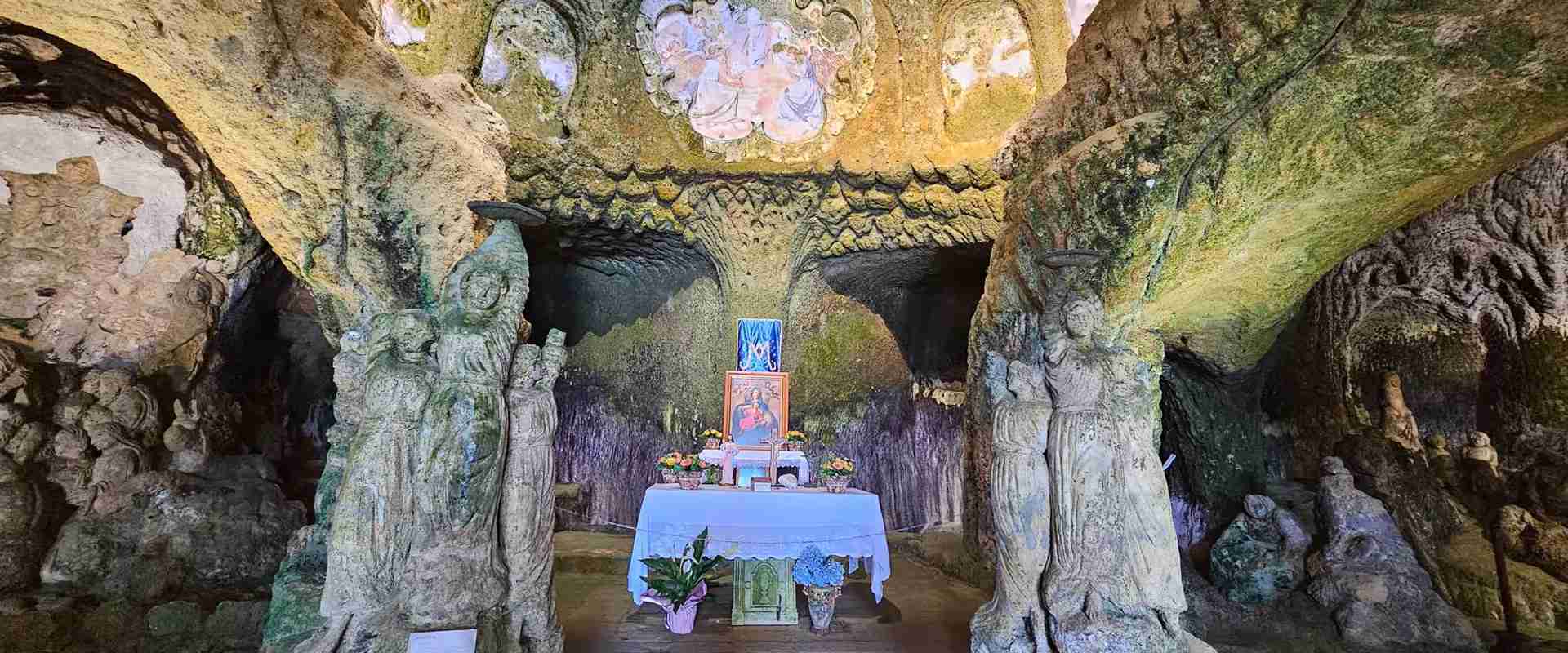
Carved into a marine tuff terrace above the Tyrrhenian shore at Pizzo, Calabria, the Piedigrotta cave chapel is one of southern Italy’s most unusual devotional monuments: a sanctuary whose walls, vaults, and figurative groups are the living cliff itself, shaped by hand-tool carving accumulated over several centuries. The geological properties of the coastal calcarenite, the mechanics of subtractive sculpture in permanently saturated stone, the optical behavior of reflected sea light within the cave, and the technical parallels with independently developed coastal rock-cut traditions in India together define the architectural identity of this modest but distinctive site.
Key Takeaways
- The Piedigrotta cave chapel occupies a marine sedimentary tuff terrace at Pizzo, Calabria, whose high porosity and relatively modest compressive strength made sustained subtractive carving feasible using iron hand tools without mechanical extraction equipment or scaffolded masonry construction.
- Coastal salinity saturates the tuff matrix at near-surface levels, reducing effective structural integrity while simultaneously introducing a haloclastic weathering cycle — the repeated crystallization and dissolution of marine salts within the pore network — that erodes carved surface detail at a rate determined by the frequency and salinity of wetting events.
- The seaward-facing aperture of the cave allows reflected light from the Tyrrhenian surface to enter the interior, animating the carved tuff relief across changing diurnal and seasonal conditions; no documented evidence supports intentional liturgical solar alignment of the apertures, which appear to follow the natural geometry of the pre-existing rock void as modified by carving.
- The figurative program ranges from shallow incised line-work to deep high-relief and fully detached in-the-round figures, all produced by subtractive carving directly from the host rock without mortar, plaster additions, or separately inserted stone elements.
- By tradition, the chapel’s founding act of carving dates to a shipwreck survival during the seventeenth century, though the majority of the extant figurative program belongs to carving campaigns of the nineteenth and twentieth centuries and its early chronology cannot be independently verified from primary documentary sources.
- The cave temples and monolithic rathas of Mahabalipuram, on India’s Coromandel Coast, represent an independent parallel tradition of coastal devotional rock-cutting, carried out in a materially contrasting hard granitic gneiss — a formation of far higher compressive strength and far lower porosity than the Pizzo calcarenite — a convergence of practice without genealogical connection.
People Also Ask About the Piedigrotta Cave Chapel
What is the Piedigrotta cave chapel in Pizzo, Calabria?
The Piedigrotta cave chapel is a devotional sanctuary carved entirely from the face of a sedimentary tuff cliff on the Tyrrhenian coast at Pizzo, in the province of Vibo Valentia, southern Calabria. It comprises a series of chambers, niches, and passages excavated into the living rock, filled with figurative sculptures of saints, Madonna figures, and religious narrative scenes cut directly in situ from the host tuff rather than fabricated separately and installed. The site has no mortared masonry construction in its structural envelope; the cliff itself simultaneously serves as walls, vault, altar surround, and sculptural medium. Carving is documented across multiple phases from at least the seventeenth century to the twentieth, giving the interior an accumulative, palimpsest character where different sculptural hands and different levels of technical ambition are stratified within the same stone mass. The chapel functions today as both an active devotional space and a heritage site drawing visitors to its unusual architectural typology and to the dense, materially unified figural interior that results from generations of in-situ rock carving.
What kind of rock is the Piedigrotta cave chapel carved from?
The host material is a marine sedimentary tuff — a calcareous, fine-grained stone formed by the cementation of ancient seafloor sediments including comminuted shell fragments, carbonate grains, and the skeletal remains of marine micro-organisms. Geologically, this category of rock is described variously as calcarenite or biocalcarenite depending on grain size and fossil content, and it is widespread across the coastal terraces of southern Italy and the central Mediterranean, where Pliocene and Pleistocene marine deposits were uplifted by tectonic activity and subsequently exposed to fluvial and wave erosion. The critical material property for the Piedigrotta carving tradition is the rock’s porosity: high pore volume makes the calcarenite comparatively soft and easily worked with iron hand tools, but the same open texture renders it vulnerable to moisture infiltration and the destructive crystallization cycles of dissolved salts — the dominant weathering mechanism in any coastal tuff interior. The fossil content of the Pizzo calcarenite is visible at the cut surface, where shell fragments and foraminifera outlines appear in cross-section within the tool-marked stone, giving the interior wall surfaces a granular, warm-toned character that distinguishes the carved field from any applied material.
How were the sculptural groups at Piedigrotta cut from the rock?
The Piedigrotta sculptures were produced through a subtractive technique in which material is removed progressively from the rock mass using hand-held iron instruments — points and picks for bulk extraction, flat chisels and toothed gradine for surface shaping, and finer instruments for detail work — until the desired figure or relief emerges from what remains. In this method, the sculptor must plan the finished composition before cutting begins, because the chosen volume of tuff determines the maximum possible projection of any form and because no removed material can be replaced. The relative softness of the wet marine tuff reduces the force required per stroke and allows the integration of fine surface detail in the figurative passages; however, that softness also means that crisp detail cut in fresh stone may erode substantially over decades of coastal weathering. Transitions between different relief depths — from shallow incised outlines to high-relief torsos and heads projecting significantly from the wall plane — are achieved by varying the depth of the cut field rather than by attaching separate sculptural elements, producing a direct continuity between figure and ground that is the defining spatial quality of in-situ rock carving.
How does natural light function inside the Piedigrotta cave chapel?
The Piedigrotta cave chapel’s primary opening faces the Tyrrhenian Sea, and its interior receives natural illumination that is at once limited and dynamically variable. A proportion of the incoming light has already been reflected off the sea surface before entering the cave, arriving at angles and with a diffuse, animated quality that shifts with the sun’s elevation, the degree of sea chop, cloud conditions, and the season. On clear days when the sun angle is low and the sea surface acts as a broad, low-angle reflector, the interior may receive bands of light that cross the carved relief surfaces and model the figurative groups with a varying depth of shadow. This optical behavior follows from the cave’s coastal orientation and natural geometry rather than from documented deliberate planning; no verified archaeological evidence has been found indicating that the aperture positions were calculated to produce specific liturgical illumination events at particular feast days, and the light conditions of the interior are better understood as a geographic given — intelligently inhabited by carvers who placed key figures where reflected light would most favor them — than as an engineered devotional technology.
Extended multi-day tours – 5+ days
Featured South Italy Multi-Day Tour Packages

8 days
8 days Small Group Sicily Food & Wine Tour (max 8 Guests)
- ✓ Comprehensive South Italy tour
- ✓ Expert local guides included
- ✓ All accommodation arranged
- ✓ Transportation provided
10 days
New Tour of Sicily from Palermo 10 Days
- ✓ Comprehensive South Italy tour
- ✓ Expert local guides included
- ✓ All accommodation arranged
- ✓ Transportation provided
7 days
Historic Rome To Sorrento Coastal Bliss
- ✓ Comprehensive South Italy tour
- ✓ Expert local guides included
- ✓ All accommodation arranged
- ✓ Transportation provided
6 days
Best of Rome, Naples, Pompeii & Sorrento – 6 Days
- ✓ Comprehensive South Italy tour
- ✓ Expert local guides included
- ✓ All accommodation arranged
- ✓ Transportation provided
Multi-day tour packages powered by TourRadar. Prices and availability subject to change.
The Tyrrhenian Tuff Coast: Geological Setting and Rock Formation at Pizzo
Pizzo occupies a promontory on the northeastern shore of the Gulf of Sant’Eufemia, on the Calabrian stretch of the Tyrrhenian coast. The town sits atop a plateau of marine sedimentary rock that descends to the sea in steep cliff faces, the lower portions of which retain the geometry of ancient wave-cut platforms — stepped, eroded benches recording successive stands of sea level during the Quaternary. These platforms document a sequence of marine transgressions and regressions driven by glacial and interglacial cycles that alternately submerged and exposed the coastal margin over the past two million years. Each major marine highstand left behind a suite of sedimentary materials: bioclastic carbonate sands rich in mollusc shells, echinoderm plates, and the tests of foraminifera, accumulating on shallow seafloors and subsequently cemented by calcareous groundwater percolating through the deposit as sea level fell and the material emerged above the tidal zone.
The product of this depositional and diagenetic history is the marine sedimentary tuff that forms the Piedigrotta cliff — a calcarenite of variable grain size and fossil content, its exact composition at any point within the section reflecting the depth, temperature, and energy conditions of the specific depositional environment that obtained when that layer was laid down. Calcarenite of this kind is characteristic of raised Pleistocene marine terraces throughout the central Mediterranean: the same category of rock forms the coastal terraces of Sicily, Sardinia, the Salento peninsula of Puglia, the Lecce stone formation of much of southern Apulia, and large portions of the North African and Levantine coasts. Its widespread presence made it a ubiquitous building material throughout Mediterranean antiquity and the medieval period, easy to quarry and dress, light enough to transport by sea, and possessing sufficient strength for wall and vault construction in the dry conditions of inland sites — while remaining susceptible to the same marine weathering conditions from which it was originally formed.
The cliff at Pizzo presents a stratified appearance in cross-section, with alternating bands of finer and coarser material reflecting changes in depositional energy over geological time. These stratigraphic differences translate into localized variations in mechanical behavior that a carver encounters directly: a shell-rich, coarser layer may show greater cohesion and resist the chisel more firmly, while an adjacent finer-grained band may be more porous and friable, yielding more readily but holding edge detail less well. A carver familiar with the specific formation learns to read the rock face for signs of these internal variations — changes in color, grain texture, or the distribution of visible fossil fragments — and adjusts the depth and angle of each cut accordingly. The natural cavities and fissures that occur in calcarenite terraces — produced by the differential dissolution of calcium carbonate by seawater and rainwater, by the mechanical wave abrasion that originally cut the terrace platform, and by root expansion in surface cracks — provided pre-existing voids that human excavation could enlarge, deepen, and connect into the coherent interior of a usable devotional space.
Critically, the coastal position subjects the tuff to conditions that are simultaneously the source of its original character and the mechanism of its ongoing destruction. Seawater and saline spray penetrate the open pore network of the calcarenite, depositing sodium chloride and other marine salts throughout the near-surface zone. As evaporation dries the outer surface, these salts crystallize within the pores, generating expansive pressure on the surrounding grain walls. When that pressure exceeds the tensile capacity of the grain bonds, the bonds fracture; over subsequent wetting-and-drying cycles, the loosened material disaggregates and the surface skin of the stone is shed. This haloclastic process is not spatially uniform: it concentrates wherever evaporation is fastest, meaning that exposed, air-facing carved surfaces weather more aggressively than protected passages deep within the cave. Understanding the Piedigrotta cave chapel in its full physical reality requires attending to this continuous exchange between the rock and the coastal environment that both created the material and is now gradually dissolving it.
The tectonic context of southern Calabria adds another dimension to the geological setting. The region sits at the convergence of the African and Eurasian tectonic plates, a position that has historically produced both seismic activity and the episodic uplift that raised the marine terraces above sea level in the first place. Seismic loading introduces stress cycles into the rock mass of the cliff that are distinct from the weathering cycles of salt and moisture and that can, over geological timescales, contribute to the development of fractures and joint systems within the tuff. These structural weaknesses — pre-existing planes of reduced cohesion within the rock — are features that any carver working the cliff face must navigate, and the pattern of the cave’s internal geometry is in part a record of which directions and depths of excavation the pre-existing jointing permitted without risk of ceiling collapse.
Origins and Devotional Tradition: The Historical Foundations of the Piedigrotta Cave Chapel
The founding account of the Piedigrotta cave chapel, as transmitted through local tradition, attributes the initial carving to one or more survivors of a shipwreck in the waters off Pizzo who, in gratitude for their deliverance, carved a votive image of the Madonna into the nearest available cliff face. This tradition locates the founding event in the seventeenth century, and the image of the shipwrecked mariner carving thanksgiving into rock is consistent with a broad Mediterranean pattern of sailor devotion in which surviving maritime danger required a material response at a sacred site. What can be verified from the physical evidence of the chapel is that the interior bears the marks of many different working hands and many different levels of sculptural ambition, a layered accumulation consistent with a site that attracted successive votive contributions over an extended period rather than receiving its full program at a single moment. The earliest layers of the surviving figurative program cannot be dated with documentary precision, and the oral and written accounts through which the founding story has been transmitted are not independently verifiable primary sources; the founding tradition should accordingly be received as a significant devotional narrative rather than as a dated archival fact.
The name Piedigrotta — in Italian, approximately “at the foot of the grotto” — positions the chapel within a distinctive category of southern Italian coastal devotional geography. The most celebrated site sharing this toponymic form is the Piedigrotta district of Naples, historically associated with a revered Madonna image and an annual festival of considerable cultural weight in the life of the city; whether the Pizzo chapel’s name derives from any conscious association with the Neapolitan tradition, or whether it reflects the same descriptive geographic logic independently applied to a structurally similar situation — settlement on the cliff above, cave at the base of the cliff below — is a matter on which local scholarly consensus has not converged. What the shared name does confirm is that this spatial configuration — inhabited settlement looking down to a sea-facing rock cavity — was recognized across southern Italy as a specific devotional category deserving a specific toponymic marker.
During the nineteenth century, the figurative program of the Piedigrotta cave chapel was substantially expanded. This period saw the addition of numerous saints, devotional scenes, and decorative passages that transformed the interior from what the founding tradition implies was a single or small number of votive figures into a more complex, multi-chamber devotional environment. The exact identities of the sculptors involved in these expansions are not consistently documented in sources available for this study. Available secondary literature refers in general terms to local craftsmen without specifying contracts, dated commissions, or professional training backgrounds, and the workshop attributions that occasionally appear in regional heritage literature are not supported by archival documentation at a level that would permit confident assertion. Accordingly, this analysis proceeds without ascribing specific passages of the figurative program to named individuals, a deliberate discipline that reflects the evidentiary situation rather than a lack of scholarly interest in the question of authorship.
The twentieth century brought further additions, including sculptures that reflect the popular and vernacular devotional aesthetics of their period, alongside conservation and restoration interventions that are visible at the surface as areas of consolidated or repaired tuff distinct in texture from the original carved stone. The overall interior effect is of a monument in continuous production — a space whose devotional identity was never fixed by a single authoritative design act but was instead built incrementally, with each carving generation adding to and implicitly responding to what the previous generation had left in the stone. This mode of production — cumulative, votive, without institutional direction — distinguishes the Piedigrotta cave chapel from the great programmatic rock-cut sanctuaries of antiquity and positions it instead within the tradition of vernacular sacred accretion that has produced some of the most informationally dense and culturally revealing monuments in the southern Italian heritage landscape.
The relationship between the cave chapel and the town of Pizzo above it operates at multiple levels simultaneously. Topographically, the chapel is at the base of the cliff that supports the inhabited plateau, so that the town literally rests on the same geological body that the chapel has been carved into: the life of the community above and the devotional space below share a single rock formation. Socially, the chapel was maintained by the coastal and fishing communities of Pizzo whose livelihoods were directly subject to maritime risk, and whose investment in a devotional space specifically associated with shipwreck survival had practical as well as theological significance. Architecturally, the absence of any constructed element in the chapel’s structural envelope means that the tuff cliff is simultaneously the infrastructure of the town above — providing the load-bearing base for its buildings and streets — and the fabric of the devotional interior below, a dual role without parallel in conventional building typology.
Anthropomorphic High-Reliefs in Living Stone: The Structural Dynamics of Carving Devotional Halls in Marine Terraces
The Piedigrotta cave chapel functions as a devotional hall by virtue of a spatial organization that is inseparable from the properties of the host rock. To understand how a series of hand-tool cuts in a coastal tuff terrace produces a functional interior — with an identifiable ceiling, walls, passage connections, floor, and figurative ornament — it is necessary to examine the structural relationship between the act of excavation and the natural mechanical competence of the marine sedimentary matrix.
The bearing capacity of the tuff terrace is what makes the interior possible. Calcarenite, even in its most porous form, has sufficient cohesion to maintain unsupported spans at the modest scales characteristic of the Piedigrotta chambers — spans of a meter or two across the ceiling, not the vaulted expanses of quarried ashlar construction. The compressive behavior of marine calcarenite places it firmly in the category of weak to medium-strength sedimentary stone: it bears the loads generated by the self-weight of the cave ceiling over these limited spans, but the margin of structural safety diminishes with increasing span and decreases further as moisture content rises. The critical caveat about moisture is not a marginal one at a coastal site. The Piedigrotta cave is rarely, if ever, in a fully dry state: the marine environment maintains near-constant humidity at the cliff face, and the porous tuff absorbs moisture from both the air and the rock mass above. Working compressive strength in this permanently saturated condition is therefore consistently lower than the theoretical dry-state maximum, and this constrains the structural decisions available to any carver seeking to extend the cave interior. The chambers of the Piedigrotta chapel remain narrow enough, and the ceiling thickness above any excavated void remains sufficient, that the structure has maintained stability across the carving campaigns documented in the historical record — a form of implicit structural intelligence embedded in the choices made about where and how far to cut.
The transition from natural cave to sculptural interior involved not only the removal of material to create habitable space but the active deployment of relief carving on every available surface — walls, ceiling shoulders, and the residual rock masses that serve as altars, pedestals, and compositional anchors for the figurative program. In this respect, the Piedigrotta interior follows the formal logic common to many rock-cut devotional spaces worldwide: the structural element and the decorative element are the same continuous material, and the structural logic of the excavation directly conditions the compositional logic of the carving. A massive surviving pillar of uncut tuff that structurally supports the ceiling becomes simultaneously the natural support for a figure that reads within the devotional program as a column sustaining a sacred canopy; a natural ceiling boss becomes the site of a carved face gazing downward into the interior space below. The surviving tuff geometry and the devotional iconography occupy a relationship that is partly opportunistic — exploiting natural forms where they offer compositional possibilities — and partly deliberate, with specific cuts creating the relief depths required by a given figurative intention.
The compressive and tensile behavior of the tuff becomes most architecturally consequential at the level of the carved details themselves. High-relief figures that project significantly from the wall plane are structurally self-supporting cantilevered forms: the mechanical connection between the projecting sculptural mass and the main rock body must maintain tensile continuity across the junction zone, and if that junction zone is weakened by saturation-induced reduction in grain cohesion, the projecting element is at risk of detachment. In harder stones — dense limestone, granite, marble — projecting figures can be deeply undercut and left on very slender material bridges without structural concern. In the relatively friable marine tuff of Piedigrotta, the same level of projection carries greater risk, because the tensile capacity at any junction is limited by the grain bonds of the porous, moisture-affected matrix. The evidence of this constraint is visible in the figurative program: the most deeply projecting elements — heads, extended hands, isolated attributes — in several locations show either conservatively managed projection depths or signs of past fracture and consolidation repair. The tuff imposed sculptural decisions on every carver who worked it, setting practical limits to compositional ambition even before the question of artistic intention arose.
Light Funnels in Sedimentary Strata: How Tidal Reflectivity Intersects Subterranean Liturgical Orientations
The optical conditions of the Piedigrotta cave chapel arise from a specific combination of geological form and coastal position that no individual carver fully controlled but that all carvers necessarily worked within. The cave faces seaward, its principal aperture oriented toward the Tyrrhenian surface, and the interior does not typically receive direct solar illumination. Instead, it receives light that has already undergone at least one reflective interaction — with the sea surface, with the cliff face, or with the lower atmosphere above the water — before entering the cave volume. This secondary, reflected quality of the cave’s light supply is not a deficiency but a defining characteristic, one that produces an illumination environment unlike both the direct overhead light of an open building and the pure darkness of a cave with no seaward access.
The reflective behavior of the sea surface varies continuously across multiple timescales. At the diurnal scale, the sun’s arc across the sky changes the angle at which sunlight strikes the Tyrrhenian surface relative to the cave aperture, and consequently changes both the intensity and the directionality of the light entering the cave. In the morning hours, when the sun is low in the eastern sky, direct solar illumination does not reach the seaward-facing cave entrance from the west, and the interior depends primarily on diffuse sky light and weak secondary reflection from the broadly lit sea surface. In the afternoon, as the sun moves toward the western horizon, its light strikes the sea surface at progressively lower angles of incidence, and under favorable conditions the interior receives coherent, directional reflected light that crosses the carved surfaces at a raking angle — the most revealing illumination condition for understanding the relief depth and figure modeling of in-situ stone carving. At the seasonal scale, the sun’s declination shifts the available reflection geometries: winter sun angles differ substantially from summer sun angles, and the light quality of the cave interior in December is not that of the cave in June.
The sedimentary strata of the tuff terrace themselves contribute to the cave’s optical character in a way that would not be possible in a smooth-surfaced, high-reflectance material such as polished limestone or whitewashed plaster. The carved tuff surface retains the granular texture of the calcarenite matrix, with fossil grain boundaries, differential cementation zones, and tool-mark striations all present at the surface plane. This texture scatters incoming light at the microscale, distributing it diffusely across the surface rather than returning it as a specular reflection. The practical consequence is that the interior glows with reflected coastal light rather than being divided into hard-edged lit zones and shadow zones: the light is absorbed into the material surface of the walls and re-emitted uniformly across the space, a quality consistent with the contemplative, immersive character of the devotional program and one that a different material — marble, granite, high-gloss paint — would not produce.
This relationship between raking coastal light and carved tuff surfaces has a specific relevance to the choice of relief depth across different passages of the figurative program. Shallow incised relief — linear outlines cut only a few millimeters below the surrounding surface — is effectively invisible under flat, frontal illumination but fully readable under raking light, because even a shallow cut produces a shadow on its downlight side when the light source is positioned at a low angle to the wall plane. The reflected sea light entering the Piedigrotta cave at the angles typical of afternoon hours on the Tyrrhenian coast constitutes precisely this raking condition, meaning that passages of very low relief carved into the tuff wall would have been optically functional — legible, readable, animated by shadow — in the light conditions the cave reliably provides. Whether specific carvers consciously exploited this optical property by choosing low-relief passages for sections of the program they intended to be read in reflected sea light, rather than selecting low relief purely for structural reasons related to the tuff’s limited projection capacity, cannot be determined from the material record alone. Both considerations point in the same direction — low relief is both structurally safe in friable calcarenite and optically effective in raking reflected light — and their coincidence produced a figural language well suited to its environment whether or not that suitability was the product of deliberate calculation.
The question of intentional liturgical orientation is distinct from the question of optical effect. No archaeoastronomical study of the Piedigrotta cave chapel has been published documenting whether any aperture or figural axis was deliberately aligned to produce a specific illumination event — a light shaft striking the primary Madonna figure at a particular feast day, of the kind documented at Newgrange, at Abu Simbel, or at various intentionally solar-oriented Christian sanctuaries in the European tradition. The aperture geometry of the cave appears to reflect the natural configuration of the pre-existing rock void as modified by the successive carving campaigns, and the primary compositional decisions about where to place the central Madonna and the most important secondary figures appear to have been informed by the available reflected light as a practical given rather than as a planned design parameter. The distinction matters for interpretation: the light behavior of the space is functionally liturgical — it serves the devotional experience of anyone praying within it — without necessarily being architecturally liturgical in the sense of deliberate cosmological planning.
Compressive Mechanics and Carving Practice in Saturated Marine Tuff
The physical experience of carving marine sedimentary tuff in a coastal cave setting differs from working the same material in a dry inland quarry or workshop in ways that affect both the mechanical behavior of the stone under tool impact and the physical management of the carving process. The near-constant saturation of the Piedigrotta tuff — maintained by coastal humidity levels that rarely permit the material to dry fully, and intensified by tidal spray reaching the lower cliff sections — conditions the response of the stone to every chisel blow.
When a hand-held chisel strikes saturated calcarenite, the force of the impact is distributed not only through the solid grain matrix but also through the pore-water, which, being incompressible, transmits pressure laterally within the rock. This effect reduces the peak stress that the solid matrix must absorb at the point of impact, making the stone easier to displace in one sense — it yields with less applied force — while also making the fracture path less predictable than it would be in a dry material, where stress propagation is governed primarily by grain geometry and the orientation of internal stratification planes. A carver experienced with the Pizzo tuff learns to read the working face for signs of differential saturation: areas of slightly darker coloration where moisture has recently penetrated versus areas that have partially dried, changes in the acoustic resonance of the stone under a light test tap, and the feel of the chisel edge as it meets the surface — all provide information about where the material will behave predictably and where an unexpected fracture might run beyond the intended cut boundary.
The iron tools employed in the Piedigrotta carving tradition, as in comparable Italian vernacular stone carving of the post-medieval period generally, required periodic sharpening that constituted a practical constraint on the pace and quality of sustained work. In soft, wet calcarenite the cutting edge of a chisel dulls more rapidly than it would in a harder, denser stone, because the relatively large contact area between the blade and the porous grain surface during each stroke distributes wear broadly across the edge rather than concentrating it at the tip. This accelerated dulling means that carvers working in the cave would have needed a reliable maintenance cycle for their toolset, with re-sharpening intervals shorter than would be typical in a marble or hard limestone workshop. The outcome of variable tool condition is visible in the differentiated character of tool marks across the carved surfaces of the Piedigrotta interior: passages that appear to have been worked with a freshly sharpened edge show clean, consistent striation patterns with well-defined spacing between gradine teeth; areas where tool maintenance appears to have been deferred show broader, less precisely placed marks with a dragged quality indicating reduced cutting sharpness.
The sustained high-salinity humidity of the coastal cave environment also affected the organic components of the carving practice — the wooden handles of the iron tools, any cordage used in rigging scaffolding or securing work positions, and the physical condition of the carvers themselves over extended working periods. Wood absorbs moisture and swells in the coastal humidity, loosening the ferrule joints between handle and iron; repeated cycles of wetting and drying split wooden handles along the grain; mold growth on organic surfaces in the poorly ventilated inner passages of the cave accelerated biological decay. The practical management of tool condition and personal comfort in this environment imposed costs — in time, in material, and in the frequency of trips above ground for maintenance — that are invisible in the finished carvings but were real constraints on the pace of production. This environmental context also limits one specific avenue of technical analysis: changes in toolmark character across the carved surfaces of the Piedigrotta interior may reflect tool condition, tool type, carver identity, or physical fatigue as readily as stylistic decision or chronological sequence, and interpretations that assign strong authorship significance to toolmark evidence must account for this ambiguity.
The Figurative Program: Devotional Iconography and the Grammar of Tuff Relief
The sculptural content of the Piedigrotta cave chapel is organized around the major figures of Catholic devotion — the Virgin Mary in several iconographic types, Christ at various moments of the Passion, and a range of saintly figures whose selection reflects both universal devotional priorities and the specific spiritual concerns of the coastal Calabrian communities that produced and used the space. The arrangement of these figures within the cave does not replicate the formally planned iconographic program of a designed ecclesiastical building, where the architectural grid of nave, chancel, and side chapels assigns specific theological meanings to specific spatial positions according to a predetermined scheme. Instead, the figurative content of the Piedigrotta interior reflects the accumulative logic of votive production: each new carving was placed where the available tuff mass permitted it, where the devotional need of a particular patron directed it, and where the work of previous carvers had left sufficient uncut stone of workable quality.
The resulting interior is dense and heterogeneous in character. At its most visually complex, the cave presents a near-continuous relief surface: figures occupy not only the primary wall faces but ceiling shoulders, pillar surfaces, passage corners, and the upper faces of the natural rock formations that serve as altar platforms. The spatial interval between one figure and the next is in many passages very small, and the depth of relief varies radically within a short horizontal distance — from a nearly flat incised background, through intermediate relief passages, to isolated elements in close-to-full-round that push to the maximum projection the tuff can safely sustain without risking detachment. This density, which in a conventionally designed monumental program might be read as compositional overcrowding, reflects the sequential accumulation of independent votive acts in a finite volume of carveable rock: each carver found the remaining available space and worked within it, constrained by the carved decisions of their predecessors and by the structural and material limits of the particular tuff section at hand.
The primary figural axis of the interior is the Madonna image — or more precisely, the Madonna in her intercessory role as protector of those at risk on water, a role consistent with the coastal position of the chapel and with the founding tradition of a shipwreck survival. The central Madonna occupies the most spatially privileged position within the cave: the location where the incoming reflected light from the sea is most favorable across the widest range of illumination conditions, where the available tuff depth permits the greatest degree of projection, and where the visual trajectory from the entrance directs the eye of anyone approaching from outside. This spatial logic does not require a formal architectural plan to produce: it follows from the practical observation, available to any carver working in the space, that certain positions are better lit, offer more workable stone, and are seen first by anyone entering. The placement of the primary devotional image at the position that maximizes all of these factors is a rational outcome of sustained use of the space.
Beyond the central devotional focus, the figurative program documents the range of narrative and emblematic content consistent with southern Italian vernacular religious culture of the seventeenth through twentieth centuries. Scenes from the Passion, including representations of the Crucifixion and figures associated with the instruments of Christ’s suffering, appear in multiple passages with varying levels of sculptural refinement. Saints relevant to seafaring and fishing communities occupy lateral niches and upper zones of the cave walls. The quality of carving across the full extent of the program is markedly uneven, ranging from passages of considerable technical ambition — figures with individualized facial features, anatomically studied hands, complex fabric folds that exploit the tuff’s capacity for shallow undercut — to more schematic work where iconographic legibility was the evident priority and figurative sophistication a secondary concern. This variation in quality is among the most direct records available of the range of carving skill mobilized across a vernacular devotional tradition over several centuries, and it constitutes a social history of craft capability in coastal Calabria no less informative than any documentary archive of the same period.
The backgrounds against which the figures are set are in most cases the natural cut tuff surface, smoothed to varying degrees with a coarse tool but rarely refined to a formal geometric finish. The sedimentary texture of the calcarenite — the fossil grains, the color banding of the depositional layers, the irregular surface produced by differential cementation — is therefore visible within the visual field of every figurative composition, giving the interior a material uniformity of tone that gathers the figures together aesthetically even where their carving dates and styles differ substantially. This material unity of ground is specific to in-situ rock carving and cannot be reproduced in a conventional built interior, where wall surfaces are typically concealed by plaster, paint, or applied stone veneer. The geological character of the host rock, visible and tactile throughout the devotional interior, is one of the defining aesthetic properties of the subterranean rock-cut tradition, and it is a property the Piedigrotta cave chapel shares with rock-cut interiors produced independently across very different cultural and geological contexts worldwide.
Convergent Coastal Lithic Traditions: Piedigrotta and the Rock-Cut Heritage of Mahabalipuram
The manual carving of devotional spaces and figurative groups directly from coastal rock formations is not a practice unique to Calabria or to the post-medieval period. On the Coromandel Coast of Tamil Nadu, India, the Pallava dynasty patronized a tradition of rock-cut devotional architecture during the seventh and eighth centuries of the Common Era that represents one of the most technically ambitious and iconographically complex bodies of coastal stone carving produced anywhere in the premodern world. The Group of Monuments at Mahabalipuram — inscribed as a UNESCO World Heritage Site in 1984 — encompasses several distinct monument types carved from and constructed of the granitic rock formations of the coastal plain, and it provides the most instructive non-Western point of comparison for situating the Piedigrotta tradition within a global history of coastal subtractive practice.
The rock at Mahabalipuram is geologically distinct from the marine sedimentary calcarenite of Pizzo in almost every relevant material property. The Mahabalipuram formations are granitic gneiss — a metamorphic crystalline rock of very high compressive strength, very low porosity, and extremely fine interlocking grain structure — substantially stronger and far less porous than any calcarenite formation. The contrast with the soft, porous tuff of the Piedigrotta cliff could not be more complete in structural terms: where the Pizzo carvers worked in a stone that yielded readily to iron tools but could not sustain deep projection without structural risk, the carvers working in the Mahabalipuram tradition confronted a rock that resisted the chisel far more stubbornly but could be undercut and cantilevered with a degree of sculptural freedom that the mechanical properties of the Pizzo tuff make impossible to reproduce at equivalent scale. The figurative groups at Mahabalipuram — particularly the cave temple reliefs and the great Descent of the Ganges panel — exploit this material freedom to produce figures of elaborate three-dimensional complexity, with deeply undercut bodies, individually articulated fingers, and compositional interplay across multiple spatial planes that would have exceeded the structural capacity of a comparably sized tuff panel at Piedigrotta.
Within the Mahabalipuram complex, the most direct structural parallels to the Piedigrotta cave chapel are the cave temples, designated in Sanskrit as mandapas: chambers carved horizontally into the face of granite boulders and outcroppings, their interiors furnished with figural reliefs on the rear and side walls and in some cases with columns carved from the same granite rock at the entrance threshold. These mandapas function as devotional halls in the same basic structural sense as the Piedigrotta interior — they are carved spaces where the surrounding stone simultaneously serves as the structural envelope, the sculptural medium, and the visual field — though their scale, the sophistication of their iconographic programs, and the technical demands of carving in granite rather than calcarenite place them in a different register of architectural ambition. The Mahabalipuram mandapas, datable on stylistic and epigraphic grounds to the period of Narasimhavarman I’s reign in the mid-seventh century, were products of centralized royal patronage employing carving specialists of high technical formation; the Piedigrotta chapel was a vernacular votive production accumulating over centuries without institutional direction or documented professional training of its contributors.
The Shore Temple at Mahabalipuram, one of the most photographed monuments at the site, is structurally distinct from the rock-cut tradition represented by the mandapas: it is a built temple of dressed granite blocks assembled on a platform extending toward the Bay of Bengal rather than a space excavated from a natural rock body. Its surfaces carry carved sculptural reliefs of considerable quality, and its coastal position — rising directly from a platform washed by the sea on three sides — gives it an atmospheric parallel to the Piedigrotta cave chapel in terms of the relationship between sacred space and maritime environment. However, the comparison between the two sites in terms of constructional method applies most directly to the mandapas: it is the cave temples, carved by subtractive excavation into coastal granite outcroppings, that stand as the Mahabalipuram tradition’s equivalent of the Piedigrotta approach to devotional space.
Coastal Position as a Shared Generative Condition
What the Piedigrotta cave chapel and the Mahabalipuram monuments share, despite their material difference, their chronological distance, and their cultural separation, is the condition of coastal adjacency as a generative factor in both their production and their ongoing experiential character. Both sites exploit rock formations exposed at the interface of land and sea by tectonic uplift and wave erosion; both are oriented such that the sea contributes to the perceptual environment of the interior, whether through direct optical access, the acoustic presence of wave motion, or the atmospheric quality of salt-laden air; and both encode the relationship between devotional practice and maritime exposure that characterizes many coastal sacred sites across different cultural traditions and historical periods.
The convergence is explicitly one of independent response to structurally similar conditions rather than of any genealogical or historical connection. There is no mechanism by which the vernacular carving tradition at Pizzo, Calabria, operating from the seventeenth century onward, could have been informed by Pallava-period rock-cutting in Tamil Nadu a millennium earlier and thousands of kilometers distant; and there is no evidence in the documentary or material record of either site of such an influence in either direction. The parallel is structural and phenomenological rather than historical: in both cases, a community living at the edge of a dangerous sea, dependent on its resources and threatened by its violence, produced devotional spaces carved into the coastal rock itself — the most permanent geological element of the boundary between their world and the water. The act of carving into the cliff that faces the sea is, from the perspective of devotional logic, an act of engaging the rock of the coast as a mediating substance between the human community and the maritime forces it invokes divine protection against. That this logic produced rock-cut devotional spaces on both sides of the landmass that separates the Mediterranean from the Bay of Bengal is a demonstration of how material environment and devotional need, independently operating, can generate structurally similar architectural solutions.
Material Divergence: Tuff Versus Granitic Gneiss in Coastal Devotional Carving
The mechanical and aesthetic consequences of the material difference between Piedigrotta calcarenite and Mahabalipuram granitic gneiss extend into every dimension of the sculptural and spatial experience of the two site types, producing formally similar spaces by materially very different means and leaving behind radically different durability profiles over historical timescales.
In the Piedigrotta cave chapel, the softness of the tuff is visible at the surface across most of the interior. The carved features of many figures have lost definition over decades of coastal weathering: the boundary between a deliberately cut surface and an eroded one is in many passages ambiguous without close inspection and oblique illumination, and the precise tool marks of the original carving survive clearly only in the most sheltered interior passages. The tuff’s color and texture — warm beige to buff tones, granular and slightly rough at the cut face — gives the interior a matte, unified visual quality in which figures and geological background share a continuous material identity. This material unity is not experienced as visual monotony because of the variation in relief depth and the dynamic light conditions that model the carved surfaces differently at different times of day and season; but it is a property specific to in-situ carving in a relatively homogeneous sedimentary matrix, and it establishes the aesthetic register of the interior as geological and tactile rather than precious or polished.
The Mahabalipuram cave temple reliefs, carved in granitic gneiss over thirteen centuries ago, retain the sharpness of the original cut in a way that the Piedigrotta tuff cannot sustain over a fraction of that period. This difference in durability is attributable to the combined effect of the granite’s lower porosity (which limits salt infiltration), greater grain-bond strength (which resists haloclastic pressure), and the somewhat drier climatic conditions of the Tamil Nadu coast (which reduce the frequency and intensity of moisture cycling). The granite surface has darkened with biological colonization and surface staining over the centuries, and some reliefs have suffered mechanical damage, but the precision of the carved line — the edge of a garment fold, the geometry of a column capital, the gesture of a deity’s extended hand — remains legible in a way that comparable Piedigrotta detail does not after even a single century of coastal exposure. This asymmetry means that the two traditions leave behind very different material records even if the initial ambition and skill of the carvers were comparable: the Mahabalipuram reliefs are substantially legible as they were cut; the Piedigrotta program is partly a record of what has been progressively lost as well as what was originally made.
This divergence in long-term material behavior has direct consequences for the conservation trajectories of the two sites. At Mahabalipuram, the primary concerns are the management of biogenic colonization, the mechanical cleaning of salt deposits from surface crevices, and the structural monitoring of the coastal setting for tsunami or storm-surge damage — threats real in a site projecting into an open body of water. At Piedigrotta, the primary concern is the ongoing haloclastic disaggregation of the tuff matrix itself, a more fundamental and less technically reversible process: once the grain bonds of saturated calcarenite are broken by salt crystallization cycles, no available consolidation treatment can fully restore the original cohesion. The Piedigrotta chapel faces the prospect of continuing material loss at a rate governed by coastal conditions that cannot be substantially altered, and the conservation response is accordingly oriented toward slowing rather than arresting the weathering process. Both sites illustrate, from opposite material perspectives, the particular conservation challenges of rock-cut coastal monuments whose structural integrity and the environmental conditions threatening it are inseparably bound together in the same geological formation.
Salt, Water, and Stone: Conservation Challenges and the Long-Term Fate of the Carved Interior
The conservation of the Piedigrotta cave chapel is distinguished from the conservation of most built stone monuments by the fundamental inseparability of the monument from the environment that is dissolving it. A stone building can in principle be re-roofed to reduce water penetration, isolated from rising groundwater by drainage systems, or in extreme cases relocated. The Piedigrotta cave chapel is the cliff itself, and the cliff is permanently subject to the coastal processes that originally formed it and are now progressively dismantling the carved details it carries. Conservation work at the site is therefore, structurally, a negotiation with the rate of natural change rather than a program of environmental stabilization in the conventional sense.
The dominant weathering mechanism — haloclasty — operates through a cycle well understood in conservation science. Marine salts, primarily sodium chloride but also sulfates and other soluble compounds, enter the open pore network of the calcarenite in solution during wetting events. As the outer surface of the rock dries by evaporation, the salt-laden pore water migrates toward the drying front where concentration increases progressively. At the point of supersaturation, crystallization commences, and the growing salt crystal exerts expansive pressure on the walls of the pore in which it is forming. When the accumulated stress exceeds the tensile capacity of the grain bonds at the pore wall, the bonds fracture; subsequent wetting events dissolve the newly formed crystal, releasing the stress momentarily, but the fractured grain bonds do not heal, and the next crystallization cycle operates on a slightly larger, more connected pore volume. The net effect is progressive granular disaggregation of the near-surface zone of the carved stone, with surface recession occurring at a rate proportional to the frequency of wetting-and-drying cycles, the salinity of the spray, and the initial porosity of the material. In the Piedigrotta cave environment, all of these parameters are unfavorable: high spray frequency from wave action, high marine salinity, meaningful evaporation potential from the seaward aperture, and a highly porous tuff substrate. The situation cannot be converted into a low-humidity, low-salt environment without enclosing the cave in a sealed chamber that would destroy the spatial and atmospheric character of the monument.
Surface consolidation treatments — injected or brush-applied impregnants that bind loosening grains and reinforce the near-surface layer — have been applied to portions of the Piedigrotta interior at various times as documented by the visible difference in surface texture between treated and untreated zones. The efficacy of these treatments in marine sedimentary tuff is limited and typically temporary for several reasons. Consolidants may not fully penetrate the porous matrix at the depth required to stabilize all of the at-risk surface layer. The differential behavior between consolidated and unconsolidated zones during subsequent wetting-and-drying events may concentrate stress at the boundary between treated and untreated material, generating a new failure plane and causing detachment of the treated layer as a shell from the weakened substrate below. And the hydrophobic impregnants sometimes used to reduce moisture uptake may reduce the rate of salt ingestion while not eliminating the salt already present in the pore system, so that the next cycle of concentration and crystallization operates on a trapped salt supply that cannot be refreshed or removed through the treated surface.
Desalination procedures — washing or poulticing to leach accumulated soluble salts from the near-surface layer — offer a complementary approach that reduces the available supply of crystallizable material rather than attempting to reinforce the weakened matrix against crystallization pressure. This approach requires introducing free water into the pore system during the treatment, which must then be managed during the subsequent drying phase to prevent a new crystallization cycle driven by the treatment water itself. The logistical management of desalination treatments in a cave environment subject to coastal spray is therefore considerably more complex than in an indoor museum setting, and the treatment must be timed relative to weather conditions and tidal cycles to avoid counterproductive outcomes. Both consolidation and desalination require repeated application over extended maintenance cycles, specialist expertise in the behavior of calcarenite under coastal conditions, and a monitoring framework to detect the effects of treatment — positive and negative — over time.
Monitoring constitutes the foundational discipline of any responsible conservation program at the Piedigrotta site. Systematic documentation of surface change — through photogrammetric survey, structured-light or laser scanning producing three-dimensional surface models at fine resolution, or repeated close-range photography from fixed reference positions — provides the quantitative baseline against which future surface recession can be measured and treatment priorities set objectively. Without quantitative documentation, conservation decisions must rely on visual assessment, which tends to underestimate gradual but continuous surface loss and to focus attention disproportionately on dramatic but episodic events such as spall detachments. The establishment of a digital reference archive of the current carved surface would also provide the basis for enhanced-reality interpretive tools that could allow visitors to experience the original relief depths of eroded figures, transforming the conservation documentation into a public heritage communication resource as well as a scientific record.
Heritage Significance and Visitor Context: The Piedigrotta Cave Chapel Within Calabrian Cultural Heritage
The Piedigrotta cave chapel occupies a distinctive position within the heritage landscape of Calabria — a region whose cultural significance is most frequently articulated through its ancient Greek colonial legacy, its medieval Norman and Byzantine monuments, and its prehistoric traditions, but which contains in its post-medieval vernacular architecture a body of devotional culture less prominently featured in the canonical art-historical account of Italian heritage. The Piedigrotta chapel belongs to this less-visible category: it was not built for a political patron seeking institutional legitimacy, not designed by a named architect working within a recognized professional tradition, and not recorded in the administrative apparatus of official ecclesiastical commissioning. Its significance is vernacular — rooted in the devotional practice of a coastal community, shaped by the material conditions of a specific cliff face, and accumulated over generations of individual votive acts that left their marks in stone without leaving their names in documents.
Within the heritage typology of southern Italy, the Piedigrotta cave chapel belongs to the family of rupestrian monuments — spaces carved from soft rock formations for devotional, residential, or agricultural purposes — that constitutes one of the most geographically widespread and culturally revealing bodies of built evidence for the material life of medieval and early modern communities in the region. The Sassi di Matera in Basilicata represent the most extensively documented example of this rupestrian tradition in southern Italy, where entire neighborhoods of cave dwellings and cave churches developed in soft calcarenite over a period of many centuries and were inscribed as a UNESCO World Heritage Site in 1993. The rupestrian chapel complex of Puglia — concentrated in the areas of the Murge plateau and the Gravina in Puglia zone — offers the closest formal parallel to the Piedigrotta program within the southern Italian heritage record: small cave churches carved into soft calcareous formations, furnished with painted or carved figural programs, serving local devotional communities in a material environment where soft rock was the most accessible construction medium. What distinguishes Piedigrotta from most rupestrian chapel traditions of Puglia and Basilicata is the predominance of three-dimensional carved relief over flat painted surface decoration, and the specifically coastal setting that conditions both the material properties of the rock and the optical character of the interior.
The touristic and cultural geography of Pizzo draws visitors for multiple reasons, of which the Piedigrotta cave chapel is one of the most architecturally distinctive. The town is also associated with tartufo di Pizzo, a hand-formed gelato with a filled chocolate core that has an established place in the culinary heritage of Calabria, and visitors to the town regularly experience both its material heritage and its food culture within the same visit. For the Piedigrotta cave chapel specifically, the visitor population includes cultural tourists interested in the unusual architectural typology and the material culture of vernacular sacred architecture, alongside pilgrims and devotional visitors for whom the chapel’s religious content is the primary purpose of the visit. This dual constituency has implications for heritage management: conservation and access decisions must serve the contemplative, devotional needs of those who use the space as a living place of prayer as well as the documentary and interpretive interests of those who visit it as a cultural monument.
The chapel is reached from the Pizzo town center by descending to the coastal zone where the cliff face is directly accessible, and the entrance is managed by a custodial body responsible for the site’s maintenance and visitor management. As with all such sites, operating hours, admission arrangements, and access conditions are subject to change, and visitors planning a visit should verify current information through official local sources or the relevant municipal authorities before travel. The scale of the interior is modest, and visitor flow must be managed to avoid the kind of crowding that would compromise both the structural monitoring of the cave and the contemplative atmosphere that gives the space its particular character.
For scholars and researchers, the Piedigrotta cave chapel raises questions that extend beyond its local cultural significance into broader methodological discussions about vernacular sacred architecture, the conservation chemistry of porous coastal stone, and the social history of votive practice in post-medieval southern Italy. The site has been noted in regional heritage literature and has attracted periodic conservation attention, but comprehensive technical documentation of the kind undertaken for the country’s most formally prominent monuments — systematic photogrammetric survey, petrographic and mineralogical analysis of the host calcarenite, full iconographic documentation, and quantified monitoring of surface change rates — has not been published in the peer-reviewed scientific literature at the time of writing. This gap is both a risk — undocumented heritage is more vulnerable to undetected progressive loss — and an invitation to heritage-science research that could substantially advance the understanding of this monument type and of the conservation needs specific to carved coastal tuff interiors throughout the Mediterranean basin.
Frequently Asked Questions
How old is the Piedigrotta cave chapel in Pizzo?
The founding tradition of the Piedigrotta cave chapel locates the first carving in the seventeenth century, attributing the initial votive act to a survivor of a shipwreck in the waters off Pizzo who carved a Madonna figure into the cliff face in thanksgiving. This dating cannot be independently verified from surviving primary documentary sources and represents the transmission of a founding legend rather than a dated archival fact. The majority of the extant figurative program — the dense population of saints, Passion scenes, and devotional figures that fills the cave interior — belongs to carving campaigns of the nineteenth and twentieth centuries, datable on stylistic grounds even in the absence of documentary records. The site is therefore best understood as a monument of layered chronology: the oldest element is the natural geological formation; the founding votive carving is traditionally seventeenth-century but not independently dateable; and the visible figural density of the interior reflects primarily the past two centuries of accumulative votive production.
Does the Piedigrotta cave chapel qualify as rock-cut architecture in the formal typological sense?
The Piedigrotta cave chapel meets the fundamental technical criterion of rock-cut architecture: it is a space produced by systematic removal of material from a natural rock mass rather than by assembly of separate structural elements. In this sense it occupies the same broad typological category as the rock-cut tombs of Petra, the cave churches of Cappadocia, the Buddhist viharas of Ajanta, and the Pallava mandapas of Mahabalipuram — all spaces produced by subtractive excavation from a natural rock body, in which the surrounding stone is simultaneously the structural envelope and the finished surface of the interior. What distinguishes the Piedigrotta chapel from the most celebrated examples of the type is scale, institutional context, and the material properties of the host rock: it is a small vernacular monument of local religious significance, produced incrementally without institutional direction, in a soft calcarenite whose limited compressive and tensile strength constrains the ambition of the carved program. The typological comparison is nonetheless valid at the structural and technical level, and it situates this modest Calabrian cave chapel within a global history of subtractive devotional architecture considerably broader than its local context might suggest.
Why is marine sedimentary tuff the material of the Piedigrotta cave chapel?
Marine sedimentary tuff was not selected among alternatives at Piedigrotta — it is the rock that forms the coastal cliff at the specific location where the founding votive act of carving was performed. The choice of material was the choice of location, and the choice of location was determined by the circumstances of the maritime event that the founding tradition commemorates: the cliff was there, it faced the sea from which the survivor had escaped, and it was composed of stone soft enough to carve with the iron tools available to a skilled craftsman without specialized stone-cutting equipment. In this respect the Piedigrotta case is typical of vernacular rock-cut devotional sites worldwide, which tend to arise where accessible, soft to moderately soft rock outcrops are available to communities motivated to produce devotional spaces without the logistical and financial apparatus required by conventional masonry construction. The material and the monument are in this sense tautologically linked: the calcarenite of the Pizzo coastal terrace is both the reason that the site was chosen and the physical substance of everything the site has subsequently become.
What are the main threats to the long-term survival of the Piedigrotta cave chapel?
Haloclasty — the progressive disintegration of the calcarenite matrix through repeated cycles of marine salt crystallization and dissolution within the rock’s pore network — is the primary conservation threat, causing irreversible surface recession and loss of carved detail at a rate governed by coastal conditions that cannot be substantially modified without destroying the character of the monument. Secondary threats include biogenic colonization by micro-organisms, algae, and plant life that chemically and mechanically attack the porous stone surface; the mechanical effects of visitor foot traffic in the confined cave passages; and the structural risk associated with any progressive crack development in the cave ceiling above unsupported spans. The broader geological context of southern Calabria — a tectonically active zone with documented seismic history — adds a longer-term structural risk dimension that is distinct from the weathering threats and that requires periodic structural monitoring of the cliff mass in which the cave is carved. None of these threats is unique to Piedigrotta; all are characteristic of carved coastal calcarenite monuments throughout the Mediterranean, and the conservation literature for comparable sites in Puglia, Sicily, and Malta provides the most directly applicable technical precedent for managing them.
How does the Piedigrotta cave chapel relate to other Italian rupestrian monument traditions?
The Piedigrotta cave chapel belongs to the broad family of rupestrian monuments — spaces carved from soft rock for devotional, residential, or productive purposes — that constitutes one of the most geographically extensive bodies of vernacular built heritage in southern Italy. The Sassi di Matera in Basilicata, a UNESCO World Heritage Site, represent the most extensively documented example of this tradition at an urban scale: entire neighborhoods of cave dwellings, cisterns, and cave churches developed in soft calcarenite over centuries. The rupestrian chapels of Puglia and Basilicata — particularly the concentrations in the Murge plateau and the Gravina in Puglia zone — offer the closest formal parallel to Piedigrotta at the scale of individual sacred spaces: small cave churches carved into soft calcareous formations, furnished with figural programs, and serving local devotional communities. What distinguishes Piedigrotta from most comparable rupestrian interiors in the Puglia and Basilicata traditions is the dominance of three-dimensional carved tuff relief over flat painted surface decoration, the specifically coastal position that conditions both the material behavior of the rock and the optical character of the interior, and the maritime devotional narrative embedded in the founding tradition that links the space directly to the danger of the sea it overlooks.
Is the Piedigrotta cave chapel protected under Italian cultural heritage law?
The Piedigrotta cave chapel in Pizzo is protected under Italian cultural heritage legislation, specifically the provisions of the Codice dei Beni Culturali e del Paesaggio, which establishes a framework for the identification, protection, and monitoring of cultural property of historical and artistic significance throughout Italy. This legislative framework assigns responsibility for the monitoring and management of protected cultural property to the relevant regional and national bodies of the Ministero della Cultura, with operational custody typically delegated to local authorities or designated custodial bodies. The site is not inscribed as a UNESCO World Heritage Site — a designation requiring formal nomination by the Italian state, technical assessment by international advisory bodies, and inscription decision by the World Heritage Committee against criteria of outstanding universal value — and its legal protection derives from the national framework rather than from international designation. The national protections in place establish constraints on unauthorized alteration of the monument and require notification of conservation interventions, providing a baseline of legal security even in the absence of the more visible international recognition that UNESCO designation would confer.
What range of sculptural techniques appears in the Piedigrotta figurative program?
The Piedigrotta interior documents a wide spectrum of subtractive sculptural technique, from the most technically minimal to the most ambitious forms possible within the constraints of the host material. At one end of this range, shallow incised relief — lines cut only a few millimeters below the surrounding surface — is used for background detailing, decorative borders, and abbreviated subsidiary figures in areas where the tuff depth was limited or where a carver was working at the periphery of available space. Low relief passages — figures projecting perhaps a centimeter or two from the ground plane — are the most common mode across the program, balancing iconographic legibility against the structural risks of deeper projection in saturated calcarenite. High relief, in which the figure projects substantially from the wall and is visually almost detached from its background, appears in the most prominent positions of the program and requires the greatest skill to execute without fracturing the connecting material at the point of maximum projection. In isolated cases, figures approach or achieve full three-dimensional carving — fully in-the-round forms that project far enough to be visible from multiple angles — though these represent the technical limit of what the saturated tuff matrix can sustain and show corresponding evidence of structural stress or past repair at their connection points.
How do the light conditions in the Piedigrotta cave chapel change across the seasons?
The light within the Piedigrotta cave chapel undergoes continuous variation driven by the annual cycle of the sun’s declination and by the state of the sea surface at any given moment. Because the cave faces the Tyrrhenian Sea and receives light primarily through reflection from the water surface rather than directly from the solar disk, the quality of its illumination depends on the angle at which sunlight strikes the sea relative to the cave aperture. In summer, when the sun reaches a high elevation and the light strikes the sea surface steeply, the reflected angle toward the cave is less favorable and the interior receives more diffuse, lower-intensity illumination. In winter and at the seasonal transitions, when the sun’s arc is lower across the sky, the geometry of sea-surface reflection delivers light to the cave at angles that produce more pronounced raking illumination on the carved wall surfaces. The practical effect is that the sculptural relief of the Piedigrotta interior is most visually legible — its depths most apparent, its modeling most fully articulated — under the lower-sun illumination conditions of the cooler months, while the summer interior is more uniformly and diffusely lit. These seasonal shifts in light quality are not simply aesthetic: they alter the visual hierarchy of the figurative program, bringing forward in some conditions figures that are subordinate in others, and they constitute a dimension of the chapel’s experiential character that varies with the time of year.
What can the Piedigrotta cave chapel tell scholars about vernacular stone-carving practice in post-medieval Calabria?
The Piedigrotta cave chapel is a material record of vernacular stone-carving practice in coastal Calabria across a period of several centuries, and it documents this practice through the physical evidence of the carvings themselves rather than through documentary sources, which are sparse. The range of technical quality visible across the figurative program — from accomplished passages demonstrating knowledge of anatomical proportion and sophisticated tool handling to more schematic work where iconographic intent outpaced technical capacity — indicates that the carvers who contributed to the interior over time occupied a range of positions in the craft hierarchy, from trained craftsmen with workshop formation to motivated but self-taught votive carvers. The choice of subjects — the Madonna types, the Passion scenes, the saintly protectors of maritime communities — documents the devotional priorities of the coastal communities who produced and used the space. The evidence of sequential working — passages where a later carver has integrated new figures into spaces left between earlier ones — documents the social protocol governing access to the site and the degree of respect or disregard that successive generations showed for the work of their predecessors. In aggregate, the Piedigrotta interior is as much an archive of vernacular religious culture and craft practice as it is a monument of architectural or art-historical interest, and its study belongs as much to social history and the anthropology of devotional practice as to the conventional art-historical categories of attribution and style.
What makes the Piedigrotta cave chapel architecturally unique among Italian coastal monuments?
The Piedigrotta cave chapel’s architectural uniqueness in the Italian coastal monument landscape derives from the specific combination of three conditions that rarely converge at a single site: the subtractive production method, which makes the monument inseparable from its geological substrate in a way no built structure achieves; the coastal position, which introduces reflected marine light, salt-laden humidity, and the perceptual presence of the sea as constitutive elements of the interior experience; and the vernacular, accumulative mode of production, which replaced the single authoritative design act of a commissioned monument with the sequential layering of independent votive contributions across centuries. Each of these conditions is individually attested elsewhere in the Italian heritage record — subtractive technique in the rupestrian chapels of Puglia and Basilicata, coastal position in innumerable cliff-side shrines and watchtower-chapel hybrids along the southern Italian coasts, accumulative vernacular production in the gradual elaboration of pilgrimage sites across the peninsula. What the Piedigrotta cave chapel offers is their convergence in a single small space of calcarenite cliff above the Tyrrhenian Sea, where the geological, the maritime, and the devotional have been working on the same stone for several hundred years and show every sign of continuing to do so.