The Longobard Secret: A Cultural Journey to Cividale del Friuli and the Borderlands
In the northeastern corner of Italy where the Julian Alps descend toward the Adriatic, Cividale del Friuli preserves Europe’s most remarkable collection of Longobard architectural and artistic heritage. This ancient town, established by Julius Caesar as Forum Iulii and later transformed into the capital of the first Longobard duchy in Italy, harbors extraordinary monuments that reveal how Germanic warriors became sophisticated patrons of art and architecture, creating a cultural synthesis that shaped medieval European Christianity.
Key Takeaways: Understanding Cividale’s Longobard Heritage
- UNESCO Recognition of Cultural Synthesis: Cividale del Friuli forms part of “Longobards in Italy. Places of the Power (568-774 A.D.),” inscribed as a UNESCO World Heritage Site in June 2011 as one of seven locations across Italy that collectively demonstrate the Longobards’ pivotal role in the spiritual and cultural development of medieval European Christianity.
- The Tempietto Longobardo Masterpiece: The mid-8th century Tempietto Longobardo represents the most important and best-preserved example of Longobard architecture in Europe, featuring extraordinarily rare stucco work depicting six female saints, Greek-Byzantine frescoes, and a unique synthesis of classical Roman, Germanic, and Christian artistic traditions that marked the transition from antiquity to the Middle Ages.
- Capital of the First Duchy: Cividale served as the capital of the Duchy of Friuli, the first of 35 Longobard duchies established in Italy following King Alboin’s invasion in 568, maintaining its status as a crucial center of temporal and religious power for over two centuries until the Carolingian conquest in 774.
- Masterworks of Longobard Art: The Christian Museum houses two supreme achievements of early medieval sculpture—the Altar of Duke Ratchis (737-744) carved in Aurisina marble with elaborate bas-reliefs combining Byzantine, Germanic, and Christian iconography, and the Baptistery of Patriarch Callisto, an octagonal baptismal font embellished with reused Roman and Byzantine columns that demonstrates the cultural continuity the Longobards maintained with classical antiquity.
- Archaeological Revelations: The National Archaeological Museum, housed in the Palladian-designed Palazzo dei Provveditori Veneti, contains one of the world’s most significant collections of Longobard funerary artifacts excavated from the necropolis of San Mauro, including intricate gold jewelry, weapons, and grave goods that illuminate the material culture, social stratification, and spiritual beliefs of this transformative period.
- Strategic Borderland Position: Cividale’s location at the foot of the Julian Alps near the current Slovenian border made it a crucial gateway between the Mediterranean world and Central Europe, explaining why Patriarch Callisto relocated from Aquileia to Cividale in 738 to escape Byzantine raids and why the city became the ecclesiastical as well as political capital of the region.
People Also Ask About Longobard Heritage in Cividale del Friuli
What Makes the Tempietto Longobardo Architecturally Significant?
The Tempietto Longobardo represents the only surviving example of Longobard palatine architecture in Europe and demonstrates a sophisticated synthesis of diverse artistic traditions that defines the transition from late antiquity to the medieval period. Built in the mid-8th century as the chapel for the gastaldo (the Longobard king’s representative), this small oratory within the Monastery of Santa Maria in Valle features a square cross-vaulted hall separated from a lower three-part presbytery by an impressive system of triple-arched windows supported by columns with classical capitals. The architectural elements include repurposed Roman lintels and corbels alongside columns and capitals crafted specifically during the 8th-century construction, illustrating the Longobard practice of maintaining continuity with classical traditions while developing distinctive new forms.
The interior decorations represent the Tempietto’s greatest artistic achievement. Six life-sized female figures rendered in white stucco occupy niches above the triple arches separating the hall from the presbytery, depicting saints with remarkably naturalistic modeling and subtle emotional expression that stands in stark contrast to the more rigid Byzantine iconographic traditions of the same period. The luminous whiteness of these stucco figures creates a striking visual effect against the dark wooden choir stalls restored to the oratory after seven years of conservation work. Fragmentary 8th-century frescoes displaying Greek-Byzantine stylistic characteristics survive in protected areas, providing rare examples of early medieval wall painting. The combination of architectural sophistication, stucco sculpture, and fresco painting within a single coherent space makes the Tempietto an unparalleled document of Longobard artistic achievement and their role in transmitting classical culture to medieval Europe.
Who Were the Longobards and Why Did They Settle in Cividale?
The Longobards (also called Lombards) were a Germanic people who originated in Scandinavia and migrated southeast through central Europe before invading Italy in 568 under King Alboin’s leadership. Unlike earlier Germanic migrations into Roman territory, the Longobard invasion occurred after the Byzantine reconquest under Justinian had temporarily restored imperial control over the Italian peninsula, making the Longobard settlement a conquest of Byzantine rather than Roman lands. The Longobards established their first and most important duchy at Cividale (then called Forum Iulii, a name that would eventually become Friuli), recognizing the strategic importance of this Roman military town positioned at the crucial junction between the Julian Alps and the fertile plains extending toward the Adriatic.
Cividale’s selection as the capital of the Duchy of Friuli reflected multiple strategic considerations. The town occupied a defensible position on the Natisone River with natural barriers provided by the surrounding ravine, making it easier to fortify against Byzantine counterattacks from the nearby Exarchate of Ravenna or Slavic and Avar incursions from the north and east. The location provided control over the principal Alpine passes connecting Italy with Bavaria and the Danube regions, ensuring communication and military support from other Germanic peoples. The presence of existing Roman infrastructure, including administrative buildings, fortifications, and ecclesiastical structures, allowed the Longobards to establish immediate governance without extensive construction. Most importantly, Cividale’s position created a buffer zone protecting the Longobard heartland in the Po Valley from external threats while maintaining access to valuable Alpine resources including timber, metals, and mountain pastures. When Patriarch Callisto relocated from Aquileia to Cividale in 738, the city achieved unprecedented status as both the temporal and spiritual capital of the region, cementing its importance for another four decades until Charlemagne’s conquest dissolved the Longobard Kingdom in 774.
How Did Longobard Culture Blend Germanic and Mediterranean Traditions?
The Longobard cultural synthesis visible in Cividale’s monuments represents one of medieval Europe’s most significant artistic and intellectual achievements, creating bridges between the Germanic north and the Mediterranean south that fundamentally shaped the development of Western Christianity. Unlike some Germanic peoples who maintained rigid separation from Roman cultural traditions, the Longobards actively assimilated and reinterpreted classical heritage while preserving distinctive elements of their own identity. This synthesis manifested in architecture, sculpture, metalwork, religious practice, and administrative structures that drew simultaneously from Roman imperial precedents, Christian theological frameworks, Byzantine artistic vocabularies, and Germanic decorative traditions.
The Altar of Duke Ratchis exemplifies this cultural fusion at its most sophisticated level. The altar’s basic form follows late antique Christian precedents for reliquary altars, with a hollowed parallelepiped structure housing sacred relics. The bas-relief carvings on its four sides depict quintessentially Christian subjects—the Adoration of the Magi, Christ in Glory, the Visitation—executed with compositional schemes derived from Byzantine and Ravennate models. However, the treatment of these subjects reveals distinctively Germanic sensibilities in the geometric patterning, stylized vegetation motifs with Eastern influences, and a certain primitive vigor in the figure modeling that deliberately departs from classical naturalism. The inscription running around the upper edges dates the altar to the period between Ratchis’s elevation as Duke of Friuli in 737 and his accession to the Longobard throne in 744, indicating that this masterwork emerged from the patronage of the highest levels of Longobard society.
The architectural synthesis extends beyond individual monuments to urban planning and ecclesiastical organization. The Longobards retained the Roman grid layout of Forum Iulii while adapting public spaces to Germanic concepts of royal and ducal authority, creating the gastaldaga district where the duke’s palace, administrative buildings, and palatine chapel (the Tempietto) formed an integrated complex of secular and sacred power. They preserved Latin as the language of administration and religious practice while their native Longobard language influenced regional dialects and place names still evident throughout Friuli. Their conversion from Arian Christianity to Catholic orthodoxy during the late 6th and 7th centuries facilitated integration with the existing Italian population while their support for Benedictine monasticism introduced Germanic administrative efficiency and land management practices to Mediterranean monastic traditions. This cultural hybridization created the foundations for the Carolingian Renaissance and ultimately for the distinctive character of medieval Italian civilization.
What Can Visitors See at Cividale’s Museums and Archaeological Sites?
Cividale offers visitors an unparalleled opportunity to engage directly with Longobard material culture through three principal institutions that together house Europe’s most comprehensive collection of artifacts from this transformative period. The Tempietto Longobardo within the Monastery of Santa Maria in Valle provides the immersive experience of standing within an 8th-century palatine chapel where the original spatial relationships, decorative programs, and liturgical functions remain largely intact despite thirteen centuries of history. Visitors enter through the monastery cloister via an ancient wooden door, immediately encountering the dramatic contrast between the oratory’s austere exterior with simple blind arcading and the rich decorative interior featuring the famous stucco saints, fragmentary frescoes, and the recently restored 14th-century wooden choir stalls that occupy the presbytery area.
The Christian Museum and Treasure of the Cathedral (Museo Cristiano e Tesoro del Duomo, commonly abbreviated MUCRIS) occupies rooms adjacent to the Cathedral of Santa Maria Assunta, accessible through the cathedral itself or via a separate entrance. The museum’s Longobard Heritage section displays the two supreme masterpieces of early medieval sculpture: the Altar of Duke Ratchis and the Baptistery of Patriarch Callisto. Both monuments benefit from sophisticated interpretive installations including multimedia projections that reveal the original polychrome decoration of the Ratchis Altar, allowing visitors to visualize how the now-bare stone surfaces once appeared with their minium-colored inscriptions and painted details. The museum also contains the Cathedral Treasury with its collection of liturgical objects, illuminated manuscripts, and medieval goldsmith work that demonstrates the continuity of artistic production in Cividale from the Longobard period through the Venetian era.
The National Archaeological Museum (Museo Archeologico Nazionale) occupies the Palazzo dei Provveditori Veneti, designed by Andrea Palladio and constructed between 1565 and 1596 on the eastern side of the Duomo square directly above the archaeological remains of the Patriarchal Palace. The museum’s ground floor lapidary sections display architectural fragments and liturgical furnishings from the 6th through 9th centuries that demonstrate the evolution of decorative styles during the Longobard period. The upper floor contains the museum’s crown jewel: a complete section devoted to the Longobard necropolis excavated from the San Mauro hill north of the historic center. This extraordinary collection includes grave goods from dozens of burials that reveal the social stratification of Longobard society through the varying quality and quantity of weapons, jewelry, pottery, and personal objects interred with individuals of different ranks. Notable items include elaborate gold fibulae (brooches) decorated with garnets and intricate metalwork, iron sword sets with decorated hilts and scabbard fittings, glass vessels of Byzantine origin indicating trade connections, and a collection of 56 gold Longobard coins valued as the second-largest collection of its type in the world. The archaeological displays allow visitors to understand not just the artistic achievements visible in monumental architecture and sculpture but the everyday material culture of Longobard society across all social levels.
Extended multi-day tours – 5+ days
Featured Northern Italy Multi-Day Tour Packages

8 days
Hiking in the Dolomites
- ✓ Comprehensive Northern Italy tour
- ✓ Expert local guides included
- ✓ All accommodation arranged
- ✓ Transportation provided
7 days
Cycling Lake Garda to Venice: The Epic Route
- ✓ Comprehensive Northern Italy tour
- ✓ Expert local guides included
- ✓ All accommodation arranged
- ✓ Transportation provided

8 days
Cycle Dolomites, Lake Garda and Verona
- ✓ Comprehensive Northern Italy tour
- ✓ Expert local guides included
- ✓ All accommodation arranged
- ✓ Transportation provided
4 days
4 Days Dolomites Tour – from Milan
- ✓ Comprehensive Northern Italy tour
- ✓ Expert local guides included
- ✓ All accommodation arranged
- ✓ Transportation provided
Multi-day tour packages powered by TourRadar. Prices and availability subject to change.
Introduction: Europe’s Hidden Gateway to the Early Middle Ages
The transformation of Forum Iulii from a Roman military outpost founded by Julius Caesar in 50 BC into Cividale del Friuli, capital of the first Longobard duchy in Italy, represents one of history’s most fascinating cultural transitions. This small town positioned where the Natisone River cuts a dramatic gorge through the foothills of the Julian Alps became the crucible where Germanic warriors evolved into sophisticated patrons who would fundamentally influence the spiritual and cultural development of medieval European Christianity. The monuments and artifacts preserved in Cividale provide unparalleled evidence of how the Longobards created a distinctive civilization by synthesizing Roman administrative traditions, Christian theological frameworks, Byzantine artistic vocabularies, and their own Germanic heritage into something entirely new.
When King Alboin led his people across the Alps in 568, he initiated a process that would reshape the Italian peninsula for over two centuries. The Longobard Kingdom, with its capital eventually established at Pavia, fragmented Byzantine control over Italy and created the political geography that would characterize the peninsula until the 19th-century unification. Yet Cividale’s importance extended beyond its role as the capital of one among many duchies. The city’s strategic position as a borderland between the Mediterranean world and Germanic central Europe made it a natural point of cultural exchange where different traditions encountered, competed with, and ultimately enriched one another.
The Longobards who settled Cividale were not primitive barbarians destroying classical civilization but rather a people in transformation, converting from Arian Christianity to Catholic orthodoxy, adapting from seminomadic warrior culture to settled agricultural society, and evolving from oral Germanic traditions to Latin literary culture. The architectural and artistic monuments they created in Cividale—the Tempietto Longobardo with its exquisite stucco work, the Altar of Duke Ratchis with its synthesis of Byzantine and Germanic aesthetics, the grand Episcopal complex commissioned by Patriarch Callisto—demonstrate a sophisticated understanding of how monumental art and architecture could express both political authority and spiritual devotion.
The UNESCO inscription of “Longobards in Italy. Places of the Power (568-774 A.D.)” in June 2011 recognized Cividale del Friuli along with six other locations across Italy as forming a serial property of Outstanding Universal Value. This designation acknowledged that these scattered monuments, when understood collectively, reveal the Longobards’ central role in transmitting the cultural heritage of antiquity to the medieval world. While Byzantine territories preserved classical traditions in relatively static form and Frankish lands developed their own Germanic-Christian synthesis, the Longobard territories in Italy created a unique cultural laboratory where Roman urban traditions, Christian monasticism, Byzantine aesthetics, and Germanic social structures interacted to produce the foundations of medieval Italian civilization.
Cividale’s monuments survived not through extraordinary good fortune but through continuous use and adaptation across thirteen centuries. The Tempietto Longobardo transitioned from palatine chapel to monastic oratory to municipal monument. The Episcopal complex evolved through successive reconstructions following earthquakes and political upheavals. The Longobard artifacts excavated from necropolises were collected by aristocratic antiquarians in the early 19th century before becoming the foundation of modern scientific archaeology. This continuity of use and adaptation means that Cividale’s Longobard heritage is not a frozen archaeological site but rather a living testimony to how medieval foundations continue shaping contemporary European culture.
Understanding Cividale requires grasping several interconnected historical processes: the decline of Byzantine power in northern Italy during the 6th century, the Longobard invasion and settlement patterns, the conversion from Arian to Catholic Christianity, the development of the Benedictine monastic movement, the patronage relationships between ducal authority and ecclesiastical institutions, the architectural and artistic synthesis of diverse traditions, and the ultimate integration of Longobard culture into the Carolingian world following Charlemagne’s conquest. Each of these processes left material traces in Cividale’s urban fabric, artistic production, and documentary record, making the city an exceptional laboratory for understanding early medieval European history.
The Longobard Invasion and the Foundation of the Duchy of Friuli
The Longobard migration into Italy in 568 marked the final major Germanic invasion of the Roman world and initiated a period of political fragmentation that would characterize the Italian peninsula for over thirteen centuries. Unlike the earlier Gothic kingdom established by Theodoric, which had maintained the fiction of governing Italy as a Byzantine viceroy, the Longobard invasion represented an outright conquest that permanently ended effective Byzantine control over large portions of northern and central Italy. King Alboin led his people—estimated at between 100,000 and 150,000 individuals including warriors, families, and auxiliary forces from allied tribes—through the passes of the Julian Alps and into the fertile Po Valley. Contemporary sources, particularly Paul the Deacon’s 8th-century Historia Langobardorum, describe the invasion as relatively swift, with major cities falling through a combination of military force and negotiations with local populations disaffected by Byzantine taxation and religious policies.
The establishment of the Duchy of Friuli as the first Longobard territory in Italy reflected both strategic military considerations and the structure of Longobard political organization. King Alboin appointed his nephew Gisulf as the first Duke of Friuli, granting him the fortress city of Forum Iulii and the surrounding region as a reward for military service and as a buffer protecting the main Longobard settlements in the Po Valley from Byzantine counterattacks launched from the Exarchate of Ravenna or from Slavic and Avar incursions from the northeast. The traditional account, recorded by Paul the Deacon, claims that Gisulf negotiated his appointment by demanding the privilege of choosing his own warrior retinue, thereby establishing the principle that Friuli’s duke would command substantial autonomous military forces distinct from the royal army.
The duchy’s territorial organization reflected a blend of Roman administrative structures and Germanic military traditions. The Longobards retained the existing Roman road network, urban centers, and agricultural estate system while overlaying a new hierarchy of military command. The duke established his seat at Cividale, from which he controlled a network of fortified positions (castella) commanded by subordinate military leaders. This arrangement allowed the Longobards to maintain military readiness while gradually transitioning from a warrior society dependent on raiding to a settled agrarian economy based on control of agricultural production and trade routes. The Friuli duchy’s extensive territory—stretching from the Julian Alps to the Adriatic and from the Tagliamento River to Istria—made it one of the most powerful and wealthy of the Longobard duchies, rivaled only by Spoleto and Benevento in the south.
The duchy’s semi-autonomous status created both strengths and tensions within the Longobard Kingdom. Friulian dukes commanded resources and military forces that made them formidable political actors capable of supporting or challenging royal authority. During the period of anarchy following King Alboin’s assassination in 572 and the subsequent murder of his successor Cleph in 574, Italy’s Longobard dukes ruled independently for over a decade before electing Cleph’s son Authari as king in 584. This period demonstrated that the duchies, particularly powerful ones like Friuli, could function as independent political entities. Throughout the Longobard Kingdom’s existence, Friuli’s dukes balanced loyalty to the Pavia throne against their own territorial interests, sometimes supporting royal centralization and sometimes defending ducal autonomy.
The Avar invasion of 610 profoundly affected the Duchy of Friuli and Cividale’s development. Avar forces devastated the northeastern frontier, temporarily threatening Longobard control over the region. The successful defense against this incursion reinforced Friuli’s military importance and justified the duchy’s maintenance of substantial autonomous forces. Archaeological evidence from this period shows increased fortification activity at Cividale and other strategic points, indicating how external military pressure shaped the urban landscape. The Avar threat also encouraged closer cooperation between the Longobard duchy and the Byzantine Exarchate, creating complex diplomatic relationships that transcended the formal state of hostility between the Longobard Kingdom and the Byzantine Empire.
The Tempietto Longobardo: Architecture of Power and Devotion
The structure now known as the Tempietto Longobardo represents the most architecturally and artistically significant surviving Longobard monument in Europe and one of the most important buildings from the entire early medieval period. Despite its popular designation as a “tempietto” (small temple), the building served originally as a palatine chapel within the gastaldaga, the administrative complex housing the duke’s representative in Cividale. The most recent scholarship dates the structure to the third quarter of the 8th century, likely constructed during the tenure of Duke Astolfo, who ruled Friuli before his election as King of the Longobards in 749, or commissioned by Astolfo and his wife Giseltrude after his accession to the throne. This dating places the Tempietto at the height of Longobard cultural achievement, when the kingdom had fully assimilated classical and Christian traditions while developing distinctive artistic and architectural forms.
The building’s architectural plan demonstrates sophisticated understanding of late antique and Byzantine spatial concepts adapted to Longobard liturgical and ceremonial needs. The structure consists of two principal zones: a square hall with a cross vault and a lower three-part presbytery covered by barrel vaults. These spaces are separated by a magnificent triple-arched opening supported by columns with Corinthian capitals, creating a dramatic visual and spatial relationship between the assembly area and the sanctuary. The columns themselves exemplify the Longobard practice of reusing and reinterpreting classical elements—some capitals and bases date to Roman or Byzantine times, while others were carved specifically for the 8th-century construction in deliberate imitation of classical prototypes. The lintels and corbels similarly blend spolia from earlier periods with new carved elements, creating architectural continuity across centuries.
The exterior appearance contrasts strikingly with the rich interior decoration. The outer walls present a relatively austere aspect, animated primarily by simple blind arcading that articulates the structural bays. This external simplicity served practical purposes—the Tempietto was integrated into the surrounding gastaldaga complex and not designed to function as a freestanding monumental building. The northern wall and western facade eventually became invisible from the exterior when additional monastic structures were built against them in later centuries. Only the southern wall facing the Natisone River ravine maintained visibility, and here the blind arcading creates a rhythmic facade that would have been visible to anyone approaching Cividale from the valley below.
The interior decorative program represents the Tempietto’s greatest artistic achievement and has earned it recognition as one of early medieval Europe’s supreme masterworks. The six life-sized female figures rendered in white stucco that occupy niches flanking the triple arches constitute the building’s most famous feature and one of the most enigmatic ensembles in early medieval art. These figures, depicting female saints or perhaps symbolic personifications, display remarkably naturalistic modeling with carefully articulated drapery, individualized facial features, and subtle emotional expressions achieved through slight variations in pose and gesture. The technical quality of the stucco work demonstrates mastery of this demanding medium, with the figures modeled in high relief using lime plaster reinforced with organic binders and armatures.
The identity of the six figures has generated extensive scholarly debate. The central position and larger scale of two figures suggest they may represent the Virgin Mary and possibly Mary Magdalene or another female saint of particular devotion. The flanking figures have been variously identified as female martyrs, Old Testament prophets, or personifications of virtues. The absence of identifying inscriptions or clear iconographic attributes makes definitive identification impossible, but the choice to represent exclusively female sacred figures in a palatine chapel indicates deliberate theological and devotional intentions. The prominence given to female sanctity in this royal or ducal chapel may reflect the influence of Giseltrude, wife of Duke/King Astolfo, who according to tradition played a significant role in the building’s commission and decoration.
The stucco figures’ stylistic character reveals the sophisticated cultural synthesis achieved by Longobard artists in the mid-8th century. The naturalistic modeling, attention to anatomical detail beneath drapery, and emotional expressiveness demonstrate knowledge of late antique and Byzantine figural traditions. However, the treatment departs from strict Byzantine iconographic conventions through greater freedom in pose and gesture and a certain monumentality of conception more characteristic of Western European art. The brilliant whiteness of the stucco creates dramatic visual effects as natural light from windows illuminates the figures against the darker architectural background, emphasizing their ethereal, otherworldly character appropriate to representations of sanctity.
Fragmentary frescoes preserved on the walls and vault surfaces provide evidence of the Tempietto’s original comprehensive decorative program. These paintings, executed in the Greek-Byzantine style characteristic of 8th-century Mediterranean Christian art, depict geometric patterns, vegetal ornaments, and fragments of figural scenes that once covered extensive wall surfaces. The pigments, application techniques, and stylistic characteristics indicate production by artists trained in Byzantine workshop traditions, possibly working in Friuli either as immigrants from Byzantine territories or as local craftsmen educated in Byzantine methods. The preservation of these frescoes in fragmentary condition actually enhances their historical value, as the breaks and losses reveal the original painting techniques, including the preparation of wall surfaces, the application of ground layers, and the sequence of pigment applications.
The wooden choir stalls that occupy the presbytery area date to the 14th century and represent later additions to the Longobard structure, demonstrating how the building continued serving liturgical functions across many centuries. These Gothic-period stalls, carved from dark walnut, create a striking visual contrast with the luminous white stucco figures. After being removed for conservation in the early 21st century, the choir stalls underwent seven years of intensive restoration before returning to the Tempietto, where they resume their traditional position while also serving as evidence of the building’s continuous sacred function from the 8th century through the suppression of the monastery in the Napoleonic period.
The transformation of the Tempietto from palatine chapel to monastic oratory occurred when King Berengar I donated the building to the adjacent Benedictine convent in the 10th century. This change in function and ownership actually ensured the structure’s preservation, as the nuns maintained the building as their private oratory and protected it from the reconstructions and modifications that affected other parts of the former gastaldaga complex. The transfer to municipal ownership in 1893 initiated the building’s modern existence as a cultural monument and museum, with access reorganized through a new entrance constructed on the north side opening from the monastery cloister. This arrangement has continued to the present, with visitors entering through the atmospheric medieval cloister before passing through the ancient wooden door that provides access to the Tempietto interior.
The Episcopal Complex and the Relocation of the Patriarch
The decision by Patriarch Callisto (Callistus) to relocate his seat from Aquileia to Cividale in 738 transformed the city from merely a political capital of the Duchy of Friuli into the most important religious center in northeastern Italy. This move occurred in the context of increasing Byzantine military pressure on Aquileia, the ancient ecclesiastical metropolis whose patriarch claimed jurisdiction over territories stretching from the Po Valley to the Danube. By moving to Cividale, safely within Longobard-controlled territory, Callisto ensured the continuation of patriarchal authority while also securing the protection and patronage of the Friulian dukes. The patriarch’s presence elevated Cividale to a status comparable to major Italian episcopal cities like Milan, Ravenna, or Rome, creating opportunities for architectural patronage and artistic production that the dukes alone could not have sustained.
The Episcopal complex commissioned by Patriarch Callisto occupied a prominent position in Cividale’s urban core, adjacent to the pre-existing cathedral church and integrated with the ducal governmental district. Historical sources and archaeological evidence indicate that the complex included a grand basilica serving as the patriarchal cathedral, an octagonal baptistery attached to the cathedral, and a substantial palace providing residential quarters for the patriarch and his clerical household. The architectural scale and decorative richness of this complex must have been extraordinary, as the few surviving elements—the Baptistery of Callisto and the Altar of Ratchis—represent supreme achievements of early medieval sculpture despite being only fragments of what was once a comprehensive architectural and decorative program.
Tragically, almost nothing of Patriarch Callisto’s ambitious building program survives above ground. Successive earthquakes, particularly the devastating seismic events of 1222 and 1348, destroyed the cathedral and severely damaged surrounding structures. The current Cathedral of Santa Maria Assunta, built in the 16th century with a Venetian Gothic facade, occupies the site of the medieval cathedral but preserves virtually nothing of the earlier structures beyond some foundations and crypts discovered through archaeological investigation. The Patriarchal Palace similarly disappeared, with the Palladian-designed Palazzo dei Provveditori Veneti now standing on its foundations. Only archaeological excavations conducted below the present buildings have recovered traces of the original complex, revealing foundations, fragmentary architectural elements, and small finds that hint at the grandeur of the 8th-century structures.
The Baptistery of Patriarch Callisto represents the most significant architectural element to survive from the Episcopal complex, though even this monument exists only as a disassembled collection of architectural fragments now displayed in the Christian Museum. The baptistery’s original form was an octagonal structure following the traditional early Christian baptistery plan symbolizing the seven days of creation plus the eighth day of resurrection and renewal achieved through baptism. Eight columns supported the structure, with capitals and bases carved in various periods—some clearly spolia from late Roman buildings, others cut in the Byzantine period, and still others produced specifically for Callisto’s baptistery in the 8th century. This mixture of architectural elements from different periods demonstrates the Longobard practice of establishing continuity with the Christian and Roman past while adapting inherited forms to contemporary needs.
The carved decoration on the baptistery fragments displays sophisticated stone-carving techniques and iconographic programs combining Christian symbolism with decorative motifs derived from Byzantine and eastern Mediterranean sources. Relief carvings include grape vines and clusters symbolizing the Eucharistic wine and Christ as the true vine, peacocks representing resurrection and eternal life, and geometric interlace patterns that became characteristic of Longobard decorative vocabularies. The octagonal basin itself, carved from a single massive block of stone, features elaborate relief decoration on its exterior surfaces depicting crosses, geometric figures, and vegetal ornaments. The technical mastery required to carve such a large stone object with such precise detail testifies to the presence in Cividale of highly skilled stoneworkers capable of executing ambitious sculptural programs.
The archaeological excavations below the present cathedral and museum have revealed additional elements of the Episcopal complex including foundation walls, floor pavements, and fragments of architectural decoration that allow partial reconstruction of the complex’s original appearance and spatial organization. These excavations recovered numerous small finds including liturgical objects, fragments of metalwork, pieces of colored glass that once formed windows or mosaic tesserae, and ceramic materials that provide evidence for dating different phases of construction and use. The excavated materials demonstrate that the Episcopal complex functioned continuously from its 8th-century foundation through the medieval period, with successive reconstructions and modifications reflecting changing liturgical practices, architectural fashions, and political circumstances.
The presence of both the ducal gastaldaga with the Tempietto and the patriarchal Episcopal complex in close proximity created an unusual concentration of religious and secular power in Cividale. This dual authority structure—temporal power represented by the duke and spiritual power embodied in the patriarch—required careful negotiation and cooperation to function effectively. The artistic and architectural evidence suggests that this relationship proved generally productive, with ducal and ecclesiastical patrons competing to commission impressive monuments while also collaborating on major projects. The Altar of Ratchis, commissioned by a duke who would later become king, was presumably donated to the patriarchal cathedral, demonstrating how aristocratic patronage served both personal devotional purposes and the enhancement of the city’s principal religious institution.
The Altar of Duke Ratchis: Sculpture and Symbolism
The Altar of Duke Ratchis stands as one of the supreme achievements of early medieval European sculpture and the single most important artifact documenting the cultural and artistic synthesis achieved by Longobard civilization at its height. Carved from a massive block of Aurisina marble sometime between 737 and 744—the period spanning Ratchis’s service as Duke of Friuli and his election as King of the Longobards—this monumental altar takes the form of a rectangular parallelepiped approximately 88 centimeters high with bas-relief carvings covering all four sides. The altar’s basic function was to serve as a reliquary, with a hollow interior accessed through a small window on one face allowing the placement of sacred relics. This combination of sculptural artistry and sacred function made the altar simultaneously a liturgical object for use in the Mass and a devotional focus for veneration of the saints whose remains it housed.
The four carved faces of the altar present different religious subjects executed with remarkable iconographic sophistication and technical virtuosity. The principal face depicts the Adoration of the Magi, showing the Virgin enthroned with the Christ Child receiving the three wise men who approach bearing gifts. This scene, fundamental to Christian art from the earliest centuries, receives distinctive treatment in Ratchis’s altar through the emphasis on hierarchical scale, the rigid frontality of the Virgin and Child, and the geometric organization of compositional elements. The Magi appear smaller than the Virgin, reinforcing her sacred status, while their costumes and bearing mark them as royal or noble figures, creating visual parallels between the biblical kings and the Longobard aristocratic patrons who commissioned such works.
The second face presents Christ in Glory (Maiestas Domini), showing the risen Christ enthroned within a mandorla surrounded by the four symbols of the Evangelists—the winged man (Matthew), lion (Mark), ox (Luke), and eagle (John). This iconographic type, derived from Byzantine prototypes and ultimately from the visions described in the Book of Revelation and the Book of Ezekiel, became central to medieval Christian art as a representation of Christ’s divine nature and his role as judge at the Last Judgment. The Longobard sculptor has treated this complex theological subject with geometric clarity, placing Christ’s frontal figure at the exact center of the composition with the Evangelist symbols arranged symmetrically in the four corners of the frame, creating a balanced design that emphasizes order and hierarchy.
The third face depicts the Visitation, the moment when the Virgin Mary visits her cousin Elizabeth (who is pregnant with John the Baptist) shortly after the Annunciation. This subject, less commonly represented in early medieval art than the Adoration or Christ in Glory, demonstrates the theological sophistication of the iconographic program. The scene’s inclusion emphasizes the Virgin’s role in salvation history and her relationship to John the Baptist as the prophet who would announce Christ’s coming. The two female figures embrace in the center of the composition, rendered with somewhat more naturalistic proportion and gesture than the hieratic figures on the other faces, suggesting that the carver varied his stylistic approach to match the different emotional character of each biblical narrative.
The fourth face, less well preserved than the others, contains intricate geometric and vegetal ornament including vine scrolls, interlace patterns, and stylized plant forms. These decorative elements serve both aesthetic and symbolic purposes, filling the carved surface with visual interest while also conveying theological meanings through their symbolic associations—vines representing the Eucharistic mystery, interlace suggesting the interconnection of divine and human natures in Christ, and vegetal abundance symbolizing the fertility of grace and the spiritual fruits of faith. The ornamental sophistication visible in these carvings demonstrates the same cultural synthesis evident in the figural scenes, combining Germanic love of abstract geometric pattern with Mediterranean traditions of naturalistic vegetal ornament.
The inscription running around the upper portion of the altar’s four sides provides crucial historical information while also demonstrating the Longobard adoption of Latin epigraphy for monumental inscriptions. Though now difficult to read after centuries of wear and the loss of the colored minium paint that originally filled the carved letters, the inscription has been reconstructed through careful study. It identifies Ratchis as the patron (he is titled as duke, dating the commission to his tenure in Friuli before his royal election), describes the altar’s dedicatory purpose, and invokes divine protection. This use of monumental Latin inscription follows Roman and early Christian precedents, indicating the Longobards’ full integration into the Latin Christian cultural sphere by the mid-8th century.
The stylistic character of the relief carvings reveals the complex interweaving of artistic influences that characterized Longobard art in this period. The compositional schemes for the figural scenes derive from Byzantine and Ravennate models—the frontal poses, hierarchical scaling of figures, and architectural or abstract backgrounds all follow Eastern Christian artistic conventions. However, the execution shows distinctive characteristics that separate these carvings from strict Byzantine prototypes. The figures possess a certain stockiness and solidity, a “primitive vigor” as some scholars have described it, that contrasts with the more ethereal elegance of Byzantine figural art. The treatment of drapery emphasizes linear patterns and geometric folds rather than the flowing, naturalistically rendered fabric of classical tradition. The faces show simplified features with large eyes and schematic facial modeling rather than individualized portraiture.
These stylistic departures from Byzantine norms should not be interpreted as technical deficiencies or barbaric inability to master classical standards. Rather, they represent deliberate aesthetic choices reflecting Germanic artistic preferences and the development of a distinctively Longobard visual language. The geometric emphasis, linear clarity, and ornamental richness of the carvings align with broader trends in early medieval art throughout Western Europe, where artists reinterpreted classical and Byzantine traditions through new aesthetic frameworks that prioritized symbolic clarity, decorative richness, and expressive power over naturalistic representation. The Altar of Ratchis thus stands as a pivotal monument demonstrating how Mediterranean and Germanic artistic traditions fused to create the foundation for later medieval European art.
The altar’s subsequent history illuminates the changing fortunes of Cividale and the evolving understanding of Longobard cultural heritage. Following Ratchis’s abdication and retreat to the monastery of Montecassino (where he lived as a monk until his death), the altar presumably remained in Cividale’s cathedral serving its original liturgical purpose. It survived the Carolingian conquest, successive earthquakes, and the transition from Longobard to Frankish to Venetian political control, eventually becoming part of the cathedral’s collection of sacred objects and works of art. The modern rediscovery and scholarly appreciation of the altar as a supreme example of Longobard art dates to the 19th and early 20th centuries, when scholars began systematically studying early medieval sculpture and recognizing its historical and artistic significance. The altar now occupies a position of honor in the Christian Museum, where it has been equipped with sophisticated multimedia displays that project reconstructions of its original polychrome decoration, allowing visitors to visualize how the monument appeared when the carved reliefs were enhanced with painted colors and gilding.
The National Archaeological Museum and Longobard Material Culture
While the Tempietto Longobardo and the masterpieces in the Christian Museum reveal the cultural achievements of Longobard aristocratic elites, the National Archaeological Museum provides essential evidence for understanding the material culture, social organization, and everyday life of the broader Longobard population who settled in and around Cividale. The museum occupies the Palazzo dei Provveditori Veneti, one of Andrea Palladio’s architectural designs constructed between 1565 and 1596 on the eastern edge of the Duomo square. This Renaissance palace replaced the ruins of the earlier Patriarchal Palace, with archaeological investigations revealing that substantial Longobard-period structures lie beneath the current building’s foundations. The museum itself was founded in 1817 by Count Michele della Torre Valsassina and initially housed in the Palazzo Nordis before relocating to its current location in 1990.
The museum’s organization reflects the complex stratigraphic history of Cividale, with collections spanning from the Roman foundation of Forum Iulii through the Longobard period and into the medieval era. The ground floor houses an extensive lapidary collection divided into chronological sections: Roman, early Christian/Byzantine, early medieval (primarily Longobard), and Romanesque. These architectural fragments and sculptural elements—capitals, corbels, relief panels, inscribed stones—document the evolution of decorative styles and construction techniques across many centuries. The fragments also provide crucial evidence for reconstructing buildings that no longer survive above ground, as archaeologists can identify architectural elements that must have come from the destroyed cathedral, Patriarchal Palace, or other major structures.
The museum’s crown jewel consists of the galleries devoted entirely to the Longobard necropolis excavated from the San Mauro hill north of Cividale’s historic center. These burials, discovered through systematic archaeological excavation beginning in the late 19th century and continuing through the 20th century, represent one of Europe’s most important concentrations of Longobard funerary evidence. The necropolis served the Longobard community in Cividale from the late 6th century through the 8th century, with hundreds of graves containing individuals from all levels of Longobard society. The museum displays materials from dozens of these burials, allowing visitors to understand the burial customs, social stratification, and material wealth of the Longobard population.
Longobard burial practices combined pre-Christian Germanic traditions of placing grave goods with the deceased with emerging Christian beliefs about death and resurrection. High-status burials contained extraordinary assemblages of precious objects including weapons, jewelry, and luxury items that accompanied their owners into the afterlife. Male burials of aristocratic warriors typically included complete sets of weapons—long swords (spathae) with decorated hilts and scabbard fittings, shorter swords or long knives (scramasaxes), spear points with elaborate socket decoration, and sometimes shield bosses. These weapons were not merely symbolic but rather the actual fighting equipment used during the deceased warrior’s lifetime, often showing wear patterns from use in combat. The inclusion of full weapon sets in burials reflected the fundamental importance of military service in Longobard society and the warrior’s identity as defined through his capacity for armed combat.
Female burials of high status contained elaborate jewelry assemblages that provide exceptional evidence for Longobard metalworking techniques, aesthetic preferences, and social signaling through personal adornment. The most characteristic items are large bow fibulae (brooches) worn in pairs to fasten the straps of the overdress, smaller disc fibulae used to close the underdress at the neck, and elaborate necklaces combining glass beads, amber, semi-precious stones, and gold pendants. The finest examples of Longobard goldsmith work visible in the museum include fibulae decorated with intricate filigree work, granulation, and the distinctive technique of cloisonné inlay where small cells (cloisons) formed from gold wire are filled with garnets, colored glass, or other materials to create geometric or zoomorphic patterns. These jewelry pieces required extraordinary technical skill to produce and represented significant investments of precious materials, marking their owners as members of the Longobard elite.
The museum’s collection includes one of the world’s most significant assemblages of Longobard gold coins, with 56 gold tremisses (small gold coins derived from late Roman prototypes) making this the second-largest collection of its type anywhere. These coins, found in various burial contexts and isolated finds, provide crucial evidence for Longobard economic history and the continuation of monetary exchange in the post-Roman period. Many of the coins were minted by Longobard kings, with their names and titles inscribed on the obverse, while others represent Byzantine issues that circulated in Longobard territories through trade. The presence of gold coinage in burial contexts indicates that wealth could be accumulated and displayed through precious metal currency, though the Longobard economy also functioned through non-monetary exchanges including gift-giving, tribute payments, and land grants.
Beyond weapons and jewelry, the museum displays numerous other categories of grave goods that illuminate different aspects of Longobard material culture. Pottery vessels—both locally produced utilitarian wares and imported fine ceramics—accompanied many burials, presumably containing food and drink for the deceased’s journey to the afterlife. Glass vessels, many of considerable technical sophistication showing Mediterranean or Byzantine origins, demonstrate the trade connections that brought luxury goods from distant production centers to Cividale. Personal items including belt fittings, buckles, combs carved from bone or antler, and small tools or implements provide intimate evidence of daily life and personal grooming practices. Some burials contained Christian religious objects including small crosses, indicating the gradual adoption of Christian burial customs even as traditional Germanic practices like grave good deposition continued.
The museum’s presentation of this material allows visitors to understand how archaeological evidence reconstructs social structure. By comparing burials containing different quantities and qualities of grave goods, scholars can identify social hierarchies within the Longobard population. The richest burials with elaborate weapon sets, precious jewelry, and imported luxury goods represent the highest aristocratic levels—dukes, major landowners, and successful military leaders. Moderately wealthy burials with simpler weapons or jewelry indicate lower aristocratic ranks or prosperous free farmers. Poor burials with minimal or no grave goods likely represent dependent laborers, slaves, or impoverished free persons. This material stratification visible in burial practices reflects the highly hierarchical nature of Longobard society, where military success, landownership, and political connections determined social status.
The museum also displays the Cernazai Collection, an assemblage of Roman funerary inscriptions and other materials collected in the 19th century by the aristocratic antiquarian Pietro Cernazai. While this collection falls outside the museum’s Longobard focus, it provides important context by documenting the Roman heritage that the Longobards inherited when they occupied Cividale. The collection includes numerous inscribed tombstones from Roman cemeteries in Aquileia and other Adriatic coastal cities, demonstrating the epigraphic traditions and funerary customs of the late Roman population among whom the Longobards settled. The continuity and transformation of burial practices from Roman to Longobard periods becomes visible through comparison of these different funerary assemblages.
Cividale’s Urban Landscape and Medieval Character
While the specific Longobard monuments constitute Cividale’s most significant cultural heritage, the town’s overall urban character and landscape setting contribute essentially to understanding how the Longobard capital functioned and evolved. The historic center occupies both banks of the Natisone River, which cuts a dramatic ravine through the limestone hills at this point, creating natural defensive barriers that explain the site’s selection for Roman military occupation and subsequent Longobard settlement. The Roman street grid established when Julius Caesar founded Forum Iulii in 50 BC remains partially legible in the modern street pattern, particularly in the area around the Duomo square where the ancient forum once stood. This persistence of Roman urban planning through the Longobard period and beyond demonstrates how Germanic invaders adapted to and preserved existing urban structures rather than imposing entirely new settlement patterns.
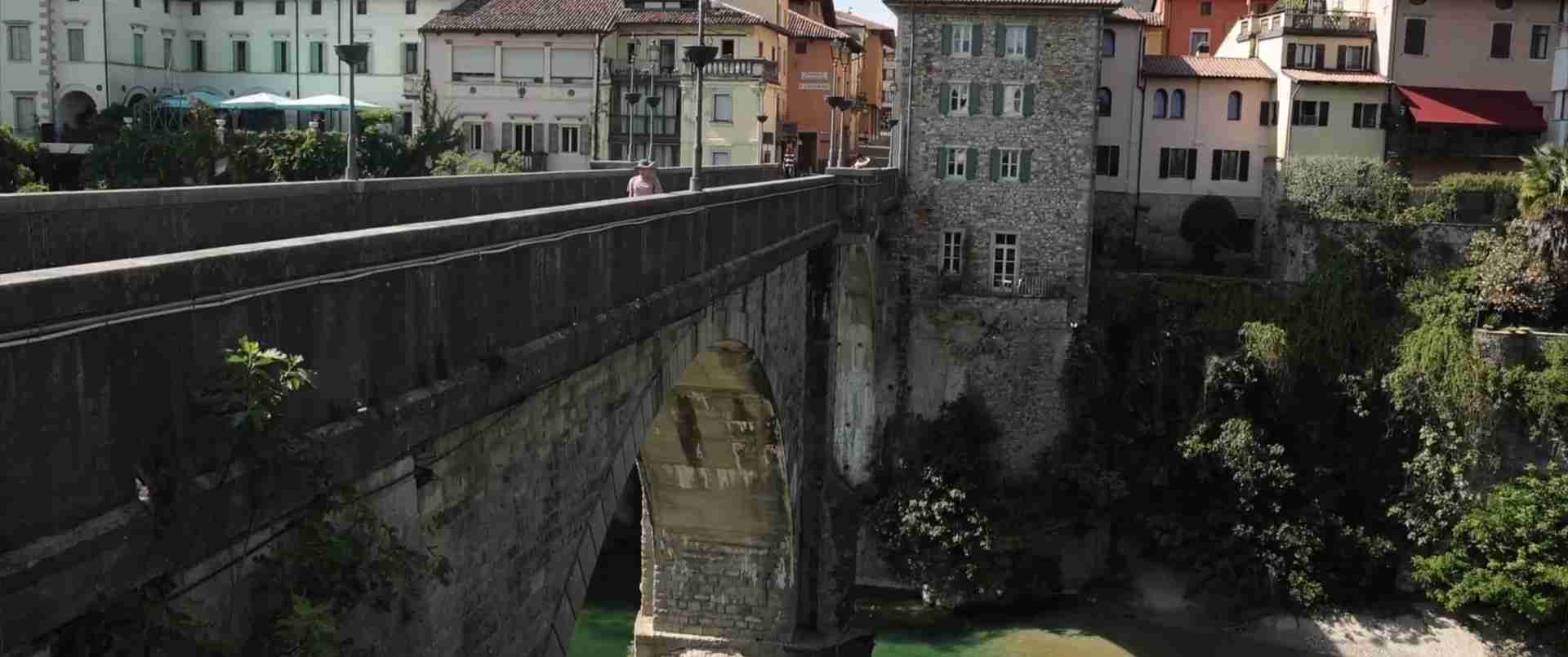
The most iconic element of Cividale’s landscape is the Ponte del Diavolo (Devil’s Bridge), a dramatic single-arch stone bridge spanning the Natisone River at a height of 22 meters above the water. Though the current structure dates to the 15th century, bridges have connected the two banks of the river at this location since Roman times, with the Longobards maintaining and perhaps reconstructing earlier bridges. The bridge’s popular name derives from a medieval legend claiming that the devil assisted in its construction in exchange for the soul of the first being to cross it—a common folk motif attached to bridges throughout Europe. The bridge provides spectacular views of the ravine and the historic buildings rising from both banks, making it Cividale’s most photographed landmark and a symbol of the town’s dramatic topographic setting.
The Cathedral of Santa Maria Assunta, though rebuilt in the 16th century after earthquake damage destroyed earlier structures, occupies the site of successive churches dating back to the early Christian period and including the grand cathedral built by Patriarch Callisto in the 8th century. The current building’s Venetian Gothic facade reflects the period of Venetian control over Friuli, when Cividale functioned as an important administrative center for the Republic of Venice’s mainland territories. The cathedral’s interior, renovated in the 18th century in Baroque style, contains little visible evidence of Longobard construction beyond the crypts and foundations that archaeological investigations have revealed. However, the cathedral’s continued position as Cividale’s principal religious building maintains the functional continuity established when the Patriarch relocated from Aquileia in 738.
Adjacent to the cathedral, the Palazzo Comunale (Town Hall) occupies a 15th-century Gothic palace that replaced earlier medieval structures on the same site. Like the cathedral, this building’s current appearance reflects the Venetian period, but its location and function maintain continuity with the governance structures established during the Longobard duchy. The Piazza del Duomo, formed by the cathedral, Palazzo Comunale, Palazzo dei Provveditori Veneti (housing the Archaeological Museum), and surrounding buildings, creates an impressive civic space that would have functioned similarly during the Longobard period, though the specific buildings were different. This square represents the ceremonial and administrative heart of Cividale, where religious and secular authority intersected.
The historic center retains numerous medieval houses and palaces dating from the 13th through 16th centuries, built during the period when Cividale functioned as an important commercial and administrative center under successive Patriarchal, Venetian, and Habsburg control. While these buildings postdate the Longobard period, they maintain the narrow medieval street pattern, small irregular squares, and tight urban fabric characteristic of pre-modern Italian towns. Walking through these atmospheric streets, with their overhanging upper stories, arched passageways, and glimpses of private courtyards, provides a sense of how the medieval city functioned as an organic, densely built environment quite different from modern urban planning principles.
The Celtic Hypogeum, a mysterious underground chamber complex cut into the bedrock beneath the historic center, represents one of Cividale’s most enigmatic archaeological features. Traditionally attributed to Celtic inhabitants of the pre-Roman period (hence the name), the hypogeum consists of several chambers and passages carved from living rock, with purposes that remain debated among scholars. Possible functions include ritual use as a sacred space, practical use for food storage or water management, or funerary use as a tomb complex. Regardless of its original purpose, the hypogeum demonstrates that Cividale’s site has been continuously inhabited and modified for over two millennia, with successive cultures leaving their marks on the landscape and built environment.
The Longobard Cultural Legacy and the Transition to Carolingian Rule
The Longobard Kingdom’s political existence ended abruptly in 774 when Charlemagne’s Frankish armies conquered Pavia and captured King Desiderius, but the cultural and institutional legacy of two centuries of Longobard rule profoundly shaped subsequent Italian history. The Duchy of Friuli survived the initial Carolingian conquest with its administrative structure relatively intact, as Charlemagne recognized the strategic importance of maintaining a buffer zone against Slavic and Avar incursions from the east. Cividale continued functioning as the ducal capital, now under Frankish authority, with Carolingian appointees replacing Longobard dukes but maintaining the territorial organization and military command structure established during the Longobard period.
The transition from Longobard to Frankish rule initially proceeded with limited disruption to local elites and institutions. Many Longobard aristocratic families maintained their landholdings and social status by transferring their loyalty to the new Carolingian overlords. The ecclesiastical hierarchy, including the Patriarch of Aquileia (whose seat remained at Cividale), made similar accommodations, recognizing Charlemagne’s authority while preserving institutional continuity. The administrative systems, legal codes, and land tenure arrangements developed during the Longobard period continued functioning under Carolingian governance, creating a degree of institutional continuity that eased the political transition.
Cultural and artistic production in Cividale during the Carolingian period built directly on Longobard foundations, creating what scholars sometimes term the “Longobard-Carolingian synthesis.” The monastic communities that had flourished under Longobard patronage continued their religious and cultural activities, adapting to new political realities while maintaining their role as centers of learning, manuscript production, and artistic creation. The architectural and artistic traditions established during the Longobard period—the synthesis of classical, Byzantine, and Germanic elements—provided the foundation for Carolingian art and architecture not only in Friuli but throughout the former Longobard territories. Many of the craftsmen and artists who worked in Carolingian workshops throughout northern Italy had been trained in Longobard artistic traditions, ensuring the transmission of technical skills and aesthetic preferences across the political transition.
The Duchy of Friuli eventually lost its semi-autonomous status in 828 when it was divided into smaller counties more directly controlled by Carolingian and later Frankish royal authority. This administrative reorganization reflected the Frankish preference for more centralized governance compared to the Longobard system of relatively autonomous duchies. However, the division into smaller units created opportunities for local aristocratic families to establish territorial lordships that would eventually evolve into the complex political geography of medieval Friuli, with its overlapping jurisdictions of temporal and ecclesiastical authorities, imperial representatives, and local lords. Cividale’s importance as the seat of the Patriarch ensured the city’s continued significance even after it ceased being a ducal capital.
The Longobard linguistic heritage in Friuli manifests through place names, personal names, legal terminology, and loanwords that entered the local Romance dialects during the period of Germanic settlement. While the Longobard language itself gradually disappeared as the population assimilated linguistically to the Romance-speaking majority, numerous traces survived in the Friulian dialect and in the Italian spoken throughout the region. Place names incorporating Germanic elements like “wald” (forest), “gund” (battle), or “hari” (army) mark locations associated with Longobard settlement or governance. Legal terminology inherited from Longobard law codes, which remained influential in northern Italy through the medieval period, contributed specialized vocabulary to Italian legal language. These linguistic traces, though often subtle and requiring expert analysis to identify, represent another dimension of the Longobard cultural legacy.
The historical memory of the Longobard period in Cividale underwent various transformations across the subsequent centuries. During the medieval period, the Longobards were remembered primarily through the historical narrative established by Paul the Deacon in his Historia Langobardorum, which presented a largely positive view of Longobard rule as a period when Germanic virtue and Christian devotion created a powerful kingdom. Renaissance humanists developed more complex perspectives, sometimes criticizing the Longobards as barbaric destroyers of classical civilization while also recognizing their role in establishing medieval Italian political structures. The 19th-century Romantic movement, with its fascination for medieval history and Germanic heritage, prompted renewed interest in Longobard monuments and artifacts, leading to systematic archaeological investigation and conservation efforts that established modern scholarly understanding of the period.
The Borderland Context: Cividale Between Mediterranean and Central European Worlds
Cividale’s position as a borderland between different geographical, cultural, and political zones fundamentally shaped its history and explains its exceptional cultural richness. The Julian Alps rising immediately to the north and east created a natural frontier between the Mediterranean climate and ecology of the Friulian plain and the continental climate of central Europe. These mountains also formed political boundaries—first between the Roman Empire and Germanic territories, later between Byzantine and Longobard control, and subsequently between various medieval powers including Venice, the Holy Roman Empire, and regional lords. The passes through the Julian Alps connected the Adriatic world with Bavaria, Austria, and ultimately the Danube basin, making Cividale a crucial node in communication and trade networks linking northern and southern Europe.
The borderland character influenced the ethnic and linguistic composition of the population surrounding Cividale throughout history. The Roman foundation introduced Latin language and Mediterranean urban culture to a region previously inhabited by Celtic and Venetic peoples. The Longobard settlement added a Germanic aristocratic and military elite who gradually assimilated to the Romance-speaking majority while leaving permanent marks on place names, legal traditions, and cultural practices. Slavic peoples, particularly Slovenes, settled extensively in the mountain valleys east of Cividale from the 6th century onward, creating a Slavic-speaking zone that extended to the immediate vicinity of the town. This multilingual, multiethnic frontier character persisted through the medieval and early modern periods, with Friulian, Italian, Slovene, and German all spoken in different social contexts and geographical zones.
The proximity to the Slovenian border—currently about 15 kilometers east of Cividale—makes the Longobard heritage sites particularly significant for understanding the historical relationships between Italian and Slavic populations in this region. The Natisone Valleys (Valli del Natisone) stretching east from Cividale toward the present border have historically been inhabited by Slovene-speaking communities while maintaining political integration with Italian-controlled territories. This created a distinctive borderland culture where Italian civic and ecclesiastical institutions coexisted with Slavic rural communities, each maintaining their own languages, customs, and identities while participating in shared economic and political structures. The Longobard monuments in Cividale thus represent not just Italian cultural heritage but also the heritage of a broader borderland region where multiple cultures have historically intersected.
Trade routes connecting the Adriatic ports with central Europe passed through or near Cividale, bringing both economic opportunities and exposure to diverse cultural influences. Goods moving from Venice and the Adriatic coast to Bavaria, Austria, and beyond traveled through the Alpine passes controlled from Cividale, generating customs revenues and commercial activity that supported the town’s economic prosperity. Cultural exchanges accompanied these trade connections—Byzantine luxury goods, Germanic metalwork, Slavic pottery, and Alpine products all circulated through Cividale’s markets and appear in the archaeological record. The artistic synthesis visible in Longobard monuments reflects not just intellectual borrowing from different traditions but the practical reality of a cosmopolitan trading center where people, goods, and ideas from diverse origins regularly encountered one another.
The strategic military significance of the borderland position cannot be overstated. Control of Cividale meant control of the principal routes between Italy and central Europe, making it a prize worth contesting for successive powers. The Longobard dukes maintained substantial military forces to defend against Byzantine attacks from the south, Slavic and Avar incursions from the east, and potentially hostile Germanic peoples from the north. After the Carolingian conquest, Frankish and later German rulers similarly recognized Friuli’s strategic importance as the eastern frontier of their Italian territories. The Venetian Republic’s eventual control over Cividale and Friuli reflected Venice’s interest in securing the landward approaches to its maritime empire. This continuous strategic importance ensured that Cividale received sustained investment in fortifications, garrison troops, and administrative infrastructure across many centuries.
Experiencing Cividale Today: Visiting the Longobard Sites
Contemporary visitors to Cividale can experience the Longobard heritage through multiple complementary sites and institutions that together provide comprehensive understanding of this crucial period in European history. The practical organization of a visit requires coordinating schedules for three principal locations: the Tempietto Longobardo, the Christian Museum (MUCRIS), and the National Archaeological Museum. Each institution maintains distinct hours and ticketing arrangements, though combination tickets offering access to multiple sites at reduced prices are available and represent the best value for visitors planning comprehensive exploration.
The Tempietto Longobardo, accessed through the monastery cloister on Via Monastero Maggiore, functions as both an active cultural monument and a museum. Visits typically begin with orientation panels and multimedia presentations in the cloister explaining the historical context of the Longobard settlement in Cividale and the Tempietto’s construction and decoration. The passage through the ancient wooden door from the cloister into the oratory provides a dramatic threshold experience, with visitors moving from the open-air medieval cloister into the intimate, luminous space of the 8th-century chapel. The interior’s relatively small scale—considerably smaller than the “tempietto” name might suggest—creates an intense, focused experience where the stucco figures, architectural details, and fragmentary frescoes can be examined at close range. Audio guides or guided tours provide detailed information about the iconography, construction techniques, and historical significance of the various decorative elements.
The Christian Museum requires access through or adjacent to the Cathedral of Santa Maria Assunta on Piazza del Duomo. The museum’s compact gallery spaces focus visitor attention on the masterworks of Longobard sculpture without overwhelming through excessive collections. The Altar of Duke Ratchis occupies a position of honor with multimedia projections that periodically activate, showing reconstructions of the altar’s original polychrome decoration. These digital presentations, carefully researched based on traces of pigment preserved on the marble surfaces, transform understanding of the monument by revealing how color originally enhanced the carved reliefs. The Baptistery of Callisto fragments receive similarly careful presentation with explanatory panels describing the original architectural context and the significance of the carved decoration. Additional galleries contain the Cathedral Treasury with its medieval liturgical objects and the art gallery with paintings and sculpture from later periods, providing context for understanding how artistic production continued in Cividale across many centuries.
The National Archaeological Museum in the Palazzo dei Provveditori Veneti offers the most extensive and varied collections, requiring the most time for thorough exploration. The ground-floor lapidary sections present chronological development from Roman through Romanesque periods, with particular attention to architectural fragments that document the disappeared Longobard cathedral and other major monuments. The upper floors devoted to the Longobard necropolis provide the museum’s highlights, with cases displaying the extraordinary jewelry, weapons, and grave goods discussed in detail above. The museum’s presentation emphasizes both the aesthetic qualities of individual objects and their archaeological context, with reconstructed grave assemblages showing how different types of objects were deposited together in single burials. Interpretive panels explain the social meanings of different burial practices and the information that archaeologists can extract from careful study of funerary contexts.
Beyond these principal institutions, visitors should allow time to explore Cividale’s atmospheric medieval streets, cross the iconic Ponte del Diavolo for dramatic views of the town and ravine, and visit the cathedral to understand the setting of the Episcopal complex even though little Longobard fabric survives in the current structure. The Celtic Hypogeum, while not directly related to Longobard history, provides fascinating evidence of the site’s deep occupation history and makes an interesting complement to the specifically Longobard sites. The town’s compact size makes walking the most practical way to navigate between sites, with all major monuments located within a roughly 500-meter radius of the central Piazza del Duomo.
Cividale’s location in northeastern Friuli makes it accessible as a day trip from major regional cities including Udine (15 kilometers west), Trieste (roughly 60 kilometers south), and Ljubljana, Slovenia (approximately 80 kilometers northeast). The town’s relative remoteness compared to more heavily touristed Italian destinations means that visitors often encounter the Longobard sites without crowds, allowing contemplative engagement with the monuments. This lack of mass tourism, while limiting certain amenities and services compared to major tourist centers, preserves the authentic character of a small Italian town where monumental heritage coexists with everyday contemporary life rather than being preserved as a museum piece isolated from living culture.
The Broader UNESCO Context: Longobard Sites Across Italy
While Cividale del Friuli represents the first and in many ways most important Longobard capital, understanding its heritage requires awareness of the six other locations included in the UNESCO serial property “Longobards in Italy. Places of the Power (568-774 A.D.).” These seven sites, distributed across the Italian peninsula from Friuli to Puglia, collectively demonstrate the geographical extent of Longobard rule and the regional variations in how Longobard culture manifested in different contexts. The UNESCO inscription recognized that these dispersed monuments, when considered together, provide comprehensive evidence for the Longobards’ role in transmitting classical culture to medieval Europe and establishing the foundations of Western European Christianity’s monastic and ecclesiastical structures.
Brescia, in Lombardy, preserves the monastic complex of San Salvatore-Santa Giulia, founded in 753 by Duke Desiderius (later King) as a Benedictine abbey with his daughter serving as first abbess. This complex represents Longobard religious architecture at its most ambitious scale, with the basilica of San Salvatore featuring elaborate decorative programs combining Byzantine mosaic work with Longobard sculptural elements. The monastery’s continuous use from the 8th century through the modern period (it now houses Brescia’s city museum) demonstrates how Longobard religious foundations maintained institutional continuity across political transitions. The UNESCO designation includes the monastery buildings, the attached archaeological area with remains of Roman structures, and the decorative elements that document the synthesis of late antique and early medieval artistic traditions.
The castrum of Castelseprio with the nearby Torre di Torba and the church of Santa Maria foris portas, located in Lombardy near Varese, represents Longobard military architecture and fortification systems. This hilltop fortress controlled strategic routes through the sub-Alpine region and demonstrates how the Longobards adapted Roman military engineering to medieval defensive needs. The church of Santa Maria foris portas contains extraordinarily important frescoes depicting scenes from Christ’s infancy, executed in a style showing strong Byzantine influence and representing some of the finest early medieval painting to survive in Western Europe. The fortified tower (Torre di Torba) served both military and residential functions, illustrating how Longobard aristocratic residences combined defensive capabilities with comfortable living quarters.
Spoleto, in Umbria, became the capital of the powerful Duchy of Spoleto, one of the two southern Longobard duchies that maintained substantial autonomy from the kingdom centered at Pavia. The basilica of San Salvatore represents early Longobard religious architecture, possibly dating to the late 4th or early 5th century and reused by the Longobards with modifications. The building’s architectural form demonstrates the continuity of late antique Christian architecture into the early medieval period, with the Longobards preserving and adapting earlier structures rather than imposing entirely new architectural types. The building’s relatively plain exterior contrasts with the sophisticated interior articulation through columns, capitals, and spatial divisions that create a sense of classical order and proportion.
The Tempietto del Clitunno, located at Campello sul Clitunno in Umbria along the ancient Via Flaminia, represents a small but architecturally significant Longobard religious building constructed using spolia (reused elements) from Roman temples that once stood nearby. The temple’s facade, featuring a classical pediment supported by columns with Corinthian capitals, demonstrates the Longobard practice of deliberately evoking classical architectural forms while adapting them to Christian purposes. The interior preserves frescoes depicting Christ and saints in Byzantine style, showing the continued influence of Eastern Christian artistic traditions in 7th and 8th century Italy. The building’s small scale and refined proportions make it an architectural jewel despite its modest dimensions.
Benevento, in Campania, served as capital of the Duchy of Benevento, the southernmost and most independent of the Longobard duchies. The church complex of Santa Sofia, founded in the late 8th century by Duke Arechis II, represents Longobard architecture in southern Italy where Byzantine cultural influence remained particularly strong due to the proximity of Byzantine-controlled territories in Calabria and Puglia. The church features a complex plan with a central hexagonal core surrounded by ambulatory spaces, creating sophisticated spatial effects derived from Byzantine architectural models. The sculptural decoration includes capitals and reliefs combining Longobard geometric ornament with Byzantine vegetal motifs, demonstrating the cultural synthesis achieved in the southern Longobard territories.
Monte Sant’Angelo, on the Gargano peninsula in Puglia, became one of medieval Europe’s most important pilgrimage destinations due to the sanctuary dedicated to the Archangel Michael. The Longobards developed this pre-existing sacred site into a major pilgrimage center, constructing architectural elements that facilitated the accommodation of pilgrims and the performance of religious rituals. The sanctuary’s cave setting, where according to tradition the Archangel Michael appeared, creates a unique architectural challenge that the Longobard builders addressed through careful integration of constructed elements with the natural rock formations. The development of the Michael cult at Monte Sant’Angelo under Longobard patronage contributed significantly to the spread of this devotion throughout Western Europe, making the site important not just for its architecture but for its role in shaping medieval religious practices.
These seven sites, spanning the length of Italy from Friuli to Puglia, demonstrate both the unity and diversity of Longobard culture. Common elements include the synthesis of classical, Byzantine, and Germanic traditions; the close relationship between secular and religious authority; the importance of monasticism in Longobard religious life; and the role of elite patronage in architectural and artistic production. Regional variations reflect different local conditions—greater Byzantine influence in the south, stronger connections to Frankish and Bavarian culture in the north, and varying relationships with local Romance-speaking populations. Visiting multiple sites allows travelers to appreciate this geographical and cultural diversity while recognizing the underlying unity of Longobard civilization across its two centuries of rule in Italy.
Frequently Asked Questions About Longobard Heritage in Cividale del Friuli
How Long Should I Spend Visiting the Longobard Sites in Cividale?
A comprehensive visit to Cividale’s principal Longobard monuments typically requires a full day, allowing approximately two hours at the National Archaeological Museum, one hour at the Christian Museum, one hour at the Tempietto Longobardo, and additional time for exploring the historic center, crossing the Ponte del Diavolo, and visiting the cathedral and other complementary sites. Visitors with strong interest in early medieval art and archaeology may wish to allocate additional time for careful study of the museum collections and architectural details. The town’s compact size means that movement between sites involves only short walks, maximizing time available for actual exploration rather than transportation. Those with limited time might prioritize the Tempietto Longobardo and Christian Museum as the most essential sites, requiring approximately three hours total. The museums typically close for lunch in the early afternoon, requiring visitors to plan around these closures or accept split visits with a midday break. Combining the Longobard sites with exploration of Cividale’s medieval architecture, local cuisine at traditional restaurants, and the atmospheric character of the historic streets can easily fill an entire day even for visitors not specifically focused on early medieval history.
What Makes the Stucco Work in the Tempietto Longobardo Unique?
The six stucco figures in the Tempietto Longobardo represent the most important ensemble of early medieval stucco sculpture surviving in Western Europe and demonstrate technical and artistic achievements that fundamentally challenge assumptions about “Dark Age” artistic capabilities. Stucco work—sculpture modeled in lime plaster—requires extraordinary technical skill because the material must be worked quickly before it sets while achieving subtle modeling of forms, precise detail in facial features and drapery, and structural stability through proper reinforcement with armatures. The Tempietto figures achieve remarkable naturalism in the modeling of faces, hands, and bodies visible beneath drapery, with each figure displaying individualized features and subtle emotional expression rather than generic, schematic forms. The figures’ large scale—nearly life-sized—increases the technical challenge, as larger stucco sculptures require more sophisticated internal support structures to prevent collapse and cracking during the drying process and subsequent centuries.
The artistic significance extends beyond technical virtuosity to the figures’ role in demonstrating cultural synthesis. The naturalistic modeling and attention to anatomical accuracy reflect knowledge of late antique and Byzantine figural traditions, while the frontal poses, hierarchical arrangement, and symbolic rather than narrative presentation align with early medieval devotional aesthetics. The choice to represent exclusively female sacred figures in a palatine chapel—possibly including the Virgin Mary, Mary Magdalene, and female martyrs or symbolic personifications—suggests deliberate theological and devotional intentions that may reflect the influence of female patrons, particularly Giseltrude, wife of Duke Astolfo. The brilliance of the white stucco against darker architectural elements creates dramatic visual effects that would have been enhanced by candlelight during liturgical celebrations, transforming the chapel into a luminous sacred space where the boundaries between earthly and heavenly realms appeared to dissolve.
Comparisons with other early medieval stucco work demonstrate the Tempietto figures’ exceptional quality and state of preservation. While fragments of stucco decoration survive from other Longobard-period buildings and from Carolingian and Ottonian churches, nowhere else do we find such complete, well-preserved, and artistically sophisticated ensembles. The survival of the Tempietto stuccos results from the building’s continuous sacred use, which ensured careful maintenance, and the relatively protected interior environment that prevented the weathering and damage that destroyed exposed sculptural elements. Modern conservation work has stabilized the stucco surfaces and consolidated areas of vulnerability, ensuring these irreplaceable works of art remain accessible to future generations while maintaining their authentic appearance without heavy-handed restoration that would compromise their historical integrity.
How Did the Longobards Contribute to the Development of Medieval European Culture?
The Longobards played a pivotal role in transmitting the cultural heritage of classical antiquity and late antiquity to medieval Europe while simultaneously developing distinctive institutions and practices that would shape Western European civilization for centuries. Their two-century rule in Italy coincided with the crucial transition period between the ancient and medieval worlds, when classical urban civilization, Christian theology and ecclesiastical organization, and Germanic social and legal structures fused to create the foundations of medieval European society. The Longobards’ position as recent converts from paganism and Arian Christianity to Catholic orthodoxy made them particularly receptive to Roman and Byzantine cultural influences while their Germanic heritage provided alternative social models and artistic traditions that enriched the resulting cultural synthesis.
In religious and ecclesiastical development, the Longobards made especially significant contributions through their patronage of Benedictine monasticism. The Longobard aristocracy, including kings, dukes, and wealthy landowners, founded and endowed numerous monasteries following the Rule of Saint Benedict, which had emerged in the previous century at Monte Cassino. These monastic foundations served multiple purposes: they provided prestigious burials and memorial prayers for aristocratic families, created centers of learning and manuscript production that preserved classical and Christian texts, developed agricultural estates using efficient land management practices, and offered opportunities for younger sons and daughters of noble families who would not inherit ancestral lands. The Longobard model of aristocratic monastic patronage, combining religious devotion with family commemoration and economic development, became characteristic of medieval European monasticism and contributed to the remarkable expansion of the Benedictine order throughout Western Europe.
The development of the cult of Saint Michael the Archangel at Monte Sant’Angelo under Longobard patronage demonstrates their influence on medieval religious practices and pilgrimage traditions. The Longobards transformed what had been a local sacred site into one of Western Christianity’s most important pilgrimage destinations, establishing architectural facilities and liturgical practices that accommodated thousands of pilgrims traveling from throughout Europe. The spread of devotion to Saint Michael, with hundreds of churches and shrines dedicated to the archangel across medieval Europe, often on mountaintops or high places echoing the Gargano sanctuary, can be traced directly to the Longobard promotion of this cult. The association of Michael as warrior-saint with military victory and divine protection particularly appealed to the Longobards as a warrior people, while the theological significance of Michael as leader of the heavenly hosts against evil resonated with early medieval Christianity’s emphasis on spiritual warfare.
In law and governance, Longobard legal codes and administrative practices significantly influenced medieval Italian institutions and contributed to the broader European legal tradition. The Edictus Rothari, promulgated by King Rothari in 643, represents the first Germanic law code written in Latin rather than a vernacular language, demonstrating the Longobards’ acceptance of Latin as the language of law and administration. This code and its subsequent expansions combined Germanic customary law with Roman legal concepts, creating a hybrid legal system that proved remarkably durable and influenced legal practice in northern and central Italy through the medieval period. Concepts including the distinction between Longobard and Roman law for different subjects, the elaborate system of monetary compensations (wergild) for injuries and homicides, and provisions protecting widows and orphans became part of the common legal heritage inherited by medieval Italian communes and ultimately contributed to the development of European civil law traditions.
Architecturally and artistically, the Longobards created the synthesis of classical, Byzantine, and Germanic traditions that provided foundations for Carolingian and Ottonian art, which in turn influenced the development of Romanesque architecture and sculpture. The practice of incorporating spolia—reused elements from Roman buildings—into new construction established continuity with classical traditions while demonstrating that ancient monuments provided quarries of pre-fabricated architectural elements rather than sacrosanct ruins requiring preservation. The decorative vocabulary combining geometric interlace, stylized vegetation, animal ornament, and figural sculpture drawn from multiple traditions became characteristic of early medieval art throughout Western Europe. The Longobard contribution to this artistic synthesis was not passive transmission of inherited forms but active reinterpretation and creative combination that produced distinctive new aesthetic achievements.
Can I Visit Other Longobard UNESCO Sites from Cividale?
While Cividale del Friuli represents the northeasternmost of the seven UNESCO Longobard sites, the substantial distances between locations—spanning the entire length of Italy from Friuli to Puglia—make visiting all sites in a single trip logistically challenging for most travelers. However, strategic planning allows combining multiple sites in regional clusters, creating itineraries that provide comprehensive understanding of Longobard heritage while remaining practically manageable. The northern cluster of Cividale, Brescia, and Castelseprio/Torba in Lombardy can be visited within a week-long itinerary based in northeastern Italy and Lombardy, with good rail and road connections facilitating movement between cities. Brescia lies approximately 250 kilometers west of Cividale, requiring roughly three hours by car or train via Verona, making it feasible as either a long day trip or an overnight excursion. Castelseprio and the nearby Torre di Torba, located about 80 kilometers northwest of Milan, can be visited as a day trip from Milan or en route between Brescia and other northern destinations.
The central Italian sites of Spoleto and the Tempietto del Clitunno in Umbria form a natural pairing separated by only about 15 kilometers, allowing both to be visited in a single day trip from Rome, Florence, or other central Italian cities. Spoleto itself merits overnight stays to explore not just the Longobard basilica of San Salvatore but the town’s extensive medieval heritage including the massive fortress, aqueduct, and cathedral. The Tempietto del Clitunno occupies a rural location along the ancient Via Flaminia where springs create a sacred landscape that attracted religious building from Roman times through the Longobard period, making the visit a combination of architectural study and landscape appreciation.
The southern sites of Benevento and Monte Sant’Angelo require more specialized planning as they lie far from standard tourist routes through central and northern Italy. Benevento, located inland from Naples in Campania, can be visited as a day trip from Naples or the Amalfi Coast, though the roughly 80-kilometer distance and challenging mountain roads make public transportation less convenient than private car. Monte Sant’Angelo, on the Gargano peninsula in northern Puglia, occupies an even more remote location requiring commitment to reach—the pilgrimage destination’s isolation from major cities is precisely what has preserved its sacred atmosphere but also makes casual visits difficult. Travelers focusing on southern Italy might combine these sites with exploration of Puglia’s other attractions including Romanesque cathedrals, coastal towns, and the unique trulli architecture of the Itria Valley.
The dispersed geography of the UNESCO Longobard sites actually reflects historical reality, as the Longobard Kingdom consisted of a core territory in the Po Valley with major semi-autonomous duchies scattered throughout the peninsula. Visiting sites in different regions allows appreciation of how local conditions influenced Longobard culture—the strong Byzantine influence visible at Benevento and Monte Sant’Angelo in the south, the Alpine character of Cividale in the northeast, and the agricultural wealth supporting monastic foundations in Lombardy. Travelers unable to visit all seven sites might prioritize based on specific interests: Cividale for the most complete ensemble of monuments and museums, Brescia for monastic architecture and continuity of use, Castelseprio for military architecture and frescoes, Spoleto and Clitunno for central Italian context, or the southern sites for pilgrimage traditions and Byzantine influences.
What Was Daily Life Like for Longobards Living in Cividale?
Archaeological evidence from Cividale’s necropolises, the artifacts displayed in the National Archaeological Museum, and fragmentary documentary sources allow reconstruction of daily life for the Longobard population across different social levels. For the ducal elite residing in the gastaldaga district, daily existence combined military responsibilities, governance functions, and participation in religious observances with the material comforts afforded by substantial wealth. The duke maintained a household of warriors, administrators, clerics, and servants who lived within or near the palace complex. Aristocratic men spent considerable time on military training, hunting, and the supervision of agricultural estates that provided the economic foundation for their status. The elaborate weapons found in elite burials—swords with decorated hilts, spears with intricate metalwork, shields with ornamental bosses—were not merely burial goods but working equipment maintained in peak condition for use in combat, suggesting that even high-status warriors engaged in regular weapons practice and periodic military campaigns.
Aristocratic women’s lives centered on household management, textile production, and religious devotion, though the material culture reveals sophisticated tastes and access to luxury goods from distant sources. The elaborate jewelry assemblages from female burials—gold fibulae with garnet inlays, necklaces combining amber from the Baltic, glass beads from the Mediterranean, and semi-precious stones from various sources—demonstrate both personal wealth and participation in long-distance trade networks. These jewelry pieces served practical purposes, fastening garments that lacked buttons or other closures, while also displaying social status and family affiliations through the quality and style of metalwork. Spinning and weaving remained essential activities even for elite women, as textile production supplied not just clothing but also a form of wealth that could be stored, gifted, or traded. The finds of spindle whorls, loom weights, and other textile-working tools in aristocratic female burials indicate that high-status women personally participated in textile production rather than merely supervising servants.
For the middle ranks of Longobard society—free farmers, craftsmen, and minor warriors—daily life revolved around agricultural labor, craft production, and military obligations that required periodic service in the ducal army. The relative prosperity visible in moderately wealthy burials, which contain serviceable weapons or jewelry of good quality though not the most expensive materials, suggests a class of independent landowners who cultivated their own fields with family labor while also owing military service to higher-ranking aristocrats. The agricultural economy of the Friulian plain, with its combination of grain cultivation, viticulture, and animal husbandry, required year-round labor and provided subsistence for most of the population. The persistence of Roman agricultural techniques and estate organization indicates that the Longobards adapted to existing farming practices rather than importing entirely new agricultural systems from their Germanic homeland.
Urban life in Cividale concentrated around the forum area (later Piazza del Duomo) where markets, administrative buildings, and religious structures created a center of commercial and social activity. Artisans producing pottery, metalwork, leather goods, and other manufactures occupied workshops within the town, with some crafts—particularly blacksmithing and goldsmithing—requiring specialized skills passed through apprenticeship systems. The archaeological evidence of imported goods including glass vessels from the eastern Mediterranean, pottery from other Italian regions, and Byzantine coins demonstrates that Cividale participated in regional and long-distance trade networks despite its somewhat remote location in the Alpine foothills. Local markets likely operated on regular schedules, bringing rural producers into town to exchange agricultural surplus for manufactured goods and creating social interactions between urban and rural populations.
Religious life structured time through the liturgical calendar and daily prayer schedules, particularly for those associated with religious institutions. The relocation of the Patriarch to Cividale in 738 created a concentration of clerics, monks, and religious functionaries who lived according to monastic or canonical rules requiring regular prayer at fixed hours throughout the day. The laity participated in religious observances through attendance at Mass on Sundays and feast days, baptisms, weddings, funerals, and other sacramental occasions. The presence of numerous fragments of liturgical objects, chalices, patens, and altar furnishings in the museum collections indicates that churches possessed elaborate equipment for performing religious ceremonies. Popular religious practices likely combined official Catholic liturgy with older customs and beliefs that Christianity gradually absorbed and transformed, creating the distinctive blend of formal theology and popular devotion characteristic of medieval European Christianity.
How Are the Longobard Sites Being Preserved and Protected?
The UNESCO World Heritage designation of the seven Longobard sites in 2011 formalized international recognition of their Outstanding Universal Value and established comprehensive management frameworks to ensure long-term preservation. Each site operates under a dedicated management plan coordinating conservation activities, visitor management, educational programming, and monitoring to prevent deterioration. The Italian Ministry of Culture (Ministero della Cultura) maintains ultimate responsibility for heritage protection, working in collaboration with regional governments, local municipalities, and specialized conservation agencies to implement preservation measures. The Longobard sites benefit from Italy’s robust legal framework for cultural heritage protection, which provides strong regulatory controls over any activities affecting designated monuments and archaeological areas.
At Cividale specifically, multiple institutions share preservation responsibilities for different components of the Longobard heritage. The Tempietto Longobardo underwent major conservation work in the late 20th and early 21st centuries, addressing structural issues including foundation stability, moisture infiltration, and deterioration of stucco surfaces and frescoes. The wooden choir stalls spent seven years in specialized conservation laboratories where experts removed centuries of grime, stabilized weakened structural members, and conserved the carved decoration before their triumphant return to the Tempietto. Ongoing monitoring systems track environmental conditions including temperature, humidity, and light levels to identify any changes that might threaten the delicate stucco and fresco surfaces, allowing preventive interventions before serious damage occurs.
The Christian Museum conservation program focuses on the masterworks of Longobard sculpture, particularly the Altar of Ratchis and Baptistery of Callisto fragments. Advanced cleaning techniques using lasers and chemical treatments have removed centuries of accumulated grime while preserving traces of original polychrome decoration that provide crucial evidence for understanding the altar’s original appearance. The multimedia projection system that periodically displays reconstructions of the altar’s polychrome decoration represents a balance between conservation requirements (the actual surfaces cannot be repainted without destroying their archaeological integrity) and educational needs (visitors cannot appreciate the original aesthetic impact without seeing color). Conservators continue studying minute traces of pigment using microscopic analysis and scientific instruments to refine understanding of the original decorative programs.
The National Archaeological Museum faces challenges characteristic of collections housing thousands of small objects requiring individual attention. Metal artifacts, particularly iron weapons and gold jewelry, require controlled environmental conditions to prevent corrosion and degradation. Organic materials including bone, leather, and textile fragments demand especially careful conservation as these materials are inherently unstable and vulnerable to changes in temperature and humidity. The museum has invested in climate-controlled storage facilities and display cases that maintain stable conditions while allowing public viewing. Digital documentation programs create detailed photographic and measured records of individual objects, ensuring that even if physical artifacts deteriorate, comprehensive records preserve information about their original state.
Public access and tourism present both opportunities and challenges for preservation. Visitor numbers to Cividale’s Longobard sites remain modest compared to mass-tourism destinations, reducing wear and tear from excessive foot traffic while also limiting revenue available for conservation work. The balance between accessibility and preservation guides decisions about visitor circulation patterns, lighting levels in sensitive areas, and physical barriers protecting vulnerable surfaces. Educational programming helps visitors understand conservation challenges and the importance of behaviors that minimize impact on fragile monuments—photography without flash, maintaining appropriate distance from decorated surfaces, and respecting barriers and signage.
Research and documentation form essential components of preservation strategy. Archaeological investigations continue at sites around Cividale, particularly when construction projects disturb previously unexplored areas, yielding new information about the extent and character of Longobard settlement. Scientific analysis of materials, construction techniques, and decorative programs using technologies including radiocarbon dating, pigment analysis, metallurgical studies, and architectural photogrammetry generates increasingly detailed understanding of the monuments. This research informs conservation decisions by revealing original construction methods, identifying later alterations and additions, and documenting changes over time. Publications, conferences, and academic exchanges ensure that knowledge about Cividale’s Longobard heritage reaches international scholarly communities and contributes to broader understanding of early medieval European history.
What Other Historical Periods Are Represented in Cividale Besides the Longobard Era?
Cividale’s continuous occupation from Roman foundation through the present day has created a layered urban landscape where monuments and artifacts from multiple historical periods coexist, each contributing to the town’s extraordinary cultural richness. The Roman period, beginning with Julius Caesar’s establishment of Forum Iulii in 50 BC, left fundamental marks on urban planning through the street grid partially visible in the modern town layout, though relatively few above-ground Roman monuments survive due to successive reconstructions. The National Archaeological Museum’s Roman collection displays architectural fragments, inscribed stones, sculpture, and small finds documenting the town’s function as a military and administrative center controlling Alpine approaches. The museum also houses the Cernazai Collection with funerary monuments from Aquileia and other Roman coastal cities, providing comparative context for understanding Forum Iulii within the broader Roman settlement pattern of northeastern Italy.
The early Christian and Byzantine period spanning the 4th through 6th centuries witnessed Forum Iulii’s transformation into an episcopal seat with construction of Christian basilicas that preceded the Longobard settlement. Archaeological excavations below the current cathedral have revealed portions of early Christian churches with mosaic pavements and architectural elements characteristic of late Roman religious architecture. The transition from Roman to Byzantine control following Justinian’s reconquest created a complex political situation where Forum Iulii sometimes allied with the Byzantine Exarchate and sometimes maintained independence, until the Longobard invasion of 568 permanently ended Byzantine authority in the region. The architectural and sculptural elements from this period displayed in museum collections demonstrate continuities between late Roman and early medieval building practices that the Longobards inherited and maintained.
The Carolingian and Frankish period following Charlemagne’s conquest in 774 represents a crucial transition when Cividale maintained its importance as a ducal capital, now under Frankish rather than Longobard control. The continuous use of the Tempietto through this period and the addition of the Gothic choir stalls demonstrate how religious institutions adapted to political changes while maintaining liturgical functions. Documentary sources from the Carolingian period provide the earliest written evidence about many aspects of Cividale’s urban organization, religious institutions, and economic activities that had existed during the Longobard period but left limited written record. The integration of Friuli into the Carolingian Empire connected Cividale to broader European cultural movements including the Carolingian Renaissance with its emphasis on classical learning and standardized Latin literacy.
The medieval period from the 9th through 15th centuries saw Cividale’s gradual transformation from a ducal capital to an ecclesiastical city dominated by the Patriarch of Aquileia (whose seat remained at Cividale until the patriarchate’s eventual dissolution in the 18th century). The construction of the current cathedral in the 16th century, replacing structures destroyed by the 1348 earthquake, reflects late medieval and Renaissance architectural fashions while maintaining the site’s continuous sacred function. Numerous medieval houses, palaces, and civic buildings surviving in the historic center demonstrate the prosperity generated by Cividale’s role as a major pilgrimage destination on routes leading from Italy to central European shrines and by its commercial importance as a market town controlling trade routes through the Julian Alps.
The Venetian period beginning in the 15th century fundamentally shaped Cividale’s current architectural appearance, with the construction of the Palazzo dei Provveditori Veneti to Palladian designs representing the peak of Venetian architectural patronage in the town. Venice’s control over Friuli brought Cividale into the orbit of the Serenissima’s mainland empire, creating economic opportunities through trade connections while also imposing the administrative and fiscal structures characteristic of Venetian governance. The Venetian Gothic elements visible in the cathedral facade and other buildings demonstrate how architectural fashions flowed from Venice to its subject territories, while local building traditions maintained regional characteristics distinct from purely Venetian models. The collapse of the Venetian Republic in 1797 and the subsequent period of Habsburg control created yet another political transition that Cividale navigated while maintaining its cultural identity and urban character.
The modern period witnessed Cividale’s transformation from a functioning regional administrative and religious center into a heritage town where historical monuments and tourism increasingly shape economic and cultural life. The 19th-century foundation of the National Archaeological Museum reflected new scholarly interest in Cividale’s classical and medieval heritage, while 20th-century conservation work on the Tempietto and other monuments established modern approaches to heritage preservation balancing public access with long-term protection. The UNESCO inscription in 2011 represents the most recent chapter in this evolution, internationally recognizing Cividale’s Longobard heritage while also creating new responsibilities and opportunities for presenting this history to global audiences.
Are There Any Special Events or Festivals Related to Longobard Heritage in Cividale?
Cividale hosts various cultural events and festivals throughout the year that celebrate the town’s historical heritage, though specific festivals focused exclusively on the Longobard period remain relatively limited compared to medieval or Renaissance-themed events common in other Italian towns. The most significant heritage-related event is the Mittelfest, an international festival of central European culture held annually in July that celebrates the region’s position as a crossroads between Italian, Slavic, and Germanic cultures. While not specifically focused on the Longobard period, Mittelfest’s themes of cultural exchange and borderland identity resonate with the historical processes that shaped Cividale during the early medieval period. The festival includes theatrical performances, concerts, exhibitions, and scholarly presentations that often engage with historical themes including the Longobard heritage and its role in creating the distinctive cultural character of the borderlands.
The Palio di San Donato, held in August, represents Cividale’s major medieval-themed festival featuring historical processions, flag-throwing competitions, and archery contests between teams representing different quarters of the historic center. While the festival’s current form developed in the 20th century rather than representing continuous tradition from the medieval period, the event draws on authentic medieval and Renaissance customs documented in historical sources. The processions feature participants in period costumes including representations of Longobard warriors, religious figures, and aristocratic patrons, though the festival’s primary temporal focus is the later medieval and Renaissance periods rather than the specific Longobard era. The combination of historical reenactment and contemporary celebration creates a festive atmosphere that brings the historic center to life with activities that would have characterized urban celebrations during various periods of Cividale’s history.
The Christmas season brings special events including a living nativity scene (presepe vivente) staged in various locations throughout the historic center, transforming the medieval streets into a setting that evokes (with appropriate anachronism) the biblical narrative. These Christmas celebrations often incorporate elements of local tradition including the Foredans, singers who perform traditional Friulian songs door-to-door, and special markets featuring regional food products and crafts. While not historically connected to the Longobard period, these traditions demonstrate the continuity of community celebrations centered on the historic urban fabric that the Longobards helped establish.
Special exhibitions at the National Archaeological Museum, Christian Museum, and Tempietto Longobardo periodically focus on specific aspects of Longobard heritage, utilizing temporary displays to present objects normally in storage, recent archaeological discoveries, or thematic explorations of topics like Longobard jewelry, warfare, religious practices, or daily life. These exhibitions, often coordinated with scholarly conferences or publication of new research, provide opportunities for deeper engagement with Longobard heritage than the permanent museum displays allow. The exhibitions typically include enhanced interpretive materials, multimedia presentations, and educational programming designed to make specialized archaeological and art historical research accessible to general visitors.
The designation of Cividale’s Longobard sites as UNESCO World Heritage has prompted discussion about developing more extensive programming related specifically to the Longobard period, potentially including annual commemorative events, expanded historical reenactments, or educational festivals designed to interpret this crucial period for contemporary audiences. The challenge lies in creating events that respect the scholarly understanding of Longobard history and culture while providing engaging experiences for visitors who may have limited prior knowledge of the early medieval period. Some proposals have suggested developing collaborative programming across all seven UNESCO Longobard sites, creating itineraries, shared marketing, and coordinated events that would help visitors understand the sites as components of a unified heritage rather than isolated monuments.
How Did the Longobards’ Artistic Style Influence Later Medieval Art?
The artistic synthesis achieved by Longobard craftsmen and patrons during the 7th and 8th centuries established fundamental patterns that shaped the development of medieval European art for the subsequent five centuries. The Longobard practice of combining elements from diverse sources—classical Roman architectural forms and sculptural traditions, Byzantine decorative vocabularies and iconographic programs, Germanic geometric ornament and metalwork techniques—created a model for how medieval artists would continue synthesizing varied influences into coherent new styles. This approach to artistic production as creative reinterpretation rather than slavish copying of established models became characteristic of medieval art generally, distinguishing it from the more conservative aesthetics of Byzantine and Islamic traditions that emphasized faithful transmission of canonical forms.
In architectural decoration, the Longobard repertoire of geometric interlace, stylized vegetal ornament, and symbolic animal motifs became standard elements of Romanesque sculptural programs throughout Western Europe. The interlace patterns visible on Longobard monuments including the Altar of Ratchis and various architectural fragments displayed in Cividale’s museums represent early examples of what would become the ubiquitous decorative vocabulary of Romanesque capitals, portal sculptures, and architectural reliefs. The technique of combining these abstract ornamental elements with figural sculpture depicting biblical narratives or theological concepts likewise established patterns that Romanesque sculptors would develop with increasing sophistication. The visual tension between abstract pattern and naturalistic representation that characterizes much Romanesque sculpture has its roots in the Longobard synthesis of Germanic geometric traditions with Mediterranean figural art.
The Longobard contribution to metalwork techniques and aesthetics profoundly influenced medieval goldsmithing and jewelry production. The cloisonné technique using garnets set in gold, visible in the finest examples of Longobard jewelry from Cividale’s necropolises, became a hallmark of early medieval precious metalwork throughout Western Europe. The elaborate fibulae, belt fittings, and ornamental sword furniture developed by Longobard craftsmen established forms and decorative schemes that Carolingian, Ottonian, and later medieval goldsmiths continued producing with regional variations. The integration of precious metalwork into liturgical objects—reliquaries, altar frontals, book covers, chalices—created opportunities for Longobard metalworking traditions to directly influence the development of medieval Christian art, as monastic and cathedral workshops employed craftsmen trained in techniques originally developed for secular aristocratic jewelry and weapons.
In manuscript illumination, while relatively few Longobard manuscripts survive to document their contribution directly, the decorative elements that appear in later Carolingian and Ottonian illuminated books show clear continuities with Longobard metalwork and sculptural ornament. The interlace borders, geometric frames, and stylized initial letters that became standard features of medieval manuscript decoration derive partly from Longobard precedents, transmitted through workshops in northern Italy where Longobard artistic traditions persisted long after the political conquest. The practice of enriching text pages with elaborate decorated initials combining abstract ornament with symbolic imagery likewise shows connections to Longobard approaches to decorating functional objects with both aesthetic and symbolic content.
Perhaps most significantly, the Longobard achievement in maintaining continuity with classical architectural traditions while developing distinctively medieval forms established patterns that would characterize European architecture for centuries. The practice of reusing spolia from Roman buildings—visible in the Tempietto’s incorporation of classical columns and capitals alongside newly-carved 8th-century elements—became standard practice in Romanesque and even Gothic architecture, allowing medieval builders to evoke classical authority while adapting ancient elements to contemporary purposes. The spatial concepts visible in Longobard churches, particularly the sophisticated handling of vaulted spaces and the integration of architectural sculpture into overall spatial experience, anticipated developments that would reach full expression in Romanesque and Gothic architecture. The Longobards thus served as crucial transmitters and transformers of classical architectural knowledge, ensuring that medieval builders inherited not just isolated techniques but broader principles of spatial organization and structural logic.