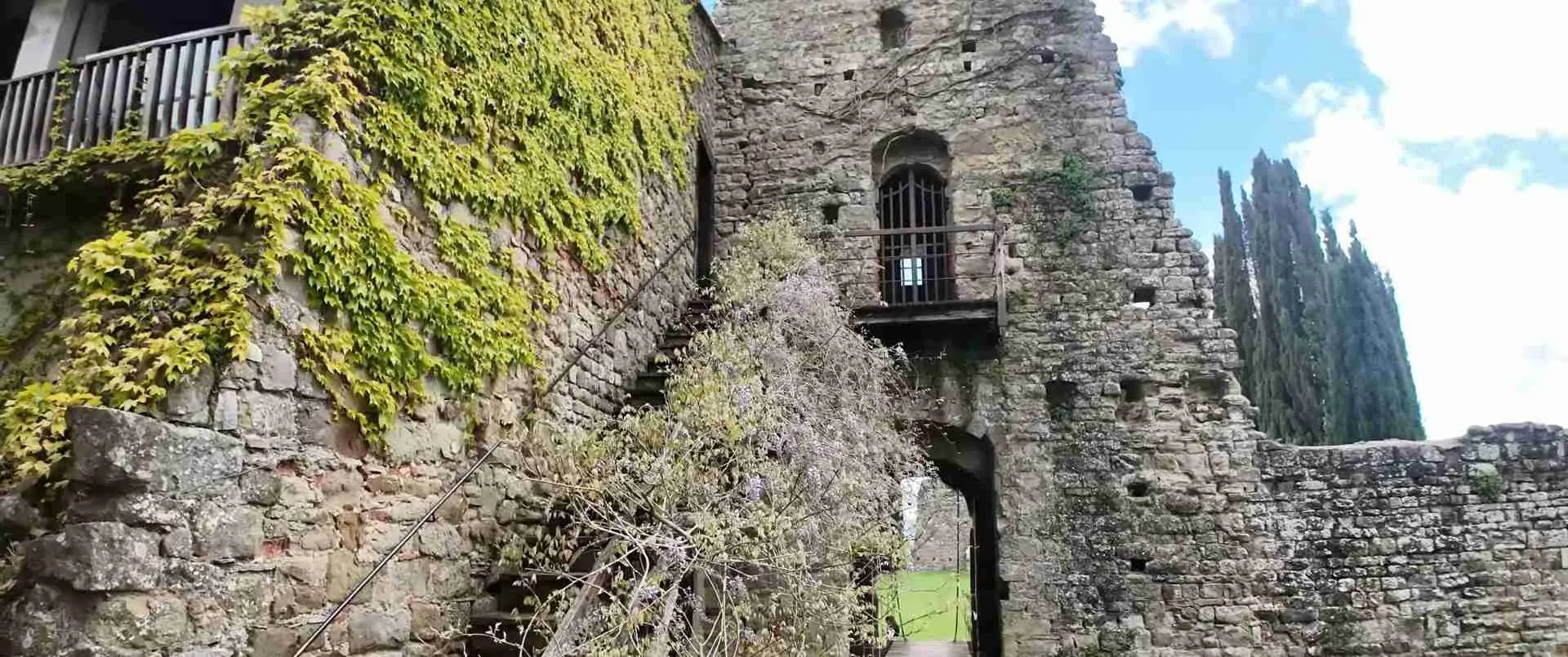
The Alternative Upper Arno Road Trip Guide 2026: Exploring Tuscany’s Secret Mountain Fortresses Without the Crowds
While coach parties clog the car parks at San Gimignano and selfie queues snake around the Chianti vineyards, a completely different Tuscany waits upstream along the Arno — a world of ruined Guidi clan fortresses perched on rocky spurs, Romanesque pievi hidden in chestnut forests, and medieval walled boroughs where the only English speaker is often you. This 2026 guide maps every kilometre of an alternative road trip through the Upper Arno corridor, from the Valdarno’s sand-pinnacle badlands across the Pratomagno ridge into the deep Casentino valley and its intact castle towns, giving you the complete picture from fuel costs and fortress entry fees to the best agriturismi and where to find fagiolo zolfino beans on a trattoria menu.
Key Takeaways
- Route length and duration: The circular route from Florence covers approximately 350–420 km depending on detours. Seven days is the optimal length; five days is achievable for a condensed version covering the Casentino core.
- Budget travelers spend €95–145 per person daily (two sharing a budget B&B or agriturismo room), including car hire, fuel, meals, and fortress entry fees.
- Mid-range travelers spend €155–245 per person daily (two sharing a mid-range agriturismo or hotel), covering all costs including quality trattoria dining and guided experiences.
- Luxury travelers invest €305–510 per person daily (two sharing a boutique relais or castle hotel), with premium meals, private guides, and a larger rental vehicle.
- 7-day trip totals: Budget €665–1,015 per person; mid-range €1,085–1,715 per person; luxury €2,135–3,570 per person — consistently 40–60% lower than equivalent Chianti itineraries.
- Crowd levels are dramatically lower than the Chianti and Val d’Orcia circuits. The Castello di Romena, Loro Ciuffenna, and the Via dei Sette Ponti route collectively receive fewer foreign visitors in a full summer month than the Piazzale Michelangelo terrace receives in a single weekend afternoon.
- A standard driving licence and petrol-engined economy car are sufficient for the entire route; no 4WD or specialist vehicle is needed, though mountain road experience is helpful between Bibbiena and Camaldoli.
People Also Ask About the Upper Arno Fortress Road Trip 2026
How much does the Upper Arno fortress road trip cost per day in 2026?
Daily costs for a 7-day Upper Arno road trip in 2026 run €95–145 per person for budget travelers (two sharing a simple agriturismo room, economy car, and local trattoria meals), €155–245 per person for mid-range comfort (agriturismo with pool, compact car, sit-down restaurants), and €305–510 per person for the luxury bracket (boutique relais or castle hotels, premium car, upscale dining). All figures assume two people sharing accommodation, with car hire and fuel costs split equally. Prices in this region run substantially lower than comparable Chianti or Florence itineraries because the destination remains almost entirely off the international tourism radar.
How long should I spend on the Upper Arno road trip in 2026?
Seven days gives you the full circuit — Via dei Sette Ponti along the Pratomagno foothills, the Casentino castle towns from Poppi to Stia, the mountain sanctuaries of Camaldoli and La Verna, and the return crossing south of the ridge. Five days works for a focused Casentino-plus-Pratomagno version that skips the deeper southern loops. Three days covers the Casentino core (Poppi, Romena, Camaldoli) if you are road-tripping between Florence and Rome. Anything under three days leaves the Pratomagno and Valdarno fortresses unexplored, which misses half the point of the alternative route.
When is the best time to drive the Upper Arno fortress route in 2026?
Late April through June and September through October deliver the ideal combination of mild mountain temperatures, open fortress hours, and zero congestion. Summer (July–August) brings the warmest weather and the longest opening hours at Castello di Romena and other seasonal sites, but also the highest agriturismo rates; the road between Camaldoli and La Verna gains modest weekend traffic. November through March sees several smaller fortresses close entirely (Romena is shut November–March), mountain passes occasionally fog over, and some agriturismi move to weekend-only hours — plan accordingly if travelling off-season.
Do I need a 4WD for the Upper Arno mountain fortress road trip in 2026?
A standard economy car with a petrol engine handles every paved road on the route without difficulty. The minor road climbing from Stia to Camaldoli (SP208) is steep and narrow in sections but perfectly surfaced and manageable in a Fiat Panda or equivalent. The gravel track approaching Castello di Porciano from the Stia road is approximately 2 km of compacted dirt; it is driveable in most cars in dry conditions, though you can also park at the bottom and walk up in about 25 minutes. The only scenario requiring genuine caution is winter ice on the Pratomagno crossing roads, where snow chains or winter tyres are advisable between December and February.
Extended multi-day tours – 5+ days
Featured Tuscany Multi-Day Tour Packages

4 days
The Best of Tuscany: Florence, Chianti & Cinque Terre Escape | 4 Days
- ✓ Comprehensive Tuscany tour
- ✓ Expert local guides included
- ✓ All accommodation arranged
- ✓ Transportation provided
3 days
Taste of Tuscany: A San Gimignano Wine Escape | 3 Days
- ✓ Booking needs min. 2 travelers
7 days
Tuscany to Cinque Terre: Wines, Villages & Unforgettable Walks
- ✓ Comprehensive Tuscany tour
- ✓ Expert local guides included
- ✓ All accommodation arranged
- ✓ Transportation provided
5 days
5 Day Tuscan Food & Wine Tour Package
- ✓ Comprehensive Tuscany tour
- ✓ Expert local guides included
- ✓ All accommodation arranged
- ✓ Transportation provided
Multi-day tour packages powered by TourRadar. Prices and availability subject to change.
Why the Upper Arno Road Trip Remains Tuscany’s Best-Kept Secret
There is a version of Tuscany that package tourism built — terraced cypress avenues, Brunello tastings, sunset aperitivi over the Val d’Orcia — and then there is the version that survived largely because international roads bypassed it. The upper reaches of the Arno belong firmly in the second category.
The river rises at Monte Falterona in the Apennines and flows south-west through two distinct landscapes before reaching Florence. First comes the Casentino, a broad enclosed valley encircled by Apennine ridges where the Guidi counts — one of medieval Tuscany’s most powerful feudal dynasties — planted a chain of fortresses on every defensible hilltop between the 11th and 13th centuries. South of Poppi the river squeezes through a gorge and enters the Valdarno Superiore, where the same Guidi clan and later Florentine expansion produced a second string of towers, walled towns, and Romanesque pievi along the Pratomagno’s western flank. Together, these two corridors hold more medieval military architecture per kilometre than almost anywhere else in Italy — and virtually no foreigner stops to look.
The reasons are practical rather than cultural. The A1 autostrada between Florence and Rome runs through the Valdarno’s floor at speed, giving drivers a clear view of rolling hills but no reason to exit. The famous Chianti Classico wine zone sits one ridge to the west and absorbs almost all tourism pressure from Florence. Arezzo, the natural gateway city to both the Casentino and the Valdarno Superiore, receives significant Italian domestic tourism for its antiques fair and Piero della Francesca frescoes, but international visitors rarely linger beyond a morning.
The result is a road-trip destination of remarkable density and authenticity. Castello di Romena charges €4 admission and you share the ruins with a handful of Italian school groups and nobody else. The medieval borgo of Loro Ciuffenna — officially listed among Italy’s most beautiful villages — has one souvenir shop and excellent fagioli for lunch. The mountain monastery at Camaldoli operates on a 1,000-year schedule indifferent to whether tour buses arrive or not. Fuel, accommodation, and restaurant prices run 30–50% below Chianti equivalents for identical quality. This 2026 guide gives you the complete routing, the verified costs, and enough historical depth to make every fortress tower you climb feel genuinely understood.
Planning Your Upper Arno Fortress Road Trip 2026: Essential Logistics
The route described in this guide is a circular loop of approximately 380 km, beginning and ending in Florence, with an optional start or finish in Arezzo for travellers arriving by train. The circuit is designed to be driven counter-clockwise: east from Florence along the Arno to Pontassieve, then south-east up the Pratomagno foothills on the Via dei Sette Ponti to Arezzo, then north into the Casentino valley to Poppi and beyond, across the upper Casentino to Camaldoli and La Verna, and finally back south-west to Florence via Bibbiena and the Valdarno. This sequence means you encounter the quieter Pratomagno section first, building historical context before arriving at the more dramatic Casentino castles.
Drivers choosing to start from Arezzo instead can reverse the loop, heading straight into the Casentino on Day 1 before crossing to the Pratomagno on the final days. Arezzo’s train station connects to Florence in approximately 45 minutes (Frecciarossa services) or 60–80 minutes on regional trains, making it a realistic start point for those who fly into Florence and prefer not to drive in the city.
Picking Up Your Rental Car in 2026
Florence Airport (Amerigo Vespucci, FLR) offers the widest selection of rental operators and competitive pre-booked rates. Collecting from the airport, rather than Florence city centre, avoids the complexity of the ZTL (Limited Traffic Zone) that covers almost all of central Florence and which generates automatic fines for unauthorised vehicles. Major operators at FLR in 2026 include Europcar, Hertz, Avis, Budget, and several Italian independents. Economy cars from aggregator platforms start at approximately €25–35 per day for pre-booked weekly rentals, but these base rates exclude Collision Damage Waiver (CDW) insurance, which is strongly recommended for mountain driving in Italy; with CDW and Theft Protection, budget €40–55 per day for a standard economy car or €60–80 per day for a compact/mid-size vehicle. Check aggregators (Kayak, DiscoverCars, Rentalcars.com) at least three weeks in advance; summer 2026 rates rise sharply for last-minute bookings.
If you prefer to avoid Florence Airport, Arezzo city centre has smaller rental operations at its train station including Hertz and Europcar; rates are comparable or slightly cheaper but vehicle selection is more limited.
ZTL Zones, Parking, and Mountain Roads
Every historic centre along the route — Arezzo, Poppi, Stia, Bibbiena — operates a ZTL restricting private vehicles during certain hours. These zones are enforced by automatic cameras and fines arrive weeks after your return home via the rental company. In practice, the ZTL zones on this route are considerably easier to navigate than Florence’s because the towns are small: parking in designated areas just outside the historic core is always available within a 5-minute walk and costs €1–2 per hour or nothing at all (white lines = free parking). The Castello di Romena has a dedicated car park 200 m from the entrance. Camaldoli Monastery has a large free car park. La Verna has multiple levels of parking, the upper level putting you directly at the sanctuary entrance.
Fuel (benzina, Euro 95 petrol) costs €1.85 per litre across Italy as of June 2026; diesel runs €1.95–1.96 per litre. Highway filling stations are 10–20% more expensive than supermarket-linked stations in town centres. Self-service (fai da te / self) pumps are €0.10–0.15 cheaper per litre than staffed (servito) pumps at the same station. Mountain road gradients consume fuel more quickly than flat highways; budget for approximately 10–15% higher consumption than your car’s rated figures on the Camaldoli and Pratomagno sections.
Route Variations and Day-Trip Options
The full 7-day loop is best for first-time visitors wanting comprehensive coverage. However, several shorter configurations work well. A 3-day Casentino Focus (days 3–5 of the full itinerary) pairs the Casentino castles with Camaldoli and La Verna, making an excellent extension from an Arezzo or Florence base. A 2-day Pratomagno Sprint covers the Via dei Sette Ponti and Loro Ciuffenna as a 2-day Florence round trip, though you will not reach the Casentino at all. Single-day excursions from Florence to Loro Ciuffenna or Poppi are possible in approximately 90 minutes each way, but the distances make a car essential; there is no practical public transport link from Florence to either destination on a timetable useful for sightseeing.
The 7-Day Upper Arno Fortress Road Trip Itinerary 2026
Day 1: Florence to Loro Ciuffenna via Castelfranco di Sopra
Leave Florence eastwards on the SR69 Val d’Arno road through Pontassieve, then peel south on the SS69bis towards Reggello. At Reggello, join the Via Setteponti — the old Roman Cassia Vetus road that runs along the Pratomagno’s lower slopes — and drive south through the olive groves and terraced vineyards. Stop at Castelfranco di Sopra, a planned medieval new-town founded by Florence in 1299 that preserves an almost intact arcaded central square, remnants of the original circuit walls, and the curious angled street plan that Florence’s engineers inserted as a deliberate urbanist statement. The walk around the circuit takes 30 minutes and is completely free.
Seven kilometres south, a signed detour leads to Le Balze del Valdarno — a canyon landscape of cream and ochre clay pinnacles, gullies, and eroded ridges formed by the collapse of an ancient Pliocene lake bed. The footpaths above Pian di Scò and Castelfranco provide the most dramatic views; the 6 km loop trail is free and takes approximately 2 hours. This geological spectacle is almost entirely unknown to foreign visitors and represents one of the route’s standout surprises.
End Day 1 in Loro Ciuffenna (30 minutes further south), one of the officially listed Borghi più belli d’Italia and your overnight base. Budget accommodation: simple B&Bs and private rooms in the village run €70–90 per room per night, making your per-person share €35–45 (two sharing). Mid-range agriturismi in the surrounding hills with pool and valley views start at €100–130 per room. Dinner at a local trattoria costs €25–35 per person including house wine; the fagiolo zolfino bean dishes typical of the Valdarno Aretino frequently appear as antipasti and first courses. Day 1 total for budget travellers: approximately €80–110 per person.
Day 2: Loro Ciuffenna, Pieve di Gropina, and the Via dei Sette Ponti to Arezzo
Start the morning in Loro Ciuffenna itself, exploring the medieval core before the few other visitors arrive. The village’s defining feature is the old watermill (mulino) that still functions beside the Ciuffenna torrent, one of the last working chestnut-grinding mills in the region. Entry is free; the miller gives informal explanations in Italian. The old town gate-tower and the surviving stretch of walls on the Piazza dello Scoglio give the clearest sense of the original fortified layout.
Two kilometres south, the Pieve di Gropina is one of the most significant Romanesque churches in all of Tuscany — a mid-12th-century sandstone structure with an interior of startling sculptural sophistication. The carved capitals on the nave columns depict interlaced figures, fighting knights, and fantastical animals in a style bridging Lombard tradition and local Casentino workshop vocabulary. Entry is free. A warden is on-site in summer mornings; in the off-season the church is sometimes locked but the exterior is always accessible.
From Gropina, continue south on the Via dei Sette Ponti through Castiglion Fibocchi and down to Ponte Buriano, the 13th-century Roman-arched bridge over the Arno that appears in the background of Leonardo da Vinci’s Mona Lisa — a claim that local scholars argue with considerable enthusiasm and some persuasive topographic evidence. The bridge is free to walk across. From Ponte Buriano it is 6 km into central Arezzo; park outside the ZTL (free parking on Viale Amendola) and walk up to the Piazza Grande. Overnight in Arezzo; two-star hotels start at €80–100 per room, three-star options at €110–150. Day 2 total (budget): approximately €85–105 per person.
Day 3: Arezzo to Poppi via the Casentino Gateway
Arezzo’s compact historic core rewards an early-morning walk: the Piazza Grande’s sloping medieval square, the Chimera of Arezzo in the Archaeological Museum (€6 entry), and the Basilica of San Francesco with Piero della Francesca’s Legend of the True Cross frescoes (€12 advance booking recommended) are all within 15 minutes on foot. If the fresco booking is in place, a morning in Arezzo works perfectly before the afternoon drive into the Casentino.
Leave Arezzo north on the SS71 Umbro-Casentinese road and make the first stop at Subbiano, where the hillside above the town still carries the rubble outline of a medieval castle. Ten kilometres further north, the village of Rassina sits at the edge of the Casentino’s plain; 2 km from the SS71 main road, down a signed lane, the Pieve di Sant’Antonino a Socana preserves the most remarkable demonstration of religious continuity on the entire route — Etruscan votive deposits, Roman temple foundations, and a 12th-century Romanesque nave all occupy the same sacred ground, with interpretive panels in Italian and English explaining each layer. Free entry.
Continue north on the SS71 to Poppi, the Casentino’s principal town, crowned by the magnificent Castello dei Conti Guidi. This is the route’s single most important fortress stop: a genuinely imposing 13th-century castle that served as the Guidi clan’s political headquarters for nearly four centuries, whose keep tower (taken by Arnolfo di Cambio as the model for Florence’s Palazzo Vecchio tower) still dominates the valley from every approach road. Entry costs €7 for adults in 2026 (reduced €5 for under-18s, over-70s, and groups of 20 or more; free for under-6s, disabled visitors, and Poppi residents — verify current rates at castellodipoppi.it before visiting, as pricing was revised by municipal resolution in late 2024). The interior includes the Taddeo Gaddi fresco cycle in the chapel, the Biblioteca Rilliana with its collection of illuminated manuscripts, and the stunning stone staircase dating from 1470. Guided tours, which include entry, run at €13 per adult and must be booked in advance by email. Allow 90 minutes for a self-guided visit.
Overnight in Poppi or the surrounding hills. The Albergo Casentino on Piazza della Repubblica sits directly opposite the castle entrance; rooms start at approximately €80–100 per room per night. Agriturismi in the valley surrounding Poppi offer pool, garden, and mountain views for €100–160 per room in summer. Day 3 budget traveller total: approximately €90–115 per person (including Arezzo morning, drive, and Poppi castle entry).
Day 4: The Romena–Stia–Porciano Triangle
This is the most fortress-dense single day on the route, covering three distinct medieval sites within a 15 km arc. Leave Poppi north on the SS70 towards Pratovecchio. Just before entering Pratovecchio, a clearly signed turning leads 2 km up a hillside lane to the Castello di Romena, the most atmospheric medieval ruin in the Casentino and arguable the finest ruined castle in all of Tuscany.
Romena stands on a 621 m ridge with three surviving towers, a partially intact circuit wall with its original battlements still projecting over the valley, and a 13th-century inner courtyard (piazza d’armi) edged by cypress trees where — in 1901 — the poet Gabriele D’Annunzio pitched his tent while writing sections of Alcyone. Dante Alighieri was almost certainly a guest here during his Florentine exile, and he made the castle infamous in Inferno XXX by using it as the location where Guido and Alessandro Guidi persuaded the forger Mastro Adamo to mint false Florentine florins. Entry costs €4 for adults, €3 for children aged 6–12 and for groups of 20 or more, free for under-6s (check castellodiromena.it for seasonal confirmation before visiting).
Opening hours at Romena are seasonal: April through June, Thursday–Sunday and public holidays 10:00–13:00 and 14:00–18:00; July and August daily 10:00–13:00 and 14:00–19:00; September 1–16 daily 10:00–13:00 and 14:00–18:00; September 17 through November 1 Thursday–Sunday 10:00–13:00 and 14:00–17:00. The castle is closed from November through March. Pre-booked guided tours (€8 per adult, all-inclusive, contact [email protected]) run on selected Saturdays and Sundays in summer.
Immediately below the castle on the same hillside, the Pieve di San Pietro a Romena is one of the great Romanesque buildings of the Apennine zone — a 12th-century three-nave church of exceptional elegance, with carved capitals inside and a remarkable sculpted apse exterior. Entry is free. Spend 45 minutes here before returning to the valley road.
Continue north to Stia, the Casentino’s northernmost main town, with an elegant medieval piazza and a working textile museum (Museo dell’Arte della Lana) that tells the story of the valley’s medieval wool trade in genuinely engaging fashion. From Stia, a 3 km hillside road leads to the Castello di Porciano, an 11th-century Guidi fortress that remains one of the least visited castles in the region. The structure — a single fortified tower and enclosing walls around a tiny hamlet — is rustic and raw rather than polished, which is precisely its appeal; the views over the Falterona watershed from the tower top are exceptional. A small admission fee applies in season (check posted notices at the site); the drive up is on a dirt road passable in dry conditions by standard cars. Overnight in the Stia–Pratovecchio area. Budget B&Bs from €75 per room. Day 4 total (budget): approximately €85–110 per person.
Day 5: The Casentino Highlands — Camaldoli and La Verna
The Casentino’s two great monastic sites occupy very different characters but share the same quality of complete remoteness from secular tourism. Leave Stia on the SP208 mountain road climbing north-west through the Foreste Casentinesi National Park — the most extensive beech and silver-fir forest complex in the Italian Apennines, home to wolves, deer, and a population of golden eagles. The forest road to Camaldoli is steep and narrow but perfectly surfaced; allow 40 minutes from Stia.
The Camaldolese Monastery at the valley bottom dates from 1046 and includes a church, pharmacy (farmacia) selling herbal products and liqueurs made by the monks, and a Romanesque cloister that visitors can enter freely. Two kilometres higher up a forest road, the Sacred Hermitage of Camaldoli (Sacro Eremo) is the original founding site — a cluster of individual hermit cells within a walled enclosure maintained in strict silence. The Hermitage church is open to visitors (free), but you cannot enter the individual cells or the inner enclosure. Men-only access applies to some internal chapels in the morning; all visitors are welcome in the afternoon. Both monastery and hermitage are free to visit, with donations expected. Allow 2 hours for both sites combined.
From Camaldoli, descend to Bibbiena and drive south on the SR71 to Chiusi della Verna, then up the spectacular approach road to La Verna Sanctuary at 1,128 m elevation. La Verna is the rocky mountain where St. Francis of Assisi received the stigmata in 1224 — one of the most significant sites in Franciscan Christianity, with a complex of churches and chapels built into and over the cliffs over eight centuries. The Basilica and the Chapel of the Stigmata (Cappella delle Stimmate) are both open to visitors without charge. The Della Robbia glazed terracottas inside several chapels are extraordinary pieces of Renaissance devotional art. Plan to arrive in mid-afternoon when the light on the cliff faces is golden. Overnight near Bibbiena or at an agriturismo on the La Verna approach road. Day 5 total (budget): approximately €80–100 per person (both major sites free).
Day 6: Back Across the Pratomagno — Ortignano Raggiolo and the Eastern Slopes
Day 6 crosses the Pratomagno ridge from the Casentino to the Valdarno side, using the minor road from Ortignano Raggiolo. This is the route’s most scenic mountain drive and the most likely to be completely free of other tourist traffic. From Bibbiena, head south on the SP6 toward Ortignano Raggiolo, a hamlet of 400 people clinging to a rock spur at 540 m altitude that looks, at first sight, exactly like the cover of a romantic novel about medieval Tuscany. The stone lanes, vaulted passageways, and panoramic terrace over the Raggiolo stream gorge take 45 minutes to walk completely. No admission is charged; no entrance gate exists; the entire village is simply there, functioning, largely unbothered.
From Ortignano, the SP6 climbs through chestnut forest to the Pratomagno ridge (cross the watershed at approximately 1,000 m elevation) before descending via hairpin bends to Castelfranco di Sopra on the Valdarno side. This crossing road is the practical equivalent of a natural drawbridge separating the two worlds of the route; on a clear day the descent offers a panorama stretching from the Chianti hills to the Sienese Crete. Rejoin the Via dei Sette Ponti at Castelfranco and end the day in Loro Ciuffenna or at a rural agriturismo on the Pratomagno slopes above Castelfranco. Day 6 total (budget): approximately €75–95 per person (no paid attractions; mountain driving and great views).
Day 7: Return to Florence via the Valdarno
The final morning offers one more stop before the homeward stretch. The Torre di Galatrona, reached by a short uphill walk from the SP36 road near Pian di Scò, is a solitary 12th-century watchtower on a 545 m hilltop whose panoramic sweep takes in the entire Valdarno, the Chianti ridge, and the Pratomagno simultaneously — arguably the finest unobstructed view on the entire route, and essentially unknown to anyone not from the immediate neighbourhood. Return to the Arno valley floor and drive north on the SR69 back to Florence (1 hour from Pian di Scò). Return the rental car to Florence Airport. Day 7 fuel and lunch total: approximately €25–35 per person.
Casentino Valley Fortresses 2026: The Heartland of the Route
The Casentino valley holds the densest concentration of Guidi clan fortifications anywhere in their medieval territory, partly because the valley’s enclosed geography made it easy to control and partly because the Guidi counts made Poppi their political capital from the 12th century onwards. Understanding the family’s history transforms every fortress tower on the route from a picturesque ruin into a legible chapter of medieval Italian politics.
Castello dei Conti Guidi (Poppi)
This is the route’s principal star — a fully intact, continuously inhabited 13th-century fortress that escaped the demolition or abandonment that reduced most Guidi buildings to ruins. The keep tower closely resembles Florence’s Palazzo Vecchio because Arnolfo di Cambio, the architect commissioned to design the Florentine civic palace in 1299, had already worked at Poppi and explicitly adapted the Casentino model. A permanent exhibition on the 1289 Battle of Campaldino — which took place on the plain visible from the castle’s upper windows and in which Dante Alighieri fought as a Florentine cavalry soldier — occupies one wing and is included in the entry price. The castle library (Biblioteca Rilliana) holds approximately 20,000 volumes including illuminated manuscripts of remarkable quality.
Admission: €7 adults, €5 reduced. Guided tours (including entry): €13 adults. Hours vary by season; check castellodipoppi.it for 2026 current times. The castle hosts medieval banquets and night events in summer; book via the official website for current schedules.
Castello di Romena
Romena predates Poppi by perhaps two centuries, beginning as a fortified post of the Marchesi di Spoleto in the 11th century before passing to the Guidi in the 12th. The 1281 counterfeit-florin scandal that Dante immortalised in the Inferno occurred here — the Guidi lords of Romena persuaded a Brescian metallurgist named Mastro Adamo to alloy Florence’s gold coins with base metals, a crime for which Adamo was executed and which Dante uses as a meditation on deception and its consequences. Three towers survive of the original 14; the walls still carry their original Trecentesque battlements; the inner courtyard conveys the scale of what this fortress was before the 1579 Casentino earthquake collapsed the upper structures.
What makes Romena particularly compelling is its unrestored rawness. Unlike Poppi — which has been continuously maintained as a civic building — Romena is a partial ruin in private hands, tended rather than polished, with grass growing between the paving stones and a general atmosphere of atmospheric melancholy that Poppi, for all its magnificence, cannot match.
Castello di Porciano
Porciano is the Guidi chain’s most intimate and least visited link — a single defensive tower of the 11th century with surrounding lower buildings gathered around a courtyard, sitting above the hamlet that bears its name just south of Stia. The tower is among the earliest surviving Guidi constructions. D’Annunzio visited here too, in the summer of 1902, and the guest book tradition feels continuous: the custodian is often the only other person present. The access road from Stia is partially unpaved; drive slowly and park at the bottom if the surface looks uncertain after rain.
Pieve di Sant’Antonino a Socana
This is not a fortress but belongs to the same category of remarkable Casentino survivals that make the valley exceptional. The pieve (rural baptismal church) near Rassina sits on a site occupied continuously from Etruscan times through Roman occupation to early Christian use, with an Etruscan altar base still visible in the crypt and a Roman sacrificial stone incorporated into the church fabric. The 12th-century Romanesque exterior is intact. Free entry; signage reaches the building from the SS71 at Rassina.
Pratomagno Ridge and Via dei Sette Ponti Fortresses 2026
The Pratomagno massif — a sandstone ridge running 50 km from north to south between the Valdarno floor and the Casentino valley at elevations reaching 1,592 m at the Croce del Pratomagno summit — served as both a natural fortress and the site of dozens of medieval fortifications. The Via dei Sette Ponti (Way of the Seven Bridges), named for the seven ancient bridges that once carried Roman road travellers along the ridge’s western slope, is the defining route of the Valdarno section of the trip.
Loro Ciuffenna: A Living Medieval Fortress-Village
Loro Ciuffenna is the Via dei Sette Ponti’s most complete surviving fortified settlement. The original castle is documented from 1065; the medieval layout — concentric rings of stone houses along the ridge, narrowing lanes toward the defensive core, access through a gate-tower with a lowered arch — is still entirely readable on foot. Access is through an arched gate beneath a shortened tower on the northern approach. The village appears on the Borghi più belli d’Italia register, the official list of Italy’s most beautiful historic villages, and unlike many such designations the accolade here is genuinely earned.
The Ciuffenna gorge below the village drops 40 m in a narrow slot canyon carved by the torrential Ciuffenna stream; the old mill beside the medieval bridge still grinds chestnut flour seasonally, producing the polenta di castagne and the chestnut cakes that appear on every local menu from October through February. In summer the gorge is a freshwater swimming spot used exclusively by Italians from the surrounding towns.
Castelfranco di Sopra
Founded by Florence in 1299 — the same year the Republic built Castelfranco di Sotto, Terranuova Bracciolini, and San Giovanni Valdarno as strategic new towns along the Arno — Castelfranco di Sopra represents Florentine republican urbanism at its most intentional. The central arcade (loggia) framing the main piazza is preserved on three sides, the corner towers of the original walls survive in good condition, and the angled street plan (typical of Florentine new-town design) remains clearly legible. The late-July Palio dei Rioni brings the fortified town to life with medieval costumed processions.
Le Balze del Valdarno
The badlands topography south-east of Castelfranco di Sopra has nothing to do with fortifications but everything to do with drama. Erosion of the silty, clay-rich Pliocene lake deposits left a landscape of cream-coloured towers, deep gullies, and ridge-lines that genuinely resemble an Alpine dolomite landscape rendered in sand and clay. Leonardo da Vinci is thought to have sketched the Balze; they appear in the distant backgrounds of several late 15th-century Florentine paintings. Five designated walking loops (3–15 km) cross the area; trailheads start at Castelfranco di Sopra and at Pian di Scò.
Torre di Galatrona
The isolated Romanesque tower on the hilltop above Pian di Scò is not in any guidebook published outside the province of Arezzo. It is not signposted from the main SR69 Valdarno road. Most people who climb it do so because a local told them to. A 25-minute uphill walk from the parking area near the SP36 road junction delivers a 360-degree panorama of the Upper Arno that justifies the detour entirely. The tower itself — a 12th-century construction in squared local sandstone — is in partial decay but completely stable. No admission is charged.
Pieve di Gropina
One kilometre south of Loro Ciuffenna, the Pieve di Gropina occupies a pre-Christian sacred site documented in Carolingian manuscripts as early as the 8th century. The current structure dates from the 12th century and survives with its original carved capitals intact — knights in combat, coiling serpents, intertwined human figures and fantastical beasts of a sculptural programme sophisticated enough to suggest a workshop of considerable ambition. The pulpit is one of the finest Romanesque carved pulpits in Tuscany. Free entry, but variable opening hours; check locally.
Hidden Villages and Sacred Mountain Sites 2026
Ortignano Raggiolo
This hamlet of stone houses on a chestnut-forested ridge at 540 m is everything the international tourist circuit is not: no ticket offices, no souvenir shops, no restaurant with a menu in English, and a resident population of approximately 400 who have absolutely no interest in performing Tuscan authenticity for visitors because they are too busy living it. The chestnut harvest in October and November draws seasonal workers back from the valley towns; the bars and the cooperative trattoria fill up; mushroom porcini fill the market stalls. In summer the village is quiet and beautiful and startlingly medieval in its stone geometry.
Camaldoli Monastery and Hermitage
The Camaldolese foundation of 1012 sits in a natural amphitheatre at 816 m altitude in the national forest. The monastery church was rebuilt in Baroque style in the 18th century but the cloister arcade is original medieval stonework. The pharmacy-shop at the monastery entrance sells remedies, liqueurs, and honey produced by the community; the crema di Camaldoli herbal liqueur is the standard souvenir purchase. The Sacred Hermitage 2 km above the monastery operates on a rule of silence; individual hermit cells are enclosed and visitors see only the external grounds and the church. Both sites are free; a modest donation is customary.
La Verna Sanctuary
The mountain sanctuary of La Verna occupies a spectacular position on a sheer cliff-edged spur at 1,128 m. St. Francis spent extended periods in retreat on this rock from 1213 onwards and received the stigmata — the physical wounds of the Crucifixion — here on September 17, 1224, the event from which the sanctuary’s enormous devotional significance derives. The complex includes a 15th-century basilica with a remarkable blue-glazed terracotta altarpiece by Andrea della Robbia and his workshop, a series of smaller chapels linked by outdoor corridors cut into the rock, and the Cappella delle Stimmate built directly over the spot where the stigmatisation is said to have occurred. Everything is free to visit. A small bookshop and café operate on-site; overnight accommodation in the pilgrim hostel is available from approximately €50 per person including meals.
Car Rental and Transportation Guide for the Upper Arno Route 2026
A rental car is not optional on this route — it is the route. Public transport in the Upper Arno corridor connects towns in the Valdarno floor and the Casentino valley main towns, but the castles, pievi, monastic sites, and village hamlets that constitute the trip’s best content all sit on hillsides or mountain spurs served only by private vehicle.
Car Categories and Realistic 2026 Rental Costs
Economy cars (Fiat Panda, Volkswagen Polo, Opel Corsa equivalents) cover every road on the route in comfort and are the sensible choice for most travelers. Pre-booked weekly rates from Florence Airport in 2026 run approximately €35–55 per day including CDW and theft cover from reputable operators; prices for last-minute or summer bookings rise to €60–80 per day for the same category. The per-person cost for two travelers sharing is €18–28 per day at the budget rate.
Compact and mid-size cars (Volkswagen Golf, Opel Astra equivalents) provide more boot space for luggage and a smoother ride on the mountain roads. Expect €55–80 per day with insurance, or €28–40 per person per day when split between two.
Large SUVs and luxury vehicles are unnecessary unless you have specific space requirements or are traveling in a group of four with luggage. If you insist on premium comfort, premium-segment cars and SUVs run €100–160 per day total, or €50–80 per person per day.
Fuel Costs and Strategy
Italy’s national average petrol (benzina, Euro 95) price is €1.85 per litre and diesel €1.95 per litre as of June 2026 — confirmed by the European Commission’s Weekly Oil Bulletin and MIMIT (Ministry of Enterprises) real-time data. Highway (autostrada) filling stations charge €0.15–0.25 more per litre than equivalent local stations; always fill up in town if you see the next leg involves significant motorway driving. The Via dei Sette Ponti and Casentino valley roads are all classified as regular state or provincial roads (SS/SP) with no tolls; the A1 autostrada between Florence and Arezzo charges approximately €5–7 in tolls if you choose to use it for the southern approaches.
For practical fuel budget calculations: an economy car driving the full 380 km loop at average 6.5 L per 100 km on mixed roads (flat valley + mountain gradients) uses approximately 25 litres of fuel per day of driving, or €46 total fuel per day. Split between two people this is approximately €23 per person per driving day. Lighter travel days with less mountain driving reduce this noticeably; the Camaldoli approach (very steep) consumes fuel above average.
Public Transport Baseline for Partial-Car Trips
Arezzo connects to Florence by train (Frecciarossa: 45 min, €9–21; regional: 60–80 min, €5–7). Bibbiena and Poppi are served by a local train line from Arezzo (Ferrovia Regionale dell’Aretino, approximately €4–6 each). No rail connection reaches Romena, Camaldoli, La Verna, Loro Ciuffenna, or any of the hill-fortress sites. Bus services exist between Arezzo and the main Casentino towns but run on schedules designed for school and work commuting, not cultural itineraries. The practical conclusion: if you want to visit the route’s best content, you need a car for at least part of the trip.
Accommodation Along the Upper Arno Fortress Route 2026
Accommodation across the Upper Arno corridor is dominated by agriturismi — farm-based accommodation ranging from rustic rooms above working pig farms to beautifully converted stone farmhouses with infinity pools and Apennine-view terraces. Hotel stock in the valley towns is modest but adequate; the real accommodation opportunity is the rural agriturismo experience, which is both cheaper and more atmospheric than anything comparable in the Chianti.
Budget Accommodation on the Upper Arno Route 2026
Basic B&Bs and private rooms in the route’s main towns — Loro Ciuffenna, Arezzo, Poppi, Stia, Bibbiena — run €65–90 per room per night for a double with private bathroom. The per-person share for two travelers is €33–45 per night. Quality in this bracket ranges from simple (older decor, single-pane windows) to perfectly comfortable and characterful; the best budget options in the Casentino are old-fashioned family hotels above local restaurants rather than international chains.
The handful of campsite options near Poppi and in the national park offer the cheapest beds on the route (approximately €15–25 per person per night for a tent pitch); these work best for travelers with camping equipment and a preference for the forest rather than a mattress.
Mid-Range Agriturismi 2026
The sweet spot of the route’s accommodation market is the mid-range agriturismo — a working farm offering rooms or small apartments with some combination of swimming pool, garden, organic breakfast, and homemade dinner. In the Casentino, several excellent examples cluster between Poppi and Camaldoli: the Agriturismo Casentino near Soci (5 km from Poppi) offers pool, restaurant, and panoramic valley views; the Agriturismo La Dolce Vista near Poppi station provides apartments with equipped kitchens for self-caterers. Expect to pay €100–160 per room per night for these mid-range properties in summer (June–August), dropping to €80–120 in spring and autumn.
On the Pratomagno side, agriturismi around Loro Ciuffenna and Castelfranco di Sopra start at €90–130 per room in summer; properties further up the mountain slopes toward the ridge sometimes offer exceptional value at €75–100 per room with views the Chianti agriturismi charge three times as much for.
Luxury Options 2026
The Upper Arno has fewer luxury properties than the Chianti or Val d’Orcia corridors, but what exists is excellent. Il Borro, the medieval walled village restored by the Ferragamo family on the Valdarno’s southern edge near San Giustino Valdarno, functions as a boutique relais-vineyard with rooms from approximately €250–380 per room per night. The property’s restaurant is one of the best in the Valdarno. In the Casentino, the Poppi Resort (SPA Suite Centro Benessere Casentinese, 4 stars) near Poppi offers spa suites and a wellness center from approximately €120–200 per room per night — high value for this category.
Castle hotel fans note that genuinely inhabitable castle accommodations on the specific Upper Arno route are rare (unlike the Chianti, where the genre is well-established); the closest authentic experiences are converted stone farmhouses rather than actual towers. A further handful of 4-star country houses in the Casentino national park area offer the best combination of environment and service, ranging €160–280 per room per night in peak season.
Local Food and Dining Along the Route 2026
The Upper Arno corridor produces its own distinctive food culture that diverges from both the Florentine urban tradition and the Chianti wine-tourism menu. Mountain ingredients — chestnut, porcini mushroom, wild boar, trout from Apennine streams, legumes from the Valdarno clay soils — dominate local trattorias in combinations rarely found elsewhere.
The Valdarno Table: What to Order in 2026
The fagiolo zolfino is the defining ingredient of the Valdarno Superiore’s cuisine — a small, pale-yellow bean with a creamy texture and nutty flavour that grows only on the Pratomagno’s western slopes and resists commercial cultivation. Look for it as an antipasto with local olive oil, in a ribollita (bread-and-vegetable soup), or alongside braised rabbit. Production is limited to a handful of farms around Loro Ciuffenna and Pian di Scò; the genuine article costs more than supermarket alternatives and is worth every centesimo.
The Casentino’s food identity centres on chestnut flour (the Casentino was historically a bread-of-last-resort region where wheat was too expensive for most families), truffle (both white and black varieties from the Apennine forests), porcini mushrooms (late summer and autumn), and freshwater fish — particularly trout from the Arno’s headwater tributaries. The local pasta is testaroli — flat, pancake-like discs served with pesto or ragù that appear on menus in the deeper valley; this is a genuinely rare pasta form, more common in Liguria than in standard Tuscan cooking, that arrived here via the Apennine trade routes.
Schiacciata casentinese (a soft flatbread with olive oil and rosemary, differing from Florentine schiacciata in being thicker and less sweet) appears on every bread basket without being ordered; the best versions come from bakeries in Stia and Pratovecchio in the morning.
Restaurant Price Ranges 2026
Budget dining on the route — bar colazione (standing breakfast of espresso and cornetto: €2–4), a quick lunch of focaccia or pizza al taglio (€8–12), and a simple trattoria dinner of primo and secondo with house wine (€20–28 per person) — costs €30–44 per person per day for three meals. The best value-for-money dining experiences are at family-run trattorias in small towns where the majority of customers are Italian: look for handwritten daily menus, a low percentage of English on the menu card, and an open kitchen.
Mid-range sit-down meals — a full trattoria lunch with antipasto, pasta, meat main, and local wine — cost €30–45 per person at lunch and €35–55 per person at dinner in the Casentino; slightly higher in Arezzo. The Ristorante La Torre in Loro Ciuffenna (Via Dante Alighieri) serves honest Valdarno cooking with tagliatelle ai funghi porcini and bistecca alla fiorentina for approximately €30–40 per person. In Poppi, restaurants near the castle piazza target summer tourists and price accordingly; better value — and better food — is found 2 km outside the town at agriturismi offering fixed-price dinner menus to non-staying guests for €25–35 per person.
Upscale dining in the area is less developed than in the Chianti, which is one of the reasons costs remain lower. Il Borro’s restaurant near San Giustino Valdarno is the route’s single haute-cuisine option, with a full dinner running €80–130 per person with wine. The agriturismo dinner at Agriturismo Casentino (Soci) — local meats, porcini pasta, Casentino wines, outdoor terrace — functions as the route’s best value-for-atmosphere option at approximately €30–40 per person for the full meal.
Casentino Wine
The Casentino is not a celebrated wine zone in the way that Chianti or Montepulciano are, but it produces respectable Sangiovese-based reds under the IGT Toscana classification. Local wineries near Poppi and in the southern Casentino (toward Rassina and Talla) sell direct from the estate at €8–15 per bottle for everyday drinking wines. The Vin Santo del Chianti Aretino designation, which extends into the Valdarno, produces excellent sweet wines for biscotti; a bottle for the agriturismo terrace costs €15–20.
Upper Arno Road Trip Budget Breakdown 2026
All costs below are per person per day, assuming two travelers sharing accommodation. Car rental and fuel are split equally between the two travelers. Hotel and agriturismo rates are room rates divided by two to give the per-person share.
Budget Road Tripper: €95–145 Per Person Daily
Budget travelers sharing a simple B&B or agriturismo room (€70–100 per room per night) contribute €35–50 per person for accommodation. An economy car at €35–55 per day adds €18–28 per person. Fuel runs €7–12 per person per day on the mountain roads at current Italian petrol prices. Local trattoria meals — bar breakfast, panini lunch, one-course trattoria dinner with house wine — cost €29–42 per person. Fortress entries (mostly €4–7 each, with many sites free) add €8–14 per person per day on average. Total: €95–145 per person daily, giving a 7-day full loop cost of €665–1,015 per person, covering all accommodation, car hire, fuel, meals, and entrance fees.
Mid-Range Traveler: €155–245 Per Person Daily
Mid-range travelers sharing a quality agriturismo with pool (€100–160 per room per night) contribute €50–80 per person for accommodation. A compact car at €55–80 per day adds €28–40 per person. Fuel costs remain similar at €8–13 per person. Sit-down trattoria meals at lunch and dinner cost €54–82 per person. Two or three paid site entries plus a guided castle tour add €15–30 per person. Total: €155–245 per person daily, giving a 7-day trip total of €1,085–1,715 per person. This represents approximately 40% less than equivalent-quality travel in the Chianti for the same number of nights and similar experiences.
Luxury Traveler: €305–510 Per Person Daily
Luxury travelers sharing a boutique relais or spa hotel (€200–350 per room per night) contribute €100–175 per person for accommodation. A premium car at €100–160 per day adds €50–80 per person. Fuel costs €10–16 per person. Upscale restaurant dining costs €100–160 per person across three meals. Private guides, premium experiences, and multiple attraction entries cost €45–80 per person. Total: €305–510 per person daily, giving a 7-day trip total of €2,135–3,570 per person — still markedly below the equivalent in Positano, the Amalfi Coast, or the heavily marketed Chianti luxury circuit.
Notable Free and Low-Cost Attractions
The Upper Arno route’s pricing structure is exceptionally favourable because its best sights charge little or nothing. The following attractions are free to visit in 2026: Pieve di Gropina (Loro Ciuffenna), Pieve di Romena (below Castello di Romena), Pieve di Sant’Antonino a Socana (Rassina), Camaldoli Monastery and Sacred Hermitage, La Verna Sanctuary, Le Balze del Valdarno (walking access), Torre di Galatrona (Pian di Scò), Castelfranco di Sopra historic centre, Ortignano Raggiolo village, Loro Ciuffenna village, Stia historic centre, Bibbiena historic centre, and Poppi borgo (excluding the castle interior). The only significant entry fees on the route are Castello di Poppi (€7 adults), Castello di Romena (€4 adults), the Piero della Francesca frescoes in Arezzo (€12 advance booking), and the Arezzo Archaeological Museum (€6). A typical 7-day budget traveler spends approximately €55–80 total on all paid attractions for the week.
Seasonal Price Variations and Best Time to Drive 2026
The Upper Arno route operates on a clearly seasonal price structure, though the variation between peak and shoulder is less extreme than in the Chianti or Amalfi tourism circuits because the overall volume of international visitors remains low year-round.
Spring (April–June) 2026
This is the optimal window. Temperatures in the Casentino valley and on the Pratomagno slopes are 18–25°C at valley level and 12–18°C on the mountain roads — ideal for driving with windows down and hiking to fortress viewpoints. Agriturismo rates are at spring shoulder level: room rates run 15–25% below summer peaks, with quality agriturismi at €80–120 per room (versus €100–160 in July–August). Castello di Romena opens from April on Thursday–Sunday, which limits flexibility slightly; Camaldoli and La Verna are both fully operational from early April. The Valdarno wildflowers — poppies, cistus, broom — are at their most spectacular in May and early June. The chestnut forest roads through the national park are impossibly green.
Summer (July–August) 2026
Peak season brings peak prices for accommodation (agriturismo rooms rise 20–30% above spring rates) and the longest opening hours for Castello di Romena (daily, not just Thursday–Sunday). Valley temperatures reach 32–36°C in the Valdarno floor in July–August; the mountain sections near Camaldoli and La Verna stay significantly cooler and are the correct prescription for summer travelers. Weekend traffic on the Camaldoli approach road and the La Verna access route is notably heavier in August (Italian Ferragosto holiday period) but never remotely comparable to Chianti or San Gimignano congestion. Book agriturismi at least 6 weeks in advance for July and August.
Autumn (September–October) 2026
Many experienced Upper Arno travelers consider October the best month of all. The chestnut harvest transforms the Casentino economy and calendar; Ortignano Raggiolo’s chestnuts are harvested by hand by families who have worked the same trees for generations; every trattoria in the Casentino runs a sagra-influenced menu of chestnut polenta, porcini ragù, and roasted wild boar from September onwards. Agriturismo rates fall 10–20% from August peaks. Castello di Romena remains open Thursday–Sunday through November 1; after that date the shutters go up until April. Temperatures at valley level are 18–26°C in September, 12–20°C in October — still fully comfortable for castle visits and forest walks.
Winter (November–March) 2026
The route is reduced rather than closed in winter. Castello di Romena is shut entirely; Castello di Poppi remains open year-round (check current winter hours directly). Camaldoli Monastery and La Verna operate as permanent pilgrim destinations regardless of season. The Pratomagno crossing road becomes impassable after heavy snowfall, most reliably between December and February. The reward for winter travel is complete solitude in Poppi, genuinely empty roads on the Via dei Sette Ponti, and agriturismo rates as much as 40% below summer levels — rooms that cost €140 in August rent for €85 in January.
Money-Saving Strategies for the Upper Arno Road Trip 2026
The Upper Arno route is already far cheaper than comparable Tuscan tourism circuits, but several specific strategies reduce costs further without compromising the experience.
- Book car rental at least 3–4 weeks in advance and use an aggregator to compare operators. Weekly rates run 30–40% cheaper per day than same-day rentals. Pick up at Florence Airport rather than a downtown Florence location to avoid city surcharges and ZTL exposure.
- Base yourself at a single agriturismo for 2–3 nights rather than moving every day. Many agriturismi offer a 10–15% discount for stays of 3 nights or more. Poppi and the surrounding hills make an excellent 3-night central base covering Romena, Stia, Porciano, and Camaldoli within 30 minutes in any direction.
- Self-catering cuts food costs dramatically. Most mid-range and even budget agriturismi include a kitchen; a breakfast of local bread, cheese, and cured meats bought at the Poppi or Stia alimentari costs €4–6 per person versus €8–12 at a hotel breakfast. Prepare one meal per day in the agriturismo kitchen and eat the other at a trattoria.
- Fill fuel in town, not on highway approaches. The difference between a supermarket-affiliated station in Bibbiena or Arezzo and an autostrada service station on the A1 approaches €0.20 per litre — meaningful over a full week’s driving. The Prezzi Benzina app shows real-time prices at every station within range of your current location.
- Visit free sites in the afternoon heat and paid sites in the morning. The best times for Camaldoli and La Verna are mid-morning before pilgrims thin out; the valley walks around Le Balze and Ortignano Raggiolo are best done in the cooler late afternoon when the light is also better for photography.
- Eat the fixed-price midday menu (menù fisso or menù del giorno) wherever it is offered — €12–18 for two courses and a quarter-litre of house wine at rural trattorias. This is the working-Italian lunch standard and represents exceptional value compared with ordering à la carte in the evening.
- Download the Parco Nazionale delle Foreste Casentinesi app for free offline trail maps, park event calendars, and ranger-guided walk schedules — many of which are free or nominally priced and give access to forest sections that require a guide to navigate.
- Avoid the August 10–20 Ferragosto core if you have any flexibility. This is Italy’s primary summer holiday week; agriturismo availability drops sharply, prices for remaining rooms peak, and even the Upper Arno’s minor sites receive more visitors than normal. The week before or after Ferragosto offers almost identical weather at 15–20% lower accommodation rates.
Frequently Asked Questions About the Upper Arno Road Trip 2026
What is the single most unmissable fortress on the Upper Arno route in 2026?
For first-time visitors the answer is the Castello di Romena — not Poppi, despite Poppi being the larger and better-preserved building. Romena wins because it is a genuine ruin rather than a municipal building, because the Dante connection is direct and documented, and because the atmosphere of partial collapse combined with three intact towers and an open piazza d’armi edged in cypresses is simply more viscerally impressive than any fully intact castle can be. Poppi is more informative and historically richer; Romena is more unforgettable.
Are there any fortress sites on the route that are completely free to enter?
Several. The fortified historic centre of Castelfranco di Sopra is free. Ortignano Raggiolo has no admission gate. The medieval walls fragments at Loro Ciuffenna are on public walkways. The Torre di Galatrona above Pian di Scò charges nothing. Camaldoli Monastery, the Sacred Hermitage, and La Verna are all free (donations expected). The exterior of the Pieve di Romena and the surrounding Romena hillside are accessible without paying the castle’s €4 entry. An entire Upper Arno itinerary can be built on free sites alone.
Is the Upper Arno road trip suitable for families with children in 2026?
It is excellent for families with children aged 8 and above who respond to medieval history explained through stories. Castello di Romena’s tower climb, the Camaldoli forest walks, the Le Balze geological formations, and the Porciano tower all work extremely well with school-age children. The route is not well suited to very young children (under 5) in a pure sightseeing context because the sites involve uneven terrain, significant walking, and few dedicated facilities. Families should note that Castello di Romena is closed Monday–Wednesday from April through June and September–November; plan accordingly.
How different is the Upper Arno route from the Chianti circuit in terms of crowds?
The difference is structural, not seasonal. The Chianti circuit — Greve in Chianti, Panzano, Radda, Castellina — is built around wine tourism with international infrastructure: signage in multiple languages, tour-bus parking, wine bars designed for day-trippers. The Upper Arno route has none of this. On a busy July Saturday you share the Castello di Romena with two other independent travelers and a local school group at most. The Via dei Sette Ponti road passes no tour buses and no organised cycling groups of significance. You will eat in restaurants where English is not spoken and where the menu has no photos. If this sounds like a problem, the Chianti is the better fit; if it sounds like exactly what you wanted from Tuscany, proceed directly to the Upper Arno.
What is the road surface like on the minor routes in 2026?
All named SP (Strada Provinciale) and SS (Strada Statale) roads on the route are paved and maintained; the worst surfaces are occasional rough sections on the Via dei Sette Ponti between Castiglion Fibocchi and Loro Ciuffenna where road widening has not kept up with agricultural traffic. The 2 km dirt track to Castello di Porciano above Stia is compacted earth in good condition after dry weather but becomes slippery after rain; a standard economy car can manage it dry, and parking at the base is available for a walk-up visit. No unpaved sections are required on the route’s main circuit; the Porciano track is the only genuinely unpaved element and is avoidable on foot.
Can I reach Camaldoli without a car in 2026?
Local bus services connect Arezzo and Bibbiena to Poppi and Pratovecchio on schedules suited to commuting. From Pratovecchio or Stia, the Camaldoli road has no bus service; the monastery is 16 km from Stia by road and 600 m of altitude gain. A taxi from Bibbiena or Poppi to Camaldoli costs approximately €35–50 one-way. For pilgrim travelers or those specifically focused on Camaldoli, the monastery does offer accommodation — guests who stay can arrange shared transport from Arezzo or Bibbiena through the monastery directly.
Are restaurant reservations necessary on the Upper Arno route?
In the main Casentino towns (Poppi, Stia, Bibbiena) reservations are advisable for Friday and Saturday dinner in July and August; at other times walk-in service is almost always available. On the Pratomagno side, Loro Ciuffenna’s few restaurants and the agriturismi doing dinners for non-guests benefit from an afternoon call or text to confirm availability. Camaldoli and La Verna have a single restaurant each at the site; Camaldoli’s is popular on weekends and worth booking if you plan to eat there on a Saturday. Small-town trattorias in Ortignano Raggiolo and similar hamlets close on one or two weekdays — check locally before relying on a specific evening.
What are the best souvenirs to buy along the Upper Arno route?
The route’s authentic food products outperform any manufactured souvenir. Fagiolo zolfino beans from certified Valdarno producers are available at some farm gates around Loro Ciuffenna and at the Mercato Settimanale in Loro on Tuesday mornings; a kilogram costs approximately €15–25 depending on the harvest year. Camaldoli Monastery’s pharmacy produces herbal liqueurs, herbal creams, and honey that are made on-site and unavailable elsewhere; the herbal liqueur crema runs approximately €20 per bottle. La Verna’s bookshop stocks a range of Franciscan theological and art-history publications including an excellent illustrated guide to the Della Robbia terracottas. The Museo dell’Arte della Lana in Stia sells small-run textiles woven from Casentino wool — the local fabric (casentino cloth) has been produced in the valley since the 13th century and is distinct in texture and colour from anything you can buy in Florence.
How should I approach the Upper Arno route if I only have 3 days?
A focused 3-day Casentino core works well as either a standalone trip from Florence or an extension from an Arezzo stay. Day 1: drive from Florence or Arezzo to Poppi via Socana, visit Castello di Poppi in the afternoon (€7 adults), overnight in Poppi area. Day 2: Castello di Romena and Pieve di Romena in the morning (€4 + free), Stia and Porciano in the afternoon, overnight in Stia area. Day 3: Camaldoli Monastery and Hermitage in the morning, La Verna in the afternoon, return to Florence or Arezzo via Bibbiena. This covers the route’s most important Casentino sites entirely; you miss the Via dei Sette Ponti, Loro Ciuffenna, and the Valdarno section, which are best saved for a return visit.
Is there mobile phone coverage across the full Upper Arno route?
Coverage across the main valley roads (SR69 Valdarno, SS71 Casentino, SS70 between Poppi and Stia) is reliable on all Italian operators (TIM, Vodafone, WindTre, Iliad). The mountain roads between Camaldoli and the ridge, and the La Verna access road, have variable 4G coverage — expect gaps of 5–15 minutes. The Pratomagno crossing road between Ortignano Raggiolo and Castelfranco di Sopra has limited coverage near the summit. Download Google Maps or a dedicated offline map (Maps.me, Organic Maps) for the mountain sections before leaving the valley. The Parco Nazionale delle Foreste Casentinesi’s own trail app works offline once downloaded in a coverage zone.
Tags: upper arno road trip, tuscany road trip 2026, casentino valley, medieval fortresses tuscany, poppi castle, castello di romena, via dei sette ponti, pratomagno, loro ciuffenna, upper valdarno, tuscany off the beaten path, foreste casentinesi national park, la verna sanctuary, alternative tuscany travel, tuscan mountain fortresses