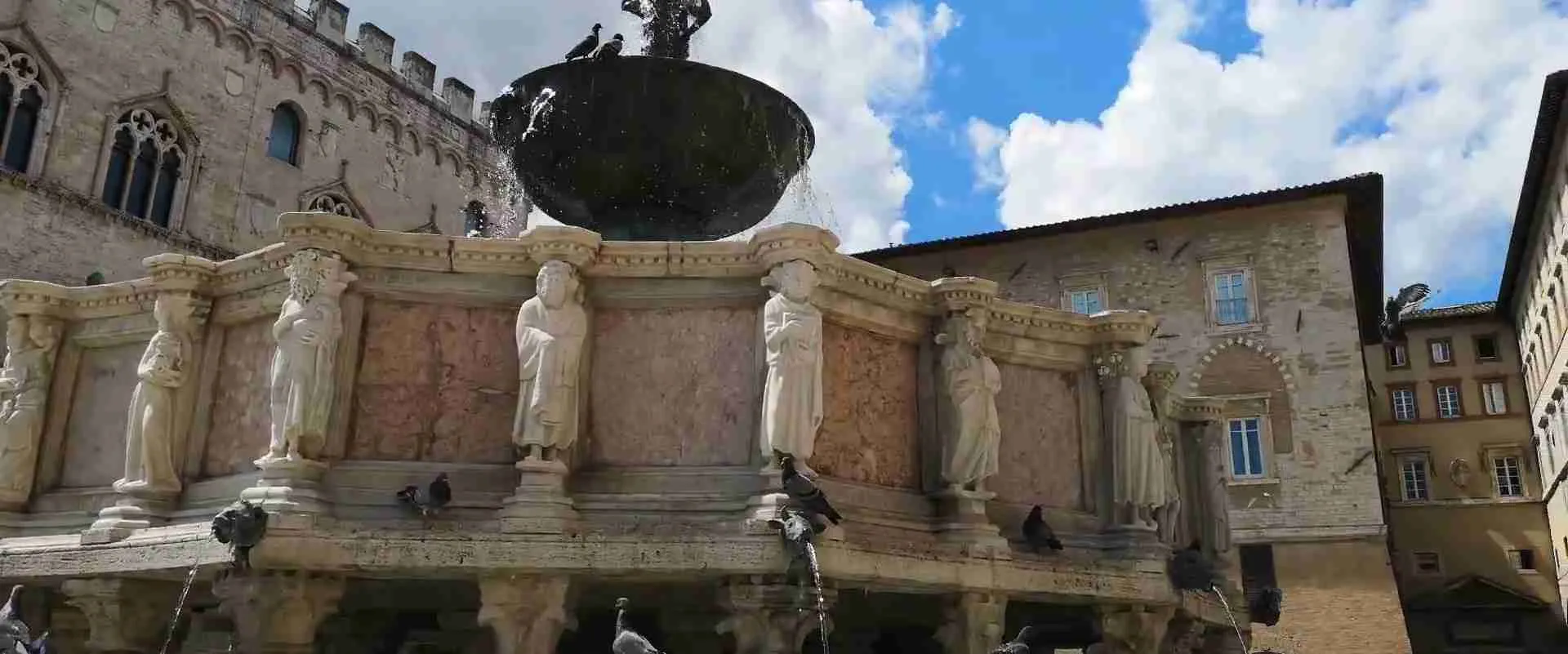
The Alternative Northern Umbria Road Trip Guide 2026: Navigating the Apennine Stone Towns Without the Crowds
Northern Umbria’s Apennine corridor shelters a chain of medieval stone towns that most visitors drive straight past on the way to Assisi. This guide traces a circular route through Gubbio, Gualdo Tadino, Nocera Umbra, Cantiano, Apecchio, and the Alta Valle del Tevere, unlocking villages where a foreign-plated car still draws gentle curiosity from the locals. The crowds that overwhelm the rest of Umbria simply do not reach this far north.
Key Takeaways
- Route overview: A 380–420km circular loop from Perugia through twelve or more stone towns, driven comfortably over five days or extended to seven for a more relaxed pace through genuinely unhurried countryside.
- Budget cost in 2026: Budget travelers sharing a basic agriturismo pay €100–140 per person daily (two sharing); a five-day circuit costs approximately €500–700 per person including car rental, accommodation, and food.
- Mid-range cost in 2026: Mid-range travelers sharing a comfortable agriturismo with pool spend €170–250 per person daily; the five-day circuit runs €850–1,250 per person for two traveling together.
- Crowd calendar: April through June and September through October deliver dry mountain roads, moderate temperatures, and near-empty streets — avoid August in Gubbio and the first Sunday of May (Corsa dei Ceri festival).
- ZTL reality check: Restricted-traffic zones cover historic centers throughout the entire route — park at signed areas outside the walls in every town and walk in, as ZTL fines exceed €100 and cameras are always active.
- The essential difference: Montone, Pietralunga, Nocera Umbra, and Apecchio see a fraction of the visitors that Assisi absorbs in a single morning. Genuine Umbrian daily life — working ceramics studios, Monday market stalls, nonni feeding pigeons in empty piazze — continues completely undisturbed by tourism.
People Also Ask About the Northern Umbria Road Trip 2026
How much does a Northern Umbria road trip cost per person in 2026?
Budget travelers sharing a compact rental car and basic agriturismo accommodation pay €100–140 per person daily in 2026, including car rental share, fuel, food, and museum admissions. Over a five-day circuit that works out to €500–700 per person. Mid-range travelers sharing a comfortable agriturismo with included breakfast spend €170–250 per person daily (€850–1,250 for five days). Luxury travelers in a country relais with premium car enjoy the circuit for €275–430 per person daily. All figures assume two people traveling together and sharing room costs. Travelers using their own car reduce transport costs by roughly €20–25 per person daily compared to renting.
How many days do you need for the Northern Umbria Apennine circuit in 2026?
Five days is the minimum for the core circuit connecting Gubbio, Gualdo Tadino, Nocera Umbra, the Gola del Furlo area, Apecchio, Città di Castello, Montone, and Umbertide without feeling rushed. Seven days allows proper time in each town, detours to the Fonte Avellana monastery and the Bocca Trabaria mountain pass, and a genuinely unhurried pace. Fewer than five days forces a selection — choose either the eastern Apennine towns (Gualdo Tadino, Nocera Umbra, Fossato di Vico) or the western Alta Valle (Montone, Umbertide, Città di Castello) but not both with any depth.
What are the best lesser-known stone towns in Northern Umbria to visit in 2026?
The five most rewarding stops that most travelers miss in 2026 are Pietralunga (a perfectly preserved hilltop town with almost no tourist infrastructure), Nocera Umbra (medieval streets entirely free of souvenir shops), Fossato di Vico (a fortified borgo split between valley floor and clifftop upper town), Apecchio (gateway to white truffle country with a remarkable cartoon museum), and Montone (one of the Borghi più belli d’Italia, home to a Bartolomeo Caporali altarpiece and a beloved summer film festival). Gualdo Tadino’s ceramics circuit and Umbertide’s Signorelli altarpiece complete the list for travelers who want art alongside scenery.
When is the best time to drive the Northern Umbrian Apennines in 2026?
April through early June is the finest window for this road trip in 2026 — wildflowers on the mountain passes, fresh green on the oak forests, and daytime temperatures between 14°C and 22°C that make outdoor lunches and long evening walks comfortable. September and October deliver golden foliage, truffle season at Apecchio and Acqualagna, and harvest tables at the agriturismi. July and August work but bring heat (30°C+) in the valleys and light crowds even in the smaller towns. November through March is possible but several agriturismo kitchens close and mountain roads above 800m can carry snow, particularly on the Bocca Trabaria pass.
Extended multi-day tours – 5+ days
Featured Umbria Multi-Day Tour Packages
5 days
5 Days Italian Cookery Getaway in Umbria
- ✓ Comprehensive Umbria tour
- ✓ Expert local guides included
- ✓ All accommodation arranged
- ✓ Transportation provided

7 days
Authentic Umbria
- ✓ Comprehensive Umbria tour
- ✓ Expert local guides included
- ✓ All accommodation arranged
- ✓ Transportation provided

5 days
Italy: Authentic Puglia by E-Bike 🚴 – White Villages & Southern Flavors – 5 DAYS
- ✓ Comprehensive Umbria tour
- ✓ Expert local guides included
- ✓ All accommodation arranged
- ✓ Transportation provided
8 days
Hilltowns of Umbria, Self-Drive
- ✓ Comprehensive Umbria tour
- ✓ Expert local guides included
- ✓ All accommodation arranged
- ✓ Transportation provided
Multi-day tour packages powered by TourRadar. Prices and availability subject to change.
Why Northern Umbria’s Apennine Towns Demand a Road Trip
There is a version of Umbria that exists in every travel magazine: Assisi rising above the Piano di Santa Maria degli Angeli, Orvieto on its tufa cliff, the sunflower fields between Montefalco and Trevi. These places are genuinely beautiful, which is precisely why they have been loved to the edge of their capacity. Step north of Perugia and across the invisible threshold where the landscape begins to corrugate into the Apennine, and you encounter a different region entirely — one where medieval stone has never needed to be polished for tourism because it never stopped being used for living.
Northern Umbria runs from Gubbio in the northeast to Città di Castello in the northwest, with the high Apennine ridge forming its eastern spine and the Tiber valley its western corridor. The towns along this axis — Gubbio, Gualdo Tadino, Nocera Umbra, Fossato di Vico, Sigillo, Scheggia, Cantiano, Apecchio, Pietralunga, Montone, Umbertide, Città di Castello — share a DNA of grey Apennine limestone, steep vicoli between palazzo walls, and a relationship with the land that has changed in rhythm but not in essence since the communes declared their independence from Roman roads in the thirteenth century.
A car is non-negotiable. No meaningful train service reaches these hills, and the provincial buses that do run operate on schedules oriented toward schoolchildren and market days rather than visitors. But this dependency is also liberation. The SP48 between Scheggia and Cantiano crosses oak and hornbeam forest where the road narrows to single lane and passing places require one driver to reverse up a hairpin — and both drivers wave their thanks. The SS298 climbs to Bocca Trabaria at 1,049 metres with Apennine views that stretch from the Gran Sasso in the east to Monte Amiata in Tuscany in the west. The E45 superstrada is the artery, but the provincial roads are the experience.
What this guide provides is the architecture of a practical journey: a day-by-day itinerary, verified admission prices, accommodation tiers, fuel costs calculated at current Italian pump prices, a realistic budget breakdown for three spending levels, and the practical intelligence — where to park, which ZTL zones to respect, which markets coincide with which days — that makes the difference between a road trip that flows and one that stalls at a locked car park in a stone town at two in the afternoon. The planning takes twenty minutes; the journey, once underway, largely takes care of itself.
Planning Your 2026 Northern Umbria Road Trip: When, How Long, and What to Expect
The Route at a Glance
The core circuit departs and returns to Perugia, making the city a practical staging point regardless of whether you arrive by plane at Sant’Egidio Airport (12km from the city, car rental desks on-site), by high-speed train to Chiusi-Chianciano Terme (45km south), or by driving down from Florence or Rome. The loop runs roughly 380–420km total depending on detours, crossing briefly into the Province of Pesaro-Urbino in Marche on the day dedicated to the Gola del Furlo and Fonte Avellana monastery. That Marche excursion is not a bug but a feature: the Umbria-Marche Apennine corridor makes no cultural or geological sense as a region when broken by an administrative border, and treating it as a single landscape gives the road trip its coherence.
The route divides naturally into five geographical acts. Act one covers Gubbio, the undisputed capital of northern Umbria and the only town on the circuit with a significant tourist infrastructure — use it as a soft landing. Act two swings east through the ceramics towns and mineral-water springs of Gualdo Tadino and Nocera Umbra, then climbs through the fort-villages of Fossato di Vico and Sigillo to the Apennine shoulder at Scheggia. Act three crosses into Marche for the Gola del Furlo and the Fonte Avellana monastery before returning through Apecchio’s truffle country. Act four descends to the Upper Tiber valley and Città di Castello. Act five circles back south through Montone, Umbertide, and the option of Pietralunga before the return to Perugia.
Car Rental Logistics 2026
Compact rental cars are available at Perugia Sant’Egidio Airport from €35–45 per day in spring and autumn, rising to €50–70 per day in July and August when demand peaks. Economy providers including Noleggiare and Sicily by Car operate from the airport alongside the major international brands. A small car — Fiat Panda, VW Polo, or equivalent — handles all roads on this circuit, including the mountain approaches to Bocca Trabaria and Fonte Avellana. Only if you plan to drive forest tracks for mushroom or truffle exploration does a slightly higher clearance become worthwhile. Book at least two weeks ahead for June, July, and August travel; spring and autumn allow week-ahead booking without significant premium.
Fuel costs as of June 2026 sit at approximately €1.91 per litre for unleaded gasoline at self-service pumps (check osservaprezzi.gov.it for live regional prices before departure). A compact car covering 120–150km of daily mountain driving consumes roughly 9–11 litres per day, putting daily fuel cost at approximately €17–21 for the car or €9–11 per person when split between two travelers. Fill up in larger towns — Gubbio, Gualdo Tadino, Città di Castello — rather than relying on village fuel stops, which are scarce above 400m altitude.
Accommodation Strategy
The agriturismo is the defining accommodation form of this circuit. Northern Umbria has no shortage of working farms offering double rooms, many with swimming pools, home-produced olive oil and wine at the dinner table, and breakfasts that eliminate any reason to find a bar before ten in the morning. Budget agriturismi offer double rooms from €80–100 per night; mid-range properties with pools and on-site restaurants range €110–150 per night; a handful of luxury country relais and converted medieval fortresses charge €170–270 or more. All figures are for the double room — divide by two to calculate the per-person share for budget planning.
The practical question is whether to use one central base or move nightly. Moving nightly — one night in the Gubbio area, one near Scheggia or Cantiano, one near Apecchio, one in the Città di Castello area, one returning south — means repacking each morning but gives the flexibility to linger anywhere that captures you. A single base requires more daily driving but rewards you with the intimacy of a place that knows your name by day two and has your breakfast order memorized by day three. The itinerary below uses a moving-base approach as the default.
The 2026 Road Trip Route: A Five-Day Itinerary Through the Apennine Stone Towns
Day 1: Perugia to Gubbio — The Gateway Town
The 40km drive from Perugia to Gubbio takes approximately 45 minutes via the SS298 and offers the first preview of what the entire circuit delivers: a road that climbs from the broad Umbrian valley floor into folds of oak-covered hill, arriving at Gubbio’s medieval skyline pinned against Monte Ingino as if it had always been part of the mountain. Check in to your chosen agriturismo before midday and plan the remainder of the first day for the town itself.
The afternoon walk through Gubbio’s centro storico works best starting from Piazza 40 Martiri (free parking below the walls) and climbing through the arcaded lower town to Piazza Grande, the town’s extraordinary suspended terrace above the valley. The Palazzo dei Consoli — full ticket €10, check palazzodeiconsoli.it for current rates — houses the Museo Civico’s complete collection including the Tavole Iguvine, seven bronze tablets inscribed in the pre-Roman Umbrian language that constitute the most important document of ancient Umbrian civilization. Allow ninety minutes. The funivia Colle Eletto, a two-person open-air cage car ascending 900 metres to the Basilica di Sant’Ubaldo above the town, costs €7 return and delivers sunset views across the Apennine that no photograph adequately captures. Take it in the last two hours before sunset.
Dinner on day one belongs at one of the town’s stone-walled trattorie where the menu lists strangozzi al tartufo, the hand-rolled Umbrian pasta shape with black truffle sauce that appears throughout this circuit. Expect to spend €20–28 per person for a full meal with house wine.
Day 2: The Eastern Chain — Gualdo Tadino, Nocera Umbra, Fossato di Vico
Day two departs the Gubbio orbit and swings southeast along the Apennine chain, covering three towns in approximately 80km of driving with plenty of time at each. Gualdo Tadino (30km from Gubbio, 35 minutes) is a ceramics town of considerable depth — the Polo Museale’s global ticket at €6 covers the Rocca Flea civic museum, the Museo della Ceramica at Casa Cajani, the Opificio Rubboli, the regional emigration museum, and the Monumental Church of San Francesco. The Rocca Flea sits above the town on a knoll visible from the SS3 approach, its fourteenth-century military architecture converted into galleries that display the distinctive lustred ceramics technique brought to Gualdo Tadino by Mastro Giorgio Andreoli’s tradition in the late fifteenth century.
Nocera Umbra lies 14km further southeast, a compact hilltop town that repays forty minutes of wandering through its completely unretouched medieval streets. The mineralwater springs at the base of the hill have supplied the Nocera Umbra brand of acqua minerale for over a century; bottles of the slightly fizzy, naturally cold water sold in the local alimentari come directly from the source. The Pinacoteca Civica in the church of San Francesco holds a collection of Umbrian panels including works attributed to Niccolò di Liberatore (known as L’Alunno). Admission is a few euros; check comune.noceraumbra.pg.it for current opening times, which can be seasonal.
Fossato di Vico, 12km north of Nocera, splits across a geographical accident that never loses its strangeness: the lower borgo occupies the valley floor around its train station while the upper borgo, a fortified medieval village with a church containing fourteenth-century frescoes, clings to a sheer limestone crag 200m above. Drive to the upper parking area and walk the vicoli for thirty minutes; the view from the western wall over the Chiascio valley stretches to the Apennine snow line in winter and to hazy blue ridgelines in summer. Continue 7km north to Sigillo, whose church of San Agostino hides a substantial cycle of fourteenth-century frescoes behind an often-unlocked door. Scheggia e Pascelupo, at the base of the Bocca Trabaria approach, makes a good base for night two.
Day 3: Monastery and Gorge Country — Cantiano, Fonte Avellana, Gola del Furlo
Day three crosses briefly into Marche and returns as the day’s most dramatically varied stage. Cantiano (18km east of Scheggia via the SS3 Flaminia, 25 minutes) is a quiet market town at the confluence of the Burano and Bevano rivers, whose Romanesque cathedral of Santa Maria della Pace contains a Madonna polyptych of genuine accomplishment. The Tuesday and Saturday morning market draws farmers from the surrounding hills selling seasonal produce — in truffle season (October–January for white, November–March for black), the market square carries the unmistakable earthy intensity of fresh tuber at very local prices.
From Cantiano, a mountain road climbs 18km northeast to the Monastero di Fonte Avellana at Serra Sant’Abbondio (700m altitude, approximately 30 minutes of carefully driven hairpins). Founded around 980 CE and associated with San Pier Damiani — the Benedictine reformer who served as prior from 1043 to 1057 — the monastery sits beneath Monte Catria at a point where silence functions as a physical presence. Dante placed the monastery in Canto XXI of the Paradiso, and the monks maintain a working scriptorium tradition. Guided visits run Monday to Saturday between 10:00–11:30 and 15:00–17:00, Sunday and holidays 10:00–12:00 and 14:30–18:00, with a free guided tour departing from the entrance every 30 minutes. A donation is requested but admission is free. Book ahead by email ([email protected]) for groups above ten people.
The day’s theatrical finale drives the SS3 Via Flaminia northwest through the Gola del Furlo, the gorge carved by the river Candigliano between 200m limestone walls that the Roman Emperor Vespasian bored in 76 CE to create the tunnel through which the road still passes. The nature reserve (ingresso gratuito — free entry) protects golden eagles, peregrine falcons, and an emerald-green lake backed by white limestone. Pull over at every designated viewpoint. Return to the Umbrian side via Acqualagna, crossing back west on provincial roads to an agriturismo near Cantiano or Apecchio for night three.
Day 4: Truffle Country — Apecchio, Bocca Trabaria, Città di Castello
Apecchio (16km southwest of Cantiano, 25 minutes) is one of those towns that announces exactly what it is before you have found a parking space: the roadside signs advertise not only truffle festivals but also, improbably and wonderfully, the Museo del Fumetto, one of the finest cartoon and comics museums in central Italy, occupying the ground floor of the Palazzo Ubaldini. The Castello dei Conti Oliva looms above the main square; the surrounding hillsides supply the white truffles that make this municipality Italy’s northernmost Umbrian truffle source of consequence. The town’s population of approximately 1,400 produces the impression of stepping into a film about Italian rural life rather than a film set.
The SP80 climbs 10km from Apecchio to Bocca Trabaria at 1,049m, the mountain pass where Umbria meets Tuscany. Park at the small picnic area at the summit and walk ten minutes along either ridge for views that extend across three regions. In late spring the pass carries wildflowers — orchids, gentians, and the yellow mass of mountain broom; in autumn the beeches turn a hard gold against the limestone outcrops. The road descends the Tuscan side before circling back into Umbria; the entire loop via Sansepolcro to Città di Castello adds 30km but adds nothing essential for road-trip purposes — stay on the Umbrian descent to the upper Tiber valley.
Città di Castello occupies the plain of the Alta Valle del Tevere with the confidence of a town that has been important for a long time and knows it. The Pinacoteca Comunale in the Renaissance Palazzo Vitelli alla Cannoniera holds works by Raphael (a standard, his earliest verified surviving painting), Luca Signorelli, Lorenzo Ghiberti, and Giorgio de Chirico in a collection that would draw serious attention in a larger city. The FO(U)RXONE combined ticket at €8 adults, €6 reduced covers the Pinacoteca, the Diocesan Museum, the cylindrical campanile, and the Oratorio di San Crescentino — valid for one week. Check cittadicastelloturismo.it for current hours before visiting. Stay in or near Città di Castello for night four.
Day 5: Alta Valle del Tevere Return — Montone, Umbertide, Pietralunga, Perugia
The final day works south through the western wing of the circuit before returning to Perugia. Montone (16km south of Città di Castello, 20 minutes) carries the Borghi più belli d’Italia designation and has earned it without being ruined by it. The town perches on a conical hill between the Carpina and Lana rivers with a simplicity of form — three gates, one main street, a central piazza with the Gothic church of San Francesco — that makes it one of the most purely medieval townscapes in Umbria. The Museo di San Francesco (combined complex including the museum and church, small admission fee) houses two altarpieces by Bartolomeo Caporali and a remarkable collection of African art brought back by Franciscan missionaries in the late nineteenth century. The Umbria Film Festival, held each July, transforms the piazza into an open-air cinema of considerable international reputation.
Umbertide (14km south of Montone, 20 minutes) has a working-town directness that contrasts pleasantly with the picture-perfection of Montone. Its Rocca, a fifteenth-century quadrilateral fortress above the Tiber, houses contemporary exhibitions. The church of Santa Croce nearby contains a Transfiguration by Luca Signorelli that art historians rank among the painter’s major works; the church opens according to seasonal volunteer schedules, so check locally or ask at the tourist information point near the main piazza.
Pietralunga, 25km northeast of Umbertide via the SP73 (allow 35 minutes on mountain bends), is the road trip’s purest discovery: a borgo of 1,300 inhabitants with a medieval Rocca, virtually no tourist infrastructure, and streets that the twenty-first century appears to have visited only occasionally. There is one bar, reportedly an excellent one, and a trattoria that opens reliably on weekends. If nothing else, driving to Pietralunga and back through the forest roads of the upper Carpina valley is the road trip’s most convincing argument against efficiency. Return to Umbertide and south on the E45 to Perugia.
Gubbio 2026: The Perfect Gateway to Northern Umbria’s Medieval World
Gubbio is the one town on this circuit that tourism has genuinely found, and yet it wears that attention more lightly than almost any comparable Italian medieval town. The secret lies in its topography: the city climbs vertically up Monte Ingino rather than spreading horizontally, which means that no matter how many visitors crowd the main monuments on the lower slopes, ten minutes of upward walking takes you into residential streets where the population goes about a daily life that has no theatrical relationship with tourism whatsoever.
The Historic Core
Piazza Grande is the architectural set piece — a fourteenth-century suspended terrace spanning the hillside, open on one long side to vertiginous views over the valley, flanked by the Palazzo dei Consoli on the north and the ruined Palazzo del Podestà on the south. The Palazzo dei Consoli was begun in 1332 to designs by Angelo da Orvieto (his name is inscribed above the portal) with later contribution from Matteo di Giovannello, known as Gattapone. Its fan-shaped external staircase leads to the great vaulted Sala dell’Arengo, followed by galleries displaying ceramics by Mastro Giorgio Andreoli, whose ruby and gold lustres pushed the Renaissance ceramics frontier, and — in the Room with the Iguvine Tables — the seven bronze tablets that constitute the most complete epigraphic document of ancient Umbrian civilization. Full admission €10, check palazzodeiconsoli.it for current rates as temporary exhibitions occasionally modify the ticketing structure.
The Roman Theatre below the walls (free entry, visible from the street at all times) dates from the first century BCE and seats approximately 6,000 in its original capacity. Summer performances restore something of its original purpose; even empty it demonstrates how thoroughly the Romans organized public space. The Duomo on the upper main street holds an unusual hanging vault and a polyptych by Virgilio Nucci; the Palazzo Ducale opposite was built by Duke Federico da Montefeltro of Urbino (the same patron who commissioned Piero della Francesca) and includes a cortile attributed to Francesco di Giorgio Martini.
The Funivia and Monte Ingino
The funivia Colle Eletto carries two passengers at a time in a small open cage from the foot of the Monte Ingino slope to the Basilica di Sant’Ubaldo at 800m. The basket design, unchanged since the installation in 1960, provides a deliberately unhurried ascent with views that progressively reveal the entire basin of the upper Chiascio valley. Round-trip tickets cost approximately €7; check locally for current pricing and seasonal operating hours, as the funivia closes on certain weekdays outside peak season and for maintenance periods. The Basilica di Sant’Ubaldo above holds the remains of Gubbio’s patron saint and the three ceri — massive wooden obelisk-candles weighing 400kg each — carried in procession during the Corsa dei Ceri on 15 May. The ceri stand in the basilica for the rest of the year, dwarfing the space around them.
Gubbio Practicalities 2026
Park in Piazza 40 Martiri at the base of the historic center (paid parking, approximately €1.50–2 per hour, free in some outer zones). The centro storico above is a ZTL zone for most of the day; walk up from the piazza rather than attempting to drive in. Most of Gubbio’s restaurants and bars cluster around Via dei Consoli and the streets leading to Piazza Grande; the afternoon passeggiata brings the town’s own population out from around five o’clock and the atmosphere shifts from tourist-facing to genuinely Umbrian. Market day is Tuesday morning on Piazza 40 Martiri.
The Eastern Apennine Corridor 2026: Gualdo Tadino to Fossato di Vico
The three towns of Gualdo Tadino, Nocera Umbra, and Fossato di Vico form a chain along the Apennine foothills southeast of Gubbio, separated by short drives on roads that cross the threshold between valley agriculture and mountain woodland multiple times in each journey. Together they deliver a day of considerable variety without any single stop demanding more than two hours.
Gualdo Tadino: The Ceramics Circuit
Gualdo Tadino’s identity as a ceramics town runs deeper than decoration. The lustred maiolica tradition here — the shimmering metallic finishes in ruby and gold that distinguished sixteenth-century Gualdo workshops from those of Deruta and Faenza — draws directly from Mastro Giorgio Andreoli’s documented experiments with metallic oxides, which produced iridescent effects that European ceramics had never achieved before. The three-site ceramics circuit within the Polo Museale brings the tradition from its Renaissance origins through to the Rubboli family workshop of the twentieth century, where the technique was revived and refined for contemporary production.
The global Polo Museale ticket at €6 covers the Rocca Flea civic museum (with the archaeological collection, Niccolò di Liberatore polyptych, and the ceramics galleries), Casa Cajani (archaeological museum of the ancient Umbri and ceramics museum), the Opificio Rubboli (working ceramics studio and museum), the Museo Regionale dell’Emigrazione Pietro Conti, and the Museo dell’Asino — an institution that sounds eccentric on first encounter and entirely delivers on its promise. For context and current opening schedules check polomusealegualdotadino.it before visiting; summer hours extend the opening days relative to winter.
Nocera Umbra: Pure Medieval Stone
Nocera Umbra occupies a hill above the Topino valley with a defensive instinct that kept it medieval long after the valley towns modernized. The historic center has one main street and a secondary network of vicoli that are residential in the most genuine sense: residents hang laundry between windows, cats occupy doorsteps, and the only commercial activity consists of two bars, one pizzeria, and the mineral water bottling facility whose spring feeds directly from the limestone aquifer beneath the town. The phrase acqua di Nocera on restaurant tables throughout central Italy refers to water drawn from this source and sold commercially, but the water available from the public fountain in the lower town tastes identical and costs nothing.
Fossato di Vico and Sigillo
Fossato di Vico’s split personality — lower modern town, upper medieval borgo on the cliff — makes it one of the circuit’s most photographically dramatic stops even if visitors who stay below the SS3 never see the point of the place. The strada that climbs to the upper borgo leads to a fortified settlement whose streets effectively end at sheer drops. The church of San Benedetto holds fourteenth-century frescoes including a partially preserved Last Supper. Sigillo, 7km north, delays the traveler just long enough for the frescoes in the church of San Agostino, attributed to the Gubbian school of the early fourteenth century, and a coffee at the bar on the main piazza where the proprietor will likely ask where you are headed next and give you specific advice about the road to Scheggia that no GPS provides.
Mountain Passes and Monastery Country 2026: Scheggia to the Gola del Furlo
The third arc of the circuit enters the highest and least-touristed terrain of the entire road trip, crossing into Marche for the Gola del Furlo detour before returning to the Umbrian side via Apecchio. These roads require the most attentive driving of the circuit — not due to difficulty, but because the landscape demands attention that competing with traffic would prevent.
Scheggia e Pascelupo
Scheggia occupies the SS3 Flaminia at the point where the Via Flaminia — Rome’s great consular road to the Adriatic — begins its Apennine crossing. The town itself is modest, but the Roman road history visible in every kilometer of the SS3 between here and Cantiano gives the drive a historical resonance that rewards reading a brief account of the Flaminia’s construction before departure. The Eremo di San Girolamo above the town opens on certain weekend mornings; local signage directs to the hermitage road (approximately 4km of switchbacks).
Cantiano and Its Market
Cantiano is a working agricultural town that welcomes rather than performs. The Tuesday and Saturday morning market occupies the main square and surrounding streets with the full range of Apennine seasonal produce: mushrooms (porcini, ovoli, chiodini depending on season), chestnuts and walnuts in autumn, truffles from October through January, and vegetables grown at altitudes that give them an intensity unavailable at sea level. The Cathedral of Santa Maria della Pace on the main piazza dates from the thirteenth century with significant additions in the sixteenth; the Madonna and Child polyptych inside the entrance rewards a look before walking the market.
The Fonte Avellana Monastery
Fonte Avellana sits at 700m on the southern slopes of Monte Catria, founded around 980 CE and continuously occupied by Camaldolese Benedictine monks for over a thousand years. The approach road from Serra Sant’Abbondio (12km, 20 minutes from the main valley) climbs through beech and oak forest to a courtyard where the silence is institutional rather than accidental. San Pier Damiani, who reformed the monastery from 1043 to 1057, used Fonte Avellana as his base for letters that shaped eleventh-century Church reform. Dante referred to the monastery in Canto XXI of the Paradiso; in the tourist shop (operated by the monks) you can buy honey, beeswax products, and ceramic monastery-stamped pieces made on-site.
The free guided tour departs from the entrance portal every thirty minutes during opening hours (Monday–Saturday 10:00–11:30 and 15:00–17:00; Sunday 10:00–12:00 and 14:30–18:00). The Scriptorium — the medieval writing room where monks produced illuminated manuscripts — is the highlight of the tour, along with the Romanesque cloister and the ninth-century chapel below the main church. A donation is appreciated. Contact the monastery at [email protected] or +39 0721 730261 for current visiting status, as occasional monastic retreats or private events can temporarily close the interior to visitors.
The Gola del Furlo
The SS3 Flaminia passes through the Gola del Furlo along the river Candigliano between limestone walls that rise 200m from the roadside and in places reduce the sky to a thin stripe of blue overhead. The Roman Emperor Vespasian ordered the tunnel cut in 76 CE (it still carries traffic); remains of an earlier Etruscan cutting are visible at the gorge entrance. The Riserva Naturale Statale Gola del Furlo (free entry throughout) encompasses the gorge, the reservoir lake behind the 1920s dam at the gorge exit, and the surrounding massifs of Monte Paganuccio and Monte Pietralata. Golden eagles nest on the upper cliff faces; the visitor centre at the Furlo hamlet (Via Flaminia 37, Acqualagna) provides trail maps and current bird-watching information. The gorge road takes approximately 20 minutes to drive at a respectful sightseeing pace, with several pull-out points for photography.
Truffle Country and the Mountain Pass: Apecchio 2026
Apecchio straddles the Apennine watershed at the point where the streams begin to flow north toward the Adriatic rather than south toward the Tiber, and the ecosystem shift is perceptible. The forests here carry the specific combination of oak canopy and calcium-rich soil that produces Tuber borchii and Tuber magnatum — the bianchetto and white truffle respectively — and the town’s autumn festival calendar runs accordingly. The main white truffle season in this area runs October through December; summer brings the less valuable but intensely flavored bianchetto and black summer truffle.
The Museo del Fumetto occupies the ground floor of the Palazzo Ubaldini and merits a stop even for visitors who have no particular interest in comics — its collection of Italian fumetto history from the 1920s to the present traces a cultural thread that runs through the country’s postwar self-image with unexpected intelligence. The exhibition is well-lit and labeled in Italian, with some English text; admission is modest (check locally for current pricing). The Castello dei Conti Oliva above the main piazza is visible from below but opens only for specific events; the exterior inspection from the piazza takes five minutes and rewards them.
The Bocca Trabaria Pass
The SP80 from Apecchio to Bocca Trabaria at 1,049m takes approximately 20 minutes and delivers the road trip’s most elevated perspective. The pass marks the Umbria-Tuscany regional boundary and sits on the main Apennine watershed. On a clear day the view from the summit picnic area covers the Tiber valley to the west, the High Apennine to the east, and in optimal winter conditions the distant profile of Monte Amiata in Tuscany. The road descends from the pass into the Sansepolcro-Città di Castello basin via the SP73 and SS257, passing through the Alto Tevere landscape that Piero della Francesca painted as background in his most famous panels — he was born 30km away in Sansepolcro and his light belongs specifically to this sky.
The Alta Valle del Tevere 2026: Città di Castello, Montone, Umbertide
The western arc of the circuit runs through the Upper Tiber valley and its immediately flanking hills, delivering three of the circuit’s four most culturally rich towns in a single day’s driving. The landscape shifts here from the grey limestone and dark forest of the Apennine to the broader, more agricultural valley character that gradually connects this northern Umbria to the Tuscany of Arezzo and Sansepolcro just across the regional boundary.
Città di Castello
Città di Castello is the northern Umbrian town most likely to be underestimated. Its historic center presents as compact and manageable from the outside — a pleasant market town on the Tiber plain — and then reveals, street by street, a density of Renaissance architecture and museum-quality art that puts it among the most rewarding cultural destinations in the region. The Pinacoteca Comunale’s holdings in the Palazzo Vitelli alla Cannoniera include Raphael’s Creation of Eve, one of the artist’s earliest authenticated works, alongside major panels by Luca Signorelli, Domenico Ghirlandaio, Lorenzo Ghiberti, and a twentieth-century collection featuring Giorgio de Chirico and Gerardo Dottori. The FO(U)RXONE combined ticket (€8 adults, €6 reduced, valid for one week) adds the Diocesan Museum, the medieval cylindrical campanile, and the Oratorio di San Crescentino. Check cittadicastelloturismo.it for current opening hours.
The town also carries a living arts tradition that connects past and present more naturally than many attempts at this connection elsewhere. The Fondazione Burri occupies two separate sites — the former tobacco-drying sheds (Ex Seccatoi del Tabacco) on the northern edge of town and the Palazzo Albizzini in the historic center — displaying the complete estate of Alberto Burri, the Città di Castello-born artist whose Sacchi, Cretti, and Combustioni works made him one of the most important Italian artists of the twentieth century. The Burri collections are accessible on a schedule that varies seasonally; check fondazioneburri.org for current hours before building the day around it.
Montone
Montone sits on a perfect conical hill above the Carpina valley, surrounded by intact walls accessed through three medieval gates: Porta del Verziere, Porta del Borgo Vecchio, and Porta del Monte. The main street runs from gate to gate across the hilltop, lined with stone houses that have been continuously inhabited since the fourteenth century and show the evidence of that occupation in layered stonework, bricked-up windows, and door frames carved with motifs that shift between architectural periods like geological strata. The church and museum complex of San Francesco holds the two Bartolomeo Caporali altarpieces — the Madonna della Misericordia and the Sant’Antonio — plus a collection of medieval African art that feels genuinely surprising in this context. Museum admission applies; check comune.montone.pg.it for current rates and opening times.
The Umbria Film Festival in July transforms Piazza Fortebraccio into an outdoor cinema of genuine international programming — not simply an outdoor screening of mainstream films but a curated festival with retrospectives, new Italian and international work, and an evening atmosphere that makes Montone in July one of the more cultured places in central Italy to spend a summer evening. Film screenings run outdoors from around 9:30pm; check umbriafilmfestival.com for the annual programme released in May.
Umbertide and the Signorelli Altarpiece
Umbertide is a town that works for a living in ways that Montone, in its touristic perfection, has largely moved beyond. The ceramics industry, small-scale agriculture, and the commuter relationship with Perugia (35km south on the E45) give the town a present-tense vitality that complements the medieval Rocca above the river. The Rocca’s four towers now house contemporary exhibitions — check the local comune website for current shows. The church of Santa Croce contains Luca Signorelli’s Transfigurazione, painted around 1510–15 and considered one of the artist’s mature masterworks. Signorelli was from Cortona, 45km northwest, and his work appears throughout this northern Umbrian-Tuscan border territory as the default medium through which the Renaissance reached these smaller courts. The church opens on voluntary schedules; inquire at the tourist office near the main piazza or check the comune website for current hours.
Pietralunga
Pietralunga requires a deliberate decision and approximately 35 minutes of mountain road to reach from Umbertide, and it rewards both. The town sits at 562m on a ridge above the Carpina valley with a medieval Rocca, one long main street, a bar of the kind that serves as the entire town’s social infrastructure, and a near-total absence of the mechanisms that larger towns deploy to accommodate visitors. There are no tourist signs explaining what you are looking at; there is no visitor center; the single trattoria opens reliably on weekends and sometimes on weekdays if you call ahead. This is Umbrian rural life without a stage set around it. The drive back down through the Carpina valley forest — particularly in autumn when the chestnuts turn gold — justifies every kilometer of the detour independently of what Pietralunga itself contains.
Where to Stay 2026: Agriturismo and Rural Accommodation Across the Route
The agriturismo network in northern Umbria ranges from genuine working farms that offer a room and a shared breakfast table to sophisticated rural hotels with infinity pools and six-course cena menus that use their own farm produce as a competitive advantage over the region’s restaurants. Both extremes — and the considerable middle ground between them — have their place on this circuit, and the choice of accommodation type shapes the experience as fundamentally as the choice of route.
Budget Accommodation 2026 (€40–50 per person, two sharing)
Basic agriturismo double rooms in northern Umbria start at €80–100 per night, delivering a clean private room with en-suite bathroom, breakfast included at most properties or available for €5–8 at the house bar, and the use of outdoor space that in summer includes a garden or terrace. At this price point do not expect air conditioning in all properties or modern finishes; the buildings are genuinely old and some of their character includes stone floors that take several hours to warm in the morning. Properties near Gubbio, Scheggia, and the Città di Castello area offer the highest concentration at this tier. Farm websites and direct booking undercut aggregator platforms by 15–20% and often include extras (local wine, olive oil) not available through third parties.
Mid-Range Accommodation 2026 (€55–75 per person, two sharing)
The mid-range agriturismo tier at €110–150 per night delivers the experience that defines the category at its best: a renovated stone farmhouse or converted borgata, a swimming pool usable from May through September, a breakfast that runs to fresh-baked bread, local honey, farm cheese, and cured meats, and an optional dinner service featuring home-produced wine and pasta made in the property’s kitchen. Several properties in the Alta Valle del Tevere near Montone and Umbertide and in the countryside east of Gubbio fall into this tier with high consistency of quality. The Agriturismo Montelovesco near Gubbio sits in this range and offers access to Gubbio, Umbertide, Montone, and Pietralunga within thirty minutes, making it a viable base for a moving itinerary’s central nights.
Luxury Accommodation 2026 (€85–135 per person, two sharing)
The luxury tier at €170–270+ per night for a double room encompasses converted medieval fortresses, country relais with spa facilities, and a handful of boutique wine estates in the Città di Castello area that have invested heavily in both agricultural and hospitality infrastructure. Breakfasts are included as standard at this price point; dinner on-site adds €45–65 per person. The Apennine side of the circuit offers fewer luxury options than the Alta Valle del Tevere, reflecting the relative development of the two sub-regions, but the Gubbio area has several properties that justify their premium positioning through genuine quality of space, food, and setting.
Alternatives to Agriturismo
Città di Castello, Gubbio, and Gualdo Tadino each support a small hotel sector with town-center properties ranging from €70–90 for a simple two-star to €120–160 for the best-positioned boutique options. Town-center hotels make practical sense on the nights when the circuit brings you to the most culturally dense stops and you want to walk to dinner rather than drive back from the agriturismo after wine. The combination of agriturismo nights in the countryside with one or two hotel nights in Gubbio and Città di Castello represents the circuit’s optimal accommodation architecture for most travelers.
Eating and Drinking Through Northern Umbria 2026
Northern Umbrian food is Apennine food: truffle, pork, game, dried legumes, and hand-rolled pasta shapes that predate the pasta machine. The restaurant spectrum runs from farm kitchen to serious restaurant, but the most reliably rewarding experiences on this circuit occur at the middle and lower ends of the price range, where family kitchens in small towns produce dishes that reflect specific local traditions rather than a generic central Italian menu assembled for tourists.
What to Eat 2026
Strangozzi al tartufo — the square-section, hand-rolled pasta unique to this part of Umbria, dressed with fresh black or white truffle and local olive oil — appears on virtually every menu from Gubbio to Città di Castello and varies in quality according to the freshness of the truffle and the amount of butter or cream used to mount the sauce. The best versions use minimal intervention: just pasta, truffle, olive oil, and perhaps a scraping of garlic. Avoid any version described as a cream sauce if truffle is the point. Tagliata di chianina (sliced Chianina beef, the breed native to the Upper Tiber valley), roasted porcini mushrooms in autumn, zuppa di farro (spelt soup, the ancient grain of Umbria), and the various preparations of locally cured pork — lonza, capocollo, mazzafegato — complete the core vocabulary of the regional table.
Truffle season timing matters: white truffles (Tuber magnatum) peak October through December around Apecchio, Cantiano, and the Marche side of Acqualagna; black summer truffle (Tuber aestivum) runs June through August; black winter truffle (Tuber melanosporum) appears November through March throughout the Apennine. Spring visits encounter preserved truffle in olive oil rather than fresh product; autumn visits encounter the genuine article.
Dining Costs in Northern Umbria 2026
Northern Umbrian trattorie and osterìe operate at price points that have not yet been recalibrated to accommodate mass tourism. A full meal — primo, secondo, dessert, house wine, water, and coperto — costs €22–32 per person at a working trattoria in a smaller town, €30–45 at a more established restaurant in Gubbio or Città di Castello. Lunch in the smaller towns often runs €15–22 for a set menu or a single pasta course with wine. Bar breakfast (coffee and cornetto) costs €2.50–4 throughout the circuit; agriturismo breakfasts that replace the bar cost €5–10 where not included in the room rate. Self-catering from the local alimentari or Tuesday/Saturday markets in Cantiano, Gualdo Tadino, and Città di Castello cuts daily food costs substantially for travelers without a strong preference for restaurant dining.
Local Wine and Producers
Northern Umbria sits mostly outside the DOC and DOCG denominations that define Sagrantino di Montefalco and Orvieto classico further south, which means that local wines sell at prices that have no appellation premium attached to them. The dominant red grape throughout this corridor is Sangiovese, often blended with Ciliegiolo or Canaiolo in proportions that vary by producer; a farmhouse wine sold directly from the cantina costs €4–8 per litre. The Città di Castello area borders Tuscany’s Valtiberina zone and produces Sangiovese-dominant blends that share the mineral character of the surrounding limestone. Ask the agriturismo owner for their own production or for a local cantina recommendation — the circuit passes within minutes of multiple small producers who do not market themselves and sell exclusively to visitors who find them in person.
Road Trip Budget 2026: What the Northern Umbria Circuit Actually Costs
Budget planning for this road trip requires four inputs: accommodation, food, transport, and attraction admissions. The figures below are per person per day for two travelers sharing all accommodation and transport costs, using the calculation structure required by the pre-verified numbers established before writing this section. All accommodation figures reflect the double room rate divided by two before adding individual per-person expenses.
Budget Tier 2026: €100–140 Per Person Daily
Budget travelers sharing a basic agriturismo double room (€80–100/night) pay €40–50 per person for accommodation. Add a bar breakfast or picnic-style breakfast (€3–5), a packed lunch from the local alimentari (€8–12), and dinner at a village trattoria (€18–26), and daily food comes to €29–43. Transport via a compact rental car (€35–45/day split two ways = €18–23 per person), fuel (approximately €9 per person for 120km of daily driving at current prices), and town parking (€2–4) adds €28–37. Admissions to one museum or site per day run €5–8. Total: approximately €100–140 per person daily, with the full five-day circuit costing €500–700 per person. Travelers using their own car rather than renting reduce transport costs by €15–20 per person daily, bringing five-day own-car budget totals to €400–570.
Mid-Range Tier 2026: €170–250 Per Person Daily
Mid-range travelers sharing a comfortable agriturismo (€110–150/night) pay €55–75 per person for accommodation. A café breakfast (€6–10), a trattoria lunch with local wine (€18–28), and a dinner at an established restaurant with a full Umbrian menu (€32–48) put daily food at €56–86. A mid-range rental car (VW Golf or equivalent, €55–75/day divided by two = €28–38 per person), fuel (€10–12), and parking or ZTL buffer (€4–8) contribute €42–58 to daily transport. Two museum admissions plus one wine tasting or organized activity (€15–30) complete the calculation. Total: approximately €170–250 per person daily; the five-day circuit runs €850–1,250 per person. The seven-day extended version of the same itinerary runs €1,190–1,750 per person.
Luxury Tier 2026: €275–430 Per Person Daily
Luxury travelers staying at a country relais (€170–270/night) pay €85–135 per person for accommodation. Breakfast is included at virtually all properties in this category. A lunch at an upscale restaurant (€35–55) and dinner with tasting menu and regional wines (€65–100) add €100–155 for food. A premium rental car (BMW 3 Series equivalent, €90–130/day split two ways = €45–65 per person), fuel (€12–15), and extras such as private parking and tolls (€8–12) bring transport to €65–92. Guided truffle hunts, winery visits, private museum tours, and other premium experiences (€25–45) complete the picture. Total: approximately €275–430 per person daily; the five-day circuit costs approximately €1,375–2,150 per person, the seven-day version €1,925–3,010.
Admission Price Summary 2026
The circuit’s major paid attractions by town: Gubbio Palazzo dei Consoli €10 adults (check palazzodeiconsoli.it for current rates); Gubbio funivia Colle Eletto approximately €7 return; Gualdo Tadino Polo Museale all-sites ticket €6; Città di Castello FO(U)RXONE four-museum ticket €8 adults, €6 reduced (check cittadicastelloturismo.it); Gola del Furlo nature reserve free; Fonte Avellana monastery free (donation appreciated). The majority of churches, piazze, historic viewpoints, mountain passes, and villages on the circuit cost nothing to visit beyond fuel and parking.
Money-Saving Strategies for Your 2026 Northern Umbria Road Trip
The northern Umbria circuit is already significantly cheaper than the Assisi-Perugia-Orvieto tourist corridor, but several strategies reduce costs further without sacrificing anything of substance.
Book agriturismo directly via the property’s own website or by phone. Aggregator platforms including Booking.com and Expedia charge commission that property owners absorb either through higher listed prices or reduced service. Direct bookings at farms frequently include a bottle of house wine, olive oil from the property, or access to the property’s produce at no additional charge. Ask specifically when booking.
Use the Tuesday and Saturday markets in Cantiano and Gualdo Tadino, and the daily market in Città di Castello, for lunch provisions. Local bread, cheese, cured meats, fruit, and seasonal vegetables assembled from market stalls cost €8–12 for two people and taste better eaten at a mountain viewpoint than most restaurant lunches charge three times as much to approximate. The same ingredients assembled for dinner at the agriturismo kitchen table cost the same.
Fill the fuel tank at the E45 superstrada service stations between Perugia and Città di Castello rather than at small-town provincial pumps, which can run €0.10–0.15 per litre above the regional average. The difference on a full tank of 40 litres amounts to €4–6, which sounds modest until multiplied across five fill-ups over the circuit.
Travel April through early June or September through October. Peak season pricing in July and August raises agriturismo room rates by 20–35% across the region, pushes car rental costs to their highest annual point, and — in Gubbio specifically — introduces the one genuinely crowded day-visitor environment on the entire circuit. Spring and autumn deliver better weather for mountain driving, better light for photography, and prices that reflect off-peak demand.
Use the Polo Museale combined tickets wherever they exist. Gualdo Tadino’s €6 all-sites ticket covers six separate venues that would cost €25–30 individually at comparable single-site pricing elsewhere in Umbria. Città di Castello’s FO(U)RXONE ticket at €8 covers four sites valid for one week. Both represent genuine value relative to the content they provide.
Practical Driving Tips 2026: ZTL Zones, Parking, and Road Conditions
Every historic center on this circuit operates a Zona a Traffico Limitato (ZTL) that prohibits general vehicle entry during specified hours. The cameras that enforce these zones are active, the local municipalities treat fines as legitimate income, and the penalties — ranging from €87 to €150 — arrive by post weeks after the road trip ends. The practical rule for every town on the circuit: follow the blue parking signs to the designated area outside the historic center, park, and walk in. This applies to Gubbio (Piazza 40 Martiri and surrounding areas), Gualdo Tadino (parking near the Rocca Flea base), Nocera Umbra (parking at the base of the hill), Città di Castello (multiple signed parking areas outside the walls), Montone (large parking area at the base of the hill), and Umbertide (parking near the Rocca and along the Tiber).
Road conditions on the mountain routes between Scheggia, Cantiano, Fonte Avellana, and Apecchio are good but narrow. Provincial roads (SP designation) frequently reduce to single lane on bends where two vehicles cannot pass simultaneously; Italian rural driving etiquette handles this with a combination of horn use (one short blast on blind hairpins) and the understanding that the vehicle ascending has priority over the vehicle descending. Reversing to a passing place is expected and unremarkable. Drive at a speed that allows you to stop in half the visible distance.
The Bocca Trabaria approach on the SP80 from Apecchio is the steepest sustained climb of the circuit, gaining approximately 600m over 10km. In summer it presents no difficulty whatsoever; in October through April check weather forecasts for the summit area before committing. Snow closures at the pass are rare but possible from November through March; the alternative route via Arezzo and Sansepolcro adds 45km but remains at low altitude throughout.
Fuel stops on the mountain portions of the circuit are sparse. Fill the tank to at least half before leaving Gubbio, before leaving Scheggia/Cantiano toward Apecchio, and before the Bocca Trabaria descent. The E45 superstrada between Umbertide and Perugia and the SS257 between Sansepolcro and Città di Castello both have reliable service stations. In the mountain villages between these points, assume no fuel is available.
Italian navigation apps and GPS units handle the main route reliably. For the SP roads in the upper Apennine, Google Maps and similar tools occasionally route via roads that technically exist on maps but are unpaved forest tracks in practice. When the road surface changes from tarmac to gravel, verify your position and recalculate before continuing; the alternative route almost always adds only a few minutes.
Frequently Asked Questions
Do I need a four-wheel drive vehicle for this road trip?
No. The entire five-day and seven-day circuit described in this guide travels on surfaced tarmac roads. A standard compact rental car handles every kilometer without difficulty. The mountain roads narrow significantly on some passes and approaches, but narrowness is not the same as technical difficulty. Only travelers planning to add off-road truffle hunting excursions on forest tracks outside the towns benefit from higher ground clearance; for the road trip itself, any standard economy rental is entirely adequate.
How much does fuel cost for the full circuit in 2026?
At approximately €1.91 per litre for self-service unleaded gasoline (the June 2026 Italian national average, verifiable at osservaprezzi.gov.it), a compact car covering the full 380–420km circuit at 7 litres per 100km uses 27–30 litres of fuel, costing approximately €52–57 for the car. For two travelers sharing, this translates to €26–29 per person for the entire circuit’s fuel. Daily driving for sightseeing detours adds to this; the total fuel budget for a five-day circuit including day trip distances runs €80–110 for the car or €40–55 per person.
Is the road trip suitable for first-time drivers in Italy?
Yes, with one caveat. The motorway and superstrada sections between Perugia, Gubbio, and Città di Castello are straightforward and well-signed. The mountain SP roads require comfortable handling of narrow lanes, occasional reversing for passing, and the judgment to drive at speeds appropriate to visibility rather than the posted limit. Drivers accustomed to rural roads in the UK, Ireland, or mountainous parts of North America adapt immediately. Drivers with only urban or motorway experience should allow an extra hour for each mountain stage until the rhythm of provincial driving becomes natural.
What are the ZTL hours in the main towns?
ZTL operating hours vary by municipality, season, and local regulations that change periodically. As a general principle across northern Umbria, restricted zones are active daily from approximately 8:00 to 20:00 in historic centers. However, do not rely on this approximation — check the individual comune website for each town before arriving, and follow all blue ZTL signage and road markings in the approach to any historic center. When in doubt, park in the first designated area you encounter outside the walls rather than driving further into the center.
Can I do the road trip in three days instead of five?
A three-day version of the circuit is possible but involves significant compromise. The two strongest three-day combinations are: the eastern Apennine option (Gubbio, Gualdo Tadino, Nocera Umbra, Fossato di Vico, Scheggia, with a return directly via Perugia — approximately 200km total) or the western cultural option (Città di Castello, Montone, Umbertide, and the Bocca Trabaria pass from the Alto Tevere side — approximately 180km from Perugia). The full circular route connecting both wings requires a minimum of five days to experience with any depth; three days gives you either the Apennine character or the cultural wealth but not both.
What is the best single day trip from Perugia on this circuit?
Gubbio works as a single day trip from Perugia given the 40km distance and the concentration of the town’s main attractions within walking distance of the central parking area. Arrive by 10:00, visit the Palazzo dei Consoli (approximately 90 minutes), walk to the funivia for the Sant’Ubaldo ascent (90 minutes including the ride and view from the top), eat lunch at a central trattoria, and walk the Roman Theatre and Piazza Grande in the early afternoon before returning to Perugia by 18:00. This schedule works but cannot be extended to include the other towns in the circuit without an overnight stay.
Are the agriturismi open year-round?
Many agriturismi in northern Umbria close their kitchens and reduce operations from November through February, reopening for Easter. Accommodation-only bookings (without dinner service) remain available at most properties through the winter, but verify directly with each property before booking. The towns themselves — historic centers, churches, cafes, and local restaurants — remain open year-round. The museum collections in Gubbio, Gualdo Tadino, and Città di Castello maintain winter hours (Wednesday through Sunday in most venues) that give winter visitors full access to the cultural program of the circuit at its quietest and most atmospheric.
What should I know about truffle hunting experiences near Apecchio?
Several truffle hunters (trifulau) in the Apecchio and Cantiano area offer guided hunts with trained dogs for groups of two or more, running two to three hours in forest terrain with a subsequent explanation of cleaning, storage, and preparation. Experiences cost approximately €50–80 per person and must be arranged directly with local hunters through tourist offices in Apecchio (Piazza del Comune, open weekday mornings) or the comune of Cantiano. Truffle hunting season for white truffles runs October through December; black summer truffle hunting is possible June through August; black winter truffle hunts run November through March. Contact at least one week ahead as hunter availability follows the truffle season rather than a fixed calendar.
What happens if I miss a town or get sidetracked?
Sidetracking on this circuit is a feature rather than a problem. The road between Cantiano and Apecchio passes through a valley with at least three unmarked medieval churches visible from the road, each of which opens on unclear schedules to reveal frescoes that no publication has comprehensively documented. The bar in Sigillo might extend a twenty-minute coffee stop into an hour through a conversation with the proprietor. A sign for an agriturismo with a wine cellar turns into a tasting that reshapes the afternoon. Build at least one unplanned hour per day into the schedule; the circuit’s depth depends more on willingness to deviate than on adherence to a plan.
How is the mobile data coverage on the mountain roads?
Mobile data coverage on the main roads — SS3 Via Flaminia, SS257 Alto Tevere, E45 — is reliable throughout the circuit. Mountain SP roads between Scheggia, Cantiano, Fonte Avellana, and Apecchio carry variable coverage, with TIM and Vodafone performing best and some operators dropping to minimal signal or no signal in deep valley sections and on the upper approaches to Bocca Trabaria and Fonte Avellana. Download offline maps for the entire circuit before departure (Google Maps, OsmAnd, or Maps.me all support offline use for this region). Navigation via offline maps on mountain roads is entirely functional; live traffic data may be unavailable for a portion of the mountain stages, which matters not at all given that traffic is effectively absent from these roads outside school and market day hours.