
Thailand Beach Itinerary 2026: Phuket, Krabi & Islands
Thailand’s Andaman coast delivers Southeast Asia’s most spectacular beach destinations with Phuket’s developed resorts, Krabi’s limestone cliffs, Phi Phi Islands’ turquoise waters, and Railay Beach’s rock climbing paradise creating diverse experiences within compact geographical proximity. This 7-10 day beach itinerary balances active island hopping with relaxation time while strategically navigating ferry connections, seasonal weather patterns, and accommodation options across budget levels to maximize Thailand’s coastal beauty without exhausting rushing between destinations.
Key Takeaways for Thailand Beach Planning 2026
- Ferry connections between islands cost ฿450-800 per journey – Phuket to Phi Phi Islands ฿450-800 depending on speed (standard ferries 90 minutes, speedboats 50 minutes), with mandatory ฿400 Phi Phi entry fee (฿200 children) collected separately upon island arrival
- Beach accommodation ranges ฿1,000-27,000 nightly across destinations – Budget bungalows ฿1,000-2,500, mid-range resorts ฿3,500-8,000, luxury beachfront properties ฿10,000-27,000+ with Railay commanding premium pricing due to boat-access-only exclusivity
- November through April represents optimal beach season – Calm seas, minimal rainfall, consistent sunshine create ideal conditions for island hopping and water activities, while May-October monsoon season brings afternoon storms, rough seas, and ferry cancellations requiring flexible planning
- Railay Beach requires longtail boat access exclusively – No road access exists with mandatory boat transfers ฿100-200 per person from Ao Nang or Krabi, eliminating vehicle traffic creating peaceful atmosphere but complicating luggage transport and departure logistics
- Island day trips cost ฿1,200-3,500 including transport – Phi Phi Islands tours from Phuket or Krabi ฿1,800-2,500, Four Islands tours near Krabi ฿1,200-1,800, James Bond Island tours ฿1,500-2,200, providing convenient multi-destination access without accommodation changes
- Strategic base selection minimizes ferry transitions – Spending 3-4 nights each in Phuket and Krabi/Railay area enables comprehensive exploration via day trips rather than constant accommodation changes, reducing ferry costs and maximizing actual beach time versus transit hours
People Also Ask About Thailand Beach Itinerary 2026
What is the best Thailand beach itinerary for 7-10 days in 2026?
The optimal 7-10 day Thailand beach itinerary in 2026 divides time between Phuket (3-4 days) and Krabi/Railay area (4-6 days), using each as a base for day trips to nearby islands rather than changing accommodations constantly. This structure dedicates Days 1-3 to Phuket exploring Patong Beach, Kata/Karon beaches, and taking Phi Phi Islands day tour, then transfers to Krabi area for Days 4-7 combining Railay Beach stay with Four Islands tours and Ao Nang exploration, with optional Days 8-10 extending either destination based on personal preferences. The itinerary prioritizes beach quality over quantity, allowing proper relaxation rather than superficial island hopping rushing between destinations without adequate time to appreciate each location’s unique character. Seven days provides comprehensive highlights with sustainable pacing, while 10 days enables leisurely beach time, additional activities like diving or rock climbing, and contingency days for weather disruptions common during transitional seasons.
How much does a Thailand beach vacation cost per person in 2026?
A 7-day Thailand beach vacation in 2026 costs ฿21,000-70,000 (approximately $600-2,000) per person excluding international flights, with expenses varying primarily through accommodation selection and activity participation. Budget travelers spending ฿3,000-4,500 daily utilize guesthouse accommodation (฿1,000-2,000), beach restaurant dining (฿500-800 daily), basic island tours, and public ferry transport, totaling ฿21,000-31,500 for seven days. Mid-range travelers allocating ฿6,000-9,000 daily occupy resort hotels (฿3,500-6,000 nightly), mix casual and upscale dining (฿1,200-2,000 daily), book quality island tours with experienced operators, and utilize speedboat transfers when convenient, reaching ฿42,000-63,000 for the week. Luxury travelers exceeding ฿10,000 daily stay in beachfront villas (฿10,000-27,000+ nightly), dine at resort restaurants and beach clubs, book private boat charters, and add premium spa treatments and water activities, easily surpassing ฿70,000 for seven days. These estimates include accommodation, all meals, local transport, ferry transfers between destinations, island tours, and basic activities but exclude international flights, diving courses, extensive shopping, or optional premium experiences like private yacht charters or luxury spa packages.
What are the must-visit islands and beaches in Southern Thailand for 2026?
Southern Thailand’s essential beaches and islands in 2026 include Phuket’s Patong Beach for nightlife and water sports, Kata Beach for family-friendly swimming, Phi Phi Islands’ Maya Bay (reopened with visitor limits protecting marine environment) and Pileh Lagoon for iconic limestone scenery, Railay Beach near Krabi for dramatic cliffs and rock climbing, and Phra Nang Cave Beach for postcard-perfect white sand backed by karst formations. These destinations represent Thailand’s beach diversity spanning developed resort infrastructure (Phuket Patong), natural beauty preservation (Phi Phi Islands), adventure activities (Railay rock climbing), and pristine scenery (Phra Nang), creating comprehensive Andaman coast experience without visiting excessive locations preventing proper appreciation of each area’s distinctive character. The selection balances accessibility via regular ferry services, accommodation availability across budget levels, and unique features differentiating each destination rather than redundant similar beach experiences. Secondary excellent choices include Koh Lanta for quieter family atmosphere, Khao Lak for diving access to Similan Islands, and Koh Yao Islands for authentic Thai island life, though these require additional travel time better suited to extended 14+ day itineraries rather than focused 7-10 day beach trips.
When is the best time to visit Thailand beaches in 2026?
November through March represents Thailand’s Andaman coast optimal visiting season in 2026, delivering calm seas perfect for island hopping, minimal rainfall enabling consistent beach days, comfortable temperatures 28-32°C avoiding extreme heat, and excellent underwater visibility for snorkeling and diving. This high season coincides with peak tourism creating larger crowds at popular beaches, higher accommodation rates (30-50% premium versus low season), and advance booking requirements for quality resorts, though superior weather conditions and reliable ferry schedules justify the timing for travelers prioritizing beach experience quality over budget considerations. April through May shoulder season maintains good weather with increasing heat (33-35°C daily maximums) and occasional pre-monsoon storms, offering moderate crowds and transitional pricing between high and low seasons while requiring flexibility for weather variability. June through October monsoon season brings daily afternoon rains, rough seas causing frequent ferry cancellations, strong winds creating swimming hazards, and significantly reduced crowds with accommodation discounts 40-60% below high season, appealing to adventurous budget travelers accepting weather uncertainties and limited island access in exchange for dramatic savings and near-private beach experiences during morning hours before typical afternoon downpours.
Extended multi-day tours – 5+ days
Featured Thailand Multi-Day Tour Packages

9 days
Amazing Thailand In 9 Days
- ✓ Comprehensive Thailand tour
- ✓ Expert local guides included
- ✓ All accommodation arranged
- ✓ Transportation provided

9 days
Island Hopping in Thailand In 9 Days
- ✓ Comprehensive Thailand tour
- ✓ Expert local guides included
- ✓ All accommodation arranged
- ✓ Transportation provided

10 days
Thailand Nature Escape 10 Days-Truly Local Experience – Bangkok/Chiang Mai/Chiang Rai
- ✓ Comprehensive Thailand tour
- ✓ Expert local guides included
- ✓ All accommodation arranged
- ✓ Transportation provided
10 days
Thailand Highlights 10-Day Package
- ✓ Comprehensive Thailand tour
- ✓ Expert local guides included
- ✓ All accommodation arranged
- ✓ Transportation provided
Multi-day tour packages powered by TourRadar. Prices and availability subject to change.
Introduction: Planning Your Perfect Thailand Beach Escape 2026
Thailand’s Andaman coast represents Southeast Asia’s premier beach destination, combining crystal-clear turquoise waters, dramatic limestone cliffs rising vertically from the sea, powder-white sand beaches, and comprehensive tourism infrastructure spanning budget hostels to ultra-luxury resorts. The region’s compact geography enables visiting multiple distinct beach environments within single week-long trips, as Phuket, Krabi, Phi Phi Islands, and Railay Beach sit within 2-3 hours ferry distance creating efficient island hopping without excessive transit time consuming precious vacation days. This accessibility distinguishes Thailand’s Andaman coast from more dispersed Indonesian or Philippine archipelagos requiring lengthy flights between islands, making Thailand ideal for first-time tropical beach visitors and experienced travelers alike.
The beach itinerary’s strategic structure uses Phuket and Krabi as base locations for 3-4 nights each, enabling day trip exploration to surrounding islands rather than constant accommodation changes that waste time packing, checking out, ferry transfers, and checking into new properties. This approach reduces ferry costs (day trip inclusions versus independent island transfers), eliminates luggage transport complications, and maximizes actual beach time versus administrative travel hours. Phuket serves as western Andaman coast hub with Phi Phi Islands and Phang Nga Bay accessible via day tours, while Krabi/Railay area provides eastern access to Four Islands, Hong Islands, and less-developed coastal areas maintaining authentic Thai character despite tourism presence.
Thailand beach planning in 2026 requires understanding seasonal variations dramatically affecting experiences beyond simple tourist crowd considerations. High season November-March delivers reliable weather enabling advance bookings months ahead with confidence activities won’t face cancellations, while monsoon season June-October demands daily flexibility as ferry services, island tours, and even some resort restaurants operate on weather-dependent schedules impossible to predict weeks in advance. The shoulder months April-May and October-November provide compromise balancing weather reliability with reduced crowds and pricing, though April’s extreme heat (often exceeding 35°C) and October’s transitional rainfall create their own challenges requiring realistic expectations versus idealized beach vacation visions.
This comprehensive guide addresses practical logistics often overlooked in promotional beach content—ferry departure pier locations and transfer logistics, accommodation location selection within beach areas affecting convenience and costs, realistic activity timing accounting for weather patterns and crowd flows, and strategic dining choices balancing beach restaurant atmosphere with budget considerations. Each section provides specific pricing verified for 2026, detailed transport instructions with multiple options across comfort and budget preferences, and honest assessments of each destination’s strengths and limitations enabling informed choices rather than discovering disappointments upon arrival after non-refundable bookings.
Days 1-3 Phuket 2026: Beach Diversity and Island Gateway
Phuket establishes Thailand beach itinerary foundation as the Andaman coast’s largest island and primary international gateway, with Phuket International Airport receiving direct flights from global hubs eliminating Bangkok connections for beach-focused trips. The island’s western coastline features developed beach towns each offering distinct atmospheres—Patong Beach for nightlife and water sports, Kata and Karon beaches for family-friendly swimming with quality sand, Kamala Beach for quieter mid-range resort atmosphere, and Bang Tao/Laguna area for luxury integrated resort complexes. This diversity within single island enables selecting accommodation matching travel style without committing to incorrect beach choice for entire trip, though changing Phuket beaches mid-stay rarely makes sense given each area’s self-contained facilities and limited inter-beach public transport.
Patong Beach operates as Phuket’s tourism epicenter with 3-kilometer beach fronted by dense hotel development, abundant restaurants spanning street food to fine dining, active nightlife centered on Bangla Road’s bar street, and comprehensive water sports including parasailing (฿1,500-2,000 for 10-15 minutes), jet skiing (฿1,000-1,500 per 30 minutes), and banana boat rides (฿400-600 per person). The beach delivers convenience and activity access while sacrificing tranquility and natural beauty to commercial development, making it optimal for solo travelers seeking social atmosphere, young couples prioritizing nightlife, and first-time Thailand visitors wanting familiar Western amenities reducing cultural adjustment stress. Accommodation costs ฿1,200-8,000 nightly depending on beach proximity and hotel category, with November-March high season commanding 40% premiums over April-October rates.
Kata Beach 17 kilometers south of Patong provides family-friendly alternative with better swimming conditions from October through April when monsoon swells create Patong’s occasionally dangerous currents unsuitable for children. The beach’s compact 1.5-kilometer crescent features soft sand ideal for sandcastle building, gradual water depth enabling safe wading for young swimmers, and surrounding restaurants and shops within easy walking distance without Patong’s overwhelming density. Accommodation concentrates in mid-range category ฿2,500-5,500 nightly, with several family-oriented resorts offering kids clubs, connecting rooms, and beach equipment rentals. Kata’s location positions it well for day trips to Phi Phi Islands (pickup available from major hotels) while maintaining quieter evening atmosphere than Patong’s relentless activity.
Phuket Accommodation Selection Strategy for 2026
Phuket accommodation location decisions significantly impact daily convenience and overall experience beyond simple beach preference considerations. Beachfront properties command 50-100% premiums over hotels 200-300 meters inland, though Phuket’s beach road development means “beachfront” often translates to “across the beach road from sand” rather than true direct beach access like smaller islands provide. The premium proves worthwhile for travelers prioritizing morning beach walks and sunset views from rooms, while budget-conscious visitors gain better value from slightly inland properties offering pools and modern facilities at half beachfront rates with just 5-10 minute walks to sand.
Northern Phuket beaches including Nai Yang, Mai Khao, and Bang Tao offer serene luxury resort atmosphere in integrated complexes like Laguna Phuket featuring multiple hotels, golf courses, spa facilities, and internal canal boat transport. These properties charge ฿8,000-25,000 nightly delivering exceptional facilities and service while isolated from Phuket’s tourism center requiring taxis or rental vehicles for restaurants and nightlife beyond resort boundaries. The northern area suits honeymoon couples and luxury travelers prioritizing resort experience over exploring Phuket’s broader offerings, though families with young children appreciate the extensive kids clubs and safe swimming beaches during high season.
Budget accommodation ฿1,000-2,500 concentrates in Patong, Kata, and Karon areas with guesthouses and basic hotels offering air-conditioned rooms with private bathrooms but limited amenities. These properties provide sleeping bases for travelers spending days at beaches and evenings exploring restaurants and bars, making elaborate resort facilities unnecessary. Recommended budget picks include Lub d Phuket Patong (฿1,200-1,800 for private rooms, ฿500-800 dorms), Kata Beach Studio (฿1,500-2,200), and Karon View Resort (฿1,800-2,800) balancing affordability with cleanliness and convenient locations.
Phi Phi Islands Day Trip from Phuket 2026
Phi Phi Islands day tours from Phuket represent the itinerary’s signature experience, visiting Thailand’s most photographed seascapes within convenient single-day format eliminating Phi Phi Islands accommodation complications from limited quality options and inflated pricing. Tours operate 8:00 AM-5:30 PM with speedboat transfers (50 minutes each direction) visiting Maya Bay (reopened with strict 375 visitor daily limits and no beach landing protecting marine recovery), Pileh Lagoon for swimming in emerald waters surrounded by vertical limestone cliffs, Monkey Beach observing macaques in natural habitat, and Phi Phi Don’s main beach for lunch and brief exploration. The full-day package costs ฿1,800-2,500 per person including speedboat transport, national park fees, lunch, snorkeling equipment, and hotel pickup from Phuket beaches, representing excellent value versus independent travel requiring separate ferry tickets, island entry fees, and longtail boat charters between Phi Phi locations.
Tour selection matters significantly as operator quality varies from professional companies with proper safety equipment and experienced guides to budget operators cutting corners through overcrowding boats and rushing itineraries. Reputable operators like Simba Sea Trips, Seastar Andaman, and SeaFrog include professional photographers capturing underwater and cliff jumping moments, Thai lunch at beachside restaurants rather than boxed sandwiches, and smaller group sizes (maximum 25-30 versus budget operator groups exceeding 40) enabling more personalized experience and easier water access. Premium small-group tours (maximum 15 people) cost ฿3,500-4,500 delivering superior experience through quality equipment, extended snorkeling time, and less crowded beaches by avoiding peak tour timing, worthwhile for travelers prioritizing experience quality over budget considerations.
Independent Phi Phi Islands overnight stays suit travelers wanting sunset and evening atmosphere after day-trippers depart, with accommodation on Phi Phi Don ranging ฿1,500-8,000 nightly. However, island properties generally deliver inferior value versus mainland equivalents at similar pricing due to boat-transport logistics increasing all supply costs and limited competition enabling premium charges. The overnight approach also requires ferry tickets ฿450-800 each direction plus mandatory ฿400 island entry fee collected separately, quickly eliminating initial cost savings versus ฿2,000 day tours including all transport and activities. Overnight Phi Phi stays make sense for travelers allocating 10+ days to beach itinerary enabling leisurely three-day Phi Phi Islands immersion, while 7-day focused itineraries maximize value through day trip efficiency.
Days 1-3 Phuket Costs Breakdown 2026
Accommodation ฿3,600-24,000 for three nights depending on hotel category, Phi Phi Islands day tour ฿1,800-2,500 per person, remaining meals ฿1,500-4,500 for three days (six additional meals at ฿250-750 per meal), local transport ฿600-1,500 for taxis and songthaews between hotel and activities, optional water sports ฿1,000-3,000 if participating, evening entertainment ฿500-2,000 depending on nightlife participation. Total 3-day Phuket cost: ฿9,000-37,500 per person with mid-range travelers typically spending ฿15,000-25,000 balancing quality accommodation with reasonable activity and dining budgets.
Days 4-7 Krabi and Railay Beach 2026: Limestone Cliffs and Adventure
The Krabi mainland and adjacent Railay Beach peninsula deliver Thailand’s most dramatic coastal scenery with 200-meter vertical limestone cliffs rising directly from turquoise waters creating otherworldly landscape impossible to replicate elsewhere in Southeast Asia. This geological uniqueness attracts rock climbers globally, with Railay operating as Thailand’s premier climbing destination featuring 700+ established routes across difficulty levels from beginner to expert. The climbing culture pervades Railay’s atmosphere even for non-climbers, creating adventurous backpacker vibe contrasting with Phuket’s developed resort character and Phi Phi’s party island reputation. This distinction makes Krabi/Railay area essential itinerary component rather than redundant “another beach” addition, as the experience differs fundamentally from Phuket despite sharing Andaman Sea geography.
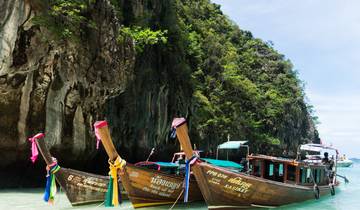
Accessing Railay requires understanding the peninsula’s unique geography—towering cliffs create complete mainland separation accessible exclusively via longtail boat from Ao Nang Beach or Krabi Town. This boat-only access eliminates vehicle traffic creating peaceful atmosphere and pristine beaches, though complicating arrival logistics for travelers with substantial luggage. The standard approach takes taxi from Phuket to Krabi area (3-4 hours, ฿3,500-4,500 private taxi) or more economical minivan transfer (฿350-500 per person, 4.5 hours with multiple hotel pickups), then longtail boat from Ao Nang’s western beach ฿100-200 per person to Railay’s East or West beaches depending on accommodation location. The boat transfer operates continuously during daylight hours 8:00 AM-6:00 PM, though afternoon timing risks encountering strong winds creating uncomfortable choppy crossings especially during transitional seasons.
Railay divides into four beach areas each offering distinct character despite the peninsula’s compact 2-kilometer length. Railay West features the finest swimming beach with powdery white sand, calm waters, stunning sunset views, and highest concentration of mid-range and upscale accommodation ฿3,500-27,000 nightly. Railay East operates as the arrival pier and backpacker center with budget bungalows ฿1,000-2,500, climbing schools, reggae bars, and mangrove-backed beach unsuitable for swimming creating atmosphere focused on activities rather than beach lounging. Phra Nang Beach at the peninsula’s southern tip delivers Thailand’s most photographed beach scenery with Princess Cave shrine, dramatic cliff backdrops, and day-tripper crowds 10:00 AM-4:00 PM departing evenings for near-private conditions. Tonsai Beach adjacent to Railay offers hardcore climber hangout with cheapest accommodation ฿800-1,800 nightly and minimal tourist development maintaining authentic adventure traveler atmosphere.
Railay Beach Accommodation Guide for 2026
Railay accommodation selection requires balancing beach access, facility quality, and pricing across the peninsula’s limited property options compared to Phuket’s extensive hotel inventory. Beachfront Railay West properties command extreme premiums ฿8,000-27,000 nightly with luxury resorts like Rayavadee (฿18,000-27,000) and Railay Bay Resort & Spa (฿8,000-15,000) offering direct sand access, infinity pools, and comprehensive spa facilities justifying costs for honeymoon couples and luxury travelers. However, Railay’s compact size means properties 200-300 meters from beach still reach sand within 5-minute walks, creating opportunities for mid-range ฿3,500-6,000 hotels delivering modern rooms, pools, and quality breakfast without beachfront premium charges.
Budget travelers face Railay’s steepest challenges as basic bungalow options ฿1,000-2,500 concentrate in highland areas requiring climbing steep stairs and paths reaching accommodations, acceptable for young backpackers though challenging for families or travelers with mobility limitations. Properties like Railay Garden View Resort (฿2,000-3,500) and Avatar Railay (฿2,500-4,000) occupy middle ground providing modern air-conditioned rooms with pools at prices enabling couples and families to experience Railay without extreme luxury budgets or basic backpacker conditions. These mid-range options represent optimal value for 7-10 day beach itineraries where accommodation quality significantly impacts overall satisfaction yet travelers resist allocating majority of budgets to nightly room charges.
The alternative Ao Nang base strategy stays in Krabi’s developed beach town ฿1,500-5,000 nightly with superior accommodation value and restaurant selection compared to Railay’s limited options and inflated pricing, then visits Railay via daily longtail boat ฿100-200 round trip for beach access and climbing activities. This approach works excellently for budget travelers maximizing accommodation value and families wanting diverse dining choices beyond Railay’s limited restaurant scene. However, sacrificing Railay’s sunset atmosphere and evening tranquility after day-trippers depart represents genuine trade-off rather than clear optimization, making the choice dependent on whether travelers prioritize financial efficiency or experience immersion.
Four Islands Tour and Krabi Area Day Trips 2026
Four Islands tours operate as Krabi area’s signature day trip, visiting Phra Nang Cave Beach, Tup Island with its remarkable sandbar connecting to Chicken Island visible only during low tide, Poda Island for swimming and snorkeling, and extensive snorkeling at coral reefs surrounding the islands. Tours run 9:00 AM-4:00 PM via longtail boat (slower traditional experience, ฿1,200-1,500) or speedboat (faster with more distant reef access, ฿1,800-2,200), including hotel pickup from Ao Nang or Railay, lunch, snorkeling equipment, and national park entry fees. The longtail boat option delivers authentic Thai experience with characteristic engine noise and moderate speed enabling better scenery appreciation versus speedboats focused on maximizing distance covered, though sensitive travelers may find 6-7 hours on traditional boats uncomfortable compared to speedboats’ padded seating and smoother ride quality.
Hong Islands tours provide alternative full-day option visiting Hong Lagoon’s hidden interior accessible through narrow cliff passage, multiple snorkeling locations with excellent coral health and fish populations, and less-crowded beaches than Four Islands route popular with Chinese and Russian tour groups. Hong Islands tours cost similarly ฿1,500-2,200 with speedboat options commanding premiums, though smaller group sizes (typical maximum 20-25 versus Four Islands tours accommodating 30-40) create more relaxed atmosphere and easier water access without competing for snorkeling space. The choice between Four Islands and Hong Islands depends primarily on schedule as most operators run Four Islands tours daily while Hong Islands operate 3-4 times weekly, making advance booking advisable for Hong Islands preference.
James Bond Island (Khao Phing Kan) tours operate from Phang Nga Bay 90 minutes north of Krabi, visiting the iconic limestone tower featured in “The Man with the Golden Gun” now overwhelmed by tourist boats and vendors though still delivering impressive geology worth experiencing once. Tours cost ฿1,500-2,200 including sea canoe paddling through limestone caves, Muslim fishing village visit providing cultural component beyond pure nature appreciation, and lunch at village restaurant. The extended distance and longer day (8:00 AM-5:30 PM) makes this optional rather than essential for 7-day itineraries already incorporating Phi Phi Islands limestone scenery, though 10-day trips easily accommodate the additional perspective on Phang Nga Bay’s unique geography.
Days 4-7 Krabi Costs Breakdown 2026
Accommodation ฿4,000-108,000 for four nights depending on Railay luxury resorts versus Ao Nang mid-range hotels, Phuket to Krabi transfer ฿350-4,500 per person depending on shared minivan versus private taxi, longtail boat transfers Ao Nang to Railay ฿400-800 round trip across four days, Four Islands or Hong Islands tour ฿1,500-2,200 per person, remaining meals ฿2,000-6,000 for four days (eight meals at ฿250-750 each), optional rock climbing instruction ฿1,500-2,500 for half-day beginner course. Total 4-day Krabi cost: ฿9,750-125,000 per person with mid-range travelers spending ฿18,000-35,000 enabling comfortable Railay stay with quality island tour participation.
Optional Days 8-10: Extending Phuket or Krabi Experience
Extended 10-day beach itineraries allocate additional days either extending Phuket or Krabi segments based on personal preferences and specific interests beyond the core 7-day framework. Travelers prioritizing diverse beach experiences and comprehensive island tour participation favor Phuket extensions enabling Similan Islands diving day trips (฿3,500-5,500 including three dives, equipment, lunch), Phang Nga Bay kayaking tours (฿2,500-3,500 including John Gray’s famous Batcaves sea canoeing), or exploring Phuket’s less-developed northern beaches like Nai Yang and Mai Khao offering authentic Thai atmosphere despite proximity to airport. These additional activities justify three extra Phuket nights creating 6-day Phuket, 4-day Krabi balanced itinerary maintaining primary emphasis on Thailand’s most developed beach infrastructure.
Alternatively, adventure-focused travelers extend Krabi segment enabling multi-day rock climbing progression building skills across beginner to intermediate routes, comprehensive exploration of Railay’s four beaches and extensive hiking trails connecting peninsula areas, or adding overnight Koh Lanta extension via 2-hour ferry (฿350-500) for quieter family beach atmosphere and excellent diving access to Hin Daeng and Hin Muang pinnacles. The Krabi extension suits travelers seeking deeper destination immersion versus broad sampling, with 3-day Phuket, 7-day Krabi/Koh Lanta itinerary providing escape from tourist crowds while maintaining Phuket’s initial orientation and Phi Phi Islands tour convenience.
The strategic approach recognizes diminishing returns from adding excessive destinations to limited timeframes, as rushing between five islands within 10 days creates constant packing, ferry transfers, and accommodation check-ins consuming valuable beach hours. Quality depth exploration of 2-3 locations delivers superior experiences and lasting memories versus superficial visits to 5-6 destinations producing confused recollections without distinctive character association. The optional extension days enable personalizing standard 7-day framework rather than adding compulsory destinations to already comprehensive beach coverage.
Thailand Beach Season Guide 2026: Weather and Timing Strategy
Thailand’s Andaman coast experiences distinct seasonal patterns dramatically affecting beach vacation quality beyond simple crowd and pricing considerations emphasized in promotional materials. November through February represents absolute peak season with consistent sunshine, calm seas enabling reliable ferry schedules, comfortable temperatures 28-31°C avoiding extreme heat, and excellent underwater visibility 20-30 meters for snorkeling and diving. This period delivers optimal beach conditions justifying 40-50% accommodation premiums and advance booking requirements 2-3 months ahead for quality properties, though Christmas-New Year weeks command additional peak surcharges and near-universal minimum stay requirements (3-7 nights) limiting flexibility for shorter trips.
March through April shoulder season maintains excellent weather with increasing temperatures reaching 33-35°C daily maximums creating oppressive midday heat limiting beach activities to morning and late afternoon hours. The intense heat reduces tourist crowds creating opportunity for moderate accommodation discounts 15-25% below peak season while maintaining reliable weather for planned activities, though realistic pacing accounts for heat exhaustion risks forcing multiple daily breaks in air-conditioned spaces. April represents Thailand’s hottest month making it suitable only for heat-tolerant travelers comfortable with extreme tropical conditions, while March provides transition maintaining reasonable temperatures for most Western visitors.
May through October monsoon season fundamentally changes beach vacation planning from confident advance bookings to day-by-day weather adaptation. Afternoon thunderstorms occur most days during July-September peak monsoon months, though morning hours frequently deliver sunshine enabling beach activities before typical 2:00 PM-5:00 PM rainfall windows. The monsoon’s real impact affects ferry reliability with rough seas causing frequent cancellations eliminating island hopping guarantees, swimming safety from strong currents and winds, and diving visibility reduction to 10-15 meters from river runoff and plankton blooms. These limitations create 50-60% accommodation discounts and near-empty beaches appealing to adventurous budget travelers accepting weather uncertainties, though families and luxury travelers gain little benefit from savings offset by activity cancellations and reduced experience quality.
Monthly Weather Breakdown Thailand Beaches 2026
January and February deliver Thailand beach perfection with 2-3 rain days monthly, calm seas, 29-31°C temperatures, and peak tourist crowds requiring advance bookings though justifying premium pricing through reliable conditions. March continues excellent weather with rising heat 32-34°C and reduced crowds as European winter holidaymakers depart, creating optimal value combining good weather with moderating prices. April experiences extreme heat 34-36°C with occasional pre-monsoon storms increasing clouds and humidity, suitable for heat-tolerant travelers gaining value through 20-30% accommodation discounts versus peak season.
May marks monsoon onset with increasing rainfall frequency though typically brief afternoon showers rather than all-day rain, temperatures moderating to 31-33°C, and beginning ferry schedule reductions to Phi Phi Islands and Similan diving areas. June through August delivers full monsoon conditions with daily afternoon thunderstorms, rough seas frequently canceling ferries and island tours, strong winds creating swimming hazards, and dramatic accommodation discounts 50-60% attracting budget travelers comfortable with activity limitations. September and October represent peak monsoon months with heaviest rainfall potentially creating multi-day continuous storms, though October’s late-month transition begins improving conditions as November approaches.
November’s early weeks maintain monsoon risks requiring flexible planning, while mid-to-late November transitions to reliable weather beginning high season’s gradual pricing increases and booking demand acceleration. December combines excellent weather with Christmas holiday crowds and peak pricing, though post-New Year January maintains superior weather without December’s extreme premiums and minimum stay requirements complicating shorter trips.
Ferry and Transportation Guide Thailand Islands 2026
Understanding Thailand’s Andaman coast ferry network enables efficient island hopping avoiding costly mistakes and unnecessary transport complications. The primary route connects Phuket’s Rassada Pier to Phi Phi Islands’ Tonsai Pier with multiple daily departures 8:30 AM-2:30 PM via standard ferries (90 minutes, ฿450-600) and speedboats (50 minutes, ฿700-800), with return services 9:00 AM-3:00 PM maintaining schedule symmetry enabling same-day round trips for day tour participation. All Phi Phi Islands visitors pay mandatory ฿400 entry fee (฿200 children under 11) collected by officials upon arrival separately from ferry tickets, catching many travelers unprepared without sufficient cash despite widespread advance warning in booking confirmations.
The Krabi to Phi Phi Islands connection operates similarly from Klong Jilad Pier with 8:00 AM-3:00 PM departures (2 hours, ฿350-500 standard ferry, 90 minutes ฿600-800 speedboat), providing alternative access for Krabi-based travelers without backtracking to Phuket. The ferry schedules enable day trips from either Phuket or Krabi returning same afternoon, though Phuket’s organized day tour packages (฿1,800-2,500 including transport, activities, and lunch) deliver superior value versus independent ferry tickets plus separate activity arrangements totaling similar costs without tour logistics convenience.
Phuket to Krabi overland transfer requires understanding the no direct ferry connection exists between these mainland locations despite both being coastal destinations. The route traverses interior via road transport taking 3-4 hours through scheduled minivans (฿350-500 per person with multiple hotel pickups extending duration) or private taxi (฿3,500-4,500 for vehicle, faster without pickup stops). Large tour operators and hotels arrange these transfers directly, while independent travelers book through online platforms like 12Go.asia or arrange at hotel reception desks ubiquitous throughout tourist areas. The timing typically follows morning departures 8:00 AM-10:00 AM enabling lunchtime Krabi arrival and afternoon beach exploration, though flexible scheduling accommodates various preferences without rigid departure times limiting planning.
Longtail Boat Navigation Railay and Islands 2026
Longtail boats operate as primary local transport throughout Krabi area, with understanding their systems preventing overcharging and navigation confusion. Ao Nang to Railay boats depart western Ao Nang beach continuously during daylight hours 8:00 AM-6:00 PM charging standardized ฿100-150 per person depending on season and passenger volume, with drivers sometimes requesting ฿200 for solo travelers though negotiation usually achieves standard rates. The 10-minute journey arrives at either Railay East (rougher mangrove beach, budget accommodation zone) or Railay West (swimming beach, upscale resorts) depending on passenger destinations, with drivers confirming drop-off locations before departure avoiding confusion requiring inconvenient peninsula crossings with luggage.
Boats typically wait for 8-10 passengers before departing rather than operating on fixed schedules, creating 15-30 minute waits during slow periods though high season demand produces nearly continuous service. The efficiency varies dramatically between 10:00 AM-4:00 PM peak hours seeing boats departing every 10-15 minutes versus early morning or evening edge hours potentially requiring 45-minute waits accumulating sufficient passengers. Travelers on tight schedules should factor these potential delays into planning, especially for Railay departures catching Krabi to Phuket transfers requiring punctual arrival at scheduled minivan pickups.
Inter-island longtail boat charters enable custom beach access beyond standard ferry routes, with private boats costing ฿1,500-3,000 for half-day trips visiting 3-4 beaches and snorkeling locations selected by passengers. These charters suit small groups (4-8 people) dividing costs achieving per-person rates competitive with organized tours while gaining flexibility impossible in large group environments. The boats accommodate maximum 8-10 passengers safely, with operators found at all major beaches negotiating directly without requiring advance bookings though high season advance arrangements via hotel concierge ensure boat availability during peak demand periods.
Accommodation Booking Strategy Thailand Beaches 2026
Strategic accommodation booking balances advance reservations ensuring availability against maintaining flexibility for weather-dependent itinerary adjustments, with the optimal approach varying by season and traveler risk tolerance. High season November-March travel demands booking quality beachfront properties 1-3 months ahead as premium inventory sells out entirely during peak weeks, while less-desirable inland hotels remain available providing last-minute accommodation safety nets though representing significant quality compromises versus advance planning securing optimal properties. The Christmas-New Year period requires 3-6 month advance bookings for anything beyond basic budget accommodation, with many resorts implementing 5-7 night minimum stays and 100% advance payment requirements eliminating flexibility completely.
Shoulder season March-April and October-November booking benefits from 2-4 week advance reservations capturing moderate discounts while maintaining cancellation flexibility, as this period sees neither peak season sell-outs nor monsoon season deep discounts creating booking urgency. The strategy books refundable rates where available (typically 10-15% premium over non-refundable advance purchase rates) enabling weather-based cancellations and destination modifications if forecasts indicate unfavorable conditions. Many hotels offer free cancellation until 2-7 days before arrival, providing weather monitoring window while securing provisional accommodation preventing last-minute scrambles during unexpectedly busy periods.
Monsoon season June-October enables complete last-minute booking as accommodation availability remains ample with properties offering spontaneous discounts through walk-in negotiations or day-of-arrival online bookings. This flexibility proves essential given ferry cancellations and weather disruptions making rigid advance itineraries impractical, though travelers should maintain backup plans including alternative accommodations and activity options adapting to daily weather realities. The spontaneous approach occasionally discovers exceptional value as premium properties offer significant discounts filling inventory during slow periods, though requires comfort with uncertainty unsuitable for travelers preferring structured advance planning.
Beachfront Versus Inland Location Analysis 2026
The beachfront versus inland accommodation decision significantly impacts budget and daily convenience requiring careful analysis beyond simple “closer is better” assumptions. Beachfront properties charge 50-150% premiums over hotels 200-500 meters inland, with the gap widening in prime locations like Railay West where beachfront rooms command ฿12,000-27,000 versus ฿4,000-8,000 for similar quality properties 300 meters back. The premium proves worthwhile for travelers valuing morning beach walks before crowds, sunset views from balconies, and immediate swimming access, though represents questionable value for active travelers spending days on island tours returning to accommodation only for sleeping.
Inland properties frequently offer superior facilities at equivalent price points compared to beachfront alternatives, as development constraints along prime beach roads limit expansion space for pools, gyms, and gardens that inland hotels accommodate easily. Budget travelers especially benefit from inland choices gaining modern rooms with pools at ฿2,000-3,500 versus basic beachfront bungalows lacking amenities at ฿3,500-5,000, with the 5-10 minute beach walks representing negligible inconvenience offset by substantial facility improvements. The calculation changes for families with young children where beachfront access eliminates multiple daily walks with beach equipment, though still warrants realistic assessment whether premium charges justify convenience versus accepting short walks saving significant money.
The “near beach but not on it” middle ground captures optimal value in many locations, with properties 100-200 meters back achieving 5-minute walks while avoiding extreme beachfront premiums. These hotels often occupy quieter streets reducing traffic noise and pedestrian flow creating more peaceful environments versus beachfront locations’ constant activity, appealing to travelers seeking tranquility rather than social atmosphere. The sweet spot typically exists in ฿3,500-6,000 range providing quality rooms, pools, breakfast, and beach proximity without luxury pricing or budget compromises.
Dining Guide Thailand Beach Destinations 2026
Thailand beach dining spans street food carts selling fresh grilled seafood at ฿150-300 per person to upscale beachfront restaurants charging ฿800-1,500 for multi-course dinners, with strategic selection enabling excellent meals across all budget levels avoiding tourist traps common throughout developed beach areas. Beachfront restaurants with sand-level seating and sunset views charge 30-50% premiums over identical food at establishments 50-100 meters inland, though many travelers happily accept the surcharge for atmosphere creating memorable dining experiences beyond pure nutritional requirements. The calculation becomes less clear when “beachfront” means plastic chairs on narrow sand strips between restaurants rather than expansive beach settings, making advance reconnaissance valuable before committing to premium-priced mediocre-atmosphere venues.
Fresh seafood represents Thailand beach dining highlight with catches displayed on ice at restaurant fronts enabling selection before preparation, typical pricing ฿400-800 per kilogram for fish (grilled, steamed, or fried), ฿600-1,200 per kilogram for prawns, ฿300-600 per kilogram for squid. The ordering process weighs selected items calculating costs before cooking, preventing bill shock common when ordering by portion without price awareness. Smart diners verify cooking method pricing (typically no charge for grilling though sometimes ฿50-100 preparation fees) and portion size suitability (one kilogram fish serves 2-3 people easily), with restaurant staff generally honest about quantities though occasional tourist-targeted establishments push excessive portions requiring firm pushback.
Thai restaurant meals cost ฿150-400 per person for typical 2-3 dish sharing with rice at mid-range establishments, with similar food at beachfront locations reaching ฿250-600 for identical preparations. Pad Thai costs ฿80-200 depending on restaurant type and beachfront surcharge, green curry ฿120-280, tom yum soup ฿150-350, and fried rice ฿80-180, creating full meals under ฿300 per person at non-beachfront restaurants versus ฿450-700 beachfront. The quality differences rarely justify premiums beyond atmosphere value, as Thai cooking standards remain consistent with preparation techniques and ingredient sourcing similar across price points unlike Western cuisines where expensive restaurants access superior ingredients justifying costs.
Budget Dining Strategies Thailand Beaches 2026
Budget-conscious travelers achieve substantial food savings through strategic timing and location selection without quality sacrifices. Lunch specials at beachfront restaurants often match non-beachfront dinner prices (฿150-300 per person) while delivering identical sunset views during late afternoon dining, effectively gaining atmosphere premium gratis through off-peak timing. The approach suits travelers comfortable with 4:00 PM-5:00 PM dinner timing capturing golden hour lighting without evening restaurant rush, though requires abandoning traditional 7:00 PM-8:00 PM Western dinner schedules.
Market and street food in Phuket’s Chillva Market, Krabi Town walking street, and Ao Nang night market delivers authentic Thai dishes ฿40-100 per item with same quality as tourist restaurant ฿150-300 preparations, requiring willingness to eat among locals at plastic tables rather than beachfront ambiance. These markets operate evenings 5:00 PM-11:00 PM providing convenient dinner options for accommodation located near market areas, though distances from beach zones sometimes require taxi rides partially offsetting food savings through transport costs. The calculation favors markets for travelers staying Krabi Town or Phuket Town rather than beach resort areas where market access complications eliminate convenience advantages.
7-Eleven and Family Mart convenience stores throughout all beach areas stock fresh sandwiches, salads, fruit, and prepared meals ฿35-120 enabling ultra-budget eating or quick breakfast/lunch options, with 24-hour operations providing flexibility for early morning beach walks or late-night snacks. While obviously inferior to restaurant dining for vacation atmosphere, convenience store meals prove practical for budget travelers maximizing accommodation and activity spending while minimizing food costs, or travelers wanting light meals between larger restaurant experiences rather than three heavy daily restaurant commitments.
Beach Safety and Practical Considerations 2026
Thailand beach safety requires understanding monsoon season swimming hazards creating dangerous conditions even experienced swimmers underestimate. June through October strong currents and undertows pull unwary swimmers away from shore, with annual drowning incidents concentrated during this period when tourists ignore red flag warnings trusting personal swimming abilities. The flags represent actual daily conditions assessed by lifeguards familiar with local current patterns, not theoretical precautions ignored without consequence. Red flag prohibitions deserve absolute respect with violations literally risking death regardless of swimming proficiency, as unpredictable rip currents overcome even strong swimmers once caught in flows.
Jellyfish blooms occur periodically throughout the year though concentrate May-October during monsoon season, with box jellyfish (potentially fatal) less common than blue bottle jellyfish (painful but not life-threatening). Vinegar stations on popular beaches provide immediate treatment for stings, though severe reactions require urgent medical attention at island clinics or mainland hospitals. The prevention strategy avoids swimming during jellyfish warning periods announced at beaches and hotels, accepting disappointing limitations rather than risking painful or dangerous stings ruining vacation enjoyment through preventable beach access violations.
Sun protection requires realistic understanding of tropical UV intensity far exceeding temperate climate exposure. SPF 50+ sunscreen applied hourly prevents painful burns affecting multi-day beach vacations, with post-swim reapplication essential despite “water-resistant” marketing claims. Wide-brimmed hats, UV-protection rash guards, and beach umbrella use reduce direct sun exposure during peak 11:00 AM-3:00 PM hours when UV index reaches extreme levels causing burns within 15-20 minutes unprotected. The aggressive sun protection appears excessive initially though prevents painful experiences forcing indoor confinement for burned vacation days teaching expensive lessons about tropical sun intensity versus temperate summer conditions.
Medical Facilities and Insurance Thailand Beaches 2026
Phuket maintains excellent medical facilities including Bangkok Hospital Phuket and Phuket International Hospital providing Western-standard care with English-speaking doctors and international insurance direct billing, though services cost significantly more than Thai public hospitals serving primarily local populations. Private hospital emergency room visits cost ฿3,000-8,000 for basic consultations, with serious injuries or illnesses rapidly accumulating ฿50,000-200,000+ bills requiring insurance coverage or substantial cash/credit reserves. The private hospitals deliver superior care and communication compared to public alternatives, justifying costs for foreign travelers unfamiliar with Thai medical systems and language.
Krabi’s medical facilities downgrade from Phuket standards though Bangkok Hospital Krabi and Krabi Nakharin International Hospital provide adequate care for common tourist injuries and illnesses. Smaller islands like Phi Phi and Railay operate basic clinics handling minor issues though requiring boat evacuation to mainland for serious conditions, creating complications during rough seas when ferry transport becomes risky. Travelers with pre-existing conditions or participating high-risk activities like diving should strongly favor Phuket or Krabi mainland stays over remote island accommodations limiting medical access during emergencies.
Travel insurance proves essential for Thailand beach vacations covering medical emergencies, evacuation costs, and trip interruptions from weather cancellations. Comprehensive policies cost ฿2,000-4,000 for week-long trips covering ฿3,000,000+ medical expenses, emergency evacuation, trip cancellation from weather events, and lost luggage. Budget policies excluding trip cancellation reduce costs ฿1,200-2,000 though sacrifice protection against ferry cancellations and weather disruptions common during shoulder and monsoon seasons. Adventure activity coverage for diving, rock climbing, or water sports requires specific policy additions typically adding ฿500-1,000 to base premiums, though coverage proves critical for activities creating significantly higher injury risks than beach lounging.
Frequently Asked Questions Thailand Beach Itinerary 2026
How do I get from Phuket to Krabi and Railay Beach in 2026?
Travel from Phuket to Krabi area requires overland transport as no direct ferry operates between these mainland locations despite both being coastal destinations. Scheduled minivans (฿350-500 per person, 4.5-5 hours with multiple hotel pickups) provide economical option with 3-5 daily departures from major Phuket beach areas, bookable through hotels, tour agencies, or online platforms like 12Go.asia enabling advance reservations. Private taxi transfer (฿3,500-4,500 for vehicle accommodating 3-4 passengers) reduces journey to 3-3.5 hours eliminating pickup stops while providing door-to-door convenience, optimal for families with luggage or travelers prioritizing time efficiency over cost savings. From Ao Nang or Krabi Town, longtail boats to Railay Beach operate continuously 8:00 AM-6:00 PM (฿100-200 per person, 10-15 minutes) from western Ao Nang beach or Nopparat Thara pier, with hotels arranging coordinated transport from minivan arrival points to boat departure locations eliminating navigation confusion during transfers between transport modes.
Is it better to stay in Railay Beach or Ao Nang for 2026?
Railay Beach and Ao Nang each offer distinct advantages creating different optimal choices depending on traveler priorities and budgets. Railay Beach delivers superior beach quality with dramatic limestone cliff scenery, car-free tranquil atmosphere, excellent swimming conditions at Railay West, and unmatched natural beauty creating premium destination experience, though commanding higher accommodation costs (฿3,500-27,000 nightly) and limited restaurant selection with inflated pricing due to boat-transport logistics increasing all supply costs. Ao Nang provides better value accommodation (฿1,500-5,000 for equivalent quality versus Railay alternatives), extensive restaurant and shop selection along beach road, easier access to Krabi mainland activities and facilities, and simpler logistics without boat-transfer complications, though the developed beach town atmosphere and inferior swimming beach (rocky areas and longtail boat traffic) sacrifice Railay’s pristine natural environment. Budget travelers and families benefit from Ao Nang’s superior infrastructure and dining variety, making daily Railay visits via ฿100-200 longtail boats while maintaining cost-effective mainland accommodation. Honeymooners, luxury travelers, and those prioritizing natural beauty over convenience justify Railay’s premium positioning their limited beach days in optimal environments despite higher costs and logistical limitations.
Can you visit Phi Phi Islands without staying overnight in 2026?
Day trips from Phuket to Phi Phi Islands operate successfully as the standard visiting approach for most travelers, with organized tours (฿1,800-2,500 per person) departing 8:00 AM-8:30 AM from Phuket beaches via speedboat reaching Phi Phi Islands by 9:30 AM-10:00 AM for full day of activities returning 5:00 PM-5:30 PM. These tours include speedboat transport, Maya Bay visit (timed for optimal photography before afternoon tour boat crowds), Pileh Lagoon swimming, snorkeling at multiple locations, lunch on Phi Phi Don, and hotel pickup/drop-off creating comprehensive experience without requiring overnight accommodation. Independent day trips via standard ferry (฿450-800 round trip plus ฿400 mandatory island entry fee) work for confident travelers comfortable arranging island activities upon arrival though total costs approach organized tour prices without logistics convenience and coordinated island access. The day trip approach proves superior to overnight stays for 7-day beach itineraries as Phi Phi accommodation delivers poor value (฿2,000-8,000+ nightly for quality matching ฿1,500-4,000 mainland properties) with limited dining options and island fees making extended stays economically inefficient unless allocating 10+ days enabling leisurely multi-day Phi Phi immersion. Overnight Phi Phi stays suit travelers wanting sunset atmosphere after day-trippers depart and morning beach walks before tour boats arrive, though representing luxury time allocation rather than practical necessity for comprehensive island experience.
What is the best beach in Phuket for families with children in 2026?
Kata Beach provides Phuket’s optimal family beach environment combining gentle swimming conditions, quality sand ideal for sandcastle building, compact 1.5-kilometer length enabling easy supervision, and surrounding infrastructure including restaurants, shops, and medical facilities within easy walking distance. The beach’s gradual depth progression allows safe wading for young children far from shore, while October-April high season delivers calm conditions without dangerous currents plaguing Patong Beach during southwest monsoon months. Family-oriented resorts concentrate in Kata area offering kids clubs, connecting rooms, and beachfront access at ฿3,500-8,000 nightly including properties like Kata Beach Resort, Sugar Marina Resort, and Boathouse operating children’s programs and family-focused amenities. Karon Beach immediately north provides alternative larger beach (3 kilometers) with similar calm conditions and less commercial development than Kata, though further distances between facilities create walking complications for families with young children or substantial beach equipment. Patong Beach attracts some families drawn by activity options and extensive facilities, though the crowded atmosphere, active nightlife spillover, and occasionally dangerous swimming conditions during monsoon transitions make it suboptimal versus Kata’s superior swimming safety and family atmosphere. Bang Tao and Laguna area in northern Phuket delivers luxury family resort complexes with integrated facilities (pools, kids clubs, restaurants) though distance from Phuket’s attractions and premium pricing (฿8,000-25,000 nightly) limit appeal beyond affluent travelers prioritizing resort experience over exploring Phuket’s broader offerings.
How much money should I budget daily for Thailand beach vacation in 2026?
Daily Thailand beach budgets in 2026 range ฿3,000-12,000+ per person depending primarily on accommodation selection and activity participation, with realistic mid-range allocation of ฿6,000-8,000 enabling comfortable experiences without luxury positioning or budget compromises. Budget travelers spending ฿3,000-4,500 daily allocate ฿1,200-2,000 accommodation (guesthouse or budget hotel), ฿800-1,200 meals (mix of street food and casual restaurants), ฿500-800 activities and transport, and ฿500 buffer for incidentals, creating sustainable week-long trips ฿21,000-31,500 total without feeling deprived though accepting basic facilities and limited premium experiences. Mid-range travelers at ฿6,000-9,000 daily budget ฿3,500-5,500 resort accommodation with pools and breakfast, ฿1,500-2,500 dining at mix of beachfront and casual restaurants, ฿1,000-2,000 organized island tours and activities, maintaining comfort and experience quality without entering luxury pricing. Luxury travelers exceeding ฿10,000 daily occupy beachfront villas (฿10,000-27,000+ nightly in Railay or premium Phuket properties), dine primarily at resort restaurants and upscale beachfront establishments, book premium small-group tours and private boat charters, and add spa treatments and water activities, easily reaching ฿15,000-20,000+ daily when prioritizing optimal experiences across all vacation components. These estimates include accommodation, all meals, transport, activities, and incidental purchases but exclude international flights, extensive shopping beyond basic souvenirs, diving certification courses, or optional premium add-ons like helicopter transfers or private yacht full-day charters.
Are Thailand beaches safe for swimming year-round in 2026?
Thailand’s Andaman coast beaches deliver safe swimming conditions November through April during high season when calm seas, minimal currents, and consistent lifeguard presence create low-risk environment for swimmers of all ability levels. Red and yellow flag warning systems operate at all major beaches indicating daily conditions, with green flags signaling safe swimming, yellow flags requiring caution, and red flags prohibiting water entry due to dangerous currents and rough seas. Swimming safety deteriorates significantly May through October during monsoon season as strong currents, undertows, and unpredictable conditions create hazards even experienced swimmers underestimate, with annual drowning incidents concentrated during this period from tourists ignoring red flag warnings. Patong Beach, Kata Beach, Karon Beach, and Ao Nang maintain lifeguard coverage year-round though May-October sees reduced supervision and equipment availability reflecting decreased visitor numbers and challenging conditions. Railay beaches lack formal lifeguard services relying on informal community oversight making personal responsibility critical for safe swimming assessment, with Railay West generally safe during calm conditions while Railay East’s mangroves and rocky bottom make it unsuitable for swimming regardless of season. Phi Phi Islands beaches show high variability with sheltered bays like Maya Bay (when open) and Long Beach maintaining swimmable conditions even during monsoon season while exposed areas experience dangerous waves and currents requiring daily condition assessment before entering water. The monsoon season swimming risks prove manageable for alert travelers respecting warning flags and limiting water activities to calm morning hours before afternoon weather deterioration, though families with young children and inexperienced swimmers should strongly favor November-April travel eliminating safety concerns through seasonal timing rather than gambling with variable monsoon conditions.
Do I need to book Phi Phi Islands tours in advance for 2026?
Phi Phi Islands tour advance booking proves unnecessary during most seasons as operator availability exceeds demand outside Christmas-New Year and Chinese New Year holiday weeks, though 2-3 day advance reservations ensure preferred departure times and operator selection at optimal pricing. High season December-February booking 5-7 days ahead secures quality operators before Chinese and Russian group tour blocks consume inventory, with premium small-group tours (maximum 15 people at ฿3,500-4,500) requiring 1-2 week advance reservations during peak periods. Booking through hotel tour desks, reputable online platforms like GetYourGuide or Viator, or directly with established operators like Simba Sea Trips and Seastar Andaman delivers superior experience versus last-minute street agency bookings pressuring tourists into budget operators cutting costs through overcrowding, poor equipment, and rushed itineraries. The advance booking approach enables researching operator reputations through TripAdvisor or Google reviews identifying quality providers, comparing pricing across platforms (direct operator bookings sometimes offer discounts versus third-party commissions), and securing morning departure times providing optimal Maya Bay access before afternoon crowds and ideal snorkeling conditions in calm morning seas. Last-minute booking works acceptably during shoulder seasons March-April and October-November when availability remains ample though potentially sacrificing preferred timing or small-group premium tours already reaching capacity. Monsoon season June-September operates on uncertain schedules with weather-dependent daily cancellations making advance booking impractical, as tours confirm morning-of based on sea conditions requiring staying flexible and booking day-before maximum to assess next-day weather forecasts and operator confidence in safe departures.
What items should I pack specifically for Thailand beach vacation in 2026?
Essential Thailand beach packing includes reef-safe biodegradable sunscreen SPF 50+ (many Thai marine parks prohibit chemical sunscreens harming coral reefs), quick-dry beach clothing and swimwear (2-3 sets enabling rotation while others dry in humid tropical climate), waterproof phone case protecting against beach sand and water activities, lightweight long-sleeve UV-protection rash guard reducing sunscreen dependency during extended snorkeling, and compact microfiber beach towel drying faster than cotton alternatives. Practical additions include water shoes protecting against rocky beach areas and sea urchins common at Railay and some Phi Phi locations, wide-brimmed sun hat with chin strap preventing loss during boat transfers, reusable water bottle with filter reducing plastic waste and ensuring safe drinking water, basic first-aid supplies including anti-diarrheal medication, pain relievers, and bandages for minor cuts from coral or rocks, and motion sickness medication for ferry transfers especially during rougher monsoon season conditions. Beach-specific gear like snorkeling masks proves unnecessary as quality equipment inclusion in all island tours makes personal gear redundant, while beach umbrellas and chairs rent inexpensively (฿100-200 daily) at all beaches making transport impractical. Modest clothing covering shoulders and knees enables temple visits and respectful interaction with local communities, while waterproof dry bags protect electronics, documents, and cash during boat transfers between islands and beaches. Leave valuable jewelry, expensive watches, and excess electronics at home reducing loss anxiety and target profile for opportunistic theft, though Thailand beach areas generally maintain excellent safety without significant crime concerns affecting typical tourist experiences. The packing philosophy prioritizes lightweight versatility over comprehensive coverage, as Thailand’s ubiquitous convenience stores and beach vendors sell forgotten items from sunscreen to flip-flops at reasonable prices eliminating need for exhaustive advance preparation.
Can you rock climb at Railay Beach without prior experience in 2026?
Railay Beach’s extensive beginner-friendly routes and professional climbing schools enable first-time climbers experiencing rock climbing safely without requiring prior experience or specialized equipment. Half-day beginner courses (฿1,500-2,000 per person, 4-5 hours instruction) teach basic techniques, safety procedures, and belaying methods before attempting actual cliff ascents on easy-grade routes selected for beginner capability and minimal intimidation factors. These introductory courses include all equipment rental (harness, shoes, helmet, chalk bag, ropes), professional instruction from experienced guides maintaining international safety standards, and transportation to optimal beginner climbing areas within Railay peninsula or nearby Tonsai Beach. Popular climbing schools including Basecamp Tonsai, Highland Rock Climbing, and King Climbers operate year-round with English-speaking instructors familiar with nervous beginners, creating supportive learning environment rather than assuming prior athletic backgrounds or fearless mentalities common in advanced climbing communities. Full-day courses (฿2,500-3,500 per person) extend beginner instruction enabling progression to slightly more challenging routes building confidence through successful ascents on varied cliff faces and techniques. Multi-day packages (฿6,000-10,000 for 3-4 days) suit travelers dedicating significant Railay time to climbing progression from absolute beginner through intermediate skills, though single half-day or full-day experiences prove sufficient for tourists wanting climbing taste without committing multiple vacation days to instruction versus beach relaxation and island exploration. Independent climbing without instruction proves dangerous regardless of general athletic ability, as rock climbing’s specialized safety requirements and belaying techniques demand proper training preventing potentially fatal errors from enthusiastic but untrained attempts on Railay’s limestone cliffs.
Should I exchange money before arriving at Thailand beaches in 2026?
Exchanging money to Thai baht before arriving at Phuket or Krabi area proves unnecessary and typically delivers inferior exchange rates compared to Thailand’s ubiquitous ATM network and currency exchange services. International airports in Phuket and Bangkok offer competitive exchange rates within 1-2% of bank rates, with numerous exchange booths competing for customers creating reasonable pricing though slightly below optimal rates available at Bangkok’s Superrich and Bangkok Bank branches. ATMs throughout all beach areas accept international cards with ฿220 Thai bank fee per transaction regardless of amount withdrawn, making larger withdrawals (฿10,000-20,000) economically preferable to frequent small amounts accumulating proportionally higher fees. Credit cards gain widespread acceptance at hotels, restaurants, tour operators, and larger shops though 3% foreign transaction fees charged by most cards (excluding specific travel cards) plus merchant fees sometimes added at establishments reduce their cost-effectiveness versus cash for routine transactions. The optimal strategy carries modest initial cash (US$200-300 or equivalent) exchanged at Phuket airport upon arrival providing immediate taxi, meal, and incidental expenses, then utilizes ATMs for larger withdrawals as needed throughout trip monitoring daily spending rates. Notify credit and debit card issuers of Thailand travel dates preventing fraud blocks on foreign transactions that leave travelers without fund access, and carry backup cards stored separately from primary card providing redundancy during unlikely card loss, theft, or technical malfunction scenarios. Some remote locations like small Railay bungalow operations and beach vendors operate cash-only without ATM nearby, making adequate cash reserves essential before departing developed areas like Ao Nang where ATM access remains convenient.