Stari Most Mostar: UNESCO Old Bridge History & Divers Complete Guide
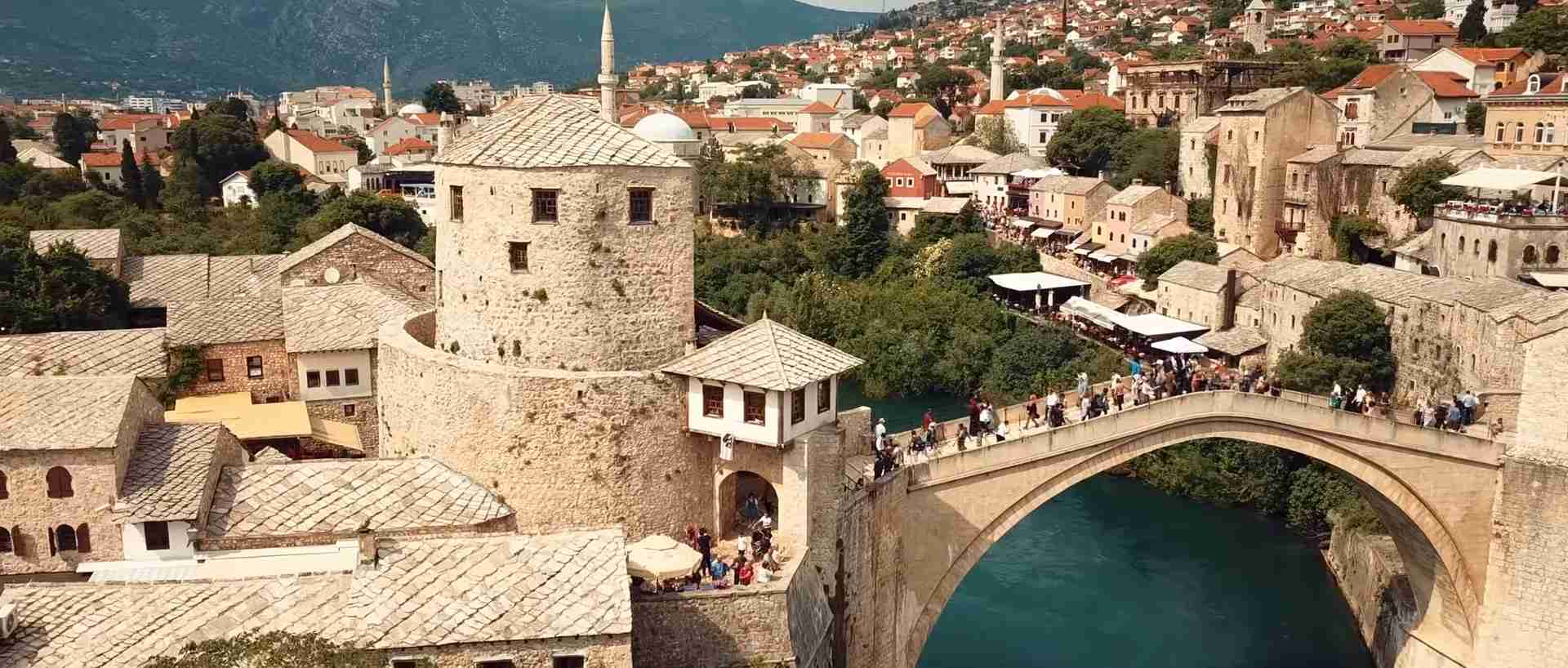
Stari Most, the magnificent 16th-century Ottoman bridge spanning the Neretva River in Mostar, Bosnia and Herzegovina, stands as one of the most iconic architectural achievements in the Balkans and a powerful symbol of resilience and reconciliation. Built in 1566 and reconstructed after wartime destruction, this UNESCO World Heritage Site captivates visitors with its elegant stone arch and the centuries-old tradition of bridge diving that transforms the monument into a living stage of courage and cultural heritage.
Key Takeaways: Understanding Stari Most
- Ottoman Masterpiece: Designed by Mimar Hayruddin, a student of the legendary architect Sinan, and completed in 1566 under Sultan Suleiman the Magnificent, the bridge represents the pinnacle of 16th-century Ottoman engineering with its 27-meter single arch spanning the Neretva River.
- Symbol of Reconciliation: Destroyed by Croatian forces in November 1993 during the Bosnian War and reconstructed through international cooperation led by UNESCO, the bridge reopened in July 2004 as a powerful symbol of peace, unity, and the restoration of multicultural heritage.
- UNESCO Recognition: The Old Bridge Area of the Old City of Mostar received UNESCO World Heritage designation in 2005, recognized for its exceptional Ottoman urban landscape and as a testament to human solidarity in the face of overwhelming catastrophe.
- Living Tradition: Bridge diving from Stari Most dates back to 1664 with the first recorded jump, creating a 450-year tradition that continues today through the Mostar Diving Club, whose members perform death-defying 24-meter plunges into the emerald Neretva River.
- Architectural Precision: The bridge measures 30 meters in length, 4 meters in width, and rises 24 meters above the summer water level, constructed entirely from local tenelija stone using medieval techniques that allowed it to support even Nazi tank crossings during World War II.
- Global Extreme Sport Stage: Since 2015, Mostar hosts the prestigious Red Bull Cliff Diving World Series each summer, attracting elite athletes from around the world who compete on 27-meter and 21-meter platforms, broadcasting this centuries-old tradition to millions of viewers globally.
People Also Ask About Stari Most Mostar
Why Is Stari Most Called the Old Bridge?
Stari Most translates directly to “Old Bridge” in the Bosnian language, a name that reflects both its historical significance and its defining role in Mostar’s identity. The bridge earned this designation through centuries of service connecting the two banks of the Neretva River, becoming so integral to the city that Mostar itself derives its name from the “mostari” — the bridge keepers who guarded the two fortified towers flanking the structure. The bridge stood for 427 years from its 1566 completion until its destruction in 1993, making it genuinely “old” in the context of continuous use and cultural memory. After reconstruction, the name took on additional layers of meaning: the new bridge deliberately replicates the old using medieval construction techniques and 1,088 stones individually carved to match the original, creating a structure that is simultaneously ancient in design and modern in physical age. The designation “Stari Most” thus honors both the historical monument that defined Mostar for four centuries and the reconstructed symbol that represents the city’s resilience and commitment to preserving its multicultural Ottoman heritage.
How Dangerous Is Jumping from Stari Most?
Jumping from Stari Most presents genuine physical risks that demand serious respect, with the 24-meter drop creating forces capable of causing severe injury or death when executed improperly. The primary danger stems from the physical phenomenon of spinal compression: when a diver’s body enters the water at high velocity, the submerged portion decelerates abruptly while the portion still airborne continues downward, compressing the vertebrae with tremendous force. Entering the water at any angle other than perpendicular — ideally at precisely 90 degrees — causes the body to bend on impact, potentially resulting in broken ribs, herniated discs, paralysis, or spinal fractures. The Neretva River itself adds complexity: the water temperature remains cold year-round at 10-12 degrees Celsius, the current flows swiftly beneath the deceptively calm surface, and the depth varies seasonally, changing the effective height of the jump. The river also contains submerged rocks and debris in certain areas, requiring precise entry points. Untrained individuals who climb the railings and jump without preparation have suffered serious injuries and deaths over the years. The Mostar Diving Club exists specifically to mitigate these dangers through rigorous training protocols, teaching proper body positioning, controlled breathing, mental preparation, and water entry technique. Professional club divers train for years, starting as children on lower platforms and progressing gradually. Even experienced divers regularly suffer strains, ligament damage, and impact injuries. The activity remains inherently dangerous despite safety measures, which is precisely what makes it a respected test of courage rather than casual entertainment.
What Happened to the Original Bridge During the War?
Croatian forces deliberately destroyed Stari Most on November 9, 1993, during the Bosnian War, targeting the bridge with sustained artillery bombardment that caused the elegant Ottoman arch to disintegrate and collapse into the Neretva River below. The destruction occurred during the Croatian-Bosniak conflict, a brutal phase of the larger Yugoslav Wars in which the city of Mostar became divided between Croatian-controlled western sections and Bosniak-held eastern neighborhoods. Bosnian Croat military commanders later admitted they specifically targeted the bridge because of its strategic importance, though post-war testimony from military experts established that Stari Most held no tactical military value whatsoever — the actual front line ran along a boulevard well outside the old town. The International Criminal Tribunal for the former Yugoslavia ultimately ruled that the destruction constituted a war crime causing disproportionate harm to the Muslim civilian community and violating principles protecting cultural heritage during armed conflict. The bridge’s annihilation shocked the international community, symbolizing the senseless destruction of cultural heritage in modern warfare and the deliberate erasure of shared multicultural identity. For the people of Mostar, losing Stari Most felt like losing a family member, extinguishing hope during months of relentless shelling. The bridge had survived two world wars intact — it was even mined with explosives during World War II but never detonated — making its destruction during the 1990s conflict particularly devastating. The rubble remained in the Neretva River for eleven years, a painful reminder of the war’s cultural devastation, until the reconstruction project restored the bridge to its former glory in 2004.
Can Tourists Jump from the Bridge with the Mostar Diving Club?
Tourists can participate in supervised bridge jumps through the Mostar Diving Club for approximately €25-35, though the experience requires serious commitment, physical capability, and strict adherence to safety protocols rather than casual participation. The club maintains exclusive authority over training and assessing potential jumpers, recognizing that improper jumps cause severe injuries. The process begins with visiting the Diving Club office near the bridge to pay the training fee and undergo initial evaluation. Instructors start participants on lower practice platforms — typically 7-10 meters high — where they assess body positioning, water entry technique, mental preparation, and overall capability. Only jumpers who demonstrate proper form and composure on practice platforms receive permission to attempt the full 24-meter jump from Stari Most itself. The training emphasizes perpendicular entry at exactly 90 degrees, controlled breathing to prevent water inhalation, keeping arms tight against the body to protect ribs, entering feet-first or in proper diving position, and managing the psychological challenge of stepping off the edge. Instructors also evaluate weather conditions, river depth, and water temperature before authorizing jumps. Successfully completing the jump grants lifetime membership in the Mostar Diving Club, allowing return visits without repeating the training fee. The club designed this rigorous process specifically for participant safety — the Neretva River may appear peaceful, but the cold, fast-moving water combined with the extreme height creates genuinely dangerous conditions. Attempting to climb over the railings and jump independently without club supervision is not merely discouraged but actively prevented, as unsupervised jumps have resulted in deaths and permanent injuries. The club’s goal is preserving both the tradition and the people who participate in it, treating bridge diving as a serious athletic and cultural practice rather than a tourist stunt.
Extended multi-day tours – 5+ days
Featured Mostar Multi-Day Tour Packages
7 days
Bosnia and Herzegovina: Wild Horses & City Sights
- ✓ Comprehensive Mostar tour
- ✓ Expert local guides included
- ✓ All accommodation arranged
- ✓ Transportation provided
4 days
Bosnia & Hercegovina and Montenegro; Semi – Private Tour with Dedicated Tour Leader & Car
- ✓ Booking needs min. 2 travelers
4 days
Dubrovnik Gateway – 3 nights 3 countries
- ✓ Comprehensive Mostar tour
- ✓ Expert local guides included
- ✓ All accommodation arranged
- ✓ Transportation provided
2 days
Mostar Discovery Tour
- ✓ Comprehensive Mostar tour
- ✓ Expert local guides included
- ✓ All accommodation arranged
- ✓ Transportation provided
Multi-day tour packages powered by TourRadar. Prices and availability subject to change.
Introduction: The Bridge That Defines a City
Stari Most transcends its physical function as a river crossing to embody Mostar’s soul, its multicultural heritage, and its capacity for renewal after catastrophic loss. The bridge’s elegant stone arch, rising 24 meters above the turquoise waters of the Neretva River, has captivated observers for more than four and a half centuries, drawing travelers, poets, historians, and artists who recognize in its graceful curve something beyond mere engineering — a monument to human ambition, cultural synthesis, and the enduring power of shared heritage.
Commissioned by Ottoman Sultan Suleiman the Magnificent in 1557, the bridge represented a bold architectural challenge: create a single-span stone arch larger than any previously constructed, crossing a deep river gorge with rushing waters and unstable banks. The sultan entrusted this seemingly impossible task to Mimar Hayruddin, a talented student of the legendary imperial architect Sinan, who designed some of the Ottoman Empire’s most magnificent structures. Hayruddin succeeded spectacularly, completing the bridge in 1566 after nine years of construction that pushed medieval engineering to its absolute limits. The architect reportedly prepared for his own funeral on the day workers removed the wooden scaffolding, expecting the unsupported arch to collapse — instead, it stood firm, creating an architectural masterpiece that would survive wars, floods, earthquakes, and the passage of centuries.
The bridge immediately became Mostar’s defining landmark, so central to the city’s identity that the town took its name from the “mostari” — the keepers of the bridge who guarded the fortified towers on each bank. For 427 years, Stari Most served not merely as infrastructure but as social space: couples promenaded across its humpbacked arch, merchants transported goods between the eastern and western quarters, diverse communities — Bosnians, Croats, Serbs, Muslims, Jews, Orthodox Christians — met and mingled on its stones. Young men demonstrated courage by diving from its railings into the Neretva below, creating a tradition that became as famous as the bridge itself.
The bridge’s destruction in November 1993 during the Bosnian War devastated Mostar’s population, who watched their most cherished symbol disintegrate under Croatian artillery fire and collapse into the river. The loss transcended physical infrastructure — it represented an attempt to erase shared cultural memory, to destroy the tangible evidence that diverse communities had coexisted peacefully for centuries. International outcry followed immediately, with UNESCO launching reconstruction appeals within months. The subsequent five-year restoration project, completed in 2004, became a landmark achievement in heritage protection, setting precedents for post-conflict cultural reconstruction and demonstrating that destroyed heritage could be authentically rebuilt using traditional methods and materials.
Today, Stari Most stands as a UNESCO World Heritage Site, recognized not merely for its architectural brilliance but as a symbol of reconciliation, human solidarity, and the refusal to accept cultural erasure. The bridge divers returned immediately upon reopening, viewing their first jumps from the reconstructed arch as acts of cultural resistance. The annual Red Bull Cliff Diving World Series brings international attention to this centuries-old tradition, transforming Mostar’s bridge into a global stage where extreme sport and cultural heritage converge. Visitors from around the world gather daily to witness the divers’ breathtaking plunges, to walk across the polished stones, to experience the living connection between past and present that Stari Most represents.
Understanding Stari Most requires appreciating its multiple identities: Ottoman engineering marvel, wartime casualty, reconstruction success story, diving tradition stage, UNESCO monument, and daily-used river crossing. The bridge contains all these narratives simultaneously, each layer adding depth to its significance. This guide explores the complete story — from medieval construction techniques to modern extreme sport competitions, from destruction and grief to reconstruction and celebration, from architectural analysis to cultural meaning — providing the comprehensive knowledge necessary to truly understand why this single stone arch remains one of the Balkans’ most powerful and enduring symbols.
Historical Origins and Ottoman Construction
Stari Most emerged from the ambitious infrastructure projects of the Ottoman Empire during its 16th-century height, when Sultan Suleiman the Magnificent ruled vast territories stretching from Budapest to Baghdad and commissioned architectural works that would define Ottoman cultural achievement for centuries. The bridge replaced an unstable wooden suspension bridge that had served Mostar for decades but suffered from frequent damage and limited load capacity. Suleiman commissioned the project in 1557, recognizing Mostar’s strategic importance as a regional administrative center and understanding that a permanent stone crossing would facilitate trade, military movement, and communication across the Empire’s Balkan territories.
The sultan assigned the project to Mimar Hayruddin, a skilled architect and pupil of the legendary Mimar Sinan, whose works included the Süleymaniye Mosque in Istanbul and hundreds of other structures across Ottoman lands. The commission carried enormous pressure: construct a bridge with unprecedented span and height, using only traditional stone masonry techniques, over a deep river with challenging geological conditions. According to legend, Hayruddin accepted the project knowing that failure would result in execution — a detail that may be apocryphal but captures the genuine engineering risks involved. The architect reportedly prepared for his funeral the day workers removed the wooden scaffolding supporting the completed arch, convinced the structure would collapse under its own weight once the supports disappeared.
Construction lasted nine years, from 1557 to 1566, employing hundreds of workers who quarried, shaped, and positioned the massive stones forming the arch. The bridge’s completion date is recorded in an inscription on the structure itself: 974 in the Islamic calendar, corresponding to the period between July 19, 1566, and July 7, 1567. This inscription represents one of the few definitive historical records about the bridge’s construction — much else remains lost to time or exists only in local legends. The building process itself involved techniques that modern engineers still study: erecting the wooden scaffolding across the deep gorge, shaping each stone to fit precisely into the curved arch, calculating load distribution to ensure the structure would support its own weight plus traffic, and founding the arch’s footings securely in the unstable riverbanks.
The bridge utilized local tenelija stone, a distinctive limestone quarried from nearby mountains that provided the necessary strength and workability for the complex curved surfaces. Each stone was individually shaped to contribute to the arch’s structural integrity — the bridge contains no mortar or binding agents in the traditional sense, relying instead on precise stone-cutting and the physics of arch compression. Legend claimed that workers mixed egg whites and horse hair into the mortar, though archaeological investigation during reconstruction found no evidence supporting this colorful detail. The stones interlock through their own weight and the downward force of the arch, with the keystone at the apex locking the entire structure together.
Two fortified towers protected the bridge’s approaches: the Halebija Tower on the northeast bank and the Tara Tower on the southwest bank, both constructed in the 17th century to defend the crossing and house the “mostari” — bridge keepers who controlled access and maintained the structure. These towers gave Mostar its name and became integral parts of the bridge complex, serving defensive and administrative functions. The complete structure — bridge and towers — formed a fortified crossing point that controlled movement across the Neretva River for the entire region.
The bridge’s dimensions pushed the limits of stone arch construction: 30 meters in length, 4 meters in width, with a 27-meter single-span arch rising 24 meters above the summer water level. The humpbacked profile — rising steeply from both banks to a high midpoint — resulted from the need to achieve sufficient height for the arch’s span while keeping the approaches manageable for loaded carts and pack animals. This dramatic curve created the bridge’s distinctive silhouette, described by a 17th-century explorer as a “rainbow arch thrown from rock to rock as high as the sky.” The comparison captured not just the physical appearance but the sense of wonder the structure inspired: how could medieval builders create something so elegant and seemingly gravity-defying using only stone and human labor?
The bridge’s construction demonstrated sophisticated understanding of structural mechanics. The arch distributes weight outward and downward through the stone, with the curved shape converting vertical loads into horizontal thrust absorbed by the foundations embedded in the riverbanks. This design allows the arch to support tremendous weight while spanning great distances with minimal material — the efficiency of the form explains why arch bridges built by Roman and Ottoman engineers continue functioning two thousand years after construction. Stari Most’s particular achievement lay in pushing this traditional form to record-breaking dimensions: at the time of completion, it represented the world’s widest single-span stone arch bridge, a title that brought international fame and established the structure as one of humanity’s great architectural accomplishments.
The bridge survived remarkable challenges over its 427-year original lifespan. Floods repeatedly battered the foundations but never undermined the arch. Earthquakes shook the region but left the structure intact. Both World Wars passed over and around the bridge — Nazi tanks crossed during World War II without damaging the medieval stonework, and military forces even mined the bridge with explosives during the conflict but never detonated them. This resilience testified to the quality of Hayruddin’s engineering and the solid construction methods employed by Ottoman builders. The bridge that the young architect feared would collapse immediately upon completion instead lasted nearly half a millennium, fulfilling Suleiman’s vision of a permanent crossing that would serve generations.
Architectural Significance and Design Masterpiece
Stari Most represents the pinnacle of Ottoman architectural achievement in bridge engineering, synthesizing aesthetic elegance with structural innovation in a design that appears simple at first glance but reveals extraordinary sophistication upon deeper examination. The bridge’s defining feature — its single humpbacked arch — creates a visual profile that architects and engineers recognize as nearly perfect: the curve follows natural structural lines while creating graceful proportions that satisfy both mathematical requirements and artistic sensibilities.
The arch’s geometry deserves particular attention because it demonstrates the Ottoman builders’ mastery of structural mechanics without modern calculation tools. The curve is not a perfect semicircle or parabola but an irregular arch shaped by the specific requirements of spanning 27 meters while rising high enough to clear the river during floods. This irregular curvature resulted from careful empirical adjustments during construction, with builders modifying the arch’s shape to optimize load distribution and minimize material use. Modern analysis reveals that the intrados — the inner surface of the arch — contains numerous subtle irregularities that actually enhance structural performance by distributing stress more evenly across the stonework.
The bridge’s width of 4 meters represents a deliberate compromise between functionality and structural limits. This dimension allowed two loaded pack animals to pass each other on the bridge while keeping the arch’s mass manageable. Wider bridges require thicker arches to support the additional lateral spread, quickly reaching practical limits for stone construction. The 4-meter width proved ideal: sufficient for commercial traffic while maintaining structural elegance. The current reconstructed bridge preserves this exact dimension, allowing modern pedestrians to cross in both directions simultaneously while maintaining the intimate scale that makes Stari Most feel personal rather than monumental.
The bridge’s relationship with the Neretva River demonstrates careful environmental design. The 24-meter height above summer water levels accounts for dramatic seasonal variations in river depth — the Neretva rises substantially during spring snowmelt and autumn rains, requiring significant clearance to prevent flood damage to the arch’s underside. The placement of the arch’s foundations addresses the geological challenges of building in a river gorge with unstable banks and strong currents. The builders sank the foundations deep into the rock on both sides, creating solid anchoring points that resist both vertical loads from the arch and horizontal thrust forces that could push the foundations outward. This foundation work remains largely invisible but represents a critical component of the bridge’s longevity.
The bridge’s visual impact stems partly from its materials. The local tenelija limestone used throughout the construction possesses a distinctive warm gray color that shifts tone depending on lighting conditions — appearing almost white in bright sunlight, deepening to silver-gray in overcast weather, and taking on golden hues at sunset. This chromatic variability gives the bridge a living quality, changing personality throughout the day and across seasons. The stone’s surface polishes smooth through centuries of foot traffic, creating a worn patina that contemporary visitors recognize as authentic historical texture. During reconstruction, workers deliberately sought stones matching the original material’s color and texture, achieving remarkable visual continuity between old and new.
The fortified towers flanking the bridge contribute essential architectural context. The Halebija Tower on the northeast bank and the Tara Tower on the southwest bank both feature robust stone construction with narrow defensive windows, crenellated parapets, and thick walls designed to resist artillery. These towers served dual purposes: controlling access to the bridge during peacetime for toll collection and trade regulation, and defending the crossing during military conflicts. The towers’ architectural language matches the bridge itself — heavy stone construction, minimal ornamentation, emphasis on function and durability — creating a unified architectural ensemble rather than disparate elements. The towers also provide vertical counterpoints to the bridge’s horizontal span, adding visual variety to the composition and giving the entire complex greater architectural presence.
Ottoman architectural traditions emphasized integration with landscape rather than domination of it, and Stari Most exemplifies this philosophy. The bridge appears to grow organically from the rocky banks, with its curve echoing the natural contours of the river gorge. The structure neither overwhelms the setting nor disappears into it, instead achieving perfect balance between human-made intervention and natural landscape. This harmonious relationship between architecture and environment contributed to UNESCO’s recognition of the site — the inscription specifically noted the “satisfactory interrelationship with the landscape” as part of the bridge’s outstanding universal value.
The bridge’s influence on regional architecture extended far beyond Mostar. Ottoman engineers applied lessons learned from Stari Most’s construction to subsequent bridge projects across the empire, refining techniques for single-span stone arches and pushing the form’s limits further. The Mehmed Paša Sokolović Bridge in Višegrad, constructed in 1577 by Sinan himself and now also a UNESCO World Heritage Site, demonstrates the continued evolution of Ottoman bridge engineering after Stari Most established what was possible. These bridges formed a network of magnificent crossings that facilitated trade and communication across the empire while showcasing Ottoman engineering prowess to travelers and rivals alike.
Contemporary architects and engineers study Stari Most as both historical artifact and working example of pre-modern engineering excellence. The bridge demonstrates that sophisticated structural design requires neither computer modeling nor modern materials — careful observation of natural forces, empirical testing, accumulated experience, and skilled craftsmanship can produce structures matching or exceeding modern equivalents in elegance and longevity. Architecture schools worldwide present Stari Most as a case study in sustainable design: the bridge functioned for 427 years with minimal maintenance, survived multiple wars and natural disasters, and continues serving its original purpose after reconstruction. This performance record challenges contemporary assumptions about planned obsolescence and demonstrates the value of building for permanence rather than convenience.
Destruction During the Bosnian War
The morning of November 9, 1993, marked one of the darkest moments in cultural heritage destruction during the Yugoslav Wars, when sustained Croatian artillery bombardment shattered Stari Most’s 427-year-old arch and sent the bridge tumbling into the Neretva River below. The destruction occurred during the Croatian-Bosniak conflict, a particularly brutal phase of the Bosnian War in which former allies turned against each other with shocking ferocity. Mostar became divided between Croatian forces controlling the western sections of the city and Bosniak defenders holding the eastern neighborhoods, with the historic old town caught in the crossfire.
The bridge had survived months of shelling during the broader conflict. Serbian forces damaged it in 1992 during their siege of Mostar, but the structure withstood these attacks. The sustained bombardment in November 1993 came from Bosnian Croat artillery positioned in the hills west of the city, with commanders directing fire specifically at the bridge despite its lack of military value. Witnesses described the final assault: shells striking the bridge repeatedly throughout the morning, chunks of stone breaking away from the arch, the entire structure shuddering under impacts, until finally the weakened arch could no longer support its own weight. The collapse occurred around noon, with the iconic humpbacked silhouette disintegrating in seconds and massive stones crashing into the river below, sending up enormous plumes of water visible throughout the city.
The immediate reaction among Mostar’s population combined grief, shock, and fury. Residents who had endured months of warfare, who had lost homes, family members, and any semblance of normal life, found themselves weeping for a bridge. As one witness recalled, “We all spoke about how ‘Starac’ [Old Man, a local name for the bridge] had fallen. It was like losing a family member.” This emotional response reflected the bridge’s deep integration into Mostar’s identity — it represented not just a physical connection between riverbanks but a symbolic link between communities, between past and present, between the city Mostar had been and the uncertain future it faced.
The international community condemned the destruction immediately. News broadcasts worldwide showed footage of the bridge’s collapse, images of the rubble in the river, interviews with devastated locals. Cultural heritage organizations recognized the attack as a deliberate attempt to erase shared cultural memory, to destroy physical evidence of centuries of multicultural coexistence. UNESCO issued an appeal on March 10, 1994 — just four months after the bridge’s destruction — calling for reconstruction and establishing the principle that rebuilding destroyed cultural heritage should begin even before conflicts formally end.
The legal aftermath of the bridge’s destruction extended for years. The International Criminal Tribunal for the former Yugoslavia investigated the targeting of Stari Most as part of broader war crimes prosecutions. Military commanders responsible for the artillery bombardment claimed the bridge held strategic military value, justifying its destruction as a legitimate wartime target. Post-war expert testimony systematically demolished this defense: the bridge carried no military traffic, the actual front line ran along a boulevard well outside the old town, destroying the bridge provided no tactical advantage to Croatian forces. The tribunal ultimately ruled that even if some minor military value existed, the destruction caused disproportionate harm to the Muslim civilian community and violated international laws protecting cultural heritage during armed conflicts.
The ruling established important legal precedents. Judge Antonetti dissented from aspects of the majority opinion, arguing it insufficiently emphasized principles defending cultural heritage during warfare — he advocated for stronger protections that would make targeting monuments like Stari Most unambiguously illegal regardless of claimed military necessity. This debate continues influencing international humanitarian law, with Stari Most’s destruction cited in discussions about protecting cultural heritage in contemporary conflicts from Syria to Ukraine.
The bridge’s remains stayed in the Neretva River for eleven years, from 1993 to 2004. The collapsed stones rested on the riverbed, visible from both banks as a constant reminder of the war’s cultural devastation. Some Mostar residents wanted the ruins preserved as a memorial to the destruction, arguing that rebuilding would erase evidence of the crime. Others insisted reconstruction offered the only appropriate response — allowing the bridge to remain destroyed would grant victory to those who sought to destroy it. This debate about authenticity, memory, and reconstruction shaped not just Mostar’s future but international approaches to post-conflict heritage restoration.
The psychological impact of the bridge’s loss extended beyond Mostar itself. The destruction symbolized broader patterns of cultural erasure during the Yugoslav Wars: the deliberate targeting of mosques, churches, libraries, and monuments as weapons of ethnic cleansing. Destroying a community’s cultural heritage attacks its identity and continuity, making it harder for displaced populations to imagine returning home. Stari Most became the most internationally recognized example of this strategy, representing thousands of lesser-known cultural sites destroyed across Bosnia and Herzegovina during the conflict.
UNESCO Reconstruction and Reopening
The reconstruction of Stari Most stands as one of the most successful cultural heritage restoration projects in modern history, setting precedents for authenticity, international cooperation, and the role of rebuilt monuments in post-conflict reconciliation. The project officially launched in July 1998 when UNESCO, the World Bank, and the city of Mostar established a partnership to rebuild not just the bridge but the entire surrounding historic quarter destroyed during the war. This collaboration brought together diverse stakeholders: UNESCO provided technical and scientific coordination, the World Bank handled financial organization, and local Mostar authorities managed fund disbursement.
Funding came from multiple international donors who responded to UNESCO’s global appeal. Croatia, France, Italy, the Netherlands, and Turkey contributed major funds, with additional support from the Council of Europe Development Bank. Italy became the largest single donor, providing over 3 million euros of the approximately 12 million euro total cost. This international financing reflected global recognition that Stari Most belonged not just to Mostar or Bosnia and Herzegovina but to humanity’s shared cultural heritage. The diverse donor base also carried symbolic weight — countries that had supported different sides during the Yugoslav Wars now cooperated in rebuilding what the conflict had destroyed.
The reconstruction methodology generated intense debate among heritage professionals. Three primary approaches emerged during initial consultations: preserve the ruins as a memorial to destruction, rebuild using modern materials and techniques to create a functional bridge, or reconstruct an exact replica of the original using traditional methods and materials. Each option had serious advocates. Memorial preservation would maintain physical evidence of the war crime while creating a powerful educational site. Modern reconstruction would produce a stronger, longer-lasting structure while acknowledging that the original was lost. Exact replication would restore the monument’s authentic appearance and meaning but raised questions about whether a reconstructed bridge could truly be considered “original.”
The people of Mostar ultimately chose exact replication, wanting to “reassert their desecrated values” by rebuilding precisely what had been destroyed. This decision established the project’s guiding principle: recreate the 16th-century bridge as faithfully as possible using the same materials, the same techniques, and even the same visual irregularities that characterized the original structure. UNESCO assembled an international scientific committee to oversee every technical decision, meeting every six months throughout the five-year reconstruction period to review progress and approve methodologies.
Reconstruction work began in 1999 and continued through 2004. The process started with meticulous documentation and archaeological investigation. Divers recovered stones from the river, cataloguing and measuring each piece. Researchers examined historical photographs, drawings, and written descriptions. Engineers analyzed the structural principles that made the original bridge stable. This investigation revealed details about Ottoman construction methods that had remained mysteries for centuries. Urban legends about egg whites and horse hair in the mortar proved unfounded. The stones interlocked through precise cutting and compression forces alone, with no binding agents beyond thin mortar joints.
Workers carved 1,088 new stones using the same tenelija limestone quarried from the same mountains that supplied the original builders. Each stone was individually shaped to match specific positions in the arch, with craftsmen using traditional hand tools and medieval construction techniques. The reconstruction deliberately avoided modern shortcuts — no steel reinforcement, no concrete, no power tools for final shaping. This commitment to authenticity meant the project took longer and cost more but produced a bridge that genuinely replicated the original in materials, methods, and structural behavior.
Building the wooden scaffolding to support the arch during construction presented challenges matching those faced by Mimar Hayruddin in the 16th century. Engineers needed to span the gorge, support the weight of stones being positioned, and then remove the scaffolding without damaging the completed arch. The solution involved complex timber frameworks anchored to both riverbanks, designed to be disassembled piece by piece once the arch’s keystone locked the structure into self-supporting stability. Removing this scaffolding recreated the moment of truth from 1566, when workers first tested whether their arch would stand independently — it did, perfectly stable.
The reconstruction incorporated stones from the original bridge wherever possible. Divers recovered approximately 60% of the original stones from the riverbed, identifying them through matching marks and weathering patterns. These recovered stones were integrated into the new arch in their original positions when feasible, creating direct physical continuity with the 16th-century structure. Visitors walking across the bridge today tread on a mix of original Ottoman-era stones and new replicas carved to match them, creating a monument that is simultaneously ancient artifact and modern reconstruction.
The bridge officially reopened on July 23, 2004, with ceremonies attended by international dignitaries, UNESCO representatives, reconstruction workers, and thousands of Mostar residents. The reopening celebration included bridge divers performing the first jumps from the reconstructed arch — an act laden with symbolic meaning. The divers’ return represented cultural resistance and continuity: the tradition that predated the war would continue after it, demonstrating that destruction could be overcome through determination and international solidarity. This first post-reconstruction dive drew enormous crowds and media coverage, establishing that Stari Most had truly returned as both monument and living cultural space.
UNESCO inscribed the Old Bridge Area of the Old City of Mostar on the World Heritage List in July 2005, just one year after reopening. The inscription citation specifically recognized the reconstruction achievement: the site received designation “in the name of human solidarity for peace and powerful cooperation in the face of overwhelming catastrophes.” This unusual language acknowledged that the bridge’s value stemmed not just from its architectural merit but from what its reconstruction represented — proof that international cooperation could restore what war destroys, that cultural heritage provides basis for reconciliation, that shared history can be recovered even after deliberate attempts to erase it.
The reconstruction project influenced heritage preservation practices worldwide. It demonstrated that authentic replication using traditional methods and materials could create acceptable results even when purists argued that destroyed monuments should remain destroyed or be replaced with modern interpretations. The Stari Most methodology has been applied to subsequent post-conflict heritage restorations in Afghanistan, Iraq, Syria, and elsewhere, with UNESCO citing the Mostar project as proof that careful, scientifically-guided reconstruction serves valid preservation goals. The bridge also established economic arguments for reconstruction: restored monuments attract tourism, generate revenue, create employment, and anchor cultural quarters that benefit entire communities.
UNESCO World Heritage Recognition and Significance
The Old Bridge Area of the Old City of Mostar achieved UNESCO World Heritage status in July 2005, joining a select list of cultural properties recognized for possessing outstanding universal value that transcends national boundaries. The inscription encompassed not merely Stari Most itself but the entire historic quarter surrounding the bridge, including Ottoman-era mosques, traditional houses, merchant streets, fortifications, and the urban fabric that developed over four centuries. This comprehensive designation acknowledged that the bridge’s significance emerges partly from its integration within a living historic city rather than existing as an isolated monument.
UNESCO’s evaluation identified multiple criteria justifying World Heritage status. The site met Criterion VI as a symbol of reconciliation, human solidarity for peace, and powerful cooperation in the face of overwhelming catastrophes — unusual language that recognized the bridge’s destruction and reconstruction as integral to its significance. The inscription also satisfied cultural criteria related to architectural achievement, demonstrating exceptional Ottoman urban design and representing a synthesis of Western and Eastern cultural influences. The evaluation specifically praised the site’s “exceptional multicultural (pre-Ottoman, eastern Ottoman, Mediterranean and western European) architectural features” and its “satisfactory interrelationship with the landscape.”
The World Heritage designation carries both honor and responsibility. Inscription recognizes that Mostar’s Old Bridge Area belongs to all humanity, not merely to Bosnia and Herzegovina, creating international interest in the site’s preservation and management. This status attracts global attention, increases tourism, and provides access to UNESCO technical expertise and potential funding for conservation projects. However, it also imposes obligations: the managing authorities must maintain the site according to international standards, prevent inappropriate development, monitor conservation challenges, and ensure that any interventions respect the property’s outstanding universal value.
The bridge’s World Heritage status emphasizes its role as a peace symbol and testament to reconstruction success. The inscription statement explicitly connects cultural heritage preservation with post-conflict reconciliation, arguing that restoring shared monuments helps heal divisions and provides common ground for formerly opposed communities. This perspective influenced UNESCO’s approach to heritage in conflict zones, establishing that cultural preservation serves not just conservation goals but broader peace-building objectives. Stari Most demonstrated that international cooperation could succeed where local reconciliation proved difficult, and that physical restoration of destroyed monuments could contribute to psychological healing of war trauma.
The Outstanding Universal Value statement identifies three key aspects of the bridge’s significance: architectural and artistic achievement as one of the greatest Ottoman bridge-building accomplishments, the exceptional multicultural urban ensemble developed around the bridge over four centuries, and the symbolic importance as a monument to human resilience and international cooperation in heritage protection. These three dimensions work together — architectural excellence makes the bridge worth preserving, urban integration demonstrates its historical importance, and symbolic meaning explains why its reconstruction mattered beyond technical restoration.
World Heritage status also recognizes the traditional diving culture as intangible heritage associated with the monument. The inscription acknowledges that bridge diving represents a living tradition dating back centuries, creating dynamic relationship between tangible monument and intangible cultural practice. This recognition influenced how UNESCO approaches mixed heritage that combines physical structures with associated social practices, encouraging protection strategies that preserve both the monument and the traditions connected with it. The annual diving competitions, the Mostar Diving Club’s training activities, and the tourist participation programs all receive support as authentic expressions of cultural continuity linked to the bridge itself.
Management of the World Heritage Site involves balancing multiple, sometimes competing priorities. Conservation requires limiting foot traffic, controlling environmental impacts, and maintaining structural integrity through regular inspection and maintenance. Tourism development demands access, infrastructure, and visitor services that inevitably create pressures on the historic fabric. Commercial activity in the old town generates revenue and employment but can compromise authenticity if souvenir shops and restaurants displace traditional uses. Local residents need functional neighborhoods with modern amenities even as preservationists advocate maintaining historical appearance. UNESCO monitoring missions periodically evaluate how well Mostar balances these tensions, providing recommendations and noting areas requiring attention.
The inscription also addresses authenticity questions raised by the reconstruction. UNESCO accepted that the rebuilt bridge possesses authenticity even though most materials date from 1999-2004 rather than 1566. This decision hinged on several factors: the use of identical materials sourced from original quarries, the application of traditional construction techniques without modern shortcuts, the integration of recovered original stones, the faithful replication of dimensions and design based on thorough documentation, and the continuity of cultural meaning and social use. By these measures, the reconstructed Stari Most authentically represents what the original bridge was, making it a valid heritage monument rather than a mere replica or simulation.
The bridge’s World Heritage status contributes to Bosnia and Herzegovina’s cultural identity and international reputation. The country currently has five UNESCO sites, with Stari Most being the most internationally recognized. The bridge features prominently in tourism marketing, diplomatic presentations, and cultural exchanges, serving as ambassador for Bosnian heritage globally. This visibility brings economic benefits through tourism but also creates national pride and international awareness of Bosnian cultural achievements beyond the country’s association with recent conflict.
Bridge Diving Tradition: History and Cultural Significance
Bridge diving from Stari Most represents one of Europe’s oldest continuous daredevil traditions, with historical records documenting jumps dating back to 1664 — less than a century after the bridge’s completion. Turkish travel writer and historian Evliya Çelebi provided the first written account, describing how “daring boys of the town” would stand on the bridge’s edge, then “run and jump from the bridge, falling into the river and flying through the air like birds, each performing some special acrobatic feat.” Çelebi noted that some dove headfirst, others jumped “sitting à la Turka,” and some even leaped in pairs or groups, immediately climbing out to receive gifts from watching viziers and dignitaries. This description establishes that bridge diving already possessed ceremonial and performative aspects in the 17th century, attracting important visitors and generating prestige for skilled jumpers.
Local oral traditions claim that diving began even earlier, during the bridge’s construction between 1557 and 1566. According to these stories, boys would jump from the wooden scaffolding used to support the arch as it was being built, demonstrating courage and entertaining construction workers. While impossible to verify, these traditions suggest that the association between Stari Most and daring leaps emerged immediately upon the structure’s completion. The bridge’s height and the Neretva River’s depth created ideal conditions for jumps: high enough to create genuine danger and excitement, but (when executed properly) survivable for skilled divers.
By the 19th century, bridge jumping had become Mostar’s most distinctive feature, drawing European travelers specifically to witness locals launching themselves into the Neretva. Visitors described the spectacle in letters and travel accounts, spreading Mostar’s reputation across the continent. The tradition served multiple social functions: young men demonstrated courage and athletic skill, successful jumpers gained status and respect within the community, watching the dives provided entertainment, and the bridge’s reputation attracted visitors who brought economic benefits. Local tradition developed the belief that 16-year-old boys must jump from the bridge as a rite of passage, with failure to do so supposedly dooming them to unsuccessful lives — this superstition, while not universally followed, reinforced diving’s cultural importance and created social pressure encouraging participation.
The tradition persisted through dramatic political and social changes. The bridge and its divers survived the transition from Ottoman to Austro-Hungarian rule in 1878, the creation of Yugoslavia after World War I, the devastation of World War II (when Nazi tanks crossed the bridge, potentially the heaviest loads it ever supported), and the communist era under Tito. Each regime recognized bridge diving as authentic local culture worth preserving rather than “backwards” behavior to be suppressed. This continuity across 450 years and multiple political systems demonstrates the tradition’s deep roots in Mostar’s identity.
Formal organization of bridge diving began in 1968 with the first official diving competition from Stari Most. This event established standards, safety protocols, and judging criteria, transforming spontaneous individual jumps into organized athletic competition while maintaining the tradition’s essential character. The competition did not occur every year initially but became more regular after Bosnia and Herzegovina’s independence in 1992. The format evolved to include judges scoring dives based on technique, style, and difficulty, with prizes awarded to top performers. These competitions attracted participants from across Yugoslavia and later from international extreme sports communities.
The bridge’s destruction in November 1993 silenced the divers for eleven years. The tradition’s interruption represented cultural loss as devastating as the bridge’s physical destruction — a practice that had continued for over three centuries suddenly ceased, with no certainty it would ever resume. The collapsed bridge in the river served as constant reminder of what had been lost, both architecturally and culturally. Some divers continued their practice by jumping from other bridges and cliffs in the region, maintaining their skills and keeping the tradition alive in modified form, but the symbolic and cultural power of diving from Stari Most specifically was irreplaceable.
When the reconstructed bridge reopened on July 23, 2004, bridge divers performed the first jumps immediately during the opening ceremonies. This return carried profound symbolic weight — cultural resistance against erasure, proof that shared traditions could survive deliberate attempts to destroy them, and demonstration that post-war Mostar would reconnect with its multicultural heritage. The divers who performed these first jumps from the rebuilt arch understood they were making not just athletic leaps but cultural statements, asserting continuity and rejecting the narrative that the war had permanently broken the city’s identity.
Today, the Mostar Diving Club maintains the tradition through year-round training programs, daily performances during tourist season, and annual competitions. The club operates as both athletic organization and cultural preservation society, teaching diving technique while emphasizing the tradition’s historical and symbolic importance. Approximately five to six professional divers earn modest income from tourist tips, typically collecting €20-30 per jump during summer months when crowds gather on the bridge daily. The divers don’t jump on fixed schedules — instead, they wait until sufficient tips accumulate (often €50-100 total), creating anticipation and transforming each jump into an event rather than routine performance.
The performance ritual follows established patterns. A diver appears on the bridge in swimwear, acknowledging the gathering crowd. An assistant circulates collecting tips in a container. As the amount increases, the diver begins warming up — stretching, practicing movements, psychologically preparing. The diver may stand at the edge multiple times before actually jumping, building tension and allowing the crowd to grow. Finally, when conditions are right — sufficient tips collected, crowd size acceptable, weather appropriate, mental state prepared — the diver launches. The three-second freefall ends with the diver plunging into the emerald Neretva, disappearing beneath the surface, then emerging to cheers and applause before swimming to the riverbank.
Professional divers train for years before attempting jumps from the full 24-meter height. Many start as children on lower platforms, gradually increasing height as they develop technique, strength, and confidence. Training emphasizes body positioning (maintaining perfect vertical alignment), water entry (perpendicular at exactly 90 degrees to minimize injury risk), breathing control (exhaling during the fall to prevent water inhalation), mental preparation (managing fear and maintaining focus), and physical conditioning (building core strength to withstand impact forces). The Mostar Diving Club maintains this training infrastructure, passing knowledge from experienced divers to novices and ensuring the tradition continues with proper safety protocols.
The bridge diving tradition represents intangible cultural heritage inextricably linked to the tangible heritage of Stari Most itself. UNESCO recognized this connection when inscribing the bridge, acknowledging that the monument’s significance includes the cultural practices associated with it. This recognition influenced international approaches to heritage preservation, encouraging protection of both physical structures and the living traditions that give them meaning and social relevance.
Modern Diving Practices and Mostar Diving Club
The Mostar Diving Club serves as the official guardian and practitioner of the bridge diving tradition, operating under formal recognition from city authorities and maintaining exclusive rights to organize jumps from Stari Most. The club exists at the intersection of cultural preservation, athletic training, tourism management, and safety enforcement — a unique institution that has no precise equivalent elsewhere in the world. Founded decades before the war and reestablished immediately after reconstruction, the club now comprises approximately 20-25 active members ranging from teenage novices to elder statesmen who have been jumping for 40+ years.
Club membership follows traditional apprenticeship patterns rather than modern sports club structures. Prospective divers typically begin training in childhood, often because family members already belong to the club or because they grew up watching jumps and developed fascination with the tradition. Initial training occurs far from Stari Most itself — new divers practice on lower platforms of 5-7 meters, learning basic water entry technique and overcoming natural fear responses. As skills develop, training progresses to 10-meter and 15-meter platforms, with each height increase requiring demonstrated competence at the previous level. Only after years of gradual progression do divers attempt the full 24-meter jump from Stari Most, typically in their late teenage years under supervision of senior club members.
The club operates year-round despite the seasonal nature of tourist performances. Winter training focuses on physical conditioning, technique refinement on indoor platforms, and mental preparation. Club members maintain relationships and pass along knowledge, with senior divers mentoring juniors through the progression system. Spring training intensifies as the tourist season approaches, with divers ensuring they’re prepared for the physically demanding summer schedule when some members jump multiple times per day several days per week. Autumn brings competitions and final training before winter pause, completing the annual cycle.
Daily operations during summer follow established rhythms. Club members arrive at the bridge mid-morning, assessing weather conditions, water levels, and crowd presence. Diving requires specific conditions: wind speed below certain thresholds (strong crosswinds make jumps dangerous), water depth adequate (spring flooding provides deepest water, late summer brings lowest levels), air temperature warm enough (extreme heat or cold affects performance), and absence of debris in landing zone (after storms, workers must clear branches and trash). When conditions prove suitable, divers begin their performance routine while assistants circulate collecting tips.
The tip collection system represents a pragmatic adaptation of ancient tradition to modern tourism economics. Historically, divers jumped to demonstrate courage and earn status rather than direct payment, though wealthy observers often provided gifts. Today, divers earn income primarily through tourist contributions, creating economic sustainability for the tradition. The informal tip-based system allows flexibility — divers jump when sufficient money accumulates rather than on rigid schedules, maintaining spontaneity and event character. Typical summer days might see 3-5 jumps from the club, each collecting €50-100 total that gets distributed among participating divers and the club’s operational expenses.
Club rules strictly prohibit unauthorized jumps. The club holds legal authority to prevent anyone except trained members from jumping, protecting both the individuals who might attempt dangerous unsupervised jumps and the tradition itself from dilution through careless participation. Security personnel and club members watch the bridge constantly during summer, intervening immediately if tourists try to climb the railings. This enforcement prevents the casualties that occurred when untrained individuals attempted jumps in years past, treating the 24-meter drop as a dare rather than serious athletic undertaking requiring preparation.
Visitor jump programs represent the club’s most controversial but economically important activity. For approximately €25-35, tourists can participate in supervised jumps under club instruction and authorization. The program begins with visiting the club office near the bridge, where instructors assess physical capability and psychological readiness. Participants then complete training on 7-10 meter practice platforms located downstream from Stari Most, where instructors evaluate water entry technique, body control, and fear management. Only individuals who demonstrate competence on practice platforms — typically requiring 5-10 practice jumps over several hours — receive permission to attempt the full Stari Most jump.
The visitor program generates significant revenue while creating risks. Some participants complete training successfully and make safe jumps, gaining memorable experiences and lifetime Mostar Diving Club membership (allowing future jumps without repeating the fee). Others panic during training or at the edge of the bridge, unable to overcome fear despite paying the fee — instructors refuse to allow these jumps regardless of payment, prioritizing safety over revenue. Occasional accidents occur even with proper training when participants fail to maintain correct body position during the fall, resulting in painful water impact though serious injuries remain rare due to screening and instruction. The club constantly balances preserving tradition, generating income, maintaining safety, and managing tourist expectations.
Club facilities include a small office and museum space near the bridge displaying historical photographs, championship trophies, and information about the diving tradition. The space serves as headquarters, meeting point, and archive preserving the tradition’s documented history. Older divers often gather here to share stories and mentor younger members, creating intergenerational knowledge transfer that sustains the practice. The club also maintains training platforms on the Neretva downstream from the old town, providing controlled environments where divers can practice without tourist pressure or bridge access complications.
The Mostar Diving Club has achieved international recognition through its longevity, cultural authenticity, and commitment to preserving tradition while adapting to contemporary circumstances. Athletic organizations, extreme sports communities, and cultural heritage professionals worldwide study the club as a successful example of maintaining living traditions in modern contexts. The club’s model — combining athletic training, cultural preservation, tourism management, and safety enforcement — offers insights for other communities seeking to sustain traditional practices while generating economic value and international attention.
Red Bull Cliff Diving World Series and International Competitions
Stari Most entered the global extreme sports arena in 2015 when the Red Bull Cliff Diving World Series selected Mostar as a competition venue, bringing elite international athletes to compete on platforms erected beside the historic bridge. This annual event represents the tradition’s evolution from local cultural practice to internationally televised spectacle, exposing millions of viewers worldwide to both the bridge’s architectural magnificence and its centuries-old diving heritage. The competition typically occurs in late July, attracting thousands of spectators who fill the old town’s narrow streets and line the riverbanks to witness dives that combine athletic excellence with dramatic setting.
The Red Bull Cliff Diving World Series represents the premier international circuit for high diving, featuring the world’s best cliff divers competing at spectacular locations across multiple continents. Each season includes 8-10 stops at venues selected for dramatic natural or architectural settings combined with suitable diving conditions. Mostar’s selection acknowledged both the bridge’s iconic status and the city’s deep diving tradition — the series sought to honor authentic cultural heritage while showcasing extreme athletic performance. The decision brought significant prestige to Mostar, placing the city alongside world-famous venues like Portugal’s Azores, Italy’s Polignano a Mare, and Bosnia’s fellow Balkan location in Montenegro.
Competition platforms installed for the event differ from the bridge itself. Men dive from a 27-meter platform — slightly higher than the bridge’s 24-meter height — while women compete from a 21-meter platform. These dedicated structures allow precise positioning, consistent height measurements, and safety features meeting international competition standards. The platforms are temporary, erected in the days before the competition and removed afterward, minimizing impact on the UNESCO World Heritage Site while providing necessary infrastructure for world-class athletic performance.
The competition format follows cliff diving standards: athletes perform four preliminary dives judged on technical execution, artistic presentation, and difficulty coefficient. Top performers advance to finals, where they execute three additional dives with scores cumulative across preliminary and final rounds determining overall rankings. Judges evaluate entry (clean, vertical water penetration with minimal splash), flight (body control, rotational speed, positioning during aerial maneuvers), and difficulty (number of rotations, twists, and complex movements attempted). The scoring system resembles Olympic diving but adapted for the greater heights and different conditions of cliff diving.
Dives from 27 meters create dramatically different challenges than pool diving. Athletes reach speeds approaching 85 kilometers per hour during the fall, experiencing impact forces upon water entry that can cause serious injury if body position proves incorrect. The short flight time — approximately 3 seconds from platform to water — allows minimal margin for error during complex rotational maneuvers. Divers must complete multiple flips and twists, maintain perfect body alignment, and achieve precise vertical entry within this brief window. The psychological challenge of stepping off a platform higher than an eight-story building adds mental demands beyond technical execution.
The Mostar event attracts 20-25 elite competitors from around the world, representing countries across Europe, the Americas, Asia, and Oceania. Competition includes established stars who have competed for years alongside emerging talents making their series debuts. The athlete roster typically features a mix of former Olympic divers who transitioned to cliff diving, gymnasts and extreme sports athletes who developed diving skills, and professional cliff divers who built careers specifically in this discipline. The international field creates genuine global sporting event atmosphere while honoring local tradition through participation of Mostar Diving Club members who compete alongside international professionals.
Television and online broadcasting brings the Mostar competition to millions of viewers worldwide. Red Bull’s media production creates dramatic coverage emphasizing both athletic performance and cultural context. Broadcasts include historical segments about the bridge, interviews with local divers explaining tradition, aerial footage showcasing Mostar’s Ottoman architecture, and documentary-style storytelling connecting ancient customs with modern sport. This exposure provides enormous international publicity for Mostar, presenting the city as vibrant cultural destination rather than war-scarred Balkan backwater — a reputational transformation with significant tourism and economic implications.
The competition generates substantial economic impact during the event weekend. Hotels throughout Mostar and surrounding areas fill completely months in advance. Restaurants and cafes experience peak business. Local businesses sell merchandise, food, and services to thousands of visitors. The city hosts concerts, cultural events, and festivities creating festival atmosphere beyond the diving competition itself. Regional and international media presence brings journalists, photographers, and broadcasters who consume local services and generate additional coverage extending the publicity value beyond the competition broadcast.
The event also creates complications. The old town’s narrow Ottoman-era streets struggle to accommodate thousands of spectators, creating crowd control challenges and safety concerns. The UNESCO World Heritage Site designation requires careful management of tourism impacts, temporary structures, and event infrastructure to prevent damage to historic fabric. Noise, traffic, and disruption affect local residents who must navigate festival crowds in their own neighborhoods. Balancing these pressures requires coordination between event organizers, municipal authorities, UNESCO monitoring bodies, and local communities — not always achieved perfectly but generally managed successfully.
The Red Bull partnership influenced how Mostar Diving Club members view their tradition. Younger divers increasingly see bridge diving as potential professional athletic career rather than purely cultural practice. Some club members have competed internationally in cliff diving circuits, earning prize money and sponsorships while representing Mostar globally. This professionalization simultaneously preserves tradition (by providing economic sustainability and attracting talented young participants) and transforms it (by introducing competitive pressures and commercial considerations that differ from historical motivations). The club navigates these tensions, maintaining cultural authenticity while embracing opportunities for members to achieve athletic success and financial stability.
The annual competition has become fixture in Mostar’s calendar, anticipated and celebrated by residents who take pride in their city’s international recognition. The event provides reminder that Mostar possesses cultural assets extending far beyond war history, demonstrating that the city’s identity encompasses magnificent architecture, vibrant traditions, and contemporary cultural vitality. For visitors attending the competition, the experience combines world-class athletic spectacle with immersion in authentic cultural heritage — watching elite athletes dive from platforms beside a 16th-century Ottoman bridge, surrounded by medieval architecture and the living tradition that connects all these elements across five centuries.
Architectural Details and Construction Techniques
Understanding Stari Most’s construction requires examining the specific techniques, materials, and structural principles that allowed medieval builders to create a single-span stone arch of unprecedented dimensions without modern engineering tools. The bridge’s construction methodology represents the culmination of centuries of Ottoman building knowledge, applied by master craftsmen who understood empirically what modern engineers explain through mathematical models. Every aspect of the bridge — from stone selection to arch geometry — reflects sophisticated understanding of structural behavior and material properties.
The foundation system anchors the bridge’s success. Both arch footings penetrate deep into the bedrock on each riverbank, creating solid bases that resist vertical loads and horizontal thrust forces. The foundations spread across broad areas of bedrock rather than concentrating loads on small footprints, distributing force to prevent rock fracture or settlement. This foundation work occurred largely underwater using coffer dams — temporary enclosures that allowed workers to excavate and build in dry conditions despite the river’s flow. The foundations incorporate massive base stones weighing several tons each, positioned to transfer arch forces directly into bedrock. Modern examination reveals that these foundations remain stable and effective nearly five centuries after placement.
The arch structure itself demonstrates mastery of compression arch principles. Unlike modern bridges using steel or concrete that resist forces through tensile strength, stone arches work purely through compression — each stone pressing against its neighbors, with the entire arch converting vertical loads into outward and downward thrust absorbed by the foundations. The arch’s irregular curve optimizes this force distribution, creating compression lines that pass through the stonework rather than generating bending moments or tensile stress. This structural logic explains the bridge’s longevity: stone excels at compression but fails quickly under tension or bending, so the arch geometry ensures forces remain compressive throughout the structure.
Individual stone cutting required extraordinary precision. Each stone in the arch was shaped to fit a specific position, with angles and dimensions calculated to maintain proper curve geometry. The stones interlock through their trapezoidal cross-sections — wider at the outer face than the inner — creating mechanical keys that prevent slippage. Workers achieved this precision using simple hand tools: chisels, hammers, measuring strings, and templates carved from wood. The accuracy they achieved — stones fitting together with joints often less than 5 millimeters wide — testifies to their skill and the effectiveness of traditional craft knowledge passed through generations of master builders.
The mortar used between stones serves primarily as filler rather than structural adhesive. Chemical analysis of original mortar samples reveals lime-based composition typical of Ottoman construction, with no evidence of egg whites or organic additives despite persistent legends. The mortar fills small gaps and prevents water infiltration but contributes minimally to structural capacity — the arch’s strength derives from stone compression rather than mortar bonding. This construction logic means the bridge could theoretically be disassembled stone by stone and reassembled elsewhere, a characteristic that proved valuable during reconstruction when workers needed to understand how original builders achieved structural stability.
The bridge deck construction layered materials to create a walkable surface. Large flagstones laid directly on the arch form the primary deck structure, shaped to follow the bridge’s humpbacked curve. Smaller stones fill gaps between flagstones. A thin mortar layer provides smooth surface and weather protection. The deck rises steeply from both approaches — approximately 1:3 slope — creating the dramatic profile visitors experience walking across. This steep gradient resulted from structural necessity rather than aesthetic choice: achieving the required 24-meter height while keeping the arch’s midpoint over the river center demanded this configuration.
The two fortified towers flanking the bridge demonstrate similar construction excellence. The Halebija Tower and Tara Tower both feature thick stone walls with narrow defensive windows, internal stairways providing access to upper levels, and crenellated parapets allowing defenders to fire weapons while remaining protected. The towers connect to the bridge through arched passageways controlled by heavy wooden gates and iron grilles. Tower construction employed massive foundation stones, carefully fitted wall stones, and internal timber framing supporting floor structures. The towers have required less maintenance than the bridge itself, remaining largely intact through centuries when the bridge required periodic repairs.
Water management systems integrated into the design prevent erosion and flood damage. The arch’s underside features drainage channels directing water away from structural joints. The foundations incorporate sloped surfaces that deflect river current, preventing undermining during floods. The bridge’s height provides clearance even during extreme high water events — historical records document floods that approached but never overtopped the structure. This comprehensive approach to water management contributed significantly to the bridge’s survival through 427 years of seasonal variations, storms, and flooding.
The reconstruction effort provided unprecedented opportunity to study original construction techniques. Archaeological investigation of stones recovered from the riverbed revealed tool marks, assembly sequences, and construction methodologies. Researchers discovered that original builders used wooden templates to ensure stone consistency, created small holes in stones for handling ropes, and marked stones with symbols indicating position and assembly order. This forensic analysis informed reconstruction decisions, allowing modern craftsmen to replicate not just appearance but actual construction processes, creating authenticity extending beyond surface aesthetics to building methodology itself.
Visiting Stari Most: Practical Information
Visiting Stari Most requires no admission fee — the bridge functions as active pedestrian crossing open 24 hours daily, welcoming millions of visitors annually who walk across the polished stones, photograph the dramatic arch, and experience the monument’s integration into daily urban life. The bridge sits in the heart of Mostar’s old town, a compact historic quarter easily explored on foot within 2-3 hours. Approaching from either riverbank reveals different perspectives: the eastern approach climbs steeply through the old bazaar district with Ottoman-era buildings housing cafes and craft shops, while the western approach passes through quieter residential streets before reaching the bridge plaza.
The optimal viewing strategy involves multiple visits throughout the day. Morning light illuminates the bridge from the east, creating dramatic shadows on the western arch face and highlighting stone texture. Late afternoon sun from the west produces golden hour glow, warming the limestone to amber tones particularly beautiful in photographs. Evening brings softer light and smaller crowds, allowing contemplative appreciation without tourist masses. Night visits offer entirely different experience: the illuminated bridge glows against dark sky and river, creating romantic atmosphere popular with couples and photographers seeking dramatic shots.
Watching bridge divers perform requires patience and flexibility. Divers don’t follow fixed schedules — they jump when sufficient tips accumulate and conditions prove suitable. Typical summer days see 3-5 jumps between late morning and late afternoon, but exact timing varies unpredictably. Visitors wanting to witness jumps should plan to spend 30-90 minutes near the bridge, watching for gathering crowds and divers preparing. The ritual preceding each jump — diver appearing in swimwear, assistant collecting tips, warm-up exercises, false starts building tension — takes 15-30 minutes before the actual dive. This waiting period creates anticipation that makes the three-second plunge more impactful when it finally occurs.
Optimal viewing positions for diving vary by priority. Standing directly on the bridge places viewers closest to divers but provides poor angles for seeing the full arc of the jump and water entry. The eastern riverbank below the bridge offers excellent views of the complete dive from launch to splash, though crowds often pack this area. The western bank provides less congested viewing with good sight lines. Cafes lining both riverbanks feature terraces with elevated views — purchasing coffee or meal secures comfortable seat with unobstructed perspective, though prices reflect premium locations. Photographers should arrive early to claim spots with clear backgrounds and good light angles.
Contributing to diver tip collections is customary but optional. When assistants circulate collecting money, contributions of €2-5 per person represent typical amounts from tourists. Larger groups sometimes pool money for larger contributions. These tips constitute primary income for professional divers who maintain the tradition year-round, making contributions both culturally appropriate and practically important for tradition preservation. The informal system creates direct connection between visitors and performers, transforming passive observation into participatory cultural exchange.
Crossing the bridge itself provides essential experience. The steep approach from either side — rising approximately one vertical meter for every three horizontal meters — creates surprisingly vigorous climb. The polished stone deck becomes slippery when wet from rain or splash from jumps, requiring careful footing. The absence of railings or barriers creates slight vertigo for visitors unaccustomed to heights, though the 4-meter width provides adequate safety margin. Pausing mid-bridge offers spectacular views: upstream, the Neretva flows green-blue between rocky banks; downstream, the old town’s Ottoman architecture cascades down hillsides; below, the river churns around stones 24 meters beneath. Taking time to absorb these perspectives reveals why the bridge became Mostar’s defining monument.
The Old Bridge Museum, located in the Tara Tower on the western approach, provides historical context through exhibits about the bridge’s construction, destruction, and reconstruction. Displays include archaeological fragments, historical photographs, construction tools, and multimedia presentations explaining Ottoman building techniques. The museum occupies multiple floors of the fortified tower itself, allowing visitors to explore medieval defensive architecture while learning bridge history. Admission costs approximately €5, with combined tickets available covering multiple museums in the old quarter.
The surrounding old town rewards extended exploration beyond the bridge itself. The Kujundžiluk bazaar on the eastern approach features Ottoman-era buildings housing craft shops selling copper work, jewelry, textiles, and traditional goods. Narrow cobblestone streets wind between medieval structures, creating atmospheric maze of architectural heritage. Historic mosques including the Koski Mehmed Pasha Mosque (offering minaret access with panoramic views) and the Karadozbey Mosque demonstrate Ottoman religious architecture. Turkish houses with distinctive overhanging upper floors and latticed windows show residential design from the period. Taking time to wander these streets contextualizes the bridge within its broader urban setting.
Dining options throughout the old town range from traditional Bosnian cuisine to international offerings. Riverside restaurants provide outdoor terraces with bridge views, though prices reflect premium locations and captive tourist audiences. Better value often exists on side streets slightly removed from the main tourist circuit, where locals eat and quality remains high without location premiums. Traditional Herzegovinian dishes worth trying include ćevapi (grilled minced meat), burek (filled pastries), japrak (stuffed grape leaves), and local trout from nearby rivers. Turkish coffee and baklava conclude meals appropriately given the Ottoman cultural context.
Photography regulations allow personal photography freely but prohibit commercial shoots without permits. The bridge and old town provide endlessly photogenic subjects: the arch’s curve against blue sky, divers mid-flight, cobblestone streets in golden light, architectural details, river views. Sunrise and sunset offer optimal light conditions. Tripods are allowed but should not obstruct pedestrian traffic on the bridge itself. Drone photography requires advance permission from authorities given UNESCO World Heritage Site designation and aviation regulations.
Accessibility considerations recognize that the historic site predates modern accessibility standards. The bridge’s steep approaches and lack of railings make it challenging for visitors with mobility limitations. No elevators or ramps provide alternative access — reaching the bridge requires walking on often uneven historic pavements. However, views of the bridge from riverbank areas and nearby streets remain accessible to all visitors, allowing appreciation without crossing the structure itself. The old town’s compact scale means most significant sites lie within short walking distances despite terrain challenges.
The Old Bridge Area: UNESCO World Heritage Context
The UNESCO World Heritage inscription encompasses not merely Stari Most itself but the entire “Old Bridge Area of the Old City of Mostar,” recognizing that the bridge’s outstanding universal value emerges from its integration within a comprehensive urban ensemble developed over four centuries. This broader designation includes approximately 100 hectares of historic urban fabric featuring Ottoman mosques, medieval fortifications, traditional residential architecture, historic bridges beyond Stari Most, the old bazaar district, and the cultural landscape shaped by the Neretva River gorge. Understanding the bridge requires appreciating this larger context — the monument exists as centerpiece within a living historic city rather than isolated architectural specimen.
The urban pattern reflects typical Ottoman city planning principles adapted to Mostar’s specific topography. The city developed in two distinct quarters separated by the Neretva River, with Stari Most providing the primary connection. The eastern bank became the main commercial and administrative center, featuring the old bazaar (Kujundžiluk), major mosques, public buildings, and merchant quarters. The western bank held residential neighborhoods and defensive structures. This bilateral organization created balanced urban composition with the bridge serving both practical and symbolic roles as connector and focal point.
Ottoman residential architecture distinguishes the historic quarter. Traditional houses feature distinctive characteristics: ground floors constructed of heavy stone masonry providing structural stability and defense, upper floors built with timber framing and plaster infill allowing lighter construction, projecting upper stories overhanging streets to maximize interior space within narrow plots, latticed wooden windows (mušarabija) providing privacy while allowing ventilation, internal courtyards offering private outdoor space, and roofs covered with traditional ceramic tiles. Many houses retain these features despite war damage and modern pressures, creating authentic architectural heritage streetscapes.
Religious architecture represents another critical component. The Koski Mehmed Pasha Mosque, constructed in 1618, exemplifies Ottoman mosque design with its elegant minaret, domed prayer hall, and courtyard complex. The Karadozbey Mosque dates to 1557, the same year Stari Most’s construction began, creating architectural unity across the period. The old town also contained significant Serbian Orthodox and Catholic heritage before the war, though much was destroyed. Post-war reconstruction efforts have restored some religious sites, while others remain damaged or lost, creating complex heritage landscape reflecting both multicultural past and war’s destructive impact.
The old bazaar (Kujundžiluk) constitutes one of the best-preserved Ottoman commercial quarters in the Balkans. The district features characteristic covered streets lined with small shops traditionally organized by craft guilds — copper workers in one section, leather workers in another, textile merchants in third, creating specialized zones. Historic caravanserais provided accommodation for traveling merchants, with large courtyards surrounded by rooms and ground-floor storage for goods. While tourism has transformed many shops from traditional crafts to souvenir sales, the physical infrastructure and urban pattern preserve authentic Ottoman commercial architecture and spatial organization.
Additional historic bridges supplement Stari Most’s primary crossing. The Crooked Bridge (Kriva Ćuprija), built in 1558, represents an earlier and smaller version of Stari Most’s design, featuring similar humpbacked arch construction over a Neretva tributary. This bridge provided practice for the builders who would later construct Stari Most, testing techniques and design concepts at reduced scale. The Crooked Bridge was also destroyed during the war but reconstructed prior to Stari Most’s restoration. Other Ottoman-era bridges cross smaller streams throughout the old town, creating network of historic crossings that shaped urban development patterns.
Fortification systems protected the city during Ottoman and later periods. Tower structures positioned on heights surrounding the old town provided defensive positions and observation points. City walls enclosed portions of the historic center, though much of the fortification system has been lost or absorbed into later construction. The Halebija and Tara towers flanking Stari Most represent the most significant surviving defensive structures, demonstrating Ottoman military architecture integrated with civilian infrastructure.
The natural landscape contributes essential context. The Neretva River gorge created the geographic conditions that made Mostar strategically important — the narrow crossing point required a bridge, and the defensible terrain made the location valuable for controlling regional movement. The river’s dramatic turquoise color results from glacial melt carrying rock flour from mountains upstream, creating distinctive appearance that enhances the bridge’s visual impact. Karst limestone geology shapes the entire landscape, creating the rocky terrain, cave formations, and water features characteristic of Herzegovina region.
War damage and reconstruction efforts created palimpsest heritage landscape. Some buildings were meticulously restored to pre-war condition using photographic documentation and recovered materials. Others were rebuilt with modern materials and techniques, creating replicas that appear historic but lack authentic fabric. Some structures remain damaged or ruined, preserved as memorials or awaiting funding for restoration. Still others disappeared entirely, replaced by new construction. This complex mixture of authentic, restored, replica, ruined, and new creates layered heritage environment where different historical periods and reconstruction philosophies coexist within single urban quarter.
UNESCO management requirements impose obligations on local authorities to maintain the site’s outstanding universal value. This includes controlling new development to ensure compatibility with historic character, preventing inappropriate commercial activities that compromise authenticity, managing tourism impacts to avoid overcrowding and physical deterioration, maintaining drainage and infrastructure systems to protect historic structures, and monitoring conservation needs across the entire protected zone. The complexity of managing a living city that is also a World Heritage Site creates ongoing tensions between development pressures, resident needs, tourism economics, and heritage preservation imperatives.
The designation’s significance extends beyond Mostar itself to broader questions about heritage reconstruction, post-conflict cultural preservation, and the role of monuments in peace-building. UNESCO’s willingness to inscribe a largely reconstructed site established important precedents for treating authentically rebuilt heritage as valid for World Heritage status. The success of Mostar’s reconstruction influenced approaches to destroyed heritage in Afghanistan, Iraq, Mali, Syria, and elsewhere, demonstrating that international cooperation could restore what war destroys and that cultural preservation serves reconciliation goals alongside conservation objectives.
Cultural Symbolism and Modern Significance
Stari Most transcends its physical form as stone bridge to function as multilayered symbol carrying meanings that resonate locally, nationally, and globally. The bridge represents different things to different audiences: for Mostar residents, it embodies civic identity and historical continuity; for Bosnians, it symbolizes multicultural heritage and resilience; for international observers, it stands as testament to reconstruction success and cultural preservation principles. These symbolic dimensions coexist and interact, creating complex monument whose significance extends far beyond architectural or engineering achievement.
The bridge’s primary symbolic function centers on unity and connection. For centuries, Stari Most literally connected Mostar’s two banks, enabling commerce, communication, and social interaction across the river divide. This physical connection carried metaphorical weight: the bridge united different neighborhoods, different communities, different traditions within single urban fabric. The name “Mostar” derives from “mostari” (bridge keepers), making the bridge so integral to civic identity that the city took its name from the monument. This deep symbolic association explains why the bridge’s destruction felt like attack on Mostar’s fundamental identity rather than mere infrastructure damage.
The multicultural dimension of bridge symbolism reflects Bosnia and Herzegovina’s complex ethnic and religious composition. Stari Most served as meeting ground where Muslims, Catholics, Orthodox Christians, Jews, and others coexisted peacefully for centuries. The Ottoman bridge connected communities that might have remained separate, facilitating exchange and mutual accommodation. This multicultural symbolism makes the bridge particularly powerful in contemporary Bosnia, where ethnic divisions persist and political discourse often emphasizes separation rather than integration. The bridge offers alternative narrative: proof that diverse communities have shared space successfully, that division is historical aberration rather than natural state.
The destruction narrative adds another symbolic layer. The bridge’s targeting during the 1990s war represented deliberate attempt to erase shared cultural memory and destroy evidence of multicultural coexistence. This act transformed Stari Most from merely historic monument into martyr symbol — destroyed precisely because of what it represented. The international outcry following destruction established the bridge as symbol of heritage under threat, crystallizing global recognition that cultural destruction serves strategic goals in ethnic conflicts and requires international response. This martyrdom narrative paradoxically increased the bridge’s symbolic power: the attempt to destroy it made it more meaningful, more discussed, more recognized worldwide.
The reconstruction story creates the final crucial symbolic dimension. Rebuilding Stari Most through international cooperation led by UNESCO demonstrated that destroyed heritage could be restored, that shared cultural monuments provide basis for reconciliation, that post-conflict recovery includes cultural dimension alongside physical reconstruction. The bridge’s 2004 reopening symbolized hope, healing, and international solidarity — proof that even deliberate cultural destruction could be overcome through commitment and cooperation. This reconstruction symbolism influences contemporary approaches to heritage in conflict zones, offering model for responding to cultural destruction from Palmyra to Timbuktu.
For tourists, the bridge functions as bucket-list symbol and photographic icon. The dramatic arch over turquoise water creates instantly recognizable image that circulates through social media, travel blogs, and tourism marketing. This iconicity brings economic benefits — visitors travel to Mostar specifically to see the bridge, supporting local economy and creating incentives for heritage preservation. However, it also creates pressures: tourism crowds impact the historic site, commercialization threatens authenticity, and the bridge risks becoming backdrop for selfies rather than appreciated cultural monument. Balancing accessibility with preservation and tourist appeal with cultural integrity remains ongoing challenge.
The bridge diving tradition adds unique symbolic dimension unavailable to most heritage monuments. The divers’ continued practice demonstrates living cultural connection with historical past — the tradition that existed in the 16th century continues today, performed by the same techniques in the same location for the same fundamental reasons (demonstrating courage, achieving status, entertaining audiences). This continuity makes Stari Most not merely historical artifact but stage for ongoing cultural practice, keeping the monument alive and relevant rather than frozen in museum preservation. The tradition also symbolizes resilience and cultural resistance — the divers returned immediately upon reconstruction, asserting that cultural practices survive attempts to destroy them.
National identity symbolism operates at multiple scales. For Mostar specifically, the bridge represents civic pride and distinctive identity within Bosnia and Herzegovina. For Herzegovinians, it symbolizes regional cultural heritage differentiating Herzegovina from other Bosnian regions. For all Bosnians, it stands as perhaps the country’s most internationally recognized cultural symbol, appearing on currency, stamps, tourism promotions, and diplomatic materials. This symbolic weight creates expectations and responsibilities: the bridge must be maintained, presented, and interpreted in ways that honor its multiple meanings and serve various stakeholder communities.
Peace-building symbolism increasingly shapes how institutions frame Stari Most. UNESCO’s designation language explicitly connects the bridge with reconciliation and cooperation themes. Educational materials emphasize reconstruction cooperation across ethnic lines, international solidarity, and heritage’s role in healing divisions. This framing serves legitimate purposes — the bridge does demonstrate that cooperation can overcome division — but also risks instrumentalizing the monument for political goals, using it to advance agendas rather than appreciating it on its own terms. Navigating between honest recognition of the bridge’s peace symbolism and avoiding propaganda use requires careful interpretation and presentation.
For architects and engineers, the bridge symbolizes pre-modern technical achievement and sustainable design principles. The structure functioned for 427 years using only stone and traditional techniques, surviving challenges that destroyed many modern bridges. This performance demonstrates that sophisticated engineering requires neither advanced technology nor modern materials — knowledge, skill, and careful craft can produce results matching contemporary standards. The bridge inspires contemporary green architecture and sustainable design movements seeking alternatives to resource-intensive modern construction methods.
The bridge’s symbolic meanings continue evolving. New generations develop different relationships with the monument, viewing it through contemporary concerns rather than war memory or historical nostalgia. For young people, Stari Most increasingly represents local pride and cultural identity independent of conflict narratives. For international extreme sports communities, it symbolizes authentic cultural tradition intersecting with modern athletic pursuits. For heritage professionals, it represents successful reconstruction methodology and proof that international cooperation can preserve endangered culture. These multiplying meanings demonstrate the bridge’s continued vitality — it remains living symbol rather than historical relic, generating new significance rather than preserving only past associations.
Frequently Asked Questions About Stari Most
How Long Did the Original Bridge Stand Before Its Destruction?
The original Stari Most stood for 427 years from its completion in 1566 until Croatian forces destroyed it on November 9, 1993, during the Bosnian War. The bridge survived multiple conflicts during this extraordinary lifespan, including both World Wars — during World War II, Nazi tanks crossed the structure without causing damage, and military forces even mined it with explosives but never detonated them. The bridge also withstood numerous floods, earthquakes, and seasonal variations in the Neretva River that regularly challenged its foundations. This remarkable longevity testified to the quality of Ottoman engineering and construction methods employed by Mimar Hayruddin and his workers in the 16th century. The bridge’s destruction after more than four centuries of continuous service made its loss particularly devastating for Mostar’s population, who had known no Mostar without the bridge for over 400 years of the city’s history.
How Much Did the Bridge Reconstruction Cost?
The reconstruction of Stari Most and the surrounding Old Bridge Area cost approximately 12 million euros, funded through international donations coordinated by UNESCO and the World Bank between 1998 and 2004. Italy provided the largest single contribution, donating over 3 million euros, while Croatia, France, the Netherlands, and Turkey contributed major funding, with additional support from the Council of Europe Development Bank. This investment covered not merely the bridge itself but comprehensive restoration of the historic quarter including damaged Ottoman-era buildings, infrastructure repairs, archaeological investigation, technical studies, and project management over the five-year reconstruction period. The costs reflected the project’s commitment to authentic replication using traditional materials and techniques — workers carved 1,088 individual stones using medieval methods, quarried tenelija limestone from the same mountains that supplied original builders, and employed master craftsmen skilled in Ottoman construction practices. The expense also included extensive documentation, archaeological recovery of original stones from the riverbed, international expert consultations, and UNESCO scientific committee oversight ensuring the reconstruction met authenticity standards worthy of eventual World Heritage designation.
Can You Drive Across Stari Most?
Stari Most functions exclusively as pedestrian bridge with no vehicular access permitted, a restriction that preserves the 16th-century structure from damage while maintaining the old town’s pedestrian character. The bridge’s original design accommodated pack animals, loaded carts, and foot traffic typical of Ottoman-era commerce, and it proved structurally capable of supporting even Nazi tanks during World War II. However, the 4-meter width, steep humpbacked profile with approximately 1:3 gradient, and polished stone surface make it unsuitable for modern vehicular traffic beyond emergency access. The pedestrian-only policy protects the UNESCO World Heritage Site from wear that motor vehicles would inflict on historic stones, prevents safety hazards that traffic would create on the narrow span, and preserves the quiet atmosphere appropriate for a cultural monument and residential historic quarter. Modern road bridges cross the Neretva both upstream and downstream from Stari Most, carrying vehicular traffic and connecting Mostar’s eastern and western sections without requiring cars to use the historic structure.
What Does “Stari Most” Mean in English?
Stari Most translates literally as “Old Bridge” in the Bosnian language, with “stari” meaning “old” and “most” meaning “bridge.” The name reflects the structure’s historical significance and its centuries of service connecting Mostar’s two riverbanks. Interestingly, Mostar itself derives its name from “mostari,” the bridge keepers who guarded the fortified towers flanking Stari Most — the city took its name from the bridge rather than vice versa, demonstrating the monument’s central role in urban identity. The designation “old” became particularly apt after the bridge had stood for four centuries, though it gained additional ironic dimension when the “old” bridge was destroyed in 1993 and replaced with a “new” reconstruction in 2004. Today, the name encompasses both the historical longevity of the site (bridge function dating to 1566) and the contemporary reality of a carefully reconstructed monument that replicates the old using new materials and labor while maintaining spiritual and structural continuity with its 16th-century predecessor.
How High Is Stari Most Above the Water?
Stari Most rises approximately 24 meters above the Neretva River’s summer water level, though the exact height varies seasonally based on river depth and flow conditions. During spring snowmelt when the Neretva runs high with glacial runoff from upstream mountains, the clearance decreases to as low as 20-21 meters, while late summer low water periods can increase the effective height to 25-26 meters. This variability affects bridge diving conditions — higher river levels in spring provide deeper water and shorter falls, while lower late-summer levels create longer drops but potentially shallower landing zones. The Red Bull Cliff Diving World Series competition uses fixed 27-meter platforms for men and 21-meter platforms for women erected beside the bridge rather than jumping from the bridge itself, ensuring consistent height measurements for competitive fairness. The 24-meter typical height places Stari Most among the world’s highest regularly-used diving platforms, creating the genuine danger that makes successful jumps impressive achievements rather than casual stunts.
Are There Any Safety Nets or Equipment for Divers?
Bridge divers perform jumps without safety nets, harnesses, flotation devices, or protective equipment of any kind — the tradition emphasizes raw courage and skill with only the diver’s body control and the Neretva River’s depth providing safety. This absence of equipment is precisely what makes the tradition significant and dangerous: divers rely entirely on proper technique, physical conditioning, mental preparation, and favorable conditions. Mostar Diving Club members stationed at water level provide the only safety infrastructure, monitoring each jump and assisting anyone who struggles after water entry. These support divers are experienced swimmers and competent rescuers who can quickly reach jumpers experiencing difficulty, though serious injury requiring hospital transport has occurred and remains possible despite their presence. The river current is predictable and generally manageable for strong swimmers, but the cold water temperature (10-12 degrees Celsius year-round) and impact forces from the 24-meter fall create genuine risks. The absence of artificial safety equipment distinguishes authentic bridge diving from commercial bungee jumping or similar activities where extensive safety systems minimize danger — the tradition’s cultural significance stems partly from its real risk, which makes successful jumps genuine demonstrations of courage rather than manufactured thrills.
How Many People Have Jumped from the Bridge?
The Mostar Diving Club maintains records of all officially recognized jumps since the bridge’s 2004 reconstruction, documenting several thousand successful dives by club members and supervised tourist participants over the past two decades. Historical records are less complete: the tradition dates back to 1664 with the first written account, suggesting tens of thousands of jumps occurred during the bridge’s original 427-year lifespan, though no comprehensive historical registry exists. The club estimates approximately 20-30 professional members currently dive regularly, with each performing dozens to hundreds of jumps annually depending on skill level, physical condition, and tourist season demands. Tourist participation programs add hundreds more supervised jumps each year from visitors completing the required training. Unsupervised jumps by individuals without club authorization also occurred historically and occasionally happen today despite prohibition, though these are not officially recorded and have resulted in serious injuries and deaths. The annual Red Bull Cliff Diving competitions bring elite international athletes performing multiple dives during each event. Cumulatively, bridge diving represents one of the world’s longest-running extreme sport traditions, with participation spanning five centuries and continuing actively today.
What Happened to the Original Stones After the Bridge Was Destroyed?
Approximately 60% of the original stones from the destroyed bridge were recovered from the Neretva River during the reconstruction project, meticulously documented, and reintegrated into the rebuilt structure in their original positions when feasible. Divers working for the reconstruction team spent months systematically searching the riverbed, retrieving stones that had remained submerged since the 1993 collapse. Archaeologists catalogued each recovered stone, photographing it, measuring dimensions, recording distinguishing marks, and analyzing weathering patterns to determine its original location in the arch. This forensic investigation revealed valuable information about Ottoman construction techniques, tool marks, assembly sequences, and structural principles. The recovered stones showed remarkable preservation despite eleven years underwater — the limestone had weathered minimally, and most stones retained clear surfaces suitable for reuse. Reconstruction workers integrated these original Ottoman-era stones into the new arch wherever possible, creating direct physical continuity with the 16th-century structure. The remaining 40% of original material either fragmented beyond use during the violent collapse, remained unrecovered in the river despite extensive searching, or proved unsuitable for structural reuse due to damage. New stones carved to match the originals filled these gaps, creating seamless visual integration where visitors cannot distinguish 1566 stones from 2004 replicas without expert examination.
Is Stari Most Illuminated at Night?
Stari Most features carefully designed illumination after dark, with lighting systems highlighting the bridge’s architectural features while maintaining appropriate atmosphere for the UNESCO World Heritage Site and surrounding residential historic quarter. The lighting employs warm-toned fixtures positioned to emphasize the arch’s graceful curve, the fortified towers, and the stone texture without creating harsh glare or excessive brightness that would compromise the historic setting’s character. The illumination allows the bridge to remain visible and photographable during evening hours while avoiding the garish overlighting sometimes applied to tourist monuments. The lit bridge against the dark river and surrounding hillsides creates romantic nighttime atmosphere popular with couples walking across the span and photographers capturing evening shots. Nearby restaurants and cafes maintain outdoor lighting that contributes ambient glow without overwhelming the bridge’s own illumination. The lighting system design balanced multiple considerations: providing sufficient light for pedestrian safety crossing the bridge at night, creating attractive visual presentation for tourism and civic pride, respecting the historic setting’s integrity and preventing light pollution, and managing energy consumption and maintenance costs. Special illumination sometimes marks particular events or commemorations, though the standard evening lighting provides consistent year-round presentation.
What Is the Best Time of Year to Visit Stari Most?
Late spring through early autumn (May through September) provides optimal conditions for visiting Stari Most, offering warm weather, active bridge diving performances, longer daylight hours for photography, and generally favorable conditions for exploring the old town. Summer months (July-August) bring peak tourist season with largest crowds, highest temperatures, most frequent bridge diving performances, and the annual Red Bull Cliff Diving competition in late July, though also the greatest congestion and highest accommodation costs. Late spring (May-June) and early autumn (September-October) offer excellent compromise: pleasant temperatures without summer heat, substantial diving activity, smaller crowds than peak season, and attractive light conditions for photography. The bridge diving tradition operates primarily during warm months when water temperature and tourist presence make frequent jumps viable — winter months see minimal diving activity, though the bridge remains accessible and beautiful year-round. Winter visits (November-March) provide dramatically different experience: smaller crowds allowing contemplative appreciation, crisp light excellent for photography, budget accommodation rates, and opportunity to see the monument as local rather than tourist space, though cold weather, shorter days, and absence of diving performances limit certain experiences. Spring flooding can raise the Neretva dramatically, reducing the bridge’s apparent height and creating powerful river flows visible from the span. Autumn colors in surrounding mountains provide attractive natural context. Ultimately, the “best” time depends on priorities: diving spectacle and vibrant atmosphere favor summer, while photographic conditions and authentic local experience may favor shoulder seasons or even winter.