Soave and East Verona Road Trip 2026: Self-Guided Cultural and Castle Itinerary from Verona Hub
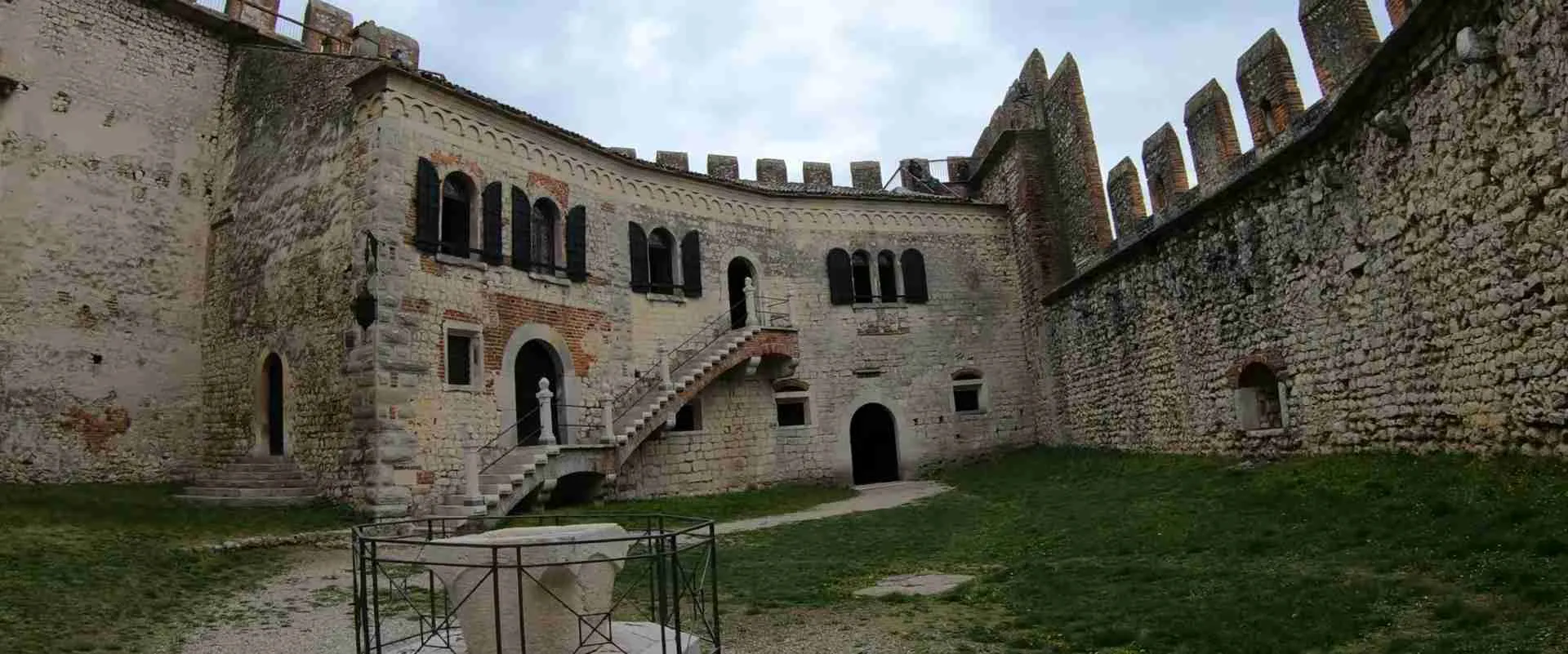
Driving east from Verona on the SR11 Padana Superiore, the Veneto plain gives way to rolling hills draped in Garganega vines before a medieval silhouette breaks the ridge above: Soave Castle, the most complete Scaliger stronghold in the province. This self-guided itinerary traces the east Verona corridor through thermal villages and wine communes, culminating in Soave’s castle circuit and town walls, with full 2026 logistics for drivers, train travelers, and EV users working from Verona as a hub.
Key Takeaways
- Soave Castle opens Tuesday to Sunday in two daily sessions — 9:00–12:00 and 15:00–18:00 in summer, 9:00–12:00 and 14:00–16:00 in winter — with Monday closures year-round; admission is approximately €7 per adult and payment is cash only; check the official site at castellodisoave.it for any 2026 rate updates and plan at least one to two hours for a thorough visit including the tower climb.
- The SR11 Padana Superiore links Verona to the Soave hills in roughly 35–40 minutes by car; the A4 motorway (Soave–San Bonifacio exit) reduces this to around 20–25 minutes with a modest toll; the SR11 is preferable when stopping in the east Verona corridor towns en route.
- Trenitalia runs approximately hourly direct trains from Verona Porta Nuova to San Bonifacio — the nearest station to Soave — covering 23 km in roughly 20–25 minutes; tickets start at approximately €4–6 per person one way; from San Bonifacio a taxi (around €8–12) or the ATV bus line 130 covers the remaining 3 km to Soave town.
- EV drivers will find fast-charging networks in Verona city, at the Soave–San Bonifacio area, and in the Classico zone communes of Monteforte d’Alpone and Colognola ai Colli; use PlugShare or the VisitVerona-recommended Nextcharge map to confirm current point locations before departure.
- Mid-range travelers budget approximately €115–180 per person per day (two sharing a 3-star hotel in the Verona–Soave corridor), covering accommodation, castle admission, a structured winery tasting session, and a full osteria lunch with wine.
- The castle’s strict midday closure from noon to 15:00 (summer) makes timing essential: arrive by 9:00 for the full morning session, tackle the wall circuit walk during the midday break, and use the afternoon session from 15:00 onward if a second visit to the castle is planned.
People Also Ask About Soave and East Verona Road Trip 2026
How long does the drive from Verona to Soave take in 2026?
By car on the SR11 Padana Superiore, the drive from Verona’s city center to the Soave area takes approximately 35–40 minutes under normal conditions, covering roughly 28–30 km through San Martino Buon Albergo and Caldiero. The A4 motorway option — exiting at Soave–San Bonifacio and driving 4 km northward to town — shortens the driving time to approximately 20–25 minutes, though the toll between Verona Est and the exit applies (check the Autostrade per l’Italia toll calculator for current 2026 rates). Weekday morning traffic leaving Verona can add 10–15 minutes on the SR11, making an early departure before 8:30 advisable for those targeting the castle’s 9:00 opening. Navigating to Soave via GPS is straightforward; San Bonifacio serves as the intermediate waypoint on all standard mapping applications.
What does it cost to visit Soave Castle in 2026?
Admission to Soave Castle is approximately €7 per adult — check the official website at castellodisoave.it for current 2026 pricing, as rates are subject to review. Payment is cash only; there is no card reader at the entrance, so carry enough banknotes before visiting. The €7 entry covers the complete circuit: the inner courtyard, the furnished rooms, the rampart walkways, and the tower climb. The external wall paths and the lower town entry gates are accessible without any ticket. For a full day in Soave that includes castle admission, a midday lunch at a local trattoria or osteria, and an afternoon wine tasting at a Classico-zone producer, a realistic per-person day spend falls in the €40–60 range for budget visitors and €65–105 for mid-range, excluding accommodation.
Can you do Soave as a car-free day trip from Verona in 2026?
Yes. Trenitalia operates approximately hourly direct trains from Verona Porta Nuova to San Bonifacio station, with journey times of around 20–25 minutes on faster services; tickets start at approximately €4–6 per person one way and are bookable on the Trenitalia app, website, or station ticket machines (confirm current 2026 prices at trenitalia.com). From San Bonifacio, Soave town is roughly 3 km: a local taxi covers this in under 10 minutes for approximately €8–12, while ATV bus line 130 provides a slower but cheaper alternative from Verona Porta Nuova directly (around one hour, €3–5). Soave’s historic center, wall circuit exterior, and most winery visits are entirely walkable once in town. The only limitation for car-free visitors is that the Classico hillside wineries accessed via the SP37 require a vehicle or a pre-arranged private transfer to reach independently.
Are there EV charging stations between Verona and Soave in 2026?
Yes. Verona city has over fifty fast-charging stations managed by networks including AGSM AIM and Electra, with the Electra ultrafast hub near Viale del Lavoro positioned as a gateway charge point for vehicles approaching from the A4 direction. Along the A4 motorway corridor, service areas typically carry DC fast chargers suitable for a quick top-up en route. In the Soave–San Bonifacio area, confirmed charging points serve the municipality directly; Monteforte d’Alpone and Colognola ai Colli — key communes of the Soave Classico zone — also have charging infrastructure. The 60 km round trip from Verona is well within the range of any modern battery-electric vehicle on a standard charge, so most EV travelers need only plan a top-up in Verona before departure rather than a dedicated mid-route session. Check PlugShare, Electromaps, or the VisitVerona-linked Nextcharge map for real-time availability before setting out.
Extended multi-day tours – 5+ days
Featured Verona Multi-Day Tour Packages
7 days
Two Cities & Two Lakes: From Como to Verona
- ✓ Comprehensive Verona tour
- ✓ Expert local guides included
- ✓ All accommodation arranged
- ✓ Transportation provided

5 days
5 Day Italy Tour Package with Bernina Express – Verona, Sirmione, Bellagio & Como
- ✓ Comprehensive Verona tour
- ✓ Expert local guides included
- ✓ All accommodation arranged
- ✓ Transportation provided
7 days
Rome, Florence & Venice
- ✓ Comprehensive Verona tour
- ✓ Expert local guides included
- ✓ All accommodation arranged
- ✓ Transportation provided
7 days
Jewels of Italy
- ✓ Comprehensive Verona tour
- ✓ Expert local guides included
- ✓ All accommodation arranged
- ✓ Transportation provided
Multi-day tour packages powered by TourRadar. Prices and availability subject to change.
Why the East Verona Road Trip Belongs on Your 2026 Veneto Itinerary
The corridor east of Verona is one of the Veneto’s most underused driving routes. Most visitors heading out from Verona turn west toward Lake Garda, north into the Lessini highlands, or south toward Mantua — leaving the SR11 Padana Superiore, the old Roman artery that once connected Verona with Vicenza and Padua, almost entirely to locals and wine trade traffic. The result is a driving experience that feels disproportionately quiet for a zone containing one of Italy’s most photographically complete medieval fortifications, an internationally recognized DOC white wine region, and a chain of thermal villages with documented histories stretching back at least to the Roman period.
Soave occupies a singular position in the east Veneto: simultaneously a functioning wine village — the source of one of Italy’s largest-volume DOC white wines — and a hill town whose castle and walls have survived in a state of preservation unusual for the Veneto plain. The castle is not a reconstructed ruin but a largely intact complex of curtain walls, towers, a keep, and enclosed courtyards. Its combination with the extended circuit of medieval town walls below makes Soave one of the few places in northeastern Italy where a visitor can experience a functioning castle interior and a continuous wall walk in the same half-day visit.
The east Verona circuit extends the logic of the Soave visit into the surrounding territory. Caldiero, roughly halfway along the SR11, adds a thermal heritage dimension rooted in sulfurous springs exploited since at least the Roman period. The hill villages of the Soave Classico zone — particularly those reachable on the SP37 and neighboring provincial roads threading through basalt-rich uplands — extend the route into vineyard country where the Garganega grape produces wines of markedly different character from those grown on the alluvial plain below. The Val d’Illasi, accessible as a brief northward detour, introduces a further layer of medieval fortification heritage through its valley castle remains.
For 2026, the corridor offers two structural improvements over recent years. First, the expansion of EV fast-charging infrastructure along the A4 corridor and in the Soave–San Bonifacio area has reached a level that makes electric driving from Verona genuinely practical without range anxiety. Second, improved digital trail resources for the Soave wall circuit and the Classico zone wine roads have made self-guided navigation more reliable for visitors without local knowledge. Neither development has transformed the area into a mass-tourism destination — which is precisely the point. The east Verona corridor rewards those who plan carefully around the castle’s strict two-session timetable and the smaller wineries’ appointment requirements, and punishes those who arrive improvised on a Monday or during the midday closure window.
This itinerary covers both the practical logistics — route choices, transport modes, charging infrastructure, parking — and the experiential sequence of a visit that is genuinely self-guided rather than tour-dependent. Budget calculations are provided for each traveler tier, and crowd-bypass timetables identify the visit windows that offer the best balance of vineyard activity and castle access. The SR11 and the Soave hills reward the driver who arrives with a plan; this is that plan for 2026.
Practical Route Logistics: Driving and Transit Options from Central Verona to Soave (2026 Guide)
By Car on the SR11 Padana Superiore
The SR11 Padana Superiore is the historic artery of the Veneto plain, following broadly the alignment of the Roman Via Postumia that shaped settlement geography in this region for centuries. From central Verona, the road exits eastward through the suburb of San Martino Buon Albergo, passes through Caldiero, and continues across the plain before approaching San Bonifacio and the Soave hills. The total distance from the Verona ring road to the Soave area is approximately 27–30 km; from a hotel or parking structure in central Verona, add 5–10 minutes of city driving to the stated travel time.
Under normal weekday morning conditions, the SR11 route takes approximately 35–40 minutes door-to-door. The road is dual carriageway for much of its length east of San Martino Buon Albergo, with traffic lights through Caldiero town center adding 5–8 minutes during the morning rush. Signage for Soave is intermittent on the SR11 itself; GPS navigation with San Bonifacio as the intermediate waypoint is advisable. The final approach to Soave requires a turn northward off the SR11 corridor followed by an uphill road toward the castle knoll; modern mapping applications handle this junction accurately, but keep the device visible during the last 4 km.
By Motorway (A4): The Faster Option
The A4 autostrada runs parallel to the SR11 a short distance to the south. The relevant exit is Soave–San Bonifacio, approximately 25 km east of the Verona Est interchange. Journey time from Verona Est to the Soave–San Bonifacio exit is approximately 20–22 minutes under light traffic. The toll between Verona Est and Soave–San Bonifacio is modest; confirm the current 2026 rate at the Autostrade per l’Italia official toll calculator before travel, as fees are subject to periodic adjustment. Once off the motorway, Soave town is approximately 4 km northward through San Bonifacio, following signs for the castle hill.
The A4 advantage is speed and reliability: journey time varies little regardless of time of day. The SR11 advantage is zero toll cost and the chance to explore the corridor towns (San Martino Buon Albergo, Caldiero) that form part of the east Verona circuit. A practical hybrid approach for a two-day itinerary is to take the SR11 outward — pausing in Caldiero or stopping for a coffee in San Martino — and return via the A4 for a faster, more direct evening return to Verona.
The SP37 and the Soave Classico Hillside Approach
Once in the Soave area, the provincial road network — including the SP37, which threads through the wine communes of the Soave Classico hillsides — provides access to the principal Garganega vineyards and to the wineries that offer the most expressive Classico wines. The SP37 and connecting estate roads are narrower than the SR11 and require attentive, slower driving, particularly in sections where vineyard machinery may be on the road during growing and harvest seasons. This is, however, the most direct way to connect Soave with neighboring wine communes to the east and north, and the hillside route offers views across the DOC zone that the plain roads cannot match.
GPS directions should be verified against physical signage on the hillside roads, as some junctions are inconsistently mapped across navigation systems. Downloading an offline regional map (OsmAnd or Maps.me) serves as a reliable backup. Road surfaces on the Classico hillsides are generally well maintained but narrow in spots; a compact car is preferable to a large MPV or van. If renting a vehicle from Verona, request a compact class and confirm it is available with full off-motorway insurance coverage.
Parking in Soave
Three parking zones serve the Soave visiting area. The lower town parking near the historic gates at the base of the hill is the most convenient for those exploring the historic center and wine bars on foot; spaces here are a mix of blue-line paid zones (typically €1–2 per hour) and white-line free zones a short walk further out. An upper car park near the castle approach allows visitors to drive directly to the fortification and then descend through the walls on foot; this option suits those who prefer the castle as the first stop rather than the culmination of a walk from below. Arrival by 9:00 on weekends in summer is essential for securing spaces near the lower gates; weekday mornings are far more relaxed. Soave charges no restricted zone entry fee for vehicles and imposes no traffic limitation days for regular visitors.
By Train: Verona Porta Nuova to San Bonifacio
Trenitalia operates direct regional trains from Verona Porta Nuova to San Bonifacio approximately every hour throughout the day, with around 30–35 services per direction on weekdays. Journey time is 20–25 minutes on faster services and up to 35 minutes on stopping trains. Tickets start at approximately €4–6 per person each way; purchase on the Trenitalia app, the website, or at station ticket machines (confirm current 2026 prices at trenitalia.com, as regional fares are subject to seasonal update). The station in Verona for this route is Porta Nuova — the main mainline station, not Porta Vescovo — and the service is entirely in the regional category, requiring no advance seat reservation.
From San Bonifacio station, Soave is approximately 3 km by road. A local taxi covers this in under 10 minutes for approximately €8–12 (confirm the rate with the driver before departure). ATV bus line 130, which also runs directly from Verona Porta Nuova to San Bonifacio in around one hour, offers a cheaper alternative at approximately €3–5 but is more practical for the return journey after a full day in Soave rather than the outward trip when time is limited. For car-free visitors planning a wine tasting in the afternoon, the train–taxi combination is the most efficient way to respect the castle’s morning session window.
Car Rental from Verona for the Road Trip
For visitors based in Verona without their own vehicle, car rental from Verona Porta Nuova or Verona Airport (Valerio Catullo) is the most flexible option for the two-day east Verona circuit. All major European rental operators maintain branches at both locations. For a one-day Soave visit, the train option is typically more economical unless the vineyard hillside estates on the SP37 — which require a vehicle — are part of the plan. For a two-day circuit incorporating Caldiero, the Soave Classico zone, and the Val d’Illasi, rental for 24–48 hours makes good sense. Book at least a week in advance for summer weekends; rates vary significantly by demand and advance booking window.
East Verona’s Historical Circuit: Villages, Vineyards, and Fortifications
San Martino Buon Albergo: Gateway and First Stop
The first substantial town east of Verona’s outer ring road, San Martino Buon Albergo lies approximately 10 km from the city center along the SR11. Its compact historic core includes a modest Romanesque-influenced parish church and a small piazza characteristic of the Veneto plain towns that grew around medieval road stations and posting stops along the Via Postumia. For most visitors to the east Verona circuit, San Martino functions as a transition zone between Verona’s urban fabric and the open eastern corridor — a brief coffee stop or pass-through rather than a dedicated pause. The agricultural flat between San Martino and Caldiero is pleasant open countryside, and the first low hills of the Soave and Lessini zones begin to appear on the northeastern skyline as the road continues east.
Caldiero: Thermal Heritage and Napoleonic Memory
Approximately 15 km east of Verona, Caldiero is the most historically layered of the SR11 corridor towns. The Caldiero thermal baths (Terme di Caldiero) are built around sulfurous springs that have been documented in use since at least Roman times; the modern wellness and therapeutic complex operating today draws visitors from across the region and represents one of the few active Roman-heritage thermal sites still operating in the eastern Veneto. A day-access bathing session at the Caldiero thermal baths — typically two to three hours — can serve as either a morning warm-up before the physically demanding wall circuit at Soave or as an afternoon recovery option after it. Weekend visits benefit from advance reservation; weekday access is generally straightforward.
The Caldiero–San Bonifacio corridor also carries significant military history significance from the Napoleonic period. The territory witnessed key engagements during the campaigns of the 1790s and early 1800s, when French and Austrian forces maneuvered across the Veneto plain in the wars that reshaped northern Italy’s political map. A military history museum in the San Bonifacio–Soave area commemorates these campaigns; confirm opening hours locally before incorporating it into the itinerary, as smaller heritage collections in this part of the Veneto sometimes operate on restricted or seasonal schedules.
Colognola ai Colli: Into the Classico Hills
As the SR11 approaches San Bonifacio, the hills to the north signal the beginning of the Soave Classico zone — the original, restricted heartland of the Soave DOC designation, centered on the volcanic basalt uplands around Soave town and extending into neighboring communes including Colognola ai Colli. A short northward detour off the SR11 brings visitors to Colognola ai Colli, a compact hill village perched on the basaltic ridge that gives its Garganega wines their notable mineral character and structure.
Several wine producers in Colognola ai Colli offer cellar visits and structured tastings, typically by appointment. The village itself has a small historic piazza and a church with a bell tower that anchors the skyline as the road climbs from the plain below. For visitors with a morning to spare before reaching Soave, a brief stop in Colognola — even simply to walk the central lane and view the vineyard terraces — provides a sense of the agricultural landscape that underpins the Soave DOC’s identity before arriving at the hill town that bears the wine’s name.
The Val d’Illasi: A Medieval Fortification Detour
North of the SR11 and reachable by a 10–15 km detour off the main road, the Val d’Illasi introduces a further dimension of medieval heritage to the east Verona circuit. The upper village of Illasi is dominated by the remains of a medieval stronghold on the ridge above the valley floor — the ruins are visible from the valley road below and lend the approach a romantically fortified skyline distinct from the wine-country landscape of the Soave hills. The valley also supports wine production within its own subzone, and the quieter provincial roads make for pleasant, unhurried driving compared with the SR11.
For a single-day visit focused primarily on Soave Castle and the wall circuit, the Val d’Illasi is best omitted or saved for a second day. For a two-day circuit working outward from Verona, it can logically anchor the morning of Day 2 — driving north from San Bonifacio into the valley before cutting back south and west toward Soave for an afternoon winery visit — providing geographic variety and a second medieval encounter before the return to Verona.
Soave Castle and the Scaliger Legacy: Visiting in 2026
The Castle on the Horizon
Soave Castle is visible from remarkable distances on the approach from Verona. Travelers on the A4 motorway catch sight of it from several kilometers out as the ridge resolves from the surrounding vine-covered hills; it is equally prominent from wide stretches of the SR11 as the road crosses the open plain east of Caldiero. This visibility is not coincidental — the castle’s site on the narrow basaltic ridge above Soave town was chosen precisely for its command over the eastern approaches to Verona, and the sight lines from the tower and ramparts confirm the strategic logic on both sides of the elevation.
History: From Early Stronghold to Scaliger Seat
The site’s defensive history is traceable to at least the tenth century, with documented improvement phases in the eleventh and twelfth centuries that reflect the political turbulence of the early medieval Veneto. The castle complex as visitors see it today largely reflects development phases accumulated under successive lordships: the della Scala family — the Scaligeri, lords of Verona during much of the fourteenth century — held and substantially developed the stronghold as part of their defensive network across the eastern Veronese territory. After the collapse of Scaligeri power in Verona in the late fourteenth century, control passed to the Visconti of Milan and subsequently to the Serenissima — the Republic of Venice — whose long tenure over Verona (from 1405 until the late eighteenth century) left administrative rather than architectural imprints on the castle. The fortification thus represents several centuries of overlapping strategic priorities rather than the vision of a single patron or builder.
Inside the Castle: What Visitors See
The ticket-included visit covers the inner courtyard, a small number of furnished rooms that give a sense of the castle’s inhabited life during its operational centuries, the rampart walkways atop sections of the curtain wall, and the keep tower. The tower climb is the experiential highlight: from the top, the panorama extends across the DOC wine zone on all sides — the terraced Classico vineyards immediately below, the alluvial plain receding south toward San Bonifacio and the A4 corridor, and the Lessini uplands rising to the north. On clear days the view reaches well beyond the immediate Soave zone into the broader eastern Veneto landscape.
The interior furnishings are modest rather than elaborate — a few rooms preserve period pieces, and volunteer guides are typically present to answer questions and share the castle’s history with those who ask. Multilingual information flyers are available at the entrance. Allow one hour minimum for a comfortable visit and up to two hours if spending time on the ramparts and in the courtyard; the keep staircase is steep and narrow, and the cobblestone surfaces throughout require firm footwear.
Opening Hours, Admission, and Access in 2026
Soave Castle opens Tuesday to Sunday in two daily sessions: 9:00–12:00 and 15:00–18:00 in summer, and 9:00–12:00 and 14:00–16:00 in winter. It is closed on Monday throughout the year. The castle makes exceptions for certain public holidays — including Easter and Easter Monday, April 25, May 1, June 2, August 15, November 1, December 8 and 26, and January 6 — and closes on December 25 and January 1. Last admission is 45 minutes before the closing time of each session. In practice, this means the morning session last-ticket window closes at 11:15 in summer and the afternoon last-ticket window closes at 17:15. Arriving within this 45-minute window is possible but gives very limited time inside; plan to arrive no later than 9:30 for the morning session or 15:30 for the afternoon to allow a full experience.
Admission is approximately €7 per adult. Check the official website at castellodisoave.it for any 2026 rate updates, as pricing is subject to periodic revision. Payment is cash only — no card reader is currently available at the entrance, so carry banknotes before arriving. The castle can be reached by foot from the lower town (a 20-minute walk through the vineyard lane or along the access road) or by car to the upper parking area near the castle gate. The castle interior, including the tower staircase and the rampart walkways, is not accessible for visitors with reduced mobility; steep stairs, narrow passages, and uneven cobblestone surfaces throughout the site make it unsuitable for wheelchairs or those unable to manage sustained stair climbing. Strollers and pushchairs can be left at the entrance gate.
Photography at Soave Castle
The castle offers two distinct photographic registers. From the tower and ramparts, wide-angle compositions capture the DOC vine landscape in its most dramatic form, with rows of Garganega running in every direction across the basaltic slopes below. Early morning in the period from May to October delivers the best light for these elevated views, with the sun relatively low on the eastern horizon and the vineyards casting long textural shadows across the rows. The interior courtyard and archways, by contrast, reward mid-morning and early afternoon light when the stone walls are in full illumination; the furnished rooms are suitable for available-light photography without flash.
Walking the Medieval Wall Circuit: Accessibility, Timing, and Environmental Considerations
The Wall System and What It Preserves
Soave’s medieval walls are not simply a boundary but a working architectural system that connects the castle on the ridge with the historic town below. Extending from the fortification down the hillside and continuing in an arc that partially encircles the lower town, the walls constitute one of the better-preserved examples of this type of integrated castle-and-town defensive system in the eastern Veneto. The curtain wall presents a sequence of towers at intervals along its length — travelers who have walked sections of other Scaliger and Venetian defensive works across the Verona province will find points of architectural comparison here, though the Soave walls’ hillside topography gives them a particular visual drama that flatter sites cannot replicate.
The walls are managed as a public heritage route rather than a paid attraction: the external circuit, including the exterior faces of the walls and the lane that passes through the lower town gates, is accessible without any ticket at any hour. Access to the top of the ramparts in certain sections is connected to the castle visit and follows the castle’s opening hours. For the full experience — both the town-level walk and the elevated rampart perspective — plan the circuit in conjunction with the morning or afternoon castle session rather than as a stand-alone walk.
Route and Timing: Planning the Circuit
The most popular walking combination begins at the lower town gates near the historic center, ascends through the main historic lane past the wine bars and small piazze of Soave’s old town, continues to the castle gate for the ticketed visit, traverses the accessible rampart sections, and descends by the vineyard panoramic path — a roughly 20-minute walk through the estate rows with views south over the plain — before returning to the lower town area. Allowing for a full castle visit, this combined circuit takes between two and three hours at an unhurried pace.
The midday castle closure from noon to 15:00 (summer) and noon to 14:00 (winter) creates a natural break in the circuit. The recommended timing for a first visit is to open with the castle at 9:00, complete the castle interior and rampart sections by 11:00–11:30, then use the noon-to-15:00 break for lunch in the lower town and a walk of the outer wall circuit at ground level — the lower lanes are pleasant and shaded in sections, and the town gates and their surrounding medieval context are worth exploring independently of the castle session. The afternoon session from 15:00 can then be devoted to a winery visit or a second castle ascent for different light conditions.
Accessibility Considerations
The wall circuit and the castle are not appropriate for visitors with mobility limitations, wheelchair users, or those for whom sustained stair climbing or uneven terrain presents a risk. The path from the lower town to the castle gate involves a steady uphill gradient of approximately 20 minutes on foot, partly on cobblestone and partly on a rougher unpaved track through the vineyards; neither is suitable for wheeled mobility aids. The castle interior itself contains steep, narrow staircases throughout, including the tower climb. The lower town historic center and the wine bars immediately inside the main gate are largely flat and accessible, making them appropriate for visitors who cannot manage the ascent but wish to experience something of the Soave town environment.
For visitors with young children, the stroller situation mirrors the accessibility constraints: strollers and pushchairs can be left at the castle entrance but cannot be taken inside; the vineyard path is negotiable on foot with good shoes but is not suitable for wheeled equipment. The lower town streets are the most child-friendly section of the visit.
Environmental and Seasonal Conditions
The wall circuit involves significant exposed sections with no natural shade, particularly along the upper rampart walkways and the vineyard panoramic lane. In summer (June through September), the basalt hillside retains heat effectively; temperatures on the upper sections can be noticeably higher than in the lower town, and midday sun on the stone surfaces creates a demanding microclimate. Carry at least one liter of water per person, wear sun protection, and time the upper circuit for the early morning session rather than the afternoon on hot days.
From October through April, conditions are significantly cooler and often more comfortable for the physical activity of the wall walk. Autumn visits during the harvest period (vendemmia, typically late September to mid-October) offer an additional experiential layer — active harvesting in the vineyards adjacent to the wall path gives the circuit a living agricultural context that the off-season visit lacks. Winter visits (November through February) find the castle with minimal crowds and its most dramatic skies; the walls’ stone surfaces become slippery with moisture or occasional frost, making non-slip footwear essential in the colder months.
Flora, Fauna, and the Vineyard Path
The vineyard panoramic path between the castle and the lower town passes through actively managed Garganega rows for much of its length, with views across the Classico zone’s basaltic hillsides and south toward the Veneto plain. In spring, the vines emerge in tender green against the dark basalt soil; in late summer, the developing clusters hang heavily in the rows before harvest. The path also passes through short sections of macchia and natural hedgerow that support the corridor’s bird life — early morning walkers in spring may encounter blackbirds, robins, and the occasional hoopoe in the scrub sections alongside the wall base. Lizards are common on the sun-warmed wall stones throughout the warm months. The combination of agricultural landscape and natural hedgerow gives the circuit a biodiversity range that a purely architectural walk does not provide.
EV Travel and Sustainable Logistics on the Soave Road Trip 2026
Why This Route Suits EV Driving
The Soave road trip from Verona is well suited to battery-electric vehicles for a structural reason: the total round-trip distance of approximately 55–65 km (depending on the Classico hillside diversions taken) sits comfortably within the range of any modern BEV on a standard charge. Even a vehicle with a usable range of 200 km arrives back in Verona with substantial reserve. This means EV drivers can approach the route as a day trip without a mandatory charging stop, treating any available charge in Soave or the Classico zone as an optional top-up rather than a necessity.
The route’s topography adds a further EV advantage: the outward journey from Verona is largely flat on the SR11 or A4 corridor, while the approach to Soave and the Classico hillside roads involve modest elevation gains (the castle ridge sits at roughly 80 meters above the surrounding plain). Regenerative braking during the descents from the Classico zone back to the plain recovers a portion of the energy used on the climbs, keeping the energy account more favorable than a hill route of equivalent distance on conventional road.
Charging Infrastructure on the Route in 2026
Verona city has expanded its public charging network significantly in recent years, working toward a target of over two hundred charge points managed by the municipal utility AGSM AIM, supplemented by private fast and ultrafast hubs from networks including Electra and Enel X. The Electra ultrafast hub near Viale del Lavoro is positioned as a gateway charge point for vehicles arriving from or departing toward the A4 corridor, making it a logical departure charge location if beginning the trip from Verona center. AC chargers in the city operate at rates of approximately €0.45–0.55 per kWh; ultrafast DC networks may offer different tariff structures — check the relevant network app for current 2026 rates, as pricing adjusts with energy market conditions.
Along the A4 motorway, service areas in the Verona–San Bonifacio section carry DC fast chargers suitable for a 30–45 minute charge from a significantly depleted battery (roughly 20% to 80% on most modern vehicles). In the Soave–San Bonifacio area itself, public charge points are confirmed, allowing a top-up during a winery visit or lunch stop that takes the vehicle back to a full charge for the return. Additional charge points in Monteforte d’Alpone and Colognola ai Colli serve the Classico hillside route; these are particularly relevant for visitors who extend the circuit across multiple wine villages on the SP37 and may accumulate more elevation change than the base route.
Practical EV Strategy for the Day
The recommended strategy for EV drivers is to depart Verona with a full or near-full charge, drive the SR11 or A4 to Soave, complete the castle and wall circuit, use the midday break for lunch and any available top-up in the Soave area, and then proceed to Classico hillside wineries in the afternoon before returning directly to Verona. This approach keeps the battery comfortably positive throughout and avoids the time cost of an unplanned charging stop. For drivers of older EVs with lower usable ranges, a 20-minute DC fast charge at the A4 service area or in the San Bonifacio area provides sufficient buffer for the extended circuit including the Classico hilltops.
Use PlugShare, Electromaps, or the VisitVerona-recommended Nextcharge application to verify current charge point locations and real-time availability before setting out; the density of the regional network means alternatives are typically within a few kilometers if a given point is occupied or offline. The Soave municipality’s official tourism resources link directly to a charge point map (nextcharge.app) for the local area.
Sustainable Travel Beyond the EV
For travelers without an EV, the Verona Porta Nuova to San Bonifacio train is the most carbon-efficient option for the base Soave visit: the Trenitalia regional service runs on Italy’s partially electrified rail network and carries a significantly lower per-passenger carbon cost than the equivalent car journey. The train plus taxi or bus combination from San Bonifacio to Soave extends this advantage; only the Classico hillside winery visits on the SP37 require a vehicle in a way that the train option cannot practically cover. A hybrid approach — train to Soave for the castle and town, then a day hire of a local car or e-bike for the afternoon Classico zone exploration — achieves both low-carbon transport and vineyard access.
Crowd-Bypass Timetables and Best Visit Windows for 2026
When Soave is at Its Quietest
Soave is not a mass-tourism destination in the way that Verona’s historic center or the Garda lake resorts are, but it does experience notable visitor concentrations on summer weekends (June through September) and during specific event periods. The castle’s two-session daily timetable functions as a natural crowd regulator — the fixed morning and afternoon windows concentrate visitors within defined periods rather than spreading them continuously, which means that the first twenty minutes of each session and the last twenty minutes before closure are the quietest windows within any given day. Arriving at opening (9:00) or at the afternoon session start (15:00) typically allows the initial courtyard exploration without other groups present; mid-session arrivals find more company.
Weekday visits in all seasons are substantially quieter than weekend visits. Tuesday through Friday mornings from mid-September through May — outside the summer peak and before the vine-tourism high season — offer the most comfortable combination of cool temperatures, minimal crowds, and active vineyard life (harvest in late September, pruning from November onward). These periods also correspond to the best available accommodation rates in the Verona–Soave corridor.
Events That Affect Visit Conditions
Vinitaly — the large international wine trade fair held annually in Verona in the spring — concentrates wine industry visitors in the city rather than in Soave itself, but the adjacent weekend can create elevated occupancy across all accommodation in the province. Check the Vinitaly dates for 2026 on the official site and book accommodation well in advance if planning a visit in the same window. The Soave DOC produces its own wine tasting event, Soave Preview, typically held in late winter or spring at the castle and in the town venues; visiting during Soave Preview provides exceptional access to wines and producers but requires advance ticketing and finds the castle integrated into the event program in ways that modify the normal visiting format.
The harvest season (vendemmia) in September–October brings the vineyards to active life and many wineries open to visitor tastings on an appointment basis as they process the incoming fruit. This is the most atmospherically rewarding period for combining the castle visit with a Classico winery experience, and it corresponds to the tail end of the main tourist season — crowds begin to thin rapidly after mid-September while the landscape is at its most visually dramatic.
Day-of Timing: A Crowd-Optimized Schedule
For a single-day visit from Verona targeting both the castle and the wine circuit, the following timing structure bypasses the most congested moments. Depart Verona by 8:15–8:30 to arrive at Soave for the 9:00 castle opening. Complete the castle interior and accessible rampart sections in the first session, finishing by 11:00. Use the period from 11:00 to noon for the vineyard panoramic path descent and exploration of the lower town lanes. Lunch from noon to 14:00 in the historic center — this coincides with the castle closure and sidesteps any wait at restaurants. From 14:30, drive or walk to the SP37 wine circuit for one or two winery visits on pre-arranged appointments. Return to the castle at 15:00 if a second visit is planned (for photography with different afternoon light), or continue the winery circuit and return to Verona by 17:30–18:00.
For visitors arriving by train, the rhythm is similar but the departure from San Bonifacio station should be targeted no later than 15:30 to maintain reasonable options for the return to Verona before evening. The last direct train from San Bonifacio to Verona runs late into the evening, so the schedule is generous; the practical constraint is more about making the most of daylight in the Classico hillsides than about missing the last service.
Soave DOC Wine Country: Wineries, Cellars, and Slow-Travel Dining in 2026
Understanding Soave DOC and Soave Classico
Soave is one of Italy’s largest-volume DOC white wine designations, covering a broad zone that extends across the plain and lower hillsides east of Soave town into the territory of several neighboring municipalities. Within this larger DOC, the Soave Classico designation restricts production to the original hillside heartland centered on the castle ridge and extending into adjacent Classico-zone communes — a zone defined by the volcanic basalt soils that give its Garganega wines a mineral definition and structural potential distinct from the alluvial-soil wines of the broader DOC below.
Garganega must comprise at least seventy percent of the blend in standard Soave DOC wines under the production regulations of the Consorzio Tutela Vini Soave; Soave Classico carries the same varietal requirement within its more restricted geographic origin. The Garganega grape produces wines characterized by floral aromatics, a characteristic bitter-almond finish, relatively high natural acidity, and a capacity for complexity with age — particularly in the Classico zone, where the volcanic soil contribution adds a smoky mineral quality not found in plain-grown examples. A tasting that moves from a basic Soave DOC wine to a Soave Classico from the castle hillside provides a textbook illustration of how terroir interacts with the same grape variety.
Visiting Producers on the SP37 and Classico Roads
The wine estates of the Soave Classico zone range from large cooperatives operating across the full DOC territory to small family-owned properties working a few hectares on the basaltic hillside above Soave. For the self-guided visitor in 2026, the most rewarding approach is to identify one or two smaller producers in advance, contact them to arrange a cellar visit and tasting session, and build the afternoon itinerary around those appointments. Most Classico-zone producers who offer visitor reception require advance booking; walk-in visits are less reliable, particularly in harvest season when the winery is operationally busy.
The SP37 and connecting hillside roads give access to estates in Soave, Monteforte d’Alpone, Cazzano di Tramigna, and Colognola ai Colli. A structured tasting at a small Classico producer — typically covering four to six wines from different vineyard parcels, with the winemaker or a family member leading — costs approximately €12–25 per person depending on the producer and the depth of the tasting; this figure is not universally standardized, so confirm in advance. The tasting will typically include both current-release wines and at least one older vintage to illustrate the ageability of the Garganega from the Classico zone.
Wine Bars and Enoteche in Soave Town
For visitors who have not pre-arranged a winery appointment, or who want a lighter introduction to Soave before committing to a full estate visit, the historic center of Soave offers wine bars and small enoteche (wine shops with glass service) where a flight of local producers’ wines can be tasted without pre-booking. These establishments cluster near the main gate and the central piazza of the lower town, and most carry a selection spanning both cooperative and artisan producers from across the DOC. A glass of Soave Classico served alongside a plate of local cured meats or a bruschetta in one of the town’s covered courtyards makes a satisfying midday pause that bridges the castle morning session and the afternoon winery circuit without requiring the logistical preparation of a formal estate visit.
Food, Dining, and the Slow-Travel Philosophy
The east Veneto culinary tradition around Soave centers on ingredients that pair directly with the wine: the natural acidity of Garganega cuts through the richness of local cured meats and through the mild fattiness of the region’s freshwater and lake fish preparations. Baccalà mantecato — salt cod whipped to a creamy consistency with olive oil, a preparation shared with Vicenza’s nearby tradition — appears regularly on local menus alongside more straightforward antipasto plates of salame veronese and Soave Classico by the glass. Pasta dishes in the Verona–Soave corridor tend toward egg-based preparations with meat ragù or game sauces; risotto with local wines is another regional preparation found in the osterie of the area.
For a slow-travel midday, choose an osteria or trattoria in Soave’s lower town over a faster option — most local restaurants serve a fixed-price lunch menu (menù del giorno) covering a first course, second course, house wine, and water for approximately €15–25 per person, representing the best value eating in the corridor. Booking a table for 12:30 or 13:00 is advisable in summer; off-season, walk-ins are typically accommodated. Agriturismo farm stays in the Classico zone sometimes serve lunch to external guests; check the individual estate’s website, as this is not universal practice.
Where to Stay for the East Verona Circuit 2026
Verona as the Hub: Practical Case
For the majority of visitors planning a two-day east Verona circuit, Verona makes the stronger accommodation base: it offers a full range of hotel categories from budget to luxury, excellent transport connections onward in all directions, and the evening and morning city experience (the Arena, the historic center, the riverside) that few smaller destinations in the region can match. Staying in Verona also means that a day in which the weather does not cooperate with the outdoor wall circuit and vineyard walk can be redirected to Verona’s own attractions without the logistical complication of rebooking or repositioning. For EV drivers, Verona’s urban charging network is the most reliable option for an overnight full charge.
Budget accommodation in Verona — B&Bs and two-star hotels in the Porta Nuova and San Zeno neighborhoods — typically runs €65–85 per room per night, translating to €33–43 per person for two sharing. Mid-range three-star hotels in the historic center and the Porta Nuova axis range from €100–150 per room per night (€50–75 per person, two sharing). Boutique and four-star hotels in the centro storico and the Arsenale quarter run from €200–320 per room per night (€100–160 per person, two sharing). All figures are indicative for 2026 and subject to seasonal demand; summer weekends and the Vinitaly period command significant premiums. Book mid-range and above properties at least two months in advance for June–August visits.
Staying in Soave: Agriturismo and Local Atmosphere
Staying in or immediately around Soave gives the circuit a different texture: waking in a vineyard farm stay (agriturismo) on the Classico hillside, with the castle visible across the rows from the breakfast terrace, is a qualitatively different experience from a Verona hotel departure. The practical trade-off is a narrower accommodation range and the need for a vehicle to move around; car-free travel becomes significantly more limiting when the base is a hillside agriturismo rather than a city hotel near a major rail station.
Agriturismos in the Soave Classico zone typically charge €70–120 per room per night for double rooms, depending on the property’s facilities and season; breakfast is usually included and often features produce from the farm. Some agriturismos serve dinner by reservation, providing a built-in wine and food pairing with the estate’s own Soave production. Booking directly with the property rather than through large platforms often yields better rates and the opportunity to arrange the winery visit in conjunction with the stay. A minimum of two nights is commonly required at smaller agriturismos in the summer months.
San Bonifacio as a Transit Option
San Bonifacio, the nearest rail hub to Soave, has a small number of business hotels and B&Bs primarily oriented toward commercial travelers working in the industrial zone north of the town. For visitors who want the convenience of direct train access from Verona but prefer not to pay Verona city prices, San Bonifacio offers a budget-practical alternative; it lacks the cultural atmosphere of either Verona or a hillside agriturismo but is functional for a single-night stay focused entirely on the Soave visit. The train frequency between Verona and San Bonifacio makes morning and evening transfers genuinely practical in both directions.
Budget Planning for the Soave Road Trip 2026
Pre-Calculated Budget Tiers
The following per-person daily costs assume two travelers sharing accommodation and split all accommodation costs equally. Hotel rates are halved before summing with individual per-day expenses. All figures are rounded to the nearest €5 and expressed as ranges to reflect realistic variation across seasons, meal choices, and number of winery visits.
Budget travelers sharing a B&B or two-star hotel in Verona (€65–85 per room per night) spend €33–43 each on accommodation. Day costs covering transport by car or train (€7–12 per person), Soave Castle admission (€7), a basic winery tasting or wine bar visit (€8–12), a fixed-price trattoria lunch (€14–20), and coffees and snacks (€4–7) run €40–61 per person for the day’s activities. Combined, budget travelers spend approximately €70–105 per person per day (two sharing).
Mid-range travelers sharing a three-star hotel in Verona or an agriturismo in the Soave zone (€100–150 per room per night) pay €50–75 each per night. Day costs covering transport including fuel, tolls, and parking (€10–18), Soave Castle admission (€7), an additional structured winery visit or hillside estate tasting (€5–12), a full osteria lunch with wine by the glass (€22–32), and coffees, gelato, and incidentals (€6–10) amount to €65–104 per person. Mid-range travelers spend approximately €115–180 per person per day (two sharing).
Premium travelers sharing a four-star hotel in Verona’s centro storico or a premium vineyard relais (€200–320 per room per night) allocate €100–160 per person per night. Day costs including private guide or premium car hire (€35–60), Soave Castle admission (€7), a premium cellar tour and tasting at a Classico estate (€25–45), a full restaurant lunch with reserve wines (€45–70), and additional experiences and extras (€20–35) amount to €147–242 per person. Premium travelers spend approximately €245–400 per person per day (two sharing).
Two-Day Circuit Totals
For the complete east Verona circuit — one night accommodation, Day 1 covering the SR11 corridor and Soave Castle, Day 2 incorporating the Classico wine estates and Val d’Illasi before returning to Verona — the two-day per-person totals are as follows. Budget travelers: accommodation included in the daily rate above; total for two days approximately €140–210 per person. Mid-range travelers: two days approximately €230–360 per person. Premium travelers: two days approximately €490–800 per person. All figures are per person for two sharing, inclusive of accommodation, transport, admissions, meals, and wine tastings.
Line-Item Breakdown: A Standard Mid-Range Day
Hotel per person (two sharing 3-star, Verona): €50–75. Transport to Soave and return (car fuel and tolls, or train round trip plus taxi): €10–18 per person. Soave Castle admission: €7 per person (cash; check current rate at castellodisoave.it). Structured winery tasting at a Classico producer: €15–25 per person. Lunch at a Soave osteria (two courses plus wine, water, and coffee): €22–32 per person. Coffees, gelato, and minor purchases: €6–10 per person. Total: approximately €115–180 per person daily for two sharing at mid-range standard.
Money-Saving Strategies for 2026
Taking the train to San Bonifacio and a taxi to Soave eliminates car rental costs and parking, saving €20–40 per person compared with a rented vehicle on a day trip where the SP37 hillside wineries are not part of the plan. The castle’s own entry fee (approximately €7) is fixed and non-negotiable, but the lower town walks, the external wall circuit, and all views of the castle from the vineyard lane are entirely free. Visiting in mid-week from September to May reduces hotel rates in Verona by 15–30 percent compared with summer weekend peaks. Booking agriturismo accommodation directly with the property rather than through large booking platforms saves the platform margin and often includes breakfast and sometimes dinner — effectively reducing the out-of-pocket food spend. Choosing the trattoria fixed-price lunch menu over à-la-carte dining saves approximately €8–15 per person at mid-range restaurants in the area.
Frequently Asked Questions
Is Soave Castle worth visiting as a stand-alone day trip from Verona in 2026?
Yes — the castle is the defining attraction of the east Veneto corridor and one of the most complete Scaliger fortifications surviving in the province. The combination of the castle interior, the tower climb with its panoramic views over the DOC wine zone, and the externally walkable wall circuit gives a full day’s activity for history and landscape enthusiasts. Pairing the castle visit with lunch in the lower town and an afternoon winery visit at a Soave Classico producer creates a fully rounded day that justifies the round trip from Verona on its own. The relatively short journey time — under 40 minutes by car or 25 minutes by train to San Bonifacio — keeps the logistics simple.
What is the best time of year to drive the east Verona circuit in 2026?
Late September and October offer the ideal combination of conditions: the harvest is underway in the Garganega vineyards, temperatures are pleasant for the wall circuit walk, summer crowds have begun to thin, and many Classico producers are open to visitor tastings as part of the harvest-season reception calendar. May and early June are a close second, with the vines in full spring growth and the weather reliable before the summer heat builds on the exposed hillside sections. Avoid the Vinitaly weekend (check 2026 dates at vinitaly.com) if accommodation value is a priority, as Verona-area hotels price at a significant premium during the fair week.
How much does a full day in Soave cost per person in 2026?
A realistic mid-range day — Soave Castle admission (approximately €7), a structured winery tasting at a Classico producer (€15–25), a full osteria lunch with wine (€22–32), transport to and from Verona (€10–18 by car or €8–12 by train plus taxi), and coffees and minor purchases (€6–10) — runs approximately €65–105 per person for day-trip essentials excluding accommodation. Adding a mid-range Verona hotel (€50–75 per person, two sharing a 3-star) brings the total to approximately €115–180 per person per day. Budget travelers who take the train, eat the fixed-price lunch menu, and visit a wine bar rather than a winery can manage the full day at approximately €70–105 per person including a budget hotel share.
Can I reach Soave without a car in 2026?
Yes. Trenitalia’s hourly direct trains from Verona Porta Nuova to San Bonifacio cover the 23 km in 20–25 minutes from approximately €4–6 per person one way (current prices at trenitalia.com). From San Bonifacio, a local taxi (approximately €8–12) or ATV bus covers the 3 km to Soave town. Once in Soave, the historic center, lower town wall circuit, wine bars, and the castle ascent on foot are all accessible without a vehicle. The only activities that effectively require a car are the SP37 hillside winery visits on the more remote Classico estates; these can be incorporated into a car-rental half-day or replaced by wine bars in the town center for car-free visitors.
Is Soave Castle accessible for visitors with mobility limitations in 2026?
No — Soave Castle is not accessible for wheelchair users or those with significant mobility limitations. The approach from the lower town involves a sustained uphill gradient on cobblestone and unpaved paths; the castle interior contains steep, narrow staircases throughout, including the keep tower; and the rampart walkways have uneven stone surfaces. Strollers cannot be taken inside and must be left at the entrance gate. The lower town historic center, the main piazza near the entry gate, and the wine bars in the immediate vicinity are largely flat and accessible; visitors who cannot manage the castle ascent can still experience the architectural character of Soave town and its wine culture at ground level.
What should I know about Soave wine before visiting in 2026?
Soave DOC covers a large zone east of Soave town, but Soave Classico — the restricted original heartland on the volcanic basalt hillsides around the castle ridge — is where the most characterful wines originate. The Garganega grape must comprise at least seventy percent of the Soave blend under DOC regulations and produces wines with characteristic floral aromatics, a bitter-almond finish, and high natural acidity that makes them excellent table wines. Ask specifically for Soave Classico rather than standard Soave DOC if you want wines from the castle hillside; the price difference is typically modest, and the quality and complexity difference is significant. Many smaller producers in the Classico zone welcome visitors by appointment and offer tastings that progress from entry-level to reserve or older-vintage bottles.
How do I combine the castle visit with the wall circuit walk in one day in 2026?
The ideal sequence is: arrive at Soave by 9:00 for the castle opening, spend approximately 90 minutes inside for the full interior circuit and tower climb, exit before 11:00, descend via the vineyard panoramic path to the lower town (20 minutes), explore the lower wall circuit and town gates from the exterior during the noon closure (noon to 15:00), take lunch in the historic center from 12:30, and use the remaining afternoon for a winery visit on the Classico hillside before catching the afternoon castle session from 15:00 if desired. This sequence respects the castle’s midday closure, avoids standing around waiting for the afternoon session to open, and fills the available hours productively.
What is the SP37 and how does it fit into the east Verona road trip in 2026?
The SP37 is a provincial road threading through the Soave Classico wine communes on the hillside above the main SR11 corridor. It provides the primary road access to vineyard estates and smaller wine producers working the basaltic upper slopes of the Classico zone, connecting Soave town with neighboring communes in the DOC heartland. Driving the SP37 is the most direct way to reach hillside wineries that do not sit on the main valley floor roads, and the route itself offers panoramic views across the Classico zone unavailable from the SR11. The road is narrower than the main arteries and requires attentive driving; a compact car is the practical choice, and GPS plus downloaded offline maps provide the most reliable navigation for the less frequently signposted junctions.
Are there EV charging options in and around Soave for 2026 visitors?
Yes. Charging points are confirmed in the Soave municipality; the VisitVerona tourism authority links to the Nextcharge map for precise locations in the area. Additional charge points serve Monteforte d’Alpone and Colognola ai Colli on the Classico hillside, and San Bonifacio also has charging infrastructure. For visitors arriving from Verona with a standard charge, the 60 km round trip is within comfortable range for all modern BEVs without a mandatory charge stop; using an available Soave-area point during a two-hour lunch and winery visit tops the battery back up for the return journey. Verify current availability on PlugShare or Electromaps before departure, as specific charge points change with network expansion and occasional maintenance downtime.
How does the Soave road trip compare to other Veneto day trips from Verona in 2026?
The Soave road trip occupies a specific niche among the Veneto day trip options from Verona: it combines medieval architecture, a functioning wine destination, and a manageable road circuit in a single visit without the crowd density of Lake Garda (particularly in summer) or the urban intensity of Verona’s own historic center. By comparison, Vicenza (the nearest Palladian architecture destination, 40 km west) is more architecturally focused and less wine-oriented; Mantua (55 km west) offers a richer art and palace heritage; the Valpolicella wine zone (north of Verona) produces the contrasting red wine tradition of Amarone and Ripasso. For travelers specifically interested in combining a medieval fortification visit with a substantive wine education in a relatively uncrowded environment, the Soave and east Verona circuit is one of the strongest options in the province for 2026.