Silent Tuscany: Slow-Travel Itinerary Through Crete Senesi & Maremma 2026
Southern Tuscany’s Crete Senesi and Maremma regions offer a transformative alternative to the region’s crowded Renaissance cities and tourist-heavy wine routes. These lunar clay landscapes, medieval hill villages, and wild coastal stretches reward slow travelers with authentic rural experiences, extraordinary natural thermal springs, and some of Italy’s most photographed countryside without the tour buses. This comprehensive 6-day itinerary guides travelers through two of Tuscany’s most atmospheric yet overlooked territories, where the pace slows to match the rhythm of agricultural cycles and ancient traditions persist in working farms and family-run trattorias.
Key Takeaways: Silent Tuscany Slow-Travel Experience 2026
- Budget Planning 2026: Budget-conscious slow travelers need $80-130 per person daily for agriturismo stays, home-cooked meals, and minimal paid attractions, totaling approximately $480-780 for a complete 6-day journey through both regions. Mid-range travelers investing in boutique properties and wine experiences spend $145-230 per person daily for approximately $870-1,380 weekly, while luxury visitors choosing high-end thermal resorts and private tastings invest $270-400 daily for approximately $1,620-2,400 for six days. All daily costs assume two people sharing accommodation with room rates divided before calculating per-person totals.
- Essential Transportation 2026: Car rental is mandatory for this itinerary as public transport connections between rural Crete Senesi and Maremma villages remain minimal. Weekly car rental ranges $165-330 depending on pickup location and vehicle size, with Rome pickups offering significantly better rates than Florence despite the longer initial drive. Manual transmission vehicles cost substantially less than automatics and suit the winding rural roads connecting isolated farmhouses and medieval villages.
- Optimal Timing and Seasonality: April through June and September through October provide ideal conditions for slow travel through these regions, balancing pleasant weather, manageable crowds, and authentic agricultural rhythms. Spring brings brilliant green wheat fields contrasting dramatically with gray clay hills, while autumn harvest season offers truffle festivals, grape harvests, and warm earth tones. Summer heat can be intense on exposed clay landscapes, and winter fog creates atmospheric but limiting conditions for photography and driving.
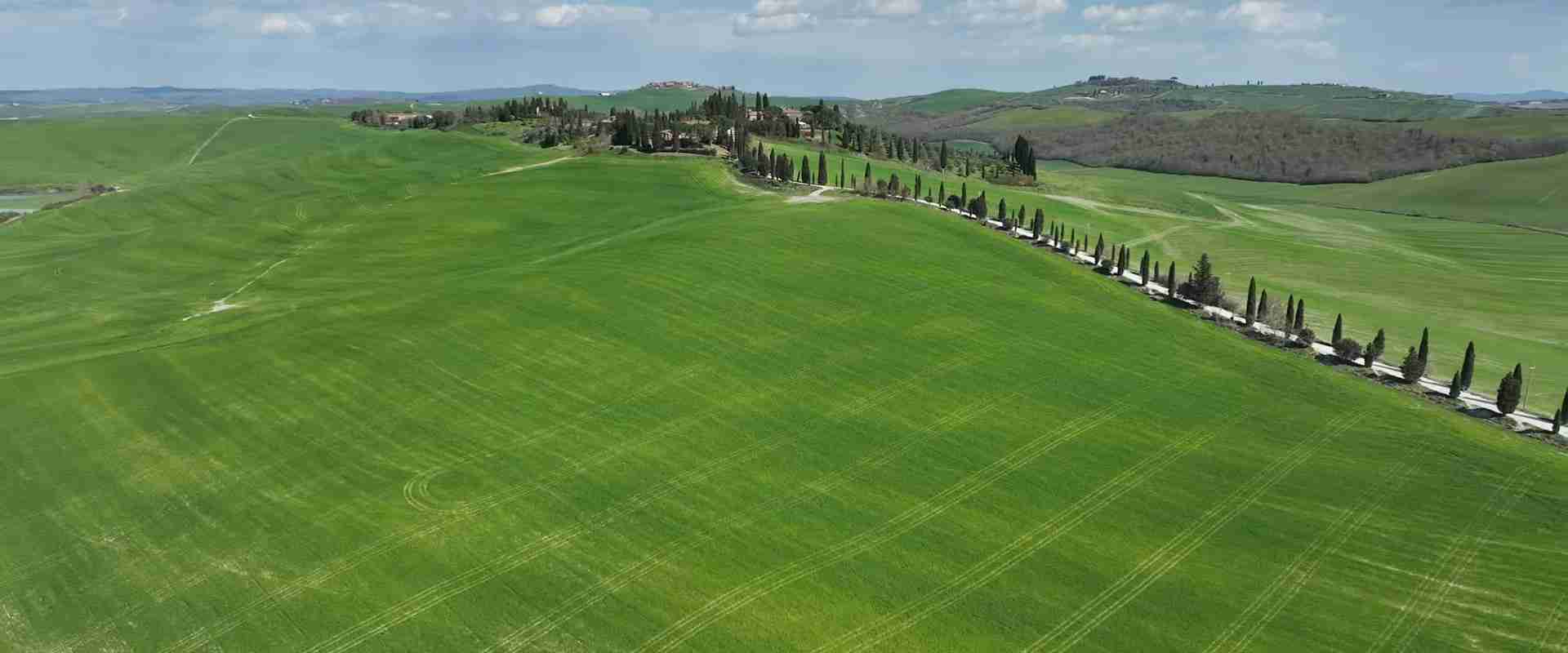
- Crete Senesi Lunar Landscapes: Southeast of Siena, the Crete Senesi’s distinctive clay hills create otherworldly minimalist vistas that shift color with seasons and light. Spring explodes with green wheat and yellow rapeseed against gray clay, summer reveals raw earth tones and golden grain, autumn glows with warm ochres, and winter fog transforms the terrain into surreal dreamscapes. Base yourself in Asciano or nearby agriturismi for 2-3 days exploring scenic drives along SP 438 and SP 60, photographing cypress-lined farmhouses, and discovering medieval villages untouched by mass tourism.
- Maremma Wild Beauty: Southern Maremma combines rugged coastal landscapes, therapeutic thermal springs, and dramatic tufa cliff towns with authentic cowboy culture and Etruscan archaeology. The free Cascate del Mulino thermal pools at Saturnia provide 24/7 access to 37.5°C sulfur-rich waters cascading through natural travertine formations, while Pitigliano’s cliff-top Jewish quarter and Sovana’s Etruscan tombs reveal layers of cultural history. Spend 3-4 days based near Saturnia or Pitigliano to balance thermal relaxation, village exploration, and coastal excursions.
- Authentic Agriturismo Immersion: This itinerary prioritizes authentic farm-stay experiences over conventional hotels, connecting travelers directly to working agricultural estates producing wine, olive oil, pecorino cheese, and traditional Tuscan products. Agriturismi typically require 2-3 night minimum stays during peak season and include substantial farm breakfasts worth $11-13 per person, often featuring homemade breads, preserves, fresh farm eggs, and estate olive oil. Evening meals prepared by farm families showcase hyper-local ingredients and traditional recipes passed through generations, offering cultural immersion impossible in commercial restaurants.
People Also Ask About Silent Tuscany Slow-Travel 2026
How much does a 6-day slow-travel itinerary through Crete Senesi and Maremma cost per person in 2026?
Budget travelers completing this 6-day itinerary spend approximately $480-780 per person when sharing budget agriturismi at $28-44 per person nightly, preparing some meals with groceries, and focusing on free natural attractions like the Cascate del Mulino thermal pools. Mid-range travelers investing in comfortable boutique agriturismi, restaurant dining for most meals, and wine tastings spend approximately $870-1,380 per person for the six days. Luxury visitors selecting high-end thermal resorts like Terme di Saturnia, fine dining experiences, and private tours invest approximately $1,620-2,400 per person. All costs assume two travelers sharing accommodation with room rates divided by two before calculating daily per-person totals, plus shared car rental expenses ranging $165-330 weekly depending on vehicle category and pickup location.
Is a car absolutely necessary for exploring Crete Senesi and Maremma in 2026?
Car rental is essential for this slow-travel itinerary as neither Crete Senesi nor rural Maremma maintain practical public transportation networks connecting isolated agriturismi, medieval hill villages, and thermal spring sites. While buses link Siena to larger towns like Asciano and Buonconvento, these services run infrequently and don’t reach the scenic rural roads, photographic viewpoints, or remote farmhouse accommodations that define slow-travel experiences in these regions. The flexibility to stop spontaneously for photographs along cypress-lined roads, visit family-run wine estates without scheduled tours, and access free thermal pools outside village centers requires private transportation. Weekly car rental costs $165-330 depending on vehicle size and pickup location, with manual transmission options offering substantial savings over automatic vehicles and better suiting narrow rural lanes.
What’s the best base location for a combined Crete Senesi and Maremma itinerary in 2026?
This itinerary works best with two separate bases rather than a single central location, given the 90-minute driving distance between regions and the slow-travel philosophy of extended stays. Spend nights 1-3 in Crete Senesi based either in Asciano town center for walkable access to restaurants and services, or at a countryside agriturismo between Asciano and Buonconvento for immersive landscape views and farm experiences. Relocate for nights 4-6 to Maremma, basing near Saturnia for thermal spring access, in Pitigliano for atmospheric cliff-town living, or at a Maremma coastal agriturismo between thermal sites and beaches. The two-base approach aligns with agriturismo minimum-stay requirements, eliminates daily packing, and allows genuine connection to each territory’s distinct character and rhythms.
When is the best time to visit Crete Senesi and Maremma for photography and optimal weather in 2026?
Late April through early June offers peak conditions for photographing Crete Senesi’s distinctive landscapes when vibrant green wheat fields create dramatic contrast against gray clay hills, yellow rapeseed blooms punctuate valleys, and wildflowers carpet roadside meadows. Early morning and golden hour light during these months produces the warm tones and long shadows that make these territories Italy’s most photographed rural landscapes. September through October provides autumn’s second ideal window when harvest activities animate the countryside, warm earth tones replace summer’s bleached palette, and truffle season brings festival energy to villages. Summer’s July-August heat can be punishing on exposed clay hills with minimal shade, while winter’s November-February fog creates atmospheric but challenging conditions for both photography and rural driving on winding unmarked roads.
Extended multi-day tours – 5+ days
Featured Tuscany Multi-Day Tour Packages
3 days
Tuscany 3-Day Discovery Tour
- ✓ Comprehensive Tuscany experience
- ✓ Expert local guides included
- ✓ All accommodation included
- ✓ Transportation provided
5 days
Tuscany 5-Day Highlights Experience
- ✓ Comprehensive Tuscany experience
- ✓ Expert local guides included
- ✓ All accommodation included
- ✓ Transportation provided
7 days
Tuscany 7-Day Cultural Journey
- ✓ Comprehensive Tuscany experience
- ✓ Expert local guides included
- ✓ All accommodation included
- ✓ Transportation provided
10 days
Tuscany 10-Day Complete Adventure
- ✓ Comprehensive Tuscany experience
- ✓ Expert local guides included
- ✓ All accommodation included
- ✓ Transportation provided
Multi-day tour packages powered by TourRadar. Prices and availability subject to change.
Introduction to Silent Tuscany: Beyond Renaissance Cities and Wine Tourism
The Tuscany that appears on postcards and fills Instagram feeds tells only a fraction of the region’s story. While Florence’s Uffizi Gallery queues stretch around city blocks and Val d’Orcia’s iconic cypress-lined roads teem with tour buses, two extraordinary territories southeast and south of Siena remain remarkably untouched by mass tourism. The Crete Senesi and Maremma regions reward travelers who choose connection over collection, depth over breadth, and authentic rural immersion over curated Renaissance experiences.
Crete Senesi translates to “Sienese Clays,” a name that captures the region’s geological essence. Located 15-30 kilometers southeast of Siena, this distinctive territory features clay-rich soil shaped over millions of years by marine sediment deposits and subsequent erosion by water and wind. The result is a lunar landscape of soft, rolling hills sculpted into sinuous shapes, barren gullies called calanchi, and isolated farmhouses that appear suspended in time. Unlike Chianti’s vine-covered slopes or Val d’Orcia’s manicured perfection, Crete Senesi presents raw, minimalist beauty where shades of gray, beige, and ochre dominate in summer, brilliant greens explode in spring, warm earth tones glow in autumn, and winter fog creates almost surreal atmosphere.
This perceived harshness is precisely what makes Crete Senesi compelling. For centuries, locals considered these clay hills poor agricultural land unsuited for intensive cultivation. Today, that historical marginality protects the territory from overdevelopment and preserves authentic rural character. Wheat fields alternate with fallow land, rows of cypress trees mark property boundaries and wind breaks, isolated stone farmhouses with terracotta roofs punctuate vast vistas, and medieval villages remain working communities rather than outdoor museums. The landscape changes dramatically with seasons and even hours as light transforms color palettes and reveals new layers of texture in the undulating terrain.
Southern Maremma occupies Tuscany’s wild frontier, a vast territory stretching from inland hills to the Tyrrhenian coast that historically served as the region’s untamed borderland. Once notorious for malaria-carrying mosquitoes breeding in coastal marshes, Maremma underwent dramatic transformation in the 19th century when Leopold II of Lorraine ordered drainage and reclamation projects. The result is a region that combines rugged natural beauty with layers of cultural history spanning Etruscan, Roman, medieval, and modern periods.
Maremma’s landscape diversity exceeds any other Tuscan territory. Inland areas feature dramatic tufa cliff towns like Pitigliano and Sorano where buildings merge seamlessly with volcanic rock foundations, their foundations concealing networks of caves, cellars, and tunnels carved over centuries. Thermal springs bubble throughout the territory, most famously at Saturnia where sulfur-rich waters cascade through natural travertine pools accessible free to the public 24 hours daily. The Maremma Regional Park protects 100 square kilometers of pristine Mediterranean coast, wetlands, and forests where wild boar, deer, and rare bird species thrive. Working cattle ranches maintain Maremma’s legendary butteri cowboy culture, while extensive vineyards produce increasingly respected wines from Morellino di Scansano to Bianco di Pitigliano.
What unites Crete Senesi and Maremma despite their geographical and topographical differences is their shared status as Tuscany’s quiet territories. Neither appears on standard first-time itineraries. Tour buses don’t clog their narrow roads. International luxury hotel chains haven’t invaded their villages. Agricultural rhythms still govern daily life. Family-run trattorias serve grandmothers’ recipes rather than fusion interpretations. Agriturismi function as working farms first and accommodations second. Landscapes reveal their beauty slowly to those willing to pause, observe, and return at different times of day.
This itinerary is designed specifically for slow travelers who recognize that authentic experiences require time, patience, and willingness to move at a territory’s natural pace rather than a guidebook’s suggested speed. Six days allows genuine immersion in both regions, with sufficient time to observe how morning light transforms clay hills, to join locals at village morning markets, to schedule winery visits around actual harvest activities, to soak in thermal waters without rushing to the next attraction, and to develop relationship with specific places rather than collecting photo opportunities.
The slow-travel philosophy underpinning this itinerary rejects the “if it’s Tuesday this must be Florence” approach that characterizes conventional tourism. Instead of racing between highlighted attractions, slow travelers establish temporary residence in carefully chosen locations, explore surrounding territories at a human pace, engage authentically with local people and traditions, and allow unexpected discoveries to shape their experience. This approach requires accepting that you’ll miss conventional sights in favor of deeper connection to places you do visit, that some days might pass without major activities beyond morning market visits and afternoon reading in agriturismo gardens, and that the journey’s value emerges from cumulative small moments rather than landmark achievements.
Crete Senesi and Maremma reward this approach more richly than any other Tuscan territories. Their beauty reveals itself slowly rather than announcing itself immediately. Their villages welcome curious visitors without performing for them. Their landscapes change so dramatically with seasons, weather, and light that the same road traveled at different times feels like distinct experiences. Their agriturismi maintain genuine agricultural operations where guests observe and occasionally participate in olive harvests, wine production, cheese making, and other traditional activities. Their restaurants serve dishes evolved over generations from local ingredients rather than tourist-board-approved “authentic Tuscan cuisine.”
This itinerary provides structure and practical guidance while maintaining flexibility essential to slow travel. Daily suggestions offer frameworks rather than rigid schedules. Recommended agriturismi exemplify quality and authenticity rather than comprising exhaustive lists. Driving routes balance photographic beauty with practical logistics. Village descriptions identify genuine character rather than manufacturing artificial charm. The goal is equipping travelers with information and confidence to craft their own slow-travel experience through these extraordinary territories, responding to weather, personal interests, and serendipitous discoveries while maintaining the unhurried pace that allows these landscapes and communities to reveal their authentic character.
Understanding Crete Senesi: Tuscany’s Lunar Landscape
The name Crete Senesi, meaning “Sienese Clays,” directly describes the territory’s geological foundation and visual character. Located in Tuscany’s Province of Siena, this distinctive area extends primarily across the municipalities of Asciano, Buonconvento, Monteroni d’Arbia, Rapolano Terme, and portions of San Giovanni d’Asso. The landscape’s signature clay-rich soil results from marine sediment deposits laid down millions of years ago when the area lay beneath ancient seas. Subsequent tectonic uplift and millennia of erosion by water and wind sculpted these sediments into the rolling hills, deep gullies, and distinctive forms that characterize the region today.
What makes Crete Senesi visually striking is the raw exposure of this clay substrate. Unlike other Tuscan territories where dense vegetation softens topography, Crete Senesi’s clay composition supports relatively sparse plant life, leaving the underlying geological structure dramatically visible. The resulting landscape appears almost lunar or Martian in its minimalism, with smooth, undulating forms broken by deeply incised gullies called calanchi and biancane formations resembling miniature white domes. This starkness becomes most pronounced in summer when vegetation dies back and the bare clay takes on shades of gray, beige, and pale ochre.
The territory’s visual drama stems from dramatic seasonal color transformations that would be impossible in more densely vegetated landscapes. Spring brings the most spectacular change when winter rains trigger explosive growth of wheat and other cereals planted in autumn. From late March through May, the clay hills transform into brilliant green waves punctuated by vibrant yellow rapeseed fields, creating the striking color contrasts that make Crete Senesi one of Italy’s most photographed rural landscapes. Wildflowers carpet roadside verges, and the minimal vegetation allows every tree, farmhouse, and cypress row to stand out in sharp relief against rolling agricultural fields.
Summer’s June through August period sees wheat harvests reduce green fields to golden stubble, then bare earth as farmers prepare land for autumn planting. The landscape takes on its harshest, most austere character during these months, with minimal vegetation exposing raw clay hills in their full geological drama. This bleached, minimalist aesthetic appeals to photographers seeking abstract forms and subtle color palettes, though the intense heat and harsh midday light challenge both visitors and photography. Early morning and evening golden hours become essential for capturing the landscape’s best character during summer months.
Autumn’s September through November period brings the second major visual transformation as cooler temperatures and returning rains encourage new growth. The landscape transitions from summer’s harsh bleached tones to warmer earth colors, soft greens, and the golden yellows of harvest season. This period also coincides with truffle season, bringing festival activity to villages and authentic agricultural energy to the countryside. The mellower light of autumn months favors photography while pleasant temperatures make rural exploration comfortable.
Winter’s December through February brings fog, occasional snow, and atmospheric conditions that dramatically transform the landscape’s character. Morning fog banks settling into valleys create surreal scenes of isolated hilltop farmhouses floating above white seas, while low winter sun casts long shadows that emphasize the terrain’s sculptural qualities. However, these same conditions make driving on narrow, unmarked rural roads challenging and limit visibility for landscape photography. Winter visits suit travelers prioritizing atmospheric drama over accessibility and optimal photographic conditions.
The cultural landscape layered over this geological foundation reveals centuries of careful agricultural adaptation to challenging terrain. Farmers developed distinctive patterns of land use that work with rather than against the clay soil’s characteristics. Wheat cultivation dominates on gentler slopes where machinery can operate, while steeper hills remain in pasture or scrub. Strategic tree planting, particularly the iconic cypress rows that appear in countless photographs, serves practical purposes including wind breaks, property boundaries, and road markers while creating the vertical elements that punctuate horizontal agricultural expanses.
Isolated farmhouses scattered across the landscape, typically built from local stone with terracotta roofs, represent the mezzadria or sharecropping system that dominated Tuscan agriculture until the mid-20th century. Under this system, landowning families provided farmhouses, land, and equipment to sharecropping families who farmed the property in exchange for half the harvest. These casali farmhouses, positioned to oversee specific agricultural parcels, created the dispersed settlement pattern that distinguishes Crete Senesi from regions with more nucleated villages. Many of these historic farmhouses now function as agriturismi, providing authentic accommodation within working agricultural landscapes.
Medieval villages punctuating the territory developed as market centers, defensive strongholds, and religious communities serving the dispersed rural population. Asciano functions as the region’s primary center, with a historic core containing churches, palaces, and museums surrounded by modern development. Buonconvento, smaller and more perfectly preserved, ranks among Italy’s most beautiful villages with intact medieval walls enclosing a compact historic center. San Giovanni d’Asso, smallest of the major centers, achieves fame for its white truffle production and annual November festival. Monteroni d’Arbia provides the closest urban services to southern Crete Senesi.
Understanding Crete Senesi’s character requires recognizing how this territory differs from more famous Tuscan landscapes. Unlike Chianti’s densely cultivated vine-covered hills, Crete Senesi presents minimalist agricultural scenery where fallow land and bare clay remain visually prominent. Unlike Val d’Orcia’s iconic Renaissance landscape with its carefully positioned cypress trees and postcard-perfect compositions, Crete Senesi offers more austere, less immediately picturesque beauty that reveals itself through patient observation and changing light. Unlike coastal and coastal-adjacent areas, this inland territory remains purely agricultural without beach tourism or maritime influences.
This marginality from mainstream tourism and agricultural disadvantage relative to richer soils paradoxically protects Crete Senesi’s authentic character. The territory hasn’t experienced the intensive development, luxury hotel construction, and tour-bus infiltration that has transformed more accessible and conventionally beautiful Tuscan regions. Villages remain working communities rather than outdoor museums. Agriturismi function primarily as working farms with guest accommodation as secondary income rather than tourism operations with token agricultural elements. Roads remain narrow and minimally marked, requiring careful navigation and preventing bus tours. The landscape retains genuine agricultural character shaped by practical necessity rather than aesthetic ideals.
For slow travelers, these characteristics transform potential disadvantages into distinctive advantages. The relative lack of conventional attractions frees time for observing landscape transformations throughout the day, photographing infinite variations of light and color on clay hills, visiting family-run businesses operating according to agricultural rhythms rather than tourist schedules, and developing genuine connections to specific places through extended observation. The limited accommodation options in dispersed agriturismi encourage longer stays and deeper immersion in rural life. The challenging driving conditions slow the pace naturally and reward patience with unexpected photographic discoveries around every curve.
Understanding Maremma: Wild Tuscany from Hills to Coast
Maremma occupies southern Tuscany’s wild frontier, a vast territory extending from inland hills to the Tyrrhenian Sea coast that historically served as the region’s untamed borderland. Unlike Crete Senesi’s relatively compact and geologically homogeneous territory, Maremma encompasses extraordinary landscape diversity including volcanic tufa cliff formations, thermal spring areas, coastal pine forests, wetland preserves, agricultural plains, and rugged mountain ranges. This geographical complexity creates a region that resists simple characterization while offering experiences impossible elsewhere in Tuscany.
Maremma’s historical reputation as a dangerous, disease-ridden frontier shaped its development trajectory and preserved its wild character into modern times. For centuries, coastal marshes bred malaria-carrying mosquitoes that made the territory nearly uninhabitable during summer months. Only migrant shepherds, charcoal burners, and the legendary butteri cowboys herding Maremmano cattle and horses occupied the interior hills year-round. This isolation protected Maremma from intensive development and allowed extensive natural areas to persist when other Tuscan territories underwent complete agricultural transformation.
The 19th-century reclamation projects ordered by Leopold II of Lorraine drained coastal marshes, constructed canals, and made permanent settlement viable. However, rather than triggering intensive development like reclaimed lands elsewhere in Italy, Maremma’s remoteness and sparse population preserved extensive tracts of natural landscape. Today’s Maremma Regional Park, Diaccia Botrona Natural Reserve, and other protected areas safeguard ecosystems rare or extinct in more densely populated Italian regions, including Mediterranean coastal forests, inland wetlands, and pristine beaches.
Inland Maremma’s most dramatic features are the tufa cliff towns where medieval and earlier settlements merge seamlessly with volcanic rock foundations. Tufa, a relatively soft volcanic stone formed from compressed volcanic ash, characterizes much of southern Maremma’s geology. Its workability allowed ancient and medieval builders to carve extensive networks of caves, cellars, tunnels, and even entire rooms directly into cliff faces. These carved spaces provided storage, defense, living quarters, and burial chambers spanning Etruscan, Roman, and medieval periods.
Pitigliano exemplifies tufa cliff settlement at its most spectacular. The historic town rises from a dramatic tufa promontory, its buildings appearing to grow organically from the rock foundation. From certain angles, it becomes impossible to distinguish where natural cliff ends and human construction begins. The town’s Jewish quarter, established in the 16th century when Papal States expelled Jewish communities from surrounding territories, earned Pitigliano the nickname “Little Jerusalem.” The historic synagogue, kosher butcher, and ritual bath survive as testament to this cultural heritage. Below the visible town, an extraordinary network of caves, cellars, and tunnels called “vie cave” provides access to lower terrain and connects to ancient Etruscan roads carved as deep trenches into tufa bedrock.
Sorano and Sovana, Pitigliano’s smaller neighbors, continue the tufa cliff settlement pattern with variations. Sorano’s dramatic Orsini Fortress dominates the skyline, while its historic center features narrow medieval streets and cave dwellings carved into rock. Sovana, smallest of the three, preserves remarkable Etruscan heritage including the extensive necropolis outside town where monumental tombs carved into tufa cliffs demonstrate sophisticated funerary architecture from the 7th-3rd centuries BCE. The archaeological park allows exploration of these ancient burial sites, some decorated with carved reliefs and architectural details that survived 2,500+ years.
Thermal springs bubble throughout Maremma, making the territory one of Tuscany’s premier destinations for balneotherapy and wellness tourism. The springs’ therapeutic properties result from geothermal activity associated with the volcanic processes that created the region’s tufa formations. Waters emerging from deep underground acquire high sulfur content, elevated temperatures, and concentrations of minerals believed to benefit various health conditions. Different spring sites offer varying experiences from free natural pools to luxury spa resorts.
Saturnia’s thermal springs achieve the most fame and provide the most accessible free thermal bathing in Tuscany. The Cascate del Mulino, located outside Saturnia village near an old mill, creates a series of naturally formed travertine pools fed by waters maintaining constant 37.5°C temperature. Approximately 800 liters of sulfur-rich water gush from the ground every second, cascading through the pools and creating a unique outdoor bathing environment accessible 24 hours daily year-round at no charge. The combination of therapeutic warm waters, dramatic natural setting, and free access makes Cascate del Mulino one of Italy’s most popular natural attractions, particularly at sunrise and sunset when golden light illuminates the white travertine formations.
The luxury Terme di Saturnia Resort, located five kilometers from the free pools, offers a completely different thermal experience. This five-star property built from travertine marble features elegant thermal spa facilities, Roman-style baths, natural swimming pools fed by the same spring source, an 18-hole golf course, and restaurants showcasing regional cuisine. Day spa packages provide access without overnight accommodation, while resort guests enjoy unlimited thermal pool use, spa treatments, and immersion in refined wellness environment. The resort represents the upscale end of Maremma thermal tourism, contrasting sharply with the free natural pools while drawing from identical geological phenomena.
Coastal Maremma presents yet another landscape entirely, with sandy beaches, pine forests, coastal wetlands, and the protected Maremma Regional Park. The park’s 100 square kilometers encompass extraordinary ecosystem diversity including Mediterranean macchia scrubland, coastal dunes, extensive pine forests, the Ombrone River delta, and the distinctive “Monti dell’Uccellina” hills rising directly from the coast. This diversity supports remarkable wildlife including wild boar, roe deer, foxes, porcupines, and numerous bird species including rare wetland and coastal species.
Park access requires either guided visits or registration for specific hiking and cycling trails, protecting fragile ecosystems while allowing visitor access. Several marked trails traverse different park zones, offering beach access, forest walks, and hilltop viewpoints overlooking the entire coastal landscape. The park’s relative inaccessibility compared to conventional beach destinations preserves wild character increasingly rare along Italy’s developed coastlines. Beaches within park boundaries remain pristine and uncrowded even during peak summer season.
Maremma’s agricultural landscape differs dramatically from Crete Senesi’s wheat-dominated monoculture. The territory’s varied geology, climate, and historical development patterns support more diverse farming including extensive cattle and sheep ranching, olive cultivation, vineyards producing increasingly respected wines, wheat and sunflower cultivation on plains, and mixed farming on small hillside parcels. This diversity creates more varied rural scenery and richer agricultural product offerings in local markets and agriturismi.
The butteri cowboy culture, though diminished from its 19th-century prominence, persists in working cattle ranches throughout inland Maremma. These mounted horsemen traditionally herded Maremmano cattle and horses across the territory’s vast rangelands, developing distinctive riding techniques, leather working skills, and cattle handling methods that paralleled American cowboy traditions. Several working ranches offer opportunities to observe or participate in traditional butteri activities, including cattle herding demonstrations and guided trail rides through ranch lands.
Maremma’s wine production has undergone dramatic quality improvements over recent decades, with several denominations achieving recognition beyond local markets. Morellino di Scansano, the territory’s most famous red wine produced from Sangiovese grapes, ranges from approachable everyday reds to serious age-worthy wines from top producers. The Bianco di Pitigliano, a white wine produced around the tufa cliff towns, offers fresh, food-friendly wines particularly suitable for pairing with local cuisine. Numerous small wineries welcome visitors for tastings, tours, and direct purchases, though advance booking is typically required at serious producers.
Understanding Maremma requires recognizing its fundamental diversity and resistance to simple characterization. This is simultaneously Tuscany’s thermal spa destination, its wild frontier with pristine beaches and extensive protected lands, its cowboy country with working ranches and traditional horsemen, its Etruscan archaeology showcase with spectacular cliff-carved tombs, and its dramatic tufa cliff town region with Jewish heritage and cave dwellings. Each of these identities reflects authentic aspects of Maremma’s complex character rather than tourism board marketing constructions.
For slow travelers, Maremma’s diversity creates both opportunity and challenge. The territory offers sufficient variety to occupy weeks rather than days, but dispersed attractions require strategic base selection and acceptance that thorough exploration exceeds any realistic itinerary. The balanced approach focuses on two or three primary interests—thermal springs and cliff towns, for example, or coastal nature and inland archaeology—allowing depth rather than attempting comprehensive coverage. This selective approach aligns with slow-travel philosophy while acknowledging practical constraints.
Six-Day Slow-Travel Itinerary Structure and Philosophy
This six-day itinerary balances practical logistics with slow-travel philosophy, dividing time between Crete Senesi and Maremma while allowing sufficient immersion in each territory. The structure provides framework and guidance while maintaining the flexibility essential to authentic slow travel. Days are organized around broad themes and locations rather than minute-by-minute schedules, leaving room for spontaneous discoveries, weather adaptations, and the unhurried pace that allows these territories to reveal their authentic character.
The itinerary begins with three nights in Crete Senesi, allowing time to acclimate to rural Tuscan rhythms, explore the territory’s distinctive landscape through multiple drives at different times of day, discover medieval villages at morning market pace, and establish connection to a specific place through extended agriturismo stay. This duration respects the common agriturismo minimum-stay requirement while providing sufficient time for genuine immersion rather than surface observation.
After the Crete Senesi portion, the itinerary relocates to Maremma for three additional nights. This requires a single mid-week move rather than daily packing, aligning with slow-travel principles while acknowledging the 90-minute driving distance between territories. The Maremma segment balances thermal spring relaxation with cliff town exploration, provides opportunities for coastal excursions or inland archaeology depending on interests, and maintains the unhurried pace established during the first half of the journey.
Each day’s suggestions follow a consistent structure addressing morning, midday, afternoon, and evening activities while avoiding rigid scheduling. Morning sections typically involve the most active exploration when light is optimal for photography and temperatures remain comfortable. Midday periods acknowledge Italian cultural patterns of extended lunch breaks and afternoon rest, suggesting slower-paced activities or return to accommodation. Afternoons resume exploration with different focuses or alternative locations. Evenings center on dinner experiences that showcase regional cuisine and provide opportunities for social interaction with hosts, other guests, or local residents.
The itinerary deliberately avoids packed schedules that would contradict slow-travel philosophy. Most days feature two to three primary activities with substantial unscheduled time rather than attempting to maximize attractions visited. This approach allows for longer photography sessions when light is optimal, extended conversations with winery owners or agriturismo hosts, spontaneous stops at unmarked viewpoints, afternoon reading in agriturismo gardens, and the contemplative observation that reveals landscapes’ subtle variations.
Geographic logic shapes daily routing to minimize unnecessary driving and allow flexibility in response to weather or interest. Crete Senesi’s compact size permits exploring the entire territory from a single base, with daily drives rarely exceeding 60 kilometers round trip. Maremma’s greater extent requires more strategic planning, with the suggested Saturnia/Pitigliano base positioning you centrally for thermal springs, cliff towns, and either coastal or archaeological excursions within 30-45 minute drives.
Weather contingencies are built into the itinerary’s flexibility rather than specified as alternative plans. Rain redirects outdoor photography sessions toward village museum visits, wine estate tours with cellar time, or extended thermal spring soaks where weather becomes irrelevant. Excessive heat shifts midday activities from driving and hiking toward shaded village exploration, indoor cultural attractions, or afternoon rest before evening outings. Fog transforms landscape photography opportunities while potentially limiting driving safety on unmarked rural roads.
The itinerary assumes rental car access throughout the journey as public transportation between and within these territories remains impractical for slow travel. Car dependency allows flexibility to explore scenic back roads, stop spontaneously for photographs, visit isolated agriturismi and wineries without scheduled tour pickups, and adjust daily plans based on weather, interest, and energy without transit schedule constraints. The required driving generally follows scenic rather than fastest routes, transforming transportation into experience rather than necessary evil.
Accommodation recommendations focus on authentic agriturismi that function as working farms rather than tourism operations with token agricultural elements. These properties typically require 2-3 night minimum stays during peak season, aligning perfectly with this itinerary’s two three-night segments. The extended stays allow hosts to provide more personalized service, guests to observe daily farm operations and seasonal activities, and genuine relationships to develop between visitors and hosts that would be impossible with nightly moves.
Dining recommendations balance restaurant meals showcasing regional cuisine with agriturismo dinners providing cultural immersion and home cooking. Many agriturismi offer optional evening meals prepared by hosts using farm products and traditional family recipes, creating intimate dining experiences where conversation with hosts and other guests becomes as significant as the food itself. These meals require advance reservation, typically cost $33-50 per person including wine, and represent some of the itinerary’s most memorable cultural exchanges.
The itinerary deliberately avoids over-planning wine experiences while acknowledging that both territories produce distinctive wines worth exploring. Rather than scheduling multiple formal winery tours that would contradict slow-travel pacing, suggestions emphasize casual tastings at agriturismi producing their own wines, visits to one or two serious producers in each territory, and wine purchases from local shops or directly from small estates. This approach provides wine education and quality bottles without the structured tour routine that can feel rushed and commercial.
Activity intensity remains moderate throughout the itinerary, suitable for travelers with reasonable fitness but not requiring athletic conditioning. Walking involves village exploration on occasionally steep medieval streets, optional hiking trails of 2-5 kilometers, and photographic stops requiring brief walks from roadside parking. No technical hiking, strenuous climbing, or extended endurance activities appear in core suggestions, though more active travelers can easily add hiking in Maremma Regional Park or longer cycling routes.
The itinerary’s success depends less on following every suggestion than on embracing its underlying philosophy: that authentic experiences require time, that depth reveals more than breadth, that agricultural landscapes reward patient observation, that spontaneous discoveries often surpass planned attractions, and that genuine connection to places and people matters more than attraction collection. The detailed daily structure provides confidence and practical guidance while remaining flexible enough to adapt to your interests, energy, weather conditions, and serendipitous opportunities that arise during the journey.
Days 1-3: Immersion in Crete Senesi’s Lunar Landscapes
Day 1: Arrival and Crete Senesi Orientation
Begin your slow-travel journey by collecting your rental car from either Florence Airport, Pisa Airport, or Rome Fiumicino depending on your arrival logistics and rental cost comparisons. Rome pickups often offer substantially better weekly rates despite the longer 2.5-hour drive to Crete Senesi, while Florence provides closer access at premium prices. Navigate to your chosen agriturismo in or near Asciano, allowing time to settle into your accommodation and meet your hosts before attempting territorial exploration.
After arrival formalities, drive the scenic SP 438 road from Asciano toward Monteroni d’Arbia, one of Crete Senesi’s signature routes through classic clay hill landscapes. This 20-kilometer drive introduces you to the territory’s distinctive topography with numerous pullouts and viewpoints where you can safely stop for photographs. Pay attention to how afternoon light transforms the clay hills’ color palette, noting locations you’ll want to revisit during optimal golden-hour conditions over the next two days.
Return to Asciano for late afternoon exploration of the town center. Visit Piazza del Grano with its central fountain and surrounding medieval buildings, explore the Basilica of Sant’Agata with its Renaissance artworks by Signorelli and Sodoma, and walk to the Museo Civico Archeologico e d’Arte Sacra inside Palazzo Corboli. This museum provides essential context for understanding Crete Senesi’s geology, agricultural history, and medieval artistic production through well-organized exhibits spanning Etruscan artifacts to 20th-century paintings.
Evening dinner at your agriturismo, if they offer meal service, provides your first taste of authentic farm-to-table Tuscan cuisine prepared by your hosts using ingredients from their estate and neighboring producers. This meal typically requires advance reservation when booking accommodation. The informal multi-course format usually includes antipasti of local salumi and pecorino cheese, hand-rolled pasta with farm-made sauce, a meat course showcasing estate production, vegetables from the farm garden, and dessert with estate wine throughout. The shared table environment encourages conversation with hosts and fellow guests, beginning the social connections that enrich slow-travel experiences.
Day 2: Crete Senesi Photography and Village Exploration
Wake before dawn for golden-hour photography along the SP 60 road connecting Asciano to San Giovanni d’Asso. This route traverses classic Crete Senesi landscapes with exposed clay hills, strategic cypress plantings, and isolated farmhouses creating the minimalist compositions that make this territory famous among landscape photographers. The hour after sunrise provides warm, directional light that emphasizes the terrain’s sculptural qualities and brings out subtle color variations in the clay soil. Stop frequently at marked and unmarked pullouts, taking time to observe how light changes within minutes and transforms compositions dramatically.
The iconic Agriturismo Baccoleno, located along this route, features one of Tuscany’s most photographed cypress-lined driveways. While the property is private accommodation, photographers can capture the famous avenue from the public road without trespassing. This single image has appeared in countless Tuscany calendars and tourism materials, representing the archetypal Tuscan landscape despite being located in relatively unknown Crete Senesi rather than famous Val d’Orcia.
Continue to San Giovanni d’Asso, a small village famous for white truffle production. While the major truffle festival occurs in November, the village maintains charm year-round with its medieval Castello fortress, small truffle museum, and quiet streets largely free of tourism. The Museo del Tartufo provides educational exhibits about truffle biology, traditional hunting methods using trained dogs, and the cultural significance of these prized fungi in regional cuisine. If visiting during truffle season, local shops sell fresh specimens at prices substantially below restaurant markups.
Return to Asciano for midday lunch at a local trattoria, then retreat to your agriturismo during the hottest afternoon hours. Use this time for reading, swimming in the agriturismo pool if available, or simply resting in preparation for evening activities. This midday pause aligns with Italian cultural patterns while providing respite from heat and harsh photographic light.
Late afternoon, drive to Buonconvento for evening exploration of this perfectly preserved medieval village. Listed among “I Borghi più belli d’Italia” (Italy’s Most Beautiful Villages), Buonconvento features intact medieval walls enclosing a compact historic center with churches, palaces, and museums. Walk the Via Soccini, the main street lined with traditional shops and cafes. Visit the Church of Saints Peter and Paul with its Renaissance artworks, and explore the Museum of Sacred Art of Val d’Arbia housed in Palazzo Ricci Socini. The Ethnographic Museum of Sharecropping provides fascinating insights into the mezzadria system that shaped Tuscan agricultural society for centuries.
As sunset approaches, position yourself along the walls or at viewpoints outside the village for evening photography of the surrounding Crete Senesi landscapes. The warm light before sunset creates the same magical quality as morning golden hour, with the advantage of western orientation that illuminates clay hills facing the village. Return to your agriturismo for dinner, either at the farm if they offer evening service, or venture to a nearby restaurant recommendation from your hosts.
Day 3: Deep Crete Senesi and Abbey of Monte Oliveto Maggiore
Dedicate this final Crete Senesi morning to exploring back roads and discovering viewpoints unmarked on tourist maps. Drive without specific destination, following intuition and stopping frequently when landscapes capture your attention. The clay hills reveal infinite variations depending on recent weather, current agricultural activities, and subtle topographical differences. What might appear monotonous on maps becomes endlessly varied through direct observation at the slow pace that allows you to notice details, textures, and color shifts.
Visit the Abbey of Monte Oliveto Maggiore, a Benedictine monastery founded in 1313 that represents one of Tuscany’s most significant monastic complexes. Located in a forested valley amid Crete Senesi clay hills, the abbey creates striking contrast between cultivated landscape and protected woodland. The Great Cloister features a remarkable fresco cycle by Luca Signorelli and Sodoma depicting the Life of Saint Benedict across 36 scenes created between 1497-1508. These Renaissance masterworks demonstrate both technical excellence and narrative power, rewarding extended viewing. The monastery church contains additional artworks and elaborately carved choir stalls.
The abbey maintains an active religious community, requiring visitors to observe appropriate behavior and modest dress. An on-site shop sells products made by the monks including honey, liqueurs, and herbal preparations, with purchases supporting the monastic community. The tranquil grounds invite contemplative walking when crowds are absent, typically weekday mornings outside peak tourist season.
Lunch at the abbey’s restaurant or in nearby Chiusure village provides local cuisine before afternoon departure from Crete Senesi toward Maremma. The 90-minute drive follows scenic routes through Tuscan countryside, transitioning from clay hills to more varied topography as you approach southern Maremma. If time and interest allow, detour through Montalcino for views of this famous wine town and its 14th-century fortress, though a full Montalcino visit would require more time than this itinerary allows.
Arrive at your Maremma accommodation in Saturnia area or Pitigliano by late afternoon, allowing time to settle in and orient yourself to this distinctly different territory before evening activities. Your hosts can provide recommendations for dinner based on your preferences, energy level after the drive, and their relationships with local restaurants. If staying at an agriturismo offering evening meals, reserving dinner at your accommodation provides the easiest transition after travel while beginning your immersion in Maremma’s distinct culinary traditions.
Days 4-6: Maremma’s Wild Beauty and Thermal Springs
Day 4: Saturnia Thermal Springs and Village Life
Begin your Maremma immersion at the Cascate del Mulino thermal springs outside Saturnia village. These free natural pools fed by 37.5°C sulfur-rich waters provide Tuscany’s most accessible and atmospheric thermal bathing experience. Arrive as early as possible, ideally at sunrise, to avoid crowds and experience the pools’ magical quality when morning mist rises from the warm water and first light illuminates the white travertine formations. Pack towels, water shoes for navigating slippery rocks, and waterproof bags for valuables.
The springs flow continuously, creating a series of cascading pools where water depth varies from shallow wading areas to deeper soaking pools. Sulfur content gives the water its distinctive smell and milky color while providing purported therapeutic benefits for skin conditions, circulation, and muscle tension. The natural setting, with pools carved by millennia of flowing water, creates ambiance impossible to replicate in constructed facilities. Free access and 24-hour availability make these pools accessible to travelers at all budget levels.
Be aware that Cascate del Mulino attracts significant crowds, particularly on weekends, holidays, and during summer peak season. The pools’ small size means overcrowding diminishes the experience substantially. Visiting at dawn, late evening, or during off-season periods provides the best experience. The site lacks formal facilities—no changing rooms, toilets, or security—requiring self-sufficiency and caution with valuables. Parking areas fill quickly during popular times.
After thermal spring time, drive to Saturnia village for mid-morning exploration of this ancient hilltop settlement claiming status as Italy’s oldest continuously inhabited town. The compact historic center features Porta Romana gates from the 2nd century BCE, medieval walls, the Church of Santa Maria Maddalena, and quiet streets revealing authentic village life beyond thermal tourism. The central piazza hosts a small morning market several days weekly where local producers sell vegetables, cheese, and other products.
Lunch in Saturnia at one of several traditional restaurants serves regional specialties including tortelli maremmani (local stuffed pasta), cinghiale (wild boar) preparations, and acquacotta (traditional bread soup). Pair your meal with local wines from Morellino di Scansano or Bianco di Pitigliano denominations. Maremma’s cuisine reflects the territory’s agricultural and pastoral traditions, emphasizing wild game, hearty soups, and pastoral products rather than the refined vegetable-forward dishes of other Tuscan territories.
Afternoon options include returning to your accommodation for rest during the hottest hours, visiting the luxury Terme di Saturnia spa resort for more refined thermal experiences if budget allows, or driving to nearby Montemerano, a beautifully preserved medieval village recognized among Italy’s most beautiful villages. Montemerano features intact fortifications, the Romanesque Church of San Giorgio with significant artworks, and streets largely free of tourism despite proximity to popular Saturnia.
Evening provides opportunity for a second thermal spring session at Cascate del Mulino, when sunset light creates dramatically different atmosphere than morning visit. The pools become particularly atmospheric after dark when warm water contrasts with cool evening air and stars become visible above. Alternatively, explore Saturnia area wineries if arranged in advance, or dine at your agriturismo to deepen connections with hosts and learn more about Maremma’s agricultural traditions and daily rhythms.
Day 5: Pitigliano, Sorano, and Tufa Cliff Towns
Dedicate this day to exploring southern Maremma’s extraordinary tufa cliff towns where medieval settlements merge seamlessly with volcanic rock foundations. Begin in Pitigliano, arriving mid-morning after crowds from tour groups have departed. Approach the town from the east along SP 74 for the most dramatic views of the entire settlement rising from its tufa cliff, with buildings appearing to grow organically from the rock foundation.
Park outside the historic center and enter through one of the gates piercing medieval fortifications. Pitigliano’s compact size allows thorough exploration on foot within several hours. Walk Via Roma, the main street lined with shops selling local products including Bianco di Pitigliano wine, pecorino cheese, and handmade crafts. Visit the Cathedral of Saints Peter and Paul, the Orsini Palace housing a museum of medieval and Etruscan artifacts, and the 16th-century aqueduct demonstrating sophisticated water management engineering.
Pitigliano’s Jewish quarter, established when refugees fled Papal State persecutions in the 16th century, earned the town its “Little Jerusalem” nickname. The restored synagogue, accessible through guided tours, reveals the community’s history through original furnishings, religious objects, and explanatory materials. Beneath the visible town, a network of caves, cellars, and tunnels carved into tufa provides access to lower cliff levels. Some areas are accessible through guided tours revealing underground spaces used for storage, defense, and daily activities across centuries.
Lunch at one of Pitigliano’s traditional restaurants allows sampling local specialties including sfratti (traditional Jewish cookies filled with honey and nuts), Bianco di Pitigliano wine, and dishes incorporating wild herbs and game. After lunch, drive to nearby Sorano, approximately 15 kilometers distant, for afternoon exploration of this smaller cliff town dominated by its dramatic Orsini Fortress.
Sorano’s medieval historic center clings to steep cliffs with narrow streets, stone staircases, and buildings carved partially into rock. The Masso Leopoldino fortified complex offers excellent views of the town and surrounding valleys. Like Pitigliano, Sorano features cave dwellings and underground spaces carved into tufa foundations, some still inhabited or used for storage. The town maintains more authentic working-village character than touristy Pitigliano, with fewer shops catering to visitors and more evidence of daily local life.
If time and interest allow, continue to Sovana, the smallest of the three cliff towns but arguably the most historically significant. This tiny village preserves remarkable medieval character with its single main street, Romanesque cathedral, and perfectly preserved central piazza. Sovana’s primary attraction is the extensive Etruscan necropolis located outside the village, where monumental tombs carved into tufa cliffs demonstrate sophisticated funerary architecture from the 7th-3rd centuries BCE. The archaeological park contains multiple tomb types including the elaborate Tomba Ildebranda resembling a Greek temple carved entirely from living rock. Accessing the necropolis requires paying admission to the archaeological park, which closes several hours before sunset.
Return to your accommodation for evening rest or another thermal spring session if your body craves more hot water therapy. Evening dinner at your agriturismo, if they offer meal service, provides opportunity to discuss the day’s discoveries with hosts who can offer deeper context about the territories you’ve explored and recommend hidden gems you might visit during your remaining time.
Day 6: Coastal Maremma or Archaeological Deep Dive
Your final full day in Maremma offers two distinct options depending on weather, interest, and energy. Option A focuses on coastal exploration in Maremma Regional Park, while Option B provides deeper immersion in Etruscan archaeology and inland landscapes. Choose based on conditions and preferences, or blend elements from both if you prefer varied experiences.
Option A: Coastal Maremma and Natural Park—Drive to Maremma Regional Park headquarters near Alberese for morning access to protected coastal territories. Park access requires either joining guided tours or obtaining permits for specific self-guided trails, with options varying by season. Popular trails include the coastal route through pine forests to pristine beaches, wetland observation paths for bird watching, and hilltop hikes offering panoramic views of the entire coastal landscape.
The park’s beaches remain largely undeveloped compared to conventional resort areas, with natural dunes, minimal facilities, and spaces that can feel genuinely remote even during summer season. Swimming conditions vary by weather and currents, with some areas more suitable than others. The pine forests behind beaches provide welcome shade during hot weather and host wildlife including wild boar that occasionally venture near trails during quiet hours.
Beach time, nature walks, and bird watching can easily occupy a full day without feeling rushed. Pack lunch provisions as restaurant options within the park are limited, or return to gateway towns like Talamone or Orbetello for midday meals with coastal views. Afternoon hours suit continued beach relaxation or exploring coastal villages outside park boundaries. Talamone, a small fishing village with a Renaissance fortress, offers authentic maritime character and excellent seafood restaurants.
Option B: Archaeological and Inland Exploration—Dedicate the day to deeper exploration of Maremma’s extraordinary Etruscan heritage sites. Begin at the Sovana necropolis if you didn’t visit it thoroughly during Day 5, allowing morning hours for extended exploration of the various tomb types, ancient “vie cave” roads carved deep into tufa, and the landscape context that makes these sites so atmospheric.
Continue to additional Etruscan sites in the area, including the Poggio Buco necropolis, the Saturnia archaeological ruins showing Etruscan and Roman layers, or the Roselle archaeological park near Grosseto featuring extensive Roman city ruins with impressive amphitheater, forum, and residential areas visible. These sites receive far fewer visitors than major Tuscan attractions, often allowing nearly private exploration of significant archaeological remains.
Alternatively, focus the day on wine tourism with advance-arranged visits to serious producers in Morellino di Scansano territory or Bianco di Pitigliano areas. Many Maremma wineries maintain beautiful settings in rural landscapes, offer tours revealing modern winemaking techniques alongside traditional approaches, and provide tastings showcasing their range from entry-level bottlings to reserve selections. Direct purchases at cellar-door prices make these visits practical as well as educational.
Evening represents your final night in Maremma and the conclusion of your slow-travel journey through these territories. Consider a celebratory dinner at a recommended restaurant, ideally one specializing in Maremma’s distinctive cuisine and offering local wine selections. Alternatively, if your agriturismo provides evening meals, this final dinner with hosts and any fellow guests present allows reflection on the journey and expressions of gratitude for hospitality received. Many lasting friendships between travelers and agriturismo hosts begin during these informal shared meals.
Accommodation Recommendations and Selection Criteria
Accommodation selection proves crucial to slow-travel success in these rural territories, as your lodging choice fundamentally shapes your experience beyond providing a place to sleep. This itinerary strongly prioritizes authentic agriturismi that function as working farms with guest accommodation rather than tourism operations with token agricultural elements. The extended stays allow genuine immersion in rural life, observation of daily farm operations and seasonal activities, and development of relationships with hosts that would be impossible with nightly moves.
Authentic agriturismi in Crete Senesi and Maremma range from basic farmhouse rooms to elegantly restored properties with swimming pools, but share essential characteristics distinguishing them from conventional hotels or tourism-focused operations. Legitimate agriturismi must generate primary income from agricultural activities rather than accommodation, maintain working farms producing wine, olive oil, vegetables, livestock, or other products, and typically involve family members in both farming and hospitality operations. These regulatory requirements ensure that agriturismo guests experience genuine farm life rather than rural-themed hotels.
Properties meeting these criteria typically offer substantial included breakfasts featuring farm products including fresh eggs, homemade breads and preserves, estate olive oil, seasonal fruits, and sometimes homemade yogurt or ricotta. The quality and quantity of these breakfasts often eliminates need for mid-morning snacks and can substantially reduce daily food budgets. Many agriturismi also offer optional evening meals prepared by hosts using farm ingredients and traditional family recipes, creating intimate dining experiences where conversation becomes as significant as food.
Crete Senesi agriturismo recommendations focus on properties positioned for landscape access while maintaining authentic agricultural operations. Budget options ranging $55-90 per room nightly include basic but comfortable accommodations in traditional farmhouses, substantial breakfasts, and genuine farm environments. Shared bathroom configurations are uncommon even at budget properties, as most agriturismi underwent renovations adding private facilities to original structures. Swimming pools remain less common at budget properties but outdoor spaces for relaxation, walking paths through farm land, and opportunities to observe agricultural activities provide alternative outdoor enjoyment.
Mid-range Crete Senesi agriturismi ranging $90-146 per room nightly typically feature renovated rooms with more refined furnishings while maintaining authentic character, swimming pools positioned for dramatic views across clay hills, more extensive breakfast buffets, and sometimes small on-site restaurants serving both guests and outside diners. These properties often produce their own wine offering tastings and direct purchases at cellar-door prices substantially below retail. Locations balance accessibility to villages and main roads with sufficient isolation to provide genuine rural tranquility.
Luxury Crete Senesi options above $200 per room nightly remain limited given the territory’s agricultural character, but several elegant properties provide refined experiences without sacrificing authenticity. These typically occupy carefully restored period farmhouses or villas, feature sophisticated interior design respectfully incorporating historical elements, offer extensive grounds with manicured gardens and panoramic pools, and sometimes include spa facilities or specialized services. Despite luxury amenities, the best properties maintain working farm operations and genuine agricultural identity rather than becoming rural resorts with cosmetic farm elements.
When selecting Crete Senesi accommodation, prioritize locations with unobstructed landscape views as the dramatic clay hill vistas constitute the territory’s primary attraction. Agriturismi positioned on ridges or hilltops allowing 360-degree views provide optimal experiences, particularly for photographers wanting to capture sunrise and sunset from their accommodation. Proximity to Asciano or Buonconvento provides convenient village access for restaurants and services, while more isolated properties offer deeper rural immersion at the cost of longer drives for evening dining.
Maremma agriturismo selection criteria differ slightly given the territory’s greater landscape diversity and varied attraction distribution. Consider whether thermal spring access, cliff town proximity, or coastal location matters most to your interests, as Maremma’s extent makes accessing all three zones from a single base challenging. Properties near Saturnia provide optimal thermal spring access and reasonable drives to cliff towns but remain distant from coast. Accommodations around Pitigliano offer immediate cliff town immersion but require longer drives to thermal springs and coast. Coastal agriturismi provide beach access but distance from thermal and cliff town attractions.
Budget Maremma agriturismi ranging $60-100 per room nightly maintain the same authentic working-farm character as Crete Senesi counterparts while potentially offering more diverse agricultural operations given Maremma’s varied terrain. Properties might involve olive cultivation, sheep or cattle ranching, mixed farming, or wine production. The more extensive territory means some budget options occupy quite remote locations requiring careful navigation and potentially long drives to attractions, though this remoteness often enhances the sense of escape from conventional tourism.
Mid-range Maremma agriturismi ranging $100-170 per room nightly typically offer more amenities including pools, on-site restaurants, and refined room appointments while maintaining genuine agricultural operations. Some properties in this range occupy particularly scenic or historically significant buildings including restored medieval structures, converted mills, or properties with notable architectural features. Thermal spring proximity commands premiums, with properties near Cascate del Mulino or other thermal sites often charging $20-40 more than comparable properties elsewhere in Maremma.
Luxury Maremma options exceed $200 per room nightly and can reach $300-400 for exceptional properties. The Terme di Saturnia resort represents Maremma’s most famous luxury option, offering five-star accommodations, extensive thermal spa facilities, golf course, and refined dining. However, this polished resort lacks the authentic agriturismo character that defines this itinerary’s accommodation philosophy. Alternative luxury options include boutique properties combining elegant restoration with working farm operations, or exclusive villas offering privacy and high-end amenities while remaining rooted in agricultural contexts.
Regardless of budget tier, prioritize agriturismi offering evening meals when your schedule allows as these dinners provide cultural experiences impossible to replicate in restaurants. The informal multi-course meals prepared by host families, served family-style at shared tables, featuring estate products and traditional recipes, and encouraging conversation between hosts and guests create some of slow travel’s most memorable moments. Prices typically range $33-50 per person including wine, representing excellent value for the food quality, quantity, and cultural immersion provided.
Book accommodation well in advance, particularly for April-June and September-October optimal seasons, as the limited number of authentic agriturismi in these territories fills quickly during desirable periods. Many properties require minimum stays of 2-3 nights during peak season, perfectly aligning with this itinerary’s structure. Communicate directly with hosts about your interests, dietary restrictions, mobility limitations, or other relevant factors as these smaller operations can often accommodate specific needs more flexibly than large hotels but need advance notice to prepare appropriately.
Budget Planning 2026: Complete Cost Breakdown for Slow Travel
Understanding complete costs for this six-day slow-travel itinerary through Crete Senesi and Maremma requires examining multiple expense categories and recognizing how different travel styles dramatically impact daily budgets. The following analysis breaks down accommodation, meals, transportation, activities, and incidental costs across budget, mid-range, and luxury tiers, with all daily costs expressed per person assuming two travelers sharing accommodation and splitting car rental expenses.
Budget Tier: Authentic Agriturismo Experience at Minimal Cost
Budget-conscious travelers can complete this six-day itinerary spending approximately $80-130 per person daily, totaling $480-780 for the complete journey. This budget prioritizes authentic agriturismo stays at basic but comfortable properties, self-catered lunches using local market provisions, selective restaurant dinners balanced with agriturismo meals, and free or low-cost attractions including natural thermal springs and landscape photography.
Accommodation forms the foundation of budget planning. Basic agriturismi in Crete Senesi and Maremma charge $55-90 per room nightly, translating to $28-45 per person when two travelers share. These properties provide authentic farm experiences with substantial included breakfasts worth $11-13 per person, private bathroom facilities, and genuine agricultural operations. While lacking pools or luxury amenities at the lower end, budget agriturismi offer the same cultural immersion and landscape access as more expensive options. Six nights totals $165-270 per person for accommodation.
Meal costs for budget travelers balance occasional restaurant dining with self-catered options and included agriturismo breakfasts. With breakfast provided by your accommodation, remaining meal budget covers lunch and dinner. Picnic lunches assembled from local market provisions or simple grocery purchases cost $8-12 per person, while budget restaurant dinners range $18-28 for pasta-focused meals at family-run trattorias. This pattern yields daily meal costs of approximately $26-40 per person beyond included breakfast. Optional agriturismo dinners at $33-50 per person represent splurges within budget tier but provide exceptional value for cultural immersion and food quality.
Transportation costs for budget travelers focus on minimizing car rental expenses while maintaining necessary access. Small manual transmission vehicles rented for one week from discount operators can range $165-225 weekly depending on pickup location and season. Split between two travelers, this yields $83-113 per person for the week. Fuel costs for approximately 600 kilometers of driving total $60-75 split between two travelers, adding $30-38 per person to transportation expenses. Combined transportation costs of $113-151 per person for the entire week translate to approximately $19-25 daily per person.
Activity and attraction costs remain minimal for budget travelers as many of this itinerary’s highlights require no admission fees. The Cascate del Mulino thermal springs, landscape photography throughout both territories, village walking tours, and many scenic drives cost nothing. Selective paid attractions including the Monte Oliveto Maggiore abbey donation, Sovana necropolis admission, and one or two museum entries total approximately $15-30 per person across the six days. Wine tastings at agriturismi producing their own wines typically cost $0-15 when purchasing bottles.
Incidental expenses including bottled water, snacks, parking fees where applicable, and small purchases from local producers add approximately $5-10 daily per person. These modest costs accumulate across six days to $30-60 per person total. Combined with other category totals, budget travelers invest $480-780 per person for the complete six-day experience including accommodation, all meals, transportation, attractions, and incidentals.
Mid-Range Tier: Comfortable Agriturismo Experience with Quality Dining
Mid-range travelers seeking comfortable accommodations, quality restaurant meals, wine experiences, and selective premium activities spend approximately $145-230 per person daily, totaling $870-1,380 for the six-day journey. This budget tier balances authentic agriturismo character with increased comfort, emphasizes regional cuisine at respected restaurants, includes wine tastings at quality producers, and allows flexibility for occasional premium experiences.
Mid-range accommodation selections focus on well-appointed agriturismi with pools, refined interiors, and sometimes on-site restaurants while maintaining authentic agricultural operations. Properties in this tier charge $90-146 per room nightly, translating to $45-73 per person when two travelers share. These agriturismi typically occupy more scenic positions with dramatic views, feature carefully restored historical buildings, offer swimming pools positioned for landscape appreciation, and provide extensive breakfast buffets showcasing farm products. Six nights totals $270-438 per person for accommodation.
Meal budgets for mid-range travelers emphasize restaurant dining at quality establishments while still incorporating occasional agriturismo dinners and simple lunches. Breakfast remains included at your accommodation. Lunch expenses range $17-28 per person at casual restaurants or wine bars serving local specialties, while dinner at respected trattorias costs $33-56 per person including house wine. This pattern yields daily meal costs of approximately $50-84 per person beyond included breakfast. Incorporating one or two agriturismo dinners at $33-50 per person provides variety and cultural immersion while managing costs.
Transportation costs for mid-range travelers allow more flexibility in vehicle selection and pickup location convenience. Compact automatic transmission vehicles or larger manual models rented for one week range $220-300 depending on specific choices and season. Split between two travelers, this yields $110-150 per person for the week. Fuel costs remain similar to budget tier at $30-38 per person. Combined transportation expenses of $140-188 per person weekly translate to approximately $23-31 daily per person.
Activity and attraction costs for mid-range travelers include all free experiences plus selective premium options. Beyond the no-cost highlights, budget for 2-3 winery tours at $11-22 per person including tastings, museum and archaeological site admissions totaling $20-35 per person, and potentially one premium experience such as Terme di Saturnia day spa access at $66-88 per person. Total activity costs across six days range $50-100 per person depending on specific choices.
Incidental expenses including beverages, snacks, wine purchases from visited estates, local product purchases, and parking fees increase proportionally with overall budget tier to approximately $8-15 daily per person, totaling $48-90 across six days. Combined across all categories, mid-range travelers invest $870-1,380 per person for the complete six-day experience with significantly increased comfort and culinary quality compared to budget tier.
Luxury Tier: Premium Accommodations and Refined Experiences
Luxury travelers prioritizing exceptional accommodations, fine dining, private experiences, and premium amenities spend approximately $270-400 per person daily, totaling $1,620-2,400 for the six-day journey. This tier emphasizes boutique properties or luxury resorts, Michelin-quality dining, private tours and tastings, thermal spa treatments, and exclusive access to experiences unavailable to budget travelers.
Luxury accommodation selections include boutique agriturismi occupying exceptional historical properties, the Terme di Saturnia resort with full spa facilities, or exclusive villas offering privacy and high-end amenities. Properties in this tier charge $200-280 per room nightly, translating to $100-140 per person when two travelers share. These accommodations feature sophisticated interior design, extensive grounds, refined service, sometimes spa facilities, and always dramatic positions with exceptional views. Six nights totals $600-840 per person for accommodation.
Meal budgets for luxury travelers focus on Maremma’s best restaurants including Michelin-recommended establishments, wine-paired tasting menus, and premium agriturismo dinners. Breakfast remains included at accommodations. Lunch at quality wine estates or refined restaurants costs $39-55 per person, while dinner at top establishments ranges $66-99 per person before wine. Premium wine selections substantially increase dinner costs. This pattern yields daily meal expenses of approximately $105-154 per person beyond included breakfast. Incorporating exclusive agriturismo dinners prepared by recognized chefs at premium properties provides variety while maintaining culinary quality.
Transportation costs for luxury travelers prioritize convenience and comfort with automatic transmission vehicles in larger categories, premium pickup locations avoiding long drives, and potentially GPS systems or other add-ons. Weekly rentals range $280-370 split between two travelers for $140-185 per person. Fuel costs remain consistent at $30-38 per person weekly. Combined transportation expenses of $170-223 per person translate to approximately $28-37 daily per person.
Activity and attraction costs for luxury travelers expand significantly beyond budget or mid-range tiers. Private winery tours with owners or winemakers cost $55-110 per person, Terme di Saturnia spa treatments range $110-165 per service, private thermal pool access or VIP experiences at thermal sites add $55-88, private archaeological tours with expert guides cost $88-165, and premium tastings at exceptional producers range $33-66 per person. Selecting several of these premium experiences yields activity costs of $150-350 per person across six days.
Incidental expenses for luxury travelers include premium wine purchases from visited estates, high-end local products including truffles when in season, dining supplements beyond budgeted amounts, and discretionary shopping at artisan producers. These costs can reach $15-25 daily per person, totaling $90-150 across the journey. Combined across all categories, luxury travelers invest $1,620-2,400 per person for six days of exceptional experiences, refined accommodations, and premium access to these territories’ finest offerings.
Money-Saving Strategies and Budget Optimization
Travelers seeking authentic slow-travel experiences while managing costs can implement several strategies reducing expenses without sacrificing cultural immersion or experience quality. Shoulder season travel during April-May or October substantially reduces accommodation costs as many agriturismi offer 15-30% discounts outside peak summer season while weather remains excellent and crowds diminish dramatically. The landscapes achieve arguably greater beauty during these periods, particularly spring’s vibrant green contrasts and autumn’s warm tones.
Car rental costs vary dramatically by pickup location, with Rome pickups often costing 30-50% less than Florence despite the longer 2.5-hour initial drive. Running cost comparisons across pickup locations frequently reveals savings sufficient to justify the extra driving time. Manual transmission vehicles cost substantially less than automatics and actually suit rural Tuscany’s narrow winding roads better than larger automatic vehicles. Young driver surcharges apply for renters under 25, making this itinerary more economical for travelers over this threshold.
Meal costs reduce substantially through strategic choices without sacrificing authenticity. Market-fresh picnic lunches assembled from local cheese, salumi, bread, and produce cost $8-12 per person while providing equal or superior quality compared to tourist-oriented lunch restaurants. Agriturismo dinners at $33-50 per person including wine represent better value than comparable restaurant meals while offering unique cultural experiences. Drinking house wines rather than premium bottles at restaurants reduces bills 30-40% while still supporting local producers.
Prioritizing free attractions maximizes value in territories where natural beauty, village architecture, and landscape photography provide unlimited no-cost experiences. The Cascate del Mulino thermal springs, all scenic drives, village walking tours, and countless photo opportunities cost nothing. Selective museum visits to one or two truly compelling sites prove more satisfying than attempting comprehensive coverage requiring multiple admission fees. Many village museums offer free admission on specific days or significantly reduced fees for advance online purchases.
Direct purchases from producers including agriturismi wineries, olive oil estates, and cheese makers yield premium products at prices 30-50% below retail while supporting small-scale agriculture. Buying wine from the agriturismo where you’re staying often yields informal tastings free or at minimal cost, eliminating expensive winery tour fees while providing equal education about local production. Purchasing olive oil, honey, or preserves directly from producers similarly provides superior products at better prices than shops or markets.
Transportation Logistics: Car Rental and Driving Considerations
Successful execution of this slow-travel itinerary depends fundamentally on reliable transportation as public transit options remain impractical for accessing rural agriturismi, isolated thermal springs, and scenic back roads that define these territories’ character. Car rental proves essential, with rental logistics, vehicle selection, and driving preparations significantly impacting both costs and experience quality.
Rental booking strategies substantially affect costs. Advance reservation through comparison sites typically yields prices 20-40% below walk-up rates, while last-minute bookings during peak season may find limited availability at any price. Booking 2-4 months ahead for spring and autumn travel provides optimal balance of selection and pricing. Summer peak season demands even earlier booking given limited fleet availability at smaller Tuscan pickup locations.
Pickup location selection represents the single largest cost variable in Italian car rental. Rome Fiumicino Airport rentals frequently cost 30-50% less than Florence Airport for identical vehicles and rental periods, despite Rome’s greater distance requiring additional 1-1.5 hours driving to reach Crete Senesi. This significant price difference stems from greater competition and fleet size at Rome compared to smaller Florence operation. Pisa Airport offers intermediate pricing and driving times. Siena city rentals occasionally provide good rates but require navigating into the city center and potentially dealing with ZTL restricted traffic zones.
Vehicle category selection balances cost against comfort and capability. Economy and compact cars provide optimal value for two travelers with limited luggage, easily navigating narrow rural roads while achieving better fuel economy than larger vehicles. Small manual transmission cars often cost 40-60% less weekly than comparable automatics, though drivers unfamiliar with manual transmissions shouldn’t attempt learning during an Italian countryside vacation. Larger vehicles or automatics make sense for travelers prioritizing comfort or requiring specific features, but narrow rural roads and tight village parking occasionally challenge oversized vehicles.
Insurance coverage requires careful consideration as Italian car rental includes significant complexity regarding collision damage waivers, theft protection, and third-party liability. Basic insurance included in rental rates typically carries substantial deductibles ranging $1,100-2,200, leaving renters financially exposed for minor accidents or damage. Purchasing additional coverage reducing or eliminating deductibles costs $15-33 daily but provides peace of mind given narrow roads, aggressive local driving, and limited parking in medieval villages. Some credit cards provide rental insurance when using the card for full rental payment, but coverage terms require careful review regarding geographic limitations and vehicle exclusions.
Fuel policies vary by rental company with “full-to-full” representing the fairest approach where you collect the vehicle with full tank and return it full, paying only for fuel consumed at standard rates. “Pre-purchase fuel” options where you pay in advance for a full tank frequently disadvantage renters unless you return with the tank completely empty. Current fuel prices in Tuscany average €1.85-2.05 per liter for unleaded gasoline, with diesel slightly less expensive. Budget $60-90 for fuel covering this itinerary’s approximate 600 kilometers plus driving to and from your arrival/departure airport.
International Driving Permit requirements technically apply for non-EU license holders renting in Italy, though enforcement varies by rental company. US, Canadian, Australian, and other non-EU drivers should obtain IDPs from their home country’s automobile association before departure as Italian law technically requires them. The permit costs $20-30 and takes minutes to obtain, providing cheap insurance against potential rental complications or police interactions. EU license holders require only their home country license.
GPS navigation remains essential for rural navigation as many agriturismi, small villages, and scenic viewpoints lack clear signage and may not appear prominently on basic maps. Rental companies charge $11-22 daily for GPS units representing significant cost over a week, making smartphone navigation apps more economical. Download offline maps for Tuscany before departure ensuring navigation capability without mobile data charges. Google Maps, Maps.me, and other apps offer reliable offline navigation suitable for rural areas.
Italian driving conventions and traffic laws differ from North American and other markets in several significant ways requiring attention. Speed limits on rural roads typically range 70-90 km/h with frequent speed cameras enforcing limits automatically. Limited Traffic Zones called ZTL operate in many historic city centers including Siena, Montepulciano, and larger towns, using cameras to automatically fine vehicles entering without authorization. Agriturismi can typically provide temporary ZTL permits for guests, but unauthorized entries trigger €80-150 fines mailed months later. Avoid driving in historic centers unless absolutely necessary and confirm parking arrangements with accommodations in advance.
Parking in medieval villages requires patience and sometimes creativity as spaces are limited, streets are narrow, and local residents claim informal territories. Blue-lined spaces require payment at meters typically costing €1-2 hourly with maximum stay limits. White-lined spaces offer free parking but may reserve spaces for residents. Parking areas outside village walls typically provide easiest access. Never park blocking gates, driveways, or narrow passages as locals won’t hesitate to call police for towing.
Rural road conditions vary from well-maintained paved routes to rough gravel tracks. The scenic back roads traversing Crete Senesi clay hills are generally paved but may be narrow, winding, and lack shoulders or guardrails. Drive cautiously, particularly in unfamiliar areas or adverse weather. Morning fog and afternoon heat shimmer can reduce visibility significantly. Wildlife including wild boar, deer, and free-ranging farm animals occasionally cross roads unexpectedly. Agricultural vehicles move slowly and require patience when encountered on narrow lanes without safe passing opportunities.
Seasonal Considerations and Optimal Timing for Silent Tuscany
Seasonal variations dramatically transform both Crete Senesi and Maremma landscapes, weather conditions, crowd levels, and practical logistics, making timing selection crucial to optimizing this slow-travel experience. Each season offers distinct advantages and challenges that align differently with various traveler priorities from photography to budget consciousness to thermal spring enjoyment.
Spring from late March through early June represents the prime season for experiencing these territories at their most visually spectacular. Crete Senesi undergoes its most dramatic transformation during this period as winter rains trigger explosive growth of autumn-planted wheat and other cereals. The clay hills that appear gray and desolate in summer erupt into brilliant green waves punctuated by vibrant yellow rapeseed fields, creating the striking color contrasts that make this territory one of Italy’s most photographed rural landscapes. Wildflowers including poppies carpet roadside verges and fallow fields, adding splashes of red and purple to the green and yellow palette.
Spring weather in southern Tuscany generally provides mild temperatures ranging 15-25°C with occasional rain showers that enhance rather than diminish the landscape’s beauty by intensifying colors and creating dramatic cloud formations. These conditions prove ideal for photography with soft diffused light during cloudy periods and spectacular golden hours when skies clear. The mild temperatures make rural exploration comfortable without summer’s punishing heat, while swimming pools at agriturismi remain usable by late April as daytime highs climb into the low 20s Celsius.
Spring season sees moderate tourist crowds significantly below summer peaks but well above winter lows. The shoulder season status translates to easier accommodation booking, shorter queues at popular sites, and more personal interaction at smaller attractions and restaurants. Pricing follows shoulder season patterns with accommodation costs typically 15-25% below peak summer rates while remaining above winter low season. This combination of optimal landscape conditions, comfortable weather, manageable crowds, and reasonable pricing makes April-May particularly compelling for this itinerary.
Summer from mid-June through August delivers Tuscany’s most intense tourism season with peak crowds, maximum prices, and challenging weather conditions that require strategic planning. Crete Senesi’s wheat harvest typically completes by early July, transforming the landscape from green to golden stubble, then bare earth as farmers prepare fields for autumn planting. The resulting aesthetic becomes austere and minimalist with the exposed clay hills revealing their full geological drama but losing the dramatic color contrasts that make spring so photogenic. Summer heat regularly exceeds 35°C during July-August, making midday exploration uncomfortable and potentially dangerous without shade.
Despite challenging conditions, summer offers specific advantages for certain travelers. School holidays and traditional vacation periods draw Italian families to Maremma’s beaches, creating authentic summer vacation atmosphere at coastal areas and increasing restaurant vibrancy in resort towns. Thermal springs become particularly refreshing during hot weather, though crowds at Cascate del Mulino reach peak levels with weekend waits for pool access common. Agricultural activities including grape thinning and early harvest preparations provide opportunities to observe working farms during critical production periods.
Summer accommodation requires advance booking 3-6 months ahead as the limited supply of quality agriturismi fills quickly during peak season. Prices reach their annual maximum with many properties charging 40-60% premiums over low season rates. Multi-night minimum stays of 3-7 nights become standard at popular properties. Despite these challenges, travelers with school-age children or inflexible vacation schedules can successfully execute this itinerary by focusing activities during morning and evening hours, retreating to agriturismo pools during peak afternoon heat, and accepting that landscapes lack spring’s vibrant color palette.
Autumn from September through early November provides the second optimal window for this itinerary, particularly for travelers prioritizing cultural activities, wine experiences, and comfortable conditions over dramatic landscape photography. Crete Senesi transitions from summer’s bleached palette to warm earth tones as autumn rains encourage new growth and temperatures moderate. The landscape achieves a mellow, golden quality distinct from both spring’s vibrant greens and summer’s harsh minimalism. Maremma’s forests and agricultural areas display autumn colors not present during other seasons.
September through October weather generally provides ideal conditions with daytime temperatures ranging 18-26°C, minimal rainfall, and comfortable conditions for all outdoor activities. Swimming pools remain usable through late September as accumulated summer heat keeps water temperatures pleasant. These conditions prove perfect for hiking in Maremma Regional Park, extended village exploration, and thermal spring enjoyment without summer’s overwhelming heat or winter’s chill.
Autumn’s primary distinction emerges through cultural and agricultural activities that concentrate during harvest season. Grape harvest typically runs September-October depending on variety and weather, with opportunities to observe or participate in picking, sorting, and processing activities at agriturismi producing wine. Olive harvest follows in October-November with similar participation opportunities. Truffle season peaks in November, bringing festivals and market activity to villages particularly in Crete Senesi where San Giovanni d’Asso hosts its renowned white truffle fair. Local restaurants feature seasonal dishes highlighting fresh ingredients from harvest period.
Autumn shoulder season status means substantially reduced crowds compared to summer with many tour groups disappearing after mid-September. Accommodation availability improves dramatically with better selection and more flexible booking, though desirable properties still fill during September-early October requiring advance planning. Pricing drops 20-35% below peak summer rates in September, declining further in October-November as season winds toward winter closure for many seasonal properties. This combination of excellent weather, harvest activities, manageable crowds, and improved pricing makes September-early October arguably equal to spring as optimal timing for this itinerary.
Winter from mid-November through early March presents the most challenging season for this itinerary with significant limitations balanced against specific advantages for certain travelers. Crete Senesi takes on dramatically different character as fog banks settle into valleys creating surreal scenes of isolated farmhouses floating above white seas. Low winter sun casts long shadows emphasizing the terrain’s sculptural qualities. However, these atmospheric conditions come with practical challenges including reduced visibility for driving, limited daylight hours, and cold temperatures discouraging extended outdoor photography sessions.
Winter weather in southern Tuscany proves relatively mild compared to northern Italy or northern Europe, with daytime temperatures typically ranging 8-14°C and occasional dropping near freezing overnight. Rain becomes more frequent though rarely continuous for multiple days. Snow occasionally reaches lower elevations including Crete Senesi hills, creating brief but spectacular photographic opportunities as white snow contrasts with gray clay. However, rural roads become treacherous during snow or ice events given minimal winter maintenance on secondary routes.
Winter’s primary advantage emerges through near-total absence of tourism outside Christmas-New Year period. Medieval villages return to authentic local life without visitor crowds. Restaurants serve locals rather than tourists. Agriturismi that remain open offer highly personal experiences with hosts having abundant time for conversation and cultural exchange. Accommodation prices drop to annual lows with some properties offering 40-50% discounts versus peak season. Thermal springs become particularly atmospheric as steam rises from hot pools into cold air, though crowds at popular free sites remain manageable even during winter.
Significant winter limitations include abbreviated daylight hours with sunset occurring before 17:00, reducing available photography time and limiting practical exploration windows. Many agriturismi, restaurants, and attractions close entirely from November through March, substantially reducing accommodation and dining options. Some rural roads receive minimal winter maintenance, becoming challenging or impassable during adverse weather. These factors make winter suitable primarily for experienced slow travelers comfortable with uncertainty, limited services, and atmospheric conditions over optimal logistics.
Culinary Experiences: Authentic Maremma and Crete Senesi Cuisine
The culinary traditions of Crete Senesi and Maremma, while sharing common Tuscan foundations, reflect distinct agricultural realities, historical influences, and pastoral traditions that distinguish their food cultures from more famous Tuscan regions. Understanding these territories’ distinctive dishes, ingredients, and dining contexts enriches the slow-travel experience while connecting you more deeply to the landscapes and communities you’re exploring.
Crete Senesi’s cuisine reflects the territory’s challenging agricultural conditions and historical poverty, creating a tradition of resourceful cooking that transforms simple ingredients into satisfying dishes through technique and tradition. The region’s clay soil, while creating spectacular landscapes, never supported the intensive vegetable cultivation or diverse farming possible in richer Tuscan territories. Instead, wheat cultivation, sheep grazing, and foraged ingredients dominate the traditional ingredient palette.
Pasta forms the foundation of Crete Senesi meals, particularly hand-rolled shapes using only flour and water without eggs. Pici, the region’s signature thick hand-rolled pasta resembling thick spaghetti, appears on virtually every local menu served with various sauces from simple garlic and breadcrumbs to rich meat ragùs. The labor-intensive hand-rolling process makes fresh pici a marker of authentic rather than tourist-oriented restaurants. Other traditional shapes include strozzapreti and other rough-textured pastas designed to catch chunky sauces.
Pecorino cheese produced from sheep’s milk grazing on clay hill pastures represents Crete Senesi’s most famous product beyond wheat. Local pecorino ranges from fresh young cheeses with mild flavor to aged specimens developing complex nutty characteristics and crystalline texture. The DOP-certified Pecorino Toscano includes much production from this territory, though many small producers sell directly without DOP certification. Pecorino appears in numerous dishes beyond cheese courses, including grated over pasta, baked into traditional desserts, and paired with local honey or preserves.
Wild game and traditionally raised meats feature prominently in Crete Senesi cuisine reflecting the territory’s pastoral character and hunting traditions. Wild boar or cinghiale appears in ragùs, roasts, and sausages, while rabbit, hare, and other game enliven autumn and winter menus. Heritage breed Cinta Senese pigs, marked by distinctive white bands, produce premium salumi and fresh pork prized for superior flavor from semi-wild upbringing in forests and pastures. These meats appear in traditional dishes including porchetta, whole roasted pig stuffed with herbs, and various salumi preparations.
Bread plays crucial roles beyond accompaniment in traditional Crete Senesi cuisine. Pane toscano, the unsalted bread traditional throughout Tuscany, provides the foundation for numerous preparations including panzanella summer bread salad, pappa al pomodoro thick bread and tomato soup, and ribollita hearty bread and vegetable soup. The bread’s lack of salt, originally a tax avoidance strategy, makes it ideal for pairing with salty cured meats and strong cheeses while allowing it to absorb flavorful liquids in soups and stews without over-salting dishes.
Truffles, particularly the prized white truffle or tartufo bianco, represent Crete Senesi’s luxury ingredient with San Giovanni d’Asso functioning as a primary production and market center. White truffle season runs October-December with peak finds in November when the village hosts its annual truffle festival and market. These aromatic fungi command extraordinary prices but small amounts dramatically elevate simple dishes. Traditional preparations shave raw truffle over fresh pasta, eggs, or simple risotto allowing the truffle’s intense aroma and flavor to dominate. Fresh truffles purchased directly from hunters or market stalls cost substantially less than restaurant preparations while providing superior quality.
Maremma’s cuisine reflects the territory’s greater agricultural diversity, coastal access, and historical influences from pastoral cowboys, Etruscan traditions, and Jewish communities. The resulting food culture proves more varied than Crete Senesi’s wheat-and-sheep foundation while maintaining rustic character and emphasis on traditional preparations.
Acquacotta, literally “cooked water,” represents Maremma’s most iconic dish and epitomizes the peasant cuisine tradition of creating nourishment from minimal ingredients. This thick soup combines water, stale bread, vegetables, eggs, and pecorino into a hearty one-pot meal that sustained shepherds and charcoal burners working in remote areas. Traditional versions use whatever vegetables are available—onions, tomatoes, wild greens—with the bread providing body and eggs stirred in providing richness and protein. Modern restaurant interpretations elaborate on this foundation while maintaining the essential rustic character.
Tortelli maremmani represent the territory’s signature stuffed pasta, filled with ricotta and spinach then served with meat ragù or butter and sage. Unlike filled pastas elsewhere in Italy using egg dough, traditional Maremma tortelli use water-based dough similar to Crete Senesi’s pici. The contrast between delicate filling and rustic dough creates distinctive texture and flavor. Every Maremma grandmother claims a superior tortelli recipe with variations in filling ratios, seasoning, and sauce pairings providing endless opportunities for comparison and debate.
Wild boar or cinghiale achieves even greater prominence in Maremma than Crete Senesi given extensive forested areas supporting large populations. The meat appears in virtually every form from fresh preparations including cinghiale in umido (braised in wine and tomatoes) to various salumi including prosciutto di cinghiale and cinghiale salamis. Maremma butteri cowboys traditionally hunted boar while herding cattle, creating deep cultural connections between hunting traditions and cowboy identity. Many restaurants feature cinghiale as house specialties with recipes passed through generations.
Coastal access distinguishes Maremma from landlocked Crete Senesi, bringing fresh seafood traditions uncommon in other Tuscan territories. Cacciucco, Livorno’s famous seafood stew, appears on many Maremma coastal menus alongside grilled fish, seafood pastas, and other preparations impossible inland. The contrast between coastal and inland Maremma cuisine proves stark, with beach town restaurants emphasizing seafood while inland properties feature game and pastoral products. Choosing where to dine substantially impacts what culinary traditions you experience.
Maremma’s Jewish culinary heritage, concentrated in Pitigliano’s historic community, contributed distinctive dishes and ingredients that persist despite the community’s decline. Sfratti, traditional cookies filled with honey, nuts, and spices, originated in Pitigliano’s Jewish bakeries and remain specialty items sold by several producers. Other Jewish-influenced preparations appear in traditional restaurants maintaining these culinary connections. The integration of Jewish culinary traditions into broader Maremma cuisine represents one of the territory’s distinctive characteristics distinguishing it from other Tuscan regions.
Wine production in both territories, while less famous than Chianti or Montalcino, yields distinctive wines worth exploring during this itinerary. Crete Senesi falls within the broader Chianti designation with some producers creating respected Chianti Colli Senesi DOCG wines. Many agriturismi produce their own wines ranging from simple table wines to more serious bottlings, offering tastings and direct purchases at prices substantially below retail. These estate wines may lack the refinement of famous producers but provide authentic expressions of local terroir while supporting the specific farms where you’re staying.
Maremma’s wine scene has undergone dramatic quality improvements over recent decades with several denominations achieving recognition beyond local markets. Morellino di Scansano, produced primarily from Sangiovese grapes in the hills southeast of Grosseto, represents Maremma’s flagship wine ranging from approachable everyday reds to serious age-worthy expressions from top producers. Prices remain modest compared to Brunello or Super Tuscans despite increasing quality. Bianco di Pitigliano, a crisp white wine produced around the cliff towns, provides refreshing food-friendly options particularly suitable for local cuisine. Numerous small wineries welcome visitors for tastings and tours, though advance booking proves essential at serious producers.
Photography Guide: Capturing Crete Senesi and Maremma Landscapes
Crete Senesi and Maremma rank among Italy’s most photographed rural landscapes, attracting professional and amateur photographers seeking compositions that have appeared in countless publications, calendars, and social media posts. Successfully capturing these territories’ distinctive beauty requires understanding optimal timing, locations, equipment considerations, and compositional approaches that differ substantially from conventional landscape photography.
Light quality fundamentally determines photographic success in these territories more than any other single factor. The hour after sunrise and before sunset, known as golden hour, provides warm directional light that emphasizes the clay hills’ sculptural qualities, creates long dramatic shadows, brings out subtle color variations, and bathes the landscape in the warm glow that makes Tuscan countryside photography so compelling. These brief windows represent prime shooting time when even ordinary viewpoints yield extraordinary images through light quality alone.
Crete Senesi photography demands patience and willingness to revisit locations multiple times as lighting, weather, and seasonal conditions dramatically transform identical compositions. The same cypress-lined road photographed at different times of day, seasons, or weather conditions yields completely distinct images. Morning light typically arrives from the east, illuminating westward-facing slopes while leaving eastern exposures in shadow. Evening light reverses this pattern. Overcast conditions provide soft diffused light ideal for capturing subtle color gradations and minimizing harsh shadows, while dramatic cloud formations add visual interest to compositions that might appear flat under uniform blue skies.
Seasonal variations prove even more dramatic than lighting changes. Spring’s brilliant green wheat fields against gray clay hills create high-contrast compositions impossible during other seasons. Summer’s bleached minimalist palette suits abstract photography emphasizing form and texture over color. Autumn’s warm earth tones provide mellow golden-hour opportunities. Winter fog creates surreal atmospheric images of isolated farmhouses floating above white seas. Serious photographers plan return visits during multiple seasons to capture the full range of the landscape’s transformations.
The most iconic Crete Senesi photography locations include the SP 438 road from Asciano toward Monteroni d’Arbia offering classic clay hill vistas with numerous marked and unmarked pullouts. The SP 60 connecting Asciano to San Giovanni d’Asso traverses similar landscape while featuring the famous Agriturismo Baccoleno cypress driveway visible from the public road. Areas around Leonina castle provide elevated viewpoints overlooking vast clay hill expanses. The roads surrounding Buonconvento offer photogenic combinations of medieval village architecture and surrounding agricultural landscapes.
Equipment considerations for Crete Senesi photography emphasize versatility and quality over exotic specialty gear. A mid-range zoom lens covering approximately 24-70mm equivalent focal length handles most situations from sweeping landscape compositions to tighter shots isolating specific elements like cypress rows or farmhouses. Longer telephomic lenses in the 70-200mm range prove valuable for compressing perspective and isolating distant elements, creating layered compositions emphasizing the undulating terrain. Wide-angle lenses below 24mm risk making the already-expansive landscapes feel empty and unfocused, though specific compositions incorporating strong foreground elements can justify ultra-wide perspectives.
Tripods become essential for serious landscape work allowing precise composition, optimal aperture selection for maximum depth of field, and shooting during low-light conditions at dawn and dusk when shutter speeds drop below handheld capability. The relatively flat terrain and road-accessible viewpoints make tripod use practical unlike mountainous locations requiring extensive hiking. Graduated neutral density filters help manage the extreme dynamic range between bright skies and darker foreground clay hills, though modern digital cameras’ shadow recovery capability reduces filter necessity compared to film photography era.
Compositional approaches that work effectively in Crete Senesi emphasize simplicity, strong geometric elements, and careful attention to how the eye moves through the frame. The minimalist landscape rewards compositions that embrace negative space rather than attempting to fill frames with constant visual information. Single cypress trees, isolated farmhouses, and simple cypress rows provide focal points around which to organize compositions without requiring complex arrangements of multiple elements.
The undulating terrain creates natural leading lines that draw viewers’ eyes through compositions toward focal points or simply emphasize the landscape’s rhythmic patterns. Roads, furrows, field boundaries, and the flowing hills themselves provide these compositional elements. Positioning yourself to align these lines with compositional rules like thirds or diagonals strengthens images beyond simple record shots. The contrast between organic flowing forms of the hills and rigid geometric elements like cypress rows or architectural features creates visual tension that energizes compositions.
Maremma photography presents greater diversity than Crete Senesi’s relatively uniform clay landscapes, requiring different approaches for tufa cliff towns, thermal spring areas, coastal locations, and forested regions. Each environment demands distinct techniques, timing, and compositional strategies while maintaining common threads of emphasizing natural beauty, authentic character, and dramatic light.
Pitigliano and other cliff towns photograph most dramatically from viewpoints outside the settlements where the full context of buildings rising from tufa cliffs becomes apparent. The approach road from the east provides classic viewpoints with the entire town visible. Sunrise light illuminates eastern facades while sunset creates silhouettes and warm light on western exposures. Within the towns, narrow medieval streets create challenges for wide compositions but reward photographers exploring intimate architectural details, doorways, staircases, and the interplay between natural rock and built structures.
Thermal spring photography at Saturnia’s Cascate del Mulino faces challenges from crowds, changing light conditions, and the need to capture both the dramatic cascading pools and the people enjoying them. Dawn and dusk provide optimal light with fewer crowds, though the atmospheric quality of steam rising from warm water into cold air may not occur during warmer seasons. Wide-angle lenses capture the full cascade of pools while longer lenses isolate specific sections or compress the scene. Including people in thermal spring photographs adds scale and human interest but requires sensitivity to privacy as visitors are typically in swimwear and may not appreciate being photographed.
Coastal Maremma photography in the regional park emphasizes natural beauty, protected ecosystems, and the contrast between Mediterranean vegetation and pristine beaches. Morning light from the east illuminates the coastline effectively for beach and dune photography. The forested areas provide dappled light conditions requiring patience to capture moments when shafts of light penetrate the canopy or create edge lighting on vegetation. Wildlife photography opportunities exist though require telephoto lenses, patience, and realistic expectations as animals remain wary of human presence.
Frequently Asked Questions About Silent Tuscany Slow-Travel 2026
Can this itinerary work for solo travelers or is it designed for couples?
This slow-travel itinerary works excellently for solo travelers with minor adaptations to address accommodation and transportation cost structures designed around two people sharing. Solo travelers face accommodation costs of $55-280 per night rather than per-person shared rates, nearly doubling nightly expenses compared to couples. However, many agriturismi offer reduced rates for single occupancy of double rooms, typically 10-20% below full double rate. Requesting these “solo supplements” when booking can substantially reduce costs versus paying full double room rates alone. Transportation costs remain fixed regardless of passenger numbers, so solo travelers absorb the full $165-330 weekly car rental expense rather than splitting it. Combined, these factors increase solo traveler daily costs approximately 50-80% above the per-person rates quoted for couples, yielding budget solo travel costs of $125-200 daily, mid-range $215-340 daily, and luxury $385-580 daily. Despite higher costs, solo travelers often report richer social experiences at agriturismi as hosts and fellow guests engage more readily with solo visitors than with couples, creating opportunities for conversation and connection that might not occur when traveling as a pair.
How difficult is driving in rural Tuscany for North American visitors unfamiliar with European roads?
North American drivers find rural Tuscan driving manageable with appropriate preparation despite several significant differences from North American road systems. The most challenging aspects include narrower roads lacking shoulders or clear lane markings, more aggressive driving culture with Italian drivers following closer and passing more readily than North American norms, manual transmission dominance requiring either manual driving capability or accepting higher automatic rental costs, ZTL restricted zones in historic centers enforced by cameras triggering automatic fines, and limited parking in medieval villages requiring patience and sometimes creative solutions. However, rural areas between villages feature substantially less traffic than urban environments, making them relatively forgiving places to acclimate to Italian driving conventions. Key success strategies include allowing extra time for all drives to reduce pressure, driving defensive and maintaining lower speeds than fast locals until comfortable, absolutely avoiding historic city centers unless accommodation is located within and host has provided ZTL authorization, using GPS navigation religiously as rural roads lack clear signage, and remaining alert for pedestrians, cyclists, agricultural vehicles, and occasional free-ranging livestock on rural roads. Most North American drivers report initial nervousness transforms into confidence within 24-48 hours as they adapt to local conventions. The scenic rural setting and relatively light traffic make this an ideal Italian driving introduction compared to starting in Florence or Rome.
Can families with children successfully complete this slow-travel itinerary?
Families with children can absolutely embrace slow travel through these territories though the experience skews toward families with older children and teenagers rather than toddlers or very young children. The long driving segments, emphasis on landscape photography and contemplative observation, limited structured activities compared to theme parks or beach resorts, and focus on cultural immersion through conversation and dining experiences suits children mature enough to appreciate these elements. Successful family adaptations include selecting agriturismi with pools as these provide essential activity for children during downtime, planning shorter driving segments with more frequent stops to manage restlessness, incorporating more active elements like hiking in Maremma Regional Park or participating in farm activities, allowing children input on daily activity selection to maintain engagement, and embracing flexibility to adjust plans when energy lags or interests change. The agriturismo setting actually provides excellent family experiences as children often enjoy observing farm animals, exploring rural properties, playing with other guests’ children, and participating in harvest or farm activities when timing allows. Many host families extend special welcome to children and involve them in simple farm tasks. Teenagers often surprise parents by deeply engaging with photography, cultural exploration, and authentic experiences that stand in stark contrast to their normal digital environments. Families should set realistic expectations that this itinerary emphasizes quality time, conversation, shared experiences, and natural beauty over constant action and structured entertainment.
What happens if weather is poor during the scheduled visit?
Poor weather requires flexibility and adaptation rather than cancellation as each weather condition creates different opportunities while limiting others. Rain redirects landscape photography toward architectural details, museum visits, extended wine estate tours with cellar time, cooking classes when available, and actually enhances thermal spring experiences as the contrast between warm water and cool rain feels invigorating while reducing crowds at popular sites. Medieval village exploration continues effectively in light rain as compact historic centers provide arcade protection and indoor attractions. Excessive heat shifts activities toward early morning and evening hours, with midday retreat to agriturismo pools or air-conditioned spaces. Afternoon siestas align with Italian cultural patterns and provide respite before evening outings. Thermal springs become particularly refreshing during hot weather. Heavy fog transforms Crete Senesi into surreal dreamscapes ideal for atmospheric photography but limits driving safety and visibility. Use fog days for shorter drives to nearby villages, indoor activities, or extended agriturismo time reading and conversing with hosts. Strong wind creates challenging photography conditions but adds drama to landscapes and reduces heat during summer. The flexible itinerary structure allows weather-appropriate activity selection rather than rigid predetermined schedules. Continuous multi-day rain remains unlikely during optimal April-May or September-October seasons, but if encountered simply reinforces the slow-travel philosophy of adapting to conditions and embracing what each day offers rather than forcing predetermined plans.
Are these territories wheelchair accessible or suitable for travelers with mobility limitations?
Travelers with significant mobility limitations face substantial challenges in both territories as medieval villages, rural agriturismi, and natural attractions were not designed with accessibility considerations. Medieval historic centers feature steep cobblestone streets, numerous staircases, uneven paving, and buildings lacking elevators or ramps. Many restaurants and shops remain accessible only via steps. Agriturismi typically occupy renovated historical buildings where accessibility retrofits prove impractical or impossible given architectural constraints. Ground-floor rooms may be available but accessing dining areas, pools, or public spaces often requires navigating stairs or uneven terrain. Natural attractions including Cascate del Mulino thermal springs require walking across uneven ground and navigating slippery rocks without railings or paved paths. Viewpoints and photography locations often involve rough pullouts and unlevel ground. However, travelers with moderate mobility limitations who can manage short walks, occasional steps, and uneven surfaces can successfully complete modified versions of this itinerary by selecting accommodations with accessible ground-floor rooms, renting automatic vehicles if manual transmission operation proves challenging, limiting village exploration to main streets avoiding steep back alleys, focusing on viewpoints accessible directly from parking areas, and accepting that some attractions simply won’t be accessible. Booking accommodations with accessible rooms requires advance communication with hosts as few properties advertise accessibility features and retrofits may have been added informally. The dramatic scenery, thermal springs, and cultural experiences remain available to travelers willing to work within physical limitations and accept that some elements of the complete itinerary won’t be accessible.
How much Italian language knowledge is necessary for this itinerary?
Functional English skills among tourism professionals in these territories vary substantially depending on property type, owner demographics, and location. Larger agriturismi and hotels typically employ staff with working English capability sufficient for booking logistics, directions, and basic communication. Smaller family-run agriturismi, particularly those hosted by older generation Italians, may offer limited English requiring patience, translation apps, and good humor to communicate effectively. Restaurants in tourist-oriented areas provide English menus or English-speaking staff, while authentic trattorias in small villages may offer neither. Basic Italian phrases covering greetings, please/thank you, numbers, and simple requests like “check please” or “where is bathroom” prove invaluable and are deeply appreciated by locals regardless of accent or grammar. Learning food vocabulary including basic ingredients, preparation methods, and dish names enhances dining experiences and allows ordering confidently from Italian-only menus. Translation apps on smartphones provide essential backup communication tools when language barriers arise, particularly for complex logistics or specific requests. That said, part of slow travel’s charm emerges from navigating communication challenges, developing alternative communication methods through gestures and patience, and connecting with people despite language barriers. The limited English in rural areas compared to Florence or Rome actually enhances authentic character and removes some tourism industry’s standardization. Travelers genuinely attempting Italian phrases, even poorly, receive warmer reception and more authentic interactions than those expecting universal English accommodation. Consider the language challenge an opportunity rather than obstacle, prepare basic phrases before departure, maintain patient humor when miscommunication occurs, and embrace the cross-cultural navigation as part of the adventure rather than obstacle to overcome.
Can this itinerary be shortened to 4 days or extended to 8-10 days?
This itinerary adapts successfully to both shorter and longer timeframes with adjustments to preserve slow-travel philosophy while matching available time. A compressed 4-day version maintains the two-region structure by allocating 2 nights to Crete Senesi and 2 nights to Maremma, focusing on signature experiences in each territory while eliminating optional activities. Crete Senesi days emphasize the SP 438 and SP 60 scenic drives, Asciano and Buonconvento village visits, and one major attraction like Monte Oliveto Maggiore abbey. Maremma days focus on Cascate del Mulino thermal springs, Pitigliano exploration, and selective second activity from Sorano, Sovana necropolis, or coastal park depending on interest. This condensed version sacrifices spontaneous discovery, reduces time for repeated photography of locations at different times, eliminates flexibility to linger when places captivate, and creates more rushed pacing contradicting slow-travel philosophy. However, travelers with limited vacation time gain exposure to both territories’ essential character while maintaining overnight stays allowing deeper connection than day-trip tourism. The 4-day version requires more efficient driving with less meandering on back roads, advance booking for all activities with minimal weather contingencies, and accepting that you’ll leave wanting to return for fuller exploration. Extended 8-10 day versions enhance slow-travel immersion by allocating 4-5 nights to each territory, adding day trips to bordering areas like Montalcino and Val d’Orcia from Crete Senesi base or coastal Argentario and additional Maremma inland areas. Extra days allow pursuing specific interests deeply whether that means extensive wine touring, archaeological site visits, hiking in natural areas, photography workshops or extended sessions, cooking classes when available, or simply more unscheduled time for reading, relaxation, and organic connection to places and people. The extended version better realizes slow-travel ideals by eliminating pressure to maximize each day, allowing weather flexibility without sacrificing core experiences, and providing sufficient time to develop relationships with hosts and return to locations that captivated you initially. Both compressed and extended versions maintain the fundamental structure of dividing time between both territories and establishing fixed bases rather than moving daily, preserving essential slow-travel character despite duration adjustments.
What about wine shipping for bottles purchased at agriturismi and wineries?
Shipping wine purchased in Italy to international destinations faces significant complexity, cost, and legal restrictions that make it impractical for most travelers despite the appeal of enjoying your discoveries at home. Italian wine producers, particularly small agriturismi and family wineries visited during this itinerary, typically lack established international shipping arrangements given complicated export regulations, licensing requirements, and costs that dwarf practical order sizes for casual travelers. Third-party shipping services specializing in international wine transport exist but charge substantial fees often exceeding the wine’s value for small quantities. US destinations face additional complexity from three-tier distribution system regulations and state-by-state alcohol importation laws, with many states prohibiting direct consumer imports entirely. European Union destinations prove more straightforward but still involve customs paperwork and shipping costs. Practical alternatives include carefully wrapping purchased bottles in clothing and packing in checked luggage, accepting airlines’ baggage policies typically allowing alcohol in checked bags within overall weight limits. Most agriturismi provide basic wrapping materials, and wine shops sell purpose-designed protective sleeves. This approach works for 6-12 bottles depending on luggage capacity and careful packing. Airlines’ breakage policies typically disclaim liability for alcohol, making proper packing essential. Alternatively, focus purchases on wines available through export markets in your home country, using Italy visits to discover producers then ordering through normal retail channels after return. Many respected Tuscan producers maintain international distribution even if not universally available. Photograph wine labels during tastings to aid later identification. The inability to easily ship wines shouldn’t discourage purchasing bottles for consumption during your journey or immediate return home, as enjoying wines in context where they’re produced provides experiences impossible to replicate elsewhere. Budget travelers working within airline baggage limits can still bring home memorable bottles, while more serious collectors visiting prestigious producers might justify specialized shipping despite costs.
How safe are these rural territories for travelers in terms of crime and personal security?
Rural Crete Senesi and Maremma rank among Italy’s safest regions with violent crime virtually nonexistent and property crime uncommon though not unknown. These agricultural territories lack the pickpocket and scam operations targeting tourists in Florence, Rome, and other major cities. Locals generally look out for visitors, assist with problems, and maintain community-oriented cultures where suspicious activity draws attention. That said, sensible precautions remain appropriate. Never leave valuables visible in parked cars as theft from vehicles, while infrequent, does occur particularly at popular sites like Cascate del Mulino thermal springs or well-known viewpoints during peak season. Park in well-lit visible areas when possible, and carry valuables with you rather than leaving in vehicles. Agriturismo theft from guest rooms remains exceptionally rare as properties maintain small scale with hosts typically aware of who is present, but secure valuables in locked luggage when leaving rooms unattended for extended periods. Rural driving poses modest risks from aggressive local drivers, agricultural vehicles, and occasional free-ranging livestock requiring defensive driving and appropriate speed for conditions. Medical facilities in rural areas may be limited compared to cities, making travel insurance with emergency medical coverage prudent. Emergency services respond to rural areas though response times exceed urban standards given distances involved. Solo travelers, particularly solo women, report feeling safe throughout these territories though standard precautions apply to evening situations, isolated locations, and interactions with strangers. The greatest “danger” these territories present is probably over-eating at generous agriturismo meals or excessive wine consumption during tastings—pleasant risks requiring only moderate self-discipline to manage. Overall, travelers can explore these regions with confidence, using common sense appropriate to any rural area while appreciating the authentic welcome and genuine hospitality that characterizes these communities less touched by mass tourism’s sometimes corrupting influences.
Can vegetarians and vegans find suitable food options throughout this itinerary?
Vegetarians can navigate this itinerary successfully though the traditional cuisine’s heavy emphasis on meat, game, and cured pork products requires communication and sometimes creativity. Italian culinary culture generally accommodates vegetarian requests with understanding though restaurants may express concern that vegetarian options mean sacrificing prime dishes. Traditional Tuscan preparations including vegetable soups like ribollita, bread-based dishes like pappa al pomodoro and panzanella, pasta with tomato or vegetable sauces, bean preparations including white beans with sage and olive oil, and numerous vegetable side dishes provide legitimate traditional options rather than improvised accommodations. Pecorino cheese features prominently and can supplement or replace meat protein. Eggs appear in many preparations. Many agriturismi produce vegetables in kitchen gardens and can prepare vegetarian versions of traditional dishes when given advance notice, particularly if you’re staying for multiple nights allowing hosts to plan menus. Communicate dietary requirements when booking accommodation and making restaurant reservations, as advance notice allows proper preparation rather than forcing improvised solutions. The more traditional and authentic the establishment, the more important this advance communication becomes. Vegans face significantly greater challenges as traditional Tuscan cuisine relies heavily on cheese, eggs, butter, and meat-based broths even in otherwise plant-based dishes. Pasta sauces that appear vegan often contain pancetta or guanciale. Breads may include lard. Bean soups typically use meat broths. Successfully managing vegan requirements demands thorough advance communication with accommodations and restaurants, potentially supplementing with groceries for self-catered meals, and accepting limited menu options compared to vegetarian or omnivore travelers. Urban areas offer dedicated vegetarian and vegan restaurants but these territories’ rural character means such specialized establishments essentially don’t exist. Vegans visiting these territories require flexibility, patience, and realistic expectations that traditional cuisine wasn’t designed to accommodate these restrictions and adaptations may be imperfect. That said, motivated agriturismo hosts often rise to challenges when given adequate advance notice and time to prepare, viewing it as opportunity to showcase their vegetables, olive oil, and other plant products.