
Sicily UNESCO Sites Guide: World Heritage Treasures
Key Takeaways
- Sicily hosts seven UNESCO World Heritage sites representing 3,000 years of Mediterranean civilization from Greek temples to Baroque cities
- The Valley of the Temples in Agrigento preserves some of the best-maintained Greek architecture outside Greece itself
- Arab-Norman Palermo demonstrates unique cultural synthesis through nine monuments combining Islamic, Byzantine, and Norman architectural traditions
- Mount Etna, Europe’s most active volcano, gained recognition as a natural UNESCO site for its geological significance and scientific value
- The Late Baroque Towns of Val di Noto showcase extraordinary urban planning and architectural unity following 1693 earthquake reconstruction
- The Villa Romana del Casale contains the world’s finest collection of Roman floor mosaics with exceptional preservation quality
Understanding Sicily’s UNESCO Heritage
Sicily’s concentration of UNESCO World Heritage sites reflects the island’s unique position as a Mediterranean crossroads where civilizations layered cultural achievements across millennia. The seven designated sites span prehistoric settlements, ancient Greek colonies, Roman villas, Arab-Norman synthesis, volcanic landscapes, and Baroque urban planning, creating an extraordinary record of human achievement and natural phenomena. This diversity distinguishes Sicily from regions with more homogeneous heritage, as the island’s geography and history enabled successive civilizations to leave distinctive architectural and cultural marks.
The UNESCO recognition process involves rigorous evaluation of sites meeting specific criteria for outstanding universal value. Sites must demonstrate authenticity and integrity, with sufficient legal protection ensuring preservation for future generations. Sicily’s successful nominations reflect both the exceptional quality of heritage and effective management systems protecting these treasures from threats including urban development, environmental degradation, and tourism pressure. The designations bring international attention and funding opportunities while imposing responsibilities for conservation and public access.
Visiting multiple UNESCO sites across Sicily reveals patterns in Mediterranean history and architecture while showcasing regional variations. The Greek temples of Agrigento and Selinunte demonstrate different approaches to sanctuary design despite similar cultural origins. The Late Baroque towns share reconstruction timelines but developed distinct artistic expressions. Mount Etna’s influence extends beyond its boundaries, with volcanic soil and materials appearing in agriculture and construction throughout eastern Sicily. Understanding these connections enriches individual site visits by contextualizing each location within broader historical and geographic narratives.
The concept of cultural landscape applies to several Sicilian UNESCO sites, recognizing that human activity shaped natural environments through agriculture, architecture, and spiritual associations. The Aeolian Islands inscription acknowledges volcanic processes alongside human adaptation to challenging environments. Mount Etna’s designation explicitly recognizes scientific research opportunities alongside geological significance. This holistic approach to heritage preservation reflects evolving understanding that nature and culture interact dynamically rather than existing in separate categories requiring distinct management approaches.
People Also Ask About Sicily UNESCO Sites
How many UNESCO World Heritage sites exist in Sicily?
Sicily hosts seven UNESCO World Heritage inscriptions encompassing multiple locations and monuments. The sites include the Archaeological Areas of Agrigento, Villa Romana del Casale, Aeolian Islands, Late Baroque Towns of Val di Noto, Syracuse and the Necropolis of Pantalica, Arab-Norman Palermo and the Cathedral Churches of Cefalù and Monreale, and Mount Etna. Some inscriptions like the Late Baroque Towns include multiple cities, while Arab-Norman Palermo encompasses nine separate monuments across three locations. This means that the seven UNESCO inscriptions actually protect dozens of individual sites and monuments throughout the island.
Which is the most impressive UNESCO site in Sicily?
The “most impressive” site depends on personal interests, though the Valley of the Temples in Agrigento attracts the most visitors and international recognition. The collection of Greek temples rivals anything found in Greece itself, with the Temple of Concordia achieving status as one of the best-preserved Doric temples worldwide. However, enthusiasts of different periods might prefer the Villa Romana del Casale’s mosaics, the Late Baroque towns’ urban beauty, or Palermo’s Arab-Norman monuments. Mount Etna offers natural rather than cultural spectacle, while Syracuse combines multiple historical layers in a single location. Visiting several sites allows personal judgment based on actual experience rather than reputation alone.
Can you visit all Sicily UNESCO sites in one trip?
Visiting all seven UNESCO inscriptions in a single trip is logistically possible but requires at least ten days of dedicated travel with efficient planning. The sites spread across the entire island from Palermo in the north to Agrigento in the south, Syracuse in the east to the Aeolian Islands offshore. Some sites like the Late Baroque Towns cluster geographically, enabling visits to multiple locations in a single day, while others like Mount Etna and the Villa Romana del Casale occupy remote locations requiring significant travel time. Rushing through sites to achieve complete coverage diminishes the experience, with more focused itineraries visiting three to five inscriptions allowing deeper engagement than superficial encounters with everything.
What makes Sicily’s UNESCO sites culturally significant?
Sicily’s UNESCO sites demonstrate outstanding universal value through exceptional artistic achievement, cultural synthesis, and historical testimony. The Greek temples represent the apex of Doric architectural development outside mainland Greece, with construction quality and preservation allowing detailed study of ancient building techniques. Arab-Norman architecture demonstrates peaceful coexistence of Christian, Islamic, and Byzantine traditions, creating unique synthesis impossible in regions where religious conflict prevented cultural exchange. The Villa Romana del Casale’s mosaics provide unprecedented insights into Roman daily life, leisure activities, and artistic capabilities. The Late Baroque towns showcase rapid urban planning responding to catastrophic earthquake destruction, with coordinated architectural programs creating remarkable visual unity. Mount Etna’s scientific value for volcanology research contributes to human understanding of geological processes affecting millions globally.
Extended multi-day tours – 5+ days
Featured Sicily Multi-Day Tour Packages
8 days
8 days Small Group Sicily Food & Wine Tour (max 8 Guests)
- ✓ Comprehensive Sicily tour
- ✓ Expert local guides included
- ✓ All accommodation arranged
- ✓ Transportation provided
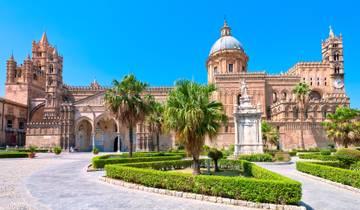
10 days
New Tour of Sicily from Palermo 10 Days
- ✓ Comprehensive Sicily tour
- ✓ Expert local guides included
- ✓ All accommodation arranged
- ✓ Transportation provided
8 days
Splendor of Sicily 8 Days Tour – from Catania
- ✓ Comprehensive Sicily tour
- ✓ Expert local guides included
- ✓ All accommodation arranged
- ✓ Transportation provided
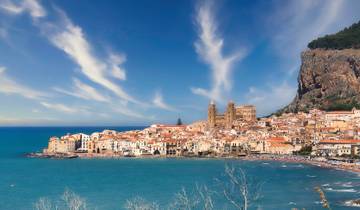
10 days
Journey of Charming Sicily – 10 Days
- ✓ Comprehensive Sicily tour
- ✓ Expert local guides included
- ✓ All accommodation arranged
- ✓ Transportation provided
Multi-day tour packages powered by TourRadar. Prices and availability subject to change.
Valley of the Temples – Agrigento
The Archaeological Park of the Valley of the Temples preserves ancient Akragas, one of the Mediterranean’s most important Greek colonies. Founded in 582 BCE, Akragas developed into a wealthy city rivaling Athens and Syracuse in power and cultural achievement. The Doric temples built during the 5th century BCE demonstrated the city’s prosperity and piety, with massive structures honoring major deities including Zeus, Concordia, Hera, and Heracles. The designation “Valley of the Temples” misleads somewhat, as the temples actually occupy a ridge overlooking the modern city rather than a valley floor, but the romantic 18th-century name persists despite geographic inaccuracy.
The Temple of Concordia achieves status as one of the world’s best-preserved Greek temples, with structural integrity resulting from conversion to Christian church in the 6th century CE. This transformation actually preserved the building when other temples suffered destruction or stone quarrying, as Christian use motivated maintenance and protection. The temple’s proportions exemplify classical Doric architecture, with six columns on the ends and thirteen along each side creating harmonious dimensions. The golden limestone, quarried locally, develops a warm honey color particularly striking during sunset when the stone seems to glow from within.
The Temple of Zeus Olympius, though largely destroyed, represented one of the most ambitious Greek temple projects ever attempted. The massive structure measured 113 by 56 meters with columns reaching nearly 20 meters in height, supported by giant telamones (male figures) discovered in fragments among the ruins. The temple’s enormous scale challenged architectural capabilities of the period, with construction beginning after the victory over Carthage in 480 BCE but never fully completed before Carthaginian destruction in 406 BCE. A reconstructed telamon displayed on site demonstrates the sculpture’s massive scale, with the figure towering over visitors and highlighting the temple’s overwhelming ambitions.
The Temple of Hera Lacinia occupies the highest point of the archaeological park, with its elevated position providing commanding views across the valley toward the sea. Twenty-five of the original thirty-four columns survive, some partially reconstructed in the 18th century using techniques later criticized for compromising authenticity. The temple demonstrates architectural sophistication through subtle refinements including slightly inclined columns and curved floor levels, optical corrections preventing visual distortions that would occur with purely geometric construction. These refinements reveal the advanced mathematical understanding Greek architects possessed, applying theoretical knowledge to practical building challenges.
The archaeological museum adjacent to the site displays artifacts discovered during excavations, including the reconstructed telamon, architectural fragments, pottery, and sculptural remains. The museum’s modern design complements ancient materials without competing for attention, with climate-controlled galleries protecting delicate objects while providing contextual information about site history and archaeological methods. The museum visit enhances understanding of the temples, as fragments displayed inside clarify decorative elements no longer visible on standing structures. Combined tickets covering both the park and museum offer the best value and most comprehensive educational experience.
Villa Romana del Casale – Piazza Armerina
The Villa Romana del Casale contains the richest and most extensive collection of late Roman floor mosaics in the world, with nearly 3,500 square meters of decorated surfaces surviving in exceptional condition. Built in the early 4th century CE, the complex served as luxury residence for a wealthy Roman, possibly a senator or high-ranking official who required impressive facilities for entertaining and displaying status. The villa’s remote location in central Sicily initially seemed puzzling until excavations revealed that the site occupied productive agricultural lands, with the estate’s wealth deriving from vast grain production feeding the Roman Empire.
The mosaic program demonstrates the highest artistic quality available to Roman patrons, with African and Sicilian workshops collaborating on the decorations. The mosaics combine mythological scenes, hunting episodes, circus games, daily life activities, and geometric patterns in a comprehensive program that transformed floor surfaces into narrative artworks. The technical execution achieves remarkable sophistication, with tesserae (mosaic tiles) as small as 5 millimeters enabling subtle color gradations and detailed figure rendering comparable to painting. The pigments derive from natural materials including glass paste, stone, and ceramic, creating a palette of hundreds of distinct colors.
The Bikini Girls mosaic, depicting young women engaged in athletic competitions, has become the villa’s most famous image, appearing in countless publications and attracting particular attention for its apparently modern representation of female athletes. The mosaic shows ten women performing exercises including running, throwing discus, playing ball games, and receiving victory crowns, all wearing two-piece garments resembling contemporary bikinis. The scene likely represents competitors in games honoring the goddess Flora, demonstrating that Roman women participated in athletic activities contrary to assumptions about ancient gender roles. The remarkable preservation allows detailed study of costume, hairstyles, and equipment, providing unprecedented insights into Roman leisure culture.
The Great Hunt mosaic occupies the villa’s longest corridor, stretching nearly 60 meters with continuous narrative depicting capture of exotic animals for Roman amphitheater games. The scene progresses from Africa through various Mediterranean regions, showing hunters pursuing lions, tigers, elephants, ostriches, and other species destined for brutal deaths entertaining Roman crowds. The mosaic documents the vast organizational effort required to supply amphitheaters, with ships, carts, and hundreds of personnel involved in the animal trade. While modern sensibilities recoil from the depicted cruelty, the mosaic provides invaluable documentation of practices that sustained Roman entertainment culture for centuries.
Conservation efforts have constructed protective roofs and walkways over the mosaics, allowing public viewing while preventing damage from weather and foot traffic. The structures created controversy when first installed, with critics arguing that modern interventions compromised the site’s authenticity, but practical preservation requirements outweighed aesthetic concerns. Recent renovations improved the protective systems while minimizing visual impact, with transparent barriers enabling close viewing while preventing accidental damage. The villa demonstrates successful balance between public access and conservation, allowing millions to experience extraordinary artworks while ensuring survival for future generations.
Late Baroque Towns of Val di Noto
The 1693 earthquake that devastated southeastern Sicily killed thousands and destroyed entire cities, creating unprecedented opportunities for urban reconstruction following contemporary Baroque principles. Eight towns received UNESCO inscription recognizing their exceptional architectural unity and urban planning coherence: Caltagirone, Catania, Militello in Val di Catania, Modica, Noto, Palazzolo Acreide, Ragusa, and Scicli. The reconstruction occurred rapidly between 1693 and the mid-18th century, with coordinated planning creating distinctive local styles within shared Baroque vocabulary. This concentration of late Baroque architecture achieves quality and consistency unmatched elsewhere in Europe.
Noto exemplifies the UNESCO inscription’s intentions, with the entire city rebuilt on a new site following comprehensive urban planning principles. The main corso creates a spectacular stage set, with churches, palaces, and public buildings forming carefully composed streetscapes where architecture and urban design merge seamlessly. The Cathedral of San Nicolò anchors the highest point, with its monumental staircase and imposing facade dominating the square while side streets radiate according to rational grid planning. The consistent use of local golden limestone throughout the city creates visual harmony despite diverse building functions and varying architectural details. Noto represents the ultimate expression of Baroque urban ideals, where entire cities become artworks designed according to aesthetic and rational principles.
Ragusa developed a unique split personality following the earthquake, with the upper town (Ragusa Superiore) rebuilt on the original site while the lower town (Ragusa Ibla) gradually reconstructed on earthquake ruins. This dual development created two distinct urban centers connected by dramatic staircases cutting through the ravine separating them. Ragusa Ibla maintains more intimate scale compared to Ragusa Superiore’s wider streets and larger squares, with tightly packed buildings creating labyrinthine neighborhoods perfect for wandering. The Church of San Giorgio, designed by Rosario Gagliardi, represents Ragusa Ibla’s architectural pinnacle, with its convex facade and soaring dome creating dynamic spatial effects characteristic of late Baroque invention.
Modica occupies a dramatic hillside location, with buildings cascading down the slopes in apparently chaotic arrangement that actually follows careful planning principles adapted to topography. The upper and lower towns connect through steep streets and staircases, with palaces and churches positioned for maximum visual impact when viewed from below. The Church of San Giorgio rivals Noto’s cathedral as the region’s most impressive Baroque monument, with Gagliardi’s design creating a wedding-cake effect through layered architectural elements rising to the central dome. Modica’s chocolate production tradition, inherited from Spanish rulers who learned techniques from Aztecs, adds cultural depth beyond architecture, with numerous historic chocolate makers maintaining cold-processing methods producing distinctive grainy texture.
Catania represents the largest and most complex reconstruction, with architect Giovanni Battista Vaccarini leading urban planning that created wide streets, spacious piazzas, and monumental public buildings throughout the city center. The use of black lava stone from Mount Etna combined with white limestone creates distinctive polychrome effects throughout Catania’s Baroque architecture. The Piazza del Duomo achieves remarkable spatial coherence, with cathedral, municipal buildings, and Amenano Fountain creating one of Sicily’s most successful Baroque ensembles. Catania’s reconstruction embraced modernity through wide streets accommodating wheeled traffic and public parks providing open space, innovations that other towns adopted more cautiously.
The smaller towns included in the UNESCO inscription offer more intimate experiences with less tourist infrastructure but equal architectural quality. Scicli’s Baroque palaces and churches nestle in a valley surrounded by dramatic cliffs, creating scenic settings where architecture and natural landscape merge beautifully. Caltagirone’s ceramic tradition manifests throughout its Baroque architecture, with maiolica tiles decorating buildings and the famous staircase of Santa Maria del Monte featuring 142 steps each decorated with different ceramic patterns. These smaller towns provide quieter alternatives to Noto and Ragusa while offering equally impressive Baroque architecture without overwhelming crowds.
Syracuse and the Necropolis of Pantalica
Syracuse developed into one of the Mediterranean’s most powerful Greek cities, rivaling Athens in political influence and cultural achievement. Founded by Corinthian colonists in 734 BCE, the city eventually expanded across five distinct districts, with Ortigia island forming the historic heart. The UNESCO inscription recognizes both the ancient city’s archaeological remains and the Necropolis of Pantalica, combining urban and prehistoric elements spanning nearly 4,000 years of continuous human occupation. This temporal depth distinguishes Syracuse from other ancient sites, as evidence of Greek, Roman, Byzantine, Arab, Norman, and Spanish periods layers throughout the city.
The Archaeological Park Neapolis preserves Syracuse’s most impressive ancient monuments, with the Greek theater, Roman amphitheater, and Paradise Quarry (Latomia del Paradiso) creating one of Sicily’s essential archaeological destinations. The Greek theater, carved directly from living rock, represents one of the ancient world’s largest theatrical venues, with a cavea accommodating 15,000 spectators. The theater hosted both dramatic performances and public assemblies, serving cultural and political functions in Syracuse’s democratic periods. Classical plays still perform in the theater during annual festivals, connecting contemporary audiences with ancient dramatic traditions in their original architectural context.
The Ear of Dionysius, an artificial cave in the Paradise Quarry, achieves fame through its remarkable acoustics and association with Syracuse’s tyrant Dionysius I. Legend claims that Dionysius used the cave as a prison, positioning himself at the top where the acoustics amplified conversations below, allowing him to eavesdrop on prisoners. While the story remains unverifiable, the cave does demonstrate extraordinary acoustic properties, with sounds amplified and distorted in eerie ways. The S-shaped interior reaches 23 meters in height, creating a space simultaneously impressive and unsettling, with the curved walls producing complex sound reflections that fascinated visitors since antiquity.
Ortigia island preserves Syracuse’s historic core, with narrow medieval streets overlying ancient Greek and Roman foundations. The Cathedral demonstrates Syracuse’s architectural layering perfectly, with the building incorporating columns from the ancient Temple of Athena visible both inside and on the exterior facade. This transformation from pagan temple to Christian church occurred in the 7th century CE, with the temple’s substantial structure providing ready-made walls requiring only minimal modification. The Baroque facade added in the 18th century created a stylistic overlay that conceals the ancient origins from external viewing, but the interior colonnade remains instantly recognizable as Greek Doric architecture.
The Necropolis of Pantalica occupies a remote limestone plateau 40 kilometers northwest of Syracuse, with over 5,000 tombs carved into cliff faces documenting Bronze Age civilizations preceding Greek colonization. The site served as a defensive refuge and burial ground for indigenous Sicels from the 13th to 8th centuries BCE, with the spectacular gorge location providing natural protection while the river valley below offered agricultural land and water resources. The tombs honeycomb the cliffs, creating an extraordinary landscape where human intervention dominates natural formations. Hiking trails traverse the site, allowing visitors to experience the dramatic setting while observing tombs at close range. The remoteness deters casual tourists, but the site rewards those willing to make the journey with authentic archaeological experiences free from crowds and commercial development.
Arab-Norman Palermo and Cathedral Churches
The UNESCO inscription “Arab-Norman Palermo and the Cathedral Churches of Cefalù and Monreale” recognizes nine monuments demonstrating unique cultural synthesis achieved during Norman rule of Sicily in the 12th century. The Norman kings embraced Islamic, Byzantine, and Western European traditions, creating architectural and artistic programs that combined these diverse influences into distinctive Sicilian expressions. This peaceful synthesis contrasts sharply with the religious conflicts dominating much of the medieval Mediterranean, with Norman Sicily demonstrating that multicultural coexistence produced extraordinary artistic achievements impossible in more homogeneous societies.
The Palatine Chapel in the Royal Palace (Palazzo dei Normanni) represents the pinnacle of Arab-Norman art, with the small space containing an overwhelming concentration of mosaics, muqarnas ceiling, and inlaid marble floor. Commissioned by Roger II in 1132, the chapel served as the royal family’s private place of worship, with no expense spared in creating a space that proclaimed Norman power and cultural sophistication. The golden Byzantine mosaics covering walls and ceiling depict biblical scenes and saints, while the wooden ceiling features muqarnas (honeycomb) decoration executed by Islamic craftsmen using techniques from North Africa and the Middle East. The floor’s opus sectile paving incorporates purple porphyry and serpentine marble in geometric patterns, demonstrating Roman inspiration interpreted through medieval sensibilities.
The Cathedral of Monreale, built by William II in 1174, contains 6,400 square meters of golden mosaics, creating one of the world’s most extensive medieval mosaic programs. The interior’s overwhelming visual impact results from complete coverage of walls and ceiling with biblical narratives, beginning with Genesis creation stories and progressing through Old and New Testament episodes to culminate in the massive Christ Pantocrator dominating the apse. The mosaics demonstrate Byzantine artistic principles executed by craftsmen likely trained in Constantinople, with the flowing drapery, expressive faces, and hierarchical scaling following Eastern Christian conventions. The cloister adjacent to the cathedral features 228 columns, each pair unique, with capitals carved in various styles demonstrating virtuoso stone carving and creative invention.
Palermo’s other Arab-Norman monuments demonstrate the style’s adaptability to different building types and functions. San Giovanni degli Eremiti, a former mosque converted to church, retains characteristic red domes while incorporating Norman architectural elements, creating hybrid structure emblematic of cultural exchange. San Cataldo preserves pure Norman-Arabic external appearance with three red domes, contrasting with many contemporaneous buildings where later renovations obscured original features. The Zisa palace demonstrates secular Norman-Arabic architecture, with the pleasure palace’s water features, geometric decoration, and spatial organization following Islamic precedents while serving Christian rulers. The Admiral’s Bridge (Ponte dell’Ammiraglio) shows Arab-Norman engineering applied to infrastructure, with the pointed arches demonstrating technical capabilities alongside aesthetic sensibilities.
The Cathedral of Cefalù, begun in 1131 by Roger II, demonstrates Norman architectural ambitions adapted to a smaller scale than Monreale. The twin towers flanking the facade create a fortress-like appearance characteristic of Norman religious architecture, while the interior mosaics focus on the apse rather than covering all surfaces. The Christ Pantocrator in the apse achieves extraordinary artistic quality despite smaller size compared to Monreale’s version, with the stern face and penetrating gaze commanding the space. The cathedral’s completion required centuries, with later additions never overwhelming the original Norman conception. The building’s prominent coastal location created a landmark visible to ships, asserting Norman power while providing spiritual symbolism for seafarers approaching Sicily.
The Arab-Norman monuments collectively demonstrate that medieval architectural achievement extended beyond the Gothic cathedrals of northern Europe, with Sicilian synthesis producing equally impressive and artistically sophisticated results through different means. The combination of Byzantine spirituality, Islamic geometry and decoration, and Norman structural ambition created buildings impossible to categorize within single stylistic traditions. This hybrid character occasionally confused art historians preferring neat classifications, but contemporary understanding values precisely these cross-cultural exchanges as the monuments’ defining characteristics rather than problems requiring explanation or apology.
Mount Etna
Mount Etna gained UNESCO World Heritage inscription in 2013, recognized not as a cultural site but for outstanding natural value and scientific significance. Europe’s tallest active volcano reaches approximately 3,350 meters elevation, though the summit height fluctuates due to eruptions and collapses. The volcano’s accessibility and long observation history make it invaluable for volcanology research, with documented eruptions extending back over 2,000 years providing unprecedented data for scientific study. Etna’s near-constant activity creates ongoing opportunities for research, with scientists monitoring seismic activity, gas emissions, and eruptive behaviors that inform understanding of volcanic processes globally.
The volcano’s formation began approximately 500,000 years ago, with the current cone developing through countless eruptions depositing lava and pyroclastic materials in layers thousands of meters thick. The complex volcanic history created diverse landscapes ranging from lunar-like lava fields to forested slopes, with vegetation patterns reflecting altitude, rainfall, and eruption history. The lower slopes support extensive agriculture including vineyards and orchards benefiting from volcanic soil fertility, while higher elevations transition to pine forests before reaching the barren summit zones where only pioneering plants colonize recent lava flows.
The UNESCO inscription encompasses 19,237 hectares of the volcano’s summit and flanks, protecting the most geologically significant areas while allowing continued human activity in surrounding zones. The protected area includes summit craters, Valle del Bove (a massive collapse depression), and numerous lateral craters and lava caves. The designation restricts development while permitting scientific research, tourism, and traditional agricultural practices compatible with conservation goals. The management plan balances multiple stakeholder interests including researchers, local communities, tourism operators, and conservation advocates, with ongoing negotiations required to maintain equilibrium between competing demands.
Volcanic tourism on Etna has expanded dramatically, with cable cars, four-wheel-drive vehicles, and guided hiking allowing access to high-altitude zones previously visited only by dedicated mountaineers and scientists. Multiple approach routes reach different areas of the volcano, with the southern ascent via Rifugio Sapienza remaining most popular among tourists. Guided summit visits led by certified volcanological guides provide safe access to active crater areas when conditions permit, though summit access closes during heightened volcanic activity. The northern route from Piano Provenzana offers alternative access with different landscape character, while numerous marked trails enable independent hiking on lower slopes.
The volcano’s influence extends far beyond the protected UNESCO zone, with Etna dominating eastern Sicily geographically, economically, and culturally. The volcanic soils enable exceptional agriculture, with Etna wines gaining international recognition for distinctive terroir character. Construction materials throughout the region incorporate volcanic stone, with the characteristic black lava appearing in everything from humble farm walls to elaborate Baroque palaces. The volcano features prominently in local culture and identity, with communities adapting to persistent volcanic hazards while deriving economic benefits from tourism and agriculture. This complex relationship between human populations and an active volcano demonstrates adaptation strategies relevant to volcanic regions worldwide, adding cultural significance to the site’s natural and scientific values.
Aeolian Islands
The Aeolian archipelago consists of seven volcanic islands north of Sicily, inscribed as UNESCO World Heritage for outstanding natural beauty and vulcanology significance. Lipari, Vulcano, Salina, Stromboli, Filicudi, Alicudi, and Panarea represent different stages of volcanic evolution, providing a natural laboratory for studying volcanic processes. The islands’ remoteness historically limited development, preserving natural landscapes and traditional lifestyles that disappeared from more accessible Mediterranean locations. The designation recognizes both geological phenomena and cultural landscapes shaped by human adaptation to volcanic environments over millennia.
Stromboli exemplifies the archipelago’s volcanic drama, with the “Lighthouse of the Mediterranean” erupting regularly for at least 2,000 years in one of Earth’s longest-continuing volcanic displays. The persistent Strombolian eruptions, characterized by regular explosions ejecting incandescent lava fragments, occur every 10-20 minutes, creating spectacular nighttime shows visible from boats offshore. Hiking to the summit crater allows close observation of volcanic activity, with authorized guides leading groups to viewing points where eruptions explode dramatically against the night sky. The volcano’s predictable behavior enables relatively safe observation, though sudden changes in activity occasionally necessitate evacuations and access restrictions.
Lipari, the archipelago’s largest and most populated island, served as obsidian source in prehistory, with the volcanic glass exported throughout the Mediterranean for tool making. The extensive obsidian quarries document intensive prehistoric extraction, with the trade establishing Lipari as an important commercial center thousands of years before classical Greek civilization. The island’s archaeological museum contains exceptional collections documenting the Aeolian Islands’ long human occupation, with artifacts from Neolithic through Roman periods illustrating the islands’ strategic importance and cultural exchanges. The museum ranks among southern Italy’s finest archaeological collections, with the quality and breadth of holdings surprising visitors expecting a modest provincial institution.
Vulcano provides accessible volcanic phenomena including fumaroles, hot springs, and sulfurous mud baths attracting visitors seeking therapeutic treatments. The island’s name derives from the Roman god of fire and smithing, with ancients believing that Vulcan’s forge existed beneath the crater. The last major eruption occurred in 1888-1890, though ongoing geothermal activity maintains surface manifestations including the Gran Cratere emitting sulfur vapor. Hiking to the crater rim provides spectacular views across the archipelago while demonstrating volcanic processes through visible fumarole fields and sulfur deposits. The therapeutic mud baths, fed by volcanic heating of seawater, maintain centuries-old traditions of balneotherapy in natural volcanic settings.
Salina distinguishes itself as the greenest island, with higher rainfall supporting vegetation absent from drier Aeolian neighbors. The extinct volcanic cones Monte Fossa delle Felci and Monte dei Porri provide hiking opportunities, with trails ascending through Mediterranean maquis to summit viewpoints overlooking the archipelago. The island produces exceptional Malvasia wine, a sweet wine made from grapes dried in the sun before fermentation, continuing traditions dating to Greek antiquity. Capers grown on Salina achieve protected designation status, with the buds and berries (cucunci) essential to Aeolian cuisine and exported throughout Italy. The film “Il Postino” used Salina as its primary location, introducing international audiences to the island’s beauty and slow-paced lifestyle.
The smaller islands Panarea, Filicudi, and Alicudi maintain the archipelago’s most traditional character, with limited development preserving austere beauty and quiet rhythms. Panarea attracts wealthy visitors despite small size and limited services, with the island’s prehistoric village remains demonstrating occupation dating to Bronze Age. Filicudi and Alicudi remain more isolated, with steep terrain and limited infrastructure deterring all but the most adventurous travelers. The absence of cars on Alicudi creates an almost medieval atmosphere, with donkeys transporting goods along stepped paths connecting the scattered houses. These islands demonstrate lifestyles increasingly rare in the modern Mediterranean, where human activity adapts to environmental constraints rather than transforming landscapes to suit convenience.
Conservation Challenges and Management
Managing UNESCO World Heritage sites requires balancing preservation requirements with public access, economic development, and local community needs. Sicily’s sites face diverse threats including urban encroachment, tourism pressure, inadequate funding, natural disasters, and climate change. Effective management demands coordination between national and regional authorities, archaeological superintendencies, municipal governments, and community stakeholders, with competing interests sometimes creating conflicts that delay necessary conservation work. The UNESCO designation brings international prestige and monitoring, but implementation of protection measures depends on Italian authorities with limited resources and complex bureaucratic procedures.
Tourism generates economic benefits while creating conservation problems through increased visitor numbers, infrastructure development, and changed land use patterns. Popular sites like the Valley of the Temples experience heavy visitor traffic requiring careful management to prevent damage while maintaining public access. The challenge intensifies during peak summer months when thousands of daily visitors stress both archaeological remains and support facilities. Limiting visitor numbers conflicts with economic interests and public access principles, creating tensions that sites worldwide struggle to resolve satisfactorily. Digital reservation systems, staggered entry times, and visitor education programs offer partial solutions, but mass tourism’s fundamental impacts remain difficult to mitigate completely.
Climate change threatens Sicily’s heritage through increased temperatures, changing rainfall patterns, more intense storms, and rising sea levels. Stone monuments suffer accelerated weathering from thermal stress and moisture variation, while biological growth on surfaces creates chemical and physical damage. Rising temperatures enable termites and other pests to expand their ranges, threatening wooden architectural elements and archaeological materials. Sea level rise endangers coastal sites including Syracuse’s Ortigia island, where storm surge flooding already damages historic buildings. Adaptation strategies require significant investment in protective interventions, monitoring systems, and emergency response capabilities that exceed current funding levels.
Urban development pressure threatens archaeological sites through both authorized construction and illegal building that encroaches on protected zones. Sicily’s economic challenges create pressures to prioritize development over conservation, with heritage protection sometimes perceived as obstacle to economic growth rather than opportunity. Effective protection requires not just legal restrictions but also community engagement that builds local support for conservation through demonstrable benefits. Archaeological parks providing employment, attracting visitors who support local businesses, and offering educational opportunities can build constituencies supporting preservation rather than viewing it as external imposition limiting development options.
Funding constraints limit conservation capacity, with Italian cultural heritage budgets insufficient to address accumulated maintenance backlogs and ongoing deterioration. Major restoration projects attract international support and attention, but routine maintenance receives less dramatic funding despite being essential for long-term preservation. The privatization of some management functions has improved certain sites while raising concerns about commercialization and unequal resource distribution. European Union funding provides crucial support for major projects, though bureaucratic requirements and matching fund obligations sometimes prevent access to available resources. Sustainable heritage management requires stable, adequate funding rather than crisis-response approaches that allow deterioration until dramatic interventions become necessary.
Visiting Sicily’s UNESCO Sites Practically
Planning efficient routes between UNESCO sites requires understanding Sicily’s geography and transportation infrastructure, with sites distributed across the island necessitating careful itinerary design. The eastern cluster including Syracuse, Mount Etna, and the Villa Romana del Casale allows relatively compact routing, while western sites require separate journeys. The Late Baroque towns concentrate in southeastern Sicily, enabling multiple site visits in a single day trip. Palermo’s Arab-Norman monuments occupy the city itself or close surroundings, with Monreale and Cefalù accessible as day trips. The Aeolian Islands require ferry transportation from Milazzo, with island-hopping routes enabling visits to multiple islands though the remoteness demands dedicated time.
Public transportation reaches most UNESCO sites, though efficiency varies dramatically between locations. Syracuse, Palermo, Catania, and Agrigento connect well to the rail network, with regional trains providing affordable though slow transportation. Buses serve smaller towns and more remote sites, with schedules requiring careful research and often inconvenient timing for day trips. Rental cars provide maximum flexibility and efficiency, enabling itineraries impossible with public transportation and allowing exploration of surrounding areas beyond the primary UNESCO monuments. The significant distances between sites make self-drive touring practical for those comfortable navigating Italian roads, though urban parking challenges and the Aeolian Islands’ ferry requirements create situations where cars become burdens rather than assets.
Accommodation strategies depend on touring approaches, with choices between major city bases enabling day trips versus moving between locations to minimize travel time. Basing in Palermo allows exploration of Arab-Norman sites plus day trips to Monreale and Cefalù, while Syracuse provides access to the ancient city and reasonable proximity to Villa Romana del Casale and the Late Baroque towns. The Late Baroque towns themselves offer charming accommodation options, with staying in Noto, Ragusa, or Modica enabling evening exploration after day-trippers depart. Mount Etna’s surroundings host numerous hotels and agriturismo operations catering to volcano tourists and wine enthusiasts. The Aeolian Islands require island-based accommodation, with ferry schedules limiting same-day visits from the mainland.
Entry fees vary between sites, with some offering integrated tickets covering multiple monuments while others charge separately for each location. The Valley of the Temples in Agrigento operates a single comprehensive ticket covering the park and associated museum. Syracuse’s archaeological park sells separate tickets for the Neapolis archaeological area and Ortigia sites. The Villa Romana del Casale charges individual entry with no combined options for nearby attractions. Palermo’s Arab-Norman sites require separate admission for each monument, though some offer reduced prices for visitors with tickets from other locations. Advance research helps budget for entry fees that can accumulate significantly when visiting multiple sites, with some travelers surprised by costs exceeding expectations based on comparisons with free or low-cost sites elsewhere.
Guided tours offer educational value, with knowledgeable guides providing historical context and pointing out details that independent visitors might miss. Archaeological sites particularly benefit from expert interpretation, as ruins that appear as mere stone fragments without explanation reveal complex histories when properly contextualized. Guides licensed by Italian authorities undergo rigorous training, ensuring generally high-quality interpretation though individual guide abilities vary. Private tours cost significantly more than group tours but provide personalized attention and flexible pacing. Audio guides offer compromise solutions, providing information while allowing independent exploration at personal pace. Self-guided visits remain perfectly viable for travelers preferring independence or working with limited budgets, with quality guidebooks and preparation enabling informed experiences without guide expenses.
Frequently Asked Questions
Which UNESCO site in Sicily receives the most visitors annually?
The Valley of the Temples in Agrigento attracts the highest visitor numbers among Sicily’s UNESCO sites, with the exceptional preservation and dramatic setting making it Sicily’s most iconic archaeological destination. The site’s accessibility from major cities and cruise ship ports contributes to heavy visitation, particularly during summer months and holiday periods. Mount Etna likely receives comparable or higher total visitors, though many never enter the formal UNESCO protected zone, instead observing from surrounding viewpoints or visiting commercial tourist facilities outside protected boundaries. Syracuse’s multiple dispersed sites make total visitor counts difficult to aggregate accurately, though the archaeological park Neapolis alone receives substantial crowds throughout tourist seasons.
Can I climb to Mount Etna’s summit craters independently?
Independent hiking to Etna’s summit craters is technically possible but requires significant mountaineering experience, proper equipment, and careful attention to current volcanic activity levels. The summit access regulations require authorized guides for the most active crater zones, with these restrictions enforced for safety reasons as volcanic activity creates serious hazards. Lower altitude hiking up to approximately 2,900 meters can be attempted independently using marked trails, though the high-altitude environment, potential for sudden weather changes, and volcanic gas exposure require adequate preparation. Most visitors reach high elevations using cable cars and authorized four-wheel-drive services, with guided summit excursions providing safe access when volcanic conditions permit. Attempting independent summit access without proper experience and equipment risks serious injury or death, as volcanic environments present multiple hazards beyond obvious lava and eruption dangers.
Are the Late Baroque towns difficult to distinguish from each other?
While the Late Baroque towns share reconstruction timelines and broad stylistic similarities, each developed distinctive character reflecting local stone, topography, and individual architects’ approaches. Noto impresses through comprehensive planning creating theatrical streetscapes, while Ragusa’s split personality between upper and lower towns creates unique urban structure. Modica’s dramatic hillside setting differs from Noto’s more level terrain, with topography shaping architecture differently despite shared Baroque vocabulary. The smaller towns like Scicli offer intimate experiences contrasting with Noto and Ragusa’s grander scale. Visiting multiple towns reveals these distinctions clearly, with architecture enthusiasts appreciating subtle variations while casual visitors might find one or two towns sufficient without needing comprehensive coverage. Each town rewards exploration beyond main monuments, with residential neighborhoods and minor churches demonstrating consistent attention to architectural quality throughout entire urban fabrics.
How much time should I allocate for visiting Villa Romana del Casale?
A thorough visit to the Villa Romana del Casale requires approximately two to three hours to view all mosaics without rushing and appreciate the artistic details. The protective walkways system means that visitors must follow designated paths, preventing shortcuts or abbreviated routes through the complex. Those particularly interested in Roman art and history might spend four hours or more, while visitors with limited interest in ancient mosaics could complete basic tours in 90 minutes. The site’s remote location means that reaching it requires substantial travel time from most Sicilian accommodations, with the journey typically consuming an additional two to three hours round trip from central Sicily locations. Planning half-day excursions allows adequate time for travel and thorough site exploration, with some visitors combining Villa Romana del Casale with Piazza Armerina town visits or other regional destinations to justify the travel investment.
Which is more impressive: the Arab-Norman monuments in Palermo or the Late Baroque towns?
The Arab-Norman and Late Baroque sites offer fundamentally different experiences appealing to distinct interests. Arab-Norman monuments impress through intricate decorative details, golden mosaics, and multicultural synthesis, with individual buildings containing extraordinary concentrated artistry. The Late Baroque towns demonstrate urban planning and architectural coordination across entire city centers, with impact deriving from comprehensive environments rather than individual monuments. Those fascinated by religious art, Byzantine culture, and medieval history gravitate toward the Arab-Norman sites, while architecture enthusiasts and urban design specialists often prefer the Baroque towns. Both merit UNESCO recognition for different reasons, with quality so high that determining absolute superiority becomes subjective rather than objective assessment. Visitors with limited time face difficult choices, though Sicily’s compact geography enables seeing both during extended visits of seven to ten days or more.
Can the Aeolian Islands be visited as day trips from Sicily?
Day trips to the Aeolian Islands from mainland Sicily are logistically possible but generally unsatisfying, with ferry travel consuming hours that limit island exploration time. The closest departure point is Milazzo, requiring travel time from other Sicilian locations before even reaching the port. The nearest islands Lipari and Vulcano can be visited in single days, with early morning departures and evening returns allowing several hours on island. However, the Aeolian experience benefits enormously from overnight stays, with evening and early morning periods offering the islands at their most atmospheric when day-trippers depart. Stromboli’s volcano viewing works best after dark, necessitating overnight accommodation to witness eruptions properly. The relaxed island pace conflicts with day-trip rushing, with the best Aeolian experiences requiring surrender to slow rhythms impossible when constrained by fixed ferry departures. Budget at least two nights to experience the islands properly, with three to five nights enabling multi-island exploration at reasonable pace.
Are UNESCO sites in Sicily accessible for visitors with mobility limitations?
Accessibility varies dramatically between sites, with modern facilities like the Villa Romana del Casale’s elevated walkways accommodating wheelchairs well, while ancient archaeological sites with uneven terrain present significant challenges. The Valley of the Temples includes accessible paths to major temples, though complete site exploration requires navigating slopes and rough surfaces. Syracuse’s Neapolis archaeological park offers partial accessibility with assistance, though some areas remain challenging. Palermo’s Arab-Norman monuments vary, with churches generally more accessible than palaces or archaeological zones. Mount Etna’s cable car provides access to mid-mountain altitudes, though summit areas remain inaccessible for those with serious mobility limitations. The Late Baroque towns present considerable challenges due to steep streets, staircases, and historic urban fabric not designed for wheelchair access. Visitors with mobility limitations should research specific sites in advance and consider guided services offering specialized assistance rather than assuming modern accessibility standards apply throughout.
Which UNESCO site offers the best photography opportunities?
Every UNESCO site provides excellent photography opportunities for different reasons and aesthetic preferences. The Valley of the Temples excels during golden hour when the limestone glows warm against blue skies, with the Temple of Concordia photographing particularly beautifully. Mount Etna offers dramatic landscapes combining volcanic terrain with distant sea views, with summit areas providing otherworldly scenes. The Late Baroque towns create architectural photography opportunities throughout the day, with ornate building facades and designed urban spaces rewarding patient composition work. Villa Romana del Casale presents challenges due to low light levels and walkway barriers, but the colorful mosaics photograph well with proper technique. Palermo’s Arab-Norman mosaics and architecture demand technical skill managing interior lighting and reflective surfaces. The Aeolian Islands combine volcanic landscapes with charming traditional architecture, offering diverse subjects from Stromboli’s eruptions to white-washed buildings against azure seas. Syracuse mixes ancient archaeology with Baroque urbanism, providing varied photographic subjects within compact areas. Rather than identifying a single best site, photographers should consider which subjects align with personal interests and technical capabilities.
Do I need advance reservations for Sicily’s UNESCO sites?
Most Sicilian UNESCO sites do not require advance reservations for individual visitors, with tickets purchased directly at entrance areas on arrival. However, during peak summer months and holidays, major sites like the Valley of the Temples can experience long queues, making online advance purchases worthwhile to bypass ticket lines even when reservations aren’t mandatory. Guided tours of Mount Etna’s summit areas require booking with authorized guides who secure necessary permits, with these specialized excursions demanding advance planning due to limited daily capacity and weather dependencies. Some sites including Palermo’s Palatine Chapel may require timed entry tickets during very busy periods, though standard conditions allow walk-up visits. Groups require advance arrangements, with many sites offering discounted rates for organized tours booked ahead. The general recommendation involves researching specific sites before travel to understand current policies, as pandemic-related changes and capacity management systems may have modified historical practices allowing unrestricted walk-up access.
How does Sicily’s UNESCO heritage compare to other Mediterranean destinations?
Sicily’s UNESCO concentration rivals or exceeds most Mediterranean destinations, with seven inscriptions encompassing extraordinary diversity from prehistoric through Baroque periods. Greece naturally excels in classical heritage, with sites like Delphi, Olympia, and the Athenian Acropolis matching or exceeding Sicilian Greek remains in historical significance though not always preservation quality. Italy’s mainland contains more total UNESCO sites given larger area, but Sicily’s concentration within limited geography creates impressive density. Turkey’s UNESCO sites span tremendous chronological range from Hittite through Ottoman periods, offering different but equally impressive cultural heritage. The distinction lies not in absolute rankings but in the remarkable concentration of high-quality sites representing diverse civilizations within Sicily’s compact territory, enabling visitors to experience Greek, Roman, Byzantine, Arab, Norman, and Baroque heritage without the geographic dispersion required for comparable coverage elsewhere in the Mediterranean.