
Sibiu Travel Guide 2026: Transylvania UNESCO Old Town Guide
Sibiu stands as one of Transylvania’s most enchanting medieval cities, where cobbled squares reveal Saxon heritage through Gothic spires and Baroque facades crowned with mysterious “watching eyes.” The historic center, on Romania’s UNESCO Tentative List, offers perfectly preserved architecture alongside vibrant cultural life that earned it European Capital of Culture designation, making 2026 an ideal year for exploring this Transylvanian gem.
Key Takeaways:
- Budget Planning 2026: Daily costs range $44-69 for budget travelers, $65-100 for mid-range comfort, and $120-205 for luxury experiences, all per person assuming two sharing accommodation
- UNESCO Heritage Context: While Sibiu’s historic center remains on Romania’s UNESCO Tentative List, nearby fortified Saxon churches including Biertan and Viscri hold full World Heritage status and make excellent day trips
- Compact Walkability: The historic center spans just 2 square kilometers with three interconnected main squares, making most major attractions accessible within 10-15 minute walks from each other
- Seasonal Pricing Variations 2026: Summer (June-August) accommodation costs peak 40-50% higher than winter rates, with May and September offering optimal value combining pleasant weather with mid-season pricing
- Transportation Value: Public buses cost just 3 RON ($0.70) per ride making city exploration exceptionally affordable, while the historic center’s pedestrian zones eliminate transport needs for most sightseeing
- Cultural Events 2026: Sibiu hosts year-round festivals including the International Theatre Festival (June), ASTRA Film Festival (October), and renowned Christmas markets (November-December), each drawing international visitors
People Also Ask About Sibiu Travel 2026
Is Sibiu Worth Visiting in 2026?
Sibiu ranks among Romania’s most rewarding destinations in 2026, offering exceptional value, remarkably preserved medieval architecture, and authentic cultural experiences without Prague or Vienna crowds. The historic center earned UNESCO recognition and European Capital of Culture designation, validating its significance. Daily costs of $65-100 per person for mid-range travel deliver experiences costing double elsewhere in Europe. The compact historic center concentrates attractions within walking distance, maximizing sightseeing efficiency while minimizing transportation expenses.
The city provides ideal positioning for exploring Transylvania’s UNESCO-inscribed fortified churches, with Biertan, Viscri, and Valea Viilor reachable as day trips. Cultural programming rivals major European capitals, with the International Theatre Festival, ASTRA Film Festival, and Jazz Festival attracting world-class performers. Unlike overtouristed competitors, Sibiu maintains authentic local character—residents still occupy the historic center rather than surrendering to tourism monoculture.
How Much Does Sibiu Cost Per Day in 2026?
Daily costs in Sibiu for 2026 range $44-69 per person for budget travelers, $65-100 for mid-range comfort, and $120-205 for luxury experiences, assuming two people sharing accommodation. Budget travelers staying in hostel dormitories (80-120 RON/$18-27 nightly) and eating at daily menu restaurants manage well on the lower end. Mid-range visitors booking 3-star hotels and dining at quality restaurants without premium wine selections fit comfortably in the middle range. Luxury travelers selecting 4-5 star properties and upscale dining approach the upper bounds.
These figures include accommodation, three meals, local transportation, and museum admissions but exclude international flights, alcohol beyond casual consumption, or premium guided tours. Summer high season (July-August) pushes accommodation costs 40-50% higher than quoted mid-range, while shoulder seasons (May, September-October) offer the best value proposition combining favorable weather with moderate pricing.
What Are the Must-See Attractions in Sibiu 2026?
Sibiu’s essential attractions concentrate in the pedestrian-friendly historic center. Three interconnected main squares—Piata Mare, Piata Mica, and Piata Huet—form the heart, each distinguished by unique character and surrounding landmarks. The Council Tower (15 RON/$3) provides panoramic city views, while the Bridge of Lies connects upper and lower town sections across atmospheric medieval passageways.
ASTRA Museum, spanning 96 hectares with 400 traditional buildings, ranks as Romania’s most important open-air ethnographic museum, requiring half-day minimum for proper exploration. The Brukenthal National Museum (50 RON/$10) houses Romania’s oldest art collection in spectacular Baroque palace setting. The Lutheran Evangelical Cathedral dominates Piata Huet with its 73-meter tower offering alternative city vistas (25 RON/$5 combined ticket). Free attractions include the atmospheric Railway Museum showcasing historic locomotives and wandering the “eyes of the city” architectural details unique to Sibiu’s rooflines.
When Is the Best Time to Visit Sibiu in 2026?
May, early June, and September represent optimal visiting windows for Sibiu in 2026, balancing pleasant weather, manageable crowds, and mid-season pricing. May averages 18-22°C with spring blooms enhancing park settings and outdoor café culture thriving. September delivers similar temperatures with autumn colors particularly stunning at ASTRA Museum’s forested grounds. Both months see accommodation rates 25-35% below summer peaks while maintaining reliable weather for outdoor exploration.
June brings the acclaimed International Theatre Festival transforming the city into performance venue, worth timing visits around if cultural programming interests you. December’s Christmas markets draw substantial crowds but create magical atmosphere with illuminated squares and traditional crafts—book accommodation 2-3 months ahead for this period. July-August offer longest daylight hours and warmest temperatures (25-28°C) but coincide with highest prices and peak tourist density. Winter (January-March) sees rates drop 40-50% with snow-covered medieval architecture creating photogenic scenes, though several outdoor sites reduce hours or close entirely.
Extended multi-day tours – 5+ days
Featured Transylvania Multi-Day Tour Packages
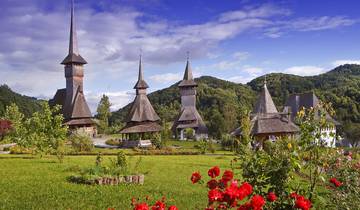
8 days
Classic Romania Tour (small group)
- ✓ Comprehensive Transylvania tour
- ✓ Expert local guides included
- ✓ All accommodation arranged
- ✓ Transportation provided
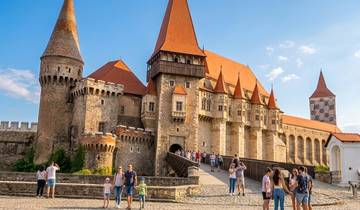
4 days
4-Day Transylvania Small Group Tour: Corvin Castle, Dracula's Castle & Transfagarasan
- ✓ Comprehensive Transylvania tour
- ✓ Expert local guides included
- ✓ All accommodation arranged
- ✓ Transportation provided
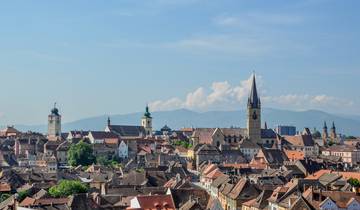
8 days
Hiking in South Transylvania
- ✓ Comprehensive Transylvania tour
- ✓ Expert local guides included
- ✓ All accommodation arranged
- ✓ Transportation provided

5 days
Transylvanian Long Weekend
- ✓ Comprehensive Transylvania tour
- ✓ Expert local guides included
- ✓ All accommodation arranged
- ✓ Transportation provided
Multi-day tour packages powered by TourRadar. Prices and availability subject to change.
Introduction to Sibiu: Gateway to Saxon Transylvania
Sibiu emerged as Transylvania’s most important fortified Saxon settlement, established by German colonists in the 12th century who transformed a strategic Cibin River crossing into a powerhouse of medieval commerce and culture. Unlike many European historic centers reduced to museum pieces, Sibiu maintains living city character where university students populate centuries-old cafés, local families shop at covered markets operating since the 1300s, and Romanian, Saxon, and Hungarian cultural traditions interweave through daily life. The city’s position as Transylvania’s Saxon administrative, religious, and economic capital for nearly six centuries left architectural legacy now attracting visitors seeking authentic medieval atmosphere without manufactured tourist zones.
The historic center’s distinctive “watching eyes”—dormer windows resembling lidded eyes peering from steep-pitched roofs—have become Sibiu’s signature visual element, photographed endlessly but never losing their slightly unsettling charm. These architectural details emerged from practical Saxon building traditions maximizing attic ventilation while creating the anthropomorphic effect that gives the city its nickname. Beyond aesthetic appeal, the intact medieval street pattern, defensive towers, and three-tiered fortification system demonstrate remarkable preservation, qualifying the historic ensemble for Romania’s UNESCO Tentative List with eventual full inscription anticipated.
Sibiu’s transformation from fading post-communist backwater to European Cultural Capital exemplifies thoughtful heritage preservation coupled with cultural programming. The 2007 designation catalyzed restoration funding that revitalized crumbling facades while strict planning regulations prevented the pastiche modernization afflicting many Eastern European centers. Today’s visitors encounter genuinely preserved medieval fabric rather than reconstructed approximations, with original cobblestones, Gothic vaulting, and Baroque detailing intact throughout the protected zones.
The city functions as ideal base for exploring Transylvania’s UNESCO-inscribed fortified churches, with seven of Romania’s inscribed monuments within 90-minute drive. Day trips to Biertan, Viscri, Valea Viilor, and other Saxon villages reveal the broader settlement pattern that made this region unique in medieval Europe. Combined with Sibiu’s own museums, festivals, and dining scene, visitors can construct week-long Transylvanian itineraries never repeating experiences while maintaining single accommodation base.
Modern Sibiu balances heritage preservation with contemporary cultural vitality. The Radu Stanca National Theatre stages productions drawing international directors, the ASTRA Film Festival showcases Romanian and European cinema, and the Jazz Festival attracts world-renowned musicians—all presented in venues ranging from medieval courtyards to purpose-built modern halls. This cultural density, unusual for a city of 140,000, creates atmosphere more typical of capitals while maintaining provincial affordability and accessibility.
Understanding Sibiu’s UNESCO Heritage Context 2026
Sibiu’s historic center holds position on Romania’s UNESCO Tentative List under the nomination “The Historic Centre of Sibiu and its Ensemble of Squares,” submitted in 2004 with examination deferred in 2007 pending potential serial nomination integration with other Saxon heritage sites. While not yet holding full World Heritage inscription, this tentative status recognizes the center’s Outstanding Universal Value and signals likely future designation. The nomination emphasizes Sibiu’s role as administrative capital of Transylvania’s Saxon settlement, its exceptionally preserved medieval urban plan, and the ensemble of three interconnected squares representing different periods of development.
The nomination highlights Sibiu’s strategic importance as Transylvania’s most significant fortified Saxon town, serving as administrative, religious, and economic center for nearly six centuries. The city’s evolution from 12th-century colonization through Protestant Reformation headquarters to Austro-Hungarian provincial capital left layered architectural testament visible in building styles spanning Gothic, Renaissance, and Baroque periods. Unlike many medieval centers rebuilt after wars or modernized during industrial expansion, Sibiu retained its essential character through relative economic stagnation during communist decades—preservation through poverty that ironically protected heritage integrity.
The three-square ensemble demonstrates medieval urban planning principles. Piata Mare (Large Square) served as commercial and administrative center, surrounded by guild houses and civic buildings. Piata Mica (Small Square) functioned as artisan quarter with smaller-scale buildings housing craftsmen workshops. Piata Huet (Cathedral Square) anchored religious life around the Lutheran Cathedral. This functional differentiation within compact urban space created efficient medieval city operating on walking-scale distances, a planning model largely lost in post-medieval European urbanism.
Travelers should understand that tentative list status means Sibiu lacks the UNESCO World Heritage Site designation found at nearby fortified churches. However, this distinction remains largely technical—the historic center’s preservation quality, architectural significance, and cultural value equal or exceed many inscribed sites. The pending full inscription process focuses on bureaucratic coordination rather than heritage merit questions. Visiting in 2026 offers opportunity to experience the center before potential UNESCO designation brings increased visitor pressure and commercialization that often accompanies World Heritage status.
Sibiu’s Historic Squares and Upper Town Landmarks 2026
Piata Mare, Sibiu’s largest square, hosts the Brukenthal National Museum, City Hall, and Holy Trinity Roman Catholic Church while serving as venue for major events throughout the year. The 142-meter by 93-meter expanse creates dramatic setting for the Christmas markets, theatre festival performances, and outdoor concerts that animate Sibiu’s cultural calendar. The square’s distinctive Romanian Baroque and Gothic Revival buildings display the “watching eyes” architectural detail most prominently, with rows of dormer windows creating the anthropomorphic effect visitors find endlessly photogenic.
The Council Tower anchors Piata Mare’s northwest corner, its 73-meter height making it Sibiu’s most recognizable landmark. First constructed in the 13th century as part of the second ring of fortifications, the tower served as watchtower, grain storage, and civic symbol. Climbing the tower costs 15 RON ($3) and provides panoramic views across the terracotta rooftops, rewarding the narrow spiral staircase ascent with sight lines extending to the Carpathian Mountains on clear days. The tower’s clock mechanism, installed in 1826, still keeps time mechanically, chiming hourly across the historic center.
The Brukenthal National Museum occupies the magnificent Baroque palace built 1778-1787 for Baron Samuel von Brukenthal, Habsburg governor of Transylvania. The museum ranks as Romania’s first institution of its kind, opening to public in 1817 well before most European national collections. The European Art Gallery displays Brukenthal’s personal collection emphasizing Flemish and Dutch masters, with works by Jan van Eyck, Pieter Bruegel the Younger, and Lucas Cranach the Elder. Admission costs 50 RON ($10), with combination tickets covering the museum’s six locations (Contemporary Art, History, Natural History, Pharmacy, Hunting) available at 120 RON ($24) for 48-hour validity—excellent value for museum enthusiasts planning multiple visits.
Piata Mica connects to Piata Mare via narrow passageways, creating more intimate scale lined with cafés spilling onto cobblestones. The Bridge of Lies spans between the two squares, Sibiu’s oldest cast-iron bridge dating to 1859. Local legend claims the bridge creaks when someone tells a lie while crossing, though structural engineering explains the sounds more prosaically through thermal expansion. The Museum of Pharmacy occupies a building housing Sibiu’s first apothecary since 1494. The museum charges 20 RON ($4) admission and displays pharmaceutical equipment, alchemical instruments, and medicinal herb collections across four atmospheric rooms preserving 18th-century shop interiors.
Piata Huet, smallest and most tranquil of the three squares, centers on the Lutheran Evangelical Cathedral, the city’s dominant religious landmark. The Gothic structure, begun in 1320 and completed in 1520, rises 73 meters at its tower peak. Tickets cost 15 RON ($3) for church access only or 25 RON ($5) combined with tower climb. The interior preserves exceptional late-Gothic frescoes, a monumental organ with 6,002 pipes, and collection of funerary monuments to Saxon nobility. Climbing the 141 tower steps delivers views rivaling the Council Tower from different vantage emphasizing the lower town quarters and Cibin River valley.
The stairs passages connecting upper and lower town represent another distinctive Sibiu feature, with the Stairs Passage (Passage of Stairs) providing the most photographed route. These covered stairways served defensive purposes in medieval times, allowing garrison movement between fortification levels while protecting soldiers from enemy fire. Today they create atmospheric pedestrian links, particularly scenic during evening illumination when warm lighting transforms the vaulted passageways into romantic architectural set pieces.
ASTRA National Museum Complex: Transylvania’s Living Village 2026
The ASTRA National Museum Complex, formally known as the Dumbrava Sibiului Open-Air Folk Civilization Museum, ranks as Romania’s most important open-air ethnographic museum, established in 1905 with current 96-hectare site developed throughout the 20th century. The museum preserves over 400 traditional buildings relocated from villages across Romania, representing every major ethnographic region and demonstrating the evolution of rural architecture, technology, and daily life from the 17th through early 20th centuries. This extraordinary collection requires minimum half-day visit for basic overview, full day for thorough exploration of the various ethnographic zones.
The museum organizes exhibits by geographic region and functional category. The Traditional Popular Civilization section displays residential architecture from Transylvania, Moldavia, Wallachia, and other Romanian provinces, with fully furnished interiors demonstrating period-appropriate living conditions. The technological exhibits showcase windmills, watermills, oil presses, and fulling mills in working condition, many still demonstrating traditional processes during special events. The sacred architecture collection preserves wooden churches representing distinctive regional styles, from the shingled roofs of Maramureș to the stone-based structures of southern Transylvania.
Admission costs 35 RON ($7) per adult, with reduced rates of 15 RON ($3) for seniors over 65 and 9 RON ($2) for students. The museum operates May through September daily 8:00 AM to 8:00 PM, October through April 9:00 AM to 5:00 PM. Free admission applies the first Wednesday of every month, though expect crowded conditions during this promotional period. After 6:00 PM bikes are permitted on museum grounds, offering efficient way to cover the extensive site—bike rentals available at the entrance for 15 RON ($3) daily.
Bus line 13 provides direct service from Thalia Hall in city center to the museum entrance, departing every 30 minutes with 20-minute journey time. The bus stop sits directly at the museum gates, eliminating any walking distance. Driving takes approximately 8 minutes from historic center with ample parking available at 5 RON ($1) per hour. Walking or cycling from city center covers approximately 6.5 kilometers, pleasant route through residential neighborhoods and along Dumbrava Forest edges but requiring 75-90 minutes each direction.
The museum hosts seasonal festivals celebrating traditional crafts, music, and cuisine, with major events scheduled during summer months. The Easter and Pentecost celebrations feature folk performances, traditional food preparation demonstrations, and craft workshops where visitors attempt pottery, weaving, or woodcarving under artisan guidance. October’s harvest festivals showcase wine-making, distilling, and food preservation techniques. These special events carry supplemental admission charges typically 10-20 RON ($2-5) above standard entry.
Plan museum visits for morning hours when lighting conditions favor photography and before afternoon heat impacts outdoor walking comfort. The site includes restaurants serving traditional Romanian dishes at reasonable prices—expect 40-60 RON ($9-14) for substantial meals. Shaded areas and benches appear throughout the grounds, making rest stops easy. Wear comfortable walking shoes as paths vary from paved walkways to dirt tracks, occasionally muddy after rain. The museum shop stocks quality folk crafts, textbooks on Romanian ethnography, and regional specialty foods—prices reasonable by tourist venue standards.
Additional Sibiu Museums and Cultural Attractions 2026
Beyond the Brukenthal’s main European Art Gallery, the museum network encompasses five additional locations worth selective visits depending on interests. The Romanian Art Gallery occupies a separate palace displaying 19th and 20th-century Romanian painters, including works by Nicolae Grigorescu and Ion Andreescu who pioneered Romanian Impressionism. The History Museum presents archaeological finds from Roman Dacia through medieval Saxon settlement, with particular strength in Gothic and Renaissance decorative arts. The Natural History Museum appeals primarily to families with children, displaying taxidermied specimens of Carpathian wildlife in somewhat dated dioramas.
The Museum of Hunting Weapons and Trophies caters to specialized audience interested in European hunting traditions, displaying firearms, crossbows, and hunting implements spanning four centuries. Trophy mounts from Carpathian brown bears, wolves, and lynx document the region’s historic wildlife populations, though some visitors find the taxidermy displays ethically uncomfortable. The Contemporary Art Gallery, newest addition to the Brukenthal network, showcases Romanian and international contemporary works in rotating exhibitions, occupying restored baroque building with modern gallery interventions creating effective exhibition space.
The Immersive Museum Sibiu opened in late 2025, featuring three high-quality immersive projection experiences and five new media art installations across two floors totaling 600 square meters. This represents rare example of cutting-edge digital art space in city Sibiu’s size, with projection hall creating wraparound visual environments accompanying original soundscapes. The installations blend work from Romanian artists with international names, rotating approximately quarterly. Admission prices were not yet established for 2026 at time of research—check the museum’s official website for current rates and programming schedule.
The Railway Museum preserves collection of historic steam locomotives and rolling stock in open-air display setting adjacent to the functioning railway station. The museum offers free admission, making it excellent budget-friendly activity particularly for families with train-enthusiast children. While visitors cannot board the locomotives, the collection’s scope and historical significance (including pre-World War I Austrian engines and communist-era Soviet designs) rewards railway history interest. The museum lacks structured interpretation, so visitors with specific questions should research locomotive histories independently.
Sibiu’s Saxon heritage receives focused interpretation at the “Emil Sigerus” Museum of Saxon Ethnography and Folk Art, one of the four museums within the ASTRA complex. This specialized collection documents Saxon material culture, religious practices, and social organization from medieval settlement through 20th-century emigration waves. The exhibits contextualize the broader Saxon presence in Transylvania, explaining the seven fortified Saxon seats (Siebenbürgen) and their political organization. Combined with visits to nearby fortified churches, this museum provides essential background for understanding the region’s unique multi-ethnic history.
The Holy Trinity Orthodox Cathedral, built 1902-1906 in Romanian Byzantine Revival style, stands in deliberate counterpoint to the Lutheran Cathedral’s Gothic austerity. The interior displays extraordinary frescoes covering every surface in traditional Orthodox iconographic programs, with gold leaf details catching natural light through stained glass windows. Admission is free though donations appreciated, with appropriate dress code (covered shoulders and knees) enforced. Photography is typically prohibited during services but permitted at other times—ask priest or attendant for permission before shooting.
Day Trips from Sibiu: UNESCO Fortified Churches 2026
Seven of Romania’s UNESCO-inscribed fortified Saxon churches lie within 90-minute drive of Sibiu, making the city ideal base for World Heritage exploration. These remarkable structures represent unique architectural response to Ottoman invasion threats, transforming parish churches into fortress complexes where entire village populations could shelter during raids. The villages maintain largely rural character with minimal tourist infrastructure, requiring either rental car or organized tours for efficient visiting.
Biertan’s fortified church, one of the largest in Transylvania, features unique door with complex locking system, church organ with almost 1,300 pipes, and marital room where couples were locked until resolving their problems. The three-ring fortification system, strengthened by six defensive towers, protected the Gothic church begun in 1490. Biertan lies approximately 30 kilometers southeast of Sibiu, accessible by car in 45 minutes or via organized tour. Individual church admission charges were not confirmed for 2026—expect 10-20 RON ($2-5) typical for these sites. The village preserves Saxon architectural character with minimal modern intrusion, though emigration has left many historic houses vacant.
Viscri’s fortified church ranks as the most famous of all Transylvanian fortified churches, receiving international attention after Britain’s Prince Charles purchased and restored property in the village. The Romanesque church dates to around 1100 with Gothic fortifications added during the 15th century. Viscri maintains active Saxon community of approximately 10 families, far smaller than historic population but still preserving traditional practices including medieval three-field crop rotation. The village appeals to visitors seeking authentic rural experience rather than museum-piece preservation, with working farms, traditional hay-making, and horse-drawn carts still in daily use.
Valea Viilor’s fort14th-century fortified church combines Romanesque and Gothic elements within defensive walls strengthened by four corner towers. The church preserves exceptional medieval frescoes discovered during 20th-century restoration, depicting biblical scenes in vibrant pigments remarkably intact given their age. The village location, more remote than Biertan or Viscri, means fewer visitors and more atmospheric settings. Valea Viilor lies approximately 35 kilometers from Sibiu requiring car access as public transportation doesn’t serve the village.
Organizing fortified church visits requires planning around limited opening hours and custodian availability. Many churches open only during announced hours or by appointment, particularly outside May-September high season. Romanian language skills help though many custodians manage basic English or German. Organized day tours from Sibiu combine two or three churches with transportation and guide for 200-300 RON ($45-68) per person—reasonable value considering navigation complexity and interpretation quality. Independent drivers should download offline maps as cellular coverage gaps in rural areas sometimes interrupt GPS navigation.
The fortified churches represent fragile heritage facing preservation challenges. Saxon emigration to Germany after 1989 left churches without congregations to maintain them, funding shortfalls threaten structural integrity, and skilled craftspeople capable of traditional repair techniques have aged without training successors. Visitors contribute directly to preservation through admission charges and indirectly through stimulating local economies that give communities incentive to maintain heritage assets. Respectful behavior inside churches (no loud conversation, appropriate dress, photography only when permitted) acknowledges their continuing religious function alongside tourist attraction status.
Accommodation Costs and Options Sibiu 2026
Sibiu’s accommodation market spans budget hostels to luxury historic hotels, with pricing considerably below Western European equivalents while maintaining quality standards that surprise visitors expecting Eastern European stereotypes. The historic center offers atmospheric properties in restored medieval buildings, while modern hotels cluster near the ring road and commercial districts. Summer high season (July-August) sees rates increase 40-50% above shoulder season levels, with Christmas market period (late November-December) also commanding premium pricing.
Budget travelers find excellent value in Sibiu’s hostel scene. Dormitory beds cost from $17 (approximately 80 RON) nightly, with facilities including free WiFi, shared kitchens, and common areas fostering social atmosphere. B13 Hostel, located near the train station, exemplifies the category with clean modern facilities, English-speaking staff, and organized social events. Several hostels occupy historic buildings within walking distance of main attractions, combining atmospheric character with backpacker pricing. Private rooms in hostels typically run 150-200 RON ($34-45) per night, offering budget alternative to hotels for couples or solo travelers wanting privacy.
Three-star hotels average $43 (approximately 200 RON) per night, though this represents baseline pricing subject to seasonal variation. Summer rates for equivalent properties reach $63 (300 RON) nightly. These mid-range properties deliver comfortable rooms with private bathrooms, air conditioning, breakfast included, and central or near-center locations. Casa Baciu, Filek House, and similar family-run establishments provide personalized service in restored historic buildings, often with courtyard parking valuable for visitors arriving by car. Reviews consistently praise cleanliness, helpful staff, and value proposition compared to Western European equivalents.
Four-star hotels average $93 (440 RON) per night, with properties like the Ramada Sibiu Hotel offering modern amenities in central locations. The Continental Forum Sibiu provides business-class accommodations with conference facilities, fitness center, and restaurant serving Romanian and international cuisine. These hotels cater to business travelers and tourists seeking reliable international-standard accommodation without luxury pricing. Expect amenities including air conditioning, soundproofed windows (valuable on pedestrian squares with nighttime activity), breakfast buffets, and English-speaking staff throughout.
Luxury accommodation centers on boutique hotels occupying exceptional historic buildings. Five-star properties average $159 (750 RON) per night, though rates vary significantly based on specific property and room category. The Artisans Boutique Villa consistently ranks as Sibiu’s most acclaimed luxury property, with meticulously restored interiors, spa facilities, and rooftop terrace overlooking the historic center. The Hotel Imparatul Romanilor (“Emperor of the Romans”) occupies 16th-century building where Emperor Joseph II once stayed, combining historic architecture with modern luxury including indoor pool, sauna, and Michelin-quality restaurant.
Apartment rentals through Booking.com and Airbnb offer alternatives for longer stays or travelers wanting kitchen facilities. Studios near the historic center rent from 150-250 RON ($34-57) nightly, while two-bedroom apartments suitable for families or groups range 300-500 RON ($68-113). These often occupy renovated apartments in residential buildings, providing more space and local neighborhood experience than hotels deliver. Kitchen access enables significant food cost savings through self-catering some meals, though the compact historic center layout makes dining out tempting given short walking distances to excellent restaurants.
Booking timing significantly impacts rates. Reserve summer accommodation 2-3 months ahead for best selection and competitive pricing—last-minute August bookings often find only premium-priced properties available. December Christmas market period requires similar advance planning. Shoulder season (May, September-October) and winter months offer excellent availability even booking week-ahead, with properties sometimes discounting unsold inventory through booking platforms’ mobile app-only deals. Cancellation policies vary by property—read terms carefully as some independent hotels charge cancellation fees while chain properties typically offer free cancellation until 24-48 hours before arrival.
Dining and Food Costs Sibiu 2026
Sibiu’s restaurant scene balances traditional Romanian cuisine with international options, maintaining prices well below Western European levels while delivering quality that satisfies demanding palates. The historic center concentrates dining options, with pedestrian squares providing atmospheric outdoor seating during warmer months. Restaurant staff generally speak English in tourist-oriented establishments, though learning a few Romanian phrases (“Mulțumesc” for thank you, “Vă rog” for please) earns appreciative responses.
Budget dining centers on “meniul zilei” (daily menu) specials offered at traditional Romanian restaurants. Daily menus cost 35-45 RON ($8-10) and typically include soup, main course, and sometimes dessert or drink. These represent exceptional value, delivering hearty portions of authentic cuisine at prices locals pay rather than tourist premiums. Traditional dishes like “ciorbă de burtă” (tripe soup), “sarmale” (stuffed cabbage rolls), and “mici” (grilled meat rolls) appear regularly on daily menus. Portions tend toward generous, often leaving diners satisfied with single course plus soup rather than full three-course progression.
Mid-range restaurants serving Romanian specialties charge 50-70 RON ($11-16) for main courses, with complete meals including appetizer, main, and drink totaling 70-100 RON ($16-23) per person. Restaurants like Crama Sibiul Vechi specialize in traditional Transylvanian cuisine, offering dishes like “gulaș” (goulash), “tocană” (stew), and game meats including wild boar and venison during hunting season. Wine adds 40-80 RON ($9-18) per bottle for decent Romanian selections, with Transylvanian whites and Dealu Mare reds offering excellent quality-price ratios. International cuisine restaurants (Italian, Asian, Mexican) charge similar prices to traditional establishments.
Upscale dining delivers gourmet interpretations of Romanian classics alongside international fine dining. Restaurants like Max occupy historic cellars with vaulted brick ceilings, candlelit tables, and sophisticated wine lists emphasizing premium Romanian producers. Main courses run 80-120 RON ($18-27), with complete dinners including wine reaching 120-180 RON ($27-41) per person. These establishments justify pricing through ingredient quality, skilled preparation, and atmospheric settings rather than attempting Western European price points. Service standards meet international expectations with attentive but not intrusive staff.
Fast food and quick meals provide budget alternatives to sit-down dining. Shaorma (Romanian döner kebab variant) costs 30-40 RON ($7-9) for generous portions sufficient as meal replacement. International chains like McDonald’s and Burger King charge 25-30 RON ($6-7) for combo meals. Local bakeries sell “covrigi” (pretzels) for 2 RON ($0.50) and sweet pastries for 5-10 RON ($1-2), perfect for breakfast or snacks. Street food vendors near Piata Mare offer “kürtőskalács” (chimney cakes) for 15-20 RON ($3-5), sweet cylindrical pastries cooked over coals and rolled in cinnamon sugar or other coatings.
Coffee and cappuccino cost 11-15 RON ($3-4) at quality cafés, with specialty coffee shops proliferating throughout the historic center. These prices match Western European standards, reflecting Romania’s sophisticated coffee culture rather than tourist markups. Local beer costs 10-15 RON ($2-3) for 500ml at bars and restaurants, less than bottled water in some establishments. Romanian wines by the glass range 15-25 RON ($3-6) for house selections, 25-40 RON ($6-9) for premium pours. Traditional “țuică” (plum brandy) shots cost 8-15 RON ($2-3), often served as digestif compliments at traditional restaurants.
Supermarket food shopping delivers substantial savings for travelers preparing some meals independently. Lidl, Kaufland, and Penny discount chains offer Western selection and quality at Romanian prices. Bread costs 3-5 RON ($0.70-1), local cheeses 20-35 RON ($5-8) per kilogram, fresh produce seasonally variable but generally 5-15 RON ($1-3) per kilogram, and Romanian beer 3-5 RON ($0.70-1) per liter. The central market hall near Piata Cibin sells fresh produce, meats, cheeses, and prepared foods at prices slightly below supermarkets with superior quality and authentic local shopping experience.
Transportation Costs and Getting Around Sibiu 2026
Sibiu’s compact historic center eliminates transportation needs for most tourist activities, with all major attractions accessible within 10-15 minute walks from any central accommodation. The pedestrian zones encompassing the three main squares and connecting streets create vehicle-free environment enhancing medieval atmosphere. However, reaching ASTRA Museum, the Railway Museum, and some accommodation properties requires public transport or taxis.
The Tursib bus network operates 31 routes throughout greater Sibiu urban area. Single ride tickets cost 3 RON ($0.70) valid for 60 minutes, purchased from kiosks, vending machines at major stops, or mobile app before boarding. Tickets must be validated in electronic validators upon boarding—controllers impose 50 RON ($11) fines for unvalidated tickets. No day passes or tourist cards exist, making multiple-ride travel through ticket accumulation the standard approach. Buses operate approximately 5:15 AM to 11:00 PM weekdays, reduced hours weekends.
Bus line 13 provides the most tourist-relevant service, connecting Thalia Hall in city center directly to ASTRA Museum with departures every 30 minutes and 20-minute journey time. This dedicated museum route sees heavy use during peak visiting hours, potentially requiring standing during busy periods. Line 11 serves the Railway Museum and continues to residential districts. Airport buses connect Sibiu International Airport to city center via multiple routes, though most travelers use taxis for the short 6-kilometer transfer.
Taxis offer convenient alternative to buses for longer distances or multiple-passenger groups. Official taxis charge maximum 3.10 RON ($0.70) per kilometer with base fare around 4 RON ($0.90). The airport-to-center transfer costs approximately 25-30 RON ($6-8), far cheaper than equivalent transfers in Western European cities. Taxis wait at designated stands near Piata Mare, the train station, and major hotels, or call via phone numbers 0269-942 or 0269-953 for trusted companies. Insist on meter use or agree price before departure—unlicensed drivers occasionally attempt fixed-price scams targeting obvious tourists.
Ride-hailing apps including Uber and Bolt operate in Sibiu with pricing similar to or slightly below traditional taxis. App-based rides offer convenience of cashless payment and GPS-tracked routes, appealing to visitors uncomfortable with potential language barriers in conventional taxis. Surge pricing during peak hours (Friday-Saturday evenings, major events) can increase costs 50-100% above baseline rates. For routine daytime transport, conventional taxis and ride-hailing apps deliver equivalent value.
Bicycle rental through I’Velo service costs 15 RON ($3) daily, with pickup/dropoff at central counter in Piata Unirii. The historic center’s pedestrian zones and cobblestone surfaces make cycling somewhat impractical within the old town itself, but bikes excel for reaching ASTRA Museum, exploring the lower town neighborhoods, and riding the Cibin River greenway. Some hotels provide complimentary bikes for guests, worth inquiring about when booking. After 6:00 PM, bikes are permitted inside ASTRA Museum grounds, enabling efficient coverage of the vast site.
Walking remains the optimal transport method for historic center exploration. The compact layout, pedestrian-priority streets, and interconnected squares create walkable environment where movement on foot takes less time than locating parking or waiting for buses. Comfortable walking shoes prove essential given cobblestone surfaces and occasional stair passages connecting upper and lower town levels. The historic center sits at approximately 415 meters elevation with minimal grade changes within the protected zone, manageable for most mobility levels. The lower town areas involve steeper grades but remain accessible to reasonably fit walkers.
Car rental serves travelers planning extensive Transylvania exploration beyond Sibiu’s public transport reach. International agencies including Avis, Budget, and Europcar maintain offices at Sibiu Airport and in city center. Daily rates start around 100-150 RON ($23-34) for compact cars, rising to 200-300 RON ($45-68) for SUVs suitable for rural roads. Romanian driving requires International Driving Permit for non-EU visitors, vignette (road tax) for highway use, and winter tires December 1-March 1. Parking in historic center costs 5-8 RON ($1-2) per hour at public lots with limited street parking requiring payment via mobile app.
Attraction Admission Costs Breakdown Sibiu 2026
Sibiu’s museums and monuments charge admission fees modest by Western European standards while maintaining quality interpretation and preservation. Understanding the fee structure enables budget planning and identification of combination tickets delivering value for multiple-site visits.
The Brukenthal National Museum network represents Sibiu’s most significant cultural attraction cluster. Individual museum admission costs 50 RON ($10) for the European Art Gallery main location, with similar pricing at the Romanian Art Gallery, History Museum, and other network sites. However, the 48-hour combination ticket covering all six Brukenthal museums costs 120 RON ($24), delivering substantial savings for visitors planning multiple museum days. This pass covers European Art Gallery, Romanian Art Gallery, History Museum, Natural History Museum, Pharmacy Museum, and Hunting Museum—easily justifying cost for anyone visiting three or more locations.
ASTRA Museum charges 35 RON ($7) for standard adult admission, 15 RON ($3) for seniors over 65, and 9 RON ($2) for students. The museum offers free admission the first Wednesday of each month, though this promotional day draws significant crowds reducing the peaceful atmosphere that makes the site special. Seasonal rates remain consistent year-round, unlike some European attractions implementing dynamic pricing. Special events including folk festivals carry supplemental charges typically 10-20 RON ($2-5) above standard admission.
The Council Tower and Lutheran Evangelical Cathedral represent the two principal panoramic viewpoints. The Council Tower charges 15 RON ($3) for climb access. The Lutheran Cathedral offers 15 RON ($3) church-only admission or 25 RON ($5) combination ticket including tower access. Both viewpoints deliver similar vantage quality from different angles—budget-conscious visitors can visit one rather than both while dedicated photography enthusiasts appreciate the varying perspectives both provide.
The Pharmacy Museum charges 20 RON ($4) for admission to its four historic rooms, worthwhile for visitors interested in medical history or beautifully preserved 18th-century interiors. The compact size means 30-45 minute visits suffice for thorough exploration. The Orthodox Holy Trinity Cathedral requests donations rather than charging fixed admission, with 10-20 RON ($2-5) appropriate contribution. The Railway Museum maintains free admission, making it excellent budget option particularly for families.
UNESCO fortified churches in surrounding villages typically charge 10-20 RON ($2-5) admission when custodians are present to open them, though some smaller sites request donations rather than fixed fees. These charges support church maintenance and custodian compensation rather than generating revenue for broader heritage system. Organized tours to fortified churches include transportation and guide but not individual church admission fees, requiring additional 30-50 RON ($7-11) budget allocation for multiple church visits within single-day tour.
Guided walking tours of Sibiu’s historic center operate from Piata Mare during high season, charging 40-60 RON ($9-14) for 90-minute to 2-hour tours in English or German. These provide valuable historical context and architectural interpretation, though self-guided exploration using online resources delivers equivalent information for motivated independent learners. The quality of guides varies—read recent reviews before committing to specific operators. Some tours operate “free walking tour” model where guides work for tips, though expected contributions typically equal or exceed fixed-fee tour costs.
Daily Budget Breakdowns by Travel Style 2026
Understanding realistic daily costs enables accurate trip budgeting and prevents the unpleasant surprises that mar many travelers’ experiences. The following breakdowns reflect per-person costs assuming two people sharing accommodation, with all figures representing ranges accounting for seasonal variation and personal choice flexibility.
Budget Traveler Daily Costs Sibiu 2026
Budget-conscious travelers utilizing hostel dormitories, daily menu restaurants, public transportation, and free or low-cost attractions manage Sibiu visits on $44-69 per person daily. This breakdown assumes strategic choices maximizing value without sacrificing experience quality or resorting to deprivation tourism.
Accommodation in hostel dormitory bed costs 80-120 RON ($18-27) nightly at clean, well-reviewed properties with good locations. Breakfast, either included at hostel or purchased at bakery, adds 15-25 RON ($3-6). Lunch utilizing daily menu specials at traditional Romanian restaurants costs 35-50 RON ($8-11), delivering authentic substantial meals. Dinner at similar budget-friendly establishments runs 40-60 RON ($9-14). Public transportation covering bus rides to ASTRA Museum and other non-walkable destinations totals 6-12 RON ($1-3) assuming 2-4 single tickets daily. Attraction admissions selecting one paid museum plus free sites like Railway Museum or simply wandering atmospheric streets costs 20-35 RON ($5-8).
This budget level delivers genuine Sibiu experience rather than backpacker survival mode. The daily menu meals provide quality traditional cuisine, hostel dormitories in Sibiu maintain cleanliness and security standards, and the compact historic center minimizes transportation costs through walkability. Budget travelers can enhance value by visiting ASTRA Museum on first Wednesday for free admission, purchasing picnic supplies at supermarkets for occasional meals, and taking advantage of free attractions including the historic squares, Bridge of Lies, and Orthodox Cathedral.
Mid-Range Traveler Daily Costs Sibiu 2026
Mid-range travelers selecting 3-star hotels, quality restaurant dining, selective taxi use, and comprehensive museum visits spend $65-100 per person daily assuming two sharing accommodation. This category represents most international visitors seeking comfortable, well-rounded Sibiu experience without budget anxiety or luxury indulgence.
Accommodation in 3-star hotel with private bathroom, air conditioning, and breakfast included costs 200-300 RON ($45-68) per room, dividing to $23-34 per person for two sharing. Alternative breakfast at quality café if not hotel-included adds 20-30 RON ($5-7). Lunch at mid-range restaurant serving Romanian or international cuisine costs 50-70 RON ($11-16). Dinner at similar or slightly upscale establishment runs 70-100 RON ($16-23), excluding significant wine consumption which adds 40-80 RON ($9-18) per bottle if desired. Transportation mixing public buses for ASTRA Museum visit with occasional taxis for convenience totals 12-25 RON ($3-6). Attraction admissions covering Brukenthal 48-hour pass and ASTRA Museum cost approximately 35-70 RON ($8-16) daily when averaged across multi-day stay.
Mid-range travelers enjoy flexibility selecting restaurants based on cuisine preference rather than price constraints, staying in comfortable hotels within or very near the historic center, and visiting attractions without calculating whether each museum justifies its cost. This budget level supports comprehensive Sibiu experience including day trips to fortified churches if organized tours rather than independent driving chosen.
Luxury Traveler Daily Costs Sibiu 2026
Luxury visitors booking 4-5 star boutique hotels, upscale dining, private transportation, and premium guided experiences spend $120-205 per person daily assuming two sharing accommodation. Sibiu’s luxury sector delivers quality disproportionate to cost compared to Western European equivalents, making the city appealing luxury destination for travelers seeking value alongside comfort.
Accommodation in 4-5 star boutique hotel occupying historic building with spa facilities, gourmet restaurant, and premium service costs 400-750 RON ($90-170) per room, dividing to $45-85 per person for two sharing. Breakfast typically included at luxury properties, otherwise available at hotel restaurant for 30-50 RON ($7-11). Lunch at upscale restaurant with wine costs 80-120 RON ($18-27). Dinner at finest restaurants featuring gourmet Romanian cuisine interpretations runs 120-180 RON ($27-41) per person before wine, which adds 80-150 RON ($18-34) for premium bottles. Private transportation through taxis and potentially hired driver for day trips totals 30-60 RON ($7-14). Attraction admissions including private guided tours at museums and UNESCO church sites cost 70-120 RON ($16-27) daily.
Luxury travelers access Sibiu’s finest hospitality while paying far less than equivalent Western European city experiences. The boutique hotels occupying 16th-century palaces, Michelin-quality dining at Romanian price points, and exclusive cultural access through private guides create memorable experiences without astronomical costs that similar travel requires in Prague, Vienna, or Florence.
Sample Multi-Day Itineraries with Cost Breakdowns 2026
Budget 3-Day Sibiu Itinerary
This cost-conscious itinerary maximizes free and low-cost experiences while ensuring comprehensive Sibiu exposure. Accommodation at centrally located hostel 100 RON ($23) per person nightly for 3 nights totals 300 RON ($69). Meals utilizing daily menus for lunch and dinner with bakery/supermarket breakfasts average 90 RON ($20) daily, totaling 270 RON ($61) across three days. Public transportation covering ASTRA Museum access costs 6 RON ($1). Attraction admissions strategically timed for ASTRA Museum free Wednesday plus one Brukenthal museum and Council Tower total 85 RON ($19). Complete 3-day costs: approximately 661 RON ($150) per person.
Day One focuses on historic center exploration requiring zero transportation or admission costs. Morning walking tour covers Piata Mare, Piata Mica, and Piata Huet, examining “watching eyes” architecture, Bridge of Lies, and exterior views of major churches and museums. Afternoon climbs Council Tower for panoramic orientation (15 RON/$3). Evening explores lower town neighborhoods and Cibin River waterfront. Meals at budget restaurants total 90 RON ($20) for the day.
Day Two dedicates morning to ASTRA Museum, accessed via Bus 13 (3 RON/$0.70 each direction). Strategic timing on first Wednesday eliminates admission charge, otherwise budget 35 RON ($7). Afternoon returns to historic center visiting Brukenthal European Art Gallery (50 RON/$10) followed by free Railway Museum exploration. Evening samples traditional Romanian restaurant for dinner featuring live folk music performances common on weekends.
Day Three explores surrounding area via budget approach. Rent bicycle (15 RON/$3) for ride to Sub Arini Park and lower town neighborhoods, or investigate public bus routes serving suburban areas. Afternoon visits Orthodox Cathedral (donation appreciated but not required) and final historic center wandering photographing favorite architectural details and purchasing souvenirs from artisan shops near Piata Mica. Departure day or extend with optional fortified church day trip if budget permits.
Mid-Range 5-Day Sibiu Itinerary
This comprehensive itinerary balances thorough Sibiu exploration with fortified church day trip and museum depth. Accommodation at quality 3-star hotel 250 RON ($57) per person nightly (two sharing 500 RON room) for 5 nights totals 1,250 RON ($284). Meals at mid-range restaurants average 140 RON ($32) daily including breakfast, lunch, dinner, and café breaks, totaling 700 RON ($159) across five days. Transportation mixing buses and selective taxi use costs 60 RON ($14) total. Attraction admissions including Brukenthal 48-hour pass, ASTRA Museum, Council Tower, Lutheran Cathedral, and fortified church tour total 320 RON ($73). Complete 5-day costs: approximately 2,330 RON ($530) per person.
Day One begins with settling into centrally located hotel followed by afternoon historic center orientation covering the three main squares and key landmarks. Evening dinner at upscale traditional restaurant introduces Romanian cuisine specialties with wine pairings. Day Two devotes morning to Brukenthal European Art Gallery followed by afternoon visiting Romanian Art Gallery and History Museum under 48-hour combination ticket. Day Three departs early for organized fortified church day tour visiting Biertan, Viscri, and Valea Viilor with guide providing historical context (tour cost 250 RON/$57 per person additional to itinerary budget shown above).
Day Four focuses on ASTRA Museum allocating full day for comprehensive exploration including traditional food at museum restaurant. Evening attends cultural performance at Radu Stanca National Theatre or outdoor concert depending on season and programming. Day Five visits remaining Brukenthal locations (Pharmacy Museum, Natural History Museum) followed by Lutheran Cathedral tower climb. Afternoon allows final souvenir shopping, café relaxation, and photographing favorite locations before departure or extension.
Luxury 3-Day Sibiu Weekend
This premium itinerary emphasizes comfort, culinary excellence, and exclusive cultural access. Accommodation at 5-star boutique hotel 650 RON ($148) per person nightly (two sharing 1,300 RON suite) for 3 nights totals 1,950 RON ($443). Meals at finest restaurants average 250 RON ($57) daily including gourmet dinners with wine, totaling 750 RON ($170) across three days. Private transportation through taxis and hired car for day trip costs 200 RON ($45). Attraction admissions including private guided museum tours and exclusive experiences total 300 RON ($68). Complete 3-day costs: approximately 3,200 RON ($727) per person.
Day One features afternoon arrival and check-in at luxury boutique property followed by private guided walking tour of historic center (100 RON/$23 per person) providing in-depth architectural and historical interpretation. Evening dines at Hotel Imparatul Romanilor restaurant experiencing gourmet Romanian cuisine in 16th-century palace setting. Day Two begins with hotel spa treatment followed by private guide at Brukenthal museums accessing storage areas and receiving curator-level interpretation (additional 150 RON/$34 per person). Afternoon drives to nearby fortified churches with private driver and specialized guide (cost included in transportation budget). Evening attends performance at Philharmonic followed by cocktails at upscale bar.
Day Three visits ASTRA Museum with private ethnographer guide explaining traditional technologies and cultural practices beyond standard visitor access. Afternoon returns for final historic center exploration, final souvenirs at quality craft galleries, and relaxation at hotel spa. Farewell dinner at Max restaurant in candlelit medieval cellar concludes stay with memorable culinary experience featuring premium Romanian wines and seasonal game dishes.
Seasonal Variations and Weather Impact on Costs 2026
Sibiu’s continental climate creates dramatic seasonal shifts affecting both weather conditions and travel costs. Understanding these patterns enables strategic trip timing balancing weather preferences, crowd levels, and budget considerations.
Summer (June-August) brings peak tourism season with warmest temperatures averaging 22-28°C, longest daylight hours extending until 9:00 PM, and fullest cultural programming including International Theatre Festival and outdoor concerts. However, accommodation rates increase 40-50% above shoulder season baseline, with mid-range 3-star hotels charging 300-380 RON ($68-86) nightly versus 200-250 RON ($45-57) in May or September. Restaurant prices remain stable year-round though popular establishments require reservations during summer weekends. ASTRA Museum sees heaviest crowds during July-August, potentially diminishing the peaceful rural atmosphere that defines the site’s appeal.
Shoulder season (May, September-October) delivers optimal weather-cost balance. May temperatures range 15-22°C with spring blooms enhancing park settings and outdoor terraces opening for café season. September offers 18-24°C warmth with autumn colors particularly stunning at ASTRA Museum and surrounding Dumbrava Forest. Accommodation rates drop 25-35% below summer peaks while maintaining near-summer selection and service levels. Both months see reliable weather with occasional rain requiring flexible planning but rarely disrupting full days. Cultural programming continues through shoulder months with theatre season, Jazz Festival, and ASTRA Film Festival scheduling preventing any activity void.
Winter (December-March) creates two distinct periods. December Christmas market season (late November through early January) maintains summer-level accommodation pricing and crowds, with Piata Mare transforming into festive marketplace featuring traditional crafts, mulled wine, and holiday foods. Hotels near the main squares require 2-3 month advance booking for December stays. January-March sees dramatic cost reductions with mid-range hotels discounting 40-50% to 140-180 RON ($32-41) nightly attracting minimal tourist presence. Winter temperatures average -2 to 5°C with regular snow creating photogenic medieval atmosphere though reducing outdoor activity comfort. Several attractions including ASTRA Museum reduce hours (9:00 AM to 5:00 PM versus 8:00 AM to 8:00 PM summer) while some fortified churches close entirely November-March.
Spring (April-May) witnesses gradual warming from 10-18°C in April to 15-22°C in May. April sees unpredictable weather mixing spring warmth with occasional late winter cold snaps, making it less reliable than May for outdoor-focused visits. Accommodation pricing begins March at winter lows, creeping upward through April as Easter tourism appears, reaching near-summer levels by late May. The historic center’s parks and gardens peak during May with flowering trees and maintained beds providing colorful backdrops for photography.
Autumn (September-November) progresses from September’s reliable warmth through October’s variable conditions (10-18°C) into November’s winter preview (3-10°C). September maintains near-summer weather reliability with significantly reduced crowds post-August exodus. October brings ASTRA Film Festival drawing international cinema enthusiasts but otherwise sees quiet conditions ideal for visitors seeking contemplative heritage appreciation without tourist hordes. November transitions into winter mode with accommodation rates dropping sharply after mid-month as high season definitively ends. The Christmas market setup begins late November, marking cost and crowd increases approaching December levels.
Rain patterns prove relatively consistent year-round averaging 8-10 days monthly with slight summer peak during June-July afternoon thunderstorms. Winter precipitation falls as snow approximately 40% of time, accumulating into lasting cover January-February transforming the historic center into winter wonderland scene. Sibiu sits at 415-meter elevation ensuring reliable winter snow without extreme cold—temperatures rarely drop below -10°C even mid-winter. Spring and autumn rain tends toward persistent drizzle rather than heavy downpours, manageable with umbrella though potentially limiting outdoor museum visits like ASTRA on particularly wet days.
Money-Saving Strategies for Sibiu Travel 2026
Strategic planning and informed choices dramatically reduce Sibiu costs without compromising experience quality. These proven techniques help budget-conscious travelers maximize value.
The Brukenthal 48-hour combination ticket represents single best attraction value purchase for museum enthusiasts. At 120 RON ($24) covering six museums, the pass breaks even visiting just three locations while providing two full days to explore all six at leisurely pace. Strategic usage spans arrival afternoon through second full day, maximizing time value. Calculate whether the pass suits your interests—visitors focusing primarily on outdoor attractions and churches may not justify the investment versus selective individual admissions.
ASTRA Museum’s first Wednesday monthly free admission saves 35 RON ($7) per person, though crowds significantly increase on promotional days. Arrive at 9:00 AM opening to enjoy relative quiet before coach tour groups appear mid-morning. The free admission policy applies to permanent exhibitions only—special events and temporary exhibits may still charge. Budget travelers willing to adjust itineraries around calendar dates achieve meaningful savings, families particularly benefit given admission costs multiplying across multiple members.
Daily menu specials (meniul zilei) at traditional restaurants deliver authentic Romanian cuisine at 35-45 RON ($8-10) versus 60-80 RON ($14-18) for equivalent dishes á la carte. These specials typically serve 11:30 AM to 3:00 PM weekdays only—plan main meal timing accordingly. The fixed-price format removes ordering anxiety for visitors uncomfortable with Romanian language menus while guaranteeing value pricing. Quality ranges by establishment but reviews on Google Maps or TripAdvisor identify reliable options. Crama Sibiul Vechi, La Cuptor, and similar traditional establishments near but not directly on main squares balance quality and value effectively.
Supermarket picnics supplement restaurant meals reducing daily food costs substantially. Lidl, Kaufland, and Penny supermarkets stock Western product selection at Romanian prices—bread, cheese, cold cuts, fruit, and drinks for excellent picnic cost 25-40 RON ($6-9) for two people versus 80-120 RON ($18-27) equivalent restaurant lunch. Piata Mare, ASTRA Museum grounds, and Dumbrava Forest parks provide atmospheric picnic settings. This strategy works particularly well for breakfast and lunch, reserving dinner for restaurant experiences sampling Romanian cuisine properly prepared.
Public buses dramatically undercut taxi costs for transportation beyond walking radius. ASTRA Museum access via Bus 13 costs 3 RON ($0.70) each direction versus 25-30 RON ($6-8) each way by taxi—the bus saves 44-54 RON ($10-12) roundtrip for two people. The slight time penalty (buses run every 30 minutes versus immediate taxi availability) rarely matters for leisure visitors without tight schedules. Download Tursib bus app for real-time tracking eliminating wait uncertainty at stops.
Shoulder season timing (May, September) reduces accommodation costs 25-35% compared to summer peaks while maintaining excellent weather and full attraction access. A 3-star hotel costing 300 RON ($68) nightly in July drops to 200 RON ($45) in May—the difference funds entire additional travel day for couples on moderate budgets. September particularly rewards weather-sensitive visitors with warmer, more stable conditions than May’s occasional spring variability. Avoid Christmas market period (late November-December) unless market experience specifically motivates visit, as pricing rivals or exceeds summer without corresponding weather improvement.
Walking maximizes the compact historic center’s walkability while eliminating transportation costs entirely for intra-center movement. Download offline Google Maps covering Sibiu before arrival ensuring navigation capability without cellular data charges. The historic center’s 2-square-kilometer area makes everywhere reachable within 15 minutes on foot from central accommodation—factor this proximity into hotel selection rather than choosing peripheral properties requiring daily bus or taxi use.
Hostels offering private rooms provide budget hotel alternative for couples or solo travelers wanting privacy without dormitory atmosphere. These rooms cost 150-200 RON ($34-45) nightly versus 250-350 RON ($57-79) for equivalent 3-star hotel, delivering 100-150 RON ($23-34) daily savings that finances additional meals, admissions, or trip extension. Facilities typically include private bathroom, WiFi, and sometimes breakfast, matching budget hotel amenities in younger, more social atmosphere. Book directly through hostel websites rather than third-party platforms to avoid booking commission markups.
Hidden Costs and Fees to Anticipate 2026
Beyond obvious expenses like accommodation and meals, several categories create budget variance if unanticipated. Understanding these helps accurate trip costing preventing unpleasant surprises.
Restaurant tipping follows Romanian standard of 5-10% for adequate service, 10-15% for excellent service. Unlike some European countries where service charges appear automatically on bills, Romanian restaurants expect cash tips left on table or added when paying by card. Calculate tips from total bill including drinks and tax—a 100 RON ($23) dinner generates 5-15 RON ($1-3) tip. Budget restaurants seeing high daily menu volume may not expect tips or accept smaller 5% amounts, while upscale establishments warrant 10-15% for attentive service. Café counter service requires no tip; table service warrants small amount.
ATM fees vary by bank and card issuer. Romanian bank ATMs typically charge 10-15 RON ($2-3) per withdrawal for foreign cards, separate from any fees your home bank imposes. Minimize ATM use by withdrawing larger amounts less frequently rather than small sums multiple times—daily 50 RON withdrawals accumulate expensive fees while single 500 RON withdrawal incurs one fee. Notify banks of Romania travel before departure preventing fraud blocks that freeze cards abroad at inconvenient moments.
Museum photography permits sometimes carry supplemental fees beyond standard admission, particularly at churches and religious sites. The Lutheran Cathedral and some Orthodox churches prohibit photography during services but permit it otherwise without charge. ASTRA Museum allows photography included in admission price. Brukenthal museums similarly include photography rights. Always ask permission before photographing interiors regardless of official policy—custodians appreciate courtesy even when photography is technically permitted.
Public toilet facilities charge 2-3 RON ($0.50) at train station, bus station, and some parks. Restaurants and cafés reserve toilets for customers though purchasing coffee or water (10-15 RON/$2-3) provides access while supporting local business versus seeking free facilities. Museums include toilet access in admission price. Carry small coins as many toilet attendants lack change for larger denominations.
Checked baggage on budget airlines serving Sibiu Airport adds significant cost if not pre-purchased online. Wizz Air, primary budget carrier, charges 35-60 EUR ($38-65) for checked bags purchased at airport versus 20-35 EUR ($22-38) booked in advance online. Carry-on restrictions limit liquids and sharp objects potentially including some souvenirs—plan purchases accordingly or budget checked bag costs. Traditional carriers like Lufthansa typically include checked baggage in ticket price making them sometimes cost-competitive with budget airlines once fees calculate.
Travel insurance represents wise investment protecting against medical emergencies, trip cancellations, and lost baggage. EU citizens holding European Health Insurance Cards receive treatment in Romanian public hospitals at local resident rates, though private hospitals (generally higher quality) charge full rates to non-residents. Non-EU visitors should purchase comprehensive travel insurance covering medical evacuation, as Romanian healthcare standards lag Western European equivalents for serious conditions. Insurance costs vary by age, coverage level, and trip duration but typically run 4-6% of total trip cost—a 1,000 USD Sibiu trip generates 40-60 USD insurance premium.
Parking fees apply throughout Sibiu’s central areas for visitors arriving by rental car. Historic center zones charge 5-8 RON ($1-2) hourly payable via mobile app or meter, with hotel guest permits sometimes available through accommodation providers. Hotels outside historic center typically include free parking while central properties charge 30-60 RON ($7-14) daily. Multi-day parking adds up quickly—a 5-day Sibiu stay generates 150-300 RON ($34-68) parking costs undermining rental car value proposition for visitors not planning extensive day trips requiring vehicle access.
Practical Tips and Essential Information Sibiu 2026
Beyond costs and itineraries, practical knowledge smooths Sibiu visits enabling focus on experiences rather than logistics management.
Romanian Leu (RON) serves as official currency with 1 USD equaling approximately 4.40 RON at 2026 exchange rates (rates fluctuate—verify current rate before travel). ATMs throughout Sibiu dispense Romanian currency with Visa, Mastercard, and Maestro cards widely accepted. Credit cards work at hotels, established restaurants, and museums but cash remains necessary at markets, small shops, and budget eateries. Exchange bureaus cluster near Piata Mare offering reasonable rates—avoid airport exchange counters that apply unfavorable margins to captive traveler audience.
English language proficiency varies generationally in Sibiu. Younger Romanians (under 40) typically speak functional to fluent English, particularly in tourism industry positions. Older residents and rural area inhabitants may communicate only in Romanian or German reflecting Saxon heritage. Restaurant menus increasingly include English translations at tourist-oriented establishments though traditional local spots require translation apps or pointing-and-hoping approach. Learning basic Romanian phrases (“Bună ziua” for hello, “Mulțumesc” for thank you, “Cât costă?” for how much?) earns appreciative responses and smooths daily interactions.
Cellular service through Romanian providers Orange, Vodafone, and Telekom provides excellent 4G/5G coverage throughout Sibiu urban area and major highways. Tourist SIM cards cost 20-40 RON ($5-9) for week-long validity with substantial data allowances, available at provider shops in shopping malls and major streets. EU visitors benefit from regulation eliminating roaming charges within EU countries—Romanian rates apply same as home country. Non-EU visitors should verify roaming rates with home carriers as international data charges sometimes exceed local SIM card costs substantially.
Water safety follows EU standards with tap water fully drinkable throughout Sibiu. Restaurants serve tap water only upon request as Romanian dining culture emphasizes bottled water purchases, but asking for “apă de la robinet” (tap water) receives no resistance and carries no charge. The local water tastes perfectly fine if minerally compared to some sources. Bottled water costs 3-5 RON ($0.70-1) at supermarkets, 8-12 RON ($2-3) at restaurants—substantial markup typical of dining establishments worldwide.
Safety concerns rank minimal in Sibiu with violent crime exceptionally rare and petty theft uncommon compared to major tourist cities. Exercise normal urban precautions against pickpockets in crowded areas including Christmas markets and festival events, but Sibiu’s small-city character creates safer environment than Bucharest or major Western European destinations. Overnight street safety exceeds expectations for Eastern European location, with well-lit historic center and regular police presence. Solo travelers including women report comfortable navigation at all hours though standard advice to stay alert in unfamiliar environments applies universally.
Medical services include modern private clinics staffed by English-speaking doctors. MedLife and Regina Maria private medical networks maintain Sibiu facilities providing Western-standard care for routine issues. EU citizens holding European Health Insurance Cards access Romanian public healthcare at resident rates, though private clinics deliver superior service justifying modest out-of-pocket costs. Pharmacies (farmacii) stock familiar Western medications often available without prescriptions required elsewhere—pharmacists provide informal medical advice for minor ailments. Emergency medical care reaches through 112 universal emergency number connecting English-speaking operators to ambulance services.
Shopping hours see most stores operating 10:00 AM to 8:00 PM weekdays, reduced hours weekends. Supermarkets maintain longer schedules with some locations opening 7:00 AM and closing 10:00 PM daily. Sunday closures affect smaller shops while chain supermarkets and tourist-oriented stores remain open. Museums generally close Mondays or Tuesdays following European convention—verify specific attraction schedules before planning daily itineraries to avoid disappointment at closed doors.
Sibiu for Different Traveler Types 2026
Solo Travelers
Sibiu welcomes solo travelers with safe environment, compact layout eliminating constant navigation stress, and social hostel scene facilitating connections with fellow travelers. Dormitory beds cost 80-120 RON ($18-27) maintaining budget viability, while private hostel rooms run 150-200 RON ($34-45) for those wanting private space. The pedestrian historic center creates easy solo dining environment where singles occupy café tables without awkwardness—Romanians treat solo diners normally rather than viewing them as oddities requiring pity.
Walking tours and organized day trips provide natural social opportunities connecting solo travelers with temporary companions for shared experiences. Free walking tours departing Piata Mare daily during high season attract mixed international groups where conversation flows easily. ASTRA Museum’s scale makes it pleasant solo destination—spending hours wandering traditional buildings at personal pace without coordinating others’ interests or energy levels. Photography enthusiasts particularly appreciate solo travel in Sibiu given endless architectural details rewarding patient composition without rushed companions hurrying onward.
Safety considerations rank minimal with women reporting comfortable solo navigation at all hours. Harassment remains rare and Romanian cultural norms respect personal space. The compact historic center means accommodation never requires long walks through isolated areas—everything concentrates within illuminated, populated zones. Solo dining costs equal couples on per-person basis except for accommodation where single room rates prevent cost-sharing benefits. Budget solo travelers utilizing hostels manage identical per-person costs to coupled budget travelers, while solo visitors booking hotel rooms pay solo supplements typically 60-75% of double room rates.
Families with Children
Sibiu accommodates families well though lacks Disney-style child-specific attractions. The compact walkable center prevents exhausting children with lengthy transit, ASTRA Museum’s interactive elements including working mills and traditional technologies engage young visitors, and Railway Museum provides free entertainment for train-enthusiast kids. Playgrounds appear throughout Sub Arini Park and other green spaces offering breaks from cultural programming.
Family accommodation costs benefit from apartment rentals providing two bedrooms, kitchen facilities enabling breakfast and snack preparation reducing dining costs, and washing machines for extended stays. A two-bedroom apartment costs 300-500 RON ($68-113) nightly versus two hotel rooms totaling 500-700 RON ($113-159)—savings fund additional activities or trip extensions. Kitchen access matters particularly with picky eaters, allowing familiar food preparation alongside Romanian restaurant experiments.
Restaurant dining accommodates children with Romanian portions typically generous enough for sharing with young kids. High chairs appear at tourist-oriented establishments though less commonly at traditional venues. Children’s menus remain uncommon but simpler dishes like grilled chicken, pasta, and “mici” (grilled meat rolls) appeal to less adventurous young palates. Street food including “covrigi” (pretzels) and “kürtőskalács” (chimney cakes) provide portable snacks during sightseeing. Supermarkets stock familiar Western brands for children requiring specific foods.
Museum pricing includes reduced children’s rates at most attractions. ASTRA Museum charges 9 RON ($2) for students including children under 18 with identification. Many museums admit children under 6-7 free. Family combination tickets sometimes reduce costs though not universal across Sibiu institutions—inquire at ticket counters about family rates before purchasing individual admissions.
Senior Travelers
Sibiu suits senior travelers exceptionally well with walkable compact center eliminating extensive physical demands, excellent museum collections appealing to cultural interests, and reduced-rate senior admissions reducing costs. The historic center’s relatively flat topography (415-meter elevation with minimal grade change within protected zone) proves manageable for reasonably mobile seniors, though stair passages connecting upper and lower town challenge those with mobility limitations.
Senior discounts apply at museums with ASTRA Museum charging 15 RON ($3) for visitors over 65 versus 35 RON ($7) standard admission—57% savings. Other museums offer similar though not always standardized senior reductions. Always carry identification proving age as ticket sellers verify eligibility. Public transportation offers no senior discounts to foreign visitors, only Romanian pension holders.
Accommodation selection favors hotels over hostels given private bathroom access, elevator availability in newer properties, and breakfast-included convenience. Three-star hotels deliver comfort without luxury pricing, many occupying historic buildings combining character with modern climate control and soundproofing. Request ground-floor or elevator-accessible rooms when booking if stairs prove problematic—older buildings may lack elevators given historic preservation regulations.
Restaurant pace accommodates unhurried dining with Romanian service generally relaxed rather than rushed. Multi-course lunches at traditional restaurants provide leisurely cultural experiences—daily menus offering excellent value for fixed budgets. Café culture thrives in Sibiu with seniors comfortably occupying terrace tables for extended people-watching sessions over coffee and pastries. The relaxed provincial atmosphere contrasts favorably with frenetic major city tourism avoiding the rushed sightseeing marathon exhausting many senior travelers.
Festivals and Events Calendar Sibiu 2026
Sibiu’s cultural programming rivals cities many times its size, with internationally recognized festivals attracting visitors specifically timing visits around events.
The Sibiu International Theatre Festival (FITS) dominates June cultural calendar, typically scheduled mid-month spanning 10 days. Established in 1994, the festival has grown into major European theatre event featuring international companies presenting contemporary and experimental works alongside traditional performances. Venues include purpose-built theaters, historic courtyards, pedestrian squares, and unconventional spaces—recent editions staged performances in industrial buildings, moving vehicles, and archaeological sites. Most performances require tickets purchased online or at festival box office, ranging 30-80 RON ($7-18) depending on production and venue. Some street theatre and square performances remain free creating accessible festival atmosphere.
The ASTRA Film Festival occurs October presenting Romanian and international cinema with emphasis on documentary and short films. The festival attracts filmmakers, critics, and cinema enthusiasts creating sophisticated cultural atmosphere unusual for city Sibiu’s size. Screenings occur at Thalia Hall and other venues with ticket prices typically 20-30 RON ($5-7) per screening or festival passes offering better value for multiple-film attendees. The festival includes workshops, panel discussions, and networking events for industry professionals alongside public screenings.
Sibiu Jazz Festival brings international and Romanian musicians for week-long celebration typically scheduled May or early June. Performances span traditional jazz through contemporary fusion in venues from concert halls to outdoor squares. The festival maintains accessible pricing with individual concert tickets 40-80 RON ($9-18) and festival passes covering multiple performances. The intimate venues and relatively modest international profile enable closer artist-audience interaction than massive European jazz festivals deliver.
Christmas markets transform Piata Mare and Piata Mica from late November through early January creating festive atmosphere with wooden chalets selling traditional crafts, seasonal foods, and mulled wine. The markets attract substantial crowds—accommodation books months ahead for December stays and prices reach summer-equivalent levels. Daily market browsing requires no admission, with spending entirely voluntary based on food, drink, and souvenir purchases. The markets emphasize traditional Romanian handicrafts including pottery, textiles, and wooden objects alongside international Christmas market standards.
CibinFest positions itself as Romania’s answer to Oktoberfest, occurring September celebrating beer culture with Romanian and international breweries, traditional foods, and live music. The festival occupies outdoor venue with entry fees typically 20-30 RON ($5-7) on weekdays, 40-50 RON ($9-11) weekends. Beer prices inside festival grounds match or slightly exceed regular bar prices with specialty and craft beers commanding premium. The festival draws regional visitors creating authentic local event rather than manufactured tourist attraction.
Various smaller events punctuate the calendar including medieval reenactment festivals at fortified churches, wine festivals celebrating Transylvanian viticulture, and Easter celebrations blending Romanian Orthodox and Saxon Lutheran traditions. Check Sibiu tourism board website (turism.sibiu.ro) for complete calendar as event dates shift year-to-year particularly for festivals tied to Easter’s moveable calendar position.
Frequently Asked Questions About Visiting Sibiu 2026
Is Sibiu a UNESCO World Heritage Site?
Sibiu’s historic center holds position on Romania’s UNESCO Tentative List under the nomination “The Historic Centre of Sibiu and its Ensemble of Squares” but has not yet received full World Heritage Site inscription. The tentative list inclusion since 2004 recognizes the center’s Outstanding Universal Value and signals likely future designation. However, UNESCO deferred examination in 2007 pending potential serial nomination integration with other Saxon heritage sites. While this technical distinction means Sibiu lacks official World Heritage status, the historic center’s preservation quality, architectural significance, and cultural value equal or exceed many inscribed sites. Nearby fortified Saxon churches including Biertan, Viscri, and Valea Viilor do hold full UNESCO World Heritage inscription and make excellent day trips from Sibiu.
How Many Days Should I Spend in Sibiu?
Three to four days provides comprehensive Sibiu experience including historic center exploration, ASTRA Museum visit, and one fortified church day trip. The compact historic center rewards one to two days depending on museum interest depth—selective visitors covering main squares and 2-3 museums manage thorough introduction in one long day, while museum enthusiasts exhausting the Brukenthal 48-hour combination pass require two full days. ASTRA Museum justifies half-day minimum for basic overview, full day for thorough exploration. Adding fortified church day trip extends stay to three days. A fourth day enables relaxed pacing, catching missed attractions, or day trip to Brasov or Sighisoara. Budget travelers maximizing value and culture enthusiasts diving deep may extend to five or six days without exhausting activities, while rushed visitors covering highlights only manage adequate introduction in two days though this sacrifices the relaxed provincial atmosphere that defines Sibiu’s appeal.
What Currency Does Sibiu Use and Should I Exchange Money Before Arriving?
Sibiu uses the Romanian Leu (RON) with 1 USD equaling approximately 4.40 RON at 2026 exchange rates. Romania remains outside the Eurozone despite EU membership, making euros unusable for most transactions though some tourist-oriented businesses accept them at unfavorable exchange rates. Avoid exchanging money before arrival as home country rates significantly disadvantage travelers compared to Romanian ATM withdrawals or exchange bureaus. Upon Sibiu arrival, ATMs dispense Romanian Leu accepting Visa, Mastercard, and Maestro cards with reasonable fees typically 10-15 RON ($2-3) per withdrawal. Exchange bureaus near Piata Mare offer competitive rates for cash exchange though ATM convenience typically outweighs marginal rate advantages. Credit cards work widely at hotels, established restaurants, and museums but cash remains necessary at markets, small shops, and budget eateries.
What is the Best Way to Get from Bucharest to Sibiu?
Direct trains connect Bucharest to Sibiu requiring 5-6 hours with multiple departures daily. Train tickets cost 80-120 RON ($18-27) for second-class seats, 120-180 RON ($27-41) first-class depending on train category and booking timing. Romanian trains maintain good service standards with clean, comfortable seating though they operate at conventional speeds without high-speed rail. Booking advance through Romanian Railways (CFR) website secures better fares and seat selection. Buses provide alternative with similar journey times and competitive pricing 60-100 RON ($14-23) though trains offer superior comfort and reliability. Driving via rental car covers approximately 280 kilometers requiring 3.5-4 hours on good highways, appealing only to travelers planning extensive Transylvania exploration justifying rental costs. Domestic flights do not serve the Bucharest-Sibiu route making ground transportation the only practical option.
Is Sibiu Safe for Tourists?
Sibiu ranks among Romania’s safest cities with violent crime exceptionally rare and petty theft uncommon compared to major European tourist destinations. The small-city character, strong local community cohesion, and effective policing create secure environment where tourists report minimal safety concerns. Exercise normal urban precautions against pickpockets in crowded areas including Christmas markets and festival events, though even these risks pale compared to Barcelona, Rome, or Prague equivalents. Overnight street safety exceeds expectations with well-lit historic center and regular police presence enabling comfortable navigation at all hours. Solo travelers including women consistently report feeling secure walking alone after dark, unusual for European cities. Scams targeting tourists occur but far less frequently than major destinations—unlicensed taxis attempting overcharging represent the primary annoyance, easily avoided by using metered official taxis or ride-hailing apps. Overall, Sibiu’s safety profile should not factor as significant concern for any traveler type.
Can I Visit Sibiu as a Day Trip from Brasov?
Sibiu works as day trip from Brasov though the 90-kilometer distance and 2.5-hour train journey limits sightseeing time to approximately 4-5 hours before return departure. This suffices for covering main squares, climbing Council Tower, visiting one museum, and sampling Romanian lunch but prevents ASTRA Museum visit (requiring half-day minimum), fortified church trips, or relaxed appreciation of Sibiu’s provincial atmosphere. Travelers based in Brasov benefit more from full overnight or multi-night Sibiu stays enabling comprehensive exploration. However, visitors with limited time prioritizing Brasov as base can execute serviceable Sibiu day trip—depart Brasov 8:00-9:00 AM train, explore Sibiu 11:30 AM-5:30 PM, return Brasov by evening. Recognize this as highlights-only introduction rather than proper Sibiu experience. Better approach divides Transylvania time between Brasov and Sibiu stays rather than attempting day trips from single base.
What Should I Buy as Souvenirs in Sibiu?
Traditional Romanian crafts provide authentic souvenirs supporting local artisans. Hand-painted pottery from Horezu or Corund regions costs 30-150 RON ($7-34) for decorative pieces, with functional items like plates and bowls priced higher. Embroidered textiles including tablecloths, pillowcases, and traditional blouses range 50-300 RON ($11-68) depending on size and workmanship complexity. Wooden objects from spoons to decorative panels showcase Romanian carving traditions at 20-200 RON ($5-45). Local honey, especially from mountain apiaries, costs 25-50 RON ($6-11) for quality jars. Romanian wine from Transylvanian producers (Jidvei, Lechința) delivers excellent quality-price ratio at 30-80 RON ($7-18) per bottle for premium selections—pack carefully as glass fragility creates luggage challenges. Books on Romanian history, architecture, or culture from Brukenthal Museum shop or independent bookstores provide intellectual souvenirs at 40-100 RON ($9-23). Avoid mass-produced kitsch sold at tourist shops near main squares—these identical items appear at every Romanian destination lacking authentic regional character.
Do I Need to Speak Romanian to Visit Sibiu?
English proficiency in Sibiu’s tourism sector enables comfortable visits without Romanian language skills, though learning basic phrases enhances interactions and demonstrates cultural respect. Hotel receptionists, museum staff, and restaurant servers at tourist-oriented establishments generally speak functional to fluent English. Younger Romanians (under 40) typically handle English conversation adequately, while older residents may communicate only Romanian or German reflecting Saxon heritage. Menus increasingly include English translations at restaurants frequenting international visitors, though traditional local spots require translation apps or pointing-and-hoping approach. Public transportation requires no verbal communication as tickets purchase through vending machines or mobile apps. Learning essential phrases—”Bună ziua” (hello), “Mulțumesc” (thank you), “Cât costă?” (how much?)—earns appreciative responses and smooths daily interactions even when conversations quickly revert to English. Download Google Translate offline Romanian pack enabling text photograph translation for menus and signage without cellular data requirements.
What are the Best Day Trips from Sibiu Besides Fortified Churches?
Sighisoara, 90 kilometers northeast of Sibiu, preserves remarkably intact medieval citadel occupying hilltop location. The UNESCO-inscribed historic center features defensive towers, cobbled streets, and colorful burgher houses creating photogenic medieval atmosphere. Sighisoara gained fame as Vlad Dracula’s birthplace, capitalizing on vampire tourism though the genuine Saxon architectural heritage surpasses manufactured Dracula associations. Trains connect Sibiu to Sighisoara in 2.5-3 hours enabling day trip, though overnight stays better appreciate the citadel’s atmospheric evening lighting. Alba Iulia sits 70 kilometers northwest showcasing impressive star-shaped Vauban fortifications containing Orthodox cathedral, museums, and reconstructed Roman settlement. The fortress represents Romania’s most significant baroque military architecture. Driving reaches Alba Iulia in 90 minutes; irregular train schedules make rental car preferable. The Transfăgărășan highway, Romania’s most spectacular mountain road, begins accessible from Sibiu driving 45 minutes south. The 90-kilometer route crosses Făgăraș Mountains reaching 2,134 meters at Bâlea Cascade, requiring full day for proper exploration. The road operates June-October only due to winter snow closure. Corund village, 80 kilometers east, specializes in pottery production with numerous workshops selling traditional ceramics at significantly lower prices than Sibiu retail.
How Does Sibiu Compare to Other Transylvanian Cities?
Sibiu offers more comprehensive medieval preservation than Brasov while maintaining less touristy atmosphere and lower prices. Brasov sees heavier visitation given proximity to Bran Castle (“Dracula’s Castle”) and Peleș Castle, resulting in higher accommodation rates and more tourist-oriented restaurant scene. Sibiu’s Saxon character creates distinct architectural identity versus Brasov’s mixed influences. Cultural programming including theatre and film festivals elevates Sibiu above typical provincial city offerings. Cluj-Napoca surpasses Sibiu in size and university vitality but offers less preserved historic architecture—Cluj functions as modern dynamic city rather than heritage destination. Sighisoara delivers more fairy-tale medieval atmosphere within smaller, more compact citadel but lacks Sibiu’s museums, restaurants, and cultural depth. For travelers prioritizing authentic medieval architecture, cultural events, and provincial charm without overwhelming tourism, Sibiu represents optimal Transylvania base. Those seeking mountain scenery access favor Brasov positioning near Carpathian peaks. Culture and nightlife enthusiasts prefer Cluj’s urban energy. Each city offers distinct advantages rather than strict hierarchy.