
Seville & Roman Baetica Day Trip 2027: Exploring the Alcazar, Itálica & Carmona Without the Crowds
Seville’s imperial core, the Roman amphitheatre buried beneath Santiponce, and the whitewashed citadel of Carmona together chart two thousand years of Andalusian power across a single navigable day. This 2027 planning guide lays out the most crowd-efficient sequence for visiting the Royal Alcázar, the Archaeological Ensemble of Itálica, and Carmona’s necropolis and Roman gates — with verified transit options from Plaza de Armas, precise entry costs per traveller category, and the timing details needed to get the most from each site without collisions with tour groups or midday heat.
Key Takeaways
- A full day visiting all three sites costs approximately €70–100 per person by public bus (EU citizens benefiting from free Itálica entry; two sharing a mid-range Seville hotel), or €80–120 per person by rental car (two sharing, fuel and Carmona Parador parking included) — verify entry fees on official sites before your visit.
- The Royal Alcázar must be booked online in advance at €16.50 per adult (€15.50 admission + €1 booking fee); the 9:30 am first-entry slot sells out hours or even days before peak-season dates, and walk-in queues regularly exceed 90 minutes in high season.
- Itálica is free for EU and EEA citizens with a valid identity document; non-EU visitors pay €1.50. No advance reservation is required, making it the easiest site logistically on this circuit.
- The Carmona Roman Necropolis is free for all visitors; the Alcázar de la Puerta de Sevilla gate towers charge €2. Both Carmona sites close on Mondays — a critical planning point.
- The M-170A bus from Plaza de Armas to Santiponce runs every 30–40 minutes and takes around 30 minutes; ALSA coaches to Carmona depart from the same station roughly every 30 minutes and take 30–40 minutes, making the full circuit workable entirely without a car.
- The A-4 autovía from Seville to Carmona is completely toll-free — no toll booths or electronic barriers exist on any section of this route — making the driving option straightforward and cost-predictable.
People Also Ask About Seville Day Trips 2027
How much does a combined Alcázar, Itálica and Carmona day trip cost in 2027?
For EU citizens travelling by public bus from central Seville, the total day runs approximately €70–100 per person. That figure includes the Alcázar at €16.50, free Itálica entry, the free Carmona Necropolis, €2 for the Carmona gate towers, bus fares for both legs totalling roughly €9–14 per person round-trip, and a full day of meals ranging from café snacks to a sit-down restaurant lunch. Non-EU visitors add €1.50 for Itálica, nudging the range to approximately €70–105. Travelling by rental car (two sharing) adjusts the transport component to roughly €23–33 per person (car share, fuel, and Parador parking), producing a day range of approximately €80–120 per person. All figures are based on 2026/2027 verified rates; confirm entry fees on the official patronato-alcazarsevilla.es and the Junta de Andalucía portal before travel, as pricing can vary seasonally.
How do you get from Seville to Itálica and Carmona by public bus in 2027?
Both outlying sites are served by buses leaving from Plaza de Armas bus station on the Guadalquivir waterfront in central Seville. For Itálica, take the M-170A intercity bus (Consorcio de Transportes Área de Sevilla) to Santiponce — about 30 minutes, departing roughly every 30–40 minutes, with a single fare around €1.40–1.70 on a rechargeable transport card. For Carmona, ALSA coaches depart from the same Plaza de Armas station on the Sevilla–Córdoba route, with the journey taking 30–40 minutes and tickets available from around €3–5 per direction (lower if booked online in advance at alsa.es). Both connections are reliable throughout the day, and no car is required for this itinerary.
What is the best time to visit the Royal Alcázar of Seville in 2027 without crowds?
The most effective strategy is securing the 9:30 am first-entry slot on a weekday (Tuesday through Friday). Arriving at the Puerta de León gate five minutes early lets you enter the Patio de las Doncellas before tour-group commentary begins, and the morning light in the courtyard’s central pool is markedly better than midday. A secondary crowd-avoidance window is the free-entry last hour on open Mondays (from 16:00 October–March; from 18:00 April–September), though these free slots fill rapidly on the official booking site and are released just a few days ahead. Weekdays in November, February, and early March offer the thinnest combined crowd volume and shortest advance-booking lead times of any period outside August, when the heat itself deters some visitors.
Is Itálica free to enter in 2027?
Yes — EU and EEA citizens enter free of charge on presentation of a national identity card or EU-format passport. This is a standing Junta de Andalucía policy for its archaeological sites and operates year-round without seasonal exceptions. Non-EU visitors pay a symbolic fee of €1.50. No advance reservation is required for either category. Itálica closes on Mondays, 1 January, 1 May, and 25 December; opening hours shift between summer and winter schedules (broadly 9:00–18:00 in winter, with extended Friday and Saturday evening hours in summer) — verify the current timetable on the Junta’s museosandalucia.es portal before your 2027 visit.
Extended multi-day tours – 5+ days
Featured Seville Multi-Day Tour Packages
6 days
6 Days in Seville : with Day Trips to Ronda, Córdoba & Alhambra
- ✓ Comprehensive Seville tour
- ✓ Expert local guides included
- ✓ All accommodation arranged
- ✓ Transportation provided
3 days
3-Day Cordoba, Seville & Costa del Sol from Madrid
- ✓ Comprehensive Seville tour
- ✓ Expert local guides included
- ✓ All accommodation arranged
- ✓ Transportation provided

5 days
Spain: Seville and the Huelva Coast
- ✓ Booking needs min. 2 travelers

7 days
Seville and the Coast: 7 Days in Andalusia Without a Car
- ✓ Booking needs min. 2 travelers
Multi-day tour packages powered by TourRadar. Prices and availability subject to change.
Roman Baetica and the Southern Circuit: Planning Context for 2027
The Roman province of Baetica — roughly equivalent to modern Andalusia — was among the wealthiest and most thoroughly Romanised territories of the western empire. It supplied Rome with olive oil, garum, and wheat transported north along the Guadalquivir, and the infrastructure built to sustain that export economy persisted long after Roman governance ended. The province’s prosperity is attested by the sheer volume of the amphorae trade: Monte Testaccio in Rome, an ancient refuse mound composed almost entirely of broken Spanish olive-oil amphorae, testifies to the scale at which Baetican agricultural surplus moved through the empire’s distribution networks. Seville itself — Hispalis in Roman nomenclature — served as the province’s principal port and administrative seat, positioned far enough inland on the Guadalquivir to be protected from Atlantic storms while remaining accessible to seagoing vessels of the period. Two emperors, Trajan and Hadrian, were connected by ancient tradition to Itálica — one of the earliest Roman coloniae established on the Iberian Peninsula — and the city received substantial public building investment during and after their reigns, including the enormous amphitheatre that now anchors the archaeological site. Carmona, known in antiquity as Carmo, served as an administrative and garrison centre on the Via Augusta, the principal road connecting Gades (modern Cádiz) to Rome; its gates, necropolis, and wall circuit have survived with unusual completeness. And the Alcázar in Seville itself stands on stratified foundations that include Roman, Visigoth, and Umayyad layers beneath the fourteenth-century Mudéjar palaces most visitors come to see.
For the 2027 traveller, the practical consequence of this heritage density is that three major sites sit within 35 kilometres of Seville’s city centre and are linked by public transport or a single toll-free highway, yet they are rarely combined into one itinerary. Most visitors spend entire days at individual sites, which means the outlying pair — Itálica and Carmona — experience their lightest visitor numbers precisely when Seville’s own attractions are at peak volume. This guide is built around that structural opportunity: by treating the three sites as one planned circuit rather than three separate days, visitors see all of them while encountering each at a quieter moment than a typical standalone visit would produce.
The recommended sequence — Alcázar at the 9:30 am opening, Itálica in the late morning, Carmona in the afternoon — is calibrated to the opening hours of all three sites, the M-170A and ALSA departure intervals from Plaza de Armas, and the crowd flow patterns observed across multiple recent seasons. A car-based visitor can follow the same sequence with more schedule flexibility, particularly on the Seville-to-Itálica leg where the drive is only 15 minutes. The bus option, however, handles all three sites comfortably and avoids the restricted traffic zone that surrounds the Alcázar in central Seville.
Route Logistics & Transit Options: Connecting Central Seville to Santiponce and Carmona
The day trip follows a hub-and-spoke pattern rather than a single linear route. Seville’s Plaza de Armas bus station, on the Guadalquivir riverfront a 15-minute walk west of the Alcázar, serves as the departure and return hub for both outlying sites. Understanding the departure intervals and ticket mechanics for each leg is the single most important logistical preparation: the most common frustration on this itinerary is missing a mid-afternoon departure to Carmona because Itálica ran longer than anticipated. Having the Carmona bus time fixed in advance and keeping one eye on the clock at the amphitheatre prevents that loss.
Express Bus Lines from Plaza de Armas to Itálica Archaeological Complex
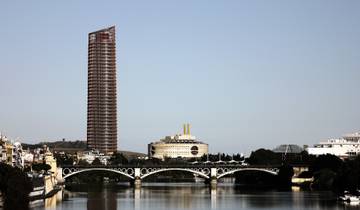
The M-170A intercity bus operated by the Consorcio de Transportes Área de Sevilla is the recommended public link from central Seville to the Itálica site entrance in Santiponce. Buses depart from the covered bay at Plaza de Armas bus station and reach Santiponce in approximately 30 minutes, stopping directly outside the archaeological park entrance on Avenida de Extremadura in Santiponce. The M-170A also picks up passengers at a stop near Torre Sevilla (the tall glass tower visible from most of the Seville riverfront), which is more convenient than walking to Plaza de Armas for visitors staying in the Triana or Nervión districts.
Services run roughly every 30–40 minutes on weekdays and Saturdays. On Sundays and public holidays the frequency drops; check the current timetable on the Consorcio’s official portal (ctsa-alsa.es or the Consorcio app) before a weekend visit, particularly if you have a fixed return time. Services typically operate from around 7:00 am to 9:00 pm on weekdays, with reduced late-evening frequency on Saturdays.
Fares and payment: Using a rechargeable Tarjeta de Transporte Metropolitano (the standard metropolitan transport card for Seville), a single M-170A journey costs approximately €1.40–1.70. Cash fares paid directly to the driver run slightly higher, typically around €2.00–2.20. The transport card is available at Plaza de Armas service windows, at newsagents (estancos) across Seville, and at Metro stations. The card requires a nominal initial fee (usually around €1.50–2.00 for the card itself) and can be loaded in variable amounts; a €10 top-up covers the Itálica round trip plus several urban trips on Seville’s metro and buses. Contactless bank card payment is accepted on some buses in the metropolitan network; verify on boarding whether the specific M-170A service accepts contactless, as coverage continues to expand but is not universal.
Return journey from Santiponce: The return M-170A toward Seville stops directly outside the Itálica entrance gate on the main road. Flag the bus at the marked stop on the roadside — not inside the archaeological park. Buses returning to Seville pass the stop at similar 30–40-minute intervals to the outbound direction. Allow a buffer of 5–10 minutes at the stop to account for minor schedule variation.
Time allocation at Itálica: Plan at least 2 to 2.5 hours on site. The amphitheatre alone — one of the largest surviving Roman arena structures — takes 45–60 minutes to walk the full perimeter and explore the substructure. The principal mosaic houses of the Nova Urbs neighbourhood add another hour if visited thoroughly. Arriving at Itálica later than 12:30 pm creates pressure to leave before the site is properly seen; aim to board the Santiponce bus from Plaza de Armas no later than 12:15 pm, which means leaving the Alcázar area by 12:00 pm.
Driving the A-4 Highway: Toll-Free Access and Carmona Parador Parking
Visitors using a rental car or arriving by private vehicle will find the road connections for this circuit uncomplicated. The A-4 autovía — the primary four-lane divided highway linking Seville to Córdoba — is the backbone of the Carmona leg. From Seville’s ring road (SE-30), the A-4 heading east toward Carmona is completely toll-free: there are no toll booths, no electronic toll barriers, and no pay-per-use charges on any section of the route between Seville and Carmona. Journey time from Seville’s centre to Carmona town is approximately 25–30 minutes in normal traffic. Some satellite navigation apps flag the A-4 corridor as having tolls due to outdated data; these alerts can be disregarded for the Seville–Carmona section. The nearby AP-4 (the older autopista to Cádiz, carrying a different route number and different alignment) is a separate road that does charge tolls; do not confuse the two.
For the Itálica leg, drivers head northwest from Seville on the A-8058 or SE-510 toward Santiponce, clearly signposted from the ring road. The distance is around 9 kilometres from the Seville city centre, with a travel time of 15–20 minutes under normal conditions. A public car park operates near the Itálica entrance in Santiponce, and street parking is available on the approach road, though spaces fill on busy spring weekends when school visits peak.
In Carmona, the recommended parking base is the Parador de Carmona car park on the upper citadel. The Parador — a state-run hotel occupying a reconstructed Moorish fortress at the town’s highest point — allows non-guests to use its adjacent car park for a daily fee, typically around €5–8; confirm the current rate at the gate on arrival. The Parador’s position is strategically central to both Carmona sites: the Roman Necropolis is a 10-minute walk downhill on the western slope of the citadel, and the Alcázar de la Puerta de Sevilla gate complex is a 5-minute walk in the opposite direction through the pedestrianised historic centre. Parking at the Parador therefore puts both Carmona stops within a 10–15-minute walking radius of each other.
Driving sequence for the full circuit: A car-based visitor can run the sites in a more space-efficient order than the bus itinerary. Driving to Itálica first (9:00 am departure, 15 minutes, arrive at opening), spending 2 hours, then driving east to Carmona (35–40 minutes from Santiponce via Seville’s ring road), lunch in Carmona, afternoon at both Carmona sites, then driving back west to Seville (25–30 minutes on the A-4) keeps Seville’s traffic zone to a minimum and avoids a full round-trip to the city centre between sites. The total driving distance for the complete circuit — Seville to Itálica, Itálica to Carmona, Carmona back to Seville — is approximately 90 kilometres.
Seville low-emission zone note: Central Seville operates a Zona de Bajas Emisiones (ZBE) around the historic centre, which includes the streets adjacent to the Alcázar and Cathedral. Rental cars registered after recent emissions thresholds are typically compliant; confirm your vehicle’s compliance category with the rental provider before driving into the restricted zone. Parking garages outside the ZBE boundary, particularly along the Alameda de Hércules and the outer Triana district, provide a car-free transit option into the Alcázar area by foot or taxi from the ZBE perimeter.
Stop 1: Royal Alcázar of Seville — Navigating Mudejar Palaces Early Morning
The Real Alcázar de Sevilla is a UNESCO World Heritage Site inscribed in 1987 as part of the Catedral, Alcázar y Archivo de Indias de Sevilla serial property — one of the earliest and most visited World Heritage inscriptions in Spain. It is among the oldest royal palaces in continuous use in Europe, serving successive Castilian and Spanish monarchs as a Seville residence from the eleventh century onward and remaining an official royal site today. For the 2027 visitor, the operative priorities are: book a timed slot in advance through the official website, arrive at the Puerta de León gate by 9:25 am, and follow the crowd-light early-morning route through the palace before the first coach-tour wave arrives.
Tickets and pricing in 2027: Standard adult admission costs €15.50 plus a mandatory €1 online booking fee = €16.50 total per person. Reduced admission of €8 applies to visitors aged 14–30 and to those aged 65 and over, on presentation of valid identification. Children under 16 enter free. EU residents of Seville municipality enjoy free entry on proof of residence; this exemption does not extend to EU citizens visiting as tourists from outside Seville. Tickets are purchased through patronato-alcazarsevilla.es — the only official booking portal; third-party reseller sites charge additional fees and are not recommended. Check the official site for current pricing before your visit, as rates can be adjusted between seasons.
Free-entry Mondays: The Alcázar opens its last operational hour to free public access on Mondays that fall on regular operating days (excluding major public holidays). The free window opens at 16:00 during October–March (site closes at 17:00) and at 18:00 during April–September (site closes at 19:00). Free-entry slots must be reserved in advance through the same official website and are released a few days ahead; they are consistently in high demand and fill quickly. A free Monday slot concentrates visitor numbers into a compressed final hour, so crowd density at entry is typically higher than at a paid morning slot. Use the free option when schedule flexibility allows; prioritise the paid 9:30 am slot when you want the best photographic and crowd conditions in the palaces.
Early-morning navigation strategy: The main visitor route begins from the Puerta de León entrance on Plaza del Triunfo and proceeds roughly counter-clockwise through the palace complex. At the 9:30 am opening, the first visitors can reach the Patio de las Doncellas (Courtyard of the Maidens) before organised tour commentary groups — typically loading in from coaches arriving at 10:00–10:30 am — have assembled. The Patio de las Doncellas, with its elongated central pool, lower-level Mudéjar tile work, and double-arcaded Renaissance upper gallery, is the most photographed interior in the Alcázar; 20–25 uncontested minutes here before the main wave arrives is the principal practical benefit of the opening-slot strategy.
From the Patio, the route moves through the Salón de los Embajadores (Hall of Ambassadors), a throne room whose gilded half-dome draws from Islamic muqarnas carving traditions and represents one of the more ambitious decorative interiors in fourteenth-century European architecture. The subsequent rooms — including the Sala de los Reyes Moros and the Cuarto del Príncipe — follow in sequence before the route opens into the Jardines del Alcázar (Alcázar Gardens), which extend across a substantial terrace south of the palace block. The gardens are consistently quieter than the palace rooms even at mid-morning, because many visitors focus entirely on the interior sequence and exit without exploring the garden terraces. The pavilion commissioned by Charles V in the early sixteenth century, set within formal hedging in the lower garden, is a rare survival of early Renaissance garden design in Spain and warrants 20–30 minutes of independent exploration.
Practical details for 2027: Opening hours are 9:30 am to 7:00 pm from April through September and 9:30 am to 5:00 pm from October through March (final admission 30 minutes before closing). The site is closed on 1 January, 6 January, Good Friday, and 25 December. Photography is permitted in all outdoor areas and most interior rooms without flash; certain specific rooms may restrict tripods. Audio guides are available at the entrance. The nearest rideshare or taxi drop point is along Avenida de la Constitución; the surrounding streets around Plaza del Triunfo and the Cathedral are pedestrianised and car-free.
One detail that catches visitors off-guard: the Alcázar complex is considerably larger than it appears from the Plaza del Triunfo entrance. The full garden circuit, including the upper terrace gardens added in the sixteenth and seventeenth centuries and the lower section with the Charles V pavilion, doubles the time needed compared with touring the palace rooms alone. A two-hour allocation is the comfortable minimum; visitors with specific photographic goals for the Patio de las Doncellas and the gardens should allow 2.5 hours. The site’s official audio guide (available in multiple languages at the entrance desk and as a downloadable app) is particularly useful for navigating the construction chronology, which spans Abbadid, Almohad, Castilian, and Habsburg phases in a sequence that overlapping spatial layers make non-obvious from within any single room.
Stop 2: Archaeological Ensemble of Itálica — Roman Amphitheatre & Mosaic Traverses
Itálica, in the municipality of Santiponce approximately 9 kilometres north-northwest of central Seville, is one of the most significant Roman archaeological sites on the Iberian Peninsula. Ancient literary sources, including the historian Appian, record it as a settlement established for veterans following Roman military operations in the region in the early second century BCE. By the second century CE it had grown into a substantial colonial city covering several hundred hectares, and ancient tradition links the emperors Trajan and Hadrian to its civic history — Trajan born around 53 CE and Hadrian around 76 CE in or near the city, according to Roman-era sources. The city received considerable building investment during the imperial period, and the resulting monuments — foremost among them the enormous amphitheatre — remained visible enough to attract systematic archaeological attention from the nineteenth century onward.
The amphitheatre: The Amphitheatre of Itálica is one of the largest known from the Roman world, with seating capacity estimates in the scholarly literature ranging broadly and the site’s own interpretive panels noting its exceptional scale without specifying a single authoritative figure. The arena floor is fully excavated and accessible: visitors can walk across the central sand surface and look up at the surviving vaulted substructure of the seating banks from within, an experience few Roman amphitheatres offer in comparable preservation. The underground animal-holding galleries beneath the arena are visible through restored iron grating, and the main entrances to the arena floor through the original vaulted corridors (vomitoria) are passable on foot. Morning visits in particular benefit from shade in the substructure galleries, while the open arena becomes intensely hot from late morning onward during summer months. Arriving at the site at opening — around 9:00 am on weekday mornings — gives visitors close to an unimpeded hour at the amphitheatre before organised school groups typically begin arriving.
The Nova Urbs mosaic houses: Beyond the amphitheatre, a walkable excavated street grid constitutes the Nova Urbs (New City), the neighbourhood expansion associated with Hadrianic-era building activity. Several domus have been partially covered for preservation, protecting mosaic floors that are displayed in situ on their original substrates. The Casa del Planetario contains a circular cosmological composition with planetary deities arranged concentrically; the Casa de los Pájaros (House of the Birds) presents a mosaic catalogue of bird species within a geometrically framed field, with each bird identified in the associated scholarship by iconographic comparanda from elsewhere in the Roman world; the Casa del Hylas combines figural scenes with geometric border design. Walking the Nova Urbs street between the houses takes around 45–60 minutes at a thorough pace. Paths are uneven and partially compacted gravel; open-toed footwear is not recommended. Sun protection is essential from April through September — the street grid is almost entirely unshaded.
The Vetus Urbs and related context: The older nucleus of the city, the Vetus Urbs, underlies the contemporary town of Santiponce to the south of the excavated zone. Most of it remains unexcavated beneath the modern street plan; a Roman theatre is partially visible from an exterior viewpoint near the church of San Isidoro del Campo, a fourteenth-century Hieronymite monastery that itself occupies a site with Roman and early Christian remains. The on-site interpretive panels at Itálica are bilingual (Spanish and English) and provide sound context for each area. The Museo Arqueológico de Sevilla in Seville’s María Luisa Park houses a significant collection of Itálica finds — including large-scale marble statuary from the city’s theatre and forum excavations — and is worth a separate visit for travellers with a deeper interest in Roman Baetica; it is not combinable in the same day as this three-site circuit without making compromises.
Practical information for 2027: EU/EEA citizens enter free with a valid identity document; non-EU visitors pay €1.50. No advance booking is required. The site is closed on Mondays, 1 January, 1 May, and 25 December. Hours shift seasonally — verify current times on museosandalucia.es before your 2027 visit. Water is available from a vending machine at the entrance; bring a filled bottle for the site itself. The site entrance on Avenida de Extremadura in Santiponce is directly served by the M-170A bus stop.
Stop 3: Carmona Historic Citadel — Necropolis, Roman Gates, and Moorish Walls
Carmona occupies a prominent limestone escarpment overlooking the Corbones and Guadalquivir river plains approximately 33 kilometres east of central Seville, reached by the A-4 or by ALSA coach from Plaza de Armas. The elevation made it strategically valuable across successive periods: it was a Turdetanian settlement before Roman consolidation, then a substantial town known in antiquity as Carmo, then a Visigoth episcopal see, then a significant Umayyad and later Abbadid centre, then a Castilian frontier stronghold. Each layer left physical traces, and Carmona is unusual among southern Spanish towns in the legibility of this stratification — Roman gates still anchor the road network, Almohad brickwork survives in the wall circuit, and a medieval Jewish quarter is documented in the street plan. The two sites most directly relevant to this Baetica day-trip itinerary — the Roman Necropolis and the Alcázar de la Puerta de Sevilla — are both within a 10–15 minute walk of each other on the western side of the citadel.
The Roman Necropolis of Carmona: The Roman Necropolis on Calle Jorge Bonsor, just outside the western citadel wall, is one of the best-preserved funerary complexes surviving from the western Roman Empire. Systematic excavation from the late nineteenth century, led primarily by the archaeologist and landowner Jorge Bonsor, revealed several hundred tomb structures — from simple pit burials to elaborately decorated chamber tombs cut into the native limestone. Entry is free for all visitors; no advance booking is required. Current hours (verify before your 2027 visit): Tuesday through Saturday 9:00–21:00 in summer months, 9:00–18:00 in winter; Sunday and holidays 9:00–15:00; closed Mondays and 1 May.
The most substantial tombs open to the public include the Tumba del Elefante, named for a marble elephant figure recovered during excavation and now exhibited in the site’s small reception building; the Tumba de Servilia, a multi-room cut-rock complex with a large colonnaded courtyard whose spatial organisation has been compared by researchers to contemporary elite domestic architecture; and a series of family chamber tombs with preserved painted plaster on the walls, including decorative friezes and figural panels in varying states of preservation. An on-site exhibition building at the entrance covers excavation history and key finds. The necropolis is compact enough to visit thoroughly in 45–60 minutes without rushing.
The Alcázar de la Puerta de Sevilla: At the western entry into Carmona’s historic nucleus stands the Alcázar de la Puerta de Sevilla — a fortified gate complex that originated as a Roman entry structure, was substantially reworked during Moorish governance, and was subsequently integrated into the Castilian defensive system. The term alcázar, from Arabic meaning “the fortress,” applies to this type of fortified gateway; it is a different type of structure from the Royal Alcázar in Seville, despite sharing the name. Admission to climb the gate towers and walk the accessible upper wall section costs €2 per person. The elevated position of the towers gives clear views across the lower town toward the Campiña de Sevilla. A small permanent exhibition inside the gate displays artefacts from Carmona’s stratified history alongside documentation of the Jorge Bonsor excavations, contextualising the relationship between the Roman and medieval construction phases visible in the gate’s own masonry.
At the opposite end of the historic centre, the Puerta de Córdoba on the eastern side of town is a well-preserved Roman gate still carrying the alignment of the Via Augusta through its arch. It can be viewed at no cost from the exterior; the surrounding street preserves substantial sections of original Roman masonry in the flanking towers. A 10-minute walk from the Alcázar de la Puerta de Sevilla through the pedestrianised centre, it makes a worthwhile addition to the Carmona visit if time permits.
The Parador and the citadel walls: The Parador de Carmona at the town’s highest point occupies the upper alcázar (fortress) position, where a Moorish-period stronghold was substantially reconstructed and refitted. Non-guests may enter the Parador’s public terrace and viewpoint, which offers a 180-degree panorama across the flat Campiña southward toward Seville — one of the finest elevated views in western Andalusia. The Parador’s terrace café serves drinks; the restaurant offers regional Campiña cuisine at prices in the mid-to-upper range. More affordable lunch and tapas options are available on Calle Prim and the streets descending from the Puerta de Sevilla gate, where local bars serve food through the afternoon.
Carmona’s medieval wall circuit, which incorporates sections of Almohad construction characterised by layered brick-and-stone bonding, is best appreciated from the approach roads below the escarpment where the full height of the citadel wall above the lower town is visible. The wall circuit is not fully walkable but several sections are accessible via the Parador terrace and the streets immediately below the gate complexes.
Practical information for 2027: The Carmona Necropolis and the Alcázar de la Puerta de Sevilla both close on Mondays. If your available travel days include a Monday, this site becomes a partial visit (exterior views of gates and walls only). The historic centre is pedestrianised in its inner streets; drivers should park at the Parador car park or on the approach roads below the citadel. Return ALSA coaches to Seville depart from the bus stop near the Alcázar de la Puerta de Sevilla, with services running until the mid-to-late evening.
Day Trip Budget Breakdown 2027
All figures below are expressed per person for a full day on the three-site Baetica circuit, with transport and meals included. Hotel accommodation in Seville is not included — these are day-trip costs only, applicable to any visitor using Seville as a base.
Entry fees per person:
- Royal Alcázar of Seville: €16.50 (€15.50 admission + €1 online booking fee; check official patronato-alcazarsevilla.es for current rates)
- Itálica — EU/EEA citizens with valid ID: €0.00
- Itálica — non-EU visitors: €1.50
- Carmona Roman Necropolis: €0.00 (free for all)
- Alcázar de la Puerta de Sevilla gate towers, Carmona: €2.00
- Total entry fees, EU citizen: €18.50
- Total entry fees, non-EU visitor: €20.00
Public transport per person (both legs, round-trip):
- M-170A bus Seville ↔ Santiponce, return: approximately €3–4 (transport card rate)
- ALSA coach Seville ↔ Carmona, return: approximately €6–10 (lower with advance online booking)
- Total public transport per person: approximately €9–14
Meals per person (full day):
- Coffee and breakfast before departure: €4–8
- Lunch in Carmona or Santiponce (café to mid-range restaurant): €15–30
- Afternoon snack and drinks: €5–10
- Evening meal in Seville on return: €16–22
- Total meals per person: approximately €40–70
Daily total — public bus, EU citizen: Entry €18.50 + transport €9–14 + meals €40–70 = low end approximately €70, high end approximately €100. Range: €70–100 per person.
Daily total — public bus, non-EU visitor: Entry €20 + transport €9–14 + meals €40–70 = low end approximately €70, high end approximately €105. Range: approximately €70–105 per person.
Rental car option — two sharing, EU citizen: Entry fees unchanged (€18.50). Car rental share for one day (two sharing a compact car): approximately €15–20 per person. Fuel for the 90 km circuit: approximately €5–8 per person. Parador parking in Carmona: approximately €3–5 per person. Transport component by car: approximately €23–33. Adding meals (€40–70) and EU entry (€18.50): low end approximately €82, high end approximately €121.50. Range: approximately €80–120 per person.
Budget note: The dominant variable across all three scenarios is meal choice. Eating a full restaurant lunch at the Parador or a Carmona mid-range restaurant rather than a café sandwich and supermarket snack adds approximately €20–30 to the food line. Entry fees are essentially fixed once the Alcázar ticket is purchased; transport is modest by either method. The gap between the lower and upper ends of each range is meal-driven, not site-dependent.
Practical Booking and Timing Tips for 2027
Three booking steps determine the success of this day trip, and all three can be completed in under 20 minutes online in the week before travel.
Step 1 — Alcázar timed entry: Visit patronato-alcazarsevilla.es and reserve the earliest available slot (9:30 am preferred) on your preferred date. The booking window typically opens two weeks ahead. If the 9:30 am slot is sold out, the 10:00 am slot is the next best option; anything after 11:00 am will encounter the full coach-tour volume. Have the booking reference accessible on your phone or printed. The €1 booking fee component is non-refundable; the admission component may be refundable with sufficient advance notice — check the current cancellation policy at time of booking.
Step 2 — ALSA coach to Carmona: Go to alsa.es (available in English) and purchase a return ticket for the Sevilla–Carmona route, with the outbound departure from Plaza de Armas timed for early-to-mid afternoon. A 12:30–13:30 pm departure from Seville works well if you leave Itálica by 12:30–13:00. Buying even 24–48 hours ahead typically saves €1–2 per direction versus day-of purchase and guarantees a seat; coaches are reliable but can fill on Friday afternoons when Seville commuters and weekend travellers use the same service.
Step 3 — Confirm Itálica hours: No booking needed for Itálica, but the seasonal hour shifts (winter versus summer schedule, extended Friday/Saturday evenings) can affect your window. Confirm the current timetable on museosandalucia.es before departure. The site’s closed Mondays and 1 May closure dates are fixed; other closures may be announced with short notice for maintenance or events.
Monday planning: Monday is the one day that substantially disrupts this itinerary. Itálica closes on Mondays. The Carmona Necropolis closes on Mondays. The Alcázar is open on most Mondays (with free last-hour entry) but closed on certain public holiday Mondays. A Monday attempt therefore reduces to the Alcázar only, unless the Roman Necropolis and Itálica are replaced with Carmona’s church circuit, the Puerta de Córdoba exterior, and the Parador viewpoint — all freely accessible regardless of day. If only one weekday is available in your Seville stay, reserve it for Tuesday through Sunday.
Seasonal weather: July and August impose the most physically demanding conditions. Seville temperatures routinely reach 38–42°C through high summer; Itálica is almost entirely exposed and becomes oppressive by 11:00 am. The site’s extended summer hours — particularly Friday and Saturday evenings until 21:00 — allow cooler-temperature visits, but the transit between Itálica and Carmona will still occur in full afternoon sun on those days. April, May, October, and the first half of November offer the most comfortable conditions for this outdoor-heavy circuit and are the optimal 2027 windows for first-time visitors. Light layers are advisable for October and November mornings, as temperatures at Carmona’s elevated hilltop can dip below 15°C before 10:00 am.
Seasonal Crowd Patterns at Seville and Baetica Sites 2027
Understanding when crowds peak at each site calibrates not just which day to go but which time of day to protect at each location.
At the Alcázar, peak visitor volume runs from late March through early October, with the July–August period and Semana Santa (Holy Week, early April in 2027) as the most compressed windows. The timed-entry system limits simultaneous visitor numbers, but slots for preferred morning times sell out well in advance during these periods — sometimes within minutes of the booking window opening two weeks ahead. Outside school holiday periods, weekday mornings in November through February offer the fewest visitors per slot. The four annual closure days (1 January, 6 January, Good Friday, 25 December) concentrate demand on surrounding dates; avoid the day immediately following each closure if possible.
At Itálica, the crowd pattern is more seasonal than time-specific. The site receives sharply elevated visits during Semana Santa, May Day weekend, and Andalusian regional holidays in late February (Día de Andalucía, 28 February). On typical weekday mornings outside school holiday blocks, Itálica is genuinely uncrowded even during the April–June spring season — this is the structural benefit of the day trip format and reflects the low awareness among general tourists that Itálica exists as a standalone destination. Weekend mornings in March and October can be busier than expected when Sevillian families visit during Andalusian public holidays; a midweek visit is preferable if your schedule allows.
At Carmona, the town experiences its highest visitor concentration during Semana Santa (it hosts significant traditional processions with confraternities documented back several centuries) and during late July through August when Spanish domestic tourism peaks across Andalusia. The Roman Necropolis, because of its free entry, non-central location, and specialist interest, remains consistently less crowded than Carmona’s main plaza and the gate area even on busy days. A late-afternoon arrival in Carmona — around 15:30–16:00 after the Itálica morning visit — places visitors in the town as day-trippers from Seville have begun to thin out, and the Parador viewpoint in the long late-afternoon light is one of the calmer pleasures of this itinerary. The light on the Campiña flatlands from the Parador terrace in spring and autumn is particularly striking, with the agricultural plain catching low-angle sun while the Seville skyline — the Giralda tower and the Seville Tower visible on clear days — anchors the western horizon. This view is best appreciated in shoulder season; summer haze generated by midday heat rarely clears before sunset, making the autumn-evening Carmona visit a distinctly superior sensory experience to the same stop attempted in August.
For 2027 specifically: Semana Santa falls in the first week of April, making the surrounding two to three weeks the most compressed visitor density period of the year at all three sites simultaneously. The week following All Saints’ Day (1 November) is typically among the lowest-volume windows of the year at Andalusian heritage sites and is an often-overlooked entry point for this circuit, with full daylight hours sufficient for all three stops, mild walking temperatures, and noticeably thinner queues at the Alcázar online booking portal compared with any date between March and October.
Sample Full-Day Itinerary 2027
The following schedule is calibrated to a weekday visit in spring or autumn using public buses from Plaza de Armas. Adjust departure times for winter (shorter Alcázar hours, earlier Carmona sunset) or summer (earlier heat onset, later Itálica closing time).
- 9:00 am — Walk to the Alcázar gate on Plaza del Triunfo. Arrive 5 minutes before the 9:30 am slot opens.
- 9:30–11:45 am — Royal Alcázar. Prioritise the Patio de las Doncellas first, then the Salón de los Embajadores, then the Alcázar Gardens. Allow 2–2.5 hours.
- 11:45 am — Walk west to Plaza de Armas (about 15 minutes). Pick up a coffee or pastry at a café en route.
- 12:15–12:30 pm — Board M-170A bus from Plaza de Armas to Santiponce.
- 13:00 pm — Arrive Santiponce / Itálica. Enter immediately (free for EU). Start with the amphitheatre, then walk the Nova Urbs street grid and mosaic houses.
- 15:00–15:15 pm — Exit Itálica and board return M-170A toward Plaza de Armas. Arrive Seville approximately 15:45 pm.
- 16:00–16:15 pm — Board ALSA coach to Carmona from Plaza de Armas (pre-booked ticket). Journey 30–40 minutes.
- 16:45–17:00 pm — Arrive Carmona. Walk to the Roman Necropolis (10 minutes, downhill from the Parador).
- 17:00–18:00 pm — Roman Necropolis (free). Walk chamber tombs and exhibition building.
- 18:00–18:45 pm — Walk up to the Alcázar de la Puerta de Sevilla gate towers (€2). Tower views and history exhibition.
- 18:45–19:30 pm — Walk to the Parador viewpoint for late-afternoon panorama over the Campiña. Café or tapas bar on the pedestrian street for dinner.
- 20:00–20:15 pm — Board ALSA return coach to Seville from the Carmona bus stop. Arrive Plaza de Armas approximately 20:50 pm.
Rental car variant: Depart Seville by 8:45 am; 15-minute drive northwest to Itálica, arriving at opening. Two hours at Itálica. Drive south and east from Santiponce, picking up the A-4 toward Carmona (approximately 35 minutes). Arrive Carmona by 12:30 pm; park at the Parador. Lunch at the Parador café or in town. Afternoon at necropolis and gate towers. Drive back west on the A-4 to Seville, arriving by 18:00–18:30. This sequence visits the sites in reverse order (Itálica first, then Carmona, then the Alcázar on a different morning), which works if the Alcázar visit is reserved for a separate day with an early pre-booked slot.
Frequently Asked Questions: Seville & Baetica Day Trip 2027
Can I do all three sites in one day in 2027?
Yes, if you begin at the Alcázar at 9:30 am and manage the transit intervals carefully. The sample itinerary above fits all three sites comfortably into a weekday, with approximately two hours at each location and around 2.5–3 hours of transit. The main risk is spending too long at Itálica and missing the mid-afternoon ALSA departure to Carmona, which then shortens the Carmona visit significantly. Set a firm exit time at Itálica — 15:00 to 15:15 at the latest — and the day works. By rental car the same three sites are even more manageable, with greater schedule flexibility on the links between sites.
Do I need to book the Alcázar in advance for a 2027 visit?
Yes, advance booking through the official patronato-alcazarsevilla.es site is strongly recommended for any visit from March through October and advisable year-round. The timed-entry system caps visitor numbers per slot; preferred morning slots (9:30 am) fill faster than midday options and can sell out days ahead on busy spring weekends. The total cost is €16.50 per adult (€15.50 admission + €1 booking fee); confirm current pricing at the time of booking. Walk-in queues in high season regularly exceed 90 minutes even when online availability shows remaining slots, because sold-out early options concentrate walk-in demand into a compressed mid-morning window.
What is the best sequence for the three sites in 2027?
The recommended sequence — Alcázar first (9:30 am), Itálica mid-morning (arriving around 13:00), Carmona afternoon (arriving around 17:00) — works best for two reasons. First, the Alcázar is the only site with a mandatory timed-entry slot, and the earliest slot produces the best conditions; anchoring the day to that time sets the rest of the schedule. Second, Itálica’s closing time (varies seasonally, but no evening hours in winter) makes it the more time-sensitive of the two outlying sites; afternoon arrivals at Itálica risk a shortened visit. Carmona’s necropolis stays open until 21:00 in summer, making it the most forgiving of the three for late-afternoon arrival.
Are there guided tours of Itálica in English in 2027?
The Junta de Andalucía periodically offers guided visits at Itálica, with English-language availability varying by season and staffing. These are not guaranteed on a fixed weekly schedule and are more commonly available in spring and early summer. The on-site interpretive panels are bilingual (Spanish and English) and sufficient for a thorough self-guided visit. Private guided tours can be arranged through Seville-based tour operators who offer Itálica day-trip packages including transport and specialist commentary. For additional background, the Museo Arqueológico de Sevilla contains the most important portable finds from the site and provides excellent preparation for a self-guided visit; it is a separate trip from the day circuit described in this guide.
What is the difference between the Alcázar de la Puerta de Sevilla in Carmona and the Royal Alcázar of Seville?
They are entirely different sites. The Alcázar de la Puerta de Sevilla in Carmona is a fortified Roman gate complex later reinforced by Moorish and Castilian construction phases — a military structure designed to control access to the citadel. The name “alcázar” derives from Arabic for “fortress” or “fortified enclosure” and applies across Andalusia to a range of defensive structures. The Royal Alcázar of Seville is a full palace complex developed across centuries by successive rulers, including its most famous fourteenth-century Mudéjar additions under Pedro I of Castile. The Carmona gate visit takes 30–45 minutes; the Seville palace takes 2–2.5 hours. Both are worthwhile but serve entirely different visitor purposes.
Is there food available at Itálica or Carmona for a full-day visit in 2027?
At Itálica, there is no café inside the archaeological site. A vending machine at the entrance supplies water, and a bar-café immediately outside the entrance gate in Santiponce village provides coffee, snacks, and simple lunch options. For a sit-down meal near Itálica, the restaurants and tapas bars on Santiponce’s main street are a 5-minute walk from the entrance and typically open from midday. In Carmona, the Parador café and several tapas bars on the pedestrian streets near the Puerta de Sevilla gate serve food through the afternoon and into the evening. The historic centre of Carmona has a small supermarket on the main pedestrian street for self-catering travellers. Inside the Royal Alcázar of Seville, a café in the gardens provides drinks and light refreshments.
Is parking free in Carmona in 2027?
No dedicated free parking area serves the upper historic citadel. The Parador de Carmona car park charges a daily fee (approximately €5–8 per day; confirm at the gate on arrival as rates may vary). Street parking is available on the approach roads below the citadel escarpment in the lower town, where spaces are free or subject to limited-time blue-zone restrictions depending on the exact street — check signage. The walk from the lower town to the necropolis and gate complexes takes 10–15 minutes uphill. For a short visit focused on the two main Roman sites, parking below and walking up is a viable alternative to paying the Parador car park, particularly in the cooler morning or late-afternoon hours.
What happens if the Alcázar sells out for my preferred dates in 2027?
If all slots for a given day are sold out, check back 24–48 hours before the date — cancellations open up regularly, particularly for weekday visits outside school holidays. For free-entry Monday slots, check the booking site three to four days ahead when those slots are typically released; they fill within hours. As a fallback, consider restructuring the day: visit Itálica and Carmona only — both are accessible without advance booking and together constitute a full, satisfying Roman Baetica circuit — and reserve the Alcázar for a different morning during your Seville stay, booking as soon as your travel dates are confirmed. The Alcázar standalone visit works well on a day when you are not also doing the two outlying sites.
Which bus station in Seville do all day trips depart from in 2027?
Plaza de Armas bus station is the departure point for both the M-170A to Santiponce (Itálica) and the ALSA coach to Carmona. It is located on the Guadalquivir riverfront at Calle Arjona, approximately 15 minutes on foot west of the Cathedral and Alcázar area. The station has ticketing windows, luggage lockers, a café, and ATM facilities. It is also served by Seville’s urban bus network and is within walking distance of the Puente del Alamillo and the Torre del Oro waterfront area. Do not confuse it with Seville’s other intercity bus terminal, Estación de Autobuses Prado de San Sebastián, which serves different routes; both the M-170A to Santiponce and the ALSA Carmona service depart from Plaza de Armas.
Does the itinerary in this guide work for travellers with limited mobility in 2027?
Each site has different accessibility conditions. The Royal Alcázar of Seville has improved accessibility in recent years; wheelchair users can access the main palace rooms and the lower gardens, though some upper-level sections and narrow historic stairways remain restricted — the official site describes current accessibility provisions and can be consulted before booking. Itálica presents the most challenging terrain: the archaeological site has uneven compacted-gravel paths, open field crossings, and no paved surfaces throughout the Nova Urbs area; the amphitheatre approaches are similarly unpaved. Visitors with significant mobility limitations may find Itálica difficult beyond the amphitheatre entrance area. In Carmona, the pedestrianised historic centre has some sloped streets, and the Parador is reachable by car; the necropolis has a level approach. The Alcázar de la Puerta de Sevilla gate tower climb involves stairs and is not suitable for visitors unable to manage steps. For travellers with mobility needs, confirming specific accessibility details directly with each site before travel is recommended.