
Seville 3-Day Itinerary 2027: First-Time Visitor Guide
Seville rewards first-time visitors with a rare combination of UNESCO World Heritage monuments, a flamenco tradition that remains genuinely alive in the riverside neighborhood of Triana, and a tapas culture that has evolved over centuries in the old city’s narrow lanes and bar counters. Three focused days are sufficient to move through the cathedral quarter, the contemporary center, and the Guadalquivir waterfront while keeping the pace sensible and the daily budget predictable — provided the days are organized so that the most demanding monuments come early and the afternoons allow for deliberate wandering.
Key Takeaways
- The Seville Cathedral and Real Alcázar are jointly UNESCO World Heritage-listed and form the essential core of any first visit — book both online in advance, entering the cathedral at opening time before tour groups arrive
- Mid-range travelers need approximately €135–200 per person daily (two sharing a mid-range hotel), covering accommodation, meals, transport, and the major monument admissions
- Budget travelers can manage €60–90 per person daily by staying in hostel dormitories, eating tapas at the bar (typically 20–30% cheaper than table service), and walking the compact historic center
- Three days covers the UNESCO monuments, a flamenco tablao performance in Triana, the Metropol Parasol rooftop, María Luisa Park, Plaza de España, the Triana Market, and comfortable time for ceramics and tapas exploration
- The AVE high-speed train from Madrid reaches Seville Santa Justa station in approximately 2.5 hours — book two to three weeks ahead for significantly lower fares
- Spring (March–May) and early autumn (September–October) provide the best conditions for a 2027 visit; summer temperatures regularly reach 40–43°C (104–109°F) and require a strict midday retreat from outdoor sightseeing
People Also Ask About Seville 2027
How much does a 3-day trip to Seville cost in 2027?
A three-day mid-range trip to Seville costs approximately €405–600 per person (two sharing), based on a daily spend of €135–200. That figure covers a central two-star or three-star hotel, three meals per day, local transport, and admissions to the Cathedral, Real Alcázar, Metropol Parasol, and a flamenco tablao performance. Budget travelers using hostel dormitories and bar tapas can manage approximately €180–270 total for three days. Luxury travelers staying in five-star historic hotels should expect approximately €1,020–1,560 per person for the three-day visit. All figures are per person, exclude international flights, travel insurance, and personal shopping.
What are the must-see attractions in Seville for first-time visitors in 2027?
Four experiences are essential: the Seville Cathedral and its Giralda tower (the largest Gothic cathedral in the world, UNESCO-listed); the Real Alcázar, a functioning royal palace with Mudéjar rooms of exceptional quality; the Metropol Parasol on Encarnación Square for the best panoramic city view; and at least one evening in Triana, Seville’s historic flamenco neighborhood across the Guadalquivir. Plaza de España and María Luisa Park constitute a single important visit. The Torre del Oro, the Santa Cruz Quarter’s lanes, and the Triana Market complete the practical first-visit list.
Is 3 days enough time to see Seville in 2027?
Three full days is sufficient for a well-organized first visit. The itinerary in this guide covers the UNESCO monuments, both major neighborhoods, the main contemporary landmarks, a flamenco performance, and genuine leisure time for tapas and markets. A fourth day adds either a day trip to Carmona or the Roman ruins at Italica, or a slower and more relaxed version of the core itinerary. Visitors with a serious interest in Seville’s art museums or its rich Baroque church network will find a fourth or fifth day rewarding. The three-day structure here is paced for comfortable use in summer heat and full-valued enjoyment in shoulder season.
What is the best time to visit Seville in 2027?
March through May and September through October offer the most comfortable sightseeing conditions. Spring brings temperatures of 18–28°C (64–82°F), green parks, and the city’s famous festival season — Semana Santa and Feria de Abril typically fall in spring, offering unforgettable atmosphere but requiring accommodation booked months in advance at peak prices. October is widely considered the ideal month: temperatures settle around 22–28°C (72–82°F), crowds thin after the summer peak, and hotel rates drop meaningfully. December through February is mild (12–18°C / 54–64°F) with occasional rain. Summer is viable with strict early-morning starts and a midday retreat indoors.
Extended multi-day tours – 5+ days
Featured Seville Multi-Day Tour Packages
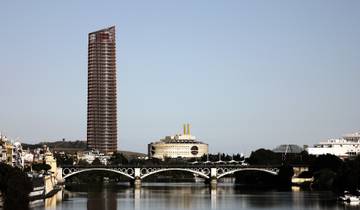
6 days
6 Days in Seville : with Day Trips to Ronda, Córdoba & Alhambra
- ✓ Comprehensive Seville tour
- ✓ Expert local guides included
- ✓ All accommodation arranged
- ✓ Transportation provided
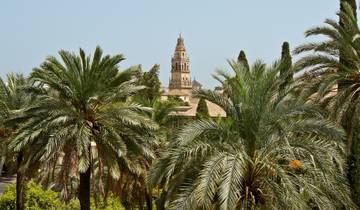
3 days
3-Day Cordoba, Seville & Costa del Sol from Madrid
- ✓ Comprehensive Seville tour
- ✓ Expert local guides included
- ✓ All accommodation arranged
- ✓ Transportation provided

5 days
Spain: Seville and the Huelva Coast
- ✓ Booking needs min. 2 travelers

7 days
Seville and the Coast: 7 Days in Andalusia Without a Car
- ✓ Booking needs min. 2 travelers
Multi-day tour packages powered by TourRadar. Prices and availability subject to change.
Introduction: Why Seville Rewards First-Time Visitors in 2027
Seville is the capital of Andalusia and Spain’s fourth-largest city, positioned on the eastern bank of the Guadalquivir River approximately 540 kilometers (335 miles) southwest of Madrid. Its historic center is compact enough to cross on foot in 35–40 minutes, yet dense enough with layered occupation — Phoenician trading post, Roman colonia, Visigothic metropolitan see, Moorish taifa capital, Reconquista prize, and Habsburg trading empire — to sustain several days of exploration without repetition or padding.
The UNESCO World Heritage designation covers three co-listed monuments inscribed in 1987: the Seville Cathedral, the Real Alcázar, and the General Archive of the Indies. Together they occupy a concentrated area on the southern edge of the historic center and form the correct starting point for any first visit. The Cathedral is confirmed as the largest Gothic cathedral in the world by volume, and its Giralda bell tower — originally the minaret of the Almohad mosque that preceded the church, deliberately kept rather than demolished during construction — embodies the layered identity that defines Seville better than any other single structure. The Real Alcázar remains a functioning royal residence used by the Spanish royal family when in Seville, which gives it a quality of living maintenance unusual among the great European royal sites. The General Archive of the Indies, housed in a Renaissance building, holds the primary documentary record of Spanish administration in the Americas and is accessible to visitors at the exterior.
Beyond the UNESCO triad, Seville offers two experiences that define the city for most visitors in a more personal way: tapas culture and flamenco. Andalusia is generally credited as the region where the modern tapas tradition first developed, and Seville’s version — generous, unpretentious, and connected to older patterns of hospitality — remains distinct from the more refined tapas of Madrid or San Sebastián. Flamenco has deep historical roots across Andalusia, and Seville’s Triana neighborhood retains the closest living connection to the art form’s historical social context. Neither experience requires specialist knowledge to appreciate; both reward patience and a willingness to let the city’s rhythm set the pace rather than a checklist.
Practically, Seville is exceptionally well structured for first-time visitors. Its top attractions cluster within an 800-meter (0.5-mile) radius around the Cathedral: the Alcázar, the Santa Cruz Quarter, and the Torre del Oro are all walkable from one another in under 15 minutes. Triana is 15–20 minutes across the Isabel II Bridge. María Luisa Park and Plaza de España are 25 minutes south on foot or a short bus ride. The Museum of Fine Arts, the farthest point in the Day 3 itinerary, requires a dedicated 10-minute walk northward from the Cathedral and combines naturally with the Encarnación district and the Metropol Parasol. No visit to Seville’s core sites requires significant transit; the compact geography rewards those who prefer to walk and observe.
The logistical context is equally favorable. The AVE high-speed train makes Seville a natural partner with Madrid (2.5 hours), enables a Córdoba day trip (45 minutes each way), and connects to Málaga in approximately 1.5–2 hours. Seville Airport handles direct European flights from numerous hubs. Within the city, a combination of walking, occasional bus or metro trips, and Sevici public hire bicycles covers every itinerary need without requiring a rental car.
Day 1 Itinerary 2027: UNESCO Monuments & the Historic Heart
Day 1 concentrates on the UNESCO core and the surrounding historic neighborhood. Both the Seville Cathedral and the Real Alcázar are at their least crowded in the first hour after opening, and the discipline of arriving early is the single most important tactical decision of the itinerary. The afternoon, after the major monuments have been explored, shifts to the slower pleasures of the Santa Cruz Quarter and the waterfront.
Morning — Seville Cathedral & the Giralda Tower
Arrive at the Cathedral entrance on Calle Alemanes by 9 AM when the building opens to visitors (verify the exact time on the official Cathedral website before your visit, as hours vary by liturgical season). The Seville Cathedral — formally the Cathedral of Saint Mary of the See — is the largest Gothic cathedral in the world by volume, a superlative confirmed by the Guinness World Records. Its sheer scale takes time to register: the nave is 135 meters (442 feet) long and 76 meters (249 feet) wide at the transept crossing.
Construction began in 1402 on the foundations of Seville’s great Almohad mosque, completed in the late 12th century. The cathedral’s builders incorporated the mosque’s minaret — now the Giralda — and the former ablution courtyard, now the Court of the Orange Trees, into the Christian structure rather than clearing the site. The result is an architectural dialogue between Islamic and Gothic vocabulary that is unique in Spain and enriches the visit considerably for visitors who come with that context in mind.
Inside, the priorities for a 90-minute visit: the main nave and crossing; the Royal Chapel; the Sacristy, which holds the Cathedral treasury including works by Murillo and Zurbarán; and the tomb of Christopher Columbus, whose remains are housed in a late 19th-century mausoleum borne by four allegorical figures representing the historical kingdoms of Castile, León, Navarra, and Aragon. The Giralda tower is climbed via a series of ramps rather than stairs — designed, according to historical tradition, to allow mounted access — and the view from the 70-meter platform orients the entire city at a glance.
Adult admission to the Cathedral and the Giralda was approximately €13 as of recent years; check the official Seville Cathedral website for confirmed 2027 rates before visiting, as pricing is reviewed periodically. Online booking eliminates queue time and is strongly advised from March through October.
Midday — Real Alcázar & the Alcázar Gardens
Walk 400 meters south from the Cathedral to the Real Alcázar entrance on Triumph Square. Allow 2–2.5 hours for a thorough visit. The Alcázar is a layered complex: its oldest surviving elements date to Moorish fortifications of the 9th and 10th centuries, but the defining character comes from the 14th-century Mudéjar rebuilding commissioned by King Pedro I of Castile, which fuses Islamic decorative vocabulary with Christian spatial logic in a manner unparalleled in Europe. The Palace of King Pedro — with its tiled courtyards, stucco-work ceilings, and elaborately carved plasterwork — represents the peak of Mudéjar craftsmanship in Spain.
Within the palace, the Courtyard of the Maidens is the building’s most celebrated space: a rectangular pool reflecting the arcades and plasterwork above it, designed around a formal geometry that creates an impression of depth and tranquility far beyond the courtyard’s actual dimensions. Subsequent phases — Habsburg additions under Charles I and Philip II, centuries of garden expansion, the underground Moorish baths — add further layers to a complex that would repay a second visit on an extended trip.
The Alcázar gardens cover approximately 7 hectares and extend from the palace walls through a sequence of terraces, pools, pavilions, and orange groves. The gardens are included in the general admission and are some of the finest historic gardens in Spain; allow at least 30 minutes specifically for the garden section, entering from the interior palace rooms rather than turning back at the first courtyard.
General admission was approximately €14–16 as of recent years; check the official Real Alcázar website for confirmed 2027 pricing. Advance booking is strongly recommended from March through October: daily capacity is managed, and walk-up queues in peak summer routinely exceed 90–120 minutes. The first entry slot (typically 9:30 AM) is consistently the least crowded. EU residents enter free on Monday mornings — if visiting on a Monday, arrive at opening to avoid the resident queue.
Have lunch in the Santa Cruz Quarter — the streets immediately north and east of the Alcázar walls offer a range of options — before the afternoon.
Afternoon — Santa Cruz Quarter
The Santa Cruz Quarter is Seville’s historic Jewish neighborhood, a district of whitewashed houses, geranium-filled balconies, and medieval alleys too narrow for vehicles that extends northeast of the Alcázar walls. It can feel crowded in mid-afternoon peak season; the best approach is to enter through one of the less obvious access lanes and allow an hour of deliberate wandering without a fixed route.
Three places in the quarter are worth finding specifically: the Hospital de los Venerables on the square of the same name, a 17th-century charitable institution converted into a cultural foundation that contains a restored chapel with original paintings by Juan de Valdés Leal; the Church of Santa María la Blanca, a former synagogue reworked into a Baroque church in the 1660s, whose interior preserves traces of both identities; and the network of alleys around Callejón del Agua, a lane running along the interior walls of the Alcázar, where the historic atmosphere is least disturbed by tourist retail. The Murillo Gardens on the eastern edge of the quarter provide a quiet park space outside the main pedestrian flow.
The Santa Cruz Quarter also concentrates the most characteristic elements of Andalusian vernacular domestic architecture — wrought-iron balconies, window grilles, interior courtyards visible through wooden gates — which have been maintained here more carefully than in any other part of the city. Walk without agenda, look through open gates, and stop for coffee at a bar counter when the afternoon heat peaks.
Evening — Torre del Oro & Waterfront Tapas
Walk southwest along the Paseo de Cristóbal Colón to the Torre del Oro. This 12-sided Almohad watchtower, built in the early 13th century as part of the city’s defensive river wall, takes its name from the golden azulejo tiles that originally covered its exterior. A small naval museum inside covers the city’s maritime history. Admission was approximately €3 as of recent years, with free entry on Mondays — check current arrangements at the official Seville Tourism website before visiting.
The El Arenal neighborhood around the Torre del Oro is Seville’s traditional bullfighting and theatrical district, dense with tapas bars that have served the pre-show and post-show crowds of the Maestranza bullring and Maestranza Theatre for generations. For dinner, this area offers excellent value: a round of three tapas and a glass of manzanilla or fino sherry at a bar counter typically costs €12–18 per person. Order standing at the bar rather than at a table for the most economical experience and the most direct sense of the neighborhood’s character.
Day 1 approximate activity and meal costs (excluding accommodation): Cathedral €13, Alcázar €15, lunch €14–20, Torre del Oro €3, evening tapas and transport €18–30. Day total approximately €65–80 per person.
Day 2 Itinerary 2027: City Views, Gardens & Flamenco
Day 2 moves away from the UNESCO core and shows Seville’s other faces: the 21st-century architectural ambition of the Metropol Parasol, the Bourbon-era grandeur of Plaza de España, the living neighborhood character of Triana, and, in the evening, the concentrated performance of a serious flamenco tablao. The day involves more distance than Day 1 and passes through residential streets rather than tourist corridors — a change of scale and pace that many visitors find the most personally memorable part of the trip.
Morning — Metropol Parasol
Start at the Metropol Parasol, the large timber-and-concrete canopy structure spanning Encarnación Square in the northern historic center. Completed in 2011 and designed by German architect Jürgen Mayer H., the structure — known locally as Las Setas (the Mushrooms) for its silhouette — is by one common measurement the largest wooden structure in the world, and provokes persistent debate in Seville about whether it enhances or disrupts the surrounding urban fabric. Whatever one’s architectural position, its rooftop walkway offers an unobstructed 360-degree view over the old city’s roofscape that is arguably more useful for spatial orientation than any other vantage point in Seville.
The Panoramic Route ticket was approximately €5–6 as of recent visits and includes a drink at the rooftop bar; check current pricing at the official Metropol Parasol website before visiting. The panoramic route takes 20–30 minutes at a relaxed pace. Beneath the structure, the Antiquarium museum displays Roman remains excavated during the Metropol Parasol’s construction — floor mosaics, household objects, and structural remains from a 1st–4th century AD Roman neighborhood that underlay the medieval city. The Antiquarium is separately ticketed at a modest price and merits 30–45 minutes for visitors with an interest in Roman-period Seville.
After the Metropol Parasol, walk south through the Encarnación market area and along Sierpes Street — Seville’s main historic commercial pedestrian artery, running north-south through the retail heart of the old city — toward the Cathedral quarter. Confectionery shops selling traditional yemas and mantecados, fan and shawl boutiques, and independent booksellers mix with contemporary retail in a street pattern that has remained commercially active for centuries.
Late Morning — Plaza de España & María Luisa Park
From the Cathedral area, Plaza de España is a 25-minute walk south or a short bus ride on lines 1 or 30 from the Puerta de Jerez stop. Built for the 1929 Ibero-American Exposition and designed by Aníbal González Álvarez-Ossorio, the plaza is a sweeping semicircular ensemble in Renaissance Revival and Mudéjar Revival styles, enclosing an ornamental canal spanned by four bridges. Tiled alcoves set into the curved facade represent each of Spain’s 52 provinces with a ceramic map and historical scene; the canal accommodates rowing boats available for hire. The entire space is a free public square open at all hours and used as regularly by Sevillanos as by visitors — which gives it a vitality absent from many monumental plazas.
María Luisa Park surrounds and extends south from the plaza. Originally part of the San Telmo Palace grounds, it was donated to the city of Seville by the Duchess of Montpensier in 1893 and landscaped by Jean-Claude Nicolas Forestier in preparation for the 1929 Exposition. Its 34 hectares contain mature trees, ornamental ponds, Mudéjar and Renaissance-revival pavilions left from the exposition (now housing the Museum of Popular Arts and Traditions of Seville and the Archaeological Museum of Seville), and an atmosphere of layered botanical generosity that makes it the finest park space in the city for a midday rest.
The Archaeological Museum in María Luisa Park houses one of Spain’s most important Roman artifact collections, including findings from the nearby Roman city of Italica and the Carambolo Treasure — a set of gold ornaments of debated Phoenician or Tartessian attribution whose significance for the pre-Roman history of the Guadalquivir valley is considerable. Admission varies for EU and non-EU visitors; verify current pricing before visiting.
Allow 1.5–2 hours for Plaza de España and the park combined, including at least 30 minutes sitting at the canal. Have lunch nearby before heading to Triana.
Afternoon — Triana Neighborhood & the Triana Market
Walk northwest from the María Luisa Park area along the Guadalquivir riverfront, passing the Torre del Oro, to the Isabel II Bridge connecting the historic center to Triana. The 20-minute riverside walk provides a different perspective on Day 1’s landmarks from the waterside rather than the street level.
Triana is Seville’s oldest continuously inhabited neighborhood outside the historic center, situated on the western bank of the Guadalquivir. Its historical associations run deep: the neighborhood has been associated for centuries with ceramics production — whose distinctive geometric and floral azulejo designs remain in commercial production in several active workshops — and with the Roma community whose documented contribution to the development of flamenco in the 18th and 19th centuries is central to the art form’s history. Triana was home to many of the sailors and navigators associated with Seville’s role as the regulated port of entry for Atlantic trade under the Habsburg crown, and this maritime history is commemorated at several points in the neighborhood.
The Triana Market occupies a covered building that incorporates excavated remains of the Castle of San Jorge, a former Inquisition prison whose foundation walls are visible in the archaeological space at the market’s lower level. The market stalls sell fresh produce, Atlantic seafood, local charcuterie, and artisan products; the lower-level archaeological space is free to visit and takes approximately 20 minutes. After the market, walk south along Betis Street, Triana’s riverside promenade. This is where the view of the Seville skyline — the Giralda, the Cathedral, and the Torre del Oro reflected in the Guadalquivir — is seen at its best, and where Triana residents gather in the late afternoon for terrace drinks and conversation. A seat on a Betis Street terrace with a glass of manzanilla costs approximately €3–5 and qualifies as one of Seville’s most pleasant experiences at any budget level.
Ceramics workshops and retail shops are concentrated in the Callao and Alfarería streets north of the market; several studios demonstrate the glazing and firing process and sell directly to visitors at workshop prices.
Evening — Flamenco Tablao in Triana
A flamenco tablao is an intimate seated venue for professional flamenco performance, combining guitar, cante (song), and baile (dance) in sequences of 60–90 minutes. The Seville tablao style often favors more austere and emotionally demanding forms — soleá, siguiriyas, martinete — over the faster and more spectacular forms common in tourist-oriented shows, and the best Triana venues maintain high performance standards with professional performers whose credentials in the art form are serious.
Book a show at an established Triana tablao before your trip — particularly for peak-season visits. The 9 PM show typically attracts a more knowledgeable audience than the earlier time slot. Performance-only tickets at reputable Triana venues run approximately €35–45 per person; a show-with-drink format adds €5–8. Book directly through venue websites rather than aggregator platforms, which add fees without adding value.
After the tablao performance, walk back across the Isabel II Bridge into the historic center for a final glass of wine or a late tapa — Seville’s old town remains active until midnight or later in summer. Day 2 approximate activity and meal costs (excluding accommodation): Metropol Parasol €6, lunch €15–22, transport €5–8, flamenco tablao €40–50, dinner and drinks €15–25. Day total approximately €80–110 per person.
Day 3 Itinerary 2027: Art, Markets & Departure
Day 3 allows a slower pace appropriate for the final day, combining an important art museum in the morning with city center exploration and practical departure preparation in the afternoon. The Museum of Fine Arts is one of the finest art collections in Spain outside Madrid and is consistently less crowded than the previous days’ monuments — it rewards unhurried attention and provides a quieter conclusion to the more intensive sightseeing of Days 1 and 2.
Morning — Museum of Fine Arts Seville
The Museum of Fine Arts occupies a former Franciscan convent in the El Arenal-Encarnación area, a 10-minute walk northwest of the Cathedral. It is considered the second most important fine arts museum in Spain after the Prado, and its holdings center on the Seville school of painting — the 17th-century movement centered on this city that produced Bartolomé Esteban Murillo, Francisco de Zurbarán, Juan de Valdés Leal, and Diego Velázquez. All four either were born in Seville or received their formative training here, and the Museum of Fine Arts holds the most concentrated collection of their work outside the Prado.
Murillo is particularly well represented: his large-format devotional paintings of Marian subjects occupy several major galleries and make the museum one of the world’s primary destinations for anyone interested in 17th-century Spanish religious painting. The Zurbarán rooms provide a powerful counterpoint: his intensely lit monks and saints, depicted in a style often compared to Caravaggio for its use of dramatic shadow, represent a completely different emotional register. The building itself — a 17th-century Baroque convent with preserved cloisters and tiled work — is architecturally significant and one of the most beautiful institutional interiors in Seville.
Admission for EU citizens was free as of recent years; non-EU visitors paid approximately €1.50. Verify current pricing before your visit. The museum is closed on Mondays — if Day 3 of your visit falls on a Monday, substitute with a longer exploration of the El Arenal neighborhood or a morning in the Triana ceramics workshops. Allow 2–2.5 hours for a meaningful visit.
Midday — Sierpes Street & City Center Exploration
From the Museum of Fine Arts, walk east and south along Sierpes Street through the retail heart of Seville’s old city. Sierpes Street has been the principal commercial artery of Seville for centuries and remains a genuinely active shopping street mixing local boutiques, confectioneries, cafés, and contemporary retail in a configuration that has changed less in its basic commercial logic than many European city center streets of comparable age.
Two categories of Seville crafts are best purchased in this district: the traditional fan (abanico) — a functional accessory in Seville’s summer heat and a crafted object in its own right, sold in specialist shops in a range of quality levels from tourist-grade to hand-painted artisan work — and ceramic pieces, available both here and in more focused studios in Triana. Confectioneries along Sierpes Street sell yemas de San Leandro (egg-yolk sweets made by Augustinian nuns using a centuries-old recipe), mantecados, and polvorones.
Salvador Square, two blocks east of Sierpes Street, is anchored by the Church of the Divine Saviour, a large Baroque building on the foundations of a former mosque whose minaret column survives incorporated into the church structure — an echo, on a smaller scale, of the Cathedral’s incorporation of the Giralda. The church is separately ticketed (approximately €5 as of recent years, or included in the Cathedral combo ticket); its interior holds significant Baroque sculpture by Juan Martínez Montañés. Have lunch on or near Salvador Square before the afternoon.
Afternoon — Casa de Pilatos & Departure
For visitors with remaining energy on Day 3 afternoon, the Casa de Pilatos is one of Seville’s most significantly undervisited monuments. This 15th–16th century palatial mansion, owned and maintained by the Medinaceli ducal family through the Fundación Casa de Medina Coeli, combines Mudéjar, Gothic, and Renaissance elements in a private residential sequence that differs substantially in character from the more institutional atmosphere of the Alcázar. The great patio, the staircase with its tiled vaulted ceiling, and the upper-floor rooms with their Roman statuary and 16th-century frescoes by Francisco Pacheco (who taught Velázquez) represent a layered private collection rather than a curated public museum.
The name “Pilatos” (Pilate) derives from a local tradition linking the house to the Roman prefect — a connection that lacks medieval documentary support but is thought to have originated in the early 16th century when the distance from the house to the Cruz del Campo shrine was used as a local version of the Via Crucis, the distance coinciding roughly with the traditional measurement of the Jerusalem Via Dolorosa. Admission was approximately €12–14 for the full house tour as of recent years; verify current pricing before visiting.
Alternatively, Day 3 afternoon can be used to revisit favorite spaces from earlier in the trip: the Triana waterfront in the cooler late afternoon, the Cathedral square at a quieter hour, or a final sit in María Luisa Park. Seville consistently improves on second viewing, and returning to a space with the context built over the preceding two days deepens the appreciation developed on first encounter.
For departure: Seville Airport (SVQ) is approximately 10 kilometers (6 miles) northeast of the city center. The Airport Bus (EA line, operated by Tussam) runs from the Prado de San Sebastián bus station near the Cathedral every 20–30 minutes and costs approximately €4 one-way; the journey takes approximately 35–45 minutes. A taxi or rideshare from the historic center to the airport typically costs €25–35 and takes 20–30 minutes in normal traffic. Allow at least 90 minutes before departure when using the airport bus, and 60 minutes when using a taxi. For AVE train departures, Seville Santa Justa station is 20–25 minutes by taxi or bus from the historic center.
Seville 2027 Budget Guide: Daily Costs by Traveler Tier
All costs below are per person per day, with two travelers sharing accommodation. Hotel room rates are divided by two before being added to individual daily expenses. All tier totals are rounded to the nearest €5.
Budget Travelers: Hostel Dormitories & Bar Tapas
Budget travelers in Seville stay in hostel dormitories, walk the compact historic center rather than taking taxis, eat tapas standing at the bar — consistently 20–30% cheaper than table service — and plan monument visits to make the most of the city’s low-cost and free options. Several of Seville’s most atmospheric experiences cost nothing: the Santa Cruz Quarter’s lanes, the Guadalquivir waterfront, Plaza de España, and María Luisa Park are all free to enter.
Budget daily cost breakdown per person (hostel dormitory, no accommodation division needed — bunk bed rates are already per-person):
- Hostel dormitory: €25–35 per person per night
- Breakfast (café counter or supermarket): €3–6
- Lunch (tapas at the bar, 2–3 tapas with a drink): €10–15
- Dinner (tapas bar or affordable restaurant): €12–18
- Transport (walking-heavy day, 1–2 bus or metro trips): €3–5
- Attractions (Cathedral + Alcázar averaged over 3 days ≈ €9/day; Metropol Parasol €6; Torre del Oro €3): €7–12 per day average
Budget daily total: low end €25+€3+€10+€12+€3+€7 = €60; high end €35+€6+€15+€18+€5+€12 = €91 → rounded: approximately €60–90 per person daily. The two premium monuments on Day 1 (Cathedral €13 + Alcázar ~€15 = €28 per person) push that day’s attractions budget higher; spread across the three-day average, the range holds. Over three days, budget travelers spend approximately €180–270 per person.
Mid-Range Travelers: Central Hotel & Restaurant Mix
Mid-range travelers stay in a two-star or three-star hotel in the historic center or El Arenal, mix sit-down restaurant lunches with tapas bar dinners, use public transport occasionally, and book the full range of monument admissions including a flamenco tablao performance.
Mid-range daily cost breakdown per person (two sharing a mid-range double room at €120–170 per night):
- Hotel: €60–85 per person (room rate €120–170 divided by 2)
- Breakfast (hotel or café): €8–14
- Lunch (sit-down restaurant, two courses with drink): €18–28
- Dinner (tapas bar or informal restaurant): €22–32
- Transport (bus, metro, occasional taxi): €8–12
- Attractions (Cathedral, Alcázar, Metropol Parasol, flamenco tablao, averaged over 3 days): €20–30
Mid-range daily total: low end €60+€8+€18+€22+€8+€20 = €136; high end €85+€14+€28+€32+€12+€30 = €201 → rounded: approximately €135–200 per person daily (two sharing). Over three days, mid-range travelers spend approximately €405–600 per person, excluding flights and shopping.
Luxury Travelers: Historic Hotels & Premium Experiences
Seville holds exceptional luxury accommodation, including converted historic palaces and dedicated five-star properties whose architecture and location are themselves significant experiences of the city. Luxury travelers typically add private guided tours of the Cathedral and the Alcázar, a premium tablao with dinner, upscale dining at Seville’s Michelin-recognized restaurants, and private transfers throughout.
Luxury daily cost breakdown per person (two sharing a luxury double room at €280–420 per night):
- Hotel: €140–210 per person (room rate €280–420 divided by 2)
- Breakfast (luxury hotel): €20–30
- Lunch (upscale restaurant or private experience): €45–70
- Dinner (fine dining or Michelin-recognized restaurant): €60–90
- Transport (private transfers and taxis): €25–40
- Attractions and premium experiences (private guides, premium tablao with dinner): €50–80
Luxury daily total: low end €140+€20+€45+€60+€25+€50 = €340; high end €210+€30+€70+€90+€40+€80 = €520 → rounded: approximately €340–520 per person daily (two sharing). Over three days, luxury travelers spend approximately €1,020–1,560 per person, excluding flights.
3-Day Cost Summary 2027 (Per Person, Two Sharing)
- Budget travelers (hostel dormitory): approximately €180–270 for 3 days
- Mid-range travelers (two-three star hotel): approximately €405–600 for 3 days
- Luxury travelers (five-star historic hotel): approximately €1,020–1,560 for 3 days
All figures are per person assuming two travelers sharing accommodation, and exclude international flights, travel insurance, and personal shopping. Festival periods — Semana Santa and Feria de Abril in spring — push hotel rates 50–150% above the baseline figures above and require accommodation reservations several months in advance. Early autumn offers the best combination of comfortable temperatures, reduced crowds, and hotel rates meaningfully below peak summer levels.
Getting to Seville & Getting Around in 2027
Arriving at Seville Airport in 2027
Seville Airport (SVQ / Aeropuerto de Sevilla) is approximately 10 kilometers (6 miles) northeast of the historic center, a 20–35 minute drive depending on traffic. The most economical airport transfer is the EA Airport Bus line, operated by Tussam, which runs between the airport and the Prado de San Sebastián bus station every 20–30 minutes. The fare was approximately €4 one-way as of recent years; verify the current schedule and fare at the Tussam website before boarding. The journey takes approximately 35–45 minutes with normal traffic.
Official metered taxis wait at a designated rank outside the arrival hall; a metered fare from the airport to the historic center typically runs €25–35. Rideshare apps operate in Seville; confirm the current operating situation with your preferred platform before arriving, as rideshare regulations in Spanish cities are reviewed periodically.
Seville Airport handles direct flights from major European cities including London (multiple airports), Amsterdam, Paris, Frankfurt, Brussels, and various Scandinavian cities, as well as domestic connections from Madrid and Barcelona. American, Canadian, and Australian travelers most commonly connect through a European hub or through Madrid Barajas. The AVE train is often the better choice over the domestic Madrid-Seville flight when combined journey time (including airport check-in) is factored in.
High-Speed Train Connections to Seville in 2027
The AVE high-speed train connects Seville Santa Justa station to Madrid Puerta de Atocha in approximately 2.5 hours. Renfe (Spain’s national rail operator) runs frequent services throughout the day; the most in-demand departures book up several weeks ahead. AVE fares follow a revenue-management model: the cheapest Turista-class fares booked two to four weeks ahead can be as low as €30–50; last-minute prices on the same route can reach €90–130. Purchase through the Renfe website or app directly to avoid third-party booking fees.
Córdoba is 45 minutes from Seville by AVE — an excellent day trip from a Seville base. Granada connects via a combination of high-speed and conventional rail in approximately 2.5–3 hours, though the direct bus from Plaza de Armas is sometimes more convenient for this specific route. Málaga is approximately 1.5–2 hours from Seville by AVE with a connection at Antequera-Santa Ana.
Getting Around Seville in 2027: Metro, Bus, Bicycle & Walking
Walking is the primary and most rewarding mode of transport for the vast majority of this itinerary. The Cathedral to the Metropol Parasol is 12 minutes on foot; the Cathedral to the Torre del Oro is 10 minutes; the Cathedral to Triana via the Isabel II Bridge is 18–22 minutes. María Luisa Park and Plaza de España, the farthest points in the core itinerary, are approximately 25 minutes on foot from the Cathedral or a short bus ride.
The Seville Metro (Line 1) runs from the historic center south toward the university district. It is most useful as a fast connection to the bus and coach stations; most attractions in this guide are not directly on the metro line. Single metro fares were approximately €1.35–1.40 as of recent years; a rechargeable Tarjeta Multiviaje (10-trip card) reduces the per-trip cost significantly. City buses (Tussam) cover a broader network: line 1 and line 30 connect the Cathedral area with the María Luisa Park and Plaza de España zone; line 32 connects the historic center with Seville Santa Justa train station.
Seville built one of Spain’s most extensive urban cycling networks from the mid-2000s onward, and the Sevici public hire bike scheme is practical and well-maintained. A Sevici day pass was approximately €5–13 depending on subscription type, allowing unlimited 30-minute hire trips (return the bike to any docking station within 30 minutes and take another to avoid extra charges). The Sevici app handles registration and payment. Cycling is a natural choice for the route between the historic center and Triana, for the journey south to María Luisa Park, and for exploring the city’s 180-kilometer cycling network.
Where to Stay in Seville 2027: Best Neighborhoods for First-Time Visitors
Seville’s accommodation geography divides naturally into three clusters for this itinerary: the historic center and the Santa Cruz Quarter (maximum proximity to Day 1’s UNESCO monuments), El Arenal and Triana (more local character, still very walkable), and the Alameda de Hércules area (younger, more affordable, north of the main tourist cluster).
Historic Center & Santa Cruz Quarter
Staying in the historic center or the Santa Cruz Quarter places guests immediately adjacent to the Cathedral and the Alcázar. The convenience advantage is real and meaningful for visitors who want to arrive at the monuments at opening time without any transit. Boutique hotels in converted 16th and 17th-century aristocratic buildings are common in this zone; several properties offer interior courtyards that are significant architectural features in their own right. Double rooms in three-star historic-center properties typically run €120–180 per night in shoulder season; peak festival periods push rates sharply higher and require booking months in advance.
The narrowness of the Santa Cruz Quarter’s lanes means vehicles cannot reach many addresses directly; guests may need to carry luggage on foot from a nearby drop-off point. Confirm precise access instructions with your property before arriving with large bags.
Triana Neighborhood
Staying in Triana offers a significantly different experience from the tourist-heavy historic center: the neighborhood is residential and locally oriented, with reliable tapas bars at non-tourist prices, the Triana Market on the riverfront, ceramics workshops, and the Betis Street promenade for evening drinks. The 15–20 minute walk across the Isabel II Bridge connects Triana directly to the Cathedral and Alcázar without need for transit, making it a practical base for the full itinerary. Accommodation prices in Triana tend to be modestly lower than equivalent properties in the historic center. Budget and mid-range hostels and guesthouses are well represented, and several small boutique hotels occupy converted Triana houses with traditional patios.
El Arenal & Alameda de Hércules
El Arenal, between the Cathedral and the Torre del Oro along the Guadalquivir riverfront, was historically Seville’s maritime and commercial quarter. Accommodation ranges from budget hostels to four-star hotels, and the neighborhood’s location makes it a natural base for Day 1’s afternoon and evening activities. The Maestranza bullring and the Maestranza Theatre give El Arenal a cultural identity beyond tourism. The Alameda de Hércules, a long oval pedestrian promenade north of the historic center, is Seville’s most artistically diverse neighborhood: bars, independent restaurants, vintage shops, and cultural spaces cluster around its central walking axis. Restaurant quality relative to price here is consistently better than in the more tourist-visited parts of the old city, and accommodation prices are among the most accessible in the central area.
Seville Dining Guide 2027: Tapas Culture, Sherry & Local Specialties
Seville’s food culture is one of the primary arguments for visiting Andalusia. The city’s tapas tradition, the proximity of the Atlantic fishing grounds (the coast is 90 minutes away), and the outstanding wines of the Jerez and Sanlúcar appellations produce a dining experience that rewards engagement rather than convenience.
Understanding Seville’s Tapas Tradition
In some Seville neighborhood bars, a free tapa is still included with each drink ordered — a practice that has largely disappeared elsewhere in Spain but survives in a meaningful number of traditional establishments. Whether or not the tapa is complimentary, the social pattern is the same: arrive at a bar, order drinks and small plates, eat at the counter, then move on to a second bar for a different specialty. The tapeo (bar-hopping for tapas) as a complete evening meal is Seville’s most authentic eating experience and the most economical way to eat well in the city.
Standing at the bar counter is consistently 20–30% cheaper than table service at the same establishment. This is also the most direct way to interact with the staff and the surrounding local customers. Visitors accustomed to sit-down restaurant meals who shift to bar-counter tapas for the first time routinely describe it as one of the more enjoyable adjustments of the trip.
Dishes particularly associated with Seville and worth seeking: espinacas con garbanzos (spinach with chickpeas in a paprika-seasoned bread sauce, a Moorish-influenced legacy dish fundamental to the city’s tapa repertoire); puntillitas (tiny fried squid eaten whole); cazón en adobo (marinated fried small shark, a preparation specific to the Gulf of Cádiz coast); carne en salsa (slow-braised pork or veal in wine sauce); and the exceptional cured ham from the Jabugo area of Huelva province, available at good Seville bars at markedly lower prices than in Madrid or tourist resort areas.
Sherry & Local Drinks
Seville sits at the center of the sherry triangle — Jerez de la Frontera, Sanlúcar de Barrameda, and El Puerto de Santa María — and manzanilla (from Sanlúcar, bone-dry and slightly saline) and fino (from Jerez, dry and slightly fuller) are the canonical local drinks consumed with food. Both are served chilled in a slender copita glass and cost approximately €2–4 per glass depending on the denomination and the establishment. Rebujito — manzanilla mixed with lemon-lime soda, the traditional drink of Feria de Abril — is pleasant as a late-afternoon summer drink and is widely available in Triana. Cruzcampo, brewed in Seville, is the local lager of reference.
Best Areas for Eating & Drinking in 2027
El Arenal offers the highest concentration of traditional tapas bars in the city center and is most convenient after Day 1’s waterfront walk. The Alameda de Hércules has the best cluster of independent creative restaurants at accessible prices and is worth a dedicated evening if your accommodation is nearby. Triana’s Betis Street is ideal for a riverfront evening on Day 2 after the afternoon neighborhood walk. The area around Encarnación Square and the Metropol Parasol has several contemporary restaurants that have arrived in the past decade with a more food-focused menu.
One timing adjustment significantly improves the dining experience: dinner service in Seville typically does not begin until 8:30–9 PM, and most Sevillanos eat dinner at 10–11 PM. A restaurant at 7 PM will be empty and the kitchen not yet ready. Use the 6–8 PM window for a tapas walk rather than a sit-down dinner, and shift the main meal to 8:30 PM or later for a fully operational and more authentically timed experience.
Essential Seville Travel Tips 2027
Booking Monuments & Shows in Advance
The Real Alcázar and the Seville Cathedral both operate timed-entry systems and both sell their most desirable time slots — first entry of the day and late morning — weeks ahead during peak season. Book both through their official websites: the Patronato del Real Alcázar website for the Alcázar and the official Seville Cathedral website for the Cathedral. Third-party booking platforms charge service fees for tickets they cannot sell at lower prices than the official sources. Keep digital copies of both tickets in your phone’s camera roll in addition to any booking app, in case of connectivity problems at the entry gates.
For the flamenco tablao, book two to three days ahead in quiet periods and up to a week ahead in July and August. Direct booking through venue websites is more economical than aggregator platforms for tablao shows. The Metropol Parasol Panoramic Route can typically be booked on the day or the day before except at the very peak of summer, when advance booking is also advisable.
Managing Summer Heat in Seville 2027
Seville has the highest average summer temperatures of any major city in Western Europe. July and August regularly produce daily maxima above 40°C (104°F), with peaks above 43°C (109°F) recorded in recent years. The historic center’s white limestone and pale stucco surfaces reflect and retain heat, and the street canyons trap it; walking the tourist circuits between 11 AM and 5 PM in high summer imposes a physical stress that visitors from temperate climates should not underestimate.
Effective summer adaptation follows a consistent daily pattern: begin monument visits at 9 AM with tickets already booked; spend the morning hours actively sightseeing; retreat indoors — to a museum, a shaded café, or your accommodation — from 12 noon to 4–5 PM; resume outdoor activity from 5 PM as temperatures begin to drop; eat dinner at 9–10 PM in the cool of the evening. Carry water at all times (Seville’s tap water is safe; public drinking fountains are distributed throughout the historic center). Wear lightweight light-colored loose clothing, a hat, and apply high-factor sun protection.
Spring and autumn visitors will find Seville’s outdoor culture in full expression: the parks, the riverfront, and the bar terraces all operate without the heat constraint, and the city’s social life expands into the streets in a way that makes the walking experience fundamentally different from summer.
Safety, Restricted Zones & Practical Apps
Seville is a generally safe city by European standards. The most common concern for tourists is pickpocketing in crowded locations — the Cathedral entrance, the Alcázar ticket queue, and busy tapas bars during peak evening hours are the highest-risk contexts. Use a front-pocket wallet or a cross-body bag that closes securely; keep your phone in a front pocket or bag rather than a back pocket in any crowd. The narrow alleys of the Santa Cruz Quarter occasionally see bag-snatching by scooter; keep bags on the wall side of the pavement rather than the road side in very narrow streets.
The historic center is largely a restricted traffic zone (Zona de Bajas Emisiones). Visitors arriving by rental car should obtain exact vehicle access instructions from their accommodation before driving into the historic center, as traffic cameras enforce the zone automatically and violations result in fines charged back to the rental customer through the rental company. Most visitors following this guide have no need for a rental car in Seville itself.
Useful apps: Renfe (train tickets and schedules); Tussam (Seville bus real-time information); Google Maps (download the Seville offline map before leaving home to navigate without data roaming costs); Sevici (public bicycle hire registration and payment).
Optional Day Trips from Seville 2027
Visitors with a fourth day or who want to supplement the three-day core can access several significant sites within 45–90 minutes of Seville. The three below are the most logistically straightforward and historically rewarding options.
Italica: Roman City 2027 (30 Minutes from Seville)
The Roman site of Italica, approximately 9 kilometers (5.5 miles) north of Seville in the municipality of Santiponce, is one of the oldest Roman foundations in Spain. Founded as a veterans’ settlement after the Second Punic War, Italica grew into a significant imperial-period city. It is recorded as the birthplace of Emperor Trajan (53 AD) and associated by historical tradition with the early years of Emperor Hadrian, though Hadrian’s precise birth location remains a matter of scholarly discussion. The site contains a very large and well-preserved amphitheater — its capacity estimated at 20,000–25,000 spectators, making it one of the largest in the Roman Empire — and extensive residential neighborhoods with floor mosaics preserved in situ, including the Mosaic of the Planets and the Mosaic of the Birds.
Italica is reachable by regular bus from the Plaza de Armas station in Seville in approximately 25–30 minutes. Admission for EU citizens was free as of recent years; non-EU visitors paid a modest fee — verify current arrangements at the Junta de Andalucía cultural heritage website before visiting. A morning half-day — arriving by 9:30 AM and returning to Seville by early afternoon — is a comfortable structure that leaves the Seville afternoon free for a final tapas session or city walk.
Carmona: Walled Hilltop Town 2027 (35 Minutes from Seville)
Carmona, 35 kilometers (22 miles) east of Seville, is one of the best-preserved examples of Andalusian walled urban heritage in the region. Its position on a limestone ridge above the Guadalquivir plain, its two monumental Roman gates (the Seville Gate and the Córdoba Gate), and its compact historic center with Moorish, Gothic, and Renaissance layers in close proximity make it a vivid illustration of Andalusia’s layered occupation across 2,500 years of continuous habitation.
The Roman Necropolis of Carmona, on the western edge of the town, is an extensively excavated burial complex with carved chamber tombs dating from the 1st century BC through the 4th century AD. Its preservation and the quality of the carved interiors make it one of the most significant Roman funerary sites in Spain. Regular bus services connect Seville and Carmona from the Plaza de Armas station; the journey takes approximately 35–40 minutes. Carmona can be explored in a comfortable 3–4 hours, making a half-day trip from Seville realistic without feeling rushed.
Córdoba: Mezquita-Catedral Day Trip 2027 (45 Minutes by AVE)
Córdoba is the most rewarding day trip from Seville for visitors with any interest in Moorish Spain. The Mezquita-Catedral of Córdoba — a Umayyad mosque of the 8th–10th centuries progressively converted into a Christian cathedral from the 13th century onward — is a UNESCO World Heritage Site and arguably the most extraordinary religious interior in Spain. The forest of striped arches in the original mosque section, the intricate mihrab, and the Renaissance cathedral inserted into its center produce an architectural experience unlike any other in Europe.
The AVE from Seville Santa Justa to Córdoba takes approximately 45 minutes. The Mezquita is 15 minutes on foot or a short taxi ride from the Córdoba train station. Combined with a walk through Córdoba’s well-preserved Jewish Quarter, a visit to the nearby Alcázar de los Reyes Cristianos, and lunch in the Judería, a full but unhurried day trip is achievable departing Seville by 8:30–9 AM and returning by 7–8 PM. Book AVE tickets through the Renfe website or app and book Mezquita entry online in advance, as both fill their most convenient slots well ahead of peak-season days.
Frequently Asked Questions
Do I need to book the Real Alcázar in advance for my 2027 visit?
Yes — advance booking is strongly advised and effectively essential from March through October. The Real Alcázar manages daily visitor capacity through timed-entry tickets, and the first morning slots sell out weeks ahead in peak season. Walk-up tickets are sometimes available, but walk-up queuing in summer routinely runs 90–120 minutes. Book through the official Patronato del Real Alcázar website to avoid third-party fees, and keep a digital backup copy of your tickets.
Is the Seville Cathedral worth the admission price in 2027?
The Seville Cathedral is the largest Gothic cathedral in the world by volume and contains works by Murillo and Zurbarán, the tomb of Christopher Columbus, and the Giralda tower with its panoramic city view. For the overwhelming majority of first-time visitors, it is among the best-value monument admissions in Spain. Allow at least 90 minutes, arrive at opening time to avoid the worst crowds, and consider an audio guide for contextual depth beyond the standard signage.
What is a flamenco tablao and how do I choose one in Seville in 2027?
A flamenco tablao is an intimate seated venue for professional flamenco performance — typically 60–90 minutes combining guitar, cante (song), and baile (dance). Tablao venues in Triana are generally preferred over central tourist-area shows for their stronger connection to the neighborhood’s flamenco history and their typically higher performance standards. Book the 9 PM show rather than the early tourist-oriented slot for a more experienced audience. Performance-only tickets run approximately €35–45 per person at established Triana venues; book directly through venue websites to avoid aggregator fees. Check current programming before your visit as lineups and prices change seasonally.
How do I get from Seville to Granada in 2027?
The most convenient connection is the direct bus from Seville’s Plaza de Armas bus station to Granada, which takes approximately 3 hours and runs several times daily. The train alternative combines a high-speed section to Antequera-Santa Ana with a conventional connection to Granada, with a total journey of 2.5–3 hours depending on the service and connection time. Check both options on the Renfe app and ALSA bus website (ALSA is the primary operator for this route) to compare current prices and schedules — for this specific route, the bus is often more convenient in timing and comparable in overall journey time to the train combination.
When does Semana Santa take place in Seville in 2027, and should I plan my visit around it?
Semana Santa (Holy Week) falls in the week before Easter Sunday; in 2027, Easter Sunday falls on April 4, so Semana Santa runs from Palm Sunday (March 28) through Holy Saturday (April 3). Seville’s Semana Santa is widely considered the most atmospherically powerful Holy Week observance in Spain — the brotherhoods (hermandades) carry monumental floats through the historic center in processions lasting many hours, and the atmosphere on Holy Thursday and Good Friday is unlike anything in ordinary European urban experience. For visitors specifically interested in this dimension of Spanish religious culture, planning a trip around it is fully worthwhile. For visitors primarily interested in monument sightseeing at a comfortable pace and accessible accommodation prices, Semana Santa week is difficult: hotels book out 6–12 months ahead at peak rates, and procession routes close access to the very streets and monuments you want to visit.
What is the best neighborhood to stay in for a first-time visitor in 2027?
For pure convenience and monument access, the historic center and the Santa Cruz Quarter offer the best location at a premium price. For a more local and residential experience at a slightly lower price point, Triana is an excellent alternative that remains very walkable to all major sites. The Alameda de Hércules area is best for younger travelers and solo visitors who prioritize neighborhood life, independent restaurants, and nightlife over monument adjacency. El Arenal, between the Cathedral and the Torre del Oro, balances good location with a range of accommodation price points and is consistently practical for first-time visitors who want proximity without the full historic-center premium.
Is it possible to visit Seville without speaking Spanish in 2027?
Yes, entirely. English is widely spoken in hotels, major monument ticket offices, and restaurants catering to tourists throughout the historic center. Staff at the Real Alcázar, the Cathedral, and the Metropol Parasol operate smoothly in English; flamenco tablao venues handle bookings and introductions in English as a matter of course. In traditional tapas bars and in Triana, English is less universal, but pointing at displayed dishes and basic courtesy phrases — gracias, por favor, una cerveza — are fully sufficient for positive experiences. Learning a few essential Spanish greetings is consistently appreciated and improves the warmth of interactions in any setting beyond the major tourist sites.
What are the most common hidden costs of a Seville trip in 2027?
Several costs catch first-time visitors off-guard. Table service versus bar service: sitting at a table in a tapas bar costs 20–30% more than ordering at the bar counter for the same food — a difference that accumulates meaningfully across multiple meals. Airport transfers: the €4 airport bus versus the €25–35 taxi represents a significant budget difference over multiple trips. Monument audio guides: approximately €5–8 per person at the Cathedral and Alcázar, optional but worthwhile additions to the experience. ZTL driving fines: an unintentional restricted-zone violation in the historic center generates a fine of €100 or more, charged back through the rental company. Festival-period hotel rate premiums: a Semana Santa or Feria de Abril visit without advance booking at festival rates is one of the most common budget surprises for first-time Seville visitors. Flamenco dinner-and-show packages: substantially more expensive than show-only tickets and not necessarily of better performance quality — evaluate the formats separately before booking.