Severn Estuary Heritage Highway: Bristol Off-the-Beaten-Path Road Trip Guide 2026
Just north of Bristol, the Gloucestershire shore of the Severn Estuary stretches for forty-five miles with barely a tourist sign in sight: red clay cliffs, medieval castles, waterlogged marshes, and one of the world’s great wildlife wetlands. This guide plots the driving route from Aust — where Romans and medieval merchants once crossed to Wales — north through the Vale of Berkeley to Berkeley Castle, a fortress continuously inhabited since the twelfth century. Everything needed to plan the 2026 road trip, from tidal hazard warnings to verified ticket prices, is covered here.
Key Takeaways
- 45-mile coastal route from Bristol: The heritage highway runs from Aust Cliff north through Oldbury-on-Severn, Thornbury, WWT Slimbridge, Frampton on Severn, Sharpness, Purton Ship Graveyard, and on to Berkeley Castle — comfortably driven in one long day or split across two relaxed days.
- Mid-range budget £135–195 per person daily (two sharing): This covers a hotel room, café breakfast, pub lunch, restaurant or gastropub dinner, fuel and parking, and entry to the main paid attractions. Budget travelers can manage £85–115 per person daily; luxury visitors at Thornbury Castle level spend £230–370.
- Berkeley Castle is open Sunday to Wednesday only: The castle does not open Thursday, Friday, or Saturday. The 2026 season runs from Sunday 29 March to late October. Arrive between 11am and 4pm (last entry). If your trip falls on a Thursday, Friday, or Saturday, you will not be able to enter — plan your visit day with care.
- Check tide tables before accessing shoreside viewpoints: The Severn Estuary is widely cited as having the second highest tidal range in the world — up to 15 meters (49 feet) at spring tides. Viewpoints at Aust and Oldbury can be cut off by incoming water quickly. Use the Environment Agency’s free tide prediction service before leaving Bristol.
- Car strongly recommended, but transit exists: The most complete version of the route requires a car. Non-drivers can take a GWR train from Bristol Temple Meads to Cam & Dursley (approximately 25 minutes), then bus 62 onward to Berkeley (approximately 25 minutes), giving access to the main destination. Thornbury is served by bus from Bristol. Check current timetables with Traveline Southwest.
- Best season: April to June and September: All attractions are open, wildflowers cover the estuary margins, and accommodation prices are lower than the July–August peak. WWT Slimbridge is equally rewarding in winter, when migrating Bewick’s swans from arctic Russia gather at Swan Lake in large numbers.
People Also Ask About the Severn Estuary Road Trip 2026
How much does the Severn Estuary Heritage Highway road trip cost per person in 2026?
Mid-range travelers can expect to spend £135–195 per person per day in 2026, assuming two people share a hotel room. That figure covers accommodation at £60–80 per person (half of a £120–160 room), meals of £38–55, fuel and parking at £10–16, and entry to the two main paid attractions — WWT Slimbridge at approximately £20 per adult online in advance, and Berkeley Castle at £16 per adult (check official sites for current 2026 rates). A two-day mid-range trip costs approximately £270–390 per person in total. Budget travelers sharing a B&B and visiting one paid attraction per day can get by on £85–115 per person daily, making the total two-day trip £170–230.
When is Berkeley Castle open in 2026, and how do I buy tickets?
Berkeley Castle opens for its 2026 season on Sunday 29 March and runs through to late October. The castle is open on Sunday, Monday, Tuesday, and Wednesday only — it does not open Thursday, Friday, or Saturday. Opening hours are 11am to 5pm, with last admission to the castle at 4pm. Guided tours of the castle interior run daily at 12pm and 2pm, each lasting approximately one hour and fifteen minutes. Tickets can be booked directly through the Berkeley Castle website (berkeley-castle.com); booking in advance is recommended in summer to secure an arrival slot. The standard adult admission in 2026 is approximately £16 — check the official booking page for current pricing before visiting, as rates may vary for special events.
What is the best time of year to drive the Severn Estuary heritage route in 2026?
April through June offers the best combination of open attractions, reasonable accommodation prices, and settled weather for the estuary. All sites are open — Berkeley Castle’s 2026 season starts 29 March, WWT Slimbridge runs year-round — and the estuary marshes are alive with spring waders and breeding birds. September is a strong alternative: school crowds have cleared, accommodation prices ease from the summer peak, and all attractions remain open until late October. Winter (November–February) rewards dedicated wildlife visitors at Slimbridge, where thousands of Bewick’s swans and white-fronted geese from Russia winter on the managed wetlands, but Berkeley Castle is closed and the shore roads are at higher risk of tidal flooding during Atlantic storms.
Can I visit the Severn Estuary from Bristol without a car in 2026?
A partial version of the route is possible without a car. From Bristol Temple Meads, GWR trains run regularly to Cam & Dursley station (approximately 25 minutes), from where bus 62 connects onward to Berkeley village, giving access to Berkeley Castle. The total transit time is approximately 1 hour 30 minutes; the combined fare is around £12–16 each way depending on advance booking and railcard discounts — check trainline.com and Traveline Southwest for current 2026 fares and timetables. Thornbury is served by bus 75 from Bristol city centre (around 45–55 minutes). WWT Slimbridge and the estuary sites at Aust, Oldbury, Purton, and Sharpness have little or no direct bus service and are effectively car-only for most visitors. If driving is not an option, consider booking a guided minibus tour from Bristol, which several local operators run in summer.
Extended multi-day tours – 5+ days
Featured South West England Multi-Day Tour Packages
8 days
Corners of Cornwall
- ✓ Comprehensive South West England tour
- ✓ Expert local guides included
- ✓ All accommodation arranged
- ✓ Transportation provided
3 days
3-Day Stonehenge & Bath Tour from London with Hotel, Breakfast & Entry Tickets
- ✓ Comprehensive South West England tour
- ✓ Expert local guides included
- ✓ All accommodation arranged
- ✓ Transportation provided
3 days
From London: 3 Day Isle of Wight & the Southern Coast
- ✓ Comprehensive South West England tour
- ✓ Expert local guides included
- ✓ All accommodation arranged
- ✓ Transportation provided
8 days
Taste of England | 8 Days Tour
- ✓ Booking needs min. 2 travelers
Multi-day tour packages powered by TourRadar. Prices and availability subject to change.
The Severn Estuary Heritage Highway: England’s Most Overlooked Road Trip
Bristol has one of the most impressive tourism halos in England. Visitors arrive, absorb the harbor, the Clifton Suspension Bridge, and the street art of Stokes Croft, and then fan outward along well-worn spokes: east to Bath, northeast to the Cotswolds, south to the Somerset Levels and Glastonbury, west to the Mendips. Almost no one points a car north along the Severn shore.
That is a remarkable oversight. The forty-five miles of Gloucestershire coastline between the M48 motorway bridge at Aust and the market town of Berkeley enclose a compressed landscape history with few rivals in England. Roman traders forded and ferried the Severn at Aust; medieval lords built the fortress at Berkeley from which they administered a vast agricultural estate; Tudor power plays left a castle unfinished at Thornbury; Victorian engineers drove the longest ship canal in Britain through the flat fields to Sharpness; twentieth-century conservationists established at Slimbridge a wetland reserve that has since become one of the most important in Europe. The landscape that holds all of this is a tidal mudflat world, shaped by a river with one of the most extreme tidal cycles on the planet, in a county that the English tourist infrastructure largely ignores.
The route described in this guide calls itself the Severn Estuary Heritage Highway — a name that frames what is actually a network of B roads, farm lanes, and canal towpaths into a coherent narrative journey. The corridor between Aust and Berkeley was long traversed by salt carriers, wool merchants, Forest of Dean iron traders, and Severn trow skippers moving goods along the river. The roads that parallel the shore today follow, in rough outline, the medieval and early modern trade arteries of this part of England. Driving it in 2026 is an act of recovery — finding a piece of the country that has stayed largely as it was while the tourism industry turned its attention elsewhere.
The route is not a conventional scenic drive. The views are more industrial than pastoral for stretches — cooling structures on the skyline near Oldbury, grain silos at Sharpness, pylons crossing the estuary to Wales. But these features are part of the honest character of the place, and the moments that punctuate the drive — the Triassic cliffs at Aust at low tide, the espresso-brown river visible from a Slimbridge hide, the wooden ribs of beached barges at Purton dissolving back into the marsh — are not available anywhere else in England.
The full route, driven without long stops, takes around two hours of pure driving time. With proper stops at WWT Slimbridge (allow a minimum of two to three hours) and Berkeley Castle (two hours minimum with a guided tour), the route is best spread across two days, with an overnight in Thornbury or near Dursley. A determined driver who starts early and moves efficiently can complete a meaningful version in one long day, skipping one of the major paid attractions. Both approaches are mapped in this guide, with costs, timing, and practical logistics for each.
How to Reach the Severn Estuary from Bristol in 2026
Driving from Bristol
From Bristol city centre, the most direct approach to the starting point at Aust takes approximately 25 minutes. Take the M5 northbound from the M4/M5 junction, or from central Bristol follow the A4 west toward the M48 Severn Bridge, exiting at junction 1 (Aust) on the English side. The B4461 runs north from the Aust interchange alongside the estuary, connecting the first stops of the route before meeting the A38 near Thornbury.
Parking along the route varies considerably. Aust Cliff has a small roadside pull-in near the old ferry slipway; it holds around eight to ten vehicles and fills by mid-morning in summer. Thornbury has a town-centre car park (Moat Lane, approximately £1.50–2.50 per hour; check current signage on arrival). WWT Slimbridge has a large, free car park for visitors. Frampton on Severn has informal roadside parking near the village green. Sharpness and Purton both have small informal parking areas accessible from the canal towpath road. Berkeley has a market-place car park within easy walking distance of the castle.
Public Transport from Bristol in 2026
The most practical public transport link to the main destination is by rail. GWR operates regular services from Bristol Temple Meads to Cam & Dursley station, with a journey time of approximately 25 minutes. From Cam & Dursley, bus 62 (operated by Stagecoach West, running between Gloucester and Berkeley) connects to Berkeley village in approximately 25 minutes, giving a total transit time of around one hour and thirty minutes from central Bristol. The combined fare for train and bus was approximately £12–16 in the direction of Berkeley when checked in 2025 — use trainline.com and the Traveline Southwest journey planner for current 2026 pricing and timetables, as schedules and fares change seasonally.
Thornbury is served by First Bristol’s bus 75 (and variants) from Bristol city centre, with a journey time of approximately 45 to 55 minutes. This gives transit access to Thornbury Castle grounds and the town without a car, but Slimbridge, Purton, and the estuary viewpoints remain effectively car-only.
A useful hybrid approach for visitors without a car is to take the train to Cam & Dursley, taxi from there directly to Berkeley Castle for the morning visit (approximately 5–7 miles; pre-book a local taxi as there are no cabs waiting at Cam & Dursley station), then take bus 62 back to Cam & Dursley for the return train to Bristol. This gives a focused Berkeley experience without requiring a car for the whole trip.
Planning Your Start Point
Drivers starting from Bristol should note that the route described here is designed to be driven south-to-north: Aust first, Berkeley last. This direction means you end the day at Berkeley Castle, which is best visited after the lighter coastal and marsh stops. Those coming from the north (from Gloucestershire or the Midlands) can reverse the sequence, starting at Berkeley and heading south to Aust. The road distances between stops range from 3 to 9 miles, with no section requiring more than 20 minutes of driving, making the pace extremely relaxed and ideal for spontaneous detours.
Driving the Old Salt Routes: From Aust to Berkeley in One Day
Salt has shaped the Severn corridor for millennia. The brine springs at Droitwich Spa (known to the Romans as Salinae) produced salt that was transported south by river and road to markets along the estuary and on to the Bristol Channel ports. The tracks and ferries that carried this trade were among the most economically important routes in medieval Gloucestershire, and the communities that grew along the shore — Aust, Oldbury, Thornbury, Berkeley — were embedded in this commerce of preservation and exchange. The road trip described here traces the broad geography of that trade, from the first old crossing point on the English side to the castle town that dominated the Vale for eight centuries.
Stop 1: Aust Cliff — Where the Old Crossing Begins
Aust is easy to miss. The exit from junction 1 of the M48 drops you into a layered landscape of industrial infrastructure — the Old Severn Crossing’s approach road, electricity pylons, and a cluster of roadside industrial units — and most drivers continue straight across the bridge into Wales without noticing the minor road that leads down to the water’s edge.
That minor road ends at one of the most historically significant spots in Gloucestershire. The old Aust Ferry slipway — the main crossing point to Wales for travellers from Roman times through to 1966, when the original Severn Bridge opened — projects into the mudflats, its concrete apron now cracked and colonised by samphire. Above the slipway, the red and grey cliffs of Aust are classified as a Site of Special Scientific Interest, exposing a section of rock that records the Triassic–Jurassic boundary in exceptional clarity. The reddish Triassic mudstones are rich in fossil bone fragments — fish teeth, scales, and the remains of small reptiles deposited in a shallow coastal plain more than 200 million years ago. These are the Rhaetian Bone Beds, and at low tide you can walk the base of the cliff and examine the geological boundary with your own eyes. Take care: the incoming tide here can be rapid.
Above the geological interest, the view from Aust is arresting in its own terms. The two Severn crossings span the river within sight of each other — the 1966 suspension bridge (M48) in the foreground, the 1996 cable-stay bridge (M4) visible to the south. On a clear day Wales is close enough to read the contours of the Beachley peninsula. At low tide the mudflats extend hundreds of meters into the channel, patterned with the drainage channels carved by every ebb. No facilities are available at Aust; plan to fill up with coffee in Thornbury.
Stop 2: Oldbury-on-Severn — The Tidal Village
The B4461 north from Aust passes within sight of the structures of Oldbury Nuclear Power Station — a Magnox reactor that operated from 1967 until 2012 and is now undergoing decommissioning. The squat, concrete form is an unavoidable landmark on the estuary skyline, sitting on a low bank just above the high-tide line. Do not drive toward the installation; the perimeter is fenced. It is mentioned here simply because it will be visible and because its presence is an honest part of the industrial biography of the Severn shore, a river that has been put to work in every era from Roman salting to twentieth-century nuclear generation.
Beyond the power station, the lane dips into Oldbury-on-Severn, a farming village that looks out over a wide flood plain toward Wales. The focal point is St Arilda’s Church, sitting on a low drumlin that rises just enough above the surrounding fields to have remained above water during historical floods. The church is medieval in origin; its tower was used as a navigational landmark by Severn pilots. The churchyard contains carved flood markers recording the heights reached by exceptional tidal events — a quiet geological record of a river that has always had the upper hand over the human settlements beside it. The Anchor Inn near the church provides the first opportunity for refreshments on the route.
Stop 3: Thornbury — The Tudor Market Town
Thornbury is where the route acquires proper facilities, and it is an ideal point for breakfast or a mid-morning break if you started early at Aust. The town centre has a good range of independent cafés and is served by a reliable market on Tuesdays and Saturdays.
The dominant historic feature is Thornbury Castle, begun in 1511 by Edward Stafford, 3rd Duke of Buckingham. The castle is frequently described as one of the last genuine castles begun in England before the form was abandoned in favour of unfortified country houses. Stafford was executing the construction ambitiously — the plans included a substantial residential wing, a chapel, and elaborate formal gardens — but he was executed for treason in 1521 before the building was completed, leaving the structure in an unfinished state that persisted for centuries. Henry VIII confiscated the castle and visited with Anne Boleyn in 1535; Elizabeth I also stayed. Today the building operates as a 26-bedroom luxury hotel, with a restaurant and walled garden. Non-residents can book a table at the restaurant for dinner or Sunday lunch; the walled garden is visible from the approach road. Meals at Thornbury Castle typically begin around £40–55 for a two-course dinner; check the hotel website for current menus and reservation availability.
Thornbury also serves as the practical accommodation hub for the route — it has several lower-priced inns and guesthouses in the town centre, is easily reached from Bristol without joining a motorway, and positions drivers well for an early departure to Slimbridge the following morning.
Stop 4: WWT Slimbridge — The Wildfowl Wetland
The route rejoins the A38 north of Thornbury and follows it to the turning for Slimbridge village, from which signs guide visitors to WWT Slimbridge — the flagship reserve of the Wildfowl and Wetlands Trust and one of the most important wetland wildlife centres in Europe.
Peter Scott founded the centre here in 1946, choosing the Slimbridge peninsula for its exceptional winter wildfowl populations. Scott — son of the Antarctic explorer Captain Robert Falcon Scott, naturalist, artist, and co-founder of the World Wide Fund for Nature — built his own home on the site, and Scott House Museum, open to visitors, gives a detailed account of the man and his conservation work.
The reserve hosts all six flamingo species in the world — an extraordinary concentration found at very few other sites outside specialist zoos — as well as the largest collection of wildfowl on earth, covering ducks, geese, and swans. In winter, thousands of Bewick’s swans fly from arctic Russia to winter at Swan Lake, where they can be watched from close range and, remarkably, hand-fed. Harvest mice, otters, and dragonflies round out the seasonal wildlife calendar, and the accessible Estuary Tower provides a panoramic view over the Severn toward the Forest of Dean.
Allow a minimum of two to three hours at Slimbridge; keen birders and families with children will comfortably spend a full morning or afternoon. The on-site café is good and well-priced; there is also a shop and a children’s water-play area (Welly Boot Land). Full pricing and booking information is in the dedicated Slimbridge section below.
Stop 5: Frampton on Severn and the Ship Canal
East of Slimbridge, the narrow road through Fretherne leads to Frampton on Severn, a village arranged around one of the longest village greens in England — Rosamund’s Green, an L-shaped common that stretches for nearly half a mile between the timber-framed houses and inns that face it. The Bell Inn (a seventeenth-century village pub) and the Three Horseshoes face each other across the green in the kind of domestic-scale heritage scene that no marketing budget could arrange.
The Gloucester-Sharpness Canal runs directly to the west of the village. The towpath is open for walking and cycling, and the 1.5-mile walk south to Saul Junction — where a second canal branches northeast toward Gloucester — is an easy flat stroll with good views over the managed water meadows that fill with lapwing and teal in autumn. The canal was completed in 1827, engineered to allow ocean-going ships to bypass the dangerous tidal section of the Severn below Gloucester, and it remains navigable today, carrying commercial traffic alongside narrowboats and pleasure craft.
Stop 6: Sharpness Docks — Victorian Port on the Severn
Sharpness sits at the southern terminus of the Gloucester-Sharpness Canal, where the canal locks connect the protected waterway to the tidal Severn. The docks here remain commercially active — grain, steel, and timber arrive from the Bristol Channel in small coasters — and the working atmosphere of the port is a contrast to the heritage-trail feel of the earlier stops. Walk the dock walls at low tide to see the estuary at its widest visible point north of Aust: the Welsh hills rise on the far bank, and the channel narrows into view both north and south. The dock area is accessible; a canal-side pub provides a natural lunch stop if you have not yet eaten. The old dock warehouses, some in converted use, give a flavour of the port’s Victorian scale.
Stop 7: Purton Ship Graveyard — Eighty Hulks in the Marsh
A short drive south from Sharpness, back along the canal, brings the route to one of its most distinctive and least-visited stops: the Purton Ship Graveyard. Between 1909 and the 1960s, the managers of the Gloucester-Sharpness Canal intentionally grounded a series of old vessels in the narrow strip of land between the canal’s western bank and the River Severn. The purpose was entirely practical: the Severn was eroding the bank from the outside, and the hulks — placed hull-to-hull along the margin — acted as a revetment, their timber frames trapping silt and stabilizing the ground. The technique worked. Today approximately eighty vessels remain, in various states of decay, their wooden ribs and iron frames projecting from the marsh vegetation in a tableau that has become one of the most photogenic industrial archaeology sites in England.
The vessels include Severn trows (the traditional river trading craft of this waterway, with their distinctive curved hulls), canal barges, a former lightship, fishing smacks, and various tugs and motorboats. The Friends of Purton, a local heritage group, maintain records of the individual hulks and produce a trail leaflet identifying the vessels along the path. Access is free; a small informal parking area is available at the canal end of the footpath. The site is best at low tide, when the wooden frames are most visible above the vegetation. A wellies-friendly visit is recommended in wet weather.
Stop 8: Berkeley — Journey’s End at the Castle
From Purton the route heads east and south to Berkeley, completing the circuit. The town is small and quietly self-contained: a market place, a few pubs, a parish church, and the castle looming at its western edge, enclosed by a curtain wall and approached through a gate tower. Berkeley Castle is described in full in its own section below. After visiting, the return to Bristol via the A38 and M5 is straightforward and takes approximately 35 to 40 minutes. Those spending a second night in the area can explore Wotton-under-Edge (5 miles east), Dursley (3 miles north), or the southern Cotswold edge, all accessible without rejoining the motorway.
Berkeley Castle 2026: Tickets, Hours, and What to See
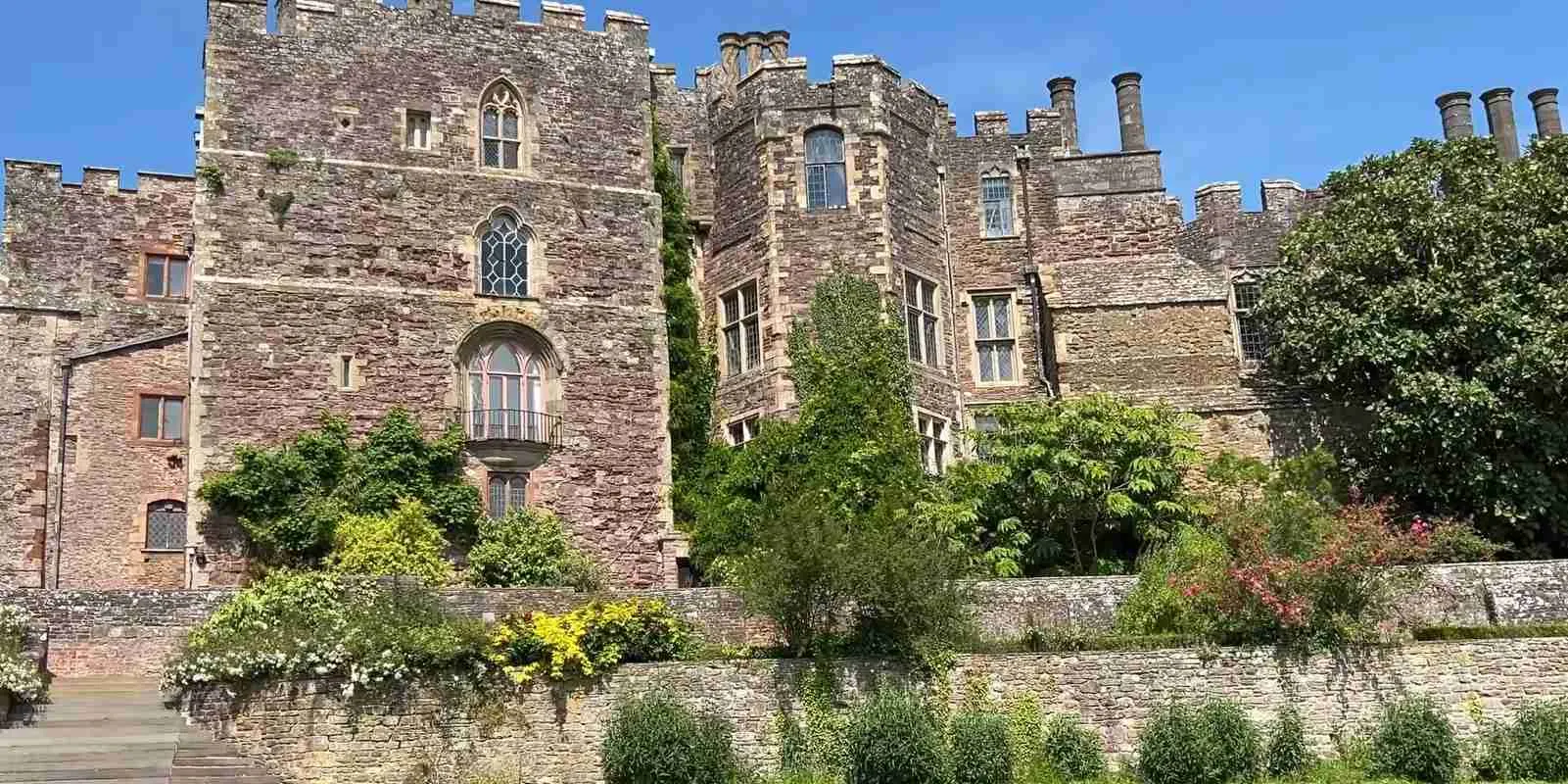
Berkeley Castle occupies a place in English history disproportionate to the size of the town that surrounds it. It has been the home of the Berkeley family since Robert Fitzharding, a Bristol merchant of considerable wealth, completed the great Keep in the late twelfth century. The Berkeley family has held the estate continuously since then — a tenure approaching nine centuries, making this one of the longest unbroken hereditary occupations of any English building.
The castle’s most famous moment came in 1327. Edward II, deposed by his wife Isabella and her ally Roger Mortimer in favour of his son Edward III, was imprisoned here in the months following his abdication. He died at Berkeley on 21 September 1327. The circumstances of his death have been debated by historians for centuries; contemporary accounts are sparse and partly contradictory, and some modern scholars have questioned the traditional narrative. What is not in dispute is that the dungeon in which he was held survives, and that visitors can descend into it as part of the castle tour.
The castle is also notable for its connections to later Tudor royalty. Henry VIII visited, as did Anne Boleyn; Elizabeth I spent nights at Berkeley on two of her royal progresses. The Great Hall, the State Apartments, and the tapestry collections reflect these centuries of use, and the scale of the rooms — large enough for royal accommodation, small enough to retain a genuinely domestic character — gives the building an intimacy that grander English castles often lack.
Opening Days and Hours
In 2026, Berkeley Castle opens on Sunday 29 March and remains open until late October. The castle is open Sunday, Monday, Tuesday, and Wednesday only. It does not open on Thursday, Friday, or Saturday. This is the single most important planning fact for any visit: the majority of holiday weekenders who drive up on a Friday or Saturday will find a closed gate. The opening hours are 11am to 5pm, with last admission at 4pm. Guided tours of the castle interior leave daily at 12pm and 2pm, each lasting approximately one hour and fifteen minutes; these tours have run since the castle first opened to the public in 1956. A small additional charge may apply for the guided tours — check the official booking page at berkeley-castle.com for current tour pricing.
2026 Ticket Prices
Standard adult admission to Berkeley Castle in 2026 is approximately £16 per adult, with children aged 3–16 admitted at approximately £8, and a family ticket for two adults and two children available at approximately £45. Check the official site for current 2026 rates before booking, as prices may vary for special events. Historic Houses Association members visit free of charge; membership costs approximately £60 per individual per year and covers entry to more than 1,600 historic houses across the UK, making it excellent value for visitors who plan to visit multiple properties. Book admission tickets through berkeley-castle.com or through the Historic Houses Association website.
What to See
The castle and gardens together provide at minimum two hours of visiting. The Great Hall, hung with arms and armour, is one of the finest medieval domestic interiors surviving in England. The State Apartments contain an exceptional collection of textiles, silverware, and portraits accumulated by the Berkeley family over eight centuries. The dungeon, carved from the natural rock beneath the keep, is the most visited chamber and is included in the guided tour. The gardens offer terraced lawns, a lily pond, a walled kitchen garden, and a children’s wooden play area. Seasonal events — jousting, archery demonstrations, Tudor living history — are scheduled throughout the summer and are included in standard admission; check the castle website’s events calendar for 2026 dates.
Eating Near Berkeley Castle
Berkeley town centre has a small pub and a village café; neither is large or reliably open outside peak season. The castle itself does not have an on-site restaurant, though the kitchen garden picnic area can be used by visitors who bring their own food — a useful money-saving option if you are self-catering your lunch. For a proper meal, the White Hart in Ironmongers Street, Berkeley, and the Salutation Inn at Ham (4 miles south) are both well-regarded local pubs. Dursley (3 miles north on the A4135) offers a broader range of cafés and restaurants.
WWT Slimbridge 2026: Planning Your Visit to the Wetland Capital of England
WWT Slimbridge is the flagship reserve of the Wildfowl and Wetlands Trust and, by most measures, the most significant wetland wildlife site open to the public in England south of the Humber. It operates on a scale and with an ambition that goes well beyond the typical wildlife park: the research programme here has contributed to the survival of the Hawaiian goose (nēnē) from near-extinction in the 1950s, and the breeding records of individual Bewick’s swans — identified by their unique bill patterns — represent one of the most detailed long-term wildlife datasets in the world.
Wildlife Highlights
Slimbridge hosts all six flamingo species simultaneously — Chilean, greater, lesser, Caribbean (American), Andean, and James’s — an achievement maintained at very few other sites. The concentration of wildfowl across the reserve’s managed lagoons covers hundreds of species of ducks, geese, and swans from every continent. In winter the headline event is the arrival of Bewick’s swans from the Russian Arctic: these relatively small swans, each identifiable by its individual bill pattern, have been studied here since Peter Scott first documented their annual return in the 1960s. Numbers have declined significantly in recent decades due to pressures on their breeding and migration routes, making Slimbridge one of the most important monitoring stations for a species that is increasingly threatened.
Wild waders and raptors visit the estuary margins adjacent to the reserve throughout the year, and the Estuary Tower — a lift-accessible observation structure at the reserve’s western edge — provides views across the Severn to the Forest of Dean hills on the far bank. On clear days the view extends to the Brecon Beacons in Wales. The tower is accessible to wheelchair users and pram-pushers, making Slimbridge one of the more inclusive wildlife sites on this route.
2026 Opening Times and Admission
WWT Slimbridge is open 364 days a year, closing only on Christmas Day. The opening hours for the main visiting season (April through October) are 9:30am to 5:30pm, with last entry at 4:30pm. From November through January the centre closes at 4:30pm (last entry 3:30pm). February and March hours are 9:30am to 5pm (last entry 4pm).
Adult admission in 2026 costs approximately £20 per adult when booked online in advance (before midnight on the day before your visit, at wwt.org.uk) and approximately £22 per adult if purchased on the day at the entrance. Children aged 3–17 are approximately £14 online in advance. A 10% discount applies to all tickets booked online in advance. Prices shown here are without the optional Gift Aid top-up, which adds 10% to the ticket price but allows WWT, as a registered charity, to reclaim additional tax from HMRC. Check the official WWT website for current 2026 rates valid April 2026–March 2027, as pricing is updated annually on 1 April. The on-site café is open daily throughout visiting hours and serves hot and cold food.
Planning Your Visit
Book tickets online at wwt.org.uk by midnight on the day before your visit to secure the advance discount. WWT annual membership costs approximately £78–84 for two adults (prices updated April 2026) and provides unlimited free entry to all ten WWT centres across the UK for a full year — if you visit Slimbridge twice, membership pays for itself versus buying two advance tickets. The centre recommends allowing at least two to three hours; families with children using Welly Boot Land and the discovery activities will comfortably spend a full day. A free family-friendly app (Wetland Heroes) is available to download on arrival. Dogs are not permitted on the reserve; guide and assistance dogs are welcome but must be kept on a lead at all times.
The Severn Tidal Cycle: Understanding the Estuary’s Extraordinary Range
No road trip along the Severn shore can be planned without understanding the tidal cycle that governs it. The Severn Estuary is widely cited as having the second highest tidal range in the world — with only Canada’s Bay of Fundy producing larger tidal differentials — reaching up to 15 meters (approximately 49 feet) during the largest spring tides. This extreme range is created by the funnel geometry of the Bristol Channel: as the Atlantic tide pushes northeast into the progressively narrowing channel, the water has nowhere to spread, so it piles upward instead. The result is a river that can transform from a vast mudflat at low tide to a brimming, fast-moving flood at high tide within the span of six hours.
For road trip planning, the practical consequence is twofold. First, the character of the landscape changes dramatically between low and high tide: the best geological viewing at Aust, the best hulk visibility at Purton, and the most dramatic views across the mudflats at Oldbury all occur around low tide. Arriving at Aust two hours before predicted low tide and working north through the route as the tide turns gives the best sequence of low-tide views before reaching Slimbridge and Berkeley, which are tidal-independent. Second, some road margins near Aust and Oldbury can be affected by unusually high tides combined with westerly storms — not a routine flooding risk, but something to check when visiting in autumn or during periods of strong Atlantic weather.
The Severn Bore in 2026
The Severn Bore is a tidal wave that forms when very large spring tides push into the narrowing estuary with sufficient force to create a single, visible wave front. The bore forms south of Sharpness and travels upstream toward Gloucester, covering approximately 25 miles of river and reaching speeds of up to 21 kilometers per hour. It can be surfed; the record for a standing ride on the Severn Bore is held by a local surfer at 7.6 miles.
Bores are graded from one star (barely perceptible) to five stars (major spectacle). In 2026, the tidal cycle produces no bores above three stars. The three-star bores — large enough to produce a clearly visible, surfable wave — fall on the following dates in the second half of 2026: Friday 14 August (at approximately 10:15pm), Saturday 15 August, Friday 11 September, and Saturday 12 September. Note that the August bores occur late at night; spectators seeking daytime viewing should focus on the September dates. The best viewing points for the bore are at Minsterworth (approximately 6 miles north of Gloucester), Stonebench (on the east bank near Elmore), and Newnham-on-Severn on the west bank — all north of the road trip route described here, but worth combining with the heritage highway as part of a longer stay.
Checking Tide Tables
The Environment Agency publishes free tidal predictions for the Severn Estuary on its website (search “Environment Agency tide predictions Avonmouth” — Avonmouth, at the mouth of the Avon just south of Bristol, is the standard reference point for this section of the estuary). The National Tidal and Sea Level Facility (NTSLF), operated by the National Oceanography Centre, also provides detailed predictions. Several smartphone apps (Tides Today, Tide Tables UK) are useful for on-the-road reference. Before any visit to Aust Cliff or the shore at Oldbury-on-Severn, verify the predicted low tide time and plan to be at the waterside within the two hours either side of low water.
Hidden Stops: Five Secret Finds Along the Heritage Highway
Aust Cliff’s Rhaetian Bone Beds
The geological interest at Aust extends beyond the visual drama of the red cliffs. The Rhaetian Bone Beds — thin bands of dark, bone-rich rock visible within the upper part of the Triassic sequence — contain the fragmentary remains of fish, marine reptiles, and terrestrial animals that lived and died on this coastal margin more than 200 million years ago, at the transition between the Triassic and Jurassic periods. This boundary is one of five major mass extinction events in Earth’s history, and the Aust cliff section is among the more accessible exposures of Rhaetian rock in England. The site is designated a Site of Special Scientific Interest; collecting fossils from the cliff face is not permitted, but the rock layers are clearly visible and can be examined in situ at low tide from the beach below the slipway. A geological interpretation leaflet is sometimes available from local wildlife and geological societies.
St Arilda’s Church, Oldbury-on-Severn
The church of St Arilda occupies the highest natural point in the immediate landscape — a low drumlin perhaps four or five meters above the surrounding flood plain. This was not accidental. The settlement of Oldbury was built around a flood refuge, and the church tower served a dual purpose: pastoral center and navigational landmark for Severn pilots reading the shore from the water. The dedication to St Arilda — a local martyr of uncertain historical record, said by tradition to have been beheaded near this spot by a Saxon lord — makes the church one of only a handful in England bearing this name. The churchyard is open year-round; carved stones near the entrance record flood heights from historical tidal surges. The interior is typically open during the day in summer.
Frampton on Severn’s Rosamund’s Green
Most English villages have a green. Frampton on Severn has a green that stretches so far in two directions that you can lose sight of one end from the other. Rosamund’s Green — named, by tradition, after Rosamund Clifford, the celebrated mistress of Henry II — is documented as one of the longest village greens in England, its L-shaped form lined on both sides by period houses ranging from timber-framed farmhouses to Georgian brick villas. Walking its full length takes the better part of fifteen minutes. The canal occupies the western side, with the Gloucester-Sharpness towpath providing a flat, traffic-free walk in both directions. For a road trip segment that involves considerable windscreen time, Frampton offers the gentlest of decelerations: a picnic on the green, a towpath walk to Saul Junction and back, and a pint at the Bell Inn before rejoining the car.
The Purton Hulks at Low Tide
The photographic potential of Purton is best realised at low tide, when the marsh vegetation has receded enough to reveal the full extent of the wooden hull sections. The Severn trows — low, wide-beamed river trading craft with distinctive rocker keels — are the most recognisable vessels, their curved lower sections distinctive even in advanced decay. Some hulks retain planking along their upper sides; others have been reduced to the ribs alone, standing from the mud like the skeleton of something enormous. The Friends of Purton publish a trail guide (available through the Purton village website) that identifies individual vessels by their construction type and the approximate decade of their grounding. Timing the visit to coincide with low water — the same strategy as Aust — will reward the effort. The footpath from the canal is suitable for walking boots or wellies; some sections are muddy after rain.
The Gloucester-Sharpness Canal Swing Bridges
The Gloucester-Sharpness Canal, completed in 1827, is crossed at several points along its 16-mile length by manually operated swing bridges that remain in regular use to allow vessels to pass. Watching a swing bridge operate — the bridge tender walking the curved arm of the rotating span to push it across the gap — is a living piece of Victorian hydraulic engineering that requires no booking, no entry fee, and no planning beyond being in the right place at the right time. The bridges at Saul Junction (near Frampton), Purton, and Sharpness are the most accessible from the road trip route. Canal boat traffic is most frequent at summer weekends. The canal is managed by the Canal and River Trust; the towpath beside it is a public right of way throughout.
Where to Stay 2026: Accommodation Along the Severn Estuary
Thornbury Castle Hotel: Luxury Within the Tudor Walls
Staying at Thornbury Castle gives an experience without parallel on this road trip. The twenty-six bedrooms occupy the Tudor wings that Edward Stafford began in 1511, and several rooms overlook the walled garden that Henry VIII and Anne Boleyn are documented to have used during their 1535 visit. Room rates for 2026 range from approximately £250 to £400 or more per room per night for double occupancy, depending on the room category and season — check the Thornbury Castle website directly for current availability and pricing. Breakfast and dinner at the castle restaurant add substantially to the daily cost but are of consistent quality; evening meals are typically £50–70 per person for two courses. The hotel operates its own extensive wine cellar. Non-residents can book the restaurant without an overnight stay, making Thornbury Castle a plausible dining destination even for budget travelers staying elsewhere.
Thornbury Town: Mid-Range Inns and B&Bs
Thornbury town centre has several options at significantly lower price points than the castle hotel. The Swan Hotel on Castle Street and various smaller guesthouses and B&Bs in the town offer double rooms at approximately £90–130 per night in 2026, with breakfast often included. Thornbury is well-positioned as an overnight base: it sits roughly in the middle of the route, has good restaurants and pubs within walking distance, and allows easy early-morning departure to either Aust in the south or Slimbridge in the north. Book accommodations in Thornbury at least two to three weeks in advance for summer weekends, as the town draws visitors for Thornbury Castle Hotel events and local festivals.
Near Berkeley and Dursley: Budget Guesthouses and B&Bs
Berkeley town itself has limited accommodation; visitors planning a second day anchored around the castle are better served by staying in Dursley (3 miles north, at the junction for Cam & Dursley station), Wotton-under-Edge (5 miles east), or Cam village. B&Bs and small guesthouses in these towns typically charge £70–90 per room per night including breakfast in 2026 — budget-tier accommodation that still places you within easy striking distance of Berkeley Castle on a Wednesday through Sunday schedule. Use booking.com or visitgloucestershire.co.uk to check current availability. Cam & Dursley station is within walking distance of several of these options, making this cluster the best choice for visitors arriving by train.
Self-Catering and Camping Near WWT Slimbridge
WWT Slimbridge operates Warbler’s Meadow, a small self-catering and glamping site on land adjacent to the reserve, with accommodation ranging from camping pods to lodges. Guests at Warbler’s Meadow receive complimentary entry to the wetland centre throughout their stay — effectively eliminating the admission cost and making longer stays disproportionately good value. Check availability and current pricing at the WWT website, as this accommodation is popular and books up well in advance for summer weekends. Several campsites and glamping pitches are available in the broader Vale of Berkeley; the Slimbridge area is well-served by the network of small rural campsites that characterises this part of Gloucestershire.
Severn Estuary Heritage Highway Budget Guide 2026: Complete Cost Breakdown
All daily costs below are per person, per day, assuming two people sharing a room or tent — the standard calculation for this guide. Hotel or accommodation costs are divided by two before being added to individual expenses. Individual attraction prices are listed as per-adult single admission; family and concession rates are available at each venue. Currency is British pounds sterling (GBP); approximate USD equivalents at £1 = $1.27 are provided for international visitors.
Budget Travelers: £85–115 Per Person Daily
Budget travelers staying in a B&B or guesthouse (room rate £70–90, divided by two gives £35–45 per person), eating a self-prepared or included breakfast, having a pub lunch or sandwich (£8–12), and a takeaway or fish-and-chips dinner (£12–16), spend approximately £20–28 per person on food. Fuel and parking shared between two people adds £10–15 per person for a full day’s driving. Visiting one paid attraction and sticking to free sites (Aust, Oldbury, Frampton, Purton) for the rest of the day gives an attraction cost of £16–20 per person. Incidentals — drinks, postcards, a cream tea — add £5–8. Total: £85–115 per person per day (approximately $110–145). A full two-day budget trip costs approximately £170–230 per person.
Mid-Range Travelers: £135–195 Per Person Daily
Mid-range travelers sharing a hotel or comfortable inn (room £120–160, divided by two gives £60–80 per person), eating a café breakfast (£8–12), a pub lunch (£15–20), and a restaurant or gastro-pub dinner (£25–35 including drinks), spend £38–55 per person on food. Transport costs remain at £10–16 per person shared between two. Visiting both WWT Slimbridge (approximately £20 online) and Berkeley Castle (approximately £16) gives an attraction cost of £20–30 per person depending on which day each site is visited. Incidentals add £8–12. Total: £135–195 per person per day (approximately $170–250). A full two-day mid-range trip costs approximately £270–390 per person.
Luxury Travelers: £230–370 Per Person Daily
Luxury travelers staying at Thornbury Castle Hotel or a comparable property (room £250–400, divided by two gives £125–200 per person), eating a hotel breakfast (included), a lunch at a gastropub (£20–30), and a restaurant dinner (£50–70 including wine), spend £60–90 per person on food. Transport: £10–18. Attractions: £20–35 per person, covering both main sites plus any premium add-ons. Incidentals: £15–25. Total: £230–370 per person per day (approximately $290–470). A two-day luxury trip costs approximately £460–740 per person.
Two-Day Trip Totals at a Glance
For the full two-day route — arriving in time for the afternoon estuary stops on Day 1, spending the morning at WWT Slimbridge, and the afternoon of Day 2 at Berkeley Castle — the per-person totals are:
- Budget (B&B, self-catered meals, one paid attraction): £170–230 per person
- Mid-range (hotel, café and pub meals, both major attractions): £270–390 per person
- Luxury (Thornbury Castle Hotel, restaurant meals, all attractions): £460–740 per person
Hidden Costs and Planning Notes
Several costs that visitors overlook: parking in Thornbury town centre is charged (approximately £1.50–2.50 per hour; check on-site signage). WWT Slimbridge’s 10% online advance discount requires booking by midnight the day before — same-day booking at the gate costs approximately £2 more per adult. Berkeley Castle guided tours carry a potential small additional charge beyond the standard admission; check the official ticket booking page for the current 2026 guided tour fee. Petrol prices along the route are standard Gloucestershire forecourt prices — there are no inflated rural fuel premiums on this corridor — and the total round-trip driving from Bristol is approximately 70–80 miles, adding approximately £10–14 in fuel costs for a typical petrol car divided between two passengers.
Practical Tips 2026: Tide Tables, Parking, and Access Protocols
Tide Tables: Where to Check Before You Leave
Tide tables for the Severn Estuary are published by multiple free sources. The most reliable is the Environment Agency’s tidal prediction service, accessible via the gov.uk website (search “flood information service” and select the Severn Estuary gauge at Avonmouth). The National Tidal and Sea Level Facility (NTSLF), operated by the National Oceanography Centre, provides a secondary source. For mobile use, the Tides Today and Tide Times & Charts apps (available free on iOS and Android) give real-time and forecast data for Avonmouth and nearby gauges. Tide times shift by approximately 50 minutes later each day through the lunar cycle, so a low tide at 9am today will be approximately 10am the following day. Spring tides (largest range) occur twice monthly, around the new and full moon; neap tides (smallest range) occur at the quarter moons. The largest tidal ranges — and therefore the highest risk at shoreside access points — coincide with spring tides combined with low barometric pressure and westerly winds.
Which Roads and Paths Can Flood
The B4461 between Aust and Oldbury-on-Severn runs close to the estuary margin in several sections and can carry surface water during the largest tidal events combined with heavy rain. The flooding risk here is limited to exceptional conditions — storms coinciding with spring tides — rather than a routine hazard. The canal towpath at Purton and the field path from the canal to the hulks can be very wet after rainfall even without tidal involvement; waterproof boots are strongly recommended. The road into Sharpness docks passes along the canal wall and is not subject to tidal flooding, but can be muddy after wet weather. No road on the route as described is routinely closed by tidal action in normal conditions.
Parking at Each Stop
- Aust Cliff: Small informal pull-in near the slipway, approximately 8–10 cars. No charge. No facilities. Fills early in summer.
- Oldbury-on-Severn: Roadside parking near St Arilda’s Church; informal, no charge. Limited to a few vehicles.
- Thornbury: Moat Lane car park in the town centre; pay-and-display, approximately £1.50–2.50/hour. Additional parking on Castle Street (shorter stay bays).
- WWT Slimbridge: Large free car park for visitors, with overflow parking in the field adjacent in peak periods. EV charging points available.
- Frampton on Severn: Roadside parking near the green; informal, no charge. Limited to roadside width — large vehicles may find it restricted.
- Sharpness: Small informal area near the dock road; no charge, limited spaces.
- Purton Ship Graveyard: Small parking area at the end of the lane from the canal; no charge. Can be muddy. Approximately 8–10 vehicles.
- Berkeley: Market Place car park in town; pay-and-display, approximately £1.50/hour. Berkeley Castle has its own approach road but limited parking — town centre parking and a short walk is advisable at busy periods.
Berkeley Castle Opening Days — The Critical Constraint
This deserves a dedicated note because it is the most commonly misunderstood aspect of visiting Berkeley Castle. The castle is open Sunday, Monday, Tuesday, and Wednesday. It does not open on Thursday, Friday, or Saturday. The 2026 season runs from Sunday 29 March to late October. If you are planning a standard UK long weekend (arriving Thursday or Friday, leaving Sunday), only Sunday falls within the open schedule. A midweek visit — Monday through Wednesday — gives the most flexibility. If your trip is fixed on a Thursday or Friday, Berkeley Castle cannot be visited in 2026; plan accordingly and consider WWT Slimbridge as the main attraction for a purely estuary day.
Seasonal Access and What Opens When
WWT Slimbridge is open year-round (except Christmas Day) and is arguably better in winter than in summer for serious wildlife visitors. Berkeley Castle’s season runs late March through late October, open Sunday to Wednesday only. Thornbury Castle Hotel and restaurant operate year-round. The free sites — Aust, Oldbury, Frampton, Sharpness, and Purton — have no seasonal access restriction, though winter visits to Purton and the shore at Aust should be timed around low tide and avoided in severe weather. The canal towpath from Frampton to Sharpness is maintained year-round by the Canal and River Trust and is accessible in all but the most extreme conditions.
Money-Saving Strategies for the Severn Heritage Drive 2026
WWT Annual Membership: Best Value for Wildlife Lovers
A standard WWT adult membership costs approximately £56–60 per year (check wwt.org.uk for current 2026 pricing), providing unlimited free entry to all ten WWT centres across the UK. For two adults, a joint membership runs approximately £80–90 per year. Given that a single adult visit to WWT Slimbridge costs approximately £20 online in advance, a joint membership pays for itself in full after two visits between the two of you. If you plan to visit any other WWT centre during 2026 — London Wetland Centre, Martin Mere, Washington, Arundel — membership becomes dramatically good value. Members also receive a magazine, advance event booking, and discounts in the shop and café. Sign up online before your visit to avoid paying full price at the gate.
Historic Houses Association Membership: Free Entry to Berkeley Castle
The Historic Houses Association (historichouses.org) offers individual annual membership at approximately £60 and joint membership at approximately £80, providing free entry to more than 1,600 privately owned historic houses across the UK, including Berkeley Castle. If you are planning to visit any other Historic Houses property during 2026 — the network includes numerous Cotswold manor houses, West Country estates, and historic gardens within an easy drive of this route — membership delivers exceptional value. Present your membership card and number at the Berkeley Castle booking page to receive free tickets. Members also benefit from advance booking access for popular seasonal events including the Berkeley jousting and archery days.
Free Stops Along the Route
A significant proportion of the route costs nothing. Aust Cliff, St Arilda’s Church at Oldbury-on-Severn, Frampton on Severn village green, the Gloucester-Sharpness Canal towpath, Sharpness Docks (dock wall area), and the Purton Ship Graveyard are all free of charge and require no booking. Driving the full 45-mile route and stopping at all the free sites — without entering WWT Slimbridge or Berkeley Castle — costs only the fuel and parking, giving a day out for approximately £10–20 per person. Packing a lunch and a thermos eliminates café spend entirely. The free route alone is a satisfying day of landscape, geology, and industrial heritage.
Smart Booking and Off-Peak Timing
Booking WWT Slimbridge online before midnight the night before your visit saves 10% on admission. Booking Berkeley Castle tickets in advance through the official website secures your time slot and avoids queuing at the gate. September and October offer the best combination of open attractions and lower accommodation prices: summer demand has eased, but both the castle and the wetland centre remain fully operational, and the autumn light over the estuary is particularly photogenic. Midweek visits (Monday through Wednesday) avoid weekend premium pricing at many local B&Bs and also fall within Berkeley Castle’s open days — a double benefit. Self-catering your lunch from supermarkets in Thornbury or Dursley saves £10–20 per person compared to buying food at attraction cafés.
Frequently Asked Questions
How do I plan the Severn Estuary Heritage Highway as a single day trip in 2026?
A single-day version of the route is achievable if you are selective. Leave Bristol by 9am to reach Aust Cliff for the low-tide window (check the tide table the evening before). Spend 30 minutes at Aust, 20 minutes at Oldbury, and continue north to Thornbury for a 10:30am coffee. Drive to WWT Slimbridge by 11:30am and spend a focused two hours covering the flamingos, Bewick’s swans, and the Estuary Tower. After a café lunch at Slimbridge, skip Frampton and Sharpness and drive directly to Purton Ship Graveyard (15 minutes from Slimbridge) for a 40-minute walk, then on to Berkeley Castle to arrive around 2:30–3pm for the afternoon guided tour. Return to Bristol via the A38 and M5 by 6pm. The day costs approximately £85–115 per person at the mid-to-budget level. Choose a Sunday, Monday, Tuesday, or Wednesday — the castle is closed any other day.
What days is Berkeley Castle open in 2026, and how should I book tickets?
Berkeley Castle is open Sunday, Monday, Tuesday, and Wednesday only, from 29 March to late October 2026. Opening hours are 11am to 5pm, last admission 4pm. Guided tours run at 12pm and 2pm, lasting approximately 1 hour 15 minutes each. Book tickets directly at berkeley-castle.com — the online booking system asks you to choose an arrival time slot (this is a guide, not a strict entry time). Adult admission is approximately £16 in 2026; children aged 3–16 approximately £8; family (2 adults + 2 children) approximately £45. Check the official site for current rates as prices may vary for special events. Historic Houses Association members visit free; Historic Houses membership can be purchased at historichouses.org. Do not arrive on a Thursday, Friday, or Saturday — the castle gates will be closed regardless of what secondary booking platforms may indicate.
How much does WWT Slimbridge cost in 2026, and can I save on admission?
Adult admission to WWT Slimbridge in 2026 costs approximately £20 per adult when booked online in advance (before midnight the evening before your visit) without the Gift Aid donation. Purchasing at the entrance on the day costs approximately £22 per adult at full price. Children aged 3–17 are approximately £14 online in advance. A 10% discount applies automatically to all tickets booked online by the midnight deadline. WWT annual membership (approximately £80–90 for two adults, checked at wwt.org.uk) provides free unlimited entry to Slimbridge and all other WWT centres for a full year — a visit by two adults saves more than the cost of joint membership after two Slimbridge trips. Prices listed reflect the tariff valid April 2026–March 2027; always verify current rates at wwt.org.uk before booking.
Can I see the Severn Bore during a Severn Estuary road trip in 2026?
The Severn Bore is visible from points north of the route described in this guide — primarily from Minsterworth, Stonebench, and Newnham-on-Severn, which are all north of Berkeley and slightly north of Gloucester. The bore is not visible from Aust, Oldbury, Sharpness, or Purton, as it forms and travels upstream from a point at Awre (on the Forest of Dean side). In 2026 the largest bores reach three stars — large enough to produce a clearly visible wave but not the five-star spectacle of some years. The main three-star bores in the second half of 2026 fall on 14 August (approximately 10:15pm), 15 August, 11 September, and 12 September. A practical combination: drive the heritage highway on a weekday, stay overnight in Berkeley or Dursley, and drive north to Minsterworth the following morning or evening to coincide with a forecast bore. Check the River Severn Tales website (severntales.co.uk) and the Tides Today platform for the most current 2026 bore schedule and times.
Is the Severn Estuary heritage route doable without a car in 2026?
A focused version of the route is possible by public transport, but several stops will be inaccessible. From Bristol Temple Meads, GWR trains reach Cam & Dursley station in approximately 25 minutes; bus 62 then connects to Berkeley in approximately 25 more minutes. This gives transit access to Berkeley Castle and, with a pre-booked taxi from Cam & Dursley, the Berkeley section of the route. Thornbury is served from Bristol by bus 75 (First Bristol), taking 45–55 minutes, allowing a Thornbury lunch and castle-hotel garden visit. WWT Slimbridge and the estuary stops at Aust, Oldbury, Purton, and Sharpness have no practical bus service and are effectively car-only. Check current timetables via Traveline Southwest (travelinesw.com) and the GWR journey planner (gwr.com) for up-to-date 2026 schedules and fares, as services and pricing can change between seasons.
Which stops on the 2026 Severn Estuary road trip are completely free?
The following stops on the route cost nothing to access in 2026: Aust Cliff and the old ferry slipway (no charge, informal parking); St Arilda’s Church and the flood markers at Oldbury-on-Severn (open churchyard, no charge); Frampton on Severn village green (public common, no charge); the Gloucester-Sharpness Canal towpath from Frampton to Saul Junction (public right of way maintained by the Canal and River Trust); the Sharpness dock wall area (publicly accessible); and the Purton Ship Graveyard (free access via public footpath). Thornbury Castle Hotel grounds are private (hotel guests and restaurant diners only), but the town centre and church are publicly accessible. A full day of estuary exploration using only free sites — plus fuel and parking — costs approximately £10–20 per person, making the Severn Heritage Highway one of the more accessible heritage drives in the Southwest.
Are there cycling options along the Severn Estuary in 2026?
The Gloucester-Sharpness Canal towpath provides the most practical cycling section on the route, running flat and largely traffic-free for its full 16-mile length between Sharpness and Gloucester. The surface is well-maintained and suitable for most bikes, though some sections can be soft after prolonged rain. Between stops, the B4061 and A38 corridors are straightforward cycling roads with reasonable shoulders, though traffic can be brisk on the A38 during commuting hours. The National Cycle Network passes through this part of Gloucestershire; check the Sustrans route planner (sustrans.org.uk) for current off-road and recommended-road options through the Vale of Berkeley. WWT Slimbridge has bike storage at the entrance. Berkeley Castle has no dedicated cycle provision, but the market-place car park in Berkeley town centre has bike locking rings. A cycle touring version of the route, starting from Bristol, would be most naturally done over two or three days.
How do tidal conditions affect road access on the Severn Estuary route in 2026?
The B4461 between Aust and Oldbury-on-Severn passes close to the estuary edge and can carry surface water during exceptional high tides combined with strong westerly winds and low atmospheric pressure — the combination that produces the highest water levels. This is not a routine daily hazard and will not affect most visits; it is most relevant in autumn and winter during Atlantic storm events. The canal towpath at Purton can be wet and slippery after heavy rain independent of tidal conditions. The canal itself is a managed waterway and does not flood its banks in normal operation. Before any visit to shoreside access points, check both the tide prediction (Environment Agency, NTSLF, Tides Today app) and the weather forecast; a falling barometric pressure combined with a spring tide and westerly winds should prompt extra caution. The Environment Agency’s flood warning service (gov.uk/check-flood-risk) covers this stretch and sends alerts to registered email addresses — worth setting up if you visit regularly.
Where is the best place to stay overnight near Berkeley Castle in 2026?
For the most complete two-day version of the route, an overnight in Thornbury — roughly midway along the drive — is most practical, allowing a full afternoon of estuary stops on Day 1 and a fresh start for Slimbridge and Berkeley on Day 2. Thornbury Castle Hotel provides luxury accommodation (approximately £250–400/room, check current rates at thornburycastlehotel.co.uk); mid-range B&Bs and guesthouses in the town charge approximately £90–130 per room including breakfast. For visitors focusing specifically on Berkeley, Dursley (3 miles north via the A4135) and Cam village offer budget B&Bs and guesthouses at approximately £70–90 per room, within easy reach of Cam & Dursley station and connected by local bus to Berkeley. Book well in advance for summer weekends in this area, as visitor accommodation is limited and fills early in the July–August peak.
How far is Berkeley Castle from Bristol, and what is the driving time in 2026?
Berkeley is approximately 21 miles from Bristol city centre by the most direct route via the M5 and A38, with a driving time of 35 to 45 minutes in light traffic. The scenic route described in this guide — following the estuary shore via Aust, Oldbury, Thornbury, Slimbridge, Frampton, Sharpness, and Purton — covers approximately 45 miles of road and takes around two hours of pure driving time without stops. With proper time at each attraction, the full route from Bristol to Berkeley is best planned as an all-day excursion or a two-day trip. From Bristol Temple Meads by public transport, the fastest option is GWR train to Cam & Dursley (approximately 25 minutes) followed by bus 62 to Berkeley (approximately 25 minutes), giving a total one-way transit time of around one hour and thirty minutes. Check gwr.com and Traveline Southwest for current 2026 fares and timetables before travelling.