Serbia Best Tours & Walking Routes 2026: Secret Spots & Lesser-Known Treasures
Serbia sits at the crossroads of empires, its soil layered with Roman palaces, Byzantine monasteries, Ottoman fortresses, and Communist-era bunkers — yet only a fraction of travellers ever dig beneath the surface. The country rewards the genuinely curious with walking routes that lead to vine-covered medieval citadels, canyon viewpoints shared with griffon vultures, and archaeological sites older than the pyramids. This guide maps every worthwhile tour option for 2026, from free Belgrade walking circuits to remote day trips that take you deep into a Europe most visitors never see.
Key Takeaways
- Free city transit: Belgrade’s regular bus, tram, and trolleybus network has been fully free of charge since January 2025, eliminating daily transport costs for city explorers and making walking tour logistics far simpler.
- Budget touring is genuinely affordable: Budget travellers covering Serbia by hostel, free walking tours, and low-cost day trips spend approximately $25–60 per person daily. Mid-range travellers using guided day trips and comfortable hotels spend $80–150 per person daily (two sharing).
- Five UNESCO World Heritage Sites to anchor your route: Serbia holds five inscribed sites — Stari Ras and Sopoćani, Studenica Monastery, Medieval Monuments in Kosovo, Gamzigrad-Romuliana, and the Stećci Medieval Tombstones Graveyards — all reachable as day trips or short extensions from Belgrade or Novi Sad.
- Eastern Serbia is the most undervisited region: The Iron Gate Gorge, Lepenski Vir, Viminacium, and Gamzigrad cluster in the east and can be combined into two to three days of genuinely world-class archaeological and natural sightseeing at a fraction of what comparable sites in Western Europe cost.
- Day trips from Belgrade cover extraordinary range: Group day tours depart Belgrade for Uvac Canyon, Golubac Fortress, Studenica Monastery, Šargan Eight railway, and Fruška Gora wine country, with most shared tours priced between $50 and $90 per person including guide and transport.
- Zemun and Dorćol are Belgrade’s best-kept secrets: Both neighbourhoods are walkable from the city centre, historically distinct, architecturally rich, and almost entirely free of mass tourism — offering the kind of authentic city exploration that most capital cities no longer provide.
People Also Ask About Serbia Tours 2026
What are the best guided tours to book in Serbia in 2026?
The highest-rated guided experiences in Serbia in 2026 are the Belgrade walking tours covering Kalemegdan Fortress and the Bohemian Quarter (from $13 per person for group tours), the Iron Gate full-day tour combining Golubac Fortress and Lepenski Vir (approximately $50–80 per person), and the Šargan Eight heritage railway day trip from Belgrade into western Serbia. For off-the-beaten-path focus, the Belgrade Underground and Cold War Bunkers tour — visiting socialist-era subterranean infrastructure below the city — is consistently one of the most distinctive experiences available in the Balkans, priced around $23–35 per person. Monastery circuit tours connecting Studenica, Žiča, and the Raška region monasteries run approximately $55–80 per person on a shared basis. Private tours scale upward from these baselines: a private Belgrade walking tour runs from $176, while a custom private day trip into eastern or western Serbia with a dedicated guide and vehicle typically costs $150–280 depending on distance and group size.
How much do tours cost in Serbia in 2026?
Serbia is one of Europe’s most affordable touring destinations. Tip-based free walking tours in Belgrade ask guests to pay what they feel the experience was worth, with a $5–15 tip considered appropriate. Paid group walking tours in Belgrade run $13–47 per person for two to four hours. Specialty tours — underground bunkers, ghost tours, street art circuits — range from $23 to $50. Full-day group day trips from Belgrade covering Golubac and the Iron Gate, Uvac Canyon, or Studenica Monastery cost $50–90 per person including transport and guide. The Šargan Eight railway direct ticket costs approximately 1,200–1,500 RSD ($12–15) when purchased at Mokra Gora station; day trip packages from Belgrade including transport to Mokra Gora run $50–100 per person. Private tours cost considerably more: a private city tour starts around $176 for a group, while private full-day excursions into the countryside run $150–280 depending on route and group size. Check official booking platforms for current rates, as operator pricing evolves seasonally.
What are Serbia’s most hidden and lesser-known destinations in 2026?
Serbia’s most undervisited treasures include Viminacium, a partially excavated Roman city near Kostolac covering over 450 hectares — one of the largest Roman archaeological sites in Europe, where visitors can walk active excavation zones and see preserved mosaics in situ. Lepenski Vir, a Mesolithic settlement on the Danube bank, contains the world’s oldest known sculptures (approximately 8,000 years old), yet receives a fraction of the visitors that comparable sites in Western Europe attract. The village of Negotin in eastern Serbia sits at the intersection of Serbian, Romanian, and Bulgarian wine culture and is barely touched by organised tourism. Gamzigrad-Romuliana, a UNESCO-inscribed Roman imperial complex in a field near Zaječar, can sometimes be explored with only a handful of other visitors present. In natural landscapes, Uvac Canyon — a set of dramatic serpentine river meanders forming a near-perfect maze of limestone ridges — is among the most photogenic viewpoints in the Balkans and remains largely off the international radar.
Which walking routes in Belgrade are best for 2026 visitors?
The single most rewarding Belgrade walk combines Kalemegdan Fortress with the Old Town and Skadarlija — a two to three hour circuit starting at the fortress park above the Sava-Danube confluence, descending through Knez Mihailova pedestrian street, and ending in the cobbled Bohemian Quarter with its kafana restaurant culture. Zemun, the former Austro-Hungarian town now absorbed into Belgrade’s northwest, offers a completely different architectural vocabulary: its Gardoš Hill and the Sibinjanin Janko Tower deliver panoramic river views with almost no other tourists in sight. The Dorćol district walk through Belgrade’s oldest continuously inhabited quarter reveals Ottoman-era street layouts, art nouveau facades, and a thriving independent café culture. For alternative culture enthusiasts, the Savamala arts district along the Sava waterfront is a post-industrial creative hub best explored on foot on weekend mornings.
Extended multi-day tours – 5+ days
Featured Serbia Multi-Day Tour Packages
3 days
Serbia 3-Day Discovery Tour
- ✓ Comprehensive Serbia experience
- ✓ Expert local guides included
- ✓ All accommodation included
- ✓ Transportation provided
5 days
Serbia 5-Day Highlights Experience
- ✓ Comprehensive Serbia experience
- ✓ Expert local guides included
- ✓ All accommodation included
- ✓ Transportation provided
7 days
Serbia 7-Day Cultural Journey
- ✓ Comprehensive Serbia experience
- ✓ Expert local guides included
- ✓ All accommodation included
- ✓ Transportation provided
10 days
Serbia 10-Day Complete Adventure
- ✓ Comprehensive Serbia experience
- ✓ Expert local guides included
- ✓ All accommodation included
- ✓ Transportation provided
Multi-day tour packages powered by TourRadar. Prices and availability subject to change.
Introduction: Serbia’s Hidden Depth and Why 2026 Is the Moment to Explore It
Few countries in Europe carry the density of civilisational layers that Serbia does. The land that is now Serbia served as a frontier zone, trading crossroads, and imperial heartland for Romans, Byzantines, Bulgars, Serbs, Ottomans, and Austro-Hungarians in succession. Each empire left something behind: Roman roads, Byzantine frescoes, Ottoman hans, Baroque merchant houses, Jugend Stil façades, and the concrete monuments of a 20th century that was anything but quiet. The result is a destination where extraordinary historical and natural experiences exist within a single day’s drive of each other — and where the infrastructure of modern tourism has not yet erased the sense that you are genuinely discovering something.
Belgrade anchors any Serbia itinerary. It is one of the most energetic capital cities in the Balkans, defined by an unruly skyline of Ottoman fortifications, socialist housing blocks, floating river clubs, and glass towers — a city where the past and present exist in productive tension. But Belgrade functions best as a launching point. The real revelation is what lies beyond it: the Iron Gate Gorge cutting through the Carpathian Mountains along the Romanian border, the monasteries of the Raška region illuminated by medieval frescoes considered some of the finest in Orthodox Christianity, the volcanic geological formations of Đavolja Varoš, and the cinematic landscape of western Serbia where Emir Kusturica built an entire village from timber for his film Drvengrad, then left it standing for visitors to walk through.
For 2026 visitors, two practical developments make Serbia more accessible than ever. Belgrade’s public transport has been free since January 2025, removing the daily friction of transit costs for city exploration. And the growing network of professional English-language tour operators — building on Belgrade’s long reputation as a budget travel favourite — means that even the most remote Serbian destinations can now be reached on organised day trips with qualified guides, at prices that remain startlingly low by European standards.
This guide structures Serbia’s tours and walking routes from the ground up: starting with the city walks that orient you, moving through day trip circuits, then into the hidden regions most travellers never reach.
Belgrade Walking Routes and Tours 2026
Belgrade’s walkable core rewards explorers who go beyond the obvious fortress visit. The following routes cover distinct neighbourhoods and can be combined, extended, or taken independently across two to three days of city exploration.
The Kalemegdan Fortress and Old Town Walking Circuit 2026
Kalemegdan is the starting point for any Belgrade visit — a 2,300-year-old fortification complex sitting on a high promontory above the confluence of the Sava and Danube rivers, surrounded by one of Serbia’s most pleasant urban parks. The fortress itself is free to enter at any time, with the Belgrade City Museum and the medieval inner fortifications charging modest admission of around 500–800 RSD ($5–8). The classic Kalemegdan to Skadarlija walk takes two to three hours at a relaxed pace.
From the upper terrace of Kalemegdan, where the Turkish and Austrian sections of the fortification face each other across the park, descend southeast along Knez Mihailova — Belgrade’s main pedestrian promenade, lined with 19th-century merchant houses that give the street a Central European elegance. At its southern end, Republic Square (Trg Republike) connects to the National Museum and the National Theatre. From Republic Square, turn northeast into Dorćol and pick up Skadarska Street, Belgrade’s preserved Bohemian Quarter, a cobbled cul-de-sac lined with kafanas where traditional Serbian music and roasted meat have coexisted for over a century. The walk from Kalemegdan to Skadarlija runs approximately two kilometres with natural pauses built in.
Zemun: The Austro-Hungarian Secret 2026
Zemun is technically part of Belgrade, absorbed into the city’s administrative boundaries, but it feels like a different town. For centuries it was the border post of the Austro-Hungarian Empire, standing on the opposite bank of the Danube from Ottoman Belgrade — and its architecture reflects that history in pale yellow and cream Baroque and Biedermeier facades, market squares, and a Catholic church skyline that contrasts sharply with Belgrade’s Orthodox domes.
The Gardoš Hill walk, starting at the quayside fish restaurants along Kej oslobođenja, climbs through the old town centre to the Millennium Tower (Kula Sibinjanin Janka), a 1896 Historicist-style tower built by Hungary to commemorate 1,000 years of Magyar settlement. From the top, the panorama spans the Danube’s breadth, the Belgrade skyline in one direction and the Pannonian Plain in the other. The full Zemun circuit — quayside, market square, Gardoš Hill, descent through the narrow lanes of the old core — takes 90 minutes to two hours and encounters almost no organised tourism. Zemun is reachable from central Belgrade by bus (free since January 2025) in approximately 20 minutes, or by a scenic 40-minute walk along the riverfront.
Dorćol: Belgrade’s Living Archaeological Layer 2026
Dorćol is Belgrade’s oldest continuously inhabited neighbourhood, its street plan still tracing the Ottoman grid of the 18th century. The name comes from the Turkish for “four roads” — the intersection at its centre — and the district spreads north of Knez Mihailova toward the Danube, bordered by the fortress to the west. Unlike Skadarlija, which is a preserved tourist set piece, Dorćol is genuinely inhabited by Belgrade’s creative class: independent bookshops, natural wine bars, artists’ studios, and some of the city’s best coffee shops occupy ground floors of buildings still plastered with layers of history.
The Dorćol walk begins at the Tašmajdan park — built on a former Ottoman quarry and later a Roman cemetery — moves north through Cetinjska Street (home to the Jewish quarter and one of Belgrade’s oldest synagogues), continues to the Bajrakli Mosque (the only surviving mosque in Belgrade from the Ottoman period), and ends at the Danube waterfront and the Doki ship-restaurant complex. The walk covers approximately three kilometres and illuminates seven centuries of settlement in a single urban cross-section.
Savamala Arts District: Belgrade’s Creative Riverfront 2026
Savamala is what happens when industrial infrastructure runs out of industrial purpose and artists move in. The neighbourhood along the Sava River south of the fortress was Belgrade’s 19th-century mercantile heart — customs warehouses, grain depots, printworks — and while the city’s commercial gravity shifted north in the 20th century, Savamala was left with large empty spaces and cheap rents. The result is one of Europe’s most interesting emerging arts districts.
The Savamala walking route runs along Karadjordjevia Street and its surrounding lanes, passing the Mikser House cultural centre, numerous gallery spaces, street murals by regional and international artists, and craft ateliers operating in converted warehouses. Weekend mornings are ideal: the street market is active, the coffee shops are open, and the floating clubs moored on the Sava bank — the čamci and splavovi that define Belgrade nightlife — sit quiet and accessible for a look at their striking floating architecture. The route from Brankov Most bridge to the main Savamala cultural hub covers approximately 1.5 kilometres.
The Cold War Underground: Belgrade’s Subterranean Secrets Tour 2026
One of Belgrade’s most distinctive guided tour options takes visitors underground into the city’s Cold War-era civil defence infrastructure. The most accessible of these tours descends into one of the nuclear bunkers constructed beneath the city during the Tito era — a network of reinforced concrete corridors, communications rooms, and air filtration systems built to shelter government and military command during nuclear attack. These spaces were kept classified for decades and remain genuinely atmospheric: the original equipment is largely intact, including vintage telecommunications technology that has not been replaced since the 1970s and 80s.
Several Belgrade tour operators run underground and alternative city tours covering these sites, with prices from $23 to $35 per person for group tours. The Underground Tour with Riverside Sparkling Wine — the most reviewed option on major booking platforms — pairs the subterranean exploration with a Danube waterfront finale and costs from $23 per person with advance booking discounts. Book at least 48 hours in advance as these tours operate with small groups and sell out during peak spring and autumn seasons. Check the official Viator and GetYourGuide listings for current operator prices, as small variations occur between seasons.
Free Walking Tours and Guided Tour Operators in Belgrade 2026
Belgrade’s free walking tour scene is well established and operates daily in multiple languages. The tours are tip-based: guides work without a fixed fee, and participants pay whatever they feel the experience was worth at the end. A fair tip for a two to three hour Belgrade walking tour is $5–15 per person, though guides welcome more. These tours cover Kalemegdan, Knez Mihailova, Republic Square, Skadarlija, and a handful of hidden courtyards and architectural details that most first-time visitors miss entirely.
Several operators run paid group tours for visitors who prefer a guaranteed guide and structured experience. The key options for 2026 are as follows.
Group walking tours: The most popular option is the Serbian History Walking Tour, a three-hour circuit priced from $35 per person. The Belgrade 101 walking tour at $41 covers the city’s core narrative. The introductory Downtown walking tour starts at $18 per person for a 90-minute orientation. For walking tours with a specific focus, the Street Art and Hidden Gems Walking Tour covers Savamala and Dorćol and starts at $176 for private groups — excellent value split four or more ways.
Specialty tours: The Ghosts and Vampires Walking Tour ($34 per person) covers Serbian folklore, urban legend, and the historical roots of the vampire myth — an original concept born partly from the documented 18th-century cases of Petar Blagojević and Arnold Paole in the Serbian village of Kisiljevo, which generated the first documented European vampire panic and eventually influenced Western vampire literature. The Alternative Walking Tour at $47 per person explores socialist architecture, Yugoslav design, and the political geography of communist Belgrade. The Local Craft Beer Tasting Tour at $88 per person pairs walking with visits to Belgrade’s small-batch craft breweries.
Advance booking through GetYourGuide or Viator is recommended for specialty tours and all tours during summer (June–August), when Belgrade tourism peaks with the EXIT festival in Novi Sad and the Guča Trumpet Festival drawing visitors from across Europe.
Day Trips from Belgrade 2026
Belgrade’s position in north-central Serbia puts an extraordinary range of destinations within a three-hour drive. The following are the most rewarding day trips, organised from closest to furthest.
Golubac Fortress and the Iron Gate Gorge Day Trip 2026
Golubac Fortress stands two hours east of Belgrade at the entrance to the Đerdap Gorge — the point where the Danube, at its broadest, meets the narrowest pass through the Carpathian Mountains. The fortress is medieval, nine towers of pale stone climbing a river cliff that turns amber in late afternoon light, and its position above the water is among the most dramatic of any fortress in Europe. The gorge beyond it — the Iron Gate — cuts through the mountains for 100 kilometres along the Romanian border, the river squeezing between limestone walls rising 300 metres overhead.
Full-day tours from Belgrade combining Golubac Fortress with a Danube speedboat ride through the gorge cost approximately $50–80 per person on a shared basis, with departure times around 8 AM and return by early evening. In summer (May to October), the speedboat component crosses to the Romanian shore and back through the most dramatic section of the gorge. In winter, operators substitute the boat with a visit to the Lepenski Vir archaeological site (see below). Traditional Serbian lunch at a riverside household is offered as an optional add-on for approximately 1,800 RSD ($18) per person. Book tours through Victor Tours, Belgrade Walking Tours, or the major platforms for current pricing; the entrance ticket to Golubac Fortress’s first zone is included in most group tour prices. Visitors who want to reach the upper tower sections and battlements should enquire specifically about extended access, as the higher zones are sometimes restricted to private tour groups.
Lepenski Vir: The Oldest Sculpture in Europe 2026
Lepenski Vir sits on the Danube bank within the Iron Gate Gorge, a Mesolithic settlement occupied from approximately 9,500 to 6,000 years ago. The site’s protected modern roof shelters the original trapezoidal house foundations in their exact positions, along with the extraordinary fish-headed sculptures — carved from river boulders and placed at the hearths of individual dwellings — that represent the oldest known figurative sculptures on the European continent. The archaeological museum built directly over the site allows visitors to walk among the foundations looking down at artefacts in situ, an unusually intimate encounter with Neolithic civilisation.
Lepenski Vir is most often visited as part of the Iron Gate day trip from Belgrade. The entrance fee to the museum is approximately 800–1,000 RSD ($8–10) per person. Visitors arriving independently should note the site’s location on a river terrace accessible only from the main Danube Highway (Route 25); there is no public transport connection from Belgrade, making a guided tour the most practical option for those without their own vehicle.
Uvac Canyon: Serbia’s Most Spectacular Natural Wonder 2026
Uvac Canyon in southwestern Serbia contains one of the most visually arresting landscapes in the Balkans: the Uvac River describing a series of near-perfect circular meanders through white limestone ridges, viewed from an observation platform that looks directly down into the loops from 200 metres above. The canyon is also a protected griffon vulture reserve — Europe’s largest griffon vulture colony nests in the canyon walls — and boat trips through the gorge at water level pass directly below nesting ledges where 450 birds roost.
The full-day tour from Belgrade to Uvac Canyon takes approximately 12 hours including transport, the boat trip, and the observation platform hike. Group tours cost approximately $50–80 per person. The tour typically departs at 7–8 AM, includes a boat ride through the canyon floor (approximately 1,500 RSD / $15 per person for the boat, sometimes included in tour price), and reaches the observation platform by late morning for optimal light and canyon photography. The platform itself is reached via a 30-minute uphill walk from the car park. Book early in spring and autumn — Uvac is visually extraordinary during the autumn colour change (October) and the spring snowmelt (April–May) and tours sell out weeks in advance during these periods.
Šargan Eight Heritage Railway and Drvengrad Day Trip 2026
The Šargan Eight is a narrow-gauge heritage railway that winds up the mountain above Mokra Gora in western Serbia, crossing 22 tunnels and five bridges while ascending 300 metres in altitude along a track that doubles back on itself in the shape of a figure-eight. The railway was built during the First World War as part of a line connecting Belgrade with Sarajevo, closed in 1974, and painstakingly restored in 2003 as a heritage tourist attraction. The journey from Mokra Gora station to Šargan Vitasi and back takes approximately 1.5 to 2 hours including stops at viewpoint platforms, passing through beech and pine forests with views across the Zlatibor foothills.
The direct railway ticket costs approximately 1,200–1,500 RSD ($12–15) per adult at Mokra Gora station. Trains operate April through October with departures at 10:30 AM and 1:30 PM (additional 4:10 PM service July–August); outside the summer season, a single 11:45 AM departure runs. Check the official Serbian Railways website or call the booking line in advance, as peak-season trains sell out. Arrive 30 minutes before departure.
Adjacent to Mokra Gora is Drvengrad (also called Mećavnik or Küstendorf), the timber village built by filmmaker Emir Kusturica for his 2004 film Life is a Miracle and subsequently converted into a permanently inhabited arts and cultural resort. The village — an entirely artificial construction of hand-carved wooden buildings, galleries, a cinema, and accommodation — is an odd and engrossing place to walk through regardless of one’s feelings about Kusturica’s politics: an exercise in constructed nostalgia that is simultaneously kitsch and genuinely beautiful. Entrance to Drvengrad costs approximately 300 RSD ($3).
Day trips from Belgrade to Šargan Eight and Drvengrad run approximately 12 hours and cost $50–100 per person on shared group tours, depending on operator and season. Western Serbia tours frequently combine both with the Tara National Park viewpoints and the Drina River house (a small stone house famously perched on a river boulder in the Drina, now a symbol of Serbian tourism).
Studenica Monastery: Royal Heritage Day Trip 2026
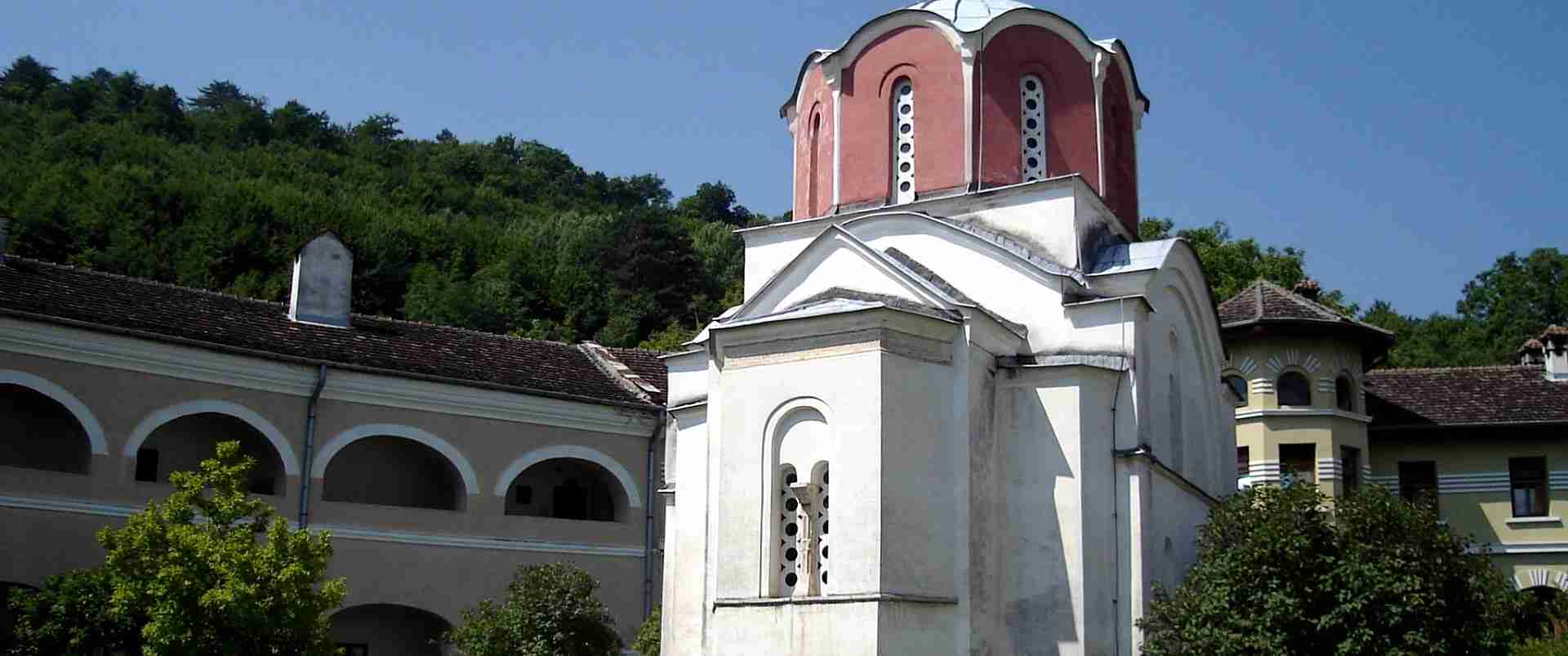
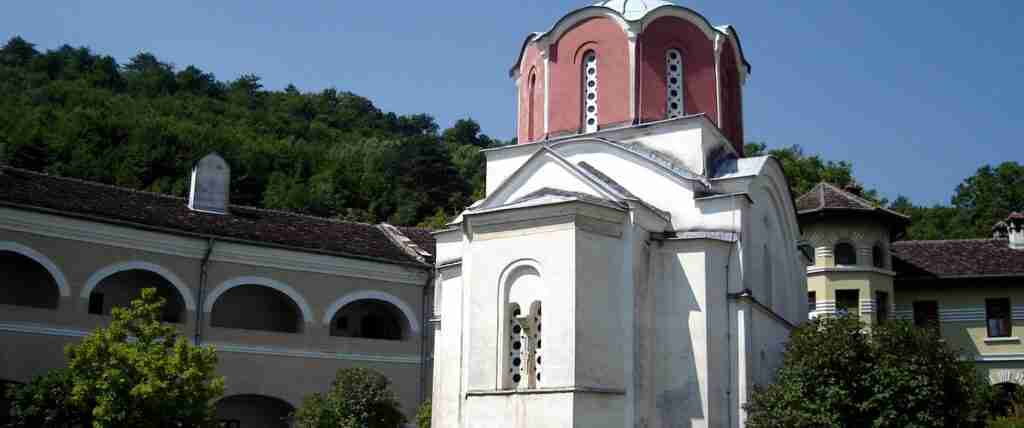
Studenica Monastery in the Raška region is Serbia’s most important medieval religious site and a UNESCO World Heritage property inscribed in 1986. Founded by the medieval Serbian Grand Župan Stefan Nemanja in the late 12th century, the monastery enclosure contains the Church of the Virgin and the King’s Church, both preserving frescoes of extraordinary quality including the famous Annunciation cycle and the painted representation of the Crucifixion that scholars consider among the finest Byzantine paintings surviving anywhere. The monastery is still active, inhabited by Orthodox monks, and the combination of living religious community, pristine medieval architecture, and mountain forest setting is quietly overwhelming.
Tours from Belgrade to Studenica frequently combine the monastery with nearby Žiča Monastery — the 13th-century red-painted church where Serbian archbishops were crowned — covering approximately 350 kilometres of round-trip driving. Group day tours cost $55–80 per person. Entrance to the monastery complex is free, though photography inside the churches may require a small donation. Plan visits for weekday mornings to avoid weekend pilgrimage groups. The drive through the Ibar River valley from Kraljevo to Studenica passes through some of the most scenically rewarding terrain in central Serbia.
Fruška Gora Monastery and Wine Country Day Trip 2026
Fruška Gora is a modest range of wooded hills rising from the Pannonian Plain north of Novi Sad, unremarkable in elevation but extraordinary in concentration of cultural heritage: 16 Orthodox monasteries, most dating from the 15th to 18th centuries, are scattered through its forests within a 70-kilometre radius. The monasteries were built as places of refuge and cultural preservation during the Ottoman period and contain significant collections of Serbian medieval manuscripts, icons, and ecclesiastical embroidery. The town of Sremski Karlovci at the mountain’s eastern foot is one of the most architecturally intact 18th-century Baroque towns in Serbia, a small wine-producing settlement of painted merchant houses that feels like a Vojvodina version of a Central European market town.
Day trips from Belgrade to Fruška Gora typically combine two or three monastery visits with Sremski Karlovci wine tasting, covering the round trip in approximately eight hours. Group tours cost $45–70 per person, with wine tasting sometimes offered as an add-on of 500–1,500 RSD ($5–15) depending on the producer and selections offered. The monasteries include Novo Hopovo, Grgeteg, Krušedol, and Vrdnik, each with a distinct character; Novo Hopovo’s 16th-century tower is the most photographed, while Vrdnik-Ravanica holds the relics of Serbian Tsar Lazar and attracts significant pilgrimage groups on feast days. Independent visitors can reach Sremski Karlovci from Novi Sad by bus in 20 minutes and walk the town’s centre on foot without a guide in one to two hours.
Novi Sad Tours and Walking Routes 2026
Novi Sad, Serbia’s second city and the capital of the Vojvodina autonomous region, sits 80 kilometres north of Belgrade on the Danube. The city is best known internationally as the home of the EXIT Music Festival (July) and Petrovaradin Fortress — the 18th-century Austro-Hungarian citadel that rises on the right bank of the river. But Novi Sad’s appeal extends well beyond the fortress: the old city centre is a compact grid of Central European architecture, the Danube quayside is one of the most pleasant urban waterfronts in the Balkans, and the surrounding Vojvodina countryside contains wine villages, nature reserves, and Roman sites largely unknown outside Serbia.
Petrovaradin Fortress Walking Route 2026
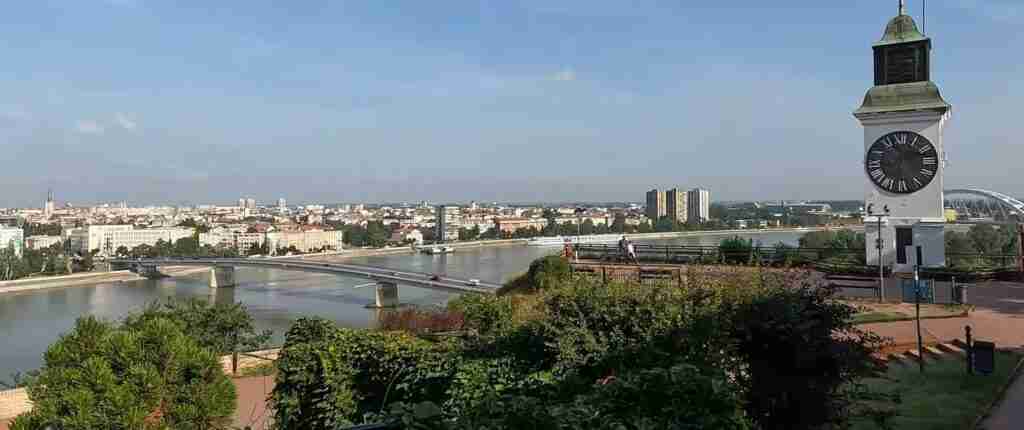
Petrovaradin Fortress — called the “Gibraltar of the Danube” — sits on a steep cliff above the right bank, its 18th-century fortifications covering 112 hectares across four levels of underground tunnels and surface bastions. The upper level, with the Clock Tower (whose hands run counterclockwise, a quirk dating from the Ottoman period), offers the most photographed view in Novi Sad: the city below, the Danube bridge, and the Pannonian Plain stretching to the horizon. The fortress is free to walk through at any time; the underground tunnel network (16 kilometres of galleries carved into the rock) requires a guided tour.
The tunnel tours run daily and cost approximately 500–800 RSD ($5–8) per person. The walk from the Liberty Bridge to the fortress clock tower and back covers approximately two kilometres and takes 60–90 minutes with pauses. The fortification itself can be explored independently, but guided tours of the underground galleries add significant historical depth — the tunnels were used as grain stores, prison cells, military barracks, and (during EXIT Festival) as a venue for underground concerts. Book tunnel tours at the Petrovaradin tourist information office at the fortress entrance, or through Novi Sad city tour operators.
Novi Sad Old Town Walking Circuit 2026
Novi Sad’s old town fits within a compact grid of pedestrianised streets whose architectural character is overwhelmingly Austro-Hungarian: late Baroque and Eclectic façades, corner cafés in ground floors of 19th-century buildings, a central market (Zmajeva Street market), and the Roman Catholic Bishop’s Palace facing the Name of Mary Church across Trg slobode (Freedom Square). The walk from Freedom Square north through Dunavska Street to the Danube quayside takes approximately 45 minutes; extending through the Serbian National Theatre, the MSUV (Museum of Contemporary Art of Vojvodina), and the Jevrejska and Pašićeva Street gallery district adds another hour.
Novi Sad is reachable from Belgrade in approximately 40 minutes on the high-speed Soko train at a cost of approximately 661 RSD ($6.50) each way — the most practical and affordable way to visit as a day trip. Return trains run hourly throughout the day.
Sremski Karlovci: Wine Town Walking Tour 2026
Sremski Karlovci is one of the most rewarding short detours from Novi Sad: a 20-minute bus ride southeast along the Danube brings you to a small town whose centre has barely changed since the 18th century. The Four Lions Fountain at the centre of the main square, the 1762 Upper Town Church, and the rococo Gymnasium building create a cohesive Baroque ensemble that functions as a working town rather than a heritage museum. The town’s wine culture is distinctive — Karlovci Riesling (Bermet) has been produced here since the 17th century and was served on the Titanic — and the small production wineries along the hilltop above town offer tastings of this unusual fortified wine variety for 300–700 RSD ($3–7) per person.
Serbia’s Most Hidden Historical Sites 2026
Beyond the established tourist circuit, Serbia contains a concentration of Roman, Mesolithic, and early medieval sites that would headline any other European country’s heritage trail. The following deserve considerably more international attention than they currently receive.
Viminacium: Europe’s Forgotten Roman City 2026
Viminacium was the capital of the Roman province of Moesia Superior, a city of 45,000 inhabitants at its height in the 2nd and 3rd centuries CE, covering an area larger than the contemporary city of Požarevac beside which its ruins lie. The site was never built over by a medieval city — there was no successor settlement — which means that Viminacium’s ground plan is largely intact beneath the surface, with ongoing excavations revealing mosaics, mausolea, the amphitheatre, the legionary bathhouse, and the city’s street grid. Visitors can walk the active excavation zones with a site guide, a genuinely rare experience at an EU-comparable Roman site.
The site is located 75 kilometres east of Belgrade near Kostolac. A museum pavilion on site houses mosaics and burial artefacts, including a remarkable collection of Roman glass. Entrance costs approximately 1,000 RSD ($10) per person; guided tours of the excavation add approximately 500 RSD ($5). Viminacium is reachable by organised day trip from Belgrade (approximately $50 per person in a group tour) or by bus to Požarevac followed by a local connection. The site is also a stop on the Roman Emperors Route — a thematic heritage trail connecting 17 birthplaces of Roman emperors in modern Serbia, a number disproportionate to the province’s size that reflects Moesia’s strategic importance in late imperial politics.
Gamzigrad-Romuliana: The Roman Emperor’s Secret Palace 2026
Gamzigrad-Romuliana near Zaječar in eastern Serbia is a UNESCO World Heritage Site inscribed in 2007, yet it receives perhaps 10,000 visitors per year — a fraction of what its historical significance merits. The complex is the imperial palace and mausoleum of Galerius, the Roman Caesar who was one of the Tetrarchs governing the empire alongside Diocletian in the late 3rd and early 4th centuries CE. Galerius built his retirement palace and family mausoleum in his native region of Moesia, and the result — enclosure walls with circular corner towers, temples, audience halls, bathhouses, floor mosaics, and the imperial tomb structure — survives to a degree unusual for late Roman palatial architecture.
The site is administered jointly with the Zaječar National Museum, which holds the most significant portable finds including a remarkable collection of porphyry imperial portrait fragments. Entrance costs approximately 800 RSD ($8) per person. The complex is not served by public transport and is most practically reached on an organised eastern Serbia day trip from Belgrade, or by rental car. The drive from Belgrade to Zaječar takes approximately three hours via the E763 motorway.
Stari Ras and Sopoćani: Serbia’s First Capital 2026
Stari Ras (Old Ras) near Novi Pazar in southern Serbia was the first capital city of the medieval Serbian state, established by the Nemanjić dynasty in the 12th century. The UNESCO-inscribed complex encompasses the archaeological remains of the town itself, the hilltop fortress of Ras, the monastery of Djurdjevi Stupovi (St George’s Pillars), and the Church of St Peter and Paul — one of the oldest continuously used Christian churches in the Balkans, with origins in the 4th century. The Sopoćani Monastery, inscribed together with Stari Ras, contains what many art historians consider the greatest cycle of Byzantine frescoes outside Constantinople: the Dormition of the Virgin fresco in the narthex is frequently cited as one of the finest paintings of the 13th century in any medium.
The complex is approximately 270 kilometres south of Belgrade, a four-hour drive through central Serbia. Organised day trips covering Stari Ras and Sopoćani run approximately $65–90 per person with a shared group. The area around Novi Pazar — the largest Bosniak-Muslim city in Serbia, and a place with its own distinct cultural character worth a half-day of exploration — adds ethnographic and culinary interest to the visit.
Đavolja Varoš: Devil’s Town 2026
Đavolja Varoš (Devil’s Town) is a geological formation in the Jablanica River canyon near Kursumlija in southern Serbia, consisting of 202 earth pyramids up to 15 metres tall with stone caps, formed by differential erosion of the volcanic tuff beneath. The formations are accompanied by two natural spring pools so high in mineral content that the water appears to glow slightly red and is entirely undrinkable — an ancient observation that likely generated the “devil” nomenclature. The site exists within a protected natural monument area and is traversed by a walking path through the densest concentration of pyramids.
Đavolja Varoš is four hours from Belgrade and is best combined with a southern Serbia itinerary including the Kopaonik Mountain area. Several Belgrade operators run day trips to the site in approximately 12 hours; the entrance fee is approximately 500 RSD ($5) per person. The formations are most dramatically photographed in late afternoon light when the low sun angles illuminate the pyramid shapes from the side.
Nature and Hiking Tours in Serbia 2026
Serbia’s national parks and nature reserves offer hiking and walking routes ranging from gentle forest circuits to serious mountain traverses. The following three are the most rewarding for visitors with limited time.
Tara National Park Hiking Routes 2026
Tara is Serbia’s westernmost national park, a highland plateau of ancient beech and fir forest — part of the transnational UNESCO-inscribed Ancient and Primeval Beech Forests heritage property extended in 2025 — dropping via dramatic gorges toward the Drina River on the Bosnian border. The park’s viewpoints over the Drina Canyon are among Serbia’s best natural panoramas, and the forest itself contains the Pančić Spruce, a glacial relict tree found nowhere outside the western Balkans. Walking routes of three to 12 kilometres connect the forest plateau with the canyon rim viewpoints, the Rača Monastery, and several alpine meadows with endemic flora.
The park is most practically reached from the town of Bajina Bašta (three hours from Belgrade by road) or as part of a western Serbia day trip combining Tara, Mokra Gora, and the Šargan Eight railway. Day hike routes within the park are well signposted and free to use; park entrance is included in most organised day trips from Belgrade. The House on the Drina — a stone building perched on a midstream river boulder accessible only by rope and ladder — is visible from the Perućac Lake shore within the park and has become one of Serbia’s most recognised images in international travel photography.
Đerdap National Park and Iron Gate Walking Routes 2026
Đerdap National Park lines the Serbian shore of the Iron Gate Gorge for 110 kilometres, protecting a corridor of remarkable geological and biological diversity. The park contains Trajan’s Table (Tabula Traiana), a Roman inscription carved into the gorge wall in 103 CE to commemorate Emperor Trajan’s road-building project along the Danube — visible from the riverbank path near Donji Milanovac and best approached by boat. The Golubac Fortress at the western entrance to the park and the Lepenski Vir site at its eastern end bracket a walking trail network covering canyon rim paths, forest routes, and Danube waterfront walks.
The park is most easily explored as part of the Iron Gate day trip from Belgrade. Independent visitors with a car can drive the Danube Highway through the park, stopping at Golubac, the Ram Fortress, Donji Milanovac (base for boat trips to Trajan’s Table), and Lepenski Vir over one to two days. Park entrance fees apply at designated gates; check the Đerdap National Park official website for current pricing.
Zlatibor Mountain Walking Routes 2026
Zlatibor is a high plateau at 1,000 metres elevation in western Serbia, a traditional mountain resort area whose walking trails wind through meadows, pine forests, and traditional village architecture. The plateau is large enough to absorb significant visitor numbers without feeling crowded, and its gentle terrain makes it accessible for all fitness levels. The main resort town of Čajetina connects by gondola lift (Zlatibor Cable Car) to higher viewpoints, and the surrounding villages — particularly Sirogojno, home to the Open-Air Museum of traditional Zlatibor architecture — add cultural depth to what might otherwise be a purely recreational landscape. Zlatibor is combined with Mokra Gora and Šargan Eight on western Serbia day trips from Belgrade and can also be used as a two to three night base for exploring the region independently.
UNESCO Heritage Tours in Serbia 2026
Serbia’s five UNESCO World Heritage Sites are all cultural properties, all accessible as day trips from Belgrade or Novi Sad, and all genuinely extraordinary in different ways. A focused heritage circuit visiting all five sites is achievable in five to six days.
Stari Ras and Sopoćani (inscribed 1979): The medieval capital of the Nemanjić dynasty and its associated monasteries in the Raška region, including the Sopoćani frescoes. Located near Novi Pazar, approximately 270 kilometres south of Belgrade.
Studenica Monastery (inscribed 1986): The most important royal monastery of medieval Serbia, founded by Stefan Nemanja, containing the Church of the Virgin with its 12th-century Byzantine and Romanesque frescoes. Located approximately 200 kilometres south of Belgrade in the Ibar valley.
Medieval Monuments in Kosovo (inscribed 2004/2006): Four ecclesiastical monuments in the territory administered as Kosovo — the Dečani Monastery, the Patriarchate of Peć Monastery, the Church of the Virgin of Ljeviš, and the Gračanica Monastery — inscribed for their Palaeologan Renaissance architecture and medieval fresco cycles. This site remains on UNESCO’s List of World Heritage in Danger due to ongoing political instability; travellers should check current entry requirements and advisories before planning visits.
Gamzigrad-Romuliana, Palace of Galerius (inscribed 2007): The late Roman imperial palace and mausoleum complex near Zaječar in eastern Serbia. Detailed above under Hidden Historical Sites.
Stećci Medieval Tombstones Graveyards (inscribed 2016): A transnational inscription shared with Bosnia and Herzegovina, Croatia, and Montenegro, covering medieval monolithic tombstones found across the region. Serbia’s component is located near Perućac and Hrta in western Serbia, within the Tara area. The stećci — massive carved stone monuments bearing geometric, figurative, and symbolic decoration — represent a distinctive medieval funerary tradition unique to the western Balkans.
Tour Costs and Daily Budget Planning for Serbia 2026
Serbia is among the most affordable touring destinations in Europe. The following breakdowns are per person, per day, assuming two people sharing hotel accommodation where applicable, and including the full cost of a typical touring day — accommodation, meals, transport, and a major guided experience or day trip.
Budget Travelers Daily Costs in Serbia 2026
Budget travel in Serbia centres on hostel dormitories, Belgrade’s free public transit, tip-based free walking tours, and Serbia’s outstanding affordable food culture — a plate of burek (flaky pastry with cheese or meat) costs 150–200 RSD ($1.50–2), while a full sit-down lunch at a kafana runs 700–1,200 RSD ($7–12). Hostel dormitory beds in Belgrade’s Stari Grad area start from approximately 1,600–2,200 RSD ($16–22) per night. City buses, trams, and trolleybuses have been free since January 2025, and many of Serbia’s most significant attractions — Kalemegdan Fortress park, the Zemun waterfront, the Dorćol walking routes — cost nothing to visit.
Accommodation per person in a dorm: $16–22. Meals (street food, market, budget kafana): $10–18. City transport: $0–5. Guided tours and site entries: $0–15. Budget travellers spend approximately $25–60 per person daily.
Mid-Range Travelers Daily Costs in Serbia 2026
Mid-range travel in Serbia covers comfortable three-star hotels, a mix of sit-down restaurant meals and café stops, and organised day trips to the countryside. Mid-range hotel rooms in Belgrade run approximately 6,000–9,500 RSD ($60–95) per room per night in central neighbourhoods; two sharing divide this to $30–48 per person. Restaurants serving grilled meats, salads, and house wine at the heart of Belgrade’s culinary culture run $15–25 per person for a full meal with a drink. A group day trip to Golubac, Uvac, or Studenica costs $50–80 per person including guide and transport.
Accommodation per person (two sharing mid-range hotel): $30–48. Meals (three daily, mid-range): $20–35. Transport (free city transit plus taxi or day trip): $5–15. Tours and attractions: $25–50. Mid-range travellers spend approximately $80–150 per person daily.
Luxury Travelers Daily Costs in Serbia 2026
Luxury accommodation in Belgrade is anchored by hotels such as the Square Nine, Hotel Saint Ten, and the Metropol Palace, with rooms priced approximately 15,000–27,000 RSD ($150–270) per night; two sharing divide this to $75–135 per person. Fine dining at Belgrade’s better restaurants — Ambar, Salon 1905, or the fish restaurants along the Zemun quayside — runs $40–70 per person for a full dinner with wine. Private guided tours of the city run from $176 for the group; private full-day countryside excursions with a dedicated vehicle and English-speaking guide cost $150–280 for the group.
Accommodation per person (two sharing luxury hotel): $75–135. Meals (upscale restaurants and cafés): $50–80. Transport (private driver, taxis): $20–40. Private tours and premium experiences: $60–120. Luxury travellers spend approximately $205–375 per person daily.
Day Trip Cost Breakdown: What You Will Actually Spend 2026
The following day costs are for single excursion days from Belgrade, covering transport, guide, site entries, and a local lunch. They are per person and do not include the Belgrade accommodation cost already reflected in the daily budget tiers above.
- Iron Gate / Golubac Fortress day trip: Group tour including transport and guide, $50–80 per person. Optional Danube boat ride sometimes included; traditional Serbian lunch add-on approximately $18 extra.
- Uvac Canyon day trip: Group tour including transport and guide, $50–80 per person. Boat ride through the canyon approximately $15 extra if not included.
- Šargan Eight Railway day trip: Group tour from Belgrade, $50–100 per person including transport. Direct train ticket at Mokra Gora is approximately $12–15 for those with independent onward transport.
- Studenica Monastery day trip: Group tour, $55–80 per person including transport and guide. Monastery entry free.
- Fruška Gora monasteries and Sremski Karlovci: Group tour, $45–70 per person. Independent visitors can reach Sremski Karlovci by train from Novi Sad for approximately $3 each way.
- Viminacium Roman city: Group tour from Belgrade, approximately $50 per person. Independent: bus to Požarevac $3–5 each way plus site entry $10.
Seasonal Guide to Serbia Tours 2026
Serbia tours are available year-round, but conditions vary meaningfully across seasons.
Spring (April–May) is the best touring season: temperatures of 15–22°C, wildflowers across the monastery valleys and canyon rims, and the Uvac Canyon boat operation running at full capacity with clear water. This is also the shoulder season before summer crowds arrive at Belgrade’s exit festival orbit, meaning day trips are available with smaller groups and better per-person guide ratios. Book Uvac and Golubac day trips at least two weeks in advance for April and May.
Summer (June–August) is peak season. Belgrade temperatures reach 30–35°C, which makes midday city walking uncomfortable, but the morning walking tours (departing 9–10 AM) are manageable. Day trips to mountain areas and canyon regions are the most popular option as natural landscapes stay cooler. EXIT Festival in early July (Novi Sad) draws major international attendance and affects accommodation availability and pricing across northern Serbia for the festival week. Book accommodation and tours well in advance for the July–August peak.
Autumn (September–October) rivals spring as the ideal touring season. The beech forests of Tara, Fruška Gora, and the Šargan Eight corridor turn copper and amber through October, making this the best period for photography-focused tours. Autumn light on the Iron Gate gorge walls is exceptional. Most day trip operators run full schedules through October, transitioning to reduced frequency in November.
Winter (November–March) is low season. The Šargan Eight railway runs a single daily departure and closes entirely in deep winter during adverse conditions. Most nature day trips are suspended. However, Belgrade city tours run year-round — the underground and Cold War bunker tours are particularly atmospheric in winter, the museum schedule is full, and hotel prices drop significantly. The monastery circuit through central Serbia remains accessible in winter by car and remains genuinely rewarding in the snow.
Money-Saving Strategies for Serbia Tours 2026
Serbia already provides extraordinary value by European standards, but these strategies reduce costs further without compromising the experience.
Use Belgrade as your base and day-trip outward. Belgrade accommodation is consistently cheaper than accommodation in provincial towns, and the city’s tour operators have competitive transport logistics to all major sites. Day-tripping from Belgrade to Novi Sad, the Iron Gate, and Fruška Gora is both cheaper and more flexible than moving accommodation between towns.
Book group tours rather than private. Serbia’s group day trips are priced for value and typically operate with six to 16 participants. The quality of guiding is high — most Belgrade operators are university-educated historians or geographers who have been leading tours for many years. Private tours at $150–280 per group offer a significant premium for flexible scheduling, but for solo travellers and couples, the group option delivers a comparable experience at a fraction of the price.
Leverage free public transit in Belgrade. The January 2025 transition to fully free city buses, trams, and trolleybuses covers the entire Belgrade metropolitan area including the ride to Zemun and the Sava waterfront. There is no practical reason to take a taxi for in-city movements. The A1 airport minibus to Slavija Square costs approximately 400 RSD ($4) and is the most cost-effective airport connection.
Eat where locals eat. The Serbian kafana tradition — a restaurant-tavern hybrid combining slow-cooked stews, grilled meats, house wine, and unhurried service — represents extraordinary value. A full meal with wine at a neighbourhood kafana in Skadarlija, Zemun, or Dorćol costs 1,000–2,000 RSD ($10–20) per person. Avoid tourist-facing restaurants on Knez Mihailova with English menus posted outside.
Visit monastery sites on weekdays. Serbia’s major monasteries — Studenica, Žiča, the Fruška Gora circuit — attract Serbian pilgrimage groups on Sundays and Orthodox feast days. Weekday visits, particularly Tuesday through Thursday, provide a far more contemplative experience and often allow informal conversations with the monks in residence.
Book walking tours through free tour platforms. Belgrade’s free walking tours operate daily year-round with English-speaking guides. A $10 tip is courteous and appropriate; the tours themselves cost nothing and cover the city’s essential narrative thoroughly.
Practical Booking Tips for Serbia Tours 2026
The following practical considerations apply to most organised tour bookings in Serbia for 2026.
Book online in advance for peak season and specialty tours. The Belgrade underground and Cold War bunker tours operate with groups capped at 10–15 participants and sell out during spring and autumn weeks. Uvac Canyon and the Šargan Eight day trips sell out for premium date combinations (autumn foliage weekends, EXIT festival week). Use GetYourGuide, Viator, or the direct booking pages of Serbian operators such as Belgrade Walking Tours and Victor Tours for confirmed reservations.
Confirm pickup locations and times directly. Most Belgrade day trip operators offer hotel pickup, but start times of 7–8 AM are common for full-day excursions to distant sites. Confirm pickup address and timing 24 hours in advance. Operations for sites near the Romanian border (Golubac, Lepenski Vir) may request that participants carry their passports as border police occasionally check documents at this remote frontier.
Currency. Serbia uses the Serbian dinar (RSD). While many tour operators and hotels in Belgrade accept card payments, admission kiosks at rural sites, local restaurant lunch stops, and the Šargan Eight station ticket office are cash-only. Bring a reasonable amount of RSD in cash for day trips. ATMs (bankomati) are widely available in Belgrade and provincial towns; exchange bureaus (menjačnice) offer competitive rates. Avoid exchanging currency at the airport.
Language. English is widely spoken by tour guides, hotel staff, and young Belgraders. Outside the capital, English proficiency drops significantly, making a guided tour — rather than independent exploration — the more practical option for non-Serbian speakers visiting rural and historical sites.
Wear appropriate clothing for monastery visits. Serbia’s active Orthodox monasteries — including Studenica, Žiča, Sopoćani, and the Fruška Gora circuit — require modest dress: covered shoulders and covered knees for both men and women. Most monasteries provide wraps at the entrance, but carrying a lightweight scarf or sarong avoids delays at the gate.
Frequently Asked Questions About Serbia Tours 2026
How many days do I need to tour Serbia properly?
Five to seven days covers Belgrade thoroughly, includes two to three major day trips (Golubac/Iron Gate, Uvac Canyon, Šargan Eight or Studenica), and allows a night in Novi Sad. Ten to 14 days permits a deeper circuit taking in eastern Serbia (Viminacium, Gamzigrad), southern Serbia (Stari Ras, Sopoćani, Đavolja Varoš), and western Serbia (Tara, Mokra Gora, Zlatibor). Serbia’s road network is reasonable by Balkan standards, and distances are manageable, but the concentration of worthwhile sites rewards a longer stay.
Is Serbia safe for independent travellers in 2026?
Serbia is a safe country for independent travel. Belgrade ranks among the safer Eastern European capitals for solo travellers, including solo women, with street crime low by regional and global comparison. Political protests occasionally affect central Belgrade — particularly around Republic Square — but are generally peaceful. The Kosovo border area requires checking current UK Foreign Office or US State Department advisories before travel, as the political situation remains periodically unstable. Rural Serbia presents no particular safety concerns; the main practical challenge for independent travellers is navigation in areas where English signage is limited.
What is the best walking route for first-time Belgrade visitors?
The classic first-visit Belgrade walk begins at Kalemegdan Fortress park (free entry, open all hours), descends through the park to the Ottoman-era Gate of Charles VI, exits onto Knez Mihailova pedestrian street, and continues south to Republic Square and the National Museum. From Republic Square, the route turns east into Skadarlija — 200 metres of cobbled Bohemian street with kafana restaurants on both sides — and ends with a meal at any of the traditional restaurants along the street. The complete walk covers three to four kilometres and takes two to three hours with pauses at viewpoints and the fortress museum. Total cost: zero, unless you enter the Belgrade City Museum (500 RSD / $5) or the National Museum (600 RSD / $6).
What food should I try on a Belgrade walking tour?
The essential Serbian food experiences are best encountered on foot through Belgrade’s markets and street food spots. Burek — a flaky pastry filled with cheese, meat, or spinach, baked in a wood-fired oven and sold by weight — is the definitive street food, available from Pekara (bakery) shops throughout the city for 150–250 RSD ($1.50–2.50). Ćevapi (grilled minced meat sausages served in a flatbread roll with onions and kajmak cream cheese) are the canonical Serbian fast food at 400–700 RSD ($4–7) per serving. The Zeleni Venac market in central Belgrade and the Zemun open-air market offer seasonal produce and a vivid view of daily Belgrade provisioning culture. On kafana menus, seek out Karađorđeva šnicla (stuffed veal escalope), popara (bread porridge with kajmak), and seasonal ajvar (roasted red pepper relish) as accompaniments to grilled meats.
Are Serbian monastery tours open year-round?
Yes — Serbia’s active Orthodox monasteries are open for visitors throughout the year, though services and pilgrimage crowds concentrate on Sundays and Orthodox feast days following the Julian calendar. Studenica, Žiča, and the Fruška Gora monasteries have no fixed seasonal closure. The Sopoćani Monastery is inhabited year-round but receives significantly fewer visitors outside the June–September touring season. Winter visits offer the most contemplative atmosphere but require flexible transport as the road from Kraljevo to Studenica can be snow-affected in January and February. Check Serbian Orthodox Church websites or contact tour operators for current opening hours before planning remote monastery visits.
Can I visit Serbia’s UNESCO sites without a guided tour?
Yes, but independent visits require a vehicle. Studenica Monastery, Gamzigrad-Romuliana, Stari Ras, and the Stećci sites at Perućac are not served by regular public transport, and the distances from Belgrade (200–270 kilometres) make taxi travel impractical. Renting a car in Belgrade for two to three days and self-driving the UNESCO circuit is a genuine option: rental rates start around $35–60 per day for a compact car, fuel is affordable at approximately 200–220 RSD ($2) per litre, and Serbian motorways (autoputevi) are well-maintained. International driving licences are accepted. An alternative is to book a UNESCO-specific multi-day private tour with a Serbian operator who provides the vehicle, guide, and logistics; these run approximately $150–280 per day for the group depending on distance covered.
What is the Roman Emperors Route and is it worth touring?
The Roman Emperors Route (Via Militaris Heritage Trail) connects 17 birthplaces of Roman emperors on Serbian territory — a disproportionately high concentration reflecting the military character of Moesia Superior, where soldiers born in the province rose to imperial power through the late Roman army system. Emperors born in modern Serbia include Diocletian (disputed, but claimed by Solin and the Serbian site of Felix Romuliana), Galerius, Constantine the Great (Naissus / modern Niš), Jovianus, and at least 14 others. The route passes through Niš, Zaječar (Gamzigrad), Viminacium, Sirmium (Sremska Mitrovica), and Caričin Grad (Justiniana Prima), making it a compelling framework for a multi-day eastern Serbia road trip. The full route takes five to seven days by car; segments can be covered on organised day trips from Belgrade focusing on Viminacium and Gamzigrad as a two-day eastern Serbia circuit.
What is Drvengrad and why do visitors divide on it?
Drvengrad (also called Küstendorf or Mećavnik) is a village built entirely of timber in traditional Zlatibor architectural style on a hilltop near Mokra Gora by director Emir Kusturica as a film set for Life is a Miracle (2004), then converted into a functioning arts and tourism resort. Streets are named after cultural figures (Che Guevara Street, Diego Maradona Street, Monica Vitti Street), and the complex contains galleries, a cinema, restaurants, accommodation, and artisans’ workshops. Kusturica’s political alignment with Serbian nationalism makes Drvengrad a contested destination for some visitors; others find it a fascinating example of constructed nostalgia and Balkan vernacular architecture, while still others simply enjoy the mountain setting and the wooden architecture for what it is aesthetically. It remains one of the most photographed sites in western Serbia and is worth a 60–90 minute walk-through regardless of one’s position on its creator, especially when combined with the adjacent Šargan Eight railway. Entrance costs approximately 300 RSD ($3).
What Serbian wine should I try on a Fruška Gora tour?
Fruška Gora produces distinctive wines from both international and indigenous Serbian grape varieties. The Bermet of Sremski Karlovci — a fortified, aromatic wine made from local grapes, herbs, and regional botanicals — is the area’s most historically distinctive product; it was served aboard the Titanic and is unavailable elsewhere in this form. Prokupac, Serbia’s primary indigenous red variety, produces wines ranging from light and fruity to structured and tannic depending on the producer; the best versions come from Fruška Gora producers such as Kiš, Mrđanović, and Bujić. Tasting at Sremski Karlovci hilltop wineries costs 300–700 RSD ($3–7) per person and is easily combined with the Petrovaradin Fortress day trip from Belgrade or Novi Sad. Most wineries accept walk-in visitors on weekdays; weekend visits benefit from advance booking.
How do I get the most from a limited time in Serbia — say, three days?
Three days in Serbia are best divided as follows. Day 1: Belgrade — morning Kalemegdan and Knez Mihailova walk (free, two hours), afternoon Zemun walk and lunch on the Danube quayside, evening Skadarlija kafana dinner. Day 2: Full-day group day trip to Golubac Fortress and the Iron Gate Gorge with optional Lepenski Vir stop ($50–80 per person including transport and guide), returning to Belgrade by 7–8 PM. Day 3: Morning Belgrade walking tour covering Dorćol and Savamala (free walking tour or $13–35 for a guided option), afternoon Soko train to Novi Sad (661 RSD / $6.50 each way, 40 minutes), walk to Petrovaradin Fortress clock tower, return to Belgrade by evening. This three-day circuit covers the city’s essential history, Serbia’s most dramatic natural heritage landscape, and a major regional capital, at a total per-person cost well within the mid-range daily figures outlined above.