Nestled high in the Andes, Cusco stands as a living museum where cobblestone streets whisper tales of empires. This destination invites travelers to step beyond typical itineraries and engage with layers of history visible in every corner. From sunlit plazas to weathered stone walls, the city’s architecture bridges ancient Incan ingenuity and Spanish colonial grandeur.
What makes this experience unique is its ability to connect visitors with both indigenous traditions and European influences. Wander past Qorikancha’s sacred foundations, once coated in gold, then admire the Baroque splendor of Santo Domingo Cathedral. Each site tells a story of cultural fusion that shaped modern Peru.
Designed for independent explorers, this journey balances flexibility with depth. Detailed maps and curated insights ensure travelers uncover hidden gems without sacrificing context. Practical advice—like optimal visiting hours and local etiquette—empowers visitors to navigate confidently.
The route winds through San Blas’ artisan workshops and San Pedro Market’s vibrant stalls, offering tastes of daily life. Modern cafés nestled beside 15th-century ruins highlight how past and present coexist here.
Key Takeaways
- Discover a seamless blend of Incan and colonial landmarks in one compact urban area
- Gain historical context through carefully researched insights at each stop
- Navigate confidently with time-saving tips tailored for independent travelers
- Experience authentic local culture through markets and artisan neighborhoods
- Enjoy flexible pacing while maintaining rich educational value
- Contact us by filling out the trip planner form, our expert travel advisors will work closely with you to create your tailor-made itinerary (Free Service)
Discovering Cusco’s Ancient Past
In Cusco, the past is etched into every wall, blending indigenous heritage with European influences. Centuries of cultural exchange transformed sacred Incan temples into ornate colonial churches, creating a visual dialogue between civilizations. This fusion defines the city’s identity, where pre-Hispanic engineering marvels support Spanish-era facades.
Incan Roots and Colonial Overlays
The Qorikancha temple, once covered in gold, now forms the foundation of Santo Domingo Church. Spanish builders repurposed Incan stonework for their cathedrals, using existing structures to assert dominance. Historians note that over 40% of colonial buildings in central Cusco incorporate original Incan foundations.
One striking example is La Catedral. Built atop the palace of Inca Viracocha, its walls contain stones from nearby temples. “The Spanish didn’t erase Inca history—they built upon it,” observes a CuscoPeruTravel study. This layering created hybrid landmarks where 16th-century frescoes adorn walls shaped by pre-Columbian hands.
Architectural Marvels through the Centuries
Cusco’s Baroque churches conceal trapezoidal doorways from Incan palaces. The city’s famed stone walls, earthquake-resistant and mortar-free, still outline colonial courtyards. Even Santo Domingo’s convent reveals original temple niches behind its altar.
Three elements showcase this blend:
- Precision-cut Incan stones supporting Spanish arches
- Colonial-era art depicting indigenous symbols
- Modern preservation efforts highlighting both eras
These physical layers let visitors touch history—literally. Run your fingers along Calle Loreto’s walls to feel grooves carved by Inca masons and smoothed by centuries of rain.
Planning Your Self-guided Walking Tour
Effective preparation transforms a casual stroll into a meaningful journey through time. Strategic route design helps visitors uncover layered histories while avoiding common pitfalls in this high-altitude destination.
Charting Your Path with Confidence
Begin by downloading offline maps through apps like Maps.me – their crowd-sourced trails simplify navigation through narrow alleys. Local tourism offices provide free paper maps highlighting key landmarks with elevation markers. Pro tip: Plot rest stops near shaded plazas to acclimate to the 11,152-foot altitude.
“The magic happens when you balance structure with spontaneity. Leave room for unexpected discoveries between planned stops.”
Consider these essential tools for urban exploration:
| Tool Type | Best Uses | Local Insight |
|---|---|---|
| Digital Apps | Real-time navigation | Google Maps shows hidden staircases |
| Printed Guides | Battery-free reliability | Includes Quechua neighborhood names |
| Local Advice | Current conditions | Market vendors share shortcut paths |
Stay vigilant in crowded spaces like Mercado Central, where pickpockets sometimes target distracted visitors. Carry water and sun protection – the Andean light intensifies at midday. Evening explorers should stick to well-lit streets near main squares.
This thoughtful approach lets travelers immerse themselves fully in the city’s rhythm. By mapping key cultural sites and safety considerations upfront, visitors create space for authentic interactions and stress-free discoveries.
Exploring the Historic Plaza de Armas
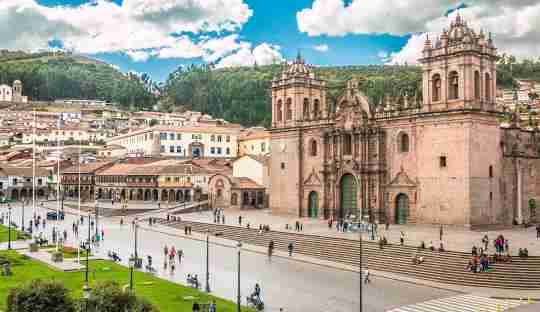
At the core of Cusco’s urban tapestry lies the Plaza de Armas, a dynamic crossroads where history breathes through colonial facades and modern vitality. Once the ceremonial center of the Inca Empire, this main square became the Spanish conquistadors’ architectural showpiece after 1533. Today, its stone arcades frame both solemn religious processions and lively cafés where locals share stories over chicha morada.
Cusco Cathedral and Colonial Landmarks
Dominating the eastern flank, the Cusco Cathedral rises as a testament to colonial ambition. Built atop the ruins of Inca Viracocha’s palace, its silver-plated altars and cedar choir stalls contrast with surviving indigenous motifs in carved stone. “The cathedral embodies cultural collision—Inca foundations literally supporting Spanish devotion,” notes a CuscoPeruTravel study.
Three architectural elements reveal this duality:
| Feature | Incan Influence | Colonial Addition |
|---|---|---|
| Walls | Precision-cut andesite blocks | Baroque stone facades |
| Art | Chakana cross symbolism | European-style oil paintings |
| Layout | Sacred alignment with solstice | Christian cross floor plan |
Morning light unveils the square’s artistic grandeur—gilded church domes glowing against terracotta rooftops. By afternoon, street musicians animate the plaza while artisans display alpaca textiles beneath arched colonnades. This seamless blend makes the Plaza de Armas both a destination and a gateway to deeper exploration.
“Standing here, you’re literally walking across layers of empires. Every stone has witnessed revolutions, rituals, and rebirths.”
As evening falls, the city’s spiritual heart transforms. Lamplight accentuates the cathedral’s carved portals while contemporary bistros spill laughter onto ancient flagstones. This living mosaic invites travelers to linger—and discover how past and present share the same view.
Experiencing the Vibrant San Pedro Market
A symphony of colors and aromas greets visitors at San Pedro Market, where generations of Cusqueñians have traded goods beneath vaulted iron ceilings. Established in 1925, this labyrinthine space evolved from colonial-era trading posts into a bustling showcase of Andean life. Locals haggle over purple corn while travelers marvel at pyramids of tropical fruit—a living portrait of Peru’s cultural crossroads.
Cultural Delicacies and Local Flavors
The market’s food section erupts with sizzling skillets and steaming broth pots. Vendors dish out crispy empanadas alongside quinoa-stuffed peppers, offering affordable tastes of regional cuisine. Don’t miss freshly blended lúcuma smoothies or cups of chicha morada made from purple maize.
| Must-Try Food | Price Range | Best Time to Visit |
|---|---|---|
| Ceviche Clásico | $4-$6 | 11 AM – 1 PM |
| Lomo Saltado | $5-$7 | 12 PM – 2 PM |
| Rocoto Relleno | $3-$5 | 10 AM – 12 PM |
Traditional Crafts and Bargain Finds
Beyond the restaurants, aisles overflow with handwoven alpaca scarves and silver filigree jewelry. Artisans demonstrate ancient weaving techniques using natural dyes, while leatherworkers craft belts stamped with Inca motifs. Bargaining is expected—start at 60% of the initial price and meet halfway.
- Look for geometric-patterned textiles from Chinchero villages
- Authentic silver items bear “.925” hallmarks
- Packable aguayo cloth makes ideal souvenirs
As one vendor notes: This market isn’t just shops—it’s where our traditions breathe.
Visitors leave with full stomachs and vibrant memories, having tasted the pulse of Andean commerce.
Visiting Iconic Religious and Cultural Landmarks
Cusco’s spiritual heartbeat pulses through its sacred landmarks, where devotion and engineering intertwine. These sites showcase how indigenous beliefs and colonial ambitions shaped a city that still honors both worlds.
The Qoricancha and Santo Domingo Convent
Once the Inca Empire’s most revered temple, Qoricancha’s walls were originally clad in gold. Spanish colonizers later built the Santo Domingo Convent atop its foundations, creating a striking blend of cultures. The convent’s Baroque arches contrast with the precision-cut stonework beneath—a physical metaphor for Cusco’s layered identity.
Archaeologists note the site’s original solar alignment still functions. During June solstice, light streams through colonial windows to illuminate ancient ceremonial spaces. This wasn’t destruction—it was architectural adaptation,
explains a local historian.
Calle Loreto and the Inca Stone Walls
Near Plaza de Armas, Calle Loreto’s towering walls demonstrate Inca masonry mastery. These interlocking stones—carved without mortar—have survived earthquakes for six centuries. Their curved edges and trapezoidal niches once framed noble palaces, now hidden behind colonial facades.
Three features make these structures enduring marvels:
- Granite blocks quarried from Sacsayhuamán
- Earthquake-resistant angled joints
- Symbolic carvings honoring Pachamama (Earth Mother)
Nearby San Blas district extends this legacy. Artisans there craft alpaca textiles using pre-Columbian techniques, echoing the stonecutters’ precision. Together, these elements form a living museum where every corner whispers dual histories.


Self-guided walking tour Cusco: Tips and Itineraries
Charting a course through Cusco’s labyrinth of history requires both curiosity and strategy. Smart travelers combine digital tools with local wisdom to unlock the city’s secrets while respecting its high-altitude challenges.
Step-by-Step Route Overview
Begin at Plaza Regocijo, where morning light illuminates colonial balconies. Move southeast toward the San Blas district, pausing at artisan workshops along Cuesta San Blas. Use Maps.me to locate hidden staircases connecting to Hatunrumiyoc Street’s iconic stone walls.
Three essential stops anchor the journey:
- Mercado San Pedro: 9-11 AM for fresh juices and people-watching
- Twelve-Angled Stone: Midday for optimal photography lighting
- San Cristóbal Lookout: Sunset views over terracotta rooftops
Practical Advice for Modern Explorers
Local guides on platforms like GuruWalk offer pay-what-you-wish tours focusing on Inca engineering secrets. For solo navigation, offline maps from AvenidaTurística provide updated routes with restroom locations marked.
| Tool | Best Feature | Local Tip |
|---|---|---|
| AllTrails | Elevation alerts | Shows shaded rest areas |
| PeakVisor | Mountain identification | Identifies sacred peaks |
| Local guide contact | +51 guides share weather updates |
Comfortable shoes prove vital on uneven streets—opt for treaded soles. Carry electrolyte tablets to combat dehydration at 11,152 feet. Evening explorers should prioritize well-lit routes like Triunfo Street when returning to central areas.
“The true magic lies in balancing structure with serendipity. Let the city’s rhythm guide you between planned stops.”
Break at Café Mayu for coca tea between landmarks. Their courtyard offers Wi-Fi to sync digital maps while admiring 17th-century arches. This approach transforms a simple walk into a layered cultural experience.
Conclusion
Cusco reveals its secrets step by step, each cobblestone path leading travelers through century-old stories. The main square pulses with life, framed by architectural marvels that blend Inca precision with Spanish grandeur. Every church façade and weathered wall serves as a living chronicle of cultural fusion.
This city rewards those who wander its streets with time to spare. From sunlit plazas to hidden courtyards, layers of history emerge in carved stonework and vibrant markets. Modern cafés buzzing beside ancient ruins showcase how past and present coexist seamlessly.
Visitors become time travelers here, tracing the same routes once walked by emperors and artisans. Each discovery—whether a colonial-era fresco or an Incan irrigation channel—deepens appreciation for this UNESCO World Heritage destination.
To experience Cusco’s magic, embrace slow exploration. Let curiosity guide you between cultural landmarks and spontaneous encounters. The view from a quiet bench or lively market stall often proves as memorable as grand monuments.
Ready to write your own story in this open-air museum? Pack comfortable shoes, map your route, and let Cusco’s living heritage unfold beneath your feet. Every corner promises new connections across time and culture.
