Sedona Best Tours & Walking Routes 2026: Complete Travel Guide
Sedona’s legendary red rock landscape offers travelers an extraordinary collection of guided tours and hiking trails spanning from adrenaline-pumping jeep adventures to serene canyon walks beneath sandstone spires. Whether you’re navigating the slickrock obstacles of Broken Arrow Trail by four-wheel drive, floating above Cathedral Rock in a hot air balloon at sunrise, or scrambling up to Devil’s Bridge on foot, the region delivers experiences that combine natural wonder with accessible adventure across every skill level and interest.
Key Takeaways About Sedona Tours & Routes 2026
- Tour Variety 2026: Sedona offers jeep tours from $89-160 for standard experiences, helicopter flights from $200-500 depending on duration, hot air balloon rides averaging $275-350 per person, and vortex experiences from $109-145, providing options across all adventure levels and budgets.
- Hiking Access Requirements 2026: Most Coconino National Forest trailheads require a Red Rock Pass at $5 daily, $15 weekly, or $20 annually for parking, though the free Sedona Shuttle eliminates parking challenges at popular trails like Cathedral Rock and Soldier Pass during peak season March through November.
- Trail Difficulty Range: Sedona’s 200-plus trails span from flat, family-friendly paths like Bell Rock Pathway and Fay Canyon to strenuous summit climbs including Bear Mountain and Wilson Mountain, with iconic moderate routes like Devil’s Bridge and Cathedral Rock providing memorable experiences for average fitness levels.
- Peak Season Logistics 2026: March through May and September through November bring mandatory shuttle service to top trailheads, with parking lots closing Thursday through Sunday at Cathedral Rock and Soldier Pass during shuttle hours, making early morning arrivals essential for those preferring to drive.
- Tour Booking Timeline: Helicopter tours, hot air balloons, and specialty jeep experiences fill 4-6 weeks ahead during spring and fall, while standard jeep tours typically accommodate same-week bookings, with sunrise balloon flights operating once daily requiring advance reservations year-round.
- Cost-Effective Combinations: Pairing self-guided hiking on free or low-cost trails with one signature paid tour creates balanced itineraries, particularly combining a $109-145 jeep tour accessing remote areas with independent exploration of accessible highlights like Airport Mesa and Soldier Pass.
People Also Ask About Sedona Tours & Routes 2026
What are the best jeep tours in Sedona for 2026?
Pink Jeep Tours’ Broken Arrow experience leads Sedona’s jeep tour options in 2026, taking passengers across exclusive slickrock terrain inaccessible to standard vehicles for $145-160 per person. The two-hour adventure descends the Road of No Return, crosses massive rock formations, and provides walking stops at Chicken Point and Submarine Rock, combining extreme four-wheel driving with red rock photo opportunities. Arizona Safari Jeep Tours offers the Soldier Pass route at $109-136 for those seeking ancient ruins and Devil’s Kitchen sinkhole access, while Red Rock Western’s Seven Canyons tour provides a milder experience at similar pricing for families or visitors avoiding intense bumps.
Do I need a Red Rock Pass for hiking in Sedona in 2026?
A Red Rock Pass costs $5 daily, $15 weekly, or $20 annually and is required for parking at most Coconino National Forest trailheads including Devil’s Bridge, Cathedral Rock, Bell Rock, Fay Canyon, Boynton Canyon, and Soldier Pass among the 19 designated day-use sites. Purchase passes at trailhead kiosks via credit card, the Sedona Visitor Center, local retailers, or online at Recreation.gov by registering your license plate number. The America the Beautiful annual pass substitutes for Red Rock Pass at these locations, though specific sites like Crescent Moon Ranch and West Fork require the separate $50 Coconino Pass. No pass is needed for quick photo stops under 15 minutes or when using the free Sedona Shuttle, which operates March through November to major trailheads.
What is the best time of day for Sedona tours in 2026?
Sunrise tours from 6:00-9:00 AM deliver optimal conditions in 2026, with hot air balloon flights launching exclusively at dawn to catch stable winds and golden light illuminating the red rocks, while early morning jeep departures avoid midday heat and trailhead parking congestion. Helicopter tours operate throughout the day, though sunset flights from 5:00-7:00 PM depending on season provide dramatic lighting for photography at premium pricing $30-50 above standard rates. For hiking, summer months June through August require pre-dawn starts by 5:30-6:30 AM before temperatures reach 95-105°F, whereas spring and fall permit comfortable 7:00-10:00 AM trailhead arrivals with moderate 60-80°F conditions.
How difficult are Sedona’s most popular hiking trails?
Cathedral Rock ranks as moderately challenging with steep scrambling sections requiring hands-on rock climbing over 1.5 miles round trip, while Devil’s Bridge rates moderate at 3.9 miles with elevation gain but well-maintained trail surface suitable for fit beginners. Bell Rock Pathway offers easy hiking across 3.6 miles of mostly flat terrain appropriate for families with young children, and Fay Canyon provides gentle 2.3-mile walking through shaded canyon suitable for all ages. Bear Mountain and Wilson Mountain represent strenuous options at 5.8 miles and 11.5 miles respectively with significant elevation gain exceeding 2,000 feet, recommended only for experienced hikers in good physical condition.
Extended multi-day tours – 5+ days
Featured Sedona Multi-Day Tour Packages
3 days
Private 3 Day Spiritual Aerial Adventure Safari
- ✓ Booking needs min. 2 travelers

7 days
Sedona and the Grand Canyon (Women-Only)
- ✓ Comprehensive Sedona tour
- ✓ Expert local guides included
- ✓ All accommodation arranged
- ✓ Transportation provided
4 days
Hiking in Sedona and the Grand Canyon (5 destinations)
- ✓ Comprehensive Sedona tour
- ✓ Expert local guides included
- ✓ All accommodation arranged
- ✓ Transportation provided
7 days
Enchanting Canyonlands – Small Group (Small Groups)
- ✓ Comprehensive Sedona tour
- ✓ Expert local guides included
- ✓ All accommodation arranged
- ✓ Transportation provided
Multi-day tour packages powered by TourRadar. Prices and availability subject to change.
Introduction to Sedona’s Tour & Trail System 2026
Sedona’s distinctive red sandstone geology creates one of North America’s most visually dramatic outdoor recreation landscapes, where 200-plus hiking trails traverse Coconino National Forest alongside guided tour options ranging from rugged off-road expeditions to aerial sightseeing experiences. The region’s accessibility stems from its compact geography—most trailheads and tour departure points cluster within 15 miles of Uptown Sedona—combined with infrastructure supporting both independent exploration and professionally guided adventures across difficulty levels from wheelchair-accessible viewpoints to technical summit scrambles.
The 2026 season brings enhanced logistics through expanded shuttle service addressing parking limitations that historically frustrated visitors, mandatory transit to top trails during peak weekends, and refined tour operator protocols emphasizing small group experiences and environmental stewardship. Understanding which experiences warrant professional guiding versus independent hiking, how seasonal conditions affect trail access, and where tour investments deliver unique perspectives unavailable through self-guided exploration enables travelers to construct itineraries maximizing both adventure value and red rock immersion.
Sedona’s tour ecosystem divides into distinct categories: motorized off-road adventures accessing remote canyons and archaeological sites, aerial perspectives via helicopter and hot air balloon revealing the region’s geological scale, specialized experiences including vortex tours and stargazing expeditions, and the extensive trail network spanning from paved pathways to wilderness routes requiring navigation skills. Each category serves specific interests and physical capabilities, with successful visits typically combining guided experiences providing context and access with independent hiking offering solitude and flexible pacing.
Practical considerations shape 2026 planning significantly—Red Rock Pass requirements for National Forest parking, seasonal shuttle operations replacing vehicle access at popular trailheads, weather patterns dictating activity timing, and advance booking timelines for limited-capacity tours. Spring March through May and fall September through November deliver ideal hiking temperatures 60-80°F while creating maximum demand for tours and trailhead parking, whereas summer heat above 95°F and occasional winter snow require adjusted strategies but offer fewer crowds and spontaneous tour availability.
Jeep Tours in Sedona 2026: Off-Road Adventures
Sedona’s jeep tour industry provides access to backcountry areas impossible to reach via standard vehicles, with specialized four-wheel-drive routes crossing private land under Forest Service permits, navigating technical obstacles including slickrock climbs and steep descents, and reaching archaeological sites and geological features requiring expert guidance. Pink Jeep Tours operates as Sedona’s largest and most established operator, running bright pink vehicles on exclusive routes including the signature Broken Arrow Trail, while competitors including Arizona Safari, Red Rock Western, and A Day in the West offer alternative itineraries, smaller group sizes, and varied difficulty levels.
The Broken Arrow Tour from Pink Jeep costs $145-160 per person in 2026 for the two-hour experience covering 20-plus miles through Munds Mountain Wilderness. Custom-built Jeep Wranglers holding six to nine passengers navigate the famous Road of No Return descent, cross Chicken Point’s exposed slickrock platform, and stop at Submarine Rock and other formations for photography and geological interpretation. This extreme-rated tour delivers maximum off-road intensity with steep angles, large rock obstacles, and memorable vertical exposure, making it Sedona’s premier adrenaline option though not suitable for those with back problems, pregnancy, or strong height aversion.
Arizona Safari Jeep Tours provides the Soldier Pass route at $109-136 per person, accessing Devil’s Kitchen sinkhole—Sedona’s largest collapsed cavern—plus Seven Sacred Pools and ancient Sinagua cliff dwellings along General Crook’s historic 1871 military trail. This 2.5-hour journey rates as moderate difficulty with less extreme angles than Broken Arrow, offering better options for families with children age five and up or visitors seeking cultural and geological education over pure off-road thrills. The company’s archaeological tour adds exclusive private land access to pit houses and petroglyphs for $136-160.
Red Rock Western Jeep Tours specializes in smaller group experiences with maximum four passengers per vehicle, charging $139-160 for their Seven Canyons tour covering Dry Creek Basin, historic Van Deren cabin, and panoramic vistas across Bear Mountain, Doe Mountain, and Secret Canyon. The intimate setting allows more interaction with guides and flexible pacing for photography, while the moderate terrain suits those wanting scenic beauty without harsh bumps. Their Soldier Pass option mirrors Arizona Safari’s route at comparable pricing.
Scenic Rim tours from Pink Jeep ascend Schnebly Hill Road to 2,000 feet elevation for $109-145 over 2.5 hours, delivering expansive views across Oak Creek Canyon and Merry-Go-Round Rock without the extreme technical sections of Broken Arrow. This option balances impressive vistas with moderate bumps, serving as an effective middle-ground choice for mixed-age groups or those uncertain about off-road intensity. The 1.5-hour Express version reduces the experience to $89-109 for time-constrained schedules.
Ancient ruins and vortex tours represent specialized jeep experiences, with operators combining off-road access to Honanki Heritage Site’s 800-year-old Sinagua cliff dwellings at $136-160 for three-hour tours, or visiting multiple vortex locations including Airport Mesa, Rachel’s Knoll, and Boynton Canyon at $109-145 for 2.5 hours. These thematic tours suit travelers prioritizing archaeological or spiritual interests over pure adventure, though routes still require four-wheel-drive vehicles and include moderate off-road sections.
Sunset and twilight jeep tours add $20-40 premium to standard pricing, departing 90 minutes before sunset to capture golden hour lighting on red rock formations. The Broken Arrow Twilight experience at $165-185 provides the exclusive trail’s dramatic scenery under warm evening light without extreme daytime heat, creating popular options for photographers and romantic occasions including proposals and anniversaries.
Booking considerations for 2026 jeep tours include weight restrictions—passengers over 275 pounds may incur additional fees or require private tour arrangements—and age minimums varying by tour intensity from age two for mild routes to age five for moderate and seven for extreme options. Tours operate year-round weather permitting, with summer departures shifted to early morning and late afternoon avoiding 95-105°F midday temperatures. Advance reservations 1-2 weeks ahead suffice for most tours and seasons, extending to 4-6 weeks for spring and fall weekends, sunset experiences, and Broken Arrow departures.
Tipping represents standard practice at 15-20% of tour cost for guides providing quality experiences, with cash preferred though many operators accommodate credit card gratuities. Tours include hotel pickup from most Sedona properties at no additional charge, though outlying accommodations in Village of Oak Creek or Sedona West may require meeting at central departure points. Participants should wear closed-toe shoes, bring cameras in soft cases protecting equipment from bumps, and expect dusty conditions requiring eye protection and covered mouths during dry seasons.
Helicopter & Aerial Tours in Sedona 2026
Helicopter tours provide Sedona’s most comprehensive visual perspective, revealing the region’s geological structure—layered sedimentary formations, canyon networks, and volcanic features—impossible to appreciate from ground level. Guidance Air operates as Sedona’s premier helicopter company, offering private flights exclusively rather than shared experiences, with aircraft holding two to six passengers in climate-controlled cabins featuring large windows and noise-reducing headsets enabling pilot narration.
The Skyline Tour costs $239 per person for 12-15 minute flights covering Cathedral Rock, Bell Rock, Courthouse Butte, and Airport Mesa—Sedona’s signature landmarks—from Guidance Air’s private helipad. This entry-level option delivers efficient aerial introduction suitable for travelers on tight schedules or budgets, though the brief duration limits route coverage to central formations without venturing into remote canyons or wilderness areas. Private flight options for two passengers start at $295 total, providing exclusive cabin control over route adjustments and photography timing.
The Anasazi Tour extends to 30 minutes at $335 per person, adding Boynton Canyon and Long Canyon to the Skyline route while approaching ancient Sinagua ruins and cliff dwellings via slow low-altitude passes revealing architectural details invisible from trails. This mid-range option balances time airborne with expanded coverage, accessing archaeological sites requiring extensive hiking if approached on foot, making it effective for travelers interested in cultural heritage without physical trail demands.
The DreamCatcher Combo combines both tours into 40-45 minutes at $445 per person, representing the comprehensive helicopter experience covering both main formations and remote wilderness areas. Extended flight time permits route adjustments based on lighting conditions and passenger interests, with pilots offering geological and cultural narration throughout. This option suits photography enthusiasts and those wanting maximum aerial coverage without committing to hour-plus flights.
Sunset helicopter tours add $30-50 to standard pricing, with departures timed 60-90 minutes before sunset to capture golden hour lighting transforming red rocks into glowing crimson and orange tones. The aesthetic payoff justifies premium costs for special occasions including proposals, anniversaries, and milestone celebrations, though sunset timing varies seasonally from 5:00 PM winter to 7:30 PM summer requiring flexible scheduling.
Sedona Air Tours operates airplane alternatives to helicopters, offering 20-minute Spirit of Sedona flights at $159 per person and 40-minute Canyons & Cliffs experiences at $239 from Cottonwood Airport. Airplanes provide wider cabin space and more stable flight characteristics compared to helicopters, suiting those with motion sensitivity or groups exceeding helicopter capacity. The higher altitude and fixed-wing flight path deliver different perspectives—broader landscape views versus helicopter’s low-altitude formation details.
Weight restrictions apply across all aerial operators, with passengers over 275 pounds requiring notification at booking for weight distribution calculations and potential additional fees. Helicopters accommodate total passenger weights up to 1,000 pounds combined, necessitating honest weight disclosure for flight safety. Aircraft feature forward-facing and side-facing seating, with window positions assigned based on weight balance rather than preference, though pilots rotate aircraft during flight ensuring all passengers receive premium views.
Weather cancellations occur more frequently than ground tours, with high winds, low visibility, and thunderstorm potential grounding flights for safety. Operators provide 100% refunds for weather cancellations while maintaining 24-hour cancellation policies for passenger-initiated changes. Booking 2-4 weeks ahead during spring and fall peak seasons secures preferred departure times, whereas summer and winter often accommodate same-day reservations though sunrise and sunset slots fill regardless of season.
Photography from helicopters benefits from dark clothing reducing window glare in images, phones and cameras secured in lanyards or wrist straps preventing equipment drops, and continuous shooting mode capturing multiple frames compensating for vibration. Pilots provide verbal warnings before initiating banking turns allowing photographers to prepare for dramatic angle changes and G-force shifts.
Hot Air Balloon Rides in Sedona 2026
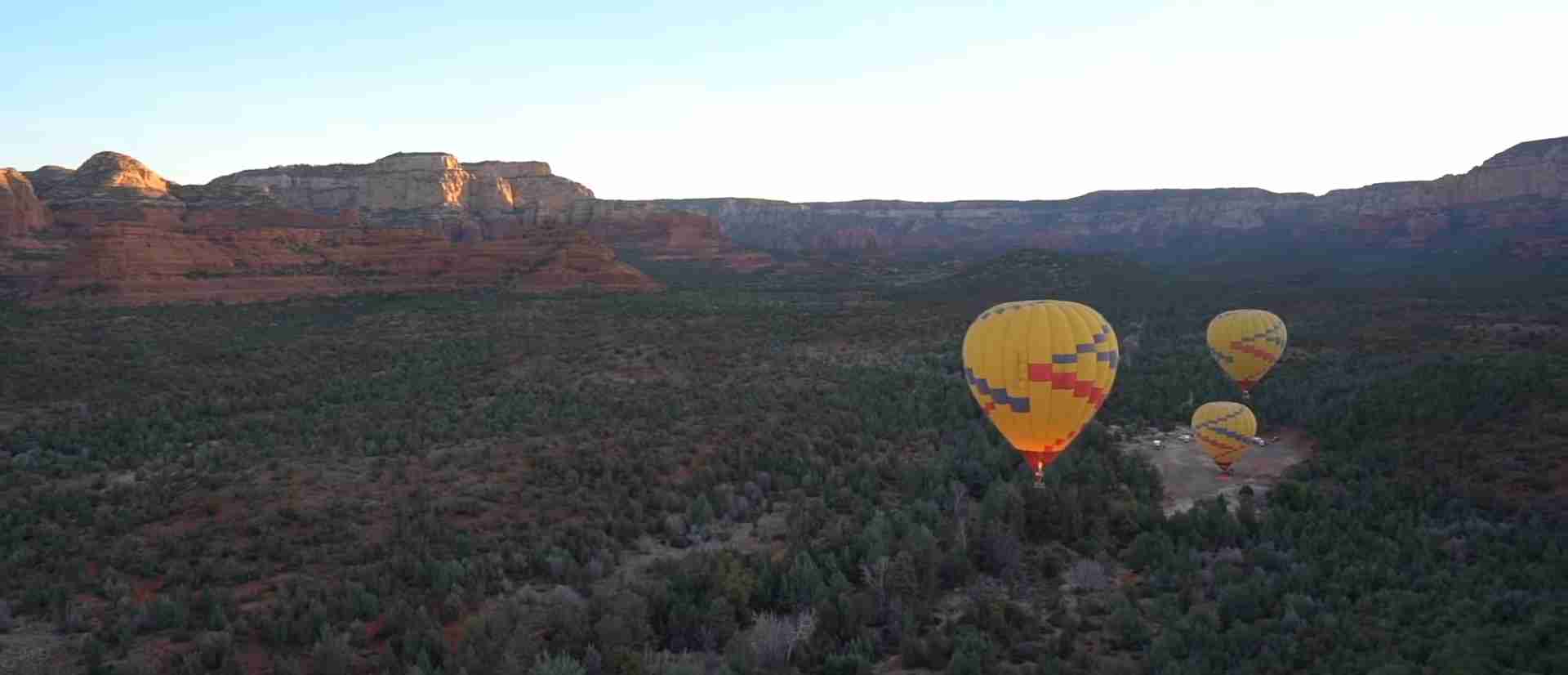
Hot air balloon flights operate exclusively at sunrise in Sedona, with typical launch times 6:00-7:00 AM depending on season and daylight, providing one-hour flights over red rock formations, Verde Valley ranchlands, and Coconino National Forest under calm morning conditions. The experience delivers peaceful aerial perspective contrasting with helicopter’s mechanical intensity, floating silently except for periodic propane burner firing, with basket rides accommodating 2-14 passengers depending on aircraft size and weight distribution.
Northern Light Balloon Expeditions operates as Sedona’s oldest balloon company since 1974, offering flights at $275-350 per person for the complete 3.5-4 hour morning experience including hotel pickup, inflation observation, flight, landing celebration with champagne toast, and return transport. The company flies both seven-passenger and fourteen-passenger balloons, with larger aircraft compartmentalized into sections maintaining small group feel. Pilots hold commercial ratings with thousands of flight hours, operating modern equipment exceeding FAA safety standards.
Red Rock Balloons charges similar $275-350 per person rates for sunrise flights, specializing in scenic routes over Coconino National Forest under special permit allowing access to protected wilderness areas. The 3.5-4 hour experience follows Northern Light’s format—predawn hotel pickup, launch site preparation viewing, one to 1.5-hour flight depending on wind conditions, and traditional champagne ceremony after landing. Pilots provide geological and cultural narration throughout flight, identifying landmarks including Cathedral Rock, Bell Rock, Courthouse Butte, and explaining region’s volcanic and sedimentary formation processes.
Flight paths depend entirely on wind direction and speed since balloons lack steering mechanisms beyond altitude adjustments catching different wind layers. Favorite launch sites near Red Rock Loop Road position flights over signature formations, though precise routes vary daily. Pilots maintain constant radio communication with chase crews tracking balloon progress and positioning recovery vehicles at predicted landing zones, typically dirt roads or ranch properties with landowner permission.
Weather determines daily operations, with flights requiring winds below 10 mph, clear visibility, and absence of thunderstorm potential. Companies contact passengers the evening before with go/no-go decisions, with morning conditions sometimes forcing last-minute cancellations despite optimistic forecasts. Operators provide full refunds or free rescheduling for weather cancellations, though passenger cancellations require 24-hour notice avoiding fees.
Physical requirements for ballooning prove less restrictive than jeep tours—participants must stand for extended periods and climb into waist-high basket, but no extreme fitness demands exist. Weight restrictions apply with combined passenger loads not exceeding balloon capacity, typically around 1,500-2,000 pounds total, requiring honest weight disclosure at booking for safe load calculations. Pregnancy after first trimester, recent surgery, and severe mobility limitations may preclude participation based on landing impact and standing requirements.
Dress recommendations include layered clothing addressing temperature swings from chilly predawn conditions to warming sun exposure, closed-toe shoes for uneven launch sites, hats for radiant heat from overhead burners, and sunglasses plus sunscreen for UV protection at altitude. Cameras require soft protective cases since landings occasionally involve bouncing or tipping, and tall passengers benefit from hats protecting heads from burner heat during inflation and flight.
Booking windows extend 4-8 weeks during peak spring and fall seasons when ideal weather conditions and visitor demand converge, whereas summer and winter often accommodate shorter lead times. Each company operates one sunrise flight daily, limiting capacity to 20-30 total passengers across combined balloon fleet, creating bottlenecks during high season requiring advance planning. Gift certificates represent popular purchases for anniversaries, proposals, and milestone celebrations, with validity periods typically extending 12 months from purchase.
Hiking & Walking Routes in Sedona 2026
Sedona’s trail network encompasses over 400 miles across 200-plus named routes within Coconino National Forest, spanning difficulty from wheelchair-accessible overlooks to technical scrambles requiring rock climbing skills. The U.S. Forest Service maintains most trails with regular clearing, signing, and seasonal closures addressing fire danger and weather damage, while social trails—unmarked paths created by visitor traffic—exist throughout the region despite official discouragement due to environmental impact and safety concerns.
Easy & Family-Friendly Trails in Sedona
Bell Rock Pathway provides Sedona’s most accessible introduction to red rock hiking, following 3.6 miles of mostly flat terrain around Bell Rock and Courthouse Butte with optional scrambling routes ascending Bell Rock’s lower slopes for closer formation views. The wide, well-maintained path accommodates strollers and wheelchairs for initial sections, with multiple access points from Highway 179 including designated parking areas requiring Red Rock Pass. This trail delivers 360-degree red rock vistas without elevation gain, making it suitable for young children, seniors, and those testing fitness levels before attempting more demanding routes.
Airport Mesa offers 3.5-mile loop trail accessible from Airport Road parking area, climbing gradual switchbacks to mesa top delivering panoramic views across all of Sedona plus distant San Francisco Peaks near Flagstaff. The trail rates easy to moderate with 200 feet elevation gain, featuring exposed slickrock sections requiring careful footing but no technical scrambling. Airport Mesa attracts photographers for sunrise and sunset views, vortex seekers visiting the designated energy site, and casual hikers wanting impressive results from minimal effort. The trailhead parking lot provides free viewpoint access without hiking, popular for visitors with mobility limitations.
Fay Canyon creates sheltered 2.3-mile out-and-back experience through narrow canyon corridor lined with towering sandstone walls, maintaining mostly flat terrain with light shade from afternoon sun. The trail passes seasonal water features and vegetation transitions from desert scrub to riparian species, terminating at canyon’s end where adventurous hikers can scramble to Fay Canyon Arch visible high on canyon wall. This family-friendly option works well for hot weather hiking and provides respite from exposed ridge trails, though the arch scramble adds moderate difficulty unsuitable for young children.
Yavapai Vista Loop and Slim Shady Trail combine for easy 15-minute circuit near Sedona’s southern entrance off Highway 179, offering red rock photography opportunities without extended commitment. The flat, well-marked loop works for quick stops and visitors with limited time, though popularity creates crowds diminishing wilderness feel. Multiple interpretive signs explain geological and botanical features, serving educational purposes for families with children.
Sugarloaf Loop presents 2.2-mile circuit with 600 feet elevation gain classified moderate, though the well-graded switchback trail and 360-degree summit views reward effort with quality experience for families willing to accept slight challenge. The loop avoids extreme exposure and technical sections while delivering superior vistas compared to easier alternatives, creating effective compromise between accessibility and adventure. Trailhead parking remains less congested than more famous routes, providing easier access during peak season.
Moderate Difficulty Trails in Sedona
Devil’s Bridge represents Sedona’s most photographed natural feature—a massive freestanding sandstone arch accessible via 3.9-mile round trip trail gaining 400 feet elevation. The route begins from Dry Creek Road trailhead requiring high-clearance vehicle to access parking area, or extends to 5.3 miles starting from Mescal Trailhead with standard vehicle parking. Well-maintained trail surface accommodates average fitness levels, though final approach to arch involves brief scrambling and exposure requiring comfort with heights. The arch itself spans 45 feet supporting walking across its top, creating dramatic photography opportunities despite consistent crowds—arriving before 7:00 AM during spring and fall proves essential for manageable visitor density.
Cathedral Rock climbs steeply over 1.5-mile round trip gaining 740 feet elevation to saddle between distinctive spires visible throughout Sedona. The trail requires significant scrambling including hands-on rock climbing sections, though most obstacles offer multiple route options accommodating various skill levels. Views from the saddle encompass Oak Creek Canyon below plus surrounding red rock formations, with sunset lighting creating particularly dramatic conditions. Thursday through Sunday during peak season, Cathedral Rock trailhead closes to private vehicles requiring free shuttle access, though weekday mornings permit driving with Red Rock Pass.
Soldier Pass Trail covers 2.5 miles round trip accessing Devil’s Kitchen sinkhole, Seven Sacred Pools seasonal water features, and natural arches while gaining 450 feet elevation through moderate terrain. The diverse geological features create strong interest relative to distance covered, making this popular choice for travelers wanting varied scenery without extreme length or difficulty. Soldier Pass also falls under mandatory shuttle service during peak weekend days, with private vehicle access allowed weekday mornings and off-season periods.
Boynton Canyon extends 6 miles round trip through red-walled canyon penetrating Secret Mountain Wilderness, combining moderate difficulty with mostly level terrain after initial climb. The trail passes Enchantment Resort property before entering National Forest land, continuing to box canyon terminus with shaded riparian environment contrasting with exposed desert approach. Boynton Canyon hosts designated vortex site attracting spiritual seekers, though the trail’s natural beauty justifies visitation independent of metaphysical interests. Parking lot accommodates 20-30 vehicles creating midday congestion, making early arrival essential during peak months.
Courthouse Butte Loop creates 4.1-mile circuit around Courthouse Butte and Bell Rock, connecting multiple trail systems including Bell Rock Pathway and offering varied perspectives on both formations. The loop incorporates slight elevation changes and diverse terrain from sandy washes to slickrock sections, providing engaging experience for moderate hikers wanting extended time without technical challenges. This route accommodates mountain biking unlike many Sedona trails, creating occasional encounters with cyclists requiring trail-sharing awareness.
Challenging & Strenuous Trails in Sedona
Bear Mountain delivers Sedona’s most rewarding summit views over 5.8-mile round trip gaining 2,000 feet elevation through steep, rocky terrain requiring good physical condition and scrambling comfort. The trail ascends relentlessly from Dry Creek trailhead, crossing exposed slickrock slopes with minimal shade before reaching 6,600-foot summit overlooking entire Sedona basin, Verde Valley, and distant Mogollon Rim. Hikers rate Bear Mountain as more strenuous than longer Wilson Mountain due to sustained steepness and challenging footing, though the superior panoramic views justify effort for experienced hikers. Summer attempts prove dangerous due to heat exposure and lack of water sources—spring and fall provide ideal conditions for this demanding route.
Wilson Mountain extends 11.5 miles round trip gaining 2,300 feet to reach 7,100-foot summit, representing Sedona’s highest peak and longest maintained trail. The route divides into two approaches—regular Wilson Mountain trail from Midgley Bridge and North Wilson trail through forested terrain—with most hikers preferring the regular route for better scenery variety. Initial desert hiking transitions to ponderosa pine forest at higher elevations, with false summit saddle creating disappointing moment before final 2-mile push to actual peak. Two overlooks at summit provide different perspectives—Sedona Overlook showing red rock formations below and North Canyon Overlook revealing forested wilderness extending toward Flagstaff. The trail’s length demands early starts and adequate water supplies, with 8-10 hour round trips typical for average-pace hikers.
West Fork Trail in Oak Creek Canyon offers moderate to strenuous hiking depending on distance covered, with maintained trail extending 3 miles before requiring creek crossings and route-finding skills for another 4 miles of unmaintained wilderness. The first 3 miles rate moderate with level terrain following creek through narrow canyon with towering walls, creating Sedona’s most photogenic autumn foliage display mid-October when cottonwoods and maples turn golden. West Fork requires separate $11 day-use fee beyond Red Rock Pass, collected at Call of the Canyon entrance station. This trail attracts photographers and families for short ventures while serving experienced hikers willing to wade creeks for deeper canyon penetration.
Doe Mountain creates steep 1.6-mile round trip gaining 400 feet to mesa top, with challenging initial switchbacks rewarding persistence with expansive plateau hosting 360-degree views across Bear Mountain, Maroon Mountain, and surrounding canyons. The mesa top itself invites exploration with gentle terrain contrasting sharply with steep approach, making Doe Mountain effective sunset destination for hikers comfortable with descent in fading light. Lower popularity compared to nearby trails means better solitude and parking availability, though the initial climb deters casual visitors.
Red Rock Pass Requirements & Parking Strategies 2026
Red Rock Pass costs $5 daily, $15 weekly, or $20 annually for parking at 19 designated Coconino National Forest day-use sites including most popular trailheads. Purchase options include trailhead kiosks accepting credit cards only, Sedona Visitor Center at 331 Forest Road, local retailers and gas stations, or online at Recreation.gov requiring license plate registration. The pass displays on vehicle dashboard or digitally verifies through license plate database, with Forest Service rangers issuing $150-200 citations for vehicles lacking valid passes at signed locations.
The America the Beautiful annual pass at $80 substitutes for Red Rock Pass at National Forest sites, making it cost-effective for travelers visiting multiple parks and forests throughout the year. Senior, military, and disabled veterans receive discounted or free America the Beautiful passes providing same access. The separate Coconino Pass at $50 annually covers five specific day-use sites—Crescent Moon Ranch, West Fork, Grasshopper Point, Beaver Creek, and Lower Lake Mary—not included under Red Rock Pass, requiring in-person purchase at these locations or Sedona Chamber of Commerce.
Free Sedona Shuttle operates March through November on Thursday through Sunday, running 8:00 AM to 6:00 PM spring and fall with extended 7:00 AM to 7:00 PM summer hours. Routes serve Cathedral Rock, Soldier Pass, Little Horse, and other popular trailheads from parking areas in Uptown Sedona, Village of Oak Creek, and West Sedona. During shuttle hours, designated trailhead parking lots close entirely to private vehicles—arriving outside shuttle hours or weekdays allows standard parking with Red Rock Pass.
Parking lot capacity creates Sedona’s primary logistical challenge, with lots at Devil’s Bridge, Cathedral Rock, Airport Mesa, and Bell Rock filling by 6:30-7:30 AM during peak spring and fall months. Successful parking strategies include arriving before 6:30 AM accepting reduced trailhead selection, using shuttle service eliminating parking concerns, or choosing less popular trails with adequate parking like Sugarloaf, Doe Mountain, or Fay Canyon. Roadside parking outside designated lots is illegal throughout most National Forest areas, strictly enforced with citations and towing.
Specialized Tours in Sedona 2026: Vortex, Stargazing & Cultural Experiences
Vortex tours represent unique Sedona offerings, guiding visitors to designated energy sites including Airport Mesa, Bell Rock, Cathedral Rock, and Boynton Canyon where concentrated electromagnetic or spiritual energy purportedly creates enhanced meditation, healing, and self-awareness experiences. Tour guides typically combine jeep transportation to multiple vortex locations with guided meditation sessions, energy work instruction, and geological and metaphysical interpretation. Prices range $109-145 for 2.5-hour experiences visiting three to four vortex sites, with Pink Jeep Tours, Arizona Safari, and specialty operators including Sedona Vortex Tours offering variations on the theme.
Skepticism about vortex energy’s scientific validity doesn’t diminish these tours’ value for travelers interested in Sedona’s New Age culture, meditation practice in dramatic natural settings, or simply experiencing the region’s spiritual tourism phenomenon firsthand. Tour quality varies significantly based on guide expertise and approach—some emphasize geological facts and indigenous history while others focus primarily on metaphysical concepts, making company research and review reading essential for matching tour style to personal interests.
Stargazing tours capitalize on Sedona’s dark sky designation, offering evening departures to remote locations with minimal light pollution for telescope viewing of planets, star clusters, nebulae, and galaxies under expert astronomer guidance. Tours typically include laser-pointer constellation identification, multiple telescope setups ranging from beginner to advanced research-grade equipment, and hot beverages plus light snacks during 2-3 hour sessions. Pricing runs $89-119 per person, with operations including Sedona Star Gazing and Evening Sky Tours providing professional astronomers, heated seating areas, and weather backup plans.
Optimal stargazing occurs during new moon periods when celestial objects shine brightest without moon interference, though knowledgeable guides adapt programming to moon phases highlighting different targets. Winter months provide longest darkness hours and clearest atmospheric conditions, whereas summer monsoon season July through September creates frequent cloud cover limiting visibility. Tours operate year-round weather permitting, with full refunds for cloud cancellations and flexible rebooking policies.
Archaeological and Native American cultural tours focus on Sinagua and Yavapai heritage, visiting cliff dwellings, petroglyphs, and artifact sites throughout the region. Pink Jeep’s Ancient Ruins tour at $136-160 includes exclusive access to Honanki Heritage Site’s 800-year-old structures with Forest Service interpretive rangers providing cultural context. Arizona Safari’s Archaeological Tour explores multiple sites including pit houses and rock art panels on private land requiring guide access, pricing similarly at $136-160 for three-hour experiences.
These cultural tours appeal to history enthusiasts and travelers seeking educational depth beyond scenic beauty, though physical demands remain moderate with short walks from vehicle to sites across uneven terrain. Tour guides provide historical background on Sinagua agricultural practices, architecture, and migration patterns while emphasizing site preservation ethics and avoiding disturbing artifacts or structures.
Wine tours combine Sedona’s scenic drives with Arizona’s emerging Verde Valley wine region, visiting three to four tasting rooms in Cottonwood and Cornville areas producing varietals from high-elevation vineyards. Tours include roundtrip transportation, tasting fees at each winery, and sometimes light food pairings, running 4-5 hours at $139-189 per person. This option suits non-hikers or those wanting afternoon activity after morning outdoor adventures, though wine quality varies significantly across producers with realistic expectations appropriate for emerging rather than established wine region.
Best Time for Sedona Tours & Hiking 2026
Spring from March through May delivers Sedona’s peak visitor season and optimal hiking conditions, with daytime temperatures 65-80°F, wildflower blooms adding seasonal color, and minimal precipitation creating reliable weather patterns. This period brings maximum crowds at popular trails requiring 6:00-6:30 AM trailhead arrivals for parking, mandatory shuttle service on peak weekends, and 4-6 week advance booking for premium tours including helicopter flights and balloon rides. Spring benefits from moderate temperatures eliminating extreme heat concerns while providing comfortable conditions for all-day outdoor activity.
Fall September through November rivals spring for ideal weather, with similar 65-80°F temperatures, autumn foliage transforming Oak Creek Canyon cottonwoods and maples to golden hues mid-October, and post-monsoon clarity creating exceptional visibility for photography. Fall attracts slightly fewer crowds than spring though still requires early arrivals and advance tour bookings, with September retaining some summer afternoon thunderstorm potential while October and November provide consistently stable conditions.
Summer June through August challenges visitors with 90-105°F daytime temperatures requiring early morning hiking starts before 7:00 AM and limiting midday activity to swimming at Slide Rock State Park or Oak Creek access points. Summer advantages include spontaneous tour availability without advance booking, easier trailhead parking even at midmorning, and afternoon monsoon thunderstorms creating dramatic cloud formations and occasional cooling. Heat-tolerant hikers can enjoy relatively empty trails by starting predawn and finishing before 10:00 AM, though hydration demands increase significantly with gallon-per-person water requirements for longer routes.
Winter December through February offers Sedona’s quietest season with 50-65°F daytime temperatures, occasional overnight freezes creating icy trail conditions on shaded north-facing slopes, and periodic snow events transforming red rocks into winter wonderland lasting 1-3 days. Winter provides easiest tour booking and parking access while delivering crisp atmospheric clarity for photography, though shorter daylight hours limit hiking windows and cold weather gear becomes necessary for early morning starts. Trails at higher elevations including Wilson Mountain and Bear Mountain may require traction devices after snowfall, with conditions varying dramatically between sunny south-facing slopes and icy north aspects.
Shoulder periods in early March and late November balance manageable crowds with variable weather—spring storms or Indian summer warmth create unpredictable conditions requiring flexible planning and backup indoor activity options. These transitional weeks often deliver excellent value with lower accommodation rates and reduced tour demand while maintaining reasonable weather probabilities.
Tour Operator Selection & Booking Strategies 2026
Choosing appropriate tour operators requires evaluating safety records, guide expertise, group sizes, route exclusivity, and customer service standards across Sedona’s competitive marketplace. Established companies including Pink Jeep Tours, Arizona Safari Jeep Tours, and Guidance Air maintain excellent safety protocols, professional driver training programs, and comprehensive insurance coverage, whereas smaller operators may offer more personalized experiences with variable safety oversight.
Group size significantly impacts tour quality—shared jeep tours typically accommodate 6-9 passengers in standard vehicles versus 2-4 in private tours, with larger groups limiting flexibility for photography stops, individual guide interaction, and route adjustments based on passenger interests. Helicopter tours offer inherent privacy in 2-6 passenger aircraft, while balloon rides may place 7-14 passengers in single basket creating more social experience. Travelers prioritizing intimate experiences should specify private tour preferences or book smaller-capacity options despite higher per-person costs.
Route exclusivity matters for off-road tours—Pink Jeep holds permits for Broken Arrow Trail unavailable to competitors, while some companies access private land providing differentiated experiences. Researching which operators serve specific trails or archaeological sites of interest prevents booking tours duplicating independently hikable routes or missing desired destinations.
Advance booking timelines vary by activity type and season—helicopter and balloon flights require 2-4 weeks spring and fall, extending to 4-6 weeks for sunset flights and holiday weekends, while standard jeep tours often accommodate 1-week advance reservations except during peak season. Summer and winter generally permit shorter booking windows with occasional same-week or next-day availability. Specialty tours including vortex experiences, stargazing, and archaeological expeditions maintain steadier demand requiring 2-3 week advance planning regardless of season.
Cancellation policies typically allow full refunds for weather cancellations initiated by operators, though passenger cancellations require 24-48 hour notice avoiding fees. Travel insurance covering trip cancellations proves worthwhile for expensive helicopter or balloon experiences when personal emergencies might force last-minute changes. Weather-dependent activities including balloon flights create higher cancellation risk—booking these early in trip allows rescheduling flexibility if initial departure gets scrubbed.
Price comparison shopping across operators reveals minimal variation for similar tour types—most jeep companies charge within $10-20 of each other for comparable routes and durations, suggesting collusion or market efficiency rather than significant value differentiation. Tour quality differences stem more from guide expertise and personality than company pricing, making review research more valuable than cost comparison. Package deals combining multiple tours through single operator sometimes yield 10-15% savings versus booking separately.
Online booking through operator websites versus third-party platforms like Viator or TripAdvisor involves tradeoffs—direct booking often provides better cancellation flexibility and customer service access, while aggregator sites consolidate reviews and occasionally offer promotional pricing. Reading recent reviews specifically mentioning guide names helps identify particularly skilled operators worth requesting at booking.
Safety Considerations for Sedona Tours & Trails 2026
Dehydration represents Sedona’s primary outdoor safety threat, with desert environment and high elevation around 4,500 feet creating rapid fluid loss even during mild weather. Hikers should carry one liter water per person per two hours of hiking as minimum, increasing to gallon requirements for summer heat or strenuous trails. Symptoms including headache, dizziness, dark urine, and reduced energy indicate inadequate hydration requiring immediate fluid intake and activity cessation if severe.
Sun exposure at Sedona’s elevation creates intense UV radiation even during cooler months, making broad-spectrum SPF 30+ sunscreen, wide-brimmed hats, and UV-protective sunglasses essential. Exposed slickrock trails lack shade, creating relentless sun exposure during midday hours—planning morning or late afternoon hiking when sun angle provides some relief reduces heat stress and burn risk. Lightweight long-sleeve shirts and pants in breathable fabrics provide superior sun protection compared to bare skin with sunscreen alone.
Lightning danger during summer monsoon season July through September requires vigilant weather monitoring, with afternoon thunderstorm development creating deadly conditions on exposed ridges and summits. National Weather Service forecasts predict monsoon potential, though localized cells form rapidly—observing cloud buildup during hikes and retreating before storms arrive prevents lightning exposure. Getting off ridgelines, avoiding isolated trees, and seeking low-lying areas during active storms represents critical protocol when caught out by rapid weather changes.
Flash flood risk in slot canyons and drainage areas accompanies monsoon thunderstorms, with distant rainfall creating sudden water surges in canyons remaining dry minutes earlier. West Fork and similar creek-following routes become extremely dangerous during and immediately after heavy rain, requiring complete avoidance during monsoon season or careful weather monitoring with immediate evacuation if storm potential exists. Never enter narrow canyon sections when thunderstorms threaten upstream areas.
Rattlesnake encounters increase spring through fall when snakes actively hunt, basking on warm rocks and trails during morning and evening hours. Watching footing on rocky terrain, avoiding reaching into unseen crevices, and giving snakes encountered on trails wide berth prevents most incidents. Rattlesnakes typically flee when detecting vibration, though surprised snakes may strike defensively—wearing ankle-covering boots and long pants provides some protection if bites occur requiring immediate medical evacuation.
Heat exhaustion and heatstroke threaten summer hikers inadequately prepared for extreme conditions, with symptoms progressing from fatigue and nausea to confusion and loss of consciousness. Preventing heat illness requires early starts before temperatures rise, adequate hydration and electrolyte replacement, and realistic assessment of personal heat tolerance—turning back when conditions deteriorate shows wisdom rather than weakness. Anyone displaying altered mental status or inability to cool through sweating requires emergency medical attention.
Navigation challenges arise on social trails and poorly marked routes, with GPS devices or downloaded offline trail maps preventing getting lost in wilderness areas. Coconino National Forest’s vast acreage creates serious consequences for hikers losing trail in remote canyons or ridge systems, particularly as daylight fades. Carrying fully charged phones with downloaded maps, informing others of hiking plans including expected return time, and possessing basic navigation skills reduces lost-hiker incidents.
Tour safety depends heavily on operator training and equipment maintenance, with reputable companies maintaining comprehensive safety protocols including guide certification, vehicle inspection schedules, and emergency communication systems. Passengers should feel empowered to ask questions about safety procedures, inquire about guide experience and training, and voice concerns about driving speeds or route conditions. Tour companies operating in challenging terrain accept these questions as signs of engaged passengers rather than complaints.
Photography Tips for Sedona Tours & Trails
Golden hour lighting—first hour after sunrise and final hour before sunset—transforms Sedona’s red rocks into glowing crimson and orange tones creating the region’s most iconic imagery. Morning golden hour 6:00-7:30 AM depending on season provides soft directional light illuminating east-facing formations like Cathedral Rock while casting long shadows enhancing texture and depth. Evening golden hour 5:30-7:00 PM year-round creates warmer tones and different shadow patterns favoring west-facing formations including Courthouse Butte and Coffee Pot Rock.
Midday harsh overhead sun creates flat lighting and extreme contrast reducing image quality, though this timing works for photographing slot canyons and shaded areas where diffused light prevents harsh shadows. Overcast days paradoxically improve photography by eliminating extreme highlights and shadows, allowing color saturation and detail retention impossible under bright sun—don’t dismiss cloudy conditions as poor photography weather.
Composition techniques specific to Sedona’s landscape include using foreground elements like desert vegetation, weathered wood, or rock formations to create depth and lead viewer’s eye toward main subjects. Wide-angle lenses 16-35mm capture expansive vistas and dramatic sky, while telephoto lenses 70-200mm isolate specific formations or compress distance creating layered compositions. Vertical orientations suit Sedona’s tall spire formations better than horizontal framing, though panoramic stitching combines multiple images for ultra-wide perspectives.
Trail-specific photography opportunities include Devil’s Bridge at sunrise when golden light illuminates the arch from east while Blue Mesa formations glow in background, Cathedral Rock from Oak Creek banks with water reflections creating mirror effects during calm conditions, and Airport Mesa for sunset capturing entire Sedona basin with city lights emerging as darkness falls. Bell Rock and Courthouse Butte photograph well from Highway 179 pullouts during morning light, while Boynton Canyon provides layered canyon walls suitable for telephoto compression.
Jeep tour photography requires securing camera equipment against bumps using padded bags or cases, shooting continuous bursts to overcome vibration, and communicating with guides about preferred photo stop locations and timing. Many guides accommodate photography-focused passengers by extending stops or adjusting routes based on lighting conditions when group consensus supports changes. Dust presents constant challenge requiring lens cleaning supplies and weather-sealed cameras for serious photography during dry seasons.
Helicopter photography benefits from window seats though pilots rotate aircraft providing all passengers view opportunities, fast shutter speeds above 1/500 second freezing vibration, and continuous shooting mode capturing multiple frames during fleeting moments. Removing polarizing filters prevents unwanted reflections from curved helicopter windows, and dark clothing reduces photographer reflections visible in images.
Mobile phone photography produces excellent results in Sedona’s high-contrast environment when using HDR mode balancing bright skies and shadowed rocks, portrait mode creating depth-of-field effects isolating subjects, and panorama mode capturing ultra-wide vistas. Third-party camera apps offering manual exposure control improve results over default camera apps, particularly for silhouette effects and long exposure techniques.
Combining Tours with Independent Hiking: Itinerary Strategies
Balanced Sedona itineraries pair guided tours accessing remote areas or providing expert interpretation with self-guided hiking delivering solitude and flexible pacing across publicly accessible trails. Effective combination strategies dedicate Day 1 to moderate independent hiking like Bell Rock Pathway and Airport Mesa establishing physical baseline and red rock orientation, Day 2 to guided jeep tour reaching Broken Arrow or archaeological sites impossible without four-wheel-drive access, and Day 3 to ambitious independent hiking like Devil’s Bridge or Cathedral Rock applying confidence gained from easier trails.
Budget-conscious travelers maximize hiking and minimize paid tours, selecting one signature experience like helicopter flight or jeep adventure providing unique perspective or access while dedicating remaining days to free or low-cost trails requiring only Red Rock Pass. This approach maintains memorable highlights while controlling costs, particularly effective for week-long visits permitting thorough independent trail exploration around single premium tour.
Time-limited visitors prioritize tours over hiking when Sedona represents brief stop in larger Southwest itinerary, using half-day jeep or helicopter tours covering maximum terrain in minimum time rather than committing full days to individual trails. Two-day Sedona visits might combine morning jeep tour with afternoon easy hiking like Fay Canyon, followed by sunrise balloon flight next day before midday departure—this efficient schedule delivers diverse experiences without extended commitment.
Photography-focused itineraries structure activities around optimal lighting, with sunrise hikes to Cathedral Rock or Devil’s Bridge followed by midday tours when harsh light makes independent photography less productive, returning to different trails for sunset shooting. This rhythm produces superior images while maintaining productive all-day activity, though requiring endurance for pre-dawn starts and post-sunset returns.
Family itineraries balance children’s interests and capabilities, mixing easy trails suitable for young ages with tour experiences providing entertainment when hiking attention spans flag. Morning jeep tours followed by afternoon swimming at Slide Rock State Park creates memorable days combining adventure with cooling recreation, while evening stargazing tours engage older children’s scientific curiosity through accessible astronomy education.
Frequently Asked Questions About Sedona Tours & Routes 2026
Do I need to be in good physical shape for Sedona jeep tours?
Most jeep tours require only ability to climb into and out of vehicle plus tolerate bumpy off-road riding, making them accessible to average fitness levels and ages. Extreme tours like Broken Arrow create more intense bouncing and jarring potentially uncomfortable for those with back problems, recent injuries, or pregnancy, while mild and moderate tours accommodate most visitors including seniors and families with young children. Specific health concerns should be disclosed when booking, allowing tour companies to recommend appropriate difficulty levels or suggest alternatives if standard tours pose risks.
Can I hike Devil’s Bridge without a Red Rock Pass in 2026?
Parking at Devil’s Bridge trailhead requires Red Rock Pass at $5 daily, $15 weekly, or $20 annually displayed on vehicle dashboard or registered online via license plate number. However, arriving via Sedona’s free shuttle service eliminates pass requirement since shuttle riders don’t park at trailhead—check shuttle schedule and routes before planning shuttle access as service operates seasonally March through November on limited days. Attempting to park without valid pass results in $150-200 citations, making compliance essential regardless of brief stop duration.
What’s the best single activity if I only have half a day in Sedona?
Half-day visitors choosing between tours and hiking should select Pink Jeep’s two-hour Broken Arrow tour at $145-160 providing exclusive trail access, extreme off-road experience, and red rock immersion impossible to replicate independently in limited time. This signature Sedona adventure delivers maximum variety—technical driving, formation views, walking stops, geological education—within compact timeframe suitable for travelers passing through on larger Southwest road trips. Alternative half-day options include Devil’s Bridge hike for independent experience or helicopter tour for aerial perspective, though Broken Arrow’s exclusivity and intensity create most memorable short-duration choice.
Are Sedona vortex tours legitimate or just tourist gimmicks?
Vortex tours represent legitimate cultural and spiritual tourism experiences regardless of electromagnetic energy’s scientific validity, providing access to designated sites, meditation instruction, and insight into Sedona’s New Age community that developed around energy site concepts since the 1980s. Tour quality depends heavily on guide approach—some emphasize geological and indigenous history while treating energy claims as metaphorical, others focus primarily on spiritual concepts requiring participant openness to non-scientific frameworks. Reading reviews identifying guide styles helps match tour approach to personal belief systems, with even skeptical visitors often appreciating natural beauty and meditation practice in dramatic settings.
How early should I arrive at popular trailheads in spring and fall 2026?
Parking lots at Devil’s Bridge, Cathedral Rock, Bell Rock, and Airport Mesa fill by 6:30-7:30 AM during peak spring March through May and fall September through November, requiring arrivals before 6:30 AM for reliable parking access. Weekday mornings offer slightly better parking availability extending to 7:30-8:30 AM, while weekends and holidays create maximum congestion beginning before sunrise. Using free Sedona Shuttle service operating Thursday through Sunday March through November eliminates parking stress entirely, with shuttle routes serving top trails from parking areas in Uptown Sedona and Village of Oak Creek beginning 8:00 AM spring and fall.
Can I do both hot air balloon and helicopter tours in one day?
Combining sunrise hot air balloon at 6:00-7:00 AM departure with afternoon or sunset helicopter tour creates logistically feasible day delivering two aerial perspectives of Sedona’s landscape. Balloon experiences last 3.5-4 hours total including hotel pickup and landing celebration, concluding by 10:00-11:00 AM allowing recovery time before helicopter departure. This combination produces memorable but exhausting day—consider spacing aerial tours across separate days if extended hiking or ground activities also planned, particularly given 4:00-5:00 AM balloon pickup times requiring pre-dawn wake-up.
What’s the most scenic driving route through Sedona for photography?
Red Rock Scenic Byway along Highway 179 from I-17 interchange through Village of Oak Creek past Bell Rock and Cathedral Rock to Uptown Sedona provides Sedona’s premier scenic drive, with multiple pullouts for photography including designated viewpoints at Bell Rock Vista, Cathedral Rock Vista, and Chapel of the Holy Cross. The 15-mile route features constantly changing formation views, excellent morning east-facing light on formations, and easy access to trailheads for short walks enhancing driving experience. Alternative Oak Creek Canyon drive north from Uptown Sedona to Flagstaff along Highway 89A delivers forested canyon scenery, creek-side viewpoints, and dramatic elevation changes over 27 miles, though winding road limits photography opportunities compared to 179’s wide pullouts.
Do helicopter tours operate during summer monsoon thunderstorms?
Helicopter operators cancel flights during active thunderstorms, high winds above 25 mph, or low visibility conditions prioritizing passenger and crew safety above schedule adherence. Summer monsoon season July through September creates afternoon thunderstorm potential requiring morning flight scheduling for highest completion probability, with operators providing weather updates day-before and day-of allowing informed decisions. Weather cancellations receive full refunds or free rebooking, whereas passenger cancellations require 24-hour notice avoiding fees—understanding monsoon patterns helps set realistic expectations when booking summer flights.
Are Sedona trails crowded year-round or only during peak seasons?
Trail crowding concentrates heavily in spring March through May and fall September through November when mild 65-80°F temperatures attract maximum visitors, with summer and winter offering significantly lighter trail traffic despite weather challenges. Popular trails including Devil’s Bridge, Cathedral Rock, and Bell Rock maintain steady weekend traffic year-round though winter December through February and summer June through August see dramatically reduced weekday visitor density. Less popular trails like Doe Mountain, Fay Canyon, and Boynton Canyon provide solitude even during peak seasons through slightly more challenging access or lower name recognition, making them effective crowd-avoidance alternatives.
What camera equipment do I need for professional-quality Sedona landscape photography?
Wide-angle zoom lens 16-35mm captures expansive red rock vistas and dramatic skies essential to Sedona landscape photography, while telephoto zoom 70-200mm isolates specific formations and compresses layered scenes creating depth perception. Sturdy tripod enables long exposures for silky water effects in Oak Creek, star trails in dark sky conditions, and bracketed exposures for high-dynamic-range processing balancing bright skies and shadowed rocks. Polarizing filter reduces glare on rocks and deepens blue sky saturation, graduated neutral density filters balance exposure between bright sky and darker foreground, and remote shutter release eliminates camera shake during long exposures. Modern full-frame cameras with strong dynamic range like Sony A7 series, Canon R series, or Nikon Z series provide excellent results, though any camera producing RAW files permits extensive post-processing for optimal results.