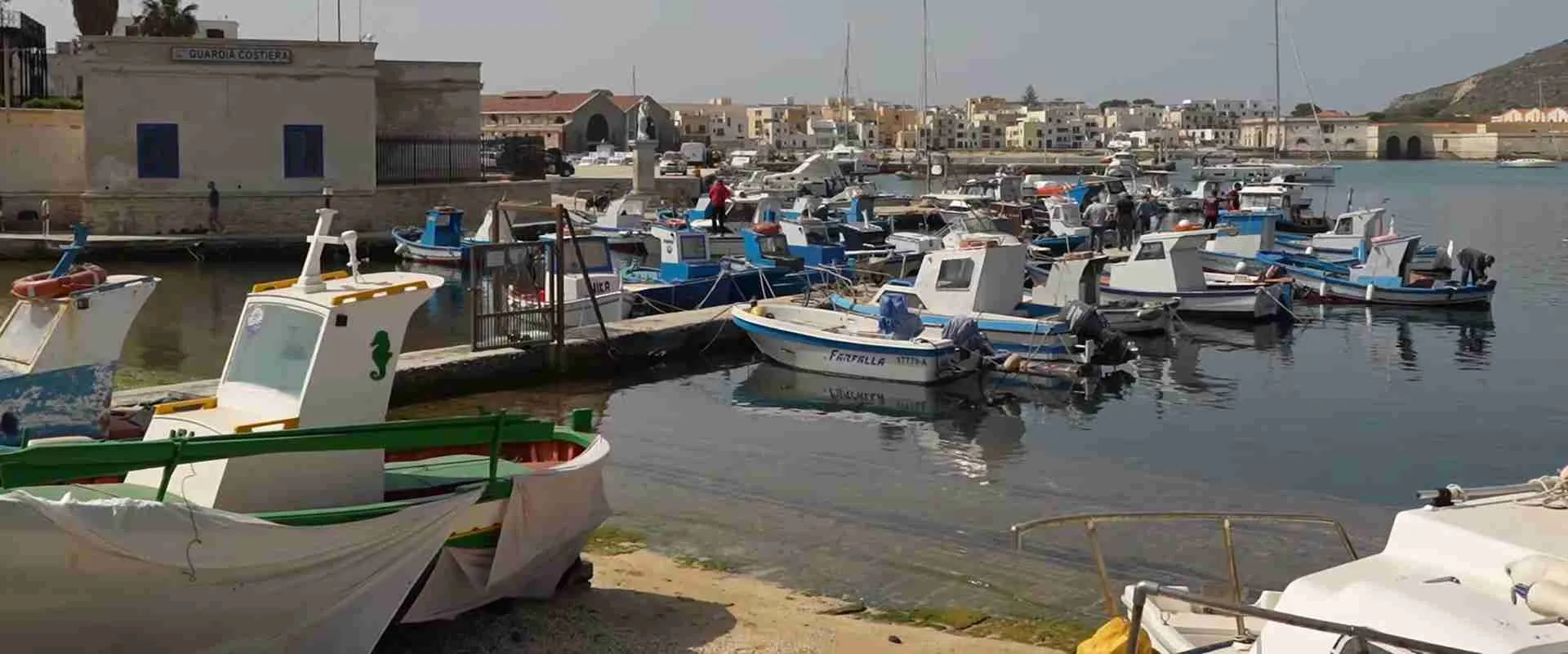
Secret Islands: A Cultural and Historic Guide to the Egadi and Pelagie Archipelago
Off Sicily’s coasts lie two extraordinary island groups that preserve millennia of Mediterranean history while remaining largely unknown beyond Italy’s borders. The Egadi archipelago guards the western approaches near Trapani, where Carthaginian and Roman fleets clashed in waters now protected as Europe’s largest marine reserve, while the Pelagie islands mark Italy’s southernmost frontier closer to Tunisia than Sicily, straddling the African continental shelf where ancient civilizations established waypoints across the central Mediterranean.
Key Takeaways
- Geographic Distinction: The Egadi Islands (Favignana, Levanzo, Marettimo) lie off Sicily’s western coast near Trapani within Europe’s largest marine protected area, while the Pelagie Islands (Lampedusa, Linosa, Lampione) represent Italy’s southernmost territory, positioned between Malta and Tunisia with Lampedusa and Lampione geologically part of the African continental shelf.
- Ancient Naval Heritage: The waters surrounding the Egadi archipelago witnessed the decisive Battle of the Aegadian Islands in 241 BC, where the Roman fleet under Lutatius Catulus defeated Carthage to end the First Punic War. Archaeological recoveries of bronze ship rams, amphorae, and naval artifacts from the seabed now form the centerpiece of Favignana’s Archaeological Museum.
- Tuna Fishing Traditions: Centuries of tuna fishing shaped Egadi culture through the mattanza ritual, an elaborate communal fishing technique practiced from May through July. The monumental Florio Tuna Processing Complex on Favignana, now transformed into Europe’s largest maritime museum, documents this vanished industrial heritage that once employed hundreds of islanders.
- Volcanic and Limestone Geology: Linosa’s three extinct volcanic cones contrast sharply with Lampedusa’s arid limestone plateau and the Egadi islands’ extensive tufa quarries. Favignana’s pale calcareous stone supplied construction material throughout western Sicily, including substantial portions of the UNESCO-listed Monreale Cathedral.
- Cross-Mediterranean Connectivity: Both archipelagos served as crucial waypoints for Phoenician, Greek, Roman, Arab, and Norman seafarers. Archaeological evidence spans from prehistoric cave art on Levanzo documenting Late Paleolithic hunter-gatherers to Punic tombs on Lampedusa, Roman villa foundations across multiple islands, and medieval fortress networks protecting against Saracen raids.
- Conservation Significance: The Egadi Marine Protected Area safeguards extensive posidonia meadows, endangered loggerhead sea turtles, and Mediterranean monk seals in pristine underwater landscapes. Lampedusa’s Isola dei Conigli nature reserve protects one of the Mediterranean’s most important loggerhead turtle nesting beaches, where females return annually to lay eggs in undisturbed sand.
People Also Ask About Sicily’s Secret Islands
What makes the Egadi and Pelagie islands culturally significant?
The Egadi and Pelagie archipelagos preserve layers of Mediterranean civilization spanning over ten millennia, from Paleolithic cave paintings to medieval fortress systems. The Egadi islands witnessed pivotal moments in ancient warfare, most notably the 241 BC naval battle that ended Rome’s first major conflict with Carthage and established Roman dominance over the western Mediterranean. Levanzo’s Grotta del Genovese contains extraordinary Late Paleolithic rock art depicting the now-extinct fauna that prehistoric hunter-gatherers pursued across land bridges when sea levels stood lower. The islands’ geographic positions made them indispensable waypoints for Phoenician traders establishing routes between the Levant and Spain, Greek colonists founding settlements across Magna Graecia, and Arab fleets that controlled the central Mediterranean for three centuries. Traditional tuna fishing developed into elaborate ritual practices on the Egadi islands, creating cultural traditions documented through folk songs, specialized vocabulary, and communal ceremonies that bound island communities together through shared labor and divided catch. The Pelagie islands’ position astride the Sicily Channel meant every maritime power seeking to control Mediterranean trade routes necessarily established presence on Lampedusa, leaving archaeological evidence of Punic, Roman, Byzantine, Arab, Norman, and later European occupations across its limestone plateau.
How do the Egadi islands differ from the Pelagie islands historically?
The Egadi and Pelagie archipelagos followed distinctly different historical trajectories shaped by their geographic positions. The Egadi islands maintained continuous proximity to Sicily’s power centers at Trapani, Marsala, and later Palermo, experiencing direct incorporation into Sicilian political, economic, and cultural life from the Phoenician period onward. Their sheltered waters and productive tuna fisheries attracted sustained settlement, intensive industrial development during the 19th century under the Florio family’s tuna empire, and integration into western Sicily’s commercial networks. The islands accumulated fortification layers reflecting each successive ruling power, from Phoenician watchtowers through Byzantine castles to Spanish defensive works. In contrast, the Pelagie islands’ extreme southern position isolated them from Sicily’s urban centers, making them secondary outposts used primarily as seasonal fishing stations, naval surveillance points, and emergency refuges rather than permanent settlements. Lampedusa received no sustained colonization until 1843 when King Ferdinand II of the Two Sicilies forcibly relocated convicts and prisoners to establish the first permanent village. Linosa remained entirely uninhabited until 1845 when families from Pantelleria founded the initial settlement. This isolation preserved unique traditions but also meant the Pelagie islands accumulated less architectural heritage, developed simpler economic structures centered on subsistence fishing, and maintained cultural distance from mainland Sicily that persists in distinct dialects, building styles, and community organization reflecting North African influences as much as Sicilian customs.
What prehistoric evidence exists on these islands?
Archaeological discoveries across both archipelagos document human presence extending back to the Late Paleolithic period when lower sea levels transformed the islands’ accessibility. Levanzo’s Grotta del Genovese contains one of the Mediterranean’s most important prehistoric art sites, with engraved and painted figures depicting aurochs, deer, horses, and human figures dated to approximately 9000 BC during the Late Paleolithic transition. The cave art demonstrates sophisticated artistic techniques including perspective rendering and motion depiction, suggesting these hunter-gatherer communities possessed complex symbolic systems and cultural transmission. Excavations within the cave revealed Epigravettian tool assemblages including backed blades, scrapers, and burins manufactured from local flint sources, documenting the technological repertoire early inhabitants employed for hunting, food processing, and hide working. Favignana preserves evidence of Neolithic occupation through pottery fragments, obsidian tools sourced from Lipari or Pantelleria, and stone implement manufacturing sites where residents exploited the island’s flint nodules. Lampedusa’s interior plateau contains scattered prehistoric hut foundations indicating seasonal occupation, though systematic archaeological investigation remains limited compared to research conducted on the Egadi sites. These prehistoric communities likely exploited marine resources including monk seals, tunas, and shellfish that could be dried for storage, while hunting terrestrial game that subsequently vanished from island ecosystems as sea levels rose and human pressure intensified. The prehistoric evidence establishes that rather than being remote barriers, these islands functioned as connected nodes in prehistoric maritime networks where specialized knowledge, raw materials, and cultural practices circulated among seafaring populations who maintained regular contact across the central Mediterranean basin.
How did the tuna fishing industry shape Egadi island culture?
Tuna fishing transcended mere economic activity on the Egadi islands to become the central organizing principle of community life, seasonal rhythms, and cultural identity for centuries. The mattanza ritual, practiced from May through July when bluefin tuna migrated through the Egadian waters, required coordinated labor from dozens of specialized workers performing precisely choreographed tasks under the direction of the rais, the fishing master whose commands controlled the operation. Fishermen positioned a complex system of anchored nets forming underwater chambers that gradually channeled migrating tunas toward the camera della morte, the death chamber, where crews hauled thrashing fish weighing up to 300 kilograms into boats using gaff hooks and coordinated pulling. The physically demanding and dangerous work created tight-knit communities bound by shared risk, specialized knowledge transmitted across generations, and equitable distribution systems that ensured each participating family received catch portions based on labor contributions. Tuna fishing generated specialized vocabulary describing net components, fish behaviors, sea conditions, and fishing techniques that enriched local dialect with technical terms found nowhere else in Sicily. Folk songs developed around tuna fishing rhythms, with work chants coordinating pulling efforts and evening songs celebrating successful catches or mourning fishermen lost to the sea. The industry’s economic importance attracted investment from wealthy Sicilian families, most notably the Florios who industrialized tuna processing on Favignana during the late 19th century, constructing the massive processing complex employing over 300 workers during peak season and exporting canned tuna throughout Europe. When overfishing collapsed Mediterranean tuna stocks and industrial operations ceased in the 1970s, the cultural void left profound impacts on island communities that suddenly lost their defining occupation, economic foundation, and communal identity. The transformation of the Florio tonnara into a maritime museum represents conscious effort to preserve this vanished world through artifacts, photographs, oral histories, and seasonal demonstrations that allow visitors to comprehend the scale, complexity, and cultural centrality of traditions that shaped Egadi life for centuries.
Extended multi-day tours – 5+ days
Featured Sicily Multi-Day Tour Packages
3 days
Sicily 3-Day Discovery Tour
- ✓ Comprehensive Sicily experience
- ✓ Expert local guides included
- ✓ All accommodation included
- ✓ Transportation provided

5 days
Sicily 5-Day Highlights Experience
- ✓ Comprehensive Sicily experience
- ✓ Expert local guides included
- ✓ All accommodation included
- ✓ Transportation provided
7 days
Sicily 7-Day Cultural Journey
- ✓ Comprehensive Sicily experience
- ✓ Expert local guides included
- ✓ All accommodation included
- ✓ Transportation provided

10 days
Sicily 10-Day Complete Adventure
- ✓ Comprehensive Sicily experience
- ✓ Expert local guides included
- ✓ All accommodation included
- ✓ Transportation provided
Multi-day tour packages powered by TourRadar. Prices and availability subject to change.
Introduction
The Mediterranean Sea conceals numerous island groups where layers of human history accumulate across millennia, yet few remain as culturally intact and historically significant as Sicily’s Egadi and Pelagie archipelagos. These island clusters occupy strategic positions that determined their historical importance: the Egadi islands guard the western approaches to Sicily where Africa nearly touches Europe, while the Pelagie islands extend Italian territory far south into waters claimed by multiple civilizations throughout antiquity. Geographic isolation preserved traditions that vanished from more accessible regions, while strategic importance ensured these islands witnessed pivotal historical events that shaped Mediterranean power balances.
The Egadi archipelago consists of three principal islands—Favignana, Levanzo, and Marettimo—along with smaller islets Formica and Maraone, positioned roughly ten kilometers off Sicily’s northwestern coast near the port cities of Trapani and Marsala. These limestone formations emerging from shallow waters sheltered ancient fleets, attracted tuna fisheries that sustained communities for centuries, and preserved archaeological evidence spanning from Paleolithic cave art through medieval fortifications. The islands’ proximity to Sicily meant continuous cultural exchange with the mainland, creating societies thoroughly integrated into Sicilian economic, political, and religious life while maintaining distinct island identities shaped by maritime traditions and geographic separation.
The Pelagie archipelago lies dramatically farther south, positioned 176 kilometers from Sicily’s southern coast but only 113 kilometers from Tunisia’s northern shore. The three islands—Lampedusa, Linosa, and tiny uninhabited Lampione—represent Italy’s southernmost territory, situated between Malta and the African continent in waters where European and North African influences converge. Geologically, Lampedusa and Lampione rest on the African continental shelf rather than Sicily’s underwater extension, creating unusual ecological conditions where African bird species nest alongside Mediterranean species and marine life reflects biogeographic patterns linking the islands more closely to Tunisia than Italy. This extreme southern position produced historical development patterns sharply different from the Egadi experience, with sustained isolation, minimal European settlement until the 19th century, and cultural traditions reflecting North African influences as strongly as Sicilian customs.
Both archipelagos preserve cultural heritage threatened or obliterated elsewhere. Traditional fishing techniques, vernacular architecture adapted to island conditions, communal organization systems evolved through geographic isolation, specialized craft traditions exploiting local materials, and oral history traditions documenting life in communities where everyone knew everyone else for generations. The transformation from isolated fishing communities dependent on seasonal tuna migrations and subsistence agriculture into destinations attracting tourists seeking pristine beaches and crystal waters occurred rapidly during recent decades, creating challenges for communities attempting to preserve cultural authenticity while adapting to tourism-based economies. Understanding these islands’ cultural and historical significance requires looking beyond picturesque harbors and turquoise coves to recognize the depth of human experience accumulated across centuries in communities shaped by geographic isolation, economic specialization, and adaptation to environmental constraints that fostered resilience, innovation, and distinctive cultural expressions found nowhere else in the Mediterranean world.
The Egadi Archipelago: Geography and Ancient Foundations
The Egadi Islands emerge from shallow coastal waters where Africa’s tectonic plate presses northward against Europe’s southern margin, creating geological conditions that shaped both landscape and human history. Favignana, the largest island covering 19.8 square kilometers, presents a low-lying butterfly-shaped profile dominated by Monte Santa Caterina rising 314 meters above the harbor. The island’s pale limestone bedrock, quarried extensively throughout historical periods, created distinctive pitted landscapes where centuries of stone extraction left geometric cavities and stepped excavations that appear as abstract sculpture across the interior. Levanzo, smallest of the inhabited islands at just 5.6 square kilometers, rises more steeply from the sea with Monte Gibele reaching 278 meters, its coastline fractured into dramatic cliffs pierced by marine caves including the archaeologically crucial Grotta del Genovese. Marettimo, most distant from Sicily at 35 kilometers offshore, presents the archipelago’s most rugged topography with Monte Falcone climbing to 686 meters, creating an island where vertical relief compresses Mediterranean vegetation zones from coastal maquis through pine forests to alpine flora communities within a few hundred meters of elevation change.
Archaeological evidence documents human presence on the Egadi islands extending back at least 10,000 years to Late Paleolithic populations who exploited these territories when lower sea levels reduced maritime distances and increased available land area. The Grotta del Genovese on Levanzo preserves extraordinary evidence of these early inhabitants through rock art spanning two artistic phases: deeply engraved figures depicting large mammals including aurochs, deer, horses, and what may represent monk seals or dolphins, dated to approximately 9000 BC during the Late Paleolithic, and later Neolithic paintings executed in dark pigments showing stylized human figures that may represent ceremonial scenes or fertility symbolism. The artistic sophistication demonstrates these communities possessed cognitive capabilities and cultural transmission systems allowing complex symbolic representation to persist across generations. Excavations within and around the cave recovered Epigravettian tool assemblages dominated by backed blades and geometric microliths indicating specialized hunting technologies, along with abundant marine shells suggesting intensive coastal resource exploitation.
Phoenician colonization during the first millennium BC established the islands within extensive trade networks linking the Levant with western Mediterranean settlements in North Africa, Spain, and beyond. The Phoenicians recognized the islands’ strategic value controlling approaches to western Sicily and established seasonal bases supporting commercial voyages, tuna fishing operations, and naval activities. Archaeological evidence from this period remains relatively sparse compared to later Roman occupation, consisting primarily of scattered pottery fragments, anchors recovered from offshore waters, and possible harbor installations whose original functions remain debated among researchers. The limited Phoenician material culture may reflect seasonal rather than permanent occupation, with trading vessels using the islands as temporary anchorages rather than establishing substantial settlements requiring defensive works, religious structures, or permanent habitations.
Greek influence reached the Egadi islands indirectly through the nearby Sicilian colonies at Selinunte, Segesta, and later Mozia, though the islands appear never to have supported substantial Greek settlements. Greek geographic writers including Strabo and Pliny the Elder mentioned the islands in their descriptions of western Sicily’s geography, indicating awareness within classical geographic knowledge without suggesting the islands held particular importance within the Hellenic world. The islands’ Greek name Aegades, from which the Italian Egadi derives, appears in classical texts without clear etymological explanation, though scholars have proposed derivations from words relating to goats (presumably abundant on the islands), waves, or Aegean geographic associations.
The most significant event in the islands’ ancient history occurred in 241 BC when Roman and Carthaginian fleets clashed in the waters between the Egadi islands and Sicily’s coast in the final naval engagement of the First Punic War. After twenty-three years of conflict fought primarily in Sicily and surrounding waters, the Roman consul Gaius Lutatius Catulus led a fleet of approximately 200 warships against a Carthaginian force transporting supplies and reinforcements to besieged forces at Drepanum (modern Trapani). The battle resulted in decisive Roman victory, with ancient sources recording the destruction or capture of approximately fifty Carthaginian vessels and the death of thousands of sailors. This defeat forced Carthage to sue for peace, ceding Sicily to Rome and establishing Roman dominance over the western Mediterranean that would persist for six centuries. Underwater archaeological surveys beginning in the 1970s have recovered extraordinary material evidence from the battle, including bronze warship rams bearing Latin inscriptions naming Roman officials, pottery indicating ship cargoes, lead anchor stocks, and weaponry. These artifacts, now displayed in Favignana’s Archaeological Museum, provide rare physical evidence documenting ancient naval warfare and allow scholars to test historical accounts against material remains.
Roman Through Medieval Egadi: Continuity and Transformation
Following their victory in 241 BC, Romans incorporated the Egadi islands into the new province of Sicilia, the Republic’s first territorial possession beyond the Italian peninsula. The islands functioned primarily as auxiliary territories supporting maritime activities, seasonal fishing operations, and agricultural exploitation rather than receiving the substantial urban development and infrastructure investment Rome directed toward mainland Sicily. Archaeological evidence from the Roman period consists principally of scattered villa rustica foundations indicating agricultural estates, fish processing installations where crews salted tuna and other catches for export to Italian markets, pottery kilns producing amphorae for storing and transporting preserved fish, and coins spanning the Republic and Imperial periods confirming continuous occupation and economic integration into Roman commercial networks.
The most substantial Roman architectural remains survive on Favignana where limestone bedrock preservation and limited later overbuilding protected ancient foundations. Excavations have identified villa complexes with mosaic pavements, hypocaust heating systems, and associated bath structures indicating wealthy Romans established rural retreats on the island, perhaps attracted by fishing opportunities, thermal springs whose curative properties were celebrated in ancient medical texts, or simply desire for secluded properties away from Sicily’s urban centers. Fish processing facilities, identifiable through characteristic rectangular cutting vats carved into bedrock and stone-lined channels for draining brine, demonstrate that commercialized tuna fishing already operated during the Roman period, establishing patterns that would persist through subsequent centuries.
Christianity reached the Egadi islands during the late Roman period, though documentary evidence remains scarce and archaeological material minimal. Tradition holds that Christian communities established presence on Favignana by the 4th century, worshiping initially in private homes before constructing dedicated church buildings. The islands’ peripheral position and small populations meant they received neither sustained attention from ecclesiastical authorities nor investment in substantial religious architecture during the early Christian centuries. Byzantine control following the Western Roman Empire’s collapse in the 5th century brought the islands within the Eastern Empire’s extensive maritime domains, though again documentary evidence provides limited insight into administrative arrangements, settlement patterns, or economic activities during the roughly four centuries of Byzantine rule.
Arab conquest of Sicily beginning in 827 and completing by 902 gradually extended Muslim control over offshore islands including the Egadi archipelago. Arab sources provide tantalizing references to the islands within geographic descriptions of western Sicily and accounts of naval operations, but systematic archaeological investigation of the Arab period remains limited, making it difficult to assess the extent of settlement, economic activities, or cultural influences during approximately two centuries of Islamic rule. Place names preserve possible Arabic etymologies, certain agricultural practices introduced during this period persisted through subsequent centuries, and architectural elements in later buildings may reflect Islamic precedents, though distinguishing Arab influences from later innovations remains methodologically challenging without secure archaeological contexts.
Norman conquest of Sicily between 1061 and 1091 brought the Egadi islands within the new Kingdom of Sicily under Roger I and his successors. The Normans established more systematic administrative control than previous rulers, documenting the islands within royal registers, granting feudal rights over island territories to noble families supporting the conquest, and constructing defensive fortifications reflecting the archipelago’s strategic importance. The castle atop Monte Santa Caterina on Favignana originated during the Norman period, though subsequent Spanish modifications obscured much of the original 11th-century fabric. From Norman foundations, the castle expanded during successive centuries as each ruling power reinforced defenses against maritime threats, creating a palimpsest of architectural elements from medieval through modern periods that documents Sicily’s complex political history.
Medieval Christian reconquest did not dramatically transform everyday life for island populations who continued exploiting the same marine and agricultural resources that sustained communities for centuries. Tuna fishing remained the economic foundation, supplemented by small-scale grain cultivation, vegetable gardens, livestock grazing, and collection of wild plants for food and medicine. The islands’ poverty and isolation meant they accumulated little documentary evidence during the medieval centuries, leaving historians dependent on scattered references in mainland archives, occasional church records, and testimony in legal disputes to reconstruct social and economic patterns.
The Florio Era: Industrial Transformation of Favignana
The most dramatic transformation in Egadi island history occurred during the 19th century when the Florio family, Sicily’s wealthiest entrepreneurial dynasty, acquired fishing rights across the archipelago and industrialized tuna processing at unprecedented scale. Ignazio Florio purchased the Favignana tonnara in 1874 from previous owners who had operated traditional fishing operations, then invested massively in modernizing both fishing techniques and processing facilities. The Florios commissioned architect Giuseppe Damiani Almeyda to design a monumental industrial complex on Favignana’s western shore capable of processing thousands of tunas annually through mechanized systems replacing manual labor that had characterized tuna processing for centuries.
Construction of the Florio complex, known locally as the Stabilimento Florio delle Tonnare di Favignana e Formica, occurred between 1859 and 1878, creating an industrial campus that dominated Favignana’s economy and social life for nearly a century. The complex ultimately extended across 32,000 square meters, incorporating processing halls equipped with steam-powered machinery for butchering and canning operations, warehouses for storing preserved tuna awaiting shipment, workers’ barracks housing seasonal laborers brought from Sicily during fishing season, administrative offices managing operations, a chapel serving workers’ spiritual needs, and the Palazzina Florio, a neo-Gothic residence where family members stayed during visits to oversee operations. The architectural ambition reflected the Florios’ wealth and industrial vision, with decorated facades, vaulted processing halls supported on iron columns manufactured in Belgium, and careful integration of functional industrial requirements with architectural distinction celebrating the family’s entrepreneurial achievements.
At peak operation during the early 20th century, the Florio tonnara employed over 300 workers during the May-July fishing season, creating a temporary industrial town on Favignana where systematic time discipline, mechanized production rhythms, and hierarchical management structures replaced the traditional communal organization of tuna fishing that had operated for centuries. The rais, fishing masters who commanded mattanza operations through knowledge, experience, and traditional authority, found their roles transformed within the Florio organization where industrial managers enforced production quotas, quality standards, and labor discipline. Workers received wages rather than traditional catch shares, worked according to shift schedules determined by processing requirements rather than fishing success, and lived in company housing subject to management oversight rather than in family homes integrated within island communities.
The Florio era brought prosperity but also dependency. Favignana’s economy became thoroughly dominated by the tonnara, with most families deriving income directly or indirectly from tuna operations. When fishing declined during the mid-20th century due to overfishing, competition from industrial fishing fleets, changing consumer preferences, and the Florio family’s retreat from Sicilian business interests, Favignana faced economic crisis. The tonnara closed permanently in 1977, leaving hundreds unemployed and communities searching for alternative economic foundations. The magnificent industrial complex stood abandoned for decades, gradually deteriorating until restoration efforts beginning in the 1990s transformed the buildings into a museum complex preserving the memory of traditions that once defined island life.
Today the former Stabilimento Florio functions as a museum documenting tuna fishing history through preserved machinery, photographs showing operations and workers, tools and equipment used in fishing and processing, oral history recordings capturing memories of participants, and seasonal demonstrations of net construction, boat handling, and processing techniques that allow visitors to comprehend the scale and complexity of operations that once employed substantial portions of the island’s population. The museum also displays underwater archaeological materials recovered from ancient shipwrecks, providing broader historical context linking modern fishing traditions to ancient maritime activities in the same waters.
Levanzo: Prehistoric Art and Maritime Traditions
Levanzo presents the Egadi archipelago’s most pristine environment, where a permanent population never exceeding 400 inhabitants clustered in the single village along the protected eastern shore left the island’s interior largely undisturbed. The island’s steep topography, limited fresh water, and exposure to prevailing winds discouraged agricultural development beyond small terraced gardens near dwellings, preserving landscapes that likely resemble the environment prehistoric populations encountered thousands of years ago. This minimal human modification protected Levanzo’s archaeological heritage, most notably the Grotta del Genovese, one of the Mediterranean’s most significant prehistoric art sites.
Discovery of the Grotta del Genovese occurred accidentally in 1949 when local resident Francesca Minellono noticed cave openings while collecting firewood on the island’s southwestern slopes. Initial investigation revealed extensive wall surfaces covered with engravings and paintings, prompting professional archaeological survey led by Paolo Graziosi beginning in 1950. Systematic documentation revealed two distinct artistic phases: deeper Paleolithic engravings executed through repeated scoring with sharp tools to create line drawings of large mammals, and later Neolithic paintings applied in dark pigments showing more stylized human and geometric forms.
The Paleolithic engravings depict extinct fauna including aurochs, horses, red deer, and possibly monk seals or cetaceans, animals that inhabited Sicily and surrounding islands during the Late Glacial period when lower sea levels connected the Egadi islands to Sicily’s northwest coast. The artistic style demonstrates sophisticated observational skills, with anatomical details, movement representation, and perspective techniques showing accomplished artistic traditions. Some figures overlay others, suggesting the cave served as an art production site over extended periods rather than receiving decoration during a single episode. The engravings date to approximately 9000-8500 BC based on stylistic analysis and correlation with dated Late Paleolithic sites across southern Europe sharing similar artistic conventions.
The Neolithic paintings represent a distinct artistic phase separated from the engravings by several thousand years. Executed in dark pigments, probably charcoal or manganese-based preparations, the paintings show highly stylized human figures with raised arms that may represent ritual poses, along with geometric patterns including zigzags, crosshatching, and concentric curves whose meanings remain debated. The stylization contrasts sharply with the Paleolithic engravings’ naturalism, reflecting changed artistic conventions or different functional purposes for the images. These paintings date to approximately 5000-4000 BC during Sicily’s Neolithic period when farming communities replaced hunter-gatherer populations and different subsistence strategies, settlement patterns, and cultural practices emerged across the island.
Beyond its prehistoric art, Levanzo preserves evidence of continuous human occupation through later periods, though the island’s small size and limited resources meant populations remained small and material culture comparatively simple. Roman period remains include villa foundations, pottery assemblages, and coins, though nothing approaching the scale of development on Favignana. Medieval and early modern occupation centered on the protected harbor where fishing families established the village that persists today, practicing traditional tuna fishing as part of the broader Egadi tonnara system, cultivating small garden plots, raising livestock, and collecting wild plants for subsistence.
Levanzo’s architectural heritage reflects adaptation to island constraints through vernacular building traditions employing local limestone, barrel-vaulted roofs resisting wind stress, compact plans minimizing exposed surface area, thick walls providing thermal insulation, and minimal ornamentation reflecting limited resources and isolation from mainland architectural developments. The traditional houses, mostly dating from the 18th and 19th centuries, create an unusually intact historic streetscape where modern interventions remain limited and the village retains spatial organization and architectural character developed across centuries of gradual evolution. Conservation efforts have recognized this heritage, protecting the village center from incompatible development while allowing sympathetic renovations supporting permanent residents and tourist accommodation.
Marettimo: Ecological Refuge and Cultural Isolation
Marettimo occupies a unique position within the Egadi archipelago, positioned farthest from Sicily at 35 kilometers offshore and presenting the most rugged topography and dramatic coastal scenery. The island’s mountainous terrain, extensive forest cover, and limited coastal plains discouraged intensive human exploitation, preserving ecological conditions and traditional lifeways that vanished from more accessible islands. Marettimo’s isolation fostered distinct cultural identity among the approximately 700 permanent residents, who maintained fishing-centered traditions, preserved unique dialect features, and developed communal organization systems emphasizing cooperation and resource sharing necessary for survival in an environment offering limited economic opportunities.
The island’s name derives from uncertain origins, with proposed etymologies including the Latin maritima reflecting its island position, or alternatively from Greek roots relating to Mediterranean mastic shrubs that once grew abundantly. Ancient sources mention the island infrequently, suggesting peripheral importance within classical geographic knowledge, though Roman archaeological remains demonstrate occupation during the Imperial period. A Norman castle crowning a coastal promontory documents medieval strategic importance, with the fortress controlling approaches to western Sicily and providing refuge during pirate raids that plagued Mediterranean shipping routes through early modern centuries. Spanish authorities reinforced the castle during their rule over Sicily, adding gun emplacements and strengthening defensive walls against Ottoman naval threats.
Marettimo’s ecological significance derives from its isolation and minimal human modification, creating conditions where native Mediterranean flora and fauna persist in relatively undisturbed ecosystems. The island supports approximately 500 plant species including numerous endemics found nowhere else, with vegetation communities ranging from coastal halophytic species tolerating salt spray through maquis and garrigue formations to montane forest stands dominated by Aleppo pine. The diverse plant communities create habitat supporting abundant birdlife, including migratory species using the island as a stopover during Mediterranean crossings, seabirds nesting on sea cliffs, and raptors exploiting thermals rising from sun-heated slopes. The surrounding marine environment within the Egadi Marine Protected Area preserves pristine seagrass meadows dominated by posidonia, rocky reef communities harboring diverse fish assemblages, and deeper waters visited by dolphins, sea turtles, and occasionally monk seals.
Traditional Marettimo culture centered on fishing, with the island’s men pursuing tuna during seasonal migrations, setting fixed nets for smaller fish species, diving for lobsters and octopus, and maintaining boat-building traditions necessary for constructing and repairing wooden vessels using techniques transmitted across generations. The island’s women cultivated small gardens, raised chickens and rabbits, collected wild greens and herbs, and produced handicrafts including woven textiles and embroidery. Relative isolation meant Marettimo communities relied heavily on self-sufficiency, bartering surplus fish for agricultural products with Sicily, and maintaining equipment and buildings through local labor and resources rather than depending on mainland services.
The traditional economy collapsed during the late 20th century as younger generations migrated to Sicily seeking education and employment opportunities, traditional fishing became economically nonviable, and tourism emerged as the dominant economic sector. This transition threatened cultural continuity, with traditional practices, dialect features, and communal institutions eroding as permanent population declined and seasonal tourism increasingly shaped island life. Cultural preservation efforts have documented oral traditions, traditional ecological knowledge, craft techniques, and architectural heritage, creating archives and museum collections ensuring this knowledge survives even as living traditions fade. The challenge facing Marettimo mirrors issues confronting small island communities throughout the Mediterranean, where economic modernization, outmigration, and tourism development simultaneously bring prosperity and threaten the cultural distinctiveness that attracts visitors in the first place.
The Pelagie Archipelago: Geographic Extremity and Cultural Crossroads
The Pelagie Islands occupy an extraordinary geographic position at the southern extremity of Italian territory, positioned closer to Tunisia than Sicily and geologically divided between islands resting on the African continental shelf (Lampedusa and Lampione) and volcanic formations emerging from deeper Mediterranean waters (Linosa). This position 176 kilometers south of Sicily and only 113 kilometers from the North African coast created unique historical dynamics where African and European influences converged, multiple civilizations established temporary or permanent presence, and isolation from Sicily’s urban centers produced cultural patterns diverging sharply from mainland Sicilian norms.
The archipelago’s name derives from Greek pelagios meaning “of the open sea,” reflecting the islands’ position far from major landmasses surrounded by deep waters. Ancient geographic writers including Strabo, Pliny the Elder, and Ptolemy mentioned the islands in their descriptions of the central Mediterranean, though information remained limited and sometimes confused different islands. The various ancient names—Lopadusa for Lampedusa, Algusa or Aethusa for Linosa—demonstrate awareness within classical geographic knowledge without suggesting the islands held particular strategic or economic importance warranting detailed description.
Archaeological evidence documents human presence extending back to antiquity, though systematic investigation remains limited compared to research conducted on Sicily proper or other Mediterranean islands. Lampedusa preserves scattered remains including prehistoric hut foundations suggesting seasonal occupation by fishing or hunting communities, Punic tombs indicating Carthaginian presence, and Roman villa foundations, pottery assemblages, and amphorae documenting Imperial period settlement. The archaeological material suggests the islands functioned primarily as waypoints and seasonal refuges rather than receiving sustained colonization or intensive economic exploitation. Geographic isolation and limited fresh water restricted population levels regardless of which civilization claimed sovereignty, creating patterns where small communities of fishermen, farmers, and seasonal visitors occupied the islands without developing substantial urban settlements or monumental architecture.
Lampedusa’s flat limestone topography, maximum elevation 133 meters, and arid climate with annual rainfall under 300 millimeters created challenging conditions for agriculture and limited fresh water sources to seasonal rainfall collected in cisterns. The island’s Greek name possibly derives from lampas meaning torch, potentially referencing lighthouse or beacon fires guiding ancient mariners, though etymologies remain uncertain. The limestone bedrock preserves karst formations including caves that provided shelter, water-retaining depressions that supported small-scale agriculture, and subterranean chambers where ancient populations may have stored food or conducted religious rituals. Unlike Sicily’s more hospitable islands, Lampedusa’s environmental constraints meant populations remained small and communities dependent on fishing supplemented by limited agriculture rather than developing diverse economies.
Linosa presents dramatically different geology and landscape, formed through volcanic activity that created a small mountainous island dominated by three extinct volcanic cones—Monte Vulcano reaching 195 meters, Monte Rosso, and Monte Nero—whose dark lava flows and cinder deposits contrast sharply with Lampedusa’s pale limestone. The volcanic soils support more productive agriculture than Lampedusa’s thin limestone soils, though water scarcity remains limiting. Pliny the Elder referenced the island as Aethusa, possibly reflecting observation of volcanic features or fumarolic activity, though the volcanoes have remained dormant throughout historical times. The island’s small size, approximately 5 square kilometers, and extreme isolation—positioned 43 kilometers north of Lampedusa midway between Sicily and Africa—meant it attracted even less sustained settlement than its larger southern neighbor.
Medieval Arab sources reference the Pelagie islands within geographic descriptions, though detailed information remains scarce. Arab sailors likely used the islands as navigational waypoints and seasonal fishing bases, potentially establishing small communities that raised crops, harvested sea salt, and exploited marine resources. Following Norman conquest of Sicily, the islands theoretically fell within Christian sovereignty, though effective control remained nominal and communities minimal. Periodic raids by North African corsairs, Ottoman naval forces, and European pirates created insecurity that discouraged permanent settlement, with the islands serving primarily as temporary refuges for fishing crews, smugglers, and sailors weathering storms rather than supporting stable year-round populations.
Modern Settlement and Colonial History of the Pelagie Islands
Sustained colonization of the Pelagie islands began only in the 19th century when the Bourbon Kingdom of the Two Sicilies implemented deliberate settlement policies aiming to establish Italian presence in strategically located but sparsely populated territories. King Ferdinand II issued decrees in 1843 authorizing colonization of Lampedusa and Linosa, offering land grants, tax exemptions, and subsidies to encourage settlers. The initial colonists included prisoners and convicts whom authorities forcibly relocated along with volunteer families from Pantelleria, Sicily’s coastal communities, and Malta, creating diverse founding populations.
Lampedusa received its first organized colonization in 1843 when approximately 120 people including prisoners, guards, and administrators established the initial settlement on the southern coast where the modern town now stands. The early years proved extremely difficult, with settlers facing water scarcity, isolation from supply sources, inadequate housing, and conflicts between convict laborers and civilian families. Gradual population growth occurred through natural increase and additional migrations, reaching several hundred residents by the late 19th century. The settlement developed characteristic Mediterranean island architecture adapted to local conditions: single-story houses with thick limestone walls, barrel-vaulted roofs resisting wind stress, small windows minimizing heat gain, courtyards providing protected outdoor space, and whitewashed facades reflecting sunlight.
Linosa’s colonization commenced in 1845 when approximately forty families from Pantelleria relocated to establish the first permanent settlement. The volcanic island’s more productive soils attracted agriculturally oriented settlers who planted vineyards, established wheat fields, cultivated legumes and vegetables, and raised livestock. The small founding population created a tightly knit community where everyone shared descent from the original forty families, fostering strong communal bonds and endogamous marriage patterns that persisted through subsequent generations. The island developed distinctive building traditions reflecting Pantellerian architectural influences adapted to local volcanic stone, with houses featuring brightly painted doors and window frames in vibrant blues, yellows, reds, and greens contrasting dramatically with black lava walls and white-painted details.
Economic development on both islands centered on fishing, small-scale agriculture, and collection of natural resources including salt from coastal evaporation ponds. Lampedusa developed sponge diving operations during the late 19th century, with divers harvesting commercial sponges from surrounding seabeds for export to Italian and European markets. The sponge trade attracted Greek divers who settled on the island, adding another cultural element to the mixed population. Fishing operations focused on sardines, anchovies, and tuna, with catches salted or canned for export. Limited agricultural production supplied local consumption with surpluses occasionally exported to Sicily.
Infrastructure development remained minimal until the mid-20th century, with the islands lacking electricity, running water, telephone service, paved roads, and regular transportation connections to Sicily. Residents relied on sailing vessels and later motor boats for transport, communication, and commerce, enduring isolation that shaped community self-sufficiency and cultural distinctiveness. Introduction of modern services occurred gradually: electricity arrived in the 1960s, desalination plants providing fresh water were constructed during the 1970s, telephone service expanded during the 1980s, and regular hydrofoil service connecting the islands to Sicily commenced in the 1990s. This relatively recent modernization meant traditional lifeways persisted longer than on more accessible Italian islands, preserving customs, dialect features, and social organization systems that vanished elsewhere.
Contemporary challenges facing the Pelagie islands include water scarcity exacerbated by tourism development, waste management difficulties in communities lacking space for landfills and lacking regular ferry service for waste removal, pressure on marine resources from fishing and tourism, immigration pressures as African migrants use Lampedusa as an entry point to Europe creating social tensions and straining local services, and economic dependency on seasonal tourism that leaves communities underemployed during winter months. Balancing tourism development providing employment and income with protection of natural and cultural resources that attract visitors remains an ongoing tension where local communities, regional governments, and conservation organizations negotiate priorities and implementation strategies.
Marine Conservation: The Egadi Marine Protected Area
Establishment of the Egadi Marine Protected Area in 1991 created Europe’s largest marine reserve, encompassing 53,992 hectares of waters surrounding the archipelago. The reserve protects pristine Mediterranean marine ecosystems increasingly rare in heavily exploited seas, providing refuge for threatened species and preserving ecological processes sustaining fisheries, tourism, and island communities’ connections to the sea. Protection zones divide the reserve into areas allowing different activities: integral reserve zones where all extractive activities are prohibited, general reserve zones allowing limited fishing with traditional methods, partial reserve zones permitting regulated commercial and recreational activities, and buffer zones surrounding protected areas where activities face fewer restrictions.
The protected waters support exceptional marine biodiversity including extensive posidonia seagrass meadows forming underwater forests that stabilize sediments, oxygenate water, provide nursery habitat for juvenile fish, and sequester carbon. Rocky reefs harbor diverse assemblages of algae, sponges, bryozoans, sea anemones, and corals creating structurally complex habitats supporting abundant invertebrate and fish populations. Sandy bottoms between reefs provide habitat for flatfish, rays, octopuses, and specialized invertebrates adapted to mobile substrates. Deeper waters beyond scuba diving depths support different communities adapted to reduced light, colder temperatures, and specialized feeding opportunities.
Protected species within the reserve include loggerhead sea turtles that forage in the seagrass meadows and nest on isolated beaches, Mediterranean monk seals whose remnant populations occasionally visit the most isolated caves and coastal areas, dolphins including bottlenose and striped dolphins that hunt in surrounding waters, groupers recovering from historical overfishing, dusky groupers whose populations have increased substantially under protection, and various elasmobranchs including eagle rays, stingrays, and occasionally small sharks. The reserve also protects commercial fish species during spawning and juvenile periods, contributing to population recovery that benefits surrounding unprotected waters through spillover effects.
Conservation management faces challenges including illegal fishing by vessels from outside the protected area, conflicts with commercial fishermen whose traditional grounds fall within restricted zones, tourism pressures from recreational boats, divers, and swimmers potentially damaging sensitive habitats, and climate change impacts including warming waters, ocean acidification affecting calcifying organisms, and changing species distributions. Management strategies combine scientific monitoring documenting ecosystem conditions and trends, enforcement operations detecting and prosecuting violations, education programs building public support for conservation, and collaboration with fishing communities developing sustainable practices compatible with conservation goals.
Successful conservation outcomes include documented increases in fish biomass and diversity within protected zones, recovery of formerly depleted grouper and seabream populations, increased sightings of rare species including monk seals and sea turtles, and improved water quality as seagrass meadows expand. These successes demonstrate that effective marine protection can restore degraded ecosystems and recover depleted populations even in heavily used Mediterranean waters, providing models for conservation efforts elsewhere while supporting sustainable tourism and fishing that depend on healthy marine environments.
Lampedusa’s Isola dei Conigli: Turtle Nesting and Conservation
Isola dei Conigli, Rabbit Island, lies just off Lampedusa’s southern coast separated by shallow turquoise waters forming a protected lagoon of extraordinary clarity and beauty. The small island and surrounding beach area constitute a nature reserve protecting one of the Mediterranean’s most important loggerhead sea turtle nesting sites. Female loggerheads return annually to nest on the reserve’s sandy beaches, maintaining reproductive traditions linking these populations to nesting behaviors evolved over millions of years.
Loggerhead sea turtles, Caretta caretta, represent the Mediterranean’s most common sea turtle species, though populations face numerous threats including bycatch in commercial fishing operations, marine pollution, coastal development eliminating nesting beaches, boat strikes, and climate change affecting sand temperatures that determine hatchling sex ratios. Female loggerheads mature slowly, requiring approximately twenty-five years to reach reproductive age, then migrate hundreds of kilometers from foraging grounds to natal beaches where they emerged decades earlier. The navigational mechanisms allowing turtles to relocate specific beaches remain incompletely understood, though research suggests magnetic field detection, chemical cues, and visual landmarks all contribute to orientation abilities.
Nesting occurs during summer months from May through August when female turtles crawl ashore at night, excavate flask-shaped egg chambers in sand above high tide line, deposit approximately 100 eggs per clutch, cover the nest with sand, and return to sea. Each female typically nests multiple times per season at two-week intervals, producing several clutches before departing nesting areas. Incubation requires fifty to sixty days, with sand temperature during development determining hatchling sex ratios through temperature-dependent sex determination where warmer temperatures produce female hatchlings and cooler temperatures favor males. Emerging hatchlings orient toward the sea using light cues, with natural beaches’ darkest horizon indicating ocean direction. Artificial lighting from coastal development can disorient hatchlings, causing them to crawl inland where they perish from exhaustion, dehydration, or predation.
Conservation measures protecting Lampedusa’s turtle nesting include access restrictions during nesting season, nighttime lighting controls eliminating artificial light pollution near beaches, nest monitoring by trained observers who document nesting activity and protect eggs from predators and disturbance, public education explaining turtle biology and conservation needs, and enforcement against violations threatening turtles or nests. These efforts have successfully maintained Lampedusa as a crucial nesting site within the western Mediterranean, with annual nest numbers fluctuating but remaining relatively stable compared to declining trends at other Mediterranean nesting beaches.
The Isola dei Conigli beach ranks among the Mediterranean’s finest, with extremely fine white sand, pristine turquoise waters, and dramatic coastal scenery attracting thousands of visitors annually. Tourism management balances public access allowing visitors to experience this extraordinary natural area with protection requirements ensuring human activities don’t compromise turtle nesting success. Management strategies include visitor number limits during peak season, designated pathways concentrating foot traffic and protecting sensitive dune vegetation, interpretive signage explaining the area’s ecological significance, and seasonal closures of beach sections containing active nests.
Broader marine conservation around Lampedusa includes establishment of a marine protected area encompassing waters surrounding the island and Isola dei Conigli. The protected area regulates fishing, diving, boating, and coastal activities to preserve marine ecosystems supporting resident and migratory species. Underwater habitats include seagrass meadows providing turtle foraging grounds, rocky reefs supporting diverse fish communities, and sandy bottoms harboring specialized invertebrates. Protection measures have demonstrated positive outcomes including increased fish populations, recovery of depleted species, improved water quality, and successful turtle nesting despite heavy tourism pressures on the island.
Traditional Architecture and Vernacular Building Traditions
The islands’ vernacular architecture evolved through centuries of adaptation to environmental constraints including limited building materials, exposure to strong winds, intense summer heat, winter storms, water scarcity, and isolation from mainland construction traditions and craftsmen. These conditions produced distinctive building styles emphasizing functionality, durability, and efficiency while incorporating aesthetic elements reflecting cultural values and community identity.
Egadi island architecture utilizes the abundant local limestone through traditional quarrying and masonry techniques producing thick load-bearing walls that provide thermal mass moderating interior temperatures, resist wind-driven rain, and support barrel-vaulted or flat roofs. Traditional houses present simple rectangular or square plans organized around functional requirements, with ground-floor spaces housing storage, work areas, and sometimes livestock, while upper floors (when present) contained living quarters. Facades show minimal ornamentation beyond simple moldings around doors and windows, whitewashed surfaces reflecting sunlight, and occasionally decorative details on corner stones or building entrances marking family prosperity or craftsman pride.
Interior spaces emphasized flexibility and multi-functionality, with rooms serving different purposes across daily and seasonal cycles. Large fireplaces provided cooking heat and winter warmth, with chimneys carefully positioned to minimize wind-driven backdrafts. Sleeping areas often occupied loft spaces accessible by wooden ladders, conserving ground-level area for daily activities. Windows remained small to minimize heat gain and maintain privacy in densely built neighborhoods where houses directly adjoined. Courtyards provided protected outdoor work space for domestic activities including food preparation, laundry, craft production, and animal care.
Roofing traditions varied across islands and time periods. Barrel vaults constructed in limestone masonry eliminated need for timber roof structures, important in treeless island environments where imported wood represented expensive luxury. The vaults distributed structural loads efficiently, resisted wind uplift forces, and provided excellent thermal performance. Flat roofs constructed with wooden beams supporting cane mats covered with clay and limestone plaster offered alternative construction requiring less specialized masonry skill but demanding maintenance to prevent water infiltration. Terrace roofs functioned as outdoor living space during hot weather and drying areas for fruits, fish, and laundry.
Color traditions differed between archipelagos. Egadi buildings typically displayed whitewashed facades with limited color accents, reflecting Sicilian preferences and limestone’s natural pale tones. Pelagie island buildings, particularly on Linosa, embraced vibrant colors with house facades, doors, and window frames painted bright blues, greens, yellows, and reds. The color tradition may reflect North African influences, Pantellerian building customs brought by early settlers, or simply celebration of pigment availability and community identity expression through colorful streetscapes contrasting with dark volcanic stone walls.
Traditional construction methods relied on local knowledge and community labor rather than professional contractors. Extended families collaborating with neighbors provided workforce for house construction, quarrying stone, transporting materials, mixing mortar from lime burned in stone kilns, shaping stones with hand tools, laying masonry courses, constructing vaults through progressively corbelled stones requiring temporary wooden formwork, and applying plaster finishes. This communal construction system transferred technical knowledge across generations through practical apprenticeship, maintained building traditions adapted to local conditions, and reinforced social bonds through reciprocal labor obligations creating mutual dependencies strengthening community cohesion.
Contemporary threats to traditional architecture include abandonment as populations decline and younger generations migrate, inappropriate renovations replacing traditional materials and techniques with modern alternatives that compromise building performance and aesthetic integrity, tourism development pressuring property owners to maximize short-term rental income through conversions destroying traditional spatial organization, and lack of skilled craftsmen practicing traditional masonry, plastering, and finishing techniques. Conservation efforts have documented architectural heritage through measured surveys, photographic archives, and technical descriptions; promoted sympathetic renovation respecting traditional character while incorporating modern amenities; supported craftsman training programs teaching traditional techniques; and implemented regulatory protections limiting incompatible alterations to historic structures. These initiatives aim to preserve architectural heritage representing centuries of cultural evolution and adaptation while allowing buildings to function within contemporary island life rather than becoming frozen museums detached from living communities.
Maritime Cultural Heritage and Traditional Watercraft
Island communities’ intimate relationship with the sea generated specialized maritime knowledge, boat-building traditions, fishing techniques, navigation skills, and cultural practices celebrating and managing oceanic dependence. Traditional watercraft evolved through experimentation and refinement across generations, producing designs optimized for local conditions, available materials, construction skills, and intended uses ranging from daily fishing to long-distance transport.
The traditional Egadi fishing boat, locally called barca or later motobarca after motorization, featured approximately six to eight meter length, lapstrake plank construction with overlapping boards attached to closely-spaced frames, sharp entry cutting waves efficiently, moderate beam providing stability while allowing human-powered propulsion, and stern-mounted rudder controlled by tiller. Crews typically consisted of two to four fishermen working cooperatively to set nets, haul catches, manage sailing rig, and navigate coastal waters. Construction employed local pine or cypress planking attached with metal fasteners, frames shaped from naturally curved timber, and careful caulking ensuring watertight seams. Builders learned their craft through apprenticeship, typically within family lineages where knowledge passed from grandfather through father to son across generations.
Larger vessels called barconi reached lengths of ten to twelve meters and served transport functions connecting islands to Sicily, carrying agricultural products, fish, supplies, and passengers. These substantial craft required experienced crews and represented significant capital investment beyond most fishing families’ means. Boat ownership patterns reflected community social hierarchies, with wealthier families controlling larger vessels and extended kinship networks collaborating to maintain boats through shared labor and expense.
Traditional sailing rigs on Egadi boats typically employed lateen sails, triangular sails set on long yards that could be adjusted to catch wind from various angles. The lateen rig, characteristic of Mediterranean watercraft for millennia, provided excellent windward performance crucial for fishing operations requiring boats to work to windward returning to port against prevailing breezes. Managing lateen rigs demanded skill and strength, with crews coordinating to raise and lower heavy yards, adjust sail trim as wind conditions changed, and tack through wind shifts requiring the yard to be carried around the mast.
Navigation relied on intimate local knowledge rather than charts or instruments. Experienced fishermen knew seabed topography from depth soundings and bottom samples collected with lead lines, recognized current patterns and seasonal variations, predicted weather from cloud formations and wind shifts, located fishing grounds from coastal landmarks aligned with distant features, and transmitted this knowledge orally through narratives embedding technical information within stories of memorable fishing trips, storms survived, and observations accumulated across lifetimes at sea.
Motorization during the early 20th century gradually replaced sail power, with small gasoline engines initially supplementing sails before eventually becoming primary propulsion. The transition transformed fishing by extending range, reducing crew requirements, and allowing operations in calm conditions when sailing vessels remained harbor-bound. However, motorization also increased costs through fuel expenses, engine maintenance, and repairs requiring technical knowledge beyond traditional boat-handling skills, creating economic pressures that contributed to fishing decline as small-scale operators struggled to compete with industrial fishing vessels equipped with powerful engines, electronic fish-finding equipment, and mechanical net hauling systems.
Contemporary preservation of maritime heritage faces challenges as traditional wooden boat construction virtually disappears, oral knowledge held by elderly fishermen remains undocumented, and younger generations lack interest in learning skills no longer offering economic opportunities. Cultural organizations have responded by recording oral histories, photographing historical watercraft, supporting remaining traditional boat builders, organizing sailing regattas showcasing traditional vessels, and establishing maritime museums preserving boats, tools, and artifacts. These efforts aim to maintain connections to maritime traditions that defined island culture for centuries while acknowledging that living traditions have largely passed, leaving only documentation, museums, and occasional demonstrations connecting contemporary communities to ancestors whose lives centered on seasonal fishing rhythms and oceanic dependence.
Religious Traditions and Patron Saint Celebrations
Catholic religious traditions structure island community life through feast day celebrations, processional rituals, pilgrimage practices, and patron saint devotions that reinforce communal identity while connecting local communities to broader Mediterranean Catholic culture. Patron saints associated with specific islands or villages receive particular veneration through annual festivals combining religious ceremonies with secular celebrations including processions, musical performances, communal meals, and recreational activities that temporarily suspend ordinary routines and bring dispersed community members home for participation.
Favignana honors the Madonna del Soccorso as principal patron, with celebrations occurring in early September combining religious solemnity with festive communal activities. The festival’s religious dimensions include special masses, processions carrying the Madonna’s statue through village streets decorated with lights and floral arrangements, and prayer vigils. Secular components feature outdoor concerts, food vendors offering local specialties, fireworks displays over the harbor, and social gatherings where extended families reunite and community bonds strengthen through shared celebration. The festival marks summer’s end and fishing season’s conclusion, providing occasion for thanksgiving, social renewal, and affirmation of shared identity.
Levanzo celebrates San Giuseppe in March, with traditions emphasizing communal meal sharing and charitable distribution reflecting the saint’s association with family, carpentry work, and protection of the poor. Families prepare elaborate altars in homes displaying symbolic foods including bread shaped into decorative forms, citrus fruits, vegetables, fish, and sweets. Invited guests view the altars and receive food gifts, with surplus distributed to needy community members. The tradition creates temporary abundance and generous hospitality even in modest households, affirming values of sharing, mutual support, and obligation to assist those facing hardship.
Marettimo honors the Madonna del Carmelo in July through celebrations emphasizing maritime traditions and sea-centered devotions appropriate for a community dependent on fishing. The festival includes blessing of fishing boats, with the Madonna’s statue carried aboard a vessel leading a procession of decorated boats around the harbor while priests offer prayers for fishermen’s safety, abundant catches, and protection from storms. The maritime procession connects religious devotion directly to occupational concerns, seeking divine intervention in dangerous work where crew safety and economic survival depend on weather conditions and marine resources beyond human control.
Lampedusa’s principal festival honors the Madonna di Porto Salvo in September, a devotion reflecting the island’s position as a maritime refuge where ships sought shelter from storms. The Madonna di Porto Salvo specifically protects sailors in peril, making this patronage particularly appropriate for an island community depending on safe navigation and maritime commerce. Festival celebrations include elaborate processions, musical performances, communal feasting, and fireworks, with attendance by emigrants who return from Sicily and mainland Italy to participate in community celebrations.
Linosa celebrates the Madonna dei Poveri, Our Lady of the Poor, reflecting the island’s historical poverty and settlers’ dependence on divine assistance in an austere environment offering limited resources. The festival emphasizes charitable works, food distribution, and mutual aid practices, with community members contributing according to ability to ensure everyone participates in celebratory meals regardless of economic circumstances. The tradition reinforces communal solidarity and reciprocal obligations that historically ensured survival in isolated communities where external assistance remained unavailable during crises.
Beyond patron saint festivals, religious calendar marks community life through Holy Week observations, Christmas celebrations, name day recognition, and lifecycle rituals including baptisms, first communions, weddings, and funerals that gather extended families and reinforce social networks. Church attendance, though declining among younger generations, remains higher on islands than in urban Sicily, reflecting smaller populations where social pressure encourages participation, stronger community identity, and preservation of traditional practices that declined in modernized mainland areas. Religious traditions thus continue functioning as important mechanisms for social integration, cultural transmission, and community identity expression even as secularization gradually transforms Italian society.
Language and Dialect: Linguistic Heritage of Island Communities
Island populations developed distinctive dialect features reflecting geographic isolation, mixed settlement origins, occupational specializations, and limited contact with standard Italian language until recent decades. These dialects preserve linguistic archaisms that disappeared from mainland speech, incorporate terminology from diverse language contacts, and maintain pronunciation, vocabulary, and grammatical features linking island speech to broader Sicilian dialect families while showing unique local innovations.
Egadi dialects belong to the Trapanese-Marsalese western Sicilian dialect cluster, sharing features with nearby mainland speech while incorporating maritime terminology, fishing vocabulary, and terms derived from specialized occupations including tuna processing, quarrying, and boat building. The rais vocabulary surrounding mattanza operations includes terms of uncertain etymology, possibly preserving Arabic linguistic substrates from medieval Islamic Sicily or incorporating terminology from other Mediterranean fishing communities practicing similar techniques. Technical vocabulary describing net components, fishing strategies, tuna behaviors, sea conditions, and processing procedures creates specialized lexicons transmitting practical knowledge while marking speakers as insiders possessing occupational expertise.
Distinctive phonological features include maintenance of Latin vowel distinctions that merged in standard Italian, consonant gemination patterns affecting word boundaries, and intonation contours characteristic of insular speech communities. These features mark speakers as originating from specific islands or even particular villages, allowing knowledgeable listeners to identify geographic origins through accent, vocabulary, and grammatical choices. Within small island communities where everyone knows everyone else, such linguistic marking reinforces group boundaries, distinguishes locals from outsiders, and maintains identity distinctions important in societies organized around extended kinship networks and reciprocal obligations.
Pelagie dialects show more complex linguistic heritage reflecting diverse settlement origins, geographic position between Sicily and North Africa, and historical isolation from Sicilian linguistic developments. Lampedusa speech incorporates elements from Pantellerian dialect brought by 19th-century settlers, Maltese influences from Maltese families who established residence during early settlement periods, and possibly North African substrates from medieval Arab presence and continuous contact with Tunisian fishermen. Linosa dialect shows strong Pantellerian characteristics reflecting the founding population’s origins, with distinctive vocabulary, pronunciation patterns, and grammatical structures linking the island’s speech to southern Sicilian dialects rather than western varieties.
Specialized maritime vocabulary across both archipelagos includes terms for sea conditions, wind directions, boat components, fishing equipment, marine species, and navigational landmarks. This technical lexicon developed through occupational necessity, with terminology precisely describing phenomena crucial for fishing success and navigational safety. The vocabulary’s richness demonstrates sophisticated environmental knowledge and observation, with distinctions marking subtle variations in sea states, cloud formations predicting weather changes, fish behaviors indicating feeding patterns, and seasonal patterns affecting fishing strategies. Much of this vocabulary exists only in oral tradition, never recorded in written form, creating urgent documentation needs as elderly speakers die and younger generations shift to standard Italian lacking equivalent technical precision.
Standard Italian education beginning in the early 20th century and intensifying after World War II gradually displaced dialect in formal contexts, with schools prohibiting dialect use, media broadcasting in standard Italian, and social mobility requiring Italian competence. Younger generations typically speak Italian as their primary language, using dialect in limited contexts with family elders or deliberately adopting dialect features as identity markers distinguishing island origins. This language shift threatens dialect vitality, with some linguistic features already lost as younger speakers lack full command of grammatical complexities, specialized vocabulary, and pronunciation patterns characterizing older dialect speech.
Language preservation efforts include dialect documentation through recording oral histories, compiling dialect dictionaries, analyzing grammatical structures, and creating archives preserving speech samples. Cultural organizations promote dialect awareness through dialect poetry readings, theatrical performances in dialect, radio programming incorporating dialect speech, and educational materials introducing children to linguistic heritage. These efforts acknowledge that while complete dialect preservation remains impossible given social and economic forces favoring Italian, documentation ensures linguistic knowledge survives as historical record even after living speech traditions disappear.
Contemporary Challenges: Tourism, Conservation, and Cultural Preservation
Both archipelagos face profound transformations as tourism displaces traditional economies, population dynamics shift through outmigration and seasonal tourist influx, conservation priorities sometimes conflict with development pressures, and communities navigate tensions between preserving cultural heritage and embracing economic opportunities. These challenges require balancing competing priorities where optimal solutions remain contested and outcomes depend on decisions by governments, communities, individuals, and market forces beyond local control.
Tourism development brought unprecedented prosperity to islands that previously ranked among Sicily’s poorest communities. Seasonal visitors inject substantial income supporting hotels, restaurants, boat excursions, dive operations, rental properties, and services catering to tourists seeking pristine beaches, crystal waters, and escape from urban crowding. Employment opportunities keep younger islanders from migrating, reverse some population decline, and provide incomes supporting standards of living impossible under traditional fishing and agriculture. However, tourism also creates negative impacts including environmental degradation from overuse of fragile coastal areas, water scarcity as tourist demands exceed supply, waste generation overwhelming limited disposal capacity, price inflation making housing unaffordable for permanent residents, seasonal employment instability leaving workers unemployed during winter, and cultural commodification reducing authentic traditions to tourist performances divorced from original meanings.
The Egadi Marine Protected Area’s establishment generated conflicts with commercial fishermen whose traditional grounds fell within restricted zones. Regulations prohibiting certain fishing methods, limiting catch quantities, and closing sensitive areas to all exploitation triggered opposition from fishermen arguing their livelihoods faced destruction to benefit urban tourists. Management authorities responded by involving fishing communities in planning processes, allowing traditional fishing methods in designated zones, supporting transition to sustainable fishing practices, and demonstrating that well-managed protection creates long-term fishery benefits through population recovery that increases catches in surrounding unprotected waters. Despite initial conflicts, many fishermen now support protection recognizing that conservation sustains the marine resources on which both fishing and tourism depend.
Water scarcity represents critical constraint limiting both tourism development and community welfare. Islands depend on desalination plants powered by fossil fuels, creating high costs and environmental impacts. Tourist facilities including hotels, swimming pools, and irrigated gardens consume water far exceeding permanent residents’ usage, creating supply shortages during peak summer season when tourist populations triple or quadruple island inhabitants. Water management requires rationing, conservation programs, infrastructure improvements reducing distribution losses, wastewater treatment and reuse, and tourism capacity limits preventing demand from exceeding sustainable supply. Balancing tourism growth with water availability remains ongoing challenge requiring continuous negotiation between economic development interests and environmental constraints.
Cultural preservation faces difficulties as traditional occupations disappear, younger generations adopt mainland lifestyles, and tourism commodification transforms authentic practices into staged performances. Traditional fishing, boat building, craft production, dialect speech, religious devotions, culinary traditions, and communal organization systems erode under pressure from modernization, outmigration, and economic transformation. Preservation efforts document disappearing traditions through archives, museums, and oral history projects while acknowledging that living cultures inevitably change and efforts to freeze traditions in idealized past forms both misrepresent cultural dynamism and fail to engage contemporary communities whose participation determines whether any preservation succeeds.
Climate change poses existential threats through sea-level rise inundating low-lying coastal areas, warming waters affecting marine ecosystems and fish distributions, increased storm intensity damaging infrastructure, water scarcity intensifying as rainfall decreases and evaporation increases, and turtle nesting success declining as sand temperatures exceed optimal ranges. Adaptation strategies include coastal protection works, infrastructure resilience improvements, water conservation measures, economic diversification reducing tourism dependency, and conservation programs protecting natural systems providing resilience against climate impacts. Small island communities face particular vulnerability to climate change given limited resources, infrastructure constraints, and geographic inability to relocate when coastal areas become uninhabitable.
Migration pressures affect the Pelagie islands, particularly Lampedusa, which serves as primary arrival point for African migrants crossing the Mediterranean seeking asylum in Europe. Thousands of migrants arrive annually, sometimes overwhelming local reception facilities and creating tensions within communities unprepared for sudden population influxes. The migration crisis has transformed Lampedusa’s international profile, bringing media attention, political controversy, and debates about European immigration policy that overshadow the island’s cultural and environmental significance. Local communities demonstrate extraordinary hospitality despite limited resources, though the ongoing crisis creates social strains, economic disruptions, and political divisions that complicate governance and planning.
Archaeological Research and Underwater Heritage
Archaeological investigation across both archipelagos has revealed extraordinary evidence documenting millennia of human occupation, maritime activities, and cultural exchanges. Terrestrial archaeology focuses on settlement patterns, architectural remains, burial practices, and artifact assemblages revealing daily life, economic activities, and cultural affiliations. Underwater archaeology investigates shipwrecks, submerged harbor installations, discarded anchors, and naval battle debris documenting maritime trade, naval warfare, fishing technologies, and boat construction.
The most significant underwater archaeological discoveries in Egadi waters resulted from systematic surveys documenting the 241 BC Battle of the Aegadian Islands. Excavations beginning in 2004 and continuing through subsequent seasons recovered bronze warship rams bearing Latin inscriptions, pottery from ship cargoes, anchors, lead ingots, weaponry including sword fragments and arrowheads, and ship fittings including deck furniture and rigging components. These materials provide rare physical evidence for ancient naval warfare, allowing researchers to test historical accounts against archaeological reality and reconstruct battle tactics, ship designs, and naval logistics.
The recovered rams represent particularly important finds, with nine specimens documented through 2015 ranging from small corvus boarding bridge rams to massive devices weighing several hundred kilograms. The rams’ inscriptions name Roman officials responsible for ship construction, provide dating evidence confirming association with the 241 BC battle, and demonstrate sophisticated bronze casting technology. Analysis of the rams’ designs reveals evolution in naval architecture and tactical thinking, with variations in size, shape, and reinforcement patterns reflecting different vessel classes and combat functions. Preservation in seawater protected bronze from corrosion that would have destroyed the artifacts in terrestrial contexts, creating exceptional survival allowing detailed metallurgical and technological analyses impossible with corroded specimens.
Amphorae recovered from battle debris document ship cargoes and provisioning systems, with forms and production signatures identifying manufacturing centers across the Mediterranean. The amphora assemblage demonstrates extensive trade networks supplying Roman military operations, with wine, olive oil, fish sauce, and other commodities transported in standardized ceramic containers manufactured at industrial scales. Residue analysis revealing contents, production techniques, and distribution patterns contributes to understanding ancient economies, agricultural practices, and consumption patterns beyond military contexts.
Levanzo’s prehistoric cave art represents different archaeological treasure, providing rare evidence for Late Paleolithic and Neolithic artistic traditions, symbolic systems, and cognitive capabilities. Documentation efforts have recorded the engravings and paintings through traditional hand-copying, photography, photogrammetry creating precise three-dimensional models, and chemical analysis attempting to date pigments and understand production techniques. Interpretation remains challenging given the art’s antiquity and cultural distance from contemporary perspectives. Proposed explanations range from hunting magic intended to ensure success in pursuing depicted game, to shamanic trance imagery documenting altered consciousness experiences, to territorial markers communicating group identity, to artistic expression requiring no utilitarian function. Regardless of specific meanings, the art demonstrates sophisticated visual representation abilities, cultural transmission of artistic conventions, and symbolic thought characterizing fully modern human cognition.
Ongoing archaeological research continues revealing new evidence for ancient occupation, with recent excavations on Favignana identifying previously unknown Roman villa complexes, surveys on Lampedusa documenting additional Punic tombs, and underwater investigations discovering shipwreck sites representing different historical periods. Each discovery contributes to understanding these islands’ roles within broader Mediterranean historical processes, connecting local developments to regional patterns while revealing unique adaptations to island environments and geographic positions that made these archipelagos crucial nodes in maritime networks spanning thousands of years.
Frequently Asked Questions
Are the Egadi or Pelagie islands UNESCO World Heritage Sites?
Neither the Egadi nor Pelagie archipelagos hold UNESCO World Heritage Site designation, though both possess exceptional cultural and natural heritage warranting international recognition. The Egadi islands are protected as Europe’s largest marine protected area, encompassing 53,992 hectares of pristine Mediterranean waters supporting endangered species, extensive seagrass meadows, and diverse marine ecosystems. Levanzo’s Grotta del Genovese contains extraordinary Late Paleolithic rock art comparable to famous cave art sites in France and Spain that have received World Heritage recognition. The underwater archaeological evidence from the 241 BC naval battle represents unique material documentation of ancient warfare rarely preserved in marine contexts. Despite these significant values, no formal World Heritage nomination has advanced, possibly due to Italy’s extensive existing World Heritage portfolio and challenges meeting nomination requirements including demonstrable outstanding universal value, integrity, protection, and management capacity. The Pelagie islands’ Isola dei Conigli nature reserve protects crucial loggerhead turtle nesting habitat within one of the Mediterranean’s finest beaches, qualifying for natural heritage consideration, while Lampedusa’s position as southernmost Italian territory and historical role as Mediterranean crossroads contribute cultural significance. Future nominations could potentially succeed given proper documentation, management framework, and government support, though the process requires substantial resources and sustained commitment.
What languages were historically spoken on these islands?
The islands’ linguistic history reflects successive waves of colonization and cultural influence spanning three thousand years. Phoenician colonists during the first millennium BC likely introduced Semitic languages to coastal settlements, followed by Greek influences as Syracuse and other Sicilian colonies expanded their spheres, though neither language appears to have established deep roots in small island populations. Latin became dominant following Roman conquest in 241 BC, with Romance vernaculars emerging during late antiquity and early medieval periods as Latin evolved into regional dialects. Arab conquest of Sicily in the 9th century brought Arabic language that influenced vocabulary, place names, agricultural terminology, and possibly grammatical structures, though the extent of Arabic penetration into island speech remains debated given limited documentary evidence. Norman conquest restored Christian rule and Romance speech dominance, with Sicilian dialect developing from Latin substrates overlaid by Norman French, Arabic, Byzantine Greek, and later Spanish influences reflecting Sicily’s complex political history. The resulting Sicilian dialects show substantial internal variation, with western Sicilian varieties characteristic of the Egadi islands differing from eastern Sicilian speech. The Pelagie islands developed distinctive dialects incorporating Pantellerian influences from 19th-century settlers, possible North African substrates from proximity to Tunisia, and Maltese vocabulary from Maltese families in the founding population. Standard Italian gained dominance only in the 20th century through schools, media, and government administration, with dialects retreating to informal family contexts and increasingly spoken only by older generations. This multilayered linguistic heritage demonstrates the islands functioned as cultural crossroads where diverse populations interacted, leaving traces in speech patterns that linguistic analysis can still detect centuries after original languages vanished.
How did tuna fishing operations work historically?
Traditional tuna fishing in the Egadi waters operated through the mattanza system, an elaborate technique requiring coordinated labor from specialized crews working under the direction of the rais, the fishing master whose authority controlled all operations. The system began in early spring when crews positioned a complex network of anchored nets forming interconnected chambers extending from shore into deep water along tuna migration routes. The nets created a maze of progressively smaller compartments called camere that gradually channeled migrating bluefin tuna toward the final camera della morte, or death chamber. When the rais determined sufficient tuna had entered the trap, crews in multiple boats surrounded the death chamber and began hauling the bottom net upward, concentrating hundreds of massive tuna in progressively smaller volume as the net rose toward the surface. As tuna massed in churning water, fishermen using long gaff hooks pulled individual fish into boats, a dangerous operation where thrashing tuna weighing up to 300 kilograms could injure or kill workers. The mattanza required precise timing, coordinated pulling synchronized by work chants, specialized knowledge reading sea conditions and tuna behaviors, and courage facing dangerous work in open water with massive powerful fish. Successful operations could harvest hundreds of tuna in single mattanza, providing food for island communities, employment for dozens of families, and commercial catch for processing and export. The catch division followed traditional rules ensuring each participating family received portions based on labor contributions, creating equitable distribution that reinforced communal bonds. Following the mattanza, crews transported tuna to processing facilities where workers butchered fish, separated different cuts, salted or canned meat using industrial equipment, and packed products for shipment. The Florio family’s industrial complex on Favignana employed over 300 workers during peak operations, creating seasonal employment that sustained substantial portions of the island’s population. The mattanza tradition declined during the mid-20th century as overfishing depleted Mediterranean tuna stocks, industrial fishing fleets using purse seines captured tuna more efficiently, and economic changes made traditional operations unprofitable. The last mattanza on Favignana occurred in 2007, ending centuries-old traditions that once defined island cultural identity. Contemporary efforts to preserve memory of these practices include museum exhibitions, documentary films, oral history recordings, seasonal demonstrations, and cultural festivals celebrating vanished traditions that shaped multiple generations’ lives and remain central to community historical consciousness.
What prehistoric evidence has been found on Levanzo?
Levanzo’s Grotta del Genovese contains one of the Mediterranean’s most important prehistoric art sites, preserving rock engravings and paintings documenting human occupation extending back approximately 10,000 years to the Late Paleolithic period. The cave art comprises two distinct phases representing different time periods and artistic traditions. The earlier phase consists of deeply engraved figures depicting large mammals including aurochs with prominent horns and powerful bodies, horses showing anatomical detail and implied movement, red deer, and what may represent marine mammals such as monk seals or dolphins. These engravings were created by repeatedly scoring limestone surfaces with sharp stone tools, creating grooves defining animal outlines and suggesting three-dimensional form through careful line placement. The artistic sophistication demonstrates accomplished observation skills, understanding of animal anatomy, ability to represent motion and perspective, and mastery of engraving techniques requiring sustained effort and artistic vision. The engravings date to approximately 9000-8500 BC during the Late Paleolithic Epigravettian culture, when hunter-gatherer populations exploited Sicily and surrounding islands at a time when lower sea levels reduced maritime distances and created broader coastal plains. The depicted fauna reflects the animal populations these prehistoric hunters pursued, including species subsequently extinct in Sicily as sea levels rose, climate warmed, and human hunting pressure intensified. The second artistic phase consists of paintings executed in dark pigments showing highly stylized human figures with raised arms that may represent ritual poses or dance movements, along with geometric patterns including zigzags and concentric curves whose meanings remain uncertain. These paintings contrast sharply with the naturalistic Paleolithic engravings, reflecting changed artistic conventions characteristic of Neolithic cultures that replaced hunter-gatherer populations as agricultural societies spread across the Mediterranean during the sixth and fifth millennia BC. The paintings likely date to approximately 5000-4000 BC based on stylistic comparisons with dated Neolithic art from other Mediterranean sites. Archaeological excavations within and near the cave recovered stone tool assemblages characteristic of Late Paleolithic Epigravettian industries, including backed blades, scrapers, burins, and microliths manufactured from local flint. Marine shells demonstrate intensive coastal resource exploitation, with prehistoric populations harvesting mollusks, fishing, and possibly hunting marine mammals. The combined evidence from art and artifacts documents sophisticated prehistoric communities who possessed symbolic thought, artistic traditions, specialized hunting technologies, and successful adaptation to island environments. The cave’s discovery in 1949 and subsequent documentation transformed understanding of Sicilian prehistory, demonstrating substantial prehistoric populations rather than sporadic occupation, and connecting island communities to broader Mediterranean cultural developments during the transition from hunting to farming economies.
What role did the islands play in World War II?
Both archipelagos assumed strategic importance during World War II due to their positions controlling approaches to Sicily and the central Mediterranean shipping lanes crucial for supplying Axis forces in North Africa. The Egadi islands, positioned off Sicily’s western coast near Trapani, fell within Italian defensive networks protecting the island from Allied invasion. Italian and German forces established observation posts, anti-aircraft batteries, and coastal defense positions throughout the archipelago, with particular concentration on Favignana due to its size and harbor facilities. Marettimo’s Norman castle received military installations, with gun emplacements positioned to engage Allied ships approaching Sicily. The islands’ civilian populations experienced wartime hardships including food shortages, military occupation, air raid risks, and disruption of fishing operations that sustained island economies. Allied bombing campaigns targeting Sicilian military installations occasionally struck the islands, causing casualties and damage. Following the July 1943 Allied invasion of Sicily, the islands experienced brief combat as retreating Axis forces attempted to escape to mainland Italy while Allied forces pursued. Post-liberation, the islands provided bases for Allied operations, prisoner-of-war facilities, and logistical support during the Italian campaign’s advance northward. Lampedusa experienced more dramatic wartime involvement due to its strategic position between Sicily and Tunisia. Italian military authorities heavily fortified the island beginning in the late 1930s, constructing airfields, coastal batteries, barracks, and defensive works transforming the small community into a fortified outpost. The airfield supported Italian and German aircraft attacking Allied convoys supplying Malta and supporting North African operations. Allied forces recognized Lampedusa’s strategic value and launched sustained bombing campaigns that devastated the island’s infrastructure and caused civilian casualties. In June 1943, shortly before the Sicily invasion, British forces landed on Lampedusa, accepted Italian garrison surrender with minimal resistance, and immediately began using the airfield for Allied operations. The rapid capitulation reflected Italian forces’ deteriorating morale following North African defeats and growing recognition that Axis victory had become impossible. Lampedusa thus became one of the first Italian territories liberated by Allied forces, preceding the Sicily invasion by several weeks. Post-war recovery required years, with bomb damage, military installations requiring removal, unexploded ordnance threatening civilians, and economic disruption from destroyed fishing fleet and interrupted commerce. The islands’ wartime experiences remain within living memory for oldest residents, with oral histories, veterans’ testimonies, and war memorials preserving community recollections of hardship, loss, fear, and eventual relief as peace returned and rebuilding commenced.
How have these islands influenced Sicilian cuisine?
Island culinary traditions emphasize fresh seafood, preserved fish products, wild herbs, simple preparations highlighting ingredient quality, and creative adaptation to limited resources characteristic of isolated communities dependent on local production. Tuna figures prominently across island cuisines given centuries of commercial fishing and cultural centrality of tuna operations. Fresh tuna preparations include grilled steaks, tuna tartare with lemon and olive oil, seared tuna with wild fennel, and tuna braised with tomatoes, capers, and olives. Preserved tuna products developed elaborate traditions, with bottarga (salted dried tuna roe) grated over pasta or eaten thinly sliced with lemon, ventresca (fatty belly meat) preserved in olive oil and served as antipasto, and various canned preparations storing tuna for year-round consumption when fresh fish proved unavailable. Swordfish, equally important in island waters, appears in similar preparations including grilled steaks, involtini (rolled cutlets stuffed with breadcrumbs, pine nuts, and raisins), and pasta sauces. Smaller fish including sardines, anchovies, and mackerel feature in daily cooking, grilled fresh, stuffed and baked, or preserved through salting or oil-packing. Pasta with seafood remains fundamental, with dishes like pasta with sea urchins, pasta with sardines and wild fennel, spaghetti with bottarga, and busiate with swordfish demonstrating island cooking’s sophisticated simplicity. Wild herbs including fennel, capers, oregano, and mint grow abundantly on limestone slopes, with foraging traditions ensuring regular incorporation into cooking. Caper cultivation particularly flourished on Pantelleria and spread to other islands where the plants thrive in rocky conditions, with caper buds and caper berries both used in cooking, adding distinctive pungent flavors to fish dishes, salads, and sauces. Bread traditions emphasize durability, with twice-baked breads, hard biscuits, and long-keeping loaves addressing storage challenges in communities without regular bakery access. These durable breads found creative reuse through dishes like pane cunzatu (seasoned bread) where stale bread receives toppings of tomatoes, anchovies, olive oil, and oregano, transforming humble ingredients into satisfying meals. Vegetables and legumes supplemented seafood-centered diets, with chickpeas, lentils, fava beans, tomatoes, eggplants, and squashes grown in small gardens. Preservation techniques including sun-drying tomatoes, pickling vegetables, and storing legumes allowed year-round access to seasonal production. Sweets traditions reflect North African and Arab Sicilian influences, with almond-based pastries, honey-sweetened desserts, candied citrus peel, and fig preparations characteristic of Islamic culinary heritage persisting through Christian reconquest. The islands’ culinary contributions to broader Sicilian cuisine include bottarga traditions spreading to Sicily’s coasts, caper cultivation techniques, tuna preservation methods, and wild herb usage patterns. Island cuisine’s emphasis on ingredient quality, minimal processing, and respect for traditional preparations aligns with contemporary Mediterranean diet appreciation and slow food movements valuing regional authenticity, seasonal eating, and culinary heritage preservation.
What threatens the islands’ cultural heritage today?
Contemporary threats to cultural heritage operate through multiple interrelated processes including depopulation as younger generations migrate seeking education and employment opportunities unavailable on small islands, aging of remaining populations reducing community vitality and capacity for maintaining traditions, tourism’s transformation of authentic practices into commodified performances staged for visitors, modernization replacing traditional technologies and knowledge with standardized industrial alternatives, and generational discontinuity breaking transmission chains connecting elders’ knowledge to youth learning. Traditional occupations vanished or declined to marginal economic significance, with fishing no longer viable livelihood for most families, agricultural production contracted to hobby gardens rather than commercial operations, and craft traditions including boat building, net making, stone masonry, and traditional construction disappeared as practitioners retired without apprentices. The knowledge embedded in these practices—understanding marine environments and fish behaviors, reading weather signs, navigating by coastal landmarks, selecting and shaping building stone, constructing barrel vaults, preparing traditional foods—resides primarily in elderly practitioners whose deaths will extinguish traditions that documentation efforts can preserve only partially. Language shift from dialect to standard Italian threatens linguistic heritage, with specialized vocabulary describing fishing techniques, boat components, architectural elements, traditional tools, local place names, and environmental features known only to oldest speakers. Younger generations speak Italian almost exclusively, lacking dialect competence that marked community membership and transmitted cultural knowledge encoded in linguistic distinctions. Dialect loss represents not merely vocabulary reduction but elimination of conceptual categories and knowledge systems that dialects maintained across centuries. Built heritage faces threats from abandonment causing structural deterioration, inappropriate renovations replacing traditional materials and techniques with modern alternatives that compromise authenticity, tourism conversions prioritizing short-term rental income over preservation, and regulatory systems insufficiently protecting historic structures from incompatible alterations. Traditional architecture evolved solving problems through locally available materials and transmitted knowledge, creating vernacular building traditions adapted to island conditions. Contemporary construction ignores these lessons, importing standardized designs and materials regardless of appropriateness, creating visual disruption and practical problems when modern buildings prove poorly suited to wind exposure, heat stress, water scarcity, and seismic risk. Religious traditions weaken as secularization advances, with younger generations showing declining church attendance, diminished participation in patron saint festivals, and reduced engagement with devotional practices that historically structured community life and reinforced social bonds. While festivals continue, their religious significance erodes as secular entertainment aspects dominate and tourism transforms celebrations from authentic community expressions into performances staged for outsider consumption. Maritime cultural heritage disappears as traditional boat designs vanish, oral navigation knowledge dies with elderly fishermen, specialized terminology falls into disuse, and younger generations lack practical seafaring experience connecting them to ancestors’ daily lives. The sea shifts from life-sustaining but dangerous environment demanding respect, skill, and communal cooperation to scenic backdrop for tourism, fundamentally altering islanders’ relationship with oceanic forces that shaped cultural identity for millennia. Preservation efforts respond through documentation projects recording oral histories, photographing historical conditions, archiving documents and artifacts, creating museums and cultural centers, supporting remaining tradition bearers, educating youth about heritage significance, and advocating protective regulations. However, preservation faces inherent limitations: living cultures inevitably change, attempts to freeze traditions in idealized past forms misrepresent cultural dynamism, museum conservation creates decontextualized artifacts divorced from original social functions, and youth engagement remains challenging when preserved traditions offer limited relevance to contemporary life circumstances. The fundamental tension between preserving heritage and supporting living communities whose economic futures depend on tourism and modernization remains unresolved, with outcomes depending on countless individual decisions by community members, government officials, developers, and visitors whose collective choices determine whether meaningful cultural continuity survives alongside necessary economic adaptations.
Are there any unique species found only on these islands?
The islands’ isolation and diverse habitats created conditions favoring evolution of endemic species and subspecies found nowhere else, though endemism levels remain lower than ancient oceanic islands due to the Egadi and Pelagie archipelagos’ relatively recent geological separation from Sicily and continued connectivity through colonization events. Botanical surveys have documented several endemic plant taxa including localized populations showing genetic differentiation from mainland relatives, particularly among species occupying specialized habitats like coastal cliffs, salt-influenced zones, and limestone pavements where isolation and environmental stress drive adaptive divergence. Limonium species (sea lavenders), characteristic of Mediterranean coastal habitats, show particular propensity for developing endemic island populations, with several Limonium taxa restricted to single islands or small island groups within these archipelagos. The plants’ specialized adaptations to saline soils, wind exposure, and summer drought create reproductive barriers limiting gene flow and promoting speciation. Invertebrate fauna demonstrates higher endemism levels than vertebrates given invertebrates’ limited dispersal capabilities and tendency toward localized populations. Snails, beetles, and spiders include species restricted to specific islands or even particular habitat patches, though comprehensive surveys remain incomplete and many taxa likely await formal description. The endemic species often show morphological modifications including reduced size (island dwarfism), loss of flight capacity in insects (flightlessness reducing dispersal but conserving energy in stable environments), and color pattern variations reflecting founder effects and genetic drift in small isolated populations. Endemic reptiles include wall lizard populations on several islands showing genetic and morphological distinctiveness warranting recognition as separate subspecies, with variations in body size, scalation patterns, and coloration distinguishing island forms from mainland Sicilian populations. These lizards likely colonized islands during periods of lower sea level or rafted on vegetation, then evolved independently as populations adapted to island conditions including altered predator assemblages (fewer predatory mammals), modified food resources, and different competitive environments. Marine endemism remains lower given ocean currents facilitating larval dispersal and adult movements, though some sessile invertebrates and species with limited dispersal show population genetic structure suggesting restricted gene flow between island groups. The Egadi Marine Protected Area preserves habitats supporting rare Mediterranean species including endangered posidonia seagrass meadows that while not endemic represent crucial ecosystems suffering severe decline across the basin. Loggerhead sea turtles nesting on Lampedusa’s beaches, while not endemic (the species ranges across subtropical and temperate oceans globally), maintain genetically distinct Mediterranean populations requiring conservation given nesting habitat loss throughout their range. Mediterranean monk seals, once common throughout these waters, declined to near extinction through hunting and habitat disturbance, with only occasional sightings in the most isolated caves and coastal areas suggesting possible remnant populations clinging to survival in refugia protected by rugged topography and human avoidance. Conservation priorities emphasize habitat protection through marine reserves and terrestrial protected areas, invasive species control (feral cats, rats, and herbivorous mammals threatening native species), sustainable tourism management preventing visitor impacts on sensitive habitats, and climate change mitigation addressing threats including sea level rise, warming temperatures, and precipitation changes affecting both terrestrial and marine ecosystems. The endemic species represent evolutionary heritage accumulated over millennia, serving as living repositories of biogeographic history and adaptation to island environments while providing scientific value for studying speciation processes, island biogeography, and conservation biology.
What traditional crafts and industries existed historically on these islands?
Beyond dominant fishing operations, island communities developed diverse craft traditions and small-scale industries exploiting local resources, meeting community needs, and occasionally producing goods for export markets. Limestone quarrying dominated Favignana’s economy alongside tuna fishing, with extensive extraction operations creating the distinctive pitted landscapes visible across the island’s interior. Workers using hand tools including picks, wedges, and saws cut large blocks from bedrock, transported stone to harbors using carts or sledges, and shipped material to Trapani, Marsala, and more distant markets throughout western Sicily. Favignana tufo, the local limestone variety, achieved renown for its workability, durability, and attractive pale color, with significant buildings including Monreale Cathedral incorporating Favignana stone in their construction. Quarrying required specialized knowledge selecting appropriate stone layers, understanding bedrock structure, timing extraction to avoid seasonal moisture compromising quality, and shaping blocks to standard dimensions. The industry employed substantial workforce outside fishing season, providing alternative income for families and creating landscape modifications that paradoxically enhanced tourism appeal as abandoned quarries revealed geometric excavations resembling abstract sculpture. Boat building sustained small-scale yards on all islands, with craftsmen constructing wooden fishing vessels using traditional designs and techniques. Builders selected timber carefully (pine or cypress for planking, oak for frames), shaped hull components using hand tools and careful measurement, assembled structures through pegged joints and metal fastenings, and sealed seams with caulking ensuring watertight hulls. The craft required years of apprenticeship learning wood properties, structural principles, and construction sequences, with knowledge transmitted within families across generations. Motorization during the 20th century transformed boat design, with engines requiring different hull forms, strengthened transoms mounting motors, and modified internal layouts accommodating fuel tanks and machinery. Traditional wooden construction gradually yielded to fiberglass hulls, industrial manufacturing, and imported vessels, reducing boat building from essential community craft to nostalgic hobby preserved by enthusiasts maintaining vanishing traditions. Net making and repair employed families throughout fishing communities, with women and children often performing tedious hand work constructing and mending the extensive netting required for tuna traps and smaller fishing gear. The work demanded patience, dexterity, and knowledge of net construction principles including mesh sizes for different species, knot types providing strength and flexibility, and repair techniques restoring damaged sections. Specialized rope work created the heavy cables anchoring tuna traps against currents and storms, with rope makers twisting fibers into cords then braiding cords into larger cables using techniques requiring coordination and strength. Traditional textile production occurred at household level rather than industrial scale, with women spinning yarn, weaving cloth, and creating embroidered textiles for domestic use and occasionally sale. Production emphasized durability and practicality over decoration, though skilled needlework demonstrated in dowry linens, church vestments, and decorative pieces showcased artistry within economic constraints. Basketry traditions employed local plant materials including dried grasses, reeds, and stripped willow or cane, woven into utilitarian baskets for carrying fish catches, harvesting crops, storing produce, and domestic organization. Food processing industries beyond tuna included salt production from coastal evaporation ponds, caper cultivation and preservation, olive oil pressing, wine production from island vineyards, and fish salting operations preserving sardines, anchovies, and other catches for extended storage. These operations ranged from household production meeting family needs to commercial enterprises producing for export. The diversity of traditional industries and crafts demonstrates island communities’ resourcefulness exploiting available materials and developing specialized skills supporting relatively self-sufficient economies. Contemporary preservation recognizes that while most traditional industries vanished economically, the knowledge, techniques, and artifacts represent cultural heritage warranting documentation, museum preservation, and occasional demonstration maintaining connections to lifeways that shaped island history across centuries.
How do the islands compare to other Mediterranean island groups culturally?
The Egadi and Pelagie archipelagos share characteristics with other Mediterranean islands while showing distinctive features reflecting their specific geographic positions, historical developments, and settlement patterns. Like other small island groups including the Aeolian Islands, Sardinia’s minor islands, the Greek Cyclades, and Balearic islands, both archipelagos developed maritime-centered cultures where fishing, boat handling, and navigation skills defined community identity and male roles, while limited agricultural land concentrated production on subsistence crops and specialized products exploiting particular environmental conditions. The isolation common to small islands fostered distinctive dialect features, endogamous marriage patterns creating tight kinship networks, communal organization emphasizing cooperation and resource sharing, and relative cultural conservatism preserving traditions longer than occurred in more connected mainland regions. However, the Egadi archipelago’s proximity to Sicily (10-35 kilometers offshore) created tighter integration with Sicilian culture compared to more distant islands like Sardinia or the Greek islands, with daily ferry connections, regular commerce, administrative incorporation within Sicilian systems, and family connections spanning islands and mainland producing cultural continuity rather than sharp island-mainland distinctions. The Florio era’s industrial tuna processing represented unusual development compared to most Mediterranean islands which maintained artisanal fishing scales without comparable industrial investment. The transformation from communal traditional fishing to industrial employment under corporate management created social and economic patterns more resembling mainland industrial communities than typical island societies, generating both prosperity and dependency unusual in Mediterranean island contexts. When industrialization collapsed, the Egadi islands faced transition challenges that mainland Sicily could absorb through economic diversity but which threatened island communities lacking alternative foundations. The Pelagie islands’ extreme southern position and late colonization distinguish them from most Mediterranean islands which received settlement during classical antiquity or earlier. The lack of substantial Greek, Roman, or medieval populations meant the islands accumulated less architectural and archaeological heritage compared to islands like Sardinia, Crete, or Cyprus boasting prehistoric, classical, and medieval monuments. The 19th-century colonization with mixed populations from Pantelleria, Malta, Sicily, and forced convict labor created unusual founding conditions compared to islands where populations evolved gradually across millennia, producing cultural patterns blending diverse influences rather than representing continuous local evolution. The Pelagie islands’ North African proximity positioned them as cultural crossroads where African and European elements intermixed more thoroughly than islands situated firmly within European or North African spheres. This liminal position appears in architecture, dialect, cuisine, and social organization showing influences from multiple traditions rather than clear affiliation with single dominant culture. Contemporary tourism development affects Mediterranean islands broadly, creating common challenges including environmental degradation, water scarcity, housing affordability, seasonal employment instability, and cultural commodification. The Egadi and Pelagie islands share these issues with popular tourist destinations throughout Greece, Turkey, Croatia, and Spain, though their relatively recent tourism development (primarily post-1990) means they avoided some destructive patterns that marred earlier-developed destinations. Learning from other islands’ experiences has informed management strategies emphasizing sustainable limits, infrastructure investment, heritage preservation, and community engagement attempting to avoid mistakes repeated across the Mediterranean. The islands’ designation as marine protected areas represents conservation approaches increasingly adopted throughout the Mediterranean as awareness grows regarding marine resource depletion, coastal ecosystem degradation, and tourism’s environmental impacts. The Egadi protection as Europe’s largest marine reserve provides potential models for other island groups attempting to balance conservation, fishing, and tourism, with implementation challenges and successes informing ongoing debates about optimal management approaches throughout Mediterranean island contexts.
Frequently Asked Questions
Can you visit both archipelagos in one trip to Sicily?
Visiting both the Egadi and Pelagie archipelagos requires careful planning given their opposite positions relative to Sicily and the substantial distances involved. The Egadi islands lie off Sicily’s northwest coast near Trapani, accessible by frequent daily ferries and hydrofoils completing the crossing in approximately thirty minutes from Trapani’s port. Multiple ferry companies provide service throughout the year with increased frequency during summer tourist season, making same-day excursions feasible though overnight stays allow deeper exploration. The three main islands—Favignana, Levanzo, and Marettimo—receive varying service frequencies, with Favignana connected by the most numerous departures while Marettimo, farthest from Sicily at 35 kilometers offshore, has fewer daily options. The Pelagie islands lie dramatically farther south, positioned 176 kilometers from Sicily’s southern coast, requiring overnight ferry journeys or short flights from Palermo connecting to Lampedusa. Ferry service from Porto Empedocle near Agrigento typically operates overnight, departing evening and arriving morning, with return journeys following similar schedules. Flight connections from Palermo, and sometimes Catania, offer faster though more expensive transport, with several weekly flights during summer months increasing to daily service at peak season. Practical itineraries combining both archipelagos require minimum one week, with suggested patterns including flying into Palermo or Trapani, visiting the Egadi islands for two to three days exploring all three islands through boat excursions and ferry hopping, returning to Sicily to transfer to Agrigento area, and continuing to Lampedusa for three to four days including possible Linosa day trip. Alternatively, travelers might reverse this sequence depending on flight availability and personal preferences. The substantial distances and limited inter-island transport make attempting both archipelagos in shorter timeframes feasible but rushed, requiring careful schedule coordination and accepting limited time at each location. Most travelers focusing on cultural and historical exploration rather than purely beach tourism benefit from choosing one archipelago for deeper investigation rather than attempting superficial visits to both. The Egadi islands’ proximity to Trapani, shorter travel times, and richer historical sites might favor selection for culturally focused visitors, while the Pelagie islands’ dramatic geography, turtle nesting opportunities, and exotic southern location appeal to travelers seeking more adventurous destinations. Combining either archipelago with mainland Sicily exploration flows naturally, with the Egadi islands fitting itineraries exploring western Sicily including Trapani, Erice, Selinunte, and Agrigento, while Pelagie islands complement southern Sicily visits incorporating Agrigento’s Valley of the Temples, baroque towns including Modica and Ragusa, and Syracuse’s Greek heritage.