Seattle 3-Day Itinerary 2026: First-Time Visitor Guide
Seattle’s combination of mountain-backed urban sophistication, waterfront energy, and Pacific Northwest culture creates one of North America’s most distinctive three-day destinations. This itinerary balances iconic landmarks, neighborhood exploration, and practical logistics to deliver a comprehensive first-time visit that captures the city’s innovation-meets-nature identity without requiring a rental car.
Key Takeaways for Your Seattle 3-Day Visit 2026
- Three-Day Budget Expectations 2026: Budget travelers need $285-390 per person for the complete three days (two sharing budget accommodation), mid-range visitors spend $600-870 per person, and luxury travelers invest $1,140-1,650+ per person. These totals cover accommodation, meals, local transportation, and major attraction admissions.
- Transportation Strategy 2026: Link Light Rail connects Sea-Tac Airport directly to downtown Seattle for $3 flat fare, eliminating expensive taxi costs. The ORCA card or regional day pass ($6) provides unlimited access to buses, light rail, and streetcars, making car rental unnecessary for this itinerary.
- Seattle Center Concentration: Space Needle, Chihuly Garden and Glass, and Museum of Pop Culture (MoPOP) cluster within a five-minute walk of each other at Seattle Center, allowing efficient morning-to-afternoon coverage of three major attractions in Day 1.
- Seattle CityPASS Value 2026: The CityPASS ($129 typical pricing) includes Space Needle day-night admission, Seattle Aquarium, and choice of three additional attractions from options including Chihuly Garden, MoPOP, Woodland Park Zoo, or Argosy Harbor Cruise. Buying separately costs $165-200, making the pass worthwhile for visitors hitting four or more included attractions.
- Pike Place Market Timing: Arrive at Pike Place Market between 8:00-9:00 AM to experience the fish-throwing theatrics, secure breakfast at popular stalls before lines form, and photograph the market’s covered arcades in soft morning light before mid-morning cruise ship crowds arrive.
- Weather Preparation Year-Round: Seattle’s reputation for rain holds true even in summer—pack layers and a lightweight rain jacket regardless of season. The city averages 150 days with measurable precipitation annually, but rarely experiences heavy downpours. Most rain falls as persistent drizzle that locals navigate without umbrellas.
People Also Ask About Seattle 3-Day Itinerary 2026
How much does a 3-day trip to Seattle cost in 2026?
A three-day Seattle trip costs $285-390 per person for budget travelers (two sharing budget accommodation, quick meals, public transit, selective attractions), $600-870 per person for mid-range comfort (two sharing mid-range hotel, sit-down restaurants, comprehensive sightseeing), or $1,140-1,650+ per person for luxury experiences (two sharing upscale hotel, fine dining, premium tours). These ranges include accommodation divided by two for couples sharing, all meals, local transportation, and attraction admissions. Solo travelers face higher costs since accommodation cannot be split—add $150-250 to the per-person budget range for single occupancy. Seasonal variation affects primarily accommodation, with summer rates (June-August) running 30-40% higher than winter pricing.
What is the best 3-day Seattle itinerary for first-time visitors in 2026?
The optimal first-time Seattle itinerary dedicates Day 1 to Seattle Center’s concentrated attractions (Space Needle, Chihuly Garden and Glass, MoPOP), Day 2 to Pike Place Market morning exploration followed by waterfront and Pioneer Square afternoon, and Day 3 to neighborhood character through Capitol Hill and Fremont or a dramatic natural excursion to Mount Rainier or Snoqualmie Falls. This sequence front-loads iconic landmarks on Day 1 when energy is highest, explores urban texture on Day 2, and provides flexibility on Day 3 based on weather, energy levels, and personal interests. The itinerary relies exclusively on public transportation, eliminating parking stress and rental car expenses.
Is 3 days enough time in Seattle?
Three days provides sufficient time for first-time visitors to experience Seattle’s essential character—iconic landmarks, food culture, waterfront energy, and one neighborhood deep-dive or natural attraction. The compact downtown core and efficient light rail system allow comprehensive coverage without feeling rushed. However, three days requires strategic choices: visitors cannot see every museum, explore every neighborhood, and take multiple day trips. The itinerary format excels for first-timers establishing baseline familiarity but leaves substantial depth for return visits. Extending to four or five days allows more relaxed pacing, additional neighborhood exploration (Ballard, West Seattle, University District), or multiple day trips combining Mount Rainier, Olympic National Park day access, and San Juan Islands ferry excursions.
What are the must-see attractions for a 3-day Seattle visit in 2026?
Essential Seattle experiences include the Space Needle observation deck for defining city views, Pike Place Market for food culture and waterfront connection, Chihuly Garden and Glass for Pacific Northwest artistic identity, and at least one neighborhood exploration (Capitol Hill for urban energy, Fremont for quirky character, or Ballard for maritime heritage). Secondary priorities include Museum of Pop Culture for music and gaming culture, Seattle Art Museum for regional artistic context, Pioneer Square’s underground tour for city history, and waterfront activities (Seattle Aquarium or Argosy Harbor Cruise). Nature-focused visitors should prioritize one dramatic natural day trip—Mount Rainier National Park for alpine grandeur or Snoqualmie Falls for accessible waterfall impact—over additional urban museums.
Extended multi-day tours – 5+ days
Featured Seattle Multi-Day Tour Packages
3 days
Seattle 3-Day Discovery Tour
- ✓ Comprehensive Seattle experience
- ✓ Expert local guides included
- ✓ All accommodation included
- ✓ Transportation provided
5 days
Seattle 5-Day Highlights Experience
- ✓ Comprehensive Seattle experience
- ✓ Expert local guides included
- ✓ All accommodation included
- ✓ Transportation provided
7 days
Seattle 7-Day Cultural Journey
- ✓ Comprehensive Seattle experience
- ✓ Expert local guides included
- ✓ All accommodation included
- ✓ Transportation provided
10 days
Seattle 10-Day Complete Adventure
- ✓ Comprehensive Seattle experience
- ✓ Expert local guides included
- ✓ All accommodation included
- ✓ Transportation provided
Multi-day tour packages powered by TourRadar. Prices and availability subject to change.
Introduction: Planning Your Seattle 3-Day Adventure 2026
Seattle occupies a singular position in American urban geography—a prosperous innovation hub bounded by Puget Sound’s saltwater beaches, the Cascade Range’s volcanic peaks, and Olympic Mountains’ rain forest wilderness. The city’s 750,000 residents have built a distinctive culture combining technology sector wealth, Pacific Northwest environmental consciousness, thriving food and coffee traditions, and authentic neighborhood character that resists the homogenization affecting many prosperous American cities. For first-time visitors, Seattle rewards strategic planning. The city’s geography creates natural zones requiring different transportation approaches, weather variability demands flexible scheduling, and the concentration of major attractions in specific clusters enables efficient routing.
This three-day itinerary addresses the logistical questions that perplex first-time Seattle visitors: Should I rent a car? (No—public transit handles this itinerary comprehensively.) How do I structure days to minimize backtracking? (Cluster geographically adjacent attractions on the same day.) Which attractions justify their admission prices? (Space Needle, Chihuly Garden and Glass, and Pike Place Market exploration deliver unmistakable Seattle identity; some museums suit specific interests more than general audiences.) What separates tourist activities from authentic local experiences? (Pike Place Market at 8:00 AM versus 11:00 AM represents the difference between witnessing working commerce and navigating selfie crowds; neighborhood coffee shops in Capitol Hill or Fremont versus downtown Starbucks locations reveals actual Seattle coffee culture.)
The itinerary balances three objectives: efficiency (minimizing transportation time between activities), authenticity (experiencing Seattle’s actual character rather than tourist simulacra), and flexibility (providing options for different weather conditions, energy levels, and personal interests). Day 1 concentrates on Seattle Center’s landmark cluster, establishing visual reference points and checking the Space Needle box that most visitors consider non-negotiable. Day 2 explores Pike Place Market’s morning energy, waterfront activities, and Pioneer Square’s historical context. Day 3 offers two distinct paths—neighborhood immersion in Capitol Hill and Fremont for urban character enthusiasts, or natural grandeur at Mount Rainier or Snoqualmie Falls for visitors prioritizing Pacific Northwest landscapes over additional urban exploration.
Seattle’s public transportation infrastructure has expanded dramatically with Link Light Rail extensions reaching the University of Washington, Capitol Hill, and Northgate, making car-free tourism more practical than in most American cities of comparable size. The $3 flat fare light rail ride from Sea-Tac Airport to downtown Seattle saves $45-60 compared to taxi or rideshare services, immediately justifying the ORCA card investment. Within the city, the combination of light rail, frequent bus service, and walkable downtown neighborhoods eliminates parking expenses and navigation stress.
Seasonal considerations significantly impact Seattle experiences. Summer (June-September) delivers the most reliable weather with July and August averaging only 7-8 days of rain per month, but accommodation prices peak and major attractions experience maximum crowds. Spring (April-May) and fall (September-October) offer moderate weather, fewer tourists, and 25-30% lower hotel rates. Winter (November-March) provides the lowest prices and smallest crowds, but persistent rain (15-18 days monthly) and early darkness (4:30 PM sunset in December) require indoor backup plans. The itinerary structure works year-round with day sequencing adjusted for weather—moving the outdoor day trip to whichever day offers the best forecast.
Budget planning requires understanding Seattle’s cost structure. The city ranks among America’s most expensive for accommodation, with hotel rates comparable to San Francisco and Boston. Restaurant prices run 15-25% above national averages, reflecting high minimum wages and expensive commercial real estate. However, public transportation costs remain reasonable, many parks and viewpoints charge no admission, and strategic attraction selection through tools like Seattle CityPASS provides meaningful savings. The budget breakdowns provided in this itinerary reflect actual 2026 costs verified through current booking platforms and official attraction websites, not outdated estimates or aspirational figures.
Understanding Seattle’s Geography and Transportation 2026
Seattle’s geography creates natural districts that influence itinerary planning. Downtown Seattle occupies a narrow corridor between Elliott Bay to the west and Interstate 5 to the east, running roughly two miles north-south from Seattle Center to Pioneer Square. This core contains the majority of hotels, the Convention Center, major department stores, and Pike Place Market. Seattle Center sits at downtown’s northern edge, housing Space Needle, Chihuly Garden and Glass, MoPOP, and Pacific Science Center within a compact campus walkable in under ten minutes.
East of downtown, Capitol Hill rises as Seattle’s densest neighborhood, known for LGBTQ+ culture, independent restaurants, music venues, and late-night energy. The neighborhood requires either a 20-minute uphill walk from downtown or a quick light rail ride to Capitol Hill Station. North of downtown, Fremont and Ballard represent distinct neighborhood identities—Fremont cultivates deliberate quirkiness with public art installations and independent businesses, while Ballard maintains Scandinavian heritage through Nordic museums and maritime history alongside a thriving brewery and restaurant scene.
South of downtown, the International District preserves Seattle’s Asian heritage through Vietnamese pho restaurants, Chinese dim sum parlors, Japanese specialty markets, and the Wing Luke Museum documenting Asian American experience. Pioneer Square, Seattle’s oldest neighborhood, features 19th-century architecture, art galleries, and the famous Underground Tour revealing the city built atop earlier street levels after the 1889 fire.
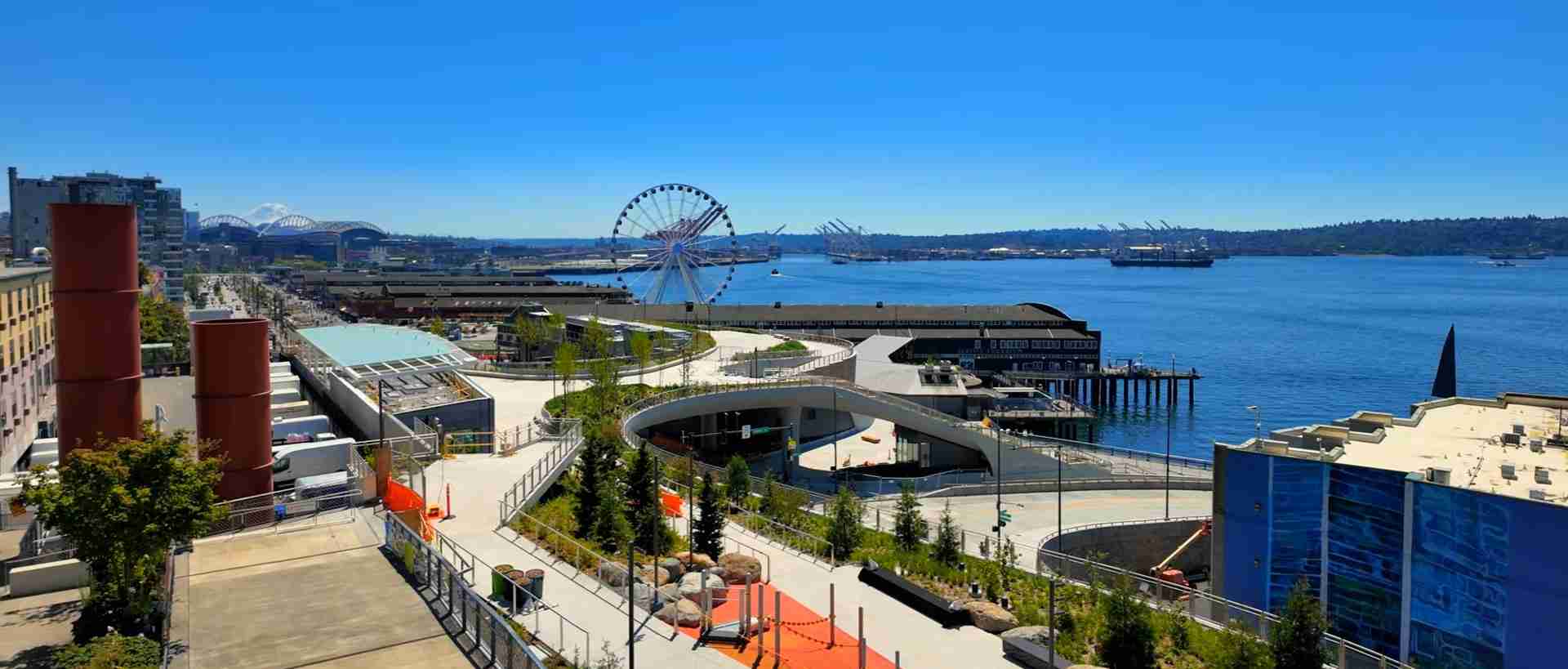
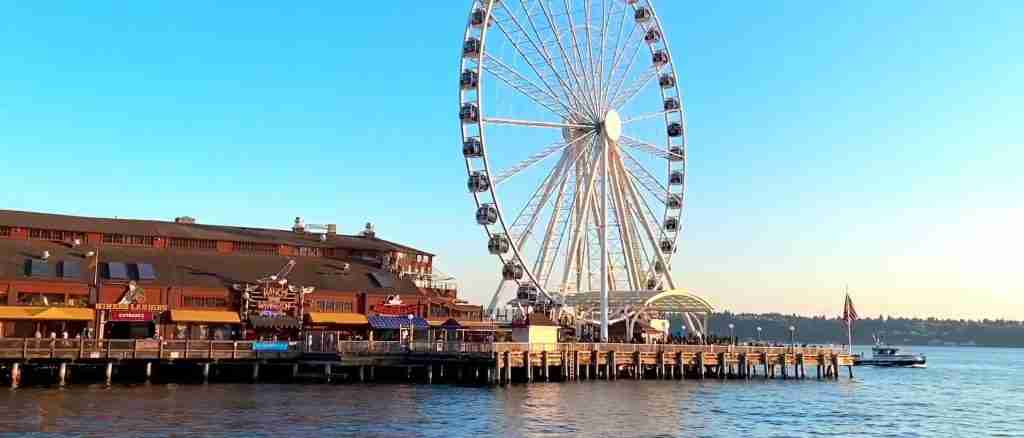
The waterfront runs along Elliott Bay from Seattle Center south through downtown and Pioneer Square, recently revitalized with pedestrian improvements after removing the Alaskan Way Viaduct. The Seattle Aquarium, Great Wheel, ferry terminals, and numerous seafood restaurants line this active corridor. Water taxis and ferries connect to West Seattle, Bainbridge Island, and other Puget Sound destinations.
Seattle’s public transportation operates through multiple agencies coordinated by ORCA card payment. Sound Transit operates Link Light Rail, a growing system currently serving Sea-Tac Airport, downtown stations including Westlake, University Street, and Pioneer Square, Capitol Hill, University District, and northern suburbs. Trains run every 8-10 minutes during peak hours, every 10-15 minutes midday and evenings. The flat $3 fare applies regardless of distance traveled.
King County Metro operates bus service throughout Seattle and surrounding areas. Key routes for tourists include RapidRide C Line (West Seattle to downtown), RapidRide D Line (Ballard through downtown to International District), Route 40 (Fremont to downtown), and numerous routes connecting neighborhoods. Standard bus fare runs $2.75. The ORCA regional day pass costs $6 and provides unlimited rides on light rail, buses, streetcars, and water taxis for one calendar day.
Seattle’s two disconnected streetcar lines serve specific corridors. The South Lake Union line runs from Westlake Center through Amazon headquarters to Lake Union. The First Hill line connects Capitol Hill, First Hill medical district, and Pioneer Square. Both charge $2.75 per ride or accept ORCA cards and regional day passes.
Walking represents the most practical transportation within downtown Seattle and individual neighborhoods. Pike Place Market to Pioneer Square requires 15 minutes walking. Downtown to Capitol Hill Station via light rail takes 5 minutes riding but 25-30 minutes walking uphill. Seattle Center to downtown Pike Place Market involves a flat 15-minute walk. Neighborhood exploration in Capitol Hill, Fremont, or Ballard works best on foot once you’ve used transit to reach the area.
Rideshare services (Uber, Lyft) operate throughout Seattle but encounter downtown traffic congestion during commute hours. Typical downtown rides run $12-18 within the core area, comparable to taking a taxi. For this itinerary, rideshare makes sense only for late evening returns to hotels or accessing attractions poorly served by transit. The combination of walking, light rail, and occasional bus service handles 90% of movement more efficiently and economically than rideshare.
For visitors arriving at Sea-Tac Airport, Link Light Rail provides direct service to downtown Seattle with trains departing every 8-10 minutes and reaching Westlake Station in approximately 40 minutes. The journey costs $3 versus $45-65 for taxi or rideshare to downtown hotels. The airport station connects to the main terminal via pedestrian skybridge—follow signs for “Link Light Rail” from baggage claim. Purchase tickets from vending machines before boarding using credit card or cash. ORCA cards can be purchased at the same machines or loaded via smartphone app.
Pre-Trip Planning and Money-Saving Strategies 2026
Booking accommodation 60-90 days in advance typically secures 15-25% savings compared to last-minute reservations, particularly during summer peak season. Seattle hotels concentrate in downtown, with secondary clusters in South Lake Union near Amazon headquarters and University District near the university campus. Downtown location provides walking access to Pike Place Market and convenient light rail connections to Sea-Tac Airport and major attractions, justifying slightly higher rates. Budget hotels near the airport offer lower nightly costs but require 40-minute light rail commutes each direction, consuming time and adding $6 daily in transit fares.
The Seattle CityPASS represents the most significant potential savings for attraction-heavy itineraries. The pass typically costs $129 per adult and includes Space Needle day-night admission (two visits within 24 hours), Seattle Aquarium, and choice of three additional attractions from MoPOP, Chihuly Garden and Glass, Woodland Park Zoo, Argosy Cruises Harbor Tour, or Pacific Science Center. Buying these attractions individually costs approximately $165-200, providing $35-70 savings. The pass makes financial sense for visitors planning to see four or more included attractions. It does not make sense for visitors prioritizing neighborhood exploration, food culture, and selective landmark visits over comprehensive museum touring.
Restaurant costs vary dramatically by neighborhood and meal type. Pike Place Market stalls offer breakfast items for $8-15, substantially less than hotel breakfast buffets ($18-25). Lunch at casual Asian restaurants in International District runs $12-18 for generous portions. Dinner at mid-range restaurants costs $20-40 per entrée before drinks and gratuity. Fine dining establishments charge $75-150 per person. Strategic meal planning—breakfast from market stalls or coffee shops, lunch at casual ethnic restaurants, dinner at one quality restaurant per day—controls food costs while experiencing Seattle’s dining culture.
Coffee in Seattle represents both cultural experience and practical caffeine delivery. Starbucks Reserve Roastery (downtown) and original Starbucks (Pike Place Market) attract tourists but deliver ordinary coffee at premium prices. Neighborhood independent coffee shops in Capitol Hill (Espresso Vivace, Caffe Vita), Fremont (Milstead & Co., Lighthouse Roasters), and Ballard (Slate Coffee Roasters) serve superior coffee at comparable or lower prices while providing authentic local atmosphere.
Free and low-cost activities supplement paid attractions throughout this itinerary. Pike Place Market entry costs nothing—wandering the market, watching fish throwing, photographing flower stalls, and people-watching provides hours of entertainment without admission fees. The Central Library, an architectural landmark, offers free entry and spectacular interior spaces. Olympic Sculpture Park presents waterfront walking paths and major outdoor artworks at no charge. Kerry Park in Queen Anne delivers the quintessential Seattle skyline photograph showing Space Needle framed by downtown towers and Mount Rainier backdrop, accessible via free bus ride. Discovery Park’s 534 acres of forests, meadows, and beaches charge no admission.
Museum admission varies significantly. Seattle Art Museum charges $30 admission. Museum of History & Industry (MOHAI) costs $22. Wing Luke Museum in International District charges $18. Many museums offer reduced-price Thursday late hours or first Thursday free admission—research specific museum policies before visiting. The Burke Museum at University of Washington provides natural history and cultural anthropology collections for $20 admission.
Seattle’s sales tax runs 10.25%, one of America’s highest rates. This applies to restaurant meals, retail purchases, and some services but not grocery store food. Budget accordingly when comparing menu prices—a $25 entrée costs $27.56 after tax before adding 18-20% gratuity.
Neighborhood exploration costs nothing beyond transportation to reach the area. Capitol Hill’s Broadway corridor, Fremont’s quirky public art, Ballard’s historic buildings and brewery scene, and University District’s campus all reward wandering without requiring admission fees. Seattle’s numerous parks—Gas Works Park, Green Lake, Volunteer Park, Washington Park Arboretum—provide free access to nature within urban context.
Day 1: Seattle Center, Space Needle, and Seattle Icons 2026
Morning: Arrival and Seattle Center (8:00 AM – 12:00 PM)
Most visitors arrive at Sea-Tac Airport, located 13 miles south of downtown Seattle. Link Light Rail connects the airport to downtown with departures every 8-10 minutes from early morning through late evening. Purchase an ORCA card ($3 for the card plus initial load) or use contactless credit card tap-to-pay at station vending machines. The journey to Westlake Station takes approximately 40 minutes with stops at multiple downtown stations including University Street Station (closest to many downtown hotels) and Westlake Station (connection to monorail and Seattle Center).
After checking into your hotel or storing luggage, head directly to Seattle Center via the historic Seattle Center Monorail, which departs from Westlake Center and reaches Seattle Center in 2 minutes for $3.50 per ride. Alternatively, walk 15 minutes north from downtown hotels through Belltown neighborhood. Arriving at Seattle Center by 9:00-9:30 AM positions you ahead of tour bus groups that typically arrive 10:00-11:00 AM.
Seattle Center houses multiple attractions within a compact campus originally developed for the 1962 World’s Fair. Begin at Space Needle, Seattle’s defining landmark rising 605 feet above the city. Admission runs $37.50-49 depending on day and age, with online advance purchase recommended to secure preferred time slots. The observation deck features floor-to-ceiling glass windows, outdoor viewing areas, tilting glass benches called Skyrisers allowing dramatic downward views, and The Loupe—the world’s first and only rotating glass floor providing unprecedented perspectives of the needle structure and city below.
The observation experience takes 45-60 minutes including elevator ascent, time on both observation levels, and photo opportunities. Clear days provide views extending to Mount Rainier, Olympic Mountains, Cascade Range, Puget Sound, and downtown Seattle’s urban core. Cloudy or rainy days still reward visits—the cloud ceiling often sits above the observation deck, and city views through mist create atmospheric photography opportunities. The Space Needle offers day-night combination tickets allowing two visits within 24 hours, enabling sunset viewing and nighttime city lights photography.
Exit Space Needle and walk 90 seconds to Chihuly Garden and Glass, an extraordinary museum dedicated to Pacific Northwest glass artist Dale Chihuly’s work. Admission costs $30-35 for adults. The exhibition comprises eight interior galleries displaying Chihuly’s signature series—Persian Ceiling, Mille Fiori, Seaforms, Ikebana—in dramatically lit spaces designed to maximize glass translucency and color effects. The centerpiece Glasshouse features a 100-foot suspended glass sculpture in oranges, reds, and yellows beneath a 40-foot glass and steel structure. The outdoor Garden integrates glass installations among Northwest plants—towers, reeds, and organic forms create dialogue between artistic glass and natural vegetation.
Live glassblowing demonstrations occur throughout the day (typically starting 11:00 AM) showing visiting artists creating glass pieces using traditional techniques. The experience requires 1-2 hours depending on how long you linger photographing installations and watching demonstrations. The museum provides excellent rainy-day insurance—the indoor galleries and Glasshouse function regardless of weather while the Garden remains accessible under umbrellas.
Combination tickets pairing Space Needle and Chihuly admission typically cost $69 versus $67.50-84 purchased separately, providing modest savings while simplifying ticket logistics. Both attractions process CityPASS, making the pass valuable for visitors planning to see additional included attractions.
Lunch: Seattle Center Area (12:00 PM – 1:00 PM)
Seattle Center Armory houses multiple food vendors representing Seattle food culture. Options include MOD Pizza for customizable personal pizzas ($10-13), Pie for sweet and savory hand pies ($7-9), and various Asian cuisine stalls. The nearby Queen Anne neighborhood (five-minute walk uphill from Seattle Center) offers sit-down restaurant alternatives. Toulouse Petit serves New Orleans-inspired brunch and lunch with entrées $15-22. How to Cook a Wolf presents Italian-influenced small plates $12-18.
For picnic lunch, purchase supplies at nearby grocery stores—Whole Foods Market in South Lake Union (10-minute walk) or Metropolitan Market in Queen Anne—and eat in Seattle Center’s lawns and outdoor spaces. This approach costs $8-12 per person versus $15-25 for restaurant lunch.
Afternoon: Museum of Pop Culture and Kerry Park Viewpoint (1:00 PM – 5:00 PM)
Walk three minutes from Seattle Center Armory to Museum of Pop Culture (MoPOP), Frank Gehry’s distinctive metallic building housing exhibits on music, science fiction, fantasy, horror, and gaming culture. General admission costs $28 for adults. The permanent collection includes Jimi Hendrix artifacts celebrating Seattle’s most famous musical export, Nirvana: Taking Punk to the Masses documenting Seattle’s grunge era, Science Fiction and Fantasy Hall of Fame, Indie Game Revolution with playable games, and Horror Film exhibit exploring the genre’s cultural impact.
Interactive Sound Lab allows visitors to experiment with guitars, drums, keyboards, and mixing equipment in soundproofed booths. The Guitar Gallery displays rare instruments including guitars from Muddy Waters, Eric Clapton, and Eddie Van Halen. Rotating special exhibitions have featured Prince, Marvel Universe, Pearl Jam, and other pop culture phenomena. Budget 1.5-2 hours for comprehensive exploration or 45-60 minutes for highlights only.
MoPOP targets specific audience interests more than general tourist appeal. Music fans, science fiction enthusiasts, and gaming culture participants find extensive value. Visitors without strong interest in these domains may find the museum skippable, using the time instead for additional neighborhood exploration or relaxation. The museum serves as excellent rainy-day activity.
From MoPOP, ride bus Route 13 or walk 20 minutes uphill to Kerry Park in Queen Anne neighborhood. This small hillside park provides Seattle’s most photographed viewpoint—Space Needle in foreground, downtown skyline behind, Elliott Bay and Puget Sound in middle distance, and Mount Rainier (weather permitting) as dramatic backdrop. The view particularly impresses during sunset or blue hour when city lights activate. The park occupies half a block with limited seating—arrive, take photographs, and return to Seattle Center or downtown within 15-20 minutes.
Evening: Downtown Exploration and Dinner (5:00 PM – 9:00 PM)
Return to downtown Seattle via bus or Monorail to Westlake, then walk to Pike Place Market’s evening incarnation. While the market officially closes produce and fish stalls by 6:00 PM, many restaurants, bars, and specialty shops remain open until 9:00-10:00 PM. The market feels completely different in evening light—fewer crowds, relaxed pace, locals shopping for dinner ingredients rather than tourists posing for photos.
Dinner options in and around Pike Place Market span price ranges. Lowell’s Restaurant offers waterfront views and classic seafood with entrées $22-38. Pike Place Chowder serves award-winning clam chowder in bread bowls $13-16 with minimal seating but excellent quality. Steelhead Diner presents Pacific Northwest ingredients in refined preparations with entrées $24-36. Matt’s in the Market delivers intimate fine dining using market ingredients with small plates $15-20 and larger portions $28-45.
For Asian cuisine, walk to International District (15 minutes south of Pike Place Market or quick light rail ride to International District/Chinatown Station). Jade Garden serves dim sum and Cantonese specialties $12-20 per person. Pho Bắc offers Vietnamese pho and banh mi $12-15. Uwajimaya food court provides Japanese, Korean, and pan-Asian options $10-15.
After dinner, walk Seattle’s waterfront along Alaskan Way. The pedestrian-priority redesign completed in recent years created broader sidewalks, public art installations, and viewpoints overlooking Elliott Bay. The Seattle Great Wheel (admission $16-18) provides panoramic perspectives of the waterfront, city, and Puget Sound from climate-controlled gondolas during a 12-minute rotation. Evening rides showcase city lights and ferry traffic crossing the bay.
Day 1 Cost Summary
Budget tier: Link Light Rail from airport $3, Space Needle $38, Chihuly $32, Seattle Center Armory lunch $12, bus fare $3, Pike Place Chowder dinner $15, miscellaneous $8. Day total: approximately $111 per person.
Mid-range tier: Link Light Rail $3, Space Needle $40, Chihuly $33, MoPOP $28, lunch at Toulouse Petit $20, ORCA day pass $6, dinner at Steelhead Diner $38, Seattle Great Wheel $17. Day total: approximately $185 per person.
Luxury tier: Link Light Rail $3, Space Needle $42, Chihuly $35, MoPOP $28, lunch at How to Cook a Wolf $28, ORCA day pass $6, dinner at Matt’s in the Market $55, Seattle Great Wheel $17, cocktails $20. Day total: approximately $234 per person.
Day 2: Pike Place Market, Waterfront, and Seattle’s Urban Core 2026
Early Morning: Pike Place Market (7:30 AM – 10:30 AM)
Set alarm for early wake-up and reach Pike Place Market by 7:30-8:00 AM to experience the market at peak authentic energy before tour groups arrive. Coffee shops open early—Starbucks Reserve Roastery (6:00 AM) or market-area independent shops provide caffeine and breakfast pastries $5-8. Arrive at Pike Place Fish Market by 8:00 AM to watch the famous fish-throwing spectacle when sellers throw salmon, halibut, and other seafood while shouting orders in theatrical display. This tradition peaks during morning business hours when actual fish sales occur, not during midday when it becomes pure tourist performance.
Pike Place Market operates as a working farmers market, not a curated tourist attraction. Early morning reveals actual commerce—local farmers selling seasonal produce, flower vendors arranging bouquets, cheese makers offering samples, and bakeries pulling fresh loaves from ovens. Explore the Main Arcade’s covered stalls, then descend to lower levels discovering specialty shops selling spices, teas, international ingredients, vintage posters, and handmade crafts.
Essential Pike Place Market experiences include Original Starbucks (Pike Place and Pike Street corner) for historical context if not superior coffee, Rachel the Pig bronze piggy bank benefiting Pike Place Market Foundation, Gum Wall alley displaying Seattle’s strangest public art installation created from thousands of chewed gum pieces, Piroshky Piroshky for Russian pastries $5-8, Beecher’s Handmade Cheese for world-class mac and cheese $7 and cheese curds, and Le Panier for French pastries and sandwiches $6-12.
The market merits 2-3 hours early morning exploration. Breakfast from market vendors costs $8-15 versus $18-25 for hotel buffets while delivering authentic Seattle food culture. Purchase picnic supplies for later—Washington cherries in summer, Honeycrisp apples in fall, artisan bread, local cheese, smoked salmon from Pike Place Fish Market.
Late Morning: Seattle Waterfront and Aquarium (10:30 AM – 1:00 PM)
Walk from Pike Place Market to the Seattle waterfront (2 minutes downhill via stairs or elevator at market’s west end). The waterfront stretches from Pioneer Square north to Seattle Center along Elliott Bay, recently revitalized with pedestrian improvements, public art, and green spaces after removing the elevated Alaskan Way Viaduct.
Seattle Aquarium sits at Pier 59 featuring Pacific Northwest marine life in habitat-specific exhibits. General admission costs $35-40 for adults. Highlights include Window on Washington Waters showcasing Puget Sound ecosystem, Pacific Coral Reef tank, octopus habitat (Pacific giant octopus reaches up to 16 feet across), sea otter viewing pool, touch pools with sea stars and anemones, and Underwater Dome providing 360-degree underwater perspectives. The aquarium’s conservation focus emphasizes local species and Salish Sea ecology rather than tropical exotics, providing regional environmental education. Budget 1.5-2 hours for thorough exploration.
The aquarium particularly suits families with children, rainy-day backup planning, and visitors interested in marine biology. Adults without specific marine life interest may find the admission price steep relative to experience duration, opting instead for free waterfront walking and photography.
Alternative waterfront activities include Argosy Cruises Harbor Tour (included in Seattle CityPASS, $35-40 purchased separately) providing one-hour narrated boat tours of Elliott Bay with views of Seattle skyline, container port operations, ferry traffic, and distant mountain ranges. Tours depart from Pier 55 multiple times daily. The experience delivers unique water-level city perspectives impossible from land-based viewpoints.
Miner’s Landing at Pier 57 houses shops, restaurants, and Wings Over Washington—a flying theater attraction simulating aerial journey over Washington State’s landscapes via motion seats and wraparound screens. Admission costs $20-25 for the 15-minute ride.
Lunch: Waterfront or International District (1:00 PM – 2:00 PM)
Waterfront dining options include Ivar’s Acres of Clams serving Pacific Northwest seafood in casual atmosphere with entrées $15-28, Elliott’s Oyster House offering upscale seafood and oyster bar $25-45 per person, and numerous quick-service spots serving fish and chips $12-16.
For more interesting lunch experiences, walk or ride light rail to International District (Pioneer Square Station or International District/Chinatown Station). This neighborhood delivers Seattle’s best Asian food values. Pho Bắc serves Vietnamese pho $12-15 in no-frills setting with generations of loyal customers. Jade Garden offers Hong Kong-style dim sum from rolling carts weekends and à la carte weekdays $15-20 per person. Uwajimaya Asian grocery store’s food court provides Japanese, Korean, Chinese, and pan-Asian options $10-15 with extensive prepared foods section for takeaway.
Tamarind Tree presents elevated Vietnamese cuisine with clay pot dishes, lemongrass preparations, and bánh xèo crepes $12-18 per entrée. Sichuanese Cuisine brings authentic Sichuan flavors with mapo tofu, twice-cooked pork, and dan dan noodles $12-16. Maneki, Seattle’s oldest Japanese restaurant (established 1904), serves sushi and traditional Japanese dishes in intimate setting $18-30 per person.
Afternoon: Pioneer Square and Underground Tour (2:00 PM – 5:00 PM)
Pioneer Square occupies Seattle’s oldest neighborhood south of downtown, featuring late 19th-century Romanesque Revival architecture, cobblestone streets, art galleries, and historical significance. The neighborhood was rebuilt after the 1889 Great Seattle Fire destroyed most wooden structures. Bill Speidel’s Underground Tour ($25 adult admission) reveals the city literally built on top of earlier street levels—when the city regraded streets to solve tidal flooding problems, the original first-floor storefronts became basements, creating a network of underground passages beneath current sidewalks.
The 75-minute walking tour combines Seattle history, colorful anecdotes about early settlers, and exploration of preserved underground spaces. Tours depart from Doc Maynard’s Public House multiple times daily. Reservations recommended during summer peak season. The tour involves stairs, uneven surfaces, and dim lighting—wear comfortable shoes and bring flashlight if available.
Above ground, Pioneer Square rewards wandering among Victorian architecture, public art including the Tlingit totem pole, and numerous art galleries. Occidental Square and Park provide green space for resting. Klondike Gold Rush National Historical Park museum (free admission) documents Seattle’s role as supply center for 1897-1898 Klondike Gold Rush. Smith Tower, Seattle’s first skyscraper (1914), offers observation deck access $20 for adults with Prohibition-era charm and Chinese Room featuring ornate ceiling.
Pioneer Square contains both upscale restaurants and homeless services, creating visible wealth disparity. The neighborhood experiences panhandling and street camping more visibly than downtown tourist areas. Exercise normal urban awareness—stay on main streets during daylight, avoid isolated areas after dark, secure valuables.
Evening: Capitol Hill Exploration and Dinner (5:00 PM – 9:00 PM)
From Pioneer Square, ride Link Light Rail two stops to Capitol Hill Station, emerging in Seattle’s densest and most energetic neighborhood. Capitol Hill combines LGBTQ+ culture, independent music venues, diverse restaurants, late-night bars, and residential density creating 24-hour urban energy uncommon in Seattle.
Walk Broadway between Pike Street and Roy Street to experience Capitol Hill’s commercial spine. Dick’s Drive-In serves Seattle’s beloved local burger chain since 1954—burgers $3-4, shakes $3, the complete meal under $10 provides authentic working-class Seattle food culture. Elliott Bay Book Company (Capitol Hill location) offers three floors of new books with author events and café. Everyday Music sells used vinyl, CDs, and vinyl equipment.
For upscale dinner, Altura presents Italian tasting menus $95-125 per person. Lark offers Pacific Northwest ingredients in refined small plates $16-28. Stateside serves Vietnamese-inspired cuisine with roasted oysters, market salads, and vermicelli bowls $15-30 per entrée. Coastal Kitchen rotates regional American menus quarterly with current focus determining cuisine style $18-28.
Budget-friendly Capitol Hill dining includes Rancho Bravo Tacos for excellent Mexican street tacos $3-4 each, Pho Cyclo Cafe for Vietnamese comfort food $10-15, and General Porpoise for inventive donuts $3-5. Cafe Presse serves French bistro classics and exceptional pastries in authentic Parisian atmosphere $15-24 for entrées.
After dinner, walk Pike/Pine corridor to experience Capitol Hill nightlife. Neumos hosts indie rock and hip-hop shows. Barboza serves as music venue and lounge. Century Ballroom teaches swing dancing upstairs while ground-floor bar serves cocktails. Lost Lake Cafe provides 24-hour diner service favored by post-bar crowds. Unicorn offers carnival-themed bar with arcade games. Capitol Cider specializes in Pacific Northwest ciders and bar food.
Day 2 Cost Summary
Budget tier: Pike Place Market breakfast $10, market snacks $8, waterfront walking free, International District lunch $14, Underground Tour $25, light rail $6, Capitol Hill dinner Dick’s Drive-In $9, miscellaneous $10. Day total: approximately $82 per person.
Mid-range tier: Pike Place Market breakfast and coffee $15, Seattle Aquarium $38, Ivar’s lunch $22, Underground Tour $25, light rail $6, Capitol Hill dinner at Stateside $32, evening drinks $15. Day total: approximately $153 per person.
Luxury tier: Pike Place Market breakfast $18, Seattle Aquarium $40, Elliott’s Oyster House lunch $45, Underground Tour $25, Smith Tower observation deck $20, light rail $6, Capitol Hill dinner at Altura tasting menu $110, cocktails $22. Day total: approximately $286 per person.
Day 3 Option A: Neighborhood Immersion in Fremont and Ballard 2026
Day 3 presents two distinct alternatives based on weather, energy levels, and interests. Option A explores Seattle’s quirky Fremont and maritime Ballard neighborhoods for urban culture enthusiasts. Option B ventures to dramatic natural attractions—Mount Rainier National Park or Snoqualmie Falls—for Pacific Northwest landscape experiences.
Morning: Fremont Neighborhood (9:00 AM – 12:30 PM)
From downtown, ride Route 40 bus or walk 35 minutes north to Fremont, Seattle’s self-proclaimed “Center of the Universe” cultivating deliberate eccentricity. The neighborhood hosts public art installations, vintage shops, breweries, and Sunday Fremont Market (year-round outdoor vendor market).
Essential Fremont sights include Fremont Troll—18-foot concrete sculpture under Aurora Bridge clutching actual Volkswagen Beetle, created by local artists for Fremont Arts Council competition. Waiting for the Interurban—aluminum sculpture of people waiting for trolley that never comes, often decorated by residents with costumes reflecting current events. Lenin Statue—7-ton bronze Communist leader rescued from former Czechoslovakia now residing outside Fremont vintage store. Fremont Rocket—Cold War-era rocket mounted on building, neighborhood symbol.
These public artworks cost nothing to visit, photograph, and enjoy. Fremont’s identity revolves around accessible art and community character rather than admission-charging attractions. Budget 30-45 minutes visiting the public art pieces.
Browse vintage and specialty shops along Fremont Avenue and 36th Street. Fremont Vintage Mall houses multiple dealers selling clothing, furniture, and collectibles. Burnt Sugar features independent local designers and craftspeople. Essential Baking Company operates bakery café serving bread, pastries, and sandwiches $6-12 with seating overlooking Fremont canal.
Walk to Gas Works Park occupying former coal gasification plant site converted to public park on Lake Union’s north shore. The rusting industrial structures remain as sculptural elements among lawns, pathways, and waterfront access. The park provides exceptional downtown Seattle skyline photography across Lake Union, kite flying space, and summer Fourth of July fireworks viewing. Budget 45 minutes to 1 hour walking the park and photographing views.
Lunch and Afternoon: Ballard Neighborhood (12:30 PM – 4:30 PM)
From Fremont, walk or take Route 40 bus west to Ballard, historically Seattle’s Scandinavian fishing community now gentrified with restaurants, breweries, and boutiques while maintaining maritime heritage. The neighborhood rewards several hours of exploration.
Lunch options include Stoneburner for wood-fired Mediterranean cuisine with pizzas $16-20 and small plates $12-18, La Carta de Oaxaca for excellent Oaxacan mole and tlayudas $12-18, Un Bien for Caribbean-inspired sandwiches $10-14, and Ballard Pizza Company for New York-style slices $4-6 or whole pies $20-28.
Visit Nordic Museum documenting Scandinavian immigration and heritage in Pacific Northwest. The purpose-built contemporary building opened 2018 housing exhibits on Nordic design, immigration stories, folk art, and Nordic Hall featuring changing exhibitions. Admission costs $18 for adults. Budget 1-1.5 hours for comprehensive visit. The museum suits visitors interested in immigration history and Scandinavian culture more than general audiences.
Hiram M. Chittenden Locks (Ballard Locks) provide free entertainment watching boats navigate elevation change between Puget Sound salt water and Lake Union/Lake Washington fresh water. The locks operate continuously during boating season (April-October) with most traffic during summer weekends. Fish ladder allows viewing migrating salmon during runs (July-September for sockeye, September-November for coho). Botanical gardens surround locks with native plants and seasonal blooms. Budget 45-60 minutes watching boats, examining fish ladder, and walking gardens.
Ballard Avenue Historic District preserves late 19th/early 20th-century brick buildings housing restaurants, bars, and shops. Sunday Ballard Farmers Market (year-round, largest June-September) operates in parking lot with local produce, prepared foods, and crafts. The neighborhood hosts numerous breweries—Stoup Brewing, Reuben’s Brews, Peddler Brewing, Lucky Envelope Brewing—offering tasting rooms and tours.
Golden Gardens Park on Puget Sound provides sandy beach, driftwood-dotted shoreline, mountain views across the water, and sunset photography opportunities. The park requires bus ride from central Ballard but rewards with accessible waterfront nature within city limits.
Evening: Return to Downtown and Farewell Dinner (5:00 PM – 9:00 PM)
Return to downtown Seattle via Route D Line RapidRide bus from Ballard. Prepare for departure next day while enjoying final Seattle dinner at restaurants missed earlier. Seattle Art Museum remains open until 9:00 PM Thursdays and 5:00 PM other weekdays if time permits museum visit. General admission costs $30.
Dinner recommendations for farewell meals include The Pink Door (Pike Place Market) for Italian cuisine, live entertainment, and market views with entrées $24-38. Altura (Capitol Hill) offers exceptional Italian tasting menus $95-125. Canlis delivers Seattle’s most celebrated fine dining with Pacific Northwest ingredients and iconic mid-century architecture overlooking Lake Union, prix fixe menus starting $185 per person. Shiro’s Sushi provides traditional Jiro-style sushi from Jiro Ono’s former apprentice with omakase $120-150. Metropolitan Grill serves Seattle’s premier steakhouse experience with dry-aged beef $48-68 and classic sides.
Budget alternatives include Paseo Caribbean Food for legendary Cuban roast sandwiches $12-14 (Capitol Hill or Fremont locations), Serious Pie for wood-fired pizzas $16-20, or returning to favorite discoveries from earlier days.
Day 3 Option A Cost Summary
Budget tier: Bus fares $6, Fremont public art free, Essential Baking Company pastry $6, Un Bien lunch $12, Ballard Locks free, brewery beer $7, bus return $3, Paseo dinner $14. Day total: approximately $48 per person.
Mid-range tier: Bus fares $6, Essential Baking Company breakfast $10, Stoneburner lunch $24, Nordic Museum $18, brewery tasting flight $12, Pink Door dinner $38, miscellaneous $10. Day total: approximately $118 per person.
Luxury tier: Rideshare to Fremont $15, coffee shop breakfast $12, Ballard lunch $28, Nordic Museum $18, brewery tasting $15, rideshare return $18, Canlis dinner $205, wine pairings $75. Day total: approximately $386 per person.
Day 3 Option B: Mount Rainier or Snoqualmie Falls Day Trip 2026
Option B abandons urban exploration for Pacific Northwest natural grandeur through day trip to Mount Rainier National Park or Snoqualmie Falls. These excursions require early departure, full day commitment, and weather-dependent planning.
Mount Rainier National Park Day Trip
Mount Rainier rises 14,411 feet as Washington’s highest peak and America’s most glaciated mountain outside Alaska. The national park encompasses old-growth forests, alpine meadows, glacial rivers, and 25 named glaciers. Paradise area (accessible May-October depending on snowpack) provides most visitor facilities and closest approach to mountain’s summit via road.
Independent access requires rental car (not included in public transit itinerary). Rental cars cost $45-75 daily from Seattle airport or downtown locations plus $50-60 gasoline for round-trip. The drive from Seattle to Paradise takes 2.5-3 hours covering 100 miles via I-5 South, Highway 7, and Highway 706. National park entry fee costs $30 per vehicle (valid seven days) or is covered by America the Beautiful annual pass.
Guided day tours from Seattle provide transportation, park entry, and narration for $95-140 per person. Tours depart early morning (6:30-7:30 AM) and return evening (6:00-7:00 PM) for 10-12 hour days. Tour operators include Evergreen Escapes, Customized Tours Seattle, and Seattle Tours. Tours typically stop at Longmire Museum, Paradise Jackson Visitor Center, Narada Falls, and Paradise meadows viewpoints with 2-3 hours at Paradise for hiking, photography, and ranger programs.
Paradise area features paved Nisqually Vista Trail (1.2 miles round-trip, easy grade) showcasing wildflower meadows (peak bloom late July through early August), glacier views, and mountain photography. Skyline Trail (5.5 miles, moderate difficulty, 1,700-foot elevation gain) climbs through meadows to Panorama Point providing superior mountain perspectives. Winter/spring snow persists at Paradise through June—even July visits may encounter snow patches on trails.
Weather variability represents Mount Rainier’s greatest challenge. The mountain creates its own weather, with summit cloud cover common even when Seattle enjoys clear skies. Check National Park Service webcams before departing—if Paradise shows clouds, the day trip delivers limited value. Optimal visiting months run mid-July through early October for highest probability of clear weather and snow-free trails. Pack layers regardless of Seattle weather—Paradise elevation (5,400 feet) runs 10-20°F cooler than sea level.
Paradise Inn (in-park lodge) serves lunch in historic dining room $15-25 or cafeteria with quick options $10-15. Bringing picnic lunch from Seattle saves money and time—grocery supplies cost $10-15 per person versus $15-25 for park food service.
Snoqualmie Falls Day Trip
Snoqualmie Falls presents a more accessible nature escape located 30 miles east of Seattle. The Salish Lodge perches above the 268-foot waterfall on Snoqualmie River, creating one of Washington’s most photographed natural landmarks. The falls flow year-round with peak volume during spring snowmelt (April-June) and winter rains (November-January), while summer/fall show lower but still impressive volume.
Public transit access involves taking Link Light Rail to University of Washington Station, transferring to Sound Transit Route 554 bus to Issaquah Transit Center, then Route 209 bus to Snoqualmie Parkway (weekdays only). This requires 1.5-2 hours each direction with limited frequency—practical only for adventurous budget travelers. Most visitors rent cars or book guided tours.
Rental car approach takes 45 minutes via I-90 East. No admission fee applies—the falls and observation areas operate as free public park. Upper viewpoint provides platform directly across from falls with photography opportunities, interpretive signs explaining geology and Native American significance, and Salish Lodge dining/accommodation. The 0.5-mile descent trail (steep, numerous steps) leads to base of falls for different perspective and spray zone experience. Round-trip descent and return requires 30-45 minutes.
Salish Lodge offers upscale dining with waterfall views. The Dining Room serves Pacific Northwest cuisine with lunch entrées $22-35, dinner $38-55. Country breakfast buffet ($35 per person) features multiple courses and represents lodge signature experience. Budget alternatives include bringing picnic supplies from Seattle or eating in North Bend/Snoqualmie towns (pizza, casual restaurants, grocery stores).
Snoqualmie day trip allows combination with other Cascade foothills attractions. Snoqualmie Pass offers hiking trails 15 miles beyond the falls. North Bend (film location for Twin Peaks TV series) features Twede’s Cafe serving “Twin Peaks cherry pie” $6 and coffee. Rattlesnake Ledge Trail (4 miles round-trip, moderate) provides Rattlesnake Lake and Cascade Mountain views from clifftop viewpoint.
Guided Snoqualmie tours from Seattle cost $75-110 per person for half-day trips including transportation, guide narration, and time at falls. These typically combine falls with additional stops—Twin Peaks locations, Snoqualmie Valley wineries, or Cedar River Watershed depending on operator and season.
Day 3 Option B Cost Summary
Mount Rainier budget: Guided tour $120, picnic lunch from grocery $12, trail snacks $8, miscellaneous $10. Day total: approximately $150 per person.
Mount Rainier mid-range: Guided tour $125, Paradise Inn lunch $22, miscellaneous $15. Day total: approximately $162 per person.
Mount Rainier luxury: Private guided tour $275 (per person for 2-person minimum), Salish Lodge lunch en route $45, miscellaneous $20. Day total: approximately $340 per person.
Snoqualmie Falls budget: Car rental split between two people $35, gasoline $15, picnic lunch $10, North Bend coffee shop $6. Day total per person: approximately $66.
Snoqualmie Falls mid-range: Guided half-day tour $90, Salish Lodge lunch $32, miscellaneous $10. Day total: approximately $132 per person.
Snoqualmie Falls luxury: Private car and driver $180 per person (2-person minimum), Salish Lodge three-course lunch $55, miscellaneous $15. Day total: approximately $250 per person.
Complete 3-Day Budget Breakdown 2026
The following budget summaries combine accommodation, meals, transportation, and attractions for the complete three-day Seattle experience. All accommodation costs represent per-person rates assuming two people sharing rooms—solo travelers face significantly higher costs since hotel rates cannot be divided.
Budget Tier Complete Costs
Accommodation: Budget hotels or hostels range $100-130 per room nightly. Per person sharing: $50-65 nightly, three nights $150-195. Transportation: Link Light Rail from airport $3, ORCA day passes or individual fares approximately $20 total for three days. Meals: Breakfast from markets/coffee shops $8-12, lunch from casual restaurants $12-18, dinner from budget-friendly spots $12-20 daily. Three days meals approximately $95-150. Attractions: Space Needle $38, Chihuly $32, Underground Tour $25, selective free activities. Total attractions approximately $95. Miscellaneous (coffee, snacks, souvenirs) $30-50.
Complete budget three-day costs: $150-195 accommodation + $20 transportation + $95-150 meals + $95 attractions + $30-50 miscellaneous = $390-510 per person for three days, or approximately $130-170 per person daily.
Mid-Range Tier Complete Costs
Accommodation: Mid-range hotels $150-250 per room nightly. Per person sharing: $75-125 nightly, three nights $225-375. Transportation: Link Light Rail $3, ORCA passes and occasional rideshare $35 total. Meals: Breakfast $12-18, lunch $18-28, dinner $30-45 daily. Three days meals approximately $180-270. Attractions: Space Needle $40, Chihuly $33, MoPOP $28, Seattle Aquarium $38, Underground Tour $25, additional activities $30. Total attractions approximately $195. Miscellaneous (coffee, drinks, souvenirs) $60-80.
Complete mid-range three-day costs: $225-375 accommodation + $35 transportation + $180-270 meals + $195 attractions + $60-80 miscellaneous = $695-1,005 per person for three days, or approximately $230-335 per person daily.
Luxury Tier Complete Costs
Accommodation: Luxury hotels $300-450+ per room nightly. Per person sharing: $150-225 nightly, three nights $450-675. Transportation: Link Light Rail $3, rideshare services $80-120, occasional taxi $20. Total transportation approximately $105-145. Meals: Upscale breakfast $18-25, quality lunch $35-55, fine dining $75-150, cocktails/wine $25-40 daily. Three days meals approximately $460-815. Attractions: Space Needle $42, Chihuly $35, MoPOP $28, Seattle Aquarium $40, Underground Tour $25, premium experiences $85. Total attractions approximately $255. Miscellaneous (premium coffee, wine, shopping) $120-180.
Complete luxury three-day costs: $450-675 accommodation + $105-145 transportation + $460-815 meals + $255 attractions + $120-180 miscellaneous = $1,390-2,070 per person for three days, or approximately $465-690 per person daily.
Seasonal Considerations and Best Time to Visit 2026
Seattle’s seasonal variation impacts both weather experiences and travel costs. Summer (June-September) delivers the most reliable weather with July and August averaging 65-75°F highs and only 7-8 rain days monthly. This represents peak tourism season with highest accommodation costs, maximum attraction crowds, and frequent sold-out shows/tours. Book hotels 60-90 days advance for summer visits or face limited availability and premium pricing.
Spring (April-May) offers moderate weather with increasing sunshine, blooming cherry blossoms and tulips, and tourist crowds building but not yet peak. Accommodation costs run 20-30% below summer rates. April sees 13-14 rain days while May improves to 11 days. This shoulder season provides good value for weather-flexible travelers willing to pack rain gear and accept occasional wet days.
Fall (September-October) combines comfortable temperatures (September 70°F, October 60°F average highs), autumn foliage, harvest season at Pike Place Market, and declining tourist numbers. September enjoys pleasant weather comparable to June before October rain increases (12-14 days). Accommodation rates drop 25-35% below summer peaks. Fall represents excellent value season for visitors prioritizing cost savings over guaranteed sunshine.
Winter (November-March) brings Seattle’s rainiest weather with 15-18 precipitation days monthly, temperatures 40-50°F, and 4:30 PM December sunset limiting daylight hours. However, winter delivers lowest accommodation costs (40-50% below summer), smallest crowds at major attractions, and atmospheric rain-shrouded city photography. Indoor activities—museums, Pike Place Market, restaurants, coffee shops—function identically regardless of weather. Winter suits budget-conscious travelers, rain-tolerant visitors, and those prioritizing cultural/culinary experiences over outdoor activities.
Holiday periods (Thanksgiving week, Christmas-New Year, Martin Luther King Jr. weekend, Presidents Day weekend) see temporary accommodation price spikes and attraction crowds even during otherwise quiet winter/spring seasons. Avoid these periods unless specifically interested in holiday events and willing to pay premium prices.
The practical best-time recommendation: September-early October combines reliable weather, reasonable costs, smaller crowds, and harvest season food culture. May provides similar balance with spring bloom energy. July-August guarantees best weather but demands advance planning and acceptance of peak pricing. November-March suits rain-tolerant budget travelers.
Practical Logistics: What to Pack and Know 2026
Seattle’s weather variability requires layered clothing regardless of season. Summer visitors need light jacket or sweater for air-conditioned interiors, cool marine air, and potential rain. Spring/fall travelers should pack waterproof jacket, umbrella, warm layers, and waterproof footwear. Winter demands warm waterproof coat, gloves, hat, and sturdy rain boots.
The city’s hills and stairs make comfortable walking shoes essential. Pike Place Market’s cobblestones, Seattle Center’s extensive walking, and neighborhood exploration involve 15,000-20,000 steps daily. Avoid new shoes—break in footwear before the trip to prevent blisters.
Seattle operates as increasingly cashless city with most establishments accepting credit cards exclusively. However, Pike Place Market vendors, some food trucks, and small shops prefer cash. Carry $40-60 cash for market purchases and tipping situations. ATMs throughout downtown and neighborhoods provide access, though out-of-network fees apply.
Tipping expectations follow American standards: 18-20% for sit-down restaurant service, $2-3 per drink at bars, $3-5 per bag for hotel porters, 15-20% for taxi/rideshare drivers. Some restaurants add automatic 20% service charge for parties of six or more—check bills before adding additional tip.
Cell phone coverage throughout Seattle supports navigation apps, transit tracking, restaurant discovery, and photography. Download offline maps before arrival as backup. OneBusAway app provides real-time transit tracking superior to Google Maps for Seattle bus/light rail specifics. Transit app offers comprehensive multi-modal routing.
Electrical outlets follow American standard 120V/60Hz with Type A/B plugs. International visitors require voltage converters and plug adapters for non-US devices.
Seattle tap water meets high quality standards—refill water bottles from fountains and bathroom sinks rather than purchasing bottled water. Most attractions, parks, and public buildings provide water fountains.
Cannabis products are legal for adults 21+ with retail shops throughout the city. However, public consumption remains illegal—use only in private residences. Hotels prohibit cannabis smoking. Edible products provide legal consumption method at hotels permitting food consumption.
Seattle’s homeless population concentrates in certain areas including Pioneer Square, parts of Capitol Hill, and areas around I-5. This represents visible poverty in otherwise prosperous city. Exercise normal urban awareness, secure valuables, avoid dark isolated areas, but don’t exaggerate danger—Seattle maintains lower crime rates than many American cities of comparable size.
Frequently Asked Questions About Seattle 3-Day Itineraries 2026
Do I need a car for a 3-day Seattle visit?
No car necessary for this itinerary. Seattle’s Link Light Rail, bus network, and walkable neighborhoods handle downtown, Seattle Center, Capitol Hill, Pike Place Market, waterfront, and Pioneer Square efficiently. Rental cars cost $45-75 daily plus $25-40 parking fees at downtown hotels, while public transportation totals $20-35 for three days. Cars become practical only for day trips to Mount Rainier or Olympic National Park beyond Snoqualmie Falls. For urban itineraries, public transit combined with occasional rideshare services ($12-18 per ride) provides superior value and eliminates parking stress.
How much money should I budget per day in Seattle for 2026?
Daily costs range from $130-170 per person for budget travel (two sharing budget hotel at $50-65 per person nightly, quick meals $35-45, public transit $6-8, selective attractions), $230-335 per person for mid-range comfort (two sharing mid-range hotel $75-125 per person nightly, sit-down restaurants $60-90, comprehensive sightseeing), to $465-690 per person for luxury experiences (two sharing upscale hotel $150-225 per person nightly, fine dining $155-230, premium activities). These ranges include accommodation, all meals, local transportation, and major attraction admissions. Solo travelers face 35-45% higher costs since hotel rooms cannot be shared.
What is the best month to visit Seattle in 2026?
September stands as optimal visiting month combining reliable weather (70°F average, 9-10 rain days), autumn harvest at Pike Place Market, declining summer crowds, and accommodation rates 25-30% below July-August peaks. May provides similar advantages with spring bloom energy and cherry blossoms. July-August guarantee warmest weather (75°F, 7-8 rain days monthly) but demand advance hotel booking and acceptance of peak prices and maximum tourist crowds. November-March suits rain-tolerant budget travelers willing to trade weather certainty for 40-50% accommodation savings and empty museums.
Is Seattle CityPASS worth buying in 2026?
The Seattle CityPASS makes financial sense for visitors planning comprehensive museum/attraction touring. The pass costs approximately $129 and includes Space Needle day-night admission (valued $75-80), Seattle Aquarium ($35-40), and choice of three additional attractions including Chihuly Garden and Glass ($30-35), MoPOP ($28), Woodland Park Zoo ($23), Argosy Harbor Cruise ($35-40), or Pacific Science Center ($23). Purchasing these six attractions individually costs $165-200, providing $35-70 savings. However, visitors prioritizing neighborhood exploration, food culture, and selective landmark visits over museum-heavy itineraries derive limited value from the pass. Calculate your specific planned attractions before purchasing.
How many days do I need in Seattle?
Three days provides sufficient time for first-time visitors to experience Seattle’s essential character through iconic landmarks (Space Needle, Pike Place Market), one major museum (Chihuly Garden, MoPOP, or Seattle Aquarium), waterfront exploration, and one neighborhood deep-dive or day trip. This compressed timeline requires prioritization—visitors cannot see every museum, explore every neighborhood, and take multiple day trips. Four to five days allows more relaxed pacing, additional neighborhoods (Ballard, Fremont, University District simultaneously rather than choosing one), and multiple natural excursions. Week-long visits enable Olympic National Park overnight trips or San Juan Islands ferry adventures while maintaining urban exploration.
What neighborhoods should I stay in for a Seattle visit in 2026?
Downtown Seattle provides optimal first-time visitor location with walking distance to Pike Place Market, waterfront, and direct light rail access to Seattle Center, Capitol Hill, and airport. Hotels here cost premium rates but eliminate transportation between hotel and major attractions. South Lake Union near Amazon headquarters offers slightly lower rates with 10-minute walk or short bus ride to downtown. Capitol Hill delivers urban energy and restaurant density for visitors prioritizing neighborhood character over landmark proximity, though requires light rail travel to Seattle Center and waterfront. Budget travelers find lowest rates near Sea-Tac Airport but face 40-minute light rail commutes consuming time and limiting spontaneous evening activities.
What should I do if it rains during my Seattle visit?
Seattle’s infrastructure anticipates rain with abundant indoor alternatives. Rainy-day activities include Pike Place Market’s covered arcades, Chihuly Garden and Glass (primarily indoor), Museum of Pop Culture, Seattle Art Museum, Seattle Central Library (architectural landmark with reading spaces and city views), Seattle Aquarium, coffee shop culture exploration, Underground Tour, and restaurant experiences. The city rarely experiences heavy downpours—typical Seattle rain falls as persistent drizzle navigable with rain jacket and umbrella. Local residents maintain outdoor activities during light rain, making weather-specific planning unnecessary for visitors willing to embrace Seattle’s climate.
How do I get from Sea-Tac Airport to downtown Seattle?
Link Light Rail provides direct service from Sea-Tac Airport to downtown Seattle with trains departing every 8-10 minutes from 5:00 AM to midnight and reaching Westlake Station in approximately 40 minutes. The journey costs $3 versus $45-65 for taxi or rideshare services. Follow signs for “Link Light Rail” from baggage claim area—the station connects via pedestrian skybridge. Purchase tickets from vending machines before boarding using credit card or cash. ORCA cards available at same machines provide reloadable payment option for multiple transit rides. Early morning arrivals (before 5:00 AM) or late-night arrivals (after midnight) require taxi or rideshare since light rail operates limited overnight hours.
Can I visit Mount Rainier National Park on a day trip from Seattle?
Yes, Mount Rainier day trips from Seattle are feasible but require early departure, full-day commitment, and weather flexibility. Guided tours ($95-140 per person) depart Seattle 6:30-7:30 AM and return 6:00-7:00 PM for 10-12 hour days including transportation, park entry, and narration. Independent visitors renting cars face 2.5-3 hour drive each direction plus park exploration time. Weather variability represents the primary challenge—the mountain creates its own weather with summit clouds common even when Seattle enjoys sunshine. Check National Park Service webcams before departing to verify conditions. Optimal months for Mount Rainier day trips run mid-July through September when snow has melted from Paradise area trails and weather probability improves. April-June involves significant snow while October brings increasing precipitation.
What are the best free things to do in Seattle?
Seattle offers substantial free experiences including Pike Place Market wandering (watch fish throwing, photograph flower stalls, explore lower levels), Kerry Park viewpoint (quintessential Seattle skyline photograph), Olympic Sculpture Park (waterfront walking and major outdoor artworks), Seattle Central Library (architectural landmark with city view reading room), Ballard Locks (watch boats navigate elevation change, fish ladder during salmon runs), Fremont neighborhood public art (Fremont Troll, Lenin Statue, Waiting for the Interurban), Discovery Park’s 534 acres of forests and beaches, Gas Works Park industrial-meets-nature setting, and comprehensive neighborhood exploration in Capitol Hill, Ballard, or University District. The waterfront promenade, numerous parks, and architectural walking tours provide quality experiences without admission charges.