
Santiago de Compostela Travel Guide 2026: Ultimate Planning Resource
This comprehensive guide provides detailed planning information for maximizing your Santiago de Compostela experience in 2026, covering costs, timing strategies, accommodation selection, transportation logistics, and insider tips for navigating one of Europe’s most spiritually significant destinations. Whether completing a Camino pilgrimage or exploring Galician culture independently, Santiago offers transformative experiences that justify careful advance planning.
Key Takeaways
- Santiago Cathedral offers free entry to the basilica, with museum tickets at €8 and rooftop tours at €12 in 2026
- Summer 2026 (June-August) brings peak crowds and premium accommodation rates of €90-150 per night
- Budget travelers can experience Santiago for €65-85 per day excluding accommodation through strategic planning
- Book accommodation 3-4 months ahead for summer 2026 visits and Holy Year crowds
- Public buses connect Santiago to Galician destinations for €3-15, making day trips highly affordable
- Early morning (7-9 AM) cathedral visits in 2026 avoid tour group congestion and provide peaceful pilgrimage experiences
Introduction to Santiago de Compostela Planning 2026
Santiago de Compostela stands as one of Christianity’s most sacred pilgrimage destinations and Spain’s most profound UNESCO World Heritage sites. The city’s medieval old town, crowned by the magnificent Cathedral of Santiago, attracts millions of pilgrims and travelers annually who seek spiritual renewal, cultural immersion, and architectural wonder. Planning your 2026 visit requires understanding the city’s unique rhythm shaped by pilgrimage seasons, religious festivals, and the enduring legacy of the Camino de Santiago trails that converge here.
The city offers exceptional value compared to other major Spanish destinations, with comprehensive experiences available across all budget levels. Santiago’s compact historic center places remarkable monuments, authentic Galician restaurants, and diverse accommodation options within easy walking distance. The 2026 travel season presents optimal conditions for first-time visitors and returning pilgrims, with improved infrastructure, expanded museum hours, and enhanced pilgrimage services throughout the year.
People Also Ask About Santiago de Compostela 2026
How much does it cost to visit Santiago de Compostela in 2026?
Daily costs in Santiago de Compostela range €65-150 per person excluding accommodation in 2026. Budget travelers spend €65-85 daily through strategic meal planning at local markets, walking everywhere, and choosing free cathedral access over paid tours. Mid-range visitors allocate €100-130 daily for quality restaurants, museum entries, and occasional taxis. Luxury experiences reach €150-200+ daily with fine dining at Michelin-recommended restaurants, private guided tours, and premium wine tastings in the Rías Baixas region.
Cathedral entry costs €8 for the museum and €12 for rooftop tours in 2026 (check oficinadelperegrino.com for current rates). The magnificent basilica remains free to enter. Accommodation dominates overall budgets: hostels cost €25-35 per night, mid-range hotels €90-150, and luxury properties €180-280 depending on season and location within the historic center.
When is the best time to visit Santiago de Compostela in 2026?
Late spring 2026 (May-early June) and early autumn (September-early October) provide optimal visiting conditions in Santiago. These shoulder seasons offer comfortable temperatures of 15-22°C, moderate rainfall, manageable crowds, and accommodation rates 30-40% below peak summer pricing. May features vibrant green landscapes and spring festivals, while September brings harvest celebrations and ideal walking weather for post-Camino exploration.
Summer 2026 (July-August) brings warmest weather and longest days but also peak crowds, premium accommodation rates, and frequent afternoon rain showers. Winter (November-February) offers authentic local atmosphere and lowest prices but faces shorter days, persistent rain, and cool temperatures of 8-13°C that challenge outdoor exploration.
Do you need advance bookings for Santiago de Compostela in 2026?
Accommodation requires advance booking for summer 2026 visits, especially June-August when pilgrims completing Camino routes create high demand. Book 3-4 months ahead for mid-range and luxury hotels in the old town, or 6-8 weeks for budget hostels. The Cathedral of Santiago requires no advance booking for general basilica access, though rooftop tours and museum visits benefit from morning arrivals to avoid afternoon tour groups.
Restaurant reservations become essential for dinner at popular establishments like O Curro da Parra and A Tafona, particularly on weekends throughout the 2026 season. Day trips to Rías Baixas wineries and coastal destinations require advance booking only during peak summer months or for private transportation services.
What is the best way to get to Santiago de Compostela in 2026?
Santiago Airport (SCQ) provides direct connections to major European cities throughout 2026, located 12 km from the city center with frequent bus service costing €3 one-way. Renfe high-speed trains connect Santiago to Madrid (5.5 hours, €35-65) and Porto (3.5 hours, €25-45) with comfortable modern service. Regional buses serve Galician destinations including A Coruña, Vigo, and Pontevedra for €8-18, offering scenic routes through rural landscapes.
Most Camino pilgrims arrive on foot after completing routes ranging from 100 km (minimum for pilgrimage certificate) to 800 km from France. The final approach into Praza do Obradoiro creates the emotional culmination of the pilgrimage journey. Car rentals cost €30-50 daily from Santiago Airport, providing flexibility for exploring coastal Rías Baixas and inland mountain villages beyond public transport networks.
Extended multi-day tours – 5+ days
Featured Santiago De Compostela Multi-Day Tour Packages
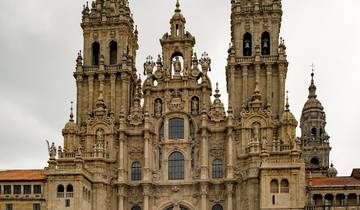
3 days
Santiago de Compostela
- ✓ Booking needs min. 2 travelers
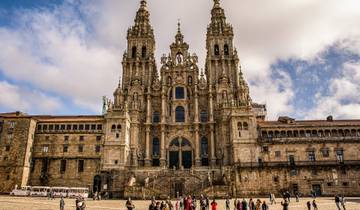
6 days
6-Day Asturias & Galicia From Madrid
- ✓ Comprehensive Santiago De Compostela tour
- ✓ Expert local guides included
- ✓ All accommodation arranged
- ✓ Transportation provided
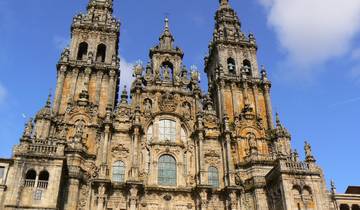
6 days
St. Jame's Way: 6-Day From Santiago to Fisterra
- ✓ Comprehensive Santiago De Compostela tour
- ✓ Expert local guides included
- ✓ All accommodation arranged
- ✓ Transportation provided
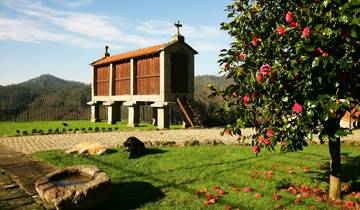
7 days
Camino de Santiago · Way of St. James · French Way · From Sarria to Santiago de Compostela
- ✓ Comprehensive Santiago De Compostela tour
- ✓ Expert local guides included
- ✓ All accommodation arranged
- ✓ Transportation provided
Multi-day tour packages powered by TourRadar. Prices and availability subject to change.
Essential Planning Information 2026
Current Costs and Pricing Breakdown
Santiago de Compostela maintains moderate pricing compared to Barcelona or Madrid, with most attractions offering free or low-cost access. Cathedral entry to the basilica remains free, while the Cathedral Museum costs €8 and rooftop tours cost €12 in 2026. Check catedraldesantiago.es for current official rates as pricing may vary. The Pilgrims’ Office provides free Compostela certificates to qualified pilgrims who walked at least the final 100 km.
Meal costs reflect authentic Galician value: €12-15 daily menus (menú del día) at local restaurants, €5-8 pintxos and raciones at taverns, €3-5 for exceptional bread and cheese at municipal markets. Coffee costs €1.50-2 at traditional cafes, rising to €3-4 at tourist-oriented establishments in Praza do Obradoiro. Supermarkets like Mercadona and Froiz offer picnic supplies at Spanish prices: fresh bread €1-2, local cheese €3-5, chorizo €4-6, Albariño wine €5-8 per bottle.
Transportation within Santiago costs minimal amounts due to the compact walkable historic center. Public buses cost €1.35 per ride, taxis €6-10 for trips within the city, bicycle rentals €12-18 daily. Regional buses to Galician destinations range €3-15 depending on distance: Finisterre €8.50, A Coruña €7.80, Pontevedra €6.20, Vigo €12.40. Train tickets to major cities start at €35 for advance-purchase seats to Madrid.
Money-Saving Strategies for 2026
Visit Santiago during shoulder seasons (May, September-October) for accommodation savings of 30-40% compared to peak summer rates. Book hotels directly rather than through booking platforms to access lower rates and negotiate longer-stay discounts. Many properties offer substantial reductions for 3+ night bookings, particularly beneficial for post-Camino recovery stays or deep cultural immersion.
The €12-15 menú del día available at lunch throughout Santiago provides exceptional value, typically including three courses, bread, and wine or water. Save dinner dining budgets by assembling picnics from municipal markets: Mercado de Abastos offers premium local products at prices far below restaurant markups. Purchase Galician cheese, bread, seafood, and local wine for authentic meals at €8-12 per person.
Free cultural experiences abound beyond cathedral access: walk the old town’s medieval streets, attend morning pilgrim mass with the famous Botafumeiro incense ceremony (Fridays and religious holidays), explore university courtyards and cloisters, watch street performances in plazas. Museums offer free entry on specific days: check local schedules for Museo do Pobo Galego and Centro Galego de Arte Contemporánea free admission windows.
Best Time to Visit Santiago de Compostela 2026
Seasonal Analysis for 2026 Planning
Late spring 2026 (May through early June) delivers Santiago’s most pleasant weather: temperatures of 16-21°C, moderate rainfall, vibrant green landscapes, and spring flowers throughout the old town. May features fewer pilgrims than summer months while maintaining full service availability at restaurants, museums, and accommodations. The season brings local festivals including Ascension celebrations and traditional Galician gatherings showcasing regional culture.
Summer 2026 (late June through August) transforms Santiago into peak pilgrimage season with maximum crowds, premium accommodation rates, and bustling atmosphere. Temperatures reach 20-25°C with pleasant conditions tempered by frequent afternoon rain showers characteristic of Galician climate. July 25 marks Saint James Day (Feast of Santiago), the year’s most significant religious celebration with special masses, cultural events, and massive pilgrim arrivals that create exceptional but crowded experiences.
Early autumn 2026 (September through mid-October) rivals spring as optimal visiting time. September brings harvest celebrations, wine festivals in Rías Baixas, comfortable temperatures of 18-22°C, and dramatic reduction in crowds following summer peak. Accommodation availability improves significantly while maintaining pleasant weather for outdoor exploration. October features stunning autumn colors in nearby mountains and continued festival season celebrating Galician agricultural traditions.
Winter 2026 (November through February) offers authentic local atmosphere with minimal tourists and lowest accommodation rates of the year. Temperatures hover 10-14°C with frequent rain requiring quality waterproof gear. Short days (8-9 hours of daylight in December-January) limit exploration time but create atmospheric conditions for experiencing Santiago’s medieval character. Christmas season brings special cathedral celebrations and traditional Galician holiday markets in the historic center.
Weather Patterns and Crowd Predictions 2026
Galician climate brings year-round rainfall averaging 150-180 cm annually, making Santiago one of Spain’s wettest cities. Expect rain on 40-50% of days regardless of season, though intensity varies: light drizzle predominates in spring and autumn, heavier downpours concentrate in winter months. Summer features shortest dry periods but still averages 8-10 rain days monthly. Quality waterproof jacket and comfortable rain-ready footwear prove essential for all 2026 visits.
Pilgrim crowds peak dramatically in summer 2026, particularly late June through July when Camino walkers complete traditional 30-35 day journeys started in late May. Saint James Day (July 25) creates the year’s absolute peak with special significance drawing pilgrims worldwide. Expect cathedral crowds, limited last-minute accommodation, and bustling plazas throughout summer months. Early morning visits (7-9 AM) provide peaceful experiences even during peak season.
Holy Years occur when July 25 falls on Sunday, with the next scheduled for 2027. The 2026 season maintains steady pilgrimage traffic without exceptional Holy Year crowds, offering balanced conditions between atmospheric authenticity and available services. Shoulder seasons deliver ideal crowd management: May and September-October see 40-50% fewer visitors than peak summer while maintaining full operational hours at attractions and restaurants.
Accommodation Strategies Santiago 2026
Budget Accommodation Options
Albergues (pilgrim hostels) throughout Santiago’s old town cost €12-20 per night for dormitory beds, offering basic shared facilities, communal kitchens, and authentic pilgrim atmosphere. Hostel Moure Playa, Hostal dos Reis Católicos (budget rooms), and Albergue Seminario Menor provide clean comfortable options with traditional character. Private hostels like The Last Stamp and Blanco Hostel charge €25-35 for superior facilities including modern bathrooms, lockers, and social spaces ideal for meeting fellow travelers.
Budget hotels cluster in neighborhoods just outside the immediate old town walls, offering private rooms with ensuite bathrooms for €45-65 nightly. Hotel Airas Nunes, Hotel Universal, and Hospedaje Fonseca provide comfortable bases within 10-15 minutes walking distance of the cathedral. These properties deliver significant value: clean modern rooms, helpful multilingual staff familiar with pilgrim needs, and quiet locations away from late-night plaza activity.
Apartment rentals through local platforms cost €50-80 nightly for studio and one-bedroom units, providing kitchen facilities for self-catering budget strategies. Properties in residential neighborhoods like San Pedro and Sar offer authentic local experiences and convenient supermarket access. Longer stays (4+ nights) unlock weekly discounts reducing daily rates by 20-30% compared to short-term bookings.
Mid-Range and Luxury Properties 2026
Mid-range hotels in the historic center charge €90-150 nightly depending on season and specific location relative to the cathedral. Hotel Avenida, Hotel San Francisco, and Altair Hotel provide comfortable contemporary rooms, central locations within the old town, and helpful concierge services for touring planning. Superior rooms often include balconies overlooking medieval streets and plazas, creating memorable atmospheric experiences worth modest rate premiums.
The legendary Parador de Santiago (Hostal dos Reis Católicos) occupies a magnificent 15th-century hospital building directly facing the cathedral in Praza do Obradoiro. Rooms range €180-320 nightly with exceptional historical ambiance, elegant dining options, and ultimate convenience for dawn pilgrim mass attendance. The property represents one of Spain’s most prestigious paradors, justifying premium rates through unmatched location and architectural grandeur.
Boutique hotels like Hotel Monumento San Francisco and A Quinta da Auga offer luxury experiences for €160-280 nightly with designer interiors, spa facilities, gourmet restaurants, and refined service standards. These properties provide peaceful retreats following challenging Camino journeys or immersive bases for deep cultural exploration. Many include complimentary wine tastings, guided walking tours, and transportation coordination for regional excursions.
Transportation Guide Santiago 2026
Getting to Santiago de Compostela
Santiago Airport (SCQ) handles direct flights from major European cities including London, Frankfurt, Paris, Zurich, Milan, and Brussels throughout 2026. Budget carriers like Ryanair, Vueling, and EasyJet serve popular routes with advance-purchase fares from €40-80 round-trip. Airport buses depart every 30 minutes (6 AM-midnight) for the 30-minute journey to the city center, costing €3 one-way. Taxis charge fixed €21 rates to destinations within Santiago’s historic center.
Renfe trains connect Santiago to Madrid’s Chamartín station in 5.5 hours aboard comfortable high-speed Alvia services. Advance-purchase tickets cost €35-50 for Turista class, €60-85 for Turista Plus with enhanced seating and meal service. Porto in Portugal sits 3.5 hours south via scenic regional trains costing €25-45, providing convenient connections for combined Iberian Peninsula itineraries. Book tickets 60-90 days ahead through renfe.com for optimal rates.
ALSA and Monbus operate extensive regional bus networks throughout Galicia from Santiago’s main terminal. Services to A Coruña depart hourly (€7.80, 1 hour), Vigo every 90 minutes (€12.40, 1.5 hours), Pontevedra every 2 hours (€6.20, 1 hour). Advance booking becomes unnecessary except during peak summer weekends and Saint James Day celebrations. Buses provide comfortable modern coaches with air conditioning, wifi, and luggage storage.
Local Transportation in Santiago
Santiago’s compact historic center covers just 1.5 km diameter, making walking the primary transportation mode for 2026 visitors. The medieval layout features narrow cobblestone streets, frequent staircases, and uneven surfaces requiring comfortable supportive footwear. Most hotels, restaurants, museums, and monuments cluster within 15 minutes walking distance of the cathedral, eliminating transportation needs for sightseeing activities.
Municipal buses serve residential neighborhoods and university campuses outside the old town for €1.35 per ride. Routes C1 and C2 circle the historic center, connecting hotels in outer neighborhoods to cathedral area. Purchase tickets aboard buses using cash or contactless payment. Multi-ride cards offer no significant discounts for short-stay tourists, making single tickets most practical for occasional use.
Taxis charge €6-10 for trips within Santiago, rising to €12-15 for longer distances to airport hotels or university areas. Ranks cluster at major plazas including Praza de Galicia and Praza do Obradoiro. Uber and Cabify operate with similar pricing to traditional taxis. Evening transportation needs remain minimal due to concentrated nightlife within walking distance of most old town accommodations.
Cathedral of Santiago Visiting Guide 2026
Planning Your Cathedral Visit
The Cathedral of Santiago opens daily 7 AM-9 PM for worship and general visits, with free entry to the magnificent basilica throughout 2026. The main facade and interior showcase exceptional Romanesque, Gothic, and Baroque architecture spanning nine centuries of continuous development. Allow 45-60 minutes minimum for self-guided basilica exploration, or 90-120 minutes including museum galleries and rooftop tours.
Museum tickets cost €8 and rooftop tour access costs €12 in 2026. Combined tickets provide slight savings for visitors interested in comprehensive cathedral experiences. The museum occupies former monastic spaces surrounding the cathedral cloisters, displaying religious art, historical vestments, architectural fragments, and pilgrimage artifacts spanning Santiago’s 1000-year history. Rooftop tours ascend through cathedral towers to spectacular vistas over the old town and surrounding mountains.
Visit early morning (7-9 AM) or late afternoon (6-8 PM) to avoid peak tour group congestion that fills the cathedral 10 AM-5 PM daily. The Pilgrims’ Mass occurs daily at noon, featuring the spectacular Botafumeiro ceremony (enormous hanging incense burner) on Fridays and major religious holidays. Arrive 30-45 minutes early to secure seating for mass celebrations, particularly during summer 2026 when pilgrim arrivals peak.
Cathedral Museum and Collections
The Cathedral Museum presents extraordinary collections spanning medieval manuscript illuminations, Renaissance sculptures, Baroque silver work, and architectural fragments from various cathedral renovation campaigns. The Treasury displays precious metalwork including silver monstrances and elaborate processional crosses. The Tapestry Gallery features 16th-17th century Flemish works depicting religious scenes and historical events.
The Gelmirez Palace section explores medieval pilgrimage history through audiovisual presentations and archaeological displays. Original Romanesque capitals removed during renovations reveal exceptional 12th-century sculptural detail impossible to appreciate in the dark interior cathedral spaces. Gothic funerary monuments and Renaissance altarpieces provide art historical context for understanding Santiago’s role in Spanish cultural development.
Archaeological excavations beneath the cathedral reveal Roman foundations and early medieval construction phases. These areas, accessible through museum tours, demonstrate Santiago’s continuous religious significance from ancient times through modern pilgrimage traditions. Interactive displays explain construction techniques, architectural evolution, and historical contexts that shaped the cathedral’s current magnificent form.
Exploring Santiago’s Old Town 2026
Medieval Streets and Historic Plazas
Praza do Obradoiro forms Santiago’s ceremonial heart, surrounded by the cathedral’s Baroque facade, Parador hotel, Raxoi Palace, and College of San Xerome. This vast square serves as the traditional pilgrimage endpoint where Camino walkers celebrate journey completions with emotional scenes throughout the day. Early morning visits (6-8 AM) capture atmospheric light and peaceful conditions before tour groups arrive mid-morning.
Rúa do Franco concentrates authentic Galician restaurants, traditional taverns, and atmospheric wine bars within a narrow medieval street running parallel to the cathedral. Evening paseos (strolls) bring locals and visitors together in convivial atmosphere sampling pulpo (octopus), empanadas, and fresh seafood accompanied by crisp Albariño wines. Prices remain moderate despite tourist traffic: €5-8 for generous tapa portions, €3-5 for local wines by the glass.
Praza da Quintana occupies the cathedral’s eastern side, featuring the striking Holy Door (Puerta Santa) opened only during Holy Years. The square’s stepped levels and surrounding architectural ensemble create exceptional photographic opportunities throughout the day. The Café del Rey terrace provides elevated vantage points for cathedral views while enjoying coffee or regional wines. University students frequent the plaza’s cafes and bars, maintaining authentic local atmosphere beyond tourist-oriented establishments.
Museums and Cultural Attractions
Museo do Pobo Galego celebrates Galician cultural heritage through exhibits on traditional crafts, musical instruments, regional costume, and historical domestic life. The museum occupies a 17th-century convent featuring a remarkable triple spiral staircase, architectural masterpiece in its own right. Entry costs €3, with free admission on Sundays. Allow 60-90 minutes for comprehensive exploration of permanent collections and rotating temporary exhibitions.
Centro Galego de Arte Contemporánea provides free entry to world-class contemporary art exhibitions in a striking modern building designed by Portuguese architect Álvaro Siza. The museum presents changing exhibitions featuring international and Galician artists alongside permanent sculpture garden. The facility offers peaceful retreat from old town crowds while maintaining convenient walking distance from major monuments.
The University of Santiago de Compostela operates Spain’s third-oldest university, founded 1495, with several historic buildings open for public visits. The Colexio de Fonseca features exceptional Renaissance cloisters and occasional exhibitions. The nearby Faculty of Geography and History occupies a former convent with peaceful courtyards providing atmospheric study breaks from intense sightseeing schedules.
Galician Cuisine Experience 2026
Traditional Restaurants and Taverns
Santiago’s restaurant scene showcases exceptional Galician cuisine emphasizing ultra-fresh seafood, quality beef, artisan cheeses, and Albariño wines from nearby Rías Baixas. O Curro da Parra delivers innovative interpretations of traditional recipes in intimate stone-walled dining room, with dinner costing €35-50 per person for three courses and wine. Reservations prove essential for dinner service throughout the 2026 season.
A Tafona occupies a converted mill building with exposed stone walls and contemporary design, serving refined Galician cuisine emphasizing seasonal ingredients and local producers. Tasting menus range €45-65 per person with wine pairings adding €20-30. The restaurant maintains Michelin Guide recognition, justifying premium pricing through exceptional execution and sophisticated service standards. Book 2-3 weeks ahead for weekend dinners.
Traditional taverns along Rúa do Franco and side streets provide authentic experiences at moderate costs. Casa Marcelo, Mesón do Pulpo, and O Fiuza serve classic Galician dishes: pulpo a feira (octopus with paprika), lacón con grelos (pork shoulder with turnip greens), empanadas with various fillings. Meals cost €20-30 per person including house wine, with generous portions encouraging shared ordering family-style.
Markets and Local Products
Mercado de Abastos operates as Santiago’s central food market, occupying an early 20th-century stone building near the old town. Local producers sell exceptional seafood, regional cheeses, charcuterie, fresh produce, and baked goods at morning hours (8 AM-2 PM). The market provides outstanding venues for assembling picnic supplies: artisan bread €1.50-2.50, local cheese €4-6 per portion, chorizo and lacón €5-8, seasonal fruits €2-3 per kilo.
Several market vendors operate small counter-service restaurants serving ultra-fresh seafood and traditional dishes prepared market-style. These spots deliver exceptional value: grilled fish €8-12, seafood soup €6-8, wine by the glass €2-3. The atmosphere remains authentically local with minimal tourist presence, providing genuine cultural immersion alongside outstanding food quality.
Specialized food shops throughout the old town offer Galician products ideal for gifts or picnic supplies. Tetilla cheese (mild semi-soft regional specialty) costs €12-18 per kilo, premium Galician chorizo €15-20 per kilo, local honey €6-9 per jar, artisan preserves €4-7. Many shops provide vacuum packaging for travel, allowing transport of perishable items in checked luggage.
Sample Santiago Itineraries 2026
One-Day Santiago Experience
Begin early morning (7-8 AM) at the Cathedral of Santiago for peaceful basilica exploration before tour groups arrive. Spend 60 minutes examining the Romanesque Portico of Glory, Baroque altarpiece, pilgrim altar, and side chapels. Exit through Praza da Quintana to explore the square’s medieval architecture and university buildings. Walk through old town streets to Mercado de Abastos for market atmosphere and morning coffee at counter-service cafes inside the market hall.
Return to cathedral area around 11:30 AM to attend noon Pilgrims’ Mass with potential Botafumeiro ceremony (Fridays and religious holidays). Experience fills 45-60 minutes with powerful spiritual atmosphere regardless of religious background. Afterwards, lunch at traditional tavern along Rúa do Franco: pulpo a feira €8-10, house wine €3-4, dessert €4-5. Allow 90 minutes for relaxed meal service and post-lunch paseo through old town streets.
Afternoon focuses on cathedral museum (€8) and rooftop tours (€12) for comprehensive understanding of Santiago’s religious and architectural significance. Allocate 2-3 hours for exhibits, collections, and rooftop vistas. Late afternoon explores Alameda Park for sunset views over the old town from elevated gardens. Evening includes dinner at mid-range restaurant: €25-35 per person with wine. Cathedral €20, meals €35-50, transportation included in walking tour. Total day cost: €75-95 per person excluding accommodation.
Three-Day Santiago Immersion
Day One follows the one-day itinerary pattern with cathedral focus, market visit, Pilgrims’ Mass, and old town exploration. Add evening tapas crawl along Rúa do Franco sampling regional specialties: €5-8 per tapa portion, €3-4 per wine glass. Budget €85-110 per person for comprehensive first-day experiences including cathedral museum, meals, and evening drinks.
Day Two ventures beyond immediate cathedral area to explore university buildings, Museo do Pobo Galego (€3), and Centro Galego de Arte Contemporánea (free). Lunch at Mercado de Abastos market restaurants for ultra-fresh seafood: grilled fish €10-15, seafood soup €6-8. Afternoon includes guided walking tour (€15-20) or self-guided exploration of old town’s peripheral neighborhoods. Dinner at quality mid-range restaurant: A Curtidoría or Casa Marcelo serving traditional Galician cuisine for €30-40 per person. Museum €3, meals €35-50, tour €15-20. Total: €75-95 per person excluding accommodation.
Day Three takes half-day trip to coastal Finisterre by bus (€8.50 one-way, 3 hours each direction) to visit the legendary “end of the earth” cape and lighthouse. The traditional Camino endpoint provides dramatic Atlantic coastline views and powerful symbolic journey completion for pilgrims. Return afternoon train from nearby town (€6-8). Light dinner back in Santiago sampling remaining must-try dishes. Transportation €23-25, meals €30-40, Finisterre entry free. Total: €65-85 per person excluding accommodation.
Day Trips from Santiago 2026
Rías Baixas Wine Region
The Rías Baixas wine region produces Spain’s finest Albariño wines across coastal valleys 60-90 minutes from Santiago. Organized wine tours depart Santiago mornings visiting 2-3 family wineries with tastings, vineyard walks, and traditional Galician lunch. Full-day tours cost €75-95 per person including transportation, winery visits, tastings, and lunch (check local tour operators for current rates and availability). The experience provides essential understanding of Galician wine culture beyond cathedral-focused Santiago visits.
Independent travelers reach key wine towns by public bus from Santiago: Cambados (€6.50, 90 minutes) serves as the Albariño capital with numerous tasting rooms and wine museums. O Grove and Sanxenxo on the coast combine wine experiences with fresh seafood restaurants and beach access. Winery visits require advance booking, with most offering tastings for €8-15 per person when contacted directly through winery websites.
The region’s dramatic coastal setting rivals Burgundy and Tuscany for scenic beauty, with Atlantic ocean vistas, traditional stone granaries (hórreos), and vibrant green vineyards creating exceptional photographic opportunities. Spring visits (May-June) showcase flowering vines, while September brings harvest activities and pressing demonstrations at participating wineries.
A Coruña and Atlantic Coast
A Coruña offers compelling day trip experiences just 75 minutes north of Santiago by frequent ALSA buses (€7.80 one-way). The coastal city features the Tower of Hercules, UNESCO World Heritage Roman lighthouse still operational after 2000 years. Admission costs €3, with stunning Atlantic views from the tower platform justifying the steep spiral staircase climb. The waterfront promenade extends several kilometers along spectacular clifftop paths.
The city’s old town presents glazed-gallery architecture unique to Galician coast, medieval plazas, and excellent seafood restaurants serving ultra-fresh catches at moderate prices. María Pita Square concentrates restaurant options with outdoor seating for warm-weather visits. Budget €30-45 for lunch with wine at quality seafood establishments. Return buses depart A Coruña hourly until 9 PM, allowing flexible day trip schedules.
Beach access at Riazor and Orzán provides summer swimming opportunities (June-September), with clean urban beaches easily reached from old town areas. The combination of Roman heritage, maritime culture, and contemporary urban energy creates compelling contrast to Santiago’s medieval pilgrimage atmosphere. Transportation €15.60, Tower €3, meals €30-45. Total: €60-80 per person excluding shopping.
Practical Planning Details 2026
Language and Communication
Galician and Spanish serve as co-official languages throughout Santiago and Galicia, with Galician (gallego) resembling Portuguese more than Castilian Spanish. Street signs, restaurant menus, and official communications appear in Galician, though Spanish remains widely understood. English proficiency varies significantly: hotels, tour operators, and cathedral information staff speak functional English, while traditional restaurants and local shops may offer limited English communication.
Learning basic Spanish or Galician phrases enhances cultural interactions and demonstrates respect for regional identity: “Bos días” (good morning), “Grazas” (thank you), “Por favor” (please), “Ola” (hello). Restaurant staff appreciate attempts at Spanish or Galician ordering, often responding with patience and helpful suggestions for navigating Galician cuisine’s unfamiliar specialties.
Translation apps provide reliable assistance for menu reading and basic communication, though internet connectivity requirements necessitate data plans or wifi access. Many Santiago restaurants and cafes offer free wifi to customers, supporting digital translation needs. Hotel concierge staff provide valuable translation services for booking activities, understanding local customs, and resolving any issues during stays.
Safety and Security Considerations
Santiago maintains excellent safety standards with minimal violent crime affecting tourists. The compact old town remains safe for evening walks, with active nightlife creating natural surveillance. Standard urban precautions apply: secure valuables in hotel safes, maintain awareness in crowded cathedral areas and transport hubs, avoid displaying expensive cameras or electronics unnecessarily. Pickpocketing incidents remain rare compared to Barcelona or Madrid.
The cathedral and surrounding plazas attract occasional aggressive panhandlers and unofficial “guides” offering unsolicited services. Politely decline unwanted assistance, and utilize official tourist information offices for guidance. The Pilgrims’ Office (oficinadelperegrino.com) provides legitimate pilgrimage information and Compostela certificate services free of charge.
Emergency services respond quickly throughout Santiago: dial 112 for general emergencies, with English-speaking operators available. The main police station sits near the old town perimeter, with tourist police offices operating from the cathedral area during peak season. Pharmacies (farmacias) display green cross signs, with 24-hour locations posted at all pharmacies indicating rotating on-call service.
Digital Resources and Connectivity
Santiago offers widespread wifi availability at hotels, restaurants, cafes, and public spaces throughout the old town. Hotel wifi generally provides reliable speeds for communication, booking activities, and light work tasks. Cafes and restaurants offer wifi passwords to customers, supporting extended working or planning sessions over coffee or meals. The cathedral area and major plazas maintain public wifi networks with variable connection quality.
Spanish SIM cards cost €10-20 for tourists requiring mobile data during stays, available at airport kiosks, phone shops in the city center, and department stores like El Corte Inglés. Major carriers Orange, Vodafone, and Movistar offer prepaid tourist packages with adequate data for navigation, communication, and social media use. European Union visitors benefit from roaming agreements eliminating international charges.
Essential apps for Santiago visits include Google Maps for navigation (download offline maps for backup), Renfe and ALSA apps for train and bus booking, The Fork for restaurant reservations, and translation apps for menu reading. The official Santiago Tourism app provides audio guides, suggested walking routes, and event information throughout the 2026 season.
Planning Your 2026 Santiago Visit
Booking Timeline and Strategy
Begin planning Santiago visits 4-6 months ahead for summer 2026 travel (June-August) when accommodation and tours reach peak demand. Book international flights and trains to Santiago 8-12 weeks before departure for optimal pricing on high-speed rail and European flights. Accommodation reservations require 12-16 weeks lead time for preferred properties in the old town during peak season, or 6-8 weeks for shoulder season visits (May, September-October).
Restaurant reservations for top establishments like O Curro da Parra and A Tafona open 2-3 weeks ahead, with weekend dinner slots requiring earliest possible booking. Walking tours and organized excursions benefit from 3-4 week advance booking during summer months, though many maintain availability for last-minute bookings during shoulder seasons. Cathedral access requires no advance booking except for group tours exceeding 10 participants.
Build flexible itineraries allowing weather-responsive adjustments given Galicia’s unpredictable rainfall patterns. Reserve indoor activities (museums, cathedral museum tours) as backup options for rainy days, shifting outdoor exploration (old town walks, parks, day trips) to clear weather windows. This adaptive approach maximizes enjoyment despite challenging climate conditions throughout the 2026 season.
Combining Santiago with Other Destinations
Santiago integrates naturally into broader Iberian itineraries connecting Portuguese cities, Atlantic Spain destinations, and Camino pilgrimage routes. Porto sits just 3.5 hours south by train (€25-45), offering compelling two-city combinations exploring Portuguese and Galician cultures. Extend westward to Finisterre and coastal Rías Baixas for beach experiences, or northeast to Asturias and Cantabria for mountain scenery and rural villages.
Camino pilgrims often combine the final 100 km pilgrimage walk (from Sarria) with pre-walk exploration of Santiago, then post-Camino coastal extension to Finisterre. This approach provides cultural context before walking, then powerful journey continuation to the traditional “end of the earth.” Allow 5-6 days for Sarria-Santiago walking, plus 2-3 days Santiago exploration, and 3 days Finisterre extension.
Madrid connections via high-speed train (5.5 hours) enable capital city experiences before or after Santiago visits. Barcelona remains 11-12 hours by train, making flying more practical (90 minutes, €60-120) for travelers combining Catalunya and Galicia. Northern Spain coastal routes connect Santiago to Bilbao, San Sebastián, and French Basque Country through scenic drives or organized tours.
2026 Updates and Current Information
Infrastructure and Service Improvements
Santiago continues investing in visitor infrastructure throughout 2026 with enhanced cathedral museum facilities, improved accessibility features throughout the old town, and expanded pedestrian zones around major monuments. The pilgrim reception office implements new digital check-in systems reducing wait times during peak summer arrivals, while maintaining traditional paper Compostela certificates for completed pilgrimage documentation.
Hotel renovations across quality levels introduce contemporary amenities while preserving historic architectural character. Many properties add soundproofing, improved bathrooms, air conditioning, and enhanced wifi capabilities responding to modern traveler expectations. The old town maintains architectural protections ensuring new construction respects medieval scale and traditional materials throughout the UNESCO World Heritage zone.
Public transportation improvements include modern bus fleet upgrades throughout Galicia, enhanced train stations with improved passenger facilities, and new regional routes connecting previously underserved rural areas. Santiago Airport expands international connections throughout 2026 with new routes and increased frequencies on existing services, improving access from major European cities.
Sustainability Initiatives
Santiago implements sustainable tourism programs limiting tour group sizes in the cathedral, managing pilgrim accommodation capacity, and promoting shoulder season visits to reduce peak pressure. The city encourages walking-based exploration of the compact old town while improving cycling infrastructure for alternative transportation modes. Restaurants increasingly emphasize local sourcing, traditional cooking methods, and seasonal menus supporting regional producers.
Pilgrimage organizations promote Leave No Trace principles along Camino routes, with improved waste management infrastructure, water fountain networks reducing plastic bottle use, and education programs for pilgrims about environmental responsibility. The cathedral implements energy-efficient lighting systems, improved climate control protecting artistic heritage, and sustainable practices for maintaining the massive religious complex.
Visitor education emphasizes cultural respect for Santiago’s continuing role as active pilgrimage destination and functioning religious site, not merely tourist attraction. Guidelines encourage appropriate attire for cathedral visits, quiet respectful behavior during religious services, and understanding of pilgrimage traditions that shape the city’s character beyond conventional tourism patterns.
Frequently Asked Questions
Can you visit Santiago Cathedral for free in 2026?
Yes, the Cathedral of Santiago basilica remains completely free to enter throughout 2026, maintaining the tradition of open access for pilgrims and visitors. The cathedral opens daily 7 AM-9 PM for worship and touring. Only the Cathedral Museum (€8) and rooftop tours (€12) require paid admission. Free basilica access includes viewing the magnificent interior, Baroque altarpiece, Portico of Glory, and attending the daily Pilgrims’ Mass at noon with occasional Botafumeiro ceremonies.
How many days should you spend in Santiago de Compostela in 2026?
Two to three days provides optimal time for comprehensive Santiago experiences balancing cathedral exploration, old town wandering, museum visits, Galician cuisine sampling, and potential day trips. One full day covers the cathedral, immediate old town, and essential cultural sites. Additional days allow deeper cultural immersion, relaxed meal pacing, day trips to Rías Baixas or coastal destinations, and recovery time for post-Camino pilgrims. Week-long stays suit travelers using Santiago as base for extensive Galician regional exploration.
What is the best neighborhood to stay in Santiago 2026?
The Old Town (Zona Vella) provides optimal location placing all major attractions within 10-15 minutes walking distance. Properties near Praza da Quintana, Rúa do Franco, and Praza de Cervantes offer immediate cathedral access, restaurant concentrations, and authentic medieval atmosphere. Budget travelers find good value in neighborhoods just outside the old town walls (San Pedro, Sar) with 15-20 minute walks to the cathedral and lower accommodation rates than central locations. University area hotels suit longer stays with local neighborhood atmosphere and moderate pricing.
Do restaurants in Santiago accept credit cards in 2026?
Most Santiago restaurants accept major credit cards (Visa, Mastercard) for meals throughout 2026, though small traditional taverns and market vendors may prefer cash for small purchases under €10. ATMs cluster throughout the old town providing reliable cash access. Carry €20-40 cash daily for market purchases, small cafes, and tipping. Spanish tipping customs remain modest: round up to nearest euro for coffee, leave €1-2 for casual meals, add 5-10% for upscale dining experiences.
Is Santiago de Compostela safe for solo travelers in 2026?
Santiago maintains excellent safety for solo travelers throughout 2026, with low crime rates, active evening street life, and welcoming atmosphere for independent visitors. The compact old town remains safe for evening walks, with numerous people in streets and plazas until late hours. Solo pilgrims completing Camino walks regularly arrive in Santiago and navigate the city independently without issues. Standard urban precautions apply: secure valuables, maintain awareness in crowded areas, and avoid isolated dark streets late at night.
Can you walk to everything in Santiago de Compostela?
Yes, Santiago’s compact historic center measures just 1.5 km diameter, placing all major attractions, restaurants, hotels, and services within 15-20 minutes walking distance. The cathedral, museums, markets, university buildings, parks, and transportation hubs connect through pleasant pedestrian streets requiring no taxis or public transport. Comfortable walking shoes prove essential due to cobblestone surfaces, uneven paving, and occasional staircases. Only hotels in outer neighborhoods or trips to Santiago Airport require transportation beyond walking.
What should you wear to visit Santiago Cathedral in 2026?
Santiago Cathedral maintains modest dress codes requesting covered shoulders and knees, though enforcement remains relaxed compared to Italian churches. Comfortable walking shoes prove more important than formal attire given cobblestone surfaces throughout the old town. Lightweight jackets or sweaters help manage variable interior temperatures and frequent rain requiring layered clothing strategies. Waterproof footwear and rain jacket become essential given Galician climate conditions averaging 150+ cm annual rainfall. Pilgrims completing Camino walks typically wear hiking attire which remains perfectly acceptable for cathedral visits.
Are there luggage storage facilities in Santiago 2026?
Several luggage storage services operate near Santiago’s bus and train stations, charging €4-6 per bag daily. Hotels typically offer free luggage storage for guests checking out who need afternoon holding before evening departures. The Pilgrims’ Office (Rúa das Carretas) provides bag storage for pilgrims collecting Compostela certificates. Private storage lockers operate in the city center at various locations, bookable through apps like Bounce and LuggageHero. Most accommodations happily store bags for departing guests allowing final day exploration unburdened by luggage.
What Galician dishes must you try in Santiago in 2026?
Essential Galician specialties include pulpo a feira (tender octopus with paprika and olive oil), empanadas (savory pies with tuna, cod, or pork fillings), lacón con grelos (pork shoulder with turnip greens), percebes (goose barnacles from Atlantic rocks), and tarta de Santiago (almond cake dusted with powdered sugar cross). Pair meals with crisp Albariño white wines from Rías Baixas or local Ribeiro wines. Markets and traditional taverns offer these dishes at moderate costs: €8-12 for pulpo, €4-6 for empanadas, €15-20 for seafood platters.
Can you complete the Camino in time for 2026 Holy Year celebrations?
The next Holy Year occurs in 2027 (when July 25 falls on Sunday), not 2026. However, 2026 remains an excellent year for Camino pilgrimage with full services, moderate crowds compared to Holy Years, and complete infrastructure throughout all routes. Traditional walking times from major starting points: Saint-Jean-Pied-de-Port (French Way) requires 30-35 days, Sarria (minimum 100 km for Compostela) needs 5-6 days, Porto (Portuguese Coastal Way) takes 12-14 days. Plan routes considering fitness levels, available time, and desired pilgrimage intensity for transformative experiences regardless of Holy Year status.