Santa Claus Village Rovaniemi: Complete Visitor’s Guide
Santa Claus Village stands as one of the world’s most enchanting destinations, where the magic of Christmas comes alive every day of the year at the Arctic Circle in Finnish Lapland. Located just eight kilometers north of Rovaniemi, this unique attraction offers visitors the extraordinary opportunity to meet Santa Claus himself, cross the Arctic Circle line, and experience authentic Lappish culture in a winter wonderland setting that captivates travelers of all ages.
Key Takeaways
- Open Every Day: Santa Claus Village welcomes visitors 365 days a year with free admission to the village grounds and Santa Claus Office
- Arctic Circle Experience: The official Arctic Circle line runs directly through the village’s central square, marked clearly for memorable photographs
- Year-Round Magic: While winter offers snow-covered landscapes and northern lights opportunities, summer visits provide midnight sun experiences and uncrowded attractions
- Authentic Cultural Immersion: Beyond meeting Santa, the village showcases traditional Lappish culture through reindeer encounters, local cuisine, and artisan crafts
- Easy Accessibility: Located minutes from Rovaniemi Airport and city center, with regular bus service making the village accessible without rental vehicles
- Complete Destination: The village functions as a comprehensive tourist area with restaurants, accommodations, shopping, and diverse activities all within walking distance
People Also Ask About Santa Claus Village Rovaniemi
Is Santa Claus Village Open Year-Round?
Santa Claus Village operates every single day of the year, including Christmas Day and New Year’s. The village grounds remain open continuously, while individual businesses maintain seasonal hours that typically run from 10:00 AM to 5:00 PM, with extended hours during peak winter season from late November through early January. Meeting Santa Claus at Santa Claus Office is free and available daily, with opening hours varying by season—generally 9:00 AM to 6:00 PM in winter and 10:00 AM to 5:00 PM in summer. The Arctic Circle line marked in the central square is accessible at all times for photographs, making it possible to visit the village even outside business hours.
How Much Does It Cost to Visit Santa Claus Village?
Entry to Santa Claus Village is completely free, as is meeting Santa Claus in his official office. Visitors pay only for specific activities, dining, shopping, and accommodations they choose to enjoy. Professional photographs with Santa cost around €30-40, while activities like reindeer rides range from €25-35 for short experiences at the village to €80-120 for longer farm visits. Snowmobile safaris typically cost €100-150 for basic tours, husky sledding runs €90-130, and specialized experiences like Snowman World admission cost around €60 for adults. Dining at village restaurants ranges from €15-25 for casual meals to €30-45 for full dining experiences. Many visitors spend €50-100 on activities beyond the free Santa meeting.
What Is the Best Time to Visit Santa Claus Village?
The best time to visit depends entirely on what experience you seek. December through February offers the quintessential winter wonderland with guaranteed snow, optimal northern lights viewing (especially December-March), and the full range of winter activities including snowmobiling and ice experiences. However, this peak season brings larger crowds and higher prices, with accommodation filling months in advance. September-November and March-April provide excellent alternatives with fewer tourists, lower prices, and still-favorable conditions for many activities—early winter sees autumn colors transitioning to snow, while late winter offers longer daylight hours. Summer visits (June-August) present completely different magic with the midnight sun, green landscapes, and opportunities to meet reindeer without the cold, though snow-based activities aren’t available.
How Do You Get to Santa Claus Village from Rovaniemi?
Santa Claus Village sits just eight kilometers north of Rovaniemi city center, making it remarkably accessible through multiple transportation options. Local bus number 8, called “Santa’s Express,” runs regularly between Rovaniemi city center and the village, with the journey taking approximately 15-20 minutes and costing around €3-4 per ride. Taxis from the city center cost approximately €20-25 one way, while from Rovaniemi Airport (which is actually closer to the village than the city center), taxis run €15-20. Many hotels offer shuttle services, and some tour operators include pickup in activity packages. The village is also directly on the route of the Airport Express bus, making it convenient for travelers to visit immediately upon arrival or before departure. Rental cars provide flexibility, with ample free parking available at the village.
Extended multi-day tours – 5+ days
Featured Rovaniemi Multi-Day Tour Packages
3 days
Rovaniemi 3-Day Discovery Tour
- ✓ Comprehensive Rovaniemi experience
- ✓ Expert local guides included
- ✓ All accommodation included
- ✓ Transportation provided
5 days
Rovaniemi 5-Day Highlights Experience
- ✓ Comprehensive Rovaniemi experience
- ✓ Expert local guides included
- ✓ All accommodation included
- ✓ Transportation provided

7 days
Rovaniemi 7-Day Cultural Journey
- ✓ Comprehensive Rovaniemi experience
- ✓ Expert local guides included
- ✓ All accommodation included
- ✓ Transportation provided

10 days
Rovaniemi 10-Day Complete Adventure
- ✓ Comprehensive Rovaniemi experience
- ✓ Expert local guides included
- ✓ All accommodation included
- ✓ Transportation provided
Multi-day tour packages powered by TourRadar. Prices and availability subject to change.
Introduction: The Official Home of Santa Claus
Santa Claus Village represents far more than a tourist attraction—it embodies a cultural phenomenon that has evolved over seven decades into one of Finland’s most cherished destinations. Situated precisely on the Arctic Circle in the municipality of Rovaniemi, Finnish Lapland, the village has transformed from a humble roadside attraction into a comprehensive year-round destination that welcomes hundreds of thousands of visitors annually from every corner of the globe.
The story of Santa Claus Village begins in 1950 when Eleanor Roosevelt, wife of former U.S. President Franklin D. Roosevelt, visited Rovaniemi as part of her tour of post-war reconstruction efforts. To commemorate her visit to the Arctic Circle, local officials constructed a small log cabin at the exact location where the Arctic Circle crossed the main road north. This humble structure, known as the Roosevelt Cabin, still stands today as the oldest building in Santa Claus Village and marks the birthplace of what would become an international phenomenon.
Throughout the 1950s and 1960s, the area gradually developed as tourists discovered this unique location where they could officially cross the Arctic Circle. The presence of a “Santa’s Office” began informally, with local tourism officials recognizing the natural connection between Lapland’s winter landscape and Christmas mythology. By 1985, the concept had formalized significantly, and Santa Claus himself officially declared the location his hometown, establishing his year-round office where children and adults could meet him every day of the year.
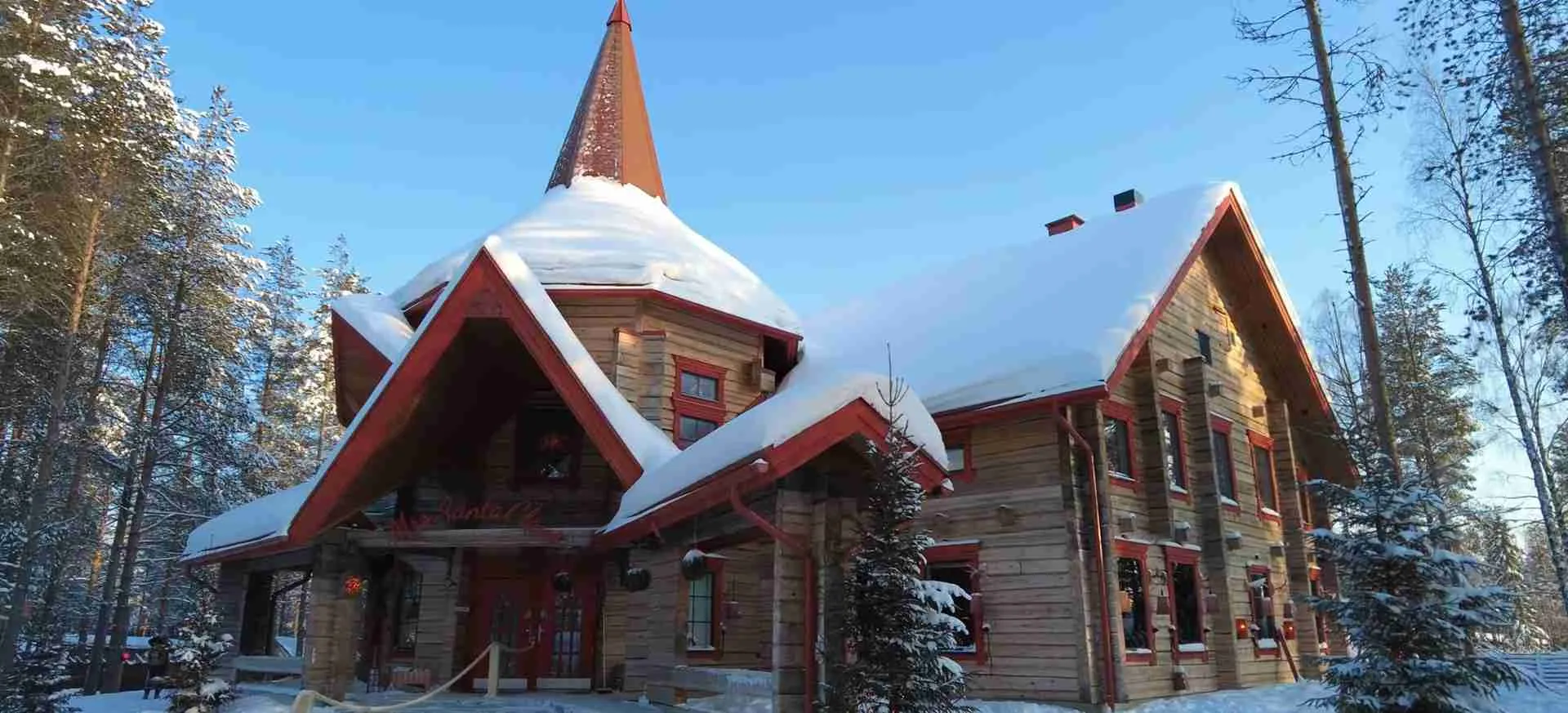
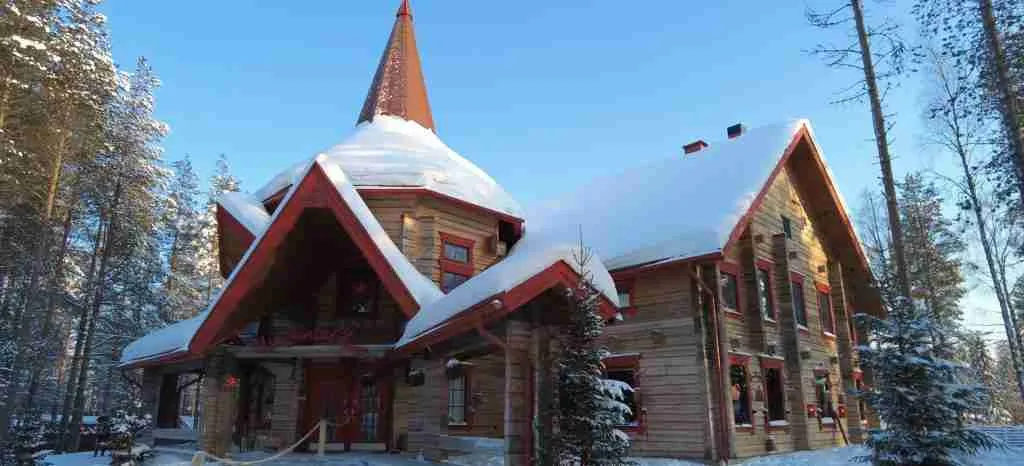
Today’s Santa Claus Village spans a carefully designed area that balances commercial development with preservation of the magical, fairytale atmosphere that defines the experience. The village follows a cohesive architectural style featuring traditional Lappish log construction painted in rich reds, deep blues, and forest greens, with peaked roofs designed to shed heavy snow and intricate wooden details that evoke storybook illustrations. Walking through the village feels like stepping into a Christmas card brought to life.
The Arctic Circle line itself remains the village’s centerpiece, dramatically marked across the central square with a bold white stripe and detailed geographic coordinates. This line represents the southernmost point where the sun remains visible at midnight during summer solstice and stays below the horizon at noon during winter solstice—a genuine geographic phenomenon that adds scientific fascination to the magical setting. Visitors inevitably spend considerable time photographing themselves with one foot in each hemisphere, collecting official Arctic Circle crossing certificates, and marveling at the fact that they stand precisely 66° 33′ 39″ north of the Equator.
Meeting Santa Claus: The Heart of the Village
The absolute highlight of any visit to Santa Claus Village remains the opportunity to meet Santa Claus himself in his official office, an experience that has remained free of charge for over 30 years. Santa Claus Office occupies a prominent position in the village center, distinguished by its traditional Lappish log construction and the constant stream of excited visitors entering and leaving its welcoming doors.
Santa receives guests in a beautifully decorated private chamber filled with Christmas decorations, warm wooden furnishings, and an atmosphere of genuine warmth and joy. The jolly man in red sits ready to greet visitors personally, regardless of age, speaking multiple languages and demonstrating remarkable knowledge about traditions and customs from around the world. Each encounter feels personal and unhurried—Santa asks about children’s homes, families, and Christmas wishes, sharing stories about life at the North Pole and the hard work of his elves preparing for Christmas.
The experience transcends simple photograph opportunities. Santa engages visitors in genuine conversation, demonstrating the patience and kindness that have made him beloved across cultures and generations. For children, the meeting often represents a pivotal moment of wonder and belief. For adults, it frequently evokes powerful nostalgia and the rediscovery of Christmas magic they thought they’d outgrown. Many visitors report feeling moved to tears by the experience, regardless of age.
Professional photographers stationed in Santa’s Office capture the encounter, producing high-quality photographs and video recordings available for purchase. While the meeting itself costs nothing, professional photo packages range from €30-40 depending on format and quantity. Visitors can also take their own photographs at the end of the meeting, ensuring everyone leaves with memories of their time with Santa regardless of budget.
Santa maintains remarkably consistent hours throughout the year, welcoming visitors daily. During peak winter season (late November through early January), he often extends his hours to accommodate larger crowds, sometimes remaining available from 8:00 AM to 8:00 PM. During quieter periods, standard hours run approximately 9:00 AM to 6:00 PM. Morning visits, particularly on weekdays outside peak season, offer the advantage of shorter queues and more relaxed encounters.
Christmas House Santa provides an alternative location to meet Santa within the village, offering a different setting with similar free access. Some visitors choose to meet Santa at both locations for varied experiences and different photograph opportunities. Mrs. Santa Claus can also be met at her Christmas Cottage within the Santa Claus Reindeer Resort area, where she shares stories, serves refreshments, and offers her own warm hospitality.
Santa Claus Main Post Office: Letters from Around the World
Santa Claus Main Post Office stands as one of the village’s most beloved attractions, operating as a fully functional post office with the unique distinction of processing correspondence addressed to Santa Claus from children worldwide. The building combines traditional Finnish postal services with Christmas magic, creating an experience that fascinates visitors of all ages.
The post office receives over half a million letters annually from children in more than 200 countries, each carefully opened and read by Santa’s postal elves. The walls display thousands of letters, postcards, and drawings sent from every corner of the globe, creating a moving testament to the universal appeal of Santa Claus and the spirit of Christmas. Children particularly enjoy seeing letters written in their own languages among the international collection.
Visitors can send postcards and letters from the post office, each stamped with the official Arctic Circle postmark that makes them treasured keepsakes. The special Arctic Circle postal cancellation mark includes the geographic coordinates and an image of Santa, transforming ordinary correspondence into memorable souvenirs. Standard international postage rates apply, with postcards to most countries costing €2-3 to send.
The post office sells a remarkable variety of Christmas-themed stamps, many designed specifically for Santa Claus Village and unavailable elsewhere. Collectors particularly prize these limited-edition stamps, which feature Lappish themes, Arctic wildlife, and Christmas imagery. The selection of postcards spans from traditional Christmas scenes to contemporary designs, photographs of northern lights, and images of reindeer and Lappish landscapes.
One of the post office’s most enchanting services allows visitors to arrange for Santa Claus to send Christmas letters to loved ones. For a fee, you can order a personalized letter from Santa to be posted at Christmas to anywhere in the world. Children’s faces light up when they receive official correspondence from Santa bearing the Arctic Circle postmark—a service that extends the magic of a Santa Claus Village visit throughout the year.
The postal elves working at Santa Claus Main Post Office wear traditional elf costumes and maintain the magical atmosphere while providing genuine postal services. They offer assistance in multiple languages, help visitors select appropriate postage, and share information about the post office’s operations and history. Their enthusiasm and knowledge enhance the entire experience, making what could be a simple transaction into a memorable interaction.
Crossing the Arctic Circle: A Geographic Milestone
The Arctic Circle line itself provides one of Santa Claus Village’s most significant attractions, offering visitors the rare opportunity to stand at a precisely marked geographic milestone that most people never reach in their lifetimes. The bold white line crossing the village’s central square represents 66° 33′ 39″ north latitude—the southernmost point where polar day and polar night phenomena occur.
Understanding the Arctic Circle’s significance enhances appreciation for this moment. North of this line, during summer solstice in June, the sun never fully sets, creating the phenomenon known as the midnight sun where daylight persists for 24 hours. Conversely, during winter solstice in December, the sun never rises above the horizon, resulting in the polar night or kaamos in Finnish. Santa Claus Village sits just barely north of this line, making it one of the most accessible locations to experience these unique natural phenomena.
The village’s layout deliberately emphasizes the Arctic Circle, with most buildings positioned on the northern side to maximize the sense of entering the true Arctic. Signs clearly mark which establishments sit north or south of the line, and visitors delight in discovering which restaurants, shops, and accommodations can claim Arctic addresses. The central square features a detailed map showing the Arctic Circle’s path across the Nordic countries, helping visitors understand this imaginary yet scientifically significant boundary.
Crossing the Arctic Circle comes with certificate opportunities that many visitors treasure as proof of their achievement. The Santa Claus Office and several other village locations issue official Arctic Circle Crossing Certificates, decorative documents featuring personalized names, dates, and often embossed seals or stamps. These certificates cost approximately €5-8 but provide tangible mementos that look impressive when framed.
Photography at the Arctic Circle line represents an essential ritual for virtually all visitors. The marked line provides perfect opportunities for creative photographs—jumping over it, placing one foot on each side, or posing with the line extending into the distance. During winter, the white line against pure snow creates striking images, while summer’s midnight sun bathes the line in golden light that photographers find irresistible. Professional photographers sometimes offer services in the square, though most visitors successfully capture the moment with their own cameras or smartphones.
The technical precision of the line’s placement deserves appreciation. Geographic calculations and surveying equipment ensure the line’s accuracy to within centimeters, maintaining scientific integrity despite the location’s commercial and entertainment purposes. The Arctic Circle does shift slightly over time due to Earth’s axial precession, but at human timescales, this movement remains imperceptible, and the marked line will remain accurate for thousands of years.
Seasonal Experiences: Winter Wonderland
Winter transforms Santa Claus Village into the archetypal Christmas setting that visitors worldwide imagine when dreaming of a magical holiday destination. From late November through March, deep snow blankets the entire area, creating a pristine white landscape where traditional Lappish log buildings emerge from snowdrifts like illustrations from a storybook.
Snow depth typically reaches 30-60 centimeters by December, with accumulation continuing through February. The snow’s quality differs remarkably from what visitors from more temperate regions experience—Arctic snow falls light and powdery, compressing into a surface that crunches satisfyingly underfoot and sparkles in the sunlight like scattered diamonds. This snow quality makes all winter activities more enjoyable, from simple walks through the village to elaborate snowmobile expeditions into the surrounding wilderness.
Winter lighting creates its own magic at Santa Claus Village. From late November through mid-January, true daylight barely appears, with the sun hovering near or below the horizon even at midday. This creates extended periods of blue twilight that bathes the landscape in ethereal indigo and purple hues. Combined with artificial lighting from buildings, Christmas decorations, and streetlamps, the effect proves genuinely enchanting, making even a simple afternoon walk through the village feel like exploring a fairytale realm.
The northern lights phenomenon adds another dimension to winter visits. Aurora borealis appears frequently in the Rovaniemi area between September and March, with December through February offering peak viewing opportunities due to longer dark periods. While the village’s lights create some light pollution that reduces aurora visibility compared to remote wilderness locations, spectacular displays often appear bright enough to view directly from the village. Many visitors combine their Santa Claus Village experience with dedicated northern lights tours that venture into darker areas for optimal viewing.
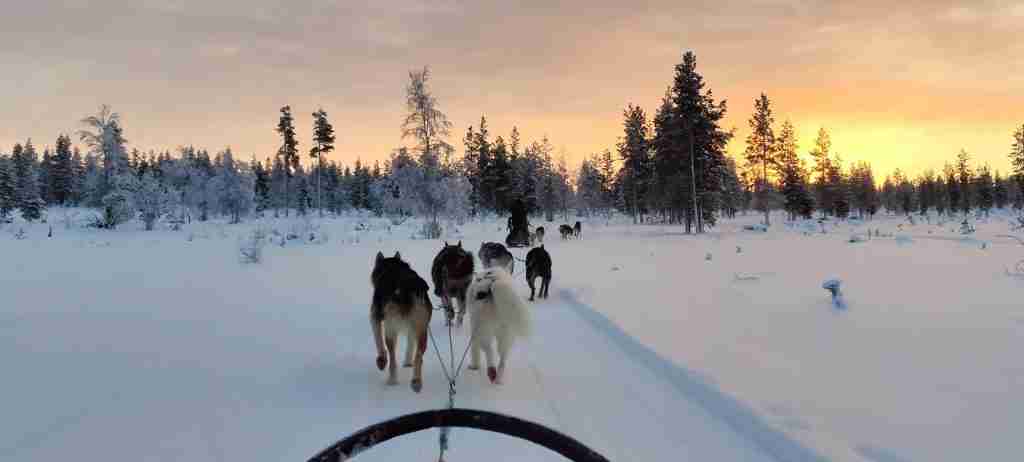
Winter activities available at the village expand far beyond simply meeting Santa. Reindeer sleigh rides operate throughout the season, offering peaceful journeys through snow-covered forests pulled by these iconic Arctic animals. Husky sledding experiences provide more exhilarating adventures, with teams of energetic sled dogs pulling visitors across frozen landscapes at surprising speeds. Snowmobile safaris range from brief introductory rides to full-day expeditions exploring Lapland’s vast wilderness areas.
Snowman World, operating from January through March (weather permitting), creates an entire attraction from ice and snow. This temporary indoor winter park features ice sculptures, an ice bar serving drinks in glasses carved from ice, an ice restaurant, and activities like ice slides and snow mazes that delight families. Admission costs approximately €60 for adults with reduced rates for children, offering several hours of frozen entertainment.
Ice fishing represents another authentic winter activity available near the village. Guided tours take participants to frozen lakes where they cut holes through ice up to 60 centimeters thick and drop lines hoping to catch perch, pike, or Arctic char. The experience combines peaceful solitude with traditional Lappish skills, often concluding with cooking the catch over an open fire—a memory that frequently ranks among visitors’ trip highlights.
Summer Magic: The Midnight Sun Experience
Summer visits to Santa Claus Village offer dramatically different but equally magical experiences compared to winter months. While most visitors naturally associate Santa Claus with snow and winter, the village’s summer operations reveal a lesser-known but enchanting side of the Arctic that surprises many travelers.
The midnight sun phenomenon defines summer visits. From mid-May through July, the sun never fully sets in Rovaniemi, creating continuous daylight that disorients and delights visitors accustomed to normal day-night cycles. During the peak period around summer solstice in late June, the sun circles the horizon throughout the night, dipping lowest around midnight but never disappearing, bathing the landscape in warm golden light around the clock.
This endless daylight profoundly affects the atmosphere and visitor experience. Evening walks through the village at 11:00 PM or midnight occur in full sunshine, creating surreal but beautiful conditions that photographers adore. Families with children appreciate the flexibility—there’s no “too late” when the sun still shines, allowing extended days of exploration without the constraints of darkness or young children’s bedtimes.
The landscape transforms completely from winter’s white monochrome to summer’s explosion of green. The surrounding forests burst into vibrant life with birch and pine trees in full leaf, wildflowers carpeting meadows in yellows, purples, and whites, and berries beginning to ripen on low bushes. The air smells of pine resin, fresh vegetation, and the earthy scent of the forest floor—completely different from winter’s crisp, odorless cold.
Meeting Santa in summer holds its own special appeal. Many families choose summer visits specifically to avoid winter cold while still providing children the magical experience of meeting Santa Claus. Santa maintains his usual warmth and welcome regardless of season, and many visitors comment that summer meetings feel more relaxed, with smaller crowds and more time for conversation. Photographs with Santa in summer settings offer unique alternatives to typical winter shots.
Reindeer encounters continue year-round, though the experience differs substantially from winter sleigh rides. Summer visitors can meet and feed reindeer, learn about their annual cycle, and observe calves born in spring. While sleigh rides don’t operate without snow, many farms offer guided walks with reindeer or opportunities to accompany herders during their daily work. Understanding reindeer’s importance to Sámi culture and traditional Lappish life deepens appreciation for these animals beyond their association with Santa Claus.
Outdoor activities shift to hiking, berry picking, and fishing. The surrounding forests and wilderness areas become accessible for gentle walks or serious hiking expeditions. Wild berry picking becomes increasingly productive from July onwards, with blueberries and lingonberries abundant in many areas. Local guides offer foraging tours that combine berry picking with traditional knowledge about edible plants, mushrooms, and Lappish wilderness skills.
Summer visitors also avoid the high prices and crowding of winter peak season. Accommodations cost substantially less, restaurants have tables available without reservations, and attractions operate without long queues. This creates more relaxed experiences where families can explore at their own pace, change plans spontaneously, and enjoy genuine interactions with locals who have more time for conversation outside the hectic winter rush.
Dining at Santa Claus Village: Lappish Cuisine and International Options
Santa Claus Village offers diverse dining options ranging from quick snacks to full traditional Lappish meals, ensuring visitors can find appropriate options regardless of budget, dietary preferences, or available time. The village’s restaurants emphasize local ingredients, traditional preparation methods, and the warm hospitality characteristic of Finnish Lapland.
Santa’s Salmon Place represents one of the village’s most popular dining destinations, specializing in traditional flame-grilled salmon prepared over open fires. The restaurant’s rustic interior features exposed log walls, crackling fireplaces, and the intoxicating aroma of salmon slowly cooking over birch wood flames. The house specialty combines freshly grilled Arctic salmon with potatoes, rye bread, and Lappish berry sauce, creating a meal that exemplifies regional cuisine at approximately €20-25 per person.
Reindeer appears prominently on many menus, prepared according to traditional Lappish methods. Poronkäristys (sautéed reindeer) represents Lapland’s signature dish—thinly sliced reindeer meat quickly fried with butter, salt, and pepper, then slowly simmered until tender, typically served with mashed potatoes and lingonberry preserve. The flavor proves milder and sweeter than beef, with a texture similar to venison but less gamey. Many visitors initially hesitate to try reindeer but find themselves pleasantly surprised by the delicate, delicious meat that forms such an integral part of Arctic cuisine.
Traditional Lappish fare extends beyond reindeer to include dishes like hearty salmon soup, forest mushroom preparations, and game meats such as elk. Berry desserts feature prominently, showcasing the remarkable variety of wild berries that thrive in Lapland’s summer landscapes—cloudberries, lingonberries, blueberries, and crowberries all make appearances in pies, jams, sauces, and traditional desserts. These dishes connect visitors directly to the land and seasons, offering tastes that can’t be replicated outside the Arctic region.
Lapland Restaurant Kotahovi provides another excellent dining option, serving traditional Lappish cuisine in a warm, welcoming atmosphere. The restaurant occupies a traditional kota building—a Lappish-style structure with a central fireplace and distinctive peaked roof. Meals here range from €25-35 per person for complete dining experiences featuring multiple courses of regional specialties.
For visitors seeking quicker, more casual options, several cafés and snack stands operate throughout the village. These establishments serve coffee and pastries, sandwiches, hot drinks, and simple meals that provide sustenance without requiring extended sit-down dining. Finnish coffee culture means excellent coffee is virtually guaranteed at any café, often accompanied by traditional cinnamon rolls or other pastries that pair perfectly with hot drinks on cold winter days.
International options accommodate visitors who prefer familiar foods or have dietary restrictions that make traditional Lappish cuisine challenging. Several restaurants offer pizza, burgers, and other international standards alongside local specialties. Vegetarian and vegan options have improved significantly in recent years, though they remain less prevalent than in larger cities. Visitors with strict dietary requirements should research restaurant menus in advance or contact establishments directly to ensure appropriate options will be available.
Shopping: Unique Souvenirs and Lappish Handicrafts
Santa Claus Village shopping offers opportunities to acquire unique souvenirs, traditional Lappish handicrafts, and Christmas decorations unavailable elsewhere. The village’s shops range from small artisan boutiques to larger stores carrying extensive selections of goods, all maintaining the magical atmosphere that defines the entire experience.
Authentic Lappish handicrafts represent the most meaningful purchases available. Traditional duodji (Sámi handicrafts) include items crafted from reindeer leather, antlers, and fur using techniques passed down through generations. Reindeer leather products range from small items like bracelets, keychains, and coin purses to larger pieces like bags, wallets, and even traditional clothing. The leather develops beautiful patina with use and carries the authentic connection to Lappish reindeer herding culture.
Jewelry made from reindeer antler showcases another traditional craft. Artisans carve pendants, earrings, and decorative pieces from naturally shed antlers, creating unique items that capture the natural beauty of these materials. Each piece differs slightly due to variations in antler structure and grain, ensuring truly one-of-a-kind purchases. Prices range from €15-20 for simple pendants to €100+ for elaborate carved pieces.
Traditional Sámi knives, or puukko, represent functional art pieces that have served as essential tools in Lapland for centuries. These handcrafted knives feature beautifully decorated handles made from birch, reindeer antler, or other natural materials, with blades forged by skilled craftspeople. While authentic traditional puukko can cost €100-300, they represent heirloom-quality items that improve with use and can be passed down through generations.
Woolen products showcase another aspect of traditional Lappish craftsmanship. Hand-knitted mittens, hats, and socks made from thick Lappish wool provide remarkable warmth and feature traditional patterns that have been part of Lappish culture for centuries. These items combine practical functionality with cultural authenticity, making them both useful and meaningful souvenirs.
Christmas decorations available at Santa Claus Village span from traditional Nordic ornaments to unique items specifically created for this location. Glass ornaments, wooden decorations, and textile pieces featuring Santa Claus, reindeer, and Arctic themes provide year-round reminders of the visit. Many decorations feature “Santa Claus Village” or “Arctic Circle” labels that mark them as authentic souvenirs from this specific location rather than generic Christmas items.
Design shops showcase contemporary Finnish and Lappish design that combines traditional influences with modern aesthetics. These items range from home décor and textiles to jewelry and art pieces that represent current Nordic design trends while maintaining connections to regional heritage. Brands like Kivalo Design and Arctic Design create products specifically inspired by Lapland’s landscapes, culture, and Arctic environment.
Practical considerations for shopping include understanding that quality handicrafts command appropriate prices reflecting the skill and time required to create them. Visitors should budget accordingly and recognize that authentic handmade items naturally cost more than mass-produced alternatives. For those on tighter budgets, smaller items like postcards from Santa’s Post Office (€2-3), simple ornaments (€5-10), or small handicraft pieces (€15-25) provide meaningful souvenirs without significant expense.
Accommodations: Staying at the Arctic Circle
Accommodation options at and near Santa Claus Village range from budget-friendly hotels to unique Arctic experiences like glass igloos and traditional Lappish log cabins. Choosing to stay at the village itself versus in Rovaniemi city center involves trade-offs between convenience, atmosphere, and price that different visitors weigh differently.
Santa Claus Holiday Village offers the convenience of accommodation directly at the village site. The property features traditional log cabins and apartments that allow guests to step outside their doors directly into the magical village atmosphere. Staying on-site means easy access to all village attractions, the ability to experience the village during quieter early morning and late evening hours when day visitors have departed, and the unique appeal of an Arctic Circle address. Prices for cabin accommodations typically range from €150-250 per night depending on size and season.
Arctic TreeHouse Hotel, located immediately adjacent to Santa Claus Village, represents one of Lapland’s most unique and luxurious accommodation options. Each suite features floor-to-ceiling windows offering unobstructed views of the surrounding forest, with beds positioned to maximize northern lights viewing opportunities during winter. The contemporary Scandinavian design creates intimate spaces that feel simultaneously luxurious and connected to nature. Winter rates typically range from €300-500 per night, positioning this firmly as a special-occasion or splurge option.
Glass igloo accommodations have become iconic Arctic experiences, though the nearest options sit several kilometers from Santa Claus Village at properties like Arctic Snow Hotel and Glass Igloos or Santa’s Igloos Arctic Circle. These unique structures feature glass ceilings that allow occupants to view the night sky, northern lights, and stars from the comfort of heated rooms. The experience combines novelty with genuine comfort, though winter condensation on glass can sometimes obstruct views. Prices range from €250-450 per night for glass igloo accommodations.
Traditional hotel options in Rovaniemi city center, eight kilometers south of Santa Claus Village, often provide better value for budget-conscious travelers. Hotels like Santa Claus Hotel, Arctic Light Hotel, and numerous other properties offer comfortable rooms at €100-180 per night depending on season and specific hotel. Staying in the city provides access to a wider range of restaurants, shops, and services while remaining within easy reach of Santa Claus Village via bus or taxi.
Apartment rentals through platforms like Airbnb offer alternatives that work particularly well for families or longer stays. Whole apartments in Rovaniemi typically cost €80-150 per night and provide kitchen facilities that allow self-catering, reducing meal costs significantly compared to dining out for every meal. This option sacrifices some magical atmosphere but delivers practical advantages and cost savings that matter to many travelers.
Booking timing significantly impacts both availability and prices. Winter peak season (late November through early January) sees accommodations fill months in advance, with prices at their highest levels. Visitors planning Christmas or New Year’s visits should book by August or September to secure preferred accommodations. Shoulder seasons (September-November, March-April) offer greater availability and lower rates while still providing access to winter activities and potential northern lights viewing.
Getting Around: Transportation and Access
Reaching Santa Claus Village and navigating the broader Rovaniemi area involves straightforward transportation options that accommodate different preferences and budgets. The village’s proximity to both Rovaniemi Airport and city center makes it unusually accessible for an Arctic destination.
Rovaniemi Airport sits just three kilometers from Santa Claus Village—actually closer than Rovaniemi city center. This proximity makes the village remarkably convenient for visitors flying into Lapland, with some tour itineraries designed to visit Santa Claus Village directly upon arrival before even checking into city accommodations. The airport receives regular flights from Helsinki (approximately 90 minutes), seasonal direct flights from several European cities during winter months, and limited international connections.
From the airport, transportation options include taxis (€15-20), hotel shuttles (prices vary), and the Airport Express bus that stops at Santa Claus Village en route to the city center. Many visitors find it convenient to rent cars at the airport, though this isn’t necessary for those planning to stay at or very near Santa Claus Village and book organized tours for other activities.
Local bus number 8, marketed as “Santa’s Express,” provides the most economical transportation between Rovaniemi city center and Santa Claus Village. Buses run regularly throughout the day with increased frequency during tourist season, taking approximately 15-20 minutes for the journey. Single tickets cost around €3-4, with slightly better value available through multi-ride tickets or day passes. The bus stop sits directly at the village entrance, making the service genuinely convenient.
Taxis between Rovaniemi city center and Santa Claus Village cost approximately €20-25 one way, with prices fixed by Finnish taxi regulations. This option makes sense for groups of three or four travelers when the per-person cost becomes comparable to bus fares while offering door-to-door service and schedule flexibility. During peak winter season, calling for return taxis in advance proves wise as demand sometimes exceeds immediate availability.
Rental cars provide maximum flexibility for visitors planning to explore beyond Santa Claus Village to other Lapland destinations. The village offers ample free parking, and having a car enables spontaneous visits to reindeer farms, national parks, and other attractions throughout the region. Winter driving requires awareness of ice and snow conditions—Finnish roads are generally well-maintained, but winter tires (legally required November through March) and cautious driving remain essential. International visitors should verify their rental agreements include appropriate winter equipment and insurance coverage.
Within Santa Claus Village itself, everything is within easy walking distance. The compact layout means visitors can explore the entire village, cross the Arctic Circle multiple times, visit all shops and restaurants, and access all activities on foot within comfortable distances. The village maintains well-cleared paths during winter, though proper footwear with good traction becomes essential when ice and packed snow create slippery conditions.
Practical Information and Visitor Tips
Successful visits to Santa Claus Village benefit from understanding practical details about weather preparation, timing, costs, and visitor logistics that significantly impact the overall experience.
Weather preparation differs dramatically between seasons. Winter temperatures typically range from -5°C to -20°C (23°F to -4°F) during daytime, occasionally dropping to -30°C (-22°F) during cold snaps. These temperatures demand serious preparation—layered clothing, proper winter boots with good traction, warm hats covering ears, insulated gloves or mittens, and neck protection become essential rather than optional. Many tour operators provide Arctic overalls and boots for participants, but having personal warm layers remains important for time spent outside organized activities.
The wind-chill factor significantly affects comfort in Arctic conditions. Even moderate winds at cold temperatures create dangerous conditions for exposed skin. Visitors should plan outdoor time in reasonable increments, taking regular breaks in heated spaces, and should never dismiss early signs of cold discomfort. Frostbite can occur surprisingly quickly when conditions combine low temperatures with wind and moisture.
Summer weather proves far more manageable but still requires preparation. Daytime temperatures typically range from 15°C to 25°C (59°F to 77°F), feeling warm in direct sunlight but cooling quickly in shade or wind. Layered clothing remains advisable—light long sleeves, a waterproof jacket, and comfortable walking shoes suit most summer conditions. Mosquitoes can be intense during late June and July, making insect repellent essential for comfort during any time spent in forested areas or near water.
Photography considerations vary by season and time of day. Winter’s limited light creates challenges but also opportunities—the blue twilight periods produce ethereal images with proper technique. Modern smartphone cameras struggle in low light conditions, making dedicated cameras with manual controls advantageous for serious photography. Summer’s endless daylight removes lighting challenges but requires different techniques to capture the magical atmosphere of the midnight sun.
Budget planning should account for costs beyond activities and accommodations. Meals at village restaurants run €15-25 for casual dining, €30-45 for full restaurant experiences. Coffee and snacks add €5-10 per stop. Activities range from €25-35 for short reindeer rides to €100-150 for snowmobile safaris. Professional photographs with Santa cost €30-40. Souvenirs span from €5 postcards to €100+ for quality handicrafts. A realistic daily budget for activities, meals, and incidentals might range from €100-200 per person depending on choices.
Crowd management enhances experiences significantly. Winter peak season sees largest crowds from mid-December through early January, with Christmas week representing the absolute busiest period. Visiting during shoulder seasons (early December, late January-February) or even off-season months provides more intimate experiences with better opportunities for extended conversations with Santa, uncrowded restaurants, and peaceful exploration of the village.
Time allocation deserves consideration when planning visits. A quick stop to meet Santa and cross the Arctic Circle can be accomplished in 1-2 hours. A more thorough exploration including dining, shopping, and perhaps one activity requires 4-6 hours. Visitors combining multiple activities or planning evening northern lights experiences should consider spending most of a day at the village.
Cultural sensitivity around Sámi heritage merits awareness. While Santa Claus Village is a Finnish tourist attraction rather than a Sámi cultural site, the broader Lapland region is the homeland of the indigenous Sámi people. Respectful appreciation for traditional practices like reindeer herding, an understanding that Lappish handicrafts represent living culture rather than merely quaint souvenirs, and recognition of the region’s indigenous heritage enhance meaningful engagement with authentic aspects of the visit.
Sustainability and Responsible Tourism
Santa Claus Village and the broader Rovaniemi tourism industry increasingly emphasize sustainable practices and responsible tourism that protects Lapland’s fragile Arctic environment while supporting local communities. Visitors can enhance their positive impact through conscious choices and awareness of sustainability considerations.
Many village businesses hold Sustainable Travel Finland certification, a national program that evaluates and recognizes tourism companies demonstrating commitment to environmental, social, and economic sustainability. Certified operators meet specific criteria around reducing emissions, minimizing waste, protecting nature, supporting local communities, and providing authentic cultural experiences. Visitors can look for the Sustainable Travel Finland label when selecting tours and services.
Transportation choices significantly impact individual environmental footprints. Using public bus service between Rovaniemi and Santa Claus Village rather than taxis reduces per-person emissions. Choosing tour operators that use modern, fuel-efficient vehicles or electric alternatives when available demonstrates environmental consciousness. Some operators now offer electric snowmobile options that provide authentic Arctic experiences without the noise and emissions of traditional snowmobiles.
Supporting authentic local businesses rather than international chains keeps more tourism revenue within Lapland’s economy. Purchasing genuine handicrafts directly from artisans or from shops clearly identified as selling locally-made products supports traditional skills and local craftspeople. Dining at restaurants serving regional ingredients supports local food producers and reduces transportation-related emissions compared to imported ingredients.
Respecting nature during activities helps preserve Lapland’s pristine environment. Staying on designated trails prevents damage to fragile vegetation that takes decades to recover in Arctic conditions. Disposing of all waste properly and never littering maintains the unspoiled beauty that makes the region special. Following guide instructions during wilderness activities protects both participants and natural areas.
Wildlife interactions should prioritize animal welfare. Reputable reindeer and husky tour operators maintain high standards for animal care, provide appropriate rest and nutrition, and limit working hours to protect animal health. Visitors should choose operators with clear welfare policies and avoid any situations where animals appear stressed, overworked, or inadequately cared for.
Cultural respect enhances responsible tourism. Learning a few words of Finnish (kiitos = thank you, hei = hello) shows appreciation for local culture. Understanding and respecting Sámi heritage, particularly when encountering traditional practices or handicrafts, demonstrates cultural sensitivity. Asking permission before photographing local people and being gracious about responses builds positive interactions.
Minimizing waste generation supports environmental protection. Bringing reusable water bottles instead of purchasing single-use plastic, carrying reusable shopping bags for purchases, and choosing minimal packaging when options exist all reduce waste generation. Finland maintains high waste management standards, but prevention remains preferable to disposal.
Frequently Asked Questions
Is Santa Claus Village Suitable for Young Children?
Santa Claus Village excels as a family destination specifically designed to delight young children. Meeting Santa Claus remains magical for most children aged 2-10, with many reporting the experience as the highlight of their entire trip. The village’s compact, walkable layout makes navigation with strollers manageable, though winter snow and ice can create challenges requiring care. Most activities accommodate children, including short reindeer rides, feeding reindeer, and age-appropriate crafts and workshops. Restaurants provide child-friendly menus, high chairs, and changing facilities. However, very young children (under 2) may find little to engage them beyond the basic Santa meeting, while teenagers often consider the village primarily interesting for younger siblings rather than personally compelling.
Can You See Northern Lights from Santa Claus Village?
Northern lights are visible from Santa Claus Village when aurora activity is strong enough to overcome the light pollution from village buildings and streetlights. However, for optimal aurora viewing, dedicated tours that venture 20-40 kilometers from Rovaniemi into darker wilderness areas provide substantially better experiences. The village serves as a convenient starting point for these specialized northern lights tours, which typically operate from September through March during dark evening hours. Clear skies are essential for aurora viewing regardless of location—cloud cover completely obscures the northern lights even during strong geomagnetic activity. Patience is also necessary, as aurora appearances are never guaranteed and some visitors spend entire weeks in Lapland without seeing them, while others witness spectacular displays on their first night.
How Long Should You Spend at Santa Claus Village?
The ideal time allocation depends entirely on planned activities and personal interests. A minimal visit focused solely on meeting Santa and crossing the Arctic Circle requires 1-2 hours. Adding lunch or dinner at a village restaurant extends this to 2-3 hours. Including one activity like a short reindeer ride suggests allocating 3-4 hours. Visitors who want to shop thoroughly, dine leisurely, meet Santa, cross the Arctic Circle, visit the post office, and participate in one or two activities should plan for 5-6 hours or even a full day. Some travelers choose to visit multiple times during their Lapland stay—once for a focused Santa meeting with children, and again to enjoy adult-oriented experiences like northern lights tours or extended dining. There’s no single correct answer, but underestimating time needs often results in rushed experiences that don’t fully capture the magic the village offers.
Is Visiting Santa Claus Village Expensive?
Costs at Santa Claus Village vary dramatically based on choices, making it possible to enjoy meaningful experiences on tight budgets or spend lavishly on premium options. Entry to the village and meeting Santa are completely free, immediately making the basic experience accessible to all visitors. However, professional photographs with Santa, activities like reindeer rides and snowmobiling, dining at restaurants, and souvenir shopping quickly accumulate costs. A family of four might spend nothing beyond transportation for a brief Santa meeting, or could easily spend €300-500 for a full day including lunch, professional photos, activities, and souvenirs. Individual travelers should budget €50-150 per person for a satisfying visit including a meal and one activity, though both lower and higher spending are entirely feasible depending on preferences and financial capacity.
What Should You Wear to Santa Claus Village in Winter?
Proper winter clothing is absolutely essential for comfortable and safe winter visits. Start with thermal base layers (both top and bottom) made from wool or synthetic materials that wick moisture. Add insulating mid-layers like fleece or wool sweaters. Top with a windproof and waterproof outer jacket and pants designed for Arctic conditions. Footwear matters enormously—insulated winter boots rated to at least -20°C with good traction are mandatory, not optional. Many visitors underestimate footwear importance and suffer cold feet that ruin otherwise excellent experiences. Accessories include warm hats covering ears, insulated gloves or mittens (mittens are warmer), and scarves or neck gaiters to protect exposed skin. Hand and foot warmers provide additional comfort insurance. Many activity operators provide Arctic overalls, boots, and gloves for tour participants, but having personal warm layers underneath remains important for time spent outside organized tours.
Can You Visit Santa Claus Village in Summer?
Summer visits to Santa Claus Village offer completely different but genuinely magical experiences. The village operates year-round with Santa available for meetings every day. Summer advantages include comfortable temperatures, the remarkable midnight sun phenomenon creating 24-hour daylight, fewer crowds than peak winter season, and lower prices for accommodations and some activities. However, snow-based activities like snowmobiling, husky sledding, and reindeer sleigh rides aren’t available—summer visits focus instead on meeting Santa, crossing the Arctic Circle, shopping, dining, and enjoying the unique midnight sun experience. Children particularly enjoy summer visits as they can meet Santa without dealing with extreme cold, while families appreciate the more relaxed atmosphere and flexibility that comes with smaller crowds and endless daylight.
Are There Vegetarian or Vegan Options at Santa Claus Village Restaurants?
Vegetarian and vegan dining options at Santa Claus Village have improved significantly but remain more limited than in larger cities. Most restaurants offer at least one or two vegetarian dishes, typically including salads, vegetable soups, pasta, or potato-based meals. Vegan options prove more challenging—Finnish cuisine traditionally emphasizes meat, fish, and dairy, making purely plant-based meals less common. Travelers with strict dietary requirements should research restaurant menus online before visiting or contact establishments directly to inquire about options and request advance preparation if needed. Santa’s Salmon Place and other fish-focused restaurants obviously emphasize seafood, making them less suitable for vegetarians. Cafés typically offer vegetarian pastries and snacks more readily than full vegan meals. Visitors with specific dietary needs might consider staying in accommodations with kitchen facilities or bringing supplemental snacks to ensure adequate nutrition.
What Is the Difference Between Santa Claus Village and Santa Park?
Santa Claus Village and SantaPark are separate attractions that frequently confuse visitors. Santa Claus Village is the outdoor village complex at the Arctic Circle featuring Santa’s Office, the post office, shops, restaurants, and various activities—this is the main attraction most visitors seek. SantaPark, officially “The Home Cavern of Santa Claus,” is a separate commercial attraction located underground approximately 1.5 kilometers from Santa Claus Village. SantaPark features Christmas-themed shows, workshops, rides, an elf school, and underground exhibits all centered on Christmas and Santa Claus mythology. Admission to SantaPark costs separately (around €30-35 for adults) and represents a completely different experience than the free outdoor village. Some visitors enjoy both, treating them as complementary experiences, while others find Santa Claus Village itself sufficient and skip SantaPark entirely.
Can You Mail Letters to Santa Claus?
Children worldwide can mail letters to Santa Claus in Finnish Lapland, and the letters will be received and read by Santa’s postal elves. The correct address is: Santa Claus, Santa Claus Main Post Office, 96930 Arctic Circle, Finland. Letters sent to this address arrive at Santa Claus Main Post Office within Santa Claus Village, where they join the more than half million letters Santa receives annually from children in over 200 countries. While Santa cannot personally reply to every letter due to the enormous volume, children who include their return address may receive a response. For guaranteed replies, Santa’s Post Office offers a paid service where parents can order personalized letters from Santa to be sent at Christmas—these cost around €10-15 per letter depending on destination and customization level. This service ensures children receive official correspondence from Santa complete with the Arctic Circle postmark, creating magical moments that extend the Santa Claus Village experience throughout the year.
Is There WiFi at Santa Claus Village?
WiFi availability at Santa Claus Village varies by location within the complex. Many restaurants, cafés, and larger shops offer free WiFi for customers, though connection quality and speed fluctuate based on number of users and specific provider infrastructure. Santa Claus Office and the Main Post Office typically provide guest WiFi access. However, reliable comprehensive WiFi coverage throughout the entire outdoor village should not be expected—this is particularly true in winter when cold temperatures affect electronic equipment performance and outdoor signal strength. Visitors requiring consistent internet connectivity should obtain Finnish SIM cards or activate international roaming plans through their home carriers. European Union visitors benefit from “roam like home” regulations eliminating roaming charges within EU countries, making Finnish mobile data readily accessible. Understanding that connectivity may be intermittent actually enhances many visitors’ experiences, encouraging them to be more present and engaged with the magical surroundings rather than remaining tethered to digital devices.