Santa Catalina Arch & Best Photo Spots in Antigua 2026
Key Takeaways:
- Santa Catalina Arch provides Antigua’s most iconic photograph with Volcán Agua backdrop visible from 5th Avenida Norte, accessible 24/7 with no entry fees
- Golden hour photography opportunities peak 5:45-6:30 AM for sunrise volcano views and 5:30-6:15 PM for sunset colonial architecture lighting throughout 2026
- Cerro de la Cruz viewpoint reaches 100 meters elevation above city center offering panoramic photographs of colonial grid, surrounding volcanoes, and complete valley perspective
- Photography tours cost $55-85 per person in 2026 and include 4-6 hours of guided shooting at optimal locations with professional instruction and timing strategies
- Peak photographic conditions occur December-April dry season with clear skies, minimal cloud cover, and consistent volcano visibility exceeding 80% of days
- Professional photography equipment including tripods and drone usage requires permits for commercial work, while personal photography remains unrestricted at public locations
Planning Your Antigua Photography Experiences in 2026
Antigua Guatemala presents exceptional photographic opportunities combining Spanish colonial architecture, active volcano backdrops, vibrant cultural scenes, and distinctive highland light creating conditions favored by professional and amateur photographers worldwide. The compact UNESCO World Heritage city centers photographic subjects within walking distance while surrounding elevation provides panoramic viewpoints capturing complete urban and volcanic landscapes.
Photography planning for Antigua requires understanding optimal lighting conditions, seasonal weather patterns, crowd management strategies, and location-specific access restrictions. The volcanic geography creates dramatic morning and evening light with distinctive atmospheric conditions enhancing landscape and architectural photography throughout the day.
Professional photography tours operate year-round providing expert guidance on composition techniques, optimal shooting times, location access, and cultural sensitivity considerations. Self-directed photography follows similar timing principles with flexibility for extended location visits, experimental techniques, and spontaneous street photography opportunities unavailable during structured tour schedules.
Equipment considerations balance photographic capabilities with practical transportation through colonial cobblestone streets, elevation changes to viewpoint locations, and security concerns in crowded market areas. Most photographers find success with single camera body, standard zoom lens, wide-angle option for architecture, and lightweight tripod for low-light cathedral interiors and evening street scenes.
People Also Ask About Antigua Photography 2026
What is the best time for photography in Antigua in 2026?
Golden hour photography produces optimal results with morning sessions 5:45-6:30 AM capturing sunrise light on Volcán Agua and colonial facades, while evening golden hour 5:30-6:15 PM illuminates western-facing architecture and creates warm tones across city landscapes. December through April dry season provides clear skies with volcano visibility exceeding 80% of days compared to 40-50% during May-November rainy season.
Midday photography 11 AM-2 PM suits black and white architectural work, shadow play compositions, and interior cathedral photography when external lighting through colonial windows creates dramatic interior effects. Overcast conditions benefit street photography and market scenes by providing even lighting without harsh shadows complicating exposure settings.
Do you need permits for photography in Antigua in 2026?
Personal photography for non-commercial purposes requires no permits at public locations including streets, parks, viewpoints, and exterior architectural subjects. Tripod usage in public spaces remains unrestricted for personal work though large commercial productions with lighting equipment and crew members require municipal filming permits costing $50-150 depending on production scope.
Drone photography and videography requires Civil Aviation Authority permits for any operations within Antigua’s urban area, with applications processed 2-4 weeks ahead of flight dates. Church and museum interiors prohibit flash photography and may restrict tripod usage, requiring advance permission from administrators for professional commercial work inside religious buildings.
What camera equipment do you need for Antigua photography in 2026?
Standard zoom lens covering 24-70mm or 24-105mm range handles 70% of Antigua photography including street scenes, architectural details, and portrait environmental shots. Wide-angle lens in 16-35mm range captures cathedral interiors, panoramic volcano landscapes from viewpoints, and architectural compositions emphasizing colonial building scale and surrounding context.
Lightweight travel tripod enables low-light photography in cathedral interiors, long exposure evening street scenes, and sunrise/sunset landscape work at viewpoints. Polarizing filter reduces atmospheric haze for distant volcano photography and manages reflections in architectural glass surfaces. Smartphone cameras produce excellent results for casual photography and social media sharing with computational photography compensating for equipment limitations.
Where is Santa Catalina Arch and how do you photograph it in 2026?
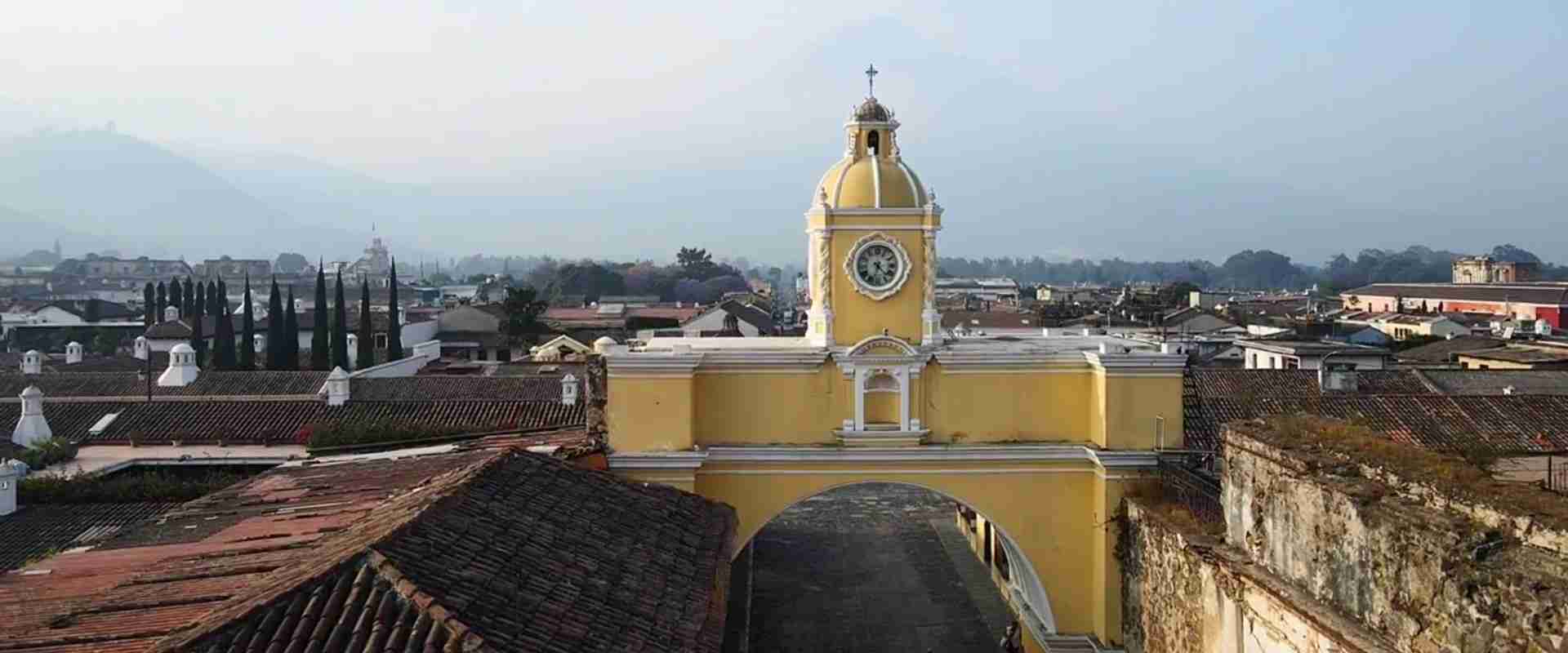
Santa Catalina Arch spans 5th Avenida Norte between 2nd and 3rd Calle, providing Antigua’s most recognizable landmark with Volcán Agua visible through the arch opening from specific street positions. Position yourself mid-block between 2nd and 3rd Calle on 5th Avenida Norte for classic centered composition with volcano framed by arch structure.
Morning photography 6-7 AM provides soft light on arch facade and clear volcano visibility before afternoon cloud development. Evening golden hour 5:30-6:15 PM creates warm tones on yellow arch paint with side lighting emphasizing architectural details. Wide-angle lens captures complete arch structure with volcano, while telephoto compression from further south on 5th Avenida creates dramatic perspective flattening volcano against arch backdrop.
Extended multi-day tours – 5+ days
Featured Antigua Multi-Day Tour Packages

4 days
4 days basic Guatemala
- ✓ Comprehensive Antigua tour
- ✓ Expert local guides included
- ✓ All accommodation arranged
- ✓ Transportation provided
6 days
Customized 6 Days Guatemala Trip with Lake Atitlan, Daily Depart (Private)
- ✓ Comprehensive Antigua tour
- ✓ Expert local guides included
- ✓ All accommodation arranged
- ✓ Transportation provided
3 days
Lake Atitlan & Chichicastenango Market 3D/2N
- ✓ Comprehensive Antigua tour
- ✓ Expert local guides included
- ✓ All accommodation arranged
- ✓ Transportation provided

5 days
5 days Mini Guatemala: living culture and colonial charm
- ✓ Comprehensive Antigua tour
- ✓ Expert local guides included
- ✓ All accommodation arranged
- ✓ Transportation provided
Multi-day tour packages powered by TourRadar. Prices and availability subject to change.
Santa Catalina Arch Photography Guide 2026
Historical Context and Architectural Significance
Santa Catalina Arch was constructed in the 17th century connecting Santa Catalina convent buildings across 5th Avenida Norte, allowing cloistered nuns to pass between structures without entering public streets. The distinctive yellow painted arch with clock tower addition survives as one of Antigua’s most photographed colonial structures and serves as visual symbol of the city’s architectural heritage.
The arch measures approximately 8 meters wide spanning the street width, with clock tower rising additional 4 meters above arch structure. The yellow ocher paint creates distinctive color contrast against blue highland skies and green volcano slopes, while architectural details including pilasters, cornices, and decorative elements represent colonial baroque influences.
Photographers appreciate the arch for compositional opportunities combining foreground architectural element with background volcanic landscape, creating layers of visual interest and establishing sense of place unique to Antigua. The structure’s position on straight north-south street provides unobstructed sightlines toward Volcán Agua creating reliable composition opportunities regardless of season or time of day.
Optimal Photography Times and Lighting Conditions
Early morning photography 5:45-7 AM captures arch with soft directional light from east illuminating western facade while Volcán Agua emerges from darkness with changing sky colors. Clear atmosphere before cloud development ensures sharp volcano definition and vibrant sky tones. Weekday mornings reduce pedestrian and vehicle traffic allowing longer exposure times and cleaner compositions.
Golden hour evening photography 5:30-6:15 PM provides warm color tones on yellow arch paint with side lighting from west creating dimensional modeling of architectural details. The timing coincides with reduced tourist crowds as organized tours depart city center. Weekend evenings feature local activity including street vendors and residents creating cultural context beyond pure architectural photography.
Midday photography 11 AM-1 PM works for high-contrast black and white conversions emphasizing architectural geometry and shadow patterns. The strong overhead light creates challenging exposure situations for color photography but enables dramatic interpretations emphasizing form over color. Cloudy midday conditions provide even lighting suitable for architectural detail documentation.
Composition Techniques and Camera Settings
Classic centered composition positions camera mid-street on 5th Avenida Norte between 2nd and 3rd Calle, framing volcano through arch opening with architectural elements balanced on frame sides. Wide-angle lens in 24-35mm range captures complete arch structure with sufficient volcano presence while maintaining architectural proportions without excessive distortion.
Telephoto compression technique positions photographer further south on 5th Avenida using 70-200mm focal lengths to compress perspective, enlarging volcano relative to arch structure creating dramatic scale relationships. This approach requires longer focal lengths and sufficient distance, typically shooting from 4th or 5th Calle positions.
Foreground element integration includes pedestrians, bicycles, tuk-tuks, or street vendors providing human scale and cultural context. Time exposures during low-traffic periods create motion blur effects as vehicles and pedestrians pass through frame while maintaining sharp architectural rendering. Morning and evening golden hours provide directional light creating dimensional depth through shadow and highlight contrast.
Best Viewpoints and Photography Locations 2026
Cerro de la Cruz Panoramic Viewpoint
Cerro de la Cruz provides the highest accessible viewpoint overlooking Antigua from approximately 100 meters above city center elevation. The hilltop location offers 180-degree panoramic views spanning complete colonial grid, three surrounding volcanoes (Agua, Fuego, and Acatenango), and valley landscape extending to distant mountains.
Access from city center follows 30-minute uphill walk along paved and dirt trail beginning at northern end of 1st Avenida Norte. The route gains 100 meters elevation over 1.5-kilometer distance with moderate incline suitable for average fitness levels. Tourist police presence 8 AM-5 PM daily provides security along the trail and at viewpoint platform following previous robbery concerns.
Photography from the viewpoint emphasizes panoramic landscape compositions using wide-angle lenses capturing complete city layout with volcanic backdrop. Morning photography 6:30-8 AM provides best atmospheric clarity before cloud development, while afternoon light 3-5 PM creates warm tones on colonial buildings. The concrete cross structure provides foreground element for composition though many photographers exclude it for cleaner landscape emphasis.
Optimal photography times match sunrise golden hour for soft directional light and clear volcano visibility. Weekend mornings attract local families reducing tourist presence compared to weekday organized tour arrivals. Visit duration allows 30-60 minutes for multiple compositions, perspective adjustments, and lighting variation observation.
La Merced Church and Fountain Locations
La Merced church on 1st Calle Poniente and 6th Avenida presents distinctive baroque facade in yellow and white paint scheme creating photogenic composition rivaling Santa Catalina Arch for architectural photography. The elaborate stucco ornamentation, twin bell towers, and central facade details provide rich visual complexity suitable for close-up architectural study and wide establishing shots.
The adjacent fountain and plaza create foreground elements for church photography while providing their own photographic merit as colonial fountain designs. Morning light 7-9 AM illuminates eastern facade while afternoon 3-5 PM creates side lighting emphasizing architectural relief and dimensional details. The plaza accommodates tripod setup for long exposure evening photography when street lighting provides dramatic architectural illumination.
Interior photography during service hours requires respectful discretion though the church welcomes visitors and photography outside mass times 8-11 AM and 2-4 PM weekdays. The baroque interior includes gilded altarpieces, religious artwork, and colonial architectural details suitable for available light photography using fast lenses or high ISO settings to maintain handheld shooting capability.
Central Plaza and Cathedral Photography
Parque Central provides multiple photography opportunities combining colonial buildings, cathedral ruins, fountain, and daily cultural activity creating layered compositions. The central fountain allows foreground interest for cathedral facade photography, while surrounding arcade buildings create architectural frame elements for composed shots.
Cathedral ruins east of plaza present dramatic colonial architecture with partial destruction from 18th century earthquakes creating photogenic decay and historical atmosphere. The structure opens for photography 9 AM-5 PM with €5 entry fee providing access to interior spaces, partial dome remains, and underground crypt areas offering unique architectural photography perspectives.
Plaza activity photography captures daily cultural scenes including shoe shiners, vendors, families, and tourists creating authentic street photography opportunities. Weekend evenings feature increased activity with live music, food vendors, and social gatherings providing dynamic cultural documentation. Respectful approach and cultural sensitivity guide photography of local residents, requesting permission for direct portraits while street scenes and wider environmental shots proceed without specific individual consent requirements.
Volcano Photography Opportunities 2026
Volcán Agua Compositions and Access Points
Volcán Agua dominates southern horizon from throughout Antigua, rising 3,760 meters elevation creating dramatic backdrop for architectural and landscape photography. The symmetrical cone shape with distinctive profile provides recognizable element appearing in countless Antigua photographs from street level, rooftop, and elevated viewpoint positions.
Best viewing and photography locations include Santa Catalina Arch on 5th Avenida Norte, Cerro de la Cruz viewpoint, and various rooftop restaurant locations offering elevated perspectives. Morning photography 6-8 AM provides highest probability of clear volcano visibility before cloud development obscures summit. Dry season December-April offers 80%+ clear day frequency compared to 40-50% during May-November rainy season.
Telephoto photography from elevated viewpoints creates compressed perspective emphasizing volcano scale and reducing atmospheric haze effects through closer apparent distance. Wide-angle compositions from street level integrate volcano with colonial architecture establishing environmental context and sense of place. Sunrise photography captures volcano silhouette against developing sky colors while afternoon side lighting reveals slope details and dimensional modeling.
Volcán Fuego and Acatenango Perspectives
Volcán Fuego appears west of Antigua as one of Guatemala’s most active volcanoes, producing regular eruptions visible as night glows and occasional daytime ash plumes. The volcano pairs visually with neighboring Volcán Acatenango creating distinctive double-peak composition visible from western viewpoints and elevated positions throughout Antigua.
Night photography of eruption glows requires clear weather, active eruption timing, and western-facing viewpoint access. Cerro de la Cruz provides optimal vantage though activity visibility varies with eruption intensity and atmospheric conditions. Long exposure times of 15-30 seconds capture glowing lava and ash illumination while maintaining foreground city lights and architectural elements.
Daytime photography emphasizes dramatic cloud formations around volcano summits and occasional ash plumes during significant eruption events. Wide-angle compositions from elevated viewpoints integrate multiple volcanoes with city landscape creating comprehensive regional geography documentation. Professional photographers monitor eruption reports and weather forecasts for optimal timing of volcano-focused photography sessions.
Seasonal Considerations and Weather Patterns
Dry season December through April provides optimal volcano photography conditions with clear morning visibility exceeding 80% of days and minimal cloud development before 10-11 AM. Afternoon cloud buildup obscures volcano summits 2-5 PM though evening clearing occasionally reveals sunset golden hour views. Early morning commitment ensures highest success rates for clear volcano photographs.
Rainy season May through November reduces volcano visibility to 40-50% of days with persistent cloud cover and afternoon storm development. Morning photography 6-7 AM provides best opportunity for brief clear windows before cloud accumulation. Photographers accepting variable conditions and flexible scheduling find success through persistent attempts over multiple days rather than expecting reliable single-day results.
Atmospheric haze varies seasonally with dry season producing clearer air and sharper distant detail rendering. Agricultural burning February-April occasionally reduces visibility through smoke though clear days during this period offer exceptional contrast and detail. Rainy season benefits from reduced haze following storm systems creating extremely clear conditions during brief weather windows.
Golden Hour and Lighting Strategies 2026
Morning Golden Hour Photography Planning
Morning golden hour occurs 5:45-6:30 AM throughout 2026 with minimal seasonal variation due to Guatemala’s equatorial latitude. The soft directional light from east illuminates western-facing colonial architecture creating warm tones on painted facades while eastern volcano slopes receive direct illumination revealing topographic detail.
Sunrise timing varies 5:45-6:15 AM depending on season with earliest sunrises occurring late March through early May and latest sunrises mid-December through mid-January. The 30-minute variation affects optimal shooting time planning though general 6 AM arrival captures peak golden hour conditions year-round.
Location planning prioritizes western-facing architectural subjects and eastern volcano perspectives during morning golden hour. Santa Catalina Arch receives direct eastern light illuminating yellow facade while Volcán Agua transitions from silhouette to detailed illuminated surface. Cerro de la Cruz viewpoint captures sunrise development across valley with colonial city below transforming from shadowed to illuminated as sun rises above eastern mountains.
Evening Golden Hour Photography Timing
Evening golden hour spans 5:30-6:15 PM with sunset occurring 6-6:30 PM depending on season. The warm directional light from west illuminates eastern-facing architecture while creating dimensional shadows emphasizing architectural relief and colonial building details. Sky colors develop intensity 15-20 minutes after sunset creating extended photography opportunities beyond direct golden hour period.
Blue hour photography follows sunset by 20-30 minutes providing deep blue sky backgrounds contrasting with illuminated building interiors and street lighting. The brief window requires efficient shooting and pre-planned compositions to maximize limited optimal lighting duration. Colonial architecture with interior lighting creates dramatic contrast against darkening sky backgrounds.
Evening golden hour concentrations focus on eastern architectural subjects including La Merced church, central plaza areas, and eastern street corridors receiving direct western light. Volcano photography becomes challenging during evening hours due to western light creating flat frontal illumination without dimensional shadow detail. City landscape photography emphasizes architectural elements over volcanic backgrounds during evening sessions.
Overcast and Diffused Light Applications
Overcast conditions provide even diffused lighting ideal for architectural detail photography, street portraits, and market scenes without harsh shadow complications. The soft light enables focus on subject color, texture, and form without managing extreme contrast ranges challenging camera dynamic range capabilities.
Cathedral and church interior photography benefits from overcast exterior conditions reducing contrast between bright exterior windows and dark interior spaces. The diffused exterior light creates more manageable exposure ranges allowing simultaneous rendering of interior details and exterior views through colonial window openings.
Street photography and cultural documentation proceeds effectively under overcast conditions with even lighting across scenes reducing exposure complications and enabling consistent technical approach across multiple subjects. Market photography particularly benefits from diffused light preventing harsh shadows on vendor products and enabling accurate color rendering of textiles, produce, and traditional items.
Church and Colonial Architecture Photography 2026
Major Churches and Religious Architecture
Antigua contains 15+ significant colonial churches and religious structures suitable for architectural photography ranging from intact buildings with active congregations to earthquake-damaged ruins presenting historical decay aesthetics. Each structure offers distinctive architectural details, facade designs, and interior spaces presenting varied photography opportunities.
La Merced features elaborate baroque facade in yellow and white paint creating Guatemala’s most ornate church exterior. Photography focuses on facade details, stucco ornamentation, and twin bell towers. Interior access outside service times enables altar photography, religious artwork documentation, and architectural detail study. Morning light 7-9 AM illuminates facade optimally while interior photography works throughout day with available light techniques.
San Francisco church presents massive colonial structure with distinctive yellow painted facade and earthquake-reinforced buttresses creating unique architectural profile. The interior houses tomb of Hermano Pedro, important religious figure drawing pilgrims from throughout Central America. Photography emphasizes architectural scale, buttress details, and interior religious artwork using available light or fast lenses for low-light conditions.
Cathedral ruins east of Parque Central offer earthquake damage aesthetic with partial walls, exposed structural elements, and underground crypt spaces. The €5 entry fee provides access throughout structure for photography 9 AM-5 PM daily. Wide-angle lenses capture architectural scale and spatial relationships while detail work emphasizes historical construction techniques and earthquake damage patterns.
Colonial Residential and Commercial Architecture
Colonial residential buildings throughout city center feature distinctive architectural elements including large wooden doors, barred windows, interior courtyards, and pastel-painted facades creating photogenic street scenes. Most buildings remain private residences though some operate as hotels, restaurants, or museums allowing interior courtyard photography.
Hotel Santo Domingo offers courtyard and museum complex accessible for photography combining colonial architecture with contemporary hotel facilities and archaeological displays. The restaurant courtyard provides accessible photography location without accommodation requirement. Interior spaces feature colonial construction details, archaeological artifacts, and fountain elements creating layered composition opportunities.
Street photography along major colonial corridors including 5th Avenida Norte, Calle del Arco, and streets surrounding central plaza captures architectural variety, daily cultural scenes, and environmental portraits integrating residents and visitors within colonial urban context. Respectful photography approach requests permission for identifiable individual portraits while street scenes and environmental photography proceeds without specific subject consent.
Architectural Detail and Ornamentation Photography
Colonial architectural details including doorways, window grilles, wall textures, decorative tiles, and weathered paint surfaces provide compelling close-up photography subjects emphasizing historical character and construction techniques. Standard zoom lenses in 24-70mm range capture most details while telephoto options compress perspective for facade ornamentation photography.
Door photography emphasizes massive wooden construction, metal hardware, decorative elements, and weathered surfaces revealing centuries of use. Doors along 5th Avenida Norte and surrounding streets present variety of styles, colors, and conditions suitable for comparative documentation or isolated artistic studies.
Wall texture and paint patina photography explores weathered colonial surfaces showing age, repair history, and environmental effects. Close-up compositions emphasize abstract qualities of deteriorating plaster, exposed brick, and layered paint creating minimalist abstractions from architectural elements. Diffused lighting from overcast conditions or open shade produces even illumination revealing subtle surface variations.
Street Photography and Cultural Scenes 2026
Market Photography Opportunities
Mercado Central operates 6 AM-6 PM daily providing traditional market atmosphere with produce vendors, prepared food stalls, textile sellers, and daily commercial activity creating authentic cultural documentation opportunities. Interior lighting challenges require high ISO settings or fast lenses though natural light from market openings provides workable conditions for documentary photography.
Vendor portrait photography requires respectful approach and permission requests, ideally after purchasing items or engaging in brief conversation establishing rapport. Many vendors welcome photography as business promotion while others prefer privacy, requiring sensitivity to cultural norms and individual preferences. Small thank-you purchases or tips acknowledge vendor cooperation when subjects provide extended access or pose for portraits.
Product and display photography captures colorful produce arrangements, traditional textile patterns, and vendor stall compositions without requiring individual permission for non-identifiable subjects. Wide-angle lenses establish market environment context while standard focal lengths isolate interesting product displays, color combinations, or traditional item arrangements.
Street Life and Daily Activity Documentation
Street photography captures daily cultural scenes including shoe shiners, vendors, school children, religious processions, and casual social interactions creating authentic documentation of contemporary Guatemalan life within colonial setting. Ethical considerations balance documentary value against subject privacy and cultural sensitivity regarding photography of local residents.
Environmental portraits integrate subjects within architectural and cultural context using wider focal lengths showing relationship between individuals and surroundings. This approach provides cultural information while reducing emphasis on specific facial features compared to telephoto close-ups focusing exclusively on individual subjects.
Candid street photography documents authentic moments and interactions without staged arrangements or subject awareness. The approach requires quick observation, anticipation of interesting moments, and technical proficiency enabling rapid shooting without extensive camera adjustments. Prime lenses with pre-set aperture and focus distances facilitate quick shooting while maintaining image quality standards.
Festival and Cultural Event Photography
Semana Santa (Holy Week) celebrations March-April provide Guatemala’s most significant cultural event and photography opportunity with elaborate processions, alfombras (sawdust carpets), religious ceremonies, and massive crowd participation. Photography planning requires crowd management strategies, multiple battery and memory card backups, and advance position scouting for optimal vantage points along procession routes.
Daily processions during Holy Week follow predetermined routes published in advance allowing photography position planning. Arrive 1-2 hours before procession start times securing positions with clear sightlines and minimal crowd obstruction. Telephoto lenses compress procession elements while wide-angle coverage captures alfombra context and crowd scale.
Other cultural events including Independence Day celebrations, local saints’ feast days, and weekend cultural programs in Parque Central provide additional photography opportunities. Event calendars available through tourism offices and cultural organizations enable advance planning for specific cultural documentation interests.
Photography Tours and Workshops 2026
Organized Photography Tour Options
Professional photography tours operate 4-6 hour sessions departing early morning or late afternoon to coincide with optimal lighting conditions. Tours cost $55-75 per person for standard group experiences and $85-120 for private instruction in 2026. Check operator websites for current official rates as pricing may vary. Tours include 6-8 location visits, composition guidance, technical instruction, and cultural context explanations.
Morning tours departing 5:30-6 AM capture sunrise golden hour, volcano photography opportunities, and reduced tourist crowds at major locations. Itineraries include Santa Catalina Arch, Cerro de la Cruz viewpoint, La Merced church, and secondary locations based on group interests and guide expertise. Small group sizes of 4-6 participants ensure individualized instruction and flexible pacing.
Evening tours departing 4-5 PM focus on golden hour architectural photography, sunset timing, and blue hour cityscape opportunities. Routes emphasize western-lit architecture, central plaza areas, and elevated viewpoint locations for sunset photography. Extended tours continue through blue hour for street lighting and illuminated architecture photography.
Photography Workshop and Instruction Programs
Multi-day photography workshops operate 2-5 day programs combining technical instruction, location shooting, cultural context education, and portfolio review sessions. Programs cost $300-600 depending on duration and instructor credentials. Workshops accommodate 6-10 participants with balance between classroom technical sessions and field photography practice.
Instruction topics include camera technical operation, composition principles, lighting management, architectural photography techniques, portrait approaches, and post-processing workflows. Field sessions apply classroom concepts at actual locations with instructor guidance on composition refinement, technical problem solving, and creative development.
Private instruction sessions arrange customized photography education based on individual skill levels and specific interests. Rates range $75-150 per hour with typical 3-4 hour sessions covering location photography with integrated technical instruction. Private sessions suit advanced photographers seeking targeted skill development or beginners requiring fundamental technical education before independent shooting.
Self-Guided Photography Resource Options
Photography location guides available through tourism offices and online resources provide maps of major photography sites, optimal timing recommendations, and technical shooting suggestions. The free resources enable self-directed photography following proven location sequences and timing strategies without guide expense.
Online photography communities and forums provide Guatemala-specific technical advice, location recommendations, and current condition reports from photographers recently visiting Antigua. Active participation in these communities enables pre-trip planning research and post-trip image sharing with constructive feedback from experienced photographers.
Equipment rental services in Guatemala City and Antigua provide camera bodies, lenses, and accessories for travelers unable to transport full photography equipment. Daily rental rates range $30-50 for camera bodies and $20-40 for quality lenses depending on equipment specifications. Advance reservation 1-2 weeks before arrival ensures availability of desired equipment.
Equipment and Technical Recommendations 2026
Camera Body and Lens Selection
Full-frame mirrorless cameras provide optimal image quality and low-light performance for architectural interiors and evening photography while maintaining compact size and weight suitable for extended walking sessions. Crop-sensor bodies offer lighter weight and lower cost while producing excellent results for most photography applications including daytime architectural work and landscape compositions.
Standard zoom lenses covering 24-70mm focal range handle majority of Antigua photography including street scenes, architectural compositions, environmental portraits, and detail work. The versatile focal length range eliminates frequent lens changes while maintaining image quality suitable for professional applications and serious amateur work.
Wide-angle zoom lenses in 16-35mm range capture cathedral interiors, panoramic viewpoint photography, and architectural compositions emphasizing building scale and surrounding environmental context. The extreme focal lengths create dramatic perspective effects requiring careful composition to avoid excessive distortion on architectural subjects.
Telephoto zoom lenses 70-200mm range enable volcano compression techniques, architectural detail isolation, and candid street photography from discrete distances. The longer focal lengths reduce wide-angle distortion on architectural facades while enabling selective composition emphasizing specific design elements against simplified backgrounds.
Support Equipment and Accessories
Lightweight travel tripods enable low-light cathedral photography, long exposure evening work, and precise composition refinement for architectural studies. Carbon fiber construction reduces weight to 1-1.5 kilograms while maintaining stability for camera bodies and standard zoom lenses. Ball head or three-way pan head selection depends on shooting style preferences and composition workflow.
Polarizing filters reduce atmospheric haze for distant volcano photography and manage reflections in architectural glass and water surfaces. The filters rotate to control polarization intensity enabling preview of effect strength before exposure. Circular polarizers work with autofocus and metering systems while linear polarizers suit manual focus applications on older equipment.
Neutral density filters enable long exposure photography during daylight hours creating motion blur effects in pedestrian and vehicle traffic while maintaining proper exposure with slow shutter speeds. Variable ND filters offer adjustment flexibility though fixed-density filters provide superior optical quality for critical applications.
Digital Workflow and Storage Considerations
Memory card capacity planning allows 64-128GB cards for multi-day shooting without download requirements. RAW file sizes average 25-40MB depending on camera specifications requiring capacity calculation based on expected shot volume. Dual card slots enable simultaneous backup recording or separate RAW and JPEG file storage on different cards.
Backup storage through portable hard drives or cloud upload services protects against card failure or loss. Daily file transfers from memory cards to backup storage ensure redundancy protecting against equipment failure, theft, or accidental deletion. Internet upload to cloud storage requires reliable WiFi access at accommodations though many Antigua hotels provide adequate bandwidth for evening image backup.
Post-processing workflow software including Adobe Lightroom or Capture One enables RAW file processing, color correction, exposure adjustment, and image organization. Mobile editing apps allow basic adjustments and social media sharing during travel though comprehensive processing typically occurs after returning home with larger display monitors and complete software access.
Sample Photography Itineraries 2026
One-Day Comprehensive Photography Experience
Depart accommodation 5:30 AM for Santa Catalina Arch sunrise photography 5:45-6:45 AM capturing golden hour light on arch facade and Volcán Agua. Use multiple focal lengths experimenting with centered composition through arch and telephoto compression from distance. Shoot both horizontal and vertical orientations for composition variety.
Walk to Cerro de la Cruz 6:50 AM for panoramic viewpoint photography 7-8 AM. Capture wide-angle city overview with three volcano backdrop, detail shots of colonial architecture, and various compositions balancing landscape and architectural elements. Return to city center via trail descent.
Breakfast break 8:15-9:15 AM at central café. Review morning images, adjust camera settings based on early results, prepare for midday shooting. Light breakfast costs $6-10.
La Merced church photography 9:30-10:30 AM emphasizing baroque facade details, fountain foreground compositions, and plaza context. Interior visit if accessible outside service times for altar and religious artwork photography using available light techniques.
Market photography at Mercado Central 10:45 AM-12 PM documenting vendor portraits, product displays, and market atmosphere. Request permission for identifiable subject photography, purchase small items from cooperative vendors. Market expenses $8-12 for purchases and tips.
Lunch break 12:15-1:30 PM with image review and afternoon planning. Lunch costs $10-15 at mid-range restaurant.
Architectural detail photography 1:45-3:30 PM along major streets capturing doorways, window details, wall textures, and colonial ornamentation. Use diffused afternoon light for even illumination of texture and color detail.
Late afternoon positioning 4 PM at selected western-lit architectural subject for golden hour photography 5:30-6:15 PM. Continue shooting through sunset 6-6:30 PM and blue hour 6:30-7 PM for illuminated architecture against darkening sky.
Day total: No tour fees for self-guided photography, breakfast $8, market purchases $10, lunch $12. Total: $30 per person (excluding accommodation).
Two-Day Photography Workshop Experience
Day One professional photography tour 5:30-10:30 AM $65 including sunrise golden hour at Santa Catalina Arch, Cerro de la Cruz panoramic viewpoint, and secondary locations with professional instruction on composition, exposure, and lighting techniques. Tour includes transportation to distant viewpoints and guide expertise on optimal shooting positions.
Independent afternoon shooting 2-6 PM reviewing morning instruction and applying techniques at additional locations. Practice architectural detail work, street photography approaches, and composition refinement. Evening review session 7 PM examining day images and planning next day shooting.
Day One total: Photography tour $65, meals $25. Total: $90 per person (excluding accommodation $40-70).
Day Two independent shooting following tour route knowledge from previous day. Sunrise session 5:45-7:30 AM at Santa Catalina Arch experimenting with composition variations and technical approaches. Return to accommodation for breakfast and image review 7:45-9 AM.
Market and street photography 9:30 AM-12 PM applying documentary techniques and cultural sensitivity approaches discussed during tour instruction. Focus on environmental portraits, vendor interactions, and authentic cultural documentation.
Lunch and midday break 12:15-2:30 PM with image culling and editing of best shots from both days. Upload selected images to cloud storage for backup protection.
Church and architectural photography 3-6 PM visiting La Merced, San Francisco, cathedral ruins, and colonial buildings emphasizing techniques learned during workshop. Conclude with golden hour sunset shooting at planned location.
Day Two total: Cathedral entry €5, meals $22. Total: $32 per person (excluding accommodation).
Two-day total: $122 per person covering professional tour, independent shooting time, and comprehensive location coverage. Accommodation adds $80-140 total for mid-range lodging.
Three-Day Photography Intensive Program
Day One focuses on landscape and architectural fundamentals through morning photography tour $65 covering major landmarks and optimal viewpoint locations. Afternoon self-directed shooting practices tour concepts with evening image review session.
Day Two emphasizes cultural and street photography through market visit, cultural scene documentation, and environmental portrait techniques. Independent shooting applies respectful photography approaches and cultural sensitivity principles. Consider optional afternoon cooking class $65 providing cultural immersion complementing photography documentation.
Day Three specializes in advanced techniques including long exposure, creative composition, and interpretive architectural photography. Morning golden hour session experiments with multiple focal lengths and creative approaches at familiar locations from previous days. Afternoon focuses on post-processing workflow and final image selection from three-day shooting.
Three-day total: Photography tour $65, optional cooking class $65, cathedral entry €5, meals $70. Total: $210 per person covering intensive photography education and cultural experiences. Accommodation adds $120-210 total for mid-range lodging.
Frequently Asked Questions About Antigua Photography 2026
Is it safe to carry expensive camera equipment in Antigua?
Antigua maintains relatively safe conditions for photography equipment though standard travel precautions apply including keeping cameras secure when not actively shooting, avoiding isolated areas during early morning or evening sessions, and maintaining awareness in crowded market locations. Use camera straps, keep equipment bags closed and positioned in front of body, and avoid displaying multiple expensive lenses simultaneously.
Can you use drones for photography in Antigua in 2026?
Drone operations require Civil Aviation Authority permits with applications submitted 2-4 weeks before flight dates. Urban area restrictions, UNESCO World Heritage protections, and flight safety regulations limit drone usage throughout Antigua. Professional commercial drone work requires additional insurance and operational certifications. Recreational drone flying faces significant regulatory challenges making ground-based photography more practical for most visitors.
What are the best months for volcano photography in Antigua?
December through April dry season provides optimal volcano photography conditions with clear morning visibility exceeding 80% of days and minimal cloud development before 10-11 AM. February and March offer peak clear day frequency though agricultural burning occasionally reduces atmospheric clarity. May through November rainy season reduces clear day probability to 40-50% requiring flexible scheduling and multiple attempt days.
Do churches allow photography inside in Antigua?
Most churches welcome respectful photography outside service times though flash photography and tripod usage typically face restrictions. Request permission from church administrators for commercial photography or extensive interior documentation. Active services prohibit photography requiring sensitivity to worship activities and congregational privacy. Available light photography using fast lenses or higher ISO settings maintains quality without requiring flash or extended tripod setups.
How do you photograph people respectfully in Antigua markets?
Request permission before photographing identifiable individuals through polite Spanish phrases or gesture communication. Engage in brief conversation or purchase interaction before requesting photographs establishing rapport and mutual respect. Offer to show subjects captured images on camera screen and provide email addresses for image sharing. Consider small purchases or tips acknowledging vendor cooperation for extended photography access.
What focal length lens is most useful for Antigua photography?
24-70mm standard zoom lens handles 70% of Antigua photography situations including street scenes, architectural compositions, and environmental portraits. The versatile range eliminates frequent lens changes while maintaining image quality. Secondary wide-angle lens 16-35mm suits cathedral interiors and panoramic viewpoints while telephoto 70-200mm enables volcano compression and architectural details from distance.
Can you take photos of the military or government buildings in Antigua?
Avoid photographing military personnel, equipment, or installations throughout Guatemala as prohibition signs clearly indicate restrictions. Government building exteriors generally allow photography from public spaces though sensitive areas may prohibit images. When uncertain about photography permissions, request authorization or avoid questionable subjects preventing potential confrontations or equipment confiscation.
What time should you arrive at Cerro de la Cruz for sunrise photography?
Arrive Cerro de la Cruz viewpoint 6-6:15 AM for sunrise photography preparation and optimal position selection before other photographers and tourists arrive. The 30-minute uphill walk from city center requires 5:30-5:45 AM departure from accommodations. Sunrise occurs 5:45-6:15 AM depending on season with peak golden hour light continuing 30 minutes after sunrise.
Do photography tours provide cameras and equipment?
Photography tours expect participants to bring their own cameras and equipment though guides provide technical instruction applicable to various camera systems. Some workshop programs offer equipment rental coordination though advance arrangement ensures availability. Tour prices reflect instruction and location access rather than equipment provision, allowing photographers to use familiar personal cameras maximizing comfort and control.
How many memory cards do you need for a day of Antigua photography?
Expect 300-500 images during active full-day photography session depending on shooting style and subject variety. RAW files average 25-40MB each requiring 12-20GB storage capacity. Carry 2-3 memory cards totaling 64-96GB provides comfortable capacity buffer while allowing card rotation for backup security. Dual card slot cameras enable simultaneous duplicate recording on separate cards protecting against single card failure.