
San Sebastian Food Guide: Pintxos Bars & Michelin Basque Cuisine
San Sebastián sits on a sweeping curve of the Bay of Biscay in Spain’s Basque Country, and it may be the most intensely food-focused city on earth. Within a compact grid of 19th-century streets, centuries-old bars serve the world’s first modern pintxo while restaurants holding an extraordinary concentration of Michelin stars operate just blocks away. Whether you arrive for a single evening or dedicate a week to the Basque table, this guide covers bar-counter culture, the chefs who launched a global culinary revolution, and every practical detail you need to eat extraordinarily well.
Key Takeaways
- San Sebastián holds one of the highest concentrations of Michelin-starred restaurants in the world, with 19 Michelin stars documented within 25 kilometers of the city center.
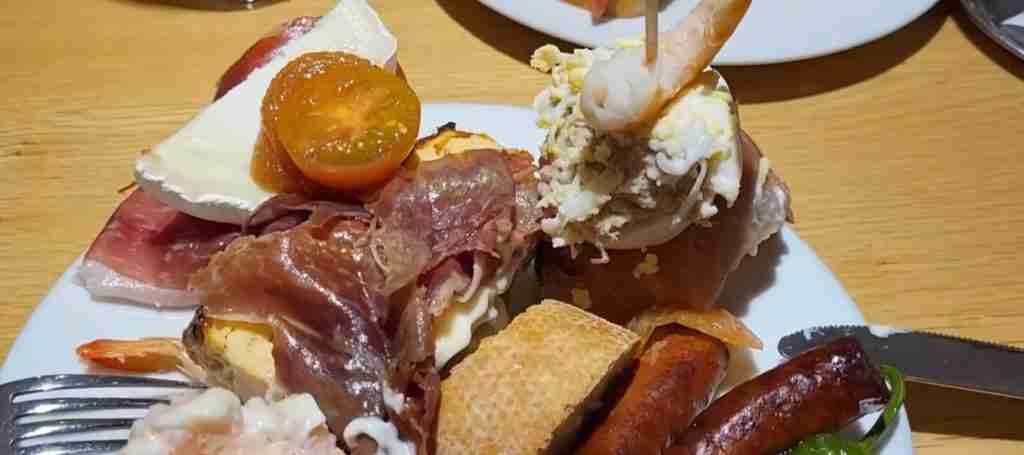
- Pintxos — small bar snacks typically assembled on bread and skewered with a toothpick — are the defining food experience; cold classics cost €2–4, hot made-to-order pintxos average €4–8.
- The Gilda (Cantabrian anchovy, green olive, and guindilla pepper on a toothpick) was created at Bar Casa Vallés in the late 1940s and is credited as the world’s first modern pintxo.
- The New Basque Cuisine movement, launched in 1976 by Juan Mari Arzak and Pedro Subijana after a formative encounter with Paul Bocuse, placed Basque cooking at the center of the global fine-dining conversation and directly influenced the Spanish culinary revolution of the 1990s and 2000s.
- The Old Town (Parte Vieja) holds the greatest density of pintxos bars; the Gros neighborhood across the Urumea River offers a calmer, more local atmosphere with equally serious kitchens.
- Three-Michelin-star tasting menus (Arzak: €315 per person) require reservations months in advance; a full pintxos evening across four bars, including drinks, costs €30–50 per person and needs no booking at all.
People Also Ask About San Sebastián Food
What is the difference between pintxos and tapas?
Pintxos (the Basque spelling of the Spanish pinchos) and tapas are both small bar snacks, but they differ sharply in format, geography, and social function. A pintxo is typically a toothpick-skewered bite served on a slice of baguette, assembled in advance and displayed across bar counters in northern Spain, primarily in the Basque Country and Navarre. Customers graze the counter, select what appeals, and keep their toothpicks to present at the end. Tapas, by contrast, are the broader Spanish bar-food tradition: in the south, they are often brought free with a drink; elsewhere they are ordered as shared plates brought to the table, with no bread or skewer required.
The distinction matters culturally as much as culinarily. In San Sebastián, asking for “tapas” in a pintxos bar immediately signals an outsider. The pintxo format has also evolved beyond its bread-and-toothpick origins: made-to-order hot pintxos — foie gras seared on a plancha, braised beef cheek in red wine, crispy pig’s ear — are closer to small-plate restaurant cooking executed at a bar counter with no reservation and minimal waiting. These hot pintxos cost €4–8 per piece, sometimes more for premium shellfish. The line between the pintxos counter and the neighborhood restaurant has blurred over four decades of Basque culinary ambition, but the bar-counter ritual itself — stand, grab, drink, move on — remains the organizing principle of eating in San Sebastián.
How many Michelin-starred restaurants does San Sebastián have?
Within the city of San Sebastián itself, starred establishments include two restaurants with three Michelin stars (Arzak and Akelarre), the two-star Amelia by Paulo Airaudo at Hotel María Cristina, and one-star Kokotxa in the Old Town. The surrounding area extends the count further: Mugaritz, in the rural outskirts of Errenteria, holds two stars, and Martín Berasategui’s flagship restaurant in Lasarte-Oria holds three, with the chef’s overall portfolio reaching eleven stars as of 2026 — more than any other Spanish chef. Within a 25-kilometer radius of the city center, 19 Michelin stars are concentrated, a figure cited by Elena Arzak in 2026 as without parallel in Europe except in Kyoto. The Washington Post described San Sebastián as a city that “boasts one of the highest concentrations of Michelin-starred restaurants in the world” — a characterization consistent with every serious food publication that covers the region.
What is the best pintxos bar in San Sebastián?
No single pintxos bar earns universal consensus, and asking a local will produce a confident and entirely personal answer. The most consistently praised addresses for quality and distinctiveness include Borda Berri and La Cuchara de San Telmo (both in the Old Town), each taking a kitchen-driven approach with fresh cooking to order rather than pre-assembled counter displays. Ganbara stands out for seasonal produce, particularly mushrooms in autumn. Bar Txepetxa has specialized in anchovies for decades and executes them at a level that makes the Gilda’s primary ingredient feel newly discovered. Bar Casa Vallés carries historical authority as the birthplace of the Gilda. La Viña is the destination for dessert: its burnt Basque cheesecake has achieved genuine international recognition. In the Gros neighborhood, Bergara is the local favorite most consistently cited by knowledgeable food writers. The honest strategy is not to optimize for a single “best” bar but to plan two full evenings — one in the Old Town, one in Gros — sampling three or four bars at each stop.
When is the best time to go pintxos bar hopping in San Sebastián?
The pintxos crawl runs on two daily windows that locals call the txikiteo: a midday session around 1:00–3:00 PM, and an evening session from roughly 7:30–9:30 PM. The evening window is the more atmospheric: bars reach peak energy, counters are freshly stocked, and the Old Town fills with the organized commotion that makes pintxos culture distinctive. Arriving early in that window (7:30–8:00 PM) secures the freshest hot pintxos before demand strips the best items from kitchens. Weekday evenings, particularly Tuesday through Thursday, are calmer than weekends. Seasonally, late September through early November is arguably the finest time for a food-focused visit: wild mushroom pintxos appear on counters, the Cantabrian fishing season delivers premium seafood, and the annual San Sebastián Gastronomika congress in October brings visiting international chefs and special programming. Summer (July–August) brings tourist-season crowds that can overwhelm the Old Town; January and February are quieter but some bars take annual closures during this period.
Extended multi-day tours – 5+ days
Featured San Sebastian Multi-Day Tour Packages
3 days
San Sebastian 3-Day Discovery Tour
- ✓ Comprehensive San Sebastian experience
- ✓ Expert local guides included
- ✓ All accommodation included
- ✓ Transportation provided

5 days
San Sebastian 5-Day Highlights Experience
- ✓ Comprehensive San Sebastian experience
- ✓ Expert local guides included
- ✓ All accommodation included
- ✓ Transportation provided

7 days
San Sebastian 7-Day Cultural Journey
- ✓ Comprehensive San Sebastian experience
- ✓ Expert local guides included
- ✓ All accommodation included
- ✓ Transportation provided

10 days
San Sebastian 10-Day Complete Adventure
- ✓ Comprehensive San Sebastian experience
- ✓ Expert local guides included
- ✓ All accommodation included
- ✓ Transportation provided
Multi-day tour packages powered by TourRadar. Prices and availability subject to change.
The Culinary Capital of the Basque Coast
San Sebastián (Donostia in the Basque language, used interchangeably by locals) is a beach resort, a surfing destination, and a historic city of roughly 186,000 people — but its global reputation rests almost entirely on what happens in its kitchens. This is not a recent phenomenon or a product of tourism marketing. The culinary infrastructure of the city is genuine, layered, and deeply embedded in local social life: the private clubs where members gather to cook for each other (gastronomic societies, or txokos), the cider houses in the hills above the city, the fishing boats bringing turbot and anchovies into the harbor at Getaria, the sheep farmers whose flocks produce the milk for idiazabal cheese. Food in the Basque Country is not performance. It is daily life that happens to produce extraordinary results at an extraordinary density.
The physical geography helps. The Bay of Biscay delivers some of the finest seafood in Europe: bonito del norte (Cantabrian albacore tuna), anchovies, spider crabs, langoustines, and the prized turbot that made the fishing village of Getaria, 25 kilometers west of the city, a culinary destination in its own right. The mountain hinterland provides lamb, pork, wild mushrooms, and the milk of Latxa sheep whose cream produces idiazabal — a firm, lightly smoked cheese that appears in everything from bar pintxos to the tasting menu at Arzak. The seasons and the sea together define the flavors of a cuisine that has, over the past 50 years, gone from regional tradition to global reference point.
That 50-year arc is directly traceable to a single generation of chefs who met in December 1976 at a restaurant called Jaizubia. Approximately fourteen chefs from Gipuzkoa, led by Juan Mari Arzak and Pedro Subijana, gathered after both had attended a gastronomic round table in Madrid where Paul Bocuse spoke about the Nouvelle Cuisine movement. Arzak and Subijana subsequently traveled to Lyon in early 1977 to observe Bocuse’s kitchen directly. What they brought back was not a set of recipes but a set of principles: cook seasonally, reduce sauces, lighten textures, recover lost regional recipes, use the finest local products, and innovate continuously within the framework of authentic Basque tradition. The meeting at Jaizubia laid the groundwork for the Nueva Cocina Vasca — the New Basque Cuisine movement — which became Spain’s first gastronomic avant-garde.
Today the city holds what the Washington Post has described as “one of the highest concentrations of Michelin-starred restaurants in the world.” Within 25 kilometers of the city center, 19 Michelin stars are concentrated — a figure cited by Elena Arzak in 2026 as without parallel in Europe except in Kyoto. The Basque Culinary Center, described by San Sebastián Turismo as the world’s first gastronomic university, opened in 2011 and operates as a research institution and culinary academy whose graduates populate kitchens across Europe and the Americas.
What makes San Sebastián genuinely exceptional for the food traveler is not any single number or ranking but the range. A morning coffee at a café on the Boulevard, a €2.50 Gilda from a bar counter in the Old Town, and a €315 tasting menu at Arzak are all expressions of the same culinary culture. The continuity between them — a shared insistence on ingredient quality, respect for tradition alongside appetite for innovation — is what visitors from other food capitals find hardest to replicate at home.
Understanding Pintxos Culture: The Txikiteo and the Cuadrilla
No food experience in San Sebastián is more immediately accessible, or more precisely ritualized, than the pintxos crawl known as the txikiteo. The word derives from txikito, the small glass of wine that punctuates each stop. The ritual is straightforward: walk from bar to bar in a group, standing at the counter for one drink and two or three pintxos at each stop, then move to the next. Locals do this as a cuadrilla — a tightly bonded social group, often the same friends who have eaten and drunk together since childhood — and the txikiteo is as much a social institution as a food one. You do not eat a meal by txikiteo. You eat a succession of exceptional bites while talking to the same people you talk to every Tuesday, in the same bars you have visited for twenty years.
For visitors, the ritual can be approximated with a few practical principles. First: stand at the counter, not at a table. Tables, where they exist, are for eating more formally; the counter is where pintxos culture lives. Second: ask what is hot and freshly made. Most bars display a combination of cold pintxos on bread (assembled hours earlier and still good) and made-to-order hot pintxos that represent the kitchen’s real statement. Hot pintxos require catching the attention of bar staff and placing an order; they take a few minutes and are worth the wait. Third: pay either as you go or at the end, depending on the bar’s system. The toothpick method — keeping your sticks to present at the end — still operates at some traditional bars; others ring up each round. Fourth: do not linger. A txikiteo moves across three or four bars in a single evening because variety is the point.
The geography of the txikiteo concentrates in two main zones. The Old Town (Parte Vieja), the historic quarter north of the Boulevard, is the classic circuit: a dense grid of narrow streets with bars on nearly every block, particularly along Calle Fermín Calbetón — sometimes called “pintxo street” — and the surrounding alleys. On peak summer evenings, these streets fill to the point of gridlock, and arriving early in the evening window (before 8:30 PM) is necessary to secure counter space at the most sought-after bars. The Gros neighborhood, across the Urumea River to the east, runs a quieter parallel circuit that locals tend to prefer when the Old Town is overwhelmed.
Pricing is transparent and generally modest. Cold, pre-assembled pintxos on bread — Gildas, tortilla española, croquetas, anchovy toasts — range from €2 to €4 at most Old Town bars. Hot pintxos — braised beef cheek, seared foie gras, crispy pig’s ear, grilled seasonal mushrooms — cost €4–8, occasionally more for premium shellfish. A full txikiteo evening across four bars, including one drink at each stop (txakoli, a glass of red wine, or a small beer), typically costs €30–50 per person. This is exceptional bar food at genuine ingredient quality, not merely cheap food; the best bars are as serious about their kitchens as any mid-range restaurant in the city.
The social dimension of pintxos culture extends beyond the txikiteo into the institution of the gastronomic society (txoko). San Sebastián and the surrounding Basque Country hold thousands of these private clubs, historically male-only, where members cook for each other using shared kitchen facilities funded by membership dues. The tradition dates to the 19th century and is the structural underpinning of Basque culinary seriousness: cooking in these clubs is competitive, skilled, and intensely valued by men who might cook once a week in the txoko but rarely at home. Understanding that the most technically accomplished cooking in the city often happens in private clubs with no commercial pressure — rather than in bars or restaurants — provides important context for why the food culture is what it is.
The Gilda: The Pintxo That Started It All
The Gilda is three ingredients on a toothpick: a Cantabrian anchovy in olive oil, a green manzanilla olive, and a guindilla pepper from Ibarra in Gipuzkoa. It requires no cooking, no technique beyond careful sourcing, and no assembly skill beyond threading the skewer in the right order. It is also the world’s first modern pintxo — the specific act that defined what a pintxo could be — and it has been served, essentially unchanged, since the late 1940s.
The story of its creation is among the better-documented origin stories in modern food history. In the late 1940s, at Bar Casa Vallés on Calle Reyes Católicos in San Sebastián’s Old Town, a regular patron named Joaquín Aramburu — known to everyone as “Txepetxa” — reached across the counter and threaded a toothpick through the three items the bar kept in separate dishes for customers to eat alongside their wine: an anchovy, a guindilla pepper, and an olive. The bar’s proprietors at the time, the Vallés family (whose descendants run the bar today), had placed these pickles on the counter in the common practice of the period. Aramburu’s act of combining them on a single skewer was spontaneous, and the combination caught on among the bar’s regulars immediately. Multiple sources, including the current owners of Bar Casa Vallés and the official pintxos tourism documentation of San Sebastián, confirm the broad outlines of this account, while acknowledging minor variations in the precise date.
The name arrived from an unexpected direction. Rita Hayworth’s film Gilda premiered in Spain in December 1947, and its title character was described in the Spanish slang of the period as verde, salada, y un poco picante — green, salty, and a little spicy. The phrase fit the new pintxo perfectly: the guindilla provides green heat, the anchovy provides the salt, the olive rounds the profile with fat and brine. Bar Casa Vallés, still family-run at its original address, continues to serve the Gilda and is worth visiting for the historical resonance as much as the food itself.
The Gilda’s ingredients require quality to succeed at their full potential. The anchovy must be a genuine Cantabrian anchovy (boquerón del Cantábrico) — cured in salt, rinsed, and packed in good olive oil, with dense, full-flavored flesh that has nothing in common with generic canned versions. The guindilla should be a pickled Ibarra pepper, a slender, mildly spicy variety from the town of Ibarra in Gipuzkoa, not a generic pickled chili. The olive should be firm, meaty, and plump. When all three are sourced well, the Gilda achieves a balance of salty, acidic, fat, and gentle heat that explains why eight decades of culinary evolution have produced nothing more precisely calibrated for eating alongside a cold glass of txakoli.
Today the Gilda appears on virtually every pintxos counter in San Sebastián and across the Basque Country, and has spread globally to pintxos bars and Spanish restaurants far beyond Spain. It has inspired a small industry of premium-sourced versions and bar-specific variations — some add a caper, some vary the olive, some use anchovy brined differently. Bar Txepetxa (coincidentally named with the same nickname as the Gilda’s creator) is generally regarded as the finest anchovy specialist in the Old Town, and their Gilda benefits from sourcing that may be unmatched in the city. For the full historical experience, the Gilda at Bar Casa Vallés; for the finest anchovy expression, Bar Txepetxa.
Best Pintxos Bars in San Sebastián’s Old Town
The Old Town’s grid covers roughly 35 blocks between the Boulevard to the south, the port to the east, and La Concha beach to the west. Within it, bars fill almost every ground-floor space on streets like Calle Fermín Calbetón, Calle 31 de Agosto, and Calle San Jerónimo. Not all are worth your time, and the most tourist-visible bars are not always the best. The following are the addresses that earn sustained praise from knowledgeable local sources and food writers with real familiarity with the city.
Borda Berri
Calle Fermín Calbetón 12. Borda Berri operates as the defining example of the made-to-order pintxos school: nothing sits on the counter waiting. The menu is short, written on a blackboard, and everything comes from the kitchen when ordered. Core preparations include the pork rib kebab (consistently cited among the most satisfying items in the Old Town), the “false” idiazabal risotto (a creamy Basque sheep’s cheese sauce applied to rice with a texture and richness that earns the comparison), braised beef cheeks in red wine, and crispy pig’s ear. The space is tiny and fills quickly; arriving at opening time (around 11:30 AM for lunch, or at evening opening) maximizes the chance of counter space. Borda Berri is one of the most recommended pintxos bars in the world, and its kitchen justifies the reputation.
La Cuchara de San Telmo
Calle Santa María 4. Tucked into one of the Old Town’s less obvious alleys, La Cuchara de San Telmo has operated its blackboard-based kitchen format for more than two decades. Braised beef cheek in red wine is the house signature, cited most frequently by repeat visitors as the single best bite in the city. The menu also includes seared foie gras, charred octopus, and seasonal fish preparations. No counter pintxos, no reservations: you wait, you order, you eat standing. The combination of serious cooking and informal bar format has made this one of the most visited spots in the city while preserving an atmosphere that feels more neighborhood than tourist trap.
Ganbara
Calle San Jerónimo 21. Ganbara is the essential destination for seasonal produce. The counter is elaborately composed and changes with the market, but the kitchen is where the real commitment shows: mushroom preparations of unusual quality (cep, chanterelle, and other seasonal varieties sautéed, grilled, or folded into egg dishes), seafood that follows the fishing calendar, and egg preparations with premium ingredients that have become a house identity. Autumn is when Ganbara is at its most compelling — when wild cep mushrooms arrive and appear on the counter in preparations that demonstrate exactly why locals discuss the season with something close to religious anticipation. Ask what is freshest in the kitchen; the displayed counter items, though beautiful, are secondary to what comes out made to order.
Bar Txepetxa
Calle Pescadería 5. The only bar in the Old Town built almost entirely around a single ingredient: the anchovy. The counter displays a range of anchovy pintxos — on bread with different accents (roasted pepper, salted egg, cream cheese, herb sauces) — that demonstrates how much range a single exceptional ingredient can carry when sourced and handled at the highest level. The bar’s Cantabrian anchovies, oil-packed and carefully selected, are of consistently excellent quality. A stop here alongside a stop at Bar Casa Vallés (the Gilda’s birthplace) gives the anchovy its full cultural context.
Bar Casa Vallés
Calle Reyes Católicos. The birthplace of the Gilda and still a functioning bar in the Vallés family tradition. The setting is unpretentious, the prices are fair, and the historical significance is genuine. A Gilda eaten at the counter of Bar Casa Vallés carries a dimension that purely gastronomic rankings cannot capture: this is where Joaquín Aramburu threaded three ingredients on a toothpick in the late 1940s and defined an entire category of bar food.
Gorriti
Consistently cited by local sources as a bar that retains the character of the quieter parts of the Old Town. The counter tends toward traditional preparations — tortilla española, croquetas, anchovy combinations — rather than avant-garde kitchen projects, and the atmosphere is correspondingly calmer and more local. An evening that pairs one of the high-turnover kitchen-driven bars (Borda Berri, La Cuchara de San Telmo) with a stop at a traditional address like Gorriti covers more of what the Old Town actually is than a crawl confined to celebrity spots.
La Viña
Calle 31 de Agosto 3. The dessert destination of the Old Town and, increasingly, of international food culture. La Viña’s burnt Basque cheesecake — a deeply caramelized, intentionally scorched cream cheese tart with a liquid center and a bottom that barely holds its shape — has been reproduced in bakeries and restaurants from Tokyo to New York. The original remains the reference. Eating a slice at the source, standing at the counter, alongside a glass of wine, is the correct way to experience it. Do not leave the Old Town without stopping here.
Atari Gastroteka
Calle Mayor 18. Among the more ambitious kitchens operating in pintxos format, with seasonal menus, premium ingredients, and presentations that push toward tasting-menu thinking within a bar structure. Recommended for visitors who want to explore the intersection of pintxos tradition and fine-dining aspiration in a standing format.
Across the River: Pintxos in the Gros Neighborhood
The Urumea River separates the Old Town from Gros, a residential neighborhood on the east side of the city that faces Zurriola beach. The walk across any of the bridges takes five minutes; the atmosphere on the far side is noticeably different. Gros is where the city goes about its daily life with substantially less tourist pressure, and its pintxos circuit reflects that: fewer international visitors, more professional locals, a slightly more experimental tone in some kitchens.
Bergara Bar
General Artetxe 8. The most consistently cited premier address in Gros, and one of the best pintxos bars in the city by any measure. Bergara operates on the made-to-order model familiar from the best Old Town bars, with blackboard specials and fresh kitchen output. Hot pintxos — particularly mushroom preparations, grilled seafood, and beef dishes — are consistently among the most accomplished in the city. The counter also displays excellent cold pintxos, often more elaborate in presentation than the equivalent Old Town offering. Weekday evenings offer the experience in something close to its natural state, before weekend demand changes the atmosphere.
Bodega Donostiarra
Calle Peña y Goñi 13. A wine bar with a serious pintxos counter and a strong following among local professionals. The txakoli selection is notably good, and the cold pintxos include reliable anchovy and idiazabal cheese preparations.
The strategic approach for a two-evening pintxos visit to San Sebastián is to begin on the first evening in the Old Town — covering Borda Berri, La Cuchara de San Telmo, and Ganbara, finishing with La Viña for dessert — and to devote the second evening to Gros, starting at Bergara and exploring from there. This approach covers the full range of pintxos culture without eating badly anywhere, and provides the contrast between the Old Town’s historical density and Gros’s quieter, more residential rhythm.
The New Basque Cuisine Movement
In December 1976, approximately fourteen chefs from Gipuzkoa gathered at a restaurant called Jaizubia, led by Juan Mari Arzak and Pedro Subijana. The immediate catalyst was a gastronomic round table in Madrid that November, organized by the Club de Gourmets, where Paul Bocuse had spoken about the French Nouvelle Cuisine revolution. Arzak and Subijana subsequently traveled to Lyon in early 1977 to observe Bocuse’s kitchen directly. What they brought back was a set of principles rather than recipes: seasonal produce, reduced sauces, lighter textures, recovery of lost regional dishes, maximum ingredient quality, and continuous innovation within authentic Basque tradition.
The group that crystallized from these meetings — which included, at various stages, Karlos Arguiñano, Ramón Roteta, Luis Irizar, and others — organized regular dinners at rotating restaurants, sharing new dishes and techniques in a cooperative, non-competitive model that was itself unusual in professional kitchens of the period. Their collaborative spirit became a defining characteristic of Basque culinary culture: chefs who in France or Spain might have been rivals instead treated knowledge as a collective resource. The group photograph taken aboard a warship docked in San Sebastián harbor in 1981, commissioned for a savings bank calendar, became the iconic image of the movement.
The significance of the Nueva Cocina Vasca (New Basque Cuisine) extended well beyond Gipuzkoa. Juan Mari Arzak, who had received his first Michelin star in 1974, earned his third in 1989 and became one of the most internationally recognized ambassadors of Spanish cuisine. Pedro Subijana at Akelarre developed parallel innovations; his restaurant earned its third Michelin star in 2006. When Ferran Adrià later acknowledged the Basque chefs as direct predecessors of his own work at El Bulli — Andoni Luis Aduriz trained at Arzak and then under Adrià in 1993 before opening Mugaritz — the generational chain became explicit: from Bocuse to Arzak and Subijana, from Arzak and Adrià to Aduriz, with San Sebastián as the Spanish hinge point of the entire sequence.
Mugaritz is the movement’s most consequential second-generation product. Aduriz, born in San Sebastián in 1971, opened the restaurant in March 1998 in a rural farmhouse near Errenteria, naming it from “muga” (border in Basque) and “haritz” (oak tree) — a reference to the ancient oak on the edge of the property. The restaurant earned two Michelin stars and has maintained a continuous presence in The World’s 50 Best Restaurants since 2006. Aduriz became one of the founding patrons of the Basque Culinary Center, the institution that San Sebastián Turismo describes as the world’s first gastronomic university — a direct institutional expression of the movement’s founding proposition that gastronomy deserves systematic intellectual attention.
The 50th anniversary of the Nueva Cocina Vasca fell in 2026, and the Basque Culinary Center marked it with a commemorative publication featuring 50 photographs and 50 testimonials from chefs across three generations of the movement. Elena Arzak, who now leads the family restaurant alongside her father, was among them. The movement’s original aim — revive tradition, achieve innovation, train the next generation — has produced an outcome its founders could not have predicted: a city of fewer than 200,000 people on the Basque coast that functions, without exaggeration, as one of the culinary capitals of the world.
Michelin-Starred Restaurants in San Sebastián
Arzak — Three Stars
Alcalde José Elosegi Hiribidea, 273 (Alto de Miracruz). Arzak is the dynastic heart of Basque haute cuisine. The restaurant occupies a century-old family mansion in the residential Alto de Miracruz neighborhood, a ten-minute drive from the city center, and has been in the Arzak family’s hands for generations. Juan Mari Arzak received his first Michelin star in 1974 and his third — the maximum — in 1989, holding all three continuously since. His daughter Elena, who has taken on primary kitchen leadership, has earned recognition in her own right as one of the defining figures of European fine dining in her generation.
The kitchen maintains a Laboratorio Arzak in the same building: a formal research space where the team works with what the restaurant describes as a “flavor workbench” of more than a thousand ingredients, an approach to culinary research that predates the laboratory cooking model now widespread in fine dining. The tasting menu changes seasonally and pursues the kind of unexpected pairing and artistic presentation that has defined the restaurant since Juan Mari began rethinking Basque tradition in the 1970s. The current tasting menu is priced at €315 per person (VAT included, drinks extra); the à la carte menu is €285. The restaurant serves lunch (1:15–3:00 PM) and dinner (8:45–10:30 PM), Tuesday through Saturday, closed Sunday and Monday. Reservations via the official website (arzak.es) are confirmed within three days of request; three to four months of advance booking is realistic for weekend evenings in high season.
Akelarre — Three Stars
Paseo del Padre Orkolaga 56 (Monte Igueldo). Pedro Subijana, born in 1948 and one of the two founding principals of the New Basque Cuisine movement, has run Akelarre from its position on the slopes of Monte Igueldo for more than half a century. The restaurant earned its third Michelin star in 2006 and has retained it since; in 2017, Subijana extended the project into a luxury hotel and spa that allows guests to experience the restaurant as a complete destination overnight. The floor-to-ceiling windows deliver views across the Bay of Biscay that are, on clear days, as much a part of the meal as anything on the plate.
Subijana offers three distinct menus: a more traditional menu rooted in classic Basque preparations, and two innovation-focused tasting menus that represent the full range of his technical repertoire. Signature dishes have included the low-temperature egg with cuttlefish tartar and the “Gilda macaron” — a fine-dining reworking of the original pintxo that connects the most elevated cooking in the city to its most democratic form. Reservations require similar advance planning to Arzak.
Amelia by Paulo Airaudo — Two Stars
Hotel María Cristina, Calle Oquendo 1. Paulo Airaudo, an Argentine-Italian chef, opened Amelia in 2018 and has brought a multicultural perspective to San Sebastián’s fine-dining landscape. The restaurant is housed in a small dining room within the landmark Hotel María Cristina — on the Urumea riverbank, a short walk from the Old Town — and operates with only a handful of tables and an open kitchen. Airaudo’s tasting menus draw from Japanese, Italian, and Argentine culinary traditions while remaining grounded in Basque seasonal produce. Menus are priced at approximately €180–308 per person depending on format (check the official website for current pricing), placing Amelia below the three-star restaurants in cost while offering a distinctively different point of view. Reservations are generally somewhat more accessible than at Arzak or Akelarre, though advance booking is still advisable.
Kokotxa — One Star
Calle del Campanario 11 (Old Town). The most accessible Michelin-starred option for visitors based in the Old Town: Kokotxa is within walking distance of the pintxos bars, intimate in scale, and built around a menu centered on seasonal fish, shellfish, and the Basque specialty txangurro — spider crab prepared with a deeply flavored bisque-style sauce and gratinéed in its shell, a preparation that represents one of the essential dishes of the Basque repertoire. Chef Dani López brings global influences into a kitchen that remains fundamentally rooted in Basque seafood tradition. A one-star meal at Kokotxa provides a bridge between the full haute cuisine experience of the three-star addresses and the informal bar culture of the streets immediately outside.
Day Trips to Legendary Basque Restaurants
Several of the most significant restaurants in the Basque Country require a short drive from San Sebastián but are considered essential stops on any serious culinary itinerary.
Mugaritz — Two Stars (Errenteria)
Otzazulueta Baserria, Aldura Aldea 20, Errenteria (15–20 minutes from San Sebastián). Andoni Luis Aduriz opened Mugaritz in March 1998 in a rural farmhouse setting anchored by an ancient oak tree on the edge of the property — “muga” (border) and “haritz” (oak tree) in Basque. The restaurant has held two Michelin stars since around 2005–2006 and has featured continuously in The World’s 50 Best Restaurants since 2006. Aduriz’s approach is more philosophical than gastronomic in the conventional sense: the restaurant describes its experience as “as much playful as it is gastronomic,” with dishes eaten with the hands, a non-standard course structure, and a small glossary of terms defined cooperatively by the team and customers placed on each table. Mugaritz closes for four months each year (November through early April) to allow the creative team to develop an entirely new menu for the following season — a structural commitment to annual reinvention rather than seasonal rest. Reservations for each new season open in advance and are taken via the restaurant’s website (mugaritz.com).
Martín Berasategui — Three Stars (Lasarte-Oria)
Loidi 4, Lasarte-Oria (15 minutes south of San Sebastián). The flagship restaurant of Martín Berasategui, a San Sebastián-born chef who as of 2026 holds eleven Michelin stars across his portfolio — more than any other Spanish chef. The Lasarte-Oria restaurant has held its three stars since 2001. Berasategui’s cooking is technically precise and intensely focused on product quality; his tasting menus are among the longest and most elaborate in Basque fine dining. Visitors who cannot secure a reservation at Arzak or Akelarre, or who wish to compare the three-star experience across different chefs, will find Martín Berasategui a comparable commitment of time, money, and advance planning.
Elkano — One Star (Getaria)
Herrerieta 2, Getaria (30 minutes west of San Sebastián along the coastal road). Getaria is a fishing village on the coast between San Sebastián and Zarautz, and Elkano is its most celebrated kitchen. The restaurant’s distinction is built almost entirely on a single technique: wood-fired grilling over charcoal, applied to the finest seasonal seafood available from the harbor below. The turbot (rodaballo) at Elkano — grilled whole, served with a warm vinaigrette, eaten from the bone — has been described by multiple serious food writers as one of the most definitive expressions of Basque cooking: an exercise in restraint that reveals the quality of an exceptional ingredient by adding nothing to obscure it. Elkano holds one Michelin star but its reputation among food travelers frequently equals that of significantly more starred establishments. The coastal drive from San Sebastián to Getaria is a pleasure in its own right.
Traditional Basque Cooking: Seafood, Asadores, and Classic Preparations
The Michelin constellation is the most internationally visible layer of Basque culinary culture, but it rests on a foundation of traditional cooking that predates the starred era by centuries. Understanding what that foundation is — what Basque food actually is when it is not performing for a guidebook — provides important context for everything that the starred restaurants do.
The Cod Tradition: Bacalao al Pil-Pil and Beyond
Basque cuisine is fundamentally a seafood cuisine, and no ingredient runs deeper through it than salt cod (bacalao). Basque fishermen sailed to the waters off Newfoundland and Iceland from the 15th century onward, returning with holds full of salted and dried cod that became a dietary staple — and eventually a culinary obsession — across the region. The cuisine developed dozens of preparations for it, of which two are canonically Basque and worth understanding in detail.
Bacalao al pil-pil is an emulsified preparation of desalted cod, olive oil, and garlic, cooked slowly in a clay pot and shaken gently so that the gelatin released from the cod’s skin emulsifies the oil into a thick, glossy sauce that no additional thickener touches. The name reproduces the quiet bubbling sound of the pot as the sauce slowly develops. It is one of the most technically specific preparations in the Basque repertoire: the emulsification requires patience and the correct circular shaking motion, and a properly made pil-pil has a silky texture that demonstrates why traditional Basque cooking was never simply rustic food. Bacalao a la vizcaína is the second great preparation: the same desalted cod cooked in a sauce of dried red peppers (ñoras or choricero peppers), onion, and sometimes hard-boiled egg, producing a sweet-savory, deep-red preparation that is the emblematic dish of the neighboring Vizcaya province and appears widely across the Basque Country.
Hake in green sauce (merluza en salsa verde) — hake, parsley, garlic, and olive oil, with the fish’s own gelatin binding the sauce during gentle stovetop movement — is present on virtually every traditional Basque menu and demonstrates the same principle: a technically disciplined application of a simple formula to produce an elegant result. Spider crab (txangurro) is prepared by breaking down the cooked crab, combining the meat with a bisque-style sauce made from the cooking liquid, tomato, onion, and brandy, returning the mixture to the shell, and gratinéeing it until lightly crusted. It appears at Michelin-starred Kokotxa and at traditional seafood restaurants throughout the city, and represents one of the most intensely flavored preparations in a cuisine already known for seafood intensity.
Kokotxas — the cheeks of either cod or hake, a luxury cut prized for their gelatinous richness — appear in pil-pil preparations and in green sauce. They are soft, unctuous, and deeply flavored, and are considered among the finest parts of the fish by those who know the cuisine. Finding them on a traditional restaurant menu is a reliable signal of kitchen seriousness.
Asadores: The Art of the Charcoal Grill
The Basque charcoal grill restaurant (asador) is a distinct category, separate from both the pintxos bar and the fine-dining establishment. At its best, it expresses the region’s relationship with live fire and exceptional product with maximum directness: a fish grilled over charcoal, finished with a splash of olive oil and sea salt, accompanied by a glass of txakoli. Elkano in Getaria is the international reference point, but asador culture exists throughout the Basque Country and can be experienced in and around San Sebastián. The simplicity is the point: an asador without exceptional product is nothing; with it, the technique barely needs to exist.
Marmitako and the Land Tradition
Away from the coast, the hills of Gipuzkoa produce lamb, pork, and the ingredients for a tradition of substantial one-pot cooking. Marmitako — a tuna and potato stew originally cooked aboard fishing boats — is the most emblematic of these; it appears on menus from spring through early autumn when Cantabrian bonito is available. Piperrada (a Basque variant of ratatouille with green peppers, tomato, and often egg) and patatas con txistorra (potatoes with a thin, spiced Basque sausage) appear in bar kitchens and home cooking with equal frequency. These dishes belong to the same culinary culture as the Michelin menus; they simply sit at the other end of the register.
Txakoli, Rioja Alavesa, and Basque Cider
No serious account of eating in San Sebastián can separate the food from what you drink alongside it. The Basque Country produces three distinct beverage traditions that are part of the culinary experience as much as anything on the plate.
Txakoli
Txakoli (also spelled txakolina) is the indigenous white wine of the Basque Country, produced in three denominations: Getariako Txakolina, Bizkaiko Txakolina, and Arabako Txakolina. It is almost always consumed in its first or second year, with low alcohol (typically 10–11.5%), aggressive natural acidity, and a slight natural effervescence from incomplete secondary fermentation. The traditional high pour — the bottle held at arm’s length above a wide-mouthed glass — is practical as well as theatrical: the aeration releases the wine’s light spritz and makes it crisper and more aromatic than the same wine poured conventionally. The result is bracingly dry, citric, and refreshingly low in alcohol.
Txakoli is the obvious partner for the Gilda, for anchovies, for grilled fish, and for virtually all of the seafood pintxos on a Parte Vieja counter. At €2–4 a glass in most bars, it is one of the more affordable ways to drink well in a city where wine at fine-dining restaurants can constitute a significant fraction of the bill. The Getariako Txakolina denomination, centered around the fishing village where Elkano operates, is generally regarded as producing the most characterful examples. Producers including Ameztoi and Txomin Etxaniz appear consistently in knowledgeable recommendations.
Rioja Alavesa
The Basque province of Álava contains significant vineyard territory within the Rioja Denominación de Origen, and the wines labeled as Rioja Alavesa tend toward elegance and finesse rather than the extracted density of wines from the southern Rioja zones. Tempranillo is the primary grape. Producers associated with quality-oriented Rioja Alavesa — including Remírez de Ganuza, Artadi, and Baigorri — appear on the wine lists of San Sebastián’s Michelin restaurants with regularity, and represent the regional red wine choice for a meal involving grilled meat, aged idiazabal, or a hearty cod preparation.
Basque Cider (Sagardoa)
The cider houses (sagardotegiak) in the hills above San Sebastián — particularly in and around the village of Astigarraga, 15 minutes from the city — constitute one of the most culturally specific food experiences available to visitors. The cider season runs traditionally from January through April. During this period, cider houses open for communal feasts built around a fixed menu: cod omelette, grilled cod with romesco, grilled txistorra sausage, and steak — all eaten standing at long tables, with cider drunk directly from pressurized barrels when the cider maker calls “txotx” (the signal to position your glass beneath the pressurized jet). The communal, standing, feast format shares DNA with both the gastronomic societies and the txikiteo, and represents a third strand of the social food culture that makes the Basque Country distinctive.
Basque cider (sagardoa) is drier and more astringent than Normandy or British cider, with notes of oxidation that are characteristic of the style. It cuts through the richness of the cod and the fat of the steak with functional efficiency and is drunk in quantity without ceremony. Some sagardotegiak offer year-round service with abbreviated menus for visitors outside the main season; the full experience, however, belongs to January through April.
Bretxa Market, Cooking Schools, and Guided Experiences
Bretxa Market
Plaza de la Bretxa, Old Town. San Sebastián’s main covered food market occupies a site between the Old Town and the Boulevard and operates primarily as a working market — fish, vegetables, cheese, charcuterie, and preserved goods — rather than a food hall calibrated for visitors. It is a place to buy idiazabal cheese from a producer who knows the same customers by name, or to observe the morning’s Cantabrian fish catch laid out with something close to taxonomic precision. The market is most active from approximately 8:00 AM to 2:00 PM; visiting alongside local chefs and home cooks in the morning provides direct access to what makes Basque ingredient quality distinctive and contextualizes why the restaurants cook as they do.
Basque Culinary Center
Paseo Juan Avelino Barriola 101. The gastronomic university and research center opened in 2011 on a striking hillside campus. It is not a conventional tourist attraction, but it occasionally opens its public-facing restaurant and event programming to visitors. Understanding its existence as context matters: the fact that San Sebastián hosts a dedicated research university for gastronomic science reflects a structural commitment to the proposition that cooking is an intellectual discipline worth systematic institutional investment. The center’s alumni populate kitchens across Europe and the Americas, and its research programs continue to feed ideas into the broader Basque culinary ecosystem.
Guided Pintxos Tours
For visitors who want orientation, several operators run pintxos crawl tours through the Old Town — typically three-hour evening sessions covering five or six bars with guides who explain the history and culture of each stop. Discover San Sebastian runs one of the most consistently recommended tours in this format. Cooking classes focused on traditional Basque preparations (bacalao al pil-pil, marmitako, burnt Basque cheesecake) are also available through local professionals. For a first visit, pairing one guided evening (to establish reference points) with one self-directed evening (to explore independently) covers the experience more thoroughly than either alone.
San Sebastián Gastronomika Congress
Held each October at the Kursaal Conference Center, Gastronomika is the annual international gastronomy congress that has operated since 1999. It attracts leading chefs from across the world for demonstrations, talks, and tastings. The congress generates a week in which the restaurant culture of the city expands well beyond its everyday state, with special menus, visiting chef collaborations, and a range of events accessible to the public alongside the professional program. Visitors whose travel dates can accommodate an October visit will find that Gastronomika week amplifies an already exceptional food environment.
Planning Your Culinary Visit to San Sebastián
When to Visit
San Sebastián is a year-round destination, and the food culture operates throughout the year. The constraints for a culinary-focused visit are as follows. The cider house season runs January through April; the full txotx experience belongs to this period. Wild mushroom season runs October through November and brings the best pintxos at Ganbara and similar bars. Summer (July–August) is high season: La Concha beach and the city’s beauty attract large crowds that can overwhelm the Old Town pintxos circuit on peak evenings, making earlier arrival and weekday visits essential. The Gastronomika congress takes place in October. Late September through November is the consensus best window for a food-focused visit: ingredient quality is at a seasonal peak, crowds have receded from summer levels, and the full seasonal range of the Basque culinary calendar is accessible.
Reservations
Three-Michelin-star restaurants require advance reservations of three to four months for weekend evenings in high season, and sometimes longer for peak periods (Gastronomika week, Christmas and New Year, August). Weekday lunch slots at Arzak and Akelarre are typically more accessible, sometimes within four to six weeks. Mugaritz, which closes November through early April, opens its annual reservation calendar at the start of each season. One- and two-star restaurants (Amelia, Kokotxa) require two to four weeks of lead time, with more flexibility on weekday evenings. Pintxos bars require no reservations and are walk-in only; the queue management is the physical capacity of the bar’s counter space.
Getting Around
The Parte Vieja and the Gros neighborhood are both easily walkable from the city’s main accommodation areas. San Sebastián is compact enough that an entire week of culinary exploration requires minimal transport within the city. Restaurants outside the city — Mugaritz in Errenteria, Martín Berasategui’s restaurant in Lasarte-Oria, and Elkano in Getaria — require a car or taxi, adding 15–30 minutes of travel each way. The coastal road from San Sebastián to Getaria is attractive in its own right and worth the short detour.
Budget Orientation
A day in San Sebastián structured around pintxos bars and the market costs approximately €30–60 per person for food and drink. A one-Michelin-star dinner with wine costs approximately €80–150 per person depending on wine selection and format. A full three-Michelin-star tasting menu with wine pairing — at Arzak, for example — runs €400–600 per person for a dinner including wine. These price points coexist in the same city, within walking distance of each other, in a way that makes San Sebastián exceptional among cities of comparable culinary standing.
Frequently Asked Questions
What are the essential dishes to eat in San Sebastián?
A culinary visit to San Sebastián is incomplete without: the Gilda (at Bar Casa Vallés or Bar Txepetxa), hot pintxos at Borda Berri or La Cuchara de San Telmo (particularly braised beef cheek or the idiazabal risotto), seasonal mushroom pintxos at Ganbara if visiting in autumn, burnt Basque cheesecake at La Viña, bacalao al pil-pil at any traditional Basque restaurant, and txangurro (spider crab gratin) at Kokotxa or a similar seafood restaurant. A glass of cold txakoli is the correct accompaniment to all seafood. Visitors with a reservation at Arzak or Akelarre can set aside the preoccupation with individual dishes and trust the tasting menu completely; the kitchen makes those choices better than any external shortlist can.
How do you eat pintxos at a bar in San Sebastián?
Stand at the counter. Look at what is displayed: cold pintxos on bread are freely available — take what appeals and keep the toothpick. For hot pintxos (made to order, not on the counter), catch a bar worker’s eye and place an order by pointing at the blackboard; allow five to ten minutes. Drink alongside — txakoli is traditional, but a glass of red or a small beer is equally standard. At the end of your stay at that bar, either present your toothpicks to be counted, or tell the bartender what you had. Pay and move to the next bar. Do not order everything at once. Do not sit at a table unless you intend to eat more formally. The point is to graze across multiple stops, not to settle in.
Is San Sebastián worth visiting just for the food?
Yes, without qualification. The combination of exceptional pintxos culture, world-class fine dining, distinctive local ingredients, and a social food culture embedded in everyday life has made San Sebastián a genuine food destination for travelers who make significant journeys specifically to eat well. The comparison is to Lyon, Kyoto, and a small number of other cities worldwide where the culinary infrastructure is both dense and distinctive rather than merely expensive. The additional benefits — La Concha beach, 19th-century Belle Époque architecture, the Atlantic coastline, the distinctive Basque cultural identity — mean the non-culinary experience is also rewarding. But the food alone justifies the trip.
What is txakoli and why is it poured from a height?
Txakoli is a young, low-alcohol (typically 10–11.5%), high-acidity white wine produced in the Basque Country’s three denominations. The dramatic high pour — bottle held at arm’s length above a wide-mouthed glass — serves a genuine practical purpose: it aerates the wine and releases the slight natural spritz (from incomplete secondary fermentation) that characterizes the style. The resulting glass is crisper, more aromatic, and more animated than the same wine poured conventionally. The theatrics are functional, not merely performative. In most bars, the pour is moderate rather than dramatic; in traditional sagardotegi settings, the height can be considerable.
How far in advance should I book Arzak?
Three to four months is the standard lead time for weekend evenings in high season, and longer for peak periods (Gastronomika week in October, Christmas and New Year, August). Weekday lunch slots are typically accessible within four to six weeks. Arzak accepts reservations via a form on the official website (arzak.es), confirming availability within three days of the request. The current tasting menu is priced at €315 per person (VAT included, drinks extra), and the à la carte is €285. Akelarre and Martín Berasategui’s restaurant in Lasarte-Oria require similar advance planning and comparable budgets.
What is the New Basque Cuisine movement and why does it matter?
The Nueva Cocina Vasca began in 1976 when a group of Gipuzkoan chefs led by Juan Mari Arzak and Pedro Subijana encountered Paul Bocuse and the French Nouvelle Cuisine, then applied those principles — seasonality, lighter techniques, recovered regional recipes, collaborative knowledge-sharing — to a systematic reinvention of traditional Basque cooking. The movement’s significance extends well beyond its regional starting point. Ferran Adrià acknowledged the Basque chefs as direct predecessors; Andoni Luis Aduriz trained at Arzak before opening Mugaritz. Spain’s position as the dominant force in global gastronomy from roughly the late 1990s through the 2010s is traceable, in large part, to a meeting of fourteen chefs in a Basque restaurant in December 1976. San Sebastián is where Spanish cooking decided to be ambitious.
What is the best time of year to visit the cider houses?
The traditional cider house season runs January through April, during which sagardotegiak in the hills above San Sebastián — particularly around Astigarraga — open for communal feasts. The experience centers on a fixed menu of cod omelette, grilled cod, txistorra sausage, and steak, eaten standing at long tables, with cider drawn directly from pressurized barrels at the call of “txotx.” This is one of the most authentically communal food experiences in the Basque Country and is worth timing a visit specifically to include. Year-round visits to some cider houses are possible with abbreviated menus, but the full experience, with the seasonal barrels open and the communal atmosphere at its height, belongs to the January–April window.
What is txangurro?
Txangurro is the Basque preparation of the spider crab (Maja brachydactyla), a large crustacean common in the Cantabrian Sea. The traditional preparation breaks down the cooked crab, combines the meat with a bisque-style sauce made from the crab’s cooking liquid, tomato, onion, and brandy, returns the mixture to the shell, and gratinéees it in a hot oven until lightly crusted. The result is intensely sweet from the crab, slightly acidic from the tomato, and deeply concentrated in flavor — a preparation that uses the whole creature and wastes nothing. It appears at Kokotxa (Michelin one-star, Old Town) and at traditional seafood restaurants throughout the city. Spider crab season generally runs autumn through winter, when specimens are fullest and the flavor is most pronounced.
Is idiazabal cheese only available in the Basque Country?
Idiazabal holds Protected Designation of Origin (PDO) status under EU food law, meaning the name can only be applied to cheese made from the raw whole milk of Latxa or Carranzana sheep in the Basque Country and Navarre, following specified production methods. The cheese is widely available throughout Spain and in specialist cheese shops across Europe, but the freshest, most varied examples — at different ages, with different degrees of oak smoking, from different small producers — are found at the Bretxa Market in San Sebastián. The cheese ranges from young and mild (white interior, lightly aged) to deeply flavored and firm (several months of aging with optional light smoking). It appears in pintxos at serious bars, in the idiazabal risotto at Borda Berri, and as a cheese course in tasting menus at Arzak and elsewhere.
Can a vegetarian eat well in San Sebastián?
The traditional Basque diet is heavily fish- and meat-oriented, and pintxos bar culture is built substantially around anchovy, cod, crab, grilled meat, and foie gras. That said, a pescatarian or fish-eating visitor has no difficulties whatsoever, and an ovo-lacto vegetarian can eat well with some navigation. The pintxos counters include tortilla española, mushroom preparations (exceptional in autumn at Ganbara), cheese and roasted pepper combinations, croquetas (occasionally available in vegetable-based versions), and the olive and guindilla components of the Gilda. Modern bars in the Gros neighborhood and ambitious spots like Atari Gastroteka tend to offer more vegetable-forward hot options. At the Michelin level, Arzak and Amelia both accommodate vegetarians on request within their tasting menus; contacting the restaurant in advance and explaining the preference is essential. Strict vegans will find the city more challenging but not impossible with advance planning and direct communication with restaurants.