San Francisco Travel Guide 2026: Ultimate Planning Resource
San Francisco combines iconic landmarks, diverse neighborhoods, world-class dining, and spectacular natural beauty into one of America’s most distinctive urban destinations. This comprehensive guide provides verified 2026 pricing, transportation strategies, accommodation recommendations, and insider tips to help you navigate the City by the Bay efficiently and affordably. Whether you’re planning your first visit or returning to explore deeper, you’ll find actionable information to create an unforgettable San Francisco experience.
Key Takeaways
- Budget Planning 2026: Expect $135-160 per person daily for budget travelers (two sharing hostel/budget hotel), $275-370 for mid-range comfort, and $495-700+ for luxury experiences, including accommodation, meals, transportation, and major attractions.
- Transportation Savings 2026: Muni Visitor Passports offer unlimited cable car, bus, and streetcar access for 1 day ($14), 3 days ($28), or 7 days ($44), providing significant savings over individual cable car rides at $9 each. BART from SFO airport to downtown costs approximately $10.
- Peak Season Timing 2026: September and October deliver optimal weather with warm temperatures and minimal fog, but hotel prices peak 30-40% above winter rates. January through March offers the lowest accommodation costs at $120-220 per night versus $300-450 in summer for mid-range hotels.
- Advance Booking Critical 2026: Alcatraz tickets sell out 2-3 months ahead during summer, with Day Tours at $48 and Night Tours at $60. Book ferry tickets immediately after confirming your San Francisco dates to avoid disappointment at this must-see attraction.
- Neighborhood Strategy 2026: Base yourself near Union Square or Fisherman’s Wharf for first-time visitors to maximize walkability and cable car access, or choose the Mission District for authentic local dining at 25-35% below tourist-area prices.
- Hidden Cost Awareness 2026: San Francisco hotels add mandatory 14% tax plus destination fees averaging $30-35 daily. Restaurants include 4-6% health care surcharges separate from gratuity. Budget 15-20% above quoted prices for actual total costs.
People Also Ask About San Francisco 2026
How Much Does San Francisco Cost Per Day in 2026?
San Francisco costs $135-160 per person daily for budget travelers sharing accommodation, $275-370 for mid-range comfort, and $495-700+ for luxury experiences in 2026. Budget travelers stay in hostel dormitories ($50-65 per bed) or budget hotels ($80-100 per person when two share a $160-200 room), eat at food trucks and casual spots ($45-55 daily), use public transportation ($5-9), and visit free attractions like Golden Gate Park and walking across the Golden Gate Bridge. Mid-range travelers book 3-star hotels ($150-195 per person sharing rooms averaging $300-390 nightly), dine at neighborhood restaurants ($90-120 daily), take occasional cable car rides, and visit paid attractions including Alcatraz ($48), California Academy of Sciences ($40), and de Young Museum ($15). Luxury visitors stay at 4-5 star properties ($240-330+ per person sharing $480-660+ rooms), enjoy fine dining experiences ($180-240 daily), utilize convenient transportation including occasional rideshares, and purchase premium tours. These ranges include accommodation, three meals, local transportation, and typical attraction admissions but exclude shopping and special experiences.
What is the Best Month to Visit San Francisco in 2026?
September and October represent the best months to visit San Francisco in 2026, offering the warmest and sunniest weather during the city’s “Indian Summer” season. Summer months (June through August) bring persistent fog to coastal areas and surprisingly cool temperatures averaging 60-67°F (15-19°C), while September and October deliver clearer skies, less fog, and temperatures reaching 70-75°F (21-24°C). However, these optimal weather months coincide with peak tourist season and premium pricing, with hotel rates 30-40% higher than winter. For budget-conscious travelers, January through March offers the lowest hotel prices ($120-220 nightly for mid-range versus $300-450 in peak season) with acceptable weather — mostly sunny with occasional rain and temperatures around 55-60°F (13-16°C). May and June provide moderate crowds and pricing with good weather except morning fog. Avoid July and August if you dislike fog and crowds; these months see maximum visitor numbers despite frequent gray mornings and cool temperatures.
How Many Days Do You Need in San Francisco in 2026?
Three to four days allows sufficient time to experience San Francisco’s essential attractions and neighborhoods in 2026, while five to seven days enables deeper exploration including day trips to nearby destinations. A well-planned three-day itinerary covers Alcatraz Island (half day with ferry time), Fisherman’s Wharf and Pier 39 (half day), Golden Gate Bridge and Golden Gate Park (full day), and downtown neighborhoods including Chinatown, North Beach, and Union Square (one day). Four days adds flexibility for museum visits (California Academy of Sciences, de Young Museum, or Exploratorium), neighborhood exploration in the Mission District or Haight-Ashbury, or leisurely cable car rides. Five to seven days permits day trips to Muir Woods and Sausalito (full day), Napa or Sonoma wine country (full day), or Silicon Valley and Stanford University. First-time visitors typically find four days ideal for covering major attractions without rushing while experiencing the city’s diverse character. San Francisco’s compact size and excellent public transportation makes it possible to see primary sights in a long weekend, but the city rewards longer stays with neighborhood discoveries and cultural experiences beyond the tourist circuit.
Is San Francisco Safe for Tourists in 2026?
San Francisco remains generally safe for tourists in 2026, particularly in major tourist areas, but requires awareness of property crime and careful neighborhood selection. Tourist zones including Fisherman’s Wharf, Union Square, Chinatown, North Beach, and Golden Gate Park maintain regular police presence and strong safety records for visitors. The primary concern is vehicle break-ins, especially in popular parking areas near Alamo Square, Twin Peaks overlooks, and trailheads — never leave any visible items in parked cars, including bags, electronics, or even charging cables. Downtown areas including the Tenderloin (blocks immediately west of Union Square) and parts of South of Market (SoMa) experience higher rates of property crime and homelessness; avoid walking alone at night in these areas and stay alert during daytime. Use common urban safety practices: keep valuables concealed, avoid displaying expensive cameras and phones unnecessarily, use hotel safes for passports and extra cash, stay in well-lit areas after dark, and use rideshare services rather than walking alone late at night. Public transportation (Muni, BART, cable cars) is safe during daytime and early evening; exercise caution on late-night transit. Most tourist-oriented neighborhoods east of Van Ness Avenue and north of Market Street present minimal safety concerns during normal tourism hours.
Extended multi-day tours – 5+ days
Featured San Francisco Multi-Day Tour Packages

4 days
Sip, See & Explore: 4 Days in San Francisco & Napa Valley
- ✓ Booking needs min. 2 travelers

4 days
Golden Gate Days and Pacific Nights: A San Francisco Weekend
- ✓ Booking needs min. 2 travelers
7 days
Western National Parks 7 Day Explorer Camping
- ✓ Comprehensive San Francisco tour
- ✓ Expert local guides included
- ✓ All accommodation arranged
- ✓ Transportation provided

7 days
San Francisco Discovery Tour
- ✓ Comprehensive San Francisco tour
- ✓ Expert local guides included
- ✓ All accommodation arranged
- ✓ Transportation provided
Multi-day tour packages powered by TourRadar. Prices and availability subject to change.
Introduction: Planning Your San Francisco Experience 2026
San Francisco occupies a singular position among American cities — a compact urban center of just 7 square miles surrounded on three sides by water, where Victorian architecture climbs impossibly steep hills, cable cars navigate streets that feel more European than American, and innovation coexists with fierce preservation of historic character. Unlike sprawling Los Angeles or grid-based Manhattan, San Francisco rewards pedestrian exploration through distinct neighborhoods that transition dramatically within a few blocks: from the Italian cafes of North Beach to the dragon gates of Chinatown, from the counterculture legacy of Haight-Ashbury to the tech-fueled energy of South of Market.
This guide addresses the practical realities of visiting San Francisco in 2026 — a city where natural beauty comes with persistent summer fog, where “summer” feels like autumn elsewhere, and where accommodation costs rival New York but public transportation actually works. You’ll navigate hills that test even athletic visitors, discover that the warmest month is September (not July), and learn why locals dress in layers year-round. The city’s geography creates microclimates where neighborhoods just two miles apart experience completely different weather simultaneously.
San Francisco demands advance planning for critical elements. Alcatraz tickets sell out months ahead during peak season. Hotel prices swing 40% between high and low seasons. The famous summer fog burns off by afternoon in some neighborhoods while persisting all day in others. Understanding these patterns transforms a potentially frustrating visit into a well-orchestrated experience. This guide provides verified 2026 pricing for attractions, transportation, and accommodation; realistic daily budgets across all spending levels; neighborhood-by-neighborhood breakdowns for accommodation decisions; seasonal planning advice to match weather expectations with crowd levels; and transportation strategies to navigate the city’s challenging topography efficiently.
The information draws from official sources including the San Francisco Municipal Transportation Agency (SFMTA), National Park Service (Alcatraz), Golden Gate Bridge Highway and Transportation District, and Bay Area Rapid Transit (BART), supplemented by 2026 hotel pricing data and current tourism patterns. Budget calculations reflect actual traveler spending including often-overlooked costs like hotel taxes (14%) and restaurant health care surcharges (4-6%). All prices are stated in USD, current as of early 2026, with recommendations to verify rates on official websites before finalizing bookings.
Understanding San Francisco Costs in 2026
San Francisco ranks among America’s most expensive cities for visitors in 2026, with daily costs ranging from $135 for strict budget travelers to over $700 for luxury experiences. Accommodation dominates expenses, consuming 40-50% of typical budgets, followed by dining at 25-30% and transportation at 10-15%. These percentages shift dramatically based on travel style: budget backpackers minimize accommodation costs through hostels while splurging on a few memorable meals, while luxury travelers accept premium hotel rates but often spend proportionally less on dining relative to their total budget.
Three mandatory cost elements appear regardless of spending level and often surprise first-time visitors. San Francisco hotels levy 14% Transient Occupancy Tax plus Tourism Improvement District assessments averaging $30-35 daily, meaning a $300 quoted room costs $377 at checkout. Restaurants add 4-6% health care surcharges to bills separate from the expected 18-20% gratuity, turning a $100 dinner into $125-128 before tax. Attraction pricing for a family multiplies quickly — Alcatraz alone costs $192 for two adults and two children, while the California Academy of Sciences runs $136 for the same family. Budget an additional 15-20% above all quoted prices when calculating total trip costs to account for these add-ons.
Cost variations by season dramatically impact budget planning. January through March delivers 30-40% savings on accommodation compared to peak summer and fall months, with mid-range hotels averaging $120-220 nightly versus $300-450 in September and October. Conversely, attraction prices remain constant year-round, as do cable car fares and most restaurant menus, meaning shoulder-season visitors capture nearly all savings through accommodation reductions. This seasonal differential makes a three-night September trip for two cost approximately $2,200-2,950 (mid-range), while the identical itinerary in February runs $1,800-2,400 — a $400-550 difference driven almost entirely by hotel pricing.
Daily Budget Breakdown by Travel Style 2026
Budget Travel: $135-160 Per Person Daily
Budget travelers manage San Francisco for $135-160 per person daily in 2026 by prioritizing hostel accommodation, self-catered breakfasts, food truck lunches, casual dinners, and strategic use of free attractions and walking. This budget requires discipline, advance planning, and willingness to sacrifice convenience for savings. Accommodation costs $50-65 per person in hostel dormitories at properties like HI San Francisco Downtown Hostel (dorms $55-70 per bed), Pacific Tradewinds Hostel ($50-60), or USA Hostels San Francisco ($55-65). Budget hotels offer alternative accommodation for couples willing to share: properties averaging $160-200 per night translate to $80-100 per person. Check official site for current rates as pricing varies by season and availability.
Meals consume $45-55 daily using strategic choices. Prepare breakfast at hostel kitchens using supermarket supplies for $5-8 (coffee, yogurt, fruit, bagels from Trader Joe’s or Safeway). Lunch from food trucks, taquerias, or casual spots costs $12-18 — try La Taqueria in the Mission for $14 burritos, Golden Boy Pizza in North Beach for $5-7 slices, or food trucks at SoMa StrEat Food Park for $10-15 meals. Dinner at budget-friendly restaurants runs $22-28 — Tommy’s Joynt on Van Ness serves carved meats with sides for $16-22, dim sum in Chinatown costs $12-18 per person, and pizza at Tony’s Pizza Napoletana starts at $18-24 for personal pies. Water instead of beverages saves $3-6 per meal.
Transportation costs $5-9 daily using strategic planning. Walk extensively — San Francisco is compact and most attractions lie within 2-3 miles of accommodations. Use Muni buses and streetcars ($3 single ride) for longer distances or hill climbs. Splurge on one cable car ride ($9) for the iconic experience, then walk or use buses for other trips. The 1-Day Muni Passport ($14) makes sense if taking more than four bus/streetcar rides or two cable car rides. Walk across the Golden Gate Bridge free rather than paying $35-55 for commercial tours.
Attractions cost $5-15 daily by emphasizing free and low-cost options. Golden Gate Park, walking the Golden Gate Bridge, exploring Chinatown and North Beach, and visiting Lombard Street cost nothing. Free museum days include de Young Museum and Legion of Honor (first Tuesday monthly), Asian Art Museum (first Sunday monthly for Bay Area residents), and Exploratorium (community days). Budget one major paid attraction every 2-3 days rather than daily: Alcatraz $48 covers a full morning, California Academy of Sciences $40 occupies 3-4 hours, or cable car rides $9 each. Total daily cost per person: hostel accommodation $50-65 (or budget hotel $80-100 per person sharing), meals $45-55, transport $5-9, attractions $5-15. Daily total: approximately $135-160 per person using mix of hostel beds and budget hotels.
Mid-Range Travel: $245-290 Per Person Daily
Mid-range travelers enjoy comfortable San Francisco experiences for $245-290 per person daily in 2026, staying in 3-star hotels, dining at neighborhood restaurants, using convenient transportation including occasional cable cars, and visiting major attractions without budget stress. This spending level represents the sweet spot for most visitors — avoiding hostel dormitories and street food while not paying luxury premiums. Accommodation costs $150-195 per person sharing mid-range hotels averaging $300-390 nightly. Properties like Hotel Zephyr Fisherman’s Wharf ($320-400), Axiom Hotel Union Square ($280-350), or Courtyard Marriott Downtown ($300-380) provide clean rooms, convenient locations, and standard amenities. Book directly through hotel websites or comparison sites for best rates. Remember to add 14% tax plus approximately $30-35 daily destination fees not always shown in initial quotes.
Meals consume $90-120 daily with flexibility for occasional splurges. Breakfast at hotel or neighborhood cafes costs $15-22 — Dottie’s True Blue Cafe serves hearty breakfasts for $16-20, Mama’s on Washington Square charges $18-24, while hotel continental breakfasts often included in room rate save $15-20. Lunch at casual restaurants runs $20-32 — Boudin Bakery at Fisherman’s Wharf charges $18-28 for soups in bread bowls, Swan Oyster Depot offers fresh seafood for $25-35, and neighborhood spots throughout the Mission serve $18-26 meals. Dinner at mid-range restaurants costs $40-55 per person before drinks — North Beach Italian restaurants charge $35-50 for pasta dishes, Chinatown restaurants serve multi-course dinners for $30-45 per person, and seafood spots at Fisherman’s Wharf run $45-65. Include one or two drinks at $8-14 each plus 4-6% health care surcharge and 18-20% tip.
Transportation costs $12-20 daily using mix of public transit and convenience. The 3-Day Muni Visitor Passport ($28) works well for 3-4 day visits, providing unlimited cable cars, buses, and streetcars for $9 daily. Take cable cars freely for the experience rather than calculating per-ride costs. Use Muni Metro and buses for crosstown trips, with real-time tracking via MuniMobile app. Occasional rideshare for late dinners or heavy shopping adds $8-18 per trip. BART from airport to downtown costs approximately $10 one-way, significantly cheaper than $40-55 rideshares or $65-80 taxis.
Attractions cost $25-35 daily allowing visits to major sites. Alcatraz Day Tour $48 provides half-day experience — book well ahead. California Academy of Sciences $40 delivers 3-4 hours of aquarium, planetarium, rainforest, and natural history exhibits. De Young Museum $15 showcases American art and special exhibitions. Exploratorium $40 offers interactive science exhibits. Mix paid attractions with free experiences like Golden Gate Park explorations, neighborhood walks, and bridge crossings to balance costs. Total daily cost per person: hotel accommodation $150-195 (two sharing mid-range hotel), meals $90-120, transport $12-20, attractions $25-35. Daily total: approximately $275-370 per person.
Luxury Travel: $490-680+ Per Person Daily
Luxury travelers experience San Francisco’s finest accommodations, dining, and experiences for $490-680+ per person daily in 2026, staying at 4-5 star properties, dining at celebrated restaurants, using convenient private transportation, and purchasing premium tours and experiences. Accommodation costs $240-330+ per person sharing luxury hotels averaging $480-660+ nightly. The Fairmont San Francisco atop Nob Hill ($550-750), Four Seasons San Francisco ($650-850), or St. Regis San Francisco ($600-800) provide elegant rooms, premium locations, and exceptional service. Boutique luxury options like Hotel Drisco in Pacific Heights ($480-620) or Cavallo Point in Sausalito across the Golden Gate ($540-720) offer intimate alternatives to major chains.
Meals consume $180-240 daily at acclaimed restaurants and cafes. Breakfast at hotel restaurants or premium cafes costs $25-40 — Nob Hill Cafe serves elegant breakfasts for $22-35, hotel restaurants charge $28-45, while bakeries like Tartine offer quality lighter options for $18-26. Lunch at upscale casual restaurants runs $45-70 — Gary Danko offers lunch service at $55-75 per person, Zuni Cafe serves $40-60 lunches, and Ferry Building Marketplace restaurants charge $35-55. Dinner at fine dining establishments costs $85-140 per person before wine — Michelin-starred restaurants including Acquerello ($95-135), Quince ($120-165), and Saison ($165-225 for tasting menus) deliver exceptional experiences. Add wine pairings $60-95, cocktails at $16-22, plus service charges and tips.
Transportation costs $35-55 daily using convenient options. Private drivers or premium rideshares for major movements cost $25-45 per trip. Occasional cable cars for the experience add $9 per ride. Airport transfers via private car service run $85-110 one-way versus BART at $10. Some luxury travelers rent cars ($80-120 daily plus $60-80 parking at hotels) for flexibility despite San Francisco’s excellent public transportation.
Attractions and experiences cost $40-75 daily through premium options. Alcatraz Night Tour $60 offers more exclusive experience than daytime visits. Private guided tours of neighborhoods, museums, or wine country cost $150-280 per person for half-day experiences. Premium multi-day tour packages to Napa/Sonoma run $350-550 per person. Helicopter tours over the Golden Gate Bridge start at $200-350 per person for 20-30 minute flights. Total daily cost per person: hotel accommodation $240-330 (two sharing luxury hotel), meals $180-240, transport $35-55, attractions and experiences $40-75. Daily total: approximately $495-700+ per person, with significant variation based on dining choices and special experiences.
Accommodation Guide: Where to Stay in San Francisco 2026
San Francisco accommodation prices in 2026 range from $50-65 for hostel dormitories to $650-850 for luxury hotel rooms, with location, season, and booking timing dramatically affecting rates. The city’s compact geography means most neighborhoods provide reasonable access to attractions via public transportation, but convenience levels vary significantly. First-time visitors typically prioritize Union Square and Fisherman’s Wharf for walkability to attractions and cable car access, while return visitors and locals favor residential neighborhoods like the Marina, Pacific Heights, and the Mission for authentic San Francisco character and often better value.
Understanding seasonal pricing prevents budget surprises. Summer and early fall (June through October) command premium rates 30-40% above winter, with mid-range hotels averaging $300-450 nightly versus $180-280 in January through March. September and October represent absolute peak season with optimal weather and highest demand. Shoulder seasons (April-May and November) offer moderate pricing $220-340 for mid-range properties. Book 2-3 months ahead for summer travel to secure better rates and preferred locations; winter visits allow more last-minute flexibility. Weekend rates (Friday-Saturday) typically run 15-25% higher than midweek, except during major conventions (Salesforce Dreamforce in September, Oracle OpenWorld in fall) when rates spike across all days.
Union Square and Downtown 2026
Union Square serves as San Francisco’s central hub, offering maximum convenience for first-time visitors with cable car lines at your doorstep, concentrated shopping and dining, and easy access to Chinatown, North Beach, and Financial District attractions. Mid-range hotels here cost $280-400 nightly in peak season: Hotel Nikko ($320-420), Axiom Hotel ($280-350), and Warwick San Francisco ($260-340) provide quality accommodation within walking distance of cable cars, theaters, and restaurants. Luxury options include The Westin St. Francis ($420-580), Grand Hyatt San Francisco ($380-520), and boutique properties like Taj Campton Place ($550-750). Budget conscious travelers find limited options — the FOUND Hotel Carlton on Nob Hill ($180-240) offers acceptable budget-friendly rooms a 10-minute walk uphill from Union Square.
Advantages include unmatched centrality, Powell-Hyde and Powell-Mason cable car lines departing steps from hotels, concentrated dining from food courts to Michelin-starred restaurants, major shopping at Macy’s, Nordstrom, and boutiques, and walkability to Chinatown (5-10 minutes), North Beach (15-20 minutes), and Financial District (10 minutes). Disadvantages include premium pricing 20-30% above other neighborhoods, tourist-oriented dining often expensive and mediocre, evening street activity including homelessness concentrated in adjacent Tenderloin blocks, and parking costs $60-80 daily at hotel garages. Choose Union Square for first visits prioritizing convenience, car-free travel using public transportation, and tolerance for urban intensity.
Fisherman’s Wharf and North Waterfront 2026
Fisherman’s Wharf positions visitors directly at San Francisco’s most concentrated tourist attractions — Pier 39, Alcatraz ferry terminal, Ghirardelli Square, and the cable car turnaround — making it ideal for families and first-time visitors willing to accept tourist-area pricing and atmosphere. Mid-range hotels cost $300-450 nightly: Hotel Riu Plaza Fisherman’s Wharf ($320-420), Courtyard Marriott Fisherman’s Wharf ($290-380), and Argonaut Hotel ($340-480) provide comfortable rooms with bay or city views. Luxury options remain limited — Fairmont Heritage Place Ghirardeli Square ($580-850) offers upscale accommodations in converted chocolate factory. Budget hotels are scarce; limited options include Best Western Tuscan Inn ($240-320) or consider staying in adjacent neighborhoods like Russian Hill.
Advantages include walking distance to Pier 39 (sea lions, shops, restaurants), immediate Alcatraz ferry access at Pier 33, cable car terminus for Powell-Hyde line providing scenic rides to Union Square, bay views from many hotels, and family-friendly atmosphere with high concentration of casual dining. Disadvantages include heavily touristy environment with inflated restaurant pricing, evening quiet as tourists disperse to other neighborhoods, limited authentic local dining compared to Mission or North Beach, and isolation from other neighborhoods requiring transportation. Choose Fisherman’s Wharf for families with young children, first-time visitors prioritizing maximum attraction proximity, and travelers uncomfortable navigating public transportation.
North Beach and Chinatown 2026
North Beach blends San Francisco’s Italian heritage with bohemian character, offering authentic neighborhood dining, literary landmarks, and residential calm just blocks from downtown tourist zones. Accommodation options remain limited but provide excellent value for location. Mid-range hotels cost $220-340 nightly: Washington Square Inn ($240-320) offers boutique charm on the neighborhood’s central park, Hotel Bohème ($200-280) delivers period character on Columbus Avenue. San Remo Hotel ($140-200 with shared bathrooms, $220-280 with private bath) provides European-style budget accommodation. Chinatown offers even fewer hotel options despite central location; adjacent properties in Nob Hill like InterContinental Mark Hopkins ($380-550) provide nearby luxury alternatives.
Advantages include authentic Italian restaurants and cafes at 20-30% below downtown pricing, historic sites including City Lights Bookstore and Vesuvio Cafe, quieter evening atmosphere while remaining walkable to Union Square and Fisherman’s Wharf (15-20 minutes each), residential neighborhood character, and excellent value for location. Disadvantages include limited hotel inventory requiring advance booking, hilly streets challenging for mobility-impaired travelers, and parking extremely difficult in narrow streets. Choose North Beach for food-focused travelers, return visitors seeking neighborhood immersion, and those comfortable with smaller boutique properties over chain hotels.
Marina District and Pacific Heights 2026
Marina District and adjacent Pacific Heights represent residential San Francisco at its most affluent, offering bay views, Palace of Fine Arts proximity, and excellent dining along Chestnut and Union Streets. Hotel options emphasize boutique properties and smaller inns. Mid-range hotels cost $260-380 nightly: Hotel del Sol ($240-340) provides colorful motor-lodge-style accommodation with complimentary breakfast, Coventry Motor Inn ($200-280) offers basic but clean rooms with parking. Luxury properties include Hotel Drisco ($480-620) in Pacific Heights with refined elegance and complimentary wine reception. Inn at the Presidio ($380-520) provides national park accommodation within the Presidio’s historic buildings.
Advantages include residential neighborhood safety and quiet, walkability to Palace of Fine Arts, Presidio trails, and Marina Green, excellent restaurant scene on Chestnut and Union Streets serving locals rather than tourists, beautiful Victorian and Edwardian architecture, and easier parking than downtown neighborhoods. Disadvantages include distance from downtown attractions requiring bus rides (30-40 minutes to Union Square), limited hotel inventory, higher prices in luxury tier, and isolation from San Francisco’s grittier authentic character. Choose Marina/Pacific Heights for longer stays prioritizing neighborhood immersion, visitors with cars using the area as base for Marin County exploration, and travelers seeking refined residential atmosphere.
Mission District and Castro 2026
Mission District delivers San Francisco’s most vibrant Latino culture, street art murals, and authentic dining at prices 25-35% below downtown tourist areas. Accommodation options emphasize vacation rentals and small inns over traditional hotels. Mid-range hotels cost $180-280 nightly: Inn on Castro ($200-260) provides LGBTQ+ friendly accommodation in historic Castro neighborhood, Beck’s Motor Lodge ($160-220) offers basic motor-lodge rooms with parking in the Mission. Luxury options remain extremely limited; most visitors seeking upscale accommodation choose downtown or Marina District hotels. Budget conscious travelers find excellent value in vacation rentals $100-180 nightly for entire apartments through platforms like Vrbo or Airbnb.
Advantages include exceptional Mexican and Latin American dining at fraction of downtown prices (tacos $3-5, full dinners $15-25), famous street art murals along Clarion Alley and Balmy Alley, vibrant nightlife scene with craft cocktail bars and music venues, BART access for rapid downtown connections, and authentic multicultural neighborhood character. Disadvantages include grittier urban feel uncomfortable for some visitors, property crime higher than tourist areas requiring vigilance, walking to downtown attractions not practical (15-25 minutes to nearest BART, then 10-15 minute ride), and limited hotel options. Choose Mission/Castro for return visitors seeking authentic San Francisco, food-focused travelers, LGBTQ+ travelers particularly interested in Castro history, and budget-conscious visitors comfortable with urban neighborhoods.
Major Attractions and Activities 2026
Alcatraz Island 2026
Alcatraz Island stands as San Francisco’s most popular attraction in 2026, requiring advance booking 2-3 months ahead for summer visits. The Day Tour costs $48 for adults in 2026, with ferry tickets including round-trip transportation from Pier 33 and the award-winning audio tour narrated by former inmates and guards. Check the official Alcatraz website for current rates as pricing may vary by season. Children under 5 enter free. The tour typically requires 2.5-3 hours total including ferry time (15 minutes each way) and self-guided cellhouse exploration. Ferries depart approximately every 30 minutes from 9:00 AM to 3:50 PM with the last return ferry at 6:30 PM, though schedules vary seasonally.
Book tickets exclusively through the official City Experiences website or by calling 415-981-7625. Third-party websites charge premium prices for identical tickets. Tickets release 90 days in advance at midnight Pacific time — summer weekends (June through September) sell out within hours of release, while winter weekdays often have availability 2-4 weeks out. If Day Tours sell out, check combination tours bundling Alcatraz with Muir Woods or San Francisco city tours, as operators hold separate allocations. The Night Tour ($60 adults) operates Tuesday through Saturday evenings with more intimate guided experience, smaller crowds, and dramatic sunset views, but requires even earlier booking — often 3-4 months ahead for peak season.
Arrive at Pier 33 (Alcatraz Landing) 20-30 minutes before departure for security screening and boarding. The ferry ride offers excellent bay views and photo opportunities of the Golden Gate Bridge, Bay Bridge, and San Francisco skyline. The island features steep walkways gaining 130 feet elevation from dock to cellhouse — equivalent to a 13-story building — challenging for visitors with mobility limitations though the S.E.A.T. (Sustainable Easy Access Transport) tram provides assistance for those unable to walk. Dress in layers as bay winds create cold conditions even on warm mainland days. The cellhouse audio tour, included with admission, delivers exceptional storytelling through former inmate and correctional officer accounts, taking 45-60 minutes at a self-guided pace. Allow additional time to explore the recreation yard, gardens, and exhibits about the island’s military history and Native American occupation.
Golden Gate Bridge and Golden Gate Park 2026
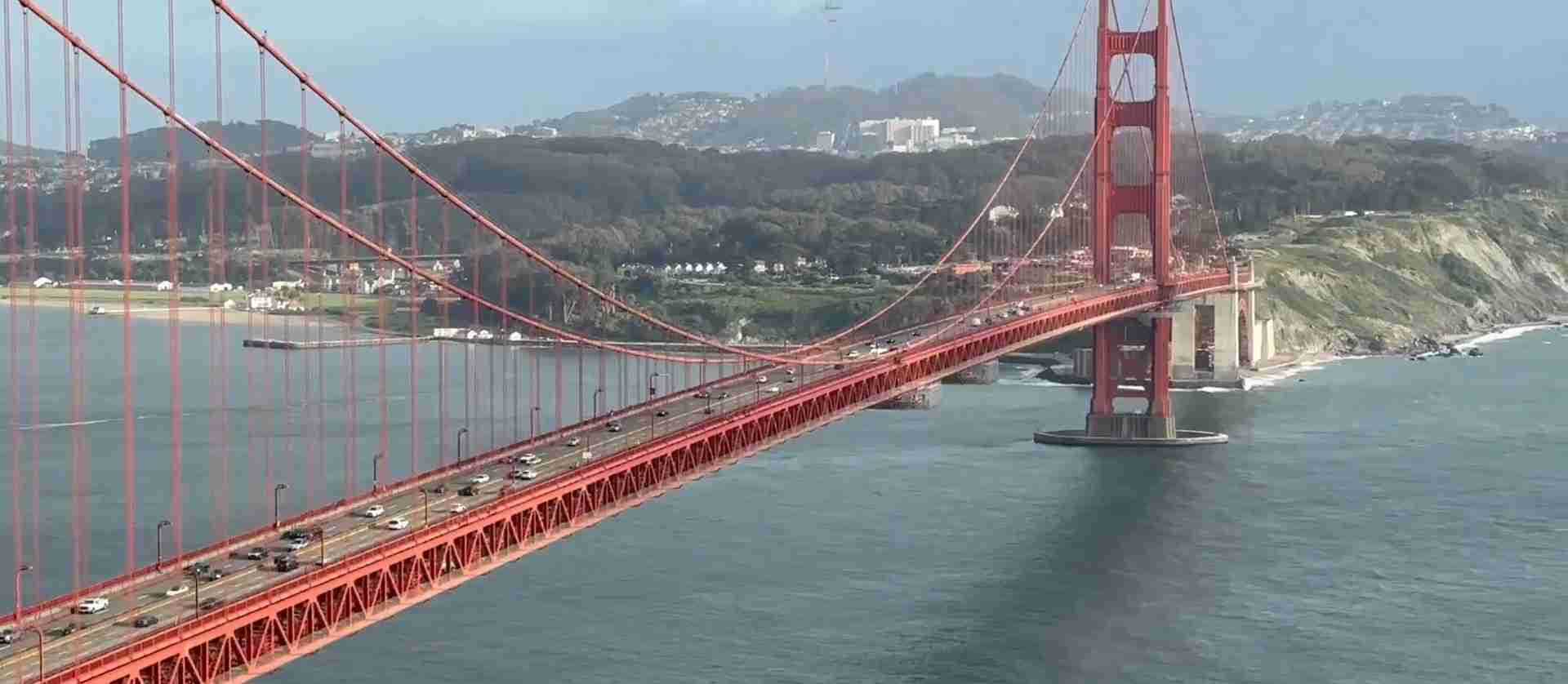
The Golden Gate Bridge provides San Francisco’s most iconic image and one of the world’s most photographed structures. Walking across the bridge costs nothing and delivers an essential San Francisco experience. The entire bridge spans 1.7 miles (2.7 km), but most walkers traverse the southern half from San Francisco to the first tower and back, creating a 1.5-2 hour round trip including photo stops. Driving across southbound (toward San Francisco) requires tolls of $8.75 with FasTrak or $9.75 pay-by-plate in 2026; northbound crossings are free. Parking near vista points costs nothing at Battery Spencer and Conzelman Road on the Marin side, or at designated pullouts on the San Francisco approach, though spaces fill quickly on weekends.
Access the pedestrian walkway from the southeastern parking area off Lincoln Boulevard or from the visitor plaza at the bridge’s southern end. Pedestrians and cyclists share the walkway — stay to the right and watch for fast-moving cyclists. Dress warmly even in summer as bridge winds create wind-chill effects making 65°F days feel like 50°F. Morning fog often obscures views May through August; afternoons typically clear. Best photo viewpoints include the Golden Gate Bridge Welcome Center at the southern end, Battery Spencer in the Marin Headlands for dramatic elevated perspectives, and Fort Point directly beneath the southern span for unique architectural angles. Sunrise shoots (6:00-7:30 AM in summer) capture golden light on the bridge’s orange towers before fog rolls in.
Golden Gate Park stretches 3 miles from Stanyan Street to Ocean Beach, encompassing 1,017 acres of gardens, museums, lakes, and meadows. The park’s major paid attractions include the California Academy of Sciences ($40 adults), de Young Museum ($15 adults), and Japanese Tea Garden ($10 adults). Free park highlights include the Conservatory of Flowers (exterior gardens free), Stow Lake paddle boat rentals ($25-35 per hour), Dutch Windmill and tulip gardens, bison paddock, and numerous hiking trails. Rent bicycles ($8-15 per hour, $30-40 full day) from shops along Stanyan Street to cover park distances efficiently, as walking end-to-end requires 60-90 minutes. Weekends bring street closures on John F. Kennedy Drive creating car-free spaces for cyclists, skaters, and pedestrians. The park’s western end meets Ocean Beach, where Pacific surf crashes against wide sandy beaches and the Cliff House restaurant ($25-45 per person) offers sunset dining.
Fisherman’s Wharf and Pier 39 in 2026
Fisherman’s Wharf represents San Francisco’s most concentrated tourist zone, combining waterfront restaurants, souvenir shops, street performers, and genuine maritime history. The area centers on Pier 39, a two-level marketplace featuring California sea lions hauled out on floating docks — these marine mammals arrived unexpectedly in 1990 after the Loma Prieta earthquake and now number 50-900 depending on season (winter brings largest populations). Viewing the sea lions costs nothing and provides guaranteed wildlife encounters. Pier 39 shops sell everything from San Francisco sweatshirts to artisan chocolates, while restaurants range from $18-28 casual seafood to $40-65 sit-down dining.
Ghirardelli Square, three blocks west, converted the historic chocolate factory into upscale shops and restaurants surrounding the original chocolate manufactory, which still produces small batches and offers free samples. Buy chocolate at the shop for 20-30% less than hotel gift shops. Nearby attractions include Aquarium of the Bay ($30 adults) featuring touch pools and underwater tunnels showcasing local marine life, Madame Tussauds San Francisco ($35 adults) with wax celebrity figures, and the San Francisco Maritime National Historical Park (free) displaying historic ships at Hyde Street Pier (ship access $15 adults). The Powell-Hyde cable car line terminates at Hyde and Beach Streets, providing scenic transportation to and from Union Square with stops along Russian Hill’s steep descent.
Dining at Fisherman’s Wharf requires strategy to avoid tourist traps. Skip the overpriced mediocre seafood at sidewalk restaurants along Jefferson Street. Instead, try Scoma’s Restaurant (since 1965) at Pier 47 for authentic fresh fish $35-55, or walk to Swan Oyster Depot on Polk Street for exceptional seafood counter service $25-45 per person. Boudin Bakery serves famous sourdough bread bowls with clam chowder for $18-26 at multiple Wharf locations — get takeout and eat at benches overlooking the bay rather than paying 30% more for table service. For authentic inexpensive meals, walk 10 minutes to North Beach where Italian restaurants serve locals alongside tourists at better quality and lower prices.
Neighborhood Explorations 2026
Chinatown, North Beach, and the Mission District provide San Francisco’s most distinctive neighborhood experiences, each offering unique cultural character, dining, and atmosphere within compact walkable areas. San Francisco’s Chinatown represents the oldest and one of the largest Chinatowns in North America, established in the 1850s. Enter through the Dragon Gate at Grant Avenue and Bush Street, then explore Grant Avenue’s tourist shops and side streets harboring authentic businesses serving local Chinese residents. Stockton Street, one block west of Grant, hosts produce markets, herbalists, and bakeries where English is rarely spoken and prices reflect local rather than tourist economics. Visit Golden Gate Fortune Cookie Factory on Ross Alley (free, tips appreciated) to watch fortune cookies made by hand, try dim sum at City View Restaurant ($12-20 per person), and explore historic alleyways like Waverly Place with its colorful balconies and temples.
North Beach transitions from Chinatown at Columbus Avenue, where Italian heritage dominates through restaurants, cafes, and cultural landmarks. Literary history centers on City Lights Bookstore (261 Columbus), the first all-paperback bookshop in America and publisher of Allen Ginsberg’s “Howl,” and Vesuvio Cafe next door where Beat Generation writers gathered in the 1950s. Washington Square Park provides neighborhood heart where elderly Italian men play bocce ball and locals gather for morning coffee from Caffe Trieste (opened 1956) or Caffe Puccini. Authentic Italian dining costs $35-55 per person at established restaurants like Tony’s Pizza Napoletana (multiple Guinness World Records for pizza making), Original Joe’s (since 1937), and Tosca Cafe. Climb Telegraph Hill to Coit Tower ($10 adults) for 360-degree city views and excellent WPA murals inside depicting 1930s San Francisco life.
The Mission District anchors Latino San Francisco, particularly Mexican and Central American cultures, through street art, authentic taquerias, and vibrant nightlife. The neighborhood’s famous murals concentrate along Clarion Alley (between Valencia and Mission, 17th to 18th Streets) and Balmy Alley (24th Street between Treat and Harrison), where colorful murals address social justice, cultural pride, and political themes. The murals change regularly as artists paint over old works. Visit during daylight hours as alleys grow sketchy after dark. Authentic Mexican food reaches peak quality and value here: La Taqueria (2889 Mission Street) serves what many consider San Francisco’s best burritos for $13-16, Tartine Bakery (600 Guerrero) produces artisan bread and pastries drawing morning lines, and Valencia Street’s restaurant corridor offers everything from Burmese to modern American cuisine at $18-35 per person. The Mission’s 16th Street and 24th Street BART stations provide rapid downtown access, making the neighborhood practical for accommodation despite distance from tourist zones.
Transportation Strategies in San Francisco 2026
San Francisco’s compact geography and challenging hills make public transportation the optimal choice for most visitors, with the city offering cable cars, buses, light rail, historic streetcars, and BART rapid transit. A car proves unnecessary and often counterproductive for exploring San Francisco proper due to limited parking, expensive garage fees ($60-80 daily at hotels), and aggressive parking enforcement. However, cars become useful for day trips to Muir Woods, Napa Valley, Big Sur, or Yosemite, making rental consideration dependent on your full itinerary rather than city exploration alone.
Public Transportation Overview 2026
The San Francisco Municipal Transportation Agency (Muni) operates cable cars, buses, light rail Metro trains, and historic F-line streetcars under unified fare structure. Single rides cost approximately $3 for buses and streetcars, while cable cars charge $9 per ride. These prices apply 2026 and represent public transit’s official fixed rates. The system operates roughly 5:00 AM to 1:00 AM daily with reduced frequencies after 9:00 PM and on Sundays. Real-time arrival information appears at major stops and through the MuniMobile app, essential for reducing wait times and planning connections.
Muni Visitor Passports deliver best value for tourists planning multiple daily trips. The 1-Day Passport costs $14 (unlimited rides for one calendar day), 3-Day Passport $28 ($9 daily average), and 7-Day Passport $44 ($6 daily average). These passes include unlimited cable car rides — ride as many times as desired without calculating per-trip costs. Purchase passports through the MuniMobile smartphone app for instant activation, at ticket machines in Muni Metro stations, or at the cable car ticket booth at Powell and Market Streets. Load passports onto reusable Clipper cards (regional transit payment card) for $3 card fee, or use MuniMobile’s paperless option. Youth ages 18 and under ride Muni buses and streetcars free with proof of age but must pay full cable car fare ($9).
Calculate passport value based on planned activities. If taking two cable car rides ($18 value) plus three bus trips ($9 value), the 1-Day Passport ($14) saves $13. For a three-day visit with daily cable car rides and multiple bus trips, the 3-Day Passport ($28) costs less than three individual cable car rides alone ($27). The passport proves poor value for visitors staying primarily in one neighborhood and walking to nearby attractions — Union Square to Chinatown, North Beach, and Financial District all lie within 15-20 minute walks, requiring minimal public transportation.
Cable Cars: Practical Guide 2026
San Francisco’s cable cars represent moving National Historic Landmarks and essential tourist experiences despite inefficiency as practical transportation. Three lines operate: Powell-Hyde (most scenic, connecting Union Square to Fisherman’s Wharf via Russian Hill), Powell-Mason (connecting Union Square to Fisherman’s Wharf via North Beach), and California Street (connecting Financial District to Nob Hill). The Powell lines attract heaviest tourist traffic with 30-60 minute waits at turnarounds during midday peak hours. Cable cars cost $9 per ride as of December 2025 — expensive for the 15-20 minute journey but worth experiencing at least once.
Skip the lines by boarding mid-route rather than at turnarounds. For example, walk four blocks uphill from Union Square to California and Powell, then board Powell-Hyde cable cars with minimal wait rather than queuing 45 minutes at Powell and Market. Board California Street cable cars at any intersection along California from Market to Van Ness — this line rarely develops significant queues. The best times to ride occur early morning (before 9:00 AM) when business commuters fill seats but tourists haven’t arrived, or late afternoon (after 5:00 PM) when daytime crowds disperse. Avoid midday (10:00 AM to 3:00 PM) when waits reach maximum length.
Stand on the running boards (outside platforms) for maximum experience and best photos, but hold the brass poles securely — cable cars sway and lurch significantly, especially at Hyde Street’s steep descent. Sit inside only if weather demands or mobility requires. Let passengers exit before boarding. Conductors collect fares after departure rather than before boarding. Keep tickets or passes visible for inspection. Gripmen (operators) cannot make change; pay exact fare or use Clipper card. Cable cars accommodate one wheelchair per car in designated interior space; request boarding assistance from conductors.
BART and Regional Connections 2026
Bay Area Rapid Transit (BART) provides rapid connections between San Francisco, East Bay cities, and airports on modern rail system separate from Muni. Within San Francisco, BART serves downtown corridor from Embarcadero through Civic Center to Mission District stations at 16th Street and 24th Street. Most tourists use BART primarily for airport connections and day trips to Berkeley or Oakland rather than intracity travel, as Muni buses and streetcars provide denser neighborhood coverage.
BART from San Francisco International Airport (SFO) to downtown Embarcadero or Powell Street stations costs approximately $10 per person and requires 30-35 minutes including wait time. This represents exceptional value compared to rideshares ($45-65) or taxis ($55-75). Purchase tickets at ticket machines in airport BART station using credit cards or cash — machines provide change. The trip requires one train change at San Bruno Station for San Francisco-bound trains, though signage clearly marks connections and platform announcements guide passengers. Trains operate approximately 5:00 AM to midnight weekdays, with reduced weekend hours starting around 6:00 AM. Check BART website for exact schedule on your travel dates.
BART fares vary by distance traveled. The average fare costs approximately $5 for typical trips in 2026, following a 6.2% increase effective January 1, 2026. Use BART’s trip planner on their website or mobile app to calculate exact fares and plan routes. Pay using Clipper cards (regional payment card accepted on all Bay Area transit) or contactless credit/debit cards at fare gates — tap card entering station and tap again exiting to charge correct fare. Paper tickets no longer accepted as of 2024. Seniors age 65+, youth ages 5-18, and disabled riders receive discounted fares when using appropriate Clipper cards. Children under 5 ride free.
Dining Guide San Francisco 2026
San Francisco dining in 2026 spans from $3 tacos to $200+ tasting menus, with the city’s culinary strength residing more in neighborhood diversity than celebrity chef restaurants. The city’s food scene reflects its multicultural character: authentic dim sum in Chinatown ($12-20 per person), Mexican taquerias in the Mission ($8-16), Italian trattorias in North Beach ($25-45), Vietnamese restaurants in the Tenderloin ($10-18), and Thai, Japanese, Ethiopian, and Burmese spots throughout various neighborhoods. This variety allows strategic budget management — splurge on one exceptional meal while balancing with outstanding inexpensive options, rather than eating all meals at mid-range restaurants.
Restaurant costs include mandatory elements beyond menu prices that surprise first-time visitors. San Francisco restaurants add 4-6% health care surcharges to bills, appearing as separate line items before tax and tip. This surcharge funds employee health insurance and appears at most establishments except fast food and cafes. Standard gratuity runs 18-20% for table service, calculated on the subtotal before health care surcharge. A $100 meal thus costs approximately $127-131 after health care surcharge ($4-6), tax ($8.63 at 8.625% San Francisco rate), and 20% tip ($21.73 on subtotal plus surcharge). Budget 27-31% above menu prices for total costs when calculating restaurant spending.
Budget Dining: $8-18 Per Meal 2026
San Francisco offers exceptional budget dining through taquerias, dim sum parlors, food trucks, and bakeries serving quality food at $8-18 per meal. Mission District taquerias represent peak value: La Taqueria (2889 Mission Street) serves legendary burritos for $13-16, El Farolito (multiple locations) charges $10-14 for massive mission-style burritos, and La Palma Mexicatessen (2884 24th Street) sells fresh tortillas and prepared foods for $8-12. These aren’t tourist-trap Mexican food but authentic neighborhood spots serving San Francisco’s Latino communities. Arrive before noon or after 2:00 PM to avoid lunch rush lines reaching 20-30 minutes at popular locations.
Chinatown dim sum provides another budget highlight. City View Restaurant (662 Commercial Street) serves excellent dim sum for $12-20 per person during weekend brunch when carts circulate offering har gow (shrimp dumplings), siu mai (pork dumplings), BBQ pork buns, and turnip cakes. Order tea ($2-3 per person) then select items from carts — most dishes cost $5-8 for three to four pieces. Dragon Beaux (5700 Geary Boulevard in Richmond District) offers modern upscale dim sum in stylish setting for $18-28 per person. Arrive by 11:00 AM weekends to avoid 45-60 minute waits, or visit weekday mornings when crowds thin significantly.
Food trucks and casual spots deliver quality budget meals throughout the city. SoMa StrEat Food Park (428 11th Street) gathers rotating food trucks serving Korean barbecue, Filipino fusion, artisan grilled cheese, and Vietnamese banh mi for $10-15. Off the Grid events operate multiple evenings weekly at Fort Mason Center and other locations with 25-30 food trucks offering international cuisines for $12-18 per meal. Golden Boy Pizza (542 Green Street, North Beach) sells thick square Sicilian-style pizza slices for $5-7 — two slices plus drink makes filling lunch under $15. Tartine Bakery (multiple locations) produces exceptional pastries, sandwiches, and coffee for $8-15 per person, though lines often reach 15-20 minutes during peak hours.
Mid-Range Dining: $25-55 Per Person 2026
Mid-range dining captures San Francisco’s neighborhood restaurant culture, where local establishments serve quality food without celebrity-chef premiums. North Beach Italian restaurants exemplify this tier: Tony’s Pizza Napoletana (1570 Stockton Street) serves Margherita pizzas from coal-fired ovens for $18-28, while pasta dishes run $22-32. Original Joe’s (601 Union Street) has served Italian-American comfort food since 1937, with entrées $28-42. Perbacco (230 California Street) delivers refined Piedmontese cuisine in Financial District location for $32-48 per entrée. Reservations recommended for dinner; lunch often available walk-in with shorter waits.
Fisherman’s Wharf and Embarcadero waterfront dining requires selectivity to avoid tourist traps. Scoma’s Restaurant (Pier 47) provides fresh local seafood in genuine fishing fleet setting for $35-65 per person. Hog Island Oyster Company at Ferry Building Marketplace serves oysters, clam chowder, and seafood for $25-45 in more casual atmosphere. Skip the overpriced mediocre restaurants along Jefferson Street’s tourist corridor — walk two blocks to Polk Street or North Beach for better quality at 20-30% lower prices. Swan Oyster Depot (1517 Polk Street) offers exceptional seafood counter service $30-50 per person, though expect 30-60 minute waits for the 20 seats.
Neighborhood gems throughout the city provide excellent value for mid-range budgets. Zuni Cafe (1658 Market Street) serves California Mediterranean cuisine with famous roast chicken for two ($68) requiring 60-minute preparation — worth the wait. State Bird Provisions (1529 Fillmore Street) pioneered dim-sum-style American cuisine serving small plates from carts for $40-60 per person total. Burma Superstar (309 Clement Street) delivers outstanding Burmese food for $18-28 per person — arrive before 6:00 PM or after 8:30 PM to minimize 45-60 minute peak waits. Make reservations 2-4 weeks ahead for popular restaurants or use walk-in strategies of early dinners (5:00-6:00 PM) or late dinners (after 8:30 PM) when availability improves.
Fine Dining: $85-200+ Per Person 2026
San Francisco maintains strong fine dining culture with multiple Michelin-starred restaurants offering exceptional cuisine, service, and ambiance at $85-200+ per person before wine. Three-star Michelin establishments include Quince (470 Pacific Avenue) serving contemporary Californian-Italian tasting menus $165-225 per person and Benu (22 Hawthorne Street) presenting innovative Asian-influenced tasting experiences $185-245. Single and two-star restaurants like Acquerello (1722 Sacramento Street, Italian tasting menus $95-135), Atelier Crenn (3127 Fillmore Street, $220-285 for Chef Dominique Crenn’s poetic French tasting menus), and Lazy Bear (3416 19th Street, Mission District communal dining $165-195) deliver exceptional quality at slightly lower prices than three-star establishments.
Gary Danko (800 North Point Street, near Fisherman’s Wharf) represents accessible fine dining with à la carte options allowing three-course ($95), four-course ($130), or five-course ($155) fixed menus composed from seasonal selections. Book 2-8 weeks ahead for weekend dinner reservations at top restaurants — some accept reservations exactly 30 days prior while others use lottery systems for most sought-after slots. Wine pairings add $80-150 per person depending on restaurant and tier selected. Service charges and gratuities typically included in tasting menu prices at highest-tier establishments, while mid-tier fine dining restaurants expect standard 20% gratuities on top of menu prices plus health care surcharges.
Dress codes vary from business casual to dresser interpretations of smart casual. Quince and Atelier Crenn request jackets for men, while most single-star restaurants accept neat jeans with dress shirts or upscale casual attire. Make special occasion notes when booking — restaurants often provide enhanced service, premium table locations, and small amenities for celebrations. Budget 2.5-3 hours for fine dining experiences at tasting-menu establishments; rushed schedules undermine the carefully paced multi-course presentations. Alternative high-quality dining without tasting menu commitment includes Michael Mina (252 California Street) for seafood $55-85 per entrée, House of Prime Rib (1906 Van Ness Avenue) for classic prime rib service $60-75, and Foreign Cinema (2534 Mission Street) for Cal-Mediterranean cuisine in outdoor courtyard screening classic films for $38-65 per entrée.
Day Trips from San Francisco 2026
Muir Woods and Sausalito Day Trip 2026
Muir Woods National Monument preserves ancient coast redwood forests just 12 miles north of the Golden Gate Bridge, offering easy access to these majestic trees reaching 250 feet tall and up to 1,200 years old. The monument requires reservations for all visitors in 2026 — book parking reservations ($10 per vehicle) or shuttle reservations ($3 per person) through recreation.gov up to 90 days in advance. Weekends and summer weekdays sell out weeks ahead; weekday visits November through March often available 1-2 weeks out. The parking lot holds only 118 vehicles, enforcing the reservation system strictly. Arrive within your reserved time window (no early or late entry permitted) or face turned away at entrance.
Muir Woods admission costs $15 per adult (16+), with children under 16 free. The main loop trail extends 1 mile on mostly flat boardwalk accessible to wheelchairs and strollers, requiring 45-60 minutes at leisurely pace. Longer hikes climb hillsides on the Ben Johnson Trail (4.2 miles round-trip, moderate difficulty) or Dipsea Trail (connecting to Stinson Beach, 7+ miles). Dress in layers as redwood groves stay cool and damp even when San Francisco enjoys warm weather. Morning fog often shrouds the forest May through August, creating atmospheric conditions but limiting sunlight. Arrive early morning (8:00-9:00 AM) or late afternoon (after 3:00 PM) for smallest crowds and best light filtering through the canopy.
Combine Muir Woods with Sausalito, a picturesque bayside town 8 miles south, for full-day excursion. Drive from Muir Woods to Sausalito (15 minutes), park in public lots ($2-3 per hour), and explore the waterfront village featuring art galleries, boutiques, and restaurants. Have lunch at Fish ($22-32 per person for fresh seafood), Poggio Trattoria ($28-45 for upscale Italian), or the casual Lappert’s Ice Cream ($6-12 for exceptional sundaes). Return to San Francisco via ferry from Sausalito Ferry Terminal to the Ferry Building ($13.50 per adult, 30 minutes) — the ferry ride provides spectacular Golden Gate Bridge and skyline views. Total day costs per person: Muir Woods parking share $5 (two sharing car), shuttle $3, admission $15, lunch $26, ferry $14. Total approximately $63 per person plus car rental if needed.
Napa and Sonoma Wine Country 2026
Napa Valley and Sonoma County represent California’s premier wine regions, located 45-75 miles north of San Francisco and accessible as long day trips or overnight excursions. Organized wine tours provide hassle-free experiences with transportation, winery visits, and lunch for $150-250 per person. Companies like Platypus Wine Tours, Green Dream Tours, and Incredible Adventures offer small-group experiences departing San Francisco hotels 8:00-9:00 AM and returning 5:00-6:00 PM. These tours typically visit 3-4 wineries, include lunch, and handle all driving and reservations. Premium private tours cost $350-650 per person with customized itineraries and luxury transportation.
Self-driving offers more flexibility but requires planning and designated drivers. Rent cars ($70-100 daily) and drive Highway 101 north to Highway 37 west to Highway 121 north into Sonoma, or continue Highway 101 to Highway 29 north into Napa. Most wineries require advance reservations in 2026, particularly in Napa Valley where walk-in tastings have largely disappeared. Tasting fees range from $30-45 at established wineries to $75-125 at premium estates, typically including 4-6 wines. Book tastings 1-4 weeks ahead through winery websites. Target 3-4 wineries maximum per day — rushing between locations undermines enjoyment and creates dangerous driving conditions.
Sonoma offers more relaxed atmosphere and lower prices than Napa. Towns like Healdsburg, Sonoma Plaza, and Glen Ellen provide walkable wine tasting allowing car parking and exploration on foot. Tasting rooms in town squares charge $20-40 for flights while maintaining access to quality wines. Lunch costs $18-35 per person at casual spots, $35-65 at wine country restaurants. Napa Valley delivers more polished experiences with Michelin-starred restaurants (French Laundry, The Restaurant at Meadowood) requiring reservations months ahead and costing $350-450 per person. Budget full-day wine country costs per person: rental car share $45, four tastings $160, lunch $30, gas and parking $20. Total approximately $255 per person self-driving, or $150-250 for organized tours including transportation and lunch.
Seasonal Planning and Weather in San Francisco 2026
San Francisco’s Mediterranean climate creates surprising seasonal patterns that confound visitors expecting traditional summer warmth. The city’s famous fog results from cool Pacific Ocean currents meeting warm inland air, producing dense marine layers that blanket western neighborhoods and coastal areas throughout summer while eastern neighborhoods bask in sunshine blocks away. This microclimate phenomenon makes San Francisco’s weather hyper-local — Fisherman’s Wharf may shiver under gray fog while the Mission District enjoys 75°F sunshine, all within three miles. Understanding these patterns prevents wardrobe mistakes and timing disappointments.
Summer months (June through August) represent San Francisco’s coldest season with frequent fog, strong winds, and average temperatures of 60-67°F (15-19°C). Mark Twain never actually said “the coldest winter I ever spent was a summer in San Francisco,” but the misattributed quote captures truth about the city’s chilly summers. Morning fog typically burns off by early afternoon in downtown areas but persists all day at Ocean Beach, Golden Gate Park’s western sections, and the bridge itself. Visitors wearing shorts and t-shirts shiver on cable cars while locals bundle in jackets and scarves. Pack layers regardless of your home climate’s July expectations — bring light jacket, long pants, and closed-toe shoes even if visiting from hot climates.
September and October deliver San Francisco’s warmest and sunniest weather during the phenomenon locals call “Indian Summer.” Temperatures reach 70-75°F (21-24°C) with minimal fog, clear skies, and gentle breezes. These months coincide with peak tourist season and highest hotel prices, often 30-40% above winter rates. The weather advantage justifies premium pricing for sun-sensitive visitors, though prepare for crowds at major attractions including Alcatraz (book 3+ months ahead), cable cars (30-60 minute waits at terminals), and popular restaurants. Golden Gate Park, normally foggy and cold in summer, becomes pleasant for extended outdoor time with picnics and garden strolls.
Winter (November through March) brings San Francisco’s rainy season with storms arriving periodically from the Pacific. Most rain falls December through February, averaging 4-5 inches monthly compared to near-zero precipitation May through September. However, “rainy season” means occasional storms interspersed with sunny weeks, not Seattle-style constant drizzle. Temperatures remain moderate at 50-60°F (10-16°C), rarely freezing. This season offers lowest hotel prices and smallest crowds while maintaining acceptable weather for sightseeing. January and February deliver best value with accommodation costs 30-40% below peak season, though February brings Chinese New Year celebrations attracting crowds to Chinatown parades.
Spring (April and May) provides transition weather between winter rain and summer fog. April sees occasional final winter storms while producing increasing sunshine. May delivers excellent weather before summer fog arrives, though morning coastal fog begins appearing late in the month. Hotel prices remain moderate in April, then rise in May as summer approaches. Wildflower blooms peak in regional parks and Marin Headlands during April. Cherry blossoms bloom throughout the city mid-March through mid-April, particularly in Japantown and Golden Gate Park’s Japanese Tea Garden.
Practical Tips for San Francisco Visitors 2026
Safety and Security 2026
San Francisco experiences higher property crime rates than most American cities in 2026, requiring visitor vigilance particularly regarding vehicle break-ins and opportunistic theft. Car break-ins represent the most frequent tourist-affecting crime, occurring throughout the city but concentrated at popular parking spots including Alamo Square (Painted Ladies viewpoint), Twin Peaks overlooks, beach parking areas, and trailheads. Thieves break windows within seconds using simple tools, stealing visible bags, electronics, and even loose change. Prevent break-ins through absolute adherence: never leave anything visible in parked cars — not bags, not phone chargers, not GPS suction cup marks on windshields, not shopping bags, nothing. Put all items in trunk before arriving at parking location, as thieves watch parking lots for tourists moving bags to trunks then immediately breaking in. Consider avoiding rental cars entirely if staying within San Francisco proper.
Downtown areas west of Union Square, particularly the Tenderloin neighborhood (roughly bounded by Market, Mason, Geary, and Polk Streets), experience concentrated homelessness, open drug use, and aggressive panhandling. These blocks remain generally safe for pedestrians during daylight but feel uncomfortable for many visitors. Avoid walking alone through Tenderloin after dark; use rideshares or taxis if your hotel lies in this area and you’re returning late evening. The Tenderloin contains some of San Francisco’s best Vietnamese and Thai restaurants, making daytime lunch visits worthwhile despite neighborhood character. Parts of South of Market (SoMa) near the Civic Center BART station and mid-Market Street present similar conditions.
Street crime targeting tourists remains relatively rare in major tourist zones (Fisherman’s Wharf, Union Square shopping area, Chinatown, North Beach) where police presence stays visible. Keep phones, cameras, and valuables secured rather than dangling loosely or setting on outdoor cafe tables. Use hotel safes for passports, extra cash, and jewelry not currently worn. Pickpocketing occurs occasionally on crowded cable cars and Muni buses during peak hours — keep valuables in front pockets or secured bags. ATM safety follows urban standards: use machines inside banks or busy retail locations rather than standalone street ATMs, particularly after dark. Be aware of surroundings when withdrawing cash.
Local Customs and Culture 2026
San Francisco maintains progressive political culture and social attitudes distinct from much of America. The city pioneered LGBTQ+ rights, environmental movements, and tech innovation while preserving fierce local character against homogenizing forces. Residents expect visitors to respect this character: support local businesses over chains when possible, separate recycling/compost/trash per city’s three-bin system (fines for improper disposal), and engage respectfully with the city’s diverse communities. Environmental consciousness pervades daily life — plastic bags banned in retail stores (bring reusable bags), Styrofoam food containers prohibited, and single-use plastic straws restricted.
Tipping follows American standards: 18-20% for table service restaurants, $2-3 per drink for bartenders, $5-10 daily for hotel housekeeping (left daily, not at checkout, as different staff clean rooms different days), $2-5 per bag for bell staff, and 15-20% for taxi/rideshare drivers. San Francisco restaurant workers depend on tips as primary income despite higher minimum wage than most American cities. The mandatory health care surcharge appearing on restaurant bills does not replace gratuity — tip calculated on subtotal before this surcharge. Some restaurants add automatic 20% gratuity for parties of six or more; check bills carefully to avoid double-tipping.
Homeless population visibility exceeds most American cities due to mild weather, progressive services, and housing shortage creating nation’s highest rents. Panhandling occurs frequently in downtown areas. Visitors uncomfortable with direct interactions can politely decline (“sorry, not today”) and keep walking rather than engaging in extended conversations. Supporting reputable services like San Francisco-Marin Food Bank or Coalition on Homelessness provides more effective help than individual donations, though personal choice dictates individual responses. Drug use and mental health episodes occur openly in some neighborhoods — maintain awareness and distance, call 911 for medical emergencies, but recognize these represent systemic issues beyond individual intervention.
Connectivity and Practical Matters 2026
San Francisco hotels, cafes, and restaurants nearly universally offer free Wi-Fi in 2026, making international visitors’ connectivity straightforward. Public Wi-Fi networks operate at major sites including Ferry Building, Union Square, and many parks, though security concerns recommend avoiding financial transactions on public networks. Cell phone coverage operates excellently on all major carriers (Verizon, AT&T, T-Mobile) throughout the city, with occasional weak spots in dense building areas of Financial District or tunnels. International visitors should verify roaming charges with home carriers or purchase temporary US SIM cards at airport electronics shops or carrier stores ($30-50 for 2-week tourist plans with data and calls).
Electrical outlets use American standard 120V with Type A/B plugs (two or three flat prongs). International visitors need plug adapters and potentially voltage converters for devices not supporting dual voltage (100-240V). Most modern electronics (phones, laptops, camera batteries) handle dual voltage and require only plug adapters, available at airport shops, drugstores, or electronics retailers for $5-15. Hotels sometimes provide adapter loans at front desk.
San Francisco tap water meets all federal safety standards and tastes excellent compared to many American cities, making bottled water purchases unnecessary for health reasons though cultural preferences vary. The city’s Hetch Hetchy water supply originates in protected Yosemite wilderness. Drink directly from taps, fill reusable bottles freely, and request tap water at restaurants (always free). Public drinking fountains operate in parks and plazas. California’s Mediterranean climate creates dry conditions requiring consistent hydration, particularly when walking San Francisco’s hills.
Free and Low-Cost Activities in San Francisco 2026
San Francisco offers extensive free attractions balancing the city’s expensive reputation, with careful planning enabling full days of exploration without admission charges. Walking across the Golden Gate Bridge tops the free activities list — the 1.7-mile span costs nothing to traverse on foot, delivering iconic views and photo opportunities. Allow 1.5-2 hours for round-trip walk including stops. Access pedestrian walkway from parking areas on the San Francisco side off Lincoln Boulevard or from vista points. Best times for clear views occur early morning (before 10:00 AM) before fog rolls in, or late afternoon September through November when fog remains minimal. Dress warmly as bridge winds create wind-chill effects even on warm days.
Golden Gate Park encompasses 1,017 acres of free outdoor space including gardens, lakes, meadows, and trails. Free park highlights include Conservatory of Flowers gardens (exterior, not interior greenhouse which charges admission), Stow Lake and surrounding trails, Dutch Windmill and Queen Wilhelmina Tulip Garden (peak bloom March-April), Buffalo Paddock with resident bison herd, Shakespeare Garden containing plants mentioned in the Bard’s works, and AIDS Memorial Grove. The park’s eastern section near Haight-Ashbury receives less fog than western areas toward Ocean Beach. Weekends bring street closures on John F. Kennedy Drive creating car-free zones for walking and cycling. Free concerts and events occur regularly at Spreckels Temple of Music bandstand and Robin Williams Meadow — check park website for schedules.
Neighborhood explorations provide free cultural immersion. Wander Chinatown’s alleys viewing colorful balconies, temples, and authentic businesses along Stockton Street and Waverly Place. North Beach offers literary landmarks including City Lights Bookstore (browsing free, strong selection even if not purchasing) and Washington Square Park where locals play bocce ball and drink espresso. The Mission District’s famous murals along Clarion Alley and Balmy Alley change regularly as artists create new works. Castro District preserves LGBTQ+ history with rainbow crosswalks, Harvey Milk Plaza, and Historic Marker Walking Tour (self-guided with free map available online). Haight-Ashbury retains some 1960s counterculture flavor through vintage shops, murals, and Victorian architecture.
Free museum days and cultural events occur monthly. De Young Museum and Legion of Honor offer free admission first Tuesday of each month for San Francisco residents, though tourists pay regular $15 admission. Asian Art Museum provides free first Sunday monthly for all visitors. Many commercial galleries in Union Square and South of Market open free for First Thursday art walks. Cable Car Museum (1201 Mason Street) shows historic cable cars and operating machinery free daily 10:00 AM-6:00 PM. San Francisco Maritime National Historical Park at Hyde Street Pier displays historic ships with $15 admission, but the visitors center and beach area remain free. Pier 39’s sea lions cost nothing to view and provide guaranteed wildlife encounters year-round.
San Francisco with Kids and Families 2026
San Francisco accommodates families well despite urban intensity and hilly terrain, offering numerous kid-friendly attractions, playgrounds, and family-oriented neighborhoods. Key considerations for family visits include accommodation location near parks or waterfront, transportation strategies minimizing walking with tired children, and attraction timing to avoid crowds and nap conflicts. Book hotels with family rooms or suites in neighborhoods like Fisherman’s Wharf (closest to kid-focused attractions), Marina District (near parks and beaches), or Inner Richmond (Golden Gate Park access). Union Square works for families comfortable with urban density but requires public transportation to reach parks and beaches.
Top family attractions include the California Academy of Sciences ($40 adults, $30 children 4-11, under 4 free) with aquarium, rainforest dome, planetarium, and hands-on exhibits occupying 3-4 hours. The living roof with native plants provides space for kids to run when indoor exhibits grow overwhelming. Arrive at 9:30 AM opening to minimize crowds. Exploratorium ($40 adults, $30 children 4-17, under 4 free) offers 650 interactive science exhibits spread across indoor and outdoor spaces, requiring minimum 3 hours for thorough exploration. Thursday evenings (6:00-10:00 PM) offer adults-only atmosphere inappropriate for children. The San Francisco Zoo ($28 adults, $22 children 4-14, under 4 free) houses 2,000 animals across 100 acres in the city’s southwestern corner, requiring full day visit. Take Muni L-Taraval streetcar directly to zoo entrance.
Pier 39 provides concentrated family activities: Aquarium of the Bay ($30 adults, $20 children 4-12) features touch pools and underwater tunnels, street performers entertain throughout the day (tip $1-5 if children enjoy shows), carousel rides cost $5 per child, and California sea lions bark from floating docks visible free from pier railings. Nearby Ghirardelli Square offers free chocolate samples at the original shop and ice cream sundaes ($8-15) at the fountain. The historic cable cars fascinate most children — ride Powell-Hyde line for most dramatic hills and San Francisco Bay views emerging at Russian Hill descent. Warn children to hold railings tightly as cars lurch and sway.
Free and low-cost family activities include Golden Gate Park playgrounds at Koret Children’s Quarter (extensive play structures, carousel $3 per ride), Urban Air trampoline park near Glen Park ($18-28 per child for 60-90 minute sessions), Ocean Beach sand castle building (free), and Crissy Field beach with Golden Gate Bridge views. The Walt Disney Family Museum (104 Montgomery Street in the Presidio, $25 adults, $15 children 6-17) showcases Disney animation history through interactive exhibits and original artwork. Pack snacks and water bottles to avoid expensive theme-park-style food pricing at attractions. Use strollers for young children on flat areas but prepare to fold/carry on cable cars, steep hills, and crowded sidewalks. San Francisco’s hills prove exhausting for short legs — plan reasonable daily distances and build rest time into itineraries.
Frequently Asked Questions About San Francisco Travel 2026
Do I Need a Car in San Francisco in 2026?
No, cars are unnecessary and often counterproductive for exploring San Francisco proper in 2026. The city’s compact geography (7×7 miles), excellent public transportation (Muni buses, streetcars, cable cars, BART), and expensive parking ($60-80 daily at hotels, $4-8 hourly at street meters) make car-free travel more convenient and economical for typical tourist itineraries. Walk between nearby attractions — Union Square to Chinatown (10 minutes), North Beach (20 minutes), or Financial District (12 minutes). Use cable cars for hill climbs and iconic experiences. Take Muni buses and streetcars for longer crosstown trips. BART connects downtown to Mission District, airport, and East Bay. Major hotels charge $60-80 daily for parking with in-and-out privileges limited. Street parking requires vigilance for street cleaning schedules, meter time limits (typically 1-2 hours), and parking enforcement issuing $80-100 tickets aggressively. Vehicle break-ins targeting rental cars at tourist spots make car ownership actively risky. Consider renting cars only for day trips to Muir Woods, Napa Valley, Big Sur, or Yosemite where public transportation proves impractical. Rent from downtown locations the morning of day trips, return same evening, rather than paying multi-day rental and hotel parking for unused vehicles.
What Should I Pack for San Francisco Weather in 2026?
Pack layers for all seasons when visiting San Francisco in 2026, as the city’s microclimate creates dramatic temperature variations throughout single days and between neighborhoods. Summer visitors (June-August) need warm clothes despite expectations — bring light jacket or fleece, long pants, closed-toe shoes, and light scarf for fog-shrouded mornings and evenings averaging 55-60°F (13-15°C). Afternoons may warm to 65-70°F (18-21°C) in sunny neighborhoods, requiring ability to shed layers. T-shirts and shorts work for warm afternoon hours but prove insufficient for morning, evening, or coastal areas where fog persists all day. September-October visitors enjoy warmest weather but still need light layers for variable conditions — pack mix of short and long sleeves, one light jacket for evening, and comfortable walking shoes. Winter visitors (November-March) need waterproof jacket for occasional rain, warm layers for 50-55°F (10-13°C) temperatures, but avoid heavy winter coats as San Francisco rarely freezes. Essential items year-round include comfortable walking shoes with grip for steep hills and cable car boarding platforms, small daypack for water bottles and layers shed during warming afternoons, sunglasses and sunscreen (even foggy days allow UV penetration), and reusable water bottle (San Francisco tap water excellent quality). Skip umbrellas — fog doesn’t require them and summer rain nearly nonexistent. Bring hat for sun protection during clear days. Dress code at restaurants ranges from casual (jeans acceptable at most places) to business casual at fine dining establishments. San Francisco maintains informal California attitude toward attire.
How Do I Get from SFO Airport to Downtown San Francisco in 2026?
BART (Bay Area Rapid Transit) provides the most economical and often fastest connection from San Francisco International Airport (SFO) to downtown, costing approximately $10 per person and requiring 30-35 minutes to Embarcadero or Powell Street stations. Follow airport signs for “BART” from any terminal to the automated people mover (AirTrain) connecting terminals to BART station (3-5 minute ride). Purchase tickets at machines using credit/debit cards or cash — machines provide change. Select your destination station and pay displayed fare. BART trains toward San Francisco require one transfer at San Bruno Station where cross-platform connection clearly marked and announced. Trains operate approximately 5:00 AM to midnight weekdays with reduced weekend hours — verify exact schedule on BART website for your arrival time. Escalators and elevators serve all stations making luggage transport manageable. Onboard luggage space limited during commute hours (7:00-9:30 AM, 4:30-7:00 PM weekdays) but generally adequate. Rideshare services (Uber, Lyft) cost $45-65 from SFO to downtown hotels depending on time and traffic, requiring 25-45 minutes. Designated pickup areas on Departures level (Level 5) avoid congestion. Taxis from official stands charge $55-75 to downtown on meter plus tip. Shared shuttle services like SuperShuttle and Airport Express ceased operations in 2025, eliminating this former budget option. Hotel shuttles serve some properties — inquire when booking. Rental car centers require shuttle from terminals; driving to downtown hotels then paying $60-80 daily parking makes little sense for city exploration. Choose BART for solo or couple travel, rideshare for groups of 3-4 where per-person costs approach BART pricing, or late-night arrivals when BART doesn’t operate.
Is Alcatraz Worth Visiting in 2026?
Yes, Alcatraz Island ranks as San Francisco’s most worthwhile major paid attraction in 2026, justifying the $48 admission (Day Tour) and advance booking requirement through exceptional audio tour narration, fascinating architecture, spectacular bay views, and unique access to genuine American history. The 45-60 minute cellhouse audio tour, voiced by former inmates and correctional officers, transforms crumbling concrete into vivid storytelling about escape attempts, daily prison routine, and the infamous inmates (Al Capone, Robert Stroud the “Birdman,” George “Machine Gun” Kelly) who served time here 1934-1963. Even visitors initially skeptical about “just an old prison” report being moved by the human stories and preservation quality. The island’s layered history extends beyond the federal penitentiary to military fortress (1850s-1933), Native American occupation (1969-1971), and current status as protected bird sanctuary. Ferry rides provide excellent photo opportunities of Golden Gate Bridge, Bay Bridge, and San Francisco skyline from water level unavailable elsewhere. The 2.5-3 hour experience (including ferry time) provides significantly more value than 90-minute bus tours costing $55-75 or museum visits occupying similar time for $35-45. Skip Alcatraz only if you have severe mobility limitations preventing the steep 130-foot climb from dock to cellhouse (though S.E.A.T. tram assists those unable to walk), extreme time constraints allowing just 1-2 days in San Francisco with other priorities, or genuine disinterest in American history and architecture. The Night Tour ($60) offers more intimate experience with smaller crowds, ranger-led activities not available during day, and dramatic sunset views, but requires booking 3-4 months ahead versus 2-3 months for Day Tours. Book immediately after confirming San Francisco travel dates to avoid disappointment.
What is the Best Neighborhood to Stay in San Francisco 2026?
Union Square serves as the best neighborhood for first-time visitors in 2026, offering maximum convenience despite premium pricing, with cable car lines at your doorstep, concentrated dining and shopping, walkability to Chinatown and North Beach, and central location for public transportation to all attractions. Hotels cost $280-450 nightly for mid-range properties but eliminate transportation stress and maximize sightseeing time. Choose Union Square if you’re visiting for the first time, staying 3 days or less and prioritizing efficiency, traveling without car and relying entirely on public transportation, or uncomfortable navigating unfamiliar neighborhoods. Alternative first-timer neighborhood Fisherman’s Wharf ($300-450 mid-range hotels) positions you directly at waterfront attractions and Alcatraz ferry but feels more isolated from authentic San Francisco. Return visitors and those prioritizing value over convenience should consider the Mission District ($180-280 mid-range hotels, better value in vacation rentals) for exceptional Mexican dining 25-35% below downtown prices, vibrant street art and culture, and authentic neighborhood character, though requiring BART rides to downtown attractions. Marina District and Pacific Heights ($260-380 mid-range hotels) deliver residential San Francisco with excellent restaurant scenes, Palace of Fine Arts proximity, and safer quieter streets, ideal for longer stays or visitors with cars using San Francisco as base for Marin County exploration. North Beach provides excellent location compromise ($220-340 mid-range hotels) with authentic Italian dining, literary landmarks, and walkability to both Union Square and Fisherman’s Wharf, though limited hotel inventory requires advance booking. Budget travelers prioritizing low costs over location choose Inner Sunset or Richmond Districts ($140-220 mid-range hotels) near Golden Gate Park with good Muni access but 30-40 minute commutes to downtown. Avoid Tenderloin despite cheap hotels ($100-180) unless very comfortable with urban grittiness, homelessness, and open drug use — the few dollars saved create uncomfortable experiences for most visitors.
Can I Walk Everywhere in San Francisco or Do I Need Transportation?
San Francisco’s compact 7×7 mile size makes walking feasible for many routes, but steep hills (some exceeding 20% grade), neighborhood distances, and time constraints mean most visitors benefit from mixing walking with public transportation. Flat walking corridors include Embarcadero waterfront (Ferry Building to Fisherman’s Wharf, 1.5 miles), Market Street (Castro to Ferry Building, 3 miles downhill eastbound), and Mission Street (Mission District to downtown). These routes provide pleasant walks requiring 25-45 minutes. Challenging hills include Nob Hill and Russian Hill (cable cars exist specifically because 19th-century horses couldn’t pull carriages up these streets), Filbert Street steps (climbing from Embarcadero to Coit Tower, genuine stair-climbing required), and any route crossing the city north-south between downtown and Golden Gate Park. Fit walkers handle these hills through slow steady climbing and frequent rest stops, but many visitors prefer cable cars ($9) or buses ($3) for major elevation gains. Strategic walking approach: walk flat or downhill routes (Union Square to Ferry Building, North Beach to Fisherman’s Wharf), use cable cars or buses uphill (back to Union Square from Embarcadero, up to Coit Tower), and assess distance versus time available (walking Mission District to downtown requires 35-45 minutes via Mission Street — BART covers same distance in 12 minutes for $3). Download offline maps on smartphones as GPS works without cell service for navigation. Wear proper walking shoes with good tread as San Francisco’s steep hills become treacherous in smooth-soled shoes, especially when sidewalks are wet. Most visitors log 15,000-25,000 steps daily (7-12 miles) combining intentional walking between nearby attractions with general sightseeing movement. Plan rest breaks and realistic daily distances especially when traveling with children, seniors, or mobility-limited companions. The Muni Visitor Passport ($14 for 1 day, $28 for 3 days) removes per-ride cost calculations and encourages using transportation strategically rather than walking every segment to save money.
What Are the Hidden Costs I Should Budget for in San Francisco 2026?
San Francisco’s published prices rarely reflect actual total costs due to mandatory taxes, fees, and service charges adding 25-35% to quoted rates. Hotel room taxes total 14% plus Tourism Improvement District assessments averaging $30-35 daily, meaning a $300 quoted room costs $377 at checkout. Search hotel booking sites showing “total price” including taxes and fees rather than base rates to avoid checkout surprises. Confirm whether resort fees or destination charges apply when booking — some hotels include these in total price displays while others add at checkout. Parking at hotels costs $60-80 daily in downtown neighborhoods and $35-50 in residential areas, rarely included in room rates. Valet parking runs $5-10 higher than self-parking. Restaurant bills include 4-6% health care surcharges as separate line items before tax and tip, covering employee health insurance mandated by San Francisco law. This appears in addition to standard 18-20% gratuity, making a $100 menu total cost approximately $127-131 after health care charge, 8.625% sales tax, and 20% tip. Budget 27-31% above menu prices for actual restaurant costs. Attraction tickets sometimes exclude processing fees when booking online — Alcatraz tickets add $2-3 per order through official sites, while third-party resellers charge 15-25% premiums. Public transportation costs remain as stated ($9 cable cars, $3 buses/streetcars, approximately $5 average BART fare) with no hidden fees. Tours and activities occasionally exclude gratuities for guides (budget $5-10 per person for walking tours, $10-20 for full-day guides) though these are genuinely optional unlike restaurant tips. Rideshare base fares appear in apps but increase during surge pricing (1.5x-3x normal rates during peak hours, events, or bad weather) — check surge multiplier before confirming rides. Overall budgeting safety: add 15-20% buffer above all quoted prices to cover taxes, fees, and service charges, with restaurants requiring 27-31% above menu prices specifically.
When Should I Book Alcatraz Tickets for Summer 2026 Visit?
Book Alcatraz tickets immediately — ideally 90 days (3 months) in advance — for summer visits (June through September) in 2026, as Day Tour tickets sell out within days to weeks of release and Night Tours disappear even faster. Tickets release precisely 90 days before the tour date at 12:00 AM Pacific Time through the official City Experiences website (cityexperiences.com) or by calling 415-981-7625. Popular dates including summer weekends, July 4th week, and all of August sell completely within 2-7 days of release. Wednesday through Sunday tours disappear faster than Monday-Tuesday dates. If your preferred dates sell out at 90-day release, check daily for cancellations returning tickets to inventory — set calendar reminders to check the website at 12:00 AM Pacific when new cancellations appear. Combination tours bundling Alcatraz with Muir Woods, San Francisco city tours, or bay cruises often maintain availability after direct tickets sell out because tour operators hold separate allocations; these packages cost $145-220 per person versus $48 for standalone Alcatraz but provide value if bundles interest you regardless. Third-party resellers like Viator sometimes stock tickets at premium prices ($65-85) when official tickets unavailable, though quality and authenticity varies. Alternative strategy: winter visits (January-March) typically show Alcatraz availability 2-4 weeks out rather than requiring 90-day advance booking, with identical tour quality at same prices but fewer crowds and easier logistics. Spring (April-May) and fall (October-November) require 4-6 weeks advance booking. If you haven’t booked 90 days ahead and your summer dates have sold out, consider the Behind the Scenes Tour ($105 adults, ages 12+ only) which typically maintains availability longer due to higher price and age restriction — this extended tour accesses areas closed during standard tours including underground dungeons and restricted cellblocks. Check multiple times daily starting 85-90 days before your trip, as cancellations appear randomly throughout the day when other travelers modify plans.
Is September Really the Best Month to Visit San Francisco?
Yes, September delivers San Francisco’s optimal weather in 2026 with warmest temperatures (70-75°F/21-24°C average), minimal fog, and sunny clear skies, though coinciding with peak tourist crowds and highest hotel prices creates tradeoffs. The phenomenon locals call “Indian Summer” extends through October, producing San Francisco’s genuinely summer-like conditions after the cold foggy actual summer (June-August). September mornings typically start 60-65°F then warm to 72-78°F by afternoon with sustained sunshine and gentle breezes. Fog remains offshore or burns off early rather than persisting all day as during June-July-August. This weather allows outdoor activities like Golden Gate Park explorations, bridge walking, and Presidio hiking without the layers and wind protection required other months. October maintains similar excellent weather through mid-month before cooling slightly and seeing increased rain probability late month. The weather advantage justifies premium pricing for visitors prioritizing sunshine and warmth — expect hotel costs 30-40% above winter rates with mid-range properties running $300-450 nightly versus $180-280 in January-February. Alcatraz tickets require booking 3+ months ahead versus 2 months for other peak periods. Cable car wait times reach 45-60 minutes at terminals during midday. Popular restaurants book solid for prime dinner hours (7:00-8:30 PM) unless reserved weeks ahead. Budget-conscious visitors choosing weather over cost savings should strongly consider September visits, while price-sensitive travelers accept trade-offs of winter visits (January-March) with occasional rain, cooler 50-60°F temperatures, and persistent fog but 30-40% lower accommodation costs and minimal crowds. May provides compromise option with moderate pricing, decent weather (though morning fog increases late month), and smaller crowds, though lacking September’s guaranteed sunshine and warmth. First-time visitors prioritizing “classic San Francisco weather” often choose September despite costs, while return visitors exploring neighborhoods more than major attractions find February’s value and manageable weather perfectly adequate. The absolute ideal timing — perfect weather, moderate crowds, reasonable pricing — doesn’t exist in San Francisco; you’re choosing which two of three you prioritize.
How Expensive is San Francisco Compared to Other Major US Cities 2026?
San Francisco ranks as the second or third most expensive American city for tourists in 2026, trailing only New York in overall costs and roughly matching Seattle and Boston, while running 25-35% more expensive than Los Angeles, Chicago, and Washington DC. Accommodation drives San Francisco’s high expense with mid-range hotels averaging $300-390 nightly in peak season versus $200-280 in Los Angeles, $220-310 in Chicago, and $240-320 in Washington DC. New York mid-range hotels cost $320-420, slightly exceeding San Francisco. Budget hotel and hostel options remain limited in San Francisco compared to larger cities — hostels average $55-70 per dormitory bed versus $40-55 in Los Angeles or Chicago. Dining costs run parallel to New York with mid-range restaurant dinners at $40-55 per person, casual lunches $18-28, and fine dining $95-200+ per person before wine. Los Angeles and Chicago restaurants typically cost 15-20% less for equivalent quality. Public transportation prices favor San Francisco for multi-day visits: the 3-Day Muni Visitor Passport at $28 ($9 daily) including cable cars compares excellently to New York’s 7-Day MetroCard at $34 ($5 daily) without equivalently iconic transit. However, individual San Francisco cable car rides at $9 versus New York subway at $3 makes single-ride comparisons unfavorable. Attractions price similarly across major cities: Alcatraz $48 matches Statue of Liberty ferry $24 (though Statue Liberty crown access $31 approaches parity), and major museum admissions cluster $15-45 regardless of city. Daily budget comparisons for mid-range travelers: San Francisco $275-370 per person, New York $250-310, Seattle $235-280, Los Angeles $180-240, Chicago $190-250, Washington DC $205-265. San Francisco’s premium over Los Angeles stems almost entirely from accommodation costs (hotels run 35-40% higher) while dining and attractions cost within 10-15% of each other. Budget travelers find San Francisco particularly challenging compared to other cities due to limited hostel inventory and higher minimum costs, while luxury travelers experience rough parity across expensive cities — four-star hotels and fine dining cost similar amounts whether San Francisco, New York, or Los Angeles.