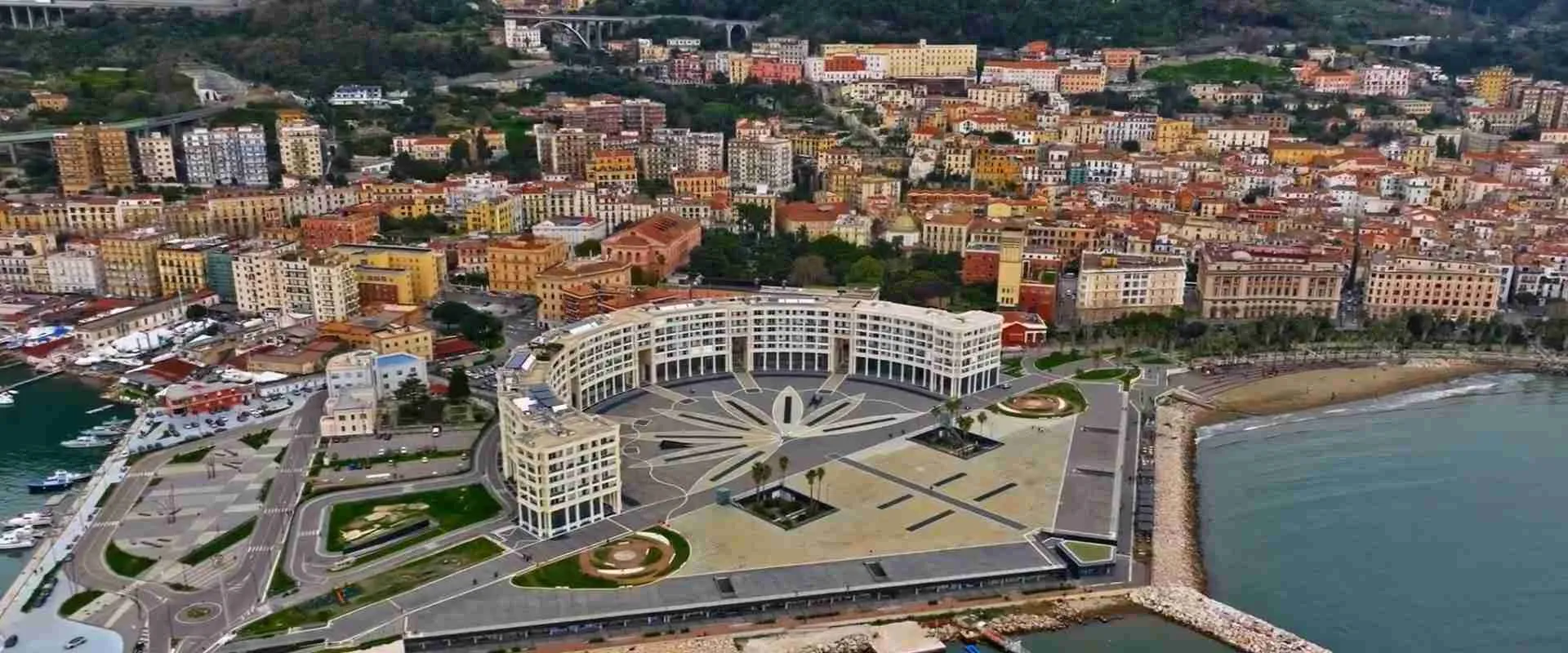
Salerno Free Things to Do: 2026 Budget Travel Guide
Salerno is the Amalfi Coast’s least-sung gateway — a city of Norman cathedrals, medieval lanes, and Italy’s most spectacular free winter light festival, sitting within a train-ride of Pompeii, Paestum, and the clifftop towns of the coast. Its most rewarding experiences cost little or nothing, and its hotels, restaurants, and transport are priced for residents rather than tourists. This guide covers every free and low-cost option in the city, with verified 2026 costs for everything that does carry a charge.
Key Takeaways
- Most of Salerno’s best experiences cost nothing: the historic center, the Trieste Seafront Promenade, the outer bastions of Arechi Castle, the Provincial Art Gallery, and the Municipal Park are all free to visit.
- The paid highlights are very affordable — Salerno Cathedral’s celebrated Baroque crypt costs approximately €5-7 (with audio guide), the Minerva Garden charges €6 for a combined ticket covering three sites, and Arechi Castle’s museum asks €4-6.
- Budget travelers keeping to free and low-cost sites spend approximately €50-90 per person daily, including budget accommodation (two sharing) and street-food dining.
- Mid-range visitors who add the paid sites and sit-down restaurants spend approximately €115-185 per person daily (two sharing a mid-range hotel).
- A three-day budget trip covering Salerno’s best free attractions costs approximately €150-270 per person all-in; a four-day mid-range stay runs approximately €460-740 per person.
- Salerno is an exceptionally cost-effective base for Amalfi Coast day trips: the COSTIERASITA 24-hour bus pass costs €10 and covers unlimited SITA SUD buses to Amalfi, Positano, Ravello, and all coastal towns, while the train to ancient Paestum starts from approximately €3 each way.
People Also Ask About Salerno Free Things to Do 2026
What are the best free things to do in Salerno in 2026?
Salerno’s most compelling free experiences include walking Via dei Mercanti through the medieval heart of the old town, strolling the Trieste Seafront Promenade along the Gulf of Salerno, visiting the Provincial Art Gallery in Palazzo Pinto (free admission), and exploring the outer bastions and natural park trails of Arechi Castle at no charge. The Municipal Park provides free green space at the edge of the old town, while the exterior and nave of Salerno Cathedral can be seen without paying. From mid-November through early February, the Artist Lights festival transforms the entire city center into a free outdoor gallery of large-scale illuminated installations, drawing visitors from across Italy and beyond.
How much does a budget day in Salerno cost in 2026?
Budget travelers spending the day on free attractions can expect to pay approximately €50-90 per person, assuming two people share a budget guesthouse or B&B room (€27-40 per person after splitting). That budget covers a café breakfast (€2-4), street food or pizza al taglio lunch (€7-12), dinner at a cheap trattoria or pizzeria (€10-18), and one or two bus trips (€0-5), with €3-8 for incidentals like gelato and bottled water. On a day that includes one or two paid sites — say, the cathedral crypt (approximately €5-7) and the Minerva Garden (€6) — the total rises toward the top of that range but generally stays below €100. Mid-range travelers sharing a comfortable hotel room spend €115-185 per person daily once restaurant dining and hotel accommodation are factored in.
Is Salerno Cathedral free to visit in 2026?
The outer quadroportico and the main nave of Salerno Cathedral are generally free to enter. However, accessing the celebrated Baroque crypt — the most extraordinary part of the building, containing the relics of Saint Matthew and a ceiling entirely covered in frescoes attributed to Belisario Corenzio — requires a ticket of approximately €5-7, which includes an audio guide via QR code. This ticket also typically gives access to one or more additional religious sites nearby. The cathedral is open Monday to Saturday from 8:30 AM to 8:00 PM and on Sundays from 8:30 AM to 1:00 PM and 4:00 PM to 8:00 PM. Verify current pricing and access arrangements at the official cathedral website (cattedraledisalerno.it) before your visit, as access conditions can vary.
When is the Luci d’Artista festival and how much does it cost in 2026?
The Artist Lights festival (Luci d’Artista) runs every year from mid-November through early February, transforming Salerno’s streets, squares, and waterfront into a free open-air gallery of large-scale illuminated artworks. The 2025/2026 edition (the 20th) ran from November 14, 2025 to February 1, 2026. The 2026/2027 edition (the 21st) has received municipal approval and is expected to follow the same mid-November start; specific opening dates typically appear on the official website (lucidartistasalerno.com) in autumn. Admission to all outdoor installations is entirely free. The lights come on daily from approximately 5:00 PM until late into the evening.
Extended multi-day tours – 5+ days
Featured Salerno Multi-Day Tour Packages
3 days
Salerno 3-Day Discovery Tour
- ✓ Comprehensive Salerno experience
- ✓ Expert local guides included
- ✓ All accommodation included
- ✓ Transportation provided
5 days
Salerno 5-Day Highlights Experience
- ✓ Comprehensive Salerno experience
- ✓ Expert local guides included
- ✓ All accommodation included
- ✓ Transportation provided

7 days
Salerno 7-Day Cultural Journey
- ✓ Comprehensive Salerno experience
- ✓ Expert local guides included
- ✓ All accommodation included
- ✓ Transportation provided

10 days
Salerno 10-Day Complete Adventure
- ✓ Comprehensive Salerno experience
- ✓ Expert local guides included
- ✓ All accommodation included
- ✓ Transportation provided
Multi-day tour packages powered by TourRadar. Prices and availability subject to change.
Salerno as a Budget Base: Why It Works in 2026
Salerno occupies a geographic position that no amount of budget planning can replicate: it sits at the southern end of the Amalfi Coast, within easy train distance of Pompeii, Herculaneum, and the Greek temples at Paestum, and close enough to Naples for a morning excursion. At the same time, it has never commanded the tourist prices of Positano or Ravello. Hotels here run significantly cheaper than anywhere along the Amalfi Coast proper, the local restaurant scene serves the same Campanian ingredients — buffalo mozzarella, fresh anchovies, spaghetti alle vongole — at prices written for residents rather than tourists, and the city’s own sights are generous with free access.
The roots of Salerno’s significance run unusually deep. The city was the capital of the Principality of Salerno under the Lombard prince Arechi II in the 8th century, and later the base from which the Normans under Robert Guiscard consolidated their control of southern Italy in the 11th century. It was home to the Schola Medica Salernitana, widely regarded as the earliest university-level institution for medical education in the Western world. That heritage is tangible today in everything from the Cathedral’s Norman-Romanesque bones to the Minerva Garden’s century-old role in botanical medicine. The city was also the site of Operation Avalanche in September 1943, when Allied forces landed at the Gulf of Salerno in one of the most critical amphibious operations of the Italian campaign. History is embedded in the streets here, and most of it is free to walk through.
For 2026, Salerno offers the budget traveler an unusually productive combination: its own substantial free heritage, affordable beds and food, and a transport infrastructure that makes expensive neighbors like the Amalfi Coast and Paestum day-trippable without overnight costs. The sections below work through every free and low-cost option in detail, then address accommodation, food, transport, and itinerary planning so you can build a visit precisely calibrated to your budget.
Best Free Attractions in Salerno 2026
Salerno’s free attractions are not a collection of minor leftovers after the ticketed highlights have been extracted. They include the most scenically rewarding part of the city — the historic center — as well as the waterfront, a free-entry art gallery in a 17th-century palace, and castle grounds that deliver the finest panorama in the city at no charge. The following list covers the consistently free options before moving to the attractively priced ones in subsequent sections.
- Via dei Mercanti and the historic center: The medieval commercial street of Via dei Mercanti is the spine of Salerno’s old town, connecting the cathedral area with the western neighborhoods. Walking it costs nothing and delivers Norman portals, Renaissance doorways, artisan workshops, a continuous streetscape of ochre and stone, and enough side alleys to occupy an entire morning of wandering. The surrounding streets — particularly Via Duomo, Vicolo dei Barbuti, and the staircases climbing toward Arechi Castle — are equally compelling and equally free.
- Trieste Seafront Promenade: Salerno’s waterfront extends for several kilometers along the gulf, with views of the Amalfi coast hills on one side and container ships and fishing vessels on the other. The promenade is a daily gathering point for the city — joggers in the morning, families and elderly residents in the evening — and is particularly atmospheric during the Artist Lights festival when illuminated installations run along the water’s edge.
- Municipal Park: The tree-lined public park at the edge of the old town — known locally as the Villa Comunale — is free to enter and is one of the anchor points of the Artist Lights festival, when it becomes a Prehistoric Garden of illuminated creatures and oversized botanical forms. Outside the festival season it is a pleasant place to sit, read, and watch the city pass.
- Provincial Art Gallery (Palazzo Pinto): Housed in the 17th-century Palazzo Pinto in the heart of the old town, this gallery displays works from the 15th to the early 20th century, with particular strength in Renaissance master Andrea Sabatini and Baroque painters from the Solimena family, as well as landscapes from the Posillipo School. Admission is free and the gallery represents one of the most under-visited cultural assets in the city.
- Arechi Castle outer grounds: The bastions and outer walls of Arechi Castle, and the nature trails running through the surrounding Mediterranean scrub, are open without charge. The path called the Prince’s Trail (Sentiero del Principe) begins in the old town and climbs through pine and oak forest to the castle, offering views of the gulf at multiple points before you arrive. The inner museum requires a ticket (see dedicated section), but the panorama from the terraces — the castle’s primary draw — is accessible free of charge from the outer circuit.
- Cathedral nave and quadroportico: The outer entrance courtyard of Salerno Cathedral, with its 28 antique columns and pointed arches decorated with lava stone intarsia, is free to view, as is the main nave. The exceptional Baroque crypt requires a ticket (discussed in its own section).
Salerno Cathedral: What’s Free and What Costs in 2026
Salerno Cathedral — dedicated to Saint Mary of the Angels, Saint Matthew, and Saint Gregory VII — is the city’s most visited single monument and one of the finest Norman-era churches in southern Italy. Founded by Robert Guiscard beginning in 1076, it was consecrated by Pope Gregory VII himself in 1084, and the crypt beneath it holds the relics of Saint Matthew, brought to Salerno from the Eastern Mediterranean in 954 AD. The building rewards careful attention both to its free exterior zones and to the paid crypt, which most visitors rate as one of the great Baroque interiors of southern Italy.
The outer quadroportico — the large colonnaded courtyard preceding the main doors — can be entered freely and is architecturally outstanding: the portico’s 28 ancient columns were salvaged from pre-existing Roman and early Christian structures, and the pointed arches show the Arab-Norman stylistic synthesis characteristic of Norman southern Italy. The courtyard also contains a series of ancient Roman sarcophagi along the walls. The enormous 12th-century bell tower rises from the courtyard’s corner, visible from many points in the old town. Inside the main nave, visitors can view the 13th-century mosaic pulpits, the decorative floor panels surviving from the original Romanesque interior, the Chapel of the Crusaders (said to be the place where the arms of crusading knights were blessed before departure), and the tomb of Pope Gregory VII, who died in Salerno in 1085 after being driven into exile by Emperor Henry IV.
The crypt, where Saint Matthew’s relics are housed, requires a ticket. Multiple recent visitor accounts report a fee of approximately €5 for crypt access alone, rising to approximately €7 for a combined ticket that includes an audio guide via QR code and access to one or more additional religious sites in the vicinity. A separate ticket covering three religious sites — the crypt, the Cathedral of San Giorgio, and a third monument — reportedly costs approximately €10. Check the official cathedral website (cattedraledisalerno.it) and the ticket office in Piazza Alfano I for current rates before your visit, as pricing arrangements can change seasonally.
The crypt itself dates in its current form primarily to a restoration campaign of 1606-1608, attributed to architect Domenico Fontana and his son Giulio, with further marble decoration added in the 18th century. The ceiling frescoes are attributed to the Neapolitan painter Belisario Corenzio and depict scenes from the Gospel of Matthew as well as episodes from Salerno’s own history. Reviewers consistently describe it as one of the most spectacular Baroque interiors in Campania. For a fee of approximately €5, the experience is by any measure excellent value. Photography without flash is permitted.
Dress code applies throughout: shoulders and knees must be covered. The cathedral is open Monday to Saturday from 8:30 AM to 8:00 PM and on Sundays from 8:30 AM to 1:00 PM and again from 4:00 PM to 8:00 PM. Weekday mornings between 10:00 AM and 12:00 PM are typically the quietest time for photography in the crypt. The cathedral is about a 20-minute walk from Salerno’s main railway station or reachable by local bus to the Piazza Alfano I stop.
Arechi Castle: Free Views and Affordable Admission in 2026
Arechi Castle sits on Monte Bonadies approximately 300 meters above sea level, commanding a panoramic view of Salerno, the gulf, the port, and on clear days the distant outline of the Amalfi Coast. It is one of the more dramatic skyline features in southern Italy and the single best viewpoint in the city. The good news for budget travelers is that a significant portion of the site is free.
The outer bastions, the outer circuit walls, and the nature trails running through the surrounding parkland are open to visitors at no charge. Walking the outer perimeter — including the terrace known as the Prince’s Frame (Cornice del Principe) — delivers essentially the same panorama as the inner museum terrace, and the approach through the pine and oak forest along the Prince’s Trail is itself an experience worth making the trip for. The climb on foot from the old town takes approximately 45 minutes to an hour, with the trail beginning near Via Santa Maria Maddalena and climbing through Montevergine Park. When using Google Maps, search for “Scale per il Castello Arechi” to find the trail entrance rather than the castle itself, to avoid being routed up the road.
Entry to the inner castle museum area typically costs approximately €4-6 for a full adult ticket, with reduced pricing of approximately €2-3 for EU citizens aged 18-25 and some other eligible categories. Entry for visitors under 18 and over 65 is generally free. The inner complex includes the archaeological museum (ceramics, glass, coins, and weapons from Lombard through Aragonese periods), an exhibition on the castle’s history, and the principal belvedere terrace. For the panorama specifically, the free outer bastions satisfy the primary draw; the museum adds historical context and is worth the modest admission for visitors with an interest in medieval material culture. Verify current prices and opening hours at the castle or via the provincial administration website before your visit, as seasonal schedules apply.
The castle is open Tuesday through Saturday from 9:00 AM to 5:00 PM and on Sundays from 9:00 AM to 3:00 PM. It is closed on Mondays. Bus 19 runs from the Piazza XXIV Maggio area near the train station to the castle, taking approximately 15-20 minutes. The bus schedule can be infrequent so check the timetable before going; the walk up is the more reliable option for visitors with time. Free parking is available near the castle entrance for those arriving by car.
The castle’s historical origins lie in a Byzantine fortification from the 6th century, which was expanded by Lombard Prince Arechi II in the 8th century when he moved the duchy from Benevento to Salerno and made the hilltop fortress the apex of the city’s triangular defence system. Local tradition holds that the castle was never captured by force — the last Lombard ruler, Gisulfo II, surrendered only after a prolonged starvation siege by the Normans under Robert Guiscard in 1077. The castle subsequently passed through Norman, Hohenstaufen, Angevin, and Aragonese hands before falling into disuse in the 19th century. The Province of Salerno purchased it from its last private owners in 1960 and undertook the restoration that made it publicly accessible.
Minerva Garden Salerno 2026
The Minerva Garden sits in the upper part of Salerno’s old town, tucked between the Fusandola stream and the ancient city walls. It claims descent from the earliest botanical garden associated with a European medical school — the medicinal herb garden of physician and botanist Matteo Silvatico, who wrote his Liber Cibalis et Medicinalis Pandectarum around 1317 and used this terraced garden to teach students of the Schola Medica Salernitana to identify and classify medicinal plants. The garden’s particular design — terraced plots with a water distribution system of pools and fountains connecting each terrace — was subsequently adopted, according to Italian horticultural historians, as a model by later botanical gardens including those at Padua, Pisa, and Florence. For the budget traveler, it is among the most rewarding €6 expenditures in the city.
The garden reopened in July 2025 following a comprehensive restoration that renewed plasterwork, walls, and paving and added a 740-square-meter terrace with new medicinal plantings, new lighting for evening visits, and a pergola belvedere from which visitors look out over the historic center, the port, and the gulf. Over 300 species of medicinal and aromatic plants are currently in cultivation, each labeled with its name and therapeutic properties. Among the more theatrically famous is the mandragora (mandrake), which features in centuries of folklore about magical potions and aphrodisiacs.
The €6 ticket is a combined one valid for the Minerva Garden itself, the Roberto Papi Museum of Surgical Instruments, and the Virtual Museum of the Salerno Medical School — three connected sites that together tell the story of the medieval medical tradition that made Salerno one of the most important centers of Western medical learning. Reduced admission of €2 applies to university students (with ID), school groups, visitors over 70, and children under 12. The garden is open Tuesday through Sunday from 9:30 AM to 8:00 PM and is closed on Mondays. Tickets are sold at the garden entrance and can be bought on the day for individual visitors; group visits require advance booking.
The garden reaches the old town’s upper levels and is accessible either on foot through the historic center’s ascending lanes (the garden’s address is Vicolo Ferrante Sanseverino 1) or via a public lift that connects the lower city to the upper neighborhood. Evening visits during the summer season, when the restored lighting system is operating, are particularly atmospheric.
Free Walking Routes Through Salerno’s Historic Center 2026
Salerno’s old town rewards methodical walking. Unlike many southern Italian historic centers that function primarily as tourist circuits, Salerno’s centro storico is a lived-in neighborhood where bakeries, artisan workshops, tabacchi, and neighborhood churches exist alongside medieval architecture and Norman heritage. Its streets are free to walk, its churches are mostly free to enter (the cathedral crypt being the main exception), and its alleys connect continuously so that a morning’s walk can cover several centuries of building history without a single ticket.
A practical free walking circuit begins at Flavio Gioia Square near the waterfront and moves up Via dei Mercanti — note the buildings’ mixed Norman and Renaissance fabric along the lower stretch — to Portanova Square, where a 10th-century arch survives at the edge of the original Norman-era settlement. From Portanova Square, Via Duomo climbs toward the cathedral precinct. After the quadroportico and nave visit, the lane continuing behind the cathedral leads upward past the entrance to the Minerva Garden and eventually to the path toward Arechi Castle. The total circuit from seafront to castle trailhead and back via the old town covers roughly 5 kilometers, with approximately 200 meters of elevation gain to the lower castle terrace. In comfortable conditions this takes two to three hours of relaxed walking, not including time inside the cathedral or garden.
Secondary lanes branching off Via dei Mercanti include Via dei Canali, which follows the line of a medieval water channel and retains an unusually intact streetscape, and the lanes around the Church of San Giorgio — one of the early 18th-century churches that forms part of the multi-site ticket alongside the cathedral. The neighborhood known as the Rione Fornelle, slightly to the north of the main tourist circuit, preserves some of the densest medieval fabric in the city and is almost entirely unvisited by out-of-town walkers.
For a waterfront addition, the Trieste Seafront Promenade extends eastward from the historic center toward the newer neighborhoods. The western end of the seafront, near the Marina and the ferry terminal, offers the best views back toward the old town and the castle on the hill above it. The ferry terminal is also the departure point for seasonal hydrofoils to Amalfi, Positano, Capri, and the smaller coastal towns — a faster but more expensive alternative to the SITA SUD bus for coast day trips (see Day Trips section).
Salerno’s beaches begin east of the historic center. The closest public beach to the old town is Lido Santa Teresa, a ten-minute walk from the cathedral area. Further east, the beaches of the Torrione and Mercatello neighborhoods are accessible by bus and are used primarily by residents rather than tourists, meaning lower density and a more authentic local atmosphere. All public beaches on the Salerno seafront are free.
Salerno’s Beaches and Seafront Promenade in 2026
Salerno’s beaches are often overlooked in guides that focus on the Amalfi Coast, which is a significant oversight for budget travelers. While the dramatic clifftop coves of Positano and Amalfi command premium prices and peak-season crowds, Salerno’s own public beaches are free, accessible by foot or short bus from the city center, and equipped with the standard southern Italian beach infrastructure — bars serving cold drinks, sun lounger rentals at modest prices, and clear water off a generally pebbly-sand shore.
Lido Santa Teresa is the closest free public beach to the old town, roughly ten minutes’ walk east of the seafront promenade. It is well used by local residents and functions as a genuine neighborhood beach rather than a tourist facility, which keeps the atmosphere relaxed and the prices on food and drinks at local levels. Beach access is free; sun lounger and umbrella rentals, where available from private lido operators on the adjacent stretch, cost extra and are strictly optional.
Further east along the coast, the beaches around the Mercatello neighborhood and beyond toward Pontecagnano offer more space and a more residential feel. These can be reached by local bus from the city center. The Salerno coast road (SS18) runs parallel to the beach and connects the city to the Cilento coast to the south, where beaches become progressively more undeveloped and less crowded through the summer months.
The Trieste Seafront Promenade itself, though not a swimming beach, is the central leisure spine of the city. The four-kilometer promenade is flanked by palm trees, open-air cafés, and pedestrian areas and is the stage for the Artist Lights festival’s waterfront installations each winter. A morning walk along the full promenade length, from the ferry terminal at the western end to the newer residential neighborhoods to the east, takes approximately 45-60 minutes at a gentle pace and is one of the best free orientation exercises available in any Italian coastal city.
Artist Lights Festival 2026: Salerno’s Free Winter Spectacular
The Luci d’Artista (Artist Lights) festival is arguably the most ambitious free event staged in any Italian city each winter. Every year from mid-November through early February, the Municipality of Salerno commissions large-scale illuminated artworks by contemporary artists and deploys them across the entire historic center, the Municipal Park, Portanova Square, Flavio Gioia Square, Corso Vittorio Emanuele, the Trieste Seafront Promenade, and Liberty Square on the waterfront. The installations range from oversize illuminated animals and botanical forms to abstract geometric compositions and thematic light trails, and are designed as an outdoor museum circuit that visitors navigate on foot.
The 2025/2026 edition — the 20th — ran from November 14, 2025 to February 1, 2026, under the theme “Noi Siamo Natura” (We Are Nature) curated by artist Luca Pannoli. It was organized around four thematic pathways: Myth, Dream, Time, and Christmas. The Christmas Tree in Portanova Square — traditionally around 20 meters tall, with 800 branches and more than 70,000 white LED lights — is a recurring centerpiece of every edition and one of the most photographed objects in southern Italy during the December and January period.
The 2026/2027 edition (the 21st) had received municipal approval by mid-2026 and is expected to follow the established pattern, opening in mid-November 2026 and running through early February 2027. Specific opening dates, theme, and installation locations are typically announced on the official website (lucidartistasalerno.com) in October. All outdoor installations are free of charge. The lights activate daily from approximately 5:00 PM until late evening.
Within the festival context, a small number of associated activities carry charges — the panoramic Ferris wheel traditionally positioned on the seafront, certain guided tours, some theatrical events — but these are additions to a free core that is substantial enough to occupy a full evening of walking. The New Year’s Eve concert in Liberty Square is free and in 2025/2026 featured singer Mahmood as the headlining artist, reflecting the consistently high-profile nature of the programming.
Practical logistics for visiting during the festival: Salerno’s train station and accommodation fill up significantly over the core Christmas and New Year period, so book well in advance if your dates fall between December 20 and January 6. Trenitalia adds regional train services on weekends and around the Epiphany holiday (January 5-6) specifically to handle the Luci d’Artista crowds, with approximately 18 additional return services adding roughly 11,000 seats per day on key dates. Arriving by train and moving on foot is both the logistically cleanest option and the one that best suits the event, which is designed to be walked. The festival is recognized by international travel media as among the finest Christmas light events in Europe.
Free Museums and Cultural Sites in Salerno 2026
Beyond the Provincial Art Gallery, Salerno maintains a small but worthwhile cluster of free or occasionally free cultural institutions that most visitors miss entirely.
The Provincial Art Gallery in Palazzo Pinto on the Corso Garibaldi presents the most substantive free-admission collection in the city. Its holdings span the 15th through the early 20th century, with strengths in the Renaissance work of Andrea Sabatini — Salerno’s most distinguished local Renaissance painter — and the Baroque circle of Francesco Solimena and his family, whose work also appears in the cathedral. The Posillipo School landscape paintings represent the 19th-century Neapolitan tradition of plein-air coastal painting in a collection that is rarely crowded and refreshingly unfamiliar to most visitors. As of the Wikivoyage update from July 2025, admission is free.
The Provincial Archaeological Museum, housed in the historic San Benedetto complex, holds a collection spanning prehistoric times through the late Roman period. Highlights include Roman statuary and inscriptions and a remarkable bronze head of Apollo retrieved from the Gulf of Salerno in 1930 — an object of genuine archaeological significance and visual impact. The museum’s outdoor lapidary garden displays inscriptions and funerary monuments in a pleasantly informal setting. Verify current hours and admission conditions directly with the museum, as operating schedules can change.
The Diocesan Museum adjacent to Salerno Cathedral houses the Salernitan ivory carvings from the 11th and 12th centuries — a collection of carved ivory panels regarded as among the most important surviving examples of Norman-era applied art in Italy. These were originally part of an altar frontal and are closely related in style to similar ivories in Amalfi. The Diocesan Museum typically has an admission charge (verify current rates), but it is mentioned here because it operates on the same ticket circuit as the cathedral crypt, and some combined ticket options include it.
Italy operates a system of free museum entry on designated days — the first Sunday of each month many state-managed museums offer free admission. Note that Salerno’s most significant archaeological heritage is distributed between the Provincial Museum (civic management) and the National Park of Cilento (state sites nearby including Paestum), so check current schedules. Local tourist information offices in Salerno can advise on any free-entry days active during your visit.
Budget Food and Dining in Salerno 2026
Salerno’s food culture is quintessentially Campanian — built on buffalo mozzarella from the plains south of the city, anchovies from the Gulf, tomatoes from the volcanic soils around Vesuvius, and a pasta-and-seafood tradition that takes both ingredients seriously. The city’s relative underdevelopment as a tourist destination, compared with Amalfi or Positano, means that prices in local restaurants and markets remain calibrated to local incomes rather than tourist euros, which is an enormous advantage for budget travelers.
The cheapest end of the food spectrum is dominated by pizza al taglio (pizza by the slice, sold by weight), bakeries selling sfogliatelle (the layered pastry native to this part of Campania), rosticcerie with fried food including fried pizza and arancini, and market stalls with seasonal fruit and vegetables. Along Via dei Mercanti and the surrounding streets, a filling lunch combining two slices of pizza al taglio and a soft drink can cost €5-8. A sit-down pizza dinner in a pizzeria in the residential neighborhoods away from the immediate cathedral area costs €8-12 for a complete pizza including a drink. For the price-conscious, evening food shopping at the covered market or the supermarkets on the seafront side of the city provides genuinely economical dinner options.
Budget trattorie in the historic center and the seafront neighborhoods offer lunch deals — often a pasta course, a main, and a drink for €12-16 per person — that represent some of the best value in the region. Dishes to seek out include pasta al ragù napoletano (slow-cooked meat sauce), fusilli con le vongole, grilled anchovies from the gulf, and the fried mixed seafood plate. Local wine by the carafe is typically €3-5 in a basic trattoria.
Mid-range dining in Salerno’s better restaurants runs €25-40 per person for a full meal with wine, and the gap between a €15 trattoria meal and a €35 restaurant meal is primarily one of ambience and service rather than ingredient quality. The ingredients are largely the same: fresh local seafood and Campanian DOP products. For the budget-oriented, front-loading spending toward the trattoria end of the market and spending less on atmosphere is easily justifiable.
For breakfast, the Italian model serves budget travelers well: a bar espresso with a cornetto (flaky croissant) costs €2-4 in almost any café not immediately adjacent to a major tourist site. Sitting at the bar rather than at a table (a long-standing Italian practice) keeps prices at the lower end. In Salerno’s residential neighborhoods — Torrione, Mercatello, and the streets around the train station — coffee prices are firmly local.
The city market (Mercato Coperto) is worth a visit both for budget provisioning and for the atmosphere: mozzarella di bufala direct from the Piana del Sele producers south of the city, anchovies cured by family operations, and seasonal produce at market rather than restaurant prices. The market is typically held in the morning hours on weekdays.
Budget Accommodation in Salerno 2026
Salerno offers a wider and cheaper accommodation range than anywhere on the Amalfi Coast proper, which is one of the core financial arguments for using it as a base. The historic center, the seafront area around the train station, and the eastern residential neighborhoods all have B&B and guesthouse options operating well below the price points of Positano or Amalfi.
Budget-tier accommodation — B&Bs, family guesthouses, and the most affordable hotels — typically runs €55-80 per room per night, giving a per-person cost of €27-40 for two people sharing. The best value options in this tier are the locally run B&Bs in the historic center, particularly around Via dei Mercanti and the streets near the cathedral: these provide central positioning for walking the free attractions without requiring taxis or buses. At this price point, rooms are simple but generally include Wi-Fi, private bathrooms, and in some cases breakfast.
Mid-range hotels, offering larger rooms, more consistent service, and in some cases breakfast or a small bar, run approximately €90-140 per room per night in 2025-2026 pricing (peak season July-August toward the higher end, shoulder season April-June and September-October toward the lower end). Per person for two sharing, this represents €45-70 per night. Hotels near the seafront promenade and the main train station (Salerno Centrale) are convenient for day trip connections; hotels in the historic center — within walking distance of the cathedral, the castle trail entrance, and the Minerva Garden — suit visitors whose priority is the city’s own heritage. The Salerno Duomo Via Vernieri railway station provides an alternative stop for trains on the regional line, closer to the cathedral area than the main station.
The lowest-cost off-season period is February (Momondo’s data shows average rates of approximately €56 per night), which coincides with the tail end of the Artist Lights festival and the final weeks of the winter event season. The highest-cost period is August, when demand from Amalfi Coast visitors drives prices toward €150+ per night at mid-range properties and beachfront hotels fill earliest. Late spring (May-June) and early autumn (September-October) offer the best combination of comfortable weather, manageable crowds, and mid-tier pricing.
Salerno does not have a traditional backpacker hostel scene at scale, though some affordable apartment rentals on booking platforms serve a similar function. For solo travelers, the accommodation calculus changes: without a room to share, the per-person cost of a private room is the full room rate, which pushes solo budget travelers toward the upper end of the budget tier or into the base of the mid-range tier. Several B&Bs in the historic center offer single rooms at rates of €50-70 per night for solo occupancy.
Salerno levies a tourist tax (imposta di soggiorno) on overnight stays, typically €1.50 per person per night from October through January, with potentially different rates in other seasons. Confirm the applicable rate at your accommodation on check-in.
Getting to and Around Salerno on a Budget 2026
Salerno is one of the better-connected cities in southern Italy, which directly benefits budget travelers. The main train station, Salerno Centrale, is served by regional Trenitalia trains from Naples (journey approximately 40-60 minutes on regional services), high-speed trains from Rome (approximately 2 hours 30 minutes on Frecciarossa), and trains from the south. Regional trains from Naples typically cost €4-8 and run frequently throughout the day.
Within the city, the most important transport fact for visitors is that the historic center, the seafront, and the cathedral are all walkable from the main train station in 15-20 minutes on foot. Arechi Castle is the only major attraction requiring a bus: Bus 19 departs from near the train station toward the castle terminus, taking approximately 15-20 minutes. Local urban buses are operated by Busitalia Campania; tickets must be purchased before boarding and validated on board. Check current urban fare prices through the UNICO Campania app or at tabacchi shops near the station, as pricing can change.
For day trips along the Amalfi Coast, the most cost-effective option is the SITA SUD regional bus network. The COSTIERASITA 24-hour pass costs €10 and covers unlimited rides on SITA SUD buses for an entire day, including services to Vietri sul Mare, Cetara, Maiori, Minori, Amalfi, Atrani, Ravello (by connection), Positano, and Sorrento. For travelers making multiple stops in a single day, this pass represents significantly better value than buying individual tickets. Individual SITA SUD tickets for specific journeys — for example, Salerno to Amalfi — are cheaper for a single one-way trip (check current rates at the SITA SUD terminal in Piazza Vincenzo Veneto near the main station).
An alternative for Amalfi Coast day trips in summer (generally April through October) is the seasonal hydrofoil and ferry service operated from Salerno’s ferry terminal (Stazione Marittima), with services to Amalfi, Positano, and Capri. These are faster than the bus but considerably more expensive; check current timetables and prices at the terminal or through the operators’ websites (NLG, Alicost, Travelmar). For pure budget travel, the SITA SUD bus is the standard choice.
For rail day trips south — to Paestum and the Cilento — regional trains depart frequently from Salerno Centrale and reach Paestum (Capaccio station) in approximately 23-40 minutes, with fares from approximately €3-7 depending on service type. The regional train is the dominant option and the most frequent; booking in advance locks the lowest fares, though the minimum prices are available on the day for regional services.
Day Trips from Salerno on a Budget 2026
Salerno’s strategic position makes day trips both easy and well-served by public transport. The three most accessible and compelling options for budget travelers are Paestum to the south, Vietri sul Mare immediately west, and the Amalfi town circuit along the coast.
Paestum: The Greek temples at Paestum are among the best-preserved ancient Greek structures outside Greece itself — three Doric temples in various states of completion dating from approximately 600-450 BC, standing in an open archaeological park alongside a remarkably intact section of ancient city walls and a world-class national museum. The site is a UNESCO World Heritage property. The train from Salerno takes 23-40 minutes and costs approximately €3-7 each way (check current Trenitalia regional fares at the station or online). Paestum station is a ten-minute walk from the main entrance. Entrance to the archaeological park and museum costs €15 from March through November and €10 from December through February (verify current prices at the official site or the ticket office, as Italian state site admissions are updated periodically). For visitors who want to see the temples without paying admission, a free pedestrian road runs along the eastern perimeter of the archaeological park and offers direct sightlines to all three temples — a legitimate free preview, though the museum, city walls, and internal site context are accessible only with a ticket.
Vietri sul Mare: The first town on the Amalfi Coast proper, Vietri is reachable in approximately 15-20 minutes by SITA SUD bus and is famous for its hand-painted ceramics, which decorate buildings, stairways, and shop fronts throughout the town center. The town itself is free to walk; the ceramic workshops and shops lining the main street are the primary attraction beyond the view, and browsing them costs nothing. The beach at Marina di Vietri is public and free. Vietri represents the most accessible and cheapest entry point to the Amalfi Coast aesthetic for visitors using Salerno as a base.
Amalfi Coast bus circuit: Using the COSTIERASITA 24-hour pass (€10), a visitor can string together Vietri sul Mare, Cetara (a small fishing town known for its anchovy-curing tradition), Maiori, Minori, Atrani, and Amalfi town itself in a single day, using the coastal bus service and paying only once. The bus is slow — the coast road through the towns is narrow and traffic-affected — but the views are spectacular. Amalfi town itself has free beach access (though the main town beach is narrow and crowded in summer), a free exterior visit to Amalfi Cathedral’s remarkable cloister forecourt, and free walking through the upper town alleys. The interior of the cathedral requires a ticket (approximately €3-4 — verify current rates). For pure budget day tripping, the combination of the €10 pass, free beach access, and free town walking makes a full Amalfi Coast day achievable for around €10-20 per person including the bus pass and a light lunch.
Naples day trip: Naples is 50-60 minutes away by regional train (approximately €5-8 each way) or 40 minutes by high-speed service. A Naples day trip built around free and low-cost attractions is very achievable: the historic center (a UNESCO World Heritage area) is free to walk, the National Archaeological Museum holds one of the finest collections of Greco-Roman antiquities in the world (admission approximately €12-15 — verify current rates), and street food culture is both inexpensive and exceptional. Salerno to Naples day trippers should allocate a full day; the city’s scale makes a rushed visit unsatisfying.
Sample Budget Itineraries for Salerno 2026
The following itineraries illustrate how free and low-cost sites can be combined into a full visit. Day costs are given in ranges based on the pre-calculated tiers: budget travelers (accommodation per person €27-40, plus meals and transport) and mid-range travelers (accommodation per person €45-70, plus meals and transport). All figures are per person, two people sharing.
Two Days in Salerno: Free-Focus Budget Itinerary 2026
Day 1 — Historic Center and Waterfront: Begin at the Trieste Seafront Promenade with a café breakfast (€2-4), then move into the old town through the western end. Walk Via dei Mercanti to Portanova Square, then climb to the Cathedral quadroportico and nave (free). Spend the late morning in the Provincial Art Gallery (free) before a lunch of pizza al taglio near the old town (€6-10). In the afternoon, walk the Minerva Garden trail to the upper old town entrance (optional: spend €6 for the combined garden ticket — if on a strict budget, the exterior streets of the upper old town are free). Walk back down through the Rione Fornelle neighborhood and along the seafront for the evening. Dinner at a local pizzeria (€10-15). Day cost (budget tier): approximately €50-70 per person including accommodation share.
Day 2 — Castle and Seafront: Take Bus 19 to Arechi Castle (free outer bastions and park trails; optionally add the museum at €4-6). Return to the old town for a late lunch at a trattoria (€12-16 for the full menu). Afternoon: free walking through secondary lanes and the Church of San Giorgio exterior. Evening: seafront promenade walk toward the ferry terminal for sunset views of the gulf. Dinner at a trattoria (€12-18). Day cost (budget tier): approximately €50-80 per person including accommodation share and optional castle museum entry.
Two-day trip estimated total (budget tier): approximately €100-150 per person, including two nights’ accommodation share (€27-40 × 2 = €54-80), all meals, and one optional paid attraction.
Three Days in Salerno: Balanced Mid-Range Itinerary 2026
Day 1 — Cathedral and Historic Center: Cathedral nave (free), crypt (approximately €5-7), and Diocesan Museum if desired. Lunch at a trattoria near the old town (€15-20). Afternoon: Provincial Art Gallery (free) and Via dei Mercanti walking. Dinner at a seafront restaurant (€28-35 with wine). Day 1 cost (mid-range): approximately €115-140 per person including accommodation share, meals, and cathedral crypt ticket.
Day 2 — Arechi Castle and Minerva Garden: Morning: walk the Prince’s Trail to Arechi Castle, visit the outer bastions (free) and inner museum (€4-6). Return by Bus 19. Afternoon: Minerva Garden combined ticket (€6). Evening: informal dinner at a local osteria (€20-28). Day 2 cost (mid-range): approximately €115-160 per person including accommodation share, meals, and two attraction tickets.
Day 3 — Paestum Day Trip: Regional train Salerno to Paestum (approximately €3-7 return), site entry (€15 March-November or €10 December-February), lunch near the archaeological site (€12-18), return train to Salerno in the late afternoon. Evening: farewell dinner in Salerno (€25-40). Day 3 cost (mid-range): approximately €115-185 per person including accommodation share, train, site entry, and meals.
Three-day trip estimated total (mid-range): approximately €345-485 per person, matching the pre-calculated range of €115-185 daily across three days (€345-555 before rounding effects; the lower end of the real range reflects days weighted toward free attractions).
Money-Saving Strategies for Visiting Salerno 2026
The following strategies extract the maximum value from Salerno’s genuinely free offer while minimizing cost on the elements that do carry charges.
- Visit during the Artist Lights season (mid-November to early February): The festival transforms the city into a spectacular free spectacle. Accommodation prices outside the peak Christmas-New Year window (roughly December 20 to January 6) are among the year’s lowest, while the free light installations add an experience that cannot be purchased at any price in other seasons. The combination of low hotel prices, a major free event, and mild winter temperatures makes this the optimal budget window.
- Use the COSTIERASITA 24-hour pass for any Amalfi Coast day: At €10, the pass covers unlimited SITA SUD buses on the entire coastal network. If you intend to make even two journeys along the coast in a day — Salerno to Amalfi and back, or Salerno to Amalfi then on to Positano — the pass breaks even immediately and saves money on every additional journey.
- Take the free outer circuit at Arechi Castle before deciding on the museum: Walk the outer bastions and enjoy the panorama at no cost. If the views satisfy your purpose, skip the museum (€4-6) and allocate that money to the Minerva Garden ticket (€6), which covers three sites and is the better combined-value proposition.
- Check free museum entry days: Italian state museums and some civic museums offer free admission on the first Sunday of each month. Salerno’s civic museums (Provincial Art Gallery, Provincial Archaeological Museum) should be checked for applicable free-entry days. Arriving on such a Sunday could eliminate the admission cost for the Archaeological Museum.
- Eat like a local, where locals eat: The historic center has a restaurant premium. Moving two or three streets away from Via dei Mercanti and Piazza Alfano I — into the residential back lanes and the neighborhoods around the train station — cuts meal prices by 30-40% for equivalent food quality. The covered market provides the cheapest produce and mozzarella in the city.
- Walk to Arechi Castle rather than taking a taxi: The Prince’s Trail from the old town to Arechi Castle is free, scenic, and takes approximately 45-60 minutes. A taxi would cost approximately €9-12 each way. For a two-person visit, walking saves €18-24 round trip — the price of a trattoria dinner.
- Book accommodation in the historic center: Positioning yourself within the old town means that almost all of the free attractions — the cathedral, the art gallery, the old town streets, the waterfront — are walkable without any transport cost. A centrally located B&B eliminates bus expenses for most of the city’s free-attraction day.
- Time your Paestum trip for the low-season rate: Paestum’s entrance fee drops from €15 to €10 between December and February — a 33% saving on the single largest admission charge in the immediate region. If your travel dates are flexible and include December-February, the lower rate compounds the saving from lower accommodation prices.
Hidden Free Gems and Local Tips
Some of Salerno’s best free experiences require no planning, only awareness.
The Commonwealth War Cemetery in Salerno, established in November 1943 to bury Allied soldiers who fell during Operation Avalanche, is a formally maintained Commonwealth War Graves Commission site maintained to the meticulous standards of CWGC cemeteries worldwide. Entry is free. The site contains the graves of soldiers predominantly from the initial landing period of September-October 1943 and includes a special memorial for a First World War casualty whose original grave was lost. It is a place of genuine historical and human significance, especially for visitors with connections to British and Commonwealth military history, and is almost entirely unknown to most visitors to the city.
The Roman Cryptoporticus beneath parts of the historic center is occasionally open for free or low-cost visits through cultural associations and municipal open-day events. Salerno’s historic center is built on layers of pre-existing structures, with the Roman town (Salernum) lying beneath the medieval city, and occasional archaeological excavations or heritage open days reveal fragments of this earlier fabric. Check with the local tourist office or Salerno Cultura (cultura.comune.salerno.it) for any scheduled access during your visit.
The Montestella Park is a public green area in the Mercatello neighborhood, free to enter and offering a quieter alternative to the Municipal Park for an afternoon walk. It is used primarily by Salerno residents and provides an authentic local counterpoint to the more tourist-oriented areas near the cathedral.
The evening aperitivo circuit in the streets around Piazza Sant’Agostino and Via Roma in the lower old town typically runs from around 6:00 PM to 8:00 PM. Many bars offer a drink plus access to a small spread of snacks for €5-8 — effectively a combined drink and light meal that functions as a budget-friendly dinner for travelers not wanting a full sit-down meal. This is a local practice rather than a tourist construct and the prices reflect that.
The waterfront area around the ferry terminal and marina, particularly at dusk, offers the best free views of the old city skyline with Arechi Castle silhouetted above it — a composition that improves as the light shifts toward the golden hour. This viewpoint is a five-minute walk from the seafront promenade and is known to photographers but not heavily crowded at most hours.
Frequently Asked Questions
What is genuinely free in Salerno in 2026?
Several of Salerno’s most rewarding experiences carry no admission charge. The historic center including Via dei Mercanti, the Cathedral exterior and nave, the Trieste Seafront Promenade, the Municipal Park, the Provincial Art Gallery in Palazzo Pinto, the outer bastions and nature trails of Arechi Castle, all public beaches, and the Artist Lights festival (mid-November through early February) are entirely free. Walking the Prince’s Trail up to the castle, browsing the covered market, and sitting in the city’s squares cost nothing. A budget traveler who spends days focused on these free resources can keep non-accommodation spending to approximately €25-50 per day.
How do I reach Salerno from Naples in 2026?
Regional trains from Naples Centrale to Salerno Centrale run frequently throughout the day and take approximately 40-60 minutes, with fares typically in the €5-8 range for regional services. High-speed services (Frecciarossa) cover the route in under 40 minutes but at higher fares. Busitalia and SITA SUD coach services also connect the two cities from the bus terminal near the train station, but trains are generally faster and more frequent. Check trenitalia.com for current schedules and fares. SITA SUD also connects Naples Airport (Capodichino) directly to Salerno.
Is Arechi Castle worth visiting in 2026 if I’m on a strict budget?
Yes, absolutely — and the free version of the visit is excellent. The outer bastions, crenellated walls, and panoramic terrace are all accessible without a ticket, and the 360-degree view over Salerno, the Gulf, and the Amalfi Coast hills from the outer circuit is the principal reason most visitors make the trip. The inner museum (approximately €4-6) adds historical context through Lombard, Norman, and Aragonese artifacts but is not essential for the visual experience. If choosing between the free castle visit and spending €4-6 elsewhere, the Minerva Garden (€6 for a three-site combined ticket) has more interpretive depth per euro for visitors interested in medieval history and botanical science.
Can I see the Amalfi Coast from Salerno without spending much in 2026?
Yes. The COSTIERASITA 24-hour SITA SUD bus pass (€10) covers unlimited rides along the entire coast, including direct services to Vietri sul Mare, Cetara, Maiori, Minori, Atrani, Amalfi, Positano, and Sorrento. A full Amalfi Coast day using this pass can be built around free beach access, free town walking, and free exterior visits to churches and squares, keeping the day’s total spend (including the pass and a light lunch) to approximately €15-25. Vietri sul Mare, the closest coast town to Salerno, is accessible for under €3 by individual SITA SUD ticket and offers ceramics browsing, a free public beach, and Amalfi Coast scenery without the longer journey.
What does the Minerva Garden ticket include in 2026?
The €6 combined ticket for the Minerva Garden is valid for three connected sites: the Minerva Garden itself, the Roberto Papi Museum of Surgical Instruments in the adjacent Palazzo Capasso, and the Virtual Museum of the Salerno Medical School. All three are related to the heritage of the Schola Medica Salernitana, the medieval institution that placed Salerno at the center of Western medical education. The garden underwent a full renovation and reopened in July 2025, including new terracing, updated plantings, and improved evening lighting. Reduced admission of €2 applies for university students (with ID), school groups, visitors over 70, and children under 12. The garden is open Tuesday through Sunday, 9:30 AM to 8:00 PM; closed Mondays.
When is the best time to visit Salerno on a budget in 2026?
The optimal budget window is mid-November through early December: accommodation prices are at their annual low, the Artist Lights festival has just opened (guaranteeing the free outdoor spectacle), crowds are modest compared to the Christmas peak, and the mild Campanian autumn weather makes walking comfortable. February is the cheapest single month for accommodation but the festival is in its final weeks. Spring (April-May) and autumn (September-October) offer excellent weather with moderate pricing — summer (July-August) brings higher accommodation costs as demand from Amalfi Coast visitors elevates prices across the region. For the Paestum day trip, visiting in December through February saves €5 on the entrance fee compared to the March-November rate.
Are there free events in Salerno during summer 2026?
Salerno’s summer cultural calendar typically includes free outdoor concerts, theatre performances, and civic events in the squares and parks, though specific programming for summer 2026 was not fully announced at the time of this writing. A White Night event (Notte Bianca) has historically been staged in July — the lucidartistasalerno.com website noted an event scheduled for July 11-12 in 2026 — with shops, restaurants, and cultural venues staying open late and free outdoor performances across the city center. Check the municipal website (comune.salerno.it) and the Salerno Turistica portal (salernoturistica.it) closer to your travel dates for the current summer event calendar.
How should I allocate a single day in Salerno to maximize free experiences in 2026?
Start with an early walk along the Trieste Seafront Promenade toward the ferry terminal for the best view of the castle and old town skyline. Move into the historic center via Via dei Mercanti and walk north to the Cathedral, spending time in the free nave and quadroportico (allow 30-40 minutes). Cross to the Provincial Art Gallery in Palazzo Pinto (free, 45-60 minutes for a thorough visit). Walk back through the old town’s secondary lanes toward the Rione Fornelle and the Municipal Park. If time allows, take Bus 19 to Arechi Castle for the free outer bastions circuit and the panorama (round-trip with walking time: approximately two hours). Return to the waterfront for the sunset from the marina and a final promenade walk. The entire day can be done for under €30 per person including café breakfast, a street-food lunch, a bus ticket, and a sit-down dinner in a budget trattoria.
Is Salerno safe for solo budget travelers in 2026?
Salerno is generally a safe and welcoming city for independent travelers. The historic center, the seafront, and the areas around the train station are well-frequented and do not present particular security concerns for standard travel precautions. Normal urban awareness — awareness of pickpocketing in crowded areas, particularly around the train station and on buses — is the standard advice. The castle trail on the Prince’s Path is a well-used route by locals as well as visitors and is safe during daylight hours. Traveling during the Artist Lights festival brings very large crowds to the historic center in the evenings; standard crowd-awareness applies but the atmosphere is festive rather than problematic.
What are the hidden costs of visiting Salerno in 2026?
The main costs that catch budget visitors off-guard are the tourist tax (approximately €1.50 per person per night from October to January — confirm your rate on arrival), the cathedral crypt ticket (optional but the main reason most visitors come to the cathedral), and the cost of day trips if using ferries or taxis rather than the SITA SUD bus network. Parking in the city center carries daily charges for those arriving by car. Food pricing can spike significantly immediately adjacent to the cathedral and the main tourist squares; moving two streets away consistently reduces prices. The Artist Lights Ferris wheel and tourist train during the festival are paid additions to a free event — they are presented alongside the free installations but are not part of them.