Rila Monastery Day Trip from Sofia 2026: UNESCO Painted Walls Complete Guide
Rila Monastery stands as Bulgaria’s most celebrated spiritual landmark, a UNESCO World Heritage Site where Byzantine frescoes cascade across mountain-cradled courtyards just 120 kilometers from Sofia. This complete 2026 planning guide delivers verified transportation options, current admission details, budget breakdowns for every travel style, and the practical knowledge needed to transform a Sofia-based morning into an unforgettable encounter with 1,000 years of Orthodox heritage.
Key Takeaways: Rila Monastery Day Trip 2026
- Budget-Conscious Day Trips Cost 37-93 BGN ($20-51) Per Person in 2026: Public shuttle transport 28-55 BGN ($15-30) roundtrip, monastery courtyard and church free entry, optional museum package 20 BGN ($12), packed lunch or budget restaurant meal 9-18 BGN ($5-10). Mid-range guided tours cost 82-126 BGN ($45-69) per person including professional guide and transport.
- UNESCO World Heritage Status Recognizes Bulgarian Renaissance Architecture: Inscribed 1983 under criterion (vi) for cultural significance, Rila Monastery symbolizes the 19th-century Bulgarian National Revival following centuries of Ottoman occupation. The complex rebuilt 1834-1862 preserves 1,200 square meters of exterior frescoes depicting biblical scenes, saints’ lives, and apocalyptic imagery in vivid Renaissance color palettes.
- Four Transportation Options Serve Different Schedules and Budgets: Public bus 11 BGN ($6) one-way from Ovcha Kupel station with limited daily schedule, convenient shuttle buses 28-55 BGN ($15-30) roundtrip from central Sofia landmarks, guided tours 44-64 BGN ($24-35) with expert commentary, private vehicles 110-165 BGN ($60-90) per person for flexible timing.
- Plan Three to Five Hours at the Monastery Complex: Courtyard exploration 45-60 minutes, Church of the Nativity interior 30-45 minutes, combined museum exhibits 60-90 minutes, Hrelyo’s Tower climb 20-30 minutes, monastery bakery and lunch 30-60 minutes. Morning departures from Sofia allow 2-4 hours on-site before afternoon return.
- Two UNESCO Sites Can Be Combined in One Day Trip: Popular combination tours visit Rila Monastery plus Boyana Church (13th-century frescoes predating European Renaissance) for 64 BGN ($35) per person. This dual-UNESCO itinerary maximizes cultural immersion for travelers with limited Sofia time while adding only 30 minutes to total tour duration.
- Strict Dress Code Applies to All Visitors: Shoulders and knees must be covered for men and women to enter church and courtyard areas. Monastery provides temporary shawls at entrance for those without appropriate clothing, but bringing proper attire prevents delays and ensures comfortable exploration regardless of summer temperatures.
People Also Ask About Rila Monastery Day Trip 2026
How much does a day trip from Sofia to Rila Monastery cost in 2026?
Day trip costs range 37-93 BGN ($20-51) per person for budget travelers using public shuttle transport, 82-126 BGN ($45-69) for mid-range guided tours with professional commentary, and 182-247 BGN ($100-135) for premium private excursions with flexible schedules. Budget travelers spend 28-55 BGN ($15-30) on roundtrip shuttle tickets from central Sofia, nothing for monastery courtyard and church admission (free entry), optionally 20 BGN ($12) for combined museum access covering four exhibition spaces and Hrelyo’s Tower, and 9-18 BGN ($5-10) for packed lunch or budget restaurant meal. Mid-range guided tours include transportation, English-speaking guide providing historical context, and often combine Rila with Boyana Church for 64 BGN ($35) per person. Premium private tours 110-165 BGN ($60-90) per person (two sharing vehicle costs) offer departure time flexibility, customized pacing, and optional extensions to St. Ivan Rilski Cave or Seven Rila Lakes.
What is the best way to get from Sofia to Rila Monastery in 2026?
Shuttle bus services departing central Sofia monuments provide the optimal balance of convenience, cost-efficiency, and schedule reliability for most travelers in 2026. Daily shuttles operated by companies like Traventuria depart Vasil Levski Monument (Embassy of Slovakia location) at 9:00 AM, reach Rila Monastery approximately 11:30 AM after scenic 2.5-hour mountain drive, allow 3-4 hours exploration time, and return to Sofia by 5:00-6:00 PM for 28-55 BGN ($15-30) roundtrip. This central pickup point eliminates metro transfers required for public buses departing Ovcha Kupel station (western Sofia suburbs), costs only 17-44 BGN ($9-24) more than public transport, and includes air-conditioned comfort with more spacious seating. Public buses remain the most economical option at 11 BGN ($6) one-way but operate limited schedules (10:20 AM departure, 3:00 PM return) providing compressed 2-hour monastery visit, require 30-minute metro ride to western bus terminal, and offer no schedule flexibility if delays occur.
How long should I spend at Rila Monastery during a day trip?
Allocate 3-5 hours for comprehensive Rila Monastery exploration balancing major highlights with unhurried appreciation of architectural details and spiritual atmosphere. Efficient visitors covering courtyard exterior frescoes, Church of the Nativity interior, and brief museum visit complete core experience in 2.5-3 hours, while thorough explorations including all four museum exhibition spaces, Hrelyo’s Tower climb for panoramic mountain views, monastery bakery visit for traditional mekitsi pastries, and leisurely restaurant lunch extend to 4-5 hours. Begin with 45-60 minutes photographing and examining the 1,200 square meters of exterior courtyard frescoes covering residential building facades, then spend 30-45 minutes inside the Church of the Nativity admiring the gold-plated iconostasis and 19th-century interior murals. The combined museum ticket 20 BGN ($12) grants access to Church History Museum housing Raphael’s Cross (intricate 81-centimeter carved walnut crucifix created 1790-1802), Icon Gallery displaying 80 classical Orthodox icons, ethnographic collections, and Hrelyo’s Tower (14th-century defensive structure with mountain viewpoint) requiring 60-90 minutes total. Factor 30-60 additional minutes for monastery bakery traditional bread purchases and lunch at one of two on-site restaurants serving Bulgarian specialties.
Can I visit both Rila Monastery and Boyana Church in one day from Sofia?
Combined Rila Monastery and Boyana Church day trips efficiently visit Bulgaria’s two most accessible UNESCO World Heritage Sites in single 8-hour excursions, with guided tours costing 64 BGN ($35) per person including transportation and expert commentary. Boyana Church located Sofia suburbs (6 kilometers from city center) preserves exceptional 13th-century frescoes considered precursors to the European Renaissance, featuring unprecedented individualized facial expressions and psychological depth in 240 human figures. Typical dual-UNESCO itineraries depart Sofia 9:00 AM, spend 30-45 minutes at Boyana Church viewing the frescoes (photography prohibited inside, 18 BGN ($10) admission separate from tour price), drive 2 hours through Rila National Park to reach the monastery by noon, allow 2.5-3 hours monastery exploration with guided tour and free time, and return Sofia by 5:00-6:00 PM. This combination suits travelers with limited Sofia days prioritizing cultural immersion over nature activities, though extended monastery time becomes compressed compared to Rila-only excursions. Alternative tours substitute St. Ivan Rilski Cave (15-minute forest walk from monastery reaching the hermit’s original meditation cave) for Boyana Church, appealing to nature-oriented visitors while maintaining single-day feasibility.
Extended multi-day tours – 5+ days
Featured Sofia Multi-Day Tour Packages
5 days
Bulgarian Triangle (10 destinations)
- ✓ Comprehensive Sofia tour
- ✓ Expert local guides included
- ✓ All accommodation arranged
- ✓ Transportation provided
3 days
Escape to Sofia 3 Days, Private Tour
- ✓ Comprehensive Sofia tour
- ✓ Expert local guides included
- ✓ All accommodation arranged
- ✓ Transportation provided

4 days
Sofia Among Eras: From Antiquity to Socialism
- ✓ Booking needs min. 2 travelers
7 days
Budapest & Transylvania Bucharest and Sofia – 3 Capital Cities tour – Small Group Tour
- ✓ Comprehensive Sofia tour
- ✓ Expert local guides included
- ✓ All accommodation arranged
- ✓ Transportation provided
Multi-day tour packages powered by TourRadar. Prices and availability subject to change.
Introduction: Bulgaria’s Spiritual Crown Jewel 120 Kilometers from Sofia
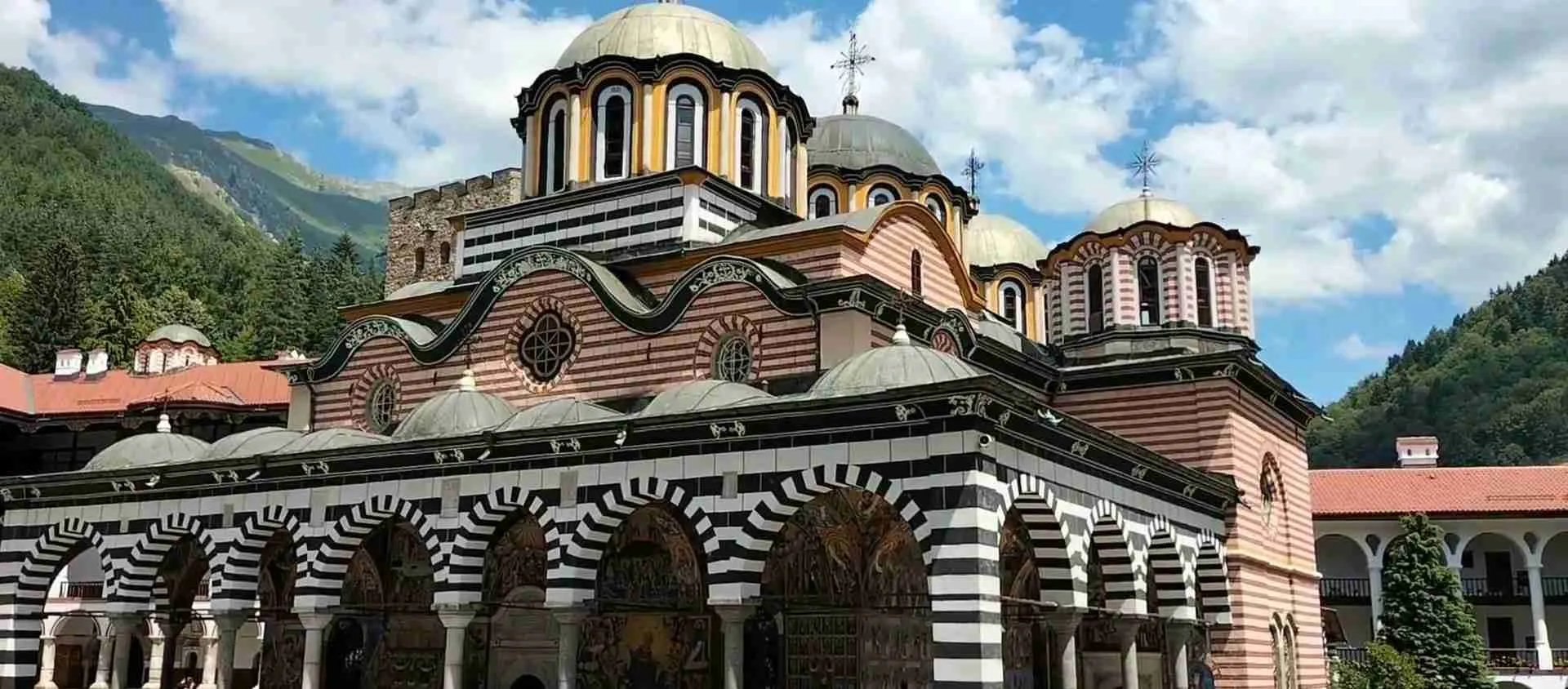
Rila Monastery materializes like an architectural mirage where the Rila River carves through Bulgaria’s highest mountain range, its black-and-white striped facades and golden domes rising 1,147 meters above sea level in a pine-forested valley that has sheltered Orthodox monasticism for over 1,000 years. Founded in the 10th century by the hermit monk St. John of Rila (Ivan Rilski), this UNESCO World Heritage Site inscribed 1983 under criterion (vi) survived Ottoman occupation, devastating fires, and centuries of political upheaval to emerge as the most potent symbol of Bulgarian cultural identity and Orthodox spiritual continuity in the Balkans. The complex visitors encounter today represents the 1834-1862 reconstruction commissioned following the 1833 fire, when Bulgarian National Revival architects and master painters created what UNESCO recognizes as “a characteristic example of the Bulgarian Renaissance” that deliberately “imparted Slavic cultural values upon Rila in trying to reestablish an uninterrupted historical continuity” after 500 years of Ottoman rule.
The monastery’s visual impact registers before passing through the main entrance. Covered external porticos running the entire ground-floor perimeter display 1,200 square meters of vibrant frescoes executed by master painter Zahari Zograf and his workshop during the 1840s, depicting scenes ranging from Ivan Rilski’s miracles to apocalyptic Last Judgment imagery with elongated figures, vivid pigments, and gold leaf details that catch shifting mountain light throughout the day. This exterior fresco gallery functions as visual theology for the masses, its narratives of saints’ lives, biblical episodes, allegories of vices and virtues, and vividly rendered punishments of sinners serving educational purposes for pilgrims across literacy levels. The central courtyard reveals the Church of the Nativity of the Virgin completed 1837, architect Pavel Ioanov’s five-domed structure housing a gold-plated iconostasis whose creation required five years of intricate carving by four master craftsmen. Hrelyo’s Tower, the sole surviving structure from the 14th-century monastery predating the 19th-century rebuilding, punctuates the courtyard as a defensive keep that once protected the complex during Ottoman raids.
What distinguishes Rila from Bulgaria’s numerous monastery complexes is its continuous operation through every historical regime since the 10th century, maintaining an unbroken line of monasticism while serving alternately as fortress, cultural archive, revolutionary meeting place, and spiritual refuge depending on the century’s political climate. During Ottoman rule (1396-1878), Rila preserved Bulgarian language, Orthodox liturgy, illuminated manuscripts, and artistic traditions when formal Bulgarian cultural institutions faced suppression, functioning as unofficial custodian of national identity in ways that resonate in the monastery’s UNESCO designation recognizing not medieval architecture but rather the 19th-century reconstruction’s role in “the awareness of a Slavic cultural identity following centuries of occupation.” This layered historical significance transforms a day trip from Sofia into engagement with Bulgarian self-understanding itself, where frescoes, icons, and carved crosses communicate more than religious devotion—they articulate a people’s determination to maintain cultural distinctiveness against assimilative pressures.
The monastery’s location 120 kilometers south of Sofia creates ideal day-trip proximity. The journey traverses Sofia’s urban sprawl into progressively steeper mountain terrain, the road following river valleys where traditional villages cling to slopes before entering Rila National Park’s coniferous forests. This two-to-three-hour transit serves as gradual transition from capital modernity to mountain timelessness, the monastery eventually appearing around a final bend as if medieval architects designed its valley setting for maximum dramatic revelation. Most visitors allocate 3-5 hours exploring the complex, though overnight accommodation within the monastery’s 300 rooms allows rare opportunity to experience the site after tour buses depart, when monastic rhythms of prayer and silence reclaim the courtyards.
Planning a 2026 day trip requires navigating four main transportation options (public bus, shuttle service, guided tour, private vehicle) each offering distinct cost-to-convenience ratios, understanding monastery operational realities (free courtyard and church access, separate admission for museums, strict dress code enforcement), calculating meal options (on-site restaurants, monastery bakery, packed lunch), and optimizing limited exploration time across competing attractions (exterior frescoes, church interior, multiple museums, tower climb, optional cave hike). This guide addresses each decision point with current 2026 pricing, realistic time allocations, and the practical details that separate frustrating partial experiences from deeply satisfying cultural encounters.
Understanding Rila Monastery’s UNESCO Significance in 2026
Rila Monastery earned UNESCO World Heritage inscription in 1983 not for medieval antiquity but for its role as embodiment of 19th-century Bulgarian National Revival, a cultural movement that deliberately asserted Slavic Orthodox identity during the final decades of Ottoman rule. UNESCO’s official justification states the site “is considered a symbol of the 19th Century Bulgarian Renaissance which imparted Slavic cultural values upon Rila in trying to reestablish an uninterrupted historical continuity,” acknowledging that the current complex dates primarily to the 1834-1862 reconstruction rather than the 10th-century founding. This unusual recognition of relatively recent architecture reflects understanding that Rila’s significance lies not in material age but in symbolic potency—the monastery functioned as living statement of Bulgarian cultural persistence when such assertion carried political risk.
The UNESCO designation under criterion (vi) identifies properties “directly or tangibly associated with events or living traditions, with ideas, or with beliefs, with artistic and literary works of outstanding universal significance.” For Rila, this criterion captures how the monastery served as repository and generator of Bulgarian cultural production across centuries of suppression. During Ottoman rule, the complex preserved illuminated Slavic manuscripts when Bulgarian-language literacy faced restriction elsewhere, maintained liturgical music traditions, trained icon painters, and provided meeting space for cultural and political organizing that would eventually culminate in the 1878 Liberation. The 1834-1862 reconstruction occurred during the Bulgarian National Revival period when wealthy Bulgarian merchants and craftsmen coalesced around cultural renewal as precursor to political independence, channeling resources into architectural projects that asserted Bulgarian distinctiveness through deliberate revival of medieval building styles, Orthodox iconographic programs, and Slavic ornamental vocabulary.
Architect Pavel Ioanov designed the central Church of the Nativity as synthesis of Bulgarian architectural traditions, its five domes following Byzantine models while incorporating locally distinctive striped stonework (alternating dark and light bands) and extensive external painted decoration characteristic of Bulgarian ecclesiastical architecture. The church’s gold-plated iconostasis took five years (1837-1842) to complete through collaboration of four master woodcarvers from Samokov (Atanas Teladur, Petar Dashini, Georgi Dashini, Dimitar Stanishev), their intricate relief carving depicting biblical scenes, saints, and ornamental motifs in techniques transmitted through guild traditions from medieval predecessors. This deliberate craftsmanship using traditional methods performed cultural work as much as religious—it demonstrated Bulgarian artistic sophistication and cultural continuity at moment when such assertion contradicted Ottoman narratives of Balkan cultural inferiority.
The monastery’s most celebrated artifact, Raphael’s Cross displayed in the Church History Museum, crystallizes this intersection of devotion and cultural assertion. Monk Raphael from Bansko carved the 81-centimeter walnut crucifix between 1790 and 1802, decorating its surface with 104 miniature religious scenes and 650 microscopic figures using only a needle as carving tool. The cross incorporates 36 partial relics from saints and biblical figures, making it simultaneously artistic masterpiece, theological encyclopedia, and technical virtuoso performance. Its creation during Ottoman rule, when Bulgarian Orthodox churches faced restrictions and taxation, demonstrates how monastic communities channeled cultural energy into portable artworks that could circulate through Bulgarian communities independent of fixed church structures.
The exterior courtyard frescoes executed primarily by Zahari Zograf during the 1840s function as open-air art gallery and theological primer combining artistic excellence with popular education. Zograf and his workshop painted over 1,200 square meters covering all ground-floor external walls with biblical narratives, saints’ lives, and apocalyptic scenes rendered in the elongated figures, vivid colors, and gold-highlighted details characteristic of Bulgarian National Revival painting. The Last Judgment composition covering the western wall presents particularly dramatic visualization of eternal consequences, its graphic depictions of sinners’ punishments and saints’ rewards designed to impress moral lessons on illiterate viewers while demonstrating sophisticated understanding of composition, perspective, and narrative structure. These frescoes weathered mountain climate exposure for 180 years, their pigments fading and flaking in ways that actually enhance rather than diminish their artistic impact, adding temporal depth layers that pristine modern restoration would eliminate.
Rila’s UNESCO status generates over one million annual visitors, creating preservation challenges balanced against the monastery’s identity as living religious institution. Approximately 20 Orthodox monks currently reside in the complex, maintaining daily liturgical schedules while navigating the commercial and security realities of mass tourism. This tension between pilgrimage site and tourist attraction, between contemplative withdrawal and public education, between preservation requirements and monastic autonomy appears throughout the visitor experience. Photography remains prohibited inside the main church to preserve sacred atmosphere and protect fresco pigments from flash exposure, though exterior courtyard photography faces no restrictions. Museum spaces operate limited hours (8:30 AM – 4:30 PM standard season, extended 8:30 AM – 7:30 PM Friday-Sunday June-September) requiring coordination with tour schedules. The monastery offers overnight accommodation in basic cells, allowing extended stays that transform superficial architectural tourism into proximity to monastic rhythms—though booking requires direct phone contact with the brotherhood and fills rapidly during summer months.
Understanding Rila’s UNESCO significance reshapes how visitors interpret what they see. The black-and-white striped arcades represent not medieval construction but 19th-century cultural statement. The vivid frescoes communicate not timeless devotion but specific historical moment’s assertion of Bulgarian identity. The gold iconostasis demonstrates not anonymous folk craft but master artisans’ calculated performance of cultural sophistication. The monastery functions not as frozen historical monument but as living institution where contemporary Orthodox monasticism continues traditions reaching back 1,000 years while adapting to realities of mass tourism, digital documentation, and global heritage protection frameworks. This layered complexity—medieval founding, Ottoman-era persistence, 19th-century reconstruction, 20th-century UNESCO recognition, 21st-century tourism management—makes Rila more intellectually compelling than surface beauty alone suggests, rewarding visitors who arrive with historical context already established.
Transportation Options from Sofia to Rila Monastery 2026
Four primary transportation methods connect Sofia to Rila Monastery in 2026, each offering distinct advantages in cost, convenience, schedule flexibility, and cultural immersion. Understanding these options allows matching transportation choice to individual priorities regarding budget limits, time constraints, desire for guided interpretation, and tolerance for logistical complexity.
Public Bus Service: Most Economical but Schedule-Restricted
Public buses operated from Sofia’s Ovcha Kupel station provide the most economical transportation at 11 BGN ($6) one-way, making this option compelling for budget-conscious independent travelers willing to accept limited departure times and compressed monastery visit windows. The primary obstacle involves reaching Ovcha Kupel station itself, located in Sofia’s western suburbs approximately 7 kilometers from city center and requiring 30-minute metro journey on Line 2 to Obelya station followed by 10-minute walk or short taxi connection. Public buses typically depart Sofia 10:20 AM and return from Rila Monastery 3:00 PM, constraining on-site exploration to approximately 2 hours after accounting for 2.5-3 hour travel duration each direction. This compressed schedule allows viewing courtyard exterior, church interior, and one museum, but eliminates leisurely lunch, tower climb, or comprehensive museum exploration.
The bus schedule’s single daily frequency creates inflexibility if morning delays occur or if travelers underestimate time required reaching Ovcha Kupel from central accommodations. Missing the 10:20 AM departure eliminates the day trip entirely unless private transportation alternatives exist. The return departure’s 3:00 PM timing forces leaving the monastery mid-afternoon regardless of personal pacing preferences or photographic opportunities appearing in later afternoon light. Seat reservations prove impossible—capacity operates first-come basis, creating uncertainty during peak summer weekends when demand may exceed available seating. The trade-off becomes stark: save 17-44 BGN ($9-24) compared to shuttle services while accepting rigid schedule and peripheral bus station access, or invest incrementally more for central Sofia pickup and extended monastery time.
Public bus transportation suits solo budget travelers with flexible Sofia schedules who can dedicate full day to the excursion and treat logistical challenges as adventure elements rather than frustrations. Groups of three or more often find private vehicle rental becomes cost-competitive with multiple public bus tickets while delivering superior convenience.
Shuttle Bus Services: Optimal Balance of Cost and Convenience
Dedicated shuttle services operated by companies including Traventuria, Rila Shuttle, and others provide the sweet spot for independent travelers prioritizing convenience without professional guided commentary. Daily shuttles cost 28-55 BGN ($15-30) roundtrip depending on operator and season, depart central Sofia landmarks accessible by short walk from most accommodations (common pickup point: Vasil Levski Monument adjacent Embassy of Slovakia, downtown location requiring no metro connections), operate comfortable air-conditioned vehicles, and allow 3-4 hours monastery exploration time with morning departure and late-afternoon return.
Standard shuttle schedules depart Sofia 9:00 AM, reach Rila Monastery approximately 11:30 AM following 2.5-hour mountain drive with optional brief photo stops at scenic viewpoints, allow exploration until 3:00-3:30 PM, and return Sofia by 5:30-6:00 PM. Some operators offer Monday early departure 7:00 AM arriving monastery 9:30 AM for those prioritizing extended visit time or avoiding peak crowd hours. This schedule structure delivers 3.5-4 hours on-site, sufficient for comprehensive courtyard and church exploration, complete museum circuit including tower climb, leisurely restaurant lunch, and unhurried photography without constant clock-watching pressure.
Booking shuttle seats occurs through operator websites with instant confirmation, English-language interfaces, and flexible cancellation policies (typically full refund if cancelled 24 hours advance). Tickets exist as digital confirmations requiring no printing—travelers present smartphone confirmation to driver at designated pickup point. The shuttle format creates informal community among passengers, most traveling independently or in pairs, with drivers sometimes providing basic verbal orientation during transit though without formal guided commentary.
Shuttle services differentiate themselves through slight price variations, departure time options, and optional add-ons. Standard transport-only service costs 28-37 BGN ($15-20) roundtrip. Enhanced versions add audio guide device rental with pre-recorded English commentary covering monastery history and art for 9 BGN ($5) surcharge. Some operators combine Rila with Boyana Church stop on return to Sofia for 46-55 BGN ($25-30) total. Private vehicle rental through same companies allows flexible departure times (morning or afternoon) and extended stay durations for 165-220 BGN ($90-120) vehicle cost split among passengers.
Shuttle transportation suits independent travelers comfortable exploring without professional guide but valuing logistical simplicity, central Sofia pickup eliminating metro transfers, and reliable schedule returning Sofia early evening with time for dinner and evening activities. The format particularly appeals to solo travelers seeking economical option with built-in social interaction opportunities and small groups preferring transportation flexibility without full private vehicle expense.
Guided Day Tours: Historical Context and Dual-UNESCO Combinations
Professional guided tours cost 44-64 BGN ($24-35) per person including roundtrip transportation, English-speaking guide providing historical and cultural commentary, and often combination visits to Rila Monastery plus Boyana Church or St. Ivan Rilski Cave. These tours deliver superior value for travelers prioritizing educational depth, cultural context, and efficient dual-site logistics over independent exploration freedom. The guided format transforms architectural observation into historically-grounded understanding, with professional guides explaining Bulgarian National Revival significance, Ottoman-era monastery roles, fresco iconography, architectural symbolism, and contemporary monastic life details that independent visitors miss without advance research.
Standard Rila-only guided tours depart Sofia 9:00 AM from Vasil Levski Monument, drive 2.5 hours to monastery with verbal orientation during transit, provide 30-45 minute guided walking tour covering courtyard highlights and church interior (guides cannot enter church interior during active services but explain significance from doorway), allow 1.5-2 hours free time for independent museum visits and lunch, and return Sofia 5:00-6:00 PM for 44-55 BGN ($24-30) per person. Tour price includes transportation and guide service but excludes museum admissions 20 BGN ($12) combined ticket, Boyana Church admission (when included in itinerary), and meals.
The most popular tour format combines Rila Monastery with Boyana Church for 64 BGN ($35) per person, creating dual-UNESCO itinerary that efficiently visits Bulgaria’s two most significant cultural sites in single day. These combination tours typically visit Boyana Church first (located only 6 kilometers from Sofia center in Boyana suburb), spending 30-45 minutes viewing the 13th-century frescoes considered precursors to Renaissance naturalism through their unprecedented individualized facial expressions and psychological depth in 240 human figures. Boyana’s compact single-room church allows complete viewing in brief visit, making it ideal first stop before 2-hour drive to Rila. Admission to Boyana costs 18 BGN ($10) per person, separate from tour price and paid directly at entrance. The dual-UNESCO combination suits travelers maximizing cultural exposure during limited Sofia stays, though monastery exploration time compresses slightly compared to Rila-only tours.
Alternative tour combinations substitute St. Ivan Rilski Cave for Boyana Church, appealing to nature-oriented travelers interested in the hermit’s original 10th-century meditation cave located 15-minute forest walk from monastery complex. These nature-focused tours allow brief cave visit and riverside trail experience while maintaining single-day feasibility for 55-64 BGN ($30-35) per person. Some operators offer extended full-day tours combining Rila Monastery with Seven Rila Lakes (glacial lakes requiring chairlift access and 2-hour hiking circuit at 2,000+ meters elevation) for 91-110 BGN ($50-60) per person, though these extended itineraries allocate only 1-1.5 hours monastery time as secondary component to high-mountain hiking.
Guided tours operate air-conditioned minibuses accommodating 8-20 passengers depending on daily bookings, creating small-group atmosphere more conducive to questions and interaction than large bus tours. English remains primary language with Spanish, Italian, and German guides available on specified weekly schedules (typically weekends only) for 9 BGN ($5) per person surcharge. Audio guide devices offering pre-recorded commentary in multiple languages cost 9 BGN ($5) rental for those preferring self-paced narration over live guide.
The guided tour format particularly suits first-time Bulgaria visitors seeking efficient cultural orientation, travelers without advance monastery knowledge who value expert interpretation, and those combining Rila with Boyana Church in time-optimized dual-UNESCO itinerary. The modest price premium over basic shuttle service (typically 9-18 BGN ($5-10) more) delivers substantial value through historical context, architectural explanation, and dual-site logistics when Boyana included.
Private Vehicle Options: Maximum Flexibility for Groups and Families
Private vehicle transportation via rental car or hired driver offers maximum schedule flexibility and route customization for 165-275 BGN ($90-150) total vehicle cost split among passengers, making this option cost-competitive for groups of three or more while delivering convenience advantages including departure time control, pace customization, optional stop additions, and luggage accommodation. Self-drive rental cars from Sofia cost approximately 73-110 BGN ($40-60) daily depending on vehicle class and insurance coverage, plus 27-37 BGN ($15-20) gasoline for 240-kilometer roundtrip. Hired driver services with private vehicle cost 165-275 BGN ($90-150) total depending on vehicle size and company, eliminating navigation stress and mountain driving concerns while allowing passengers to focus on scenery and conversation.
The drive from Sofia to Rila Monastery follows E79 highway south toward Greek border, exiting at Kocherinovo onto winding mountain road ascending through Rila National Park’s coniferous forests with progressive elevation gains and increasingly dramatic valley views. Driving time ranges 1.75-2.25 hours depending on traffic leaving Sofia and comfort level with mountain switchback curves. The route passes traditional Bulgarian villages, roadside restaurants serving local specialties, and forest trailheads accessing hiking routes, allowing spontaneous stops impossible on fixed-schedule shuttle or guided tours.
Private vehicle flexibility enables alternative itineraries combining multiple destinations in single day excursion. Popular combinations include Rila Monastery with Boyana Church (adding 45 minutes each way), Rila with Bansko ski resort town (adding 1 hour each way), Rila with Seven Rila Lakes (adding 45-minute drive from monastery to chairlift base station plus chairlift ticket 27 BGN ($15) roundtrip and 2-3 hour hiking time), or Rila with Stob Earth Pyramids geological formations (natural sandstone formations 30 kilometers from monastery). These multi-destination itineraries transform single-purpose monastery visits into comprehensive Sofia-region touring, though extended driving and activity time creates full 10-12 hour days.
Parking at Rila Monastery costs 9 BGN ($5) in designated monastery lot, though free roadside parking exists along approach road 100-200 meters before main entrance requiring brief uphill walk. The paid lot offers superior convenience and vehicle security but fills completely during summer weekends by mid-morning.
Private vehicle transportation particularly suits families with children whose schedules and patience levels resist fixed tour timing, groups of 3-4 adults seeking cost-effective flexibility, and travelers combining Rila with other destinations in customized multi-day Sofia-region itinerary. Solo travelers and couples typically find shuttle or guided tour options deliver better value unless schedule flexibility holds premium importance.
Monastery Admission Details and Museum Options 2026
Rila Monastery operates a two-tier admission system where primary attractions remain free to all visitors while supplementary museums and towers charge separate entrance fees that can be purchased individually or as combined package. Understanding this structure allows strategic decision-making about which spaces justify admission costs based on individual interests in art history, religious artifacts, architectural access, or simple courtyard appreciation.
Free Access Areas: Courtyard and Main Church
The monastery courtyard and Church of the Nativity require no admission fee, allowing visitors unlimited time exploring the complex’s most visually stunning elements at zero cost beyond transportation. The exterior courtyard frescoes covering 1,200 square meters of residential building facades remain fully visible and photographable from ground level, their biblical narratives, saints’ lives, and apocalyptic imagery rendered in vivid Renaissance colors with extensive gold-leaf details. These open-air galleries function as the monastery’s primary artistic statement, with Zahari Zograf’s 1840s compositions demonstrating the Bulgarian National Revival painting style that UNESCO recognition celebrates. Photographing these exterior frescoes faces no restrictions, making the courtyard ideal location for capturing the monastery’s distinctive black-and-white striped arcades against mountain backdrop.
The Church of the Nativity opens to visitors during non-service hours (typically 8:00 AM – 6:00 PM daily with closures during active Orthodox liturgies), allowing free interior access to view the five-domed architecture, gold-plated iconostasis, and 19th-century frescoes covering walls and ceilings. Church interior photography remains strictly prohibited to preserve sacred atmosphere and protect fresco pigments from flash exposure. The iconostasis represents one of Bulgaria’s most celebrated examples of ecclesiastical woodcarving, its intricate relief panels depicting biblical scenes and saints through techniques requiring five years collaborative effort by four master craftsmen. Visitors should respect Orthodox conventions when entering: women cover heads with scarves (available at entrance if needed), voices remain subdued, and behavior maintains contemplative rather than tourist atmosphere. Active services occur early morning and occasionally at other times—visitors should withdraw from interior during liturgies unless participating as worshippers.
Free access areas alone justify the day trip for budget-conscious travelers or those primarily interested in architecture and atmospheric experience rather than detailed artifact examination. Many visitors spend 2-3 hours exploring courtyard, church interior, monastery bakery, and restaurant without purchasing museum admissions, creating satisfying cultural encounter at zero entry cost.
Museum Complex Combined Ticket: 20 BGN ($12)
A combined museum ticket costs 20 BGN ($12) per person, granting admission to four separate exhibition spaces plus Hrelyo’s Tower that together require 60-90 minutes for comprehensive viewing. This bundled ticket delivers better value than purchasing individual museum admissions separately (which total 27 BGN ($15) when bought individually), making the combined package the logical choice for visitors interested in any two or more spaces.
The Church History Museum houses the monastery’s most celebrated artifact, Raphael’s Cross, alongside extensive collections of illuminated manuscripts, liturgical vessels, ecclesiastical garments, medieval seals, and historical photographs documenting pre- and post-fire monastery appearances. Raphael’s Cross, carved 1790-1802 by Monk Raphael from Bansko, measures 81 centimeters tall with surface decoration comprising 104 miniature religious scenes and 650 microscopic human figures executed using only needle as carving tool. The cross incorporates 36 partial relics from saints and biblical figures embedded within its walnut structure, making it simultaneously devotional object, artistic masterpiece, and technical virtuoso performance. The museum contextualizes this artifact alongside other monastery treasures including 14th-15th century icons, embroidered textiles, gold and silver liturgical objects, and 19th-century photographs showing monastery appearance immediately after 1834-1862 reconstruction. Estimated viewing time: 25-35 minutes.
The Icon Gallery displays 80 classical Orthodox icons spanning several centuries, including works by celebrated Bulgarian icon painters and examples demonstrating evolution of Byzantine iconographic conventions through Bulgarian National Revival innovations. The collection includes portraits of monastery abbots who served as guardians across the institution’s 1,000-year history, providing visual genealogy of spiritual leadership. Icons range from small portable examples used for personal devotion to large-scale works originally installed in monastery churches before current arrangement. The gallery occupies rooms preserving original 19th-century interior features including wooden floors, coffered ceilings, and windows with characteristic period greenish glass. Estimated viewing time: 15-20 minutes.
The Ethnographic Museum showcases traditional Bulgarian crafts, folk costumes, agricultural implements, and domestic objects illustrating daily life in Rila region villages during 19th-20th centuries. While less directly connected to monastery spiritual mission than other exhibition spaces, this collection demonstrates the institution’s broader role as cultural repository preserving not only religious artifacts but also secular material culture documenting Bulgarian rural traditions. The museum appeals particularly to visitors interested in folk culture, textile arts, and pre-industrial material life. Estimated viewing time: 15-20 minutes.
Hrelyo’s Tower stands as the monastery’s oldest surviving structure, built in 14th century as defensive keep during period when raids threatened the complex. The tower originally featured drawbridge and served as last-refuge fortification during attacks, its military function reflecting the monastery’s exposed position during Ottoman-era insecurity. Today visitors climb narrow stone staircases to reach upper levels offering panoramic mountain views and bird’s-eye perspective on monastery courtyard architecture impossible to grasp from ground level. A small chapel occupies one tower level, preserving the famous Transfiguration fresco. Tower access requires reasonable physical fitness for steep stair climbing and operates limited hours during peak season for preservation and safety reasons. Estimated viewing time: 15-20 minutes including climb and photo opportunities.
Museum spaces operate standardized hours (8:30 AM – 4:30 PM daily standard season, extended to 7:30 PM Friday-Sunday June-September) requiring coordination with tour schedules. The combined ticket purchase occurs at ticket booth near main monastery entrance, accepting cash (BGN preferred though major currencies accepted) and cards. Student discounts reduce admission to 10 BGN ($6) with valid international student ID card. Children under 7 enter free to all spaces.
Individual Museum Pricing for Selective Visits
Visitors interested in single specific museum rather than complete circuit can purchase individual admissions: Church History Museum 8 BGN ($4.50), Icon Gallery 5 BGN ($2.50), Ethnographic Museum 6 BGN ($3.50), Hrelyo’s Tower 5 BGN ($2.50). This à la carte approach suits travelers with particular interests (art historians focused solely on icon collection, photographers prioritizing tower viewpoint) or those on extremely tight budgets and schedules. However, the combined ticket’s 7 BGN ($4) savings compared to purchasing all four individually makes selective admission financially rational only when genuinely planning to skip multiple spaces.
On-Site Guided Tours: 25 BGN ($14) per Group
The monastery’s own guide service offers 50-minute tours led by English or Bulgarian-speaking guides for 25 BGN ($14) per group (not per person), providing exceptional value for couples or small groups seeking expert interpretation. These on-site guides work directly for the monastery, bringing intimate knowledge of the complex’s history, art, and ongoing monastic community. Tours cover courtyard highlights, church exterior and interior (when services not occurring), and abbreviated museum circuit with detailed explanations of key artifacts including Raphael’s Cross and iconostasis. Booking occurs at museum ticket booth subject to guide availability (typically good during morning hours, sporadic during peak afternoon crush). English guides cost 25 BGN ($14) per group regardless of group size, while Bulgarian-language guides cost 15 BGN ($8) per group. This guide service provides deeper educational experience than arriving with Sofia-based tour guide whose expertise spreads across multiple Bulgarian sites rather than concentrating on Rila specifically.
Monastery Facilities: Dining, Bakery, and Practical Amenities 2026
Rila Monastery’s remote mountain location limits external dining options, making on-site facilities including restaurants, traditional bakery, and basic amenities essential components of the day trip experience. Understanding these facilities allows realistic meal planning and budget allocation.
Restaurant Options and Food Costs
Two restaurants operate within and immediately adjacent to the monastery complex, serving traditional Bulgarian cuisine in rustic interiors or outdoor terraces with mountain views. Restaurant Drushliavitza and Restaurant Valyavitsa offer similar menus emphasizing Bulgarian specialties including shopska salad (tomato, cucumber, onion, pepper, grated sirene cheese), grilled meats (kebapche, kyufte, pork chops), bean soups, moussaka variations, and local freshwater trout. A three-course lunch (appetizer, main course, dessert) costs 18-24 BGN ($10-13) per person with beer or soft drink, positioning monastery restaurants in mid-range category rather than budget tier. Individual dishes range 7-15 BGN ($4-8) for mains, 4-7 BGN ($2-4) for appetizers, 3-5 BGN ($2-3) for desserts.
Restaurant Drushliavitza occupies building immediately outside monastery walls, offering outdoor terrace dining with direct monastery views and interior seating in traditional Bulgarian tavern style with wood beams and rustic décor. The restaurant operates buffet-style service during peak lunch hours (12:00-2:00 PM) when tour groups arrive en masse, switching to standard table service during quieter morning and afternoon periods. Menu pricing reflects tourist location premium—similar meals in Sofia neighborhood restaurants cost 30-40% less. However, the convenience of on-site location during limited monastery visit time justifies premium for most travelers, particularly given absence of nearby alternatives requiring transport.
Restaurant Valyavitsa provides similar cuisine and pricing with slightly more intimate atmosphere and riverside location offering water feature ambiance. Both restaurants accommodate vegetarians with multiple options (bean soups, stuffed peppers, various salads, cheese-based dishes) though vegan selections remain limited beyond basic salads. Cold tarator soup (yogurt-based cucumber soup) appears on summer menus as quintessential Bulgarian refreshment, though the yogurt base excludes vegans. Neither restaurant accepts reservations—seating operates first-come basis with 15-30 minute waits possible during peak lunch rush 12:30-1:30 PM when tour groups converge.
Monastery Bakery: Traditional Pastries and Breads
The monastery’s own bakery located near main entrance operates counter service selling traditional Bulgarian breads and pastries fresh from wood-fired ovens, with iconic mekitsi (Bulgarian fried dough pastries similar to doughnuts) costing only 2 BGN ($1) each representing the complex’s best culinary value. Mekitsi arrive hot, fluffy, and traditionally served with white cheese (sirene) or honey and powdered sugar, making them ideal breakfast supplement or mid-afternoon snack. The bakery’s simple operation—point to desired items, pay cash at counter, consume at outdoor tables adjacent bakery or while walking monastery grounds—creates authentic interaction with monastic enterprise while delivering excellent food at fraction of restaurant prices.
Beyond mekitsi, the bakery sells various traditional Bulgarian breads (2-4 BGN ($1-2) per loaf), banitsa (cheese-filled phyllo pastry, 3 BGN ($2) per portion), and simple cookies. Everything emerges from traditional ovens using recipes and techniques transmitted through generations of monastic bakers. Food quality ranges good to excellent, prices remain low by any standard, and the experience of eating monastery-made bread while sitting in courtyard surrounded by frescoed arcades adds cultural immersion dimension. The bakery operates limited hours (typically 8:30 AM – 4:00 PM, may extend during summer peak season) and sells out of popular items by mid-afternoon—serious mekitsi enthusiasts arrive morning hours ensuring availability.
Packed Lunch Alternative
Budget-conscious travelers save 9-15 BGN ($5-8) by bringing packed lunches from Sofia, as picnicking is permitted in designated areas outside monastery walls along the river and forest trails. Sofia supermarkets and bakeries provide sandwich materials, fruits, snacks, and beverages at standard grocery prices, with complete packed lunch assembled for 9-11 BGN ($5-6) per person. This strategy particularly suits families with children whose food preferences and patience levels resist restaurant dining, solo budget travelers prioritizing cost minimization, and those who prefer lighter midday meals during active sightseeing. The monastery’s mountain setting provides picturesque outdoor dining with water sounds and forest air as accompaniment. However, packed lunch approach sacrifices opportunity to taste authentic Bulgarian cuisine in atmospheric monastery restaurant setting—the trade-off between cost savings and cultural experience becomes personal calculation based on budget limits and culinary priorities.
Practical Amenities and Services
Public restrooms located near main entrance charge 1 BGN ($0.55) per use, a common practice at Bulgarian tourist sites that maintains facilities through user fees rather than general admission charges. Bring small denomination coins (1 and 2 BGN coins) to avoid payment complications. Restroom facilities meet basic standards with running water and toilet paper provided, though conditions reflect high-traffic tourist site realities rather than luxury hotel expectations. Additional restrooms exist inside restaurant facilities for patron use without additional charge.
The monastery complex offers no ATM or currency exchange services—all cash needs must be addressed in Sofia before departure or at occasional roadside gas stations during transit. Most tour operators, restaurants, and museum ticket booths accept major credit cards (Visa, Mastercard) though small vendors including bakery and souvenir stalls operate cash-only. Carrying 50-100 BGN ($27-55) cash per person covers all likely expenses including museums, lunch, bakery purchases, restroom fees, and contingency reserves.
Souvenir shops cluster near main entrance selling religious items (icons, crosses, prayer beads, incense), traditional crafts (embroidered textiles, wood carvings, pottery), Bulgarian folk art reproductions, postcards, and monastery-themed books. Prices range moderate to expensive depending on item quality and seller, with religious icons ranging 18-91 BGN ($10-50), embroidered textiles 27-146 BGN ($15-80), and postcards 2-4 BGN ($1-2). These vendors provide opportunity to support local artisans and purchase meaningful souvenirs, though price negotiation generally proves unsuccessful given tourist location premium.
Optimizing Your Day Trip Schedule 2026
Maximizing limited monastery visit time requires strategic sequencing of attractions, realistic time allocation for each component, and adaptation to crowd flow patterns that concentrate tour groups during midday hours. A well-planned schedule transforms rushed surface encounter into comprehensive cultural experience.
Recommended Time Allocation by Activity
Begin with the exterior courtyard frescoes before entering any buildings, allowing 45-60 minutes to walk the entire perimeter examining the 1,200 square meters of painted narratives covering residential building facades. These open-air galleries repay extended viewing as details emerge: individualized facial expressions in crowd scenes, symbolic animals and plants encoding theological meanings, architectural trompe-l’oeil effects creating illusory depth, and the dramatic Last Judgment composition on the western wall depicting eternal consequences with graphic clarity. Photograph systematically working around the quadrangle, as changing light throughout the day creates different effects—morning light illuminates eastern walls while afternoon sun favors western and southern exposures. The frescoes’ aged patina, with areas of flaking and fading, adds temporal depth modern restoration would eliminate, making their current state more emotionally resonant than pristine condition.
Enter the Church of the Nativity after courtyard circuit, allocating 30-45 minutes for interior examination. The gold-plated iconostasis commands immediate attention, its elaborate carving requiring five years collaborative effort by four master craftsmen creating biblical narrative panels and ornamental motifs in intricate relief. Interior frescoes covering walls and ceilings demonstrate 19th-century Bulgarian religious painting at its finest, though photography prohibition prevents documentation—instead, practice contemplative viewing allowing visual memory to replace digital capture. The church’s five domes create complex interior volumes and light patterns worth studying from various positions. If active Orthodox service occurs during your visit, withdraw from interior and return later or appreciate the liturgical experience as authentic encounter with living religious tradition rather than architectural tourism inconvenience.
Museum complex exploration requires 60-90 minutes for all four exhibition spaces plus Hrelyo’s Tower, though visitors can compress this to 45 minutes hitting only highlights if time constrains. Prioritize the Church History Museum housing Raphael’s Cross (25-35 minutes), then ascend Hrelyo’s Tower for panoramic viewpoints (15-20 minutes), followed by Icon Gallery (15-20 minutes) and Ethnographic Museum (15-20 minutes) if remaining time allows. The combined 20 BGN ($12) ticket grants admission to all spaces without time pressure—visitors can explore comprehensively or selectively based on individual interests and energy levels. Museum spaces maintain climate control and provide rest from outdoor summer heat, making them strategic midday retreat during hottest hours.
Lunch occupies 30-60 minutes depending on restaurant choice, crowd levels, and personal pacing preferences. Restaurant peak crush occurs 12:30-1:30 PM when tour groups converge—arriving 11:45 AM or waiting until 2:00 PM avoids longest waits and secures better table selection. Monastery bakery visits require only 10-15 minutes for mekitsi purchase and consumption, offering faster alternative for travelers prioritizing exploration time over full meal. Budget 15-20 additional minutes for restroom visits, souvenir browsing, and simple rest periods—the mountain altitude (1,147 meters) and walking on cobblestone surfaces creates fatigue levels underestimated by time-conscious planners.
Strategic Schedule Templates
The Three-Hour Efficient Visit (minimum acceptable timeframe): Arrive 11:30 AM, immediately begin courtyard fresco circuit (45 minutes), enter Church of the Nativity (30 minutes), quick monastery bakery mekitsi purchase and consumption (15 minutes), Church History Museum to view Raphael’s Cross (25 minutes), brief Hrelyo’s Tower ascent for photos (15 minutes), souvenir shop browse (10 minutes), depart 2:30 PM. This compressed schedule covers essential highlights but eliminates leisurely lunch, complete museum circuit, and relaxed photography time. Suits travelers on strict shuttle schedules with 3:00 PM return departures or those combining Rila with other same-day destinations.
The Four-Hour Comprehensive Visit (recommended standard): Arrive 11:00 AM, courtyard frescoes including extensive photography (60 minutes), Church of the Nativity interior (30 minutes), restaurant lunch with mountain view table (60 minutes), complete museum circuit including all four spaces plus tower (75 minutes), monastery bakery dessert and souvenir shopping (15 minutes), depart 3:00 PM. This balanced schedule allows thorough exploration without rush, includes proper meal, covers all major attractions, and provides buffer time for unexpected delays or spontaneous interests. Matches most shuttle and guided tour schedules allowing 9:00 AM Sofia departure with 3:00 PM monastery departure returning Sofia by 5:30-6:00 PM.
The Five-Hour Immersive Visit (luxury timing for private vehicle or extended tours): Arrive 10:30 AM, courtyard frescoes with detailed examination and comprehensive photography from multiple angles (75 minutes), Church of the Nativity including time for reflection (45 minutes), complete museum circuit with audio guide or on-site guided tour (90 minutes), extended restaurant lunch (75 minutes), monastery bakery, St. Ivan Rilski Cave optional forest walk (30 minutes round-trip from monastery), souvenir shopping and grounds relaxation (30 minutes), depart 3:30 PM. This unhurried schedule transforms day trip into deep immersion, allowing contemplative engagement beyond surface tourism. Requires private vehicle with flexible departure timing or extended shuttle options.
Crowd Management Strategies
Tour groups concentrate arrivals between 11:30 AM and 1:00 PM, creating peak congestion during midday hours when 200-300 visitors simultaneously occupy the courtyard. Arriving before 11:00 AM or after 2:00 PM encounters smaller crowds allowing superior photography opportunities, quieter church interior experience, and easier restaurant seating. Morning light favors eastern courtyard walls for photography, afternoon sun illuminates western and southern exposures—the technical photography consideration thus aligns with crowd avoidance strategy suggesting late morning arrival.
Church interior becomes least crowded during lunch hours 12:30-2:00 PM when tour groups occupy restaurants, making this optimal window for contemplative interior viewing if visitors take early or late lunch. Museum spaces rarely experience true crowding given their multiple rooms and one-way circulation patterns—even during peak season, 15-20 simultaneous visitors spread across four exhibition spaces creates manageable density. Hrelyo’s Tower access may be temporarily limited to 8-10 climbers at once for safety reasons, creating brief queues during peak afternoon hours that clear within 10-15 minutes.
Understanding the Monastery’s Painted Treasures: Fresco Iconography 2026
Rila Monastery’s artistic significance centers on the extraordinary fresco cycles covering exterior walls and interior church surfaces, their vibrant narrative compositions demonstrating Bulgarian National Revival painting at its zenith while communicating complex theological concepts through visual storytelling accessible across literacy levels. Understanding the iconographic program transforms casual viewing into meaningful interpretation.
Exterior Courtyard Frescoes: Visual Theology for the Masses
Master painter Zahari Zograf and his workshop executed the majority of exterior courtyard frescoes during the 1840s, creating 1,200 square meters of narrative compositions that function simultaneously as artistic masterwork, theological encyclopedia, and popular education tool. The frescoes cover all ground-floor external walls of the residential buildings forming the monastery’s quadrangular perimeter, their protected position under second-floor galleries preserving pigments from direct rain exposure while allowing full visibility from courtyard level. This architectural arrangement creates Europe’s most extensive open-air fresco gallery, its continuous narrative band wrapping the entire complex in visual instruction.
The iconographic program follows deliberate organizational logic moving from salvation history (Old and New Testament episodes) to saints’ lives (particularly Bulgarian and Orthodox martyrs) to eschatological warnings (Last Judgment and hell scenes). The western wall hosts the massive Last Judgment composition, its three-tiered layout depicting Christ in Glory surrounded by apostles (upper register), resurrection of the dead and separation of righteous from damned (middle register), and graphic torments of hell organized by sin categories (lower register). This apocalyptic imagery served didactic purpose in semi-literate society—viewers could identify their own sins reflected in condemned figures and visualize eternal consequences with uncomfortable clarity. The hell scenes demonstrate remarkable psychological insight and artistic imagination: gluttons devoured by monstrous creatures, greedy merchants crushed under money bags, lustful sinners tormented by demons, all rendered with elongated figures, exaggerated expressions, and vivid color contrasts characteristic of Zograf’s style.
The northern and southern walls primarily depict saints’ lives, with particular emphasis on Bulgarian martyrs and Orthodox confessors who maintained faith under persecution. St. John of Rila appears multiple times in scenes from his hagiography: withdrawing to mountain cave for hermit life, performing miracles for peasants and kings, resisting wealth and honors, his death and subsequent veneration. These narrative cycles reinforce the monastery’s identity as continuation of the saint’s spiritual mission while providing moral instruction through saintly example. The painted figures demonstrate Zograf’s characteristic style: elongated proportions, large expressive eyes, elaborate drapery folds, and extensive gold-leaf highlighting creating luminous effects as sunlight shifts throughout the day.
The eastern wall incorporates both biblical narratives and architectural trompe-l’oeil effects, painted columns and arches creating illusory three-dimensional depth extending the actual architecture through pictorial means. This sophisticated spatial manipulation demonstrates Renaissance perspective techniques adapted to Bulgarian decorative traditions, the result being more ornamental than strictly naturalistic. Biblical scenes emphasize New Testament episodes particularly resonant for monastic audience: Christ’s ministry, miracles demonstrating divine power over material world, parables teaching spiritual priorities, and resurrection appearances confirming eternal life promise.
The frescoes’ current condition, with areas of fading, flaking, and weathering accumulated over 180 years mountain climate exposure, creates layered temporal aesthetic—the original vivid pigments visible in protected areas contrast with ghostly pale zones where exposure eroded color, the resulting patchwork appearance paradoxically more moving than pristine restoration would achieve. Conservation efforts balance preservation necessity against respect for natural patina, with periodic interventions stabilizing actively deteriorating areas while accepting aged appearance as integral to the frescoes’ historical authenticity.
Church Interior Painted Program
The Church of the Nativity’s interior frescoes follow Orthodox iconographic conventions with Bulgarian stylistic adaptations, the entire surface—walls, ceilings, domes, pendentives—covered in painted narratives and iconic figures creating immersive sacred environment. The central dome depicts Christ Pantocrator (All-Ruler) surrounded by angels and prophets, the traditional Byzantine dome program asserting Christ’s cosmic authority over creation. The four pendentives supporting the dome show the four Evangelists (Matthew, Mark, Luke, John) whose Gospels form canonical foundation for Christian theology. Upper wall registers depict Christ’s earthly ministry arranged in Christological cycle, while lower registers show full-length standing saints creating spiritual army surrounding worshippers.
The iconostasis—the gilded screen separating nave from sanctuary—functions as theological statement through its tiered organization of icons. The bottom tier (local row) includes icons of Christ, the Virgin Mary, St. John of Rila, and other saints particularly venerated at this monastery. The second tier (festal row) depicts major Christian feast days through iconic scenes. Higher tiers show Old Testament prophets and patriarchs, with topmost position reserved for the Crucifixion. The iconostasis’s elaborate carved decoration required five years creation (1837-1842) by four master craftsmen from Samokov, their relief carving integrating biblical narratives, floral motifs, geometric patterns, and symbolic animals in continuous ornamental field. The gold plating creates luminous surface responding to candlelight and natural illumination filtering through church windows, the resulting visual effect designed to evoke heavenly glory and transcendent beauty.
Photography prohibition inside the church frustrates modern documentation impulses but serves legitimate preservation purposes—repeated flash photography degrades pigments over time, while the act of photographing transforms sacred space into photo opportunity rather than place of spiritual encounter. The policy encourages contemplative viewing, allowing visual memory and emotional response to replace digital capture. Visitors should allocate time for simple observation, letting eyes adjust to interior dimness and discovering details gradually as vision adapts.
Day Trip Cost Breakdowns by Travel Style 2026
Understanding complete day trip expenses across different travel styles allows realistic budget planning and conscious trade-offs between cost minimization and convenience maximization. The following comprehensive breakdowns include all foreseeable expenses from Sofia departure to Sofia return.
Budget-Conscious Independent Traveler: 37-93 BGN ($20-51) Per Person
Budget travelers minimizing expenses while maintaining quality cultural experience spend 37-93 BGN ($20-51) per person for complete Rila Monastery day trip including roundtrip transportation, on-site exploration, and meal. This range accommodates two scenarios: bare-minimum approach using free attractions only, and enhanced version adding museum admission and restaurant lunch.
Transportation costs dominate budget category, with daily shuttle services 28-55 BGN ($15-30) roundtrip representing optimal value among economical options. The shuttle eliminates public bus complications (peripheral station location, rigid timing, compressed visit window) while costing only 17-44 BGN ($9-24) more than public transport. Alternative public bus option costs 22 BGN ($12) roundtrip but forces 30-minute metro journey to Ovcha Kupel station 7 BGN ($4) metro tickets and constrains monastery visit to 2 hours—the nominal cost savings versus shuttle service rarely justify the convenience sacrifice.
Monastery admission costs nothing for courtyard and church, the complex’s primary visual attractions. Budget travelers exploring only free areas spend zero admission charges while experiencing the 1,200 square meters of exterior frescoes, Church of the Nativity interior with gold iconostasis, architectural ambiance, and mountain setting. This free-access approach delivers satisfying cultural encounter for visitors prioritizing atmosphere over detailed artifact examination. Budget-conscious travelers interested in museums add the 20 BGN ($12) combined ticket covering all four exhibition spaces plus Hrelyo’s Tower, representing excellent value for comprehensive cultural education.
Food expenses range 9-18 BGN ($5-10) depending on packed lunch versus budget restaurant approach. Packed lunch from Sofia supermarket costs 9-11 BGN ($5-6) per person providing sandwich, fruit, snacks, and beverage consumed in monastery grounds or riverside picnic areas. This self-catering approach maximizes budget efficiency while sacrificing opportunity to taste authentic Bulgarian cuisine in atmospheric monastery restaurant. Budget restaurant meal alternative costs 14-18 BGN ($8-10) for simple main course (grilled meat, bean soup, or vegetarian option) plus beverage, delivering cultural-culinary experience within budget constraints. Monastery bakery mekitsi 2 BGN ($1) each provide ideal snack or breakfast supplement at minimal cost.
Complete budget day trip breakdown: Shuttle transport 28-55 BGN ($15-30), admission free to 20 BGN ($12), food 9-18 BGN ($5-10), miscellaneous 2-4 BGN ($1-2) for restroom fee and contingencies. Total: 37-93 BGN ($20-51) per person for complete Sofia-to-Sofia day trip with 3-4 hours monastery exploration time.
Mid-Range Guided Tour Participant: 82-126 BGN ($45-69) Per Person
Mid-range travelers balancing cost-consciousness with convenience and cultural depth spend 82-126 BGN ($45-69) per person for guided day tour combining professional interpretation, efficient logistics, and complete cultural experience. This category represents optimal value for first-time Bulgaria visitors and those prioritizing educational context over independent exploration freedom.
Guided tour packages cost 44-64 BGN ($24-35) per person including roundtrip air-conditioned transportation, English-speaking guide providing historical and cultural commentary, and often dual-UNESCO combination visiting Rila Monastery plus Boyana Church. The Rila-only guided tour version 44-55 BGN ($24-30) delivers superior value over unguided shuttle transport costing only 9-18 BGN ($5-10) more while adding professional interpretation transforming architectural observation into historically-grounded understanding. The most popular Rila plus Boyana combination tour 64 BGN ($35) efficiently visits two UNESCO sites in time-optimized single-day itinerary, justifying modest price premium through dual-site logistics and comprehensive cultural coverage.
Museum admission 20 BGN ($12) combined ticket becomes essential component of mid-range experience, the four exhibition spaces and Hrelyo’s Tower providing artifact-level engagement complementing architectural appreciation. Mid-range visitors typically purchase combined museum access as default rather than debating selective admission, the modest cost representing worthwhile investment in complete cultural understanding.
Restaurant lunch costs 18-24 BGN ($10-13) per person for three-course meal (appetizer, main course, dessert) with beverage at one of two monastery restaurants. This mid-range dining delivers authentic Bulgarian cuisine in atmospheric setting with mountain views, the experience itself contributing to overall cultural immersion. Mid-range travelers occasionally supplement restaurant lunch with monastery bakery mekitsi 2 BGN ($1) as dessert or afternoon snack, combining culinary experiences across price points.
Optional Boyana Church admission (when included in combination tour itinerary) costs 18 BGN ($10) per person, paid separately at entrance beyond tour package price. This supplementary UNESCO site adds 30-45 minutes to total trip duration while delivering significant art historical value through its 13th-century frescoes, making inclusion worthwhile for culture-focused travelers with full day available.
Complete mid-range day trip breakdown: Guided tour 44-64 BGN ($24-35), combined museum ticket 20 BGN ($12), restaurant lunch 18-24 BGN ($10-13), optional Boyana admission 18 BGN ($10), miscellaneous 2-4 BGN ($1-2). Total: 82-126 BGN ($45-69) per person for comprehensive guided day trip with professional interpretation, complete museum access, and proper meal in monastery setting.
Premium Private Experience: 182-247 BGN ($100-135) Per Person
Premium travelers prioritizing convenience, flexibility, and personalized pacing spend 182-247 BGN ($100-135) per person for private vehicle transportation, on-site professional guide, complete museum exploration, and enhanced dining. This category suits couples, families, and small groups valuing schedule control over cost minimization.
Private vehicle transportation costs 220-330 BGN ($120-180) total for hired driver with comfortable sedan or minivan accommodating 2-4 passengers, creating per-person costs of 110-165 BGN ($60-90) when two share or 55-83 BGN ($30-45) when four share. This private option delivers departure time flexibility (morning or afternoon start), pace customization (extended monastery time, additional photo stops, route variations), and door-to-door convenience eliminating central Sofia meeting points. Self-drive rental car reduces vehicle costs to 100-147 BGN ($55-80) total including rental fee and gasoline, though mountain driving navigation and parking logistics create trade-offs against hired driver convenience.
On-site monastery guide service 25 BGN ($14) per group (not per person) provides exceptional value enhancement for couples and small groups, the 50-minute professionally-guided tour delivering intimate knowledge of complex history, art, and ongoing monastic community. This monastery-employed guide brings deeper expertise than Sofia-based tour guides whose attention spreads across multiple Bulgarian sites, creating qualitatively superior interpretation for marginal additional cost. Premium travelers typically add this on-site guide even when arriving via private vehicle without Sofia-based guide, recognizing the educational value justifies modest investment.
Combined museum ticket 20 BGN ($12) and complete exploration remains standard for premium category, with additional time allocated for contemplative viewing rather than rushed circulation. Premium visitors often spend 90-120 minutes in museum spaces versus mid-range travelers’ 60-75 minutes, the extended duration reflecting unhurried pacing enabled by flexible schedule.
Enhanced restaurant dining costs 27-37 BGN ($15-20) per person for expanded meal including multiple appetizers, premium main courses, dessert, and beverages. Premium diners typically select upscale items from restaurant menus (local trout, grilled meats, traditional specialties prepared with attention to presentation) and linger over leisurely lunch rather than efficient fueling, treating meal as significant component of cultural experience rather than functional necessity.
Complete premium day trip breakdown: Private vehicle share 110-165 BGN ($60-90) per person for two sharing, on-site guide 25 BGN ($14) per group divided by two = 13 BGN ($7) per person, combined museum ticket 20 BGN ($12), enhanced restaurant meal 27-37 BGN ($15-20), monastery bakery supplements 4-7 BGN ($2-4), miscellaneous 3-5 BGN ($2-3). Total: 182-247 BGN ($100-135) per person for private premium experience with maximum flexibility and quality throughout.
Seasonal Considerations and Weather Planning 2026
Rila Monastery’s mountain location 1,147 meters elevation creates distinct seasonal conditions affecting visitor experience, crowd levels, photographic opportunities, and practical logistics. Understanding these patterns allows optimal timing decisions balancing weather preferences, tourist density, and special events.
Peak Summer Season: June Through August
Summer represents peak visitation period when 1,500-2,000 daily visitors descend on the monastery during July-August weekends, creating crowded conditions particularly 11:30 AM – 2:00 PM when tour groups concentrate arrivals. Pleasant mountain temperatures 20-28°C (68-82°F) at monastery elevation remain cooler than Sofia’s valley heat, making Rila attractive summer escape for urban residents. Extended daylight (sunrise 5:30 AM, sunset 9:00 PM) allows morning arrivals to experience optimal photography light on exterior frescoes, though afternoon shadows complicate western wall documentation.
Museum hours extend during summer (8:30 AM – 7:30 PM Friday-Sunday in June-September versus standard 8:30 AM – 4:30 PM) accommodating larger visitor volumes. Restaurant wait times peak 30-45 minutes during lunch rush 12:30-1:30 PM as hundreds simultaneously seek seating. Parking fills by 11:00 AM weekends, forcing roadside alternatives with uphill walks. The monastery’s alpine setting provides natural air conditioning through elevation and forest shade, making summer heat manageable even during hottest afternoons—though afternoon thunderstorms occur 2-3 times weekly during July-August, typically brief (30-45 minutes) but intense with lightning risk discouraging outdoor activities during storm passage.
Summer advantages include reliable weather, maximum daylight for photography, wildflower blooms in surrounding meadows, and opportunity to combine Rila with Seven Rila Lakes hiking (chairlift operates June-September). Disadvantages center on crowds, premium-season pricing for tours and accommodation, advance booking requirements, and afternoon storm probability. Summer suits travelers prioritizing weather certainty and multi-activity combinations despite accepting crowded conditions.
Shoulder Season Excellence: May and September-October
Shoulder months deliver optimal balance of favorable weather, moderate crowds, and enhanced photography opportunities through seasonal transitions. May temperatures 15-22°C (59-72°F) bring spring wildflower displays in surrounding forests and meadows, fresh green foliage creating vibrant natural backdrop for monastery architecture, and significantly reduced tourist volumes (40-50% below peak summer) allowing easier photography and contemplative atmosphere. September-October provides similar advantages with autumn foliage replacing spring greens—golden larches, red maples, and mixed deciduous forest creating spectacular seasonal color frames for the monastery’s earth-tones and frescoed walls.
Shoulder season weather remains generally stable with lower precipitation probability than summer and less extreme cold than winter. Morning temperatures 10-15°C (50-59°F) require light jacket but warm comfortably by midday. Daylight duration remains substantial (sunrise 6:00 AM, sunset 7:30 PM in May and September) supporting photography across light angles. Tour availability continues full summer schedule through September then reduces slightly in October as operators shift toward winter timetables. Museum hours revert to standard 8:30 AM – 4:30 PM schedule outside June-September extended period.
Shoulder season advantages include moderate crowds allowing superior photography access and contemplative church interior experience, comfortable temperatures for walking, spectacular seasonal color (spring blooms or autumn foliage), lower tour pricing than peak summer, and easier last-minute booking availability. Disadvantages remain minor: slightly increased weather variability requiring flexible rain jacket, some tour operators reducing daily departure frequency October onward, and Seven Rila Lakes chairlift closing mid-September ending combined lake-monastery day trip options. Shoulder months represent ideal timing for travelers prioritizing photographic quality, peaceful atmosphere, and seasonal beauty over summer weather guarantees.
Winter Months: November Through March
Winter transforms Rila Monastery into snow-covered alpine refuge where architectural forms emerge stark against white landscape and visitor numbers drop 70-80% below summer peaks. Temperatures range -5°C to 8°C (23-46°F) at monastery elevation with snow accumulation 20-100 centimeters depending on winter severity. Road access requires winter tires November-March and may temporarily close during heavy snowfall or severe storms, though main routes clear rapidly given monastery’s importance as year-round pilgrimage site.
The monastery’s winter appearance delivers dramatically different aesthetic—snow-covered roofs contrasting black-and-white striped walls, icicles forming on arcade eaves, frost patterns coating courtyard cobblestones, and surrounding peaks cloaked white create severe beauty emphasizing the complex’s fortress-like character. Interior spaces become essential refuge from cold, the church’s enclosed warmth and museum climate control offering physical comfort alongside cultural engagement. Winter light angles create unique photography opportunities with low sun casting long shadows across courtyard and golden-hour conditions extending through midday hours.
Winter challenges include limited tour operator schedules (many suspend December-February), shorter museum hours, potential road closure days during severe weather, and early sunset (4:30 PM December-January) compressing afternoon activities. Restaurant options may reduce to single facility during weekday off-season. However, winter offers extraordinary access for photographers, near-private encounters with the complex during weekdays when visitor counts drop below 100 daily, and snow-enhanced mountain beauty unavailable other seasons.
Winter suits hardy travelers prioritizing atmospheric photography, cultural immersion without crowds, and authentic encounter with monastery’s contemplative essence. Requirements include flexible schedule accommodating potential weather delays, warm layered clothing for outdoor periods, and acceptance that some optional activities (tower climb, forest trails) may be inaccessible due to ice safety concerns.
Combining Rila with Other Sofia Region Destinations
Private vehicle transportation or extended guided tours allow combining Rila Monastery with other Sofia-region cultural and natural attractions, creating comprehensive full-day or multi-day itineraries maximizing Bulgaria exploration efficiency. Understanding feasible combinations with realistic timing helps trip planners construct logical routes avoiding backtracking.
Rila Monastery + Boyana Church: Dual UNESCO Day Trip
The most popular combination pairs Rila Monastery with Boyana Church (Sofia suburb, 6 kilometers from city center) for dual-UNESCO itinerary visiting Bulgaria’s two most significant cultural sites in single day. Guided tours incorporating both sites cost 64 BGN ($35) per person, the modest price premium over Rila-only tours justified through dual-site logistics and comprehensive coverage. Boyana Church preserves exceptional 13th-century frescoes considered precursors to European Renaissance through unprecedented naturalism, individualized facial expressions, and psychological depth in 240 human figures depicted across chapel interior. The compact single-room church allows complete viewing in 30-45 minutes, making it ideal preliminary stop before 2-hour drive to Rila.
Standard dual-UNESCO itineraries depart Sofia 9:00 AM, reach Boyana Church 9:30 AM for 30-45 minute guided visit, drive to Rila arriving 12:00 noon, explore monastery with guided tour and free time until 3:00 PM, return Sofia by 5:30-6:00 PM. This schedule compresses monastery exploration slightly versus Rila-only tours but delivers dual UNESCO value appealing to travelers with limited Sofia days prioritizing cultural density. Boyana Church admission 18 BGN ($10) per person is paid separately at entrance beyond tour price. Photography prohibition inside Boyana protects the fragile medieval pigments while frustrating documentation impulses—visitors must rely on postcards and published materials for image references.
This combination suits culture-focused travelers maximizing UNESCO sites per day, art history enthusiasts interested in Byzantine-to-Renaissance transitions, and those with short Sofia stays (2-3 days) seeking efficient comprehensive coverage. The trade-off accepts compressed Rila time (2.5-3 hours versus 3.5-4 hours Rila-only tours) for dual-site value.
Rila Monastery + St. Ivan Rilski Cave: Nature and Spirituality
Alternative combination substitutes St. Ivan Rilski Cave for Boyana Church, appealing to nature-oriented travelers interested in the hermit’s original 10th-century meditation cave located 3.5 kilometers from monastery complex. The forest trail to the cave requires 30-45 minute walk (15-20 minutes each way) through coniferous forest following river valley, with moderate elevation gain making the hike accessible to average fitness levels. The cave itself remains simple natural cavity where Ivan Rilski (St. John of Rila) reportedly lived in solitary prayer before founding the monastery, its unadorned rock walls and dim interior creating contemplative atmosphere contrasting the monastery’s ornate splendor.
Tours incorporating cave visit cost 55-64 BGN ($30-35) per person, structuring itineraries to allow monastery exploration 11:30 AM – 2:00 PM followed by forest trail to cave 2:00-3:00 PM before return to Sofia. This sequence allows completing monastery highlights during optimal midday light then transitioning to nature experience during afternoon. The cave trail provides physical activity contrast to sedentary sightseeing, forest sounds and river ambiance offering sensory variety, and spiritual continuity connecting the hermit’s original refuge with the institutional monastery that evolved from his example.
This combination suits active travelers appreciating nature walks, those interested in hermit spirituality and monastic origins, and visitors seeking physical activity component beyond architectural viewing. The forest trail remains accessible May-October but becomes challenging during winter snow-ice conditions November-March when tour operators typically suspend cave visit portions of itineraries.
Rila Monastery + Seven Rila Lakes: Mountain Grandeur Full Day
Ambitious full-day tours combine Rila Monastery with Seven Rila Lakes (glacial lakes at 2,100-2,500 meters elevation forming spectacular alpine cirque) for comprehensive mountain experience mixing cultural heritage with high-altitude nature. These extended itineraries require 10-12 hours total duration with early morning Sofia departure (7:00-8:00 AM) and late return (7:00-8:00 PM), costing 91-110 BGN ($50-60) per person including transportation, guide, and monastery visit but excluding chairlift ticket 27 BGN ($15) roundtrip to lake circuit starting point.
Typical routing departs Sofia early morning, reaches Seven Rila Lakes chairlift base station 9:30 AM, ascends chairlift to 2,100 meters elevation, hikes 2-3 hour circuit visiting multiple lakes (The Kidney, The Eye, The Twin, The Fish Lake, The Trefoil, The Lower Lake, Tears Lake), descends chairlift by 1:00-1:30 PM, drives 45 minutes to Rila Monastery for compressed 1.5-2 hour visit, returns Sofia early evening. The inverted priority structure allocates majority time to lakes with monastery functioning as secondary component, reflecting these tours’ primary nature-hiking focus with cultural supplement.
The Seven Rila Lakes rank among Bulgaria’s most spectacular natural attractions, their glacial origin creating brilliant blue-green water surrounded by granite peaks, alpine meadows, and dwarf pine. The lake circuit trail involves 6-7 kilometer hiking distance with 250 meters elevation gain, rated moderate difficulty suitable for average fitness levels though high altitude (2,100+ meters) creates breathing challenges for unacclimatized visitors. This combination appeals to active hikers prioritizing natural landscapes while adding cultural component for comprehensive Bulgaria experience.
Limitations include compressed monastery time (1.5-2 hours maximum allowing only courtyard, church, and brief museum visit), weather dependency (clouds obscure lake views, trails become dangerous in thunderstorms, chairlift closes high winds), and physical demands potentially exhausting visitors before monastery arrival. The Seven Rila Lakes chairlift operates June through mid-September only, constraining this combination to summer months when monastery crowds peak. Travelers must realistically assess fitness levels and altitude tolerance before booking these demanding full-day excursions.
Practical Tips and Insider Knowledge 2026
Dress Code Requirements and Enforcement
Rila Monastery enforces strict Orthodox dress code requiring covered shoulders and knees for all visitors entering church and courtyard areas, regardless of gender, age, or outside temperature. This religious requirement applies universally—tank tops, shorts, short skirts, and sleeveless dresses prohibit entry even during summer heat. The monastery provides temporary shawls and wraps at entrance for improperly dressed visitors, but these borrowed garments create inconvenience and photographic awkwardness better avoided through proper attire planning. Women should pack lightweight long skirt or trousers plus shirt covering shoulders; men require long trousers and sleeved shirt. Scarves for women’s head covering are encouraged though not universally enforced except during active church services when Orthodox convention expects female head covering.
Summer creates particular dress code tension as 28°C (82°F) temperatures encourage minimal clothing while religious requirements demand coverage. Smart packing solutions include lightweight linen or cotton trousers/skirts providing coverage without overheating, convertible zip-off pants allowing shorts during transit then full-length at monastery, or carrying thin shawl/cardigan to supplement tank top when entering complex. The dress code applies to all ages including children, though enforcement focuses primarily on adults. Visitors repeatedly denied entry due to improper attire waste precious limited monastery time purchasing acceptable clothing from on-site vendors at premium prices—advance planning eliminates this frustration.
Photography Guidelines and Restrictions
Photography rules differentiate between exterior and interior spaces. Exterior courtyard photography faces no restrictions—visitors freely photograph the 1,200 square meters of frescoed walls, architectural details, mountain backdrop, and general atmosphere from all angles using any equipment including tripods and professional cameras. This unlimited exterior access allows comprehensive documentation of the monastery’s visual signature including the distinctive black-and-white striped arcades, courtyard layout, and surrounding mountain context.
Church interior photography remains strictly prohibited to preserve sacred atmosphere and protect fresco pigments from cumulative flash exposure damage. This ban applies to all devices including smartphones, cameras, and tablets, with monastery staff monitoring compliance and requesting violators to delete images. The prohibition frustrates modern documentation impulses but serves legitimate preservation purposes—repeated flash photography degrades pigments over time through chemical reactions accelerated by light energy. Museum spaces similarly prohibit photography protecting delicate artifacts and illuminated manuscripts from light damage while controlling commercial reproduction rights for valuable objects including Raphael’s Cross.
Exterior optimal photography timing occurs during morning hours 9:00-11:30 AM when eastern and northern courtyard walls receive direct sunlight illuminating fresco details and creating shadow depth. Western walls photograph best during afternoon 2:00-4:00 PM when low-angle sun rakes across painted surfaces emphasizing relief details and gold-leaf highlights. Overcast conditions create even diffused lighting eliminating harsh shadows and blown highlights, paradoxically producing superior fresco documentation than harsh midday sun despite losing dramatic light quality.
Cash vs. Card Payment Realities
Payment systems at Rila span traditional cash-only small vendors to modern card-accepting facilities, requiring mixed approach bringing adequate cash plus backup cards. Museum ticket booth accepts both cash (BGN preferred, major currencies at unfavorable exchange rates) and credit cards (Visa, Mastercard). Restaurants accept cards though occasional system malfunctions during peak season create cash backup necessity. The monastery bakery operates cash-only as do most souvenir vendors, restroom facilities 1 BGN ($0.55), and outdoor food carts.
Carrying 50-100 BGN ($27-55) cash per person covers all predictable expenses including museums 20 BGN ($12), lunch 18-24 BGN ($10-13), bakery purchases 5-10 BGN ($3-6), restroom fees 2 BGN ($1), souvenir shopping 20-40 BGN ($11-22), and contingency buffer. No ATM exists at monastery—all cash needs must be addressed in Sofia before departure. Some roadside gas stations during transit offer ATMs but relying on these creates unnecessary stress. Cards serve as backup for unexpected expenses or restaurant bills exceeding cash reserves.
Weather Preparation and Clothing Layers
Mountain elevation 1,147 meters creates temperatures typically 5-8°C (9-14°F) cooler than Sofia, requiring clothing layers even when Sofia feels warm. Summer days reaching 28°C (82°F) at monastery elevation cool to 12-15°C (54-59°F) morning and evening, particularly in shaded courtyard areas. Spring and autumn create greater variability with 10-22°C (50-72°F) temperature swings between sun and shade. Winter demands full alpine preparation with temperatures potentially reaching -5°C (23°F) plus wind chill.
Recommended layering system includes base layer (t-shirt or long-sleeve depending on season), mid-layer (light sweater or fleece), outer layer (windbreaker or light jacket), all adjustable as temperatures shift throughout day. Comfortable walking shoes with closed toes navigate cobblestone courtyard surfaces better than sandals or flip-flops, though open footwear remains acceptable if properly secured. Hats and sunglasses protect against high-altitude sun exposure at mountain elevation where UV intensity exceeds Sofia valley levels. Rain jacket provides insurance against sudden afternoon thunderstorms common July-August.
Accessibility Considerations
Rila Monastery’s historic architecture predates accessibility requirements, creating challenges for visitors with mobility limitations. Cobblestone courtyard surfaces present uneven footing, museum spaces involve stairs with no elevator alternatives, Hrelyo’s Tower requires climbing narrow stone staircases, and restroom facilities meet basic standards only. Wheelchair access remains possible for main courtyard level allowing viewing of exterior frescoes and church entrance (though church interior involves steps), but comprehensive site exploration including museums and tower proves difficult or impossible for wheelchair users.
Visitors with limited mobility can experience the monastery’s primary attractions—courtyard frescoes and church exterior—from accessible courtyard level while companions explore upper museums and tower. The compressed schedule this creates may frustrate family groups or couples wishing to explore together. Private vehicle transportation provides superior access compared to large bus tours, allowing slower personal pacing and flexible rest breaks. Advance notification to tour operators or shuttle services may allow accommodations like front-row seating, extended rest stops, or assistance with uneven surfaces.
Language and Communication
English comprehension remains limited among monastery staff, restaurant servers, and retail vendors, creating communication challenges for non-Bulgarian speakers. Museum ticket booth staff typically manage basic English for admission transactions. Restaurant menus exist in Bulgarian only at most establishments, though picture menus or multilingual digital translation apps bridge gaps. Guided tours operating in English eliminate language barriers through professional interpreter guides, making this option valuable beyond cultural education benefits.
Learning basic Bulgarian phrases enhances interaction quality: “Dobar den” (good day), “Blagodarya” (thank you), “Kolko struva?” (how much?), and “Извините” (excuse me). Written numbers remain consistent with Western convention facilitating price comprehension. Credit card transactions avoid verbal negotiation. Google Translate app with offline Bulgarian language pack downloaded pre-trip provides emergency communication tool when verbal exchange fails.
Optional Overnight Stay at Rila Monastery
The monastery operates accommodation within the complex offering 300 basic rooms in monastic cells and more comfortable guesthouse-style facilities, allowing overnight stays that transform day trip into immersive spiritual retreat. Spending the night permits experiencing the monastery after tour buses depart, when monastic rhythms of evening prayers, quiet contemplation, and dawn liturgies reclaim the courtyards from tourist activity. This overnight option appeals to travelers seeking authentic monasticism encounter, photographers capturing different light conditions, and those wanting extended exploration time across multiple days.
Monastery accommodation ranges from austere monastic cells with shared bathrooms (45-65 BGN / $25-35 per person) to more comfortable guesthouse rooms with private facilities (90-120 BGN / $50-65 per double room). All rooms maintain simple standards—basic furniture, minimal decoration, no television or modern entertainment, reflecting monastic values of simplicity and withdrawal from worldly distractions. This simplicity constitutes the experience’s appeal rather than deficiency, creating environment conducive to contemplation and spiritual focus impossible in conventional hotels. Rooms book heavily during summer weekends and religious holidays, requiring reservation several weeks advance during peak periods.
Booking occurs via direct phone contact with the monastery brotherhood +359 896 872 010 during limited calling hours 2:00-6:30 PM, creating logistical complications for international travelers facing time zone differences and language barriers. No online booking system exists, reflecting the monastery’s traditional operations and limited staff resources for guest management. Persistence proves necessary as phone lines engage busy during peak booking periods. Once secured, reservations require cash payment upon arrival—no advance deposits or credit card guarantees.
Overnight guests experience the monastery’s contemplative essence after day visitors depart. Evening courtyard walks occur without crowds, allowing detailed fresco examination and photography in golden hour light. Dawn attendance at Orthodox liturgy (beginning 5:30-6:00 AM) provides authentic spiritual participation, the monastic chanting and incense-filled church creating profound atmospheric experience. Breakfast usually includes simple monastery-made bread, cheese, yogurt, and tea/coffee, though not all accommodation rates include meals. This overnight experience delivers qualitatively different encounter than day trip surface tourism, rewarding travelers seeking spiritual dimensions beyond architectural appreciation.
Emergency Contacts and Important Numbers 2026
Understanding essential contact information and emergency procedures provides security foundation for day trip planning, though serious incidents at the monastery remain rare given its safe mountain location and well-managed tourist infrastructure.
Monastery Administration and Services
Monastery main switchboard: +359 896 872 016. Reaches general monastery administration during business hours 8:30 AM – 6:00 PM for non-emergency inquiries including museum information, tour availability, and general visitor questions. Staff speak limited English—Bulgarian language or simple English phrases work best.
Accommodation booking line: +359 896 872 010. Available 2:00-6:30 PM daily for overnight room reservations. Direct contact with monastic brotherhood required for booking—no alternative email or online system exists.
Emergency Services
Emergency services throughout Bulgaria: 112. Universal European emergency number connecting to dispatch center coordinating police, medical, and fire services. Operators speak English and other major languages. Use for genuine emergencies only—medical crises, serious accidents, theft involving violence, or fire.
Regional hospital: Rila Municipality Medical Center, Blagoevgrad. +359 73 83 00 33. Located approximately 35 kilometers from monastery, serves as nearest facility for serious medical situations requiring hospitalization. Emergency road ambulance service responds to monastery location with 30-45 minute typical response time depending on weather and road conditions.
Tourist police Sofia: +359 2 982 48 26. English-speaking tourist-focused police unit handling non-emergency situations involving foreign visitors including theft reports, lost documents, and assistance with Bulgarian bureaucracy. Standard police emergency number 112 remains primary contact for urgent situations.
Tour Operator Emergency Support
Tour companies operating Rila day trips provide emergency contact numbers printed on ticket confirmations for situations occurring during tours—missed departures, medical issues during transit, vehicle breakdowns, or other tour-specific problems. These company emergency lines (typically 24-hour mobile numbers) connect to dispatch or management who can coordinate alternative solutions when standard tour operations fail.
Embassy and Consular Assistance
U.S. Embassy Sofia: +359 2 937 5100. Emergency line for American citizens: +359 2 937 5100. Located Sofia city center, provides consular services including passport replacement, legal assistance, and emergency coordination for U.S. nationals.
Canadian Embassy Sofia: +359 2 969 9710. Consular services for Canadian citizens including emergency assistance and document replacement.
U.K. Embassy Sofia: +359 2 933 9222. British consular services and emergency assistance for U.K. nationals.
These embassy contacts become relevant for serious situations involving lost passports, legal complications, or medical emergencies requiring consular intervention. For routine tour difficulties, contact tour operator or local emergency services first before escalating to embassy assistance.
Frequently Asked Questions About Rila Monastery Day Trips 2026
Is one day enough to visit Rila Monastery from Sofia?
A single day provides sufficient time for comprehensive Rila Monastery exploration covering all major attractions, museums, dining, and comfortable pacing without overnight stay. Standard day trip schedules departing Sofia 9:00 AM and returning 5:30-6:00 PM allow 3-4 hours on-site, enabling complete courtyard fresco circuit, church interior viewing, all museum exhibitions including Hrelyo’s Tower, restaurant lunch, and monastery bakery visit with strategic time management. The monastery’s compact layout concentrates attractions within 8,800 square meter complex requiring only short walking distances between features, unlike sprawling archaeological sites where structures scatter across vast areas. Travelers interested in extended photography during different light conditions, contemplative church time beyond quick viewing, or forest trails to St. Ivan Rilski Cave benefit from longer 5-6 hour visits enabled by private vehicle flexible schedules or overnight monastery accommodation. However, day trip schedules prove adequate for 90% of visitors whose priorities center on architectural appreciation, cultural understanding, and atmospheric experience rather than photographic perfection or spiritual retreat. Combining Rila with Boyana Church in dual-UNESCO itinerary remains feasible within single day (8 hours total including transit), while combinations with Seven Rila Lakes create demanding but achievable 10-12 hour full days for active travelers.
Can you visit Rila Monastery in winter?
Winter visits to Rila Monastery remain possible November through March with appropriate preparation for mountain weather conditions, reduced tour availability, and transformed aesthetic appearing dramatically different from summer verdancy. The monastery operates year-round as active religious institution with monks maintaining continuous presence regardless of season, ensuring church and courtyard remain accessible to pilgrims and visitors. Winter weather creates spectacular snow-covered mountain landscape where the monastery’s black-and-white striped architecture emerges stark against white surroundings, icicles form on arcade eaves, and surrounding peaks wear brilliant white mantles creating severe beauty emphasizing the complex’s fortress character. However, winter introduces complications including potential road closures during heavy snowfall (typically 2-3 days per month December-February), reduced tour operator schedules (many companies suspend winter departures due to low demand and weather unpredictability), shortened museum hours, and early sunset 4:30 PM December-January compressing afternoon exploration. Temperatures range -5°C to 8°C (23-46°F) at monastery elevation requiring warm layered clothing, waterproof boots for snow-ice courtyard conditions, and acceptance that outdoor photography becomes challenging in cold. The trade-off delivers extraordinary access for winter lovers, near-private encounters with the complex during weekdays when visitor counts drop below 100 daily, enhanced photography opportunities through unique snow aesthetics, and authentic experience of monastery’s contemplative essence without summer tourist overlay. Winter requires flexible schedule accommodating potential weather delays, reliable private vehicle with winter tires (or verification that tour operator maintains winter-equipped fleet), and realistic expectations that some optional features (tower climb, forest trails) may be inaccessible due to ice safety concerns.
How difficult is the drive from Sofia to Rila Monastery?
The 120-kilometer drive from Sofia to Rila Monastery follows well-maintained paved roads requiring 1.75-2.25 hours, beginning with Sofia urban exit via E79 highway south toward Greek border then transitioning to secondary mountain road ascending through Rila National Park with progressive elevation gains and switchback curves. The route’s first half (approximately 90 kilometers) consists of standard two-lane highway with minimal difficulty beyond typical Bulgarian driving conditions including occasional aggressive overtaking and variable speed enforcement. The final 30 kilometers entering Rila Mountains introduce winding mountain road with tighter curves, steeper grades, narrow sections where two vehicles barely pass comfortably, and stunning but potentially distracting valley views that demand eyes-on-road discipline. This mountain section resembles typical alpine driving in European ranges—manageable for experienced drivers comfortable with elevation changes and curve navigation, but intimidating for those unaccustomed to mountain roads or nervous about cliff-edge proximity. Road surface quality remains generally good with periodic pothole challenges common throughout Bulgarian road network. Winter months November-March require winter tires or chains during snow conditions, with the mountain section becoming hazardous during active snowfall and occasional closures during severe weather (typically 2-3 days per month peak winter). Summer driving faces minimal challenges beyond moderate traffic volumes and occasional road work delays. GPS navigation performs reliably with clear route guidance, though cellular signal weakens in mountain stretches. Roadside gas stations, restaurants, and rest areas appear with reasonable frequency during highway portion then reduce significantly once mountain road begins—fuel up before leaving main highway. Parking at monastery costs 9 BGN ($5) in designated lot or free along roadside 100-200 meters before entrance. The drive itself contributes to overall experience through progressive transition from urban capital to mountain wilderness, scenic viewpoints offering photography opportunities, and growing anticipation as monastery valley approaches. Drivers uncomfortable with mountain roads should consider guided tour or shuttle service eliminating self-drive stress.
What should I eat at Rila Monastery?
Traditional Bulgarian cuisine at Rila Monastery restaurants emphasizes hearty peasant fare, grilled meats, fresh salads, and Orthodox fasting dishes reflecting monastic culinary traditions, with standout items including monastery bakery mekitsi (2 BGN / $1), cold tarator soup (4 BGN / $2), and grilled local trout (12 BGN / $7). The monastery bakery’s mekitsi represent essential experience—hot fluffy fried dough pastries served traditionally with white sirene cheese or honey and powdered sugar, fresh from wood-fired ovens using recipes and techniques transmitted through monastic baking generations. These simple but delicious pastries cost minimal 2 BGN ($1) each while delivering authentic taste of Bulgarian baking tradition in atmospheric monastery setting. Tarator soup, served cold during warm months, combines yogurt, cucumber, garlic, dill, and walnuts in refreshing summer starter (4 BGN / $2) perfectly suited to mountain altitude and physical exertion from walking. Shopska salad (5 BGN / $3)—tomatoes, cucumbers, peppers, onions topped with grated sirene cheese—appears universally across Bulgarian restaurants as national salad standard, its fresh vegetables and tangy cheese providing light accompaniment to heavier main courses. Grilled meats dominate mains with kebapche (spiced ground meat cylinders), kyufte (Bulgarian-style meatballs), pork chops, and chicken all grilled over charcoal then served with simple sides of French fries or boiled potatoes and fresh bread (9-12 BGN / $5-7 per main). Local trout caught from mountain streams appears as premium option (12 BGN / $7), pan-fried or grilled whole with lemon and herbs. Bean soup (bob chorba, 4 BGN / $2) represents traditional fasting food permissible during Orthodox Lent when meat consumption prohibited, its hearty white beans, peppers, and tomatoes creating satisfying vegetarian option year-round. Banitsa, available at bakery and some restaurants, layers phyllo pastry with sirene cheese in traditional Bulgarian breakfast pastry (3 BGN / $2 per portion). Desserts remain simple—baklava variations, monastery-made cookies, fruit. Beverages include Bulgarian beer (3 BGN / $2), local wines (5-7 BGN / $3-4 glass), Ayran (salted yogurt drink, 2 BGN / $1), and coffee in Turkish or espresso styles (2 BGN / $1). Portion sizes tend generous reflecting Bulgarian hospitality traditions. Food quality ranges good to excellent with freshness guaranteed by limited menu focusing on preparations kitchen staff execute reliably. Vegetarians find adequate options (salads, bean soup, cheese-based dishes, banitsa) though vegans struggle beyond basic salads as dairy products pervade Bulgarian cuisine. Restaurant ambiance adds value—outdoor terrace dining with mountain views, rustic interior décor, unhurried service pacing. Budget 18-24 BGN ($10-13) for complete lunch including appetizer or soup, main course, dessert, and beverage.
Can I visit Rila Monastery and Seven Rila Lakes in one day?
Visiting Rila Monastery and Seven Rila Lakes in single day remains physically possible through organized full-day tours (10-12 hours total duration) but creates compressed schedules prioritizing one attraction over the other depending on tour structure, with most combinations emphasizing lakes hiking with abbreviated monastery visit functioning as cultural supplement rather than primary focus. The Seven Rila Lakes occupy glacial cirque at 2,100-2,500 meters elevation requiring chairlift ascent 27 BGN ($15) roundtrip then 2-3 hour hiking circuit visiting multiple alpine lakes scattered across mountain bowl, creating time allocation that dominates any single-day itinerary. Typical dual-destination tours depart Sofia early morning 7:00-8:00 AM, reach Seven Rila Lakes chairlift base by 9:30 AM, allocate 3-4 hours for chairlift ride and lake circuit hiking, then drive 45 minutes to Rila Monastery for compressed 1.5-2 hour visit before returning Sofia by 7:00-8:00 PM. This inverted priority structure allocates majority time to nature-hiking with monastery as secondary architectural viewing, suitable for active travelers whose primary interest lies in high-altitude mountain landscapes rather than cultural heritage. The compressed monastery window (1.5-2 hours) allows courtyard viewing and church interior but eliminates leisurely lunch, complete museum exploration, or tower climb—visitors essentially experience monastery highlights in rushed fashion before returning to vehicle for Sofia drive. Alternative routing visiting monastery first then lakes second creates even worse timing as morning monastery visit 10:00 AM – 1:00 PM leaves inadequate afternoon hours for lakes hiking given chairlift final ascent typically 3:00-4:00 PM depending on season and visitors needing 2-3 hours on-mountain. The fundamental challenge lies in geographic separation—lakes located 45-60 minutes northeast of monastery rather than adjacent to it—creating inherent routing inefficiency where transit time consumes hours that single-destination visits allocate to actual attraction exploration. Extended full-day tours cost 91-110 BGN ($50-60) per person including transportation and guide but excluding Seven Rila Lakes chairlift 27 BGN ($15). These combination tours operate June through mid-September only when lakes chairlift functions, as shoulder and winter seasons close high-altitude access. Weather dependency increases risk—cloud cover obscures lake views, afternoon thunderstorms create hiking dangers, high winds close chairlift operation. Physical demands should not be underestimated: 2,100+ meter altitude creates breathing challenges for unacclimatized visitors, 6-7 kilometer lake circuit trail involves moderate hiking with 250 meter elevation gain, and full-day duration with limited rest periods exhausts many participants before monastery arrival. The combination suits exceptionally active travelers prioritizing nature over culture, those with multi-day Bulgaria itineraries unable to allocate separate days for each attraction, and visitors comfortable with compressed schedules accepting neither location receives thorough exploration. Most travelers find dedicating full day exclusively to Rila Monastery (or exclusively to Seven Rila Lakes) delivers superior satisfaction than rushed combination attempting both.
Are there any special religious events at Rila Monastery?
Rila Monastery hosts several major Orthodox religious celebrations throughout the year attracting thousands of pilgrims and dramatically transforming the site’s atmosphere from tourist destination to active sacred space, with the most significant events being the feast day of St. John of Rila (August 18th/October 19th depending on calendar), the monastery’s patron saint celebration, and major Orthodox holidays including Easter and Christmas. August 18th marks the translation of St. John of Rila’s relics to the monastery according to New Calendar observance (October 19th Old Calendar), drawing thousands of Orthodox faithful for outdoor liturgies, processions carrying icon of the saint around monastery grounds, religious music, candle lighting, and veneration of holy relics. This feast day transforms the monastery from cultural heritage site into living pilgrimage center where religious devotion takes precedence over tourism, the courtyard filling with worshippers, priests in ceremonial vestments, monks chanting liturgies, and devout pilgrims seeking spiritual blessing. Visitors attending during major feast days witness authentic Orthodox celebration and gain insight into the monastery’s continuing role as spiritual center rather than frozen historical monument, though the massive crowds (5,000-10,000 attendees major feast days) create challenging conditions for architectural photography or quiet contemplation, restaurants overwhelm completely, and parking becomes impossible requiring roadside alternatives with significant walking distances. Orthodox Easter (date varies annually, typically April) represents the faith’s most significant celebration with midnight Resurrection liturgy, candlelight processions, and joyous services marking Christ’s victory over death—though monastery Easter observance primarily serves monastic community and local pilgrims rather than tourists, creating awkward dynamic for secular visitors who may feel like intrusive outsiders during sacred family celebration. Christmas (January 7th Old Calendar versus December 25th New Calendar) draws fewer pilgrims than Easter but maintains deeply religious character. Throughout the liturgical year, the monastery maintains daily Divine Liturgy (morning services beginning 5:30-6:00 AM) and evening prayers (Vespers around 5:00 PM) open to any respectful observers willing to stand for 60-90 minute Orthodox services conducted entirely in Church Slavonic. Attending these daily services provides window into monastic rhythms and Orthodox spiritual life, though visitors should understand basic Orthodox service etiquette: stand throughout (no seating except for elderly/infirm), women cover heads, maintain silence, avoid photography, wait until service concludes before circulating, and never turn backs on altar or icons. The contemplative atmosphere during regular non-feast days delivers qualitatively different experience than major celebration crowds—travelers seeking spiritual dimensions versus cultural tourism should deliberately avoid feast day dates, while those interested in living Orthodox tradition should specifically target these celebrations accepting compromised architectural access.
How much does a complete Rila Monastery day trip cost?
Complete day trip costs range 37-93 BGN ($20-51) per person for budget-conscious independent travelers using shuttle transport and exploring free areas, 82-126 BGN ($45-69) for mid-range guided tour participants with museum admission and restaurant lunch, and 182-247 BGN ($100-135) for premium private experiences with flexible scheduling and enhanced services. Budget travelers minimizing expenses spend 37-93 BGN ($20-51) per person by selecting daily shuttle transport 28-55 BGN ($15-30) roundtrip from central Sofia, exploring free-admission courtyard and church (zero cost), choosing packed lunch from Sofia supermarket 9-11 BGN ($5-6) or simple monastery bakery mekitsi 2-4 BGN ($1-2) instead of restaurant meal, and optionally adding combined museum ticket 20 BGN ($12) if interested in detailed artifact viewing. This budget approach delivers comprehensive cultural experience while controlling costs through strategic choices about which paid components justify expense versus which free alternatives suffice. Mid-range travelers seeking convenience and cultural depth spend 82-126 BGN ($45-69) per person selecting guided day tour 44-64 BGN ($24-35) including transportation and professional historical interpretation, adding combined museum admission 20 BGN ($12) covering all exhibitions and Hrelyo’s Tower as standard cultural expectation, choosing proper restaurant lunch 18-24 BGN ($10-13) for authentic Bulgarian cuisine in atmospheric mountain setting, and optionally including Boyana Church admission 18 BGN ($10) when dual-UNESCO combination tour selected. This mid-range approach balances cost-consciousness with quality experience, modest incremental investment above budget approach delivering substantial value through expert guide commentary and complete cultural access. Premium travelers prioritizing maximum convenience spend 182-247 BGN ($100-135) per person booking private vehicle transportation 110-165 BGN ($60-90) per person for two sharing costs enabling flexible departure timing and customized pacing, adding on-site monastery professional guide 13 BGN ($7) per person for deeper educational experience, purchasing combined museum access 20 BGN ($12), selecting enhanced restaurant dining 27-37 BGN ($15-20) with multiple courses and premium dishes, and allocating contingency budget for monastery bakery treats, souvenir purchases, and spontaneous additions. These cost ranges include all predictable Sofia-to-Sofia expenses (transportation, admission, food) but exclude personal shopping, photographic equipment rentals, or optional tour extensions beyond standard monastery visit. Group dynamics significantly impact per-person costs especially for private vehicle options where fixed vehicle price 220-330 BGN ($120-180) divided among 4 passengers instead of 2 creates 45-55% cost reduction per person (55-83 BGN / $30-45 per person four sharing versus 110-165 BGN / $60-90 two sharing). Solo travelers find minimal per-person cost difference between budget and mid-range options as both rely on per-person tour/shuttle pricing, though private vehicle becomes economically irrational when not sharing costs. The question of complete trip cost ultimately depends on personal values regarding convenience, cultural depth, dining quality, and schedule flexibility—budget approach proves entirely adequate for experiencing monastery’s visual highlights while premium investment delivers enhanced convenience and comprehensive cultural access whose value remains subjective personal calculation.
Is Rila Monastery worth visiting?
Rila Monastery absolutely justifies day trip investment from Sofia for travelers interested in Byzantine architecture, Orthodox spirituality, Bulgarian national identity, or simply spectacular mountain settings housing vivid Renaissance-era frescoes unlike anything comparable in Southern Europe. The monastery delivers on multiple dimensions simultaneously: architectural masterwork showcasing Bulgarian National Revival building traditions with distinctive black-and-white striped arcades, 1,200 square meters of exterior fresco galleries displaying master painter Zahari Zograf’s vivid narrative compositions, UNESCO World Heritage recognition for cultural significance as symbol of Slavic identity preservation during Ottoman rule, authentic Orthodox monasticism continuing 1,000-year spiritual tradition, comprehensive museum collections including the legendary Raphael’s Cross masterwork, and dramatic Rila Mountain setting 1,147 meters elevation where alpine peaks, coniferous forests, and pristine river valleys create natural beauty matching architectural splendor. This multi-dimensional appeal means the monastery satisfies diverse visitor interests: architecture enthusiasts appreciate the complex spatial organization and decorative programs, art historians engage with Bulgarian Renaissance painting traditions, spiritual seekers encounter living Orthodox monasticism and contemplative atmosphere, nature lovers appreciate the mountain environment, and general cultural tourists experience condensed Bulgarian history and identity through single landmark. The day trip’s relatively modest investment (37-126 BGN / $20-69 per person depending on budget choices) combined with reliable transportation logistics and compact site layout eliminating extensive walking creates accessible cultural experience appropriate for diverse fitness levels and travel styles. First-time Bulgaria visitors consistently rank Rila among trip highlights, its visual impact and atmospheric qualities creating memorable impressions persisting beyond generic cathedral or museum visits. The monastery’s distance from Sofia (120 kilometers) positions it beyond casual morning excursion range while remaining comfortably achievable as full-day trip, creating appropriate commitment level that filters out unmotivated tourists while remaining accessible to genuinely interested visitors. Realistic expectations prove important: this represents active religious institution with Orthodox monks maintaining traditional liturgical life rather than pristine museum exhibit frozen in historical moment, crowd levels during summer peak season (June-August) compromise photography opportunities and contemplative atmosphere, and weather variability typical of mountain locations creates occasional disappointing visits when clouds obscure views or rain limits outdoor time. However, even accounting for these realistic caveats, the overwhelming majority of visitors consider Rila Monastery well worth the time and expense invested, its combination of visual beauty, historical significance, spiritual atmosphere, and mountain setting creating cultural experience unavailable elsewhere in Bulgaria or the broader Balkans region. The monastery particularly rewards visitors who arrive with some advance historical understanding of Bulgarian National Revival, Orthodox monasticism, and Byzantine artistic traditions—this preparatory context transforms surface architectural appreciation into deeper recognition of how the monastery’s form and decoration communicate complex national-spiritual identity. For travelers allocating 4-7 days exploring Bulgaria and seeking single cultural site representing Bulgarian heritage essence, Rila Monastery represents the most concentrated, accessible, and visually spectacular option available.