Rhodes Travel Guide 2026: Ultimate Island Planning Resource
Rhodes combines pristine Mediterranean beaches with a UNESCO-listed medieval city, making it Greece’s fourth-largest island and a premier destination for travelers seeking both historical depth and coastal relaxation. This comprehensive guide provides verified 2026 planning information covering costs, logistics, attractions, and strategic timing to help you maximize your Rhodes experience. Whether you’re planning a budget backpacking trip or a luxury Mediterranean escape, Rhodes offers experiences spanning ancient acropolis ruins, Knights Hospitaller fortifications, and crystalline beaches along 220 kilometers of coastline.
Key Takeaways for Rhodes 2026
- Budget Planning: Daily costs range €78-240 per person depending on travel style, with mid-range travelers averaging €120-180 daily excluding accommodation
- UNESCO Heritage: Medieval City of Rhodes (inscribed 1988) represents one of Europe’s finest preserved medieval urban ensembles, featuring Gothic, Byzantine, and Ottoman architecture
- Optimal Timing: April-May and September-October offer ideal weather (20-26°C) with 60% lower accommodation costs compared to July-August peak season
- Transportation Strategy: Rhodes International Airport (Diagoras) sits 17km from Rhodes Town, with public buses (€2.50) and taxis (€30-40) providing airport transfers
- Top Attractions: Palace of the Grand Master (€6 entry), Lindos Acropolis (€6 entry), and Ancient Kamiros archaeological site define Rhodes’ cultural highlights
- Strategic Accommodation: Staying in Rhodes Old Town provides walkable access to major attractions, while beach resorts in Faliraki or Lindos offer coastal proximity with different atmospheres
People Also Ask About Rhodes 2026
How much does a week in Rhodes cost in 2026?
A week in Rhodes costs €546-1,680 per person in 2026 depending on travel style. Budget travelers spending €78-102 daily (hostel dormitories €30-40 nightly, taverna meals €15-25, public buses €2.50 per ride) total €546-714 weekly. Mid-range travelers averaging €120-180 daily (3-star hotels €70-130 nightly, restaurant dining €35-50, mixed transport) spend €840-1,260 weekly. Luxury travelers at €180-240 daily (5-star hotels €160-400+ nightly, fine dining €60-100, private transfers) reach €1,260-1,680 weekly. These figures exclude international flights but include accommodation, food, local transport, and attraction entries.
Is Rhodes worth visiting compared to other Greek islands in 2026?
Rhodes delivers exceptional value in 2026 as Greece’s most historically diverse island, combining a UNESCO World Heritage medieval city with world-class beaches across 220km of coastline. Unlike Santorini or Mykonos where accommodation averages €200-400 nightly, Rhodes mid-range hotels cost €70-130, providing 40-50% savings. The island offers unique advantages including year-round accessibility (300+ sunshine days annually), the Mediterranean’s best-preserved medieval fortress city, and direct flights from 50+ European cities April-October. Rhodes accommodates all traveler types from budget backpackers to luxury seekers, whereas islands like Santorini predominantly cater to higher budgets.
What is the best month to visit Rhodes in 2026?
May 2026 represents the optimal month for visiting Rhodes, offering ideal conditions across weather (average 24°C, 10+ hours daily sunshine), crowd levels (60% fewer tourists than July-August), and costs (accommodation 40-50% cheaper than peak season). September ranks as the second-best choice with warm sea temperatures (24-25°C) perfect for swimming and similar pricing advantages. April provides excellent hiking and exploration weather (19-21°C) with lowest accommodation rates but cooler sea temperatures (17-18°C). Avoid July-August when temperatures reach 32-35°C, hotel rates peak at €150-300+ nightly, and major attractions experience 2-3 hour wait times. November-March sees many hotels and restaurants closed despite mild weather (12-18°C).
How many days do you need in Rhodes in 2026?
Five to seven days provides ideal time to experience Rhodes comprehensively in 2026. A minimum 5-day itinerary covers Rhodes Old Town exploration (1.5 days), Lindos day trip including Acropolis visit (1 day), west coast highlights including Ancient Kamiros and Monolithos Castle (1 day), beach time and water activities (1 day), and Valley of the Butterflies or Seven Springs nature excursion (0.5 days). Seven days allows deeper exploration adding Symi island day trip, multiple beach areas, wine tasting in Embonas village, and relaxed pacing without rushing. Three days works for cruise visitors or time-constrained travelers focusing exclusively on Medieval City and one major excursion. Travelers interested in comprehensive archaeological sites, multiple villages, and varied beach experiences benefit from 10-14 days.
Extended multi-day tours – 5+ days
Featured Rhodes Multi-Day Tour Packages

5 days
5 Day Cruise to the Greek Islands from Kusadasi
- ✓ Comprehensive Rhodes tour
- ✓ Expert local guides included
- ✓ All accommodation arranged
- ✓ Transportation provided
7 days
Istanbul to the Med – 7 days
- ✓ Comprehensive Rhodes tour
- ✓ Expert local guides included
- ✓ All accommodation arranged
- ✓ Transportation provided

7 days
Athens & Aegean Cruise – 7 days
- ✓ Comprehensive Rhodes tour
- ✓ Expert local guides included
- ✓ All accommodation arranged
- ✓ Transportation provided

5 days
5 Day Cruise to Mykonos, Santorini, Rhodes, Patmos and Kusadasi (Turkey) from Athens
- ✓ Comprehensive Rhodes tour
- ✓ Expert local guides included
- ✓ All accommodation arranged
- ✓ Transportation provided
Multi-day tour packages powered by TourRadar. Prices and availability subject to change.
Introduction to Rhodes Island Planning 2026
Rhodes stands as Greece’s southeastern gateway where European civilization meets Eastern Mediterranean traditions, positioned just 18 kilometers from Turkey’s Anatolian coast. The island’s 1,401 square kilometers encompass dramatic geographical diversity from pine-forested mountains reaching 1,216 meters at Mount Attavyros to endless golden beaches fringing turquoise waters. This strategic location has attracted successive civilizations for 3,000 years, each leaving architectural and cultural imprints visible throughout the modern island.
Planning a 2026 Rhodes journey requires understanding the island’s dual character. Rhodes Town, the capital on the northern tip, divides into the UNESCO-protected Medieval City enclosed within 4-kilometer walls and the modern New Town spreading beyond the fortifications. The Medieval City preserves Gothic palaces, Byzantine churches, Ottoman mosques, and Jewish synagogues within cobblestoned labyrinths where 6,000 residents maintain daily life among 600-year-old buildings. Beyond Rhodes Town, 43 villages and settlements dot the island’s interior and coastline, each offering distinct atmospheres from cosmopolitan Lindos to traditional mountain villages like Embonas.
The 2026 travel season extends April through October with distinct characteristics across months. Peak season (July-August) brings guaranteed sunshine, maximum beach opportunities, and intensive crowding with accommodation premiums reaching 100-150% above shoulder season rates. Shoulder seasons (April-May and September-October) deliver optimal conditions balancing pleasant weather, reasonable prices, and manageable tourist volumes. Understanding these temporal patterns enables strategic planning maximizing experience while optimizing budget allocation.
Rhodes International Airport (Diagoras/RHO) receives direct flights from 50+ European cities during high season, with year-round connections through Athens. Ferry services connect Rhodes to neighboring Dodecanese islands, Crete, and Piraeus mainland port, providing alternative arrival options and day-trip possibilities. The island’s compact size (79 kilometers north-south, 38 kilometers east-west at widest point) makes comprehensive exploration feasible, with rental cars enabling access to remote beaches and mountain villages inaccessible via public transport.
Understanding Rhodes Geography and Districts 2026
Rhodes island divides into distinct geographical zones, each offering different experiences and accommodation options. Understanding these divisions helps travelers select optimal base locations aligned with their priorities and enables efficient itinerary planning across diverse attractions.
Rhodes Town and Old Town Medieval City
Rhodes Town occupies the island’s northern tip, divided between the Medieval Old Town and modern New Town districts. The Old Town, enclosed within imposing medieval fortifications, covers 0.7 square kilometers housing 6,000 permanent residents alongside hotels, restaurants, shops, and museums within buildings dating from the 14th-16th centuries. The Street of the Knights, Palace of the Grand Master, Archaeological Museum, and countless Byzantine churches concentrate within this UNESCO-protected zone. New Town extends beyond the walls featuring modern hotels, the Mandraki harbor with its iconic deer statues, casino, shopping districts, and contemporary restaurants.
Staying in Rhodes Old Town provides unmatched atmospheric immersion with evening ambiance after day-trippers depart. However, narrow medieval streets prohibit vehicle access, requiring luggage transport on foot or via handcarts. Accommodation ranges from converted medieval mansions to modern boutique hotels, with prices reflecting prime location and limited inventory. The Old Town serves as the optimal base for travelers prioritizing cultural immersion, evening walks through illuminated medieval streets, and car-free exploration.
East Coast Beach Resorts
The east coast from Rhodes Town to Lindos features Rhodes’ most developed beach resort areas, sheltered from prevailing winds and offering calmer waters ideal for swimming and water sports. Major resort concentrations include Faliraki (17km from Rhodes Town), known for water parks, nightlife, and family-friendly beaches; Afandou (20km), offering golf course and quieter atmosphere; Kolymbia (25km), featuring organized beaches and moderate development; and Lindos (50km), combining whitewashed village charm with magnificent beaches beneath ancient acropolis.
East coast resorts provide comprehensive tourism infrastructure including all-inclusive hotels, water sports facilities, organized beaches with sunbed rentals, and varied dining from traditional tavernas to international cuisine. This zone suits beach-focused travelers, families seeking water activities, and visitors preferring resort convenience over historical immersion. Accommodation prices generally decrease with distance from Rhodes Town, while beach quality and ambiance vary significantly between developed resort strips and quieter coves.
West Coast Villages and Beaches
Rhodes’ west coast presents dramatically different character with exposure to Meltemi winds creating rougher seas and limiting beach swimming to sheltered coves. This zone remains far less developed than the east, featuring traditional villages, dramatic coastal scenery, and historical sites receiving fewer visitors. Key areas include Ixia and Ialyssos (5-8km from Rhodes Town) offering windsurfing and kitesurfing conditions; Kamiros Skala providing access to ancient Kamiros ruins and Halki island ferry; and the remote southwestern coast with Monolithos Castle commanding spectacular clifftop views.
The west coast appeals to travelers seeking authentic village life, dramatic landscapes, archaeological exploration, and water sports requiring wind conditions. Accommodation options lean toward smaller hotels, traditional guesthouses, and rental apartments, with significantly lower prices than equivalent east coast properties. This region works well for car-based exploration combining beach visits, mountain village tours, and historical site discovery away from mass tourism concentrations.
Interior Mountain Villages
Rhodes’ mountainous interior, centered on Mount Attavyros and Mount Profitis Ilias, contains traditional villages preserving agricultural lifestyles largely unchanged for generations. Embonas (870m elevation), Rhodes’ wine capital, produces distinctive vintages and offers mountain tavernas serving local specialties. Sianna village maintains honey-production traditions, while Apollona preserves stone architecture and pastoral character. These mountain settlements provide cooler summer temperatures, authentic cultural experiences, and hiking opportunities through pine forests and olive groves.
Interior villages suit travelers interested in cultural immersion, local wine and cuisine discovery, hiking, and escaping coastal heat during peak summer months. Accommodation primarily consists of traditional guesthouses and small family-run hotels, with limited options requiring advance booking. Mountain village exploration combines well with west coast beach visits and ancient site tours, creating diverse itineraries beyond typical beach-focused Rhodes experiences.
Medieval City of Rhodes UNESCO World Heritage Site 2026
The Medieval City of Rhodes represents one of Europe’s finest preserved fortified medieval settlements, inscribed on UNESCO’s World Heritage List in 1988 for its outstanding universal value. This 0.7-square-kilometer walled city showcases exceptional testimony to exchange of cultural influences between Western European, Byzantine, and Ottoman civilizations across six centuries of continuous habitation and development.
The Knights Hospitaller (Order of St. John of Jerusalem) occupied Rhodes from 1309 to 1523, transforming the Byzantine settlement into a formidable fortress-city capable of withstanding massive sieges including the failed Egyptian Sultan attack in 1444 and Mehmet II’s unsuccessful assault in 1480. The Knights organized their order into seven “tongues” (national groups) – France, Auvergne, Provence, Aragon, Castile, England, Germany, and Italy – each constructing their own “inn” (residence) along the magnificent Street of the Knights. This 600-meter cobblestoned avenue, lined with Gothic facades bearing heraldic shields, represents one of the world’s finest surviving examples of medieval urban planning.
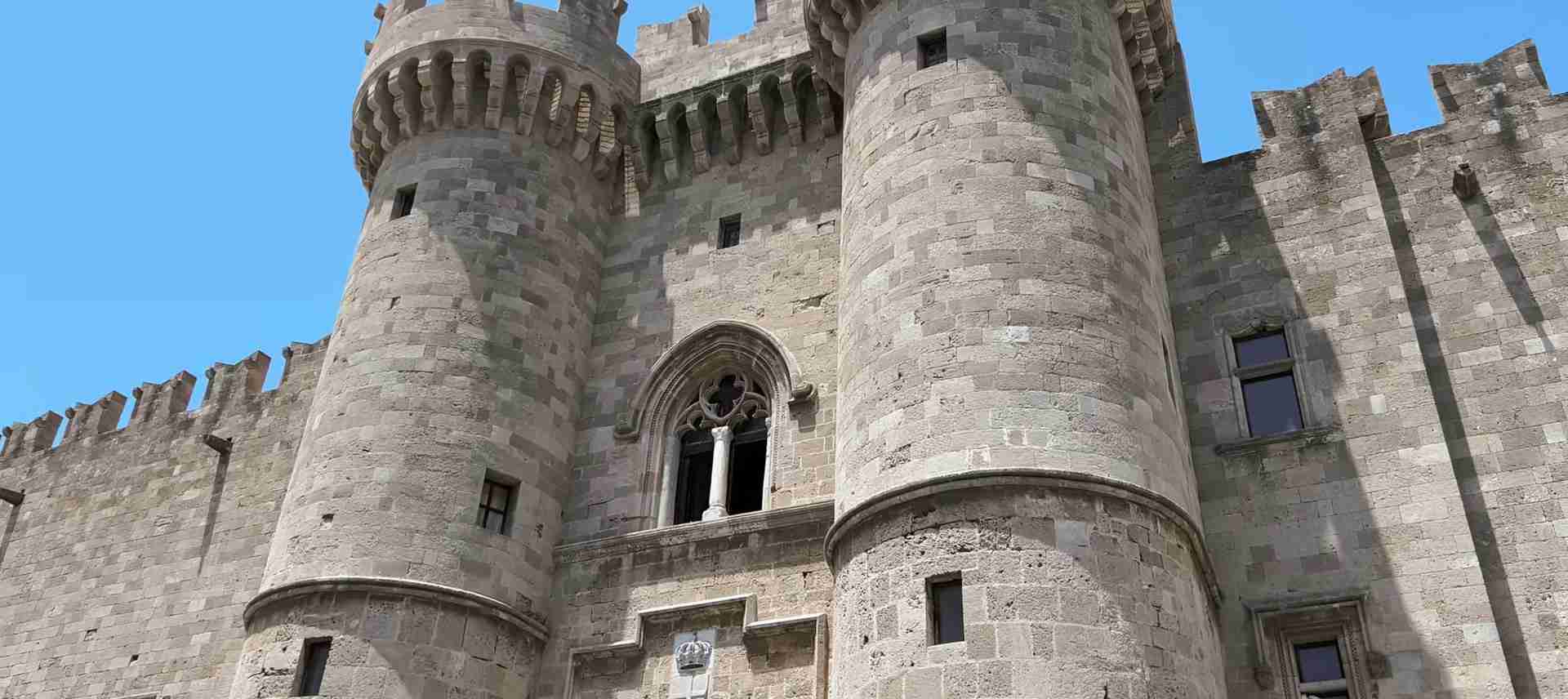
The Palace of the Grand Master anchors the high town at the Street of the Knights’ western terminus, serving as the order’s administrative headquarters and Grand Master’s residence. Originally constructed in the 14th century atop Byzantine fortifications, the palace suffered severe damage during an 1856 ammunition explosion under Ottoman rule. Italian authorities meticulously reconstructed the palace during the 1930s, creating the imposing structure visitors explore today with 158 rooms, grand halls featuring ancient mosaics transported from Kos island, and rampart walks offering panoramic city views.
The fortification walls stretching 4 kilometers around the Medieval City represent military architecture masterpiece. Walls reach 12 meters thick in sections, reinforced with massive circular towers and bastions designed to withstand artillery bombardment. The Knights continuously upgraded defenses incorporating cutting-edge military engineering innovations, creating Europe’s most sophisticated fortification system of the late medieval period. These walls successfully protected the city through numerous attacks until Suleiman the Magnificent’s six-month siege in 1522 forced the Knights’ eventual surrender and departure to Malta.
Following the 1522 Ottoman conquest, Turkish authorities adapted the medieval city to Islamic architectural needs while preserving existing structures. Gothic churches converted to mosques, Turkish baths (hamams) appeared throughout the city, and wooden balconies characteristic of Ottoman architecture adorned medieval buildings. The Süleymaniye Mosque, built in 1522 to commemorate the conquest, dominates the skyline alongside medieval towers. This architectural layering creates the Medieval City’s unique character where Gothic arches, Byzantine mosaics, and Ottoman minarets coexist within continuously inhabited neighborhoods.
Modern exploration of the Medieval City reveals distinct districts within the walls. The Collachium (high town) reserved for Knights contains the palace, inns, and administrative buildings arranged around formal squares. The Hora (lower town) housed civilian population with Greek Orthodox and Jewish quarters, merchant houses, bazaar streets, and numerous churches including the Church of Our Lady of the Castle, the Knights’ cathedral. Today’s medieval city maintains approximately 6,000 permanent residents who live, work, and operate businesses within centuries-old buildings, creating a living museum rare among European World Heritage Sites.
Walking the Medieval City requires minimum half-day allocation, though comprehensive exploration benefits from full-day immersion. Essential sites include the Palace of the Grand Master, Archaeological Museum housed in the former Knights Hospital, Street of the Knights in morning light before tour groups arrive, and rampart walks accessible from several towers. Evening visits after 6pm offer magical atmosphere when day-trippers depart, revealing local neighborhood life and illuminated monuments. The city’s labyrinthine layout invites spontaneous exploration beyond marked tourist routes, rewarding visitors willing to wander narrow alleyways discovering hidden courtyards, neighborhood churches, and local workshops.
Major Attractions and Entry Fees Rhodes 2026
Rhodes concentrates diverse attractions spanning medieval fortifications, ancient archaeological sites, Byzantine monasteries, and natural landscapes across island geography. Understanding entrance requirements and strategic timing maximizes attraction experiences while managing costs within overall 2026 travel budgets.
Palace of the Grand Master Entry and Visiting Details 2026
The Palace of the Grand Master, Rhodes’ most iconic monument, charges €6 standard adult entry in 2026 with free admission for EU citizens under 25 and non-EU citizens under 18 upon ID presentation at ticket booth. Opening hours run 8:00-20:00 Tuesday-Sunday during summer season (April-October) and 8:30-15:30 Wednesday-Monday during winter months (November-March), with Tuesday closures year-round. Time-slot ticketing implemented since April 2024 requires entry within selected hour, though ticket validity extends 15 minutes before to 15 minutes after chosen time slot.
Pre-booking online through the official Hellenic Heritage ticketing platform prevents long queues, particularly crucial during summer peak hours (10:00-14:00) when wait times reach 60-90 minutes. The palace visit requires 90-120 minutes for comprehensive exploration including grand halls with ancient mosaic floors, medieval furniture collections, and exhibitions “Rhodes 2,400 Years” and “Rhodes from Early Christian Period until Turkish Conquest 1522.” Ground floor exhibitions and courtyard accommodate wheelchair users via accessible entrances, while upper floor galleries require elevator access for visitors with mobility limitations.
Audio guides available for €5 additional fee provide detailed historical context in multiple languages, though the palace’s visual splendor and architectural impact communicate powerfully without supplementary narration. Photography permitted throughout most palace areas except specific exhibition rooms marked with prohibition signs. The palace gift shop offers high-quality publications, reproduction artifacts, and Rhodes-specific souvenirs.
Lindos Acropolis Archaeological Site 2026
Lindos Acropolis, perched 116 meters atop dramatic clifftops overlooking St. Paul’s Bay, charges €6 standard adult entry in 2026 following the same age-based free admission policies as other Greek archaeological sites. The site opens 8:00-20:00 Tuesday-Sunday during summer season and 8:00-15:30 Tuesday-Sunday during winter, with mandatory Tuesday closures. Time-slot ticketing applies during peak season (May-September) with entry permitted 1 hour before to 1 hour after selected time.
The climb from Lindos village to acropolis summit covers steep, uneven stone steps requiring sturdy footwear and reasonable fitness level. Traditional donkey rides cost €10 one-way for visitors unable or unwilling to walk, operating from village square to acropolis entrance. The ascent requires 15-20 minutes at moderate pace, with dramatic views emerging at each switchback. Early morning visits (8:00-9:30) or late afternoon timing (after 17:00) avoid midday heat and tour group congestion, with sunrise and sunset visits offering spectacular photography conditions and relative solitude.
The acropolis archaeological remains include the Hellenistic Stoa (3rd century BC), Byzantine Church of St. John, Knights of St. John castle fortifications, and the magnificent Doric Temple of Athena Lindia (4th century BC) commanding panoramic 360-degree views across the Aegean. The site requires 1.5-2 hours minimum exploration time, with enthusiasts easily spending 3+ hours examining architectural details, inscriptions, and photographing varied perspectives. No shade exists on the exposed hilltop, making sun protection and water essential, particularly during summer months when temperatures reach 32-35°C.
Ancient Kamiros Archaeological Site 2026
Ancient Kamiros, one of Rhodes’ three ancient city-states alongside Lindos and Ialyssos, offers remarkably preserved Hellenistic urban planning rarely seen elsewhere in Greece. The site charges €6 standard adult entry with identical age-based exemptions, opening 8:00-20:00 daily except Tuesday during summer season. Located 30 kilometers southwest of Rhodes Town on the west coast, Kamiros receives significantly fewer visitors than Lindos despite comparable archaeological significance, providing peaceful exploration opportunities even during peak season.
The excavated city reveals clear grid-pattern streets, sophisticated water supply systems including massive cisterns, temple foundations, residential districts, and a magnificent agora (marketplace) with Doric colonnades. Unlike many Greek archaeological sites showing only scattered foundations, Kamiros preserves enough structural elements enabling visitors to visualize ancient urban life without extensive imagination. The hillside setting provides natural amphitheater-like views across excavated zones to coastal panoramas.
Combining Kamiros with other west coast attractions creates efficient full-day excursions. Nearby destinations include Kamiros Skala fishing village (6km) offering authentic tavernas and Halki island ferry access, Kritinia Castle (12km) perched on dramatic promontory with sunset views, and Filerimos Monastery (20km toward Rhodes Town) crowning a hill with Byzantine churches and peacock-populated gardens. This west coast circuit provides comprehensive historical and scenic experiences away from crowded east coast tourist concentrations.
Valley of the Butterflies Natural Reserve 2026
Valley of the Butterflies (Petaloudes), located 23 kilometers southwest of Rhodes Town, operates as protected natural reserve where thousands of Jersey Tiger Moths (Panaxia quadripunctaria) congregate during summer months attracted by Oriental Sweetgum tree resin. The reserve charges €5 entry fee April-October (moths present July-September) with reduced winter rates when moth population absent. Opening hours run 8:30-17:00 daily during operational season.
The valley features wooden walkway system following stream course through lush ravine environment, passing waterfalls, pools, and dense vegetation creating microclimate 5-8°C cooler than surrounding areas. The 1.5-kilometer looped trail requires 60-90 minutes at leisurely pace with gentle elevation gain. Peak moth concentration occurs mid-July through late August when estimated populations reach 100,000+ individuals resting on tree trunks and vegetation, creating remarkable natural spectacle as they take flight when disturbed.
Visitors should understand moths face conservation pressure from excessive disturbance. Authorities prohibit photography with flash, loud noises, and intentional moth agitation. Early morning visits (8:30-10:00) offer coolest temperatures and most active moth behavior before midday heat. The valley combines well with other interior attractions including Filerimos Monastery (8km) and traditional mountain villages, creating full-day nature and culture combinations.
Monastery of Filerimos and Ancient Ialyssos 2026
Filerimos Monastery crowns 267-meter Filerimos Hill overlooking Rhodes’ northwest coast, combining Byzantine religious architecture with ancient Ialyssos acropolis ruins and WWII-era fortifications. The site charges €6 entry including access to monastery buildings, church of Our Lady of Filerimos housing miraculous icon copy, ancient Ialyssos temple foundations, and scenic walking paths through pine forest. Opening hours follow 8:00-20:00 summer schedule with 8:30-15:30 winter timing.
The monastery complex showcases successive architectural periods from 5th century Byzantine origins through Knights Hospitaller Gothic modifications to Italian Franciscan 20th-century restorations. The Church of Our Lady contains exquisite frescoes and ornate iconostasis, while monastery cloisters feature peaceful courtyards with views extending to Rhodes Town, airport, and Turkish coastline on clear days. Peacocks roam monastery grounds creating photogenic moments, though visitors should maintain respectful distance from territorial males during breeding season.
The Way of the Cross path extends 300 meters along cypress-lined avenue culminating at massive hilltop cross offering panoramic perspectives. This contemplative walk appeals to religious pilgrims and scenic photography enthusiasts equally. Ancient Ialyssos ruins scattered across hilltop include 4th century BC Doric fountain, temple foundations dedicated to Athena Polias and Zeus Polieus, and Byzantine church remnants demonstrating site’s continuous sacred significance across millennia.
Accommodation Costs and Options Rhodes 2026
Rhodes accommodation spans budget hostels to luxury palace hotels with pricing reflecting location, season, amenities, and property category. Understanding 2026 rate structures across travel seasons enables strategic booking maximizing value while securing preferred locations and property types.
Budget Accommodation Rhodes (€30-60 Per Night) 2026
Budget accommodation in Rhodes 2026 centers on hostel dormitories, basic guesthouses, and simple hotel rooms providing essential amenities without luxury touches. Hostel dormitories in Rhodes Town cost €15-25 per bed during shoulder season (April-May, September-October) increasing to €25-35 during peak July-August weeks. Private rooms in budget guesthouses and 1-2 star hotels range €30-45 shoulder season and €45-60 peak season, typically including air conditioning, private bathroom, and basic breakfast.
Rhodes Town Old Town hostels offer atmospheric medieval building locations with communal kitchens, social common areas, and organized activities, though noise from nearby bars impacts some properties. Budget options outside Old Town walls in New Town residential areas provide quieter environments, easier parking access, and proximity to supermarkets for self-catering, sacrificing medieval ambiance for practical convenience. Beach resort areas including Faliraki, Kolymbia, and Pefkos offer budget accommodation during shoulder season when large properties reduce rates to fill capacity.
Booking budget accommodation 60-90 days ahead secures best rates and availability, particularly crucial for July-August when budget properties fill quickly. Websites including Booking.com, Hostelworld, and direct property websites enable price comparison and review verification. Budget travelers should verify included amenities, cancellation policies, and distance to attractions/transportation, as location savings sometimes create transport costs exceeding accommodation differences.
Mid-Range Accommodation Rhodes (€70-150 Per Night) 2026
Mid-range properties dominate Rhodes accommodation market, offering 3-4 star hotels, boutique guesthouses, and well-appointed apartments balancing comfort, amenities, and value. Typical mid-range rates run €70-100 per night shoulder season increasing to €110-150 peak summer, with significant property variation based on location, facilities, and recent renovations.
Rhodes Old Town boutique hotels converted from medieval mansions provide unique atmospheric stays with stone architecture, courtyard gardens, and historical character, commanding €90-140 nightly despite smaller rooms and limited facilities compared to modern properties. Beach resort 3-4 star hotels offer swimming pools, organized beach access, restaurants, and activity programs at €80-120 shoulder season and €120-150 peak rates. These properties suit families and travelers prioritizing resort amenities over cultural immersion.
Apartment rentals through platforms including Airbnb and Booking.com provide cost-effective options for longer stays and groups, with full kitchens enabling meal preparation reducing dining expenses. Two-bedroom apartments accommodating 4-6 people cost €90-140 nightly depending on location and season, creating significant per-person savings compared to hotel rooms. However, apartments lack daily housekeeping, reception services, and social atmosphere appealing to some travelers.
Mid-range accommodation booking 30-60 days ahead balances rate optimization with flexibility, though popular properties in prime Old Town locations and established beach resorts warrant earlier reservation especially for July-August peak weeks. Many properties offer free cancellation until 7-14 days before arrival, enabling tentative booking while finalizing itinerary details.
Luxury Accommodation Rhodes (€160-500+ Per Night) 2026
Luxury accommodation in Rhodes 2026 encompasses 5-star hotels, heritage properties, and exclusive resorts delivering premium services, facilities, and locations. Rates range €160-250 for upscale 5-star properties during shoulder season, increasing to €250-400 peak summer. Ultra-luxury heritage hotels and private villa estates command €400-800+ nightly with personalized services, historic settings, and exclusive amenities.
Top luxury properties include Kokkini Porta Rossa boutique hotel occupying restored 15th-century building within Old Town walls, blending medieval architecture with contemporary luxury achieving €280-450 nightly rates. Beachfront luxury resorts including Atrium Prestige Thalasso Spa Resort and Rodos Palace offer comprehensive facilities spanning multiple restaurants, spa centers, water sports, kids clubs, and extensive grounds at €200-350 shoulder season and €300-500+ peak weeks.
Luxury travelers benefit from direct hotel booking often providing superior rates compared to third-party platforms, plus additional perks including room upgrades, spa credits, and flexible cancellation. Many high-end properties offer all-inclusive packages bundling accommodation, meals, beverages, and activities, providing budget predictability despite higher initial costs. These packages typically deliver value compared to à la carte luxury travel, particularly for families with children consuming substantial food and beverages.
Heritage mansion rentals in Lindos village and coastal villas with private pools represent alternative luxury options for groups and extended families, offering privacy, space, and authentic settings absent from conventional hotels. These properties range €400-1,200+ nightly depending on capacity, amenities, and seasonality, with weekly rental minimums common during peak season.
Food and Dining Expenses Rhodes 2026
Rhodes dining costs span budget tavernas to upscale Mediterranean fusion restaurants, with food expenses representing substantial portion of daily travel budgets. Understanding 2026 pricing across dining categories, typical meal structures, and strategic timing enables travelers to control costs while experiencing Rhodes’ distinctive culinary traditions.
Budget Dining Rhodes (€15-30 Daily) 2026
Budget-conscious travelers maintain €15-30 daily food costs through strategic choices combining supermarket self-catering, street food, and budget taverna meals. Breakfast from supermarkets (Greek yogurt, fruit, pastries) costs €3-5 versus €8-12 in cafes. Traditional souvlaki or gyros with fries from street vendors provides filling lunch for €4-7, while budget taverna dinners with main dish, Greek salad, and local wine cost €12-18 per person.
Supermarkets including Lidl, Masoutis, and local chains stock Greek products at reasonable prices with yogurt €2-4 per kilo, fresh bread €1-2, local cheese €8-12 per kilo, seasonal fruit/vegetables €1-3 per kilo, and bottled water €0.50-1 per 1.5 liters. Preparing breakfast and occasional lunch via supermarket shopping reduces dining costs 40-60% compared to restaurant meals for every meal.
Budget tavernas away from prime tourist zones offer authentic Greek cooking at local prices. Rhodes Town neighborhood tavernas in Neochori and Agia Marina districts serve generous moussaka portions €7-10, grilled fish €10-15 depending on size, and Greek salads €4-6. Traditional meze plates (small shared dishes) enable sampling multiple flavors economically, with prices €3-7 per plate allowing varied €15-20 dinners for two people sharing 4-5 plates plus drinks.
Mid-Range Dining Rhodes (€35-55 Daily) 2026
Mid-range dining budgets of €35-55 daily enable café breakfasts, casual lunch at beach tavernas, and comfortable dinner at quality restaurants without premium establishments. Café breakfast with coffee, fresh juice, and pastry or omelet costs €8-12. Beachside taverna lunch with main course, salad, and beer/wine runs €15-22. Evening restaurant dinner selecting from full menu with appetizers, mains, dessert, and wine totals €25-35 per person.
Quality Rhodes restaurants serve excellent traditional and contemporary Greek cuisine at moderate prices reflecting local cost structures. Fresh grilled fish charged by weight (€40-60 per kilo typical) results in €12-18 individual portions. Signature dishes including slow-roasted lamb kleftiko, fresh seafood pasta, and island specialties like pitaroudia (chickpea fritters) range €12-18 for generous portions. Greek wine by the glass costs €4-7, with local Rhodes wines offering exceptional value versus Santorini or international selections.
Rhodes Old Town restaurants along tourist streets charge 20-40% premiums compared to neighborhood establishments two streets away from main thoroughfares. Seeking restaurants where Greek families dine rather than exclusively tourist clientele ensures authentic cooking and reasonable pricing. Village tavernas in Embonas, Siana, and Lindos serve exceptional quality traditional cooking at lower costs than Rhodes Town tourist zones, with complete dinners including local wine frequently totaling €15-20 per person.
Fine Dining and Special Occasions Rhodes (€60-100+ Per Person) 2026
Rhodes upscale dining scene offers Mediterranean fusion cuisine, fresh seafood specialties, and romantic settings in Old Town courtyards and beachfront locations. Fine dining restaurants charge €60-100+ per person for multi-course meals with wine pairings, premium ingredient selections, and sophisticated preparations elevating traditional Greek cooking.
Notable fine dining establishments include Nireas in Rhodes Old Town specializing in creative seafood preparations using daily catches (€40-55 mains), Marco Polo Cafe offering refined Mediterranean cuisine in romantic medieval courtyard (€35-50 mains), and Lindos Ice Bar providing sunset dining combining elevated Greek cuisine with spectacular acropolis views (€30-45 mains). These restaurants require reservations especially for July-August peak season and weekend evenings.
Fresh seafood represents Rhodes dining highlight with Mediterranean fish, octopus, calamari, and shellfish prepared simply grilled or in complex regional recipes. Premium seafood restaurants charge €50-70 per kilo for prized species (sea bream, sea bass, red mullet), though portions typically weigh 300-500 grams resulting in €15-35 main courses. Lobster and large prawns command €65-90 per kilo, reaching €25-40 individual servings. Understanding fish pricing by weight prevents bill shock, with servers clarifying costs before preparation.
Transportation Costs and Strategies Rhodes 2026
Rhodes transportation options span public buses, taxis, rental cars, scooters, and organized tours, each offering different balances of cost, convenience, and flexibility. Understanding 2026 transportation pricing and strategic applications enables efficient island exploration within budget parameters while accessing attractions beyond walking distance from accommodation.
Public Bus System Rhodes 2026
Rhodes public bus network (RODA) operates extensive routes connecting Rhodes Town with major villages, beaches, and attractions across the island. Single-journey fares cost €2.50 for routes up to 20km, €3.50 for routes 20-40km, and €5 for routes exceeding 40km including Rhodes Town to Lindos. Day passes unavailable, requiring individual ticket purchase for each journey from bus station kiosks, on-board drivers (exact change recommended), or authorized resellers.
Main bus stations include West Side Terminal (Averof Street) serving west coast destinations, ancient sites, and interior villages, and East Side Terminal (Papagou Street) covering east coast resorts, Lindos, and southern beaches. Buses operate hourly or more frequently on major routes (Rhodes-Faliraki, Rhodes-Lindos) during summer season reducing to 3-5 daily services during winter months. Schedule information available at terminals, tourist information offices, and online via RODA website, though printed timetables recommended as website updates lag operational changes.
Strategic bus usage limits daily transport costs to €5-15 for travelers basing in Rhodes Town and taking day trips to Lindos (€10 round-trip), Valley of Butterflies (€7 round-trip), or beach areas (€5-10 round-trip). However, buses lack flexibility for multi-stop itineraries, require schedule adherence sometimes conflicting with attraction opening times, and provide limited luggage space problematic for beach equipment or multiple-destination days. Bus transport works optimally for single-destination day trips from central accommodation to specific beaches or villages.
Taxi Services Rhodes 2026
Taxi services in Rhodes operate on metered rates within Rhodes Town and fixed prices for longer intercity routes. Meter taxis charge €4 minimum flag-fall plus €1.50 per kilometer during daytime (5:00-24:00) and €2 per kilometer night rate (24:00-5:00). Common Rhodes Town taxi journeys include airport to Old Town €30-40, cruise port to Old Town €12-15, and New Town to beaches €15-25 depending on distance.
Intercity taxi routes operate on established fixed rates including Rhodes Town to Lindos €65-75 one-way, Rhodes Town to Prasonisi (southern tip) €90-110, and Rhodes Town to ancient Kamiros €55-65. These fixed rates apply regardless of passenger count (1-4 people), making taxis cost-effective for groups splitting fares while providing door-to-door service impossible via public transport. However, solo travelers find per-person costs significantly exceed bus alternatives.
Taxi availability varies dramatically by season and time. Summer peak season requires booking advance for airport transfers, intercity journeys, and evening restaurant returns to accommodation. Taxi stands concentrate at Rhodes Town major points (Mandraki harbor, Old Town gates, New Market), resort areas (Faliraki, Lindos), and hotels request taxi services for guests. Ride-hailing apps operate limitedly in Rhodes with Beat (Greek equivalent to Uber) available in Rhodes Town area but not island-wide, maintaining traditional phone booking or taxi stand hailing as primary methods.
Car Rental Rhodes 2026
Rental cars provide maximum flexibility for comprehensive island exploration, enabling access to remote beaches, mountain villages, and archaeological sites unreachable via public transport while supporting custom itineraries without schedule constraints. Car rental costs range €30-80 daily depending on vehicle category, season, rental duration, and insurance selections, with additional fuel costs €40-70 for week-long exploration covering 500-700 kilometers.
Economy cars (Fiat Panda, Hyundai i10) suitable for 2-3 passengers cost €30-40 daily shoulder season and €50-65 peak July-August with basic insurance included. Mid-size vehicles (VW Golf, Toyota Corolla) accommodating 4-5 passengers run €40-55 shoulder season and €60-80 peak weeks. Rental periods exceeding 7 days often receive 10-15% discounts, with advance online booking through international companies (Hertz, Avis, Budget) or local Rhodes operators providing competitive rate comparison.
Insurance coverage represents critical rental consideration affecting total costs. Basic Collision Damage Waiver (CDW) included in quoted rates typically maintains €800-1,200 excess liability for damage, with optional Super CDW reducing excess to €0-200 at €8-15 additional daily cost. Comprehensive full coverage eliminating all excess charges costs €12-25 daily depending on vehicle value. Credit card rental car insurance coverage may duplicate commercial policies, warranting verification before purchasing supplementary protection.
Rental companies cluster at Rhodes International Airport and Rhodes Town New Town districts, with resort area branches in Faliraki and Lindos offering pickup/drop-off convenience at premium pricing. Airport rentals include €25-40 airport service fees absorbed within quoted rates. Fuel policies vary between full-to-full (collect and return with identical fuel level, most economical) and full-to-empty (pre-purchase full tank, often overpriced compared to station rates). International driving licenses required for non-EU drivers, while EU licenses suffice for EU nationals.
Strategic car rental application limits costs while maximizing benefits. Travelers staying Old Town base can explore via walking days 1-2, rent car days 3-5 for west coast, interior villages, and Lindos comprehensive exploration, then return car for final beach/town days reducing total rental from 7 to 3 days saving €120-240. However, this approach requires flexible itinerary adjustment around rental timing and weather forecasts.
Scooter and Motorcycle Rental Rhodes 2026
Scooters and motorcycles offer economical two-wheel alternatives to cars, popular among solo travelers and couples seeking fuel-efficient island exploration. 50cc scooters requiring no special license cost €15-25 daily, 125cc scooters needing A1 motorcycle license run €20-30 daily, and larger motorcycles (250cc+) requiring full motorcycle endorsement range €35-50 daily with discounts for extended rentals.
Scooter rental suits shorter distances and coastal road exploration but presents limitations for mountain villages with steep grades, dirt road access to remote beaches, and inclement weather exposure. Rhodes summer heat makes scooter riding pleasant, though intense sun requires comprehensive sun protection during longer journeys. Helmet provision mandatory with rental, storage capacity limited to small backpack or scooter under-seat compartment restricting beach equipment transport.
Safety considerations demand careful assessment especially for riders lacking two-wheel experience. Greek road conditions including occasional gravel, sudden potholes, aggressive driving by some motorists, and steep mountain descents create hazards absent from controlled rental environments. Travel insurance policies frequently exclude scooter accidents requiring specific motorcycle coverage verification. Defensive riding, speed moderation, and proper protective gear (long pants, closed shoes minimum) reduce accident risk substantially.
Sample Daily Budget Breakdowns Rhodes 2026
Understanding realistic daily costs across different travel styles helps travelers establish appropriate budgets, select suitable accommodation levels, and plan activities within financial comfort zones. These sample breakdowns reflect actual 2026 Rhodes costs with seasonal variations noted.
Budget Backpacker Daily Cost Rhodes 2026: €78-102 Per Person
Budget backpacker daily costs total €78-102 per person excluding international flights but including all on-island expenses. Accommodation in hostel dormitory costs €25-35 per night during peak season, €15-25 shoulder season. Food expenses reaching €20-30 daily combine supermarket breakfast (€3-5), street food lunch (€5-8), and budget taverna dinner (€12-17). Local transport via public buses costs €5-10 daily for round-trip excursions to beaches or attractions. Activities and entry fees average €8-10 daily accounting for free beach days and occasional €6 archaeological site entries. Miscellaneous expenses including water, snacks, sunscreen, and emergency supplies add €5-8 daily.
Sample budget day: Hostel bed €28, supermarket breakfast €4, beach bus round-trip €6, beachside souvlaki lunch €6, supermarket snacks €3, neighborhood taverna dinner €15, local wine €5, water and sundries €5. Daily total €72 (shoulder season) to €95 (peak season).
Budget travelers extending stays beyond 7-10 days realize significant savings through weekly hostel rates reducing nightly costs 15-25%, apartment sharing enabling meal preparation lowering food expenses 30-40%, and strategic free activity emphasis including hiking Valley of Butterflies in winter (no entry fee), exploring free Old Town neighborhoods, and utilizing free beaches versus organized beach club costs.
Mid-Range Traveler Daily Cost Rhodes 2026: €120-180 Per Person
Mid-range travelers averaging €120-180 daily per person achieve comfortable Rhodes experiences balancing quality accommodation, varied dining, convenient transport, and comprehensive attraction access without luxury pricing. Accommodation in good 3-4 star hotel or apartment costs €70-130 nightly (€35-65 per person double occupancy). Food expenses of €40-55 daily include café breakfast (€10-12), casual lunch (€15-22), and quality restaurant dinner (€25-35) with wine. Transportation mixing taxis and occasional rental car averages €15-25 daily per person. Activities and attraction entries total €10-20 daily covering archaeological sites, organized boat trips, and occasional guided tours. Miscellaneous expenses reach €10-15 daily for discretionary purchases.
Sample mid-range day: Hotel accommodation €90 (€45 per person sharing), café breakfast €11, beach taxi €12, beachside restaurant lunch €20, Lindos Acropolis entry €6, quality restaurant dinner €32, wine €8, miscellaneous €8. Daily total €142 per person.
Mid-range budget flexibility enables spontaneous upgrades to luxury restaurant special occasions, additional tours or water activities when appealing, and rental car days facilitating comprehensive island exploration beyond public transport limitations. This comfort level accommodates families with children requiring larger accommodation, varied dining options, and flexible transport schedules.
Luxury Traveler Daily Cost Rhodes 2026: €220-350+ Per Person
Luxury Rhodes travel budgets reaching €220-350+ daily per person deliver premium experiences across accommodation, dining, private transport, exclusive activities, and personalized services. Luxury hotel accommodation costs €250-500+ nightly (€125-250+ per person double occupancy). Fine dining expenses total €80-120 daily including upscale breakfast (€20-30), beachfront seafood lunch (€35-50), and exceptional dinner (€60-100) with premium wines. Private transportation via rental car or hired drivers costs €30-60 daily per person accounting for vehicle category and driver services. Premium activities including private boat charters, spa treatments, guided archaeological tours, and wine tastings total €40-80+ daily. Luxury shopping, premium beach club access, and discretionary indulgences add €20-50 daily.
Sample luxury day: 5-star hotel suite €400 (€200 per person sharing), gourmet breakfast buffet €25, private driver to ancient sites €45, archaeological site entry with private guide €60, premium seafood lunch €45, beach club access €30, fine dining dinner €85, premium wine €40, spa treatment €60, miscellaneous €25. Daily total €615 per person demonstrating ultra-luxury capability well exceeding baseline luxury calculations.
Luxury travelers benefit from exclusive experiences unavailable to budget/mid-range segments including private yacht day charters exploring secluded coves (€800-1,500 for group), helicopter transfers from Athens (€2,500-4,000 for aircraft), private archaeological site access before public opening (€300-600 for group), and customized multi-day itineraries with personal drivers/guides (€250-400 daily per service). These premium services transform Rhodes from typical Mediterranean beach destination into bespoke luxury experience rivaling global elite destinations.
Best Time to Visit Rhodes Weather and Seasons 2026
Rhodes seasonal variations dramatically impact experience quality, costs, crowd levels, and activity feasibility. Understanding 2026 monthly weather patterns, tourism intensity fluctuations, and strategic timing considerations enables optimal visit scheduling aligned with individual priorities and budget constraints.
Spring Season Rhodes (March-May 2026)
Spring represents ideal Rhodes visiting period balancing pleasant weather, blooming landscapes, reasonable prices, and manageable tourist numbers. March temperatures average 15-18°C with occasional rain showers (6-8 rainy days monthly), making this transitional month suitable for cultural exploration but marginal for beach activities with sea temperature 16-17°C. April weather improves substantially reaching 18-22°C air temperature, 6-8 hours daily sunshine, and warming seas (17-18°C) though still cool for extended swimming. May achieves optimal spring conditions with 22-26°C temperatures, 10+ hours sunshine daily, minimal rainfall (2-3 days monthly), and sea warming to comfortable 20-21°C enabling enjoyable swimming for most visitors.
Spring accommodation costs run 30-50% below peak July-August rates with mid-range hotels averaging €60-90 nightly versus €110-150 summer pricing. Restaurant prices remain consistent year-round though some beach clubs and resort restaurants remain closed until late April. Tourist numbers stay moderate through April increasing substantially during May as European school holidays commence, though even May crowds remain significantly lighter than summer intensity.
Spring advantages include wildflower blooming transforming hillsides and archaeological sites with colorful displays peaking late March through April, perfect hiking weather in mountains and coastal paths before summer heat, better photography lighting conditions with clearer atmosphere, and authentic local life visibility as year-round residents dominate versus tourist majority in summer. Disadvantages encompass unpredictable March-April weather requiring flexible indoor/outdoor activity plans, reduced ferry schedules limiting island-hopping options, and some hotels/restaurants closed until late April or early May.
Summer Season Rhodes (June-August 2026)
Summer delivers guaranteed sunshine, maximum beach weather, vibrant nightlife, and comprehensive service availability alongside peak prices, intensive crowds, and extreme heat. June temperatures reach 26-30°C with sea warming to ideal 23-24°C, offering excellent beach conditions without July-August intensity. June represents strategic choice for travelers seeking reliable weather, full tourism infrastructure operation, and moderate pricing approximately 20-30% below peak August rates.
July and August constitute absolute peak season with temperatures frequently reaching 32-35°C, minimal rainfall (0-1 day monthly), 13+ hours daily sunshine, and sea temperatures peaking 25-27°C creating Mediterranean bath conditions. However, peak season brings maximum challenges including accommodation costs surging 100-150% above shoulder season, major attractions experiencing 90-120 minute wait times mid-morning through afternoon, beaches crowded with organized sunbed areas fully occupied by 10:00, and Old Town streets congested with cruise ship passengers and tour groups.
Summer suits families constrained by school holiday calendars, beach-focused travelers prioritizing swimming and water sports above cultural exploration, and nightlife enthusiasts seeking maximum bar/club scene intensity. Summer disadvantages beyond costs and crowds include oppressive afternoon heat (14:00-17:00) limiting comfortable outdoor activity to early morning and evening hours, archaeological site exploration challenging due to sun exposure and high temperatures, and authentic local culture difficult to experience amid overwhelming tourist presence.
Autumn Season Rhodes (September-October 2026)
Autumn, particularly September, rivals May as optimal Rhodes visiting period offering excellent weather, warm seas, reduced crowds, and reasonable pricing. September maintains summer-like conditions with temperatures 26-30°C early month gradually declining to 23-26°C late September, sea temperature peaking 25-26°C creating year’s warmest swimming conditions, and rainfall beginning late month (3-5 rainy days) ending sustained drought. October delivers pleasant 20-24°C temperatures, continued warm seas (22-24°C early October declining to 20-21°C month-end), increasing rainfall (6-8 rainy days), and shortening days (11 hours sunshine early month to 9 hours late October).
Accommodation costs drop substantially post-August with mid-range properties averaging €70-110 September and €60-90 October versus €110-150 peak summer. Many hotels offer September promotions targeting shoulder season demand, with direct booking negotiations sometimes securing 20-30% additional discounts beyond published rates. Tourist numbers decline sharply post-August with crowds reaching comfortable levels enabling spontaneous attraction visits without queuing, restaurant reservations available same-day versus week-advance summer requirements, and beaches offering ample space.
Autumn advantages include optimal weather-cost-crowd balance, warmest sea temperatures encouraging extended swimming sessions, wine harvest season in Embonas and interior villages offering authentic cultural experiences, and lingering summer infrastructure (beach bars, water sports, restaurants) operating through September before seasonal closures. October disadvantages emerge with increasing rainfall affecting outdoor plans, shortening daylight limiting evening activity timing, ferry schedules reducing as season concludes, and some hotels/restaurants closing mid-October through April.
Winter Season Rhodes (November-February 2026)
Winter Rhodes attracts limited tourism with mild Mediterranean climate unsuitable for beach activities but offering cultural exploration opportunities, authentic local life experiences, and exceptional value. November-February temperatures range 12-18°C with frequent rain showers (10-14 rainy days monthly), sea cooling to uncomfortable 16-18°C eliminating swimming appeal. Winter delivers 5-7 hours daily sunshine with overcast days common, though winter storms alternate with pleasant sunny periods enabling outdoor activity planning around weather forecasts.
Accommodation costs plummet 50-70% below summer rates with mid-range properties averaging €40-65 nightly and luxury hotels offering €100-180 rates versus €300-500 summer pricing. Many properties close November through March with reduced inventory concentrated in Rhodes Town year-round hotels. Restaurant selection contracts significantly with beach tavernas closed entirely and Old Town establishments maintaining limited winter schedules, though remaining restaurants serve authentic local cuisine to predominantly Greek clientele.
Winter appeals to cultural enthusiasts prioritizing museum visits, archaeological exploration, and authentic experiences over beach activities. The Medieval City achieves magical winter atmosphere with minimal tourists, local neighborhood life visible, and museums explorable without crowds. Mountain village exploration becomes comfortable with cool temperatures ideal for hiking, traditional kafenions (coffee shops) welcoming visitors as temporary locals, and seasonal cuisine including hearty stews and warm pastries replacing summer salads.
Day Trips and Excursions from Rhodes 2026
Rhodes’ strategic Dodecanese location enables diverse day trip possibilities spanning neighboring islands, coastal villages, and interior highlights. Understanding practical logistics, costs, and timing for popular excursions helps travelers maximize limited vacation days while experiencing Rhodes’ broader regional context.
Symi Island Day Trip 2026
Symi island, located 41 kilometers northwest of Rhodes, represents the most popular day trip destination offering neoclassical architecture, pristine harbors, and relaxed Aegean island atmosphere contrasting Rhodes’ tourism intensity. Daily ferries and catamarans depart Rhodes’ Mandraki harbor 8:00-9:00 arriving Symi’s Gialos port 10:00-11:00, with return departures 15:30-16:30 arriving Rhodes 17:30-18:30. Ferry tickets cost €25-35 round-trip depending on vessel speed and season, with advance online booking recommended for July-August peak season guaranteed seating.
Symi’s compact size enables comprehensive exploration within 6-hour port stay. Gialos harbor showcases remarkable neoclassical mansion facades cascading hillsides in ochre, terracotta, and pastel hues creating photographic perfection. The Kali Strata, dramatic 500-step stone stairway, climbs from harbor to Chorio (upper town) revealing traditional neighborhoods, small museums, and panoramic harbor views. Panormitis Monastery occupies Symi’s southern coast, accessible via excursion boats (€10-15 additional) or taxi (€20-25 round-trip) showcasing ornate Byzantine architecture and peaceful religious atmosphere.
Symi day trip total costs reach €50-80 per person including ferry transport (€30), lunch at harbourside taverna (€20-30), optional Panormitis monastery visit (€15), and refreshments/snacks (€10-15). Organized tour packages bundling transport, lunch, and guided commentary cost €55-75 per person offering convenience versus independent travel flexibility. Swimming opportunities exist at small beaches near Gialos port though limited time constrains extended beach relaxation, making Symi primarily cultural and scenic rather than beach-focused day trip.
Lindos Village and Acropolis Full Day 2026
Lindos combines spectacular clifftop acropolis ruins with traditional whitewashed village charm and excellent beaches, warranting full-day allocation for comprehensive experience. Located 50 kilometers south of Rhodes Town, Lindos access options include public bus (€10 round-trip, 90-minute journey each direction), rental car (€35-60 including fuel), organized tour (€40-60 per person including transport and guide), or taxi (€130-150 round-trip negotiating 4-5 hour wait time).
Optimal Lindos day timing begins with early 8:00-9:00 arrival before tour bus crowds, proceeding directly to acropolis entrance for 8:00 opening avoiding midday heat and congestion. Acropolis exploration requires 1.5-2 hours examining Temple of Athena ruins, Byzantine church, Knights’ castle fortifications, and panoramic views. Descending to village by 11:00 allows morning shopping through artisan boutiques, traditional ceramics shops, and jewelry stores lining labyrinthine streets before lunch timing.
Lindos beaches include main Lindos Beach curving below village and St. Paul’s Bay, dramatic cove where tradition places apostle’s AD 51 landing. Beach time 12:00-15:00 or 16:00 enjoys warm afternoon conditions and lunch at beachside tavernas serving fresh seafood, Greek salads, and local wines at €20-35 per person. Late afternoon 16:00-17:00 village exploration becomes pleasant as temperatures moderate and day-trippers depart, revealing authentic neighborhood character.
Lindos full day costs total €45-90 per person excluding organized tours, including transport (€10-60 depending on method), acropolis entry (€6), lunch (€20-30), drinks and refreshments (€8-12), and beach lounger rental if desired (€8-12). Organized tours simplify logistics at €40-60 per person but impose rigid schedules preventing flexible timing adjustments based on weather, crowds, and personal energy levels.
Prasonisi Windsurfing Beach and Southern Rhodes 2026
Prasonisi occupies Rhodes’ southernmost tip where Aegean and Mediterranean seas meet across narrow sand isthmus creating dual beaches with contrasting conditions. This remote location, 90 kilometers from Rhodes Town, attracts windsurfers and kitesurfers enjoying consistent summer Meltemi winds while offering dramatic natural scenery for non-athletes. Access requires rental car (€35-60 daily plus 200km round-trip fuel €18-25) as public bus service operates limitedly 2-3 times weekly insufficient for day-trip timing.
The southern Rhodes route via east coast passes through Gennadi village (70km from Rhodes Town) offering last substantial settlement before Prasonisi’s isolated location. Gennadi provides traditional tavernas for lunch stops and supermarkets for picnic supplies. The final 20-kilometer Gennadi-Prasonisi stretch traverses increasingly barren landscape before revealing the sandy isthmus connecting Prasonisi “island” to Rhodes mainland, submerged at high tide creating temporary true island.
Prasonisi windsurfing schools charge €60-90 for 2-hour beginner lessons including equipment, with experienced practitioners renting gear €30-50 for 3-hour sessions. Non-windsurfing visitors enjoy unique geography, swimming in calm Aegean waters or rougher Mediterranean side depending on wind direction, beachcombing isolation, and dramatic landscape photography. Limited facilities exist on-site with single beach cantina providing basic refreshments, snacks, and simple meals at premium prices (€8-15 for basic sandwiches) justifying packed lunches for budget-conscious travelers.
Southern Rhodes day trip total costs reach €75-130 per person including car rental with fuel (€55-85), Gennadi lunch or packed picnic (€12-25), Prasonisi beach cantina refreshments (€8-12), and windsurfing lesson if pursuing (€60-90). The journey rewards adventurous travelers seeking dramatic scenery and unique natural phenomena, though 3+ hour round-trip driving time and limited on-site infrastructure suit active explorers more than relaxation seekers.
Rhodes with Kids and Families 2026
Rhodes delivers exceptional family destination combining beach activities, engaging historical sites, water parks, and diverse accommodation options catering to varied ages and interests. Strategic planning around children’s ages, energy levels, and attention spans maximizes family enjoyment while managing logistics and costs within family budgets.
Family-Friendly Attractions Rhodes 2026
Water Park Faliraki ranks as Rhodes’ premier family attraction, featuring slides, wave pools, lazy rivers, and children’s areas across extensive grounds. Entry costs €28 adults, €20 children 3-12, free under-3 with family packages (2 adults + 2 children) €90 providing savings versus individual tickets. The park opens 9:30-18:00 May-October with optimal visiting early in day (9:30-13:00) before afternoon heat peaks and crowds maximum intensity.
Rhodes Aquarium occupies Art Deco building at Rhodes Town’s northern tip housing Mediterranean marine life including octopus, sea turtles, monk seals, and exotic fish in underground grotto-like chambers. Entry fees cost €6 adults, €3 children 6-18, free under-6, with visit requiring 45-60 minutes engaging younger children interested in marine biology. The aquarium combines well with nearby beach time and old town exploration creating half-day family itinerary.
Medieval City exploration captivates older children (8+ years) with imagination transforming cobblestoned streets into knights’ domains. The Palace of Grand Master’s grand halls, ancient mosaics, and medieval armor displays hold attention, while wall walks and tower climbs satisfy active energy needs. Framing palace visits as knight adventures (“imagining life as medieval guards”) increases engagement versus dry historical lectures.
Rhodes beaches catering specifically to families include Tsambika Beach offering shallow gradual entry ideal for young swimmers, Kallithea Springs combining beach with fascinating abandoned spa architecture, and Afandou Beach providing long sandy stretches with space for active play away from crowded sunbed zones. Organized beaches with lifeguards, facilities, and calm waters prioritize safety over remote picturesque coves requiring supervision vigilance.
Family Accommodation Strategies Rhodes 2026
Family accommodation selection balances cost-effectiveness, space requirements, location convenience, and age-appropriate facilities. Apartment rentals with separate bedrooms, kitchens enabling meal preparation, and washing machines for extended stays often deliver superior value compared to hotel rooms, with two-bedroom apartments accommodating 4-6 people costing €90-180 nightly versus two hotel rooms totaling €140-260.
All-inclusive resort packages suit families with young children, bundling accommodation, meals, activities, and kids clubs eliminating meal planning stress and providing entertainment relieving parental supervision intensity. Properties including Mitsis Grand Hotel, Atrium Palace Resort, and Lindos Princess offer comprehensive kids clubs (ages 4-12), teen programs, family pools with waterslides, and varied dining options at €180-300+ nightly for family accommodation with all-inclusive rates often competitive versus à la carte dining cumulative costs.
Rhodes Old Town boutique hotels converted from medieval buildings provide authentic cultural immersion though limited family suitability with small rooms, multiple staircases, no elevators, and absence of pools or recreation areas. These properties suit culturally-focused families with older children (10+ years) appreciating historical character over play facilities, particularly for short 2-3 night stays combined with beach resort accommodation completing week-long visits.
Managing Family Costs Rhodes 2026
Family travel costs multiply quickly with children requiring individual attraction entries, meals, transport seats, and potentially separate accommodation spaces. Strategic approaches reduce family budget pressure while maintaining experience quality. Free beach days alternate with paid attraction visits spreading costs across vacation duration. Supermarket meal preparation for 2-3 meals weekly versus dining every meal saves €80-120 weekly for family of four. Public transport utilizes child discounts (50% reduction ages 6-12, free under-6) versus taxi/rental costs multiplying per person.
Family of four (2 adults, 2 children ages 8 and 12) mid-range week-long Rhodes 2026 costs total approximately €2,400-3,200 including accommodation in apartment or all-inclusive resort (€700-1,400), food mixing supermarket, casual dining, and restaurants (€700-1,000), transportation rental car 4 days plus taxis/buses (€200-300), attractions including water park, palace, archaeological sites (€180-240), and miscellaneous including beach equipment rentals, ice cream, souvenirs (€200-300). This €600-800 per person weekly total remains competitive with alternative Mediterranean family destinations while delivering superior historical and beach combination.
Rhodes Wine and Culinary Experiences 2026
Rhodes culinary traditions reflect centuries of cultural influences from ancient Greek through Byzantine, Knights Hospitaller, Ottoman, and modern periods, creating distinctive island cuisine emphasizing local ingredients, traditional preparation methods, and regional specialties unavailable elsewhere in Greece.
Traditional Rhodes Cuisine and Signature Dishes 2026
Rhodes cuisine differentiates from mainland Greek cooking through heavier cumin usage, Italian influences from Dodecanese period, and distinctive local products including specific cheese varieties, honey, and wines. Signature dishes include Pitaroudia, chickpea fritters seasoned with onions and mint served as meze; Matsi, hand-rolled pasta cooked in meat broth and dressed with mizithra cheese; Pougia, fried pastries filled with local cheese or greens; and Melekouni, sesame honey bars traditionally prepared for weddings. These specialties appear on traditional taverna menus island-wide though quality varies considerably based on chef adherence to authentic recipes.
Fresh seafood dominates coastal restaurant menus with daily catches including sea bream (tsipoura), sea bass (lavraki), red mullet (barbounia), octopus, and calamari prepared grilled with lemon, baked with tomatoes and herbs, or fried. Seafood pricing by weight (€40-65 per kilo typical) requires understanding portion sizes with 300-400 gram fish serving single person adequately. Authentic tavernas display daily catches on ice for customer selection before preparation, ensuring freshness and transparency versus frozen imports.
Meze culture encourages sharing multiple small plates enabling diverse flavor sampling. Essential Rhodes meze include kolokithokeftedes (zucchini fritters), fava (split pea puree), melitzanosalata (smoky eggplant dip), octopus grilled or pickled, dolmades (stuffed vine leaves), and local cheeses. Ordering 5-7 meze plates for two people with bread and wine creates €25-40 satisfying meals showcasing variety impossible through single main course selections.
Rhodes Wine Production and Tasting 2026
Rhodes wine production traces to ancient periods when Rhodian vintages achieved Mediterranean-wide fame. Modern Rhodes viticulture concentrates in mountain villages particularly Embonas at 870 meters elevation on Mount Attavyros slopes, where altitude moderates summer heat enabling quality grape maturation. Indigenous varieties include Athiri (white grape producing crisp floral wines), Mandilaria (red grape creating robust tannic wines), and Muscat white creating sweet dessert wines.
Embonas village houses multiple wineries offering tastings and sales, with CAIR Winery operating largest facility producing commercial Rhodes wines distributed nationally. Tastings typically cost €8-15 per person including 4-6 wine samples with local cheese and bread accompaniment. Boutique wineries including Anastasia Triantafillou Winery and Merkouris Winery provide intimate family-operation experiences with proprietors personally conducting tastings and sharing viticultural traditions.
Wine tour organized excursions from Rhodes Town to Embonas cost €65-85 per person including transport, winery visits with tastings, traditional lunch, and mountain village exploration. Independent rental car journeys enable flexible winery visiting at lower costs (€35-60 car rental, €8-15 per person tasting fees, €20-30 lunch) though lack informational context provided by knowledgeable guides explaining Rhodes viticulture history, techniques, and terroir influences.
Cooking Classes and Food Tours Rhodes 2026
Cooking classes provide hands-on traditional recipe instruction combining market visits, ingredient selection, preparation technique demonstration, and communal meal consumption. Rhodes Town cooking schools offer half-day sessions (4-5 hours) at €80-120 per person covering 3-4 traditional dishes, market tour, and wine-paired lunch featuring prepared dishes. Classes emphasize seasonal Rhodes produce, traditional preparation methods, and authentic flavors versus tourist-adapted recipes.
Food walking tours concentrate in Rhodes Old Town navigating medieval streets between traditional bakeries, cheese shops, olive oil specialists, and family tavernas offering tastings and cultural explanations. Three-hour food tours cost €65-85 per person including 6-8 tasting stops, historical context, and local guide insights into Rhodes culinary evolution. These tours suit food enthusiasts seeking authentic experiences and cultural depth beyond typical restaurant dining.
Practical Travel Tips Rhodes 2026
Successful Rhodes travel requires understanding practical details spanning currency, language, health services, safety considerations, and local customs enabling smooth navigation of daily situations and cultural interactions.
Currency and Payment Methods Rhodes 2026
Greece uses Euro (€) as official currency with coins in denominations of 1, 2, 5, 10, 20, 50 cent plus €1, €2, and banknotes €5, €10, €20, €50, €100, €200. ATMs widely available in Rhodes Town, resort areas, and villages dispense euros using international cards (Visa, Mastercard, Maestro) with typical withdrawal fees €3-5 per transaction plus home bank foreign transaction fees 1-3%. Withdrawing larger amounts (€200-300) versus frequent small withdrawals minimizes cumulative fee impact.
Credit cards accepted at most hotels, restaurants, car rentals, and larger shops though small tavernas, beach cantinas, and village businesses often operate cash-only. Carrying €50-100 cash reserves prevents situations where card payment impossible. Contactless payment increasingly common in Rhodes Town and resort areas though less prevalent in traditional villages and family operations.
Currency exchange offices in Rhodes Town tourist areas typically offer unfavorable rates with 5-8% margin versus bank rates plus €3-5 commission charges, making ATM withdrawals consistently superior option. Hotels exchange currency at even worse rates (8-12% margin) warranting avoidance except emergencies. Pre-purchasing small euro amounts (€100-200) before departure ensures arrival day expenses coverage until ATM access achieved.
Language and Communication Rhodes 2026
Greek serves as official language though English widely spoken in tourism industry including hotels, restaurants, rental agencies, and attractions. Rhodes Town and major resorts feature nearly universal English proficiency, while interior villages and family-run establishments may have limited English requiring basic Greek phrases or translation apps. Learning essential Greek courtesy terms (kalimera/good morning, efharisto/thank you, parakalo/please) demonstrates cultural respect and typically elicits warmer local interactions.
Restaurant menus in tourist areas appear in Greek and English, sometimes including German and Italian for European clientele. Traditional tavernas may present Greek-only menus with owners verbally explaining dishes, sometimes walking diners to kitchen to view preparation and ingredients. Translation apps including Google Translate enable menu interpretation when language barriers exist.
Free Wi-Fi available at most hotels, many restaurants, cafes, and public spaces in Rhodes Town. Hotel Wi-Fi quality varies from excellent high-speed connections to unreliable signals depending on property infrastructure investment. European mobile carriers include Greece in standard roaming at domestic rates post-Brexit for most carriers. Non-European visitors can purchase local SIM cards at €15-25 for 10-20GB data providing reliable connectivity throughout Rhodes including remote areas.
Health Services and Safety Rhodes 2026
Rhodes maintains modern medical facilities including General Hospital of Rhodes in Rhodes Town providing emergency services, specialist care, and inpatient treatment. Private clinics and medical centers operate in Rhodes Town and Faliraki offering faster access for non-emergency issues at higher costs than public facilities. Pharmacies (marked with green cross) distribute throughout Rhodes Town, resorts, and villages supplying prescription and over-counter medications, with rotating emergency pharmacy schedules ensuring 24-hour access.
European Health Insurance Card (EHIC) holders from EU countries receive emergency medical treatment at reduced costs or free in public facilities. Non-EU visitors require travel insurance covering medical treatment, as costs for uninsured patients can be substantial. Comprehensive travel insurance costing €30-60 for week-long trips provides medical coverage plus trip cancellation, luggage protection, and emergency evacuation warranting inclusion in all travel budgets.
Common health concerns include sunburn from intense Mediterranean summer sun requiring high SPF sunscreen (factor 30-50), sun hats, and afternoon shade avoidance during 13:00-16:00 peak UV hours. Dehydration risks increase during summer heat requiring consistent water consumption (2-3 liters daily) particularly during beach days and archaeological site visits. Traveler’s diarrhea occasionally affects visitors adjusting to different food bacteria, with loperamide and rehydration salts providing symptom management while allowing recovery.
Rhodes maintains low crime rates with tourist-focused petty theft (pickpocketing, bag snatching) representing primary concern in crowded areas including Old Town tourist streets, Mandraki harbor, and public buses. Standard precautions including money belt usage, hotel safe for passports/extra cash, and awareness in crowded situations prevent most incidents. Violent crime against tourists remains extremely rare, with Rhodes ranking among Europe’s safest destinations for solo travelers, families, and elderly visitors.
Cultural Customs and Etiquette Rhodes 2026
Greek culture emphasizes warm hospitality (philoxenia) with locals generally friendly toward visitors respecting cultural norms and demonstrating genuine interest in Greek culture. Greeting shop owners, taverna staff, and locals with kalimera (good morning/afternoon) or kalispera (good evening) initiates positive interactions. Greeks appreciate unhurried conversation and relationship building versus purely transactional encounters common in Northern European cultures.
Dining customs include late meal timing with lunch typically 14:00-16:00 and dinner 21:00-23:00, though tourist restaurants accommodate earlier preferences. Greeks traditionally order multiple shared dishes (meze) versus individual plates, with food sharing demonstrating generosity and communal spirit. Refusing hospitality, particularly food or drink offerings, can cause offense; accepting with gratitude maintains cultural harmony even when full or not desiring consumption.
Religious sites including churches and monasteries require modest dress with shoulders covered and shorts/skirts extending below knees. Many churches provide wraps or loaner garments for underdressed visitors, though bringing appropriate clothing demonstrates cultural sensitivity. Photography typically permitted in Orthodox churches except during services and when specifically prohibited by signage. Small donations (€1-2) in church offering boxes contribute to maintenance and demonstrate respect.
Siesta timing 14:00-17:00 remains observed in traditional villages and family businesses when shops close for afternoon rest. Avoiding loud activities, construction noise, or intrusive behavior during siesta hours respects local customs. Beach nudity prohibited except designated naturist beaches, with topless sunbathing accepted at most beaches though more conservative approach appreciated in family-oriented resort areas versus party beaches.
Sustainable and Responsible Tourism Rhodes 2026
Tourism represents Rhodes’ economic foundation with nearly 60% of island income deriving from visitor spending, creating prosperity but also environmental pressures, cultural impacts, and infrastructure strain during peak seasons. Conscious travel decisions minimize negative impacts while supporting local communities and preserving Rhodes’ natural and cultural heritage for future generations.
Environmental Considerations Rhodes 2026
Water scarcity represents Rhodes’ most critical environmental challenge with limited freshwater resources stressed by agricultural demands and summer tourism peaks coinciding with driest months. Travelers reduce water consumption through shorter showers, towel reuse in hotels, and avoiding excessive laundry during short stays. Single-use plastic bottles contribute to Mediterranean pollution with 1 million+ bottles consumed annually by Rhodes visitors; refillable bottles with tap water (safe drinking throughout Rhodes) or large bottles for refilling reduce plastic waste substantially.
Marine environment protection requires reef-safe sunscreen usage, with standard sunscreens containing oxybenzone and octinoxate damaging coral and marine ecosystems. Reef-safe formulations (mineral-based zinc oxide or titanium dioxide) protect swimmers while minimizing environmental impact. Sea turtle nesting beaches including Lachania and Gennadi require special consideration May-August when Loggerhead turtles (Caretta caretta) deposit eggs overnight; avoiding beach lighting, maintaining distance from nesting females, and not disturbing marked nest areas protects endangered species critical to Mediterranean biodiversity.
Archaeological site preservation demands visitor respect including staying on marked paths, not touching ancient stones or carvings, avoiding climbing prohibited structures, and not removing artifacts or pebbles as souvenirs. Rhodes’ historical treasures survived millennia but face accelerated degradation from mass tourism touching marble, sitting on ancient steps, and general wear from millions of annual visitors.
Supporting Local Economy Rhodes 2026
Tourism spending concentrated in locally-owned businesses, family tavernas, independent shops, and Greek-operated services retains wealth within Rhodes communities versus international hotel chains and foreign-owned enterprises where profits exit Greece. Choosing traditional tavernas over international fast-food franchises, purchasing from local artisans versus imported souvenir shops, and hiring local guides instead of international tour companies supports sustainable economic development benefiting island residents.
Rhodes produces exceptional local products including honey from Sianna apiaries, ceramics from Archangelos potters, olive oil from family groves, and wine from Embonas vineyards. Purchasing these authentic products at source villages supports traditional industries, provides fair compensation to producers, and yields superior quality versus tourist shop imports. Many artisans welcome workshop visits demonstrating traditional techniques, creating cultural exchange enriching travel experiences beyond commercial transactions.
All-inclusive resort packages, while convenient and budget-predictable, minimize local economic benefit as guests consume meals, beverages, and entertainment exclusively within resort compounds. Mixing resort-based accommodation with local taverna dining, village shop purchases, and independent guides distributes tourism income more equitably across Rhodes communities.
Cultural Respect and Preservation Rhodes 2026
Rhodes maintains living communities within tourist zones, particularly Medieval City’s 6,000 permanent residents conducting daily lives amid visitor flows. Respecting residential privacy, moderating noise levels especially evenings and early mornings, and treating neighborhoods as homes rather than theme parks preserves community character. Photographing local residents without permission constitutes cultural insensitivity; requesting consent demonstrates respect for personal dignity.
Orthodox Christianity holds deep cultural significance in Rhodes with church attendance, religious festivals, and traditional observances continuing uninterrupted for centuries. Visitors entering churches during services should stand quietly in rear areas, avoid flash photography, silence mobile phones, and dress appropriately. Religious festivals including Easter celebrations represent sacred occasions, not entertainment spectacles; respectful observation from appropriate distances allows participation without intrusion.
Overtourism pressures concentrate in Medieval City, Lindos, and popular beaches particularly July-August when daily visitor numbers overwhelm infrastructure and community tolerance. Visiting shoulder seasons (April-May, September-October), exploring lesser-known villages, and discovering uncrowded beaches reduces pressure on overtaxed areas while providing more authentic, relaxed experiences for travelers themselves.
Frequently Asked Questions Rhodes 2026
Do I need a visa to visit Rhodes in 2026?
EU and Schengen Area citizens require only valid national ID card or passport for Rhodes entry, with no visa necessary for any stay duration. US, Canadian, Australian, and UK citizens enter visa-free for stays up to 90 days within 180-day period, requiring passport valid at least 3 months beyond departure date. Non-EU citizens staying beyond 90 days require visa obtained through Greek embassy/consulate before travel. Starting 2025, ETIAS (European Travel Information and Authorization System) requires pre-travel online registration for visa-exempt nationalities at €7 fee, valid 3 years for multiple entries, though specific Rhodes 2026 implementation timing should be verified closer to travel dates.
Is Rhodes safe for solo female travelers in 2026?
Rhodes ranks among Greece’s safest destinations for solo female travelers with low crime rates, well-developed tourism infrastructure, and generally respectful local culture. Standard precautions apply including avoiding isolated areas after dark, declining aggressive vendor approaches, maintaining awareness in crowded tourist zones, and trusting instincts regarding situations or individuals feeling uncomfortable. Harassment remains less common than many Mediterranean destinations though occasional catcalling or unwanted attention occurs in party-focused areas like Faliraki late nights. Solo women staying Rhodes Old Town boutique hotels, joining organized tours for remote destinations, and connecting with other travelers through hostel social activities enjoy safe, enriching experiences. Greek hospitality culture generally protects solo travelers with locals often intervening if they observe concerning situations.
Can I drink tap water in Rhodes 2026?
Rhodes tap water meets EU safety standards and is technically safe for consumption throughout the island including Rhodes Town, resorts, and villages. However, high mineral content and chlorination create taste many visitors find unpleasant, leading most tourists to purchase bottled water. Locals typically drink tap water without issues though often filter it for improved taste. Hotels and restaurants serve tap water when requested though bottled water represents standard offering. Travelers concerned about environmental impact from bottled water can use portable filters, purification tablets, or purchase large 5-liter bottles for refilling smaller containers, reducing plastic waste while ensuring palatability. Avoiding ice in drinks remains unnecessary in Rhodes as establishments use treated water meeting safety standards.
What electrical outlets does Rhodes use in 2026?
Rhodes uses Type C and Type F electrical outlets (European standard two-pin plugs) operating at 230V/50Hz, identical to continental European specifications. North American devices (110-120V) require both plug adapter and voltage converter unless device includes universal voltage input (100-240V) like most modern phone/laptop chargers. British travelers need UK to EU adapters converting three-pin to two-pin configuration. Universal travel adapters costing €10-20 accommodate multiple plug types proving worthwhile for travelers visiting various regions. Hotels often provide limited adapter loans at reception though availability varies, warranting personal adapter purchase before departure. USB charging ports increasingly common in modern hotels and rental cars though traditional outlets remain standard requiring adapters for most electronics.
How widely is English spoken in Rhodes 2026?
English proficiency in Rhodes varies by area and establishment type, with tourism sector professionals generally speaking functional to fluent English while older residents and non-tourism workers may have limited ability. Rhodes Town, major resorts (Faliraki, Lindos), hotels, restaurants, car rental agencies, and attractions maintain English-speaking staff facilitating communication for most travel needs. Interior villages, traditional tavernas, and family-run shops may have basic English or Greek-only speakers, though friendly gestures, translation apps, and patience overcome most communication barriers. German represents second most useful language after English due to substantial German tourism, with some establishments offering German before or instead of English. Learning basic Greek phrases (hello, thank you, please, numbers 1-10) demonstrates cultural respect and improves interactions particularly in less touristy areas where effort to speak Greek elicits warmth and sometimes preferential treatment or local recommendations.
What are typical opening hours in Rhodes 2026?
Rhodes business hours follow Greek patterns with shops typically opening 9:00-14:00 and 17:00-21:00 Tuesday through Friday, reflecting afternoon siesta tradition. Many shops close Monday, Wednesday, and Saturday afternoons, operating morning hours only. Tourist area shops often maintain extended hours 9:00-22:00 or later particularly during summer peak season July-August. Restaurants serve lunch approximately 12:00-16:00 (though kitchens may close 15:00-19:00) and dinner 19:00-24:00, with tourist-focused establishments opening earlier accommodating Northern European dining schedules. Archaeological sites including Palace of Grand Master and Lindos Acropolis open 8:00-20:00 summer season (April-October) reducing to 8:30-15:30 winter months (November-March) with Tuesday closures standard across Greek archaeological sites. Supermarkets operate 8:00-21:00 Monday-Saturday with limited Sunday hours (closed or reduced schedules depending on chain), though tourist area minimarts often open extended hours including Sundays during summer season.
Should I rent a car for the entire Rhodes stay in 2026?
Full-duration car rental suits travelers prioritizing flexibility, remote beach access, mountain village exploration, and comprehensive island coverage, though economic and practical considerations argue for selective rental limiting to 3-5 days within longer stays. Travelers basing Rhodes Old Town benefit from car-free initial days exploring Medieval City, Mandraki harbor, and nearby beaches via taxis or buses, eliminating parking challenges and daily rental costs. Renting car mid-stay for concentrated interior village touring, west coast exploration, and Prasonisi/southern Rhodes visits maximizes value while minimizing cumulative costs. Beach resort-based travelers may reverse pattern with car rental facilitating Rhodes Town cultural visits and day trips while resort location provides walkable beach access. Solo travelers and couples find public bus network adequate for major destinations (Lindos, Faliraki, Valley of Butterflies) at fraction of rental costs, reserving taxis for airport transfers and occasional convenience. Families with young children, groups of 4+ people, and travelers with mobility limitations benefit from full-duration rental providing maximum comfort, schedule flexibility, and per-person cost efficiency when vehicle expenses divided across multiple passengers.
What should I pack for Rhodes in summer 2026?
Essential Rhodes summer packing includes reef-safe high-SPF sunscreen (factor 30-50), sun hat with wide brim, UV-protection sunglasses, lightweight breathable clothing in natural fabrics (cotton, linen), modest attire for church visits (shoulders and knees covered), comfortable walking shoes with ankle support for archaeological sites, swimwear and beach cover-up, light evening layers as temperatures drop 8-10°C after sunset, reusable water bottle, small daypack for excursions, power adapters (Type C/F European plugs), prescription medications in original packaging, and basic first-aid supplies including blister treatment for new shoes during extensive walking. Consider beach shoes protecting feet from hot sand and occasional sea urchins, waterproof phone case for beach/boat activities, and lightweight rain jacket if visiting May-June or September-October when occasional showers occur. Travel insurance documents, passport copies separate from original, credit/debit cards from different accounts providing backup if card compromised, and moderate cash reserves (€100-200) cover practical necessities. Pack light as Rhodes shopping enables purchasing forgotten items, and laundry services widely available for extended stays.
Are there mosquitoes in Rhodes 2026?
Mosquitoes exist in Rhodes particularly near wetlands, lagoons, and agricultural areas with populations peaking summer evenings June through September. Rhodes mosquitoes carry no endemic diseases requiring prophylaxis, though bites cause itching and discomfort for some individuals. Evening outdoor dining, sunset beach time, and accommodation without air conditioning or screens increase exposure. Prevention methods include DEET-based insect repellent (20-30% concentration) applied exposed skin, permethrin-treated clothing for extensive outdoor evening activities, long sleeves and pants during peak mosquito hours (dusk to 2-3 hours after sunset), accommodations with air conditioning or screens, and plugin electric repellent devices widely available at Greek supermarkets for €5-10. Many hotels provide mosquito coils or plugins upon request. Coastal areas with steady breezes generally experience fewer mosquitoes than inland locations and sheltered gardens. Mosquito presence varies annually based on rainfall, temperature, and other environmental factors with some summers experiencing minimal populations while wet springs produce heavier infestations.
Can I visit Rhodes on a day trip from Turkey in 2026?
Rhodes-Turkey day trips operate April-October with daily ferry services departing Marmaris (Turkey) to Rhodes at 9:00-9:30 arriving 10:30-11:00, with return departures 16:00-16:30 allowing 5-6 hours Rhodes exploration. Ferry tickets cost €50-70 round-trip with visa requirements varying by nationality – many Western passport holders enter Greece visa-free though should verify Turkish re-entry requirements if traveling on Turkish tourist visa. Day-trippers primarily explore Rhodes Old Town given limited time, visiting Palace of Grand Master, walking medieval streets, shopping, and enjoying lunch before return ferry. This intensive schedule prevents beach time, Lindos visits, or comprehensive island touring but provides Medieval City sampling for Turkey-based travelers. Ferry services occasionally cancel due to weather particularly October-November when Aegean storms increase, warranting backup plan flexibility. Passport requirements mandate carrying original documents (copies insufficient) for international crossing. Multi-day Rhodes stays from Turkey enable deeper exploration with similar ferry services plus hydrofoil options reducing crossing time to 45-50 minutes at premium prices (€80-100 round-trip).