Rhine Valley Travel Guide 2026: UNESCO Castles & Wine
Key Takeaways:
- The Upper Middle Rhine Valley spans 65 kilometers between Koblenz and Bingen, featuring over 40 castles and fortress ruins along one of Europe’s most scenic waterways
- Budget €80-150 per person daily for comfortable exploration including transportation, castle admissions, wine tastings, and meals in 2026
- Spring (late April-May) and autumn (September-October) offer ideal conditions with moderate crowds, pleasant weather, and active wine harvest celebrations
- The RheinlandPfalz Card provides unlimited regional transport and castle discounts, saving €30-50 over individual tickets during multi-day visits
- Book accommodations in smaller wine villages like Bacharach or Oberwesel rather than major hubs for authentic experiences and 30-40% lower rates
Introduction to Rhine Valley UNESCO Heritage in 2026
The Upper Middle Rhine Valley earned UNESCO World Heritage status in 2002, recognizing an extraordinary cultural landscape where human civilization has shaped dramatic natural terrain for over two millennia. This 65-kilometer stretch of the Rhine River between Koblenz and Bingen represents one of Europe’s most remarkable concentrations of castles, historic towns, and vineyard-covered hillsides, creating a destination that rewards extended exploration throughout your 2026 visit.
What makes the Rhine Valley exceptional extends beyond mere scenic beauty. This narrow gorge served as the primary transportation corridor connecting Mediterranean Europe with the North Sea for centuries, generating immense strategic and economic importance. Every promontory that offered defensive advantage or toll-collection opportunity eventually sprouted a castle, creating the extraordinary density of fortifications visitors encounter today. Over 40 castles and fortress ruins punctuate the landscape, many perched on seemingly impossible cliff faces that required extraordinary medieval engineering to construct.
The valley’s steep slopes proved ideal for viticulture, and Riesling grapes have grown here since Roman times. Today, the region produces some of Germany’s most celebrated white wines, with terraced vineyards climbing hillsides at gradients reaching 70 degrees. Visiting the Rhine Valley means experiencing this living wine culture alongside the medieval monuments, with wineries, taverns, and festivals celebrating the grape harvest integrated throughout your journey.
Planning your 2026 Rhine Valley adventure requires understanding the region’s unique geography and transportation networks. Unlike destinations with single focal points, the Rhine Valley experience unfolds across dozens of towns, castles, and viewpoints accessible by river cruise, regional train, cycling path, and hiking trail. This comprehensive guide provides everything needed to maximize your UNESCO heritage exploration while optimizing costs and avoiding common planning mistakes.
People Also Ask About Rhine Valley 2026
How much does it cost to visit Rhine Valley castles in 2026?
Rhine Valley castle admission costs range from free exterior access to €12-18 for premium castle experiences in 2026. Marksburg Castle, the only hilltop castle never destroyed, charges €11 for adults and €8 for children including guided tours. Rheinfels Castle near St. Goar costs €6 for adults with self-guided exploration of extensive ruins. Burg Eltz, technically located in a side valley but often combined with Rhine visits, costs €14 for adults including interior tours. Check official castle websites for current 2026 rates as pricing may vary seasonally. Many smaller ruins and castle exteriors offer free access, making budget-conscious exploration entirely feasible. The Rheinland-Pfalz Card includes discounts or free entry to numerous castles, potentially saving €20-40 during multi-day explorations.
What is the best time to visit Rhine Valley in 2026?
Late April through May and September through October offer optimal Rhine Valley visiting conditions in 2026. Spring brings vineyard awakening, wildflower blooms, and comfortable temperatures averaging 15-20°C without summer crowds. Autumn coincides with wine harvest festivals, grape picking activities, and spectacular foliage coloring the steep valley slopes. Summer months (June-August) remain popular but bring larger tour groups, higher accommodation prices, and temperatures occasionally exceeding 30°C. Winter visits offer atmospheric mist-shrouded landscapes and Christmas markets but reduced castle access and ferry schedules. For 2026, the famous Rhine in Flames fireworks festivals occur on specific dates in May through September—check regional tourism websites for exact 2026 scheduling.
Do you need a car to explore Rhine Valley in 2026?
A car is unnecessary and often counterproductive for Rhine Valley exploration in 2026. Regional trains run every 30 minutes along both river banks, connecting all major towns within the UNESCO zone. The Mittelrheinbahn line provides scenic journeys rivaling expensive cruise experiences at fraction of the cost. Ferry services cross the river regularly between towns lacking bridge connections. The Rhine Cycle Path offers 65 kilometers of flat, well-maintained cycling along the river, with bicycle rental available in every major town. Driving actually complicates visits due to limited parking in historic centers, narrow village streets, and the temptation of wine tasting. Public transportation, cycling, and walking provide superior access while allowing full participation in the region’s wine culture.
How many days do you need for Rhine Valley in 2026?
Three to four days allows comprehensive Rhine Valley exploration in 2026, though shorter visits remain rewarding. A single day from Frankfurt permits one or two town visits plus a short cruise segment. Two days enable covering major highlights including Marksburg Castle, Bacharach, and St. Goar with reasonable pacing. Three days adds wine village exploration, hiking to viewpoints, and relaxed castle visits without rushing. Four or more days permits thorough coverage including side trips to Burg Eltz, the Mosel Valley, or extensive hiking along the Rheinsteig trail. The ideal duration depends on your interest level in castles, wine, and hiking—enthusiasts of all three could happily spend a week without exhausting possibilities.
Extended multi-day tours – 5+ days
Featured Rhine Valley Multi-Day Tour Packages
3 days
Rhine Valley 3-Day Discovery Tour
- ✓ Comprehensive Rhine Valley experience
- ✓ Expert local guides included
- ✓ All accommodation included
- ✓ Transportation provided
5 days
Rhine Valley 5-Day Highlights Experience
- ✓ Comprehensive Rhine Valley experience
- ✓ Expert local guides included
- ✓ All accommodation included
- ✓ Transportation provided

7 days
Rhine Valley 7-Day Cultural Journey
- ✓ Comprehensive Rhine Valley experience
- ✓ Expert local guides included
- ✓ All accommodation included
- ✓ Transportation provided

10 days
Rhine Valley 10-Day Complete Adventure
- ✓ Comprehensive Rhine Valley experience
- ✓ Expert local guides included
- ✓ All accommodation included
- ✓ Transportation provided
Multi-day tour packages powered by TourRadar. Prices and availability subject to change.
Essential Planning Information for Rhine Valley 2026
Understanding Rhine Valley Geography in 2026
The UNESCO-designated Upper Middle Rhine Valley stretches 65 kilometers between Koblenz in the north and Bingen in the south, following the river as it cuts through the Rhenish Slate Mountains. This dramatic gorge, sometimes called the “Romantic Rhine,” concentrates virtually all the region’s famous castles, wine villages, and scenic highlights within this defined corridor.
Two separate train lines run along opposite banks—the left bank (western) line through Boppard, St. Goar, Oberwesel, and Bacharach, and the right bank (eastern) line through Braubach, St. Goarshausen, and Kaub. Understanding this dual-bank geography proves essential for planning, as crossing the river requires either bridges (limited to Koblenz, Bingen, and a few intermediate points) or ferry services connecting town pairs throughout the valley.
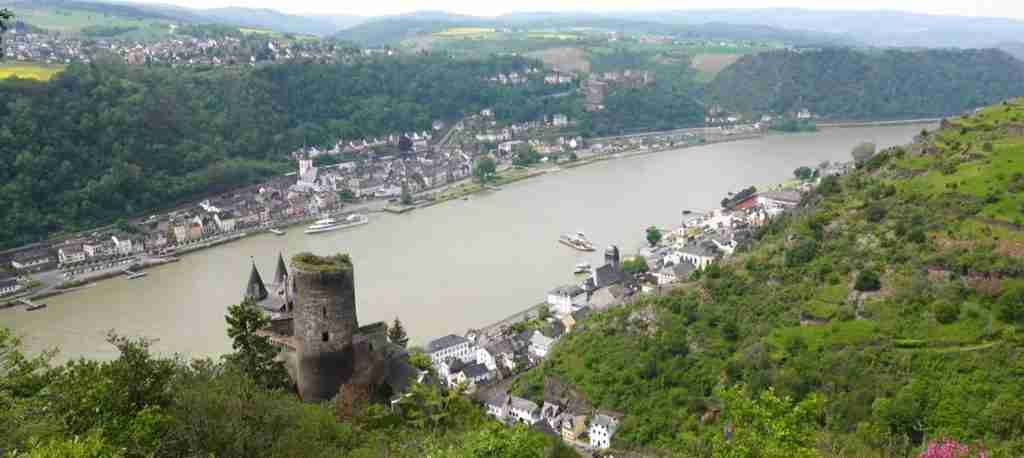
The famous Lorelei Rock rises 120 meters above the river near St. Goarshausen, marking the narrowest and historically most dangerous navigation point. This legendary location, immortalized in Heinrich Heine’s poem about a siren luring sailors to their doom, remains the valley’s most iconic single feature and appears on virtually every cruise itinerary.
Beyond the main Rhine corridor, several side valleys reward exploration. The Lahn River joins at Koblenz, offering castle-rich scenery toward Limburg. The Mosel Valley, one of Germany’s premier wine regions, begins at the Deutsches Eck confluence in Koblenz. Burg Eltz, often considered Germany’s most beautiful castle, lies 30 kilometers up the Eltz stream valley from Moselkern.
2026 Costs and Budget Planning
Rhine Valley visiting costs vary significantly based on transportation choices, accommodation standards, and activity priorities. Budget travelers staying in hostels and self-catering spend €50-70 daily. Mid-range visitors using wine village hotels and enjoying restaurant meals budget €100-150 daily. Luxury travelers combining upscale hotels with premium cruises and private tours spend €250-400 daily.
Castle admissions represent modest expenses within overall budgets. Marksburg Castle costs €11 for adults, Rheinfels Castle €6, and most smaller castles €4-8. The Rheinland-Pfalz Card (€29-39 for 24-hour validity) provides free regional transportation plus castle discounts, offering excellent value for active exploration days.
Wine tasting ranges from free at many winery shops to €15-25 for structured tastings with education at premium producers. Restaurant meals cost €12-18 for lunch, €25-45 for dinner at traditional wine taverns, and €50-80 at upscale establishments. Coffee and cake at a riverside café runs €6-10.
Transportation costs remain highly manageable. Regional day passes for unlimited train travel within the valley cost €24-29 depending on coverage area. Individual train journeys between valley towns cost €3-8. Ferry crossings run €1.50-4 per person depending on distance. Bicycle rental costs €15-25 daily from multiple operators in major towns.
Best Time to Visit Rhine Valley in 2026
Spring Season 2026: April-May
Spring transforms the Rhine Valley into a showcase of awakening nature as vineyards burst with fresh growth and fruit trees bloom throughout the valley. April temperatures range 10-18°C with occasional rain showers, while May warms to 15-22°C with longer daylight hours extending sightseeing opportunities. This season attracts fewer visitors than summer while offering comfortable exploration weather.
Cherry and apple blossoms create spectacular displays in late April, particularly in orchard areas between Bingen and Bacharach. Vineyard workers prune and train new growth, offering opportunities to observe traditional viticulture practices. Wildflowers carpet meadows and castle ruins, enhancing photography opportunities at every stop.
The Rhine in Flames (Rhein in Flammen) festival series begins in early May, with Koblenz hosting the first major fireworks display illuminating the Ehrenbreitstein Fortress and river confluence. Check 2026 dates on regional tourism websites as specific scheduling varies annually. Accommodation books quickly during festival weekends, requiring advance planning for spring visits.
Spring water levels occasionally run high from snowmelt, potentially affecting cruise schedules and riverside paths. Most castles maintain full operating hours by late April, though some smaller sites may have restricted access until May. Wine taverns and restaurants operate normally throughout spring, with outdoor terrace seating becoming available as temperatures warm.
Summer Season 2026: June-August
Summer brings peak visitor numbers alongside longest days and warmest weather to the Rhine Valley. June temperatures average 18-25°C, July and August reach 22-30°C with occasional heat waves exceeding 35°C. River cruise traffic peaks during these months, with multiple boats visible at any viewpoint throughout the day.
Extended daylight permits full-day exploration with evening activities in wine villages. Castle grounds often host special summer events including medieval festivals, outdoor concerts, and theater performances within historic walls. Wine taverns fill their outdoor terraces, creating lively social atmospheres continuing past midnight in popular villages.
Summer crowds concentrate at famous locations like Bacharach, the Lorelei, and Marksburg Castle, though patient visitors find quieter moments during early mornings and late afternoons. Accommodation prices reach annual peaks, with popular hotels in Bacharach and St. Goar requiring booking 2-3 months ahead for July and August stays. Consider lesser-known villages like Oberwesel, Lorch, or Kaub for easier availability and lower rates.
August brings the Weinfest season, with nearly every village hosting wine festivals celebrating local producers. These celebrations offer exceptional value with glasses of local Riesling costing €3-5 and traditional food available from festival stalls. Festival atmospheres provide genuine cultural immersion beyond typical tourist experiences.
Autumn Season 2026: September-October
Autumn represents the Rhine Valley’s most magical season as grape harvest transforms the region into a celebration of wine culture. September temperatures range 15-22°C, October cools to 10-18°C with increasingly golden light enhancing landscape photography. Vineyard foliage transitions through yellows, oranges, and reds creating spectacular valley panoramas.
The Federweisser season begins in late September, offering the year’s new wine in its partially fermented, cloudy state. This seasonal specialty, available only for a few weeks, pairs traditionally with onion tarts (Zwiebelkuchen) at wine taverns throughout the valley. Experiencing Federweisser represents an authentically German autumn tradition unavailable at other times.
October brings the main wine harvest (Weinlese), with hand-picking on steep slopes continuing traditional methods unchanged for centuries. Some wineries welcome visitors to participate in harvest activities, offering unique hands-on experiences. Wine festivals continue through early October in various villages, though with more intimate atmospheres than summer events.
Autumn crowds thin considerably after mid-September, improving castle access and village exploration while reducing accommodation competition. Weather remains reliably pleasant through mid-October, though late October brings increasing rain probability and earlier darkness. Most attractions maintain summer hours through September, transitioning to reduced autumn schedules in October.
Winter Season 2026: November-March
Winter presents a dramatically different Rhine Valley experience with atmospheric mist, bare vineyards, and substantially reduced tourism. December offers Christmas market magic in Rüdesheim and Koblenz, while January through March appeal primarily to visitors seeking solitude and moody landscapes rather than typical sightseeing.
Many castles close entirely from November through March, or operate with severely restricted hours limited to weekends only. Ferry services reduce dramatically, with some routes suspending entirely. Cruise ships largely disappear from the river between November and late March. Visitors must carefully research attraction availability before winter visits.
Rüdesheim’s famous Drosselgasse maintains activity through Christmas market season, decorated elaborately with lights and hosting warming Glühwein (mulled wine) stands. The Koblenz Christmas market at the Deutsches Eck provides atmospheric riverside celebration. After New Year, most tourist facilities enter minimal operation until spring.
Winter accommodation prices drop 40-50% from summer peaks, making extended stays economically attractive for visitors focused on hiking, photography, or wine tasting rather than castle touring. Wine taverns remain open year-round in larger towns, providing cozy refuges from cold weather. The region’s famous steep-slope vineyards dusted with snow create dramatically photogenic scenes for dedicated winter photographers.
Accommodation Strategies for Rhine Valley 2026
Budget Accommodation Options 2026
Budget travelers find excellent options throughout the Rhine Valley in 2026, with hostels, guesthouses, and private rooms offering comfortable stays at €25-60 per person nightly. The Jugendherberge (DJH) hostel network operates facilities in Bacharach (housed in a 12th-century castle), Oberwesel, and St. Goar, each offering dorm beds for €25-35 including breakfast and stunning medieval settings.
Private guesthouses (Pension) in smaller villages provide double rooms for €60-90 including breakfast, often with wine-making families offering insight into local culture. Villages like Oberwesel, Lorch, and Kaub feature multiple family-run properties with simple but clean accommodations at rates 30-40% below Bacharach or Rüdesheim equivalents.
Airbnb and vacation apartment rentals increase budget flexibility, with studio and one-bedroom units available from €50-80 nightly. Self-catering reduces meal costs significantly given high restaurant prices throughout the valley. Longer stays of 4+ nights often qualify for discounted weekly rates.
Camping grounds operate along the riverbanks at Bacharach, St. Goar, and near Koblenz, offering tent sites for €15-25 and caravan/camper spots for €25-35. Facilities range from basic to well-equipped, with riverside locations providing exceptional morning views. Many campgrounds include access to swimming areas and maintain small shops for provisions.
Mid-Range Accommodation Options 2026
Mid-range hotels priced €100-180 nightly offer the ideal balance of comfort, location, and value for most Rhine Valley visitors in 2026. Historic hotels converted from medieval buildings, wine estates, and former merchant houses provide atmospheric accommodations unavailable in typical chain properties.
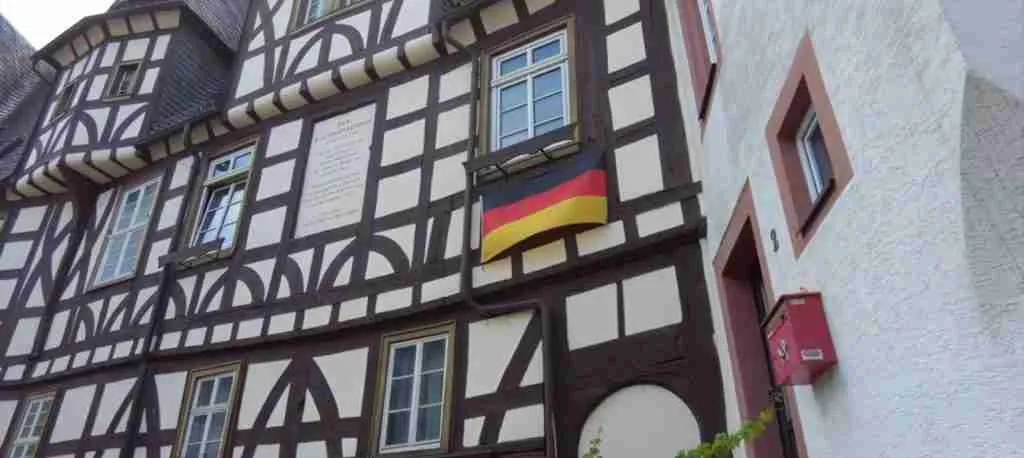
Bacharach’s Hotel Altkölnischer Hof occupies a half-timbered building dating to 1585, offering rooms with exposed beam ceilings and traditional furnishings from €120 nightly. The Rhein Hotel in St. Goar provides river-view rooms with private terraces watching cruise ships and trains from €140 nightly. Oberwesel’s Auf Schönburg combines medieval castle accommodation with modern amenities from €150 nightly.
Wine estate accommodations offer unique experiences, with families operating guesthouses alongside their vineyards. Stays typically include wine tastings, cellar tours, and home-cooked meals featuring regional specialties. These properties book through direct contact rather than major platforms, requiring email inquiry but rewarding effort with authentic immersion.
Booking timing affects availability significantly. Summer weekends and wine festival periods require 2-3 months advance booking in popular villages. Weekday stays and shoulder season visits offer substantially easier availability, often with 10-20% rate reductions. Check booking platforms for current 2026 rates as pricing varies seasonally.
Luxury Accommodation Options 2026
Luxury visitors to the Rhine Valley in 2026 find exceptional castle hotels, historic estates, and premium properties offering memorable stays from €200-500 nightly. These accommodations combine centuries of history with contemporary comfort standards, creating experiences impossible to replicate elsewhere.
Burg Rheinfels near St. Goar offers upscale rooms within Germany’s largest castle ruin, with panoramic valley views from terrace dining and spa facilities integrated into medieval stonework. Rates begin around €200 for standard rooms, reaching €350+ for premium suites with private terraces.
Schloss Rheinfels and Romantik Hotel Schloss Rettershof provide castle experiences combining historic architecture with full luxury amenities including gourmet restaurants, wellness facilities, and personalized service. These properties attract visitors celebrating special occasions or seeking complete relaxation within medieval surroundings.
Rüdesheim’s Breuer’s Rüdesheimer Schloss and Krone Hotel Assmannshausen offer historic wine estate luxury with acclaimed restaurants, extensive wine cellars, and riverside locations. The latter specializes in the rare Assmannshausen red wines produced from Spätburgunder (Pinot Noir) grapes grown on nearby slopes.
Luxury accommodations often include enhanced amenities like private tours, vintage wine pairings, and exclusive castle access unavailable to day visitors. Concierge services arrange helicopter transfers, yacht excursions, and private wine experiences with top producers. Booking through properties directly often yields better rates and upgrade possibilities than platform reservations.
Transportation Guide for Rhine Valley 2026
Train Travel in Rhine Valley 2026
Regional trains provide the backbone of Rhine Valley transportation in 2026, offering frequent service along both riverbanks with stunning scenery rivaling expensive cruise experiences. The Mittelrheinbahn line runs every 30 minutes between Koblenz and Mainz/Wiesbaden, stopping at all major valley towns.
Left bank (western) stations serve Boppard, St. Goar, Oberwesel, Bacharach, and Bingen—the most photographed villages with primary tourist attractions. Right bank (eastern) stations access Braubach (Marksburg Castle), St. Goarshausen (Lorelei viewpoint), and Kaub (Pfalzgrafenstein island castle). Train journeys between major stops take 8-15 minutes, with the full Koblenz-Bingen traverse requiring approximately 50 minutes.
The Rheinland-Pfalz Ticket costs €27 for single travelers or €33 for groups up to five, providing unlimited regional train travel throughout the state from 9 AM until 3 AM the following day. Weekend validity begins at midnight. This ticket covers all valley trains plus connections to Frankfurt, Cologne, and other regional destinations, offering exceptional value for active exploration days.
Deutsche Bahn tickets purchased from station machines or the DB Navigator app provide flexible single journeys at standard fares. Children under 6 travel free, ages 6-14 travel at 50% discount. Bicycles require separate tickets (€6 daily) on regional trains, with designated car sections accommodating cyclists.
Ferry Services in Rhine Valley 2026
Car ferries and passenger ferries connect towns across the Rhine at multiple points throughout the valley, providing essential links where no bridges exist. These working ferries offer economical mini-cruises while solving practical transportation needs.
Major ferry routes include St. Goar-St. Goarshausen (every 15-20 minutes), Oberwesel-Kaub, Bingen-Rüdesheim, and Boppard-Filsen. Passenger fares range €1.50-3.50 depending on crossing distance. Bicycles add €2-3 per crossing. Vehicles cost €4-8 depending on size. Most ferries operate from early morning until late evening in summer, with reduced hours in shoulder seasons.
The Bingen-Rüdesheim ferry provides particularly scenic crossings, passing the famous Mäuseturm (Mouse Tower) mid-river and offering excellent photography angles of both historic towns. The St. Goar-St. Goarshausen crossing passes directly beneath the Lorelei cliffs, creating atmospheric approaches to the legendary rock.
Ferry schedules vary seasonally and weather conditions occasionally cause service disruptions during high water or storms. Verify operating status at ferry landings or through regional tourism information before planning itineraries requiring specific crossings. Some services reduce dramatically or cease entirely from November through March.
River Cruises in Rhine Valley 2026
KD Rhine cruises (Köln-Düsseldorfer) operate scheduled passenger services throughout the valley, allowing hop-on-hop-off exploration at leisurely pace. The full Koblenz-Rüdesheim journey takes approximately 4 hours downstream and 5.5 hours upstream, with intermediate stops at major villages.
One-way cruise fares cost €25-45 for adults depending on distance, with return journeys available at discounted rates. Day passes valid for unlimited boarding throughout the valley cost €50-65 in 2026. Check KD’s official website for current rates and schedules as pricing may vary seasonally. Children under 4 travel free, ages 4-13 at 50% discount. Rail pass holders receive 20% discounts on cruise fares.
Cruising downstream (north toward Koblenz) proves faster due to river current, while upstream journeys provide extended scenic viewing time. Many visitors cruise one direction and return by train, combining both experiences efficiently. Morning departures from Rüdesheim or afternoon departures from Koblenz avoid peak midday crowds on cruise vessels.
Alternative cruise operators including Bingen-Rüdesheimer Fahrgastschiffahrt and Loreley Linie provide additional services, sometimes at lower fares or with different routing. These smaller operators typically run seasonal schedules from April through October only. Premium dinner cruises and special event sailings require advance booking and carry higher fares.
Cycling in Rhine Valley 2026
The Rhine Cycle Path (Rhein-Radweg) ranks among Europe’s premier cycling routes, with the Rhine Valley section offering 65 kilometers of flat, paved pathway along the riverbank. This traffic-free route passes directly through wine villages, beneath castle-topped cliffs, and alongside the working river, creating an immersive valley experience impossible from other transportation modes.
Bicycle rental costs €15-25 daily from operators in Koblenz, Boppard, St. Goar, Bacharach, and Rüdesheim. E-bike rentals cost €30-45 daily, offering assistance for optional climbs to hilltop viewpoints. Most rental shops allow one-way rentals between valley towns for small surcharges, enabling downriver cycling with train return.
The path surface suits all bicycle types, though luggage-laden touring bikes or families with children find the flat terrain particularly accessible. Dedicated cycling infrastructure separates riders from vehicle traffic throughout most sections, with only brief shared-road segments through village centers.
Cyclists combine effectively with other transportation modes. Trains accommodate bicycles in designated cars, ferries welcome bikes at minimal surcharge, and even cruise ships permit bicycle boarding for full flexibility. A popular strategy involves train upriver to Bingen, cycling downriver to Koblenz with stops throughout, requiring approximately 4-6 hours of actual riding time.
Top Rhine Valley Castles to Visit in 2026
Marksburg Castle 2026
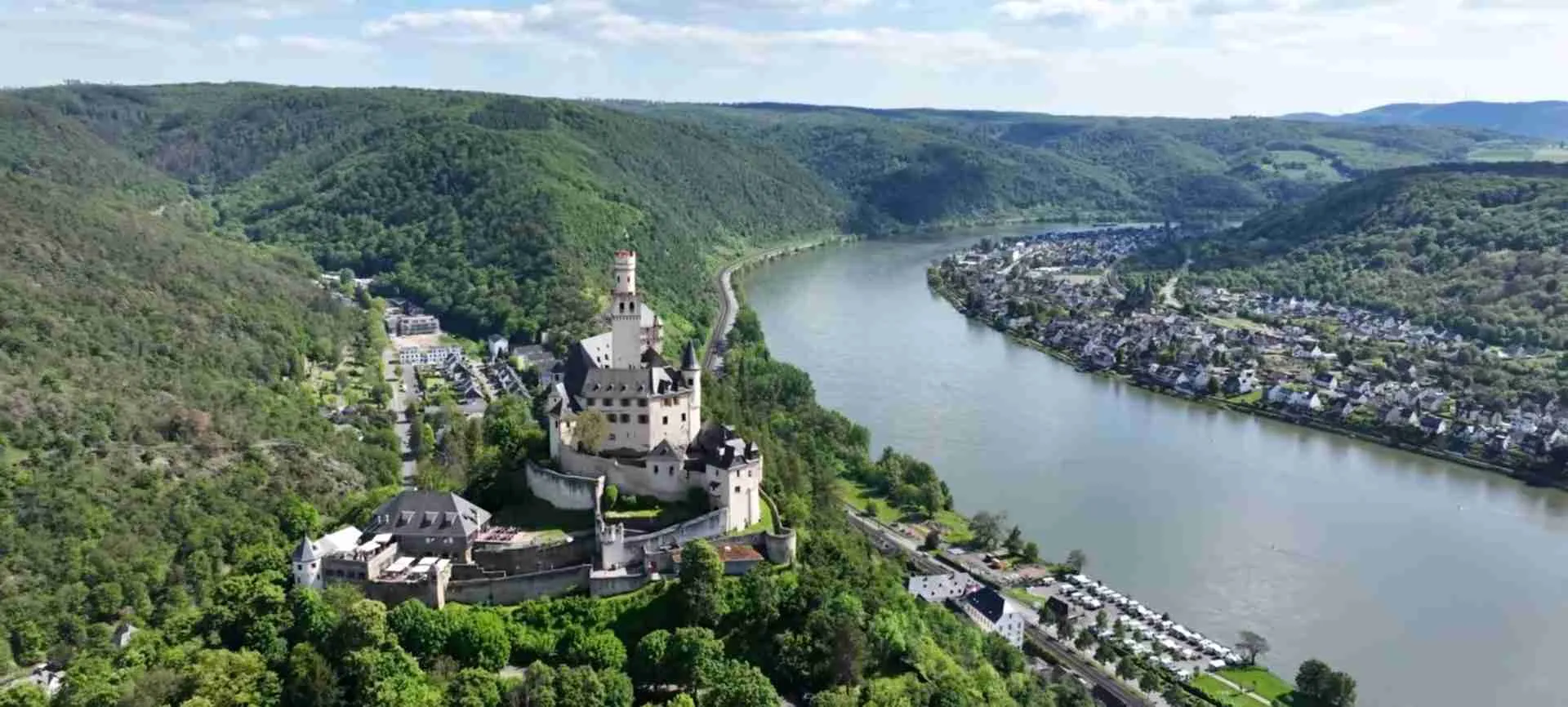
Marksburg Castle holds unique distinction as the Rhine Valley’s only hilltop castle never destroyed, preserving authentic medieval architecture and atmosphere unavailable at rebuilt or ruined alternatives. Rising 150 meters above Braubach on the right bank, this fortress demonstrates genuine 13th-century construction techniques alongside later additions spanning five centuries.
Guided tours lasting 50 minutes cost €11 for adults and €8 for children in 2026, departing regularly throughout opening hours. Tours conducted in German with English-language audio guides or printed materials available. The steep 15-minute walk from Braubach train station rewards with spectacular river views, or a taxi from the station costs €8-10.
Interior highlights include the Gothic hall with original furniture, the castle kitchen with period equipment, a weapons collection spanning medieval to modern eras, and the torture chamber displaying justice administration methods. The castle gardens maintain medieval herb varieties, while exterior walls demonstrate progressive military architecture evolution.
Marksburg opens daily from mid-March through October (10 AM – 5 PM) with tours departing hourly. Winter hours (November through mid-March) reduce to weekends and holidays only (11 AM – 4 PM). The climb from town takes 15-20 minutes uphill, or the castle road permits driving to a parking area partway up. Visit duration including tours, exploration, and photography requires 2-3 hours minimum.
Rheinfels Castle 2026
Rheinfels Castle near St. Goar represents the Rhine Valley’s largest fortress complex, spreading across a hilltop in massive ruins that reward extensive exploration. Originally constructed in 1245, the castle withstood numerous sieges before French Revolutionary forces finally destroyed it in 1797, leaving today’s atmospheric remains.
Admission costs €6 for adults and €3 for children in 2026, providing access to expansive grounds, underground mine tunnels, defensive positions, and partial interior rooms. Self-guided exploration with informational signs allows flexible visiting at personal pace. Flashlights prove useful for tunnel exploration—bring your own or purchase at the entrance.
The scale of Rheinfels requires minimum 1.5-2 hours for reasonable coverage, with thorough exploration consuming half a day. Underground passages extend for hundreds of meters, revealing counter-mining techniques and defensive architecture unavailable at other castles. Above-ground ramparts provide panoramic views across the valley and down toward St. Goar’s riverside.
Rheinfels opens daily from mid-March through October (9 AM – 6 PM, last entry 5 PM). Winter hours vary and often require advance confirmation. The castle sits 15 minutes uphill from St. Goar center, with a shuttle bus sometimes operating during peak season. The Romantik Hotel Schloss Rheinfels occupies a reconstructed portion of the castle, offering accommodation within the historic walls.
Burg Eltz 2026
Burg Eltz rises from forested hills 30 kilometers from the Rhine near Moselkern, presenting one of Germany’s most photogenic and authentically preserved medieval castles. Never destroyed in its 850-year history, the castle has remained in the same family for 33 generations, maintaining furnished interiors and architectural integrity impossible at rebuilt alternatives.
Guided tours (45 minutes) cost €14 for adults and €9 for children in 2026, providing access to richly decorated rooms, weapons collections, and the famous Treasury with gold and silver artifacts. Tours depart every 10-15 minutes throughout opening hours, conducted in German with English information available.
Reaching Burg Eltz requires planning as no direct public transportation serves the castle. From Moselkern train station, a 5-kilometer forest walk (90 minutes) or shuttle bus (€3, seasonal operation) reaches the castle. From Koblenz, the Cochem-bound train reaches Moselkern in 25 minutes. Drivers park 1 kilometer from the castle and walk the final approach.
Burg Eltz opens daily from April through October (9:30 AM – 5:30 PM). The castle closes entirely from November through March. Advance booking is not possible—all visits are first-come, first-served, with potential waits during peak periods. The forest approach, castle courtyard, and Eltz stream valley create exceptional photography opportunities in any season.
Pfalzgrafenstein Castle 2026
Pfalzgrafenstein Castle occupies an island mid-Rhine near Kaub, its ship-like white walls rising directly from the water in the valley’s most unusual defensive position. Constructed in 1327 as a toll collection station, this fortress extracted payment from every vessel passing the narrows for nearly five centuries.
Ferry crossings from Kaub operate every 15-20 minutes (€4 round-trip including castle admission) during opening hours. The compact castle rewards 30-45 minute visits exploring its unique island setting, toll collection history, and strategic position controlling river traffic. Interior spaces remain relatively bare but informational panels explain historical functions.
Pfalzgrafenstein opens from April through October only, with variable hours depending on season and day. The exposed island location makes the castle particularly atmospheric in misty conditions but uncomfortable during rain or high winds. Photographers value the castle for its unique appearance, with ideal angles available from Kaub’s riverside or the approaching ferry.
Kaub itself merits exploration alongside the island castle visit. This small wine village features half-timbered houses, the Blücher Museum commemorating the 1814 Rhine crossing by Prussian forces pursuing Napoleon, and authentic wine taverns serving local Rieslings. Combined with Pfalzgrafenstein, Kaub provides an excellent half-day excursion from larger valley bases.
Money-Saving Strategies for Rhine Valley 2026
Transportation Savings in 2026
The Rheinland-Pfalz Ticket delivers exceptional transportation value at €27 for individuals or €33 for groups up to five people. Valid from 9 AM weekdays or midnight on weekends, the ticket covers unlimited regional train travel throughout Rhineland-Palatinate including the entire Rhine Valley, plus connections to Frankfurt, Cologne, and Mainz.
Train travel between valley towns costs €3-8 per single journey, meaning 4-5 individual trips exceed the day pass cost. Active exploration days with multiple village visits, castle excursions, and cross-river ferry connections easily justify the pass purchase. Groups of 2-5 travelers sharing a single ticket achieve per-person costs under €10 for unlimited daily travel.
Ferry crossings add up quickly during valley exploration. The passenger fare of €1.50-3.50 per crossing becomes significant during multi-crossing days. Where possible, plan itineraries minimizing crossings by exploring one bank thoroughly before switching sides. The Rheinland-Pfalz Ticket does not include ferry fares.
Cycling eliminates transportation costs entirely for physically capable visitors. Daily bicycle rental of €15-25 replaces train, ferry, and cruise expenses while providing enhanced flexibility and valley immersion. The flat riverside path requires minimal cycling fitness, opening this option to casual cyclists alongside serious touring riders.
Accommodation and Dining Savings in 2026
Selecting accommodation in lesser-known villages reduces costs 30-40% compared to famous stops like Bacharach and Rüdesheim. Oberwesel, Lorch, Kaub, and villages near Boppard offer identical Rhine Valley access at substantially lower rates. Train connections reach popular destinations within 15-20 minutes from these alternatives.
Self-catering significantly reduces meal expenses in a region where restaurant prices run 20-30% above German averages. Every valley town features bakeries, supermarkets, and weekly markets supplying picnic provisions. Riverside picnics beneath castle-topped cliffs create memorable meals at fraction of restaurant costs.
Wine purchasing directly from wineries costs €6-15 per bottle for quality Rieslings that would exceed €30 in restaurants. Many wineries offer free tastings when purchasing, creating economical quality experiences. The valley’s numerous Weinstuben (wine taverns) provide local wines by the glass for €4-6, substantially below tourist restaurant markups.
Lunch represents the optimal meal for restaurant spending in Germany. Many establishments offer set lunch menus (Mittagstisch) at €10-15 for soup, main course, and beverage—50% below dinner prices for identical cuisine quality. Evening meals can emphasize lighter wine-and-snack combinations at wine taverns rather than full restaurant dining.
Attraction Savings in 2026
Many Rhine Valley attractions involve no admission cost whatsoever. Castle ruins like Schönburg (Oberwesel), Stahleck (Bacharach exterior), and numerous smaller fortifications offer free exploration of atmospheric medieval remains. Village wandering through half-timbered streets, riverside promenades, and vineyard paths provides unlimited no-cost activity.
The Rheinland-Pfalz Card includes free or discounted admission to participating castles, museums, and attractions. Calculate potential savings against the €29-39 daily card cost to determine value for your specific itinerary. Active visitors combining transportation and attraction benefits typically achieve positive value.
Wine tasting fees vary dramatically between producers. Many family wineries offer complimentary tastings for visitors who purchase bottles, while tourist-oriented operations charge €10-20 for formal programs. Seeking authentic producers in side streets rather than main squares typically yields better wine experiences at lower or no cost.
Viewpoints and photography locations require no spending. The Lorelei summit viewpoint, accessible by steep footpath or road, offers the valley’s most famous panorama without admission. Vineyard trails climbing above villages provide elevated perspectives costing only effort. The train itself serves as a moving viewpoint, with left-bank seats facing castles on opposite heights.
Sample 2026 Itineraries for Rhine Valley
One Day Rhine Valley Itinerary 2026
A single day from Frankfurt covers Rhine Valley highlights effectively with early departure and strategic planning. Depart Frankfurt Hauptbahnhof on the 8:30 AM regional train to St. Goar (1 hour 45 minutes, €25 day pass covers travel). The morning train passes through vineyards and villages, providing scenic introduction to the valley.
Explore St. Goar’s riverside before climbing to Rheinfels Castle (45-60 minutes, €6 admission). The extensive ruins reward 1.5-2 hours of exploration including underground tunnels. Return to St. Goar for lunch at a traditional wine tavern—try the local Riesling with regional cheese or meat platters (€15-25).
Catch the 1:30 PM KD cruise downstream to Bacharach (45 minutes, €15-20). The cruise passes the Lorelei cliffs, providing legendary scenery while digesting lunch. Bacharach’s medieval walls, half-timbered houses, and romantic atmosphere make it the valley’s most photogenic village.
Wander Bacharach’s lanes, climb to Wernerkapelle ruins, and sample wines at a family winery before catching the 5 PM train back to Frankfurt (1 hour 30 minutes). Regional train ticket €25 (Rheinland-Pfalz extension), Rheinfels Castle €6, cruise €18, lunch €20, wine tasting €8-12. Total day cost: €77-91 per person (excluding accommodation).
Three Day Rhine Valley Itinerary 2026
Day 1: Koblenz and Marksburg Castle
Arrive Koblenz and explore the Deutsches Eck where Rhine and Mosel rivers meet, the atmospheric Old Town, and fortress Ehrenbreitstein accessible by cable car (€13 round trip). Afternoon train to Braubach (15 minutes) for Marksburg Castle guided tour (€11). Return to Koblenz or continue to St. Goar for overnight. Dinner at a traditional Koblenz restaurant (€30-40). Castle €11, cable car €13, train day pass €27, lunch €15-20, dinner €35-40. Total day cost: €101-111 per person (excluding accommodation).
Day 2: St. Goar and Bacharach
Morning exploration of Rheinfels Castle (€6). Take the ferry across to St. Goarshausen (€2) and climb to Lorelei viewpoint (free). Train to Bacharach for afternoon wandering and wine tasting at local producers (free-€12). Evening dining at Bacharach’s historic wine taverns (€30-40). Castle €6, ferry €2, wine tasting €10, train travel within valley €12, lunch €18-22, dinner €35-42. Total day cost: €83-94 per person (excluding accommodation).
Day 3: Burg Eltz Excursion
Early train to Moselkern (40 minutes from Koblenz). Walk through the forest to Burg Eltz (90 minutes) for morning tour (€14). Afternoon return walk allows photography of the castle exterior. Train to Cochem on the Mosel for lunch (€20-25) and brief Old Town exploration before returning to the Rhine Valley or onward destination. Castle €14, train travel €18, lunch €22-28, snacks €8-10. Total day cost: €62-70 per person (excluding accommodation).
Five Day Rhine Valley Itinerary 2026
Days 1-2: Koblenz Base
Establish base in Koblenz for two nights, allowing thorough exploration of the city and northern valley section. Day one covers Koblenz’s Old Town, Ehrenbreitstein Fortress, and the Mosel-Rhine confluence. Day two visits Marksburg Castle and explores Boppard’s riverside promenade and chairlift to viewpoints.
Days 3-4: Bacharach Base
Transfer to Bacharach for two nights in the valley’s most romantic village. Day three explores the village thoroughly, climbs to Stahleck Castle, and visits local wineries for extended tastings. Day four takes the ferry to Kaub for Pfalzgrafenstein island castle, continues to Oberwesel for its preserved walls and Gothic church, returning to Bacharach for evening riverside dining.
Day 5: Rüdesheim and Return
Morning train to Rüdesheim for cable car to Niederwald monument (€9 round trip) with panoramic valley views. Explore the famous Drosselgasse (tourist-oriented but historically significant), visit the Mechanical Music Museum (€8.50), and sample wines in the Rüdesheim vineyards before afternoon departure.
Five-day budget breakdown: Transportation (regional passes) €80-100, castle admissions €35-45, wine tastings €40-60, meals (mix of restaurants and self-catering) €180-250, activities €30-40. Total five-day cost: €365-495 per person (excluding accommodation €300-600 depending on standards).
Wine Experiences in Rhine Valley 2026
Understanding Rhine Valley Wines in 2026
Riesling dominates Rhine Valley production, thriving on steep slate slopes that retain daytime heat while cool nights preserve acidity in the developing grapes. The resulting wines range from bone-dry (Trocken) through off-dry (Halbtrocken/Feinherb) to lusciously sweet (Spätlese, Auslese), all characterized by minerality, precision, and age-worthiness uncommon in white wines globally.
German wine classification initially confuses visitors accustomed to other systems. Quality levels from basic (Deutscher Wein, Landwein) through premium (Qualitätswein, Prädikatswein) indicate ripeness at harvest rather than quality judgments per se. Within Prädikatswein, terms like Kabinett, Spätlese, Auslese, Beerenauslese, and Trockenbeerenauslese indicate progressively later harvesting and higher sugar concentration.
The VDP (Verband Deutscher Prädikatsweingüter) classification provides quality guidance similar to French concepts. Member wineries classify vineyards as Erste Lage (First Growth) or Grosse Lage (Grand Cru equivalent), with corresponding wine designations indicating single-vineyard origin. Look for the VDP eagle logo indicating membership in this quality-focused organization.
Beyond Riesling, the valley produces smaller quantities of Spätburgunder (Pinot Noir), particularly around Assmannshausen’s red-wine microclimate, and various other white varieties including Müller-Thurgau and Grauburgunder (Pinot Gris). Sparkling Sekt from Riesling grapes represents an excellent value alternative to Champagne for celebrations.
Wine Tasting Experiences in 2026
Every Rhine Valley village offers wine tasting opportunities ranging from casual standing bars to sophisticated guided programs. Family wineries throughout Bacharach, Oberwesel, Lorch, and Rüdesheim welcome visitors for tastings typically costing €8-15 for 4-6 wines, often waived with bottle purchases.
Weingut Toni Jost in Bacharach produces some of Germany’s most acclaimed Rieslings, with tastings available by appointment (€15-25). Their Bacharacher Hahn vineyard wines demonstrate single-site expression at its finest. Book directly through the winery website 1-2 weeks ahead for 2026 visits.
Rüdesheim concentrates tourist-oriented wine experiences along the famous Drosselgasse, where wine taverns provide quick tastings in lively atmospheres. For serious tasting, seek producers on quieter streets or neighboring villages where attention focuses on wine rather than entertainment. The Rüdesheim Wine Society organizes themed tastings matching local wines with regional cuisine.
Wine festivals throughout summer and autumn provide exceptional value tasting opportunities. Glass purchase (€3-5) allows unlimited sampling from participating producers at per-pour prices of €2-4 per taste. Festival atmospheres add cultural immersion beyond typical tasting room experiences, though serious wine evaluation becomes difficult amid celebration.
Vineyard Visits and Wine Tours 2026
Walking through vineyards provides intimate understanding of Rhine Valley winemaking beyond tasting room experiences. Marked vineyard paths climb steep slopes throughout the valley, revealing the extraordinary terroir where vines grow on gradients reaching 70 degrees. Early morning walks encounter workers tending vines by hand—mechanization remains impossible on many slopes.
Guided wine walks with regional experts cost €25-45 per person including tastings at vineyard viewpoints and winery visits. These half-day programs combine landscape appreciation, viticulture education, and quality wine sampling. Book through village tourist offices or directly with tour operators—several companies in Bacharach and Rüdesheim offer regular scheduled departures throughout the season.
Harvest participation programs in September and October allow visitors to join actual grape picking alongside vineyard workers. These full-day experiences (typically €80-120 including meals and wine) provide authentic immersion in traditional winemaking still practiced on steep slopes. Limited availability requires booking several weeks ahead, particularly for October weekends.
Premium wine experiences including vertical tastings of aged vintages, winemaker dinners, and cellar tours with producers typically require advance arrangement directly with wineries. Costs range from €50 for specialized tastings to €150+ for multi-course meals with wine pairings. These experiences suit wine enthusiasts seeking depth beyond casual tourism.
Booking and Reservations for Rhine Valley 2026
When to Book for Rhine Valley 2026
Accommodation booking timing varies by location and season. Bacharach’s limited hotel capacity requires 2-3 months advance booking for summer weekends and wine festival dates. Lesser-known villages like Oberwesel and Kaub typically show availability 2-4 weeks ahead even during peak periods. Christmas market season (late November-December) creates booking pressure in Rüdesheim and Koblenz.
Burg Eltz does not accept advance reservations—all visits operate first-come, first-served with tickets purchased on arrival. Peak season weekend afternoons may involve 30-60 minute waits for English-language tours. Morning arrivals (before 10:30 AM) typically encounter minimal delays.
KD Rhine cruises accept day-of boarding without reservation for regular scheduled services. However, special event cruises (wine festival sailings, dinner cruises, Rhine in Flames packages) sell out weeks ahead. Check KD’s website for 2026 special event scheduling and book popular sailings 4-6 weeks in advance.
Guided tours through operators like Viator, GetYourGuide, and local companies typically require 24-48 hours minimum booking notice. Popular multi-day itineraries and exclusive experiences (private winery visits, helicopter tours) may need 1-2 weeks advance booking during high season.
Official Booking Channels for Rhine Valley 2026
Deutsche Bahn (bahn.de) handles all train ticketing including regional passes. The DB Navigator app provides real-time schedules, platform information, and mobile ticketing. Purchase Rheinland-Pfalz Tickets from station machines, apps, or staffed ticket windows.
KD Rhine cruises book through k-d.com for scheduled services, special events, and combination packages. Third-party platforms sometimes offer discounts on KD services, though direct booking ensures accurate scheduling information and customer service access.
Castle websites provide current admission prices, opening hours, and tour schedules. Marksburg (marksburg.de), Rheinfels (romantikhotels.com/rheinfels), and Burg Eltz (burg-eltz.de) maintain English-language information. Hours and prices shown in this guide reflect 2026 expectations—verify through official sources before visits.
Romantic Rhine tourism (romantischer-rhein.de) aggregates accommodation listings, attraction information, event calendars, and practical visitor resources. Village tourist offices provide personalized assistance for accommodation, tours, and local recommendations—contact information available through the regional portal.
Tour Operator Recommendations for 2026
Several operators specialize in Rhine Valley experiences, offering curated itineraries combining transportation, guides, and exclusive access. These services suit visitors preferring organized travel over independent exploration, typically at premium pricing but with reduced planning requirements.
GetYourGuide and Viator aggregate multiple operators offering day trips from Frankfurt, cruise combinations, and multi-day packages. Customer reviews help evaluate specific offerings, though quality varies between contracted operators. Popular Frankfurt day trips cost €80-150 per person including transportation, guide, and some admissions.
Tauck, Viking, and similar premium operators include Rhine Valley segments within longer European river cruise itineraries. These all-inclusive packages (from €300-500 daily) provide luxury vessel accommodation, guided shore excursions, and high-service meals throughout the journey. Book 6-12 months ahead for preferred departure dates.
Local guides available through village tourist offices provide personalized experiences including wine walks, castle explorations, and cultural interpretation. Half-day private guiding costs €150-250 for individuals or small groups, full days €300-400. Custom itineraries accommodate specific interests whether architectural, viticultural, or photographic.
Practical Tips for Rhine Valley 2026
What to Pack for Rhine Valley 2026
Footwear dominates packing considerations given the valley’s cobblestone streets, castle stairs, and vineyard trails. Comfortable walking shoes with good grip handle most situations, while serious hikers add trail shoes for Rheinsteig segments. Avoid fashion footwear—even summer visits involve considerable walking on uneven surfaces.
Layered clothing accommodates the valley’s variable weather across all seasons. Summer brings warm days but cool river breezes and air-conditioned trains. Spring and autumn require jackets for morning and evening temperatures. A compact rain jacket proves invaluable given unpredictable precipitation, particularly for outdoor wine tasting and castle exploration.
Sun protection becomes essential on exposed castle ramparts and vineyard walks. Sunscreen, sunglasses, and hats reduce discomfort during summer visits. Conversely, winter visitors need serious cold-weather gear as riverside locations feel biting wind chill even at moderate temperatures.
Photography equipment competes for luggage space in this supremely photogenic destination. Compact cameras handle most situations adequately, while serious photographers bring interchangeable lenses for architectural details and sweeping panoramas. Tripods enable low-light castle interiors and atmospheric evening shots but add weight to climbing expeditions.
Language and Communication in 2026
English communication proves largely adequate throughout the Rhine Valley’s tourist infrastructure. Hotel staff, major attraction guides, and transportation personnel typically speak functional English. Restaurant menus increasingly offer translations, and card payment terminals display English options.
German language efforts earn appreciation even when locals respond in English. Basic phrases—Guten Tag (hello), Bitte (please), Danke (thank you), Sprechen Sie Englisch (do you speak English)—demonstrate respect for local culture. Wine terminology (Trocken=dry, Süss=sweet, Probe=tasting) enhances winery interactions.
Wine village authenticity sometimes means limited English proficiency at family operations. Point-and-gesture communication works for basic transactions, while translation apps help complex conversations. This linguistic challenge often leads to charming interactions and genuine cultural exchange impossible at English-oriented tourist operations.
Mobile data maintains navigation, translation, and research capability throughout the valley. German carriers provide strong coverage except in deep forest sections. EU roaming regulations allow most European SIM cards without additional charges. Non-EU visitors benefit from purchasing German SIM cards or ensuring international data packages before arrival.
Safety and Etiquette in Rhine Valley 2026
The Rhine Valley presents minimal safety concerns for normal tourist activity. Petty theft in crowded tourist areas (Rüdesheim’s Drosselgasse, Koblenz train station) requires standard precautions—secure valuables, maintain awareness, use hotel safes for passports and excess cash. Violent crime affecting tourists remains essentially nonexistent.
Castle exploration involves genuine physical risks that caution prevents. Unprotected drops, uneven surfaces, low doorways, and steep stairs characterize authentic medieval structures. Watch footing constantly, obey barrier restrictions, and supervise children closely at ruins. Underground tunnel exploration at Rheinfels requires flashlights and awareness of confined spaces.
River swimming entices hot summer visitors but creates serious hazard. Strong currents, commercial shipping traffic, and cold water temperatures cause regular drowning deaths. Observe swimming prohibitions strictly—designated swimming areas exist at certain campgrounds and beaches where conditions permit safe access.
Wine culture participation requires responsible behavior. German drink-driving limits (0.05% BAC) fall below many countries’ standards, affecting even moderate consumption. Rely on trains, ferries, and cycling for transportation when tasting throughout the day. Public intoxication, while uncommon among visitors, carries legal penalties and social disapproval.
2026 Updates & Current Information
Recent Developments for Rhine Valley 2026
Infrastructure improvements completed for the 2025-2026 period enhance visitor experience throughout the valley. The Mittelrheinbrücke (Middle Rhine Bridge) project continues advancing toward eventual completion, though precise opening dates remain subject to construction progress. When completed, this will provide the first fixed crossing between Koblenz and Bingen.
KD cruise fleet modernization continues with updated vessels featuring improved accessibility, enhanced dining facilities, and Wi-Fi connectivity. 2026 schedules reflect adjusted routing optimizing popular segments while maintaining comprehensive valley coverage. Check official KD communications for specific vessel assignments and new service announcements.
Climate considerations increasingly influence wine tourism timing. Earlier harvest dates, shifting grape ripening patterns, and evolving vintage characteristics reflect warming trends visible in Rhine Valley viticulture. Wine enthusiasts may find traditional “harvest season” activities beginning 2-3 weeks earlier than historic norms.
Digital tourism infrastructure expansion provides enhanced visitor services including real-time ferry tracking, castle crowd monitoring, and integrated booking platforms. Regional tourism authorities continue developing smartphone applications aggregating transportation, attractions, and accommodation information. Download current apps before arrival for optimal planning support.
Sustainability Considerations for 2026
The Rhine Valley’s UNESCO designation carries explicit conservation obligations affecting visitor experience and behavior expectations. Sustainable tourism practices help preserve the cultural landscape for future generations while maintaining the authentic character that makes visits meaningful.
Public transportation preference supports regional sustainability goals while improving visitor experience. Train and ferry networks provide access rivaling personal vehicles while eliminating parking hassles, enabling wine tasting, and reducing valley congestion. Cycling adds health benefits alongside environmental responsibility.
Wine tourism supports the traditional viticulture that created the UNESCO-designated landscape. Purchasing from family producers rather than mass-market operations contributes directly to maintaining hand-tended steep-slope vineyards that would otherwise convert to economically easier alternatives. Quality over quantity purchasing maximizes both experience and contribution.
Responsible visitation includes respecting private property (many castles remain in family ownership), staying on marked trails through vineyards, and properly disposing of waste during picnics and hikes. The valley’s beauty depends on accumulated generations of careful stewardship—visitors become temporary participants in this ongoing preservation.
Frequently Asked Questions About Rhine Valley 2026
Is the Rhine Valley worth visiting in 2026?
The Rhine Valley absolutely warrants visiting in 2026 for anyone interested in European history, wine culture, scenic landscapes, or medieval architecture. The UNESCO World Heritage designation recognizes a cultural landscape of exceptional universal value, combining natural beauty with 2,000 years of human history. Whether for a single day trip from Frankfurt or an extended week-long exploration, the valley delivers experiences unavailable elsewhere.
Can I visit Rhine Valley castles without a tour?
Many Rhine Valley castles offer self-guided access alongside or instead of guided tours. Rheinfels Castle provides completely self-guided exploration with informational signage throughout the extensive ruins. Marksburg Castle requires guided tours for interior access but allows exterior exploration independently. Numerous smaller ruins and castle exteriors throughout the valley offer free, unrestricted access. Only a few premium castles like Burg Eltz operate exclusively via guided tours.
What is the cheapest way to explore Rhine Valley in 2026?
The cheapest comprehensive Rhine Valley exploration combines the Rheinland-Pfalz Ticket (€27-33) for unlimited daily train travel, free castle exterior visits and viewpoints, budget accommodation in lesser-known villages (€60-80 double), and self-catering with market and bakery purchases. Cycling eliminates even transportation costs beyond initial rental. Wine tavern visits rather than formal restaurants provide affordable local dining. Budget-conscious visitors enjoy the valley thoroughly for €50-70 daily excluding accommodation.
How crowded is Rhine Valley in summer 2026?
Summer crowds concentrate at famous locations (Lorelei, Bacharach, Rüdesheim’s Drosselgasse) during midday hours when cruise ships arrive. Lesser-known villages remain manageable even during peak season. Early mornings (before 10 AM) and late afternoons (after 4 PM) offer substantially reduced crowds at all locations. Weekdays see 30-50% fewer visitors than weekends. Travelers seeking solitude should consider shoulder season visits in May or September rather than July-August peaks.
What wines should I try in Rhine Valley?
Riesling dominates Rhine Valley production and deserves primary attention. Try examples across the sweetness spectrum: Trocken (dry) for food pairing, Halbtrocken (off-dry) for approachable sipping, and Spätlese for understanding traditional German sweetness styles. Single-vineyard wines from classified Erste Lage or Grosse Lage sites demonstrate terroir expression. Adventurous tasters explore Assmannshausen’s Spätburgunder reds and local Sekt sparkling wines. Budget €8-15 per bottle for quality examples significantly below restaurant pricing.
Is Rhine Valley safe for solo travelers in 2026?
The Rhine Valley ranks among Europe’s safest destinations for solo travelers of any gender. Violent crime affecting tourists is essentially nonexistent, infrastructure supports independent movement, and local culture welcomes individual visitors. Standard precautions regarding valuables and awareness in crowded tourist areas provide adequate protection. Solo wine tasting receives warm reception at family wineries often delighted by interested individual visitors. Train and ferry networks eliminate solo driving concerns while maintaining complete destination access.
Can I combine Rhine Valley with other German destinations?
The Rhine Valley’s central location enables excellent combinations with numerous German destinations. Frankfurt lies 90 minutes by train, serving as convenient arrival/departure gateway. Cologne’s cathedral and Old Town require just 60 minutes from Koblenz. The Mosel Valley wine region begins at Koblenz’s confluence. Heidelberg and Black Forest destinations connect via Mainz. Extended German itineraries naturally incorporate Rhine Valley segments without significant routing detours.
What is the best Rhine Valley village to stay in 2026?
Bacharach offers the most complete combination of atmosphere, accommodation options, dining quality, and valley access, making it the default recommendation for most visitors. Oberwesel provides similar character at 20-30% lower accommodation costs. Koblenz suits visitors preferring urban amenities and transportation hub convenience. St. Goar positions ideally for Rheinfels Castle exploration. Budget travelers find excellent hostel accommodation in castle settings at multiple villages. The “best” choice depends on individual priorities regarding atmosphere, budget, and planned activities.
Do I need to book Rhine Valley tours in advance for 2026?
Most Rhine Valley attractions operate without advance booking requirements. Regular KD cruises, train travel, and major castle admissions accommodate walk-up visitors throughout the season. Advance booking proves necessary for special event cruises, popular Frankfurt day trip packages, premium winery experiences, and summer weekend accommodation in Bacharach. Burg Eltz specifically does not accept reservations, operating first-come-first-served with potential peak-season waits.
What’s the difference between left bank and right bank Rhine Valley?
Both Rhine banks offer excellent valley experiences with different character. The left (western) bank features the most famous wine villages (Bacharach, Oberwesel), more extensive train service, and the primary cycling path. The right (eastern) bank provides Marksburg Castle (the only intact hilltop castle), Lorelei viewpoint access, and slightly fewer tourists. Comprehensive exploration covers both banks using ferry crossings or occasional bridges. Neither bank proves definitively “better”—variety between them enhances overall valley experience.