Perched high in the Andes, the ancient Incan citadel remains a magnet for photographers and explorers alike. Its terraced ruins and mist-shrouded peaks have graced countless photos, earning it a reputation as a must-visit for those chasing iconic vistas. But capturing its magic requires more than just a camera—it demands strategy, timing, and insider knowledge.
Recent visitor regulations have reshaped how travelers experience this UNESCO site. The classic “postcard” shot from Guardhouse Hill now shares the spotlight with lesser-known angles, rewarding early risers and savvy planners. Understanding entry circuits is key to avoiding crowds and securing unobstructed shots.
This guide unlocks professional techniques for immortalizing the citadel’s grandeur. From golden-hour lighting tricks to navigating timed tickets, we’ll help craft an itinerary that balances cultural discovery with photographic excellence. Whether you’re framing the sunrise over Huayna Picchu or documenting intricate stonework, every moment here tells a story.
Beyond photography, we’ll explore how to pair adventure with comfort—think luxury lodges nestled in cloud forests or private guided tours revealing hidden trails. For discerning travelers seeking both authenticity and refinement, this journey offers the perfect blend.
Key Takeaways
- Professional strategies for capturing iconic and alternative perspectives
- Updated regulations affecting photography locations and access times
- How entry circuits influence crowd management and composition opportunities
- Historical insights to deepen your connection with the site’s architecture
- Gear recommendations tailored to high-altitude conditions
- Balancing rugged exploration with upscale accommodations
- Contact us for a comfortable and personalized itinerary (Free Service)
Understanding Machu Picchu: History, Layout, and Iconic Vistas
Hidden for centuries beneath dense vegetation, this 15th-century marvel emerged as one of South America’s most significant archaeological treasures. Its precise stonework and celestial alignments reveal the Inca Empire’s advanced understanding of engineering and astronomy. Today, the site’s terraced slopes and ceremonial plazas invite exploration while challenging modern minds to decode their secrets.
Architectural Genius of the Inca Empire
Constructed without mortar, the ruins showcase interlocking stones that withstand earthquakes. Terraces carved into steep slopes demonstrate agricultural innovation, while the Intihuatana stone served as a solar clock. These features highlight a civilization deeply connected to nature and celestial cycles.
Panoramic Perspectives Through Time
The Guardian House viewpoint remains the classic spot for capturing the citadel’s grandeur, framing Huayna Picchu’s jagged peaks. Recent regulations now encourage photographers to explore lesser-known angles like the agricultural sector’s curved walls or the Sun Gate’s dawn-lit approach.
| Viewpoint | Key Feature | Best Time |
|---|---|---|
| Guardian House | Classic citadel panorama | Morning light |
| Sun Gate | Sunrise over terraces | Pre-dawn arrival |
| Agricultural Zone | Curved stonework details | Midday contrast |
Over 1.5 million people visit annually, yet strategic timing reveals quieter moments. Early explorers described the city as “a dream wrought in stone,” a sentiment echoing through its misty mountain vistas. Modern preservation efforts balance accessibility with protecting these UNESCO-protected ruins for future generations.
Navigating Circuit Changes and Regulations at Machu Picchu
Recent updates to Machu Picchu’s access system have transformed how visitors explore its wonders. Starting June 1, 2024, three distinct circuits now manage foot traffic while protecting fragile areas. Understanding these routes ensures travelers maximize their time and secure photo opportunities without surprises.
Insights into New Circuit Routes and Ticket Updates
Circuit #1 now splits into two segments: 1A offers panoramic terraces and ceremonial plazas, while 1B skips key areas—a limitation some call restrictive. Circuits #2 and #3 focus on agricultural zones and lower-altitude paths. Timed tickets now grant 4-hour windows, with morning slots selling fastest.
| Circuit | Features | Access | Best For |
|---|---|---|---|
| 1A | Main terraces + Sun Temple | Full citadel entry | Classic shots |
| 1B | Partial route | No Huayna Picchu | Quick visits |
| 2 | Agricultural zones | Guided groups | Detailed photography |
Key Do’s and Don’ts for Visiting and Photography
Book tickets 3-4 months ahead, especially for sunrise slots. Licensed guides are mandatory for Circuits #2-3. Tripods require special permits, and drones remain banned. Inca Trail hikers must now combine permits with specific circuit tickets—a change affecting 2024 itineraries.
Travelers praise Circuit 1A for delivering iconic vistas without rushed timelines. As one local guide notes: “The morning light on Circuit 1A’s terraces remains unmatched.” These updates balance preservation with visitor access, ensuring future generations can marvel at this engineering masterpiece.
Planning Your Visit: When and How to Experience Unique Vantage Points
Strategic timing transforms ordinary snapshots into extraordinary captures at this Andean marvel. Light quality and visitor density shift dramatically throughout the day, making preparation essential for photographers seeking iconic compositions.
Timing Your Visit for Ideal Light and Fewer Crowds
Dawn arrivals reward photographers with soft golden hues and sparse crowds. Late afternoon offers warm sidelight accentuating terraced walls. Local guide Maria Quispe advises: “Arrive 90 minutes before official opening to secure front-gate positions.”
| Season | Light Quality | Crowd Level |
|---|---|---|
| Dry (May-Oct) | Crisp shadows | High |
| Wet (Nov-Apr) | Moody atmosphere | Moderate |
Midweek visits typically see 30% fewer visitors than weekends. November mornings balance manageable tourist numbers with emerging dry spells.
Understanding Permit and Ticket Options
Four ticket tiers control access to specific zones. The experience-enhancing “Sunrise Pass” grants 5:30 AM entry but sells out 120 days ahead. General admission excludes elevated viewpoints like Guardhouse Terrace—a detail many first-time visitors overlook.
Book circuits combining Huayna Picchu access with morning entry for optimal shooting windows. Last-minute tickets often restrict photographers to harsh midday light and congested pathways. As sunset slots gain popularity, savvy travelers now reserve both dawn and dusk entries for varied lighting conditions.
Essential Gear and Preparation for Your Machu Picchu Adventure
Smart packing transforms challenging treks into rewarding journeys through this UNESCO World Heritage Site. With steep steps and unpredictable weather shaping every hike, selecting the right equipment becomes as crucial as choosing your route.
Must-Have Photography Equipment and Accessories
Prioritize versatility over bulk. A mirrorless camera with weather sealing handles altitude changes better than heavy DSLRs. Pair it with:
- 16-35mm wide-angle lens for sweeping terraces
- 24-70mm zoom for architectural details
- Three extra batteries (cold drains power)
- 64GB+ memory cards
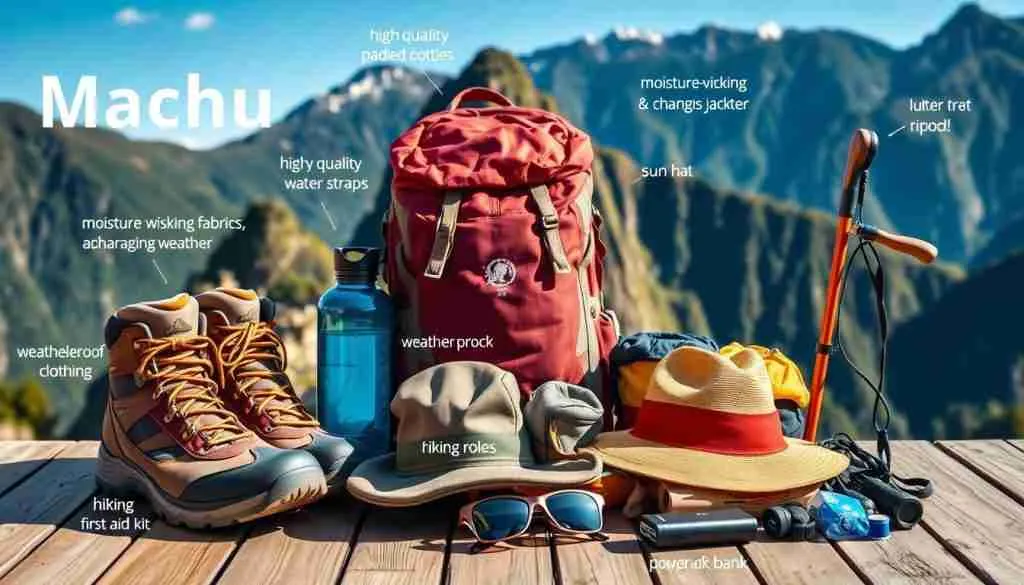
Waterproof backpacks with padded compartments protect gear during sudden showers. Local guides recommend “testing your setup on stairs” before traveling—uneven stone pathways demand hands-free mobility.
What Not to Bring for a Hassle-Free Trip
Leave tripods and drones at home—strict regulations prohibit their use. Bulky lenses exceeding 400mm often require special permits. Instead, pack:
- Lightweight rain poncho (doubles as camera cover)
- Break-in hiking shoes with ankle support
- Collapsible water bottle
Make sure to layer clothing for temperature swings. Morning climbs can start at 45°F before soaring to 75°F by midday. Those tackling multi-hour trails should distribute weight evenly—heavy packs strain knees on descents.
Tips for Capturing Stunning Photography at Machu Picchu
Mastering photography at this ancient site requires technical skill and creative vision. Shifting weather patterns and intricate stone textures demand adaptable strategies. The right approach balances equipment know-how with artistic framing.
Camera Settings and Composition Techniques
Start with aperture priority mode (f/8-f/11) for sharp landscapes. For misty mornings, increase ISO to 400-800 while keeping shutter speed above 1/200. Capture detail shots using macro mode or a 50mm prime lens.
Local photographer Carlos Ríos advises: “Shoot in RAW format—cloud shadows create dynamic contrast you’ll want to adjust later.” When framing wide shots, position horizon lines in the lower third to emphasize towering peaks.
Creative Approaches to Framing and Detail Shots
Use trapezoidal doorways as natural frames for Huayna Picchu. Shoot through foliage to add depth to temple close-ups. For texture-focused images, sidelight stone carvings during late afternoon.
Try vertical compositions for terraced fields—position leading lines diagonally across the frame. Capture Incan engineering marvels by juxtaposing massive boulders against delicate cloud formations.
Leveraging Natural Light and Weather Conditions
Golden hour transforms ordinary scenes into dramatic tableaus. During overcast days, boost saturation in post-processing to revive muted greens. For midday harsh light, use polarized filters to deepen sky tones.
Make sure to adjust white balance when shooting in fog—manual settings prevent blue casts. Patience pays when waiting for sunlight to slice through clouds, creating ethereal beams across ruins.
Exploring the Best Views of Machu Picchu
The interplay of light and stone at this Andean wonder creates endless visual possibilities. While classic compositions draw crowds, innovative photographers find fresh narratives by blending traditional angles with unexpected perspectives.
Discover the Iconic and Alternative Angles
Guardian House remains the go-to spot for that “wow” shot featuring Huayna Picchu’s jagged silhouette. Yet sunrise at Sun Gate reveals terraces glowing like golden steps, while afternoon light on Picchu Mountain’s slopes adds depth to wide shots. These contrasting locations prove varied conditions yield distinct moods.
Seasoned shooters recommend scouting multiple positions. “Climb 15 minutes beyond the main trail for layered compositions,” suggests local guide Elena Mamani. The agricultural sector’s curved walls frame intimate details when shot at eye level, while elevated platforms showcase the citadel’s strategic layout.
| Location | Unique Feature | Ideal Time |
|---|---|---|
| Guardian House | Classic citadel profile | 6:30-8:00 AM |
| Sun Gate | Sunrise over terraces | First light |
| Picchu Mountain | Aerial perspectives | Mid-morning |
For those seeking solitude, the lesser-known Water Mirror Terrace reflects cloud patterns in rain pools—a hidden gem requiring off-peak visits. Pairing iconic backdrops with inventive framing transforms standard photos into gallery-worthy art. Remember: slight shifts in position can turn crowded scenes into personal masterpieces.
Unique Perspectives: Finding Alternative Angles and Hidden Spots
Beyond the well-trodden circuits lie visual treasures that redefine how visitors experience this ancient wonder. While iconic viewpoints draw crowds, subtle shifts in location reveal the citadel’s hidden dimensions—think curved staircases framing geometric patterns or moss-covered walls contrasting with jagged peaks.
Off-the-Beaten-Path Spots and Secret Vantage Points
The Inca Bridge trail offers unobstructed view Machu Picchu’s western flank, accessible via a 25-minute detour from the main route. For aerial perspectives, the Putucusi Mountain ascent reveals layered terraces rarely seen in photos Machu enthusiasts share. Local guides often whisper about the Moon Temple’s sunrise alignment—a spectacle requiring pre-dawn effort but rewarding patience with solitary moments.
| Location | Highlight | Effort Required |
|---|---|---|
| Inca Bridge | Sheer cliff backdrops | Moderate hike |
| Putucusi Peak | 360° valley vistas | Steep climb |
| Water Temple | Reflective pools | Guided access |
Shift three steps left at the Sacred Rock viewpoint, and Huayna Picchu’s profile morphs into a new angle. Such micro-adjustments help photographers isolate intricate stonework from busy backgrounds. Early evenings at the Agricultural Zone’s northern edge provide soft light for capturing trapezoidal niches without midday glare.
Flexible itineraries unlock these opportunities. Allow extra time to revisit spots under changing light, and consult resident experts about seasonal access trails. Remember: one strategically placed llama grazing near terraces can add life to compositions dominated by ancient stones.
Maximizing Your Time: Strategies for a Seamless Visit
Effective planning unlocks this UNESCO site’s wonders while balancing exploration with efficiency. Strategic timing and route selection help visitors capture photo opportunities without battling dense tourist clusters. Early risers gain a critical advantage—arriving before 7 AM reduces wait times by 40% compared to mid-morning entries.
Efficient Itineraries and Crowd-Avoidance Tips
Structure your day into three segments: dawn for iconic viewpoints, midday for detailed exploration, and late afternoon for creative angles. Allocate 1.5 hours to Guardian House and Sun Gate during golden hour, then shift to lesser-trafficked zones as crowds peak.
| Site Area | Suggested Time | Tourist Density |
|---|---|---|
| Guardian House | 6:30-8:00 AM | Low |
| Sun Gate | 8:30-9:30 AM | Moderate |
| Agricultural Zone | 10:30 AM-12 PM | High |
Create a prioritized list of 5-7 must-see locations. Local guide Javier Morales recommends: “Mark your map with alternate routes—when one area gets busy, pivot to your backup plan.” Use midday queues at restrooms or ticket checks to scout compositions using your phone’s camera.
Bookend your visit with guided tours for historical context and exclusive access lanes. Late-afternoon arrivals (after 2 PM) often find thinner crowds at popular vantage points. Monitor real-time visitor apps like MP Crowd Tracker to adjust your path dynamically.
Conclusion
Every journey to the ancient citadel becomes a unique story shaped by light, stone, and perspective. Our guide equips travelers with strategies to navigate evolving regulations while capturing the site’s essence through lenses and lived moments.
Securing tickets months in advance remains critical, especially for sunrise slots at prime viewpoints. Pair this with lightweight gear tailored for high-altitude hikes, and you’ll transform challenging climbs into rewarding photographic quests. Recent circuit changes demand flexibility—early arrivals and alternative angles often yield richer visual narratives than crowded classics.
Remember: iconic shots thrive on preparation, while hidden gems emerge through curiosity. Consult local guides to unlock lesser-known trails where history whispers through weathered ruins. Whether framing mist-laden peaks or documenting intricate masonry, each click preserves a fragment of this UNESCO treasure.
Make sure your adventure balances structure with spontaneity. The right blend of planning and adaptability turns hours spent navigating stone steps into a timeless experience. Now’s the moment to chart your path—where every ticket purchased and trail conquered writes a new chapter in Machu Picchu’s enduring legacy.
