At the heart of Cusco, Peru, lies a sacred site that once symbolized the spiritual and political power of the Inca Empire. Known today as the “Golden Temple”, this ancient marvel was the empire’s most revered religious complex. Its walls, once adorned with sheets of precious metal, reflected sunlight so intensely that Spanish chroniclers described it as “a place where gold seemed to breathe.”
Originally constructed in the 15th century, the temple served as a celestial observatory and a hub for rituals honoring Inti, the Inca sun god. Skilled artisans crafted its iconic stonework—massive blocks fitted seamlessly without mortar—a testament to engineering brilliance. Over time, colonial influences reshaped parts of the structure, blending indigenous craftsmanship with European design.
Today, visitors marvel at this cultural landmark’s dual identity: a window into pre-Columbian traditions and a living chronicle of Peru’s layered past. Its legacy lives on through stories of devotion, conquest, and resilience—a narrative we’ll explore through its architecture, celestial alignments, and enduring symbolism.
Key Takeaways
- The temple was the Inca Empire’s most sacred site, central to spiritual and political life.
- Its original gold-covered walls symbolized divine power and astronomical knowledge.
- Advanced stonework techniques created earthquake-resistant structures still standing today.
- Spanish colonial additions merged Inca and European architectural styles.
- Modern visitors experience a unique blend of indigenous history and colonial influences.
- Contact us by filling out the trip planner form, our expert travel advisors will work closely with you to create your tailor-made itinerary (Free Service)
Historical and Cultural Context
Long before Spanish conquest reshaped Peru, a sacred complex stood as the spiritual nucleus of the Inca Empire. Originally called Intikancha—”Courtyard of the Sun”—this ceremonial site anchored Cusco’s religious identity. Its golden walls embodied the empire’s devotion to Inti, the sun god, while intricate rituals solidified its role as a bridge between mortals and deities.
Origins and Inca Significance
Built under Emperor Pachacuti’s reign, the temple symbolized imperial authority. Chroniclers note that priests performed daily ceremonies to honor Inti, using chicha (corn beer) and llama sacrifices. The High Priest, second only to the emperor, orchestrated festivals like Inti Raymi, where thousands gathered to celebrate solar cycles.
Mythical Foundations and Early Rituals
Inca mythology claims the temple emerged from a divine pact: Inti gifted gold to humanity as a sign of favor. Offerings of precious metals and textiles filled its chambers, reinforcing its status as a place of divine connection. Gold-plated surfaces weren’t mere decoration—they reflected sunlight during solstices, creating dazzling displays that awed worshippers.
These practices weren’t just spiritual. They unified the empire, linking remote temples across the Andes to Cusco’s sacred core. Through ritual and symbolism, the site became a living testament to Inca cosmology—where politics and faith intertwined like threads in a tapestry.
Architectural Marvels of Qorikancha
The Inca Empire’s architectural genius shines brightest in its sacred structures. At Qorikancha, every stone and metallic surface served dual purposes—functional engineering and symbolic language. This fusion transformed the temple into a living map of imperial power and celestial devotion.
Ashlar Masonry and Ingenious Construction
Inca builders perfected ashlar masonry, shaping granite blocks with bronze tools until they locked like puzzle pieces. Walls leaned slightly inward—a technique preventing collapse during earthquakes. “The stones fit so tightly,” noted a 16th-century chronicler, “you couldn’t slide a blade between them.”
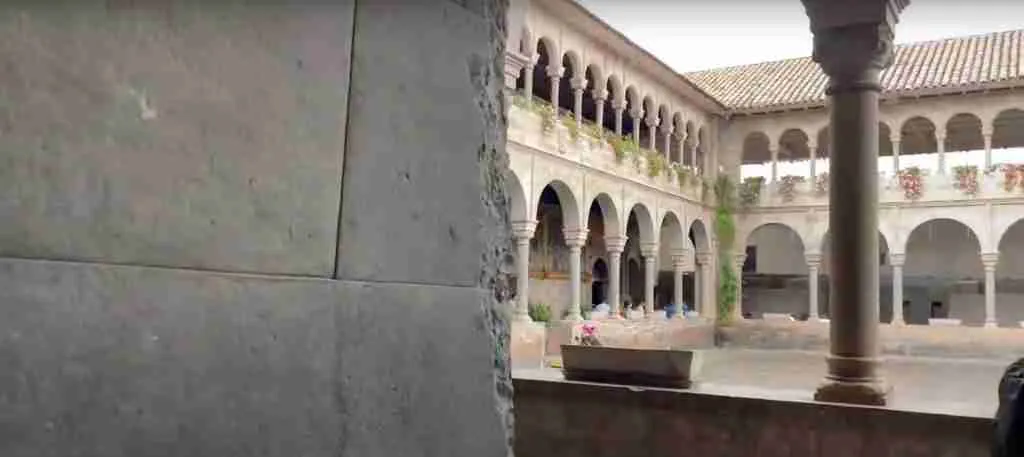
This precision wasn’t just artistic. Curved edges on stones distributed seismic forces, while trapezoidal doorways added stability. Builders tested each block’s fit through trial and error, creating structures that have withstood 500 years of Andean tremors.
Gold, Silver, and the Symbolism of Precious Metals
Gold-covered walls once bathed the temple in celestial light. Historians estimate over 700 solid-gold sheets adorned its surfaces—each reflecting sunlight during solstice ceremonies. Silver accents symbolized the moon, complementing gold’s solar associations.
These metals weren’t mere decoration. They manifested the Inca belief that precious materials held divine energy. When sunlight struck the walls, worshippers saw Inti’s presence materialize—a golden glow uniting earthly and cosmic realms.
Celestial Connections: Inca Astronomy and Rituals
The Incas saw the heavens as a living map guiding their spiritual and agricultural lives. At the temple sun, priests tracked celestial movements to align rituals with cosmic cycles. This sacred space doubled as an observatory, where solar flares and lunar phases dictated planting seasons and ceremonial times.
Solar, Lunar, and Stellar Alignments
Precision-cut windows framed solstice sunrises, while moonlit corridors marked equinoxes. Stars like the Pleiades cluster signaled harvest periods. A golden disc once hung in the temple, reflecting sunlight to ignite ritual fires—a blend of science and symbolism.
Observatory Functions and Ritual Sacrifices
Priests used concave mirrors to focus sunlight during offerings. Llama sacrifices coincided with eclipses, believed to appease celestial deities. The table below reveals how celestial bodies shaped Inca practices:
| Celestial Body | Symbolic Meaning | Ritual Role |
|---|---|---|
| Sun (Inti) | Supreme deity | Daily fire ceremonies |
| Moon (Quilla) | Fertility goddess | Monthly lunar observations |
| Rainbow (Kuychi) | Divine bridge | Post-storm offerings |
Symbolism of Rainbows and Celestial Phenomena
Rainbows were seen as the sun’s breath—golden arcs signaling divine approval. After storms, priests scattered gold dust where rainbows touched earth. These practices reinforced the temple sun’s role as both spiritual compass and scientific instrument.
Colonial Transformation and Enduring Legacy
When Spanish conquistadors arrived in 1533, they encountered a spiritual epicenter shimmering with sacred metals. Determined to assert dominance, they dismantled the temple’s upper structures but preserved its earthquake-proof foundations—a pragmatic decision that created a striking fusion of cultures.


From Inca Temple to Santo Domingo Convent
Dominican friars built their convent directly atop the original walls, repurposing trapezoidal doorways into arched colonnades. “We found perfection in their stones,” wrote Friar Marcos García in 1572, acknowledging Inca engineering. The church’s baroque façade now rises beside polygonal masonry—a visual dialogue between empires.
Modern preservationists highlight how colonial buildings unintentionally protected Inca craftsmanship. Original chambers beneath the convent Santo Domingo still display grooves where gold sheets once lined walls. Nearby, the Plaza de Armas echoes this layered history, where visitors join cultural tours to decode Cusco’s metamorphosis.
Preservation, Museum Insights, and Modern Interpretations
Today, the museum within the complex showcases mummies wrapped in intricate textiles and ceremonial qeros (ritual cups). Colonial-era paintings in the courtyard depict saints alongside stylized sun motifs—evidence of covert Inca symbolism surviving under Spanish rule.
Guides emphasize how covered gold elements reappear subtly: gilded altars echo ancient solar worship, while light filters through windows aligned with solstice angles. This living monument remains a part of Cusco’s beating heart—where every stone whispers dual histories of devotion and resilience.
Conclusion
Few historical sites embody cultural synthesis as vividly as this architectural masterpiece in Cusco’s heart. Once the Inca Empire’s spiritual core, the temple dazzled with gold and silver-clad walls that mirrored celestial patterns. Its earthquake-resistant stonework and solar alignments reveal a civilization deeply attuned to nature’s rhythms—a legacy rivaling even Machu Picchu in ingenuity.
Today, the enclosure bridges eras. Colonial arches frame original trapezoidal doorways, while its courtyard still channels sunlight as it did for Inca rituals. Inside, preserved mummies and sacred artifacts whisper stories of cosmic reverence. Unlike remote attractions, this living museum thrives where past and present coexist.
To walk here is to witness humanity’s capacity for reinvention. The site’s layered history—from golden temple to colonial hybrid—urges us to protect such treasures. As Machu Picchu commands awe with grandeur, this landmark captivates through intimate dialogue with the divine. It stands not just as a relic, but as a world heritage beacon where artistry and astronomy forever converge.
