Prague Photography Guide: Mastering Gothic Light & Architecture
Key Takeaways
- Golden Hour Magic: Prague’s architecture transforms during the 45 minutes after sunrise and before sunset when warm directional light creates dramatic shadows and reveals Gothic details invisible in midday light
- Vltava River Compositions: The river provides essential foreground elements, reflection opportunities, and compositional balance that elevate Prague photographs from snapshots to compelling images
- Blue Hour Brilliance: The 30-40 minutes after sunset when ambient light balances with artificial illumination creates Prague’s most photographically rich conditions, perfect for long exposures capturing lit monuments against colorful skies
- Vertical Emphasis: Gothic spires, cathedral towers, and baroque domes require vertical compositions and wide-angle lenses tilted upward to capture soaring architecture that defines Prague’s skyline
- Weather as Asset: Fog, rain, and dramatic clouds enhance rather than diminish photographic opportunities, creating atmospheric conditions that transform familiar views into moody, cinematic images
- Human Scale Integration: Including people, market activity, or street life provides essential scale reference and narrative context that makes architectural photographs tell stories beyond mere documentation
Understanding Prague’s Photographic Character
Prague presents photographers with an extraordinarily rich visual environment where thousand-year architectural evolution creates layered compositions impossible to find in more uniform cities. The historic center’s UNESCO World Heritage designation preserves an integrated urban landscape spanning Romanesque foundations through Art Nouveau facades, offering photographic variety that sustains exploration across days or years without exhausting compelling subjects.
The Vltava River divides the city geographically while unifying it photographically, providing water surfaces for reflections, bridges for elevated vantage points, and riverbanks for foreground elements that anchor compositions. Understanding how to incorporate water into Prague photographs transforms them from routine architectural documentation into dynamic images that leverage the city’s geographic setting.
Light interacts with Prague’s architecture in ways that change hourly throughout the day, creating distinct photographic opportunities that reward planning and patience. Gothic cathedrals with deep-set windows, baroque churches with elaborate facades, and Renaissance arcades with shadowed galleries all respond differently to changing light angles and intensities. Successful Prague photography requires matching subjects to optimal lighting conditions rather than photographing randomly encountered scenes.
The city’s verticality—expressed through cathedral spires, castle towers, and steep hillside neighborhoods—demands compositional approaches different from horizontally oriented cities. Photographers must master vertical framing, perspective control, and wide-angle techniques to capture soaring architecture without distortion while maintaining compelling compositions that guide viewer attention through complex vertical elements.
People Also Ask About Prague Photography
What are the best times of day to photograph Prague?
Golden hour—the 45 minutes after sunrise and before sunset—provides optimal conditions for Prague photography when warm, directional light reveals architectural details, creates long shadows that add depth, and bathes Gothic and baroque buildings in glowing illumination. The specific timing shifts seasonally: summer golden hours occur around 5:30-6:15 AM and 8:15-9:00 PM, while winter golden hours happen around 7:45-8:30 AM and 3:45-4:30 PM, requiring photographers to adjust shooting schedules throughout the year.
Blue hour—the 30-40 minutes after sunset when sky retains color while artificial lights activate—creates Prague’s most dramatic conditions for architectural photography. During this period, street lamps, church illumination, and building lights balance perfectly with ambient twilight, allowing photographers to capture both architectural detail and atmospheric sky color in single exposures. Charles Bridge, Prague Castle, and Old Town Square become particularly photogenic during blue hour when monument lighting activates against richly colored evening skies.
What camera equipment works best for Prague photography?
Wide-angle lenses ranging from 16mm to 35mm (full-frame equivalent) capture Prague’s soaring architecture and tight medieval streets where physical distance from subjects remains limited. A 16-24mm zoom provides versatility for both expansive castle complex views and narrow lane compositions, while a 35mm prime offers compact portability for street photography and candid scenes. Ultra-wide lenses below 16mm risk distortion that overwhelms Gothic verticality rather than enhancing it.
A sturdy tripod enables long exposures necessary for blue hour photography, night scenes, and interior architectural details where ambient light levels fall below handheld shooting thresholds. Carbon fiber models balance strength with portability for photographers climbing castle hills or navigating cobblestone streets. Remote shutter releases or camera timer functions eliminate camera shake during multi-second exposures that reveal Prague’s nocturnal beauty.
How do you photograph Charles Bridge without crowds?
Dawn represents the only reliable time to photograph Charles Bridge with minimal crowds, requiring arrival by 5:30-6:00 AM in summer or 7:00-7:30 AM in winter. These early hours provide empty bridge decks where baroque statues, Gothic towers, and castle views become photographic subjects unobstructed by tourist masses that arrive after 9:00 AM and persist until after dark. The sacrifice of sleep rewards photographers with images impossible to capture during normal visiting hours.
Long exposure techniques using neutral density filters transform daytime crowds into ghostly blurs or eliminate them entirely through 30-60 second exposures that average moving people into invisibility while stationary architecture remains sharp. A 10-stop ND filter allows multi-minute exposures even in bright midday light, creating surreal emptiness on otherwise crowded locations. This technique requires tripod stability and careful exposure calculation but produces unique images showing Prague’s monuments in pristine isolation.
What are Prague’s most photogenic viewpoints?
Petřín Tower provides Prague’s highest accessible viewpoint at 318 meters above sea level, offering 360-degree panoramas encompassing the entire historic center, Vltava River meanders, and surrounding hills. The observation deck’s elevation reveals Prague’s urban pattern, with red-tile roofscape punctuated by Gothic spires and baroque domes. Photographers shoot through protective mesh that requires positioning lenses directly against openings to avoid fence interference in images.
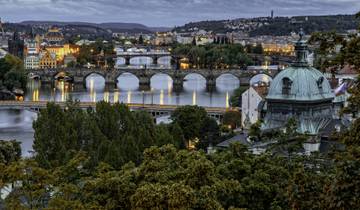
Letná Park terraces above the Vltava deliver classic Prague panoramas featuring Charles Bridge, Old Town spires, and Prague Castle arranged in ideal compositional relationship. The elevated perspective creates natural foreground-middle-ground-background layering essential to compelling landscape compositions. Different terrace levels offer varying perspectives, with lower areas providing intimate bridge views while upper terraces frame wider city context. Sunset photographers gather here nightly to capture westward-facing scenes with dramatic sky color.
How do you photograph Prague Castle effectively?
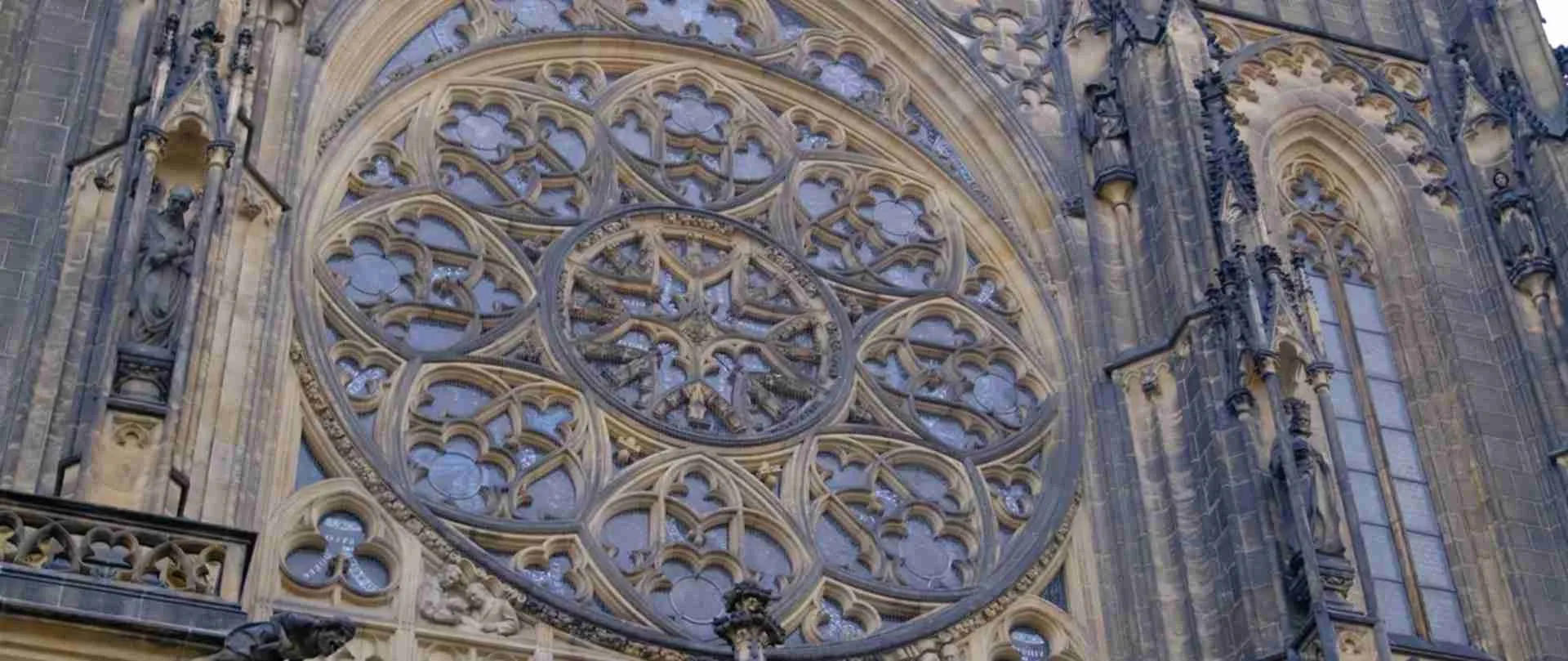
St. Vitus Cathedral dominates castle photography, requiring wide-angle lenses to capture full Gothic facades from the cramped courtyards where visitors view the structure. The western facade benefits from afternoon light that illuminates carved portals and rose window details, while early morning light favors eastern choir and chapel photography. Interior photography demands high ISO settings (3200-6400) and wide apertures to capture dim nave and chapel lighting without tripod use that guards prohibit.
Distant viewpoints across the Vltava River provide more balanced castle compositions showing the entire complex relationship to surrounding architecture and landscape. Shooters position themselves along riverbank promenades, on bridges, or across the river in Lesser Town to capture castle silhouettes against sky or integrate the complex into wider urban context. These perspectives work best during golden and blue hours when castle illumination contrasts with ambient light, creating dramatic separation from background elements.
Extended multi-day tours – 5+ days
Featured Prague Multi-Day Tour Packages
5 days
The Best of Prague in 5 Days
- ✓ Comprehensive Prague tour
- ✓ Expert local guides included
- ✓ All accommodation arranged
- ✓ Transportation provided
7 days
Fantastic week in Prague all inclusive
- ✓ Comprehensive Prague tour
- ✓ Expert local guides included
- ✓ All accommodation arranged
- ✓ Transportation provided
1 days
Exploration of Prague in one day – Private Tour all day
- ✓ Comprehensive Prague tour
- ✓ Expert local guides included
- ✓ All accommodation arranged
- ✓ Transportation provided
7 days
For Lovers So Romantic 7 days in Prague: Private Tour
- ✓ Booking needs min. 2 travelers
Multi-day tour packages powered by TourRadar. Prices and availability subject to change.
Technical Foundations for Prague Photography
Understanding exposure principles specific to Prague’s high-contrast lighting conditions separates successful photographs from disappointing results. The city’s white and cream-colored baroque facades reflect intense light that can fool camera metering systems, causing underexposure that renders shadows impenetrably dark while correctly exposing bright surfaces. Photographers compensate by adding +0.7 to +1.3 stops of exposure compensation when bright buildings dominate compositions, then verify results through histogram review rather than relying on LCD screen appearance.
Dynamic range challenges intensify during midday when sunlight creates extreme brightness differences between illuminated facades and shadowed archways, portals, or courtyards. Bracketing exposures—shooting the same composition at multiple exposure levels—enables HDR processing that recovers both highlight and shadow detail impossible to capture in single exposures. Most cameras offer automatic bracketing modes that simplify this technique, shooting three or five frames at different exposures with single shutter release.
White balance settings profoundly affect Prague photograph color character, with different choices creating vastly different moods from identical scenes. Daylight white balance (5500K) renders scenes neutrally but may feel cold in shadow areas, while shade setting (7000K) adds warmth that enhances golden hour glow but risks oversaturating sunset colors. Custom white balance using gray card measurements provides technically accurate color but sometimes produces less emotionally compelling results than creative white balance choices that enhance rather than merely record light quality.
Focus techniques require adaptation to Prague’s deep architectural scenes where foreground and background elements both demand sharpness. Wide-angle lenses provide extensive depth of field, but photographers must still focus approximately one-third into the scene to maximize sharpness throughout the frame. Hyperfocal distance focusing—calculating the nearest focus point that renders infinity sharp at specific apertures—maximizes depth of field for architectural scenes. Modern cameras with focus peaking or magnified live view simplify manual focus precision essential for tripod-mounted compositions.
RAW format shooting becomes essential in Prague where challenging lighting and desire for maximum post-processing flexibility justify the larger file sizes. RAW files preserve more shadow and highlight information than JPEGs, allowing photographers to recover details in over or underexposed areas during editing. The ability to adjust white balance without quality loss proves particularly valuable when interior photography produces mixed lighting conditions combining window daylight with tungsten artificial illumination that creates color casts impossible to correct perfectly in camera.
Golden Hour Architectural Photography
Morning golden hour creates distinctly different photographic opportunities than evening golden hour, despite similar light quality. Morning light illuminates Prague’s eastern facades—including St. Vitus Cathedral choir, Lesser Town churches, and buildings along eastern sides of Old Town Square—while evening light favors western exposures. Successful photographers plan specific subjects matched to appropriate golden hour, maximizing the brief window when optimal lighting conditions exist.
The warm color temperature of golden hour light (ranging from 3500K to 4500K depending on atmospheric conditions) enhances Prague’s earthtone architecture, making cream, ochre, and terracotta facades glow with enhanced richness. This warm light contrasts beautifully with blue shadows in areas still receiving only reflected skylight, creating color relationships that add visual interest beyond mere documentation. Photographers can emphasize these color contrasts through compositional choices that juxtapose warm-lit and cool-shadowed elements.
Low sun angles during golden hour create long shadows that reveal surface texture invisible in flat midday light. Gothic portal carvings, baroque facade sculptures, and Renaissance sgraffito decorations emerge as three-dimensional elements when raking light creates strong shadow patterns. These shadows also add compositional elements—diagonal lines, geometric shapes, repeating patterns—that enhance visual interest and guide viewer attention through photographs.
Cloud conditions dramatically affect golden hour outcomes, with clear skies producing harder light and stronger shadows while partly cloudy conditions create opportunities for dramatic sky backgrounds and variable lighting as clouds pass. Photographers monitor cloud patterns and adapt quickly when conditions shift, recognizing that the most compelling golden hour images often occur when broken clouds create pools of light highlighting specific architectural elements against darker surrounding areas.
Human activity increases during morning golden hour as city awakens, with market vendors setting up stalls, commuters crossing bridges, and cafes opening for breakfast. These activities provide documentary and street photography opportunities that integrate human life into architectural images, creating narrative content that elevates photographs beyond empty monument documentation. Evening golden hour offers different human elements—couples on bridges, tourists photographing sunsets, diners at outdoor cafes—that convey Prague’s romantic evening atmosphere.
Blue Hour and Night Photography
Blue hour timing requires precise calculation based on sunset time, with optimal conditions beginning approximately 10-15 minutes after sunset and lasting 30-40 minutes until sky darkens completely. Photographers arrive before sunset, compose and meter scenes during twilight, then shoot rapidly as light transitions through the brief blue hour window. Missing this window by arriving late results in either overly bright skies or completely dark ones that lack the balanced lighting essential to compelling blue hour images.
Exposure settings during blue hour require constant adjustment as ambient light fades rapidly, with exposures lengthening from 1-2 seconds early in blue hour to 10-30 seconds near its conclusion. Apertures around f/8 to f/11 provide sufficient depth of field for architectural scenes while maintaining reasonable exposure times and optimal lens sharpness. ISO settings remain at base level (100-200) to maximize image quality, accepting longer exposures rather than raising ISO and introducing noise that degrades image quality.
Charles Bridge becomes Prague’s premier blue hour subject, with baroque statues silhouetted against colorful skies, Gothic towers anchoring compositions, and castle complex providing illuminated background. Photographers position themselves at bridge ends or on adjacent embankments to capture full bridge length, or move onto the bridge deck to frame individual statue groups against sky and water. The combination of stone bridge, river reflections, and illuminated monuments creates layered compositions rich in visual elements.
Prague Castle illumination activates at dusk, transforming the hilltop complex into a glowing architectural ensemble visible across the city. Blue hour provides optimal time to photograph this illumination when ambient sky light prevents the castle from appearing as isolated bright elements against impenetrable black backgrounds. The balance between monument lighting and sky color creates natural-looking nightscape images more compelling than pure night photographs where context disappears into darkness.
Water reflections double visual impact during blue hour when calm Vltava River surfaces mirror illuminated architecture, creating symmetrical compositions that exploit vertical framing. Slight breezes create rippled reflections that add painterly quality to water surfaces while maintaining recognizable architectural forms. Photographers include riverbank elements in foregrounds to establish scale and provide visual entry points into reflection-dominated compositions.
Compositional Strategies for Gothic Architecture
Vertical emphasis becomes essential when photographing Prague’s Gothic structures, with spires, towers, and facades requiring portrait-oriented framing to capture full height without excessive empty foreground or sky. Wide-angle lenses allow vertical composition while maintaining enough distance to avoid extreme perspective distortion that makes buildings appear to topple backward. Photographers level cameras carefully or plan for perspective correction in post-processing to maintain vertical line integrity.
Leading lines inherent in Gothic design—pointed arches, vertical columns, diagonal buttresses—guide viewer attention upward through compositions toward spires and pinnacles. Effective photographers recognize and emphasize these architectural lines, positioning themselves and framing scenes to maximize their compositional impact. Doorways, arcades, and vaulted passages create natural frames-within-frames that focus attention on specific architectural elements while providing compositional structure.
Detail photography reveals Gothic ornamentation impossible to appreciate in full building views—gargoyles, tracery patterns, carved capitals, sculptural programs—that reward close examination with macro or telephoto lenses. These details document architectural richness while creating graphic images emphasizing pattern, texture, and three-dimensional form. Morning light works best for exterior details by creating shadows that reveal depth, while overcast conditions suit details where even illumination prevents excessive contrast.
Symmetry characterizes much Gothic facade design, with central portals flanked by matching towers, rose windows centered above entrances, and balanced arrangements of sculptural elements. Photographers can emphasize this symmetry through centered compositions using precise camera leveling and positioning, or deliberately break symmetry by shooting from off-center positions that create dynamic asymmetrical compositions from symmetrical subjects. Both approaches succeed when executed intentionally rather than accidentally.
Scale relationships require careful management in Gothic photography where soaring architecture can appear flat and dimensionless without reference points indicating size. Including people, vehicles, or surrounding buildings provides visual anchors that communicate the immense scale of Gothic structures. Photographers wait for appropriate scale elements to enter frame rather than settling for empty architectural documentation that fails to convey impressive physical dimensions.
Baroque Facade and Detail Photography
Prague’s baroque churches and palaces feature elaborate sculptural facades demanding different photographic approaches than Gothic architecture. The three-dimensional quality of baroque design—with projecting columns, recessed niches, curved pediments, and freestanding statuary—creates complex shadow patterns that change throughout the day. Photographers scout baroque subjects at different times to identify when light angles best reveal facade modeling and sculptural detail.
Telephoto lenses compress perspective while isolating baroque facade elements from surrounding buildings, allowing photographers to frame specific sculptural groups, portal surrounds, or decorative cartouches without contextual clutter. An 85mm to 135mm lens range works well for this selective approach, maintaining sufficient working distance while providing magnification that emphasizes ornamental richness. These detail studies complement wide-angle overall views by revealing craftsmanship invisible in broader compositions.
Color plays a larger role in baroque photography than Gothic photography, with painted facades, colored marbles, and gilded elements creating chromatic variety absent from stone Gothic structures. Photographers meter carefully to preserve saturated colors without clipping highlights in bright painted surfaces or blown-out specular reflections from gilded details. Polarizing filters reduce reflections from polished stone or metalwork while enhancing color saturation, though their effect requires monitoring to avoid oversaturation.
Interior baroque photography presents significant challenges from dim lighting, prohibitions on tripod use, and extreme contrast between bright windows and dark chapel spaces. High ISO capabilities (6400 and above) become essential for handheld shooting, while wide aperture lenses (f/1.4 to f/2.8) gather maximum available light. Bracketing exposures enables HDR processing that balances window light with interior illumination, recovering detail throughout tonal range impossible to capture in single exposures.
Baroque church ceilings feature spectacular fresco programs requiring wide-angle lenses and careful positioning to photograph effectively. Photographers stand centrally under domes or vaulted ceilings, frame vertically to capture full composition, and ensure camera remains level to avoid distortion of circular dome designs. Fill light from windows illuminates frescoes during specific hours, with morning or afternoon light reaching different ceiling areas depending on window orientation. Scout visits identify optimal timing for specific subjects.
Street Photography and Human Elements
Charles Bridge provides Prague’s richest street photography environment, with musicians, artists, vendors, tourists, and locals creating constantly changing human tableaux against Gothic and baroque architectural backdrop. Morning hours offer quieter contemplative scenes while afternoon and evening bring crowds, street performers, and vibrant activity. Photographers balance subject privacy concerns with documentary goals, often shooting candidly with medium telephoto lenses that maintain distance while isolating compelling human moments.
Old Town Square markets create seasonal photography opportunities, with Christmas markets in December offering colorful stalls, festive lighting, and cold-weather activities against Gothic and baroque architecture. Food vendors, craft demonstrations, and crowds provide human interest that contextualizes architecture within living city rather than presenting Prague as uninhabited museum. Wide-angle lenses capture market atmosphere while telephoto lenses isolate specific interactions or details.
Tram networks threading through historic streets juxtapose modern transportation with ancient architecture, creating visual contrasts between contemporary Prague life and preserved medieval fabric. Photographers position themselves to capture trams entering or exiting frame, creating dynamic elements in otherwise static architectural compositions. Slow shutter speeds (1/15 to 1/4 second) blur moving trams into streaks suggesting motion and energy while architecture remains sharp.
Cafe culture provides opportunities for lifestyle photography showing Praguers and visitors enjoying the city’s social spaces. Outdoor terrace seating during warmer months creates animated foregrounds for architectural backgrounds, with patrons providing scale, color, and narrative content. Photographers respect privacy by avoiding close-up identification while capturing overall atmosphere of cafe life integral to Prague’s urban character.
Seasonal activities—ice skating on Old Town Square in winter, riverside lounging in summer, autumn leaf viewing in parks—provide time-specific photography opportunities documenting Prague’s changing relationship with weather and seasons. These seasonal variations prevent Prague photography from becoming repetitive by offering constantly evolving subjects that reward repeated visits throughout the year.
Weather Conditions as Creative Opportunities
Fog transforms Prague into atmospheric dreamscape where spires emerge from mist, bridges disappear into vapor, and familiar landmarks become mysterious forms partially revealed. Autumn and early spring produce frequent foggy mornings when temperature and humidity conditions align, creating conditions photographers seek rather than avoid. The softened light, muted colors, and obscured backgrounds simplify compositions while adding mood impossible to achieve in clear conditions.
Rain creates reflective surfaces on cobblestone streets, plaza paving, and bridge decks that mirror architecture and lighting, adding visual interest to ground planes usually photographed as empty space. Puddles become compositional elements framing inverted architectural reflections, while rain-soaked surfaces take on rich color and tonal depth absent when dry. Photographers protect equipment with rain covers or umbrella assistants while exploiting wet conditions that most visitors consider photographic obstacles.
Dramatic storm clouds build atmosphere and visual weight in sky areas of architectural compositions, creating dynamic backgrounds more interesting than empty blue sky. Photographers monitor approaching storms and shoot actively as clouds build, light shifts, and storms break, capturing transitional moments when dramatic light emerges between cloud formations. The risk of equipment exposure to rain balances against reward of unique images impossible during stable weather.
Snow blankets Prague’s architecture in white that simplifies compositions, increases overall brightness, and creates high-key images emphasizing form and line over color and texture. Fresh snow provides clean foregrounds while snow-covered roofs create white horizontal planes contrasting with dark vertical building faces. Low winter sun produces long shadows across snow surfaces, adding compositional elements and revealing ground texture through subtle variations in snow surface lighting.
Overcast conditions provide even, diffused lighting ideal for architectural detail photography, facade documentation, and situations where harsh shadows create unacceptable contrast. Clouds act as giant softboxes, wrapping light around three-dimensional architectural elements and preventing the blocked shadows that occur in direct sunlight. Color saturation often increases under overcast skies when glare and atmospheric haze decrease, producing rich tonal qualities despite absence of dramatic directional light.
Lesser-Known Photographic Locations
Vyšehrad fortress provides elevated views toward Prague center from the opposite direction than standard Petřín or castle viewpoints, offering fresh perspectives on familiar landmarks. The fortress walls, gates, and cemetery create foreground elements framing distant city views, while relative tourist scarcity compared to major attractions allows unhurried photography without crowd pressure. Southern and western ramparts capture sunset illumination of distant city center spires.
Kampa Island beneath Charles Bridge offers riverside perspectives unavailable from bridge deck or opposite bank, with water wheels, riverside architecture, and intimate island atmosphere creating photographic variety beyond major monument photography. The island’s parks provide green spaces softening architectural hardscape while bridges and riverbank promenades offer varied vantage points for Charles Bridge and Lesser Town photography.
Strahov Monastery perches on hills west of Prague Castle, providing library halls featuring baroque ceiling frescoes and ornate bookcases that rank among Europe’s most photogenic library interiors. The monastery complex also offers elevated city views and peaceful courtyards far less crowded than major tourist circuits. Photography inside libraries requires permission and prohibits tripods, demanding high ISO and wide aperture lenses for handheld shooting in dim ambient light.
Vrtba Garden, Prague’s finest baroque garden, features sculptural terraces, architectural follies, and formal plantings ascending hillside behind Lesser Town palaces. The garden’s intimate scale creates detailed compositions emphasizing baroque landscape design rather than grand architectural vistas. Accessibility limitations and entrance fees keep crowds minimal compared to public parks, allowing careful composition without tourist interference.
Nový Svět (New World) neighborhood in castle district preserves cottage-scale architecture along quiet lanes contrasting with monumental buildings dominating tourist routes. The pastel-painted houses, narrow passages, and intimate scale provide photographic variety and human-scaled architecture that complements rather than competes with castle complex grandeur. Morning light illuminates southern-facing facades while afternoon favors northern exposures.
Post-Processing Approaches for Prague Photography
Perspective correction addresses the convergence of vertical lines that occurs when wide-angle lenses tilt upward to frame tall Gothic structures. Lightroom’s Transform panel or Photoshop’s Perspective Crop tool straighten buildings so vertical elements appear truly vertical rather than leaning backward. This correction creates more architecturally accurate images though it crops away image periphery, requiring photographers to compose with extra space around edges anticipating this crop.
Shadow recovery brings detail into dark areas that appear impenetrably black in camera JPEGs but contain recoverable information in RAW files. Careful shadow lifting reveals detail in archways, portals, and shaded facades without creating unnatural-looking images where shadows appear artificially lightened. The balance between recovering shadow detail and maintaining natural shadow density requires subtle adjustment avoiding the “HDR look” that many viewers find unpleasant.
Local adjustments using gradient filters or adjustment brushes direct viewer attention by selectively enhancing or subduing specific image areas. Photographers darken sky areas to emphasize interesting cloud formations, brighten architectural elements to make them pop against darker surroundings, or adjust color temperature in different image regions to enhance warm/cool contrasts. These selective adjustments mimic dodging and burning techniques from traditional darkroom printing.
Color grading establishes consistent aesthetic across Prague photograph series through coordinated color adjustments creating signature looks. Some photographers emphasize golden warmth evoking romantic Prague atmosphere, others prefer cooler moody tones suggesting mystery and age, while still others maintain neutral color for documentary accuracy. Consistency matters more than specific choices, with unified color approach creating cohesive bodies of work rather than random collections.
Sharpening and noise reduction balance detail enhancement against artifact introduction, with different approaches suiting different image types. Architectural photography benefits from significant sharpening that emphasizes building details and textures, while night and blue hour images require careful noise reduction preventing grain from overwhelming image while maintaining detail in shadow areas. Viewing images at intended output size guides appropriate processing intensity since images destined for web display tolerate different adjustments than large prints.
Seasonal Photography Considerations
Spring brings awakening gardens, flowering trees, and returning outdoor cafe life that adds green and floral elements to architectural photography. Parks and gardens surrounding historic center bloom with tulips, magnolias, and cherry blossoms creating colorful foregrounds and softening architectural hardscape. Variable spring weather produces dramatic skies and interesting light conditions though frequent rain requires weather protection and adaptability.
Summer offers longest daylight hours with golden hour occurring at most convenient times for visitors keeping normal schedules rather than waking before dawn. Extended twilight creates leisurely blue hour photography sessions without rushed timing. However, summer brings maximum tourist crowds that complicate photography at major sites and create unfavorable midday contrast from high sun angles. Early morning and late evening become essential for quality photography avoiding crowds and harsh light.
Autumn presents Prague’s most photogenic season with moderate crowds, dramatic weather producing interesting skies, and foliage adding warm color to parks and hillsides surrounding historic center. September and October offer comfortable temperatures for extended photography sessions while changing light quality creates warm glows suiting Prague’s earthtone architecture. Morning fog occurs frequently during autumn, creating atmospheric conditions transforming familiar scenes.
Winter strips Prague to architectural essentials with bare trees revealing building forms obscured by foliage in other seasons and snow simplifying compositions to fundamental shapes and lines. Short days compress golden and blue hours into concentrated periods requiring efficient timing and rapid shooting. Cold temperatures challenge photographers and equipment, with batteries draining quickly and condensation forming on lenses moved between outdoor cold and indoor warmth requiring careful management.
Frequently Asked Questions About Prague Photography
Do you need photography permits in Prague?
Street photography and architectural photography from public areas require no permits in Prague, with photographers free to shoot buildings, bridges, and public spaces without authorization. Commercial photography using models, extensive lighting equipment, or blocking public access may require permits from city authorities. Museum and church interiors often prohibit photography entirely or charge fees for camera permission with flash and tripods universally banned inside historic buildings.
How do you avoid tourist crowds in photographs?
Dawn photography remains the most reliable method for shooting Prague landmarks without crowds, requiring arrival during first light when most tourists remain in hotels. Long exposure techniques using neutral density filters blur moving people into transparency during multi-second or multi-minute exposures, effectively erasing them from images. Seasonal timing matters with late autumn through early spring bringing fewer tourists than summer peak months. Frame compositions emphasizing architectural details rather than wide plaza views naturally excludes crowds by narrowing field of view.
What neutral density filter strength works best for Prague?
A 10-stop ND filter provides sufficient light reduction for multi-minute exposures even in bright midday conditions, allowing photographers to achieve smooth water surfaces and crowd elimination effects impossible with shorter exposures. This filter strength requires sturdy tripod support and careful exposure calculation using smartphone apps or manual computation. Variable ND filters offer flexibility across 2-8 stop range for different lighting conditions and creative effects though they sometimes introduce color casts requiring correction.
How do you photograph Prague Castle from inside?
Wide-angle lenses prove essential for cathedral interiors where confined spaces prevent sufficient distance from subjects. Cameras with high ISO performance (clean results at 6400 and above) enable handheld shooting where tripods face prohibition. Bracketing exposures creates options for HDR processing balancing bright stained glass windows against dim stone interiors. Waiting for crowds to clear specific areas allows cleaner compositions though patience becomes essential as continuous visitor flow makes completely empty moments rare.
What focal lengths work best for Prague photography?
A 16-35mm wide-angle zoom handles most architectural photography needs from expansive castle views to tight street compositions. A 24-70mm standard zoom adds versatility for detail work and moderate telephoto reach. An 85mm or 100mm short telephoto isolates baroque facade details and provides working distance for candid street photography. Prime lenses offer superior image quality and wider apertures beneficial for low-light shooting though zoom versatility proves valuable when moving quickly through diverse photographic situations.
How do you protect camera equipment in Prague weather?
Rain covers or camera-specific waterproof housings protect equipment during wet conditions when photography opportunities justify exposure risk. Keeping gear in camera bag until immediately before shooting minimizes condensation issues when moving between temperature extremes. Silica gel packets inside camera bags absorb moisture protecting equipment during humid conditions or after rain exposure. Cold weather demands keeping spare batteries warm in pockets and limiting outdoor exposure time for both photographer and equipment.
Can you use drones for Prague photography?
Drone flights face strict restrictions throughout Prague historic center with no-fly zones protecting the UNESCO World Heritage site from unauthorized aerial activity. Commercial drone photography requires permits from aviation authorities and city officials with approval rarely granted for tourist or hobby use. Violations risk significant fines and equipment confiscation. Traditional elevated viewpoints from towers and hills provide aerial perspectives without regulatory complications.
What smartphone photography techniques work in Prague?
Modern smartphones handle Prague photography surprisingly well through computational photography features that combine multiple exposures and process images for optimal results. HDR modes balance bright facades and dark shadows, night modes extend low-light capability, and wide-angle lenses capture architectural subjects. Limitations include reduced manual control compared to dedicated cameras and smaller sensors producing more noise in challenging light. Smartphone panorama modes create dramatic wide-angle views exceeding single-frame possibilities.
How do you achieve sharp architectural photography?
Tripod stability eliminates camera shake during exposures too long for reliable handheld shooting. Apertures between f/8 and f/11 maximize lens sharpness while maintaining sufficient depth of field for architectural scenes. Remote shutter release or self-timer prevents vibration from pressing shutter button. Mirror lock-up or electronic first curtain shutter eliminates mechanical vibrations in DSLR cameras. Careful manual focus or focus peaking ensures critical sharpness exactly where intended rather than relying on autofocus that may select wrong focus plane.
What makes Prague photography unique compared to other European cities?
Prague preserves an unusually complete thousand-year architectural timeline without wartime destruction that devastated many European capitals. This architectural integrity creates layered compositions juxtaposing Romanesque, Gothic, Renaissance, baroque, and Art Nouveau elements within single views impossible in more uniform cities. The Vltava River provides water elements absent from landlocked cities while Prague’s hills offer elevated viewpoints creating vertical compositional possibilities. The combination of architectural variety, topographic interest, and preservation quality makes Prague photographically distinctive among European destinations.