Prague Coffee Houses & Café Culture
Key Takeaways:
- Prague coffee houses emerged in 18th century as centers of intellectual discourse, political debate, and artistic creativity
- Café Slavia, Café Louvre, and Imperial Café represent architectural masterpieces that blend Art Nouveau design with cultural heritage
- Literary coffeehouses hosted Franz Kafka, Václav Havel, and Czech literary movements that shaped Central European literature
- Viennese coffeehouse tradition influenced Prague café culture while Czech establishments developed distinctive local character
- Historic coffee houses survived political upheavals from Habsburg rule through communist era to contemporary renaissance
- Contemporary café culture balances preservation of historical tradition with specialty coffee innovation and modern service
Understanding Prague’s Coffeehouse Heritage
Prague’s coffee house culture represents one of Central Europe’s most sophisticated café traditions, rivaling Vienna and Paris in historical significance and cultural impact. These establishments functioned as more than beverage service locations—they created spaces where intellectual discourse, political debate, artistic creation, and social mixing produced cultural movements that shaped Czech national identity and European modernism.
The coffeehouse tradition arrived in Prague during the 18th century through Habsburg connections to Ottoman coffee culture. Early establishments catered to aristocracy and wealthy merchants who adopted coffee consumption as mark of cosmopolitan sophistication. These initial coffeehouses imported Viennese architectural styles and service customs while gradually developing Czech characteristics that distinguished Prague cafés from their Austrian cousins.
By the 19th century, Prague coffeehouses had evolved into democratic institutions where writers, journalists, students, and workers mingled across class boundaries that structured most public spaces. The coffeehouse provided heated rooms, current newspapers, chess sets, and billiard tables alongside coffee service—creating all-day social infrastructure particularly valuable during cold Czech winters. A single coffee purchase granted hours of occupation, making coffeehouses accessible to impoverished students and struggling artists who became the institutions’ most devoted patrons.
The architectural evolution of Prague coffeehouses from simple rooms to Art Nouveau palaces reflected growing cultural importance and economic success. Late 19th and early 20th century construction boom produced café interiors of extraordinary beauty—painted ceilings, crystal chandeliers, marble columns, and elaborate mirrors that transformed coffee drinking into aesthetic experience. These spaces communicated cultural refinement and national pride, demonstrating that Czech culture could match Viennese elegance while maintaining distinctive local character.
People Also Ask About Prague Coffee Culture
What is the difference between Viennese and Prague coffeehouse traditions?
Prague and Vienna share fundamental coffeehouse characteristics—extended sitting time, newspaper availability, waiter service, and elaborate pastries—but developed distinct cultural functions and atmospheres that reflect different national contexts. Viennese coffeehouses emphasized imperial grandeur, formal service protocols, and conservative stability. Prague cafés cultivated bohemian informality, intellectual intensity, and political engagement that reflected Czech position as Habsburg subordinate developing national consciousness.
Viennese coffeehouses maintained strict social hierarchies despite superficial democratic mixing. Regular customers claimed specific tables, waiters memorized individual preferences, and subtle gradations of service communicated social status. Prague cafés relaxed these hierarchies more thoroughly, creating genuinely democratic spaces where factory workers and university professors shared tables and conversations. This democratic character reflected Czech political sensibilities and created environment conducive to radical political organizing impossible in Vienna’s more conservative café culture.
The literary function differed significantly between cities. Viennese cafés hosted journalists and established authors pursuing professional work in comfortable surroundings. Prague coffeehouses incubated avant-garde movements and political activism—German-language Prague writers like Franz Kafka developed modernist literature in café conversations, while Czech national revival intellectuals plotted political strategies over coffee. Prague cafés functioned as laboratories for cultural innovation rather than comfortable retreats for established success.
Architectural aesthetics diverged in subtle but significant ways. Viennese cafés favored ornate imperial splendor that reinforced Habsburg legitimacy. Prague establishments incorporated Art Nouveau and Czech national revival motifs that asserted cultural independence within imperial framework. The decorative elements celebrated Slavic mythology, Czech historical figures, and modern design rather than exclusively imperial themes. These visual distinctions communicated political meanings alongside aesthetic preferences.
Why did Franz Kafka and other writers spend so much time in Prague coffeehouses?
Prague coffeehouses provided essential infrastructure for literary production and intellectual community that private apartments could not match. Most writers lived in small, poorly heated rooms unsuitable for extended writing sessions or receiving visitors. Coffeehouses offered warm, well-lit spaces with writing surfaces, current periodicals, and intellectual company—practical necessities that enabled literary careers.
The social function proved equally important to physical amenities. Writers required regular contact with editors, publishers, fellow writers, and cultural critics to build careers and develop ideas. Coffeehouses concentrated these essential contacts in single location accessible daily. A few hours at Café Arco or Café Louvre provided more valuable professional networking than weeks of isolated apartment dwelling. The informal atmosphere facilitated spontaneous conversations and collaborations impossible through formal appointments.
Kafka specifically used coffeehouses to escape family tensions and professional obligations that consumed his home and office time. The café provided neutral territory where he could write, read, and socialize on his own terms. His regular attendance at Café Arco connected him to the Prague Circle of German-language writers including Max Brod, Franz Werfel, and Egon Erwin Kisch who shaped each other’s work through constant dialogue and criticism.
The coffeehouse environment stimulated creativity through background stimulation that many writers found more conducive than silent isolation. The ambient conversation, clinking cups, and movement created white noise that aided concentration while providing occasional distraction and inspiration. Writers observed café society, incorporated overheard dialogue into fiction, and drew character studies from regular patrons. The coffeehouse became both workplace and research site that fed literary imagination.
How did Prague coffeehouses survive communist rule?
Communist authorities initially viewed coffeehouses with suspicion as bourgeois institutions fostering dangerous individualism and Western decadence. Early communist period saw closure of many historic cafés and transformation of others into standard state-run restaurants that eliminated coffeehouse character. The regime recognized that café culture facilitated intellectual discourse and social networks difficult to monitor and control.
However, complete elimination proved politically problematic and culturally impossible. Prague’s most famous coffeehouses—Café Slavia, Café Louvre, Café Imperial—carried such historical significance that closure would generate opposition and international criticism. The regime instead maintained these establishments as controlled showplaces demonstrating cultural continuity while monitoring customers and limiting their subversive potential through state management and secret police presence.
The surviving coffeehouses became sites of subtle resistance and cultural preservation. Dissidents used café meetings to maintain intellectual networks under surveillance. Writers and artists gathered to discuss ideas impossible in official forums. The coffeehouses provided quasi-public space where surveillance was known but partial privacy maintained—conversations occurred in whispers, topics changed when strangers approached, and trust networks developed through repeated contact.
The 1989 Velvet Revolution originated partly in coffeehouse networks that preserved democratic ideals and intellectual independence through communist decades. Václav Havel and other dissidents used Café Slavia as regular meeting place where political organizing occurred alongside cultural conversation. The physical continuity of these spaces maintained connection to pre-communist cultural traditions that enabled rapid democratic transition when political change became possible.
What role do coffee houses play in contemporary Prague culture?
Contemporary Prague coffeehouses balance historical preservation with modern specialty coffee culture, creating hybrid institutions that honor tradition while adapting to changing consumption patterns and international influences. Historic cafés like Slavia and Louvre maintain traditional service and architectural character while introducing quality espresso equipment and trained baristas. This adaptation preserves café culture’s social function while improving coffee quality that often suffered during communist-era decline.
New specialty coffee shops introduce international third-wave coffee culture focused on single-origin beans, precise extraction methods, and minimal design aesthetics. These establishments attract younger demographics and international residents seeking coffee quality over historical atmosphere. The specialty coffee movement runs parallel to traditional coffeehouse culture rather than replacing it—Prague supports both approaches without apparent contradiction.
The social function evolved from political organizing and literary production to co-working space and casual socializing. Freelancers and remote workers occupy coffeehouses for hours with laptops replacing newspapers as reading material. The extended sitting tradition adapts perfectly to digital work culture, though some historic establishments resist laptop colonization during peak hours to preserve conversation culture and table turnover.
Tourism impacts Prague coffeehouse culture significantly, with famous establishments like Café Slavia serving primarily visitors rather than local regulars. This tourist orientation generates revenue that enables historical preservation but dilutes cultural authenticity. Lesser-known neighborhood cafés maintain more authentic local character where Czech conversation and traditional rituals predominate. The dual system allows both tourist experience of famous sites and local preservation of living café culture.
Extended multi-day tours – 5+ days
Featured Prague Multi-Day Tour Packages
3 days
Prague 3-Day Discovery Tour
- ✓ Comprehensive Prague experience
- ✓ Expert local guides included
- ✓ All accommodation included
- ✓ Transportation provided

5 days
Prague 5-Day Highlights Experience
- ✓ Comprehensive Prague experience
- ✓ Expert local guides included
- ✓ All accommodation included
- ✓ Transportation provided
7 days
Prague 7-Day Cultural Journey
- ✓ Comprehensive Prague experience
- ✓ Expert local guides included
- ✓ All accommodation included
- ✓ Transportation provided
10 days
Prague 10-Day Complete Adventure
- ✓ Comprehensive Prague experience
- ✓ Expert local guides included
- ✓ All accommodation included
- ✓ Transportation provided
Multi-day tour packages powered by TourRadar. Prices and availability subject to change.
The Habsburg Legacy and Coffeehouse Origins
Prague’s coffeehouse tradition emerged from Habsburg Empire’s complex relationship with Ottoman coffee culture and Viennese social customs. Understanding this Habsburg legacy illuminates how Prague cafés developed distinctive character while sharing fundamental attributes with broader Central European café culture.
Coffee arrived in Central Europe as spoil of war—the retreating Ottoman armies left coffee beans behind after the failed 1683 Vienna siege. Enterprising merchants established the first Viennese coffeehouses, creating institutions that spread throughout Habsburg domains including Prague. These early establishments catered to aristocracy and wealthy merchants who adopted coffee consumption as marker of sophistication and cosmopolitan engagement.
The Habsburg coffeehouse model emphasized prolonged occupation and service diversity that distinguished Central European cafés from French and Italian counterparts. Customers received newspapers, periodicals, chess sets, and billiard tables alongside coffee service. This comprehensive offering transformed coffeehouses into all-day social clubs accessible for single beverage purchase—democratic luxury that enabled extended socializing regardless of economic means.
Prague’s position as second city of Habsburg Empire after Vienna created both imitation and competition. Czech coffeehouse owners imported Viennese architectural styles, service customs, and menu offerings while gradually developing local variations. The use of Czech language, incorporation of Czech literature and newspapers, and emphasis on national themes in decoration distinguished Prague cafés from purely German-speaking Viennese counterparts.
The architectural evolution from simple rooms to elaborate palaces reflected both Habsburg imperial aesthetics and Czech national assertion. Early 19th-century coffeehouses occupied modest spaces with basic furnishings. The late 19th-century construction boom produced Art Nouveau and neo-Renaissance interiors of extraordinary sophistication. These lavish spaces communicated that Czech culture could match imperial splendor while maintaining distinctive national character through decorative motifs and cultural references.
Literary Coffeehouses and the Prague Circle
Prague’s literary coffeehouses incubated some of 20th century’s most influential Central European literature through daily interactions between writers who shaped each other’s work through constant dialogue, criticism, and collaboration. These café-based literary circles produced modernist masterworks while creating social networks that sustained individual careers.
Café Arco achieved fame as headquarters of the Prague Circle—a group of German-language Jewish writers including Franz Kafka, Max Brod, Franz Werfel, and Egon Erwin Kisch who met daily in the café’s back rooms. This group revolutionized German literature through experiments with narrative perspective, psychological complexity, and existential themes that defined literary modernism. The café environment facilitated intense intellectual exchange impossible through correspondence or formal meetings.
The daily rhythm of Café Arco structured literary production and social life simultaneously. Writers arrived in early afternoon, claimed regular tables, ordered coffee, and began work on manuscripts or correspondence. As afternoon progressed, other members arrived, conversations began, ideas were exchanged, and manuscript pages circulated for immediate feedback. Evening brought larger gatherings including critics, editors, and cultural figures whose opinions shaped literary reputations and publishing opportunities.
Café Louvre hosted Czech-language literary establishment including Karel Čapek, whose science fiction coined the term “robot,” and František Langer, whose plays challenged conventional dramaturgy. This café served as Czech counterpart to German-language Café Arco, demonstrating how Prague’s bilingual culture produced parallel literary communities. The Czech literary coffeehouses emphasized national themes and language development while sharing the German cafés’ commitment to modernist experimentation.
These literary coffeehouses functioned as informal universities where younger writers learned craft through proximity to established authors. Kafka mentored younger writers, offered editorial feedback, and facilitated publication introductions through café connections. This apprenticeship system transmitted literary technique and cultural capital more effectively than academic programs. The café became essential career infrastructure for aspiring writers lacking formal literary education or social connections.
Art Nouveau Architecture and Café Design
Prague’s café architecture reached apex during Art Nouveau period when decorative arts, architectural innovation, and cultural nationalism combined to produce interiors of extraordinary beauty and symbolic significance. These spaces transformed coffee drinking into total aesthetic experience that communicated cultural sophistication and political meaning.
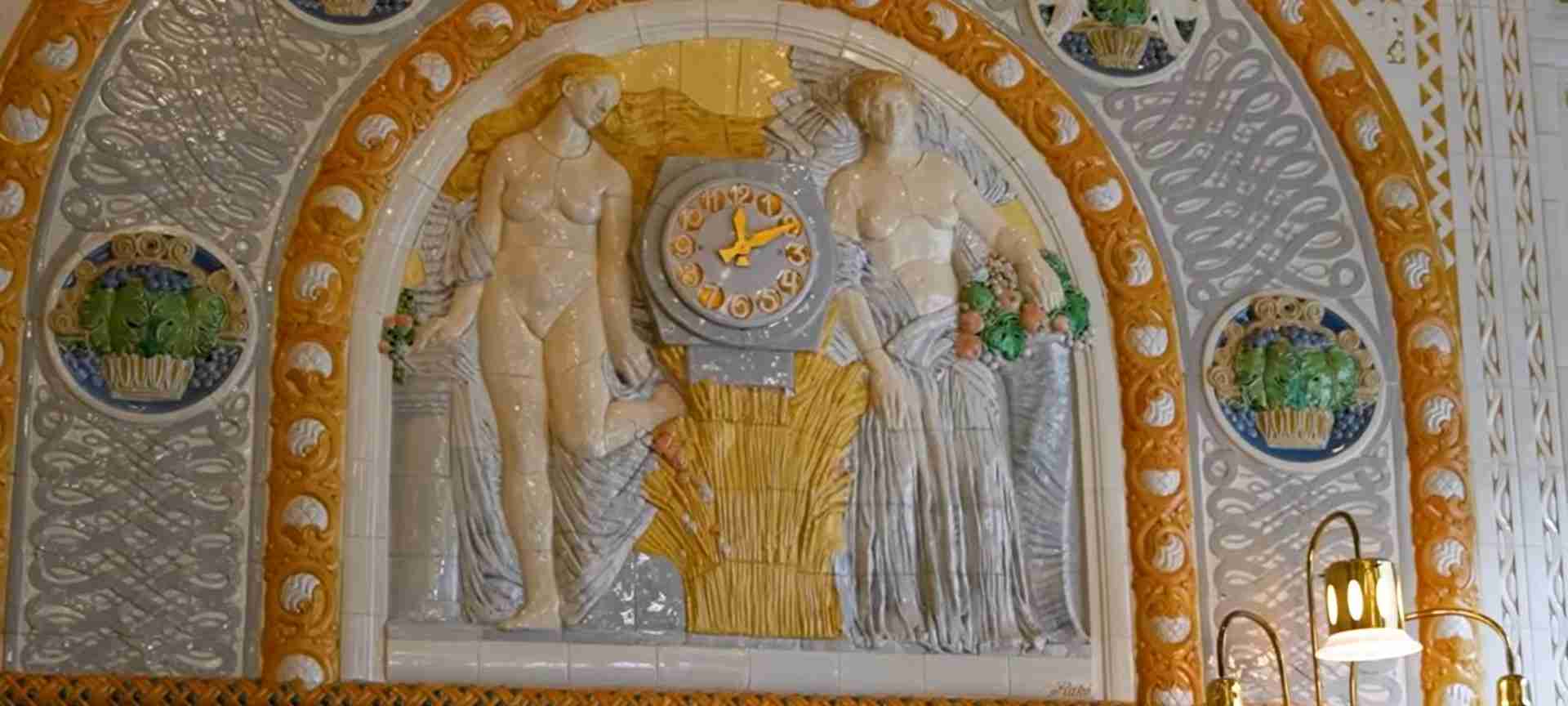
Café Imperial exemplifies Art Nouveau café design at maximum elaboration. The interior features comprehensive ceramic tile work covering walls and ceiling—geometric patterns, floral motifs, and figurative scenes create unified decorative environment. The tiles serve both aesthetic and practical functions—beauty and hygiene combined through easily cleaned surfaces decorated with permanent color. The café’s columns receive ceramic cladding that mimics marble while costing significantly less and maintaining Art Nouveau’s embrace of industrial materials.
The lighting design integrated into Art Nouveau café architecture produced revolutionary spatial effects. Elaborate chandeliers, wall sconces, and decorative glass shades distributed light throughout interiors while creating focal points and hierarchical zones. The combination of electric and gas lighting during transitional periods allowed precise control of atmosphere—bright illumination for daytime newspaper reading, softer light for evening conversation and romantic encounters.
Mirror deployment created spatial expansion and social complexity within confined café footprints. Elaborate mirror installations doubled apparent room size while enabling customers to observe entire café from single vantage point. This surveillance capacity facilitated social monitoring—tracking who entered, who sat with whom, who deserved greeting or avoidance. Mirrors transformed cafés into theatrical spaces where customers performed social roles under mutual observation.
The incorporation of Czech national motifs into Art Nouveau decoration asserted cultural independence within Habsburg framework. Decorative elements referenced Slavic mythology, Czech historical figures, and national symbols rather than exclusively Habsburg imperial themes. These subtle political statements communicated that café culture, while international in character, expressed specifically Czech cultural achievement and national consciousness.
Historic Prague Coffeehouses and Their Cultural Significance
Prague’s historic coffeehouses represent more than commercial establishments—they function as cultural monuments where architecture, social custom, and historical memory combine into comprehensive heritage sites. Each major coffeehouse contributed distinctly to Prague’s cultural development while maintaining broader café traditions.
Café Slavia occupies legendary status as Prague’s most famous coffeehouse, positioned directly across from National Theatre with views spanning Vltava River and Prague Castle. Founded in 1881, Slavia hosted generations of Czech artists, writers, and political figures who gathered beneath Viktor Oliva’s iconic painting “The Absinthe Drinker.” The café served as regular meeting place for Václav Havel and Charter 77 dissidents during communist era, making it site of political organizing alongside cultural socializing.
The Slavia interior balances Art Nouveau elegance with modernist restraint. Large windows flood spaces with natural light that highlights marble-topped tables and bentwood chairs. The décor avoids overwhelming ornamentation in favor of clean lines and quality materials. This aesthetic restraint creates timeless environment that has required minimal updating across decades while maintaining distinctive character that differentiates Slavia from more elaborate contemporaries.
Café Louvre represents Prague’s oldest continuously operating coffeehouse, serving customers since 1902. The café occupies first-floor space in elegant building housing billiard hall on upper level—traditional combination that provided entertainment options beyond coffee consumption. Louvre hosted Albert Einstein during his Prague residency and Karel Čapek during his literary career. The café maintains authentic period details including original light fixtures, mirrors, and furniture that create genuine historical atmosphere rather than theatrical recreation.
The Louvre menu preserves traditional coffeehouse offerings—Viennese coffee preparations, elaborate pastries, and breakfast combinations served throughout the day. The café operates as functional restaurant alongside coffee service, providing full meal options that enable all-day occupation. This comprehensive menu reflects coffeehouse tradition of serving diverse customer needs from breakfast through late-night refreshment.
Café Imperial showcases Art Nouveau café architecture at maximum elaboration with comprehensive ceramic tile work covering every surface. The interior underwent meticulous restoration after communist-era decline, returning the space to original 1914 splendor. Imperial functions as luxury hotel café that attracts tourists and special occasion diners alongside regular customers seeking authentic coffeehouse experience in historically accurate setting.
Municipal House Café represents peak Art Nouveau achievement within comprehensive cultural complex. Architect Alfons Mucha designed elaborate decorative program incorporating Slavic mythological themes and Czech historical references throughout the building. The café interior features painted ceilings, stained glass, and integrated furniture that create total artwork embodying Czech national cultural aspirations. The café operates as showplace demonstrating Czech artistic achievement within international Art Nouveau movement.
Coffee Culture During Communist Era
Communist rule transformed Prague’s coffeehouse culture through state ownership, political surveillance, and economic constraints that nearly destroyed traditions built across two centuries. Understanding this period reveals both culture’s fragility and remarkable resilience that enabled post-1989 restoration.
The immediate post-1945 period saw gradual state takeover of private coffeehouses through nationalization programs that consolidated diverse establishments into standardized state-run operations. The new management emphasized efficiency and profitability over cultural atmosphere—elaborate pastries disappeared in favor of simple cakes, coffee quality declined as supply chains prioritized quantity, and service deteriorated under state employment that eliminated customer-focused incentives.
The regime viewed coffeehouse culture with ideological suspicion as bourgeois institution fostering individualism, Western decadence, and dangerous social networks difficult to monitor. Many smaller cafés closed entirely while famous establishments like Slavia and Louvre survived as controlled showplaces demonstrating cultural continuity. The surviving cafés operated under state oversight with secret police monitoring regular customers and recording conversations suspected of political content.
The physical decline during communist decades damaged interiors through neglect and inappropriate renovation. Original furnishings were removed or damaged, decorative elements deteriorated without maintenance, and clumsy repairs destroyed period details. Café Imperial closed completely in 1980s, its elaborate tile work covered with cheap paneling and space converted to cheap restaurant. This destruction represented both economic constraint and ideological hostility toward bourgeois cultural heritage.
Despite surveillance and decline, the surviving coffeehouses maintained crucial social functions. Dissidents used café meetings to sustain intellectual networks and political organizing under partial surveillance. Artists and writers gathered to discuss ideas impossible in official forums. The coffeehouses provided quasi-public spaces where surveillance was known but conversation continued carefully. Regular customers developed trust through repeated contact and learned subtle communication methods that evaded monitoring.
The 1989 Velvet Revolution emerged partly from networks preserved in surviving coffeehouses. Václav Havel and fellow dissidents used Café Slavia as regular meeting place where political strategies developed alongside cultural conversation. The physical continuity of these spaces across communist decades maintained connection to democratic traditions that enabled rapid political transition when circumstances allowed. Coffeehouse culture proved both vulnerable and resilient—nearly destroyed yet ultimately surviving through combination of institutional preservation and personal commitment.
Post-Communist Renaissance and Contemporary Culture
The fall of communism initiated dramatic coffeehouse renaissance that combined restoration of historic establishments with emergence of new café culture reflecting international influences and changing consumption patterns. This evolution created contemporary scene that honors tradition while embracing innovation.
Historic coffeehouse restoration became cultural priority in 1990s as private ownership returned and tourism increased. Café Imperial underwent comprehensive renovation restoring original Art Nouveau tile work and architectural details. Café Louvre received careful updating that preserved historical character while improving service standards and coffee quality. These restorations represented more than commercial investment—they symbolized Czech cultural renewal and rejection of communist-era neglect.
The restoration process faced tensions between historical accuracy and contemporary function. Pure preservation would create museum spaces unsuitable for daily operation. Complete modernization would destroy cultural significance. Successful restorations balanced these competing demands—maintaining historic architecture and atmosphere while introducing quality coffee equipment, updated kitchens, and modern hygiene standards invisible to customers.
New café culture emerged alongside historic coffeehouse preservation, introducing specialty coffee focus and international design aesthetics. These establishments prioritize coffee quality over historical atmosphere, employing trained baristas, precision brewing equipment, and single-origin beans. The minimalist interiors contrast sharply with Art Nouveau elaboration, creating distinctly contemporary spaces that appeal to younger demographics and international residents.
The specialty coffee movement arrived relatively late in Prague compared to London or Melbourne, accelerating significantly during 2010s. Pioneering cafés like Café Savoy and later Coffee Source introduced third-wave coffee culture emphasizing transparency about bean origins, precise extraction methods, and educational approach to coffee appreciation. These establishments created new café category focused primarily on beverage quality rather than social infrastructure or historical atmosphere.
Contemporary Prague supports both historic coffeehouse preservation and specialty coffee innovation without apparent cultural contradiction. Locals and visitors patronize both establishment types for different occasions and purposes—historic cafés for atmosphere and cultural connection, specialty shops for coffee quality. This dual system enriches overall café culture rather than forcing choice between tradition and innovation.
Coffee Preparation Traditions and Service Customs
Prague coffeehouse culture developed distinctive preparation methods and service customs that differentiate Czech café experience from Italian espresso bars or American coffee shops. Understanding these traditions enhances appreciation while guiding appropriate customer behavior.
Viennese coffee preparations dominate historic coffeehouse menus—elaborate combinations of coffee, cream, whipped cream, and flavoring that transform simple beverage into dessert-like indulgence. Melange combines espresso with steamed milk and milk foam, approximating Italian cappuccino but served in larger portions. Einspänner features strong coffee topped with whipped cream in handled glass that allows visual appreciation of layered colors. Vienna coffee adds whipped cream directly to coffee, creating rich combination.
The Turkish coffee tradition persists in some historic establishments, served in small cups with grounds settling at bottom. This preparation references coffee culture’s Ottoman origins while providing dramatically different experience from filtered coffee. The thick, strong brew sipped carefully from small portions contrasts with large portions and filtered clarity of Viennese preparations. Turkish coffee consumption carries ritual dimensions—finishing the cup leaves grounds that traditional fortune-tellers interpret for entertainment.
Contemporary specialty cafés introduce international preparation methods including pour-over, AeroPress, and precision espresso that emphasize coffee quality over elaborate presentation. These methods require trained baristas who understand extraction variables and can adjust technique to highlight specific bean characteristics. The specialty coffee approach treats beverage as agricultural product requiring expertise to prepare correctly rather than neutral base for cream and sugar additions.
Service customs reflect coffeehouse social function and historical class dynamics. Traditional service employs formally dressed waiters who take orders tableside, deliver beverages on silver trays, and maintain professional distance while remaining attentive to customer needs. This formal service creates atmosphere and justifies prolonged occupation—customers receive treatment suggesting importance regardless of single coffee purchase.
The newspaper tradition persists in historic coffeehouses that maintain newspaper racks with daily papers and periodicals for customer use. This amenity references pre-internet era when cafés provided essential access to news and information. Contemporary continuation serves nostalgic function while offering digital detox opportunity—time spent with physical newspaper rather than smartphone screens.
Pastry Traditions and Café Cuisine
Prague coffeehouse cuisine developed alongside coffee culture, creating pastry traditions and light meal offerings that complement beverage service while enabling extended café occupation. These culinary traditions reflect Austrian influences, Czech tastes, and economic considerations that shaped coffeehouse menus.
Sachertorte represents Vienna’s most famous contribution to café pastry—rich chocolate cake layered with apricot jam and covered in dark chocolate glaze. Prague cafés adopted this specialty while developing local variations that adjust sweetness levels and portion sizes to Czech preferences. The dense, intensely chocolate cake pairs perfectly with strong coffee that cuts through richness while complementing chocolate intensity.
Apple strudel appears on virtually every historic coffeehouse menu—thin pastry sheets wrapped around spiced apple filling and served warm with whipped cream or vanilla sauce. This seemingly simple dessert requires significant skill—the dough must be stretched paper-thin without tearing, the filling must achieve proper moisture balance, and baking must create crisp exterior while maintaining tender interior. Quality strudel demonstrates café’s overall pastry expertise.
Czech kolache—sweet yeast buns topped with fruit, poppy seed, or cheese filling—represents specifically Czech contribution to café pastry repertoire. These traditional pastries connect coffeehouse culture to broader Czech baking traditions while providing lighter alternative to rich Viennese tortes. Kolache morning consumption with coffee represents typical Czech breakfast combination that coffeehouses adapted from home baking traditions.
Savory offerings enable café occupation during meal times beyond dessert and coffee consumption. Traditional menus include open-face sandwiches (chlebíčky) with elaborate toppings, soups, and light main dishes that satisfy hunger without requiring full restaurant service. These offerings transformed coffeehouses into all-day dining venues accessible for breakfast through dinner.
The pricing strategy for pastries and food reflects coffeehouse economic model. Relatively expensive pastries and meals subsidize cheap coffee prices that enable extended occupation. Customers purchase single coffee but spend hours reading newspapers, conversing, or working. Additional pastry or meal purchases justify the space occupation while generating revenue that makes business model viable.
Coffeehouses as Political and Social Spaces
Prague coffeehouses functioned throughout history as political organizing sites, social mixing zones, and democratic spaces where class barriers relaxed sufficiently to enable conversations impossible in more formally structured settings. This political dimension distinguished Czech cafés from purely commercial hospitality operations.
The 19th-century Czech national revival movement organized extensively through coffeehouse networks. Czech-language newspapers circulated in cafés frequented by national consciousness advocates. Political discussions occurred over coffee that would attract police attention in formal meeting halls. The informal café setting provided partial cover for political organizing while enabling rapid dispersal if authorities intervened.
The First Czechoslovak Republic (1918-1938) maintained vital café culture where political debate, journalistic work, and cultural production intersected freely. Coffeehouses hosted politicians developing policy, journalists writing articles, and activists organizing campaigns. The café functioned as semi-public sphere where civil society developed without state control or commercial constraint beyond coffee purchase requirement.
Communist-era coffeehouses became sites of careful resistance where dissidents maintained networks despite surveillance. The partial publicity of café space provided both cover and vulnerability—secret police monitored conversations but could not prevent all gathering without closing establishments completely. Regulars developed subtle communication methods including coded language, changed topics when strangers approached, and trusted fellow customers identified through repeated contact.
The Velvet Revolution planning occurred significantly in Café Slavia where Václav Havel and Charter 77 members met regularly. The café provided neutral territory for discussions among diverse opposition groups who might not gather in private apartments vulnerable to search. The semi-public setting enabled coalition building across political differences through informal conversation impossible in formal negotiation settings.
Contemporary coffeehouses continue political function though with reduced intensity compared to historical periods. Political journalists conduct interviews in café settings, activists organize campaigns over laptops, and informal political discussion remains café culture staple. The space continues providing democratic mixing zone where political conversation occurs across social divisions.
Photography and Visual Documentation of Café Culture
Photographing Prague’s historic coffeehouses requires balancing aesthetic documentation with respect for social space and customer privacy. Successful café photography captures architectural beauty and cultural atmosphere while honoring coffeehouse tradition as social institution rather than tourist attraction.
Architectural photography benefits from visiting historic cafés during quiet morning hours when empty or nearly empty spaces allow unobstructed documentation. Wide-angle lenses capture comprehensive interior views showing ceiling details, mirror arrangements, and spatial relationships. The morning natural light streaming through café windows provides ideal illumination for architectural documentation without harsh shadows or artificial color casts from electric lighting.
Detail photography highlights Art Nouveau decorative elements, ceramic tile work, light fixtures, and furniture designs that define café character. Macro lenses reveal craftsmanship in tile painting, mirror etching, and metalwork details invisible during normal café occupation. These detail shots complement wide architectural views by showing artistic quality and historical authenticity of preserved interiors.
Candid social photography captures café culture’s human dimension but demands ethical sensitivity regarding customer privacy. Photograph general atmosphere and crowd scenes rather than identifiable individuals without permission. Distance shots showing overall café activity respect privacy while documenting social dynamics. Some establishments prohibit photography entirely during busy periods—respect these policies absolutely.
Coffee and pastry photography requires attention to presentation, lighting, and styling that communicates quality and appeal. Natural window light provides ideal illumination for food photography—position coffee and pastry near windows for soft, directional light. Include enough context (historic café interior elements) to situate consumption culturally rather than as isolated product shots.
Historical photograph integration enriches contemporary café documentation by showing evolution and continuity. Many historic coffeehouses display archival photographs showing past appearance and famous patrons. Photographing these historical images within contemporary café setting creates visual dialogue between past and present that highlights cultural continuity and change.
Contemporary Specialty Coffee Movement
Prague’s specialty coffee scene emerged during the 2010s as international third-wave coffee culture reached Czech capital, creating new café category focused primarily on beverage quality rather than historical atmosphere or social infrastructure. This movement runs parallel to traditional coffeehouse culture while serving different customer needs and cultural functions.
The specialty coffee philosophy emphasizes transparency about coffee origins, precise extraction methods, and educational approach to coffee appreciation. Baristas discuss bean growing regions, processing methods, and flavor profiles with customers. Brewing equipment receives prominent display, demonstrating technical expertise and inviting customer interest in preparation complexity. This approach treats coffee as agricultural product requiring knowledge and skill to prepare correctly.
Single-origin coffee offerings showcase beans from specific farms or regions rather than generic blends. Seasonal rotation reflects harvest cycles and availability, with cafés featuring different origins throughout the year. This agricultural connection contrasts with traditional coffeehouse approach where coffee functioned as neutral base for elaborate preparations rather than primary flavor focus.
The preparation methods diversify beyond espresso to include pour-over, AeroPress, siphon, and cold brew techniques that extract different flavor characteristics. Baristas adjust variables including grind size, water temperature, and extraction time to optimize each method for specific beans. This technical precision produces cleaner, brighter coffee flavors that differ dramatically from traditional Viennese preparations.
The aesthetic minimalism of specialty coffee shops contrasts sharply with Art Nouveau elaboration of historic coffeehouses. Contemporary cafés favor clean lines, natural materials, and sparse decoration that focuses attention on coffee preparation and consumption. This design approach reflects international specialty coffee aesthetics while creating distinctly different atmosphere from traditional establishments.
The customer demographic skews younger, more international, and more mobile compared to historic coffeehouse regulars. Specialty cafés attract remote workers, digital nomads, and coffee enthusiasts seeking quality over atmosphere. The social function shifts from prolonged conversation to efficient co-working space where laptop occupation dominates traditional newspaper reading or face-to-face discussion.
Neighborhood Café Culture and Local Traditions
Prague’s neighborhood cafés maintain local character and authentic Czech café culture away from tourist-oriented historic establishments. These smaller venues serve primarily residential customers who develop regular patterns and personal relationships that create community infrastructure.
Neighborhood cafés occupy residential buildings throughout Prague districts, providing local gathering spaces accessible by foot rather than tourist pilgrimage. These establishments maintain lower profile and prices compared to famous historic coffeehouses. The regular customer base knows staff personally and maintains informal social networks centered on daily or weekly café visits.
The menu offerings reflect local preferences rather than tourist expectations—simpler pastries, Czech-language newspapers, and traditional coffee preparations dominate. These cafés prioritize functional service over theatrical presentation, efficiency over elaborate ceremony. The atmosphere favors quiet conversation or solitary reading rather than performative socializing or photography opportunities.
The social mixing in neighborhood cafés maintains coffeehouse tradition of democratic space where local residents encounter each other regardless of professional or social status. Retired residents share tables with young parents, students sit alongside longtime neighborhood residents, and morning regulars develop acquaintance through repeated proximity. This community function provides social infrastructure particularly valuable for isolated individuals.
The economic model operates on regular customer loyalty rather than tourist traffic. Neighborhood cafés survive through consistent daily business from local residents who visit multiple times weekly. This stability allows personal service, credit arrangements, and flexible occupation that commercial calculations might not justify. The café becomes extension of neighborhood social fabric rather than purely commercial transaction.
Frequently Asked Questions About Prague Coffee Culture
What is the proper coffeehouse etiquette in Prague?
Enter confidently and select available table without waiting for seating—self-seating represents standard practice. Wait for server to approach rather than ordering at counter—table service remains traditional even in contemporary establishments. Extended sitting is expected and encouraged—single coffee purchase grants hours of occupation including newspaper reading, conversation, or work.
Order clearly using menu terminology rather than inventing custom preparations—traditional coffeehouses maintain specific drink categories. Add pastry or light meal to justify extended occupation and support café economics. Signal when ready to pay rather than waiting for server to present bill automatically. Round up bill to next convenient amount for tip—10% represents generous gratuity for standard service.
How much does coffee cost in Prague coffeehouses?
Historic coffeehouses charge 60-90 CZK (€2.40-3.60) for basic coffee drinks, 80-120 CZK (€3.20-4.80) for elaborate Viennese preparations. Specialty coffee shops price similarly at 70-100 CZK (€2.80-4.00) for espresso-based drinks, 90-130 CZK (€3.60-5.20) for pour-over or specialty preparations. Neighborhood cafés offer lower prices at 50-70 CZK (€2.00-2.80) for standard coffee.
Pastries add 60-120 CZK (€2.40-4.80) depending on complexity and establishment prestige. Light meals range 120-250 CZK (€4.80-10.00). These prices enable extended occupation—spending 200 CZK (€8.00) on coffee and pastry justifies several hours of café time in traditional establishments.
Which Prague coffeehouses offer most authentic historical atmosphere?
Café Louvre provides most authentic historical experience through continuous operation since 1902, preserved period details, and local regular customer base. Café Slavia offers iconic location and historic significance despite heavy tourist traffic. Café Imperial showcases Art Nouveau architecture at maximum elaboration through comprehensive restoration to 1914 appearance.
Municipal House Café represents peak Art Nouveau achievement within comprehensive cultural complex but functions more as showplace than working coffeehouse. Lesser-known neighborhood establishments maintain authentic local culture but lack architectural grandeur. Authenticity exists in both preserved architecture and living social customs—ideal experience combines both dimensions.
Do Prague coffeehouses accommodate laptop work and WiFi usage?
Contemporary attitudes toward laptop work vary by establishment type and time period. Specialty coffee shops generally welcome laptop users and provide WiFi specifically for co-working customers. Historic coffeehouses maintain ambivalent relationship—some prohibit laptops during peak hours to preserve conversation culture and table turnover, others accept laptop work as contemporary evolution of traditional newspaper reading.
The extended sitting tradition that defines coffeehouse culture accommodates laptop work philosophically even when management restricts it practically. Traditional newspaper reading for hours differs little from laptop work in occupation time and social engagement. The debate reflects tension between cultural preservation and practical adaptation to contemporary work patterns.
How does coffee quality compare between historic and specialty cafés?
Specialty coffee shops maintain significant quality advantage through dedicated equipment, trained baristas, and focus on coffee as primary product. Historic coffeehouses improved coffee quality substantially post-1989 but emphasize atmosphere and tradition over extraction precision. The best historic establishments now produce respectable espresso and filter coffee while specialty shops achieve exceptional quality through technical expertise and equipment investment.
The quality difference matters more to coffee enthusiasts than casual consumers. Most customers select establishment based on atmosphere preferences rather than coffee quality differences. The choice becomes culture versus craft—historic cafés for total experience, specialty shops for beverage optimization.
What role do coffeehouses play in contemporary Prague social life?
Coffeehouses continue functioning as third spaces between work and home where informal socializing, business meetings, and solo occupation occur. The social mixing function persists though demographic patterns shift toward younger, more international clientele. Remote work and freelancing revitalized coffeehouse occupation culture that briefly declined during late 20th century.
The political organizing function diminished significantly post-1989 but remains viable for activists and civic groups requiring neutral meeting spaces. Cultural production continues—writers and artists still use cafés as workspaces and networking venues. The romantic meeting and casual dating functions increased as traditional matchmaking declined. Coffeehouses adapt to contemporary social needs while maintaining core function as democratic gathering spaces.
How has tourism affected Prague coffeehouse culture?
Tourism concentrates heavily in famous historic establishments like Café Slavia and Imperial, creating dual culture where tourist-oriented venues operate alongside authentic neighborhood cafés. Famous coffeehouses adapted service, pricing, and atmosphere to accommodate international visitors while maintaining sufficient local character to preserve cultural significance.
The economic impact enables preservation through tourism revenue that funds architectural maintenance and operational costs. However, tourist orientation dilutes cultural authenticity as establishments prioritize throughput over traditional extended occupation, multilingual menus replace Czech-only offerings, and staff cultivate efficiency over personal relationships with regulars.
Lesser-known neighborhood cafés maintain authentic local culture where Czech language dominates, regulars receive personalized service, and traditional customs operate without tourist performance. This dual system allows both visitor access to famous sites and preservation of living culture in neighborhood venues.
Can visitors recreate coffeehouse experience outside Prague?
The physical elements—quality coffee, Viennese pastries, period architecture—can be reproduced internationally. Vienna, Budapest, and Krakow maintain similar Central European café traditions. However, the complete cultural experience requires specific social customs, historical continuity, and community networks that develop across generations rather than through commercial recreation.
Successful coffeehouse recreation requires commitment to extended sitting allowance, newspaper provision, and democratic mixing that many commercial establishments resist. The financial model demands tolerance for slow table turnover that contradicts profit maximization. International examples exist but remain rare compared to efficiency-focused coffee shops that dominate contemporary café culture.
What is the future of Prague coffeehouse culture?
Prague coffeehouse culture faces competing pressures from tourism commercialization, specialty coffee competition, and changing social patterns while maintaining remarkable resilience through historical significance and continued social utility. Historic establishments will likely survive through tourism revenue and cultural heritage protection while neighborhood cafés adapt to contemporary work patterns and consumption habits.
The specialty coffee movement enriches overall café culture rather than replacing traditional coffeehouses—both approaches serve different needs and preferences. Younger generations demonstrate appreciation for both historical atmosphere and beverage quality, suggesting hybrid future that honors tradition while embracing innovation. The fundamental social function as third space and democratic meeting ground remains relevant regardless of coffee quality or architectural style, ensuring continuation in evolved rather than purely preserved form.