Pont du Gard: Roman Aqueduct UNESCO Complete Guide
Key Takeaways
- Pont du Gard represents the pinnacle of Roman hydraulic engineering, standing as the tallest surviving ancient bridge at 48.8 meters and showcasing extraordinary architectural precision built around 50 CE
- The three-tiered stone arch system demonstrates remarkable engineering innovation, with the bridge spanning 275 meters across the Gardon River without mortar, relying solely on precisely cut limestone blocks
- UNESCO recognition acknowledges both the technical achievement and the cultural significance of Roman water management systems that supplied Nîmes with 20,000 cubic meters of water daily
- The monument serves as an educational masterpiece revealing Roman construction techniques, including the use of massive stone blocks weighing up to six tons, assembled with mathematical precision
- Pont du Gard offers exceptional photographic opportunities with its golden limestone reflecting Mediterranean light, particularly stunning during golden hour when the ancient stones glow against the surrounding garrigue landscape
- The site provides comprehensive interpretation facilities including a museum, multimedia exhibits, and walking trails that contextualize the aqueduct within the broader Roman hydraulic network serving ancient Nîmes
Introduction: Understanding Pont du Gard’s Enduring Significance
Rising majestically above the Gardon River in southern France, Pont du Gard stands as one of the most impressive testimonies to Roman engineering genius ever constructed. This monumental three-tiered aqueduct bridge, built around 50 CE during the reign of Emperor Claudius, represents far more than a utilitarian structure for water transport. It embodies the Roman Empire’s technological sophistication, organizational capacity, and architectural ambition that transformed the ancient Mediterranean world.
The bridge forms a crucial section of the 50-kilometer aqueduct system that supplied the Roman city of Nemausus (modern Nîmes) with fresh water from springs near Uzès. What makes Pont du Gard exceptional among surviving Roman aqueducts is not merely its remarkable state of preservation, but the extraordinary engineering challenges its builders overcame. Spanning the steep-sided Gardon valley required creating the tallest bridge of the ancient world, a feat achieved through innovative construction techniques and mathematical precision that continues to astound engineers and architects today.
The monument’s golden limestone, quarried from nearby Vers-Pont-du-Gard, has weathered two millennia while maintaining structural integrity that allows the lower tier to still accommodate pedestrian traffic. The stones were cut and assembled with such precision that many joints remain visible without mortar, held together by their own weight and the genius of Roman architectural design. This construction method not only demonstrates technical mastery but also explains the bridge’s longevity, as the structure can flex slightly during floods without collapsing.
Pont du Gard’s significance extends beyond engineering achievement into the realm of cultural heritage and historical understanding. The aqueduct reveals Roman priorities, showcasing a civilization willing to invest enormous resources in public infrastructure and urban amenities. The dedication to bringing high-quality water to Nîmes, despite the massive engineering challenges and economic costs, reflects Roman values regarding public health, civic pride, and the responsibilities of imperial administration toward provincial cities.
This comprehensive guide explores every dimension of Pont du Gard’s magnificence, from the technical details of its construction to its cultural significance within Roman society. Whether you approach as a history enthusiast, architecture student, engineering professional, or curious traveler, understanding this ancient masterpiece requires examining its historical context, construction methodology, hydraulic function, and enduring legacy as a UNESCO World Heritage site.
People Also Ask About Pont du Gard
What makes Pont du Gard architecturally unique among Roman aqueducts?
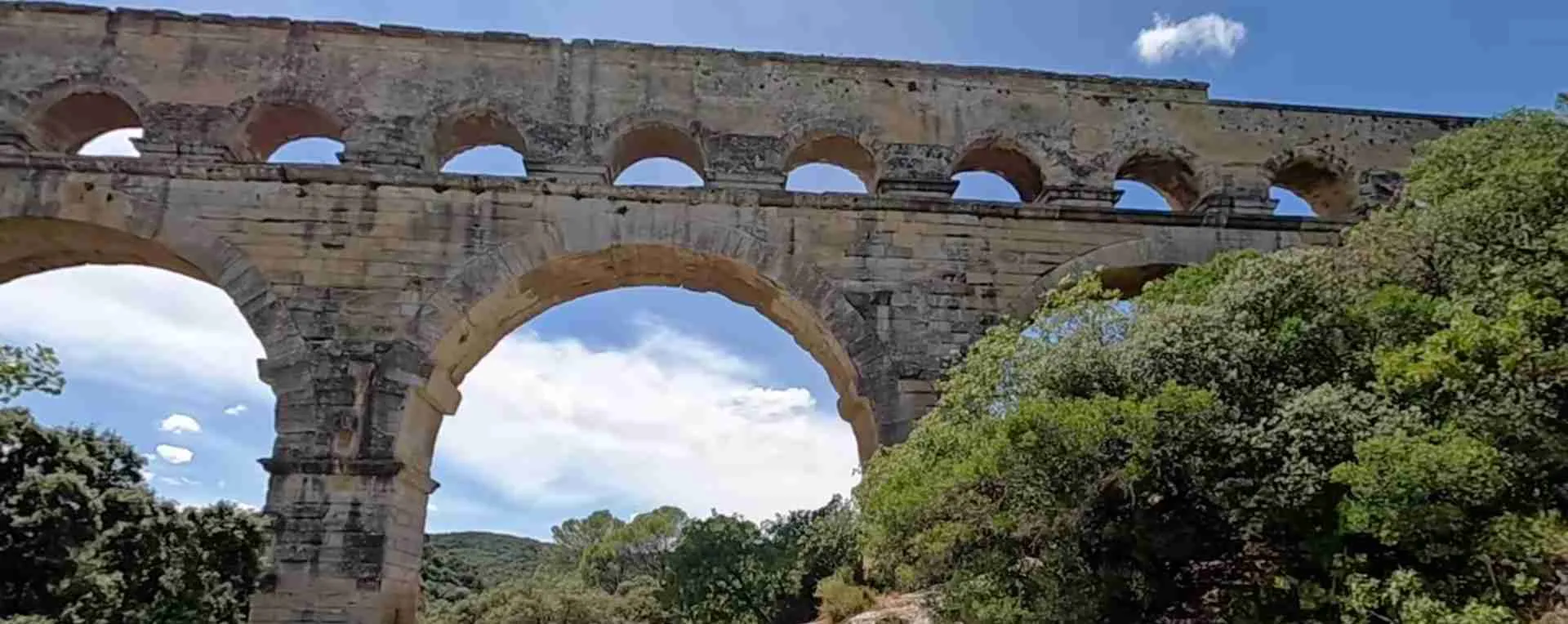
Pont du Gard stands unique among surviving Roman aqueducts for several architectural reasons. First, its three-tiered design reaches an unprecedented height of 48.8 meters, making it the tallest of all ancient Roman bridges. The lower tier features six massive arches spanning 142 meters, the middle tier has eleven arches covering 242 meters, and the upper tier contains 35 smaller arches extending 275 meters. This multi-level solution allowed Roman engineers to maintain the gentle gradient necessary for water flow while crossing the deep Gardon valley.
The construction technique employed at Pont du Gard demonstrates exceptional precision. Large stone blocks, some weighing up to six tons, were cut to fit together without mortar, relying on precise shaping and gravitational force. The Romans used protruding stones called “bossages” that served as scaffolding supports during construction, deliberately leaving them visible as a testament to building methodology. The arch voussoirs (wedge-shaped stones) were cut with such accuracy that the structure has survived earthquakes, floods, and two millennia of weathering.
Unlike many Roman aqueducts built partially underground or on low arcades, Pont du Gard required this dramatic above-ground crossing due to the topography of the Gardon River valley. The engineering challenge demanded innovative solutions, including the use of semi-circular arches that efficiently distribute weight while creating the iconic visual rhythm that makes the monument so aesthetically powerful. The graduated sizing of arches—larger at the bottom, progressively smaller toward the top—reflects both structural logic and architectural sophistication.
How did Romans engineer water flow through the Pont du Gard aqueduct?
The engineering of water flow through Pont du Gard represents one of the most sophisticated achievements of Roman hydraulic technology. The water channel, or specus, runs along the top tier of the bridge, enclosed in a covered conduit measuring approximately 1.2 meters high and 1 meter wide. Roman engineers calculated a gradient of just 34 centimeters per kilometer for the entire 50-kilometer aqueduct system, ensuring consistent water flow driven purely by gravity without pumps or mechanical assistance.
At Pont du Gard specifically, the gradient maintained this precise slope while crossing the river valley, a feat requiring extraordinary surveying accuracy with ancient instruments. Romans used tools called chorobates and groma for leveling and alignment, achieving precision comparable to modern laser levels despite working with visual sighting and water-filled troughs. The gentle descent allowed water to flow steadily at approximately 1.3 meters per second, preventing both stagnation and excessive velocity that could damage the channel.
The interior of the water channel reveals Roman attention to hydraulic detail. The conduit was lined with waterproof mortar containing crushed ceramic fragments (opus signinum), creating a smooth surface that minimized friction and prevented leakage. Calcium deposits visible inside the channel today provide evidence of centuries of water flow and allow scientists to analyze historical water composition and flow patterns. These deposits, sometimes reaching 30 centimeters thick in certain sections, demonstrate that the aqueduct functioned continuously for several hundred years.
The entire system could transport approximately 20,000 to 40,000 cubic meters of water daily to Nîmes, serving public fountains, thermal baths, wealthy homes, and civic facilities. This capacity required not only the bridge itself but also careful management of the source springs, settling tanks to allow sediment to drop out before entering the main channel, and distribution systems within Nîmes. The engineering triumph of Pont du Gard lies in its role as the critical crossing point within this complex hydraulic network.
Why was Pont du Gard built and what was its historical purpose?
Pont du Gard was constructed to solve a critical infrastructure challenge facing Nemausus (Nîmes), a rapidly growing Roman colony in southern Gaul. During the 1st century CE, Nîmes experienced significant expansion as veterans of Roman legions settled in the region following the Augustan conquest of Gaul. The city’s population growth created demands for water that exceeded the capacity of local springs and wells, necessitating an external water source.
The decision to build this aqueduct reflected Roman priorities regarding urban development and public health. Romans understood that reliable water supply was essential for maintaining public baths, fountains, sanitation systems, and household needs that defined civilized urban life in their worldview. The springs at Fontaine d’Eure near Uzès offered an abundant, high-quality water source, but accessing this supply required overcoming the geographical barrier of the Gardon River valley, leading to the construction of Pont du Gard.
The project represents a substantial imperial investment in provincial infrastructure. Historians estimate that building the entire 50-kilometer aqueduct system required five years of labor and involved hundreds of workers including surveyors, stone cutters, masons, and engineers. The decision to undertake such an expensive project indicates Nîmes’ importance within the Roman administrative structure and Rome’s commitment to providing amenities comparable to those in Italian cities.
Beyond practical water supply, the aqueduct served symbolic and political purposes. The monumental scale and architectural magnificence of Pont du Gard demonstrated Roman engineering superiority and imperial power to both local Gallic populations and visiting dignitaries. The structure proclaimed that Rome could reshape landscapes, overcome natural obstacles, and deliver the benefits of Roman civilization to the farthest reaches of the empire. This propaganda dimension was as important as the functional water delivery, reinforcing political control through impressive public works.
What artistic and aesthetic elements define Pont du Gard’s design?
While Pont du Gard served primarily as functional infrastructure, Roman builders incorporated significant aesthetic considerations that transform the structure into an architectural masterpiece. The choice of golden limestone from local Vers-Pont-du-Gard quarries creates a warm visual presence that harmonizes with the surrounding Mediterranean landscape. The stone’s color varies with lighting conditions, glowing amber during sunrise and sunset, appearing honey-toned under midday sun, creating a dynamic visual experience throughout the day.
The rhythmic repetition of arches creates powerful visual harmony following principles of Roman architectural aesthetics. The graduated arch sizes—six massive arches in the lower tier, eleven medium arches in the middle, and 35 smaller arches in the upper tier—produce a pleasing proportional relationship that appears both monumental and graceful. This progression from large to small creates upward visual movement while maintaining structural stability, demonstrating how Roman architects unified functional engineering with aesthetic considerations.
The visible construction technique, particularly the protruding stone bosses and the precise fitting of massive blocks, adds textural interest that prevents the structure from appearing monotonous despite its repetitive elements. Romans deliberately chose to leave these construction marks visible rather than finishing all surfaces smoothly, creating a design that celebrates the building process itself. This honest expression of construction methodology appeals to modern architectural sensibilities while revealing ancient building practices.
The monument’s proportions demonstrate sophisticated understanding of visual perception and mathematical relationships. The overall composition achieves balance between horizontal emphasis (the elongated upper tier) and vertical thrust (the tall piers supporting the arches), creating stability in the visual field while suggesting upward aspiration. The alignment of arches creates strong sightlines that draw the eye across the length of the bridge, emphasizing the engineering achievement of spanning the valley while maintaining the impression of lightness despite massive stone construction.
Extended multi-day tours – 5+ days
Featured Provence Multi-Day Tour Packages

3 days
Provence 3-Day Discovery Tour
- ✓ Comprehensive Provence experience
- ✓ Expert local guides included
- ✓ All accommodation included
- ✓ Transportation provided
5 days
Provence 5-Day Highlights Experience
- ✓ Comprehensive Provence experience
- ✓ Expert local guides included
- ✓ All accommodation included
- ✓ Transportation provided
7 days
Provence 7-Day Cultural Journey
- ✓ Comprehensive Provence experience
- ✓ Expert local guides included
- ✓ All accommodation included
- ✓ Transportation provided

10 days
Provence 10-Day Complete Adventure
- ✓ Comprehensive Provence experience
- ✓ Expert local guides included
- ✓ All accommodation included
- ✓ Transportation provided
Multi-day tour packages powered by TourRadar. Prices and availability subject to change.
Historical Background: Roman Engineering Excellence
The construction of Pont du Gard emerged from a specific historical moment in the Roman colonization and development of southern Gaul. Following Julius Caesar’s conquest of Gaul between 58 and 50 BCE, the Roman Empire systematically transformed former Celtic territories into prosperous Roman provinces. Nîmes, strategically located on the Via Domitia connecting Italy to Spain, evolved into an important administrative and commercial center. By the mid-1st century CE, the city’s expansion necessitated infrastructure investments comparable to those in Italian cities.
Emperor Claudius, who ruled from 41 to 54 CE, likely authorized or commissioned the aqueduct project as part of broader imperial initiatives to develop Gallic provinces. Claudius actively promoted urban development in the provinces, understanding that impressive public works fostered loyalty and demonstrated the benefits of Roman rule. The Pont du Gard project fit within this imperial strategy, transforming Nîmes into a showcase of Roman engineering capability that would inspire and impress both local populations and visitors from across the empire.
The construction process required unprecedented organizational effort and technical expertise. Roman engineers conducted extensive surveying to determine the optimal route from the Fontaine d’Eure springs to Nîmes, calculating gradients across 50 kilometers of varied terrain including hills, valleys, and the major obstacle of the Gardon River. The surveying accuracy achieved with ancient instruments remains remarkable—the entire aqueduct maintains a gradient of just 12 meters over its full length, representing a slope of only 0.4 percent.
Quarrying operations at Vers-Pont-du-Gard provided the massive limestone blocks needed for construction. Workers extracted stone using ancient techniques involving wedges driven into natural fissures, controlling fractures to produce blocks of desired sizes. The largest stones weigh approximately six tons, requiring sophisticated lifting and positioning systems using wooden scaffolding, pulleys, and human and animal power. Skilled stone cutters shaped these blocks to precise dimensions, creating the tight fits that allowed construction without mortar in the bridge’s main structural elements.
The construction timeline likely extended over five years, employing hundreds of workers organized in specialized teams. Masons worked on stone cutting and placement, carpenters built scaffolding and wooden formwork for arches (centering), engineers supervised alignment and gradient maintenance, and general laborers transported materials and assisted skilled craftsmen. The project required coordinating these diverse activities while maintaining quality control and ensuring structural integrity as the bridge rose to its final height of 48.8 meters.
The completed aqueduct transformed Nîmes into one of the best-supplied cities in the Roman world. Water from the Fontaine d’Eure springs flowed through the covered channel atop Pont du Gard, continuing through underground sections and additional arcades before reaching a distribution castle (castellum divisorium) in Nîmes. From this central facility, water dispersed through lead pipes to public fountains, thermal baths, wealthy villas, and civic buildings. The reliable water supply supported population growth and enabled the construction of elaborate bath complexes and fountains that characterized Roman urban life.
The aqueduct functioned continuously for approximately four to five centuries, carrying water to Nîmes throughout the height of Roman power in Gaul. Calcium deposits inside the channel, accumulating over generations of water flow, provide physical evidence of this long operational period. The system’s eventual decline coincided with the broader collapse of Roman administrative structures in the region during the 4th and 5th centuries CE. Without imperial maintenance resources and technical expertise, the aqueduct gradually fell into disuse, though the bridge itself remained structurally sound.
During the medieval period, Pont du Gard served various purposes disconnected from its original function. The lower tier was modified to accommodate a roadway, with gaps between piers partially filled to create a bridge for carts and pedestrians crossing the Gardon River. While this adaptive reuse damaged some original architectural elements, it paradoxically ensured the structure’s preservation by giving it continued utility that justified maintenance and repairs. Medieval communities recognized the bridge’s value even while losing understanding of its original sophisticated hydraulic purpose.
The Renaissance period brought renewed interest in Roman engineering, with scholars and architects studying Pont du Gard as an exemplar of ancient construction techniques. The structure influenced European architectural theory and practice, particularly regarding arch construction and the use of repetitive elements to create monumental effects. Artists depicted Pont du Gard in paintings and engravings, spreading its fame throughout Europe and establishing its reputation as one of the most impressive surviving Roman monuments.
Modern archaeological and historical research has deepened understanding of Pont du Gard’s construction and function. Detailed studies of construction marks, stone cutting techniques, and lifting methods have revealed specific building processes. Analysis of calcium deposits provides data about water flow rates and chemical composition over centuries of operation. Photogrammetric surveys and 3D modeling enable precise documentation and structural analysis, while ongoing conservation work ensures the monument’s survival for future generations while respecting its historical authenticity.
Architectural Significance: Engineering Triumph in Stone
Pont du Gard’s architectural significance lies in its masterful solution to an extraordinary engineering challenge: crossing a deep river valley while maintaining the precise gradient necessary for gravity-fed water flow. The three-tiered design represents optimal structural efficiency, with each level serving specific functions while contributing to overall stability. The lower tier, standing 21.87 meters above summer water levels, features six monumental arches with spans ranging from 15.5 to 24.5 meters. These massive openings allow the Gardon River to flow freely while providing sufficient passage during seasonal floods.
The middle tier adds 19.50 meters of additional height, containing eleven arches that align with those below while creating additional structural support. This intermediate level demonstrates sophisticated understanding of load distribution, transferring weight from the upper water channel through successive layers to the foundation bedrock. The alignment of arches across tiers creates continuous vertical load paths, ensuring structural stability while minimizing material use through the opening of voids where stone mass is not needed for strength.
The upper tier houses the actual water channel within its 35 small arches, spanning the full 275-meter length of the crossing. The decision to use numerous smaller arches rather than extending the larger arch pattern reflects engineering priorities: smaller arches reduce weight at the highest level while maintaining structural integrity, and the shorter spans simplify construction of the wooden centering required during arch erection. The covered water channel runs continuously across this level, protected from sun and debris while maintaining the critical gradient for water flow.
The construction technique employed at Pont du Gard reveals advanced understanding of masonry mechanics and stone working. The main structural elements use dressed stone blocks fitted without mortar, relying on compression forces and precise shaping to create stable structures. This dry-stone construction (opus quadratum) required exceptional stone cutting accuracy, as each block’s weight and positioning contributes to overall stability. The technique also provides flexibility, allowing slight movement during earthquakes or thermal expansion without causing catastrophic failure.
The protruding stone bosses visible on many blocks served practical purposes during construction while becoming aesthetic features of the completed structure. These projections provided attachment points for scaffolding and lifting equipment, allowing workers to manipulate massive stones during placement. Roman builders could have removed these bosses after construction, creating smooth surfaces, but chose instead to leave them visible—a decision that reveals construction methodology while adding textural richness to the stone surfaces.
The arch construction demonstrates mastery of structural principles that distributed enormous loads efficiently. Each arch consists of precisely cut voussoirs (wedge-shaped stones) that transfer weight outward and downward to supporting piers. The semicircular form chosen for the arches represents the optimal shape for stone construction, creating compression forces throughout the arch that prevent tensile stresses that stone cannot resist. The Roman innovation of the true arch, developed over centuries of experimentation, reached its apex in structures like Pont du Gard.
The foundation system anchors the entire structure to bedrock, with piers sunk into the limestone riverbed to ensure stable support. Each pier was carefully positioned to transfer loads directly into competent rock, avoiding soil deposits that could settle or shift over time. The pier design includes slightly larger dimensions at the base, providing additional stability while creating visual weight that anchors the composition. The precision of pier alignment across all three tiers testifies to the sophistication of Roman surveying and construction control.
The water channel itself represents remarkable hydraulic engineering. The covered conduit measures approximately 1.2 meters high and 1 meter wide, sized to carry the desired water volume at optimal flow velocity. The interior surfaces were plastered with waterproof opus signinum mortar containing crushed ceramic particles, creating smooth, impermeable walls that prevented leakage and reduced friction. The channel bed was laid with a precise gradient, verified during construction using water-filled troughs that functioned as primitive levels.
The architectural proportions demonstrate sophisticated aesthetic judgment alongside structural requirements. The overall composition achieves visual balance through the relationship between horizontal and vertical elements, creating a monument that appears simultaneously massive and graceful. The graduated sizing of arches from bottom to top creates upward visual movement while maintaining the actual structural logic of decreasing loads at higher levels. The rhythm of repeated arches produces formal unity while the subtle variations in span widths prevent monotony.
The choice of limestone from Vers-Pont-du-Gard quarries served both practical and aesthetic purposes. This particular stone possesses excellent structural properties including compressive strength and durability, while its warm golden color creates visual harmony with the surrounding landscape. The stone weathers to develop attractive patinas that enhance rather than degrade appearance over time. The decision to use local material also reduced transportation costs and ensured supply availability throughout the construction period.
Modern structural analysis confirms the exceptional quality of Roman engineering at Pont du Gard. Computer modeling demonstrates that the arch geometry and pier placement achieve near-optimal load distribution, with stresses remaining well within safe limits for the limestone used. The structure can accommodate significant wind loads, temperature variations, and seismic activity—all without modern reinforcement or sophisticated structural calculations. The Romans achieved this performance through empirical knowledge, mathematical understanding, and careful attention to construction quality.
The monument’s survival through two millennia demonstrates the validity of Roman structural principles. Unlike many modern bridges requiring frequent maintenance and eventual replacement, Pont du Gard has stood largely unaltered since ancient times. While periodic conservation work addresses weathering and visitor impacts, the core structure remains sound due to inherent design quality. This longevity offers profound lessons for contemporary architecture about the value of durable materials, sound structural principles, and construction excellence.
Cultural Impact: Symbol of Roman Civilization
Pont du Gard’s cultural significance extends far beyond its technical achievements, embodying fundamental aspects of Roman civilization and values. The monument represents the Roman commitment to public infrastructure and urban amenities as markers of civilized society. Romans invested enormous resources in aqueducts, roads, bridges, and public buildings—not from purely practical motives but from cultural beliefs that these facilities defined proper civic life and demonstrated the benefits of Roman governance.
The decision to build such an elaborate structure to supply Nîmes with water reveals Roman priorities regarding public health and urban planning. Access to clean, abundant water enabled the development of thermal bath complexes that served as centers of social life, public fountains that beautified urban spaces, and household water supply that distinguished Roman cities from less developed settlements. The aqueduct thus facilitated the entire suite of Roman urban amenities that made provincial cities like Nîmes desirable places to live.
The monument served important political and propaganda functions within the Roman imperial system. The impressive scale and technical sophistication of Pont du Gard demonstrated Roman power and organizational capacity to both local Gallic populations and visitors from across the empire. The structure proclaimed that Rome could overcome any natural obstacle, reshape landscapes according to human needs, and deliver the benefits of Roman civilization to the farthest provinces. This message reinforced political control through cultural prestige rather than military force alone.
The cultural meaning of Pont du Gard evolved dramatically during the medieval period when knowledge of its original purpose largely disappeared. Medieval communities viewed the bridge with awe mixed with incomprehension, attributing its construction to giants or supernatural forces rather than human engineering. Local legends claimed the devil built the bridge in a single night, reflecting medieval inability to imagine how humans could create such a massive structure. These mythologies demonstrate how monumental architecture can acquire legendary status when technical knowledge is lost.
The Renaissance recovery of classical knowledge brought renewed appreciation for Pont du Gard as a masterwork of Roman engineering. Humanist scholars and architects studied the structure to understand ancient construction techniques and architectural principles. The monument influenced architectural theory, particularly regarding the use of repetitive arched elements and the integration of structural engineering with aesthetic design. Architects from Palladio to Le Corbusier have cited Pont du Gard as inspiration for their own work, establishing its continuing relevance to architectural practice.
During the 18th and 19th centuries, Pont du Gard became a celebrated destination for Grand Tour travelers seeking to experience classical antiquity firsthand. European aristocrats and intellectuals included the monument in educational journeys through France and Italy, viewing ancient Roman remains as essential to cultural formation. Artists painted and sketched the bridge extensively, creating images that spread its fame throughout Europe and established it as an icon of Roman achievement alongside structures like the Colosseum and Pantheon.
The monument’s role in French national identity intensified during the 19th century as the country sought connections to its Roman heritage. Pont du Gard represented proof of France’s ancient civilization and cultural continuity from Roman Gaul to modern France. This nationalist appropriation of Roman heritage served political purposes, legitimizing French claims to cultural prestige and historical importance within Europe. The bridge appeared on currency, postage stamps, and official imagery, becoming a symbol of French cultural patrimony.
Contemporary understanding of Pont du Gard emphasizes its universal significance as an engineering achievement and cultural monument transcending national boundaries. The UNESCO World Heritage designation in 1985 recognized the bridge’s outstanding universal value, placing it among humanity’s most important cultural achievements. This international recognition reflects modern values emphasizing cultural heritage preservation and the shared importance of monuments that illuminate human creativity and technical achievement across civilizations.
The site functions today as an important educational resource, teaching visitors about Roman engineering, hydraulic technology, and ancient construction methods. The comprehensive visitor facilities include a museum with exhibits on Roman water management, multimedia presentations explaining construction techniques, and walking trails that follow the ancient aqueduct route. This educational mission ensures that Pont du Gard continues to inspire and inform new generations about the capabilities of ancient civilization.
The monument also plays important economic and cultural roles in contemporary southern France, attracting hundreds of thousands of visitors annually who contribute significantly to regional tourism economy. Local communities recognize Pont du Gard as a invaluable asset that supports jobs, businesses, and cultural institutions. This economic dimension creates stakeholders invested in preservation and interpretation, ensuring continued commitment to conservation and public access.
Artistic Elements: Stone, Light, and Landscape
The artistic power of Pont du Gard emerges from the interplay between monumental architecture, natural landscape, and Mediterranean light. The golden limestone from which the bridge is constructed possesses qualities that transform throughout the day as light angles change. During morning hours, the eastern façade glows with soft amber tones while the western side remains shadowed, creating dramatic contrast between illuminated and dark sections. This chiaroscuro effect emphasizes the three-dimensional relief of arches and piers.
Midday sun illuminates the structure with harsh light that reveals every surface texture, construction mark, and weathering pattern. The protruding stone bosses cast small shadows that create a stippled texture across the façades, preventing flat uniformity despite the repetitive arch pattern. The bright limestone appears almost white under intense Mediterranean sun, creating maximum contrast with the darker vegetation and riverbed rocks. This stark illumination reveals architectural details invisible under softer lighting conditions.
Late afternoon brings the most celebrated lighting conditions, as the low sun angle produces rich golden tones that seem to emanate from within the stone itself. The limestone’s natural warmth intensifies during these hours, creating the honey-colored glow that has inspired countless photographers and artists. The lengthening shadows from arches and piers create strong geometric patterns that emphasize the structure’s mathematical precision and rhythmic order. This golden hour lighting has become synonymous with Pont du Gard’s visual identity.
The relationship between the bridge and its natural setting creates powerful compositional opportunities. The structure spans across the limestone gorge carved by the Gardon River, with steep valley walls framing the monument from certain viewpoints. The horizontal thrust of the bridge contrasts with vertical cliff faces, while the ordered geometry of arches contrasts with irregular natural rock formations. This juxtaposition between human-made regularity and natural irregularity enhances appreciation of both elements.
The reflection of the bridge in the Gardon River adds another artistic dimension, particularly during calm water conditions when nearly perfect mirror images appear. These reflections create symmetrical compositions that double the visual impact of the arches while emphasizing the relationship between architecture and water—the very element the structure was built to transport. Reflections also allow viewers to perceive architectural details from angles impossible through direct viewing.
Seasonal variations in vegetation create changing color palettes that complement the constant stone tones. Spring brings fresh green growth in the surrounding garrigue landscape, creating contrast with limestone yellow. Summer produces dried golden grasses and silvery olive foliage that harmonize with stone colors. Autumn introduces warm browns and faded greens, while winter reveals the underlying gray limestone bedrock through sparse vegetation. These seasonal shifts ensure the monument presents different aesthetic experiences throughout the year.
The artistic elements extend to construction details visible upon close inspection. The surface treatment of stones varies from roughly dressed blocks with visible tool marks to smoothly finished surfaces on certain architectural elements. This textural variation creates visual interest while revealing the building process. Weathering patterns have created patinas that range from light honey tones to darker oxidation stains, adding chromatic variation that prevents monotony in the extensive stone surfaces.
Historical graffiti carved into stones offers unexpected artistic elements, with inscriptions dating from medieval times through the 18th and 19th centuries. While not part of the original design, these marks add layers of human history and demonstrate the monument’s continuing engagement with successive generations of visitors. Some inscriptions are remarkably artistic, with carefully carved lettering that shows pride of authorship. These historical layers contribute to the monument’s palimpsest quality, accumulating meanings across centuries.
The formal composition of the bridge demonstrates sophisticated aesthetic judgment in the proportioning of elements. The progression from six large arches to eleven medium arches to thirty-five small arches creates a visual pyramid that draws the eye upward while maintaining horizontal emphasis. The slight variation in arch widths prevents mechanical regularity, introducing subtle rhythmic variation that enlivens the composition. The relationship between solid piers and void arches achieves balance between mass and space, weight and lightness.
Modern artistic engagement with Pont du Gard includes photography, painting, digital media, and installation art that reinterpret the monument through contemporary aesthetic sensibilities. Photographers explore abstract compositions focusing on arch rhythms, shadow patterns, and stone textures. Painters continue traditions of landscape painting while incorporating modern styles and perspectives. These contemporary interpretations demonstrate the monument’s continuing capacity to inspire artistic creation, extending its cultural influence beyond historical appreciation into active creative dialogue.
Photography Guide: Capturing Ancient Magnificence
Photographing Pont du Gard successfully requires understanding both technical photography principles and the specific characteristics of this monumental subject. The bridge’s immense scale presents compositional challenges, as capturing the full structure requires sufficient distance while maintaining adequate resolution to reveal architectural details. Wide-angle lenses in the 16-24mm range prove essential for including the entire monument from viewpoints close enough to maintain impact, though these focal lengths introduce perspective distortion that requires careful management.
The classic viewpoint from the northern bank looking southwest offers the most complete view of all three tiers with optimal lighting during late afternoon. This position allows photographers to include riverside vegetation in foregrounds, adding depth and scale context to compositions. The elevated perspective from this bank provides slight downward angles that reveal the upper tier water channel while maintaining clear sightlines to lower tier arches. Arriving two hours before sunset ensures adequate time to establish positions and capture the progression of changing light.
Alternative viewpoints from the southern bank provide different compositional opportunities, particularly for capturing reflections in the Gardon River during calm conditions. These positions work best during morning hours when the southern bank receives direct sunlight that illuminates the bridge’s northern façade. The shaded southern positions during afternoon hours allow photographers to shoot toward brighter lighting on the northern façade without harsh direct sun compromising dynamic range or causing lens flare.
Technical exposure considerations require careful attention to the high contrast between bright limestone and shadowed arch interiors. The brightness range often exceeds the dynamic range of single exposures, necessitating bracketing techniques or graduated neutral density filters to balance sky, illuminated stone, and shadow areas. Exposing for the highlighted stone surfaces typically renders arch interiors quite dark, creating dramatic contrast that emphasizes the three-dimensional structure but may lose shadow details desired in some interpretations.
Optimal aperture selection balances depth of field requirements with lens performance considerations. Apertures in the f/8 to f/11 range typically provide adequate depth of field to maintain sharpness from foreground elements through the distant bridge while avoiding diffraction effects that soften images at very small apertures. When including close foreground elements like rocks or vegetation, stopping down to f/16 may prove necessary despite some diffraction penalty, particularly with wide-angle lenses where depth of field is more limited than expected.
Long exposure techniques during evening blue hour create atmospheric interpretations with smooth water surfaces and enhanced color saturation in the sky. Exposures ranging from several seconds to several minutes using neutral density filters transform the moving Gardon River into silky surfaces that reflect the illuminated bridge with surreal smoothness. These techniques require sturdy tripods and remote releases to eliminate camera movement during extended exposures, while live view focusing ensures precision impossible through viewfinders in low light.
Detail photography of construction elements reveals fascinating aspects invisible in overall views. Close-up images of stone joints showing precision fitting, protruding bosses used during construction, ancient tool marks preserved in stone surfaces, weathering patterns creating textural interest, and calcium deposits inside the water channel all reward careful attention. These details require longer focal lengths (70-200mm) and careful composition to isolate significant elements while providing sufficient context for comprehension.
Seasonal timing influences photographic opportunities significantly. Spring offers lush green vegetation and higher water levels in the Gardon River, creating verdant settings that contrast with limestone yellow. Summer provides intense light and dramatic shadows though harsh midday conditions require careful timing. Autumn brings warm earth tones in the surrounding landscape harmonizing with stone colors. Winter offers the clearest light and most dramatic skies though reduced tourism during colder months means fewer people in scenes.
Compositional strategies for the massive structure include using natural framing elements like overhanging trees or rock formations to create borders that contain the bridge within the frame. Incorporating human figures provides scale reference that helps viewers comprehend the monument’s extraordinary dimensions—the lower tier arches alone could accommodate a four-story building. Reflection compositions doubling the visual impact through mirror images in the river create symmetry-based designs popular in contemporary architectural photography.
Black and white interpretation emphasizes the bridge’s formal architectural qualities, converting the golden limestone into luminous grays that respond beautifully to classic zone system approach to tonality. The structural geometry, texture variations, and play of light and shadow gain prominence when color is removed, allowing pure form to dominate. Converting RAW files to monochrome while retaining color information provides maximum control over tonal relationships, allowing photographers to manipulate color channel contributions to final gray tones.
The challenging lighting conditions of this outdoor monument require working with available natural light rather than supplemental illumination. Understanding how sunlight angles change throughout the day and seasons allows photographers to anticipate optimal conditions for desired effects. Shooting during the “magic hours” of dawn and dusk provides soft directional light that reveals form while producing rich warm colors. Overcast conditions create even illumination that works well for detail photography though lacks the dramatic quality of direct sun.
Post-processing workflows require restraint to maintain the authentic appearance of the golden limestone while optimizing technical quality. Conservative adjustments to exposure, contrast, and color balance enhance rather than transform the natural beauty of the stone. Selective adjustments allowing darker arch interiors or sky areas to be optimized independently from illuminated stone surfaces provide finer control than global adjustments. The goal remains faithful documentation and artistic interpretation of an exceptional subject rather than creating heavily manipulated imagery divorced from reality.
Conservation Efforts: Preserving Ancient Engineering
The conservation of Pont du Gard represents an ongoing commitment to preserving one of humanity’s most significant engineering monuments for future generations. Modern conservation philosophy emphasizes minimal intervention, respecting historical authenticity while addressing deterioration that threatens structural integrity or public safety. This approach contrasts with earlier restoration efforts that sometimes altered original fabric through overly aggressive interventions or inappropriate material substitutions.
The primary conservation challenges facing Pont du Gard include natural weathering of limestone surfaces, vegetation growth causing stone deterioration, visitor impact from millions of annual visitors, periodic flooding of the Gardon River, and the cumulative effects of two millennia of exposure to Mediterranean climate. Each challenge requires specific strategies developed through interdisciplinary collaboration among archaeologists, structural engineers, stone conservators, botanists, and heritage management professionals.
Stone weathering occurs through multiple mechanisms including freeze-thaw cycling, salt crystallization, biological colonization, and chemical dissolution. The Vers-Pont-du-Gard limestone, while remarkably durable, suffers surface erosion particularly on exposed horizontal surfaces where water accumulates. Conservation treatments include careful cleaning to remove biological growth without damaging stone, consolidation of weakened surfaces using compatible materials, and selective replacement of severely deteriorated stones using matching limestone from the same historical quarries when possible.
Vegetation management balances ecological values with monument preservation. While trees and shrubs add aesthetic value to the site setting, plant roots can penetrate joints between stones, causing displacement and accelerated deterioration. Conservation protocols include regular vegetation removal from the structure itself, selective clearing from the immediate vicinity, and careful management of the larger landscape to maintain the monument within an appropriate natural setting without allowing damaging plant growth.
Visitor impact management addresses issues arising from the millions of people who visit the site annually. Heavy foot traffic on the lower tier bridge deck causes wear to stone surfaces, while touching and climbing accelerate deterioration in accessible areas. Modern management strategies include designated walking routes with physical barriers protecting vulnerable areas, educational signage explaining conservation needs, and monitoring systems tracking deterioration rates in high-impact zones. During peak season, visitor flow management prevents overcrowding that could both endanger the monument and diminish visitor experience.
The Gardon River’s periodic flooding presents conservation challenges requiring special attention. While the bridge was designed to withstand normal flood conditions, extreme events can impact the structure through debris accumulation, water pressure against piers, and erosion of foundation areas. Conservation strategies include monitoring during flood events, post-flood inspections to identify any damage, debris removal programs, and ongoing hydraulic studies to understand long-term impacts of changing river conditions potentially influenced by climate change.
Archaeological research contributes essential knowledge for conservation planning. Detailed documentation of construction techniques, material sources, and original design features informs appropriate conservation approaches. Recent studies using 3D laser scanning create precise digital records of current conditions, allowing conservators to track changes over time and detect deterioration in early stages. Ground-penetrating radar and other non-invasive investigation techniques reveal hidden structural elements and foundation conditions without requiring destructive testing.
The conservation program operates within the framework of UNESCO World Heritage obligations requiring protection of outstanding universal value while maintaining authenticity and integrity. International conservation standards guide interventions, emphasizing reversibility of treatments, compatibility of materials, and documentation of all conservation work. Regular reporting to UNESCO provides accountability and allows international experts to review conservation approaches, ensuring that work meets the highest professional standards.
Financial support for conservation comes from multiple sources including French government heritage budgets, regional authorities, admission fees from visitors, and international grants from UNESCO and other heritage organizations. The economic value generated by tourism to the site helps justify conservation investments while creating stakeholder communities committed to preservation. This sustainable funding model ensures that resources remain available for ongoing maintenance and periodic major conservation campaigns.
Public education programs interpret conservation work for visitors, building understanding and support for preservation efforts. Exhibitions explain conservation techniques, the scientific principles behind deterioration processes, and the challenges of maintaining ancient monuments in modern contexts. These educational initiatives transform conservation from invisible background activity into an engaging aspect of the visitor experience, fostering appreciation for the complex work required to preserve cultural heritage.
Climate change presents emerging conservation challenges requiring adaptive strategies. Changing precipitation patterns, increased temperature extremes, and shifts in vegetation communities all potentially impact the monument’s condition. Conservation planners incorporate climate projections into long-term preservation strategies, developing flexible approaches that can adjust to changing conditions while maintaining core preservation objectives. This proactive approach recognizes that conservation must evolve to address new threats while remaining grounded in established professional principles.
UNESCO Recognition: World Heritage Significance
Pont du Gard’s designation as a UNESCO World Heritage site in 1985 recognizes its outstanding universal value as a masterpiece of human creative genius and a unique testimony to the technological capabilities of Roman civilization. The UNESCO inscription celebrates the monument as the highest surviving Roman aqueduct bridge and one of the best-preserved examples of ancient hydraulic engineering, possessing exceptional aesthetic qualities that have inspired admiration across centuries.
The World Heritage designation criteria under which Pont du Gard qualifies include Criterion (i) representing a masterpiece of human creative genius, Criterion (iii) bearing exceptional testimony to a cultural tradition or civilization, and Criterion (iv) being an outstanding example of a type of structure which illustrates a significant stage in human history. The monument meets these criteria through its technical excellence, historical importance within Roman civilization, and its status as the most impressive surviving example of Roman aqueduct construction.
The inscription recognizes Pont du Gard’s outstanding universal value beyond national or regional significance. While the monument is deeply important to French heritage, its significance extends to all humanity as evidence of technological achievement, engineering innovation, and organizational capability that advanced human civilization. The Roman development of hydraulic infrastructure enabled urban development that supported cultural, artistic, and intellectual achievements across the Mediterranean world.
The authenticity of Pont du Gard contributes fundamentally to its World Heritage value. The monument retains most of its original structural fabric despite two millennia of existence. While the medieval road addition and various historical modifications have altered some original elements, the core structure—the three tiers of arches, the water channel, the stone construction—remains substantially as built during the 1st century CE. This authenticity allows the monument to serve as primary source material for understanding Roman engineering rather than a reconstruction or heavily restored approximation.
The integrity of the site and its setting receives careful protection through French heritage laws and management plans developed specifically for World Heritage obligations. The visual setting surrounding Pont du Gard remains largely natural Mediterranean landscape, preserving the context within which the monument was built and experienced historically. Buffer zones protect approaches to the site from inappropriate development that could compromise the monument’s visual integrity or the visitor experience of encountering this ancient structure within a naturalistic landscape.
UNESCO designation carries important management obligations including developing comprehensive conservation and management plans, ensuring adequate resources for preservation, maintaining documentation systems, and reporting regularly on the monument’s condition and conservation activities. These requirements ensure professional, sustainable management that protects the monument while allowing appropriate public access and educational use. The designation transforms preservation from purely national concern into international responsibility with accountability mechanisms that encourage best practices.
The World Heritage status enhances the monument’s profile internationally, attracting visitors from around the world who specifically seek UNESCO-designated sites. This international visibility supports conservation through the economic benefits of cultural tourism while raising awareness of the site’s exceptional significance. The UNESCO brand signals to travelers that Pont du Gard represents heritage of the highest importance, worthy of the effort and expense of visiting.
The site participates in UNESCO’s broader mission of promoting peace and understanding through cultural heritage appreciation. By recognizing monuments like Pont du Gard as part of the common heritage of humanity rather than exclusive national property, UNESCO fosters international cooperation and shared responsibility for preservation. Educational programs at the site emphasize these universal values, helping visitors understand their connection to ancient civilizations and shared human achievements.
Comparative analysis within the UNESCO framework places Pont du Gard among a select group of Roman aqueduct sites with World Heritage designation, including the aqueducts of Rome and the Segovia aqueduct in Spain. Among these exceptional monuments, Pont du Gard stands out for its height, the completeness of its three-tier structure, and its dramatic landscape setting. This comparative excellence within an already exceptional category of monuments reinforces its outstanding universal value.
The long-term implications of World Heritage designation include heightened international attention to the site’s condition, access to UNESCO technical expertise and funding mechanisms, participation in international heritage networks, and expectations for exemplary conservation and management practices. These benefits and obligations create a framework for sustainable preservation that helps ensure Pont du Gard survives for future generations to study, admire, and draw inspiration from as humans have done for two thousand years.
Educational Value: Learning from Ancient Engineering
Pont du Gard functions as an exceptional educational resource, teaching fundamental principles of structural engineering, hydraulic technology, construction methodology, and project management through the tangible evidence of an ancient masterwork. Engineering students studying the monument gain insights into arch mechanics, load distribution, foundation design, and material properties through direct observation of successful real-world applications. The structure demonstrates that sound engineering principles transcend technological eras—the same structural logic that enabled Romans to build stable arches applies in modern construction despite vastly different materials and analytical methods.
The arch construction at Pont du Gard illustrates compression structures where properly shaped elements convert vertical and lateral loads into compression forces directed through voussoir wedge shapes to supporting piers and foundations. Understanding this load path explains why arches function successfully without mortar, as compression holds elements together without tensile bonding. This fundamental principle applies whether constructing ancient stone bridges or modern concrete arch structures, demonstrating the timeless validity of proper structural forms.
The hydraulic engineering visible in the preserved water channel reveals sophisticated understanding of fluid mechanics, gradient calculation, and channel design. The Romans achieved consistent water flow driven purely by gravity across 50 kilometers of variable terrain, requiring surveying accuracy and mathematical calculation impressive even by modern standards. The channel’s dimensions, slope, and waterproofing techniques all reflect empirical knowledge accumulated through generations of aqueduct construction, codified in engineering texts like Vitruvius’s treatises.
Construction methodology lessons emerge from careful study of building traces, tool marks, and assembly sequences preserved in the monument. The protruding stone bosses reveal lifting and positioning techniques, while the progression of construction from foundations upward through successive arch tiers demonstrates logical building sequences. Understanding how Romans erected massive structures without powered equipment or sophisticated lifting machinery provides historical perspective on human ingenuity and organizational capability that achieved monumental results through labor organization and clever mechanical advantage.
Project management implications of the Pont du Gard construction offer insights into ancient organizational capabilities. Coordinating hundreds of workers across multiple specialized trades, maintaining quality control, managing material supply chains, and achieving structural precision all required sophisticated management systems. While we lack detailed records of the specific project organization, the successful outcome demonstrates effective management methods capable of coordinating complex multi-year projects—a lesson relevant to contemporary construction management facing similar coordination challenges.
The monument’s survival teaches important lessons about durability, material selection, and maintenance. The choice of high-quality limestone, the careful attention to construction quality, and the inherent structural soundness of the design have enabled the bridge to survive with minimal maintenance for two millennia. This longevity contrasts sharply with many modern structures requiring extensive upkeep and eventual replacement, suggesting that contemporary engineering could benefit from prioritizing durability and quality over short-term cost minimization.
Archaeological and historical research methods applied to studying Pont du Gard demonstrate interdisciplinary approaches to understanding the past. Analysis of construction marks by archaeologists, structural assessment by engineers, stone provenance studies by geologists, hydraulic performance modeling by water engineers, and historical contextualization by historians all contribute complementary knowledge. This interdisciplinary collaboration models effective approaches to complex research questions requiring multiple forms of expertise.
The site supports hands-on educational programs including guided tours explaining engineering principles, workshops demonstrating ancient construction techniques, and multimedia exhibits that contextualize the monument within Roman civilization. These programs serve diverse audiences from school groups learning basic principles to architecture and engineering professionals deepening their historical knowledge. The tangible presence of the actual ancient structure makes abstract principles concrete and memorable in ways that classroom instruction alone cannot achieve.
Comparative studies between Pont du Gard and other Roman aqueducts reveal regional variations in construction techniques, design solutions, and scale of ambition. The Segovia aqueduct uses granite with different structural properties, the aqueducts of Rome incorporate different arch proportions and materials, and North African examples demonstrate adaptations to different climates and terrains. These comparative perspectives illustrate how engineering responds to local conditions while maintaining fundamental structural principles.
The ongoing conservation and management of Pont du Gard provides education in heritage preservation, demonstrating how ancient monuments require continued care and professional intervention to survive modern pressures. Conservation work visible during site visits shows techniques for stone cleaning, vegetation management, structural monitoring, and visitor impact mitigation. These practical applications of conservation science demonstrate that preservation is active ongoing work rather than passive protection, requiring resources, expertise, and institutional commitment.
Frequently Asked Questions
How long did it take to build Pont du Gard?
Historical evidence and modern engineering analysis suggest the construction of Pont du Gard required approximately five years of intensive work. This timeline accounts for the massive scale of the project, the precision required in stone cutting and placement, the complexity of erecting wooden centering for arch construction, and the coordination of multiple specialized work teams. The entire 50-kilometer aqueduct system likely required additional years for completion, though the bridge itself represented the most technically challenging and labor-intensive section.
Why is Pont du Gard important to understanding Roman civilization?
Pont du Gard reveals fundamental aspects of Roman civilization including their engineering sophistication, organizational capacity, commitment to urban infrastructure, and willingness to invest enormous resources in public works projects. The monument demonstrates that Romans possessed both the technical knowledge and administrative systems necessary to undertake massive engineering projects across their vast empire. The decision to build such an elaborate structure purely to supply a provincial city with water illustrates Roman priorities regarding public amenities, urban development, and the responsibilities of imperial governance toward cities across their domains.
What makes the construction technique of Pont du Gard remarkable?
The construction technique employed at Pont du Gard demonstrates extraordinary precision in stone cutting and placement, with massive blocks fitted together without mortar based purely on accurate shaping and compression forces. Some stones weigh up to six tons yet fit so precisely that tight joints have survived two millennia of weathering and stress. The Romans achieved this accuracy using simple tools including iron chisels, wooden squares, and water-filled leveling troughs, demonstrating how skilled craftsmanship and geometric knowledge could achieve results comparable to modern precision construction despite technological limitations.
How did Romans survey the route and maintain the precise gradient?
Romans used surveying instruments called groma for alignment and chorobates for leveling, achieving remarkable accuracy despite the primitive nature of these tools by modern standards. The chorobate consisted of a wooden beam with water-filled trough used as a level, allowing surveyors to establish horizontal planes and calculate vertical drops over distance. For a 50-kilometer aqueduct with only 12 meters total descent, surveyors had to maintain an average gradient of just 0.024 percent—a testament to Roman surveying skill and mathematical understanding. The work required multiple survey teams checking and rechecking measurements to ensure the continuous downward slope necessary for gravity-fed water flow.
What happened to the aqueduct after the fall of Rome?
The aqueduct system gradually fell into disuse during the 4th and 5th centuries CE as Roman administrative structures collapsed in southern Gaul and maintenance resources became unavailable. The sophisticated technical knowledge required to maintain and repair hydraulic systems disappeared as trained engineers and administrative continuity were lost. Medieval communities recognized the bridge’s utility and modified the lower tier to accommodate a roadway for crossing the Gardon River, partially filling gaps between arches to create a continuous road surface. While this adaptive reuse altered some original features, it paradoxically ensured preservation by giving the structure continued practical function that justified maintenance efforts.
How much water could the aqueduct deliver to Nîmes?
The aqueduct system could transport between 20,000 and 40,000 cubic meters of water daily to Nîmes, though the precise flow rate varied seasonally based on spring output at the source. This enormous volume supplied all the city’s water needs including public fountains, thermal bath complexes, wealthy private homes, and various civic facilities. The capacity exceeded immediate necessity, reflecting Roman preference for abundance in public infrastructure and providing reserve capacity for population growth and increased urban development.
What type of stone was used and why was it chosen?
The bridge was constructed entirely from limestone quarried at Vers-Pont-du-Gard, located approximately 600 meters from the construction site. This particular limestone possesses excellent structural properties including high compressive strength, uniform composition, and good durability in Mediterranean climate conditions. The stone’s warm golden color creates the distinctive appearance that has become synonymous with the monument. Using local stone reduced transportation costs significantly—moving six-ton blocks even short distances required enormous effort with ancient technology. The proximity of high-quality quarries to the construction site represented a major advantage that influenced the specific routing of the aqueduct across the Gardon valley at this location.
Can visitors walk across Pont du Gard?
The lower tier of Pont du Gard accommodates pedestrian traffic, allowing visitors to walk across the bridge and experience the monument from within its structure. This access provides unique perspectives on the construction details and scale that are invisible from distant viewpoints. The middle and upper tiers remain inaccessible to the public for safety and conservation reasons, as these levels contain more fragile architectural elements and the upper tier houses the ancient water channel requiring protection from visitor impacts. Walking the lower tier offers an intimate encounter with the monument while protective measures preserve the most vulnerable portions.
How has Pont du Gard influenced modern architecture?
Pont du Gard has influenced architectural thinking across centuries, serving as inspiration and reference for architects studying proportion, rhythm, structural clarity, and the integration of engineering with aesthetics. Renaissance architects studied the bridge to understand Roman construction principles, incorporating lessons about arch design and repetitive elements into their own work. Modern architects from Le Corbusier to contemporary practitioners have cited Pont du Gard when discussing structural honesty, the beauty of engineering, and the power of repetition in architectural composition. The monument demonstrates that functional infrastructure can achieve extraordinary aesthetic impact, influencing debates about the relationship between utility and beauty in architecture.
What conservation challenges does Pont du Gard face today?
Contemporary conservation challenges include natural weathering of limestone surfaces from freeze-thaw cycles and chemical dissolution, vegetation growth that damages stone joints, heavy visitor traffic causing wear to accessible areas, periodic river flooding, and the cumulative effects of two millennia of exposure to Mediterranean climate. Climate change introduces additional challenges through changing precipitation patterns and temperature extremes. Modern conservation approaches balance preservation needs with public access, employing techniques like selective stone consolidation, vegetation management, visitor flow control, and ongoing monitoring to detect deterioration in early stages. The conservation program operates under UNESCO World Heritage obligations requiring protection of outstanding universal value while maintaining the monument’s authenticity and integrity for future generations.
Conclusion: Enduring Legacy of Roman Excellence
Pont du Gard endures as one of humanity’s most impressive engineering achievements, a monument that continues to inspire awe and admiration two millennia after its construction. The bridge represents far more than a functional water conveyance structure; it embodies the Roman civilization’s technical sophistication, organizational capabilities, and cultural values that prioritized public infrastructure and urban amenities as essential markers of civilized society. The decision to invest enormous resources in building such a magnificent aqueduct to supply a provincial city demonstrates Roman commitment to bringing the benefits of their civilization to the farthest reaches of the empire.
The technical achievements visible in every aspect of Pont du Gard’s design and construction offer profound lessons for contemporary society. The structural soundness that has enabled survival through countless floods, earthquakes, and two thousand years of weathering demonstrates the value of quality materials, sound engineering principles, and superior craftsmanship. Modern structures requiring frequent maintenance and eventual replacement might benefit from the Roman approach emphasizing durability and longevity over short-term cost minimization. The bridge proves that properly designed and executed structures can serve their purposes across millennia rather than mere decades.
The cultural significance of Pont du Gard extends beyond its engineering achievement into the realm of artistic expression and aesthetic accomplishment. The golden limestone glowing in Mediterranean light, the rhythmic progression of arches creating visual harmony, and the monument’s integration with its natural landscape demonstrate that functional infrastructure can achieve extraordinary beauty. This unity of purpose and form, utility and aesthetics, challenges modern assumptions about the separation between engineering and architecture, suggesting that the greatest works transcend such artificial boundaries.
The monument’s role as an educational resource ensures that future generations continue to learn from Roman achievements. Students of engineering, architecture, history, and archaeology find in Pont du Gard tangible evidence of ancient capabilities and approaches to solving complex problems. The structure serves as a three-dimensional textbook revealing construction techniques, structural principles, hydraulic engineering, and project management lessons relevant across centuries. This educational function extends the monument’s significance beyond historical appreciation into active contribution to contemporary knowledge and practice.
As a UNESCO World Heritage site, Pont du Gard belongs not to France alone but to all humanity as part of our common cultural heritage. This universal significance carries responsibilities for preservation and thoughtful management that balances conservation needs with public access and educational use. The international recognition ensures that resources and expertise remain available for the ongoing work of maintaining this irreplaceable monument for future generations who deserve the opportunity to encounter directly this masterwork of human achievement.
The continuing relevance of Pont du Gard in the 21st century demonstrates that truly exceptional achievements transcend their original purposes and historical contexts to speak across centuries about human capabilities and aspirations. The bridge reminds us that human beings working together with skill, knowledge, and dedication can create monuments that endure beyond the societies that built them, inspiring and teaching generations separated by millennia. In an era of disposable artifacts and planned obsolescence, Pont du Gard stands as a powerful counterexample, proving that quality and permanence remain achievable when valued and pursued with the seriousness they deserve.
Visiting Pont du Gard offers more than historical tourism; it provides an encounter with excellence that challenges contemporary assumptions about what humans can achieve when technical knowledge combines with organizational commitment and cultural values that prioritize lasting contributions. Standing beneath the soaring arches, contemplating the precision with which massive stones were cut and fitted, imagining the water that flowed for centuries through the channel above, one cannot help but feel connected to the human story of progress, creativity, and the enduring desire to build something worthy of remembering. This connection across time and culture represents Pont du Gard’s ultimate significance—a bridge not only across the Gardon River but across the ages, linking us to the achievements and aspirations of our ancestors while inspiring our own efforts to create works worthy of preservation and admiration.