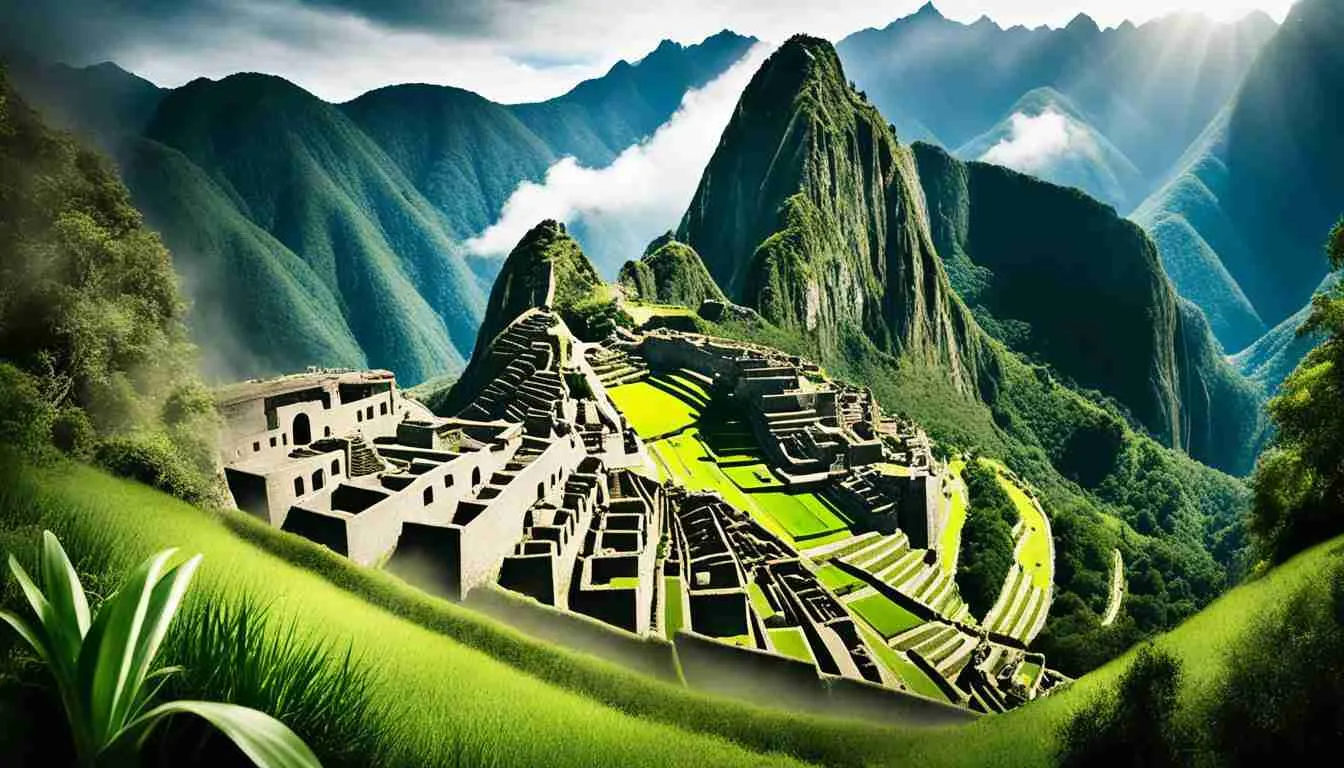
Machu Picchu, a 15th-century Incan citadel in the Andes of Peru, is now a top spot for millions of travelers. But, this has led to more pollution and harm to the environment. This threatens the long-term safety of this ancient site. As more people visit, the balance between tourism and protecting the site is getting harder.
The rise in Machu Picchu visitors has created big problems. The site can’t handle the number of visitors well, and its culture and nature are at risk. Visitors often damage the ancient ruins and leave trash, harming the area. Also, going off the marked paths hurts the local plants and animals.

Key Takeaways
- Machu Picchu, a 15th-century Incan site in Peru, has become a major tourist attraction, leading to significant overtourism and environmental degradation.
- Tourists have vandalized the ruins, polluted the area with garbage, and explored areas beyond their guided boundaries, threatening this ancient wonder.
- The Peruvian government and UNESCO have recognized the issue and implemented some measures to restrict visitor numbers and manage the site, but more needs to be done to balance profit and preservation.
- Sustainable tourism practices and conservation efforts are crucial to protect Machu Picchu and its surrounding environment for future generations.
- Collaborative efforts between the government, local communities, and tourists are essential to ensure the long-term preservation of this UNESCO World Heritage Site.
- Ask for a comfortable and personalized itinerary to Peru (Free Service)
Introduction to Machu Picchu
History and Rediscovery of Machu Picchu
Machu Picchu means “Old Mountain” in Quechua. It’s a stunning Incan city in the Andes Mountains of Peru. Built in the mid-1400s, it was likely a luxury tomb and place for worship or to watch the stars.
For years, Machu Picchu was hidden from the world. Then, in 1911, Yale professor Hiram Bingham found it again.
After Bingham’s find, Machu Picchu became famous around the globe. In 1984, UNESCO made it a World Heritage Site. In 2007, it was named one of the New Seven Wonders of the World. This made even more people want to visit.
“Machu Picchu is one of the most significant archaeological sites in South America. Its rediscovery in 1911 by Hiram Bingham brought the Inca Empire back into the public’s imagination.”
The Impact of Overtourism
More and more tourists are flocking to Machu Picchu, causing harm to the environment and disrespecting the site. Since the 1980s, the number of visitors has jumped by 700%, reaching 1.2 million in 2013. This has put a huge strain on the ancient site.


Environmental Degradation and Disrespect
Visitors have damaged the ruins, littered the area with trash, and gone off the guided paths. This has hurt the natural surroundings and the sacred Incan city. The Peruvian government and UNESCO see the problem and are trying to fix it.
They’ve set limits on how many people can visit each day, capping it at 2,500. They’ve also limited the Inca Trail permits to 500 per day. But, the number of visitors keeps growing, with up to 2,000 people visiting Machu Picchu daily.
This has led to the loss of rare plants and animals, including the Andean Condor. Human waste has also polluted the Urubamba river, harming the environment.
“Unorganized urban growth in the area led to the disposal of human waste directly into the Urubamba river.”
The Peruvian government and UNESCO must keep working on this issue. Protecting Machu Picchu’s culture and nature is very important. They need to manage the number of visitors better to save this ancient site for the future.
Pollution in Machu Picchu
Many tourists visit the famous Machu Picchu, causing pollution and waste problems. Every year, 1.6 million visitors come from all over the world. They leave behind a lot of trash that harms the natural environment and the Incan ruins.
The paths to Machu Picchu are getting damaged. The native plants are being stepped on a lot. This has made the Peruvian government limit the number of visitors to 2,500 per day. They want to reduce the harm caused by too many tourists.
It’s important to fix the pollution and waste issues at Machu Picchu. The town of Aguas Calientes, near the ruins, has a big trash problem. They deal with a lot of plastic bottles every day.
| Location | Environmental Impact | Projected Timeline |
|---|---|---|
| Mont Blanc, France | Glacial ice retreat of 5 meters per year | Glaciers could disappear by 2050 |
| Mount Kilimanjaro, Tanzania | 85% of glacial ice lost since 1912 | Glacier could be completely gone by 2033 |
| Everglades, United States | Shrunk to half its original size in 60 years | Could disappear within the next 100 years |
| Great Wall of China | Over one-third of the total length has disappeared | Ongoing natural erosion and human damage |
| Dead Sea, Israel | Annual decrease in surface level of over 1 meter | Could evaporate within the next 50 years |
Hotels and restaurants in Aguas Calientes are now recycling. They turn cooking oil into biocarbon for farms. The town is working with groups and businesses to become Peru’s first eco-friendly zone. They want hotels and businesses to use less plastic and install water stations for visitors.
The pollution at Machu Picchu is so bad that UNESCO might take away its World Heritage status. This shows how urgent it is to find good solutions to protect this ancient site for the future.
Addressing the Dilemma
Machu Picchu faces big challenges from too many tourists. We need to find ways to solve this with a focus on People, Profit, and Planet. The Triple Bottom Line model is a good way to tackle this issue.
The Triple Bottom Line Model
This model says we must look after people, make businesses profitable, and protect the planet. For Machu Picchu, it helps create plans that keep the site safe and help the local people. This way, everyone wins.
- People: It’s important to protect the rights and culture of those near Machu Picchu. We must treat the local people fairly and keep the site’s history and spirit alive.
- Profit: Tourism is a big money-maker for Peru, adding over $20.9 billion to the economy every year. Finding a way to keep Machu Picchu safe while still supporting tourism is key for the area’s future.
- Planet: Keeping Machu Picchu’s environment safe is vital. We need to fix the damage from too many tourists, like pollution and harm to nature, to keep the site for the future.
Using the Triple Bottom Line method, we can find sustainable solutions. These solutions will protect Machu Picchu, help the local economy, and lessen the harm from tourism.

Safeguarding People and Culture
Machu Picchu is a key site for the Peruvian people, full of cultural and historical value. The growing number of tourists has caused tension. The locals see Machu Picchu as a sacred place tied to their ancestors.
The Inca Trail is important for the Andean people as a pilgrimage route. But, the large number of visitors affects it. Keeping Machu Picchu’s culture and history true is key. It helps keep the site’s bond with the local people strong.
| Initiatives to Safeguard Machu Picchu | Impact |
|---|---|
| Increase in admission fee to Machu Picchu from $10 to $20 | Aims to limit tourist numbers and generate funds for preservation efforts |
| Proposed entry fee for the full Inca Trail to be raised from $17 to $50 | Seeks to reduce overcrowding and ensure sustainable management of the trail |
| Limit of 500 people per day allowed to begin the Inca Trail trek | Comprises about 200 tourists and 300 guides and porters to minimize impact |
| Requirement of two guides for groups of more than seven tourists on the Inca Trail | Enhances visitor experience and ensures cultural preservation |
These steps show the government’s effort to protect Machu Picchu, the local population, and the cultural preservation of the Inca Trail and sacred sites. Peru is working to balance tourism with respect for the Andean people’s connection to Machu Picchu.
Balancing Profit and Preservation
Machu Picchu is a big money-maker for Peru, thanks to tourism. It brings in a lot of cash for the country. But, making sure it makes money and stays safe is hard.
Tourism Revenue and Economic Importance
Machu Picchu tourism is key to Peru’s economy. The area around Machu Picchu is huge, full of different plants and animals. The site itself is small, but it’s protected to keep nature safe.
Thousands of tourists visit Machu Picchu Town every day. This means a lot of trash. But, there are programs to recycle and manage waste well. This helps keep the site safe for the future.
| Sustainable Tourism Initiatives | Impact |
|---|---|
| Plastic bottle collection | Reduced plastic waste |
| Solid waste pyrolysis | Decomposed organic components, supporting waste control |
| Biochar extraction | Reduced carbon emissions |
| Tree planting for carbon absorption | Improved carbon neutrality |
| Green bus introduction | Reduced carbon dioxide emissions |
Thanks to these efforts, Machu Picchu is now a carbon-neutral place. This shows the government’s effort to make money and protect the site.
Keeping Machu Picchu safe for the future means taking care of its culture and nature. The government and tourism must work together. They need to find new ways to make money and protect the site.
Protecting the Planet
Ecological Pollution Prevention Guidelines
Keeping the natural world and cultural treasures of the Machu Picchu area safe is vital. We must stop ecological pollution to achieve this. By following simple rules, we can lessen the harm that tourism can cause to this famous Inca site and its surroundings.
One important rule is to manage waste well. Visitors should try not to make any extra garbage. They should use canteens instead of plastic bottles. It’s also important not to leave food remains behind. This can draw pests and harm the flora and fauna of the area.
It’s also key to respect the archaeological heritage of Machu Picchu. Tourists must follow the set trails and camping rules. This helps avoid damage to the natural resources and historic structures. Teaching visitors why it’s important to keep the site’s cultural and ecological value safe can encourage better tourism behavior.
By following these ecological pollution prevention guidelines, the authorities can make sure the Inca Trails and nearby stay in good shape. This way, both visitors and locals can enjoy the area. It helps keep the natural environment and cultural heritage of Machu Picchu safe.
“Preserving the natural environment and cultural heritage of the Machu Picchu region is essential, and preventing ecological pollution is a critical step towards that goal.”
Regulating Tourism
Machu Picchu, the famous Inca wonder, welcomes millions of visitors every year. The Peruvian government and UNESCO have set rules to control tourism. This helps protect the ancient site and its environment.
Visitor Limits and Site Management
To control the number of visitors, a ticket system with time slots was introduced. In 2005, only 500 hikers were allowed on the Inca Trail daily. This was a drop from the previous 1,000 walkers, who caused erosion and health issues.
In 2019, only 5,600 tickets were sold to Machu Picchu each day. This limits the number of people visiting. Visitors must stick to guided tours and certain paths. This helps protect the site and its ecosystem.
| Year | Visitor Limit | Impact |
|---|---|---|
| 2005 | 500 hikers per day on Inca Trail | Reduced erosion, trash, and health risks |
| 2019 | 5,600 entrance tickets per day | Managed visitor flow and improved site preservation |
As more people visit Peru, more rules might be needed. This will help keep Machu Picchu safe for the future.
“Awareness campaigns about responsible travel can influence tourists to respect the site and follow guidelines such as sticking to designated paths and avoiding littering.”
Promoting Alternative Sites
Concerns about the environmental and cultural effects of too many tourists at Machu Picchu are leading to efforts to highlight other Incan sites. Sites like Choquequirao and Vilcabamba let visitors see Peru’s culture without crowding Machu Picchu.
By promoting these sites, we aim to spread out tourists and ease the strain on Machu Picchu. It also helps local communities by creating jobs. This approach to cultural management and tourist dispersal is more balanced and sustainable.
“Encouraging visitors to explore a wider range of Incan cultural heritage sites not only preserves the integrity of Machu Picchu but also empowers local communities to showcase their own unique historical treasures.”
Less known Incan sites offer a deeper look into Peru’s culture. This change can help reduce the overtourism issues at Machu Picchu. It also helps visitors appreciate Peru’s Incan heritage more fully.
As Machu Picchu remains a global attraction, promoting other Incan sites is key to balancing tourism and preserving culture. By offering a variety of experiences, Peru can protect its ancient sites. It also supports a tourism industry that honors its Incan legacy.
Respecting Porters’ Rights
The trekking industry around Machu Picchu and the Inca Trail relies on many porters. They come from the indigenous community. These porters are key to making hiking trips run smoothly, carrying all the supplies and gear for tourists. But, there are worries about how they are treated and their rights.
Responsible tourism companies are stepping up to make things right. They make sure porters get fair pay, don’t carry too much, and have breaks and places to rest. This helps keep the Machu Picchu tourism industry going strong for the future.
TreXperience, a company focused on responsible tourism in Peru, is making a big difference. They have set rules to protect porters, like:
- They make sure porter packs don’t weigh more than 20 kg.
- They pay porters fairly, including overtime and healthcare.
- They hire guides and suppliers from the local area.
- They support education by building a library and giving computers with internet to local kids.
By focusing on porters’ rights, companies like TreXperience show that responsible tourism benefits everyone. As more people visit Machu Picchu, it’s important to keep talking about the fair treatment of these hardworking people.
“Protecting the rights and wellbeing of the porters is crucial for maintaining the sustainability of the Machu Picchu tourism industry and respecting the local population.”
Conclusion
Machu Picchu, a famous ancient wonder, faces big challenges from pollution and too many tourists. The Peruvian government and UNESCO are working hard to fix this. They aim to keep Machu Picchu’s culture and nature safe.
They’re using new ways to deal with waste, like turning old cooking oil into biodiesel and squashing plastic. This shows the local community’s effort to create a better economy. The goal is to recycle all waste from Machu Picchu. This will help lessen the damage to the environment.
They also want to spread out tourism to other Incan sites. This helps reduce the load on Machu Picchu. It also shows respect for the local porters who help with tourism.
As Machu Picchu remains a global attraction, finding a balance is key. The Peruvian government and UNESCO are pushing for sustainable tourism and more conservation. This way, Machu Picchu can continue to inspire us, showing the Inca’s smart ways for many years.